This Week in London – Sutton Hoo rediscovered; The Sixties at Tower Bridge; and, the British Library celebrates spring…

• Celebrating 75 years since its discovery this year, the Anglo-Saxon treasure of Sutton Hoo has a new home from this week with the reopening of the renovated gallery housing early medieval artefacts at the British Museum. Excavated at a site in Suffolk in 1939, the Sutton Hoo ship burial is described as the richest intact burial to survive from Europe. It featured a 27 metre long ship and objects including an iconic helmet and is thought to be linked to the death of an Anglo-Saxon king in the early 600s. The treasure now forms the centrepiece of the gallery – Room 41 – which was last renovated in 1985. Other objects in the gallery – which covers Europe during the period from 300 to 1100 – include the Kells Crozier, the Lycurgus Cup, and the Fuller Brooch as well as new objects never shown before such as late Roman mosaics, a copper alloy necklace from the Baltic Sea region and a gilded mount found in a lump of material taken from a Viking woman’s grave. Admission to the gallery – the refurbishment of which was made possible through a donation from Sir Paul and Lady Jill Ruddock – is free. For more, see www.britishmuseum.org.

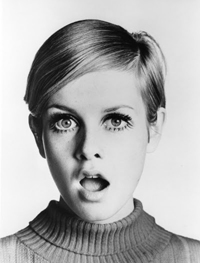
Twiggy The Sixties are the focus of a new photographic exhibition at Tower Bridge which opens tomorrow. The Sixties features more than 60 iconic images of everyone from actors like Peter Sellers and Elizabeth Taylor to Prime Minister Harold Wilson, fashion icons like Twiggy (pictured), racing car driver Jackie Stewart and activists like the Aldermaston marchers. A rare photograph of comic pair Dudley Moore and Peter Cook – taken as a publicity still for the film The Wrong Box – is a highlight. The images can be seen on the bridge’s West Walkway – located 42 metres above the River Thames – and admission is included in the entry fee to Tower Bridge. Runs until 31st December. For more, see www.towerbridge.org.uk. PICTURE: © Getty Images 

The British Library’s annual celebration of fashion, film and design kicks off today. Now in its third year, the Spring Festival, which runs over the weekend, will give people the chance to see selected material from the newly acquired archive of screenwriter, novelist and playwright Hanif Kureishi (he will also be present, speaking with writer Rachel Holmes about his career). Other events celebrate fashion and film in the Jazz Age, the British newspaper archive and the resources the library has for film-makers. For full details, see www.bl.uk/whatson/exhibitions/spring-festival-2014/events/index.html.

Send all items of interest for inclusion to exploringlondon@gmail.com.
 

This Week in London – Data visualisation at the BL; Kenneth Williams honoured; and, celebrating ‘frost fairs’…

NASA's-Perpetual-Ocean-cropAn examination of the historical use of visual data has opened at the British Library. Beautiful Science, which is running in The Folio Society Gallery, features the work of scientists and statisticians down the ages and focuses on the key themes of public health, weather and evolution. Among items on display are Robert Fludd’s Great Chain of Being (1617), Florence Nightingale’s seminal ‘rose diagram’ (1858) which illustrated that more Crimean War deaths were being caused by poor hospital conditions that battlefield wounds, and a contemporary moving infographic from NASA showing ocean currents (pictured). A programme of events is running with the exhibition which closes on 26th May. Entry is free. For more, see www.bl.uk/beautiful-science. PICTURE: NASA’s Perpetual Ocean © NASA/Goddard Space Flight Center

Comic Kenneth Williams (1926-1988) has been honoured with an English Heritage Blue Plaque at the London apartment he lived in during the hey day of the ‘Carry On’ series of films during the 1960s. Williams lived in flat 62 on the top floor of Farley Court, located between Madame Tussauds and Baker Street station, between 1963 and 1970 during which he starred in such films as Carry on Cleo and Carry on up the Khyber and also appeared in radio comedy programmes such as Round the Horne and Just a Minute. For more, see www.english-heritage.org.uk/discover/blue-plaques/.

Two exhibitions celebrating London’s Frost Fairs are underway at the Museum of London and its Docklands sister. Frozen Thames: Frost Fair 1814 at the Museum of London in the City and Frozen Thames: Frost Fair 1684 at the Museum of London Docklands both feature objects, paintings, keepsakes, engravings and etchings from the museum’s collection. Highlights at the Museum of London exhibition include the only surviving piece of gingerbread from the 1814 fair, the last fair of its kind, as well as etchings by satirical artist George Cruikshank and a print by George Thompson while among the items on display at the Docklands museum are two paintings by a Dutch artist Abraham Hondius (c. 1625-91). Both exhibitions are free and both run until 30th March. For more, see www.museumoflondon.org.uk.

Around London – The Georgians at the British Library; wartime artist on show; Regent Street’s Christmas lights; Westminster’s new organ; and, celebrating success at the NPG…

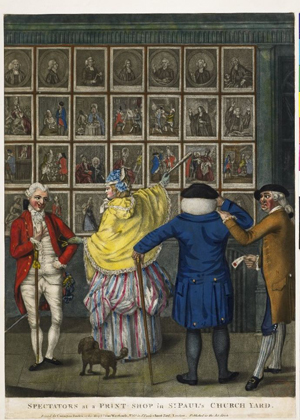
The-GeorgiansThe Georgians are under the spotlight in a new exhibition opening at the British Library tomorrow. Georgians Revealed: Life, Style and the Making of Modern Britain explores the ways in which the Georgian world influenced pop culture in Britain today, everything from fashion and theatre-going to our obsessions with celebrity scandals. The display features more than 200 artefacts from the library’s collection and includes Jeremy Bentham’s violin, Joseph van Aken’s An English Family at Tea, rare books and magazines, and illustrations and designs of landmark building’s such as Sir John Soane’s home (and now museum) in Lincoln’s Inn Fields. The exhibition, which is accompanied by a series of events (see the library website for details) comes ahead of the 300th anniversary of the accession of King George I next year. Runs until 11th March. Admission charge applies. Meanwhile, to mark the exhibition, the library has joined with Cityscapes in launching a new Georgian garden installation on the library’s piazza. Titled Georgeobelisk, the six metre high installation, will remain on the piazza for five months. A tribute to the four King Georges, it also serves as a reminder that it was also during the Georgian era that the British love of gardening was cultivated. For more, see  www.bl.uk/whatson/exhibitions/georgiansrevealed/index.html. PICTURE: Spectators at a Print shop in St Paul’s churchyard © British Museum.

Painting normally housed in “Britain’s answer to the Sistine Chapel” go on display in Somerset House today. The artworks, described as the “crowning achievement” of wartime artist Stanley Spencer, usually grace the walls of Sandham Memorial Chapel but are on display in London while the National Trust carries out restoration work at the Berkshire property. Spencer painted the works – which combine realism and visions from his imagination and were completed in 1932 – after serving as a hospital orderly during World War I.  The free display – Stanley Spencer: Heaven in a Hell of War – can be seen until 26th January. For more, see www.somersethouse.org.uk.

Regent Street’s Christmas lights – a preview of the upcoming DreamWorks film Mr Peabody and Sherman – will be turned on this Saturday night. Actor Ty Burrell, director Rob Minkoff and singer Leona Lewis will have the task of switching on the lights at about 7.15 pm while performers will include Passenger, Eliza Doolittle and former Spice Girls Emma Bunton and Melanie C. The event will be hosted by radio presenters Bunton and Jamie Theakston. The street will be traffic free all day and from 3pm to 7pm, Regent Street retailers will be showcasing fashions on a catwalk located just North of New Burlington Street. Programmes will be available from information points on the day.

A new organ was dedicated in Westminster Abbey’s Lady Chapel on Tuesday. The organ was commissioned by the Lord Mayor of London, Roger Gifford, as a gift to the Queen to mark the 60th anniversary of her coronation in 1953. The Queen agreed the organ, which had briefly resided at the Lord Mayor’s residence the Mansion House, should be installed permanently in the Lady Chapel, built by King Henry VII. The new organ was dedicated by the Earl of Wessex. For more, see www.westminster-abbey.org.

Now On: Achievement: New Photographs 2011-2013. Inspiring Britons at the peak of their professions are the subject of an exhibition running at the National Portrait Gallery. The display of recently acquired and previously un-exhibited photographs depict the likes of writer and presenter Charlie Brooker (by Chris Floyd), actress Gina McKee (Mark Harrison) and Skyfall director Sam Mendes (Anderson & Low). Admission is free. Runs until 5th January in Room 37a. For more, see www.npg.org.uk.

Around London: Nelson and the Navy; Whistler at Dulwich; Eric Coates’ Blue Plaque; childrens’ books at BL…

A new permanent gallery looking at how the Royal Navy shaped individual lives and the course of British history over the 18th century opens at the National Maritime Museum in Greenwich on Monday 21st October, Trafalgar Day. Nelson, Navy, Nation charts a course from the Glorious Revolution of 1688 through to the defeat of Napoleon in 1815 and provides a setting for the museum’s many artefacts related to Vice-Admiral Lord Nelson. Among the 250 objects on display in the gallery are the uniform (with bullet hole) Nelson wore at the Battle of Trafalgar, artworks likes William Hogarth’s Captain Lord George Graham in his Cabin, a seven barreled volley gun and grim items like a surgeon’s tools including an amputation knife, bone saw and bullet forceps. There is also the last letter Nelson wrote to his daughter Horatia and mourning rings worn by close friends and family at his funeral. Entry to the new gallery is free. For more, see www.rmg.co.uk.

The first major exhibition dedicated to the American-born artist James Abbott McNeill Whistler’s time in London between 1859 and his death in 1903 opened at the Dulwich Picture Gallery this week. An American in London: Whistler and the Thames features paintings, etchings and drawings produced by the artist and more than 70 objects related to Whistler’s depiction of the Thames and Victorian London. Highlights include Nocturne: Blue and Gold – Old Battersea Bridge (1872/1873) and Brown and Silver: Old Battersea Bridge (1859-1863), the oil painting Wapping (1860-64) and the etching Rotherhithe (1860). There are also a series of portraits of Whistler and his patrons. Runs until 12th January. Admission charge applies. For more, see www.dulwichpicturegallery.org.uk.

Composer Eric Coates has been honoured with the unveiling of an English Heritage blue plaque outside his former home at Chiltern Court in Baker Street. Coates, who created “some of the best known and loved pieces of English light orchestral music”, lived in a flat at the property between 1930-39. For more, see www.english-heritage.org.uk/discover/blue-plaques/.

On Now: Picture This: Children’s Illustrated Classics. This exhibition in the Folio Society Gallery at the British Library takes a look at 10 of the most iconic children’s books of the 20th century – from Charlie and the Chocolate Factory to The Wind in the Willows, Paddington Bear, Peter Pan and Wendy, and The Iron Man as well as Just So Stories, The Hobbit, The Borrowers, The Secret Garden and The Railway Children. On display is at least four illustrated editions or artworks of each title with Quentin Blake, Michael Foreman, Peggy Fortnum and Lauren Child among the artists whose works are being shown. The exhibition also features five specially filmed interviews with four illustrators and Paddington Bear author Michael Bond. Runs until 26th January. Entry is free. For more, see www.bl.uk.

Around London – 1863 FA Minute Book at BL; marking International Slave Remembrance Day at the NMM; Kenwood House concerts; and Dylan at the NPG…

FA-Cup-Minute-BookThe 1863 FA Minute Book forms the centrepiece of a new display at the British Library marking the 150th anniversary of The Football Association. Handwritten by Ebenezer Cobb Morley, the minute book contained the 13 original rules of football and is valued at £2.5 million. It is being displayed along with other football related artefacts – such as a Guide for Referees from the 1930s – in the Sir John Ritblat Treasures Gallery alongside the Magna Carta, Shakespeare’s First Folio and Captain Scott’s diary and is the first time the library has had a football-themed display. The Football Association was formed on 26th October, 1863, at the Freemason’s Tavern in London with the meeting documented in the minute book which also records the establishment of The FA Cup and the first international football match. Football Rules, entry to which is free, runs at the British Library in King’s Cross until 17th December. For more, see www.bl.uk. For more on the FA’s 150th anniversary, check out www.thefa.com.

As mentioned last week, Hidden London kicks off today and runs over this August bank holiday weekend. The second year it’s been held, the initiative is your chance to see some of the country’s finest museum collections and archives.  To see what’s on, head to www.hiddentreasures.org.uk/?page_id=118.

The National Maritime Museum tomorrow marks International Slavery Remembrance Day tomorrow with a series of free family-oriented events. The programme, which takes place at the museum and around Greenwich, involves music, workshops, talks and walking tours and will culminate in a commemorative ceremony by the River Thames. The day falls on the date of the first successful slave uprising in the western hemisphere which took place in Haiti on 23rd August, 1791, and led to the island’s independence. For more, see www.rmg.co.uk/national-maritime-museum/.

English Heritage’s season of concerts at Kenwood House beside Hampstead Heath kicks off this weekend. Live by the Lake features artists including Suede and Keane, an outdoor live screening of Singin’ in the Rain featuring the Royal Philharmonic Concert Orchestra, Opera Alfresco and An Evening of Gershwin. Events run until 1st September. For more, see www.english-heritage.org.uk/daysout/properties/kenwood-house/.

Pastel portraits by Bob Dylan go on show at the National Portrait Gallery in the West End from Saturday. Bob Dylan: Face Value features 12 new works by singer/songwriter and the portraits represent characters, some of which are real and some fictitious. Dylan, who has 110 million record sales to his name, has been sketching and drawing since childhood but only starting exhibiting his portraits six years ago. The exhibition, in Room 40, is free and runs until 5th January. For more, check www.npg.org.uk.

Around London – ‘Hidden Treasures’; Open House programme; and the Isabella Plantation celebrates 60 years…

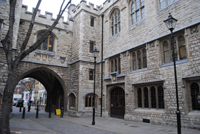
St-John's-GateHidden Treasures – the national initiative to celebrate the UK’s museum and archive collections – kicks off for its second year next Thursday, 22nd August, and runs over the bank holiday weekend until 27th August. Among the London institutions taking part this year are the British Library, the British Postal Museum and Archive in Houghton, the Museum of the Order of St John in Clerkenwell (pictured) and Orleans House Gallery in Twickenham. Hidden Treasures is an initiative of the Collections Trust and the Independent newspaper. All events are free but some have to be pre-booked and have limited spaces so make sure you check out the details at www.hiddentreasures.org.uk/?page_id=118.

The programme for Open House London – held over the weekend of 21st and 22nd September – will be made available online from today (or alternatively you can order a hard copy via the Open House London website). It’s important to note that a few of the buildings involved can only be entered by those successful in a ballot – they include 10 Downing Street, The View from The Shard, EDF Energy London Eye and Gray’s Inn. Head to the website – www.londonopenhouse.org – to enter the ballots which close on 13th September.

The Isabella Plantation – a 40 acre ornamental woodland garden located in the south west area of Richmond Park – is celebrating 60 years since its creation and they’ve kicked off a fortnight’s programme of free events community to mark the occasion. The events, which will be focused around the yurt by Peg’s Pond in the plantation,  include guided walks, a showcase of art for young people and a Teddy Bears picnic on the bank holiday weekend. One of the most visited parts of Richmond Park, the plantation is home to the Wilson 50 National Collection of Evergreen Azaleas, more than 150 hardy hybrid Rhododendrons, 50 species of Rhododendron and a large collection of camellias and magnolia as well as many rare and unusual trees and shrubs. While the plantation can be dated as far back as 1771 (then named Isabella Slade), it was planted for timber in 1831, and in 1953 the present garden was established and the old name Isabella adopted for it. For more on the events, see www.royalparks.org.uk.

As Muslims mark the end of Ramadan this weekend, the festival of Eid-ul-Fitr will be celebrated in Trafalgar Square on Saturday. As well as the chance to sample foods from across the Islamic world, there will also be entertainment on stage, exhibitions and children’s activities. The festival, put on by the Mayor of London Boris Johnson, runs between 1.30pm and 6pm. For more, see www.london.gov.uk/eid.

On Now: Take One Picture – Discover, Imagine, Explore: Children Inspired by Willem Kalf. This display at the National Gallery focuses on Willem Kalf’s Still Life with Drinking-Horn (about 1653) and features alongside it responsive works created by children from 25 schools across the UK and as far afield as Turkey with works from other schools captured in a slide-show. Located at the Annenberg Court (Getty Entrance), admission is free. Runs until 12th September. For more, see www.nationalgallery.org.uk.

Treasures of London – Shakespeare’s Blackfriars deed…

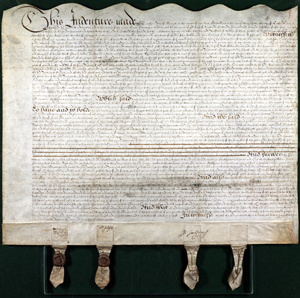
Shakespeare's-DeedIn 1613, the playwright William Shakespeare – now widely regarded as the greatest writer of the English language – purchased a property in Blackfriars.

The only real estate he was to buy in London, the purchase of the gatehouse – which may have stood on the junction of St Andrew’s Hill and Ireland Yard – was apparently made as an investment (Shakespeare never lived there).

The deed which recorded the sale (dated 10th March, 1613) – only one of six documents in the entire world which bears Shakespeare’s authenticated signature – is in the care of the London Metropolitan Archives.

According to the deed, he bought the property from Henry Walker, a minstrel, paying £140 for the property (he mortgaged £60 of it the next day – the document for this is located in the British Library).

Other parties mentioned on the document are William Johnson, a London-based vintner and possibly landlord of the Mermaid tavern in Cheapside, and two ‘gentlemen’ John Jackson and John Heminges, an actor, manager and editor of Shakespeare’s first folio.

They were appointed as trustees in Shakespeare’s interest and handled the sale of the property after Shakespeare’s death in 1616. The copy of the deed held by the LMA was that of Henry Walker (Shakespeare’s copy is in the Folger Shakespeare Library in Washington).

The deed is currently on display as part of an exhibition surrounding the 400th anniversary of its signing. ‘Shakespeare and London’, a free exhibition, also features other documents from the period as well as maps, prints and models and runs at the LMA (40 Northampton Road) until 26th September. Due to the age and importance of the deed, the deed itself will only be displayed at specific times – check the LMA website for details.

Around London: Royal fashion at Kensington; Music in Hyde Park; celebrating African literature at the British Library…

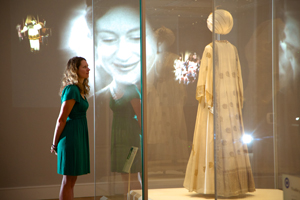
Fashion-RulesA new exhibition looking at the fashions of three royals over four decades last century opens at Kensington Palace today. Fashion Rules features five rooms of dress displays with a focus on the fashions of Queen Elizabeth II in the 1950s, Princess Margaret in the 1960s and 1970s and Diana, Princess of Wales, in the 1980s. Twenty-one dresses are included in the display which explores how the royal women negotiated how to dress fashionably while observing the “rules” of the Royal Wardrobe and includes film footage and photography. The dresses include five of the Queen’s evening dresses – one of which is a gown fashioned for the Queen by Norman Hartnell in the colours of the flag of Pakistan, a full-length kaftan and matching turban of ivory sari silk worn by Princess Margaret while on the island of Mustique (on display for the first time), and, two Eighties dresses worn by Diana which have never before been displayed in the UK. Admission is included in entry price. For more, see www.hrp.org.uk/KensingtonPalace/. PICTURE: HRP/Newsteam.

The Rolling Stones are back in Hyde Park this weekend as part of a summer of music in the Royal Park. The concert will take place almost 44 years to the day since the Stones first played the park and comes in the wake of their ’50 and Counting’ shows last year. Their first performance in the park – on 5th July, 1969 – saw the live debut of guitarist Mick Taylor and was a tribute to founding member Brian Jones who has died only two days before. For the full programme of Barclaycard presents British Summer Time Hyde Park, head to www.bst-hydepark.com.

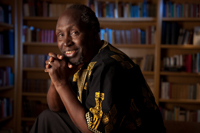
Ngugi2010-2Daniel-Anderson-UnivCommThe British Library is partnering with the Royal African Society to host the UK’s largest festival of African literature – Africa Writes – this weekend. Kicking off on Friday, the three day festival features Ngugi wa Thiong’o, described as “Africa’s greatest living novelist” (pictured), and his son, rising star Mukoma Ngugi, in a conversation chaired by Ellah Allfrey, deputy editor of Granta Magazine. Other programme highlights include a poetry evening, ‘Diaspora Writes Back’; a tribute to Chinua Achebe, the “father of contemporary African literature”; and the writers short-listed for The Caine Prize – the most prestigious prize for African short fiction. For more, see www.africawrites.org. PICTURE: Ngugi wa Thiong’o © Daniel Anderson.

Around London – Celebrating the Coronation’s 60th anniversary; Benjamin Britten; Keat’s House Festival; and, silver service in Roman Britain…

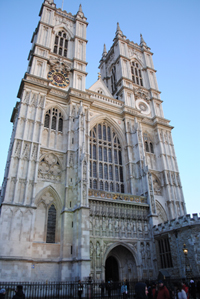
Westminster-Abbey3Sunday marks 60 years since Queen Elizabeth II’s coronation and Westminster Abbey – site of that event – is celebrating with a series of events. These include a special 60th Anniversary of the Coronation Service on Tuesday (4th June) to be attended by the Queen, Duke of Edinburgh and members of the royal family as well as a public lecture to be given by the Bishop of London Richard Chartres on Friday night (7th June – booking is essential), a concert performed by the abbey choir (13th June), and a new exhibition in the chapter house featuring archive images of the 1953 coronation ceremony and of preparations which took place at the abbey. Meanwhile the Coronation Chair, used in most coronations since the 14th century and having just undergone conservation work, is the subject of a new display in St George’s Chapel, and two new commemorative stained glass windows have been installed in King Henry VII’s Lady Chapel – the first commissioned by the abbey for more than a decade, they have been designed by artist Hughie O’Donoghue. For more on the abbey’s celebrations, see www.westminster-abbey.org.

Composer Benjamin Britten is the subject of a new exhibition opening at the British Library tomorrow. Poetry in Sound: The Music of Benjamin Britten (1913-1976) looks at the poetic and literary influences on the work of the man often described as the greatest English composer since Purcell. In particular it examines his collaboration with WH Auden and the interplay of his work with authors such as William Blake, Wilfred Owen, Alfred Lord Tennyson and William Shakespeare. As well as composition manuscripts, the exhibition features photographs, concert programmes and unpublished recordings of his music. There are a range of events accompanying the exhibition which runs until 15th September. An admission charge applies. For more, see www.bl.uk.

The Keats House 2013 Festival is underway this week with activities ranging from poetry readings to felt-making demonstrations, free family workshops and musical performances. The programme of events runs until 2nd June, all under this year’s theme of ‘Health is My Expected Heaven’: The Body and The Imagination. Poet John Keats lived at the house in Hampstead, not far from Hampstead Heath, from 1818 to 1820 and it is the setting for some of his most acclaimed poetry including Ode to a Nightingale. It was this house that he left to travel to Rome where he died of tuberculosis at the age of 25. For more on the festival programme, follow this link.

On Now: Silver Service – Fine dining in Roman Britain. This free exhibition at the British Museum recreates the experience of dining late in the Roman era and uses the Mildenhall Great Dish, Britain’s finest late Roman silver dining service, as an example of the type of large platter on which food for sharing would have been presented. The exhibition, which runs until 4th August, is free (keep an eye out for our upcoming Treasures of London on the Mildenhall Great Dish). For more information, see www.britishmuseum.org.

Around London – Museums at night; Propaganda at the BL; MoL Docklands celebrates 10 years; and, Steadman at the Cartoon Museum…

Expect people to be out and about around London at all hours this weekend with the kick-off tonight of Museums At Night, Culture24’s annual festival of after hours visits. This year’s packed program features everything from ‘Arts on Ice’ – a look at the Victorian ice trade – at the London Canal Museum to art nights at the Government Art Collection building, nocturnal tours of Greenwich’s Old Royal Naval College, and, for the first time, the chance for adults to sleep over at Hampton Court Palace and kids at Kensington Palace. Other London organisations taking part include the Handel House Museum, the Kew Bridge Steam Museum, Benjamin Franklin House, the National Gallery and Somerset House (and that’s just a few off the list!). For more information on the night – including a full program of events – check out the Culture24 Museums at Night website.

Propaganda-v9-cmyk Government spin comes under the spotlight in a major new exhibition which opens tomorrow at the British Library in King’s Cross. Propaganda: Power and Persuasion examines how state have used propaganda in the 20th and 21st centuries and features more than 200 exhibits including Nazi propaganda and everyday objects such as banknotes and badges. Admission charge applies. There’s a series of events running to coincide with the exhibition which runs until 17th September. For more, see www.bl.uk/whatson/exhibitions/propaganda/index.html.

It’s 10 years since the Museum of London Docklands opened in a converted Georgian warehouse on West India Quay and to celebrate they’re holding an exhibition celebrating the Thames estuary. Titled (appropriately enough), Estuary, the exhibition features the work of 12 artists in a variety of mediums – from film and photography to painting. Entry is free. The exhibition, which opens tomorrow, runs until 27 October. The museum is also holding a special day of family activities to celebrate its creation this Saturday. For more, see www.museumoflondon.org.uk/Docklands/.

On Now: STEADman@77. This exhibition at The Cartoon Museum in Bloomsbury looks at the work of graphic artist Ralph Steadman (who is celebrating his 77th birthday) and features more than 100 original works published in magazines ranging from Private Eye to Rolling Stone, Punch and the New Statesmen as well as his illustrated books (these include Sigmund Freud, Alice in Wonderland Through the Looking-Glass, I, Leonardo, The Bid I Am, and Animal Farm). Runs until 8th September. Admission charge applies. For more, see www.cartoonmuseum.org.

Around London – Aliens at the Royal Observatory; celebrating spring at the British Library; Blue Plaques for Heal and Mendelssohn; and, Barocci at the National Gallery…

It’s alien season at the Royal Observatory in Greenwich and to kick off a series of special events around all things extra-terrestrial, a new exhibition looking the history with things not of this earth opens tomorrow. Alien Revolution, which looks at man’s obsession with intelligent alien life – a trend which began in the century following Copernicus’ discovery that the earth was a planet and the sun a star, will be held in the observatory’s Astronomy Centre until August. Runs until 8th September. Admission is free. Other events include shorts courses looking at science fiction and astronomy, family events and special planetarium shows such as We Are Aliens which runs in April. For more on the events, see www.rmg.co.uk.

The British Library’s Spring Festival kicks off tomorrow with five days of film, design and fashion including the unveiling of a new artwork by fashion illustrator and artist Julie Verhoeven. Verhoeven – who has worked for fashion houses Louis Vuitton, Versace and Mulberry – will be joined by Dylan Jones, editor-in-chief of GQ, to talk about what inspires them while others among fashion’s leading names will be contributing postcards in a one night only pop-up exhibition – Late at the Library: Fashion Flashback – which will also feature talks involving Jones and illustrator Tanya Ling. The event also features a spring market held in the library’s piazza at which designers will be selling wares inspired by the library’s collection. Other events include the showing of a series of short films.  For more about the Spring Festival events, head to www.bl.uk/whatson/exhibitions/spring-festival-2013/index.html.

Furniture designer Sir Ambrose Heal was honoured with the unveiling of an English Heritage Blue Plaque at his former home in Pinner yesterday – the date marking 120 years since he joined the family firm, Heal’s. The house – at Fives Court, Moss Lane in Pinner – was Sir Ambrose’s home from 1901-1917 during the period when he began exerting his influence over the business, having won a silver medal at the 1900 Paris Exhibition for a bedroom suite. Heal was knighted in 1933 and appointed a royal designer for industry in 1939. Meanwhile, a Blue Plaque for 19th century composer Felix Mendelssohn was unveiled at 4 Hobart Place earlier this month, commemorating the house he stayed in at the height of his career during his numerous visits to London. The house was the home of the Hanoverian embassy secretary, Karl Klingemann, at the time. For more on Blue Plaques, see www.english-heritage.org.uk.

On Now: Barocci – Brilliance and Grace. This landmark exhibition at the National Gallery is the first major monographic exhibition dedicated to the art of 16th and 17th century Italian artist Frederico Barocci – pioneer of the Baroque style. Highlights include his spectacular altarpiece, The Entombment of Christ, from the coastal town of Senigallia, the Last Supper – painted for Urbino Cathedral, as well as two altar pieces from Rome – Visitation from the Chiesa Nuova and Institution of the Eucharist from Santa Maria sopra Minerva. Also included are portraits, smaller devotional paintings, Aeneas’ Flight From Troy – his only secular narrative, and more than 65 preparatory drawings, pastel studies and oil sketches. Runs until 19th May. Admission charge applies. For more, see www.nationalgallery.org.

Around London – Of foundling tokens; a French field marshal’s grave marker; behind the scenes at Royal Albert Hall; Tom Daley’s swimming trunks; and, crime fiction at the British Library…

A new exhibition opens at the Foundling Museum tomorrow (25th January) which tells the often heart-breaking stories behind the tokens left by mothers with their babies at the Foundling Hospital between 1741-1760. While hundreds of tokens were removed from the hospital’s admission files in the 1860s, Fate, Hope & Charity reunites the tokens – which range from coins and jewellery to playing cards, poems and even a nut – with the foundlings to whom they were given. A moving exhibition. Museum admission charge applies. For more, see www.foundlingmuseum.org.uk.

The Duc and Duchesse de La Rochefoucauld-Doudeauville were among those who attended the dedication of a ledger stone marking the grave of their kinsman, Field Marshal Francois de La Rochefoucauld, the Marquis de Montendre, at Westminster Abbey last week. Born in 1672, de La Rochefoucauld served in the British Army during the reign of King William III and Queen Mary II after fleeing France as a Huguenot refugee (he had also succeeded his brother as marquis). He was promoted to field marshal in 1739 but died later that year and was buried in the abbey. The floor stone which was replaced by the new ledger stone will be sent to France for inscription and installation at Montendre. For more on the abbey, see www.westminster-abbey.org.

• One we should have mentioned with our piece on Royal Albert Hall last week. The Royal Albert Hall is running behind the scenes tours of the venue every Monday until 11th February as well as Tuesday 29th January (so you’ll have to be quick!). The tour – which runs as an extension of the front of house tour – takes in the loading bay located under the hall and one of the many dressing rooms (currently in use by Cirque de Soleil who are in residency with their new show KOOZA. The 90 minute Behind the Scenes tours cost £16. Booking in advance is strongly recommended. For more, see www.royalalberthall.com.

A pair of swimming trunks worn by diver Tom Daley during the 2012 Olympic Games has been donated to the Museum of London. The trunks join an ever increasing collection of Olympics and Paralympics-related outfits in the museum with others including a leotard worn by bronze-medal winning gymnast Beth Tweddle. A display featuring the Olympic kit is being planned for spring. Meanwhile, still aty the museum and an exhibition featuring a series of photographs exploring the city’s major arterial roadways opens on Saturday. The free exhibition, Highways: Photographs by John Davies, features six specially commissioned photographs taken by Davies in 2001-02 – just prior to the introduction of the Congestion Charge in 2003. Routes featured include the Elephant and Castle roundabout, the Hammersmith Flyover, Marble Arch and Hyde Park, St Pancras Station Midland Grand Hotel and the A501, the junction of Poultry and Queen Victoria Street and the Blackwall Tunnel entrance. Runs until 16th June. For more, see www.museumoflondon.org.

• On Now: Murder in the Library: An A-Z of Crime Fiction. This exhibition at the British Library looks at the history of crime fiction and features never-before-seen manuscripts, printed books, rare audio recordings, artworks and artefacts. Highlights include Arthur Conan Doyle’s manuscript of the Sherlock Holmes story, The Adventure of the Retired Colourman (1926); the first appearance in print of Miss Marple (in Royal Magazine in 1929); John Gielgud’s annotated script for the film Murder on the Orient Express, crime novels from unlikely authors including Pele and burlesque performer Gypsy Rose Lee and the 1933 book, the Jigsaw Puzzle Murders in which readers had to complete a jigsaw puzzle to solve the crime. A series of events will be taking place alongside the exhibition. Entry to the library’s Folio Society Gallery is free. Runs until 12th May. For more see www.bl.uk.

Around London – Lord Mayor’s Show; Remembrance Sunday; Ansel Adams at the NMM; and, Mughal India at the British Library…

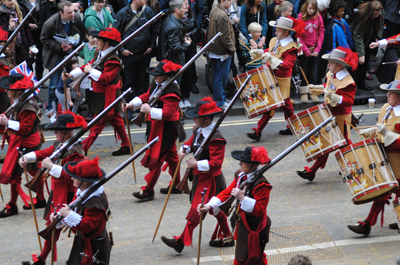
• The 2012 Lord Mayor’s Show is just about upon us and while you may not have a grandstand seat, there’s still plenty of places you can stand and watch the parade of more than 6,500 people pass by. Saturday’s parade – which celebrates the election of the 685th Lord Mayor of London, Alderman Roger Gifford – leaves Mansion House at 11am and travels via Poultry and Cheapside to St Paul’s Cathedral where it pauses for the Lord Mayor and his officials to receive a blessing – before continuing on via Ludgate Hill and Fleet Street to the Royal Courts of Justice, arriving there at about 12.30pm. There the Lord Mayor gives his oath of loyalty to the Crown (while in the surrounding streets the participants and 125 horses are fed and watered) before the parade reassembles and sets off from Embankment at 1pm, heading back to Mansion House via Queen Victoria Street – the Lord Mayor arrives sometime between 2pm and 2.30pm. (The website has a terrific one page map of the route you can download and print). There’s no fireworks display after the parade – although there’s a host of other activities taking place in the City of London – but if you’re up and about early enough, you may want to watch the Lord Mayor as he boards the barge QRB Gloriana at the Westminster Boating Base in Vauxhall at 8.30am and, escorted by a flotilla, makes his way up the Thames to HMS President, just below St Katharine Docks, arriving at about 9.35am after Tower Bridge opens in salute. For more, head to www.lordmayorsshow.org.

• The annual Remembrance Sunday service – commemorating the contribution of British and Commonwealth servicemen and women in the two World Wars and later conflicts – will take place at the Cenotaph on Whitehall at 11am this Sunday. While no tickets are required to watch the event, the Department of Culture, Media and Sport, who organise the service, advise arriving early if you wish to secure a good viewing space (and leave time for security checks at the entrance to either end of Whitehall). Whitehall opens at 8am. For more details, see www.culture.gov.uk/what_we_do/honours/3333.aspx.

A new exhibition of the work of US photographic pioneer Ansel Adams opens at the National Maritime Museum in Greenwich tomorrow (Friday). Ansel Adams: Photography from the Mountains to the Sea, which comes from the Peabody Essex Museum in Salem, Massachusetts, will feature more than 100 original prints, many of which have never been exhibited before in the UK. It is said to be the first exhibition to focus on his “lifelong fascination” with water and the display features some of Adams’ finest images based on this subject including what are some of the most famous photographs of the 20th century. Highlights include the first photograph Adams’ ever image – taken at age 14 – which features a pool located at the Panama Pacific Exhibition at the 1915 World’s Fair, the three American Trust murals produced in the 1950s on an “unprecedented scale”, Adam’s favorite work – Golden Gate before the Bridge – which hung above his desk, and iconic images such as Clearing Winter Storm, Yosemite and Stream, Sea, Clouds, Rodeo Lagoon, Marin Country, California. There is an admission charge. Runs until 28th April. For more details on the exhibition, see www.rmg.co.uk.

Also opening tomorrow (Friday) is the British Library’s major autumn exhibition – Mughal India: Art, Culture and Empire. The exhibition focuses on the Mughal dynasty – which once ruled over much of the Indian sub-continent – and is the first to document the period spanning the 16th to 19th centuries. Featuring more than 200 manuscripts and paintings, most of which come from the library’s own collection, highlights include Akbar ordering the slaughter to cease in 1578 – a work attributed to the artist Miskina in 1595, Abu’l Hasan’s early 17th century painting Squirrels in a plane tree, the historically important illustration Prince Aurangzeb reports to the Emperor Shah Jahan in durbar, and a portrait of Prince Dara Shikoh, favorite son and heir-apparent of 17th century Emperor Shah Jahan. Runs until 2nd April. Admission charge applies. For more on the exhibition and accompanying events, see www.bl.uk.

Around London – Harry Hammond at the V&A; a cabaret star’s blue plaque; and Kerouac at the British Library…

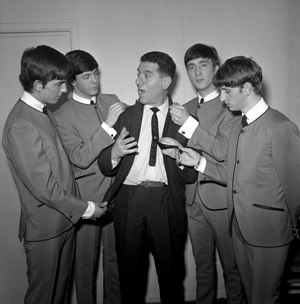
• A new exhibition of the works of renowned music photographer Harry Hammond opens at the V&A this Saturday. Halfway to Paradise: The Birth of British Rock features more than 60 portraits, behind the scenes and performance shots showing stars including Roy Orbison, Ella Fitzgerald, Cliff Richard and Shirley Bassey. Hammond’s pictures, which are all drawn from the V&A collection, chronicle the jazz and big band musicians of the 1950s like Frank Sinatra and Billie Holiday, visits from American rock ‘n roll stars such as Little Richard and Gene Vincent and early British rock groups – such as the Animals and the Beatles (pictured with Dougie Millings) – of the 1960s. There will also be behind the scenes shots of some of the early days of music television in the 1950s and the exhibition will be accompanied by a soundtrack by the artists depicted. Born in the East End, Hammond was a society portrait photographer before serving as a reconnaissance photographer with the RAF in World War II. It was on his return to London after the war that he started photographing people working in the music business, later becoming one of the primary photographers for the New Musical Express (NME) magazine. Runs until 3rd March next year. Admission is free. For more, see www.vam.ac.uk. PICTURE: V&A Images.

• Still on a musical theme and 1930s cabaret star Leslie Hutchinson (1900 – 1969) has been honored with an English Heritage Blue Plaque at his former home in Chalk Farm. The singer and pianist, better known to many as simply ‘Hutch’, lived at 31 Steele’s Road between 1929 and 1967. The Grenada-born performer lived in New York and Paris before coming to London where he became one of the most popular cabaret performers of the 1930s – one of his signatures was apparently to arrive at nightclubs dressed like an aristocrat with a white piano strapped to his chauffeur-driven car (this was despite the racial prejudice he faced which saw him being asked to enter by the servant’s quarters when performing at some of Mayfair’s grandest homes). Hutch lived at the Steele’s Road property for almost all the years he lived in London, only leaving two years before his death in 1969. The plaque was unveiled by his daughter, Gabrielle Markes, who only discovered her parentage in middle age and who subsequently proposed that the plaque be placed on the house. For more, see www.english-heritage.org.uk.

On Now: On the Road: Jack Kerouac’s Manuscript Scroll. This new exhibition at the British Library centres on Kerouac’s 120-foot-long manuscript scroll of On the Road and explores the development of the novel which, written over a period of three weeks in April 1951 using rolls of taped together architect’s paper, came to define the Beat Generation. The exhibition, which relaunches the Library’s Folio Society Gallery, will show the first 50 feet of the scroll in a specially-designed case. Other exhibits include first editions of other Beat classics such as The Naked Lunch and sound recordings featuring the likes of Kerouac, Allen Ginsberg and William S. Burroughs. Runs until 27th December. Admission is free. For more, see www.bl.uk.

Around London – Bells…and more bells; Olympic memorabilia; free wifi in the West End; The Arch returns to Kensington Gardens; and, Impressionists at the RA…

• It’s all about the Olympics in London this week and many of the events – like the Opening Ceremony and Torch Relay (see last week’s post) – are well covered elsewhere, but we thought we’d mention a couple of things in relation to the Games: 

The first is the ‘All the Bells’ project which will see bells across London being rung at 8:12am on Friday to “ring in” the first day of the Olympic and Paralympic Games. Work No. 1197: All the bells in a country rung as quickly and as loudly as possible for three minutes, commissioned as part of the London 2012 Festival, is the brainchild of Turner Prize-winning artist and musician Martin Creed and will involve thousands of bells across the nation. Speaking of bells, the City of London has announced that some of the City’s churches will be ringing continuously during the three Olympic marathon events – the men’s, women’s, and Paralympic events. As many as 57 of the country’s most experienced bell ringers, co-ordinated by the Ancient Society of College Youths (a ringing society created in London in 1637) will be working for three to four hours continuously at churches including St Paul’s Cathedral, St Mary le Bow, St Lawrence Jewry, St Magnus the Martyr, St Vedast and St Katharine Cree. During the women’s marathon, an all-female band will be attempting a peal at St Paul’s, the first all-woman attempt on the bells. (Apologies, this article had originally had the time for the bell ringing at 8.12pm – it is in the morning, not the evening!)

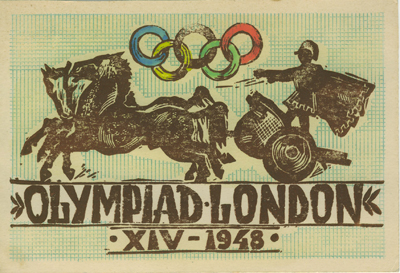
A new exhibition exploring London’s Olympic history has opened at the British Library. Olympex 2012: Collecting the Olympic Games features a range of memorabilia including a swimming costume and the finishing tape broken by – later disqualified – marathon runner Dorando Pietri  from the 1908 London Games (see our earlier post for more on him) as well as posters and artworks, stamps, letters and postcards. The exhibition also features audio interviews with Olympians including William (Bill) Roberts, a relay runner in the 1936 Berlin Olympics, and Dorothy Tyler, a medal-winning high jumper who competed in the 1936 and 1948 Olympics. Presented by the British Library and International Olympic Committee, the exhibition runs until 9th September at the library in St Pancras. Entry is free. For more, see www.bl.uk. PICTURE: Rare 1948 postcard by an unknown artist (c) Private collection/IOC

• A new free wifi network has been launched in London’s West End. Westminster City Council and telco O2 launched the network this week. It will initially cover Oxford and Regent Streets, Trafalgar Square, Leicester Square, Piccadilly Circus and Parliament Square with further areas in Westminster and Covent Garden the next to be included in the network. A once-only registration process is required to join.

• Henry Moore’s famous sculpture, The Arch, has been returned to its original home in Kensington Gardens. The six metre high work was presented to the nation by Moore in 1980 and was positioned on the north bank of the Long Water until 1996 when the structure became unstable and was placed in storage. In late 2010, the Royal Parks began a project with The Henry Moore Foundation to see if the work could be returned to the gardens. Work began to restore the piece – which consists of seven stones weighing 37 tonnes – to its original location earlier this year. For more on Kensington Gardens, see www.royalparks.org.uk/parks/kensington-gardens.

• On Now: From Paris: A Taste for Impressionism. This Royal Academy of Arts exhibition at Burlington House features 70 works from the Sterling and Francine Clark Art Institute in Williamstown, Massachusetts, and includes works by Manet, Monet, Pissarro, Degas, Sisley, Morisot and Renoir as well as those of post-Impressionist artists Corot, Théodore Rousseau and J-F. Millet, and ‘academic’ paintings by Gérôme, Alma-Tadema and Bouguereau. Runs until 23rd September. Admission charge applies. See www.royalacademy.org.uk for more.

Around London – Celebrating the City; Syon Park dig; Westminster’s rubbish; and, 1000 years of British literature…

• The City of London today kicks off Celebrate the City – four days of mostly free music, art and cultural events.The events include musical performances in many of the City’s churches, walks and talks at various locations around the Square Mile, new exhibitions including Butcher, Baker, Candlestock Maker – 850 years of Livery Company Treasures at the Guildhall Art Gallery, Livery Hall and historic building openings, family entertainment at the Cheapside Street Fayre at Saturday (including free ice-cream and tuk-tuk rides for children) and activities at the Barbican Centre and the Museum of London. The celebrations start in Guildhall Yard (pictured) at 6pm tonight when musicians from the Guildhall School of Music & Drama perform Tchaikovsky’s 1812 Overture, complete with firing cannons. Among the many other highlights will be the chance to play golden street pianos, to join in the Midsummer street part at the climax of the Spitalfields Music Summer Festival, to enjoy a sunset from the Tower Bridge walkways and to see the transformation of St Helen’s Square into a sculpture space. The weekend will also host the Open House Junior Festival, London’s first ever child-friendly City architecture festival. To see detailed listings of what’s on, head to www.visitthecity.co.uk/index.php/celebrate/.

• The Museum of London will next week launch its annual community and training dig at Syon Park in Hounslow. The dig, which will be open to school and community groups, will run from 25th June to 7th July and will focus on the area of Sir Richard Wynne’s house. A Parliamentarian, in 1659 he was implicated in a Royalist insurrection and was imprisoned. The house, which featured in the Battle of Brentford when Royalist troops advanced on Parliamentary forces in London in 1641, was later purchased by the Duke of Northumberland and demolished to extend Syon’s parkland. For more, see www.museumoflondon.org.uk.

• We couldn’t resist mentioning this one: Westminster City Council has released a top 10 list of the strangest objects people have dumped on London’s streets. They include an inflatable Margaret Thatcher and other inflatable dolls, wedding dresses, stuffed animals and a range of film props. The council say that, on average, enough litter is picked up off Westminster’s streets every two days to fill the entire 864 cubic metres of Marble Arch. They add that if just half of the annual waste collected off the street is recycled properly in the correct bins it would save them nearly £1million.

• On Now: Writing Britain: Wastelands to Wonderlands. The major summer exhibition at the British Library, it explores how the last 1,000 years of English literature have been shaped by the country’s places. The exhibition  features more than 150 works with highlights including John Lennon’s original lyrics for The Beatles’ song In My Life, JK Rowling’s handwritten draft of Harry Potter and the Philosopher’s Stone, JRR Tolkein’s original artwork for The Hobbit and original manuscripts from the likes of Jane Austen, William Blake, Charlotte Bronte, Arthur Conan Doyle, JG Ballard and Charles Dickens. As part of the exhibition, the Library is inviting people to “Pin-a-Tale” on an interactive map of Britain, that is, take a literary work and pin it on the map along with a description of how the work links with that particular location – head to www.bl.uk/pin-a-tale to take part. The exhibition runs until 25th September. Admission fee applies. For more, see www.bl.uk.

Around London – Europe’s oldest intact book at British Library; 100 days to the Games; world’s largest archaeological archive; the London Marathon; and, Turner at the National Gallery…

• The British Library has paid £9 million for a 7th century text, the St Cuthbert Gospel, which is also the oldest intact European book. The acquisition follows the library’s most successful fund-raising effort ever – it included a £4.5 million grant from the National Heritage Memorial Fund. The book – a Gospel of John bound in beautifully tooled red leather – was produced in north-east England in the late 7th century and was placed in the saint’s coffin after his death on the Isle of Lindisfarne in 698. It was retrieved when the coffin was opened at Durham Cathedral in 1104. The Gospel is on display in the Sir John Ritblat Treasures Gallery at the library in St Pancras and following a conservation review, it is anticipated it will soon be displayed with the pages open for the first time. There will be a public event celebrating the acquisition on 15th May. For more, see www.bl.uk/whatson/events/may12/index.html.

• London this week marked 100 days until the Opening Ceremony of the 2012 Olympic Games. This included unveiling the latest installation of the Olympic rings – made of 20,000 plants the 50 metre long rings are located in the Royal Botanic Gardens at Kew in the city’s west and can be seen from planes on the Heathrow flight path. The organising committee also announced the Red Arrows aerobatic display team will perform a nine-ship flypast in ‘big battle’ formation on the day of the Opening Ceremony (27th July) and stated that the games motto will be ‘Inspire a Generation’. For more, see www.london2012.com.

• The Museum of London’s archaeological archive – known as the London Archaeological Archive and Research Centre (LAARC) – is officially the largest in the world according to Guinness World Records. The archive contains more than five million artefacts and the records of almost 8,500 excavations dating back to 1830. Items in the archive include shoes dating back to Roman times, a 200-year-old set of false teeth, ‘witching bottles’ including one with human hair and toenails, and coffin plates from London’s cemeteries. The world record has been recorded as part of World Record London, a series of world record breaking events being held in the run-up to the Olympics. Others have included the Faberge Big Egg Hunt.

• Thousands of people are expected to take part in the Virgin London Marathon this Sunday. The 26.2 mile route starts in Blackheath, passes through Woolwich and Greenwich and crosses the Thames at Tower Bridge before looping around the east end of London, through Canary Wharf, and the west along The Highway (formerly known as The Ratcliffe Highway) and Embankment to Parliament Square, Birdcage Walk and finally to Buckingham Palace. The first London marathon was run in 1981. For more, see www.virginlondonmarathon.com.

• On Now: Turner Inspired – In the Light of Claude. The first major presentation of 17th century artist Claude Gellée’s influence on the English romantic artist J M W Turner, the exhibition focuses on Claude-inspired themes which run through Turner’s work including “the evocation of light and air in landscape, the effect of light upon water and his often radical reworking of contemporary scenes”. The display includes works from large scale oils on canvas through to leaves from Turner’s pocket sketchbooks. Interestingly, the exhibition also explores the story behind the so-called Turner Bequest – that on his death, Turner linked himself to Claude forever by leaving the National Gallery two pictures – Dido building Carthage (1815) and Sun rising through Vapour: Fishermen cleaning and selling Fish (before 1807) –  on condition that they were hung between two pictures by Claude, Seaport with the Embarkation of the Queen of Sheba (1648) and Landscape with the Marriage of Isaac and Rebecca (1648). Runs until 5th June. Admission charge applies. For more, see www.nationalgallery.org.uk.

Around London – Of a dramatic Boat Race; celebrating bluebells; Cockney slang; WT Stead; and, Titian’s early masterpiece…

 • Cambridge took the line honours over Oxford in this year’s Boat Race on the Thames in what has been billed as one of the most dramatic races in its 158 race history. The race was interrupted when a swimmer, described as an anti-elitist protestor, was spotted in the water and, following a restart near the Chiswick Eyot, the boat crews clashed oars and one of the Oxford crew lost his oar’s spoon. Cambridge pulled steadily ahead with Oxford an oar down and was declared the winner by four and a quarter lengths. The presentation ceremony was subsequently not held after Oxford’s bow man collapsed and was rushed to hospital where was reported to be recovering well. The win takes Cambridge’s victories to 81 compared to Oxford’s 76. For more, see http://theboatrace.org. (For more on the history of the Boat Race, see our entry from last year).

Epping Forest’s bluebells are out in force and to celebrate the City of London Corporation is holding a series of events including an art exhibition at The Temple in Wanstead Park. The exhibition, Out of the Blue, celebrates the bluebells of Chalet Wood and features a “miscellany of bluebell images, artwork, folklore and fairies”. A free event, it runs until 27th May. This Sunday the Temple will also host an art afternoon with local artist Barbara Sampson and on 29th April photographer Robert Good will hold a course on photography around the forest. Both are free events. For more details, see www.cityoflondon.gov.uk/epping.

• “Porky pies” (lies) is the most used Cockney phrase, according to a survey of Britons on their knowledge and use of Cockney. The Museum of London survey of 2,000 people, including 1,000 from London, also found that “apples and pears” (stairs) was the most well-known Cockney phrase and that while a majority of people knew what common phrases like “brown bread” meant (in this case dead), only small percentages of people used them. And while 63 per cent of respondents believed Cockney slang was crucial to London’s identity, 40 per cent were convinced it is dying out and 33 per cent were sad at its passing. Strictly speaking, a ‘Cockney’ is someone who was born within the sound of bow bells at the church of St Mary-le-Bow in Cheapside, but according to Alex Werner, head of history collections at the museum, “people from all corners of London identify themselves as being Cockney”. He said that while for many people “Cockney rhyming slang is intrinsic to the identity of London”, the research the Cockney dialect “may not be enjoying the same level of popularity”. The research found that among the least known Cockney rhyming slang phrases included “white mice” (ice), “donkey’s ears” (years), and “loop de loop” (soup). For more from the museum, see www.museumoflondon.org.uk.

• The life of influential newspaper editor and Titanic victim, William Stead, will be celebrated at a two day conference next week. Hosted by the British Library, in association with Birkbeck College and the University of Birmingham, the conference will feature 40 speakers from around the world. Stead, who was editor of The Pall Mall Gazette, was a controversial figure who is credited with being one of the inventors of the modern tabloid. He died on the Titanic‘s maiden voyage – the 100th anniversary of which is being marked this month. W.T. Stead: A Centenary Conference for a Newspaper Revolutionary takes place from 16th to 17th April, 2012. Tickets (£45 for one day or £85 for two days) can be booked by visiting the box office in the St Pancras building or phoning 01937 546546. The programme for the conference can be found at https://sites.google.com/site/stead2012/.

• On Now: Titian’s First Masterpiece: The Flight into Egypt. The National Gallery is hosting a new exhibition focused on the then young artist’s creation of the magnificent painting The Flight into Egypt in the 16th century. The artwork, lent to the National Gallery by the Hermitage Museum, St Petersburg, has recently been restored and the exhibition represents the first time the painting has been seen outside Russia since 1768 when Empress Catherine the Great purchased it in Venice. Admission is free. Runs until 19th August. For more, see www.nationalgallery.org.uk.

Around London – Family festival to celebrate Diamond Jubilee; British Library publishes world’s first detective novel; and, Closing Ceremony Celebration Concert tickets on sale Friday…

Sainsbury’s and Royal Parks have unveiled plans for a two day festival in Hyde Park – billed as the largest family festival London has ever seen – celebrating the Queen’s Diamond Jubilee over the June holiday weekend. The Jubilee Family Festival will feature live music and entertainment with one of the key highlights of each day being the finale – a 70 minute Disney concert specially created to celebrate the Jubilee. Other activities will include appearances by celebrity performers and dancer and children’s TV characters as well as equestrian events and motorcycle displays. There will also be a range of “Commonwealth-inspired” acts, food and drink supplied by Sainsbury’s and giant screens showing Jubilee-related events taking place elsewhere. There will be capacity for 50,000 ticket holders on each of the two days – Saturday, 2nd June, and Sunday, 3rd June. The event will run from 10.30am to 7pm on each day. Tickets – priced at £20 an adult/£12.50 for under 16s (children under three free) or £52 for a family of two adults and two children – go on sale at 9am tomorrow (Friday 24 February) from Ticketmaster – www.ticketmaster.co.uk or call 0844 847 1661 (+44 161 385 3211 from outside the UK) – or Seetickets –  www.seetickets.com  or call 0844 858 6760 (+44 1142 249 784 from outside the UK). In addition, from 28th March, Sainsbury’s customers who spend £60 in store will be able to enter a daily ballot for free family tickets. For more information on the festival, see www.sainsburys.co.uk/jubilee.

• The British Library has republished what many believe was the first detective novel ever published. The Notting Hill Mystery by Charles Felix was originally serialised between 1862 and 1863 in the magazine Once a Week (pictured right – image courtesy of the British Library). It was also published as a single volume in 1863, meaning it predates both Wilkie Collins’ The Moonstone (1868) and Emile Gaboriau’s first Monsieur Lecoq novel, L’Affaire Lerouge, but has not been available commercially since. The story is presented in the form of diary entries, family letters, chemical analysis reports, and interviews with witnesses as well as a crime scene map and follows an insurance investigator, Ralph Henderson, as he builds a case against the sinister Baron ‘R___’ whom he suspects of murdering his wife for life insurance. Available from the British Library bookshop – www.bl.uk/shop.

• Tickets for the BT London Live Closing Ceremony Celebration Concert go on sale tomorrow. The open air event will feature headline act Blur and will be held in Hyde Park on Sunday, 12th August, the day of the Olympic Games Closing Ceremony. Other artists performing at the concert will include The Specials and New Order, and giant screens in the park will show highlights of the Closing Ceremony. Another concert will be held in Hyde Park on Friday July 27, coinciding with the Games’ Opening Ceremony (headline acts and ticket prices will be announced shortly – BT customers will have 48 hour priority access for tickets for both concerts via www.bt.com/londonlive. Tickets for the August concert, priced at £55 (plus booking fee) go on sale at 9am on Friday via www.btlondonlive.com.

Around London – Dickens’ supernatural leanings at the British Library; Art Fund looking to relocate Shop in a Bottle; HMS Belfast closed; and, Winter Wonderland returns to Hyde Park…

• Next year – 7th February to be precise – marks 200 years since the birth of celebrated 19th century novelist Charles Dickens and to mark the bicentenary, London institutions are among those across the country organising a raft of exhibitions under the banner of Dickens 2012. First up for us is a new exhibition launched this week at the British Library. A Hankering after Ghosts: Charles Dickens and the Supernatural explores the way in which Dickens used supernatural phenomena in his works (remember the ghosts of A Christmas Carol anyone?), while at the same time placing them in the context of the “scientific, technological and philosophical debates of his time”. The exhibition includes a letter from Dickens to his wife Catherine written in 1853 (this alludes to a disagreement which arose between them after Catherine became jealous of the attention Dickens was paying to another lady; he apparently used mesmerism to treat Catherine’s “nervous condition”), an article in an 1858 Household Words magazine in which Dickens questions the motivation of the spirits who supposedly tapped out messages to spiritualists, and, a 1821 copy of The Terrific Register: or, record of crimes, judgements, providences and calamities, a publication which was one of Dickens’ favorite reads as a youth. There is a range of accompanying events including talks by Dickens’ biographer Claire Tomalin (author of Charles Dickens: A Life) and John Bowen, author of Other Dickens: Pickwick to Chuzzlewit. Admission is free. Runs until 4th March. For more, see www.bl.ukImage: Courtesy of British Library

• The Art Fund has launched an appeal to have Yinka Shonibare’s Ship in a Bottle, currently sitting atop Trafalgar Square’s fourth plinth, relocated to a permanant home outside the National Maritime Museum in Greenwich. The fund, which has kick started the campaign with a £50,000 grant, needs £362,500 to buy the work – a scaled down replica of Nelson’s flagship, HMS Victory – which has been on display in Trafalgar Square since May, 2010, but is due to be removed in January next year. The replica work features 80 cannon and 37 sails, set as on a day of battle, and is made out of materials including oak, hardwood, brass, twine and canvas. For more, see www.artfund.org/ship/.

• The historic ship HMS Belfast, moored on the Thames between London Bridge and Tower Bridge, has been closed until further notice after a section of gangway which provides access to the ship collapsed earlier this week. Two contractors received minor injuries in the collapse and staff and visitors were evacuated by boat. The HMS Belfast is described as the most significant surviving Royal Navy warship from World War II and later served in places like Korea. It contains extensive displays on what life was like aboard the vessel. Keep on eye on www.iwm.org.uk for more information.

Now On: Winter Wonderland in Hyde Park. Hyde Park’s annual festival of all things Christmas is on again and this year’s festive offerings include, an ice rink, circus, giant observation wheel, rides and the chance for younger people to visit Santa Land as well as a plethora of opportunities to purchase presents at the Angels Christmas Market and warm-up with some of the fare available at eateries including the Bavarian Village, English Food Fair, and Spiegel Saloon. Winter Wonderland is free to enter and open between 10am and 10pm daily. Runs until 3rd January. For more, see www.hydeparkwinterwonderland.com.