Treasures of London – The Medieval Palace at the Tower of London…

Located in one of the oldest parts of the city’s iconic fortress, the medieval palace has undergone a revamp with a restoration of the sumptuous and extravagant decorative scheme that was in place in the 13th century.

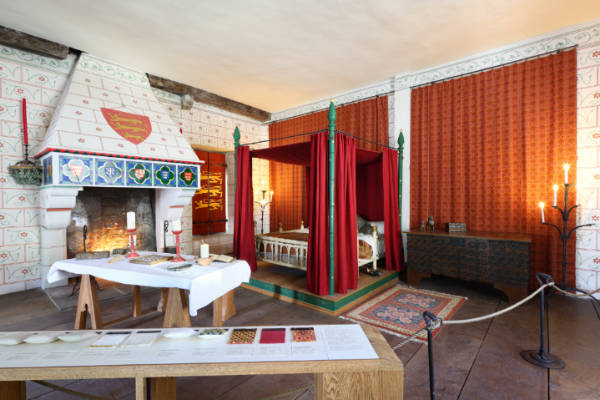
The King’s Bedchamber inside St Thomas’s Tower, part of the medieval palace in the Tower of London. PICTURE: Michael Bowles/© Historic Royal Palaces

The medieval palace is found within the St Thomas’s Tower, the Wakefield Tower and the Lanthorn Tower on the southern side of the Tower and was built on the orders of successive monarchs, King Henry III and his son King Edward I. They were used as a domestic and diplomatic space periodically by the kings and their queens, Eleanor of Provence and Eleanor of Castile.

The medieval palace today includes a recreation of Edward I’s vibrant bedchamber in the St Thomas’s Tower (which once directly fronted the River Thames and sits above the water gate later known as Traitor’s Gate) and an exploration of the influence Eleanor of Castile had on the decoration.

The Wakefield Tower, meanwhile, was built by King Henry III as royal lodgings between 1220 and 1240. It originally sat at the river’s edge and could be accessed from the river by private stairs.

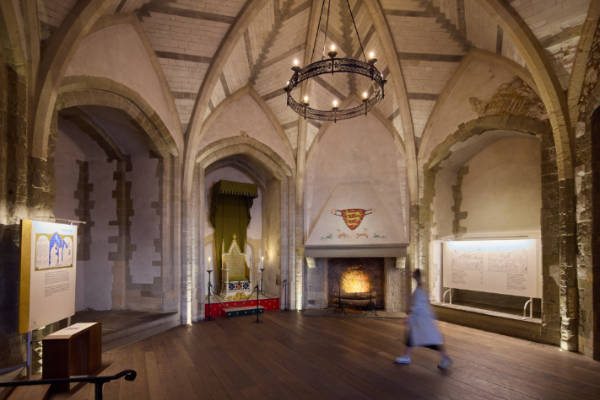
Believed to have been used as an audience chamber, it contains a recreation of a throne and canopy based on 13th century examples which are decorated with a Plantagenet lion – the symbol of the royal family. The vaulted ceiling is 19th century.

Inside the Wakefield Tower in the Medieval Palace in the Tower of London. PICTURE: Michael Bowles/© Historic Royal Palaces.

The third of the towers – the Lanthorn Tower – was built as lodgings for King Henry III’s Queen but is now a 19th century reconstruction after the original tower was gutted by fire.

It contains a display and among the new objects is a stone, on loan from the Jewish Museum London, which came from a Jewish mikveh or ritual bath, dating to about 1200 and discovered in London in 2001 within the home of the medieval Crespin family. It’s part of a new effort to explore the story of London’s medieval Jewish community, the taxation of which helped to pay for the construction of St Thomas’s Tower in the 1270s.

Other new objects on show in the Lanthorn Tower include a 13th century seal matrix from a 13th century Italian knight and a gold and enamel 13th century pyx – a small round container used to hold communion wafers made in the French city of Limoges (both on loan from the British Museum) as well as a child’s toy knight made of lead that dates from c1300, lent by London Museum and a perfectly preserved wicker fish trap which was excavated from the Tower moat, containing bones likely dating from the 15th or 16th century and illustrating the moat’s role as a fishery.

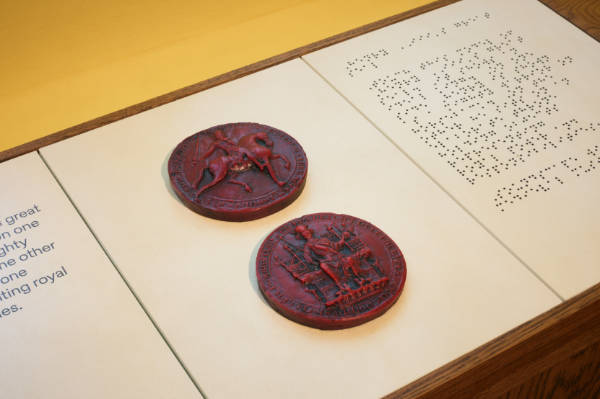
A replica of King Edward I’s seal matrix in the Medieval Palace exhibition, accompanied by a description in braille. This item is intended to be touched by visitors, to help them understand what the seal matrix might have looked and felt like in three dimensions. PICTURE: Michael Bowles (www.michael-bowles.com)

The medieval palace also includes a small private chapel which is where it’s believed King Henry VI died in 1471.

Among other stories now told in the display is that of less well-known Tower residents such as King Edward I’s laundress Matilda de Wautham, and John de Navesby the keeper of the white bear which was held in the menagerie at the Tower.

WHERE: The Medieval Palace, The Tower of London (nearest Tube Station is Tower Hill); WHEN: 9am to 5:30pm daily (last entry 3:30pm); COST: £35.80 adults; £28.50 concession; £17.90 children (free for Historic Royal Palaces members and £1 tickets are available for those in receipt of certain means-tested financial benefits); WEBSITE: www.hrp.org.uk/tower-of-london/

This Week in London – One of the world’s most valuable watches at Science Museum; medieval silk bag (with a story) goes on show at Westminster Abbey; and, new electric bus display at London Transport Museum…

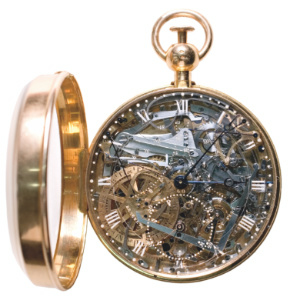
The ‘Marie Antoinette’ perpetuelle, Breguet, No 160, Paris, 1783-1820
© The Museum for Islamic Art, Jerusalem

One of the world’s most valuable watches – the No 160 watch which Abraham-Louis Breguet designed for Marie Antoinette but which wasn’t completed until the 1820s, well after her death – is the star of the show at the Science Museum’s new exhibition Versailles: Science and Splendour. Opening today, the exhibition, created in partnership with the Palace of Versailles, takes visitors on “a 120-year journey through the evolution of science at Versailles” and explores how Louis XIV, Louis XV and Louis XVI encouraged the pursuit of scientific knowledge and harnessed that knowledge as a tool of power. More than 100 objects are on display and, along with Breguet’s watch, they include Louis XV’s rhinoceros, a detailed map of the moon by Jean-Dominique Cassini, and Claude-Siméon Passemant’s Clock of the Creation of the World (1754). The watch, meanwhile, has its own fascinating history, including two decades in which its whereabouts were unknown after it was stolen in 1983 (in fact, its display in this exhibition marks the first time the timepiece has travelled abroad since its safe return to the LA Mayer Museum for Islamic Art in 2008). Runs until 21st April. Admission charge applies. For more, see sciencemuseum.org.uk/see-and-do/versailles.

• A medieval silk seal bag, which dates from the reign of King Henry III, has gone on public display for the first time in the Queen’s Diamond Jubilee Galleries at Westminster Abbey. The display follows the discovery by scholars that the bag’s material is a perfect match to the silk cloth used to wrap the remains of the Emperor Charlemagne when he was buried in Germany’s Aachen Cathedral (Charlemagne, seen as the first Holy Roman Emperor, died in 814 but was re-buried in the karlsschrein (Charles’s shrine) at Aachen in 1215). The bag at the abbey contains a wax seal, the Great Seal of King Henry III, which was attached to an inventory of the jewels and precious items on Edward the Confessor’s shrine located in the heart of the abbey. It was drawn up in 1267 when Henry III was in financial difficulties and forced to pawn items from the shrine to Italian merchants to raise funds (it is believed the items were all returned within 18 months). The silk used for Charlemagne’s shroud is believed to have been spun in the 12th century in Spain or the eastern Mediterranean and, while the small piece at the Abbey originates from a separate silk, it is understood that it would have been produced by the same weavers on the same loom. The bag can been seen until Easter next year. Admission charge applies. For more, see www.westminster-abbey.org/visit-us/plan-your-visit/the-queens-diamond-jubilee-galleries/.

A new interactive electric bus display has opened at the London Transport Museum in Covent Garden. The Wrightbus Electroliner display – which has been provided by Transport UK London Bus – is based on an electric vehicle bus type which has been part of the fleet of buses operating in London since 2023. The new display features the front of the bus and includes an interactive driver cab and passenger space. Admission charge applies. For more, see www.ltmuseum.co.uk.

Send all items for inclusion to exploringlondon@gmail.com.

10 towers with a history in London – 1. The Bloody Tower…

The Bloody Tower (centre, with the gateway) at the Tower of London. PICTURE: David Adams

Carrying rather a gruesome name, this rectangular-shaped tower sits over a gate leading from outer ward into the inner ward in the Tower of London.

The tower, which once controlled the watergate before the outer walls were constructed, was originally known as the Garden Tower due to its location adjoining the Tower Lieutenant’s Garden.

To see the rest of this post (and all of our coverage), subscribe for just £3 a month. This small contribution – less than the cost of a cup of coffee – will help us continue and grow our coverage. We appreciate your support!

10 atmospheric ruins in London – 8. Coldharbour Gate…

Located within the outer walls of the Tower of London are the remains of some early 13th century fortifications built by King Henry III.

The foundations of Coldharbour Gate in the foreground beside the White Tower with the remnants of the Inmost Ward Wall beyond. PICTURE: Elizabethe (licensed under CC BY-NC-ND 2.0)

These include the foundations of Coldharbour Gate which once adjoined the south-west corner of the White Tower as well as the western wall of the Inmost Ward which ran down to the Wakefiekd Tower.

The gate was defended by two cylindrical turrets while the Inmost Ward Wall has arrow loops installed, allowing archers to fire down on attackers who had breached the outer fortifications.

The gate was later used as a prison. Alice Tankerville, who was charged with piracy on the River Thames, became one of the most famous prisoners housed there when, despite having apparently been chained to the wall, she escaped with the help of two guards in 1533 (she was recaptured just outside the Tower).

The gateway was demolished in about 1675 and lead from the roof taken to Greenwich where it was redeployed at the Royal Observatory.

Much of the wall was hidden away behind later buildings but was re-exposed after being bomb damaged during World War II.

Not much remains to be seen today but the foundations do evoke a sense of the royal palace in times past and serve as a reminder that the buildings we see at the Tower today are not all that has existed here.

Other ruins at the Tower of London include the remains of the Wardrobe Tower, which lies at the south-east corner of the White Tower. It is thought to have dated from 1190 and incorporates the base of a Roman bastion.

WHERE: Tower of London (nearest Tube station Tower Hill); WHEN: 9am to 5.30pm (last admission 3.30pm), Tuesday to Saturday; 10am to 5.30pm (last admission 3.30pm) Sunday to Monday; COST: £34.80 adults; £17.40 children 5 to 15 (family tickets available; discounts for online purchases/memberships); WEBSITE: www.hrp.org.uk/toweroflondon/.

8 locations for royal burials in London…4. Christ Church Greyfriars…

We’ll return to Westminster Abbey shortly but first we’re heading into the City of London.

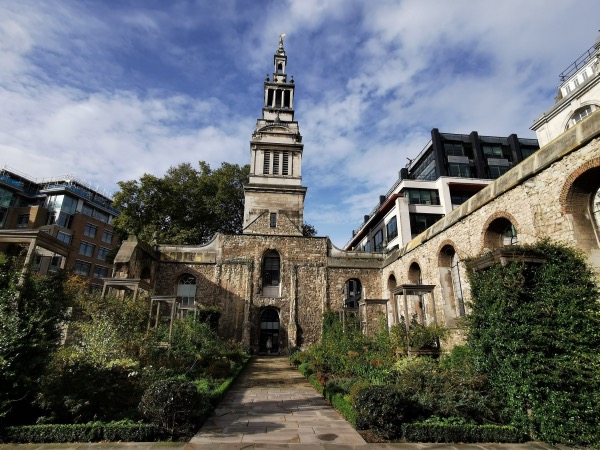
Christ Church Greyfriars, also known as Christ Church Newgate Street, was the burial site of several queens in the medieval era.

Christ Church Greyfriars. PICTURE: Karmakolle (licensed under CC BY-SA 4.0).

These include the second wife of King Edward I, Queen Marguerite, who partly financed construction of the church which commenced in the 1290s and finished well after her death in the 1360s.

Marguerite, who was the first uncrowned queen since the Norman Conquest (apparently due to the expense), was only 26 when she was widowed in 1307 (having married the king in 1299 when he was at least 40 years her senior).

She died on 14th February, 1318, while at her castle at Marlborough but her remains were brought to London where she was buried in Greyfriars wearing a Francisan habit. Her tomb, sadly, was destroyed during the Reformation.

Also buried in Greyfriars was Queen Isabella, the widow (and adversary) of the ill-fated King Edward II. Isabella, who was also known as the ‘She-wolf of France’, is said to have been buried in the clothes she wore at her wedding to the King 50 years earlier. Despite rumours to the contrary, her lover, Roger Mortimer, was not buried with her (although Isabella’s daughter – Joan of the Tower, who was the wife of King David II of Scotland – was).

While their predecessor as Queen, Eleanor of Provence, wife of King Henry III, was buried at Amesbury Priory in Wiltshire where she had died (the grave is unmarked), her heart was brought to London and buried in Greyfriars.

Others buried in the church include King Henry III and Eleanor’s daughter, Beatrice of England, and King Edward III’s daughter Isabella, Countess of Bedford.

There’s not much left of Greyfriars these days – the medieval church, one of the largest then in London, burned in the Great Fire of London of 1666 and following a rebuild under Sir Christopher Wren’s supervision, it was again all but destroyed during the Blitz in World War II.

It was decided not to rebuild and what remained of the church – some of the outer walls and tower – were designated a Grade I-listed building in 1950. Plantings inside are laid out to resemble the pews of the church in plan.

WHERE: Christ Church Greyfriars, King Edward Street (nearest Tube station is St Paul’s); WHEN: Anytime; COST: Free; WEBSITE: www.cityoflondon.gov.uk/things-to-do/city-gardens/find-a-garden/christchurch-greyfriars-church-garden

Lost London – The Painted Chamber, Palace of Westminster…

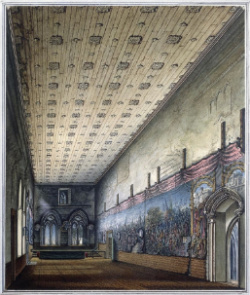
Part of the medieval Palace of Westminster, the Painted Chamber took its name from a series of large paintings which decorated the walls.

A watercolour of the Painted Chamber in Westminster Palace by William Capon made in 1799.

The long and narrow chamber, which stood parallel to St Stephen’s Chapel, was constructed in the 13th century during the reign of King Henry III and was apparently initially intended as a private apartment for the king as well as a reception room.

It featured a state bed at one end positioned under a painting of King Edward the Confessor and also had a “squint” – a small opening at eye level – through which the monarch could view religious services in a chapel located next door.

The chamber was apparently originally known as the King’s Chamber but came to be known as the Painted Chamber when the walls were decorated with paintings depicting vices and virtues and Biblical figures.

These paintings, which were completed over an almost 60 year period from 1226 and which were repaired a couple of times during that period, were added to with commissions by successive monarchs.

The painted chamber was the location for the State Opening of Parliament in the Middle Ages and was where Oliver Cromwell and the others signed King Charles I death warrant in 1649. The body of King Charles II rested here overnight before he was interred in Westminster Abbey.

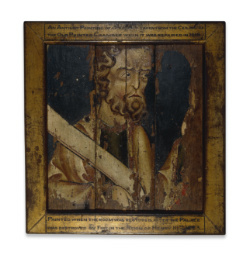
A ceiling panel from the Painted Chamber depicting a prophet, created between 1263-1266 PICTURE: © The Trustees of the British Museum (licensed under CC BY-NC-SA 4.0)

Later neglected, the walls of the chamber were whitewashed and hung with tapestries and in the early 19th century restoration work was done to reveal the paintings again with artist and antiquarian Charles Stothard commissioned by the Society of Antiquarians in 1819 to make watercolour copies (further copies were also made by the clerk of works at Westminster, Thomas Crofton Croker).

By 1820, the chamber was being used for the Court of Requests, a civil claims court.

The Painted Chamber was gutted when fire devastated much of the Palace of Westminster on the night of 16th October, 1834. It was reroofed and refurnished and used by the House of Lords until 1847 – as well as for the State Opening of Parliament in February, 1835. It was finally demolished in 1851.

Two ceiling paintings which were removed in 1816 during repairs are now at the British Museum (pictured right).

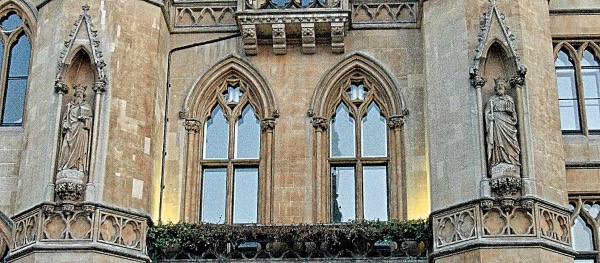
10 (lesser known) statues of English monarchs in London…6. King Edward the Confessor and King Henry III…

PICTURE: Davide Simonetti (licensed under CC BY-NC 2.0/image has been cropped and enhanced).

These two statues are listed together because they both appear on the exterior of the same building – The Sanctuary which stands next to Westminster Abbey.

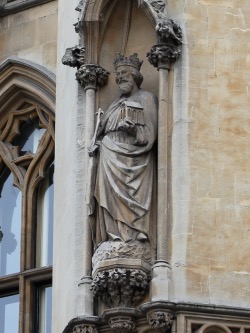
Close-up of Henry III. PICTURE: Can Pac Swire (licensed under CC BY-NC 2.0/image has been cropped).

This Grade II-listed building, which contains a gateway to the Dean’s Yard, was designed by Sir George Gilbert Scott and built in Bath stone with slate roofs in the mid-1850s.

The statues, which stand in niches on the exterior of the turrets on either side of the gateway, have been identified as the two kings on London Remembers.

Their position at this location is not random. The king on the left, identified as Edward the Confessor, had St Peter’s Abbey rebuilt here in the mid 11th century (and was buried in it only a week after its consecration).

The king on the right, King Henry III, rebuilt the abbey church in the mid-13th century to provide a shrine to venerate Edward the Confessor and as a site for his own tomb.

The kings are apparently not the only monarchs adorning the building – two roundels below them depict Queen Victoria and Prince Albert.

Famous Londoners – William Marshal (part II)…

We published part I of this two-part article last week. Part II follows…

Marshal had made his name as a knight and, was still in the retinue of Henry, the Young King, heir of Kind Henry II, when he again rebelled against his father (and brother, the future King Richard I).

This was despite a brief rift with the Young King following an accusation that Marshal had slept with Henry’s wife Marguerite (the truth of which remains something of a mystery). Despite their falling out, William and Henry had repaired their relationship to at some degree when, still in rebellion against his father, on 7th June, 1183, the Young King died of dysentery at just the age of 28.
In a dying wish, Henry had asked William to fulfil his vow to go on crusade to the Holy Land. This Marshal duly did, undertaking a pilgrimage to Jerusalem and spending two years in the Middle East before returning to England at around the end of 1185.

On his return, he entered the household of King Henry II and was on campaign with him in France in 1189 when the King died at the age of 56.

Marshal’s allegiance was now with his son and heir, King Richard I, the “Lionheart”. He subsequently confirmed his father’s permission for Marshal to marry his ward, the wealthy heiress the 16-year-old Isabel of Clare which Marshal, now 42, quickly did, returning to London to claim his bride who was then living at the Tower of London. It’s believed they may have married on the steps of St Paul’s.

Somewhat controversially, when Richard I set off on the Third Crusade, Marshal remained behind in England, appointed as co-justiciar to govern in the king’s absence. Thanks to his marriage, Marshal was now a major landholder with his base at Striguil Castle (now Chepstow) in the Welsh Marches and he assembled a household befitting of his status. In 1190 his wife Isabel gave birth to a son, ‘Young’ William.

Marshal managed to successfully navigate the dangerous politics of the time as, in the absence of King Richard, his younger brother John manoeuvred to gain power and, following news that Richard had been captured on the way home from the Holy Land and was now imprisoned in Austria, went so far as to open ally himself with the French King Philip Augustus.

Richard was finally released for the exorbitant ransom of 150,000 silver marks and when he arrived back in England, Marshal returned to his side, joining the King as he dealt with the fallout, both in England and France, from John’s treachery (John, meanwhile, was back in his brother’s camp, having begged his forgiveness).

His kingdom largely restored, Richard died in April 1199 after being struck with a crossbow bolt while campaigning in Limousin. Following his death, Marshal supported John’s claim to the throne over his ill-fated nephew Arthur and at John’s coronation he was rewarded by being named, thanks again to his marriage, the Earl of Pembroke – the title of earl being the highest among the English aristocracy.

Pembroke  in southern Wales now became his base but following John’s coronation Marshal spent considerable time fighting for the King on the Continent in an ultimately unsuccessful campaign that ended with the English largely driven from France. When Marshal then tried to keep his lands in Normandy by swearing an oath to King Philip, not surprisingly he fell from John’s favour.

Marshal then turned his attention to his own lands in Wales and in Ireland which he visited several times to assert his claim by marriage to the lordship of Leinster. But he again crossed John when he visited in early 1207 without the King’s permission and when John summoned Marshal back to England to answer for his impudence, his lands in Leinster were attacked by the King’s men. John’s efforts to seize Marshal’s Irish domains, however, failed and the King was eventually forced to back down, leaving Marshal to strengthen his position in Ireland.

John and Marshal’s relationship deteriorated even further in 1210 after Marshal was summoned to Dublin to answer for his role in supporting William Briouze, a one-time favourite of the King who had dramatically fallen out him (and who eventually died in exile in 1211 while his wife and eldest son were starved to death in Windsor Castle on John’s orders).

Despite the fact Briouze’s had apparently been on his lands in Ireland for 20 days after they’d fled England to escape the wrathful King, Marshal managed to come out relatively unscathed by the affair – but he was forced to relinquish a castle and place some of his most trusted knights and eldest sons in the King’s custody.

By 1212, however, Marshal was back in royal favour – his sons were freed the following year – and in 1213 he led his forces in support of King John who was facing revolt in England and a possible invasion from France (Marshal subsequently remained in England to guard against attack from the Welsh while the King was in France).

In 1215, Marshal was involved in the creation of the Magna Carta – his name was the first the English lords to appear on the document – and some have even suggested he was one of its principal architects (although this may be overstating his role).

He remained loyal to John in the subsequent strife but he was in Gloucester when King John died in 1216.

Marshal subsequently supported the claim of King John’s son, King Henry III, to the throne and, named as a ‘guardian of the realm’ (a role which was essentially that of a regent), he played an instrumental part in taking back the kingdom for Henry, including successfully leading the royalist forces against a French and rebel force on 20th May, 1217, at Lincoln – a battle which brought about a quick resolution to the ongoing war.

Marshal spent the next couple of years working to restore the King’s rule but in early 1219, at the age of 72, fell ill and retreated to his manor house at Caversham.

He died around noon on 14th May. His body was taken to London via Reading and after a vigil and Mass at Westminster Abbey, he was interred in the Temple Church.
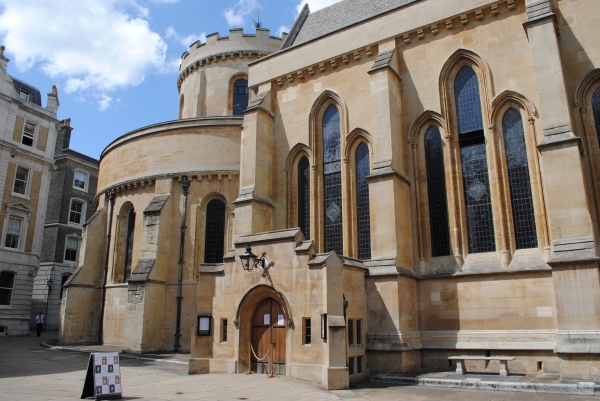
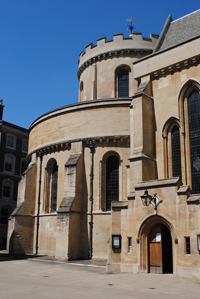
Marshal’s place of burial was due to an agreement he had made with the Templars back in the 1180s in which he agreed to enter their order before his death in exchange for the gift of a manor. The master of the Templars in England, Aimery of St Maur, had apparently travelled to Caversham before his death to perform the rite.

Marshal’s wife Isabel died the following year and sadly, while he had five sons, the Marshals gradually faded from history, the lack of male heirs in the family eventually leading to the break-up of the family lands.

A towering figure of his age – seen by many as the epitome of what a knight should be, Marshal’s story – despite a minor mention as Pembroke in Shakespeare’s King John – has largely been forgotten. But his influence on the world in which he lived – and hence the shaping of our world today – was significant.

With thanks to Thomas Asbridge’s The Greatest Knight: The Remarkable Life of William Marshal, the Power Behind Five English Thrones

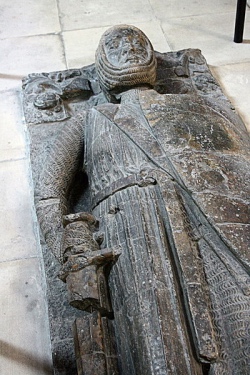
PICTURES: Top – An effigy believed to be that of William Marshal in the Temple Church, London (Michael Wal –  licensed under CC BY-SA 2.0). Lower – The Temple Church in London in which William Marshall was buried. PICTURE: David Adams
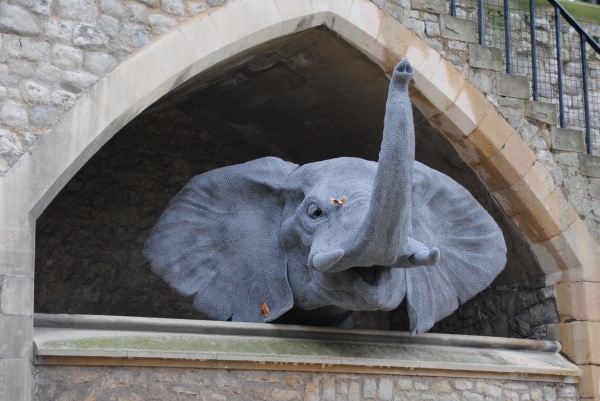
10 (lesser known) monuments featuring animals in London – 8. The elephants of the Tower…

Sadly, we don’t know the name of this pachyderm – if it had one – but we do know that a couple of elephants lived in the Tower of London during the Middle Ages.

The first elephant to arrive was presented to King Henry III as a gift by King Louis IX of France.

The animal was apparently shipped across the Channel in 1255 and brought to the Tower of London by boat. A special 40 foot long wooden elephant house was built to accommodate it at the Tower.

It’s no surprise that such an exotic species attracted widespread interest. The medieval chronicler Matthew Paris was so intrigued he travelled from his monastery in St Albans to see it, noting that it was “the only elephant ever seen in England” (although it’s said that the Roman Emperor Claudius, when he arrived in Britain, came with elephants).

The elephant didn’t survive long – it died just two years after arriving in England and was buried in the Tower’s bailey. Its bones were apparently later dug up; it’s speculated this was so they could be made into receptacles for holy relics.

The elephant depicted could also represent one sent to King James I by the Spanish King in 1623 along with instructions that the poor creature should only drink wine between the months of September and April.

Made with galvanised wire, the sculpture of the elephant’s head – located in the courtyard between the Lantern and Salt Towers – is one of 13 representing some of the animal inhabitants of the Tower over the centuries. On display until 2021, ‘Royal Beasts’ is the work of artist Kendra Haste.

WHERE: Tower of London (nearest Tube station Tower Hill); WHEN: 9am to 4.30pm, Tuesday to Saturday, 10am to 4.30pm Sunday to Monday; COST: £24.70 adults; £11.70 children 5 to 15; £19.30 concessions (family tickets available; discounts for online purchases/memberships); WEBSITE: www.hrp.org.uk/toweroflondon/.

Lost London – St Stephen’s Chapel…

The chapel, which served as the House of Commons from the mid-16th century until it was destroyed in the fire at the Palace of Westminster in 1834, was first recorded as part of the palace in the reign of King John (1199-1216).

It was rebuilt  in the late 13th century, on the orders of King Edward I. The king, apparently impressed by the Sainte Chapelle, built as a royal chapel by King Louis IX in Paris, ordered the chapel rebuilt to rival it.

The two storey, richly decorated stone chapel featured two levels, the upper floor for use of the Royal Family (it could only be entered from the Royal Apartments), the lower for courtiers and the Royal Household – was largely complete by 1348.

The then 15-year-old King Richard II married Anne of Bohemia in the chapel in 1382 and the ill-fated Richard, Duke of York (the younger of the two so-called Princes in the Tower) married Anne Mowbray here while still young children. Richard’s father, King Edward IV, had laid in state here for eight days after his death in 1483. Thomas Cranmer was consecrated as Archbishop of Canterbury here in 1533.

The Palace of Westminster was no longer used as a royal residence following the death of King Henry VIII in   and in 1547 it was deconsecrated under the Abolition of Chantries Act instituted by King Henry’s son, King Edward VI, after which it was used as a debating chamber for the House of Commons (which had hitherto been meeting in xxx).

During the Commonwealth, Oliver Cromwell had the chapel’s crypt white-washed and, so the story goes, used it for stabling his horses.

The chapel’s architecture was amended several times over the ensuing centuries to better accomodate MPs – it included the addition of extra seats and among the architects who worked on it was Sir Christopher Wren – before the fire of 1834 while completely destroyed the main chapel, leaving just the crypt below and adjoining cloisters.

The crypt, now known as the Chapel of St Mary Undercroft, was subsequently restored to its original use as a place of worship (it had been used for various purposes over its life). Interestingly, women’s suffragist Emily Davison had spent the night in a broom cupboard in the crypt in 1911 so, as woman banned from the premises, she could address the House of Commons the next day.

The site of the chapel is now covered by St Stephen’s Hall and its porch, constructed as part of the rebuild after the fire.

To see modern revisualisations of what the chapel may once have looked like, head to www.virtualststephens.org.uk.


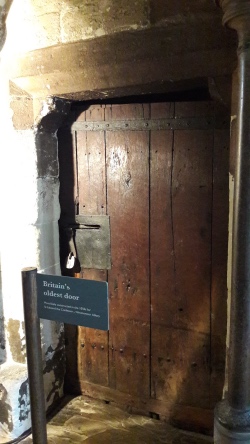
Where’s London’s oldest…door?

Yes, London has an officially dated oldest door. In fact, it’s the oldest door in Britain.

The door is located in Westminster Abbey and is believed to date from the time of King Edward the Confessor, who founded the abbey which was inaugurated in 1065.

Made of five vertical oak planks – all cut from the same tree, most likely felled on abbey lands, possibly in Essex – and held in place by three horizontal iron straps, it opens from the Abbey Cloisters into the octagonal Chapter House’s outer vestibule. In 2005 it was dated, using ring-patterns in the wood, to around 1050.

The door now stands six-and-a-half feet high and four foot wide but it has been cut down. It’s believed the original door was nine foot high and slightly wider.

It’s thought to be probable that both faces were originally covered with animal hide (the iron straps are, unusually recessed into the wood on both sides to enable this, and were covered with decorative iron straps and hinges – only one of decorative straps remains today).

The door may have originally served as the door to the chapter house built for Edward the Confessor’s abbey. It is believed to have been moved into its current location in about 1250 when King Henry III’s Chapter House was built as part of extravagant reconstruction of the abbey.

WHERE: Westminster Abbey (nearest Tube stations are Westminster and St James’s Park); WHEN: Times vary – see the website for details; COST: £23 adults/£20 concession/£10 children (discounts for buying online; family rates available); WEBSITE: www.westminster-abbey.org

PICTURE: Pjposullivan1 (licensed under CC- BY-SA 2.0)

LondonLife – Westminster Abbey marks 750th anniversary of Henry III’s rebuild; new mental health awareness tour at National Gallery; and, Rembrandt at Kenwood…

Two 13th century manuscripts from Westminster Abbey’s collection have this month gone on show in the Queen’s Diamond Jubilee Galleries at the abbey to mark the 750th anniversary of King Henry III’s rebuilding of the church originally constructed on the orders of Edward the Confessor. Believed to have never before been displayed to the public, the manuscripts – which feature ink script on vellum and have wax seals on silk cords attached – include a royal charter dated 1246 in which King Henry III announces his intention to be buried alongside Edward the Confessor in Westminster Abbey and an inventory of Edward the Confessor’s Shrine dating from 1267 which shows how much gold, precious stones and jewels were taken from it and pawned to provide the king with much-needed money. The documents can only be seen until 28th October. Admission charge applies. For more, www.westminster-abbey.org/visit-us/plan-your-visit/the-queens-diamond-jubilee-galleries. The display is one of number of special events taking place to mark the anniversary of the third consecration of the abbey church which took place in the presence of King Henry III on 13th October, 1269. While Queen Elizabeth II and the Duchess of Cornwall attended a special service to mark the occasion on Tuesday, other events aimed at the public include a special family day next Wednesday (23rd October) featuring medieval re-enactors in the cloisters, the chance to meet some of the abbey staff and to take part in a family-friendly Eucharist as well as a late opening for amateur photographers to take photographs inside the abbey (23rd October), and special family tours of the abbey (22nd and 24th October). Meanwhile, this Saturday, the abbey will host the National Pilgrimage to the Shrine of St Edward the Confessor. For more on other events at the abbey, head to www.westminster-abbey.org/events.

The National Gallery launched its first mental health awareness tour to mark World Mental Health Day last week. The tour, which is available as a smartphone app, aims to improve understanding of mental health among gallery visitors with an alternative perspective on the collection which draws on young people’s experiences of mental health – gleaned through workshops with 16 to 25-year-olds – and connects visitors with the gallery’s paintings to challenge common myths about mental health. The tour includes a focus on paintings by Van Gogh, Cima, Crivelli and Joseph Wright of Derby as well as the gallery’s architecture and figures from its portico entrance mosaic flooring such as Virginia Woolf and Winston Churchill. The tour – co-created by researchers from King’s College London, the McPin Foundation, a group of young people affected by mental health issues and members of the Gallery’s Young Producers programme and funded by Medical Research Council and the British Academy – is available free to visitors for six months. For more, see nationalgallery.org.uk.

Kenwood House in Hampstead is hosting a special display commemorating 350 years since Rembrandt’s death on 4th October, 1669. The exhibition – Rembrandt #nofilter – centres on the artist’s Self-portrait with Two Circles which has been taken from its usual place in the former dining room and represented in the dining room lobby alongside a digital photo mosaic of the painting made of “selfies” taken by visitors to Kenwood. Entry is free Runs until 12th January. For more, see www.english-heritage.org.uk/visit/places/kenwood/.

Send all items for inclusion to exploringlondon@gmail.com.

Lost London – Domus Conversorum…

Located in Chancery Lane, this “House for Converts” – for Jews who converted to Christianity – was founded in 1232 by King Henry III.

The buildings, which included a chapel as well as living quarters, provided a communal home for residents – needed because when they converted, they forfeited all their possessions to the king.

Chaplains were employed to teach the new converts and a warden appointed to manage their day-to-day living.

The Royal Treasury bore the expenses of the institution which included paying its residents a small income (although the annual grant from treasury apparently wasn’t always forthcoming leaving the residents destitute) and it was supplemented with a poll tax called the “chevage” levied on all Jews over the age of 12.

In 1290, King Edward I expelled the Jews from England. Residence here was officially the only way Jewish people could remain and some 80 residents apparently did so.

It’s said that apart from these original 80 residents (the last of whom – said to be a woman called Claricia of Exeter – died in 1356), only some 50 further converts were admitted between 1331 and 1608.

By the early 17th century, records of the buildings’ use as a house for Jewish converts had come to an end. The main residential building was destroyed in 1717 to make room for a new house for the Master of the Rolls – the chapel was at this stage being used as a storehouse for the rolls of Chancery.

Subsequently known as the ‘Rolls Chapel’, it was eventually largely demolished to make way for an extension to the Public Records Office which had been built on the site in 1851.

But some monuments from it are preserved in part of the former PRO known as the ‘Weston Room’ (pictured below).

In the late 1990s, the PRO moved out to Kew where it formed part of the National Archives. The building was acquired by King’s College London in 2000 and is now the Maughan Library.

PICTURES: Top – The Maughan Library (FormerBBC; licensed under CC BY-SA 4.0); Below – The Weston Room in what is now the Maughan Library (Cmglee; licensed under CC BY-SA 3.0)

A Moment in London’s History – Westminster Abbey is consecrated – and a king dies…

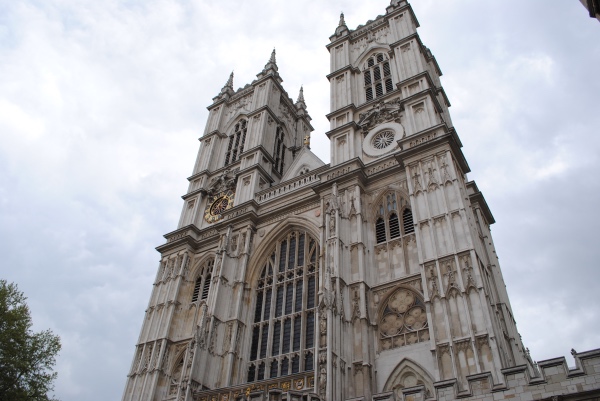
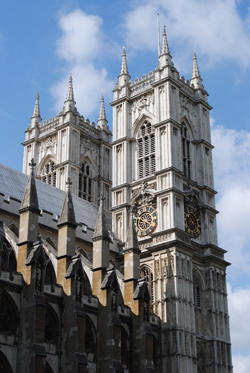
AbbeyIt was 950 years ago as of 28th December – Holy Innocents Day – that Westminster Abbey was consecrated following its construction on the orders of King Edward the Confessor.

The minster – popularly named ‘west’ minster to distinguish it from St Paul’s Cathedral (the ‘east’ minster) – was rebuilt when King Edward refounded the abbey between 1042-52, ostensibly to provide himself with a royal church in which he could be buried.

An abbey had apparently originally been founded on the site in the 7th century during the time of Bishop Mellitus, first Bishop of London (see our earlier post here).

The abbey church isn’t believed to have been completed when it was consecrated – this it’s suggested didn’t take place until 1090, well after the Norman Conquest. Unfortunately Edward was too ill to attend the consecration – he died on the 5th January and was buried a week later in the church (his wife Edith followed nine years later).

King Harold Godwinson – King Harold II – was apparently crowned in the church the day after Edward’s death but the first recorded coronation is that of King William the Conqueror on Christmas Day, 1066.

Very little survives of Edward’s church – most of what was see now is the Gothic masterpiece constructed in the mid 13th century by King Henry III with later additions such as King Henry VII’s Lady Chapel.

Lost London – The Great Conduit…

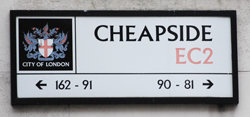
CheapsideLocated at the junction of Cheapside and Poultry, the Great Conduit, also known as the Cheapside Standard, was a famous medieval public fountain.

The Great Conduit (the word conduit refers to column fountains fitted with ‘cocks’ or taps for dispensing the water) gave access to water piped using gravity four kilometres from the Tyburn into the City largely via lead pipes.

It was constructed by the City Corporation from the mid-13th century after King Henry III approved the project in 1237. It was rectangular-shaped timber building with an elevated lead tank inside from which the water was drawn.

It took the name ‘Great’ after further conduits were built further west in Cheapside in the 1390s. There were at least 15 conduits or standards scattered about the City by the time of the Great Fire in 1666.

It was rebuilt several times over its life, notably in the reign of King Henry VI, but after being severely damaged in the fire was deemed irreparable and orders were given for it to be taken down in 1669 (many houses by then had alternate water supplies, notably from the New River project). From the 1360s, management of the conduit was the responsibility of four wardens, maintaining the pipes and charging professional water carriers and tradesmen who required water by allowing free

The Cheapside Conduit was a notable landmark – some executions and other punishments were carried out here, speeches were made from here and the conduit building itself was used as a place for posting information. And to celebrate special occasions it was made to flow with wine – this took place in 1432 when King Henry VI marched through London after being crowned King of France, at the coronation of Queen Margaret in 1445 and at the wedding procession of King Henry VIII’s queen Anne Boleyn in 1533.

The substructure of the Great Conduit was rediscovered at the end of the 19th century and again in the 1990s. A plaque marking the location of the Great Conduit at the eastern end of Cheapside was unveiled in late 1994 by Thames Water and the Worshipful Company of Water Conservators. There’s also a memorial set into the pavement over the substructure.

Daytripper – Rochester Castle…

Rochester-Castle

We’ve visited Rochester before but given it’s the 800th anniversary of the Magna Carta we thought it would be good to take a more in-depth look at Rochester Castle and the events that took place there after the sealing of the “Great Charter”.

Rochester Castle was first built in the aftermath of the Battle of Hastings as a Norman stronghold to control the Medway and the Roman road – Watling Street – which crossed it at that point. There was a Roman-era town on the site and it’s likely the first castle – surrounded by a deep ditch and featuring walls of earth topped with timber – was  built within the town’s walls – possibly on the site of the existing castle.

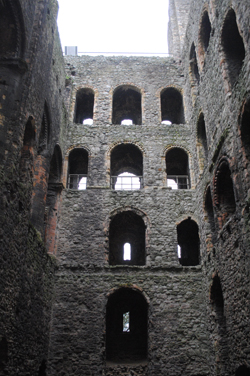
Rochester-Castle2Work on a stone castle was started in the late 1080s by Gundulf, the Bishop of Rochester (he also built the first Tower of London), and the castle precincts outer walls still largely follow the line of his original curtain walls. The keep was built by William de Corbeil, Archbishop of Canterbury, who was granted the castle by King Henry I in 1127. It remained in the custody of the archbishops until the events of 1215.

Following the sealing of the Magna Carta in May, relations between King John and the barons soured again into outright civil war with the castle declared for the rebels. In October and November, 1215, it was held for some seven weeks by a force of knights – accounts suggest between 95 and 140 – against the forces of King John. These eventually breached the south curtain wall and after the forces of the knights – who were led by William de Albini and Reginald de Cornhill – retreated to the keep, the king ordered his sappers to work.

The miners were successful in undermining the south-west tower which collapsed along with a large section of the keep (the fat of 40 pigs were apparently used to make sure the fire in the mine was hot enough). The defenders nonetheless kept fighting, retreating further into the remains of the keep, until they were eventually forced to surrender when faced with starvation. King John’s fury at their resistance was said to be great but while some of the defenders lost their hands and feet when they were apparently lopped off on his orders after surrendering, he was convinced to spare the holdouts from being hanged on the spot and merely had them imprisoned.

The tower was later rebuilt by King John’s long ruling son, King Henry III, and you can see its distinct round shape (in contrast with the earlier, square towers) when looking at the keep today. (Incidentally, King John’s siege was the castle’s second major siege – the first had taken place in 1088 when the forces of King William II (Rufus) had besieged the castle which was then held by the rebellious Odo, Bishop of Bayeaux, who was involved in an attempt to put William the Conqueror’s eldest son, Robert, Duke of Normandy, on the throne in place of William (who was the second son). Odo was forced to come to terms and exiled as a result of the siege).

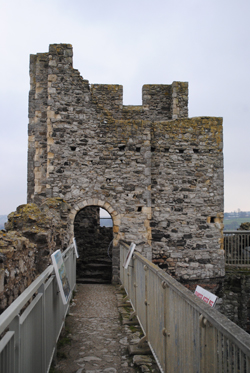
Rochester-Castle3In the hands of the Crown after King John’s siege, the castle was again the site of a siege in 1264 – this time unsuccessful when rebels under the command of Simon de Montfort failed to take it from those of King Henry III (although the garrison was later forced to surrender following events elsewhere).

It was rebuilt and repaired a number of times, including during the reigns of King Edward III and that of King Richard II (during whose reign it was also ransacked in the Peasant’s Revolt of 1381). Other kings to visit it over the years included King Henry VII and King Henry VIII.

Already much deteriorated and neglected, in 1610, King James I gave the castle to Sir Anthony Weldon whose family sold off some of the timber and stone to local builders. It survived the Civil War without incident and was used as a public pleasure garden from the 1870s onward before, in 1884, it was sold to the City of Rochester. In 1965 responsibility for its care was given to the Ministry of Public Building and Works. Current managers, English Heritage, took over the site in 1984.

The castle remains an imposing site in Rochester and the outer walls of the keep remain intact even if it’s no more than a shell. Worth the climb to the top simply to take advantage of the spectacular views of the town and cathedral below!

WHERE: Rochester Castle, Rochester, Kent – nearest train station is Rochester (half a mile); WHEN: 10am to 6pm daily (until 30th September); COST:£6.20 adults/£3.90 children (aged 5-15) and concessions (free for English Heritage members); WEBSITE: www.english-heritage.org.uk/visit/places/rochester-castle.

10 sites from London at the time of the Magna Carta – 4. Thorney Island…

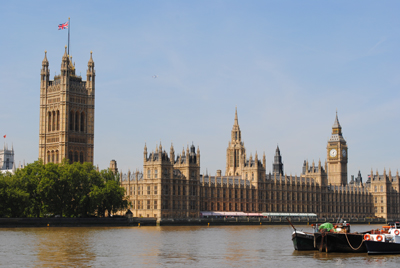
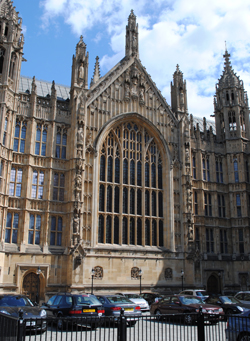
Houses-of-Parliament2 Both Westminster Abbey and the Palace of Westminster (these days better known as the Houses of Parliament – pictured) pre-date 1215 but unlike today in 1215 the upon which they stood was known as Thorney Island.

Formed by two branches of the Tyburn River as they ran down to the River Thames, Thorney Island (a small, marshy island apparently named for the thorny plants which once grew there) filled the space between them and the Thames (and remained so until the Tyburn’s branches were covered over).

One branch entered the Thames in what is now Whitehall, just to the north of where Westminster Bridge; another apparently to the south of the abbey, along the route of what is now Great College Street. (Yet another branch apparently entered the river near Vauxhall Bridge).

The abbey’s origins go back to Saxon times when what was initially a small church – apparently named after St Peter – was built on the site. By 960AD it had become a Benedictine monastery and, lying west of what was then the Saxon city in Lundenwic, it become known as the “west minster” (St Paul’s, in the city, was known as “east minster”) and a royal church.

The origins of the Palace of Westminster don’t go back quite as far but it was the Dane King Canute, who ruled from 1016 to 1035, who was the first king to build a palace here. It apparently burnt down but was subsequently rebuilt by King Edward the Confessor as part of a grand new palace-abbey complex.

For it was King Edward, of course, who also built the first grand version of Westminster Abbey, a project he started soon after his accession in 1042. It was consecrated in 1065, a year before his death and he was buried there the following year (his bones still lie inside the shrine which was created during the reign of King Henry III when he was undertaking a major rebuild of the minster).

Old Palace Yard dates from Edward’s rebuild – it connected his palace with his new abbey – while New Palace Yard, which lies at the north end of Westminster Hall, was named ‘new’ when it was constructed with the hall by King William II (William Rufus) in the late 11th century.

Westminster gained an important boost in becoming the pre-eminent seat of government in the kingdom when King Henry II established a secondary treasury here (the main treasury had traditionally been in Winchester, the old capital in Saxon times) and established the law courts in Westminster Hall.

King John, meanwhile, followed his father in helping to establish London as the centre of government and moved the Exchequer here. He also followed the tradition, by then well-established, by being crowned in Westminster Abbey in 1199 and it was also in the abbey that he married his second wife, Isabella, daughter of Count of Angouleme, the following year. 

10 sites from London at the time of the Magna Carta – 3. The Temple…

Templars

Not much remains today of the original early medieval home of the Templar Knights which once existed just west of the City of London. While the area still carries the name (as seen in the Underground station, Temple), most the buildings now on the site came from later eras. But there are some original elements.

First though, a bit of history. The Templar precinct which become known as the Temple area of London was the second site in the city given to the military order, known more completely as the Knights of the Temple of Solomon (thanks to their Jerusalem HQ being located near the remains of the Temple of Solomon).

Temple-churchThe first was in Holborn, located between the northern end of Chancery Lane and Staple Inn, and was known as the ‘Old Temple’ after which, in the latter years of the 12th century, the Templars moved their headquarters to the new site – ‘New Temple’ or Novum Templum – on unoccupied land on the bank of the River Thames. 
This new precinct included consecrated and unconsecrated areas. The consecrated part was a monastery and was located around what is now Church Court with the monastic refectory built on the site of what is now Inner Temple Hall – the medieval buttery is the only part of the original building which survives.

The lay or unconsecrated part of the precinct lay east of Middle Temple Lane, where a second hall was built on the site of what is now the Middle Temple Hall (you’ll find more on that here) which was used to house the lay followers of the order.

The original buildings also included the still existing Templar Church (pictured, along with a monument depicting the Templars outside the church), which was consecrated in 1185 during the reign of King Henry II by Heraclius, the Patriarch of Jerusalem, on a visit to London. Like all other Templar churches, its circular design was based on the design of the Church of the Holy Sepulchre in Jerusalem (the chancel was added later and consecrated in the presence of King Henry III in 1240 – for more on the Temple Church, you can see our earlier post here.

The New Temple become an important site in London (and the kingdom as a whole – the Masters of the Temple were the heads of the order in England) and was used by many of the nobility as a treasury to store valuables (and to lend money). It also had close connections with the monarchy and was, as we saw earlier this week, a power base for King John and from where he issued what is known as the King John Charter in 1215. He also used it for a time as a repository for the Crown jewels.

In an indication of the Temple’s prominence in state affairs, some of the great and powerful were buried here during this period including William Marshal, 1st Earl of Pembroke, who died in 1219, and his sons William and Gilbert (for more on those buried in the Temple, see our earlier post here). There were also apparently plans to bury King Henry III and his Queen here – this apparently spurred on the building of the chancel on the church – but they were eventually buried in Westminster Abbey instead.

Numerous relics were also apparently housed here during the Templar times including a phial believed to contain Christ’s blood and pieces of the true Cross.

The Templar era came to an end in 1312 when the order was dissolved on the authority of Pope Clement V amid some heinous allegations of blasphemy and sexual immorality which had the support of King Philip IV of France. While the pope awarded their property to the rival order, the Knights of the Hospital of St John of Jerusalem (also known as the Hospitallers), King Edward II had other ideas and ignored their claims with regard to the London property and instead, claimed it for the Crown (a dispute which went on for some years).

It later became associated particularly with lawyers, although lawyers would have certainly been at work in the New Temple given its role as banker to the wealthy (but more on its later associations with lawyers in later post).

For more on the history of the Templars, see Malcolm Barber’s The New Knighthood: A History of the Order of the Temple.

10 sites from London at the time of the Magna Carta – 1. The Tower…

This week we’re starting a new series in honour of the 800th anniversary of the signing of the Magna Carta in which we look back at the London of 1215. First up we take a look at the Tower of London which was a smaller version of the complex of buildings which today exists on the site.

By 1215, the Tower of London – the fortress first constructed on the orders of William the Conqueror – had already existed for more than 100 years, nestled into a corner of the city’s walls which had existed since Roman times.

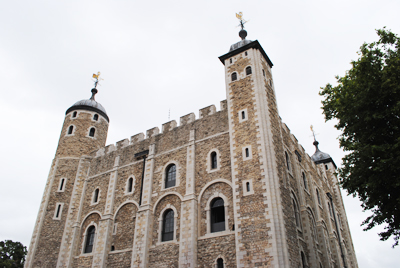
Then, as now, the White Tower – initially itself known as the Tower of London, it was later dubbed the White Tower thanks to the whitewash used to cover the Kentish limestone to protect it from the weather (and for its visual impact) – stood at the heart of the complex. Unlike today’s building, it lacked the large windows which date from the early 18th century, and while the towers were believed to be capped with cones, the present cupolas date from the reign of King Henry VIII.

White-Tower

While it had long been surrounded by a palisade and ditch, in 1189, King Richard I’s chancellor William Longchamp, the Bishop of Ely, had begun to extend the castle’s defences while the king was on crusade (in fact, the first siege of the Tower took place in 1191 when the then Prince John did so in opposition to Longchamp’s  regime – it only lasted three days before Longchamp surrendered).

This extension, which was completed by King John following his accession to the throne in 1199, saw the size of the bailey around the White Tower doubled and a new curtain wall and towers – including the Bell Tower – built around its outer perimeter with a ditch below (the ruins of the Wardrobe Tower, just to the east of the White Tower show where the original Roman-era wall ran).

But it wasn’t until the reign of King John’s son, King Henry III, that the royal palace which now stands on the river side of the White Tower was constructed. Until that point – and at the time of the signing of the Magna Carta – the royal apartments remained within the White Tower itself, located on the upper floor.

Like those of the garrison commander known as the constable (located on the entrance level), the king’s apartments would have consisted of a hall and a large chamber, which may have been divided into smaller chambers with wooden partitions as well as a chapel (on the upper level this was the still existing Chapel of St John the Evangelist, although it would have then been more more richly decorated). Unlike the lower levels, the king’s level was of double height with a gallery (this level now has its own full floor).

The royal apartments had a variety of uses – as well as a residence and refuge for the king, they were also at times a place to keep high profile prisoners such as the Bishop of Durham, Ranulf Flambard, who was imprisoned on the orders of King Henry I (and who escaped from an upper window on a rope which had been smuggled in to him and fled to Normandy).

It is also worth noting that while King John apparently kept exotic animals at the Tower, it is his son, King Henry III who is usually credited with founding the Royal Menagerie there.

And it was his son, King Edward I, who expanded the Tower to its current size of  about 18 acres by rebuilding the western section of the inner ward and adding the outer ward.

WHERE: Tower of London (nearest Tube station Tower Hill); WHEN: 9am to 5.30pm, Tuesday to Saturday, 10am to 5.30pm Sunday to Monday; COST: £24.50 adults; £11 children under 15; £18.70 concessions; £60.70 for a family (discounts for online purchases/memberships); WEBSITE: www.hrp.org.uk/toweroflondon/.  

A Moment in London’s History – De Montfort’s Parliament is convened in London…

It was in 1265, 750 years ago this month, that a parliament convened by English rebel leader Simon de Montfort, took place in Westminster Hall (exterior pictured below).

The French-born De Montfort, who led a group of rebel barons, was riding high after defeating King Henry III at the Battle of Lewes on 14th May, 1264. While he ruled in the king’s name through a council – having captured both the king and his son Prince Edward, the monarch was no more than a figurehead. De Montfort was effectively the man in charge. Westminster-Hall

In a bid to solidify his hold on the country, he summoned not only the barons and clergy but knights representing counties to a parliament along with – for the first time – representatives from major towns and boroughs like York, Lincoln and the Cinque Ports (the representatives were known as burgesses).

It’s this latter move which led this three month-long parliament to be described as the first English parliament and which has led de Montfort to be described by some as the founder of the House of Commons.

Presided over by King Henry III, the parliament was held in Westminster Hall in London – a city loyal to de Montfort’s cause. It dealt with a range of political matters including the enforcement of a series of government reforms known as the Provisions of Westminster which had been aimed at strengthening baronial rights and the role of courts.

Prince Edward (later King Edward I) managed to escape from de Montfort’s clutches later in 1265 and led forces against de Montfort. The rebel leader was killed at the Battle of Evesham on 4th August, 1265.

The UK Parliament is marking the 750th anniversary of De Montfort’s Parliament with a series of events (along with the 800th anniversary of the sealing of the Magna Carta) – check out www.parliament.uk/2015 for more.