London Pub Signs – The Viaduct Tavern…

Located on a crossroads opposite the Old Bailey (or Central London Criminal Court as it’s formally known) and the Church of St Sepulchre-without-Newgate, The Viaduct Tavern is a gem of the Victorian era.

The-Viaduct-TavernThe name is relatively easy to explain – built in 1874 (and remodelled around the turn of the 19th century), the tavern lies just east of the Holborn Viaduct – central London’s first flyover – which opened in 1869.

The ornate interior of the Grade II-listed pub at 126 Newgate Street features etched and gilded glass panels, three representative “pre-Raphaelite-style” paintings – including one representing Industry and the Arts which was apparently shot by a soldier, no doubt the worse for wear from drink, celebrating the end of World War I – and a small cashier’s booth, all of which attest to its past as a Victorian gin palace.

Under the pub is a cellar – it’s commonly suggested these were cells were part of Newgate Prison (once located nearby on the site of the Old Bailey) or part of a debtor’s prison associated with Newgate – some believe it to have been the site of the Giltspur Street Compter, but both stories have been disputed by guide Peter Berthould.

Past patrons of the pub – which is reputedly haunted – are said to have included writer Oscar Wilde, who apparently frequented the tavern during his trials over the road in the late 1800s.

The pub is now part of the Fullers chain.

~ http://viaducttavern.co.uk

Lost London – The aviaries of Birdcage Walk…

The street now known as Birdcage Walk – which runs along the southern side of St James’s Park – refers to the former aviary and menagerie which was located in the south-eastern corner of the park during the reign of King James I in the early 1600s.

Birdcage-WalkAs well as the exotic birds which give the street its name, the menagerie of King James I – who drained marshy ground on which the park now stands and first had the park landscaped – was said to have included camels, crocodiles and an elephant.

The aviaries were apparently expanded during the reign of King Charles II later that same century. It was around this time – in 1664 – that pelicans were first introduced into the park when presented to the king as a gift from the Russian ambassador.

Only the Royal Family and the Duke of St Albans – Hereditary Grand Falconer – were reportedly allowed to drive along Birdcage Walk until 1828 when it was opened to the general public.

Interestingly, Storey’s Gate, a narrow street runs south from Birdcage Walk to Westminster Abbey, is actually named after Edward Storey, who was “keeper of the king’s birds” during the reign of Charles II.

This Week in London – William Shakespeare’s influence; new Fourth Plinth commissions; the car and landscape; and London Stories…

First up, apologies that we were unable to launch our new Wednesday series yesterday due to some technical difficulties (stayed tuned for next week). And now, on with the news…

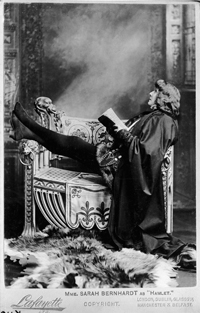
Sarah_Bernhardt_by_Lafayette_Ltd_1899_c__Victoria_and_Albert_Museum_London__William Shakespeare’s influence on successive generations of theatrical performance is the subject of a new exhibition at the V&A to mark the 450th anniversary of his birth on 23rd April. Shakespeare: Greatest Living Playwright centres on the Bard’s First Folio which, published in 1623, contains 36 plays including 18 works – Macbeth, The Tempest and Twelfth Night among them – which would be unknown without it. The display includes interviews, archive footage and photography and objects from the V&A collections as well as an audio-visual presentation by Fifty Nine Productions featuring interviews with contemporary theatre practitioners such as actors, directors and designers. Objects on display include a skull used by Sarah Bernhardt when playing Hamlet in 1899, an embroidered handkerchief used by Ellen Terry when playing Desdemona in 1881 at the Lyceum Theatre, and a pair of red boots worn by actor-manager Henry Irving in an 1887 production of Richard III. Runs in the V&A’s Theatre and Performance Galleries until 21st September. Admission is free. For more, see www.vam.ac.uk. PICTURE: Sarah Bernhardt as Hamlet, 1899, © Victoria and Albert Museum, London.

A skeletal horse and a giant hand giving a thumbs up will adorn the Fourth Plinth in Trafalgar Square during 2015-16. Hans Haacke’s Gift Horse is derived from an etching by painter George Stubbs and, while being a comment on the equestrian statue of King William IV which was intended for the plinth, also features an electronic ribbon displaying a live ticker of the London Stock Exchange on its front leg. Meanwhile David Shrigley’s Really Good is a 10 metre high hand giving a thumbs up – sending a positive message to those who see it. For more, see www.london.gov.uk/priorities/arts-culture/fourth-plinth.

The impact of the car on England’s landscape and the listed buildings of motoring history are the focus of a new exhibition in Wellington Arch. Carscapes: How the Motor Car Reshaped England features archive photographs, historic advertising, cartoons and motoring magazines as well as a 1930s traffic light, a petrol pump and other accessories and memorabilia. Wellington Arch, which is managed by English Heritage, is a fitting location for the exhibition – it was moved to its current position due to increasing traffic back in 1883. Admission charge apply. For more, see www.english-heritage.co.uk.

A new exhibition exploring some of the true and not-so-true stories inspired by and produced in London opens at the London Transport Museum in Covent Garden tomorrow. London Stories features the best entries from The Serco Prize for Illustration 2014 with more than 50 works of art on display depicting a well-known or obscure London narrative. The short-listed illustrations tackle everything from ghost buses to Buffalo Bill’s Wild West Show of 1887, a Pearly King and Queen, Lenin’s ‘Love letter to London’ and an escaped monkey jazz band. There’s also a host of musical and literary references – everything from Mary Poppins to Sweeney Todd and Oranges and Lemons. Tomorrow there will be a late opening of the exhibition complete with cash bar, DJ and story-telling for adults as well as the chance to create your own London story with illustration workshops and a photo-booth. Organised by London Transport Museum in partnership with the Association of Illustrators, it runs until 6th April. Admission charge applies. For more, see www.ltmuseum.co.uk.

Send all items of interest for inclusion to exploringlondon@gmail.com.

A Moment in London’s History – When London Bridge was pulled down…

This year we’re launching a new regular edition to Exploring London in which we take a brief look at a moment in the city’s long and colourful history.

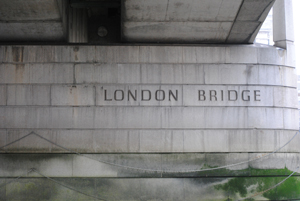
London-BridgeFirst up, we travel back exactly 1,000 years to 1014. The story – recorded in Viking Skaldic poetry but apparently not in Anglo-Saxon sources – goes that during the ongoing conflict between the Danes and Anglo-Saxons, the Danish had taken the city, occupying both the city proper and Southwark. At that stage, there was a timber bridge crossing the Thames.

Desperate to regain the city (the Viking ruler Sweyn died on 3rd February that year – this may have been why the attack was launched), the Anglo-Saxon King Æthelred (known to history as ‘the Unready’) and his Norwegian Viking allies apparently under King Olaf II sailed up the Thames in a large flotilla.

Despite meeting fierce resistance from the Danish occupiers – they lined the bridge and attacked the invasion force with spears – the attackers, apparently using thatching stripped from the rooves of nearby houses to shield themselves, managed to get close enough to attach cables to the bridge’s piers and then pull the bridge down.

There’s much speculation that the song London Bridge is falling down was inspired by the incident but it, like much of this story itself, remains just that – conjecture (but it’s still a nice story!)

The bridge was subsequently rebuilt and King Æthelred died only two years later, on 23rd April, 2016. The crown passed to his son Edmund Ironside but he too died after ruling for less than a year before the Viking Canute was crowned king.

For more on the history of London Bridge, see our earlier posts Lost London – London Bridge and Lost London: Gates Special – The Stone Gate, London Bridge.

PICTURE: Not the original London Bridge

This Week in London – Handel and the royals; David Bailey; and, redefining German art…

• A new exhibition exploring German-born George Frideric Handel and his association with the royal family opens at the Foundling Museum in Bloomsbury tomorrow to mark the 300th anniversary of the coronation of King George I. The museum says no composer has been more closely associated with the British monarchy than Handel, whose anthem Zadok the Priest has been performed at every coronation since King George II in 1727 and whose Water Music was performed on the River Thames during the Diamond Jubilee for Queen Elizabeth II in 2012. By George! Handel’s Music for Royal Occasions features treasures from the Gerald Coke Handel Collection and loans from the British Library, the National Portrait Gallery, the British Museum and Westminster Abbey. Runs until 18th May. For more, see www.foundlingmuseum.org.uk.

A landmark exhibition of David Bailey photographs opens at the National Portrait Gallery today. Bailey’s Stardust – one of the gallery’s largest scale photographic exhibitions, it occupies most of the gallery’s ground floor – features more than 250 portraits including a new portrait of Kate Moss and previously unseen images from Bailey’s travels to the Naga Hills in India in 2012. There’s also rooms devoted to portraits of the Rolling Stones and Catherine Bailey, images from Bailey’s trip to Papua New Guinea in 1974 and from east Africa which Bailey visited in 1985 in support of Band Aid. Admission charge applies. Runs until 1st June. For more, see www.npg.org.uk.

A new exhibition at the British Museum explores how six key artists redefined the notion of art in Germany in the Sixties and Seventies. Germany divided: Baselitz and his generation features some 90 works including some 45 by George Baselitz as well as works by Markus Lupertz, Blinky Palermo, AR Penck, Sigmar Polke and Gerhard Richter. Thirty-four of the works, including 17 by Baselitz, have been donated by Count Christian Duerckheim while a loan of some 60 additional works from the Duerckheim Collection makes up the rest of the exhibition. Runs in Room 90 until 31st August. For more, see www.britishmuseum.org.

Send all items of interest for inclusion to exploringlondon@gmail.com.

A look back at 10 fictional character addresses in London…

We’ve finished our special looking at 10 fictional character addresses in London so here’s a quick recap of the series. We’ll be launching a new special series next week…

1. 221b Baker Street…

2. ‘Whitehaven Mansions’…

3. 32 Windsor Gardens…

4. 186 Fleet Street…

5. 17 Cherry Tree Lane…

6. Wimbledon Common…

7. Saffron Hill…

8. The Darling’s House…

9. 7 Savile Row, Burlington Gardens…

10. 165 Eaton Place

LondonLife – Crossing Tower Bridge…

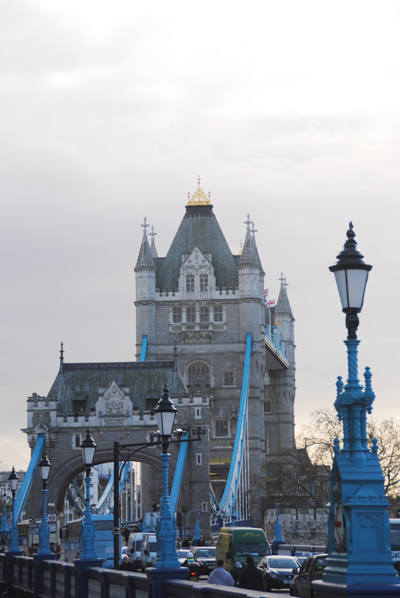
Crossing-Tower-Bridge

Famous Londoners – Jonathan Wild…

The self-styled “Thief-Taker General”, Jonathan Wild was one of the most famous figures of London’s underworld in the early 18th century, credited by some as being the city’s first organised crime boss.
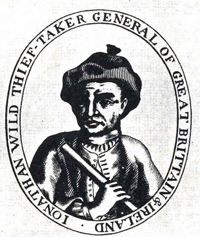
Jonathan-WildBorn to a family in Wolverhampton, Wild – who had at some point undertaken an apprenticeship as a buckle-maker – was married and had a son when he first came to London as a servant in 1704 and although he returned to the city of his birth after being dismissed, he apparently abandoned his family and returned to the capital in 1708.

Little is known of the first couple of years he spent in London but records show he was arrested for debt in March 1710 and sent to Wood Street Compter where he quickly ensconced himself and was even awarded the “liberty of the gate” – meaning he could leave the prison at night to aid in the apprehension of thieves.

It was also during this period that he came under the influence of a prostitute Mary Milliner. Upon his release in 1712 – thanks to an Act of Parliament passed to help debtors – he lived with her as her husband (despite his earlier marriage – and hers) in Covent Garden.

Acting as her protector when she was on the street, Wild also branched into the business of being a fence or receiver of stolen goods and racketeering offences like extortion. In 1713, he joined Charles Hitchen to be his assistant. Hitchen, who had been suspended from his position as the City’s Under Marshal thanks to his practice of extorting thieves and their victims (it’s thought he may have taught Wild the craft), was then working as a thief-taker.

Wild apparently took to the new role with fervour for when Hitchen was reappointed to his post as Under Marshal, Wild parted from his company and continued his work as a thief-taker, opening his own office in the Blue Boar Tavern in Little Old Bailey.

Wild’s method of operation was simple enough – he would organise thieves to steal items and then, when it was announced that said items were stolen, claimed to have found them and would return them to the rightful owners for a “reward”. At the same time, he’d often also aid the police by bringing to justice thieves from rival gangs (including Hitchen’s, for they were now rivals) or those of his own gang who had crossed him – and in all his dealings manage to keep at arm’s length from the actual business of stealing and receiving.

By 1718, Wild – who wore a sword as a sign of his authority and had pretensions of being a “squire” – was calling himself the “Thief-Taker General of Great Britain and Ireland”. It’s said that more than 60 thieves were sent to the gallows on the back of his testimony including the prolific housebreaker (and jail escapee) Jack Sheppard and his associate Joseph “Blueskin” Blake (who almost succeeded in killing Wild while he was awaiting trial).

Wild’s pursuit of Sheppard was the beginning of his own downfall (although authorities had as early as 1717 passed an Act of Parliament aimed squarely at ending his criminal enterprise, it seemed to have had little effect, at least initially). Sheppard’s demise had been unpopular with the masses and the press of the day – and in February 1725, Wild himself was arrested for assisting in the jailbreak of one of his gang members. Other members of the gang turned against him and eventually, in May that same year, he was sentenced to death for the theft of lace.

Having unsuccessfully attempted to kill himself by drinking laudanum before his execution, Wild was hanged at Tyburn on 24th May before a large and raucous crowd which apparently included an 18-year-old Henry Fielding.

Wild was buried in secret in the churchyard of St Pancras Old Church next to his third wife (and one of his many lovers), Elizabeth Mann (she had died in 1718 and he apparently married another woman shortly after). His body was later reported to have been dug up and eventually, following the recovery of a body with a hairy chest from the Thames which was identified as being Wild’s, a skeleton said to have been his was donated to the Royal College of Surgeons (it’s now on display in the Hunterian Museum).

The subject of numerous articles, books and ballads, Wild’s story has been since told numerous times and for varying purposes. Among them are Daniel Defoe’s True and Genuine Account of the Life and Actions of the Late Jonathan Wild, published in 1725, Henry’s Fielding’s ironic The History of the Life of the Late Mr Jonathan Wild the Great (1743), and John Gay and John Rich’s The Beggar’s Opera (1728) which features the character Peachum, said to have been based on Wild.

PICTURE: From “Ticket to the Hanging of Jonathan Wild”/Wikimedia Commons

To read more about Jonathan Wild, see Gerald Howson’s Thief-taker General: The Rise and Fall of Jonathan Wild.

This Week in London – Van Gogh’s Sunflowers reunited; Sir Leslie Constantine’s Blue Plaque; and, the ‘Anatomy of a Suit’…

• Two versions of Vincent van Gogh’s iconic Sunflowers have been reunited for the first time in 65 years in London at the National Gallery. The two paintings – one from the National Gallery and the other from the Van Gogh Museum in Amsterdam – come from a five-painting series the artist created in 1888 while staying in Arles. They were apparently painted while he was waiting for his friend Paul Gaugain to arrive and were to decorate the bedroom Gaugain would stay in as gift to him. The free display in Room 46 of the Trafalgar Square Gallery and will be shown until 27th April. Meanwhile, the gallery is celebrating the donation of another van Gogh – Head of a Peasant Woman, the first early work by the artist to enter its collection. It is one of a series of around 40 portraits of the peasants of the village of Nuenen, in The Netherlands, which were painted in late 1884/early 1885. For more, see www.nationalgallery.org.uk.

West Indian cricketer and politician Sir Learie Constantine’s former home in Earl’s Court has been commemorated with an English Heritage Blue Plaque. Constantine, who played a significant role in securing the independence of Trinidad and Tobago and as an advocate for black people, was the first person of African descent to sit in the House of Lords. He lived at the property at 101 Lexham Gardens between 1949-1954. For more, see www.english-heritage.org.uk/discover/blue-plaques/.

On Now: The Anatomy of a Suit. This free display at the Museum of London looks at  the technicalities of making a suit and the city’s influence on menswear globally. Exhibits include a double-breasted pinstripe jacket from about 1965, a morning jacket from about 1927 and a black dress suit from about 1933 – all of which was sourced by curator Timothy Long from markets including Brick Lane, Broadway and Portobello Road. Runs until June. For more, see www.museumoflondon.org.uk.

Send all items of interest for inclusion to exploringlondon@gmail.com.

10 fictional character addresses in London – 10. 165 Eaton Place

In this, the final in our series looking at fictional character addresses, we take a look at the home of Lord and Lady Bellamy and then the Holland family from the two TV series of Upstairs Downstairs.

The first five series, which ran from 1971-1975, followed the lives of the somewhat ill-fated Bellamy family and spanned the period from the early 1900s until 1930.

The second, short-lived, incarnation, which the first series of which aired on the BBC only a couple of years ago before the second in 2012 (after which it was cancelled), picked up the story six years later.

It follows the lives of the Hollands, who take up residence in what had been the Bellamy’s residence at 165 Eaton Place in Belgravia (Jean Marsh, one of the original show’s creators who played head parlour maid Rose in the original series, returned as housekeeper – the only original cast member in the newer series).

There is an actual Eaton Place in Belgravia but it doesn’t go up to number 165. The original series used a house located at 65 Eaton Place for exterior shots (they added a 1 to the front of the 65 although no interiors were shot here) although the newer series apparently used a property based in Leamington Spa.

The property at 65 Eaton Place, meanwhile, was apparently part of a development built in 1824 by renowned builder Thomas Cubitt on the orders of the 2nd Marquess of Westminster, Richard Grosvenor.

Among the many real residents over the years (when the property was no longer used as a single home but had been divided into flats) was the rather scandalous Lady Alexandra Metcalfe, youngest daughter of Lord Curzon, a former Foreign Secretary and Viceroy of India.

We’ll launch a new special series next Wednesday.

What’s in a name?…Fetter Lane…

The name of this central London thoroughfare – which runs from Fleet Street to a dead-end just shy of Holborn, with New Fetter Lane forking off to continue the journey to Holborn Circus – has nothing to do with fetters, chains or prisoners.

Fetter-LaneRather its name – a form of which apparently first starts to appear in the 14th century – is believed to be a derivation of one of a number of possible Anglo-French words – though which one is anyone’s guess.

The options include the word fewtor, which apparently means an idle person or a loafer, faitor, a word which means an imposter or deceiver (both it and fewtor may refer to a colony of beggars that lived here) feuterer, a word which describes a ‘keeper of dogs’, or even feutrier, another term for felt-makers.

Buildings of note in Fetter Lane include the former Public Records Office (now the Maughan Library, part of King’s College, it has a front on Chancery Lane but backs onto the lane), and the former Inns of Chancery, Clifford’s Inn and Barnard’s Inn (current home of Gresham College).

It was also in Fetter Lane, at number 33, that the Moravians, a Protestant denomination of Christianity, established the Fetter Lane Society in 1738 (members included John Wesley). The original chapel was destroyed in bombing in World War II ( a plaque now marks the building where it was)

And there’s a statue of MP, journalist and former Lord Mayor, John Wilkes, at the intersection with New Fetter Lane (pictured).

10 fictional character addresses in London – 9. 7 Savile Row, Burlington Gardens…

The adventurous, wealthy and rather mysterious Phileas Fogg, the hero of Jules Verne’s 1873 novel Around the World in Eighty Daysis noted in the book’s first line as living at “No. 7 Saville Row, Burlington Gardens, the house in which Sheridan died in 1814”.

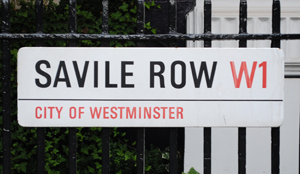
Savile-RowIt’s from there that he and his delightfully named French valet, Passepartout, set off on their breakneck trip around the world after Fogg, a “doubtful” Londoner who was a member of the Reform Club based nearby in Pall Mall (“and that was all” – his history was something of an unknown), makes a £20,000 bet that he can travel around the world in just 80 days – a bet which sees him travel by everything from trains to elephants and overcome all sorts of obstacles as he attempts the feat.

But back to London and Savile Row in the inner west London area of Mayfair. The Irish-born playwright and MP Richard Brinsley Sheridan did indeed live in Savile Row – but at number 14 rather than at number 7 (and he died in 1816, not 1814 as claimed in the book).

There is a plaque on the townhouse mentionig Sheridan’s residence (but not Fogg’s) which today is occupied by tailors Hardy Amies. Amies himself purchased the property, which was restored in 2009, in 1947, reportedly with the backing of Cary Grant’s ex-wife, actress Virginia Cherril.

For more on Savile Row’s history, see Henry Poole: Founders of Savile Row – The Making of a Legend.

Happy New Year!

We’re back after an extended break with posts to resume as normal this week. This year we’ll continue with many of our usual features but will also be looking to introduce some new ones including A Moment in History in which we’ll look at some snapshots in London’s past.

To kick us off – and to launch our celebration of the 300th anniversary of the first Hanoverian king, King George I – we’re running a snap poll in which we’re asking which of the Hanoverian rulers of Great Britain you think was the best ruler?


Our top 10 stories for 2013 – part two…

We’re taking at look back at the 10 most read stories we posted this year (excluding posts such as ‘Where is it?’ and ‘This Week in London’). Yesterday we took a look at numbers 10 through to six; today it’s the final five…

5. Treasures of London – Siborne’s Large Model… 

4. 10 fictional character addresses in London – 8. The Darling’s House… 

3. Where’s London’s oldest…Thames tunnel? 

2. Lost London – The Egyptian Hall… 

and (drum roll please), our most read story from 2013 was

1. Treasures of London – The Barbor Jewel…

Our top 10 stories for 2013 – part one…

It’s that time of the year again and as we head into the New Year, Exploring London takes at look back at the top 10 stories we posted this year (excluding posts such as ‘Where is it?’ and ‘This Week in London’). Counting back, today we look at numbers 10 to 6 (in which the ‘Where London’s oldest?’ feature makes a strong showing!)…

10. Where’s London’s oldest…tea shop? 

9. Where’s London’s oldest…Tube station? 

8. Where’s London’s oldest…higher education institution?

7. London Pub Signs – Ye Olde Watling… 

6. Where’s London’s oldest…Catholic church? 

Wishing all our readers a very Merry Christmas!

We’re having a few day’s break but keep an eye out for our special in the coming week in which we look at the year’s most popular posts…(and we’ll also reveal the answer to Where is it? #76)

Where is it? #76…And the answer is…

Where-is-it--#76

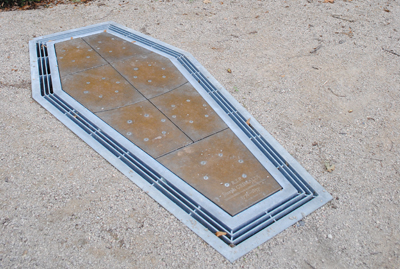
Can you identify where in London this picture was taken? If you think you can, leave a comment below. We’ll reveal the answer early next week. Good luck!

If you’ve been living in suspense for the past couple of weeks, then you need wait no longer. This coffin-shaped object is actually an interactive musical artwork commemorating clown Joseph Grimaldi (1776-1837), credited as the father of modern clowning, and the man remembered in the annual clown service held at Holy Trinity Church in Hackney each February. The artwork (and another next to it dedicated to theatre proprietor Charles Dibdin the Younger) was created by Henry Krokatsis and is located in Joseph Grimaldi Park on Pentonville Road in Clerkenwell – the site of the churchyard of the former Pentonville Chapel. The memorial is actually located on the site of Grimaldi’s grave (the gravestone has been moved and now stands nearby) and is tuned so that his popular song Hot Codlins can be played by standing on it.

10 fictional character addresses in London – 8. The Darling’s House…

Peter-Pan2In JM Barrie’s 1911 novel, Peter and Wendy (based on the stage play Peter Pan; or, the Boy Who Wouldn’t Grow Up), the adventure begins when Peter Pan visits the home of the Darling family.

He secretly listens in – via an open window – while Mrs Darling tells bedtime stories to her children – Wendy, John and Michael – but during one visit loses his shadow and it’s on returning to claim it that he meets Wendy and, well, you know the rest…

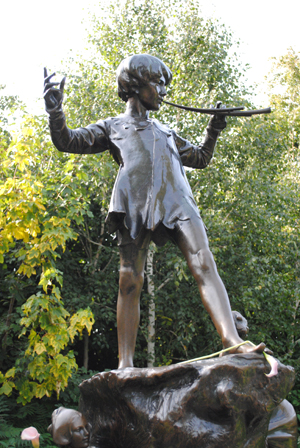
Peter Pan is most famously associated with Kensington Gardens – it’s here that we are first introduced to the character of Peter in the book Peter Pan in Kensington Gardens (in fact there’s a rather famous statue of him there to this day, pictured above) – it’s most often assumed that the Darling’s house must be nearby.

But, in fact, the book Peter and Wendy never states where the Darlings’ house is located exactly  – just that it is at number 14 in the street in which they live – while in the 1904 play the address is given as “a rather depressed street” in Bloomsbury. Barrie explains that he placed the Darlings’ house in Bloomsbury because Mr Roget (of Thesaurus fame) once lived there and “we whom he has helped to wend our way through life have always wanted to pay him a little compliment”.

Worth noting, however, is a property at 31 Kensington Park Gardens. Once the home of the Llewellyn Davies family, family friend Barrie was a frequent visitor here and in fact went on to adopt the five Llewellyn Davies children following the death of their parents in the early 1900s. The property, which is divided into a series of flats, is, as a result, said to have been something of a model for the Darling’s house.

Barrie, himself, meanwhile, owned a house at 100 Bayswater Road – not far from Kensington Gardens where he first meet the Llewellyn Davies family – but, interestingly, had previously lived in Bloomsbury. The house is marked with a blue plaque.

Another Peter Pan-related address we have to mention is that of the Great Ormond Street Hospital for Children to which Barrie gave the rights to receive royalties from Peter Pan in perpetuity. You can arrange for a tour of the hospital’s Peter Pan-related memorabilia.

For more on the story behind the writing of Peter Pan, see Andrew Birkin’s book, J.M.Barrie and the Lost Boys.

LondonLife – London in a snow globe at Covent Garden…


Covent-Garden-LEGO-snow-globe

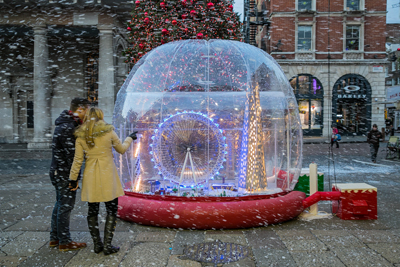
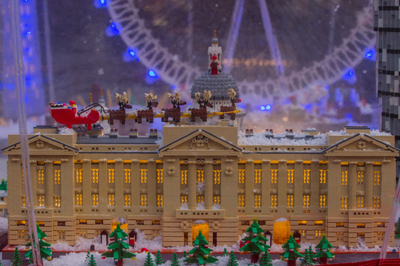
Following on from its LEGO advent calendar and Christmas tree, Covent Garden is home to a giant LEGO snow globe this Christmas. Made of 120,000 bricks, it features 14 of London’s most iconic landmarks – from Nelson’s Column, Buckingham Palace (see below) and the London Eye to The Shard, Shakespeare’s Globe and, of course, Covent Garden. The models took Duncan Titmarsh, the UK’s only certified LEGO professional, around 75 days to build. Hidden among the models are a number of LEGO Santas – count them to win prizes and press a button to make snow fall inside the globe. For more, see www.coventgardenlondonuk.com.

Covent-Garden-LEGO-snow-globe2

What’s in a name?…Limehouse

Limehouse

This part of East London is believed to take its name not from lime trees nor from a house bearing that name. Rather it owes its origins to the process by which chalk shipped from Kent was converted into lime.

The process of ‘lime burning’ – which took place in these parts on the northern bank of the River Thames – involves heating the chalk in a bottle-shaped kiln, also known as an oast. Hence ‘lime oast’ became corrupted into Limehouse.

St-Anne's-LimehouseThe earliest reference to the name comes from the early medieval era but in later centuries the area was noted not so much for its lime-burning but its links with shipping – particularly following the opening on the Limehouse Cut in 1770 which linked the Thames with the River Lea and allowed goods to taken from the north of London directly to ships on the Thames without the need to navigate around the Isle of Dogs (see our earlier post on the Limehouse Cut). Limehouse Basin (pictured above, from the Limehouse Cut) opened in the early 19th century.

The area, which became increasingly industrialised as a result, is also known for its links to the Chinese community – and this included, in the Victorian era, opium dens, but the association ended around the 1950s by which time the Chinese community had largely moved to Soho (where Chinatown still stands today).

Among the area’s most prominent buildings are the Nicholas Hawksmoor-designed church, St Anne’s Limehouse (pictured), and the historic pub, The Grapes.