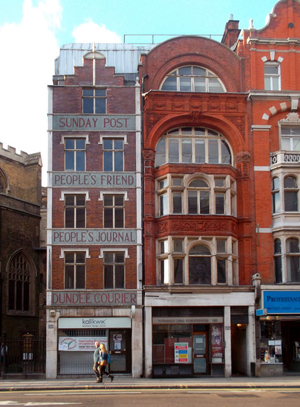
Where is it?…#75. And the answer is…

Where-is-it--#75

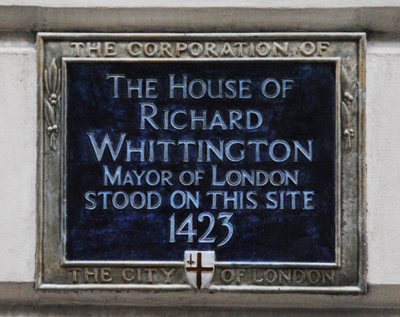
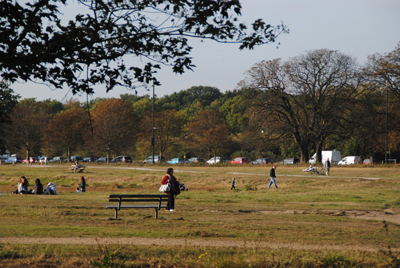
Can you identify where in London this picture was taken? If you think you can, leave a comment below. We’ll reveal the answer early next week. Good luck!

Well done to Sean, Carol and Candy – this is indeed in College Hill, just up from the church of St Michael Paternoster Royal. The famous Whittington (you can read more on him in our earlier entry Famous Londoners: Richard ‘Dick’ Whittington) was buried in the church (you can read more about the church in our earlier entry 10 curiously named churches of London – 9. St Michael Paternoster Royal).

This Week In London – Kensington Palace celebrates Christmas; plant a tree at Epping; and, the Long Range Desert Group memorial unveiled at Westminster Abbey…

Apologies we didn’t post a new instalment in our Wednesday series yesterday – it will resume next week!

Inspired by a spectacular month of partying by King William III in December, 1699, Kensington Palace is celebrating Christmas with a month of family-friendly entertainment in the Georgian State Apartments. Historic Royal Palaces has joined with games makers Hide & Seek to create Game of Crowns, transforming Kensington into a play palace with games, mummery and the chance to proclaim yourself king or queen for a day. On the weekends, there’s also the chance to join in parlour games from 1700 onward and a Christmas Day sensory room which brings to life King William III and Queen Mary II’s Christmas morning (by which time they must have been exhausted!). The palace will also play host to its largest ever Christmas tree – 30 feet tall – and on December 16th, you can join in Carols by Candlelight. Admission charge applies. Runs until 6th January. For more, see www.hrp.org.uk/KensingtonPalace/.

Epping Forest is expanding and this weekend, you have a chance to help by planting some new saplings. The City of London Corporation, which runs the forest, is creating a new area of woodland, named Gifford Wood in honour of former Lord Mayor Roger Gifford, after purchasing 30 acres of land at Upshire last year. Members of the public are invited to join City of London staff and the Friends of Epping Forest at Upshire Village Hall, Horseshoe Hill (EN9 3SP) between 11am and 1pm on Saturday to plant 2,000 new oaks and hornbeam as well as a mix of alder, birch, beech, cherry, field maple, rowan, small lime, wild apple, wild service, holly and yew. Bring your spade. For more, phone 0208 532 1010 or email epping.forest@cityoflondon.gov.uk.

A memorial to the Long Range Desert Group was dedicated in Westminster Abbey this week.  The LRDG was formed in 1940 by Major Ralph Bagnold to act as the forward intelligence arm of the British army in North Africa. The group later shared their expertise in desert navigation with the fledgling SAS (Special Air Service) who also carried out offensives in the desert from 1941. The memorial is located in the west cloister below that of the SAS. For more, see www.westminster-abbey.org.

LondonLife – Remembering Mandela…

Mandela

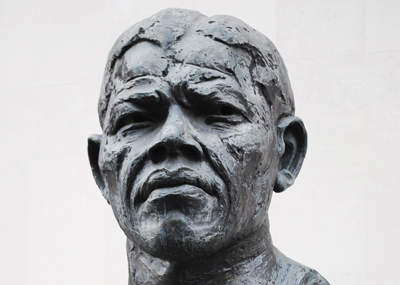
A bust of the anti-apartheid activist and global icon Nelson Mandela at the South Bank Centre has become one of several places in London where people are paying their respects to the former South African president and Noble Peace Prize winner who died last Thursday at the age of 95. The bust – below which are a quoted Mandela’s words, “The struggle is my life” – was erected in 1985 by the Greater London Council. A full-length, larger-than-life statue of Mandela, by Ian Walters, stands in Parliament Square in Whitehall – it was unveiled in 2007 by then Prime Minister Gordon Brown with Mandela himself in attendance.

London Pub Signs – The Barrowboy and Banker…

The-Barrowboy-&-Banker

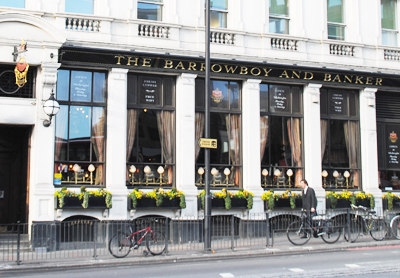
Located just a hop, skip and a jump from the ever-popular Borough Market in Southwark, this oddly monikered pub’s name comes from two separate parts of its history.

The ‘barrowboy’ part refers to the barrow boys or costermongers who used to ply their trade at the nearby market, carting their produce in barrows.

The ‘banker’ part refers to the origins of the building in which the Grade II-listed premises at 6-8 Borough High Street is located. Like one of our previous posts (see The Counting House), it was formerly a bank – in fact, it claims to have been the first ever branch of the National Westminster Bank, which opened in 1970 after the National Provincial Bank and Westminster Bank merged to create what is now known as NatWest.

Some of the 19th century building’s original features – such as the high ceilings and large windows looking out onto the street – are still evident inside but one of the more interesting features – former bank vaults – aren’t open to the public. They lie beneath the bar and are now used for storage.

The pub, now known as an ale and pie house, is part of the Fuller’s chain. For more on the pub, check out http://barrowboy-and-banker.co.uk.

This Week In London: The London that might have been; the V&A’s Christmas tree; Christmas celebrations at the Geffrye; and, World War II recollections…

A new exhibition looking at the London that might have been opened at Wellington Arch near Hyde Park Corner yesterday. Almost Lost: London’s Buildings Loved and Loathed uses digital technology to look at how several redevelopment proposals – including a 1950s conceptual scheme for a giant conservatory supporting tower blocks over Soho and a 1960s plan to redevelop Whitehall which including demolishing most of the Victorian and Edwardian buildings around Parliament Square – would have changed the face of the city. The exhibition also looks at how the latest developments in digital mapping can be used in the future and features ‘Pigeon-Sim’ which provides a bird’s-eye view of the city’s buildings with an interactive flight through a 3D photorealistic model of the city. The exhibition runs until 2nd February. Admission charge applies. For more, see www.english-heritage.org.uk/daysout/properties/wellington-arch/.

A specially commissioned Christmas tree has been unveiled at the V&A in South Kensington. The 4.75 metre high ‘Red Velvet Tree of Love’ is the work of artists Helen and Colin David and will stand in the museum’s grand entrance until 6th January. The design of the tree – which is coated in red flocking and decorated with 79 sets of hand cast antlers and 67 white, heart shaped baubles – was inspired by an 1860 HFC Rampendahl chair in the V&A’s collection which features a real antler frame and velvet upholstery. For more, see www.vam.ac.uk.

The annual Christmas Past exhibition is once again open at the Geffrye Museum in Shoreditch. Festive decorations have transformed the museum’s rooms and give an insight into how the English middle classes celebrated in times gone past. The exhibition runs until 5th January. Admission is free. Accompanying the exhibition are a series of events including an open evening celebrating an Edwardian Christmas between 5pm-8pm tonight. For more, see www.geffrye-museum.org.uk/whatson/christmas-past-2013/.

The World War II experience of Chelsea Pensioners are being commemorated in a new display in the White Space Gallery at the National Army Museum in Chelsea. The Old and the Bold is the culmination of a year long collaboration between the museum and the Royal Hospital Chelsea and features nine interviews with 14 In-Pensioners. Their accounts span iconic moments in World War II history – from D-Day to North Africa and the Falklands and are supported by items from the museum’s collection. Runs until 3rd January. Admission is free. For more, see www.nam.ac.uk.

10 fictional character addresses in London – 7. Saffron Hill…

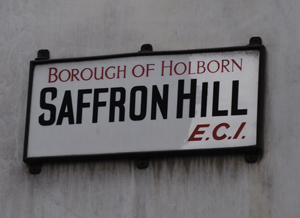
Saffron-Hill2Once at the heart of one of London’s most infamous rookeries or slums, Saffron Hill – located between Holborn and Clerkenwell – is forever associated with Charles Dickens’ 1838 novel, Oliver Twist, and in particular with the arch criminal Fagin.

In the text, Fagin’s den is located “near Field Lane” (the southern extension of Saffron Hill beyond Greville Street) and it is here that Fagin’s young associate, Jack Dawkins (better known as the Artful Dodger), takes Oliver after first encountering him.

As Oliver is led down Saffron Hill, Dickens records his thoughts and it’s worth quoting to get a flavour of the place as he saw it: “A dirtier of more wretched place he had never seen. The street was very narrow and muddy, and the air was impregnated with filthy odours. There were a good many small shops; but the only stock in trade appeared to be heaps of children, who, even at that time of night, were crawling in and out at the doors, or screaming from the inside. The sole places that seemed to prosper amid the general blight of the place, were the public-houses; and in them, the lowest orders of Irish were wrangling with might and main. Covered ways and yards, which here and there diverged from the main street, disclosed little knots of houses, where drunken men and women were positively wallowing in filth; and from several of the door-ways, great ill-looking fellows were cautiously emerging, bound, to all appearance, on no very well-disposed or harmless errands.” (Oliver Twist, p. 55, Vintage, 2007)

Saffron-Hill3Saffron Hill, known as London’s Italian quarter in the 19th century, takes its name from the saffron which was once grown here but which was not to be seen by the time Dickens’ wrote his book. As well as Fagin’s lair, the street is also home to salubrious pub The Three Cripples, Bill Sikes’ favoured watering-hole (The Three Cripples was apparently the name of a lodging house in Saffron Hill during Dickens’ time – it was located next to a pub called The One Tun) .

It’s worth noting that this is only one of many addresses in London associated with Dickens’ characters but the ill-fated Fagin does stand out as one of his most memorable.

PICTURE: Saffron Hill as it is now.

For more on Dickens’ London, check out Alex Werner’s  Dickens’s Victorian London: The Museum of London.

LondonLife – In the shadow of the Eye…

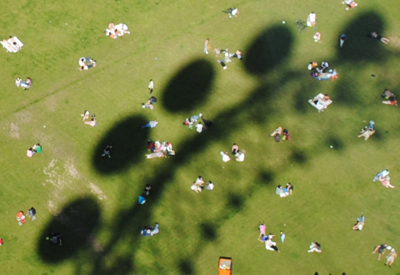
In-the-shadow-of-the-eyeIn a reminder of the summer’s past, here’s an image of Londoners enjoying the sun in the shadow of London’s Eye. The EDF Energy London Eye this year officially welcomed its 50 millionth visitor, some 13 years after the 135 metre high wheel first commenced operation. It was originally anticipated the Eye would only exist for five years but such has been its success that it’s been granted lifelong permission to remain at its South Bank site. For more on the Eye, check out www.londoneye.com.

Where’s London’s oldest…public library?

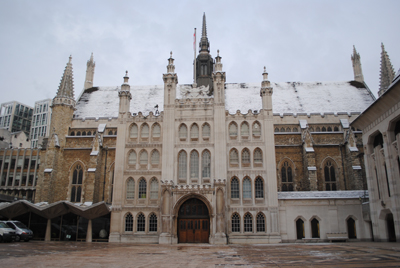
While the designation of London’s oldest public library depends on your definition, for the purposes of this article we’re awarding the title to the Guildhall Library.

Its origins go back to about 1425 when town clerk John Carpenter and John Coventry founded a library – believed to initially consist of theological books for students, according to the terms of the will of former Lord Mayor, Richard (Dick) Whittington (for more on him, see our previous post here).

Guildhall2Housed in Guildhall (pictured above), this library apparently came to an end in the mid-1500s when Edward Seymour, the Duke of Somerset and Lord Protector for the young King Edward VI, apparently had the entire collection loaded onto carts and taken to Somerset House. They were not returned and only one of the library’s original texts, a 13th century metrical Latin version of the Bible, is in the library today.

Some 300 years passed until the library was re-established by the City of London Corporation. Reopened in  1828, it was initially reserved for members of the Corporation but the membership was soon expanded to include”literary men”.

By the 1870s, when the collection included some 60,000 books related to London, the library moved into a new purpose-built building, located to the east of Guildhall. Designed by City architect Horace Jones, it opened to the public in 1873.

The library lost some 25,000 books during World War II when some of the library’s storerooms were destroyed and after the war, it was decided to build a new library. It opened in 1974 in the west wing of the Guildhall where it remains (entered via Aldermanbury).

Today, the 200,000 item collection includes books, pamphlets, periodicals including the complete London Gazette from 1665 to the present, trade directories and poll books as well as the archive collections such as those of the livery companies, the Stock Exchange and St Paul’s Cathedral and special collections related to the likes of Samuel Pepys, Sir Thomas More, and the Charles Lamb Society.

The library also holds an ongoing series of exhibitions.

Where: Guildhall Library, Aldermanbury; WHEN: 9.30am to 5pm, Monday to Saturday; COST: Entry is free and no membership of registration is required but ID may be required to access rarer books; WEBSITE: www.cityoflondon.gov.uk/things-to-do/visiting-the-city/archives-and-city-history/guildhall-library/Pages/default.aspx.

Treasures of London – The Mostyn Tompion Clock…

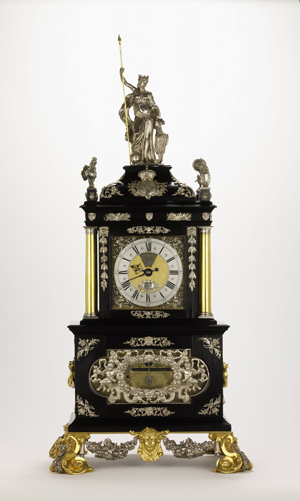
Mostyn-ClockCreated by celebrated London clock-maker, Thomas Mostyn, the Mostyn Tompion Clock was produced to celebrate the coronation of joint monarchs King William III and Queen Mary II in 1689.

Currently on display in the British Museum in an exhibition coinciding with the 300th anniversary of Mostyn’s death, the clock – which shows the hours and minutes as well as the days of the week – continues to keep good time and runs for more than a year on a single wind.

Noted as much for being a work of art as for its mechanical works, the case features an ebony veneer, silver and gilt brass mounts and is crowned with a statuette of Britannia and a shield combining the crosses of St George and St Andrew while decorations on the four corners commemorate the union of the United Kingdom and depict a rose, thistle, lion and unicorn.

The clock was kept in the Royal Bedchamber until the death of King William III in 1702 after which it passed to Henry Sydney, the Earl of Romney and Gentleman of the Bedchamber and Groom of the Stole. It was later inherited by Lord Mostyn (hence the ‘Mostyn’ Tompion) and remained in that family until acquired by the British Museum in 1982.

Keep an eye out for upcoming famous Londoners on Thomas Tompion.

The clock, featured in the The Asahi Shimbun Display, is on display in Room 3 of the British Museum until 2nd February, 2014. Entry is free. 

WHERE: British Museum, Great Russell Street (nearest Tube stations are Russell Square, Tottenham Court Road, Goodge Street and Holborn); WHEN: 10am to 5.30pm daily; COST: Free; WEBSITE: www.britishmuseum.org.

PICTURE:  © The Trustees of the British Museum

This Week In London – Kenwood House reopens; robot safari at the Science Museum; Kew Gardens illuminates for Christmas; Vivien Leigh at the NPG; and more…

Kenwood House in north London is being reopened to the public today following a £5.95 million restoration project which has seen the library returned to what Scottish architect Robert Adam had intended it to be. The project, which saw the Hampstead property closed since March last year, has also seen the restoration of three other Robert Adam-designed rooms – the entrance hall, Great Stairs and antechamber or entrance to the library – as well as the redecoration of four rooms in 18th century style, repainting of the exterior and the repair of the home’s roof – a job aimed at protecting the rooms and its stellar

Kenwood-House-Librarycollection of artworks by the likes of Rembrandt and Vermeer. English Heritage has also endeavoured to make the property more homely, replacing ticket desks and rope barriers with an open fire, warm rugs and leather couches on which visitors can relax. The library (pictured) was built and decorated to Adam’s designs between 1767 and 1770 as part of a wider remodelling of the villa for its owner Lord Chief Justice William Murray, 1st Earl of Mansfield. Redecorated many times since, it was restored in the 1960s but this redecoration was later found to be inaccurate. The Caring for Kenwood restoration project, which has also seen restoration of the Kenwood Dairy, was funded by a £3.89 million grant from the Heritage Lottery Fund as well as support from the Wolfson Foundation and other donors. To coincide with the reopening, a new app exploring Kenwood House has been released which can be downloaded for free from the iTunes store. For more, see www.english-heritage.org.uk/daysout/properties/kenwood/. PICTURE: English Heritage/Patricia Payne.

Head out on a “robot safari” this weekend with a special free event at Science Museum in South Kensington. Robot SafariEU, part of Eurobotics week, features 13 biometric robots from across Europe including an underwater turtle robot, a shoal of luminous fish robots, a robotic cheetah cub and Pleurobot, a robotic salamander. Roboticists from across Europe will be on hand to help visitors interact with the bots. Suitable for all ages, the event kicked off on Wednesday night and runs again on the weekend. Admission is free but timed tickets are required. For more, see www.sciencemuseum.org.uk/RobotSafari.

A memorial to author, scholar and apologist CS Lewis was dedicated at Westminster Abbey last Friday – the 50th anniversary of his death. Conducting the service, the Dean of Westminster, the Very Reverend Dr John Hall, said Lewis was “one of the most significant Christian apologists of the 20th century” and the author of stories that had “inspired the imagination and faith of countless readers and film-goers”. Douglas Gresham, younger stepson of Lewis, read from the author’s book, The Last Battle, at the service. The memorial is located in Poet’s Corner in the abbey’s south transept. For more see www.westminster-abbey.org.

A Blue Plaque commemorating Al Bowlly – described as “Europe’s most popular crooner and famous radio and record star” – will be unveiled at his home in Charing Cross Road this week. Bowlly, who lived between 1899 and 1941, was the voice beyond songs like Goodnight Sweetheart and The Very Thought Of You. The English Heritage Blue Plaque will be unveiled at Charing Cross Mansions, 26 Charing Cross Road – his home during the pinnacle of his career. For more, see www.english-heritage.co.uk/discover/blue-plaques/.

Kew Gardens has opened its gates after dark for the first time with a “captivating show of lights, sound and landscape” this festive season. A mile long illuminated trail, created in partnership with entertainment promoter Raymond Gubbay, will take visitors’ through the garden’s unique tree collections, kicking off at Victoria Gate where a Christmas village (and Santa’s Woodland Grotto) is located. The gardens will be open every Thursday to Sunday until 23rd December and then be open every night from 26th December to 4th January from 4.45pm to 10pm. Admission charge applies. For more, see www.kew.org/Christmas.

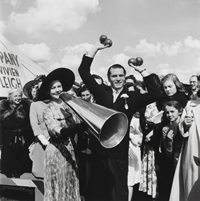
VivienLeighActress Vivien Leigh is the star of a new exhibition opening on Saturday at the National Portrait Gallery. Starring Vivien Leigh: A Centenary Celebration tells her story with a focus on her Academy Award-winning role in 1939’s Gone With The Wind. The display features more than 50 portraits of Leigh by the likes of Cecil Beaton, Angus McBean and Madame Yevonde – many of which have never been exhibited in the gallery before – and a selection of memorabilia including magazine covers, vintage film stills and press books. Among the photos will be a newly acquired image of Leigh and her husband, Laurence Olivier, taken by British photojournalist Larry Burrows at a garden party in 1949 (pictured), along with two rarely seen portraits of Leigh – one taken on the set of The School for Scandal by Vivienne in 1949 and the other by Paul Tanqueray in 1942. The exhibition will be held in Room 33 and runs until 20th July. Admission is free. For more, see www.npg.org.uk. PICTURE:  Copyright – Larry Burrows Collection 2013.

10 fictional character addresses in London – 6. Wimbledon Common…

Wimbledon-CommonA vast expanse of forested parkland in south-west London, Wimbledon Common is also home to the burrow of those pointy-nosed furry (and extremely environmentally-friendly) creatures known as The Wombles.

Created by the late author Elisabeth Beresford, the Wombles apparently have their origin in a walk Ms Beresford took with her children on the Common during which one of them referred to their location as Wombledon Common.

The Wombles of Wimbledon Common – who include Bungo, Orinoco, Tobermory, Miss Adelaide, Madame Cholet, and Great Uncle Bulgaria – appeared in more than 20 books written by Beresford with the first, The Wombles, published in 1968. They’ve also starred in a couple of TV series, made a number of other TV appearances, released some albums and even had their own stage show and a movie, Wombling Free, released in 1977.

Much of the action in the books takes place on Wimbledon Common (which along with the adjoining Putney Common covers some 460 hectares) where they all live in a burrow, recycling rubbish they find discarded by humans.

Features of Wimbledon Common include the Wimbledon Windmill Museum (see our earlier post on it here) and a number of ponds including Rushmere Pond which lies close to Wimbledon Village and probably has a medieval origin.

For more on Wimbledon Common, check out www.wpcc.org.uk.

For more on London’s parks and gardens, see David Hampshire’s London’s Secrets: Parks & Gardens.

Famous Londoners – Ben Jonson…

Often noted as the second greatest English dramatist of his generation (after that Shakespeare guy), the playwright Ben Jonson stands tall in his own right as one of the leading literary figures of the late 16th and early 17th century.

Born in 1572, Jonson was educated at Westminster School in London and possibly went on to Cambridge before he started work as a bricklayer with his stepfather and later served as a soldier, fighting with English troops in The Netherlands.

It was on his return to London that he ventured into acting – among his early roles was Hieronimo in Thomas Kyd’s The Spanish Tragedie – and by 1597 he was employed as a playwright.

While one of his early play-writing efforts (The Isle of Dogs, co-written with Thomas Nashe) led to a term of imprisonment in Marshalsea Prison in 1597 (he was also briefly imprison about this time for killing another actor in a duel, escaping a death sentence by pleading “benefit of the clergy”), the following year – 1598 – the production of his play Every Man In His Humour  established his reputation as a dramatist. Shakespeare, whom some suggest was a key rival of Jonson’s during his career – is said to have been among the actors who performed in it.

Further plays followed including Every Man Out Of His Humour (1599), his only tragedy Sejanus (1603), the popular Volpone (1606) and The Alchemist (1610), and Bartholomew Fair (1614) and it was during these years, particularly following the accession of King James I in 1603, that he became an important figure at the royal court).

His political views continued to cause trouble at times – he was again imprisoned in the early 1600s for his writings and was questioned over the Gunpowder Plot after apparently attending an event attended by most of those later found to be co-conspirators – but his move into writing masques for the royal court – saw his star continue to rise.

All up he wrote more than 20 masques for King James and Queen Anne of Denmark including Oberon, The Faery Prince which featured the young Prince Henry, eldest son of King James, in the title role. Many of these masques saw him working with architect Inigo Jones, who designed extravagant sets for the masques,  but their relationship was tense at times.

In 1616 – his reputation well established – Jonson was given a sizeable yearly pension  (some have concluded that as a result he was informally the country’s first Poet Laureate) and published his first collection of works the following year. Noted for his wit, he was also known to have presided over a gathering of his friends and admirers at The Mermaid Tavern and later at the Devil’s Tavern at 2 Fleet Street (Shakespeare was among those he verbally jousted with).

Jonson spent more than a year in his ancestral home of Scotland around 1618 but on his return to London, while still famous, he no longer saw the same level of success as he had earlier – particularly following the death of King James and accession of his son, King Charles I, in 1625.

Jonson married Anne Lewis – there is a record of such a couple marrying at St Magnus-the-Martyr church near London Bridge in 1594 – but their relationship certainly wasn’t always smooth sailing for they spent at least five years of their marriage living separately. It’s believed he had several children, two of whom died while yet young.

Jonson, meanwhile, continued to write up until his death on 6th August, 1637, and is buried in Westminster Abbey (he’s the only person buried upright in the abbey – apparently due to his poverty at the time of his death).

For an indepth look at the life of Ben Jonson, check out Ian Donaldson’s Ben Jonson: A Life.

Where is it? #74…And the answer is…

Where-is-it--#74

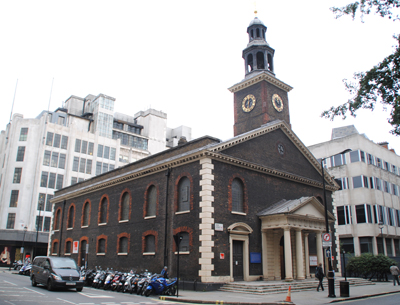
Can you identify where in London this picture was taken and what it’s of? If you think you can, leave a comment below. We’ll reveal the answer early next week. Good luck!

Well done to Candy Blackham, this is indeed the St Peter’s Church, Vere Street, also known variously as the Oxford Chapel and the Marylebone Chapel. Designed by James Gibbs in 1722, it was originally built as a chapel of ease to supplement the parish church of Marylebone and later served the congregation of All Souls Church, Langham Place, while damage to their chapel caused during the war was repaired. It now houses the London Institute for Contemporary Christianity.

This Week in London – JMW Turner and the sea; welcoming the ‘new’ Tate Britain; Hyde Park Winter Wonderland; and more…

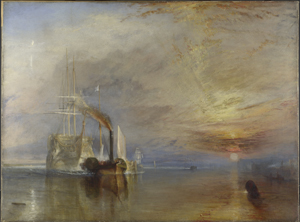
The-Fighting-Temeraire,-tugged-to-her-last-Berth-to-be-broken-up,-1838-©-The-National-Gallery,-LondonA major exhibition on painter JMW Turner’s fascination with the sea opens at the National Maritime Museum in Greenwich tomorrow. Turner and the Sea is the first “full scale” examination of the artist’s relationship with the sea and features works on loan from some of the world’s greatest art institutions. Highlights among the oils, watercolours, prints and sketches on show include The Fighting Temeraire (1839) (pictured), Snow Storm – Steam-Boat off a Harbour’s Mouth (1842), Staffa, Fingal’s Cave (1832), Whalers (1845) and Calais Pier (1803) as well as Turner’s largest painting and only royal commission, The Battle of Trafalgar (1824). The works are being exhibited alongside works by other notable British and European artists including Thomas Gainsborough, Willem van de Velde, Claude-Joseph Vernet and John Constable. Runs until 21st April. Admission charges apply. See www.rmg.co.uk for more details. PICTURE: The Fighting Temeraire, tugged to her last Berth to be broken up, 1838 by JMW Turner, 1839, oil on canvas. © The National Gallery, London.

• The ‘new’ Tate Britain was unveiled to the public this week following a £45 million upgrade and refurbishment and the house-warming party is on this weekend. The work has seen the oldest part of the Grade II* listed building in Millbank transformed thanks to architects Caruso St John and sees the main entrance reopened as well as The Whistler Restaurant, new learning studios an a new archive gallery as well as a new cafe and bar for Tate members. It’s unveiling follows the opening in May of 10 new galleries and new BP displays including the chronological presentation of the Tate’s collection of British art. The house-warming party, a free event, takes place on Saturday from 3pm to 10pm and features music, the giving out of free limited edition prints and a series of talks, film screenings, workshops and even a treasure hunt. For more, see www.tate.org.uk.

Hyde Park Winter Wonderland kicks off again tomorrow with highlights including the ice sculptures of ‘The Magical Kingdom’, the giant observation wheel, the ice rink and Santa Land. There will also be more than 200 chalets in the Angels Christmas & Yuletide Markets, the Bavarian village is back, and Zippo’s Circus will also be returning with a range of shows include Cirque Berserk for the evening crowd. Entry is free but tickets for various attractions can be bought at www.hydeparkwinterwonderland.com. Runs until 5th January.

ON NOW: The Young Durer: Drawing the Figure. This exhibition at the Courtauld Gallery looks at the figure drawing of the young Albrect Durer (1471-1528), focusing on works created in his formative years between 1490-1496. Among the exhibition’s highlights is Mein Agnes (My Agnes), A Wise Virgin, and Three Studies of Durer’s left hand. The exhibition runs until 12th January.

• FURTHER AFIELD: Only a hop, skip and jump from London lies Down House, former home of naturalist Charles Darwin, in Kent. English Heritage are this weekend marking the anniversary of publication of his controversial book On the Origin of Species by Means of Natural Selection (it was published on 24th November, 1859) with a range of specialist talks and tours at the property this weekend. For more on the weekend, see www.english-heritage.org.uk/daysout/events/origin-weekend-dh-23-nov/

10 fictional character addresses in London – 5. 17 Cherry Tree Lane…

This is one property for which there is no ‘real’ address – 17 Cherry Tree Lane doesn’t exist except in the pages of PL Travers’ books about Mary Poppins (and the many subsequent adaptions including the famous 1964 musical film starring Julie Andrews and Dick Van Dyke).

Bank-of-EnglandBut we do know that the home of Mr and Mrs Banks – the couple who hired Ms Poppins as a nanny for their children Jane, Michael and baby twins John and Barbara – is believed to have been located somewhere in London – possibly somewhere to the north-west of the city close to The Regent’s Park and within an easy commute of the Bank of England (pictured) where Mr Banks worked.

While some of the locations featured in the book and the film – such as the Bank  and, of course, St Paul’s Cathedral (remember the lady who fed the birds?) – do exist – there is also at least one residential property related to Mary Poppins which does as well.

According to Ed Glinert, author of Literary London, the model for Admiral Boom’s house a little further along Cherry Tree Lane  – you may recall him firing his cannon on the 1964 film – can be found in Admiral’s Walk in Hampstead. The property was apparently once home to the nineteenth century architect George Gilbert Scott.

What’s in a name?…Millbank

Millbank

The origins of this Thames-side district of London are as obvious as they sound – it was the site of a mill which stood on the west bank of the river.

The mill, which had served Westminster Abbey since at least the 16th century, stood here until about 1735 when it was demolished and replaced by a mansion built by Sir Robert Grosvenor, a member of the Grosvenor family responsible for developing parts of Mayfair.

The house was pulled down in 1809 to make way for Millbank Prison, which was the country’s first national prison and which was where prisoners were held before their transportation to Australia.

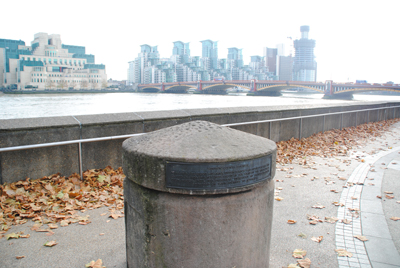
The prison closed about 1890 (a buttress which once stood at the top of the prison’s river steps commemorates the prison – pictured above).

The site is now occupied by some of the more interesting buildings in the area – including the Chelsea College of Arts (buildings formerly used by the  Royal Army Medical School, Tate Britain (which opened in 1897 as the National Gallery of British Art), and a housing development known as the Millbank Estate, constructed to providing housing for 4,500 members of the working class.

While the area was previously known for having been dominated by marshland, land was eventually reclaimed along the waterfront and an embankment established, defining the course of the river.

As well as the district, the name Millbank is also the name of the street which runs along the riverbank between the Houses of Parliament and Vauxhall Bridges.

For more on London’s prisons, check out Geoffrey Howse’s A History of London’s Prisons.

This Week in London – The Hadron Collider at the Science Museum; John Richard Arthur honoured; Christmas at Carnaby; and South American gold at the British Museum…

First up, we’ve changed the name of the Thursday update of what’s happening in London to This Week in London which we think better describes what the column’s about. So, to some events we think you might be interested in…

• An exhibition that transports visitors to the heart of the Large Hadron Collider (LHC) opened at the Science Museum yesterday. In the first exhibition of its kind, Collider offers visitors the closest thing to actually being at the CERN particle physics laboratory, blending theatre, video and sound to enable visitors to explore the control room, meet virtual scientists and engineers and see inside a huge underground ‘detector’ cavern. There’s also the chance to follow the journey of particle beams as they race around the 27 kilometre long LHC tunnel (incidentally about the same length as the Circle Line) and the exhibition’s highlight is a wrap around projection which takes watchers from an enormous experiment cavern to the heart of a particle collision. On show will be artefacts from the actual LHC including a 15 metre magnet used to steer the particle beam and objects from the museum’s collection including the accelerator used by Cockcroft and Walton to split the atom in 1932. Admission charge applies. Runs until 6th March. For more, see www.sciencemuseum.org.uk.

John Richard Arthur, a former Mayor of Battersea and the first black man to hold senior public office in London, was honoured with an English Heritage Blue Plaque this week. The plaque was unveiled by Cr Angela Graham, the Mayor of Wandsworth, at his former home at 55 Brynmaer Road in Battersea – his residence during the major milestones of his political career. Elected on 10th November 1913, Archer lived at the home from about 1898 to about 1918. He has been described as a “key figure in the story of the Black contribution in Britain in the early part of the Twentieth century”. For more, see www.english-heritage.org.uk/discover/blue-plaques/.

Christmas comes to the West End this afternoon with the Carnaby Christmas Shopping Party taking place in 13 streets around the iconic fashion strip. More than 100 shops, restaurants and bars are delivering 20 per cent discounts and there’s also complimentary drinks, music, talks on fashion trends and the chance for the “best dressed” to win goodie bags. The party runs from 5pm to 9pm with the Christmas lights turned on at 6pm. Head to www.carnaby.co.uk for more.

El-Dorado• On Now: Beyond El Dorado: power and gold in ancient Colombia. This exhibition in Room 35 of the British Museum features items including ceramics and stone necklaces taken from Lake Guatavita near modern Bogota (The phrase El Dorado, “the golden one”, actually refers to a ritual which took place at the lake in which a newly elected leader of the Muisca people was covered in powdered gold before diving into the lake and washing it off to emerge as the new leader). They are just some of the more than 300 items in the display which come from the Museo del Oro Bogata – one of the best collections of pre-Hispanic gold in the world – as well as the British Museum’s own collection. Other objects include large scale gold masks, a painted Muisca textile, avian pectorals and necklaces with feline claws and one of the few San Agustin stone sculptures held outside Colombia. The exhibition, sponsored by Julius Baer, runs until 23rd March. Admission charge applies. For more, see www.britishmuseum.orgPICTURE: Anthropomorphic bat pectoral, Tairona, gold alloy, AD900-1600. Copyright Museo del Oro, Banco de la Republica, Colombia.

10 fictional character addresses in London – 4. 186 Fleet Street…

OK, so the debate may continue over whether Sweeney Todd was an actual person (according to author Peter Haining, the real Todd, born in Brick Lane, is supposed to have been hanged in 1802) or a fictional character, but, suspending that debate for the moment, we’re including the infamous Fleet Street barber in this list.

186-Fleet-StreetKnown as the “demon barber of Fleet Street”, Todd first appeared in literature as a murderer in the Victorian serial, The String of Pearls: A Romance, published in a weekly periodical, and soon became a staple of the Victorian theatre, later appearing in numerous plays and films including the 2007 Johnny Depp vehicle, Sweeney Todd.

His MO usually involved cutting his unsuspecting victim’s throat and then, using a specially constructed barber’s chair, dropping the body into the cellar. There, he and his associate, Mrs Lovett, would rob them (alternatively, other versions have him dropping the customers into the cellar first and then, if needed, finishing them off).

Mrs Lovett would then dispose of the remains by baking them into pies and selling them via her pie shop located nearby in Bell Yard. The story goes that the cellar was linked to nearby Bell Yard via tunnels.

Sweeney Todd was supposed to have terrorised London in the late 18th century and his barber shop was apparently located at 186 Fleet Street in London – right next to St Dunstan-in-the-West. The site is now occupied by a former newspaper office – that of the Dundee Courier (pictured above, left).

For Peter Haining’s book on Sweeney Todd, see Sweeney Todd: The Real Story of the Demon Barber of Fleet Street.

PICTURE: 186 Fleet Street, Sweeney Todd’s (Des Blenkinsopp) / CC BY-SA 2.0

LondonLife: Lest We Forget…

RTR-Memorial

The Royal Tank Regiment Memorial in Whitehall is among the many war memorials in London – poignant reminders of what the nation stopped to remember on Remembrance Sunday. The work of Vivien Mallock, this particular memorial was unveiled on the corner of Whitehall Court and Whitehall Place by Queen Elizabeth II in June, 2000. The memorial shows the crew of a World War II Comet tank including a commander, loader, gunner, hull machine gunner and driver. For more on the regiment, see www.royaltankregiment.com.

London Pub Signs – The Counting House…

The-Counting-House

This pub, as the names suggests, is located in the City. But more than just being located in a part of London that was traditionally associated with finance, the pub is also actually located in a former bank.

The grand building located at 50 Cornhill was built in 1893 for bankers Prescott, Dimsdale, Cave, Tugwell and Co. (and interestingly, its foundations partly rest on a wall which was once part of the city’s Roman basilica).

The Grade II-listed building, designed by Henry Cowell Boyes and built by William Cubitt, was occupied by several different banks over the years – the last apparently being NatWest – before it was purchased by the Fuller’s Ale and Pie House chain in 1997.

This pub still offers plenty of period atmosphere with a central island bar, large mirrors, old world railing and a magnificent central dome. There’s also a World War I memorial on the wall.

For more on the pub, check out www.the-counting-house.com.