10 small (and fascinating) museums in London…10. The Horniman Museum

For the last in our series on small (and fascinating) museums, Exploring London visited the Horniman Museum, an eccentric collection of artifacts based in south-east London.

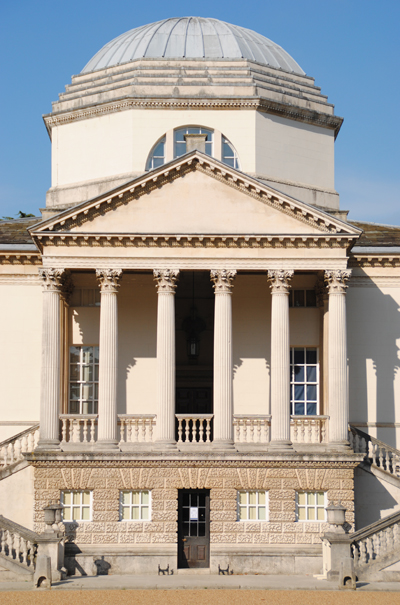
The museum started life as the personal collection of wealthy 19th century tea merchant, philanthropist and MP Frederick John Horniman. Horniman, who started collecting in the 1860s, opened his house in Forest Hill to the public so people could come and view his collection. But as the number of objects in the collection increased, he decided to construct a purpose-built museum and in 1898 commissioned architect Charles Harrison Townsend to design it.

The new art deco museum building – which includes a landmark clocktower – opened in 1901 and, along with 16 acres of gardens, was given to the people of London. While further buildings were added over the ensuing century (including in 1911 when Horniman’s son Emslie donated a new building), some of these later additions were demolished in the late Nineties and a new extension built which was opened in 2002.

These days Horniman’s original collections only make-up around 10 per cent of the 300,000 objects in the museum. The artifacts are grouped in a series of thematic galleries. Among them is a Natural History Gallery containing stuffed specimens and models of animals ranging from the Dodo (extinct since 1680) to the yellow-bellied pangolin (which rolls into a prickly ball when threatened).

Other galleries include the stunning African Worlds Gallery, housing everything from a display of Ethiopian crowns, a series of plaques from Benin depicting scenes from the country’s history, 25 kilogram Bwa plank masks, and macabre Midnight Robber head-dresses from Trinidad as well as the Music Gallery which contains an amazing array of instruments old and new, including a monster 6’6” tall tuba and a Tibetan trumpet made from a femur.

There is also the Centenary Gallery which contains a display of Horniman’s original artifacts and new finds – everything from American Indian head-dresses to a Burmese Buddhist shrine and a fake torture chair which was once claimed to have dated from the Spanish Inquisition but is actually believed to have been assembled in the 19th century.

The site also includes an aquarium (an entry fee applies) and spaces for special exhibitions – these currently include The Art of Harmony, which brings together musical instruments from the Horniman and some on loan from the V&A, and Bali: Dancing for the Gods, which explores Balinese dance culture and dance (this is free with the aquarium ticket or an entry fee applies).

There’s also a shop, cafe and gardens to explore (although the latter are currently undergoing redevelopment, meaning of the gardens are currently not accessible).

This quirky museum – aptly once known as a “cabinet of curiosities” – will reward any visitor. As Horniman himself said in a quote which appears in the museum: “Those who use their eyes obtain the most enjoyment and knowledge. Those who look but do not see go away no wiser than they came.”

This is the last in our series on 10 small (and fascinating) museums. Given the number of museums we haven’t yet mentioned, we’ll be running another such series in the future. Next week we start a new Wednesday series on Royal Parks.

WHERE: Horniman Museum, 100 London Road, Forest Hill (nearest station is that of Forest Hill – both Overground and South-Eastern); WHEN: 10.30am to 5.30pm; COST: Free (with the exception of the aquarium and some special exhibitions – the aquarium is £2.50 an adult/£1.20 a child aged 3 to 16/ £5.50 a family; WEBSITE: www.horniman.ac.uk

LondonLife – The BBC Proms

Last weekend the Last Night of the Proms was held at Royal Albert Hall, the culmination of the summer music season’s 117th year.

The origins of the Proms go back to 10th August, 1895, when Robert Newman, manager of the concert venue Queen’s Hall in Langham Place, London, decided to offer a popular program of music in a less formal “promenade arrangement” which would be accessible to the masses and would ultimately lead them to a greater appreciation of classical music.

He offered conductor Henry Wood the opportunity to conduct the first Proms season, known as ‘Mr Robert Newman’s Promenade Concerts’. Early on, Wood and Newman established the tradition of having a Wagner Night on Mondays and a Beethoven Night on Fridays and Wood used the platform of the Proms to promote up-and-coming performers.

In 1927 the BBC took over the management of the Proms, now formally known as the BBC Proms, and has continued in that role ever since bar an interruption during World War II. It was during World War II, incidentally, that the event moved to the magnificent Royal Albert Hall in South Kensington (the magnificent interior of which can be seen above), after Queen’s Hall was gutted following a bombing raid on 10th May, 1941.

The eight-week Proms program has since continued to widen with the introduction of complete opera performances in the 1960s, concerts by foreign ensembles and other music styles including jazz, Gospel and that specifically targeted at children.

Now including more than 70 main concerts, the music festival – for which standing tickets can still be bought continuing the tradition of ‘promenading’ – also continues to also be a showcase for new works. For more on the Proms, see www.bbc.co.uk/proms, and for more on the venue, see www.royalalberthall.com.

PICTURE: Courtesy of BBC, Chris Christodoulou

What’s in a name?…Cheapside

One of the major thoroughfares of the City of London, the name is reflective of its role as a marketplace with the medieval English word ‘cheap’ generally been taken to mean market.

Starting from the intersection of Newgate Street and St Martin’s Le Grand through to where it runs into Poultry, the street was apparently originally known as Westcheap – Eastcheap is still located down near the Monument. Cheapside’s surrounding streets – including Poultry, Milk Street, and Bread Street give indication of the sorts of goods that were once sold in the area.

Cheapside was, in medieval times, an important street and was on the processional route royalty would have taken from Westminster to the Tower of London. It is the site of St Mary-le-Bow Church (it’s said that if you’re born within hearing of the Bow bells you’re a true Londoner), and, until the Great Fire of 1666, the eastern end of Cheapside was the site of the end of the Great Conduit where water arrived after being piped in from the Tyburn River in the west.

Key figures associated with Cheapside include slain Archbishop of Canterbury Thomas Becket, born there in 1118, poet John Milton, born on the adjoining Bread Street in 1608, and writer Geoffrey Chaucer. A glimpse into the street’s past was found in 1912 when the Cheapside Hoard was unearthed during the demolition of a building there (you can see our earlier post on that here).

The area was heavily bombed during World War II.

Lined with shops, restaurants and office buildings, Cheapside today remains close to the heart of the city and is currently undergoing significant redevelopment, the recently opened swanky shopping centre at One New Change being an example.

Treasures of London – Tower Bridge

Often confused with London Bridge, Tower Bridge stands as a testament to Victorian engineering ingenuity.

The bridge – a major restoration of which was completed in March this year – was officially opened on 30th June, 1894, by the Prince and Princess of Wales (later King Edward VII and Queen Alexandra) eight years after work on a new Thames crossing commenced, driven by the need for a bridge which was more accessible to people living in East London (at the time pedestrians and vehicles were facing considerable congestions, with some being forced to wait hours before crossing the Thames).

At the time of its completion, Tower Bridge (although not universally acclaimed at the time) was the most sophisticated and largest bascule bridge ever built – the word bascule comes from the French for ‘see-saw’ and refers to the action of the bridge when it swings open. The bascules, which took only a minute to open, were initially operated by a steam-powered hydraulic system although since 1976, they have been driven by oil and electricity.

The 293 feet tall structure was built from steel and clad in Portland stone and Cornish granite to ensure it blended with the nearby tower of London. It was built with two walkways joining to two great towers at a height of 110 feet. Initially open to the elements, these were conceived as a way for people to cross the bridge while the bascules were raised open but due to a lack of use, they were closed in 1910 (they were reopened in 1982 when the first permanent exhibition took up residence at the bridge).

These days as well as providing a thoroughfare across the river for pedestrians and vehicles (and still opening for larger boats and ships from time to time although 24 hours notice is required), the bridge – which, along with four other London bridges, is maintained by the Bridge House Estates trust, a charity whose roots go back to the 11th century – houses an exhibition which tells the story of its construction. The walkways provide wonderful views down the river.

Interestingly, the iconic colors of Tower Bridge only date from 1976 when the structure was painted red, white and blue for the Queen Elizabeth II’s Silver Jubilee. Before that, the bridge was painted a chocolate brown though it was originally a greenish blue color.

One of the most interesting stories associated with Tower Bridge is that of a bus driven by Albert Gunton. On the bridge when it started opening in December 1952, he had to make the bus jump the gap – at three foot wide – to avoid the bus toppling into the river below. Passengers only suffered minor injuries and Gunton was later awarded a bravery award for his actions.

A list of times when the bridge will be lifted (this happens around 1,000 times a year) is kept on the Tower Bridge website.

WHERE: The exhibition entrance is located at the north west tower of the bridge (nearest Tube stations are Tower Hill or London Bridge); WHEN: 10am to 6.30pm (last admission 5.30pm) daily until end of September, then 9.30am to 6pm (last admission 5pm) until March; COST: £6 an adult/£4.20 concessions/£2.50 children aged 5 to 15 (under fives are free)/£12.50 for a family; WEBSITE: www.towerbridge.org.uk

Around London – London celebrates on the Thames; a fashionable night in London; and, heritage trains in Amersham…

London will this weekend celebrate the 15th annual Thames Festival, billed as the city’s “largest free festival”. The two day event includes a giant shipwreck sculpture outside City Hall (created with the aid of students from 100 London schools), barge races and a parade of more than 100 boats on the Thames, a wide array of musical and street performances (these include a mass choir of 700 school children and a performance in which the HMS Belfast is used as a percussion instrument) and an illuminated Night Carnival culminating in fireworks. More than 800,000 people are expected to attend the event which takes place at a range of venues stretching from the London Eye to Tower Bridge. Other highlights include the annual Feast on the Bridge on Saturday during which Southwark Bridge will be closed to traffic, Korean Taekwondo displays, a food market and an exclusive cruise on the Thames hosted by the likes of historian David Starkey and the creators of cult children’s character Rastamouse. River boat operators, meanwhile, are offering 2-for-1 tickets for the weekend to help people make the most of the festival. For more information on the festival, see www.thamesfestival.org. For more on the 2 for 1 tickets, see www.tfl.gov.uk/river.

Regent Street and surrounds will be buzzing tonight with more than 40 shops, bars and restaurants taking part in Vogue Fashion’s Night Out. The event, which is running for its third year in London, will see many stores remaining opening until 11pm and feature special events and promotions. The night is part of a series of nights being held in countries across the globe – from Russia to Brazil, Australia to Spain. For more information, see http://fashions-night-out.vogue.co.uk.

An art deco Tube train dating from 1938 and the Sarah Siddons, the last operational ex-Metropolitan Railway electric locomotive will be running between Harrow-on-the-Hill, Rickmansworth and Amersham this Sunday as part of the Amersham Old Town’s Heritage Day. Other activities include a best dressed competition showcasing retro fashions, a free heritage bus service, including rides on the Routemaster RM1, street performances including a Punch and Judy show and clowns, and “object handling sessions” at the Amersham Museum. For more information, see the London Transport Museum’s website here.

10 small (and fascinating) museums in London…9. HMS Belfast

OK, so it’s not exactly small but HMS Belfast – an offshoot of the Imperial War Museum moored permanently on the Thames near Tower Bridge – does make a fascinating museum in which to spend a few hours.

Commissioned into the Royal Navy on 5th August, 1939 (just in time for the start of World War II), the HMS Belfast is a large light cruiser built, along with the HMS Edinburgh, as an improvement on the then existing ‘Southampton’ class vessels. It is now the only surviving example of the many big gun armoured warships which were built for the Royal Navy in first half of the twentieth century.

Assigned to the Home Fleet on the outbreak of war, the ship operated out of Scapa Flow in the Orkney Isles in far north Scotland and was charged with patrolling the northern waters as part of efforts to impose a maritime blockade on Germany. Striking a mine in November of that year, however, it was put of out action until two years later when it rejoined the Home Fleet and then began escorting Arctic convoys to the Soviet Union – a mission which saw it take part in the Battle of North Cape off the Norwegian coast in late 1943 (this battle saw the sinking of the German battle cruiser Scharnhorst).

The HMS Belfast later saw action on D-Day, the Allied invasion of Normandy in 6th June, 1944, when it was employed to bombard German positions onshore before, heading to Japan where, after the end of the war, it was used to evacuate survivors of prisoners-of-war and internment camps in China.

The HMS Belfast saw action in the Korean War and then spent further time in the Far East before – under threat of being disposed of and broken up – it was acquired as a museum and moored in London. The first visitors were admitted on Trafalgar Day, 1971, and, as of last year, nearly 10 million people have taken up the chance to look at the ship.

These days there’s a well-defined route through the vessel, complete with audio guide (it’s included in the admission price), which takes visitors on an informative journey describing what life was like for those who served onboard the Belfast – including everything from the Arctic messdecks where ratings slept in hammocks to the NAAFI store where they could buy supplies, sick bay, the ‘modern’ laundry room, and chapel as well as the engine room, shell rooms and magazines, and , of course, the bridge.

Many of the rooms have been set up – some using life-sized manniquins – to show how they would have looked during a typical day. Particularly worth a look is the new Gun Turret Experience: A Sailor’s Story 1943, an immersive film, light and sound show which gives a glimpse into what life was like working inside one of the six inch gun turrets.

It can take a while to get around the whole ship (and parents are asked not to take small children into the boiler room) but it’s well worth taking the time to explore properly. In addition to the features of the ship itself, there are two exhibitions – one looking at the role of the ship in peace and war, and the other, an interactive experience in what life was like on board.

WHERE: HMS Belfast is moored on the Thames between London Bridge and Tower Bridge. Entry is from the south bank of the Thames near Morgans Lane (nearest Tube stations are London Bridge, Tower Hill or Monument); WHEN: 10am-6pm (last admission 5pm) daily until 31st October, then 10am to 5pm (last admission 4pm); COST: £13.50 adults/£10.80 seniors and students/children under 16 free (price includes a voluntary donation); WEBSITE: http://hmsbelfast.iwm.org.uk.

LondonLife – Remembering September 11

London, along with the rest of the world, will this week pause to remember 11th September, 2001, when nearly 3,000 people died after planes were flown into New York’s World Trade Center towers and the Pentagon (a fourth plane crashed in Pennsylvania). In preparation for the 10th anniversary, London’s Mayor Boris Johnson unveiled a 10 metre high sculptural memorial, After 9/11, in Battersea Park which controversially uses steel girders from the towers in its design. But London already has a memorial to the events of 11th September. This is located in Grosvenor Square Garden, opposite the US Embassy. Opened on 11th September, 2003, the memorial features a pavilion which has three bronze plaques listing the name of UK citizens, UK Overseas Territories and people of dual nationality who lost their lives. The site was chosen partly on the basis that it was at the foot of the nearby Roosevelt Memorial that people laid flowers and lit candles in the immediate aftermath of the attacks. Plants at the memorial include white Bianca Roses which were among the flowers in the Queen’s bouquet laid at Westminster Abbey in a service held on 29th November, 2001, and were the roses that family members laid on the innocent victims memorial outside the abbey . In addition, more than 3,000 of the rose petals cascaded from the Whispering Gallery to the altar of St Paul’s Cathedral on the  first anniversary service.

Where is London’s oldest…tailor?

Founded in 1689, Ede & Ravenscroft is thought to be not only the oldest tailor in London but the world.

The origins of the business can be traced back to William and Martha Shudall, tailors who set up shop in Aldwych in London that year. Their work had soon caught the eye of royalty with the company winning the contract to create robes for the coronation of King William III and Queen Mary II after what is known as the Glorious Revolution.

As well as making robes for the clergy, government officials and those working in the legal and academic professions, the company’s relationship with the Royal Family continued and they have provided robes and tailoring for as many as 12 coronations including that of King George III.

Wig-making was added to the business in the 1800s when Joseph Ede (robe maker to Queen Victoria) married into the Ravenscroft family – already known for their wig-making (the business was renamed from Ede & Son to include the Ravenscroft name in 1902).

The company, headquartered at 93 Chancery Lane (they also have several other shopfronts including one at Burlington Gardens near Savile Row – see picture), currently holds three Royal Warrants, being official robe-makers to the Queen, Prince Philip and Prince Charles.

Where is it? #4

This is the fourth in our series in which we ask you to identify where in London this picture was taken and what it’s of. If you reckon you know the answer, leave a comment below. We’ll reveal the answer early next week. Good luck!

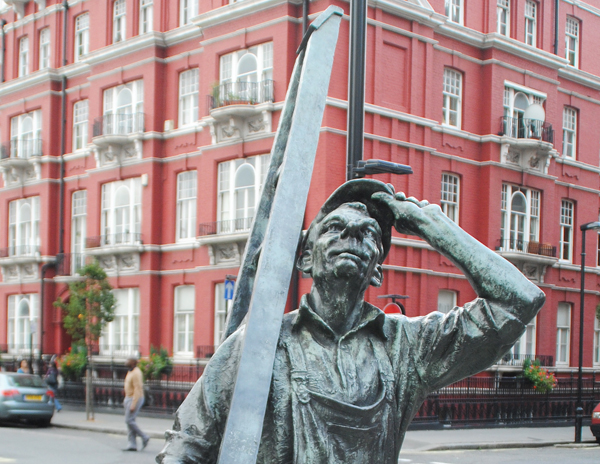
And the answer is…that the picture shows a publicly-funded memorial to Sir Augustus Henry Glossop Harris, a former manager of the Theatre Royal Drury Lane, located outside the theatre itself. Harris, who bore the nickname “the father of modern pantomime”, co-wrote and produced many productions and was also a member of the London County Council as well as a sheriff.

Lost London – Execution Dock…

The favoured place to dispatch pirates, Execution Dock was located on the north bank of the River Thames just off Wapping High Street.

Among the most famous to be executed here was Kidd himself who, having been found to have turned pirate while operating as a privateer under the authority of King William III, was hanged here on 23rd May, 1701.

The site, near where a cannon foundry operated supplying the fleet of King Henry VIII, was in-use as an execution ground for more than 400 years, from the 15th century until the last hanging in 1830 (that of pirates George Davis and William Watts).

Those convicted of piracy in the High Court of Admiralty were typically brought to Execution Dock from Marshalsea Prison (or in some cases from Newgate) in a procession across London Bridge and past the Tower of London which was led by the Admiralty Marshal or his deputy who carried a silver oar as a symbol of their authority.

In a public spectacle, the pirates were then hanged on a wooden scaffold built at low tide but unlike at other sites of execution where they were cut down after death, the victims were left hanging to allow three tides to wash over them.

The most notorious of the pirates would then be tarred and put in a gibbet to be exhibited on one of the banks of the Thames as a warning to others (Kidd’s remains were apparently left in such a state for more than 20 years at Tilbury).

The exact location of Execution Dock remains a matter of dispute with favoured locations including a spot near the Town of Ramsgate pub, just along from The Captain Kidd pub near what are now known as King Henry’s Stairs and, between the two locations, a warehouse which stands on the waterfront and is prominently marked with an E (for Execution Dock). Some even suggest the site was outside the Prospect of Whitby pub further east along Wapping High Street.

There’s currently an exhibition on Captain Kidd at the Museum of London Docklands, Pirates: The Captain Kidd Story.  See here for more information.

PICTURE: Wikipedia

Around London – Tens of thousands expected for weekend’s Sky Ride; IWM marks 10th anniversary of September 11; Liberty festival hits South Bank; British Library launches new 19th century app; and, a new slavery exhibition at Museum of London…

• Tens of thousands of people are expected to join London Mayor Boris Johnson for the annual Sky Ride this Sunday. The event, organised by the Mayor of London, Sky and British Cycling in partnership with Transport for London, allows people to cycle a 11.6 kilometre route through the city centre minus the usual car traffic. The circular route, which takes in Westminster Bridge, the Mall and Buckingham Palace, Trafalgar Square and Whitehall, will be vehicle-free between 9.30am and 4.30pm. Last year more than 85,000 took part. For more information, seewww.goskyride.com/london.

• The Imperial War Museum is marking the 10th anniversary of the 9/11 attacks in the US with a new photographic exhibition showing artefacts recovered after the destruction of the World Trade Center in New York. Memory Remains, which opened on 26th August and runs until 26th February, is a photographic exploration of Hangar 17 – a previously empty hanger at John F. Kennedy Airport in New York where debris and material retrieved from the 16 acre World Trade Center site were stored. It features images taken by Spanish-American artist Francesc Torres, who was commissioned by the National September 11 Memorial & Museum to capture what was happening inside the hangar and granted special access to do so. The exhibition is being accompanied by another at Imperial War Museum North in Manchester. In the Spotlight: Remembering 9/11, which runs from 10th September until September next year, features artefacts from the World Trade Center including a British flag which was laid on the altar in St Paul’s Cathedral on the first anniversary of the attacks. Admission to both exhibitions is free. For more information, see www.iwm.org.uk.

South Bank hosts the Liberty festival, an annual showcase by deaf and disabled artists, this Saturday. The festival, which will take place at two sites – the Southbank Centre and the National Theatre, will feature a mix of music, dance, street theatre, comedy, circus performances and aerial displays. Highlights include Mark Smith’s Deaf Men Dancing, performance artist Bobby Baker, Jean-Marie Akkerman’s Cirque Nova featuring four disabled aerial artists, and Kazzum, who produce theatrical work for children up to 16-years-old. The event is free. For more information, see www.london.gov.uk/liberty.

The British Library and BiblioLabs have launched a new 19th century historical collection app for iPad users. The app (which costs £1.99 a month or $US2.99 for those outside the UK and is available through Apple’s App Store) allows users to explore historical and antiquarian books including classic novels, original accounts by Victorian travellers, books on science and poetry, memoirs and military histories. Around 45,000 titles are initially available with a further 15,000 to be added by the end of the year.

On Now: Freedom from: modern slavery in the capital. A new exhibition looking at the reality of trafficking and forced labour has opened at the Museum of London and the Museum of London Docklands – the museum first cross-site exhibition. Created in partnership with Anti-Slavery International and coinciding with the launch of its Slavery-Free London campaign, the exhibition looks at the personal impact of human trafficking and slavery in 21st century London and includes personal testimonies such as that of ‘Gheeta’ who was trafficked from India and forced into work. It also features a series of large scale photographs by Chris Steele-Perkins of Magnum Photos. Runs until 20th November. Admission is free. For more information, see www.museumoflondon.org.uk.

10 small (and fascinating) museums in London…8. The Geffrye Museum

We have mentioned this museum before, but it’s well worth doing so again (particularly for those who may have missed the first entry). Located in former almhouses in Shoreditch, the Geffrye Museum is a survey of house interiors from the 17th century through to modern times.

Featuring 11 reconstructed period interiors created using authentic furnishings, it tells the story of the city through its residents’ homes (albeit largely wealthy ones) and includes a look at a hall in 1630, a parlour in 1790, a drawing room in 1870 and a loft conversion dating from 1998. There’s an audio guide which provides details on each room and information panels as you go along (and if you can’t get there but want to have a look, the website gives a detailed look at each room with notes on select furnishings).

The almshouses in which the museum resides (it runs along the rear wing of a U-shaped courtyard and takes in the chapel) were built in the early 1700s by the Company of Ironmongers after it received a bequest from Sir Robert Geffrye, a former twice-master of the company and a former Lord Mayor of London (his statue adorns the front of the chapel and faces out into the courtyard, itself a quiet oasis in busy Shoreditch).

These were used until early in the 20th century when the company decided to relocate the remaining pensioners. But the buildings have been preserved and it is possible to visit a former almshouse which has been restored and opened as a museum with displays on what life was like for the pensioners. Meanwhile, at the rear of the museum is a walled herb garden filled with herbs and a series of ‘period garden rooms’ ranging from the 17th to 20th centuries.

There’s also a restaurant and shop onsite (housed in a new extension opened in 1998).

WHERE: 136 Kingsland Road, Shoreditch. Nearest tube is Liverpool Street or Old Street (a fair walk) or Hoxton Overground Station (next door); WHEN: Tuesdays to Saturdays, 10am-5pm or Sundays and Bank Holidays, 12-5pm (gardens open until 31st October); COST: Free (admission to almhouses £2.50 at set times on select days); WEBSITE: www.geffrye-museum.org.uk


Where is It? #3

This is the third in our series in which we ask you to identify where in London this picture was taken and what it’s of. If you reckon you know the answer, leave a comment below. We’ll reveal the answer early next week. Good luck!

Apologies for the delay in getting this answer to you (Exploring London has been on a summer break!). But if you’ve been wondering, the answer is that the picture shows a lock detail from one of the gates leading into the old Royal Naval College at Greenwich – the anchors were a clue! Congrats to Ian who guessed the location was near the Queen’s House (contained within the former Royal Naval College). Click here if you’re interested in reading our previous entry about the former Royal Naval College and Sir Christopher Wren’s role in its design.

Around London – Story of London Festival; a new filmlovers’ walk; ‘pocket histories’ of London; and, Your 2012…

The third Story of London Festival kicked off at the start of the month with a programme of events aimed at celebrating the 60th anniversary of the 1951 Festival of Britain. This year’s festival is being coordinated by the Museum of London in partnership with the Southbank Centre. It also involves five London borough museums – that of Brent, Dagenham, Haringey, Redbridge and Wandsworth – which are hosting free displays and events around the theme of how they celebrated in 1951. The festival runs until the end of the month, so there’s still plenty of time to get involved. Among the highlights still to come is the Floral Bicycle Parade around the Southbank Centre on 28th August (‘decorating stations’ will be set up at the centre prior to the parade). For a full listing of what’s happening, see www.london.gov.uk/priorities/art-culture/storyoflondon.

The City of London has released a new filmlovers’ walking tour of London which takes in locations featured in films and TV shows. Lights, camera, action starts on Millennium Bridge (destroyed in the opening sequence of Harry Potter and the Half-Blood Prince) and takes in 23 other locations including St Paul’s Cathedral (The Madness of King George and Great Expectations), Bank Junction (28 Days Later, National Treasure II), St Bart’s Hospital (Bridget Jones: The Edge of Reason), Moorgate (Ocean’s 13 and The Bourne Ultimatum) and Tower Bridge (BranniganThe Mummy ReturnsThunderbirdsTomb RaiderSherlock Holmes) before finishing at Postman’s Park (Closer). The walk has been mapped out by the City’s film team which works with location managers and film directors when they’re working in the Square Mile. The leaflet can be picked up free-of-charge from the City of London Information Centre (opposite St Paul’s) or downloaded here.

• Interested in a snapshot of what London was like during a particular historical era? The Museum of London has launched a series of 16 “pocket histories”, each of which, in up to 1,000 words, tackles a particular aspect of the city’s history based around five objects or images. The subjects covered range from a look at the River Thames in prehistory to life in medieval London, from an examination of the history of Jack the Ripper and the East End, to a detailed look at the London’s plagues. While designed for a general audience, the histories are expected to be particularly useful to school students. They can be looked at online or downloaded as a PDF. Further subjects are expected to be added in the future. See www.museumoflondon.org.uk/pockethistories. The museum has also launched Picturebank, a collection of images which can be accessed online and viewed, printed or copied for educational use.

• On Now: Your 2012. The Museum of London Docklands is hosting a free exhibition featuring images capturing the construction work at the Olympic site in East London and the impact on the surrounding boroughs and the environment as well as archival images which show the history of the site. The free exhibition runs until 5th February. For more, see www.museumoflondon.org.uk/docklands/.

10 small (and fascinating) museums in London…7. The Cartoon Museum

Hidden away in Bloomsbury almost in the shadow of the gigantic bulk of the British Museum, this small museum offers an interesting insight into the development of cartoons and comic strips from a uniquely British perspective.

Opened in 2006, the museum exhibits are spread over two floors and trace the history of cartoons and comic strips from their origins in the 1700s through to today’s graphic novels.

While it can seem at first glance only a small display, there’s a wealth of information accompanying the more than 200 exhibits which range from Hogarth prints and early satirical political cartoons by the likes of James Gillray and George Cruikshank through to the works of more modern artists like David Low and Donald McGill, originals of comic strips like Dennis the Menace and Andy Capp and even manga Shakespeare.

And no need to worry about the kids – if they become bored (as is likely), there’s an interesting exhibition on the creation of Peppa Pig complete with original storyboards and a cartoon running on the television as well as plenty of reading materials and, upstairs, the chance for them to indulge their passion for cartoons by designing their own.

The museum is also currently running a splendid exhibition on Dr Who comics spanning the period from 1964 (the year after the first Dr Who was televised) through to today. For Dr Who fans, this exhibition – which runs until 30th October – is a must.

Don’t forget to pause at the shop on the way out – it’s stocked with all sorts of comic-related paraphernalia.

WHERE: The Cartoon Museum, 35 Little Russell Street (nearest Tube stations are Tottenham Court Road, Holborn and Russell Square); WHEN: 10.30am to 5.30pm, Tuesday to Saturday, 12.30pm to 5pm Sundays; COST: £5.50 an adult/£4 concessions (£3 students)/children under 18 free (children 12 or under must be accompanied by an adult); WEBSITE: www.cartoonmuseum.org

LondonLife – London’s celebrates one year to the Olympic Games…

Late last month, London celebrated one year to go until the Opening Ceremony of the 2012 Olympic Games. The milestone was marked with a series of events in Trafalgar Square and at Olympic venues, including here at the Olympic Stadium in London’s east where the number one was mown into the grass. In Trafalgar Square, meanwhile, International Olympic Committee president Jacques Rogge formally invited the world’s athletes to attend the games and unveiled the medals while at the newly completed Aquatic Centre, British diver Tom Daley became the first athlete to break the waters. For more see www.london2012.com.

PICTURE: LOCOG

Famous Londoners – Sir William Walworth

Twice Lord Mayor of London, Sir William Walworth is best remembered as the man who killed the leader of the Peasant’s Revolt, Wat Tyler.

Believed to have been born in the first half of the 14th century to a couple in Durham, Walworth at some point moved to London where he was apprenticed to the leading fishmonger John Lovekyn (he was also one of London’s biggest exporters of wool).

In 1368, following Lovekyn’s death, Walworth replaced Lovekyn as the alderman of Bridge Ward. Two years later, in 1370, he was elected sheriff and the following year he became an MP (by this stage, he was also already a major lender of money to the crown). Walworth was first elected as mayor in 1374, elected again as an MP in 1377, and again as mayor in 1380.

It was on 13th June, 1381, Walworth, still London’s mayor, led the defence of London Bridge against Wat Tyler and the rebels. He was later with the king, Richard II, when he subsequently met with Tyler and others at Smithfield. During that encounter Walworth stabbed Tyler and later had him beheaded. The reason for Walworth’s stabbing of Tyler remains unclear.

Walworth was knighted on the field for his efforts in defending the king during the rebellion and was later involved in restoring the peace in London and in the counties of Kent and Middlesex.

Sir William did marry but he and his wife Margaret, who died in 1394, had no children. Following his death in 1386 at his house in Thames Street (later the Fishmonger’s Hall), he was buried at the church of St Michael, Crooked Lane, to which he had already made some substantial donations.

He subsequently became a hero in popular story-telling and in 1592 was included in Richard Johnson’s book Nine Worthies of London. A wooden statue of him was placed at the Fishmonger’s Hall in 1685. There is a much later statue of Sir William on the Holborn Viaduct (pictured).

This article has been updated.

Where is it? #2…

This is the second of our series in which we ask you to identify where in London this picture was taken and what it’s of. If you reckon you know the answer, leave a comment below. We’ll reveal the answer on Monday.

Obviously, this one was too easy – yes, it is the top of Wellington Arch at Hyde Park Corner. The Decimus Burton-designed arch, which dates from 1826-30 and was initially known as the Green Park Arch, was built to commemorate Britain’s victory over Napoleon.

In 1846, it was adorned with a controversial giant statue of the Duke of Wellington on horseback but in 1883, when the arch had to be moved from its initial position parallel to the Hyde Park Screen to where it now stands to accommodate increased road traffic, the statue was removed to Aldershot (where it still stands) and not replaced.

In 1912, thanks to the support of King Edward VII (initially as Prince of Wales), the space was occupied with Adrian Jones’ sculpture of four horses pulling a chariot (known as a quadriga) driven by a boy with a winged figure representing peace standing behind him. It remains to this day.

Congrats to Hazel Edmunds who was the first to guess it on Exploring London and Sarah Goldsworthy, who was the first on Facebook. Honorable mention to Mike Paterson who also guessed it.

We’ve decided to make this a weekly feature – have a look for the next challenge on Friday afternoon!

Around London – In the aftermath of the riots…

Damage in Clapham Junction, south London, following Monday night’s riots. PICTURE: David Adams

It’s been a tough few days to be a resident of London – the city we at Exploring London love for its vibrant culture and deep, rich history. Calm seems to have descended for the moment, but we couldn’t let the week pass without paying tribute to all those of the “broom army” who have turned up to help out with the clean-up of the damaged high streets, those who are donating clothes and goods for people who lost their homes, and the emergency workers – police, paradmedics and firefighters – who have worked so tirelessly to restore order to the streets since Saturday night. Here’s a couple of places to turn to if you want to get involved: www.riotcleanup.co.uk, a website showing where clean-up operations are underway (the Guardian newspaper is also running a riot clean-up page at http://ukriotcleanup.crowdmap.com/main), while the Londonist blog has a terrific page showing where you can donate and what items are most in need (http://londonist.com/2011/08/london-riots-how-you-can-donate-to-the-victims.php). And, of course, you can check out @riotcleanup on Twitter.

10 small (and fascinating) museums in London…6. London Canal Museum

London’s Regent’s Canal no longer plays the important transport role it once did – it’s now largely for pleasure that people ply the waters from the East London Docks up to Little Venice. But its key contribution to the city’s development and those of other canals across the country are celebrated at this small museum.

The museum, which sits just behind King’s Cross railway station, was opened in 1992 and features two floors of exhibits. They include half a narrow boat, the Coronis, which you can walk through to experience the cramped conditions in which the boatmen and their families once lived. There are also some fascinating recordings of people who actually did live on narrowboats about what life was like as well as displays and photographs of a lifestyle now long gone.

Outside, in Battlebridge Basin, is a moored a small collection of narrowboats while upstairs is a more detailed history of how the canals were developed, some fascinating film archival footage on a continuous loop, and a chance to operate a model of a lock.

As an added bonus, the museum is housed in what was once an ice warehouse and it’s still possible to view one of two massive ice wells which occupied the basement space where blocks of ice imported from Norway were once stored.

There are also displays on the history of the former ice business owner, Carlo Gatti, and some interesting information about the early days of ice and icecream in London – of particular note is the collection of ‘licking dishes’ in which icecream was sold for a penny.

WHERE: London Canal Museum, 12-14 New Wharf Road (nearest Tube station is King’s Cross); WHEN: 10am to 4.30pm, Tuesday to Sunday (open late until 7.30pm on the first Thursday of each month); COST: £4 an adult/£3 concessions/£2 children/£10 a family; WEBSITE: www.canalmuseum.org.uk