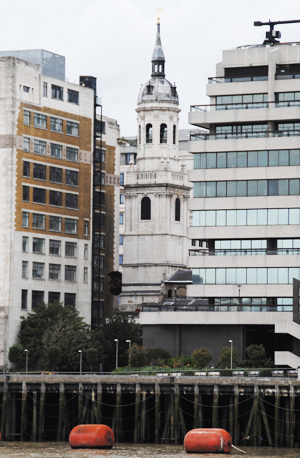
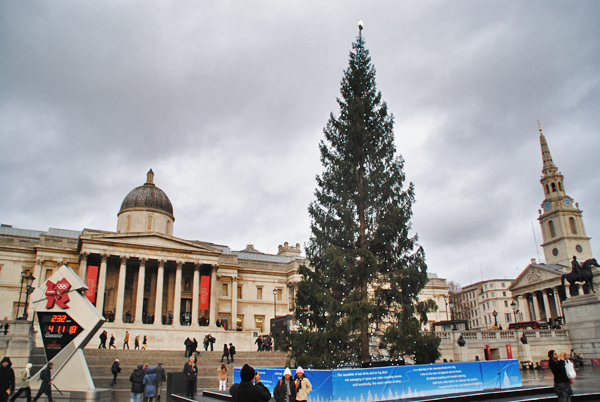
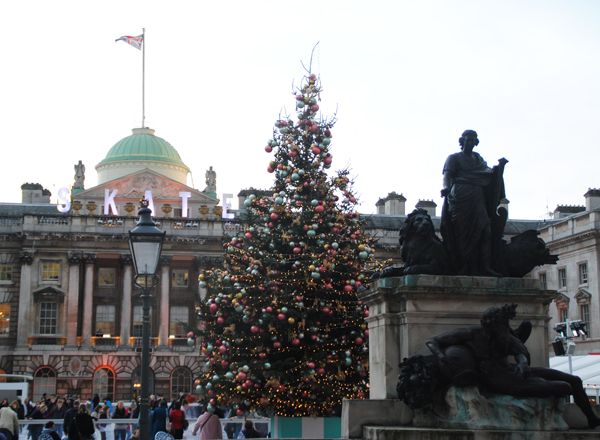
What’s in a name?…Strand

Now one of the major thoroughfares of the West End, the origins of the roadway known as the Strand go back to the Roman times leading west out of the city.

Later part of Saxon Lundenwic which occupied what is now the West End, it ran right along the northern shore of the Thames and so became known as the Strand (the word comes from the Saxon word for the foreshore of a river). During the following centuries the river was pushed back as buildings were constructed between the road and the river, leaving it now, excuse the pun, ‘stranded’ some distance from where the Thames flows.

Sitting on the route between the City of London and Westminster, seat of the government, the street proved a popular with the wealthy and influential and during the Middle Ages, a succession of grand homes or palaces was built along its length, in particular along the southern side.

All are now gone but for Somerset House – originally the home of the Dukes of Somerset, it was built in the 16th century but rebuilt in the 18th century after which it served a variety of roles including housing the Navy Office, before taking on its current role as an arts centre. Others now recalled in the names of streets coming off the Strand include the Savoy Palace, former residence of John of Gaunt which was destroyed in the Peasant’s Revolt, and York House, once home of the Bishops of Norwich and later that of George Villiers, favorite of King James I (see our earlier Lost London entry on York Watergate for more).

After the aristocracy decamped further west during the 17th and 18th centuries, the road and surrounding area fell into decline but was resurrected with a concerted building effort in the early 19th century (this included the creation of the Victoria Embankment which pushed the Thames even further away) which saw it become a favorite of the those who patronised the arts, including the opening of numerous theatres. Among those which still stand on the Strand today are the Adelphi and Savoy Theatres (this was apparently the first in London to be fitted with electric lights and sits on a site once occupied by the Savoy Palace).

Among the other landmarks along the Strand are the churches of St Mary-le-Strand (the present building which sits on what amounts to a traffic island) dates from 1717 and was designed by James Gibbs, and St Clement Danes, designed by Sir Christopher Wren and completed in 1682 (it is now the Central Church of the Royal Air Force). The Strand is also home to the Victorian-era Royal Courts of Justice (it boasts more than 1,000 rooms), Australia House (home of the oldest Australian diplomatic mission), the Strand Palace Hotel (opened in 1907) and Charing Cross Railway Station.

Where is it? #8

This is the eighth in our series in which we ask you to identify where in London this picture was taken and what it’s of. If you reckon you know the answer, leave a comment below. We’ll reveal the answer early next week. Good luck!

And the answer is…that this is an image of one of the signs which project hang in Lombard Street in the City. Named for the Italian bankers who once occupied it, Lombard Street contains numerous signs once used to advertise the services of various banking institutions. The signs were banished by King Charles II after the Restoration but was revived in honor of the coronation of King Edward VII in 1902.

Around London: The East India Company at National Maritime Museum; Open days at London Transport Museum’s depot; and, Atkinson Grimshaw at the Guildhall Art Gallery…

• The National Maritime Museum in Greenwich has launched five month-long festival looking at the East India Company and the mark it’s left on London and the world. The festival, which was launched late last month as a new gallery, Traders: The East India Company and Asia, opened its doors at museum, features musical performances, film screenings, games, discussions, story-telling and debates surrounding the company and its legacy as well as ‘curry and a pint’ nights and tea parties. Also included are two days of celebrations marking Diwali, the Hindu Festival of Lights, on 12th November, and Chinese New Year on 18th February. For more on the events and the museum, see www.nmm.ac.uk.

London Transport Museum’s Depot in Acton is holding a family open weekend this Saturday and Sunday with ‘make and take’ workshops, object handling sessions and rides on the open air miniature railway and life-sized heritage vehicles. Among those on hand to answer all your questions will be London’s Emergency Response Unit. Open between 11am and 5pm both days (last admission 4pm). An admission charge applies. To book or to find out more information, see www.ltmuseum.co.uk/whats-on/museum-depot/events.

• On Now: Atkinson Grimshaw: Painter of Moonlight. The first major show of Grimshaw’s work for more than 30 years, this exhibition at the Guildhall Art Gallery includes more than 60 paintings from his earliest Pre-Raphaelite inspired landscapes to the Impressionist style seascapes of his last years along with drawings, manuscripts and photographs on loan from public and private collections and descendants of the artist. Grimshaw (1836-1893) was a popular Victorian artist known for his evocative scenes of the urban environment at night and for his landscapes. Runs until 15th January (admission charge applies). There is also a special late viewing (the gallery’s first) on 21st October. For more on the exhibition, see www.guildhallartgallery.cityoflondon.gov.uk/gag/.

The Royal Parks – 3. Green Park

Perhaps the most overlooked and least celebrated of central London’s Royal Parks, Green Park (officially The Green Park) is a peaceful oasis of leafy trees between the bustle of Piccadilly and traffic of Constitution Hill and part of an unending swathe of green which connects Kensington Gardens with, eventually, St James’ Park.

Originally meadowland used for hunting, the earliest known mention of the area where the park now stands was apparently in 1554 when it was believed to be a staging point for Thomas Wyatt (the younger) who led a group of rebels protesting against the marriage of Queen Mary I to King Philip II of Spain. The unfortunate – and unsuccessful (in terms of his rebellion at least) – Wyatt was later beheaded for treason.

In 1668, King Charles II had the park enclosed with a brick wall and stocked with deer, as well as having a ranger’s lodge and icehouse built (to keep his drinks cool when entertaining in summer). While it was initially known as Upper St James’s Park, by 1746 Green Park had its own name. It’s not really known what prompted the name change but the unofficial story is that Queen Catherine of Braganza, wife of King Charles II, found out that her philandering husband had picked some flowers there for another woman – a milkmaid. In revenge, she had every flower in the park pulled up with orders they were not to be replanted. To this day, while some 250,000 daffodils bloom here in spring, there remain no formal flowerbeds in the park.

The 47 acre (19 hectare) park, which was also used on occasion as a duelling ground, underwent further development at the beginning of the following century with the creation of the ornamental Tyburn Pool near the centre of the park.

Queen Caroline, the wife of King George II, meanwhile, had a reservoir built to supply water to St James’s Palace and Buckingham Palace (it was known as the Queen’s Basin) as well as a library and the Queen’s Walk. Planted in 1730, this runs along the eastern side of the park and helped to turn it into a fashionable place in which to be seen (and led to the building of many a mansion in nearby Piccadilly).

Other buildings in the park have included two temporary ‘temples’ – the Temple of Peace (erected in 1749 to mark the end of the War of Austrian Succession) and the Temple of Concord (erected in 1814 to mark 100 years of the rule of the Hanoverian dynasty). Both of these, believe it or not, burnt down during the celebrations they were built for.

The park, which underwent a redesign in which the first trees were planted in the 1820s as part of architect John Nash’s grand plans for St James’s Park, was opened to the general public in 1826 but by then many of its earlier features – including the ranger’s house, Tyburn Pool and the Queen’s Basin – were already gone.

In more recent times, war memorials have been added to the park – the maple-leaf daubed, Pierre Granche-designed memorial to Canadian soldiers in 1994 (Canada is also remembered in Canada Gate on the park’s south side, installed in 1908 to mark the nation’s contribution to the Empire), and a set of memorial gates on Constitutional Hill at the park’s western end which is dedicated to the five million people from the Indian Sub-Continent, Africa and the Caribbean who served in World War II in 2004. The park also features the ‘Diana fountain’, installed in 1952 by the Constance Fund (and currently undergoing restoration).

On 14th June, a 41 royal gun salute is fired here to mark the Queen’s birthday. Salutes are also fired here for the State Opening of Parliament in November or December, Remembrance Sunday, and for State Visits.

WHERE: Green Park (nearest tube station is Green Park and Hyde Park Corner); WHEN: daily; COST: free; WEBSITE: http://www.royalparks.gov.uk/Green-Park.aspx

PICTURE: Courtesy of Royal Parks. © Anne Marie Briscombe 

LondonLife – New Sheriffs in the City…

The two new sheriffs of the City of London – Alderman Alan Yarrow and Wendy Mead CC (pictured here second and fourth from left with Lord Mayor Michael Bear between them) – were admitted into office in a ceremony at Guildhall last week following their election in June by the City livery companies. The office of sheriff dates back to the Middle Ages and, until the institution of the mayoralty in 1189, sheriffs or ‘shire reeves’ were charged with governing the city as the king’s representatives, collecting royal revenues and enforcing royal justice. The role now includes ensuring the smooth running of the Central Criminal Court (housed at the Old Bailey), attending the Lord Mayor as he carries out his official duties and presenting petitions from the City to Parliament at the Bar at the House of Commons. Meanwhile, the City of London announced on Monday that Alderman David Wootton, himself a former sheriff (as all Lord Mayors must be) as well as a past master of of the Worshipful Company of Fletchers and of the Worshipful Company of Solicitors, has been elected the 684th Lord Mayor of the City of London. He takes office on Friday, 11th November (the Lord Mayor’s Show takes place the following day). For more, see www.cityoflondon.gov.uk.

PICTURE: Courtesy of City of London Corporation.

London Pub Signs – The Queen’s Larder

In the first of an occasional series looking at the story behind some of London’s pub signs, we take a look at The Queen’s Larder in Queen Square, Bloomsbury.

The origins of the pub go back to the early 18th century – around 1710 – when there was known to be an alehouse on the site now occupied by the tavern. The story goes that as King George III (aka the ‘Mad King George’ depicted in the film of the same name) began to be affected by mental illness he was brought to a house in Queen Square where he stayed and was treated by a Dr Willis.

While he was undergoing this treatment – which was apparently initially successful, his wife Queen Charlotte rented an underground cellar below the alehouse and there stored some of the king’s favorite delicacies.

When a tavern was later built on the site, it was named The Queen’s Larder in honor of the role it had played in providing a storehouse for his treats.

The square itself contains a statue which was believed to be of Queen Anne – after whom the square was renamed (it had previously been known as Devonshire Square) – but it is now thought that the statue may in fact be of Queen Charlotte.

Where is it? #7

This is the seventh in our series in which we ask you to identify where in London this picture was taken and what it’s of. If you reckon you know the answer, leave a comment below. We’ll reveal the answer early next week. Good luck!

No takers this week (are we making them too hard?) The answer is that this is the steeple of the St Marylebone Parish Church near Regent’s Park. Consecrated in 1817 and designed by Thomas Hardwick (a clerk of works to King George III), it was built after the previous church on the site had become too small. Among the many famous people the church has associations with are the poets Robert Browning and Elizabeth Barrett – they were married here in 1846, Elizabethan philosopher Francis Bacon – he was married in one of the previous churches in 1606, and Lord Byron – he was christened in the previous church in 1778. The church is also depicted in the marriage scene in William Hogarth’s The Rake’s Progress. For more on the origins of the word Marylebone, see our previous entry here

Treasures of London – Harrison’s timekeepers

A series of four marine timekeepers which eventually solved the ‘problem’ of longitude – revolutionising sea travel by allowing mariners to accurately locate their position – are housed at the Royal Observatory in Greenwich.

The three clocks and one watch were designed by John Harrison, a working class joiner from Lincolnshire who made it his life’s mission to design a device which would keep accurate time at sea.

Calculating longitude – an east-west position on the earth – is relatively simple. Because time moves forward one hour for every 15 degrees one travels in an eastward direction (or back an hour for every 15 degrees one travels westward), it’s possible to calculate a position by simply knowing the local time at two different places on earth.

The problem was that the pendulum clocks of the 1600s were affected by changes in temperature and humidity  and couldn’t keep accurate time on board a ship meaning that while a mariner might know the local time, he could not get an accurate measurement of time elsewhere to compare it to.

While mariners could use the ‘lunar distance method’ to measure longitude – this involved measuring the motion of the moon relative to the stars – it relied on clear skies and was not very accurate. So in 1714 the British Government announced it would award a prize of £20,000 to anyone who could come up with a solution to longitude which was accurate to within half a degree (or two minutes).

Clockmaker John Harrison was among those who took up the challenge (his somewhat tragic story is told in great detail in Dava Sobel’s terrific 1995 book Longitude: The True Story of a Lone Genius Who Solved the Greatest Scientific Problem of His Time). His first effort, known simply as H1, was constructed between 1730 to 1735 and, using a counterbalanced spring mechanism making it independent of gravity, was successfully tested on a voyage to Lisbon.

But Harrison wasn’t satisfied and began work on H2 in 1737 before, after realising its shortcomings three years later, starting work on another clock, H3, in 1740. He worked on this for 19 years but it failed to meet the accuracy requirements of the Board of Longitude which was charged with looking overseeing the awarding of the £20,000.

In 1753, Harrison asked a London watchmaker John Jefferys to create a watch to his designs, initially for his own personal use. But he soon discovered that with a few improvements, H4 – which looks like a large pocketwatch (see picture), could be the answer he was looking for.

In 1761 and 1764, Harrison’s son William took the watch on two voyages to the West Indies, yet, despite the fact that its accuracy was well within the requirements of the Board of Longitude, the board initially refused to pay up. After much wrangling Harrison was finally paid £10,000 but told that to obtain the other half of the money, he would have to create at least two more copies of H4.

Harrison went on to make one copy – H5 – while watchmaker Larcum Kendall, made another, K1, at the direction of the Longitude Board. When Harrison suggested that Kendall’s K1 could be considered the second of the two copies he was required to make, the board rejected the idea. Harrison then appealed directly to the king, George III, and finally to parliament before he was eventually awarded a further £8,750 in 1773.

Kendall’s watch, meanwhile, was taken by Captain James Cook on a three year voyage as far afield as Antarctica. It was a test which proved beyond all doubt the accuracy of the timekeepers. A year after Cook’s return in 1775, John Harrison died in his house in Red Lion Square on 24th March, 1776. It is not known whether he knew of the success of the timekeeper taken on Cook’s voyage.

Harrison’s four timekeepers are now housed at the Royal Observatory where the intriguing story of their creation is told.

WHERE: Royal Observatory, Blackheath Avenue, Greenwich (nearest DLR stations are that of Greenwich and Cutty Sark and it can also be reached by river – stop at Greenwich Pier); WHEN: 10am to 5pm (last admission 4.30pm) daily; COST: £7 adult/£5 concessions/free for children 15 and under (annual passes available – £10 an adult/£7.50 concessions) ; WEBSITE: www.nmm.ac.uk/places/royal-observatory/

PICTURE: Courtesy of the Royal Observatory, Greenwich

Around London: Talking rubbish; Conan Doyle’s lost manuscript; John Martin’s apocalypse; and, Postmodernism at the V&A…

Twenty-five talking rubbish bins will be installed in Westminster City Council area as part of a campaign to encourage people to use them more. The rubbish bins, which will look no different from normal bins, will start chatting from 13th October and will be in London for two months before embarking on a UK tour after which they may become permanent fixtures. Each bin will have a unique respond when used – from singing a part of the Hallelujah Chorus to a blast of the trombone and will be tailored to suit their location (Covent Garden’s, for example, will be operatic in nature). The talking bins, which are also being trialled in Liverpool, are being put on the streets as part of Keep Britain Tidy’s Love Where You Live initiative.

A hitherto unpublished novel by Arthur Conan Doyle – creator of Sherlock Holmes – was published by the British Library this week. The Narrative of John Smith was Conan Doyle’s first novel and was written between 1883 and 1884 but the manuscript was lost on the way to the publishers. Conan Doyle rewrote it from memory but never resubmitted the work for publication. It serves as a rare insight into his creative development prior to his writing of more famous works like those featuring Holmes (the new book and an audio CD featuring Robert Lindsay, are available from the library shop). The library is also hosting an exhibition of related items in the Treasures Gallery, including one of the four notebooks that comprise the manuscript of The Narrative of John Smith, letters Conan Doyle wrote to his mother, and a “scientific and monthly magazine” he created when he was just 16. The exhibition is open until 5th January. The library is also hosting an event in which author Anthony Horowitz – commissioned by the Conan Doyle Estate to write a new Sherlock Holmes novel, The House of Silk, which will be published in November – will talk about his work and the new novel. To be held on 27th November from 2.30pm to 4pm (admission charge applies). For more, see www.bl.uk.

On Now: John Martin: Apocalypse. The Tate Britain is hosting an exhibition featuring the works of nineteenth century British artist John Martin, in the first show dedicated to his works in more than 30 years. While something of an outsider, Martin was a key figure in the art world of his day, known for his “dramatic scenes of apocalyptic destruction and biblical disaster”. The exhibition brings together some of his most famous paintings as well as previously unseen and newly restored works. Admission charge applies. Runs until 15th January. For more, see www.tate.org.uk/britain/.

• On Now: Postmodernism: Style and Subversion 1970-1990. An “in-depth survey of art, design and architecture of the 1970s and 1980s”, this exhibition at the Victoria & Albert Museum shows how postmodernism evolved from being merely a provocative architectural movement in the 1970s through to ideas that went on to broadly influence popular culture – everything from art and film to music and fashion. The exhibition is divided into three broad chronological sections – the first focuses on architecture, the second on the “proliferation of postmodernism through design, art, music, fashion, performance, and club culture during the 1980s” and the third on the “hyper-inflated commodity culture of the 1980s”. Admission charge applies. Runs until 15th January, 2012. For more, see www.vam.ac.uk.

The Royal Parks – 2. Kensington Gardens

Once the western part of King Henry VIII’s hunting ground, the 111 hectare Kensington Gardens is now primarily associated with the palace which sits at its heart.

The origins of the gardens go back to 1689 when King William III and Queen Mary II decided to make Kensington Palace (which, as we mentioned last week, was formerly known as Nottingham House) their home. Queen Mary oversaw the creation of a formal, Dutch-style garden featuring hedges and flower beds.

Queen Anne expanded the gardens after King William III’s death and commissioned landscape designers Henry Wise and George Loudon to create an English-style garden. She also ordered the construction of the Orangery which still stands to the north of the palace complex today (and houses a fine restaurant).

But it’s to Queen Caroline, wife of King George II, to whom Kensington Gardens owe its current form for it was she who in 1728, scythed off 300 acres of Hyde Park and employed Charles Bridgeman to create a new garden. His designs included damming the Westbourne stream to create the Long Water and the adjoining Serpentine in Hyde Park. He was also responsible for the creation of the Round Pond in front of the palace and, a landscape-history making move, used a ditch known as a ha-ha to separate the gardens from Hyde Park.

By the reign of King Charles II, the gardens had become fashionable for the elite to stroll in with the Broad Walk a popular promenade. But the gardens gradually fell from favour – a move exacerbated when Queen Victoria, who was born in Kensington Palace, moved to live at Buckingham Palace.

There were some changes made during the era, however. They included the creation of the ornamental Italian water gardens at the northern end of the Long Water and the Albert Memorial (see our previous story here) on the southern edge of the gardens.

Other highlights there today include the Peter Pan statue (see our earlier story on this), the Serpentine Gallery (with, in summer, a temporary pavilion), the Peter Pan-themed Diana, Princess of Wales Memorial Playground (opened in 2000), and the Elfin Oak, a stump which originally came from Richmond Park and is carved with tiny figures of woodland animals and fairies.

There’s also a statue of Queen Victoria directly outside of Kensington Palace which, interestingly, was sculpted by her daughter Princess Louise in celebration 50 years of her reign, as well as statues of Edward Jenner, creator of the small pox vaccine, and John Hanning Speke, discoverer of the Nile.

Other facilities include a cafe and, next to the magazine, an allotment.

WHERE: Kensington Gardens (nearest tube stations are that of Queensway, Bayswater, Lancaster Gate, South Kensington, Gloucester Road and Kensington High Street); WHEN: 6am to dusk; COST: Free; WEBSITE: http://www.royalparks.gov.uk/Kensington-Gardens.aspx

PICTURE: Courtesy of Royal Parks. © Giles Barnard

LondonLife – A last chance to experience Australia at the British Museum…

An Australian landscape constructed in the forecourt of the British Museum as part of the museum’s Australian Season. The landscape takes the intrepid on a journey across the vast Australian continent through the arid red desert of the red centre to the granite outcrops of the country’s west coast. The plants include iconic Australian flora such as the kangaroo paw, wattle, coast banksia, gums and ferns as well as a Wollemi pine. The landscape is the fourth created in the museum’s forecourt under a partnership with the Royal Botanic Gardens, Kew. But time is running out to see it – the garden will disappear on 16th October. Other events held at the museum as part of Australian Season have included an exhibition of Australian artworks and handcrafted baskets. Admission to the garden is free. For more, visit www.britishmuseum.org.

Where’s London’s oldest…canal?

London’s oldest canal is one that perhaps doesn’t immediately spring to mind when considering the city’s waterways – the Limehouse Cut in the city’s east.

Authorised by an Act of Parliament passed in 1766, the Cut was built in 1770 to link the River Lea (or Lee) – which it joins at Bromley-by-Bow – to the Thames at Limehouse.

It was designed to enable sailing barges coming down the Lee to avoid navigating the rather difficult curves in the lower reaches of the river at Bow Creek (and waiting for the tide to come in to the Thames so the barges could then go around the Isle of Dogs to the docks).

In 1968, the exit lock which led from the cut directly to the Thames was replaced by another short section of canal which linked it to what is now known as Limehouse Basin and was previously known as Regent’s Canal Dock.

The cut these days features an innovative floating towpath which leads under the A12, the northern approach road of the Blackwall Tunnel, and the old factory buildings which once lined it are giving way to modern apartment complexes and office blocks. Pictured is a section of the Limehouse Cut near the Limehouse Basin end.

Where is it? #6

This is the sixth in our series in which we ask you to identify where in London this picture was taken and who it’s of. If you reckon you know the answer, leave a comment below. We’ll reveal the answer early next week. Good luck!

And the answer is…This is actually a bust of journalist and MP Tom O’Connor (1848-1929) and is located on the wall of Chronicle House, 72-78 Fleet Street. O’Connor worked on papers including the Daily Telegraph and the New York Herald (where he was London correspondant) after moving to London from Ireland. He was later known for his parliamentary sketches published in the Pall Mall Gazette and for founding several newspapers. O’Connor, although perhaps best remembered as a journalist, was also an MP – most famously for Liverpool (he was the only Irish Nationalist Party MP ever to sit in a constituency outside of Ireland), a position he held from 1885 until his death in 1929. The inscription underneath his bust reads: “His pen could lay bare the bones of a book or the soul of a statesman in a few vivid lines.”

Around London – Design Festival in full swing; museum acquires rare merchant figure; Olympic medals on display; and, remembering Polish, Czech and Slovak airmen…

• The London Design Festival is in full swing in London this week with more than 250 events taking place across the city over its 10 days. Launched last Saturday, the festival runs until Sunday and there’s still plenty of time to get involved. Among the highlights is a series of events, workshops and talks being held at the Victoria & Albert Museum (where you can also see 12 specially commissioned installations, one of which sees the museum’s grand entrance transformed with a sculptural form), a series of shows focusing on design in six London “design districts” – Brompton, Pimlico Road, Covent Garden, Fitzrovia, Clerkenwell and Shoreditch, and a broad program of ‘partner’ and ‘international’ events – everything from a festival featuring African-Caribbean design through to an exhibition of experimental chairs by the Danish Cabinetmaker’s Association. To find out more, simply head to www.londondesignfestival.com.

The Museum of London has announced the purchase of a rare 18th century clay figure of London druggist and tea merchant Thomas Todd. The figure, which was acquired with the help of the Art Fund and MLA/V&A Purchase Grant Fund,  is one of only two known portrait works attributed to the Chinese artists Chitqua on show in Britain. The figure, which is made from unfired clay held together by bamboo and brightly painted, was acquired from Todd’s great, great, great, great grand nephew, Thomas Todd, and will appear shortly in the Expanding City Gallery in the Galleries of Modern London. Based in Fleet Street, Pat Hardy, the museum’s curator of paintings, prints and drawings, says Todd “epitomised the kind of business acumen which ensured the growth of Britain’s industrial, mercantile and commercial empire in the eighteenth century”. For more, see www.museumoflondon.org.uk

The British Museum has opened an exhibition giving the public their first chance to see next year’s Olympic and Paralympic Games medals. Medals have been awarded at the Olympic Games since the first modern games were held in 1896. The latest Olympic medals were designed by jeweller David Watkins, for many years Professor of Goldsmithing, Silversmithing, Metalwork and Jewellery at London’s Royal College of Art, while the latest Paralympic Medals were designed by jeweller Lin Cheung, a senior lecturer for Jewellery Design at London’s Central Saint Martins College of Art and Design. The exhibition tells how, using minerals mined in the US and Mongolia (Rio Tinto is sponsoring the exhibition), the medals were produced at the Royal Mint in Llantrisant, South Wales. Mine to medals: the London 2012 Olympic and Paralympic Games medals runs until 9th September next year. Admission is free. For more, see www.britishmuseum.org.

• On Now: Brothers in Arms – Airmen of Poland and Czechoslovakia in the Battle of Britain & Beyond. The Royal Air Force Museum in Colindale, north London, is hosting an exhibition looking at the contribution of Polish, Czech and Slovak airmen in the Battle of Britain and their life afterwards. Curated in association with the Polish Institute of National Remembrance, the exhibition features drawings, archival film footage and sculpture as well as uniforms, diaries and combat reports. Opened by Poland’s Foreign Affairs Minister Radoslaw Sirkorski (who later attended the annual banquet held in honor of the Veterans of the Battle of Britain), it runs until 4th March, 2012. Entry is free. For more, visit  www.rafmuseum.org.uk.

The Royal Parks – 1. Hyde Park

This year marks the 160th anniversary of the transfer of the care of the Royal Parks to the government (meaning the public was freely able to enjoy access for the first time). To celebrate, over the next weeks we’ll be taking a look at the history of each of them. First up is the 142 hectare Hyde Park, perhaps the most famous of all eight Royal Parks.

Formerly owned by Westminster Abbey, King Henry VIII seized the land in 1536 for use as a private hunting ground. He had it enclosed with fences and the Westbourne Stream, which ran through the park – it now runs underground – dammed.

It remained the king and queen’s private domain (Queen Elizabeth I is known to have reviewed troops there) until King James I appointed a ranger to look after the park and permitted limited access to certain members of the nobility in the early 17th century.

The park’s landscaping remained largely unaltered until the accession of King Charles I – he created what is known as the ‘ring’ – a circular track where members of the royal court could drive their carriages. In 1637, he also opened the park to the public (less than 30 years later, in 1665, it proved a popular place for campers fleeing the Great Plague in London).

During the ensuring Civil War, the Parliamentarians created forts in the park to help defend the city against the Royalists – some evidence of their work still remains in the raised bank next to Park Lane.

After King William III and Queen Mary II moved their court to Kensington Palace (formerly Nottingham House) in the late 1600s, they had 300 oil lamps installed along what we know as “Rotten Row’ – the first artificially lit road in the country – to enable them and their court to travel safely between the palace and Westminster.

The natural looking Serpentine – the great, 11.34 hectare, lake in the middle of Hyde Park (pictured) – was created in the 1730s on the orders of Queen Caroline, wife of King George II, as part of extensive work she had carried out there. It was Queen Caroline who also divided off what we now know as Kensington Gardens from Hyde Park, separating the two with a ha-ha (a ditch).

The next major changes occurred in the 1820s when King George IV employed architect and garden designer Decimus Burton to create the monumental park entrance at Hyde Park Corner – the screen still remains in its original position while Wellington Arch was moved from a parallel position to where it now stands (see our previous posts for more on that). Burton also designed a new railing fence and several lodges and gates for the park. A bridge across the Serpentine, meanwhile, was built at about the same time along with a new road, West Carriage Drive, formally separating Hyde Park and Kensington Gardens.

While the basic layout of the park has been largely unchanged since, there have been some additions – among them, the establishment in 1872 of Speaker’s Corner as a place to speak your mind in the north-east corner of the park (near Marble Arch), the creation in 1930 of the Lido for bathing in warm weather, and, more recently, the building of the Diana, Princess of Wales’ Memorial Fountain (unveiled in 2004), and the 7 July Memorial (unveiled in July 2009).

Other sculptures in the park include Isis (designed by Simon Gudgeon, located on the south side of the Serpentine), the Boy and Dolphin Fountain (designed by Alexander Munro, it stands in the Rose Garden), and a monumental statue of Achilles, a memorial to the Duke of Wellington designed by Richard Westmacott, near Park Lane. There are also memorials to the Holocaust, Queen Caroline, and the Cavalry as well as a Norwegian War Memorial and a mosaic marking the site of the Reformer’s Tree (the tree was burnt down during the Reform League Riots of 1866).

The park has been integral part of any national celebrations for centuries – in 1814 a fireworks display there marked the end of the Napoleonic Wars, the Great Exhibition – with the vast Crystal Palace – was held there in 1851 and in 1977 a Silver Jubilee Exhibition was held marking Queen Elizabeth II’s 25 year reign. Cannons are fire there on June 2nd to mark the Queen Elizabeth II’s coronation and on 10th June for the Duke of Edinburgh’s birthday.

Facilities these days include rowing and pedal boats, tennis courts, deck chairs, a restaurant and cafe (the latter based in the Lido) and, of course, some Boris bikes. There is a heritage walk through the park which can be downloaded from the Royal Parks website.

WHERE: Hyde Park (nearest tube stations are that of Marble Arch, Hyde Park Corner, Lancaster Gate, Knightsbridge and South Kensington); WHEN: 5am to midnight; COST: Free; WEBSITE: www.royalparks.gov.uk/Hyde-Park.aspx?page=main

PICTURE: Courtesy of Royal Parks. © Indusfoto Ltd 

LondonLife – Open House London, The Middle Temple Hall

Last weekend saw thousands of people make their way to rarely opened properties across London as part of Open House London. Among the properties we visited was the Middle Temple Hall, one the finest example of a 15th century hall in London (if not the UK). The hall was built in the 1560s and early 1570s – by which time the Middle Temple, one of the medieval Inns of Court (more of which we’ll be talking about in an upcoming series), had already existed for about 200 years – and the hall which the Temple currently used, that of the former Templar Knights, was starting to fall apart. The new hall was constructed under the direction of law reporter Edmund Plowden, then Treasurer of the Inn, and funded by members of the Middle Temple. In use by about 1570, Queen Elizabeth I is, according to some stories, said to have dined there many times and it was in the hall that the first performance of Shakespeare’s Twelfth Night took place. While it suffered some damage in World War II bombings, the hall still looks much as it did in the late 1500s. It remains at the centre of the Middle Temple’s collegiate and social life and it is here that members are called to the Bar. Among the notable objects inside are numerous paintings and stained glass memorials of people associated with the Inn (including Sir Walter Raleigh and numerous monarchs – from King Charles I to King Edward VII) as well as the High Table – a table made of three 29 foot long planks from a single oak, it is said to be a gift from Queen Elizabeth I – and the ‘cupboard’, a smaller table which was apparently made from the hatch cover of Sir Francis Drake’s ship, the Golden Hind. Late note: I should add that the Middle Temple Hall is not normally open to the public.

Famous Londoners – Captain Thomas Coram

A ship-builder and New World colonist of some renown, Thomas Coram is primarily remembered now as the founder of London’s Foundling Hospital.

While details of Coram’s early life are sketchy, it is known that he was born in Dorset, possibly in Lyme Regis, in 1668 and was believed to be the son of a merchant seaman, John Coram.

Coram’s mother apparently died while he was still young and he went to sea at the age of just 11. Following his father’s remarriage, however, the family moved to Hackney in East London and it was after that move that Coram was apprenticed to a shipwright working beside the Thames.

In 1694, having previously worked for the Government auditing troop and supply ships, a group of merchants asked Coram to establish a new shipyard in Boston, Massachusetts. He did so and spent the next 10 years building ships in Boston and Taunton. But, a staunch Anglican living among Puritans, he apparently make some enemies while doing so (this led to lawsuits and even apparently an attempt on his life). It was during this time that he also married a Bostonian, Eunice Wait.

Following his return to England in 1704, Coram found further success as a merchant and was soon commanding merchant ships during the War of the Spanish Succession (it is believed it was during this time that he acquired the title of captain). Throughout the following years he continued to conduct business in the New World colonies – particularly Massachusetts and Maine – as well as in London.

It was after he had moved to Rotherhithe in 1719 that Coram’s eyes were opened to the plight of abandoned children – he would apparently see them when travelling into London – and, his heart obviously moved, he began to advocate for the creation of a foundling hospital similar to those he had seen on the continent during his travels.

While his efforts initially came to nothing, Coram eventually received the backing of Queen Caroline, wife of King George II – an important step for the plain-speaking seaman. Having presented numerous petitions to the king, His Majesty finally signed the Foundling Hospital Charter on 14th August, 1739. The first meeting of the governors – which included notables such as artist William Hogarth and prominent physician Dr Richard Mead – was held at Somerset House that November.

A temporary hospital opened it’s doors at Hatton Garden on 25th March, 1741, and the first foundlings were baptised Thomas and Eunice Coram. But it was only four and a half years later – in October, 1745 – that a purpose-built hospital opened its doors in an area known as Bloomsbury Fields. As well as Hogarth (who painted Coram in 1740 – the picture can still be seen in the Foundling Hospital today), the hospital also attracted the support of composer George Frideric Handel.

Coram’s role in the governance of the hospital effectively came to an end in 1741-1742 (he is said to have made some indiscreet comments about some of his fellow governors) but – despite being still engaged in numerous business activities – he continued to visit the hospital regularly and, as well as being Godfather to more than 20 of the foundlings, the story goes that he found the time to sit in an arcade at the hospital and pass out pieces of gingerbread to the children.

Captain Thomas Coram died on 29th March, 1751, in lodgings on Spur Street near Leicester Square (his wife Eunice had died earlier, in July 1740, and the couple had no children). He was buried in the Foundling Hospital chapel.

One of the best places to visit to find out more about Captain Coram and his life is the Foundling Museum, housed in part of the former hospital. For our previous story on the hospital, follow this link. A statue of Coram (pictured above) stands outside in Brunswick Square.

Where is it? #5

This is the fifth in our series in which we ask you to identify where in London this picture was taken and what it’s of. If you reckon you know the answer, leave a comment below. We’ll reveal the answer early next week. Good luck!

Thanks to all those who took a look at our Where is It? for last week and for those who hazarded a guess as to where it may be. There were no correct answers – the picture is actually of part of Old Billingsgate Fish Market down on Lower Thames Street (the fish and statue of Poseidon being clues!). While there has been a market on the site for centuries, it only became particularly associated with fish in the 1500s and the first purpose-built market was constructed on the site as late as 1850. Not up to the job, however, it was demolished and a new building, designed by then City Architect Sir Horace Jones, was built upon the site and opened in 1876. In 1982, the market was relocated to Canary Wharf in the Docklands where it still operates today as the UK’s largest inland fish market.

Daytripper – Oxford

The “city of dreaming spires”, Oxford is a delight for the student of historic architecture, boasting an impressive array of medieval and later, classically-inspired, buildings.

Only about an hour from London by train (leave from Paddington Station), Oxford was established as a town in the 9th century and rose to prominence during the medieval period as the location of a prestigious university, an institution which remains synonymous with the city today.

Major development followed the Norman Conquest the castle was constructed, the remains of which were included in a £40 million redevelopment several years ago of the area in which it stands and which now houses the Oxford Castle Unlocked exhibition which looks at some of the key figures in the castle’s past (you can also climb St George’s Tower for some great views over the city).

The university first appears in the 1100s and gradually expanded over the ensuing centuries gradually evolved to encompass the many medieval colleges which can still be seen there today.

Something of a hotbed of activity during the Reformation, Oxford saw the burning of three bishops – Hugh Latimer, Nicholas Ridley and Archbishop of Canterbury Thomas Cranmer at a site marked by a memorial in Magdalen Street. Constructed in the 1840s, it was designed by Sir George Gilbert Scott who drew inspiration from the Eleanor Crosses King Edward I had erected in honor of his deceased wife, Eleanor of Castile, following her death in 1290.

Oxford was also the site of the headquarters of King Charles I during the English Civil War after the king was forced to leave London (the town eventually yielded to parliamentarian forces after a siege in 1646) and was later home to the court of King Charles II after he fled London during the Great Plague of 1665-66.

Canals arrived in the late 18th century and the railways followed. Industrialisation came – in particular, in the 20th century, in the form of a large car manufacturing plant at the suburb of Cowley – and with it an increasingly cosmopolitan population. But at its heart Oxford remains a student city and it’s the students that continue to provide the lively atmosphere in the city centre.

Look for Carfax Tower to get your bearings – formerly the tower of a 14th century church, this lies at the heart of the town and can be climbed for some great views over the surrounding streets. Some of the colleges are also open to the public (see noticeboards outside the colleges for times) – particularly worth visiting is Christ Church which dates from 1524 and, founded by Cardinal Wolsey, was initially known as Cardinal’s College. It features the Tom Tower, home of the bell Great Tom, which was designed by former student Sir Christopher Wren. The college, which is unique in that the college chapel is also a cathedral, is also home to the Christ Church Picture Gallery.

Other colleges of note include the beautiful Magdalen (pronounced Maudlin, it was founded in 1458 – alumni have included writers John Betjeman, CS Lewis and Oscar Wilde), All Souls (founded in 1438 with King Henry VI its co-founder), and Merton College (the oldest of Oxford’s colleges, it was founded in 1264 and is home to Mob Quadrangle, the oldest quadrangle in the university).

Other university buildings which are a must include the Radcliffe Camera – now the reading room of the Bodleian Library, this Baroque rotunda dates from 1748 and was built as a memorial to 18th century physician Dr John Radcliffe, the Sheldonian Theatre – another of Wren’s designs, it was built in the 1660s as the university’s principal assembly room, and St Mary the Virgin Church – the official church of the university, the present building partly dates from the 13th century and boasts terrific views from the tower.

Make sure you also take the time to wander through the water meadows along the River Cherwell (there are also punt rides) and walk along the River Thames, known as the Isis as it passes through Oxford. Keep an eye out also for the ‘Bridge of Sighs’, similar in design to the Venetian landmark, it spans New College Lane and joins two sections of Hertford College.

Other sites in Oxford include the Ashmolean Museum of Art and Archaeology. Considered of the UK’s best, the original Ashmolean was the first purpose built museum in England, opening in 1683. It now houses treasures include art and antiquities with the late ninth century Alfred Jewel, said to have been made for King Alfred the Great, among its prized objects. Other museums include the Pitt Rivers Museum which cares for the university’s collection of anthropology and world archaeology and includes exhibits brought back to Britain by explorer Captain James Cook.

Take the time also to wander through the covered market off high street which has some interesting shops selling everything from clothes to fresh food and flowers and gifts. Fans of Inspector Morse, meanwhile, may also enjoy seeing some of the sites of particular significance in the TV series – there’s an interactive online map here.

A vibrant city redolent with history, Oxford remains of England’s jewels. Perfect as a day-trip destination from London.

Around London – Open House London; Magna Carta on display; Fashion Week photography; and, Henry Moore returns to Greenwich…

It’s Open House London weekend again and there’s scores of properties across the city which will be opening their doors to allow the curious a rare glimpse inside. The properties which will be open include architect’s homes and cutting edge housing as well as historic city landmarks, landscape projects and government buildings (including the Foreign Office & India Office – pictured). Other highlights of this year’s event – conducted under the theme of ‘The Liveable City’ –  include a night hike, a festival aimed at kids and families, talks, walks and cycle tours and competitions. Among the buildings flinging their doors wide are Lambeth Palace, home of the Archbishop of Canterbury, livery company halls, the newly reopened St Pancras Renaissance Hotel and the Bevis Marks Synagogue in the City. Most properties can simply be visited on a first come, first in basis but some do require advance booking so check before you go. Open House London was first started 19 years ago and has since spread to many other cities around the world including New York, Jerusalem and Helsinki. For more information and to purchase an online guide, see www.londonopenhouse.org. PICTURE: (c) Nick Woodford.

• King Edward I’s Magna Carta will go on show at the Guildhall Art Gallery in the City this weekend, presenting a rare opportunity to see this pivotal document. The City of London Corporations 1297 Magna Carta – regarded as one of the finest 13th century copies – will be on display in the Roman Amphitheatre during Open House London. The document features King Edward I’s seal and the original writ to the Sheriffs of London ordered that the charter be promulgated within the City. Admission over the weekend is free. For more see, www.guildhallartgallery.cityoflondon.gov.uk/gag/


The Museum of London has launched an online collection of early Twentieth century fashion photographs to coincide with London Fashion Week. The more than 3,000 glass negative plates come from the collection of Bassano Limited, founded by Italian-born Alexander B. Bassano, and were taken between 1912 and 1945. They record a wide range of fashions as well as designers and retailers and can be accessed via the Museum’s Collections online web portal. Meanwhile, the museum is hosting it’s first ever professional catwalk show on Friday night. It features the works of Christopher Raeburn. For more, see www.museumoflondon.org.uk.

A Henry Moore sculpture, Large Standing Figure: Knife Edge, has been returned to Greenwich Park, more than four years after it was removed. The almost five metres tall sculpture, made by Moore in 1976, was originally placed in the park in 1979 but was removed for conservation in early 2007 before joining a Moore exhibition at Kew Gardens and then forming part of the Henry Moore display at the Yorkshire Sculpture Park. The bronze, on loan from The Henry Moore Foundation for two years, has now been returned to its original location between The Avenue and Croom’s Hill Gate.