10 historic vessels in London’s Thames…4. ‘Massey Shaw’…

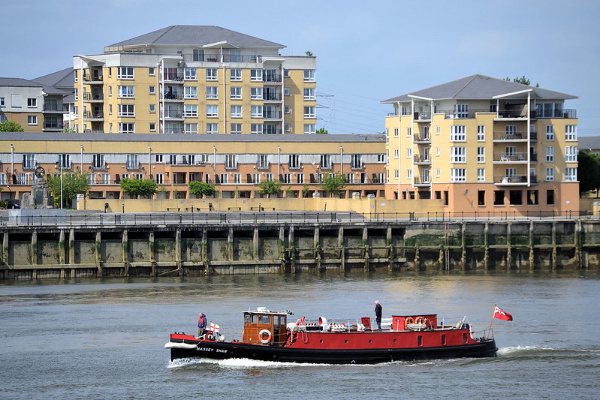
The Massey Shaw in The Thames in 2015. PICTURE: R~P~M (licensed under CC BY-NC-ND 2.0)

Moored at West India Dock, the Massey Shaw is a former London Fire Brigade fireboat.

The fireboat was constructed in 1935 for a cost of £18,000 by the J Samuel White company in Cowes on the Isle of Wight. Named for Sir Eyre Massey Shaw – the first Chief Officer of what was then named the Metropolitan Fire Brigade, the vessel was designed to London County Council specifications with a deliberately low profile so it could fit under the Thames bridges in all tides.

The vessel, which was was powered by two eight cylinder diesel engines and featured a main deck monitor as well as eight deck outlets (and a wheelhouse which was added later), soon proved its worth, playing an important role in saving what the press said was a million pounds worth of stock at a large warehouse fire on Colonial Wharf.

During World War II, the Massey Shaw took part in Operation Dynamo, forming part of the small boat flotilla which evacuated British troops from the beach at Dunkirk. She ferried more than 500 troops to a larger ship offshore and transported almost 100 back to England and it’s believed she was the last of the small boats to leave Dunkirk harbour (rescuing survivors from a French vessel which struck a mine along the way).

Back in London, Massey Shaw performed a critical role during the Blitz, pumping large quantities of Thames water to douse fires along the city’s waterfront.

It remained in service until the early 1970s, although it had operated as a reserve boat since 1960 with newer models taking over frontline duties.

Decommissioned in 1971, the Massey Shaw was found abandoned 10 years later at St Katharine Dock by a group who went on to found The Massey Shaw Fireboat Society with a view to preserving the vessel. They were granted a 50 year lease on the vessel.

In 1985, the Massey Shaw joined the Association of Dunkirk Little Ships on their return to Dunkirk for the first time since 1965 and two years later, she attended the centenary of Sir Eyre Massey Shaw’s review of 1000 firemen at Oxford.

In 1990 the Massey Shaw was sunk close to the London Fire Brigade headquarters at Lambeth but was subsequently salvaged and the following year, after restoration work, joined the 50th anniversary return trip to Dunkirk.

The society gained full ownership of Massey Shaw in 2002 and restoration work was carried out by the TV programme Salvage Squad (a second appearance on the show and more work followed two years later).

In 2008, a £500,000 Heritage Lottery Grant was used to fund the restoration of the vessel at Gloucester docks. She returned to London by road in 2013 where the restoration was completed and in 2015 was officially launched back on the River Thames with an event at the Westminster Boating Base.

Later that year she participated in another “little ships” armada to Dunkirk, this time commemorating the 75th anniversary of the evacuation. Massey Shaw has since taken part in other events including celebrations marking Queen Elizabeth II’s record as longest reigning monarch in 2015.

The vessel is now moored at the eastern end of West India Docks on the Isle of Dogs.

While Massey Shaw did appear in the 1958 film, Dunkirk, recapturing its role as one of the “little ships”, it did not appear in the 2017 film of the same name.

WHERE: Massey Shaw, West India Dock, Poplar (nearest DLR station is South Quay; nearest Tube station is Canary Wharf); WHEN: Between March and November, from 11am to 3pm daily (check website for details); WEBSITE: https://masseyshaw.org.

LondonLife – Millennium Bridge silhouettes…

PICTURE: Hanlin Sun/Unsplash

What’s in a name?…Carmelite Street (and Whitefriars Street)…

The view looking north from the southern end of Carmelite Street. PICTURE: Google Maps

These two City of London thoroughfares – which run from Fleet Street down to Victoria Embankment (connected at Tudor Street) – both owe their name to the same institution.

A friary run by the Carmelites – also known as the “White Friars” because of the white mantle they wore over their brown habits – was established here in 1253 and enlarged until eventually it stretched all the way from Fleet Street down to the Thames.

The monastery was dissolved in the Dissolution and the buildings repurposed with the great hall becoming a playhouse.

The street marks the eastern boundary of the friary (then known as Water Lane).

A remnant of the monastery can be seen down Magpie Alley (see the post for more on the history of the priory).

This Week in London – Museum of London Docklands marks 20 years; story-telling and technology; and, marking Windrush at the V&A…

The 20th anniversary of the Museum of London Docklands will be marked on Saturday night with the Big Docklands Street Party celebrating the history, cultures and communities of the East End. . Two decades after Queen Elizabeth II opened the museum, the street party and museum late includes live performances headlined by Vanity Milan, star of Ru Paul’s Drag Race, street food, pop-up bars, talks and tours, workshops, film screenings, a makers market, pub quiz and after hours gallery access. The museum’s big day will also be marked with the ringing of the Bow Bells – tradition holds that to be a true Cockney one must be born within earshot of the Bow Bells. For tickets and further information, head to www.museumoflondon.org.uk/museum-london-docklands/whats-on/mold20

Digital Storytelling at the British Library. PICTURE © British Library

• A new exhibition showcasing how technology is transforming story-telling has opened at the British Library. Digital Storytelling features a range of digital stories including 80 Days, a four-time BAFTA nominated interactive adaptation of Jules Verne’s Around the World in Eighty Days, and the exclusive public preview of Windrush Tales, the world’s first interactive narrative game based on the experiences of Caribbean immigrants in post-war Britain as well as the popular auto fiction fitness app Zombies, Run! and Breathe, a ghost story that “follows the reader around”, reacting to users’ real-time location data. The display will also explore how writers and artists look into the lived realities behind the news with the inclusion of the likes of A Dictionary of the Revolution, which charts the evolution of political language in Egypt during the uprising in 2011, and c ya laterrrr, an intimate autobiographical hypertext account of the loss of author Dan Hett’s brother in the 2017 Manchester Arena terrorist attack. The exhibition, which runs until 15th October, is accompanied by a series of events. Admission charge applies. For more, see www.bl.uk/events/digital-storytelling.

Two portraits created three centuries apart and depicting two Jamaican gentlemen scholars – Vanley Burke and Francis Williams – are at the heart of a display at the V&A marking the 75th anniversary of the arrival of HMT Empire Windrush. The display features documentary photographs by Burke, the ‘Godfather of Black British photography’, and everyday things collected by him as well as historical artefacts and scientific images that shed new light on the museum’s enigmatic portrait of 18th-century Jamaican writer Francis William. The free display, which opens Monday, can be seen in Galleries 88a and 90. The occasion is also being marked by a series of events – for more, see vam.ac.uk/season/2023/windrush-75.

Send all items to exploringlondon@gmail.com

10 historic vessels in London’s Thames…3. SS Robin…

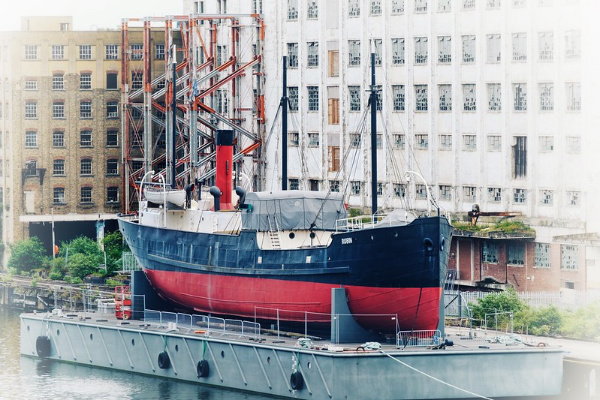
The world’s only complete surviving Victorian steamship, the SS Robin is moored in east London, close to where it was built.

One of a pair of steam coasters (the other being Rook) built initially by Mackenzie, MacAlpine & Co at Orchard House Yard on Bow Creek (and then completed by London shipowner Robert Thomson) in 1890, the SS Robin was fitted out at East India Dock before being towed to Dundee to be fitted with her engine, boiler and auxiliary machinery at Gourlay Brothers & Co.

The SS Robin in 2021 at the Royal Victoria Dock with the Millennium Mills building in the background. PICTURE: Marc Barrot (licensed under CC BY-NC-ND 2.0)

The SS Robin commenced her sailing career at Liverpool on 20th December, 1890, and spent the next decade carrying cargos – including grain, coal, and iron ore – between British ports as well as some in northern France. Early on – in 1892 – she was sold to Alexander Forrester Blackater of Glasgow and re-registered there.

In 1900, the Robin was sold to what would be the first of three Spanish owners and renamed the Maria. The ship would then spend the next 74 years working along the Spanish coast, carrying a range of cargos including iron and coal.

In 1974, only days after discharging her final cargo and about to be sold to Spanish ship breakers, the Maritime Trust purchased the ship.

Following a two restoration project at the Doust & Co shipyard in Rochester, Kent, and, once again named the Robin, she was subsequently moored in St Katharine Docks. The ship was moved to a new mooring at West India Quay in 1991 but fell into disrepair.

In 2000, David and Nishani Kampfner bought Robin for £1 with the idea of creating an educational centre and gallery. Two years later, in 2002, SS Robin Trust was created and volunteers subsequently began the work of restoring the coastal steamer.

From 2004 until 2007, the vessel was home to a gallery and workshops run by Kampfner to encourage creative thinking in children.

But the need for further refurbishment saw this come to an end and, financed by a £1.9 million loan from Crossrail and a £1 million grant from The Heritage Lottery Fund, in June, 2008, the Robin undertook her first sea journey in 35 years, travelling to Lowestoft for the much needed restoration works.

Once at Lowestoft, however, it was discovered the ship was too fragile to go to sea again and so a pontoon was created onto which the ship was lifted in 2010. Towed to Tilbury, the Robin underwent further refurbishment there until, in July, 2011, she returned to London.

Moored initially at the Royal Albert Dock, she is now located at Royal Victoria Dock (and can be seen from nearby viewing points). There are now plans to relocate her to Trinity Buoy Wharf and for further development as a museum ship.

For more information, head to http://ssrobin.com.

This Week in London – London Design Biennale; canal wildlife; a suffragette princess honoured; and, the ‘Polar Silk Road’ explored…

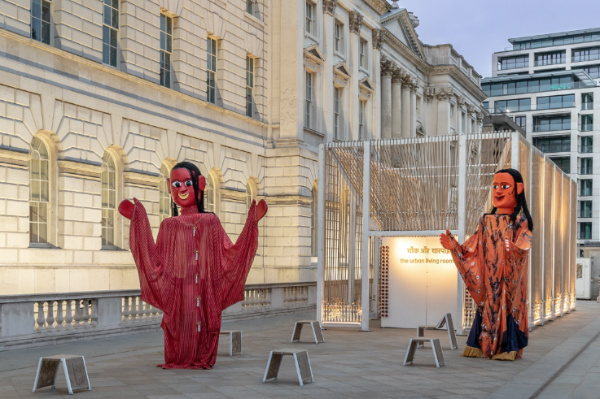
The Indian Pavilion at the London Design Biennale. PICTURE: Courtesy of London Design Biennale.

• The almost month-long London Design Biennale kicks off at Somerset House today under the theme of ‘The Global Game: Remapping Collaborations’. The fourth edition of the biennale is artistically directed by the Nieuwe Instituut – the Dutch national museum and institute for architecture, design and digital culture – and takes over the entirety of Somerset House. Among the exhibits is the India pavilion (pictured above) featuring a multi-sensory evocation of the essence of a contemporary Indian city chowk – an open market at the junction of streets – through the visual metaphor of a charpai – a traditional woven daybed, Malta’s large-scale ‘village-square’ installation that merges traditional city planning with the Phoenician-Maltese tradition of fabric production and dyeing of the multiple colours of Phoenician purple, the Ukrainian Pavilion which features am interior construction symbolising the country’s industrial, natural resource, and creative richness and a series of external projects which tell stories about new design collaborations in times of crisis for Ukraine and the vital role of design in creating new progressive connections. There’s also the chance to see the Ai-Da Robot, the world’s first humanoid robot artist, which will make history by showing her unique ability to design objects. Running alongside is the EUREKA exhibition which will share design-led innovation from leading research centres. Runs until 25th June. Admission charge applies. For more, see www.somersethouse.org.uk/whats-on/london-design-biennale-eureka-2023.

London canal wildlife. PICTURES: Courtesy of the London Canal Museum

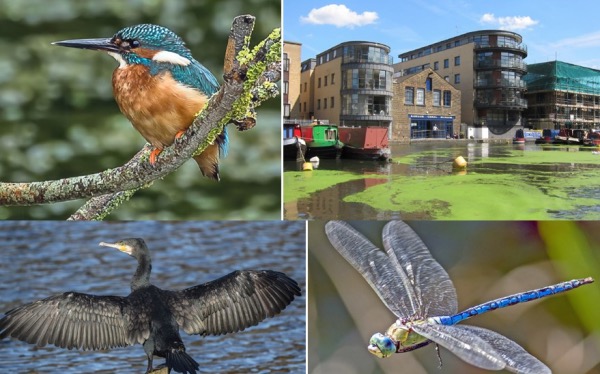
A new exhibition highlighting the flora and fauna of London’s canals has opened at the London Canal Museum in King’s Cross. Many of the canals were derelict by the end of the 20th century but have received a new lease of life in recent times as leisure destinations. These days, they provide a “highway” for fauna including birds, fish and mammals to move in and out of the capital, some of which is showcased in this new display. Entry with general admission and for an extra fee, guided narrowboat trips along The Regent’s Canal are available on selected days. For more, see www.canalmuseum.org.uk.

Princess Sophia Duleep Singh, a suffragette, daughter of the last Maharajah of the Punjab, and god-daughter to Queen Victoria, has been commemorated with an English Heritage Blue Plaque. The plaque marks Faraday House in Hampton Court, granted to the princess and her sisters as a grace and favour apartment by Queen Victoria. Also known as ‘Apartment 41’, the property – which was named after scientist Michael Faraday – was home to Princess Sophia for more than 40 years and her base when she was campaigning for women’s suffrage. For more, see www.english-heritage.org.uk/visit/blue-plaques/.

North Warning System III, Tuktoyaktuk, Northwest Territories, Canada, 2020. PICTURE: © Gregor Sailer

• The ‘Polar Silk Road’ – a channel opened up thanks to melting Arctic Sea ice – is the subject of a new exhibition at the Natural History Museum. Gregor Sailer: The Polar Silk Road features 67 photographs taken by acclaimed Austrian artist and photographer Gregor Sailer showcasing manmade structures – from isolated research centres to Icelandic geothermal power stations – captured across four countries in the Arctic circle. There’s also a short film discussing the impacts of the climate crisis. The exhibition is free to visit. For more, see www.nhm.ac.uk/visit/exhibitions/the-polar-silk-road.html.

Send all items for inclusion to exploringlondon@gmail.com.

10 historic vessels in London’s Thames…2. HQS Wellington…

A former World War II convoy escort ship, the HQS Wellington, which is moored alongside Victoria Embankment in the River Thomas, is unusual in that for the past 75 years it has served as the headquarters of the Honourable Company of Master Mariners.

The HQS Wellington seen in 2007. PICTURE: JPLon (licensed under CC BY-SA 3.0)

Constructed in the Devonport Dockyard, Plymouth, in 1934 for the Royal Navy as a two-masted Grimsby-class sloop, the HMS Wellington served in the Pacific in the lead-up to World War II, based mainly in New Zealand (she was named for the capital of New Zealand) and patrolling the South Pacific.

Following the outbreak of war, the HMS Wellington – which featured two 4.7-inch guns and one 3-inch gun as well as carrying other anti-aircraft guns and depth charges – served mainly as a convoy escort in the North Atlantic.

During this time, the vessel was involved in the sinking of an enemy U-boat, the evacuation of Allied forces from St Valery-en-Caux, north of Le Havre, and the Allied landings in North Africa in late 1942. In 1943, the HMS Wellington was one of the first escort ships to be fitted with Hedgehog, an anti-submarine weapon, which replaced the three inch gun.

The ship ended the war having travelled almost 250,000 miles and escorting 103 convoys.

Following the war, the 265 foot long ship was initially transferred to the Reserve Fleet in Milford Haven before, in 1947, the Admiralty made the ship available to the Honourable Company of Master Mariners to serve as a floating livery hall. She was converted for that purpose – and renamed the HQS Wellington – at Chatham Dockyard using funds raised through a public appeal.

The interior features a grand wooden staircase taken from the 1906 Isle of Man ferry SS Viper which was being broken up at the time.

The HQS Wellington arrived at Victoria Embankment in 1948 for service as the livery company HQ.

The ship had a major refit in 1991, during which it was fitted out with carpet and new displays showing off the Company’s collections, and in 2005, ownership of the ship was transferred to The Wellington Trust.

In April this year it was announced that due to safety concerns the Honourable Company of Master Mariners would have to leave the vessel. The company, which has relocated to a temporary on-shore headquarters in Greenwich, are now developing plans for a new floating headquarters.

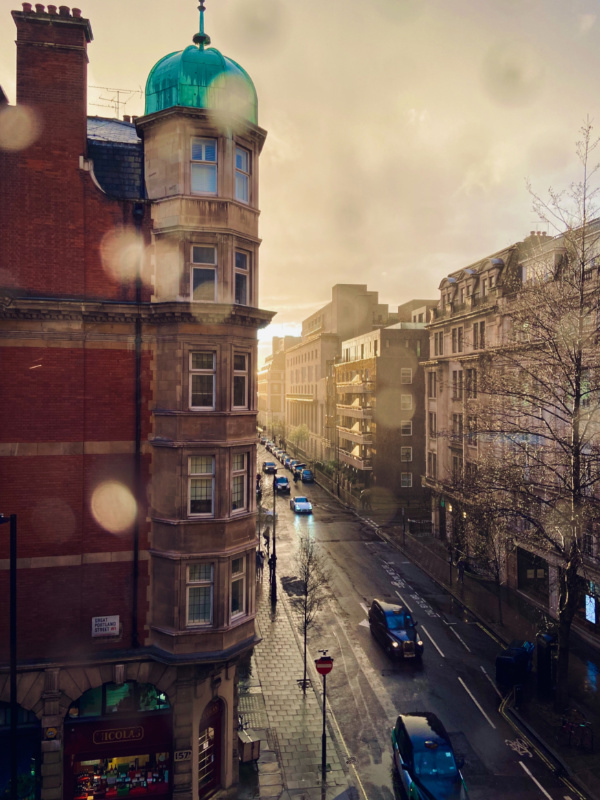
LondonLife – Rainy evening…

This Week in London – The Crown Jewels (redisplayed); The Troubles at IWM; and, Tate Britain, rehung…

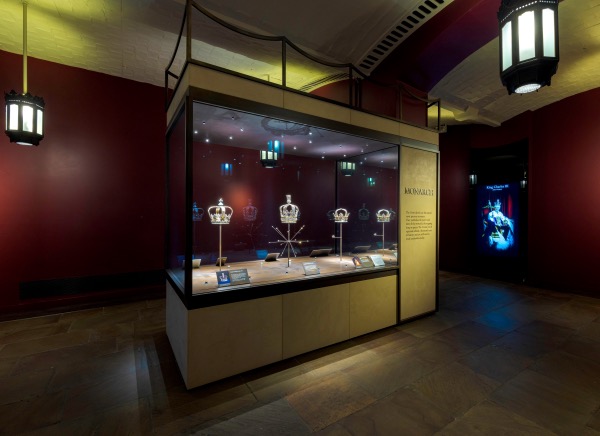
Part of the new Jewel House display of the Crown Jewels at The Tower of London. PICTURE: ©Historic Royal Palaces

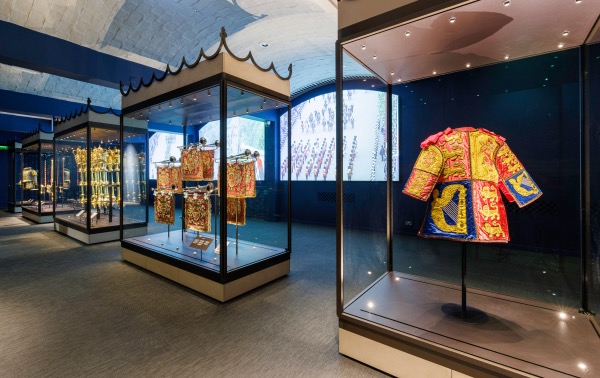
A new display of the Crown Jewels opens in the Tower of London’s Jewel House tomorrow – the first major change to the display in more than a decade. Opening just weeks after the coronation regalia was used in the coronation of King Charles III and Queen Camilla at Westminster Abbey, the re-presentation of the jewels comes about thanks to a partnership between Historic Royal Palaces and royal jewellers Garrard and is the culmination of a four year project aimed at delving deeper into the history of the collection and coronations. The display, which features images from the recent coronation, starts with a celebration of the timelessness of monarchy featuring the State Crown frames worn by King George I, King George IV and Queen Victoria. It explains how historic jewels including the Black Prince’s Ruby have passed from crown to crown and explores the origins of the current jewels, starting with the destruction of the medieval coronation regalia in 1649. The story of gems including the Koh-i-Noor and Cullinan Diamond will also be explored while at the heart of the display is a room dedicated to the spectacle of the Coronation Procession. It ends with the Treasury containing more than 100 objects including the St Edward’s Crown of 1661, the Sovereign’s Sceptre with Cross and the Sovereign’s Orb. As an added spectacle, for nine nights in November, the Tower will also host a touring light and sound show, Crown and Coronation, which, created in partnership with Luxmuralis Artist Collaboration, will feature imagery and footage of monarchs and coronations past, along with images of the regalia. Images will be projected on buildings of the Inner Ward including the White Tower. The light and sound show, which will run at the Tower from 17th to 25th November, will tour the UK in 2024. Entry is included in general admission. For more, see www.hrp.org.uk/tower-of-london/whats-on/the-crown-jewels/.

More of the new display in the Jewel House of the Crown Jewels at The Tower of London. PICTURE: ©Historic Royal Palaces

The almost 30-year conflict in Northern Ireland known as The Troubles is the subject of a new exhibition at the Imperial War Museum. Northern Ireland: Living with the Troubles, which opens tomorrow, features familiar objects including rubber bullets, propaganda posters and a Good Friday Agreement booklet as well as rarer items such as a screen-printed handkerchief made by UVF paramilitaries in the Long Kesh internment camp. There will also be the chance to hear first-hand testimonies including from republican and loyalist paramilitaries as well as British soldiers, local police and ordinary civilians, and the opportunity to see archival photography depicting hunger strike riots, army checkpoints and bomb wreckage. Admission is free. Runs until 7th January. For more, see www.iwm.org.uk/visits/iwm-london.

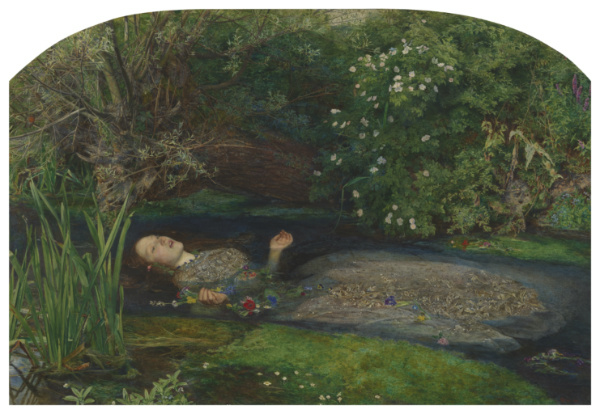
Sir John Everett Millais, Ophelia, 1851-2, Oil paint on canvas; Support: 762 × 1118 mm, frame: 1105 × 1458 × 145 mm
PICTURE: Tate (Seraphina Neville)

Tate Britain has completed a complete rehang of its free collection displays – the first for 10 years. Visitors can see more than 800 works by 350 artists including iconic treasures such as John Everett Millais’ Ophelia (pictured above), William Hogarth’s The Painter and his Pug, David Hockney’s A Bigger Splash, Barbara Hepworth’s Pelago and Chris Ofili’s No Woman, No Cry. The collection also includes more than 100 works by JMW Turner, rooms devoted to such luminaries as William Blake, John Constable, the Pre-Raphaelites and Henry Moore, and a series of changing solo displays exploring other ground-breaking artists such as Annie Swynnerton, Richard Hamilton, Aubrey Williams and Zineb Sedira. Some 70 of the works in the collection – ranging from Tudor portraits to contemporary installations – which have been acquired in the last five years alone. For more, see www.tate.org.uk.

Send all items to exploringlondon@gmail.com.
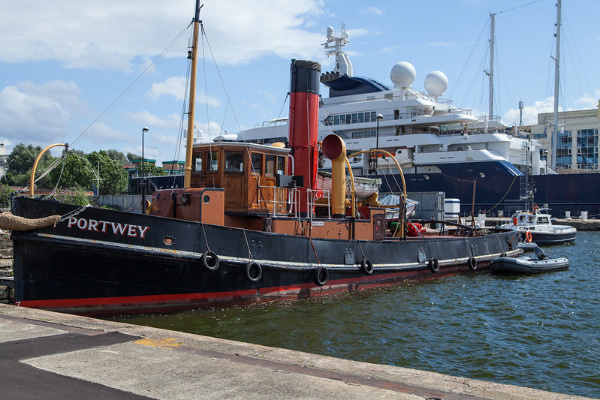
10 historic vessels in London’s Thames…1. PS Tattershall Castle…

HMS Belfast is one of London’s star tourist sites. But what are some of the other vessels moored in the Thames? In this series, we’re taking a look at the history behind 10 other vessels, starting with PS Tattershall Castle.

The PS Tattershall Castle in 2017. PICTURE: Tony Hisgett (licensed under CC BY 2.0)

Now a floating restaurant moored off Victoria Embankment, the steam-driven, steel-hulled PS Tattershall Castle was constructed by the West Hartlepool-based company William Gray & Company as a ferry. Its name comes from a castle in Lincolnshire built in the first half of the 15th century/

Launched on 25th September, 1934, with a license to carry 1,000 people, the 209 foot-long ferry was one of three sister ships – the others being the PS Wingfield Castle (now a museum ship in Hartlepool) and the PS Lincoln Castle – which were built to transport passengers along the Humber between Kingston upon Hull, in Yorkshire, and New Holland, in Lincolnshire. It could make eight trips a day and could carry vehicles and livestock.

World War II broke out not long after her launch and the ferry was used to transport troops and supplies along the Humber. Due to the heavy fogs on the river, the Tattershall Castle became one of the first civilian vessels to be equipped with radar.

Following the war and the 1948 nationalisation of the railways, the PS Tattershall Castle became part of part of British Rail’s Sealink service. In 1973, the vessel, with repairs deemed too costly, was retired from service.

Subsequently towed to London, the PS Tattershall Castle was converted into a floating art gallery which was formally opened by the Lord Mayor of London on 27th February, 1975.

In 1981, the former ferry was acquired by the Chef & Brewer Group. After some repairs on the River Medway, she was opened in 1982 as a bar restaurant.

There have been several refits since, the most recent being in 2015, when the former ferry was returned to Hull for some £1.5 million work to be carried out. The former ferry is typically moored off Victoria Embankment opposite the London Eye.

For bookings, head to www.thetattershallcastle.co.uk.

LondonLife – Scenes from Chelsea…

The Chelsea Flower Show returned to London this week with King Charles III making his first visit to the show as monarch and tributes in honour of his coronation and the passing of Queen Elizabeth II last year. The show runs until 27th May. For more, see www.rhs.org.uk/chelsea.

King Charles III visits The Chelsea Flower Show 2023. ALL PICTURES: Courtesy of Royal Horticultural Society/Chelsea Flower Show 2023
Princess of Wales Kate Middleton visits RHS Chelsea Flower Show 2023. She is pictured on Savills Garden designed by Mark Gregory.
‘A Letter from a Million Years Past’. Designed by Jihae Hwang. Sponsored by Korea Forest Service, Hoban Cultural Foundation and MUUM Ltd. Show Garden. RHS Chelsea Flower Show 2023. Stand no 328.
Chelsea pensioners eating at meal in the Savills Garden. Designed by Mark Gregory. Sponsored by Savills. Show Garden. RHS Chelsea Flower Show 2023. Stand no 324.
RHS Garden of Royal Reflection and Celebration featuring a bust of King Charles III. Designed by Dave Green. Feature Garden. RHS Chelsea Flower Show 2023. Stand no 111.
The Biophilic Garden Otsu – Hanare’. Designed by Kazuyuki Ishihara. Sponsored by Glion and Ishihara Kazuyuki Design Laboratory. Sanctuary Garden. RHS Chelsea Flower Show 2023. Stand no 280.

Where’s London’s oldest…cash machine location?…

PICTURE: Matt Brown (Licensed under CC BY 2.0)

Recently listed at Grade II by the Department of Culture, Media and Sport, a Barclays Bank in the northern London suburb of Enfield was the first in the world to be fitted with an automatic teller machine or ATM as we know them.

The prototype machine was devised by John Shepherd-Barron, managing director at banknote manufacturer De La Rue and required the customer to insert a special paper voucher punched with dots corresponding to their four digit PIN (the PIN featured four digits because Shepherd-Barron, who had initially proposed using six, heeded the words of wife after she told him she couldn’t recall more than four).

The bank, located at 20 The Town, was selected for a range of reasons, including that it has good pavement access, high windows and was close to Barclays head office. 

The ATM was officially opened on 27th June, 1967, by Barclays deputy chairman Sir Thomas Bland while actor and comedian Reg Varney made the first £10 withdrawal.

The red brick bank where the machine was located was built in 1897 and designed by William Gilbee Scott in a style architectural historian Nikolaus Pevsner described as “exuberant Flemish Renaissance”.

PICTURE: Matt Brown (Licensed under CC BY 2.0)

Barclays celebrated the 50th anniversary of the installation in 2017 with the installation of a plaque and by turning one of the existing cash machines at the Enfield branch gold.

This Week in London – ‘Indo + Caribbean’; 19th century China explored; and, animals, art, science and sound at the British Library…

Postcard – Shipping on the River Hughly Calcutta, cira 1900. PICTURE: Courtesy of JF Manicom

A new exhibition examining the history of Indian indenture in the British Caribbean and Indo-Caribbean culture in London today opens at the Museum of London Docklands from tomorrow. Indo + Caribbean: The creation of a culture puts a spotlight on the 450,000 Indians who left India between 1838 and 1917 to work for periods of three to five years on Caribbean plantations in return for transport, a minimal wage and some basic provisions. Among the objects on show are letters from Caribbean planter Sir John Gladstone petitioning the government to provide workers from India as well as contracts, shipping company records, postcards, and papers from the Parliamentary Archives that give insights into the realities of life under indenture. Also on display are photos, jewellery, film and artwork which uncover personal stories and family memories from London’s Indo-Caribbean community. Admission to the exhibition in the London, Sugar and Slavery gallery is free. For more, see www.museumoflondon.org.uk.

Empress Dowager Cixi’s robe, China, about 1880–1908. © The Metropolitan Museum of Art, New York.

The resilience and creativity of people in 19th century China is explored in a new exhibition at the British Museum which opens today. The Citi exhibition China’s hidden century examines the age of the Qing Dynasty, which ruled from 1796 to 1912, and focuses on a spectrum of different groups in society – from members of the court and military to artists and writers, farmers and city-dwellers as well as the globalised communities of merchants, scientists and diplomats, reformers and revolutionaries. Among the more than 300 objects on display are a water-proof straw cape made for a street worker, farmer or fisherman which is being publicly displayed for the first time, cloisonné vases given by the Last Emperor’s court to King George and Queen Mary for their coronation in 1911, and, a silk robe which belonged to the Empress Dowager Cixi, de facto ruler of China from 1861 to 1908 and a contemporary of Queen Victoria. Admission charge applies. Runs in the Sainsbury Exhibitions Gallery until 8th October. For more, see britishmuseum.org/exhibitions/chinas-hidden-century.

Animals: Art, Science, and Sound at the British Library

The intersection between science, art and sound and how that impacts our understanding of the natural world is explored in an exhibition at the British Library. Animals: Art, Science and Sound features 120 artworks, manuscripts, sound recordings and books, many of which are on display for the first time. They include the earliest known illustrated Arabic scientific work documenting the characteristics of animals alongside their medical uses (c1225), the earliest use of the word ‘shark’ in printed English (1569), Leonardo da Vinci’s notes (1500-08) on the impact of wind on a bird in flight, and one of the rarest ichthyology publications ever produced, The Fresh-Water Fishes of Great Britain (1828-38), which features hand-painted illustrations by Sarah Bowdich. Also present is the first commercially published recording of an animal from 1910 titled Actual Bird Record Made by a Captive Nightingale (No. I) by The Gramophone Company Limited and one of the earliest portable bat detectors – the Holgate Mk VI – used by amateur naturalist John Hooper during the 1960s-70s to capture some of the first sound recordings of British bats. The exhibition, which runs until 28th August and which carries an admission charge, is accompanied by two free displays at the library – Animal Rights: From the Margins to the Mainstream (runs to 9th July) and Microsculpture (runs to 20th November). For more, see www.bl.uk/events/animals.

Send all items to exploringlondon@gmail.com.
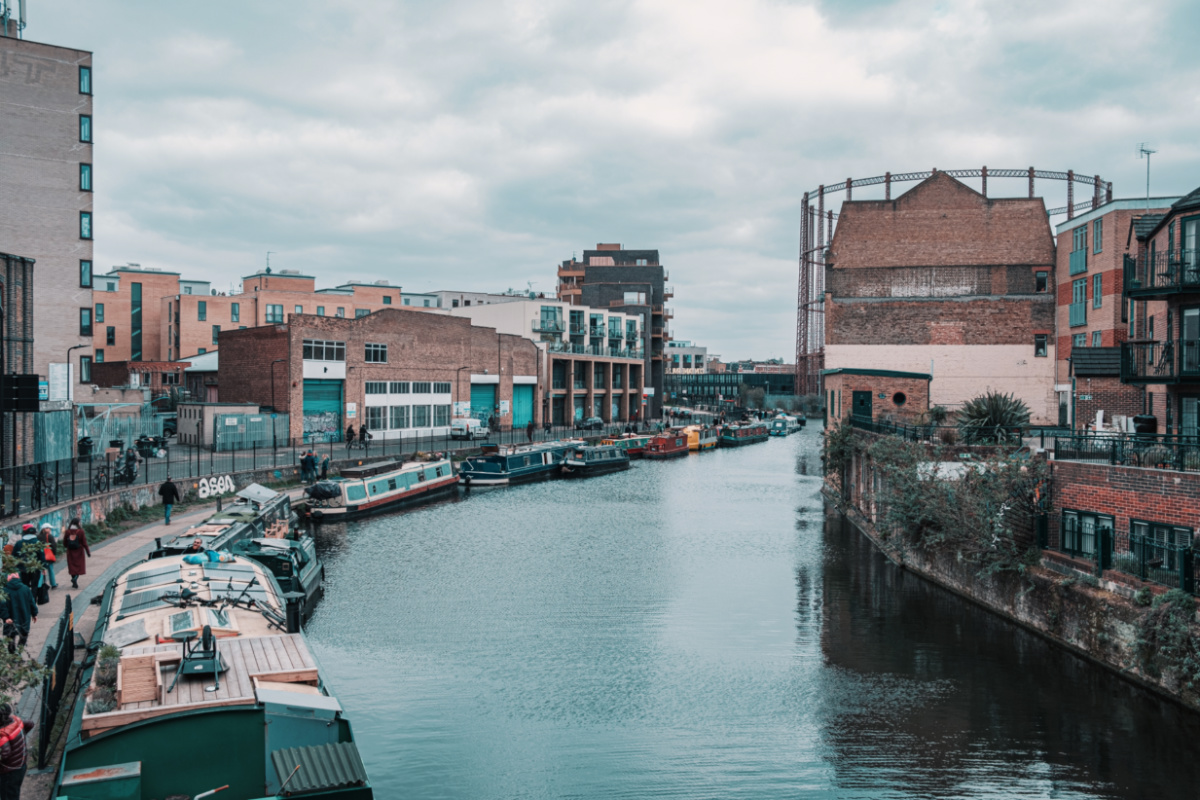
LondonLife – The Tower and City of London from another angle…

PICTURE: Zetong Li/Unsplash

London Pub Signs – The King’s Head, Mayfair…

Ignore the rather large no entry sign and look closely to see King George II on the sign to the left of the picture and King Charles II on the sign to the right. PICTURE: Google Maps

It’s a pub dedicated to a king – but which one?

Located at 10 Stafford Street (within walking distance of current royal residences at Buckingham and St James’s Palace), this pub dates back to at least 1710 and has gone through several name changes including, apparently, Shelley’s Hotel and The King John’s Head, but has now returned to its original name of the King’s Head.

While some believe the name refers to King Charles II, there’s another school of thought that says the pub was named for King George II.

With the dispute still apparently live, the owners have cleverly opted to depict the heads of both kings on the pub’s signs.

The pub, which features a cellar bar, is one of a number named The King’s Head in London (we’ll take a look at some others in upcoming posts).

Now part of the Nicholson’s chain. For more, see https://www.nicholsonspubs.co.uk/restaurants/london/thekingsheadmayfairlondon.

This Week in London – Luxury and power in the ancient world; St Francis of Assisi; and, St Bart’s 900 year history…

Panagyurishte Treasure

The relationship between luxury and power in the ancient world is explored in a new exhibition at the British Museum. Luxury and power: Persia to Greece focuses on the period between 550-30 BC in the Middle East and south-east Europe, a period during which the Persian empire of ancient Iran clashed with the cities and kingdoms of Greece before it was conquered by Alexander the Great. Highlights include Bulgaria’s Panagyurishte Treasure which, on loan, consists of nine richly decorated Persian gold vessels including eight rhyta used to pour wine and one bowl to drink it. There’s also a Persian gilt silver rhyton shaped as a griffin, Athenian examples of drinking vessels, and, a gold wreath from Turkey which consists of two branches with a bee with two cicadas and showcases how styles evolved into the period after the death of Alexander in 323 BC. The exhibition in the Joseph Hotung Great Court Gallery can be seen until 13th August. Admission charge applies. For more, see www.britishmuseum.org/luxuryandpower.

Sandro Botticelli, ‘Saint Francis of Assisi with Angels’ (about 1475-80)/Tempera and oil on wood/
© The National Gallery, London

The first major art exhibition to explore the life and legacy of Saint Francis of Assisi has opened at The National Gallery. Saint Francis of Assisi, which features works spanning the period from the 13th century to today, includes 40 works, ranging from medieval painted panels to relics, manuscripts and even a Marvel comic book. Highlights include Francisco de Zurbarán’s Saint Francis in Meditation (1635‒9), Antony Gormley’s Untitled (for Francis) (1985), Sandro Botticelli’s Saint Francis of Assisi with Angels (about 1475‒80 – pictured), El Greco’s Saint Francis Receiving the Stigmata (1590‒5), Giovanni Costa’s Frate Francesco e Frate Sole (1878‒86), and Matthew Paris’ drawings in the Chronica maiora, which present some of the earliest English depictions of Saint Francis. There’s also a relic of Francis’s habit from Santa Croce, Florence, and a small section of the exhibition is dedicated to Saint Clare, one of the first followers of Francis. The exhibition in the Ground Floor Galleries can be seen until 30th June. Admission is free. For more, see nationalgallery.org.uk.

England’s oldest hospital, St Bartholomew’s Hospital, is being celebrated in an outdoor exhibition in the City of London. Founded in 1123 – 900 years ago this year, the history of the hospital is being being told using photographs, art, and history drawn from Barts Health NHS Trust Archives’ extensive collections. The display can be seen in Guildhall Yard until 6th June after which it will move to Aldgate Square until 5th July before finally moving to St Bartholomew’s Hospital Square until 1st August. The exhibition is part of Barts900. For more on the programme of events, see Barts900 website.

Send all items to exploringlondon@gmail.com

LondonLife – Coronation moments…

Some more images from the coronation of King Charles III and Queen Camilla on the weekend…

Military personnel, seen here at Wellington Barracks, before taking part in the King’s Coronation. PICTURE: Graeme Main/UK MOD © Crown copyright 2023
A quiet moment before the Coronation Service in Westminster Abbey as the King walks through the Great West Doors. PICTURE: Sgt Robert Weideman, RLC/ UK MOD © Crown copyright 2023
The Gold State Coach, and other royal coaches waiting outside Westminster Abbey for members of the Royal Family before the Coronation Procession. PICTURE: Sgt Jimmy Wise/UK MOD © Crown copyright 2023
Three of the thousands who lined The Mall to watch the Coronation Procession on Saturday. PICTURE: Sgt EJ Marriott. PICTURE: UK MOD Crown Copyright 2023
The Red Arrows perform a fly past for King Charles III’s Coronation Day. The sortie was led by Squadron Leader Tom Bould (Red 1). The Red Arrows aerobatics team flew directly down the length of The Mall and over Buckingham Palace, where members of the Royal Family watched on the balcony during the fly past, which was reduced in size because of the weather. PICTURE: Cpl Phil Dye/UK MOD © Crown copyright 2023
The massed pipers muster before the Royal Salute in the garden of Buckingham Palace following the Coronation Procession. PICTURE: Sgt EJ Marriot/UK MOD © Crown copyright 2023

The coronation of King Charles III and Queen Camilla…

King Charles III and Queen Camilla appear on the balcony of Buckingham Palace after the coronation ceremony. PICTURE: Giles Anderson/© MoD Crown Copyright 2023
The King and Queen ride in the Gold State Coach after the ceremony. PICTURE: LPhot Gareth Smith/UK MOD © Crown copyright 2023
King Charles III and Queen Camilla in the Gold State Coach during the Coronation Procession after the ceremony at Westminster Abbey. PICTURE: SSgt Dek Traylor (licensed under MOD News Licence).
The Coronation Procession in The Mall. PICTURE: AS1 Ryan Murray RAF/UK MOD © Crown copyright 2023
The Coronation Procession, the largest ceremonial military operation for 70 years, involved some 4,000 soldiers, sailors and aviators from across the UK and Commonwealth. PICTURE: Corporal Rebecca Brown/UK MOD © Crown copyright 2023
The huge crowd outside Buckingham Palace. PICTURE: UK MOD © Crown copyright 2023
The Red Arrows fly over Buckingham Palace as the King and Queen appear on the balcony. PICTURE: UK MOD © Crown copyright 2023.
King Charles III enters Westminster Abbey for the Coronation Service. PICTURE: Sgt Rob Weideman/UK MOD © Crown copyright 2023
The King and Queen travel to Westminster Abbey in the Diamond Jubilee State Coach. PICTURE: LPhot Gareth Smith/UK MOD © Crown copyright 2023
A gun salute at the Tower of London. PICTURE: AS1 Jake Hobbs RAF/UK MOD © Crown copyright 2023

LondonLife Special – (More) coronation preparations…

Flags are flying in Regent Street. PICTURE: Miltof (licensed under CC BY 2.0/picture cropped)
Dignataries are arriving in London ahead of the coronation – here British Prime Minister Rishi Sunak meets Australian Prime Minister Anthony Albanese outside 10 Downing Street. PICTURE: Alice Hodgson / No 10 Downing Street (licensed under CC BY-NC-ND 2.0)

The Burlington Arcade rolls out the red carpet with the new King’s cipher. PICTURE: Matt Brown (licensed under CC BY 2.0)

A crown atop a bus stop in Oxford Street, central London. PICTURE: Matt Brown (licensed under CC BY 2.0)
A London Underground roundel changed into a “crowndel” ahead of the coronation. PICTURE: diamond geezer (licensed under CC BY-NC-ND 2.0).

This Week in London – It’s Coronation weekend!…

Part of the final Coronation Procession rehearsal this week. PICTURE: Sgt Robert Weideman, RLC/Copyright: UK MOD © Crown copyright 2023

It’s Coronation weekend in London, so first up it’s a look at the Coronation Procession. The 1.42 mile route from Buckingham Palace to Westminster Abbey, which opens for viewers at 6am on Saturday, will see the procession – with King Charles III and Queen Camilla travelling in the Diamond Jubilee State Coach – leave Buckingham Palace at 10:20am. Known as The King’s Procession, the coach, which will be accompanied by The Sovereign’s Escort of the Household Cavalry, will travel down The Mall, through Admiralty Arch and past Trafalgar Square, before turning down Whitehall. The procession will then make its way down to the Houses of Parliament and around the east and south sides of Parliament Square to Broad Sanctuary and Westminster Abbey.

• The ceremony is scheduled to begin at 11am and is expected to run for two hours. There is, of course, no access to the abbey for uninvited guests but the ceremony will be broadcast live by the BBC and big screens are being set up to watch in St James’s Park, Green Park and Hyde Park as well as Holland Park, Valence Park in Dagenham and Walpole Park in Ealing. 

• At 1pm, the King and Queen will return from Westminster Abbey to Buckingham Palace in The Coronation Procession. They will be riding in the 260-year-old Gold State Coach that has been used in every coronation since that of William IV and accompanied by almost 4,000 members of the armed forces in what’s been called the largest ceremonial military operation in recent decades. Representatives of Commonwealth nations and British Overseas Territories will also take part in the return procession. The route will be the reverse of the outgoing route and see the procession travel back through Parliament Square (lined with an honour guard of 100 members of the Royal British Legion) and up Whitehall to Trafalgar Square, turning left to travel through Admiralty Arch and back down The Mall. Reaching Buckingham Palace, the King and Queen will receive a Royal Salute from the armed forces who have been escorting them followed by three cheers.

The balcony appearance and flypast. The newly crowned King and Queen Consort are scheduled to appear on the famous balcony on Buckingham Palace at 2.30pm accompanied by members of the royal family. They will watch a six minute flypast of military planes, ending with a display by the Red Arrows.

On Sunday, communities are invited to join in the Coronation Big Lunch (communities will also be holding street parties throughout the weekend). On Sunday night, the BBC will broadcast The Coronation Concert from Windsor Castle. The concert will feature the Coronation Choir as well as ‘Lighting Up The Nation’ in which locations across the UK will take part. For details on where events are being held, head to https://coronation.gov.uk/events/.

On Monday, people are encouraged to join in The Big Help Out by volunteering time to help out in your local community. To find out where your local events are, head to https://thebighelpout.org.uk.