
Located on the north bank of the River Thames at Chelsea, these 19th century pleasure gardens were only open for about 40 years.
The origins of the gardens go back to the 1830s when a mansion and surrounding estate – previously owned by Thomas Dawson, Viscount Cremorne (hence the name) – was sold to one Charles Random who went by the name of Baron de Berenger or Baron de Beaufain, a convicted stockmarket fraudster. Random established a sports facility called the Cremorne Stadium on the site where people could indulge in swimming, rowing, fencing, boxing and shooting (the ‘baron’ himself was apparently a crack shot).
 The venture was not an immediate success however and so management began to diversify and provide other entertainments more synonymous with pleasure gardens including mock tournaments and pony races as well as dances and, of course, balloon ascents. Nonetheless, the venture failed and was sold off to a City coffee house owner of the name of Thomas Bartlett Simpson.
He sublet the 12 acre site to James Ellis who reopened the house and grounds as a pleasure gardens in 1845. Ellis, however, went bankrupt within just a few years – an interesting side note is that he then went to Melbourne in the Colony of Victoria (part of what is now Australia) where he established another Cremorne Gardens beside the city’s Yarra River – although like his London venture that, too, didn’t have a long life.
Back in London, Simpson then took over management of the gardens himself and within just a few years the gardens had become popular among the fashionable.
The gardens featured a dazzling array of facilities including a banqueting hall, theatre, and American-style bowling saloon and provided all manner of entertainments such as balloon ascents, firework displays, dancing, and performances. The site could be entered from the grand entrance on King’s Road or at the Cremorne Pier on the river.
Alongside its regular entertainments, the gardens also hosted numerous spectacular events including, in 1861, being the site from where Madame Genevieve Young, the ‘Female Blondin’, crossed the Thames on a tightrope and where, in 1864, Mr Godard ascended in his Montgolfier Balloon. Other acts – such as a 1855 renactment of the storming of a fort at Sebastapol during which a stage collapsed, and another in which a balloon drifted onto the spire of a nearby church – were less successful.
The garden passed through the hands of several other managers over the ensuing years and but by the 1870s has acquired something of a bad reputation. While while then-manager John Baum, who had invested considerable sums in upgrading the gardens’ facilities, won a libel case against a local minister who had published a pamphlet condemning the gardens (in principle at least – he was apparently only awarded a farthing in damages), in 1877 he decided not to reapply for his licence and closed the gardens.
During its final years of operations, the gardens were captured on canvas by artist James Abbott McNeill Whistler, who was a resident in nearby Cheyne Walk.
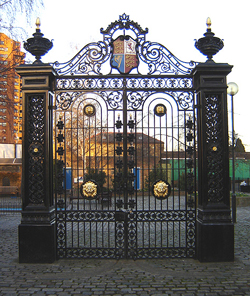
The modern Cremorne Gardens – located by the Thames near the Lots Road power station – were opened in 1982. Iron gates from the original gardens (pictured), which had been taken to a brewery, were restored and installed in the new gardens.
PICTURE: Above – The Dancing Platform at Cremorne Gardens by Phoebus Levin, 1864. Via Wikimedia Commons; Right – The Cremorne Gardens gates, Tarquin Binary/Wikimedia Commons/CC BY-SA 2.5









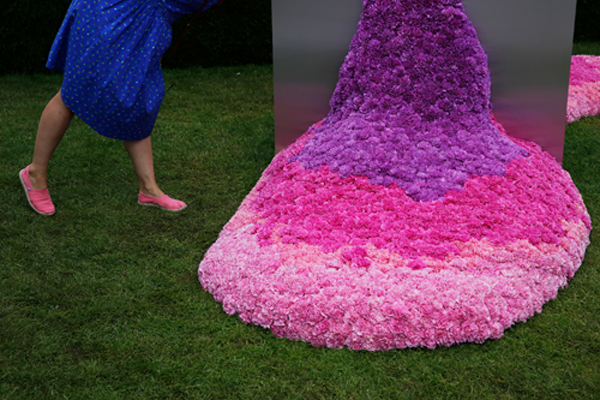 Above, a visitor views “Neoteric” a floral installation by Robert Hornsby.
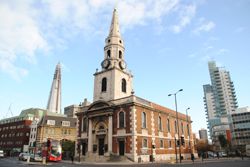 The prison, originally based in two houses apparently known as the Crane and the Angel (Angel Place bears witness to the latter), was first used for those convicted at the travelling court of the King’s Bench.
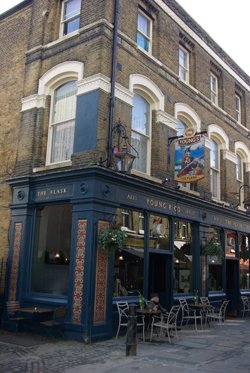 This Grade II-listed pub owes its name to the fact it was from where “medicinal waters” taken from nearby springs were taken to be bottled before being sold to coffee houses and taverns across London at threepence a flask.
