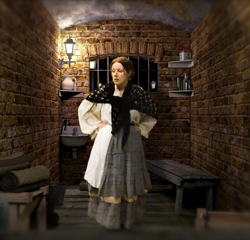
 • Stories including that of Catherine Eddowes, one of the victims of the notorious Jack the Ripper whose tale is brought to life through a virtual hologram (pictured), that of the Houndsditch Murders which claimed the lives of three police officers, and those of the more than 70 horses which have served in the City of London Police are among those told in the new purpose-built City of London Police Museum. A collaboration between the City of London Police and the City of London Corporation’s Guildhall Library, the new facility covers the 177 year history of the men and women charged with policing the Square Mile. Other stories highlighted in the museum include that of the recruitment of women into the force, the impact of the two World Wars on policing in the capital (featuring photographs taken by City of London police officers Arthur Cross and Fred Tibbs), the force’s tackling of terrorism and the progress of its communications, uniforms and kit and the victory of the City of London Police as the winner of the Olympic gold medal for the tug of war in 1920 (which, given the event was dropped, leaves them as the current champions). Entry to the museum, which opened this week at Guildhall, is free. For more, see www.cityoflondon.police.uk/about-us/history/museum/Pages/default.aspx. PICTURE: Courtesy City of London Police Museum.
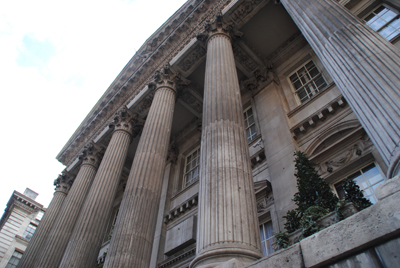
• The Lord Mayor’s Show takes place this Saturday, kicking off with a river pageant followed by the grand procession through City streets and fireworks over the Thames. The 801st Lord Mayor’s Show celebrates the election of Andrew Parmley as the 689th Lord Mayor of the City of London. This year’s procession, which kicks off at 11am and runs from Mansion House down Cheapside to the Royal Courts of Justice – where the Lord Mayor swears allegiance to the Crown – and back again at 1pm via Victoria Embankment, features 6,500 participants, 180 horses and 164 vehicles including steam engines, fire engines and a tank. The Show’s Pageantmaster, Dominic Reid, is celebrating his 25th consecutive show this year (his father organised 20 shows before him). The river pageant, featuring the QRB Gloriana, sets off from Westminster at 8.30am with Tower Bridge opening in salute at 9.25am. The fireworks display, which takes place over the Thames between Blackfriars and Waterloo, starts at 5.15pm. The tradition dates back to 1215. For more, see https://lordmayorsshow.london.
• A major new exhibition looking at the history of the 20th century through maps has opened at the British Library in King’s Cross. Maps and the 20th Century: Drawing the Line features maps ranging from the first sketch of the London Underground dating from 1931, to declassified Ministry of Defence maps from the Cold War era, John Betjeman’s personal set of Ordinance Survey maps from the 1920s, a Russian moon globe from 1961 and EH Shepard’s first map of the Hundred Acre Wood (home of Winnie the Pooh). Other highlights include 3D relief models of the Western Front from 1917, a dress made of World War II escape maps printed on silk, an aerial photograph of Liverpool with targets marked used by the Luftwaffe, a map of the Atlantic Ocean floor from 1968. The exhibition, which runs to 1st March, is running in conjunction with a series of events exploring how maps continue to shape and influence our world. Admission charge applies. For more, follow this link.
Send all items for inclusion to exploringlondon@gmail.com