This Week in London – Totally Thames kicks off; Black On The Square; and, ‘Rivers and Roads’…

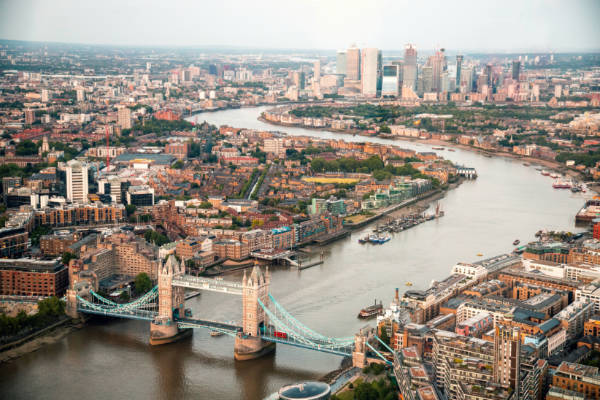
The River Thames. PICTURE: Sander Crombach/Unsplash

It’s September and that means Totally Thames – London’s annual month-long festival centred on the famous waterway – is underway. This year’s festival includes a packed programme of events which this weekend include the St Katharine Docks Classic Boat Festival, the Kingston River Cultures Festival, a mud-larking exhibition held in the ancient Roman amphitheatre under Guildhall Yard and a Victorian family day out at Crossness Pumping Station. Other highlights include a foreshore archaeology walk at Deptford (14th September), guided tours of the HMS Wellington (20th September), the month-long exhibition of winners and runners-up from the annual Thames Lens photography competition on the Riverside Walkway on the north bank near Millennium Bridge, and, of course, the annual Great River Race (on Saturday, 20th September). For more, head to https://thamesfestivaltrust.org/whats-on/.

The contribution of Black Londoners is again being celebrated this weekend as Black On The Square returns to Trafalgar Square. The free, family-friendly festival, now in its third year features live music, dance, food and workshops and this year includes a focus on London’s nightlife under the theme ‘Intergenerate’ recognising Black Londoners’ contribution to electronic culture and night life and featuring Garage music producer and DJ Wookie. There will also be a series of stalls offering foods ranging from Caribbean classics to West African vegan bites and artisanal goods including jewellery, art, books, homeware and fashion with the ‘Accra to London’ stall offering a range of items influenced by Ghana’s capital city, Accra, a highlight. Runs from 12pm to 6pm on Saturday. For more, see https://www.london.gov.uk/events/black-square-2025.

The Great West Road and the Thames have served as key routes into London since Roman times and they’re now the subject of a new exhibition at the Barbican Library. Rivers and Roads features the work of Brentford-based painter Helena Butler, who paints in a semi abstract style to capture the landscape and the feelings and images the local scenery inspires, and ceramic artist Anna Butler, who has produced a series in response to Alfred Noyes’ beloved poem The Shining Streets of London. Admission is free. Runs until 29th September. For more, see www.cityoflondon.gov.uk/events/rivers-and-roads-art-exhibition

Send all items for inclusion to exploringlondon@gmail.com.
This Week in London – Rare Tudor choirbook at Lambeth; Sculpture in the City returns; and, picturing Blondie…

One of only two surviving choirbooks from the reign of King Henry VIII is on display in a new exhibition at the Lambeth Palace Library. Sing Joyfully: Exploring Music in Lambeth Palace Library displays the ‘Arundel’ or ‘Lambeth’ Choirbook (Arundel, Sussex, c. 1525) – this year marking its 500th birthday – along with other items from the library’s collection such as two leaves of a 14th century polyphony recently discovered in the binding of an early printed book. The exhibition, which is free, can be seen until 6th November. For more, see www.lambethpalacelibrary.info/sing-joyfully/.

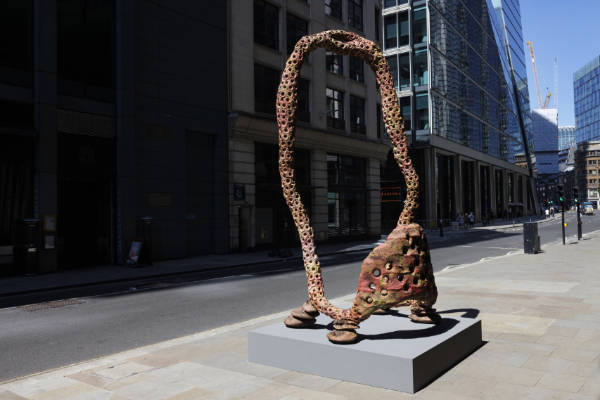
Looping Loop, © Andrew Sabin, Courtesy of the artist and Brooke Benington. PICTURE © Nick Turpin

On Now: Sculpture in the City. The 14th edition of the annual sculpture exhibition in the City of London features 11 pieces including three new works as well as six works which have been retained from previous iterations of the exhibition and two permanent acquisitions. The new works include: Ai Weiwei’s Roots: Palace, a cast-iron tree root sculpture located outside St Botolph without Bishopsgate which, as part of a series created in collaboration with Brazilian artists and communities, explores the concept of unrootedness; Jane and Louise Wilson’s Dendrophiles which, located beneath the escalators of The Leadenhall Building, combines ink drawings based on images of DNA with 3D scans of ancient oak wooden samples; and, Andrew Sabin’s Looping Loop which, located outside 70 St Mary Axe, which forms a continuous loop creating what’s described as a “lively, pulsating sensation”. Runs until April. For more – including a map of the locations – see https://www.sculptureinthecity.org.uk/.

Rare, behind the scenes images of US band Blondie have gone on show at the Barbican Music Library from today. Taken by photographer Martyn Goddard during the group’s breakthrough year of 1978, the 50 images show the band in concert, backstage, in the studio and during photo shoots. The display of photographs is complemented by poster prints, album covers, tour and concert memorabilia, period cameras, and photographic equipment. There are also items lent by Alan Edwards, who has handled Blondie’s publicity since 1978, from his private collection. Blondie in Camera 1978 runs until 5th January. Admission is free. For more see, www.cityoflondon.gov.uk/services/libraries/barbican-music-library.

Send all items for inclusion to exploringlondon@gmail.com.
This Week in London – Royal garments; Victor Hugo’s drawings; and, British Black music…

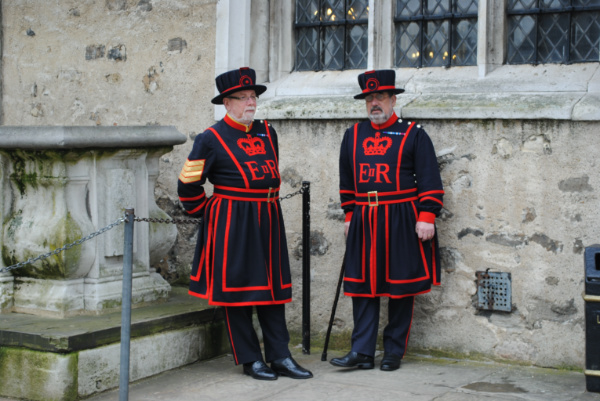
Yeoman Warders at the Tower of London. PICTURE: David Adams

Almost 200 garments from the Royal Ceremonial Dress Collection are able to be explored online thanks to a new collaboration between Historic Royal Palaces, which looks after six royal palaces including Hampton Court Palace and the Tower of London, and Google Arts & Culture. Drawing on ultra-high-resolution photography and 3D scanning, the garments – which include everything from ceremonial uniforms such as those worn by Yeoman Warders and a rare Bristow hat which may have been worn by King Henry VIII to Queen Victoria’s silk shoes, a waistcoat worn by King George III and a dress worn by the future Queen Elizabeth II in 1927 when she was just 18-months-old – can now be viewed in unprecedented detail (a billion pixels per image) without the risk of the damage which can occur thanks to light, humidity, and handling. The Royal Ceremonial Dress Collection comprises over 10,000 pieces of historic dress and related materials spanning the period from the 16th century to the present day and features garments worn by monarchs and key historical figures, including, as well as the aforementioned, Prince Albert, Princess Margaret, and Diana, Princess of Wales. To see the items, head to goo.gle/royalwardrobe.

Author, politician and artist Victor Hugo’s rarely seen works on paper have gone on show at the Royal Academy of Arts. Astonishing Things: The Drawings of Victor Hugo features around 70 works drawn from European collections and follows his preoccupation with drawing from early caricatures and travel drawings to later landscapes and abstract works. Arranged across four sections, the works on show include everything from Mushroom (1850) – which depicts a giant anthropomorphic toadstool, some of his many works depicting castles such as The cheerful castle (c 1847), and drawings that Hugo created in tandem with writing his 1866 novel The Toilers of the Sea, set in Guernsey in the years following the Napoleonic Wars, as well some relating to his most famous work, Les Misérables. The exhibition, being held in the Jillian and Arthur M Sackler Wing of Galleries, can be seen until 19th June. Admission charge applies. For more, see royalacademy.org.uk.

A “ground-breaking” exhibition showing the outsized impact British Black music has had on the world stage over the past 100 years has opened at the Barbican Music Library. Black Sound London highlights artists who created their own platforms, audiences, and spaces, often without mainstream support and spans genres including jazz, lovers’ rock, jungle, grime, and drill. Among the objects on show are vintage mixtapes, iconic magazine covers, and fly-posted walls. Runs until 19th July. For more, see www.cityoflondon.gov.uk/services/libraries/barbican-music-library.

Send all items for inclusion to exploringlondon@gmail.com.
This Week in London – Silk Road treasures; a new Lord Mayor of London; and, reassessing the UK’s early Emo scene…

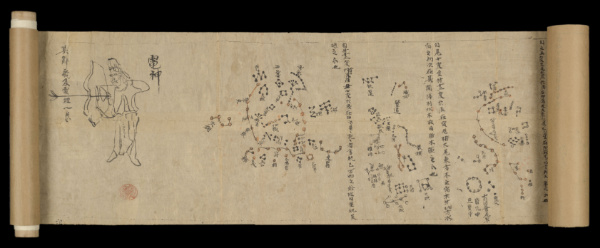
Dunhuang Star Chart 649 – 700 CE – Or.8210/S.3326 © British Library Board

The world’s earliest complete printed book with a date, the earliest known manuscript atlas of the night sky and the earliest surviving historical document in Tibetan are among treasures on show in a new exhibition at the British Library. A Silk Road Oasis: Life in Ancient Dunhuang features more than 50 manuscripts, printed documents and pictorial works including many which were sealed in the so-called ‘Library Cave’ in the Buddhist Mogao cave complex near the oasis town of Dunhuang in Gansu province, China, for almost 900 years before they were rediscovered in 1900. Highlights in the display include the Diamond Sutra (868 AD) – the world’s earliest complete printed book with a date, the Dunhuang star chart (649-700) – the earliest known manuscript atlas of the night sky (pictured), and the Old Tibetan Annals (641-761) – the earliest surviving historical document in Tibetan. On public display for the first time is a rubbing of the Stele of Sulaiman – a carved stone slab that was erected in the caves in 1348, a copy of the Diamond Sutra written in the scribe’s own blood (considered by Buddhists to be an act of powerful sincerity), and one of the most important and complete manuscripts among the Old Uyghur Manichaean texts, the Xuastuanift. There is also a 9th century manuscript fragment about the prophet Zoroaster or Zarathustra (believed to be nearly 400 years older than any other surviving Zoroastrian scripture) and the longest surviving manuscript text in the Old Turkic script, a Turkic omen text known as the Irk Bitig or Book of Omens (930 or 942). The exhibition, which explores Silk Road interactions through a case of characters including a scribe, merchant and Buddhist nun, runs until 23rd February and is accompanied by a programme of events. Admission charge applies. For more, see https://silkroad.seetickets.com/timeslots/filter/a-silk-road-oasis-life-in-ancient-dunhuang

Alderman Alastair King has been elected the 696th Lord Mayor of London. King, who succeeds Lord Mayor Professor Michael Mainelli, takes office on 8th November for a one year term with the annual Lord Mayor’s Show, which takes place the following day, his first public event. “It is a tremendous honour to be elected as the 696th Lord Mayor of the City of London,” the Lord Mayor-elect, whose role will see him serving as a global ambassador for the UK financial and professional services industry, said. “London remains the world’s leading financial centre, but global competition is fierce. We have the expertise and talent to thrive, yet we must do more to unlock growth, equip people to innovate, and harness the remarkable dynamic diversity that makes the City exceptional.”

An “unfiltered” look at the early Emo scene in the UK is the subject of a new exhibition at the Barbican Music Library. I’m Not Okay (An Emo Retrospective), a collaboration between the library and the Museum of Youth Culture (MOYC), features personal photos taken on early digital and phone cameras and focuses on the first-generation Emo scene (2004-2009), a time when bands such as My Chemical Romance, Fall Out Boy, and Finch were “hugely influential”.  Jamie Brett, creative director at the MOYC said the Emo scene “resonated deeply with teens who wanted to express their angst, doubts, insecurity, and sense of feeling and being different, and channelled their collective melancholy into a transatlantic subculture”. The exhibition, which is free to enter, can be seen until 15th January. For more, see www.cityoflondon.gov.uk/services/libraries/barbican-music-library.

Send all items for inclusion to exploringlondon@gmail.com.
10 significant (and historic) London trees – A recap…

We’ll kick off a new series next week, but, in the meantime, here’s a recap…

1. Queen Elizabeth’s Oak, Greenwich…

2. The Cheapside Plane…

3. Charter Oak of Bexley…

4. The Royal Oak, Richmond Park…

5. Black mulberry trees, Middle Temple Gardens…

6. Mendelssohn’s Tree…

7. D-Day Tree…

8. The Old Lions…

9. The Fulham Palace Oak…

10. Berkeley Square Plane Tree…

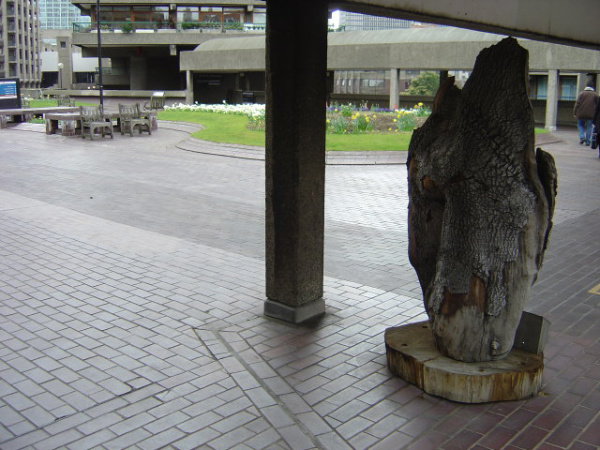
10 significant (and historic) London trees…6. Mendelssohn’s Tree…

PICTURE: Alan Murray-Rust (licensed under CC BY-SA 2.0)

Standing on a Barbican walkway is the remnant of a tree believed to be at least 500-years-old which fell during a storm January, 1990.

The now hollowed-out stub of the beech tree (Fagus Sylvatica) had previously been located in the woodland known as Burnham Beeches, in Buckinghamshire – a woodland which was purchased by the City of London Corporation in 1880.

But what apparently sets this tree out from the others at Burnham Beeches is that it is believed famed German composer Felix Mendelssohn Bartholdy (1808-1847) used to sit under its then leafy branches while staying nearby during his several visits to England.

He is said to have done so to gain inspiration for his compositions and among the works he is said to have composed while here is some “incidental music” for A Midsummer Night’s Dream (although it has been suggested this might not actually be the exact tree under which he sat).

The tree and its plaque were installed in 1993 by the Barbican Horticultural Society and unveiled by conductor and composer Carl Davis.

There is now a replacement “Mendelssohn’s Tree” in Burnham Beeches which was planted in 2005.

WHERE: Barbican, off Aldersgate St (nearest Tube station is Barbican); WHEN: Anytime; COST: Free; WEBSITE: N/A.

LondonLife – Taking a break at the Barbican Center…

PICTURE: Lawrence Chismorie/Unsplash

LondonLife – Barbican curvature…

PICTURE: Artem Zhukov/Unsplash

This Week in London – Wren at Work; music moments captured in photographs; and, the RA’s 255th Summer Exhibition…

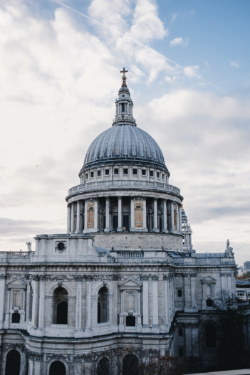
Wren’s monument – St Paul’s Cathedral. PICTURE:
Aaron Gilmore/Unsplash

A recreation of Sir Christopher Wren’s office while he was working on St Paul’s Cathedral can be seen at the Guildhall Art Gallery from today. The faux 17th century environment, created by Chelsea Construction, will allow visitors to explore the building methods and tools of the age, as well as the daily lives of 17th century diarists including Robert Hooke, John Evelyn and Margaret Cavendish, and a case study of how citizens lost and regained their properties during and after the Great Fire of 1666. A specially commissioned map by artist/cartographer Adam Dant will provide insight’s into Wren’s life and times and will be displayed alongside illustrations by architect George Saumerez-Smith and members of the Worshipful Company of Chartered Architects, a scale model of St Paul’s Dome by students at Kingston University, and stone models from master mason Pierre Bidaud. The Wren at Work exhibition is part of Wren300. Admission is free but booking are recommended. For more, see www.cityoflondon.gov.uk/events/wren-at-work-wren300-exhibition.

Photographs capturing Pete Townshend’s guitar flying through the air at Madison Square Garden and Noel Gallagher during the making of the video for Wonderwall are just two of the images on show in a new exhibition at the Barbican Music Library. Celebrating the 25th anniversary of music photography collection Rockarchive.com, In The Moment: The Art of Music Photography also features images of everyone from David Bowie to Debbie Harry, Queen, Biggie Smalls, led Zeppelin, Lady Gaga and Amy Winehouse, capturing them in recording sessions at live gigs and at photo shoots. The free exhibition, which opens on Friday, can be seen until 25th September. For more, see www.cityoflondon.gov.au/services/libraries/barbican-music-library. Meanwhile, a bust of Sir Simon Rattle is being unveiled today at the library in tribute to his five decades in classical music. Sir Simon, who has made over 100 recordings. became music director of the Barbican’s resident orchestra, the London Symphony Orchestra, in 2017 and will conclude his tenure this year.

The Royal Academy’s 255th annual Summer Exhibition opened this week under the theme of ‘Only Connect’ (inspired by a quote from the novel Howards End by EM Forster). Exhibiting artists include British sculptor Lindsey Mendick, Barbados-born painter Paul Dash, American multi-media artist Ida Applebroog, St Lucia born painter Winston Branch, Colombian sculptor Carlos Zapata and British painters Caragh Thuring and Caroline Walker, and Irish fashion designer Richard Malone, who has created a dramatic mobile installation which hangs in the Central Hall. There are also works by Royal Academicians including Frank Bowling, Michael Craig-Martin, Tracey Emin, Gillian Wearing and the late Paula Rego. Runs until 20th August. Admission charge applies. For more, see royalacademy.org.uk.

Send all items to exploringlondon@gmail.com

This Week in London – Boleyn ring at Hampton Court; and, Status Quo at the Barbican…

© Historic Royal Palaces/3004593

A gold signet ring once believed to have belonged to the Tudor-era Boleyn family has gone on display at Hampton Court Palace. The ring, was discovered in a field near Shurland Hall on the Isle of Sheppey in Kent, the country home of one of Anne Boleyn’s cousins and a property she visited with King Henry VIII. It is engraved with with a bull’s head – which appears in the arms of the Boleyn family (a visual pun on the family name, which was often spelled as ‘Bullen’) – and arrayed with sunbeams and stars of white enamel as well as being decorated with icons of the Virgin and Child and St Catherine of Alexandria on its shoulders. Analysis concluded the ring was consistent with objects of the early Tudor era, leading historians to suggest that it may have belonged to either Thomas or George Boleyn – Anne Boleyn’s father and brother. The ring, which was purchased by Historic Royal Palaces with support from the Arts Council England/V&A Purchase Grant Fund, the Art Fund, the Meakins Family and John Harding, under the terms of the Treasure Act 1996, can be seen in the Great Hall. Included in general admission. For more, see www.hrp.org.uk/hampton-court-palace/.

One of the UK’s most successful rock bands, Status Quo, are the subject of a new exhibition at the Barbican Music Library. Celebrating Seven Decades of Status Quo is the first ever public exhibition on the band and features never-before-seen material including the original handwritten lyrics to Caroline and Down Down as well as tour posters, photographs and more than 40 of the bands key albums. The display is a collaboration between Paul and Yvonne Harvey, who ran the band’s official fan club, ‘From The Makers Of…’ (FTMO), and Status Quo fan and collector Andy Campbell. Status Quo was formed in 1962 and has since had more than 60 chart hits as well as opening the LIVE AID concert in Wembley in July, 1985, and receiving a Brit Award for Outstanding Contribution to Music in 1991. Runs until 22nd May. Admission is free. For more, see www.cityoflondon.gov.uk/services/libraries/barbican-music-library.

Send all items to exploringlondon@gmail.com

10 unusual parks or gardens in London…8. Barbican Conservatory…

PICTURE: Matt Brown (licensed under CC BY 2.0)

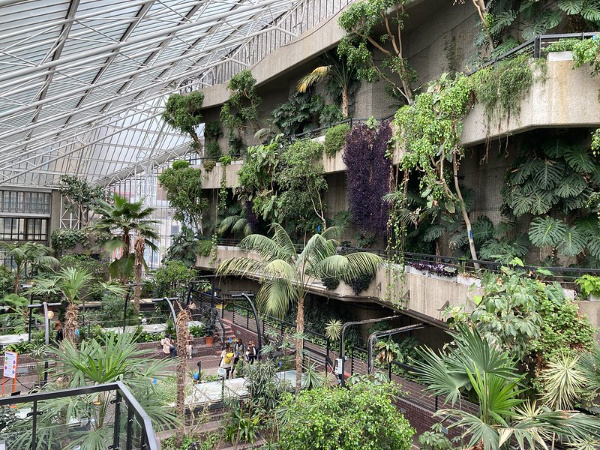
Located in the heart of the post-war Brutalist Barbican development is the second largest conservatory in London.

Designed by the complex’s architects Chamberlin, Powell and Bon, the 23,000 square foot steel and glass conservatory – only bested in size by the Princess of Wales Conservatory at Kew Gardens – was planted in the early 1980s and opened in 1984.

It now houses some 1,500 species of plants and trees from areas as diverse as the bushland of South Africa to the Brazilian coast.

Among the species on show are the tree fern and date palm as well as the Swiss cheese plant and coffee and ginger plants.

The conservatory also features pools containing koi, ghost, and grass carp from Japan and America, as well as other cold water fish such as roach, rudd, and tench and terrapins. An Arid House attached to the east of the conservatory features a collection of cacti, succulents and cymbidiums (cool house orchids).

The conservatory is just one of several distinct gardens at the Barbican complex. These include water gardens located in the midst of lake which feature a range of plants growing in the water itself as well as in a series of sunken pods which are reached by sunken walkways.

Since 1990 the estate has also been home to a wildlife garden which, boasting ponds, a meadow and orchard, is home to more than 300 species including the Lesser Stag Beetle and House Sparrow.

WHERE: The Barbican Conservatory, Barbican Centre, Silk Street (nearest Tube stations are Barbican, Farringdon and Liverpool Street; WHEN: Selected days, from 12pm (check website to book tickets); COST: Free; WEBSITE: www.barbican.org.uk/whats-on/2022/event/visit-the-conservatory.

Lost London – Grub Street…

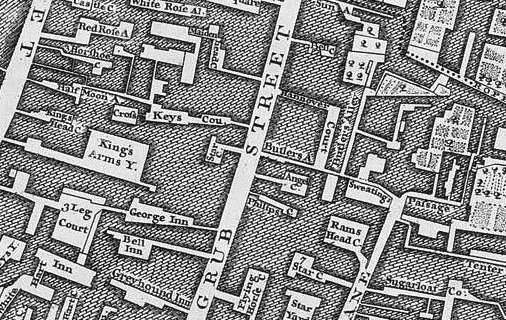
Long connected with the low end trade in words, Grub Street was once located on the site where the Barbican development now stands.

The street – its name possibly comes from a man called Grubbe or refers to a street infested with worms – was located in the parish of St Giles-without-Cripplegate outside the city wall. It northwards ran from Fore Street to Chiswell Street and had numerous alleys and courts leading off it.

Originally located in an area of open fields used for archery and so inhabited by bowyers and others associated with the production of bows and arrows, the relative cheapness of the land – due to its marshiness – later saw the Grub Street and its surrounds become something of a slum, an area of “poverty and vice”.

During the mid-17th century, it became known as a home for (often libellous or seditious) pamphleteers, journalists and publishers seeking to escape the attention of authorities.

And so began the association of Grub Street with writing “hacks”, paid line-by-line as they eked out a living in tawdry garrets (although how many actually worked in garrets remains a matter of debate). The word “hack”, incidentally, is derived from Hackney, and originally referred to a horse for hire but here came to refer to mediocre writers churning out copy for their daily bread rather than any sense of artistic merit.

Residents included Samuel Johnson (early in his career), who, in 1755 included a definition for it in his famous dictionary – “a street near Moorfields in London, much inhabited by writers of small histories, dictionaries and temporary poems, whence any mean production is called grubstreet”, and 16th century historian John Foxe, author of the famous Book of Martyrs.

The street, which was also referenced by the likes of Alexander Pope and Jonathan Swift as a symbol of lowbrow writing, was renamed Milton Street (apparently after a builder, not the poet) in 1830. Part of it still survives today but most of it disappeared when the Barbican complex was created between the 1960s and 1980s.

PICTURE: John Rocque’s map of 1746 showing Grub Street.

This Week in London – VAULT returns to Waterloo, and, ‘Making Music’ at the Barbican…

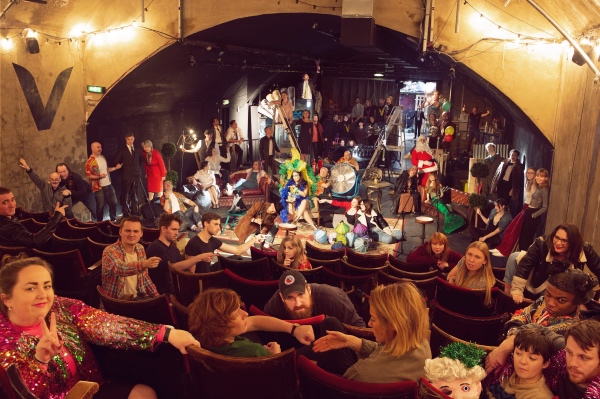
London’s largest arts festival, VAULT, kicks off next Wednesday in Waterloo with more than 400 shows on offer. Taking place across a range of venues including the main festival hub, The Vaults below Waterloo Station, as well as pop-ups in shipping containers, caravans and escape rooms and the festival’s new space for immersive events – Unit 9, highlights of the seventh festival include the Belarus Free Theatre’s production of the immersive Ukrainian folk opera Counting Sheep, the Lucy Jane Atkinson-directed play Vespertilio, and the comedy of Ciarán Dowd – winner of “best newcomer” at the Edinburgh Comedy Awards. There’s also a twilight program – featuring the VAULT Comedy Showcase – from 10pm on Thursdays and Fridays and a series of Lates including Launch Party: Hype Time featuring the eight-piece New Orleans band Brass Funkeys,  blues band Slow Mojo and special guest DJs including Hazel Marimba. The festival runs from 23rd January to 17th March, from Wednesdays to Sundays (times vary). For a full programme of events and tickets, head to vaultfestival.com. PICTURE: VAULT Festival’s 2019 “class photo” (courtesy of VAULT)

• The joy found in communities making music together is explored in a new exhibition which opened at the Barbican Music Library in the City of London this week. Making Music Together: A celebration of leisure-time music in the UK shows how 13,000 leisure-time groups gather to play and perform a wide range of music – from jazz and folk to classical and barbershop – in locations ranging from houses and garages to halls, theatres and fields across the country. The exhibition, held in conjunction with Making Music – the UK’s largest organisation for leisure-time music, will feature posters, films and quotes by contributing Making Music member groups as well as specially commissioned portraits of leisure-time musicians. Runs until 23rd March. Free admission. For more, see www.barbican.org.uk/your-visit/general-info/library.

Send all emails for inclusion to exploringlondon@gmail.com.
This Week in London – The Great Parchment Book; 20th century art at Guildhall Art Gallery; and, iconic music photography…

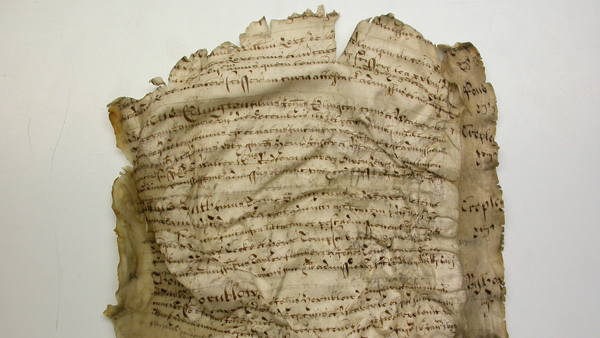
The Great Parchment Book, known as the ‘Domesday Book’ of the Ulster Plantation (now part of Northern Ireland), has gone on display at the City of London’s Heritage Gallery, located in the Guildhall Art Gallery. The book was compiled in 1639 and documents the period following King James I’s settlement of English and Scottish Protestants in Ulster. It came about after King Charles I seized estates around Derry which were managed by the Irish Society on behalf of the City of London and City livery companies and a survey was done to gather information about the lands. Stored at Guildhall, The Great Parchment Book was damaged in a fire in 1786 but following conservation is now on display. Runs until 10th August. Admission is free. For more, see www.greatparchmentbook.org. PICTURE: Courtesy City of London Corporation.

Works by Damien Hirst and David Hockney are among those on show in #LondonTrending which opens at the Guildhall Art Gallery today. A selection of limited edition prints on loan from British Land’s collection charts how collectives of London-based artists created some of the 20th century’s most innovative art. The display will also feature prints by pop artists Peter Blake, who created the sleeve design for The Beatles’ Sgt Pepper’s Lonely Hearts Club Band album, and Eduardo Paolozzi, who designed the mosaic patterned walls at Tottenham Court Road tube station as well as works by Richard Hamilton, Patrick Procktor, Jan Dibbets, Richard Long, Bruce McLean, Michael Lady, Simon Patterson, Gary Hume and Ian Davenport. Runs until 28th August in the Temple Room. Admission is free. A series of curator talks are scheduled. For more, see www.cityoflondon.gov.uk/londontrending.

Sheila Rock’s iconic portraits of musicians ranging from Sir Simon Rattle to Siouxsie Sioux are on show at the City of London’s Barbican Music Library. Picture This includes a wide range of her vintage prints including her work for album and vinyl 12” releases such as the shot of Debbie Harry used in 1978 for Blondie’s Denis’ 12. Other images included in the display feature Irish band U2 and conductor Daniel Barenboim. Rock, who has been based in London since 1970, was introduced to music photography by her ex-husband (and renowned rock photographer) Mick Rock and became known as a highly influential photographer during the punk and post-punk scene, later helping to shape the look of creative magazines such as The Face. Runs until 4th July. Entry is free. For more, follow this link.

Send all items for inclusion to exploringlondon@gmail.com.
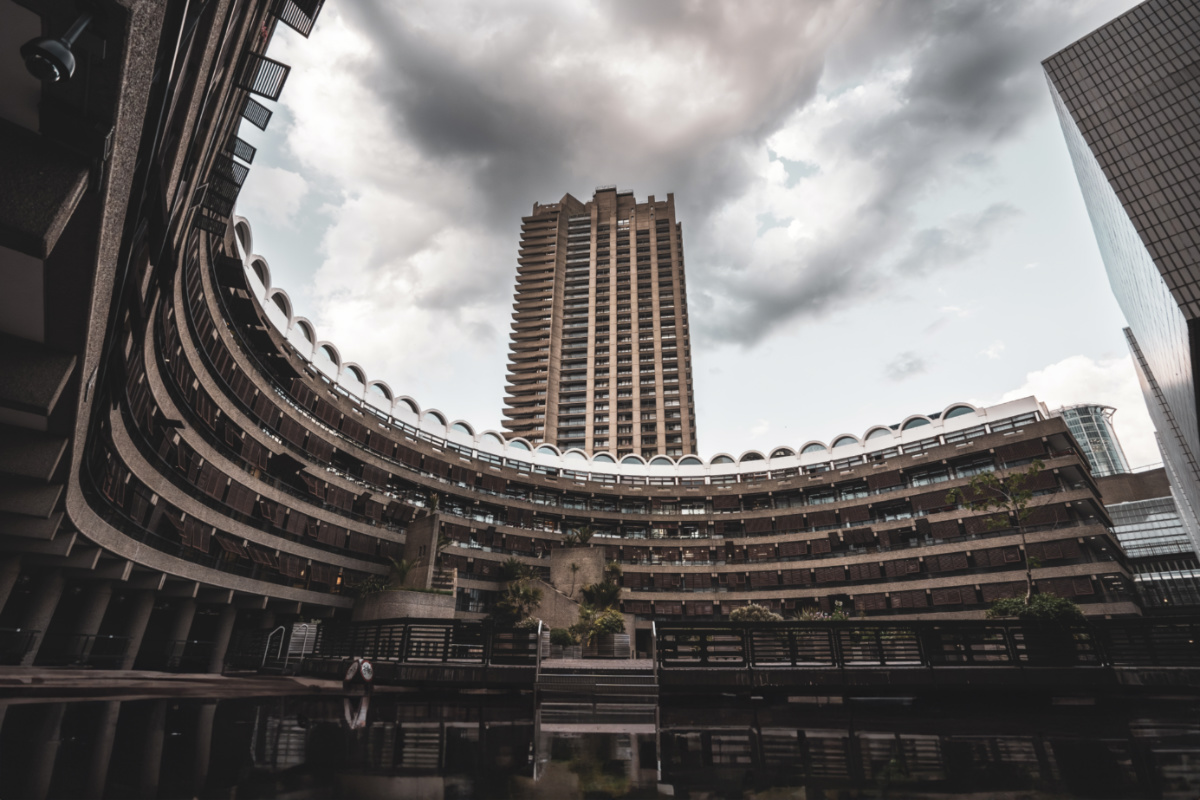
LondonLife – Tranquil waters of the Barbican…

Barbican

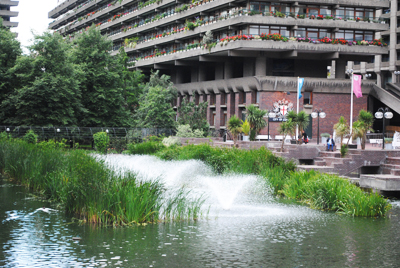
Inside the Barbican Estate residential development in the City of London. The Brutalist, Grade II listed, complex was developed in the 1960s and 1970s in an area which had been devastated in the bombing of World War II. For more on the development and the origins of its name, see our earlier post herePICTURE: David Adams

LondonLife – New Elizabeth line stations on show…

Whitechapel-station

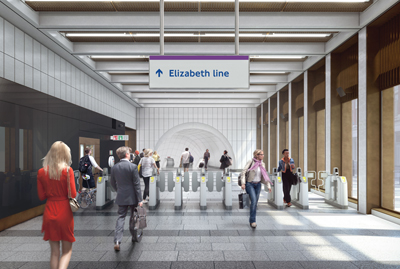
A new exhibition featuring designs for the 10 new Elizabeth line Underground stations has opened at the Royal Institute of British Architects (RIBA). Platform for Design: Stations, Art and Public Space provides insights into the design of the new railway – part of the massive Crossrail project, its stations and public spaces which are slated to open in 2018. Each of the new stations will have their own distinct character designed to reflect the environment and heritage of the area in which they are located. The new Elizabeth line station at Paddington, for example, is said to “echo the design legacy of Brunel’s existing terminal building” while the design of the new Farringdon station is inspired by the historic local blacksmith and goldsmith trades and the distinctive architecture of the Barbican. Many of the new stations will also featured permanent, integrated works of art design to create a “line-wide exhibition”. The Elizabeth line runs from Heathrow and Reading in the west across London to Abbey Wood and Shenfield. The exhibition at RIBA at 66 Portland Place in Marylebone runs until 14th June. Admission is free. For more on the exhibition, including the accompanying programme of events, see www.crossrail.co.uk/news/news-and-information-about-crossrail-events.

Bond-Street-station---proposed-ticket-hall-on-Hanover-Square_235994

Tottenham-Court-Road-station---architect_s-impression-of-station-entrance-at-Dean-Street_236015

Farringdon-station---proposed-platform_236035

A Moment in London’s History – Londoners granted the right to elect their mayor…

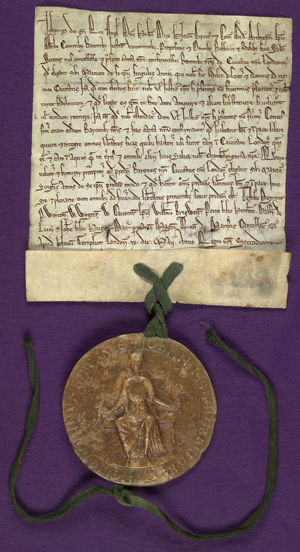
It was on 9th May, 2015, 800 years ago this year that, in the lead-up to the creation of the Magna Carta in June, King John issued a charter granting the City of London the right to freely elect its own mayor.

The charter, which was issued at the Temple – King John’s power base to the west of the City (for more on it, see our earlier post here), was a fairly blatant bid to keep the support of the city.

King-John-CharterKnown simply as the King John Charter, it stated that the barons of the city, “may choose to themselves every year a mayor, who to us may be faithful, discreet, and fit for government of the city, so as, when he shall be chosen, to be presented unto us, or our justice if we shall not be present”.

In return, the mayor was required to be presented to the monarch to take an oath of loyalty each year – a practice commemorated in the Lord Mayor’s Show each November.

The charter, which has a particularly good impression of the king’s seal, is currently on display in the City of London’s newly opened Heritage Gallery, located at the Guildhall Art Gallery.

The event was one of a series leading up to the signing of the Magna Carta in June. Only 10 days after King John issued the charter to the City of London, rebel barons, who have previously taken Bedford, marched on the city to demand their rights and arrived their before the Earl of Salisbury (whom John had ordered to occupy the city).

Aldgate was apparently opened to them by some supporters within the city and the forces of the rebel barons went on to attack the home of royalists as well as those of Jews along with a Jewish burial ground in Barbican – the latter because Jewish moneylenders had lent money to the king.

They later besieged the Tower of London and while they couldn’t take the fortress, their seizure of the city was enough to help force the king to open negotiations late in the month, asking the Archbishop of Canterbury, Stephen Langdon, on 27th May  to arrange truce (which, while it was apparently not observed terribly well, did help pave the path to the Magna Carta).

The exhibition at the Heritage Gallery runs until 4th June. For more information, see www.cityoflondon.gov.uk/things-to-do/visiting-the-city/attractions-museums-and-galleries/guildhall-art-gallery-and-roman-amphitheatre/Pages/Heritage-Gallery.aspx.

PICTURE: City of London: London Metropolitan Archives

10 sites from Shakespearean London – 3. Shakespeare’s houses…

The playwright is believed to have lived in several different locations in London and is also known to have invested in a property. Here we take a look at a couple of different locations associated with him…

St-Helen'sBishopsgate: Shakespeare is believed to have lived here in the 1590s – in 1596 tax records show he was living in the parish of St Helen’s. The twin-nave church of St Helen’s Bishopsgate (pictured), which would have been his parish church, still stands. In fact, there is a window to Shakespeare’s memory dating from the late 19th century.

•  Bankside: In the late 1590s, Shakespeare apparently moved across the Thames to Bankside where he lived at a property on lands in the Liberty of the Clink which belonged to the Bishop of Winchester. The exact address remains unknown.

Silver Street, Cripplegate: It’s known that in 1604, Shakespeare moved from Bankside back to the City – it’s been speculated outbreaks of plaque may have led him to do so. Back in the City, he rented lodgings at the house of Christopher and Mary Mountjoy in on the corner of Monkwell and Silver Streets in Cripplegate, not far from St Paul’s Cathedral. Mountjoy was a refugee, a French Huguenot, and a tire-maker (manufacturer of ladies’ ornamental headresses). The house, which apparently stood opposite the churchyard of the now removed St Olave Silver Street, was consumed in the Great Fire of London in 1666 (the church was also lost in the Great Fire). The former church site is now located on the south side of London Wall. Silver Street itself was wiped out in the Blitz and is now lost under the Barbican redevelopment but the house lives on in a representation found on a late 16th century map created by Ralph Agas.

Ireland Yard, Blackfriars: In 1613, Shakespeare purchased the former gatehouse of the Blackfriars Priory located here, close to the where the Blackfriars Theatre was located. It is believed the property was purchased as an investment – there’s no evidence he ever lived there but it was passed to his daughter Susanna after his death. Incidentally, there is some speculation that Shakespeare may have lived in Blackfriars when he first came to London – a man believed to have been a boyhood friend from Stratford, Richard Field, who was known to have lived there.

For a more in-depth look at Shakespeare’s time in Silver Street, see Charles Nicholl’s The Lodger: Shakespeare on Silver Street.

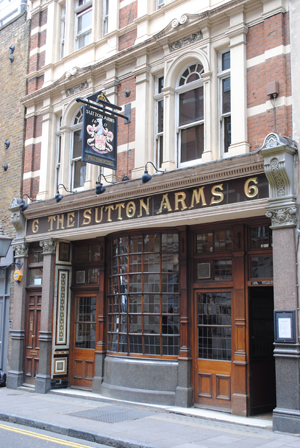
London Pub Signs – The Sutton Arms…

This pub, located just off Charterhouse Square near Barbican, has a distinctive barrel-shaped front window and a name that evokes a sense of the rich history of the area in which it stands.

The-Sutton-ArmsThe name of this pub at 6 Carthusian Street comes directly from Sir Thomas Sutton, a late 16th century/early 17th century businessman and moneylender who owned nearby land on which a Carthusian monastery once stood and who founded the Charterhouse School based at the site.

The monastery, which had been founded in 1371, was dissolved by King Henry VIII in the Dissolution of the Monasteries which took place in the first half of the 16th century – it was a nasty business with some of the monks executed at Tyburn.

The land was subsequently granted to Sir Edward North who built a mansion on the site which was subsequently sold to the fourth Duke of Norfolk. It was his son, Thomas Howard – the first Earl of Suffolk, who, in 1611, sold the property to Sir Thomas (and subsequently built the magnificent Audley End House in Essex with the funds).

Said to have been the “wealthiest commoner in England”, Sutton, who died that same year, used his wealth to endow a charitable foundation to both educate boys and care for elderly men.

The Charterhouse school later moved out to Surrey while elderly “brothers” are still housed at the original location today (for more on the Charterhouse, see our previous posts on King James I’s London and on 10 Historic London Squares).

Some of the glass in the  pub’s great barrel-shaped window was apparently replaced after a bomb knocked some of the original out during the Blitz.

Incidentally, there’s another pub of the same name only a few streets away in Great Sutton Street.

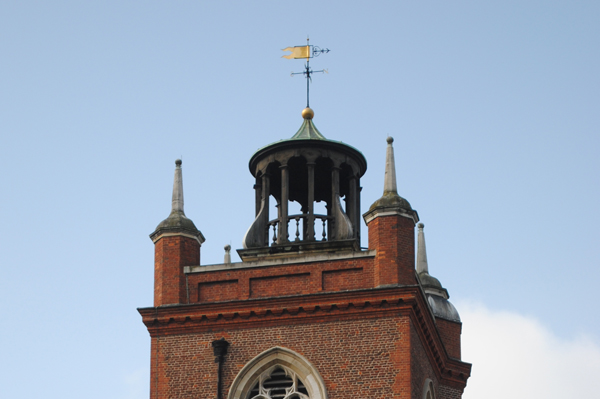
Where is it?…#64…And the answer is…

Where-is-it--#64

Can you identify where in London this picture was taken? If you think you can, leave a comment below. We’ll reveal the answer early next week. Good luck!

Well done to Jamie, this is indeed the tower of St Giles Cripplegate, located  just off Fore Street in the Barbican Estate. The church – the oldest building in the area – dates from about 1090 and was rebuilt in 1545 after it was destroyed by a fire. The new building survived the Great Fire of 1666 but didn’t fare so well in a fire of 1897 or in the Blitz when all but the outer shell was destroyed. Oliver Cromwell was married here in 1620 and the poet John Milton was buried here in 1674 (he had written much of Paradise Lost locally) (interestingly, his body was apparently exhumed about 100 years later, workman took some souvenirs including teeth and a rib). Others buried here include explorer Sir Martin Frobisher, John Foxe, author of The Book of Martyrs, and Bible translator Lancelot Andrews. For more on the church, see www.stgilescripplegate.com.