Treasures of London – Duke of Wellington’s cloak…

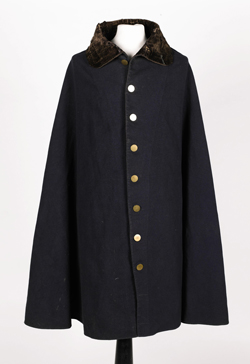
Duke-of-Wellingtons-CloakRecently acquired by the National Army Museum (fittingly given this is the 200th anniversary of the Battle of Waterloo), this cloak was worn by the Duke of Wellington during the Waterloo Campaign.

Spattered with mud, the cloak is made from blue wool and trimmed with a navy collar and facings. Purchased by the museum at auction for £38,000, it will now form part of a collection of other Waterloo and Napoleonic items in the museum’s permanent collection.

The cloak can apparently be traced back to Lady Caroline Lamb, who had an affair with Wellington in the summer of 1815 and is believed to have been given the cloak as a memento. The first documented owner was Grosvenor Charles Bedford who was given the cloak in 1823 by the surgeon and anatomist Anthony Carlisle.

On presenting Bedford with the cloak, Carlisle had commented that it had been given to him by Lady Caroline who had received it from the duke. The cloak has been passed down within Bedford’s family ever since.

The National Army Museum in Chelsea already possesses a portrait of Wellington by Edward Stroehling (1768-1826) which depicts him wearing a similar cloak.

The cloak will go on display when the museum reopens next year. For more on the museum in the meantime, see www.nam.ac.uk.

PICTURE: Courtesy National Army Museum.

This Week in London – Cosmonauts at the Science Museum; space on show at the Royal Observatory; Simon Schama’s portrait picks; and, celebrating iconic road signs…

Vostock- The greatest collection of Soviet spacecraft and artefacts ever exhibited outside of Russia can be seen at the Science Museum from tomorrow. Cosmonauts: Birth of the Space Age tells the story of Russia’s involvement in the ‘space age’ from the late 19th century through to life onboard Mir and the International Space Station. Exhibits cover the 1957 launch of Sputnik – the world’s first artificial satellite, the sending of the first human into space – Yuri Gagarin, in 1961, as well as the first women – Valentina Tereshkova – in 1963. Star objects include rocket pioneer Konstantin Tsiolkovsky’s 1933 drawings depicting spaceflight, an original model of Sputnik from 1957, and Vostok-6, the capsule that carried Tereshkova, as well as some of the many technologies developed for use on board the Salyut and Mir space stations and the ISS. The exhibition, a collaboration between the Science Museum, the State Museum Exhibition Centre ROSIZO and the Federal Space Agency Roscosmos, runs at the South Kensington museum until 13th March. Admission charge applies. For more, see www.sciencemuseum.ac.uk. PICTURE: Visitors study the Vostok 6 descent module, which safely returned Valentina Tereshkova from space. © Science Museum

Still talking of space and an exhibition of images of space goes on show at the Royal Observatory Greenwich from tomorrow. The Insight Astronomy Photographer of the Year 2015 awards, now in its seventh year, received more than 2,700 entries from amateurs and professionals who live in more than 60 countries across the globe. The winners, which will be announced today at a special ceremony at the Royal Observatory, were selected from short-listed pictures which include a meteor flying through space above Mt Ranier in the US, the night sky mirrored on the world’s largest salt flat of Salar de Uyuni in Bolivia, and images capturing a range of phenomena from across the universe – from the hyper giant star, Eta Carinae, to the supernova remnant known as the Jellyfish Nebula. The exhibition is free. For more, see www.rmg.co.uk.

Historian Simon Schama has joined with the National Portrait Gallery in creating five new temporary displays featuring portraits arranged by theme rather than year. Simon Schama’s The Face of Britain, which coincides with the launch of a five part TV series and book, will feature a range of portraits taken from the gallery’s collection around the themes of power, love, fame, people and self-portraits. It juxtaposes portraits of the likes of former PM Sir Winston Churchill and Margaret Thatcher with Queen Elizabeth I; and those of explorer Francis Drake and Thomas Carlyle alongside Amy Winehouse. The displays are integrated into a free trail with eight to 12 works in each of the five rooms. A full programme of events accompanies the displays which will be in the gallery, just off Trafalgar Square, until 4th January. Admission is free. For more, see www.npg.org.uk.

The London Design Festival kicks off on Saturday and as part of the event, the Design Museum is marking the 50th anniversary of Calvert and Kinneir British road signage with a free exhibition. MADE NORTH has commissioned a number of leading designers and artists to create their own interpretations of Margaret Calvert and Jock Kinneir’s circle, triangle and square signs including Sir Peter Blake, Sir Terence Conran, Sir Keith Grange, Betty Jackson, Julian Opie and Richard Rogers. A display of more than 40 of the new signs – along with a number of Calvert and Kinneir originals and a one-off version of the Road Works sign specially created by Calvert – are on show at a free installation in the Design Museum’s Tank and Riverside Hall until 25th October. More of the newly designed anniversary signs can be seen at locations across the city and at www.britishdesignproject.co.uk. For more on the London Design Museum, see www.designmuseum.org, and for the full programme of the London Design Festival, which runs until 27th September, check out www.londondesignfestival.com.

Send all items for inclusion to exploringlondon@gmail.com.
10 Questions – Sheila Dunsmore, a State Apartment warder at Hampton Court Palace…

HamptonCourtPalace500thBirthday-3

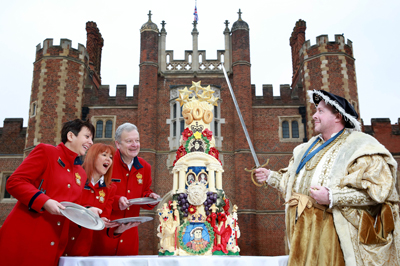
This year marks the 500th anniversary of the building of Hampton Court Palace in Greater London’s south-west. We speak to Sheila Dunsmore, a State Apartment warder at Hampton Court Palace (pictured above in centre on the left)…

1. It’s Hampton Court Palace’s 500th anniversary – who first built the palace and why? “In 1514, Thomas Wolsey came to survey the land at Hampton Court. He wanted to find a suitable place to build a sumptuous country retreat away from the dirt of London, but close enough to the capital to travel back for meetings. It was also to be a place to entertain the important company his position as Archbishop of York provided, of which none were more important than young King Henry VIII.”

2. Where are the oldest parts of the palace today? “The oldest part of the palace is the Tudor kitchens, more specifically the area were the great fire is. This was once part of Sir Giles Daubeney’s original kitchen, and dates back to the manor already on the site when it was acquired by Wolsey. Sir Giles Daubeney was Lord Chamberlain to Henry VII, and acquired an 80 year lease on the property from the Knights Hospitallers of St John of Jerusalem, the then owners. The bell in the tower above the astronomical clock is also said to have come from the Knights Hospitallers’ original manor house.”

3. Hampton Court’s 500 years of history spans a number of definable eras – from Tudor to the 21st century. Which is your favourite and why? “My favourite era is the 1660s when Charles II came back to England to take up his rightful place as king. Although visitors do not really associate Charles with the palace, he did spend time here, most famously his honeymoon!”

4. With this in mind what is your favourite part of the palace? “I love the west front façade – it just looks so imposing and mysterious. Whether you are driving or walking past it it’s guaranteed to draw you in under its spell!”

5. Do you have a favourite anecdote from the palace’s history? “I love the story of Horace Beauchamp Seymour, a dashing military hero who had fought at the Battle of Waterloo. He came to live at the palace in 1827 and, as a handsome eligible widower, he caused quite a sensation amongst the ladies, especially when he joined the Sunday services at the Chapel Royal. It was not long before a series of fainting episodes began, with the strategically placed young lady fainting into the arms of the dashing Horace, who then proceeded to carry the lady out and stay with her until she regained her composure. After a third successive Sunday of fainting’s, the epidemic was brought to a swift halt by the aunt of Mr Seymour, herself also a palace resident. The feisty old lady pinned a sign to the chapel door warning any lady feeling faint that forthcoming Sunday that Bransome the dustbin man would be carrying her out. Needless to say the fainting ceased!”

6. A complex of buildings dating back as far as 500 years obviously requires considerable upkeep. What are the greatest challenges with regard to maintaining the palace? “I think the biggest challenge would have to be generating the money to keep restoring and conserving this historic palace. To do this we have to keep making sure that people want to visit, from international tour groups to local families who might visit again and again. To do this teams right across the palace work to create exciting exhibitions, immersive events and guided tours to ensure we’re offering people a memorable experience.”

7. Are there any areas of the palace which remain unseen by the public? And any plans to open further areas up? “The palace contains over 1,000 rooms, and visitors get to discover about a quarter of these during their visit. Some years ago we held a Servants, Soldiers and Suffragettes exhibition in a suite of rooms on the top floor of Fountain Court (previously unseen). It was incredibly popular so I’d imagine that in the future we’d look for other such opportunities to share other areas of the palace with our visitors. For anyone that can’t wait that long, on one night of the year (Halloween no less), our adults-only ghost tour offers the chance to peek behind the scenes and explore some areas of the palace off the beaten track!”

8. Are there any ‘secrets’ about the palace you can reveal to us? “A palace as old and as large as Hampton Court holds its fair share of secrets…When the fire took hold in 1986 it was devastating, but in a strange twist of fate some good came from it as well. As restoration of the damaged interiors took place little secrets were revealed to us; behind wood panelling in King William’s damaged rooms hand prints were found in the plaster from the palace’s builders, and sketches were found from the architects with designs for the rooms, all worked directly onto the bare walls. Most exciting of all, however, was the object found downstairs. During work to return King William’s private dining room (which had lost its original look over the years and been used as a function room for the grace and favour residents) to its former glory, a gun was found behind some wooden panelling. The gun dated from the late 1800s, and had a regimental dinner menu was wrapped around it. This is so intriguing – what was the story behind this gun? Who did it belong to? Why did they hide the weapon?”

9. If someone has just one day to visit the palace, what’s your ideal itinerary? “This is a tricky one, and depends very much on the individual…and the weather! I would say on a sunny day start by enjoying a historic welcome with our costumed interpreters, which really helps to set the scene. If it’s a bit chilly pick up a cloak to wear – you can choose between dressing as a Tudor or Georgian courtier. Heading inside, I’d start in the Tudor State Apartments to discover the rich opulence of Henry VIII’s Hampton Court, then visit the recently opened Cumberland Art Gallery, which contains masterpieces by Rembrandt, Canaletto and Van Dyck. Next I’d take in the baroque splendour of the Queen’s State Apartments, then explore the maze, East Front Garden and Privy Garden (weather permitting!). After a spot of lunch I’d suggest visiting the Mantegna Gallery, then the Young Henry exhibition which explores the life of the young Henry VIII, before finishing the day in King William III’s apartments.”

10. Finally, Historic Royal Palaces has already commemorated the 500th anniversary in numerous ways – from a spectacular fireworks display to a jousting tournament. Are there any more events coming up? “The beginning of September saw our costumed interpreters back with their own inimitable brand of entertainment, while at the end of September we’re hosting a sleepover inside the palace! As the evenings draw in, our popular ghost tours return for the winter season. Even further ahead we’ve got a series of carol evenings and even an ice rink for our visitors to enjoy!”

WHERE: Hampton Court Palace, East Molesey, Surrey (nearest station is Hampton Court from Waterloo); WHEN: 10am to 6pm until 24th October after which it’s open to 4.30pm); COST: Adult £19.30, Concession £16, Child under 16 £9.70 (under fives free), family tickets, garden only tickets and online booking discounts available; WEBSITE:www.hrp.org.uk/HamptonCourtPalace/.

Lost London – The Great Conduit…

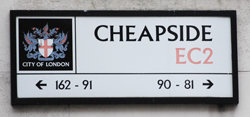
CheapsideLocated at the junction of Cheapside and Poultry, the Great Conduit, also known as the Cheapside Standard, was a famous medieval public fountain.

The Great Conduit (the word conduit refers to column fountains fitted with ‘cocks’ or taps for dispensing the water) gave access to water piped using gravity four kilometres from the Tyburn into the City largely via lead pipes.

It was constructed by the City Corporation from the mid-13th century after King Henry III approved the project in 1237. It was rectangular-shaped timber building with an elevated lead tank inside from which the water was drawn.

It took the name ‘Great’ after further conduits were built further west in Cheapside in the 1390s. There were at least 15 conduits or standards scattered about the City by the time of the Great Fire in 1666.

It was rebuilt several times over its life, notably in the reign of King Henry VI, but after being severely damaged in the fire was deemed irreparable and orders were given for it to be taken down in 1669 (many houses by then had alternate water supplies, notably from the New River project). From the 1360s, management of the conduit was the responsibility of four wardens, maintaining the pipes and charging professional water carriers and tradesmen who required water by allowing free

The Cheapside Conduit was a notable landmark – some executions and other punishments were carried out here, speeches were made from here and the conduit building itself was used as a place for posting information. And to celebrate special occasions it was made to flow with wine – this took place in 1432 when King Henry VI marched through London after being crowned King of France, at the coronation of Queen Margaret in 1445 and at the wedding procession of King Henry VIII’s queen Anne Boleyn in 1533.

The substructure of the Great Conduit was rediscovered at the end of the 19th century and again in the 1990s. A plaque marking the location of the Great Conduit at the eastern end of Cheapside was unveiled in late 1994 by Thames Water and the Worshipful Company of Water Conservators. There’s also a memorial set into the pavement over the substructure.

This Week in London – Palaces mark Queen Elizabeth II’s long reign; Richmond Park’s open day; celebrating a famous London redhead; and, London shops features in new work…

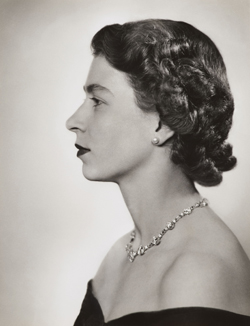
Dorothy-Wilding-1952A special photographic display has opened at Buckingham Palace this week to commemorate the fact that Queen Elizabeth II has this week become Britain’s longest-reigning monarch. The outdoor photographic display Long To Reign Over Us features a selection of photographs spanning the period from 1952 to today including informal family moments, official portraits and visits of the Queen to places across the UK and Commonwealth. Highlights include a black and white portrait by Dorothy Wilding from the start of the Queen’s reign in 1952, Cecil Beaton’s official Coronation Day portrait from 1953 and a 2006 image of the Queen with her Highland Ponies. The displays, which are also being shown as Windsor Castle and the Palace of Holyroodhouse in Edinburgh, can be seen by visitors to Buckingham Palace’s summer opening until 27th September. Admission charge applies. For more, see www.royalcollection.org.uk. PICTURE: Dorothy Wilding. Royal Collection Trust/© William Hustler and Georgina Hustler/National Portrait Gallery, London 

Still celebrating the Queen becoming Britain’s longest reigning monarch, and a new film installation celebrating the reigns of Queen Elizabeth II and Queen Victoria – whose reign she has now surpassed – has opened at Kensington Palace. The film installation explores key moments in the reigns of both – coronations, weddings, births as well as other key moments in their public lives –  and also examines the impact of new technologies in the reigns of both queens. For more, see www.hrp.org.uk/kensingtonpalace.

Richmond Park in London’s south-west is holding its annual open day this Sunday with a range of activities for kids including pony rides, the opportunity to see inside a bug hotel with a fibro-optic camera and the chance make pills in a restored Victorian pharmacy. The Holly Lodge Centre, normally reserved for schools and learning groups, will open its doors to the general public will be at the centre of the day, offering a range of activities for children while there will also be a guided walk led by the Friends of Richmond Park, vintage car displays, and a World War I re-enactment. The day runs from 11am to 4pm. Entrance to the Royal Park is free but parking is £5. For more, see www.royalparks.org.uk.

This Saturday is Redhead Day UK 2015 and to mark the occasion, the Guildhall Art Gallery in the City of London is inviting visitors to celebrate by taking a selfie with Dante Gabriel Rossetti’s iconic redhead La Ghirlandata. Painted by Rossetti in 1873, the artwork, said to be one of the finest pre-Raphaelite works in the world, is on permanent display at the gallery. The painting features on the cover of Jacky Colliss Harvey’s new book Red: A Natural History of the Redhead, three copies of which will be given away in a special draw at the gallery. Entry is free. For more, see www.cityoflondon.gov.uk/things-to-do/visit-the-city/attractions/guildhall-galleries/Pages/guildhall-art-gallery.aspx.

A six metre high ceramic installation created for the V&A by artist Barnaby Barford has gone on display in the museum’s Medieval & Renaissance Galleries in South Kensington. The Tower of Babel is composed of 3,000 small bone china buildings, each of which depicts a real London shop. Bamford photographed more than 6,000 shopfronts in the process of making the work, cycling more than 1,000 miles as he visited every postcode in London. The work can be seen until 1st November. Admission is free. See www.vam.ac.uk.

Send all items for inclusion to exploringlondon@gmail.com.
Special – Queen Elizabeth II becomes longest reigning monarch…

Queen-Elizabeth-II
We interrupt our regular programming this week to mark the day in which Queen Elizabeth II becomes the UK’s longest reigning monarch, passing the record reign of her great-great-grandmother, Queen Victoria.

The milestone of 63 years, seven months and two days (the length of Queen Victoria’s reign) will reportedly be passed at about 5.30pm today (the exact time is unknown as the Queen’s father, King George VI, passed away in his sleep).

While the Queen, now 89 (pictured here in 2010), will pass the day in Scotland attending official duties, in London Prime Minister David Cameron will lead tributes in the House of Commons.

As we go to press a flotilla of vessels – including Havengore and Gloriana – will process along the River Thames between Tower Bridge, open as a sign of respect, and the Houses of Parliament. As they passed HMS Belfast, the ship will fire a four gun salute.

Today is the 23,226th day of the Queen’s reign during which she has met numerous major historical figures – from Charles de Gaulle to Nelson Mandela – and seen 12 British Prime Ministers come and go.

This Week in London – The Waterloo Cartoon on show; see inside a former Huguenot’s home; and, Royal Parks’ harvest festivals…

A monumental Victorian-era drawing of the Battle of Waterloo has gone on display in London for the first time since 1972. The Waterloo Cartoon, more formally known as The Meeting of Wellington and Blucher after the Battle of Waterloo, measures more than 13 metres long and three metres high. A preparatory drawing for a wall painting which still exists in the House of Lords’ Royal Gallery, it took artist Daniel Maclise more than a year to complete in 1858-59 and was based on eye-witness accounts (the artist even recruited Queen Victoria and Prince Albert to use their German contacts to gather information from Prussian officers present on the day). Long considered a masterpiece, it was bought by the Royal Academy in 1870 – the year of Maclise’s death – and was on show at Burlington House until the 1920s. It has been in storage for much of last century and, newly restored following a grant from Arts Council England, has now gone on display to mark the 200th anniversary of the Battle of Waterloo. The newly conserved drawing is the focus of a new exhibition – Daniel Maclise: The Waterloo Cartoon, which opened at the Royal Academy in Piccadilly yesterday (between May and August, it was on show as part of a Waterloo exhibition at the Royal Armouries in Leeds). Runs until 3rd January. Admission charge applies. For more, see www.royalacademy.org.uk.

There’s a rare chance to see inside a former Huguenot merchant’s house dating from 1719 in Spitalfields this weekend. The property at 19 Princelet Street was the home of the Ogier family, who had come to London escaping persecution in France and worked in the silk weaving trade. It was later subdivided into lodgings and workshops with later occupants following a range of trades and professionals while a synagogue was opened in the garden in 1869. The site – which the Spitalfields Centre charity hopes to establish as a museum of immigration – is not generally open to the public but will be open this Saturday and Sunday – from 2pm to 6pm. Entry is free (but donations would be welcome) and there may be queues so its suggested you arrive early. For more, see www.19princeletstreet.org.uk.

Watch a bee keeping demonstrations, help dig up some potatoes and introduce the children to some farm animals. The Kensington Gardens’ Harvest Festival will be held this Sunday, between 11am and 4pm, and will also include a range of children’ activities, experts from the Royal Parks Guild on hand to answer your questions about food growing and complimentary hot and cold drinks available throughout the day while stocks last. It’s the first of three harvest festivals to be held in Royal Parks this month with Greenwich Park set to host its inaugural harvest festival on 13th September (11am to 4pm) and The Regent’s Park Allotment Garden to host one on 19th September (11am to 5pm). For more, see www.royalparks.org.uk.

Send all items for inclusion to exploringlondon@gmail.com.
10 small, ‘secret’ and historic gardens in central London…7. St Swithin’s Church Garden…

St-Swithins2Back into the City of London this week and it’s another garden located on the site of a former church.

Situated just off Cannon Street, this much overlooked tiny raised garden was created on the site of the former Church of St Swithin. The church is believed to have existed here as early as the 11th century and was replaced, thanks largely to the generosity of Lord Mayor Sir John Hind, with a larger building in the early part of the 15th century – it featured one of the first towers built specifically for the task of hanging bells inside.

St-SwithinsThe church was among those destroyed in the Great Fire of London in 1666 but, now united with the parish of St Mary Bothaw, was rebuilt to the designs of Sir Christopher Wren shortly after in 1677-88.

Later known as St Swithin, London Stone thanks to the mysterious London Stone being built into the south wall of the church in the late 18th century (for more on the stone and its current location, see our earlier post here), the church survived until World War II when it was damaged beyond repair during bombing and was later destroyed.

Relandscaped in 2010, the garden features a rather dramatic memorial (pictured) to the suffering of women and children in war in general and medieval figure, Catrin Glyndwr in particular. Unveiled in 2001, it was designed by Nic Stradlyn-John and sculpted by Richard Renshaw.

The daughter of the Welsh Prince Owain Glyndwr, she was captured in 1409 and brought with her children and mother to the Tower of London. Catrin and two of her children died in late 1413 and were buried in the former church.

WHERE: St Swithin’s Church Garden, Salters Hall Court off Cannon Street (nearest Tube station is Cannon Street); WHEN: daily; COST: Free; WEBSITE: www.bost.org.uk/open-places/red-cross-garden/.

LondonLife – See the Thames…in Blackfriars station…

Photo-exhibition-at-Blackfriars-station

This is one of a series of works by renowned photographer Henry Reichhold which features in the exhibition Thames – Heart of London, currently on show at Blackfriars Thameslink railway station. Thameslink and JCDecaux have provided 49 platform advertising sites for the display, part of the Totally Thames celebrations taking place throughout September. The photographs, which measure 2.5 metres long, are an attempt to capture the character of the Thames as it winds its way through the city and were taken from a series of notable vantage points including the Shard, City Hall, OXO Tower, One Canada Square, Southbank Tower and the Houses of Parliament. As well as the river itself, they also capture some of the many events which have taken place upon it – from the Diamond Jubilee Pageant to New Year’s Day celebrations. Each image has taken between one and three weeks to create from up to 100 separate photographs – selected out of more than 800 taken on a single day – which have then been put together in a stunning panorama. New York-born Reichhold says the process of “extracting” the final image is “never the same”. “The camera is very stubborn about creating a ‘mechanical’ view and it is the reinterpretation of these files to in some way reflect what the human eye sees that I find so troublesome and fascinating.” The exhibition is at Blackfriars Station, 179 Queen Victoria Street, London, and runs until 30th September.  Entry is free to passengers with a valid GTR train ticket and to holders of a 10p platform ticket.

This Week in London – Tall ships at Greenwich; immersive art at Tate Britain; and, ‘Nature’s Bounty’ at Kew…

It’s all about big masted ships at Greenwich this Bank Holiday weekend as up to 15 ships drop anchor at the Royal Greenwich Tall Ships Festival. Two tall ships, the Dar Mlodziezy and Santa Maria Manuela, will be moored on Tall Ships Island in the river at Maritime Greenwich (accessed via MBNA Thames Clippers) while an additional 13 ships will be taking people on cruises from their base at Royal Arsenal Woolwich (tickets can be booked via Sail Royal Greenwich). On Saturday, a free family festival will be held in Woolwich Town Centre and at Royal Arsenal Riverside with music, roving entertainers, food and other activities including a fireworks display on the river at 10pm (fireworks can also be seen on Thursday, Friday and Sunday nights on the river at Maritime Greenwich at around 9.15pm). For more information – including how and where to book tickets, see www.royalgreenwich.gov.uk/tallships2015.

An immersive art project allowing visitors to engage with paintings in a multi sensory experience opened at Tate Britain on Milbank yesterday. Tate Sensorium has won this year’s annual IK Prize, presented by the Tate and supported by the Porter Foundation, awarded for a project which uses innovative technology to enable the public to explore the gallery’s collection in new ways. The display features four works by celebrated figures in 20th century painting: Francis Bacon’s Figure in a Landscape (1945), David Bomberg’s In the Hold (c 1913-1914), Richard Hamilton’s Interior II (1964) and John Latham’s Full Stop (1961). As part of the experience, which has been produced by creative studio Flying Object in conjunction with a cross-disciplinary team, visitors are offered the chance to wear biometric measurement wristbands to record the emotional impact of the experience. Admission to exhibition in gallery 34 is free but tickets are limited. Runs until 20th September. For more, see www.tate.org.uk/sensorium.

A series of detailed paintings of fruit, vegetables and edible plants from all over the world goes on show at the Shirley Sherwood Gallery of Botanical Art at Kew Gardens on Saturday. Nature’s Bounty features works from the Shirley Sherwood and Kew collections including works from the 19th century text, Fleurs, Fruits et Feuillages Chosis de la Flore et de la Pomona de L’ile de Java drawn by botanical artist Berthe Hoola Van Nooten as well as works from the Shirley Sherwood and Kew collections. The exhibition runs until 31st January. Admission charge applies. For more, see www.kew.org.

Send all items for inclusion to exploringlondon@gmail.com.
Famous Londoners – Judge Jeffreys…

The-Town-of-Ramsgate2

Best known as the “Hanging Judge” thanks to his role in the so-called Bloody Assizes of 1685, George Jeffreys climbed the heights of England’s legal profession before his ignominious downfall.

Born on 15th May, 1645, at the family home of Acton Hall in Wrexham, North Wales, Jeffreys was the sixth son in a prominent local family. In his early 20s, having been educated in Shrewsbury, Cambridge and London, he embarked on a legal career in the latter location and was admitted to the bar in 1668.

Town-of-RamsgateIn 1671, he was made a Common Serjeant of London, and despite having his eye on the  more senior role of Recorder of London, was passed over. But his star had certainly risen and, despite his Protestant faith, he was a few years later appointed to the position of solicitor general to James, brother of King Charles II and the Catholic Duke of York (later King James II), in 1677.

The same year he was knighted and became Recorder of London, a position he had long sought, the following year. Following revelations of the so-called the Popish Plot in 1678 – said to have been a Catholic plot aimed the overthrow of the government, Jeffreys – who was fast gaining a reputation for rudeness and the bullying of defendants – served as a prosecutor or judge in many of the trials and those implicated by what turned out to be the fabricated evidence of Titus Oates (Jeffreys later secured the conviction of Oates for perjury resulting in his flogging and imprisonment).

Having successfully fought against the Exclusion Bill aimed at preventing James from inheriting the throne, in 1681 King Charles II created him a baronet. In 1683 he was made Lord Chief Justice and a member of the Privy Council. Among cases he presided over was that of Algernon Sidney, implicated in the Rye House Plot to assassinate the king and his brother (he had earlier led the prosecution against Lord William Russell over the same plot). Both were executed.

It was following the accession of King James II in February, 1685, that Jeffreys earned the evil reputation that was to ensure his infamy. Following the failed attempt by James Scott, 1st Duke of Monmouth and illegitimate son of the late King Charles II, to overthrow King James II, Jeffreys was sent to conduct the trials of the captured rebels in West Country towns including Taunton, Wells and Dorchester – the ‘Bloody Assizes’.

Of the almost 1,400 people found guilty of treason in the trials, it’s estimated that between 150 and 200 people were executed and hundreds more sent into slavery in the colonies. Jeffreys’, meanwhile, was busy profiting financially by extorting money from the accused.

By now known for his corruption and brutality, that same year he was elevated to the peerage as Baron Jeffreys of Wem and named Lord Chancellor as well as president of the ecclesiastical commission charged with implementing James’ unpopular pro-Catholic religious policies.

His fall was to come only a couple of years later during Glorious Revolution which saw King James II overthrown by his niece, Mary, and her husband William of Orange (who become the joint monarchs Queen Mary II and King William III).

Offered the throne by a coalition of influential figures who feared the creation of a Catholic dynasty following the birth of King James II’s son, James Francis Edward Stuart, William and Mary arrived in England with a large invasion force. King James II’s rule collapsed and he eventually fled the country.

Remaining in London after the king had fled, Lord Jeffreys only attempted to flee as William’s forced approached the city. He made it as far as Wapping where, despite being disguised as a sailor, he was recognised in a pub, now The Town of Ramsgate (pictured above).

Placed in custody in the Tower of London, he died there of kidney problems on 18th April, 1689, and was buried in the Chapel Royal of Saint Peter ad Vincula (before, in 1692, his body was moved to the Church of St Mary Aldermanbury). All traces of his tomb were destroyed when the church was bombed during the Blitz (for more on the church, see our earlier post here).

Lost London – Chapel of St Thomas á Becket…

Known informally as the Chapel on the Bridge, the Chapel of St Thomas á Becket was located in the middle of London Bridge and, as the name suggests, was dedicated to the ill-fated archbishop of Canterbury.

London-Bridge-chapelFounded in 1205, the stone chapel was among the first buildings constructed on the bridge by priest-architect Peter de Colechurch in 1176, who was actually buried beneath the chapel (for more on him and the construction of the bridge, see our earlier posts here and here).

Facing downstream and located on a wider than normal pier – the 11th pier from the Southwark end of the bridge and the ninth from the City end – the original chapel was built in the early English Gothic style and consisted of an upper chapel with a groined roof and columns and vaulted lower chapel or undercroft. Standing some 40 foot high, it would have towered over the shops and residences on the bridge. There is some suggestion it was damaged by fire in 1212 and may have had to have been extensively repaired.

It’s name ensured its popularity – Becket was martyred in Canterbury Cathedral in 1170, apparently on the orders of King Henry II, and, canonised just three years later, had quickly become the focus of a popular religious cult in his home town of London. The chapel also became renowned as a wayside stop for pilgrims to receive the saint’s blessing before making their way to Canterbury where his shrine was located.

But it wasn’t just pilgrims who had an attachment – the chapel was apparently popular among watermen who, when the tide allowed them, were known to tie up their craft on the chapel pier and ascend to the undercroft through a lower entrance.

The chapel – which apparently had two priests at the beginning as well as a number of clerks although the number of priests is known to have climbed as high as five in the 14th century – was nominally under the control of the priest of the church of St Magnus-the-Martyr, located at the City end of the bridge. The reality seems to have been however, that the priests and other “Brothers of the Bridge” enjoyed considerable freedom in their roles, including, after 1483, obtaining the right keep alms taken during services provided he made a generous contribution to the parish finances. Like most who worked on the bridge, the priests and “clerks of the chapel” would likely have lived on it.

Relics housed in the chapel apparently included fragments of the True Cross and a number of chantries were built inside the chapel in the 14th century – it’s believed this may have led to some overcrowding and been one of the reasons for a major rebuilding of the chapel – this time in the Perpendicular Gothic style – between 1384 and 1397.

The chapel survived until the Dissolution when, in 1548, the priest was ordered to close it up and it was desecrated and later converted into a dwelling (later still, parts of it were used as a warehouse). It was demolished over succeeding years – by the late 18th century just the lower chapel remained –  with the final remnants removed in the early 1800s.

Some bones in a small casket were disinterred in from the chapel undercroft during this process in the early 19th century. Although these were rumoured to be those of de Colechurch, analysis found them to be part of a human arm bone, a cow bone and goose bones. (Other accounts suggest most of Peter’s bones were tossed into the Thames and that a small number were even sold at auction).

There’s a stained glass window commemorating the bridge in St Magnus-the-Martyr Church today (pictured above).

This Week in London – Party like a Georgian; a playground with a history; and, a Dickens whodunnit…

Kensington-Palace• Join the Georgian Queen Caroline for a garden party in the grounds of Kensington Palace this weekend. The Georgian Court will be taking to the palace gardens for a summer celebration featuring music, military drills and theatre as they bring the era to life. Visitors are encouraged to immerse themselves in the experience as a courtier with the gardens decked out in a range of tents where they can try out costumes and powdered wigs as well as learn court etiquette, swordplay and dancing while the ice-house will feature Georgian ice-cream (and it’s rather odd flavours such as parmesan). Runs from tomorrow until Sunday. Admission charges apply (under 16s go free with a maximum of six children per paying adult). For more, see www.hrp.org.uk/KensingtonPalace/. PICTURE: ©Historic Royal Palaces

First created in 1923, a playground in Victoria Tower Gardens – newly named the Horseferry Playground – has been reopened after improvement works. The works, carried out under the management of Royal Parks, have seen the reintroduction of a sandpit as well as the installation of new swings and slide, dance chimes and a stare play installation to represent the River Thames. The playground, located close to the Houses of Parliament in Westminster, also features a series of timber horse sculptures, new seating and a refreshment kiosk with metal railings designed by artist Chris Campbell depicting events such as the Great Fire of London and Lord Nelson’s funeral barge and views of the River Thames. The project has also seen the Spicer Memorial, commemorating role of paper merchant and philanthropist Henry Spicer in the establishment of the playground – then just a large sandpit, restored. For more, see www.royalparks.org.uk/parks/victoria-tower-gardens.

Now On – A Dickens Whodunnit: Solving the Mystery of Edwin Drood. This temporary exhibition at the Charles Dickens Museum in Bloomsbury explores the legacy of Dickens’ final novel The Mystery of Edwin Drood, left unfinished after his death in 1870. Visitors are able to investigate crime scenes, search for murder clues and see the table on which the novel was penned as well as clips from theatrical adaptations, and a wealth of theories on ‘whodunit’. The exhibition runs until 11th November. Admission charge applies. For more, see www.dickensmuseum.com.

Send all items for inclusion to exploringlondon@gmail.com.

10 small, ‘secret’ and historic gardens in central London…5. Seething Lane Garden…

Seething-Lane-Garden

This small, simply laid out garden in the City of London is redolent with history.

It was once the site of the Navy Office, the workplace of diarist Samuel Pepys, and it was in the garden of this building that he and Sir William Penn buried their wine and parmesan cheese for safety during the Great Fire of London in 1666.

The office survived the Great Fire but was, oddly enough, destroyed by fire only a few years later in 1673 (there is a blue plaque commemorating it in the garden) and a new office, designed by Sir Christopher Wren, was built here in the early 1680s before it was demolished in 1788.

Seething-Lane-Garden2It’s due to its association with Pepys (who also lived in the street and was buried in the nearby church of St Olave Hart Street) that it boasts a bronze bust of him which was erected by the Samuel Pepys Club in 1983, designed by Karin Jonzen and funded by public subscription. It was presented to the garden by Fred Cleary who played an instrumental role in encouraging green spaces in the Square Mile in the 1970s.

The garden, which was laid out in about 1950, is also notable for its beds of red roses, planted to commemorate the deal struck in 1381 in which the Sir Robert Knollys was belatedly granted permission for a footbridge his wife had built over Seething Lane. She had done so contrary to planning rules while he was away fighting with John of Gaunt (ostensibly so she could avoid the dust of the street when crossing from her house to her rose garden), and so when he returned, the City of London Corporation allowed the bridge (now long gone) to remain, but only in exchange for the symbolic “penalty” of one red rose a year.

The occasion is still marked each June in a ceremony overseen by the Company of Watermen and Lightermen of the River Thames in which a red rose is plucked from the garden and delivered to the Lord Mayor of London at Mansion House.

WHERE: Seething Lane Garden, Seething Lane, City of London (nearest Tube stations is Tower Hill); WHEN: Daily; COST: Free; WEBSITE: www.cityoflondon.gov.uk/things-to-do/green-spaces/city-gardens/Pages/default.aspx.

This garden reopened in 2018 after being redeveloped as part of the Trinity Square redevelopment.


LondonLife – Crossrail unearthed mass burial believed to be of Great Plague victims…

Plague-Pit---Crossrail

Thirty skeletons found in a mass burial – the latest archaeological find at Crossrail’s Liverpool Street site – are believed to have been victims of the Great Plague of 1665. Made during the excavation of the former Bedlam burial ground in order to make way for a new eastern entrance to the station, the discovery comes during the 350th anniversary year of the Great Plague. Jay Carver, the lead archaeologist for Crossrail, said the mass burial – with the bodies placed in now long gone wooden coffins – was unlike other individual burials found in the cemetery and thus “is likely a reaction to a catastrophic event”. “Only closer analysis will tell if this is a plague pit from the Great Plague of 1665 but we hope this gruesome but exciting find will tell us more about one of London’s notorious killers.” Clues which suggest that may be the case include a headstone found nearby marked “1665” and the fact that the 30 people all seem to have been buried on the same day. Museum of London Archaeology osteologists will now analyse the skeletons to find out the cause of death. Archaeologists have excavated more than 3,500 skeletons from the site since excavation of the burial ground – used between 1569 to at least 1738 – began earlier this year. It suggested 30,000 Londoners were buried there during that period. For more on the the Great Plague, see our earlier post herePICTURE: © Crossrail Ltd.

Daytripper – Secret wartime tunnels open at White Cliffs…

Fan-Bay-Deep-Shelter,-main-tunnel---credit-National-Trust,Barry-Stewart

A series of secret tunnels, built behind the famous White Cliffs of Dover on the orders of former British PM Winston Churchill, have opened to the public for the first time.

More than 50 volunteers along with archaeologists, engineers, mine consultants and a geologist, spent two years excavating and restoring the tunnels which, known as the Fan Bay Deep Shelter, were aimed at housing men manning gun batteries designed to prevent German ships from moving freely in the English Channel.

The shelter, which was personally inspected by Churchill in June, 1941, provided accommodation for four officers and up to 185 men in five bomb-proof chambers for use during bombardments as well as a hospital and a store room. It was originally dug by Royal Engineers from the 172nd Tunnelling Company in just 100 days.

The tunnels, which were decommissioned in the 1950s and then filled in during the 1970s, were discovered after the National Trust bought the land above in 2012. More than 100 tonnes of soil and rubble were removed during the excavation.

Specialist guides now take visitors on 45 minute, torch-lit, hard hat tours into the shelter – the largest of its kind in Dover, taking visitors down the original 125 steps into the tunnels 23 metres below the surface. Inside can be seen graffiti dating from the war which includes the names of men stationed there as well as ditties and drawings. Other personal mementoes include homemade wire hooks, a needle and thread and ammunition.

Back above ground, there are two World War I sound mirrors which were originally designed to give advance warning of approaching aircraft but which had become obsolete when radar technology was invented in 1935 (pictured in action below).

The tunnels complement those which are already open at Dover Castle (managed by English Heritage).

WHERE: Fan Bay Deep Shelter, Langdon Cliffs, Upper Road, Dover (nearest train station is Dover Priory (two miles); WHEN: Guided tours only – from 9.30am daily until 6th September – tours then on weekdays only until 30th September); COST:£10 adults/£5 children (aged 12-16) (free for National Trust members); WEBSITE: www.nationaltrust.org.uk/white-cliffs-dover

 PICTURE: Top – National Trust/Barry Stewart/; Bottom – National Trust/Crown Copyright.

Example-of-sound-mirror-in-use,-Abbots-Cliff-near-White-Cliffs-of-Dover---Crown-Copyright

This Week in London – Animals in the British Library; Gladiators at Guildhall; and celebrating “pocket parks”…

title-page-1950-cs-lewis-the-lion-the-witch-and-the-wardrobe-copyright-cs-lewis-pteFrom Peter Rabbit to Aesop’s Fables, animals and their appearance in some of the classics of literature are the subject of a new exhibition which opened at the British Library in St Pancras yesterday. Animal Tales explores the role animals have played in traditional tales around the world along with their importance in the development of children’s literature, and their use in allegorical stories such as CS Lewis’ The Lion, the Witch and the Wardrobe as well as literary transformations between man and beast (this last in a nod to the fact it’s the centenary of Franz Kafka’s The Metamorphosis). Highlights in the exhibition include one of the first children’s picture books – the 1659 edition of Comenius’ Orbis sensualism pictus, an 18th century woodblock edition of Wu Cheng’en’s Journey to the West, and a soundscape installation drawn from the library’s world leading collection of natural history recordings along with other animal tales from the sound archive. The exhibition, which runs until 1st November, will be accompanied by a series of events. Entry is free (and the display includes a children’s reading area and a family trail brochure). For more, see www.bl.uk. PICTURE: The title page from the 1950 London edition of CS Lewis’ The Lion, the witch and the wardrobe. © CS Lewis Pte Ltd.

Gladiators will battle it out on the former site of London’s open air Roman amphitheatre in Guildhall Yard this weekend. The shows – which will recreate what gladiatorial games were like in Roman Londinium – will be presided over by an emperor with the crowd asked to pick its side. The ticketed event, being put on by the Museum of London, takes place Friday night from 7pm to 8pm and on Saturday and Sunday, from noon to 1pm and between 3pm and 4pm. Admission charges apply. To book, see www.museumoflondon.org.uk.

A new International Visitors Victim Service has been launched in London to specifically help foreign nationals affected by crime in the city. The first of its kind in the UK, the service, which has been established by the Metropolitan Police working with independent charity Victim Support and embassies, already operates across the five central London boroughs and is now available through a mobile police kiosk located in the West End’s “impact zone”, an area which spans Leicester Square and Piccadilly Circus (alternatively they can contact the International Visitor Advocates by calling 0207 259 2424 or visit the West End Central Police Station at 27 Savile Row.

The Mayor of London, Boris Johnson, has celebrated the creation of 100 new pocket parks across London’s 26 boroughs in a scheme which is now being adopted by other locations across the country. The parks range from a rain garden in Vauxhall to a dinosaur playground in Hornsey and have seen more than 25 hectares of community land converted into enhanced green areas. A free exhibition is running at City Hall until 28th August which focuses on the stories of 11 people involved in the creation of the parks. For more on London’s “great outdoors”, you can see an interactive map at www.london.gov.uk/outdoors.

Send all items for inclusion to exploringlondon@gmail.com.
10 small, ‘secret’ and historic gardens in central London…4. St Mary Aldermanbury Gardens…

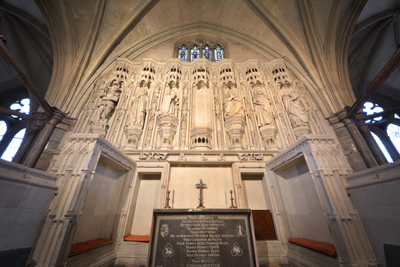
St-Mary-Aldermanbury2Like St Dunstan in the East, these gardens at the corner of Love Lane and Aldermanbury are also based inside the remains of a medieval church.

The church of St Mary Aldermanbury (the name may relate to its proximity close to Guildhall, or the ‘Alderman’s Bury’ or ‘Alderman’s Hall’), mentioned as far back as the late 12th century, was destroyed in the Great Fire of London but was among those rebuilt to the designs of Sir Christopher Wren only to be destroyed again during the Blitz in 1940.

Shakespeare-MonumentThis time there was to be no rebuilding and instead, in 1966 the walls – all that remained – were moved more than 4,000 miles away to the town of Fulton, Missouri, in the US.

There they were reconstructed in the grounds of Westminster College – site of Winston Churchill’s famous “Iron Curtain” speech in 1946 – and the church restored as a memorial to the former British PM. The National Churchill Museum is located beneath.

There’s plaque mentioning this in the gardens (and featuring an image of what the church looked like after its reconstruction in Fulton) which still contains the church’s footings (these date from the 15th century when the church was apparently partially rebuilt) and give an indication of what the church’s footprint would have been along with headstones (among those whose remains were buried here was the notorious Judge Jeffreys).

Other features include a memorial to Henry Condell and John Heminge, both involved in the publication of William Shakespeare’s first folio (you can read more about it in our earlier post here).

The garden was laid out after the church was removed. It is a designated Site of Local Importance for Nature Conservation and attracts wildlife including birds such as blackbirds, woodpigeons, house sparrows and blue tits. Plantings were added in 2011 to maximise the attraction to bird as well as bees and butterflies. On the corner outside the garden is a fountain.

WHERE: St Mary Aldermanbury Garden, Aldermanbury, City of London (nearest Tube stations are St Pauls and Monument); WHEN: 8am to 7pm daily; COST: Free; WEBSITE: www.cityoflondon.gov.uk/things-to-do/green-spaces/city-gardens/visitor-information/Pages/St-Mary-Aldermanbury.aspx.

10 small, ‘secret’ and historic gardens in central London…3. St Dunstan in the East Garden…

St-Dunstan1

Located amid the remains of the medieval church of St Dunstan in the East, the garden was created in the late 1960s after the church was finally – and irrevocably, apparently – destroyed in the Blitz of World War II.

St-Dunstan2The church’s origins went back to around 1100 and it was subsequently extended with a new south aisle in the late 14th century and repaired in the early 17th century before being severely damaged in the Great Fire of 1666.

Patched up, with a new steeple and tower added to the building between 1695-1701 by Sir Christopher Wren, the building stood until the early 19th century when much of the church – with the exception of Wren’s additions – had to be rebuilt (for more on the history of the church, see our earlier Lost London post here).

The ‘new’ building was, however, badly damaged during bombing in 1941 and it was decided not to rebuild the church in the aftermath of the war.

The City of London opened a garden, sympathetic with the remains of the Grade I-listed building, on the site in 1971 (although Wren’s tower remains). They won a landscape award only a few years later.

Features in these atmospheric gardens – which seem to capture the essence of the Romantic idea of what ruins should look like – include a fountain which sits in the middle of the nave. In 2010 it was one of five public gardens in the City where award-winning  ‘insect hotels’ were installed.

Maintenance works were carried out in 2015 and new plantings put in (the picture, above, was taken before this).

WHERE: St Dunstan in the East, between Idol Lane and St Dunstan’s Hill, City of London (nearest Tube stations are Monument and Tower Hill); WHEN: 8am to 7pm or dusk (whichever is earlier); COST: Free; WEBSITE: www.cityoflondon.gov.uk/things-to-do/green-spaces/city-gardens/visitor-information/Pages/St-Dunstan-in-the-East.aspx

A Moment in London’s History – Outbreak of the Great Plague…

St-Olave-Hart-StreetIt’s 350 years ago this year that the Great Plague broke out in London in 1665, bringing death on an unprecedented scale to the city.

The plague, which was apparently also known as the Poor’s Plague, is said to have broken out in early 1665 – perhaps February – with the first areas to be affected dockside districts and the crowded slum of St Giles in the Fields before it moved into the City proper. There are claims that the outbreak’s origins occurred a couple of months earlier at a property in Drury Lane where contaminated bales of goods imported from Holland were opened by Flemish weavers.

However it came to be in London, it soon spread and by July was running rampant with many of the nobility, merchants, and tradesmen choosing to flee the city in the hope of escaping its reach. They included King Charles II and his family and court who moved to Hampton Court in early July and then to Salisbury at the start of August before, following some cases there, to Oxford in September.

Those who did come down with the disease – generally thought to have been bubonic plague, a disease of rats which is transmitted to humans via fleas – were confined to their homes with red crosses and the words ‘Lord, have mercy on us’ painted on the door while gatherings in public – such as for the theatre – were banned to prevent the disease’s spread.

Other measures to contain the disease included the imposition of a curfew and the killing of an estimated 40,000 dogs and 200,000 cats, thought to be spreaders of the disease, on the orders of the mayor, Sir John Lawrence.

Bills of mortality recorded the number of deaths weekly – in the week of 19th to 26th September, the number peaked at 7,165 people before declining. By late in the year life in the capital had started returning to normal.

While the bodies were buried in mass graves, by September the growing numbers of dead meant many were simply left to rot where they fell.

The estimated numbers of those who died varies somewhat depending on the source but according to the Museum of London’s website, the Great Plague of 1665 is estimated to have killed 100,000 people – about a fifth of the population – within just seven months of its outbreak.

While the sheer number of dead is unprecedented, other plagues were proportionally deadlier, in particular the coming of the Black Death in 1348 which killed about half of all Londoners over an 18 month period (equating to an estimated 40,000 people).

The Great Plague was, thankfully, the last major plague to affect London. Among those who had survived was the diarist Samuel Pepys whose entries provide a valuable source of information on how the plague affected Londoners (pictured above is detail from the gateway into the church of St Olave Hart Street – Pepys’ parish church at the time of the plague – where a number of victims of the Great Plague were buried).