This week in London – Napoleon’s draughtsman at Dulwich; the City of London Festival; and, the photography of Captain Linnaeus Tripe…

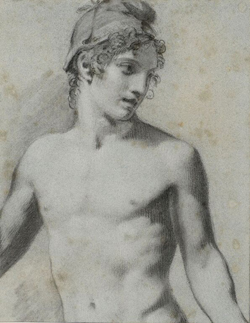
PrudhonThe drawings of “Napoleon’s draughtsman”, Pierre-Paul Prud’hon, have gone on display at the Dulwich Picture Gallery in an exhibition timed to coincide with the bicentenary of the Battle of Waterloo. The exhibition, Prud’hon: Napoleon’s Draughtsman, presents a selection of some of Prud’hon’s best works, including 12 works on paper from Gray’s Musée Baron Martin in eastern France as well as life studies such as Seated Male Nude and Standing Female Nude and a series of sketches from when Napoleon’s wife, Josephine, sat for Prud’hon 15 times in her home outside Paris. Runs until 15th November. Admission charge applies. A series of events is being run in conjunction with the exhibition. For more, see www.dulwichpicturegallery.org.uk.

The City of London Festival has kicked off this week with a three week programme including music, performance and visual art, films, tours, walks and talks. Events include the City Beerfest in Guildhall Yard, a tour of the art of the Mansion House, Bank of England open days and a walk celebrating the democratic institutions of the City marking the 800th anniversary of the Magna Carta. The festival, which includes both ticketed and free events, runs until 10th July. For more, including a full programme, see www.colf.org.

A new exhibition exploring the photographic works of Captain Linnaeus Tripe has opened at the V&A. Captain Linnaeus Tripe: Photographer of India and Burma, 1852-1860 includes more than 60 photographs of architectural sites and monuments, ancient and contemporary religious buildings, landscape vistas and geological formations. The Devon-born Tripe joined the East India Company army in 1839 and was stationed in India throughout the 1840s, learning the art of photography when back in England in the early 1850s. The photographs represent the output from two major expeditions with Tripe the first photographer to capture Burma’s remarkable architecture and landscapes and the first person to do so extensively in south India. The exhibition, part of the V&A India Festival which marks the 25th anniversary of the opening of the museum’s Nehru Gallery, is organised jointly by the National Gallery of Art, Washington, and the Metropolitan Museum of Art in New York in association with the V&A. Runs until 11th October.  Admission is free. For more, see www.vam.ac.uk/linnaeustripe.

Send all items for inclusion to exploringlondon@gmail.com.
This Week in London – The Waddesdon Bequest has a new home; history painted at the Tate; and, early release NYE tickets…

Holy-Thorn-ReliquaryThe Waddesdon Bequest, a collection of medieval and Renaissance treasures left to the British Museum by Baron Ferdinand de Rothschild in 1898, has a new home. Redisplayed in a new gallery which opened at the museum last week, the collection features the Christian relic known as Holy Thorn Reliquary (pictured) – a concocotion of gold, enamel and gems set around a thorn supposedly taken from Christ’s Crown of Thorns, the Lyte Jewel – a diamond-studded locket made in London in 1610-11 to hold a miniature of King James I and presented by the king to Thomas Lyte as thanks for a genealogy he created representing the king as a descendant of the Trojan Brutus, and the Cellini Bell – cast from silver in Nuremberg around 1600 and later displayed by Horace Walpole at his west London villa in Strawberry Hill. The bequest collection, which must always be displayed in a room of its own under its original terms, was first displayed at Baron Ferdinand’s country home of Waddesdon Manor in Buckinghamshire (now a National Trust property) and moved to the museum after his death. The redisplay reconnects the collection with its past at the manor and the history of the museum – the room where it is now displayed, Room 2a, was the museum’s original Reading Room and part of a neo-classical suite of rooms designed by Robert Smirke in 1820. It has been given the “most ambitious digital treatment” of any permanent gallery in the institution. Admission is free. For more, see www.britishmuseum.org.

The “enduring significance and emotional power” of British history painting is under examination in a new exhibition which opened at Tate Britain on Millbank last week. Fighting History features everything from the large scale works of 18th century painters John Singleton Copley and Benjamin West through to 20th century and contemporary works by Richard Hamilton and Jeremy Deller and looks at how they reacted, captured and interpreted key historical events. Works on show include Singleton Copley’s 1778 work The Collapse of the Earl of Chatham in the House of Lords, 7 July, William Frederick Yeames’ 1877 work Amy Robsart, John Minton’s 1952 work The Death of Nelson and Deller’s 2001 work The Battle of Orgreave, a re-enactment of 1984 protest in South Yorkshire. The exhibition also compares traditional and contemporary renderings of events from scripture, literature and the classical world and features a room dedicated to interpretations of the great Biblical flood of Noah. Runs until 13th September. Admission charges apply. For more, see www.tate.org.uk.

A limited number of early release tickets to London’s New Year’s Eve celebrations will go on sale from noon tomorrow (Friday, 19th June). The tickets, the bulk of which will be released in September, cost £10 a person with the proceeds being used to cover costs including printing and infrastructure. As was the case last year, people without tickets will not be able to access the event. To get hold of tickets, head to www.london.gov.uk/nye.

Send all items for inclusion to exploringlondon@gmail.com.
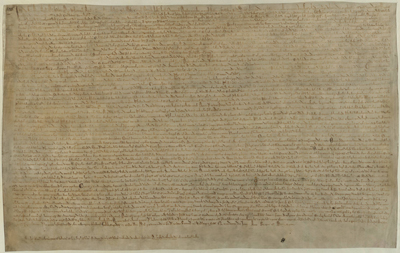
Celebrating the Magna Carta’s 800th anniversary!…

Magna-Carta4

We interrupt our regular programming today to mark a truly historic milestone – 800 years since King John set his seal to the Magna Carta (Great Charter) in a field at Runnymede to the west of London.

So, where can you see a copy in London?

The British Library actually holds two of the four surviving documents from 1215 (one is pictured above) – the other two are held by Lincoln and Salisbury Cathedrals.

One of the copies in the British Library was damaged in an 18th century fire; the other was found in a tailor’s shop in London in the 17th century – made of sheepskin, it was apparently about to be taken apart to line collars.

The library’s current Magna Carta exhibition, Magna Carta: Law, Liberty, Legacy, features the two documents (along with Jefferson’s handwritten copy of the Declaration of Independence and one of the original copies of the US Bill of Rights). For more about the exhibition, see www.bl.uk/events/magna-carta–law-liberty-legacy (runs until 1st September – for more see our earlier post here).

Meanwhile, the City of London Corporation also possesses a copy of the Magna Carta – although a later one that that issued in 1215.

Issued by King Edward I in 1297, this was the one which saw the document’s clauses, somewhat changed from 1215, written into the statutes for the first time.

Stored at the Guildhall Art Gallery, it is too delicate to be on permanent display but is currently on display in the City of London  Heritage Gallery until 1st October (for more follow this link).

You can read more about the Magna Carta and its London connections in our Wednesday series, 10 sites from London at the time of the Magna Carta.

PICTURE: British Library.

This Week in London – London Festival of Architecture’s ‘Work in Progress’; objects and sestudes at the Foundling Museum; and, sculpting Sir Tim Berners-Lee…

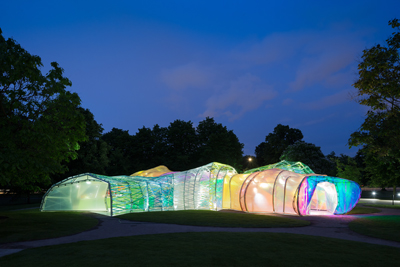
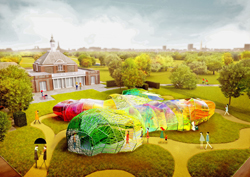
SerpentineThe month-long London Festival of Architecture is underway with this year’s theme ‘Work in Progress’. Highlights of this year’s programme – which includes 220 exhibitions, installations, talks and tours – include a discussion at this year’s Serpentine Gallery (pictured) by architects SelgasCano, access to development sites including Olympic Park, Goodman’s Fields, and Nine Elms, a London Transport Museum tour of London’s first skyscraper, an installation exploring the role of coffee shop as workspace by the Not to Scale Collective, and a Routemaster tour of the West End. For more, including a downloadable PDF of the programme, see www.londonfestivalofarchitecture.org.

A series of  26 ‘sestudes’ – texts exactly 62 words long – are being displayed along with the objects that inspired them in a new exhibition, 26 Pairs of Eyes, at The Foundling Museum in Bloomsbury. The sestudes have been written by the likes of former Poet Laureate Sir Andrew Motion in a bid cast new light on the objects, which are all from the museum’s collection and which range from a pencil which once belonged to Hospital Secretary John Brownlow to George Frideric Handel’s will. The display, which opens today, is on show until 6th September. Meanwhile the museum is also hosting another exhibition, Lines of Beauty, which explores the tradition of decorative plasterwork including the restored Rococo splendour of the hospital’s Court Room (donated by William Wilton in the 1740s and saved when the Foundling Hospital building was demolished in the 1920s). Admission charges apply. For more, see www.foundlingmuseum.org.uk.

A new portrait of the inventor of the World Wide Web, Sir Tim Berners-Lee, has been unveiled at the National Portrait Gallery. The work of Sean Henry, the painted bronze sculpture depicts a two-thirds life size Berners-Lee carrying the leather rucksack in which he keeps his laptop. It was commissioned to mark Sir Tim’s 60th birthday and is the gallery’s first commissioned portrait sculpture for seven years. On display in Room 40. Admission is free. For more, see www.npg.org.uk.

Send all items for inclusion to exploringlondon@gmail.com.
This Week in London – Spices the centre of attention at Kew; and, the museum explored at the V&A…

RickshawsThe botanical origins of the spices which continue to excite our palates have centre stage at a new festival which kicked off at Kew Gardens last week. The Full of Spice festival brings their stories to life through a series of interactive installations and exhibitions. Visitors are invited to come face-to-face with nutmeg, turmeric and tamarind in the Palm House, join in the bartering at a ‘Spice Exchange’, take part in hands-on sessions with Kew scientists and explore different parts of the world on ‘Spicy’ Saturdays and Sundays. You can also book a ride on a rickshaw, see the innards of giant inflatable spices, take part in the Strictly Spice Dance competition or simply hang out with a spiced No.3 gin cocktail at a pop-up ‘Botanical Bar’ on weekends. The festival runs until 6th September. For a comprehensive listing of events and activities (of which the above is just a portion), head to www.kew.org. PICTURE: RBG Kew.

On Now: All of This Belongs to You. This free exhibition at the V&A in South Kensington examines the role as a museum as a public space and that of public institutions in contemporary life. Distributed across both the physical and online spaces of the V&A, the exhibition comprises four site-specific installations, three displays, two online commissions as well as weekly events. More than 40 new acquisitions have been made for the project and loaned objects on display include hard-drives that held documents leaked to the Guardian newspaper by whistleblower Edward Snowden. Runs until 19th July. For more, see www.vam.ac.uk/allofthisbelongstoyou.

Send all items for inclusion to exploringlondon@gmail.com.

This Week in London – London Tree Week kicks off; illustrated London at the LT Museum; and, Joshua Reynolds at the Wallace Collection…

London Tree Week kicks off on Saturday with a range of free events happening across the city. They include ‘tree walks’ in Richmond and Greenwich Royal Parks, a tour of paintings featuring trees at the National Gallery in Trafalgar Square, an exhibition at City Hall featuring some of the city’s great trees, and family-friendly activities at Stave Hill Ecological Park in the city’s south-east. Londoners can also download a free ‘Tree Route’ app which uses the Tube map to showcase the capital’s trees including “must see” trees located near Underground stations such as St Pauls (a swamp cypress) and Angel (a black poplar). There’s also a photo sharing challenge where you can upload photos of trees that have made a difference to your part of London to Instagram or Twitter using the hashtag #LondonTreeWeek. For the complete listing of what’s on, follow this link. Runs until 31st May.

One hundred illustrations capturing a variety of aspects of life in London form the heart of an exhibition, The Prize for Illustration 2015: London Places & Spaces, which has opened at the London Transport Museum in Covent Garden. The artworks – which range from the past to the present and the contemplative to the loud – are all on the shortlist for the prestigious Prize for Illustration and were selected from more than 1,000 entries. Each of the works is accompanied by a short description written by the artist. The works are on show until 6th September. Admission charge applies. For more, see www.ltmuseum.co.uk.

On Now – Joshua Reynolds: Experiments in Paint. Now entering its final days, this exhibition at the Wallace Collection in Marylebone provides a fresh perspective on a giant of the British art world, 18th century portraitist Joshua Reynolds and features such famous works as Nelly O’Brien, Mrs Abingdon as Miss Prue, and Self Portrait Shading the Eyes. Admission is free. Runs until 7th June. For more information, see www.wallacecollection.org.

Send items for inclusion to exploringlondon@gmail.com

This Week in London – Dunkirk Little Ships at Royal Docks a highlight of ‘Museums at Night’; the Magna Carta in stitches; and Peter Kennard’s works on show…

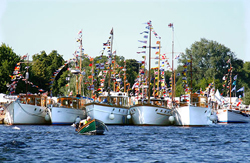
Dunkirk-Little-Ships-More than 20 Dunkirk Little Ships will gather at London’s Royal Docks this weekend ahead of their Return to Dunkirk journey marking the 75th anniversary of the Dunkirk evacuations. The event, which is part of the UK’s annual festival of late openings Museums at Night, will see the ships parade around Royal Victoria Dock on Saturday night with the Silver Queen offering twilight trips and the chance to step on board some of the other ships (the Little Ships will continue with their own festival on Sunday commencing with a church service by the quayside at 11am). Other events being offered in London as part of Museums at Night include ‘Dickens After Dark’ in which the Charles Dickens Museum will open its doors to visitors for night of Victorian entertainment on Friday night and a night of music featuring the Royal College of Music at Fulham Palace (also on Friday night). Among the other London properties taking part are the Handel House Museum, Benjamin Franklin House, the Wellcome Collection, Museum of the Order of St John, and the National Archives in Kew. For a full list of events, check out http://museumsatnight.org.uk

Meanwhile, Dulwich Picture Gallery in south London is holding its first weekend culture festival, MayFest: Men of Mystery, as part of Museums at Night. On Friday and Saturday nights, there will be tours of the gallery’s new exhibition featuring the work of artist Eric Ravilious followed by outdoor cinema screenings of Alfred Hitchcock’s Rear Window and The 39 Steps as well as free swing dance lessons, street foods and a pop-up vintage shop which will help people get the vintage look. Visitors are being encouraged to dress up in styles of the 1930s and 1940s with a prizes awarded to those with the “best vintage style”. The gallery will also be inviting visitors to take part in a mass installation drop-in workshop held in the gallery’s grounds over the weekend and Saturday morning will see special events for children. For more, see www.dulwichpicturegallery.org.uk/whats-on/.

A major new work by acclaimed artist Cornelia Parker goes on display in the entrance hall of the British Library in King’s Cross tomorrow to mark the 800th anniversary of the Magna Carta. The almost 13 metre long Magna Carta (An Embroidery) replicates the entire Wikipedia entry on the Magna Carta as it was on the 799th anniversary of the document and was created by many people ranging from prisoners and lawyers to artists and barons. It accompanies the library’s exhibition Magna Carta: Law, Liberty, Legacy. Entry to see the artwork is free. For more, see www.bl.uk/cornelia-parker.

The works of Peter Kennard, described as “Britain’s most important political artist”, are on display in a new exhibition which opens at the Imperial War Museum in London today. Peter Kennard: Unofficial War Artist is the first major retrospective exhibition of his work and features more than 200 artworks and other items drawn from his 50 year career including an art installation, Boardroom, created especially for the display. Works on show include his iconic transposition of Constable’s painting Haywain which he showed carrying cruise missiles about to be deployed in Greenham Common, the Decoration paintings created in 2004 in response to the Iraq War of 2003, his seminal STOP paintings which reference events of the late 1960s such as the ‘Prague Spring’ and anti-Vietnam war protests and his 1997 installation Reading Room. The free exhibition runs at the Lambeth institution until 30th May next year. For more, see www.iwm.org.uk/london.

Send all items for inclusion to exploringlondon@gmail.com.
This Week in London – Marking VE Day’s 70th; Rut Blees Luxemburg at the Museum of London; and India’s Sidi community on show at the NPG…

Three days of events kick off in London tomorrow to mark the 70th anniversary of Victory in Europe (VE) Day. Events will include a Service of Remembrance at the Cenotaph in Whitehall at 3pm tomorrow (Friday) coinciding with two minutes national silence while Trafalgar Square – scene of VE Day celebrations in 1945 – will host a photographic exhibition of images taken on the day 70 years ago (the same images will be on show at City Hall from tomorrow until 5th June) and, at 9.32pm, a beacon will be lit at the Tower of London as part of a nation wide beacon-lighting event. On Saturday at 11am, bells will ring out across the city to mark the celebration and at night, a star-studded 1940s-themed concert will be held on Horse Guards Parade (broadcast on BBC One). Meanwhile, on Sunday, following a service in Westminster Abbey, a parade of current and veteran military personnel will head around Parliament Square and down Whitehall, past the balcony of HM Treasury where former PM Sir Winston Churchill made his historic appearance before crowds on the day, to Horse Guards. A flypast of current and historic RAF aircraft will coincide with the parade and from 1pm the Band of the Grenadier Guards will be playing music from the 1940s in Trafalgar Square. Meanwhile, starting tomorrow, special V-shaped lights will be used to illuminate Trafalgar Square, St Paul’s Cathedral and the Houses of Parliament as a tribute. For more information, see www.gov.uk/government/topical-events/ve-day-70th-anniversary.

The works of leading London-based photographer Rut Blees Luxemburg are on show in at new exhibition at the Museum of London in the City. London Dust will feature three major newly acquired works by Luxemburg including Aplomb – St Paul’s, 2013, Walkie-Talkie Melted My Golden Calf, 2013, and the film London/Winterreise, 2013. Blees Luxemburg’s images – others of which are also featured in the exhibition – contrast idealised architectural computer-generated visions of London that clad hoardings at City-building sites with the gritty, unpolished reality surrounding these. In particular they focus on a proposed 64 floor skyscraper, The Pinnacle, which rose only seven stories before lack of funding brought the work to a halt. The free exhibition runs until 10th January next year. For more, see www.museumoflondon.org.uk.

The Talk: The Cutting Edge – Weapons at the Battle of Waterloo. Paul Wilcox, director of the Arms and Armour Research Institute at the University of Huddersfield, will talk about about the weapons used at Waterloo with a chance to get ‘hands-on’ with some period weapons as part of a series of events at Aspley House, the former home of the Iron Duke at Hyde Park Corner, to mark the bicentenary of the Battle of Waterloo. To be held on Monday, 11th May, from 2.30pm to 4pm. Admission charge applies and booking is essential – see www.english-heritage.org.uk/apsley for more.

On Now: On Belonging: Photographs of Indians of African Descent. A selection of ground-breaking photographs depicting the Sidi community – an African minority living in India – is on show at the National Portrait Gallery off Trafalgar Square. The works, taken between 2005 and 2011, are those of acclaimed contemporary Indian photographer Ketaki Sheth and the exhibition is his first solo display in the UK. They provide an insight into the lives of the Sidi, and include images of a young woman named Munira awaiting her arranged wedding, young boys playing street games, and the exorcism of spirits from a woman as a young girl watches. Admission is free. Runs in Room 33 until 31st August. For more, see www.npg.org.uk.

Send all items for inclusion to exploringlondon@gmail.com.
This Week in London – Duke of Wellington on show; wartime City bank recreated in Warwickshire; and early photographs at the Tate…

ArthurWellesleyThe Duke of Wellington’s political and military career as well as his personal life is being explored in an exhibition running at the National Portrait Gallery off Trafalgar Square until August. Wellington: Triumphs, Politics and Passions features 59 portraits and other works including a rarely seen portrait of the Iron Duke painted by Sir Thomas Lawrence and commissioned by Sarah, Countess of Jersey, a year after Wellington had become Prime Minister. The portrait (pictured) remains unfinished – the state it was in when Lawrence died in 1830 – and, held in a private collection, hasn’t been shown in public for any significant period until now. The exhibition also includes a John Hoppner portrait of the duke as a young soldier, a daguerreotype taken by Antoine Claudet on Wellington’s 75th birthday in 1844 and drawings by Lawrence of Wellington’s wife, Kitty. The exhibition – which is part of the commemorations marking 200 years since the Battle of Waterloo, runs until 7th June. Admission is free. For more see www.npg.org.uk. PICTURE: Arthur Wellesley, 1st Duke of Wellington by Sir Thomas Lawrence (1829), © On loan to National Portrait Gallery by kind permission of Mr. & Mrs. Timothy Clode.

Upton House is Warwickshire has turned the clock back to 1939 with a display dedicated to the time when the Bearstead family moved their City-based bank, M Samuel & Co, to their historic family mansion to escape the Blitz in London. Twenty-two bank staff took over the house, sleeping in shared dormitories and taking meals of rook pie in the home’s Long Gallery while secretaries typed surrounded by works of art. The National Trust has returned 12 rooms to their wartime look based on research conducted by 80 of the volunteers at the house. They’re filled with thousands of objects, from ration-book toothpaste to wartime toilet rolls, to recreate a wartime experience at the home. Outside an Anderson Shelter stands in the garden where heritage vegetables are being grown in an allotment. Visitors will also find out how 40 of the most precious works in the home were sent to a special storage facility in a Welsh slate mine to protect them. Admission charge applies. For more, see www.nationaltrust.org.uk/upton-house/

On Now – Salt and Silver: Early Photography 1840-1860. This exhibition at Tate Britain in Millbank is the first major exhibition in Britain dedicated to salt prints, the earliest form of paper photography, and features 90 images including some of the best and rarest early photographs. The salt print technique was invented in Britain in the 1840s and 1850s and spread across the world, hence as well as portraits, still lifes and scenes from ‘modern life’, the images on show include from William Fox Talbot’s images of a Paris street to Nelson’s Column under construction, Linnaeus Tripe’s views of Puthu Mundapam in India and Auguste Salzmann’s studies of statues in Greece. Runs in the Linbury Galleries until 7th June. Admission charge applies. For more, see www.tate.org.uk.

Send all items for inclusion to exploringlondon@gmail.com.

LondonLife – The Queen’s House set to be given a makeover ahead of 400th anniversary…

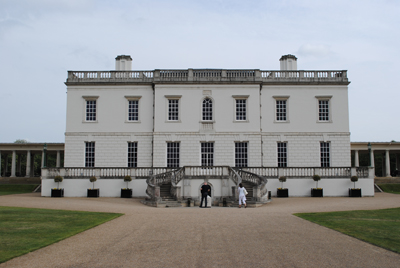
The-Queen's-HouseGreenwich icon, the Queen’s House, is set to close on 27th July this year to allow for refurbishment and upgrade ahead of the 400th anniversary of its commissioning and design in 2016. The landmark will be closed until 4th July, 2016, after which those visiting the house will be able to see Orazio Gentileschi’s Biblically-themed painting, Joseph and Potiphar’s Wife, displayed in the building for the first time since 1650. Part of the Royal Collection, the painting was one of a series commissioned for the building by King Charles I and his wife Queen Henrietta Maria. The Queen’s House was designed by Inigo Jones in 1616 for King James I’s wife, Anne of Denmark, and, acknowledged as a masterpiece of 17th century architecture, was the first classically-designed building in country. The makeover will see galleries refurbished, the introduction of new displays and the restoration of components including the ceiling in the King’s Presence Chamber (the Queen’s Presence Chamber was restored in 2013). For more, see www.rmg.co.uk.

This Week in London – Charles I’s overlooked artist; St George’s Day in Trafalgar Square; Indigenous Australia; prints from the Royal Collection on show; and, ‘What is Luxury’ at the V&A…

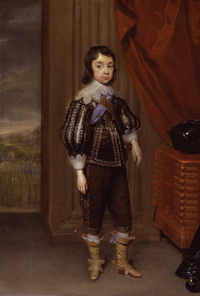
NPG_936_1374_KingCharlesIIbThe first ever display of works of overlooked 17th century artist Cornelius Johnson, court painter to Charles I, has opened at the National Portrait Gallery off Trafalgar Square. Cornelius Johnson: Charles I’s Forgotten Painter features rarely viewed portraits of the king’s children including the future Charles II, James II and Mary (later Princess of Orange-Nassau) as well as a painting of Mary’s son William – all of which have been taken from the gallery’s collection. Overshadowed by Sir Anthony van Dyck, Johnson – who emigrated to The Netherlands when the English Civil War broke out – has been largely ignored by art historians despite the breadth of his work – from group portraits, such as his largest surviving English painting, The Capel Family, to tiny miniatures – and the fact that he is thought to be the first English-born artist who took to signing date his paintings as a matter of course, something he is believed to have picked up during his training in The Netherlands. The display features eight painted portraits and six prints from the gallery’s collection as well as three paintings from the Tate. Runs until 13th September in Room 6. Admission is free. For more, see www.npg.org.uk. PICTURE: King Charles II by Cornelius Johnson , 1639. © National Portrait Gallery, London.

Trafalgar Square will be at the centre of London’s St George’s Day celebrations on Saturday with live music, celebrity chefs, a masterclass by leading tea experts and children’s games and activities. The musical lineup will feature the band from the West End musical Let It Be and the Crystal Palace Brass Band – one of the few traditional brass bands remaining in London. The free event runs between noon and 6pm on Saturday. For more, see www.london.gov.uk/stgeorges.

Indigenous Australia, the first major exhibition in the UK to present a history of Indigenous Australia through objects, opens at the British Museum today. Drawing on the museum’s collection, Indigenous Australia features objects including a shield believed to have been collected in Botany Bay on Captain Cook’s voyage of 1770, a protest placard from the Aboriginal Tent Embassy established in 1972 and contemporary paintings and specially commissioned artworks from leading indigenous artists. Many of the objects have never been on display before. Runs until 2nd August. Admission charge applies. For more, see www.britishmuseum.org.

Thirty prints from the Royal Collection will be on show at The London Original Print Fair to mark its 30th anniversary. The fair runs at the Royal Academy from today until Sunday and among the selected works from the more than 100,000 prints in the Royal Collection are the 2.3 metre long woodcut by Albrecht Durer entitled Triumphal Cart of the Emperor Maximillian (1523), Wenceslaus Hollar’s four etchings of tropical Seashells (c1650), a sequence of proofs of Samuel Reynolds’ portrait of King George III at the end of the monarch’s life, and lithographs produced by Queen Victoria and Prince Albert dating from 1842. For more on the fair, see www.londonprintfair.com. For more on the Royal Collection, see www.royalcollection.org.uk.

The question of what is meant by the concept of luxury is under examination in the V&A’s new exhibition What is Luxury? Opening at the South Kensington museum Saturday, the exhibition will feature a range of luxury objects – from the George Daniels’ Space Travellers’ Watch to a Hermés Talaris saddle, and Nora Fok’s Bubble Bath necklace. Also on show in a section of the exhibit looking at what could determine future ideas of luxury is American artist Gabriel Barcia-Colombo’s DNA Vending Machine (complete with prepackaged DNA samples) and Henrik Nieratschker’s installation The Botham Legacy which tells the fictional story of a British billionaire who sends altered bacteria into space in an attempt to find valuable metals on distant plants. Runs until 27th September. Admission charge applies. See www.vam.ac.uk/whatisluxury.

Send all items for inclusion to exploringlondon@gmail.com.
This Week in London – Greek sculpture at the British Museum; Hew Locke at HMS Belfast; an interactive high seas adventure at the National Maritime Museum; and, coral reefs at the Natural History Museum…

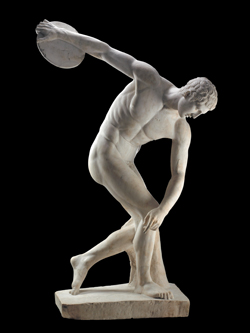
DiscobolusThe ancient Greek “preoccupation with the human form” is the subject of a new exhibition which opens at the British Museum in Bloomsbury today. Defining beauty: The body in ancient Greek art features about 150 objects dating from the prehistoric to the age of Alexander the Great. Highlights include a newly discovered bronze sculpture of a new athlete scraping his body with a metal tool after exercise before bathing, six Parthenon sculptures from the museum’s collection including a sculpture by Phidias of the river god Ilissos, and  copies of Greek originals including the Towny Discobolus (discus-thrower – pictured) – a Roman copy of Myron’s lost original – and Georg Romér’s reconstruction of Polykleitos’ Doryphoros (spear-bearer) . Runs until 5th July. Admission charge applies. For more, see www.britishmuseum.org/definingbeauty. PICTURE: © The Trustees of the British Museum.


London-based contemporary artist Hew Locke has transformed an entire deck of the HMS Belfast in a major new work, ironically titled work, The Tourists. The installation – which is on show until 7th September – depicts imaginative events in which the crew of the ship are preparing to arrive at Trinidad in time for Carnival in 1962 (the ship’s last international journey – to Trinidad – actually arrived three months after the celebration). Free with general admission charge. For more see www.iwm.org.uk/visits/hms-belfast. Meanwhile, the Imperial War Museum in Lambeth is hosting a free exhibition of Locke’s work in which he explores the idea of naval power through a series of ship sculptures. This free exhibition can be seen until 4th May. For more, see www.iwm.org.uk/visits/iwm-london.

Families are invited to take part in a new interactive experience on the “high seas of maritime history” which launches at the National Maritime Museum in Greenwich on Saturday. The museum has joined with Punchdrunk Enrichment to take six to 12 year-olds and their families on an adventure, Against Captain’s Orders: A Journey into the Uncharted. Visitors don life jackets as they become part of the crew of the HMS Adventure and take on various seafaring roles as they navigate their way through the exhibition. Admission charge applies. Runs until 31st August. For more, see www.rmg.co.uk/againstcaptainsorders.

See a real coral reef and take a virtual dive in new exhibition at the Natural History Museum in South Kensington. Coral Reefs: Secret Cities of the Sea – which opens tomorrow on World Oceans Day – also features more than 200 specimens including coral, fish and fossils. These include examples collected by Charles Darwin on the voyage of the HMS Beagle in the 1830s, giant Turbinate coral and creatures ranging from the venomous blue-ringed octopus to tiny sponge crabs. For more see www.nhm.ac.uk.

Send items for inclusion to exploringlondon@gmail.com.

LondonLife – #MuseumWeek…

Dr-Johnsons-HouseIt’s #MuseumWeek on Twitter and museums all over London are among the more than 2,000 institutions worldwide already tweeting away. Among those, large and small, taking part in London are the @hornimanmuseum, @ExploreWellcome, @JewishMuseumLDN, @BFHouse@HRP_Palaces, @NMMGreenwichand @drjohnsonshouse (pictured). Each day of the week they’ll be tweeting on a different theme until Sunday (today’s is #souvenirsMW). For the full stream, head to @MuseumWeek.

This Week in London – Garden art from the Royal Collection; A Royal Welcome at Buckingham Palace; photographic history; and, Joshua Reynolds reconsidered…

GardensKing Henry VIII’s well-thumbed gardening manual, a late 15th century copy of the Ruralia Commoda, and a 16th century portrait of Jacopo Cennini, factor and estate manager to the House of Medici – believed to be the earliest surviving portrait of a gardener – are among more than 150 objects on display at a new exhibition celebrating the art of gardens. Opening at The Queen’s Gallery in Buckingham Palace tomorrow, Painting Paradise: The Art of the Gardens features some of the earliest surviving records of gardens and plants in the Royal Collection including Jan Brueghel the Elder’s Adam and Eve in the Garden of Eden (1615), The Family of Henry VIII (c. 1545) featuring King Henry VIII’s Great Garden at Whitehall Palace – the first real garden recorded in British art, and A View of Hampton Court by Leonard Knyff (c. 1702-14) – described as the “greatest surviving Baroque painting of an English garden”. There are also works by Frenchman Jean-Baptiste Martin, Swiss artist Johan Jacob Schalch and Sir Edwin Landseer. The exhibition runs until 11th October. Admission charge applies. For more, see www.royalcollection.org.uk. PICTURE: Illustration from Henry VIII’s copy of the gardening manual, c. 1490-95. Royal Collection Trust/© Her Majesty Queen Elizabeth II 2015. 

Buckingham Palace, meanwhile, has announced its summer opening under the theme of A Royal Welcome. From 25th July to 27th September, displays in the State Rooms will recreate the settings for some of the many occasions in which the palace welcomes guests – from State Visits and garden parties to investitures and private audiences. The displays will show the behind-the-scenes preparations that go into a state visit and show the ballroom set up for a State Banquet. There will also be a display featuring the knighting stool and a knighting sword and, for the first time ever, visitors will enter the State Rooms through the Grand Entrance, used by those who come to the palace at the invitation of the Queen, including heads of state and prime ministers. The Australian State Coach, most recently used to carry the Duke of Edinburgh and the wife of the Mexican President, Señora Rivera, in March this year, will be displayed in the Grand Entrance portico. Admission charge applies. For more, see www.royalcollection.org.uk.

About 100 of the “most stunning photographs ever created” go on show in the Science Museum’s Media Space in South Kensington from tomorrow. Revelations explores the role of early scientific photography in inspiring later art photographers and will feature rare shots from the National Photography Collection including an original negative of X-Ray, 19th century photographs capturing electrical charge and William Henry Fox Talbot’s experiments with photomicrography. Displayed alongside are images by some of the 20th century’s pre-eminent art photographers such as Trevor Paglen, Idris Khan and Clare Strand. Runs until 13th September. Admission charge applies. For more, see www.sciencemuseum.org.uk/revelations.

On Now: Joshua Reynolds: Experiments in Paint. This exhibition at the Wallace Collection in Marylebone provides a new perspective on the portraits of Reynolds, one of the greatest artists of his day. Works on show including Nelly O’Brien, Mrs Abington as Miss Prue and Self Portrait Shading the Eyes as well as lesser known pictures and a rare history painting. The exhibition reveals discoveries made recently during a four year research project into the works of Reynolds now in the care of the collection. Runs until 7th June. Admission is free. For more, see www.wallacecollection.org.

Send items for inclusion to exploringlondon@gmail.com.
This Week in London – Biggest ever Magna Carta exhibition; 200 years since Waterloo at the NPG; and, Alexander McQueen at the V&A…

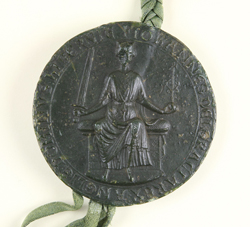
great-seal-king-john-eton-college-british-library-magna-carta-law-liberty-legacyThe largest ever exhibition related to the Magna Carta opens at the British Library in King’s Cross tomorrow to mark the 800th anniversary of the document’s sealing. Magna Carta: Law, Liberty, Legacy features two original Magna Carta manuscripts from 1215 as well as 1215 document, the Articles of the Barons (known as ‘draft’ of the Magna Carta), the Petition of Right (1628), the English Bill of Rights (1689), and the Universal Declaration of Human Rights (1948). It will also display two of the most celebrated documents in American history – the Delaware copy of the Bill of Rights and Thomas Jefferson’s handwritten copy of the Declaration of Independence (both on loan from the US National Archives) –  along with UK cabinet papers from 1941 in which it was proposed an original Magna Carta manuscript from 1215 be given to the US in return for their support in World War II and artefacts including King John’s teeth, thumb bone and fragments of clothing taken from his tomb in 1797 as well as his will. The exhibition tells the story of the Magna Carta from its creation in 1215 through to its later use by people fighting for various rights and freedoms and its continuing impact on the world today. There’s also a series of interviews with politicians, historians and public figures including Burmese activist Aung San Suu Kyi, former US President Bill Clinton and William Hague. Runs until 1st September. Admission charge applies. For more – and a digitised gallery of artifacts – visit www.bl.uk/magna-carta-exhibition. PICTURE: Great Seal of King John, 1203 © Eton College Archives on display in Magna Carta: Law, Liberty, Legacy.

The first gallery exhibition devoted to the Duke of Wellington opens at the National Portrait Gallery off Trafalgar Square today. Marking the 200th anniversary year of the Battle of Waterloo, Wellington: Triumphs, Politics, and Passions explores Wellington’s political and military career as well as his personal life. Highlights include Goya’s 1812 portrait of Wellington following his entry into Madrid (later modified to recognise further battle honours and awards), and Thomas Lawrence’s famous portrait painted in 1815, the same year as the Battle of Waterloo (the painting, which normally hangs in Apsley House, was used as the basis of the design of the £5 British note from 1971 to 1991). The exhibition of 59 portraits and other works also includes rarely seen works loaned by Wellington’s family include a John Hoppner portrait of the duke as a young soldier and a daguerreotype portrait taken by Antoine Claudet for Wellington’s 75th birthday in 1844. Runs until 7th June. Admission is free. For more, see www.npg.org.uk or for more on the 200th anniversary of the Battle of Waterloo, see www.waterloo200.org.

An exhibition celebrating the works of the late fashion designer Alexander McQueen opens at the V&A in South Kensington on Saturday. Alexander McQueen: Savage Beauty presents his works in 10 sections which focus on everything from McQueen’s roots in London, his “skilful subversion of traditional tailoring practices”, his fascination with the animal world and his longstanding interest in Eastern cultures. At the centre of the exhibition is The Cabinet of Curiosities, a display showcasing more than 100 garments and accessories and shown with film footage from his many catwalk presentations. The exhibition runs until 2nd August. Admission charge applies but you’ll have to be quick – the exhibition has already set the record for the most ever advance sales for an exhibition at the museum. For more, see www.vam.ac.uk/savagebeauty.

Send all items for inclusion to exploringlondon@gmail.com.
 

This Week in London – War fashions; the “inventor” of Impressionism; looking a Gift Horse in the mouth; and, having a look at the Queen’s House…

A new exhibition exploring how fashion survived and even flourished during World War II has opened at the Imperial War Museum in Lambeth to mark the 70th anniversary of the war’s end. Fashion on the Ration brings together more than 300 exhibits including clothes and accessories like the ‘respirator carrier handbag’, photographs and films as well as official documents from the period, letters and interviews. The exhibition is divided into six parts which examine in detail everything from the uniforms worn during the period to clothes rationing (introduced in 1941) and how the end of the war impacted fashion. Runs until 31st August. Admission charge applies. For more, see www.iwm.org.uk.

The UK’s first major exhibition devoted to Paul Durand-Ruel, the man who “invented Impressionism”, has opened at the National Gallery off Trafalgar Square this week. Inventing Impressionism features around 85 works including some of Impressionism’s greatest masterpieces, a number of which have never been seen in the UK before. The majority of the works were traded by Durand-Ruel (1831-1922) who is noted for having discovered and supported Impressionist painters like Monet, Pisarro, Degas and Renoir. Durand-Ruel purchased an astonishing 12,000 pictures between 1891 and 1922, including more than 1,000 Monets, about 1,500 Renoirs, more than 400 Degas’, some 800 Pissarros and close to 200 Manets. The images on display include a series of rarely-seen portraits of the dealer and his family by Renoir which are being exhibited in the UK for the first time as well as five paintings from Manet’s ‘Poplars’ series and all three of Renoir’s famous ‘Dances’, not seen in the country together since 1985. The exhibition finishes with a reference to an exhibition Durand-Ruel organised in London in 1905. Held at the Grafton Galleries, it presented 315 paintings. Admission charge applies. Runs until 31st May. For more, see www.nationalgallery.org.uk.

Gift Horse, New York-based German artist Hans Haacke’s sculpture of a skeletal riderless horse, will be unveiled on the Fourth Plinth in Trafalgar Square today. The horse, derived from an etching by English painter George Stubbs – whose works are in the nearby National Gallery, features an electronic ribbon tied to the horse’s front leg showing a live ticker of the London Stock Exchange. The statue, described as a ‘wry comment’ on the equestrian statue of King William IV which was originally to occupy the plinth, is the 10th to occupy the plinth since the first commission – Marc Quinn’s sculpture Alison Lapper Pregnant – was unveiled in 2005.

 Contemporary artist Dryden Goodwin’s first feature-length film is on show as part of a new exhibition, Unseen: The Lives of Looking, at the Queen’s House in Greenwich. Continuing Goodwin’s investigations into portraiture, the newly commissioned film focuses on three individuals who have a “compelling” relationship to looking – eye surgeon Sir Peng Tee Khaw, planetary explorer Professor Sanjeev Gupta and human rights lawyer Rosa Curling. Alongside the screening is a series of drawings made by Goodwin after observing the three individuals as well as tools and papers related to each of their trades and a series of objects connected three leading observers related to the history of the Royal Museums Greenwich sites – John Flamsteed, first Astronomer Royal, Edward Maunder, who observed Mars from the Royal Observatory Greenwich, and the artist Willem van de Velde the Elder who made detailed drawings of naval battles in preparation for producing paintings in his studio at the Queen’s House. Runs until 26th July. Admission is free. For more, see www.rmg.co.uk.

Send all items for inclusion to exploringlondon@gmail.com.
This Week in London – Rarely seen Goya at the Courtauld; Wolsey Angels saved; and, A Victorian Obsession…

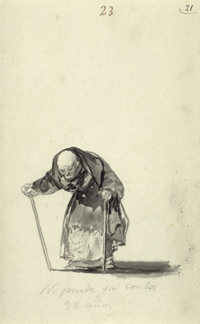
He-can-no-longer-at-theA “ground-breaking” exhibition of works of 18th and 19th century Spanish painter and printmaker Francisco Goya opens to the Courtauld Gallery at Somerset House today. Goya: The Witches and Old Women Album brings together the previously widely scattered pages of one of the artist’s most celebrated private albums in the first exhibition to ever recompile one of them. The album – which features themes of witchcraft, dreams and nightmares and has been reconstructed into its original sequence – is thought to have been made between 1819-23, a period during which Goya completed the murals known as the Black Paintings. Runs until 25th May. Admission charges applies. For more, see www.courtauld.ac.uk/goya. PICTURE: © The Courtauld Gallery (He can no longer at the age of 98, c. 1819-23, J. Paul Getty Museum).

The ‘Wolsey Angels’ have been “saved for the nation” after a campaign to acquire them by the V&A. The museum has reported that more than £87,000 was raised in a national public appeal – around £33,000 of which was raised via donations and through the purchase of badges at the South Kensington premises – which, along with grants including a £2 million National Heritage Memorial Fund grant and a £500,000 Art Fund grant, will be used to acquire the four bronze angels which were originally designed for the tomb of Cardinal Thomas Wolsey, chief advisor to King Henry VIII. The four bronze angels, which have been in display at the V&A, will now undergo conservation treatment before going back on display. For more on the history of the angels, see our earlier post here. For more information on the V&A, see www.vam.ac.uk.

Closing Soon – A Victorian Obsession: The Pérez Simón collection at Leighton House Museum. This exhibition at the former Holland Park of Lord Leighton presents more than 50 rarely exhibited paintings by leading Victorian artists including Albert Moore, Dante Gabriel Rossetti, Edward Burne-Jones, John Everett Millais, John William Waterhouse, Edward Pointer, John Strudwick and John William Godward as well as six pictures by Leighton himself and the highlight, Lawrence Alma-Tadema’s The Roses of Heliogabalus. Runs until 29th March. Admission charge applies. See www.rbkc.gov.uk/subsites/museums/leightonhousemuseum/avictorianobsession.aspx for more.

This Week in London – John Singer Sargent (and friends); Chinese New Year in Soho; and, ‘Cravings’ at the Science Museum…

NPG_920_1362_RobertLouisSteA major exhibition of the works of John Singer Sargent has opened at the National Portrait Gallery off Trafalgar Square this week. Sargent: Portraits of Artists and Friends – which has been organised in conjunction with the Metropolitan Museum of Art in New York – brings together a collection of the artist’s intimate and informal portraits of his friends including Robert Louis Stevenson, Claude Monet and Auguste Rodin. Sargent (1856-1925), born the son of an American doctor in Florence, studied in Italy and France before scandal led him to move to England where he established himself as the country’s leading portrait painter. He made several visits to the US during his career, painting portraits as well as decorative paintings for public buildings including the Boston Public Library and Museum of Fine Arts. The exhibition runs until 25th May. Admission charge applies. For more, see www.npg.org.uk. PICTURE: Courtesy of the Taft Museum of Art, Cincinnati, Ohio

It’s Chinese New Year and the celebrations kick off in London’s Chinatown in Soho this Sunday. The day starts with a parade at 10am which runs from Duncannon Street to Shaftesbury Avenue featuring floats and Chinese lion and dragon teams. It will be followed by a free programme of events in Trafalgar Square which, starting at noon, include music, dance, acrobatics and martial arts. Other events are taking place at a range of locations across the West End. For more information, check out www.london.gov.uk/get-involved/events/chinese-new-year-2015.

Ever wondered how your appetite is shaped by food? A new free exhibition at the Science Museum in South Kensington, Cravings: Can Your Food Control You? explores how the brain, ‘gut brain’ and bacteria influence our diets. Along with personal stories and objects as well as the use of science and tech to present the display, those who attend the exhibition will also be able to take part in a ground-breaking neurogastronomy experiment to explore how our senses influence appetite (the experiment is also available online – follow the link below). There’s also a digital quiz where you can consider the ethical challenges that cravings, appetite control and food regulations pose. Runs until January next year. For more, see www.sciencemuseum.org.uk/cravings.

The history of the Foundling Hospital’s Boy’s Band is the subject of a display at the Foundling Museum in Bloomsbury. Foundlings at War: Military Bands is part of a series of exhibits supported by the Heritage Lottery Fund exploring the hospital’s links with the military. The Boy’s Band was established in 1847 and boys who joined increasingly went on to serve in the military. Runs until 10th May. For more, see www.foundlingmuseum.org.uk.

Send all items for inclusion to exploringlondon@gmail.com.

This Week in London – 70 years of British history in the spotlight at the Hayward; Napoleonic propaganda at the British Museum; pick the copy at the Dulwich Picture Gallery; and, Fulham Palace during World War I…

The last 70 years of British history is under the spotlight at the Hayward Gallery, South Bank, in a new exhibition, History is Now:7 Artists Take on Britain. As the title suggests, seven UK-based artists – John Akomfrah, Simon Fujiwara, Roger Horns, Hannah Starkey, Richard Wentworth and Jane and Louise Wilson – are each looking at a particular period of cultural history spanning the years from 1945 to today. The artists have selected more than 250 objects from public and private collections and have displayed these along with photographs, newspapers, films, domestic items and artefacts. The exhibition, which runs until 26th April, is part of the Southbank Centre’s Changing Britain 1945-2015 Festival which runs until 9th May. For more, see www.southbankcentre.co.uk.

The use of Napoleon’s image in propaganda during the Napoleonic Wars is the subject of an exhibition which opened last week at the British Museum in Bloomsbury. Bonaparte and the British: prints and propaganda in the age of Napoleon looks at how propaganda was used on both sides of the channel and includes works by both British and French satirists. Among British artists whose work is featured is that of James Gillray, Thomas Rowlandson, Richard Newton and George Cruikshank and the exhibition also features a range of objects – mugs, banners and even Napoleon’s death mask – drawn from the museum’s collection. The exhibition, which runs until 16th August, is free and can be found in Room 91. For more, see www.britishmuseum.org.

DulwichCan you pick a copy? Visitors to the Dulwich Picture Gallery in the city’s south have the opportunity to test their skills with a new initiative which has seen a Chinese replica placed somewhere among the 270 Old Master paintings on display. Made in China: A Doug Fishbone Project explores the nature and importance of the concept of the original versus that of the copy and the role of art as commodity. People have three months – until 26th April – to visit the gallery and find the replica painting before submitting their answers via an iPad in the gallery (those who correctly identify it will be entered into a competition to win a custom print from the gallery’s collection signed by the American artist Doug Fishbone). The replica will be revealed on 28th April when it will hang side-by-side with the original. Admission charge applies. For more, see www.dulwichpicturegallery.org.uk. PICTURE: © Stuart Leech/Dulwich Picture Gallery.

• The Talk: Isambard Kingdom Brunel – The man who built the world. Robert Pulse, director of The Brunel Museum, will give a free talk about the life and achievements of the great Victorian engineer Brunel at the John Harvard Library 211 Borough High Street on 17th February at 6.30pm. For more information, follow this link.

On Now: Fulham Palace through the Great War. This exhibition at the former home of the Bishop of London on the Thames River in west London tells the story of the palace during World War I and examines the lives of those connected with the palace who died in the conflict, such as William Burley, son of Bishop Winnington-Ingram’s chauffeur. It tells how the bishop – described as an “enthusiastic” recruiter – visited the frontline in 1915 and how, in 1918, the palace was occupied by a Red Cross hospital. Runs until 16th April. Entry is free. For more, see www.fulhampalace.org/visiting-whats-on/exhibitions/.

Send all items for inclusion to exploringlondon@gmail.com.

This Week in London – Churchill’s Scientists; Waterloo online; a Chelsea murder case reopened; exploring Crossrail; and, astronomical photography…

Churchill-with-a-Spitfire-from-Castle-Bromwich,-credit-Philip-Insley,-CBAF-Archive-Vickers-ArchiveSyndics Marking the 50th anniversary of the death of Winston Churchill, a new exhibition at the Science Museum in South Kensington looks at his passion for science and the influence that had on bringing World War II to an end. Churchill’s Scientists celebrates the individuals who flourished under Churchill’s patronage (and , as well as helping to bring about the end of World War II, also launched a post-war “science renaissance”) – from Robert Watson-Watt (inventor of radar) through to Bernard Lovell (creator of the world’s largest telescope) – and also delves into more personal stories of Churchill’s own fascination with science and tech. The display include objects from the museum’s collection as well as original archive film footage, letters and photographs. Highlights include the high speed camera built at Aldermaston to film the first microseconds of the detonation of the UK’s first home grown atomic bomb, the cigar Churchill was smoking when he heard news of his re-election as PM in 1951, and a one-piece green velvet “siren suit” designed by Churchill to wear during air raids (only one of three originals known to exist, it’s never been on public display outside of the tailors who created it). The free exhibition runs until 1st March and is part of the Churchill 2015 programme of events. Visit www.sciencemuseum.org.uk/churchill for more. PICTURE: Churchill with a Spitfire from Castle Bromwich (Philip Insley, CBAF Archive Vickers ArchiveSyndics).

The National Army Museum and Waterloo2oo have launched an online gallery which will eventually comprise images and information on more than 200 artefacts associated with the Battle of Waterloo ahead of the 200th anniversary in June. Among the objects featured on Waterloo200.org are the Duke of Wellington’s boots, a French eagle standard captured in battle and the saw used to amputate the Earl of Uxbridge’s leg. One hundred items – drawn from the Army Museum’s collection as well as from European museums and private collections – can already be seen on the site with a further 100 to be added before the bicentenary on 18th June.

The Talk: Death in Disguise: The Amazing True Story of the Chelsea Murders. On 12th February, the Guildhall Library in the City of London will host Gary Powell as he examines the facts of this double murder which took place in Chelsea in May, 1870, and left Victorian society reeling. For more events at the library, follow this link.

On Now: Breakthrough: Crossrail’s tunnelling story. This exhibition at the London Transport Museum in Covent Garden brings a new perspective on the massive Crossrail project currently underway in the city. Visitors will experience the tunnel environment through a five metre high walk-through installation featuring a computer simulation of a giant boring machine as well as learn about how the project is shaping up, play interactive tunnelling games and hear firsthand from those who work underground. Admission charge for adults applies. Runs until August. For more, see www.ltmuseum.co.uk.

Extended: Astronomy Photographer of the Year Exhibition. This exhibition at the Royal Observatory Greenwich features the winning images from last year’s competition. They include the Briton James Woodend’s image of a vivid green aurora in the Icelandic night sky; American Patrick Cullis’ view of earth taken from 87,000 feet above ground; and, New Zealander Chris Murphy’s image of dusty clouds dancing across the Milky Way. The exhibition can be seen for free in the Observatory’s Astronomy Centre until 19th July. For more, see www.rmg.co.uk/astrophoto.

• Send all items for inclusion to exploringlondon@gmail.com.