Around London – Open House London; 16th century tankard at MoL Docklands; and, Spanish artists shine at the British Museum…

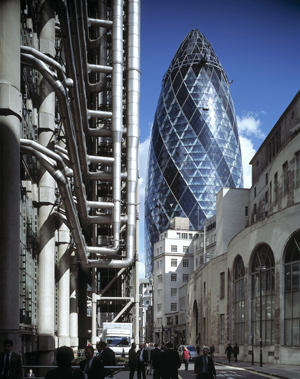
It’s Open House London weekend and that means your chance to enter scores of buildings not normally open to the public. More than 750 buildings are taking part in this, the 20th year the weekend has been held and there’s also an extensive program of free talks, walks and specialist tours. Among the buildings open this year are the iconic Gherkin building in the City (formally known as 30 St Mary Axe, pictured), Heron Tower in Bishopsgate, numerous livery company halls including that of the Apothecaries, Fishmongers and Carpenters, government buildings including Marlborough House, Westminster Hall, and the Foreign Office and numerous historic residences from the Mansion House, home of the Lord Mayor of London to Osterley Park House in west London. Among the events on offer is a moonlit hike through London tomorrow night to raise money for Maggie’s Cancer Caring Centres and rides on the new Emirates Airline cable car as well as boat tours to the Thames Barriers. If you didn’t order a guide, you can see the program online at the Open House London website – www.londonopenhouse.org. PICTURE: (c) Grant Smith/VIEW Pictures

A 16th century wooden tankard, found by a mudlark on the Thames foreshore near Ratcliff in London’s east, has briefly gone on display at the Museum of London Docklands. The large vessel, capable of holding three pints, has the initials RH inscribed on the base. It’s unknown for what purpose it was used, perhaps serving as a decanter rather than for individual use and may have been used on a ship. The vessel will be on display at the museum only until 27th September. For more, see www.museumoflondon.org.uk.

On Now: Renaissance to Goya: Prints and drawings from Spain. Opening at the British Museum today is this new exhibition featuring important prints and drawings by Spanish and other European artists working in Spain and spanning a period from the mid 16th century through to the 19th century. While all the works are drawn from the museum’s collection, many have never been on display before. The artists represented include Diego Velazquez, Alonso Cano, Bartolome Murillo, Francisco Zubaran and Jusepe de Ribera as well as Francisco de Goya. Held in room 90. Admission is free. Runs until 6th January. For more, see www.britishmuseum.org.
Lost London – Queenhithe…

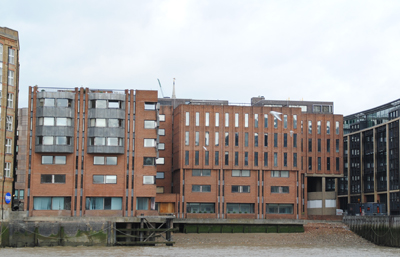
Not, strictly speaking, lost, Queenhithe – a dock on the north bank of the Thames – is nonetheless these days merely a shadow of its former self.

There has been a dock here since Saxon times when it is recorded that King Alfred (he of ‘The Great’ fame), established a harbour here in 883. It was then known as Ethelred’s Hythe (the Ethelred being that of his brother-in-law and ‘hythe’ being a Saxon word for a trading shore where goods could be traded directly out of boats).

Queenhithe took its name from Queen Matilda, the wife of King Henry I, who was granted dues from goods being traded at the dock in the early 1100’s – a right which was later inherited by future English queens.

The dock reached the peak of its popularity in the 13th century when it became the principal site for the landing of grain and other food supplies to feed London but in the 15th century, the dock’s importance waned as other docks downstream, better suited to larger watercraft, took over much of its trade.

Remains of the wooden timbers which in medieval times lined the Thames waterfront have been found here. The inlet for Queenhithe’s harbour (pictured above) is one of few left on The Thames.

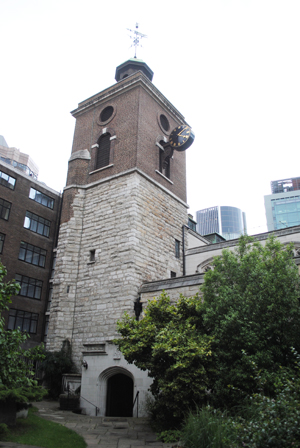
The name these days gives itself to Queenhithe street (which leads to the inlet) and the Queenhithe Ward, one of 25 wards in the City of London. There was also a former church known as St Michael Queenhithe – it was destroyed in the Great Fire of 1666, rebuilt to the designs of Sir Christopher Wren and then demolished in the late 19th century.

Treasures of London – King Lud and his sons…

A mythical figure from early Britain, King Lud is said to have been a pre-Roman king of Britain who rebuilt London (which according to legend had been originally founded by the exiled Trojan Brutus) and from whom London derives its name.

Lud is said by some to have given his name to the gateway known as Ludgate (although others say it comes from an Old English term meaning swing or postern gate – see our earlier post here for more on Ludgate).

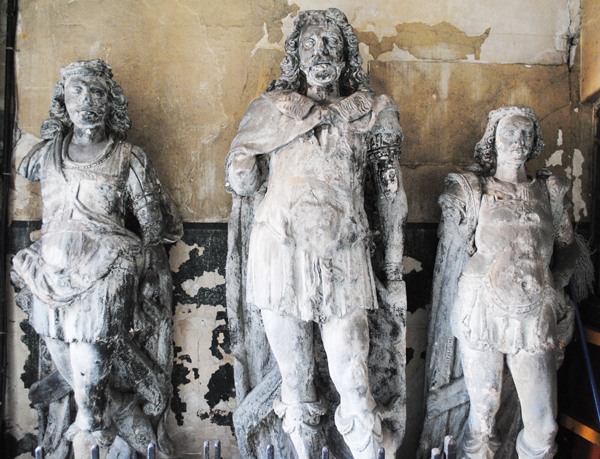
This series of badly weathered statues – depicting King Lud and his two sons, apparently named Androgeus and Theomantius – was originally located on the gate. In fact, the legend goes, the king was buried under it.

Following the gate’s demolition, the statues – said to date from 1586 with the name of the sculptor now lost to time – were moved here at some point to the vestry porch of St Dunstan-in-the West in Fleet Street.

Around London – Richmond’s upsized Olympic rings; cart marking; ‘Sam’ Mussabini honored; and, Tudor twins at the NPG…

• The largest official Olympic Rings were unveiled at Richmond Park National Nature Reserve in London’s south-west this week, having been mown into the grass by the Royal Parks’ shire horses. The rings, which lie on Heathrow’s flight path and are 300 metres wide and more than 135 metres tall, will welcome athletes as they fly in to compete in the Games which kick off later this month. It took six shire horses to create the giant rings – which represent five continents – but they’ll be maintained by just two – Jim and Murdoch. Horses have worked in Richmond Park since as far back 1637 when King Charles I had the park enclosed as a royal hunting ground. Eleven Olympic events will be held on Royal Parks during the Games including road race cycling in Richmond Park. For more on Richmond Park, see www.royalparks.org.uk/parks/richmond-park. PICTURE: LOCOG.

• Almost 50 vehicles, ranging from handcarts to horse drawn carriages, steam powered vehicles to a new London bus, took part in the Worshipful Company of Carmen’s traditional ‘Cart Marking’ procession through the City of London yesterday. The ‘trade’ of carmen dates back to the 13th century when City authorities passed a bye-law controlling carters. At the ceremony, the carmen bring a variety of vehicles which are branded by placing a red hot iron on a wooden plate, with the year letter and the car number, in the continuation of an ancient tradition. The Worshipful Company of Carmen is said to be the oldest transportation organisation in the world. For more on the livery company, see www.thecarmen.co.uk.

• The late athletics coach Scipio Africanus “Sam” Mussabini (1867-1927) was honored this week with the unveiling of an English Heritage Blue Plaque at his former home in Herne Hill in London’s south. Mussabini, whose role in helping 100 metre sprinter Harold Abrahams win gold at the 1924 Olympics was depicted in the film Chariots of Fire (he was played by Ian Holm),  lived at the house at 84 Burbage Road from 1911 to about 1916. It backs onto the Herne Hill Stadium where he worked as a cycling and athletics coach from the 1890s, a period during which he trained several medal-winning Olympic athletes. All up, Mussabini’s runners won a total of 11 Olympic medals including five golds, between 1908 and 1928. For more, see www.english-heritage.org.uk.

On Now: Double Take: Versions and Copies of Tudor Portraits. This display at the National Portrait Gallery features five pairs of nearly identical Tudor portraits and explores how and why they were made. Among the portraits from the gallery’s collection on display are those of King Henry VIII, his wife Anne Boleyn, Archbishop William Warham, the merchant Thomas Gresham and Lord Treasurer Thomas Sackville – all of which are paired with paintings on loan from other collections. Admission is free. Runs until 9th September. For more information on the Making Art in Tudor Britain research project – of which this is a part – see www.npg.org.uk/research/programmes/making-art-in-tudor-britain.

Lost London – The Savoy Palace…

At one time the grandest of medieval townhouses in London, the history of the Savoy Palace, also known as the Palace of the Savoy, goes back to at least the 13th century.

A mansion was built here by Simon de Montfort, the ill-fated Earl of Leicester, in 1245. Following his death, it and the land between the Strand and the Thames were gifted by King Henry III to Peter, Count of Savoy, and it was renamed the Savoy Palace (apparently originally spelt Savoie).

The uncle of the king’s young wife Eleanor of Provence, Peter had accompanied his niece to London for her wedding to the king at Canterbury Cathedral on 14th January, 1236, and decided to stay. In 1241, the king named him the Earl of Richmond and in 1246 granted him the land upon which the property was built.

After being briefly given to a religious order, Queen Eleanor gifted the property to Prince Edmund (“Edmund Crouchback” – a term referring to his entitlement to wear a crusader’s cross, not a hunchback), the 1st Earl of Lancaster and younger brother to King Edward I.

It was subsequently occupied by Edmund’s successor earls and, later, dukes. Among the ‘guests’ to visit the palace during the 14th century were the French King Jean (John) II, held there for three years following his capture by the Black Prince at the Battle of Poitiers during the Hundred Years War in 1356.

Interestingly, as the property of the Dukes of Lancaster, the precinct around the palace was considered part of County Palatine of Lancaster (created in 1351), meaning that the rule of the dukes was applied here instead of that of the king – a situation which remained in place until the 1800s.

The palace eventually became the property of John of Gaunt, the 2nd Duke of Lancaster and third son of King Edward III. The richest and most powerful man in the kingdom (he was all but king in name during the younger years of King Richard II in whose name he ruled), Gaunt’s home was said to be sumptuous.

It’s perhaps not surprising then that it become a focus of the rebels during the Peasant’s Revolt in 1381 (it had been attacked unsuccessfully a few years earlier). They attacked and destroyed the property, razing it to the ground. (The story includes the tale that 32 men drank themselves to death after becoming trapped in the cellar while the palace burned).

The site, however, continued to be referred to as that of the Savoy and in the early sixteenth century King Henry VII, by order of his will, financed the founding of the Savoy Hospital on the site for the poor people (the Queen’s Chapel of the Savoy is a relic of this building – see our earlier post here). The hospital closed in 1702 and was later demolished (we’ll deal with this in more detail in a later Lost London post).

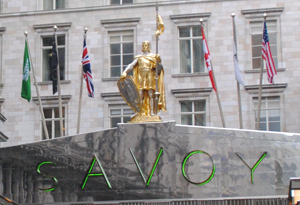
The site, which stands on the north side of the Thames just west of Waterloo Bridge,  is now occupied by the salubrious Savoy Hotel (the entrance of which is pictured above) and the Savoy Theatre, which, like the hotel, was founded by impressario Richard d’Oyly in the 1880s (the theatre was the first building in the country to be entirely lit by electric lighting).

The name of the Savoy Palace is also remembered in street names around the site including Savoy Street, Savoy Hill, Savoy Steps, Savoy Way and Savoy Place.

Where is it?…#35…

The latest in the series in which we ask you to identify where in London this picture was taken and what it’s of. If you think you can identify this picture, leave a comment below. We’ll reveal the answer early next week. Good luck!

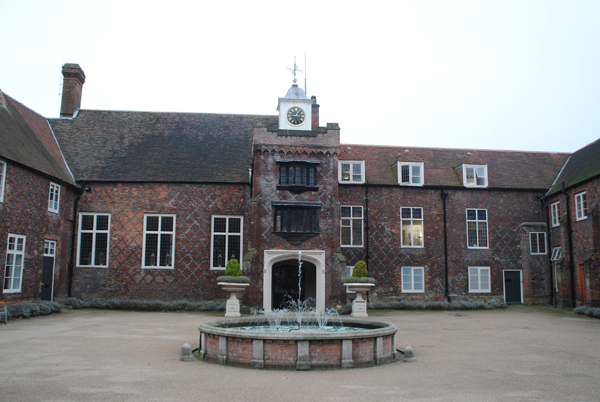
Well done to James and Mike – this is indeed Fulham Palace, former home of the Bishops of London. The site was first acquired by Waldhere, the Bishop of London, from Tyrhtilus, the Bishop of Hereford, in about 700 AD. The site – the current buildings date from the medieval period – were later mainly used as a summer home of the Bishop of London and it wasn’t until the 20th century that it become their principal home. The last bishop to live here was Bishop Stopford who retired in 1975. These days the palace, which is still owned by the Church of England, houses a museum, cafe, gallery and gardens. We’ll be looking at more of the history of Fulham Palace in a later post. In the meantime, see www.fulhampalace.org for more, including details of visiting hours.

Treasures of London – The Clock Tower…

The tower at the northern end of the Houses of Parliament is known to many simply as Big Ben – what isn’t often realised is that (as was pointed out in this earlier article) Big Ben actually refers to a bell inside the tower and not the tower itself. The tower, rather, has the rather plain moniker of The Clock Tower. But in honor of the Queen’s Diamond Jubilee, that’s all about to change.

News broke this week that politicians have decided to rename the tower the Elizabeth Tower in honor of Queen Elizabeth II. The move does have precedent – the great southern tower which stands over the Sovereign’s Entrance to the House of Lords was once known as the King’s Tower but was renamed the Victoria Tower in honor of Queen Victoria’s Diamond Jubilee in 1897 (Queen Victoria is the only other British monarch to have celebrated a Diamond Jubilee).

The 96 metre high tower, part of the Houses of Parliament (officially known as the Palace of Westminster), is not the first clock tower to stand on the site of the palace. The first, located on the north side of New Palace Yard, was built in 1288-90 in the reign of King Edward I and contained a bell and clock.

It was replaced in 1367 with a tower that featured the first public chiming clock in England. This second tower was demolished in 1707 after falling into disrepair and replaced with a sundial.

Following a fire which destroyed much of the Palace of Westminster in 1834, architect Sir Charles Barry was selected to design new buildings to house Parliament but interestingly his initial designs didn’t include a clock tower – this was added to the plans in 1836.

Construction of the new Clock Tower, which was built from the inside out and clad in Yorkshire Anston stone and Cornish granite, began in September 1843 but wasn’t completed until 1859 following considerable delays. The ‘lantern’ at the top is known as the ‘Ayrton Light’, named for Acton Smee Ayrton, an MP and the First Commissioner of Works in the 1870s. Not installed until 1885, it is lit up when either House is sitting at night.

The clock was constructed by Edward John Dent and his stepson Frederick to the designs of Edmund Beckett Denison. It included a “revolutionary mechanism” known as the ‘Grimthorpe Escapement’ (Denison was later created Baron Grimthorpe), which helped ensure the clock’s accuracy despite external factors like wind pressure on the clock’s hands and which was adopted in many subsequent clocks. The design of the dials were a collaboration between Barry and Augustus Welby Pugin.

The clock was installed in April 1859 but the cast-iron hands were too heavy and had to be replaced with copper ones. It began keeping time on 31st May, 1859.

It’s worth noting that the tower tilts at 0.26 degrees to the north-west but experts say this is apparently not going to be a major structural problem for 10,000 years.

For more on the Clock Tower including a terrific virtual tour, see www.parliament.uk/bigben. It is possible to tour the Houses of Parliament – including climbing the 334 steps to the top of the Clock Tower – but this is only open to UK residents (and they book up months in advance). For more on the tours, see www.parliament.uk/visiting/visiting-and-tours/ukvisitors/bigben/.

LondonLife – The Cromwell Trial Plate…

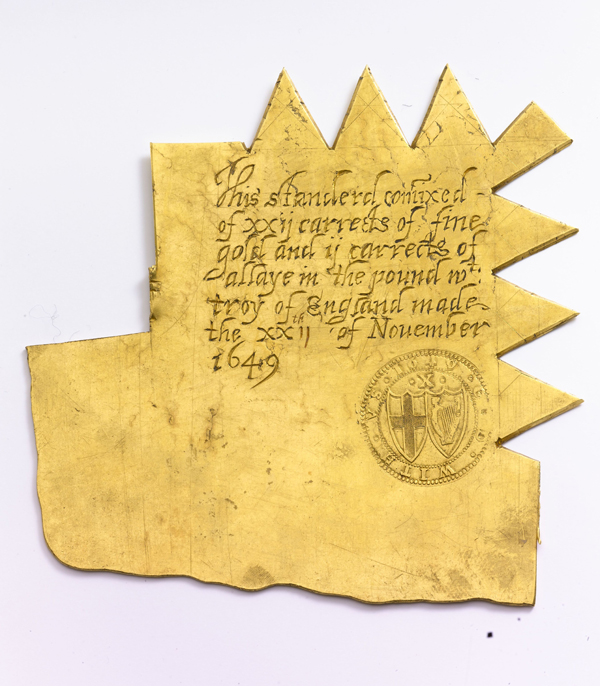
This is a section of the Cromwell Trial Plate used in the Trial of the Pyx in 1649. The Trial of the Pyx, still held every year in February, dates back to the 12th century; its purpose was to ensure, in a public demonstration, that coins produced at the Royal Mint were within set parameters surrounding weight, size and metallic composition. It is named after the box in which coins were transported, known as a pyx (from the Latin pyxis for box or chest – these were historically kept in the Chamber of the Pyx at Westminster Abbey), and involves melting down samples of coins and measuring the gold and silver content against a benchmark piece of metal known as a Trial Plate. This Trial Plate, created by the Goldsmith’s Company during the first year of the Commonwealth, is among 400 treasures on show as part of Gold: Power and Allure, a landmark exhibition celebrating the story of gold and Britain being held at the Goldsmiths’ Hall in association with the World Gold Council. Runs until 28th July. Admission is free. For more, head to www.thegoldsmiths.co.uk. PICTURE: © Royal Mint.

What’s in a name?…Southwark

One of those somewhat confusing placenames where the ‘w’ is effectively silent, Southwark (pronounced something like Suh-thuck) is a sizeable district south of the River Thames and one of the city’s oldest areas.

The area, which was settled as far back as Saxon times, takes its name from the Old English words suth or sud weorc which translates as “southern defensive work” and relates to the fact that the site is south of the City of London and at the southern end of London Bridge (the first bridge here was built by the Romans). While it was this name which was recorded in the Domesday Book of 1086, in the 900s the area was recorded as Suthriganaweorc which meant ‘fort of the men of Surrey’.

The name Southwark was also applied to borough which sat south of the river and still exists today – the Borough of Southwark. This in turn became shortened to just Borough, hence the name borough still exists as an alternative for part of Southwark even today (think of Borough Market and Borough High Street).

Part of Roman Londinium, Southwark was effectively abandoned after the end of Roman rule and then reoccupied by Saxons in the late 800s when the ‘burh’ (borough) of Southwark was created. It developed considerably in the medieval period and became known for its inns (think of the pilgrim inn, The Tabard, in The Canterbury Tales).

The area, particularly Bankside – part of the Borough of Southwark, also become known as an entertainment district with theatres and bear-baiting pits as well as a red-light district. It was also known for its prisons, in particular The Clink (controlled by the Bishop of Winchester), Marshalsea and the King’s Bench.

The area was also a centre of industry – everything from brewing to tanning – and came to boast numerous docks and warehouses (when it also became a centre of the food processing industry). With the closure of the docks, it’s retail, tourism, creative industries and the financial services which are dominant in the area today.

Landmarks are many thanks to the area’s long and colorful history (far too many to list in this short piece) but among major sites are Southwark Cathedral, Borough Market, and the George Inn as well as the Old Operating Theatre, Guy’s Hospital, and a replica of Sir Francis Drake’s ship, the Golden Hinde. Personalities associated with the area (again far too many to list here) include Geoffrey Chaucer, William Shakespeare and Charles Dickens.

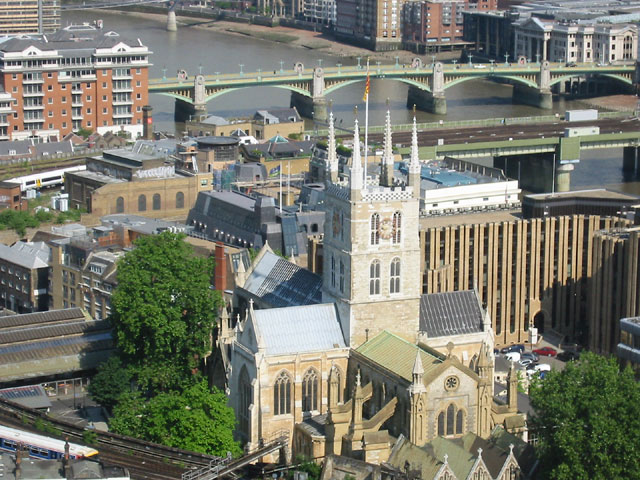
PICTURE: Southwark Cathedral © Copyright Kevin Danks and licensed for reuse under this Creative Commons Licence

For more, check out Southwark: A History of Bankside, Bermondsey and the Borough

Lost London – King Edward III’s Thames-side manor house…

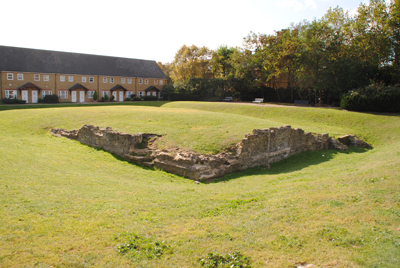
The remains of one of the lesser known former royal residences in London, King Edward III’s manor house, sit amid a grassy park on the south bank of the Thames at the corner of Bermondsey Wall East and Cathay Street in Rotherhithe.

Believed to have been built in about 1350 during the reign of the king (1312-1377), the 14th century property – which consisted of stone buildings arranged around two courtyards – was originally built on what was then an island surrounded by marshes.

The premises was surrounded on three sides by a moat – the fourth side opened directly to the river, allowing the king to travel to the property by boat.

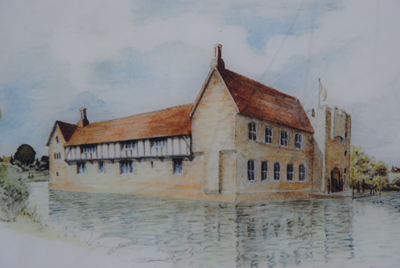
Among the buildings in the complex were a hall with a fireplace as well as private chambers for the king and utility spaces like kitchens (pictured below is a reconstruction of the property as depicted on an information plaque located at the site).

The function of the building remains somewhat a mystery – with no nearby royal parks it is unlikely it was a conventional hunting lodge although documentary evidence does point to falcons being house there so perhaps it was a place where the king hunted with falcons.

As the Thames riverbank was pushed northward over the following centuries, the residence became completely surrounded by a moat. It was eventually sold into private hands.

The site was apparently used as a pottery in the 17th century and warehouses occupied it in the 18th and 19th centuries (in fact a 14th century wall was incorporated into one of these and was still standing in 1907).

The warehouses were demolished in the 1970s and the remains of the palace confirmed on the site during an excavation by English Heritage 1985 (they also found a lot of Delftware on the site apparently related to its days as a pottery).

Lost London: Gates Special – The Stone Gate, London Bridge

And so we come to the last entry in our special series on Lost London looking at some of London’s gates – this time the only gate located on the south side of the Thames.

Located at the south end of London Bridge, this gate guarded the bridge entry in medieval times. When the first gate was built here remains something of a mystery but it is known that the first stone bridge, built in the late 1100s under the direction of priest Peter de Colechurch (it opened in 1209), certainly included a gatehouse known as the Stone Gateway (referred to by some as Bridge Gate) at the southern end.

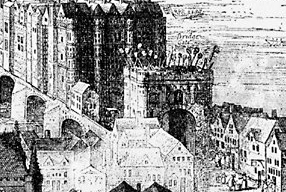
The practice of parboiling the heads of traitors and the dipping them in tar before putting them on pikes above the gate apparently dates from 1305 when Scottish rebel William Wallace’s head was displayed there. The practice apparently continued until 1678 when goldsmith William Stayley’s head was the last to be displayed there.

As we mentioned in our earlier post on London Bridge, famous heads to adorn the gateway over the years included Peasant’s Revolt leader Wat Tyler in 1381, rebel Jack Cade in 1450, the former chancellor Sir Thomas More and Bishop John Fisher in 1535, Thomas Cromwell in 1540 and Guy Fawkes in 1606.

Pictured above is an enlarged detail of a 1616 print showing London Bridge by Claes Van Visscher – the heads are clearly visible on top. One German visitor famously counted 30 heads on top when he visited in 1598.

The gate (and it should be mentioned there was also another gate on the bridge with a drawbridge which was replaced by Nonsuch House in 1577) was presumably removed sometime after 1756 when an Act of Parliament authorised the removal of shops and houses on the bridge.

Of course, there are many other gates in London – some of them smaller gates in the city walls – which have been lost to time. We’ll be looking at some more of these in future posts…

PICTURE: Wikipedia

What’s in a name?…St John’s Wood

This well-to-do area in London’s north-west, just outside Regent’s Park, takes its name from the historic ownership of land here by the Order of St John of Jerusalem (also known as the Knights Hospitaller).

The land had previously been part of the Great Forest of Middlesex. The Order of St John of Jerusalem, which since 1140s had its English headquarters in a Clerkenwell priory where St John’s Gate stands (this now houses the Museum of the Order of St John – see our previous entry here), took over ownership of land in the early 1300s after the previous owners, the Knights Templar, fell into disgrace.

Following the Dissolution, it became Crown land and remained so until 1688 after which it passed into the hands of private families, notably the Eyre family who owned much of the area.

It remained relatively undeveloped until the early 19th century when, following the introduction of semi-detached villas on planned estates, it was marketed as a residential alternative for London’s middle classes, away from the smog and congestion of central London.

It became favored by the bohemian set and residents included creative types like artists and authors as well as scientists and traditional craftsmen (apparently in the late 19th century it was also known for its upmarket brothels).

Rebuilt with swanky apartment complexes in the early twentieth century, these days it remains a leafy enclave for the wealthy. Many of the houses which have survived are heritage listed.

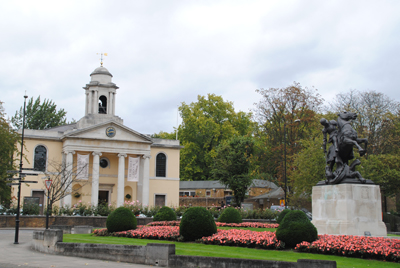
Landmarks include St John’s Church (pictured above, this was consecrated in 1814) and the St John’s Wood Barracks and a Riding School (this was completed in 1825 and is the oldest building still on the site) which is now home to the King’s Troop Royal Horse Artillery which carries out mounted ceremonial artillery duties such as firing royal salutes for the State Opening of Parliament, royal birthdays and state visits.

St John’s Wood is also home to Abbey Road Studios (home of the Beatles and that famous zebra crossing), Lord’s Cricket Ground (officially the home of the Marylebone Cricket Club which was moved here in 1814, the same year the church was consecrated) and the Central London Mosque located on the edge of Regent’s Park.

For more on St John’s Wood, take a look at the website of The St John’s Wood Society.

Where is it? #21

The latest in the series in which we ask you to identify where in London this picture was taken and what it’s of. If you think you can identify this picture, leave a comment below. We’ll reveal the answer early next week. Good luck!

Congrats to Jameson Tucker who correctly placed this in the gardens which now occupy the site of the former church of St John Zachary which lie, as Mike Paterson correctly pointed out, near the Goldsmiths’ Hall.

In fact, the gardens, located at the corner of Gresham and Noble Streets in the City (opposite the Goldsmith’s Hall), are also known as the Goldsmith’s Garden and were laid out following bomb damage during the Blitz (the church of St John Zachary had been destroyed in the Great Fire of London and not rebuilt).

The gardens were redesigned in 1957 by landscape architect Sir Peter Shepheard and have been added to and amended over the years since (including by landscape architect Anne Jennings in the mid-Nineties).

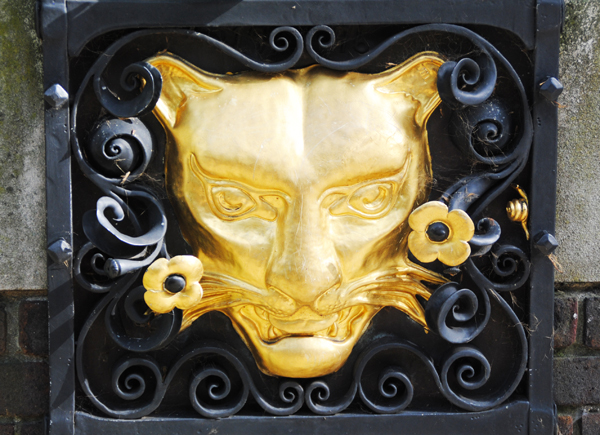
The iron arch, which was commissioned by the Blacksmith’s Company and put here in 1994, features the leopard’s head which is the hallmark of the Goldsmiths’ Company Assay Office, the premier hallmark in the UK (the term hallmark dates from the 15th century when London craftsmen were first required to bring their creations to the Goldsmiths’ Hall for verification and marking although the mark of the leopard’s head has been in use since the early 1300s).

For more on the Goldsmiths, see www.thegoldsmiths.co.uk.

Lost London: Gates Special – Newgate

Better known now as the name for the infamous former prison which whom its history is intertwined, Newgate was originally one of the seven principal gates of London and, like five others, originally dates back to Roman times.

The gate, which apparently took the name ‘new’ thanks to a rebuild in the early medieval era, possibly in the reign of King Henry I or King Stephen, was located close to where the street known as Newgate meets the Old Bailey (see picture – there’s a blue plaque marking the spot on Newgate).

It was used as a prison from the 12th century for housing debtors and felons  – in the 13th century King Henry III is recorded as having issued orders for the prison’s repair (You can see our earlier entry on the prison here.)

The gate’s prison function – this was really no more than a few ‘cells’ – was substantially added to in the 1420s when, apparently as required under the terms of former Mayor Richard Whittington’s will, the gate was rebuilt and a new prison building was constructed to the south on what is now the site of the Old Bailey (home of the Central Criminal Court).

The gate was eventually demolished in the mid 18th century apparently due to urban planning issues. The prison, meanwhile, continued to be used until 1902 and was finally pulled down two years later.

Lost London: Gates Special – Moorgate

Originally a postern (small or secondary) gate built by the Romans, Moorgate came into its own as a larger gate in the 15th century and survived for more than 300 years before it was demolished in 1761.

The name comes from the area in which it stands – Moorfields, one of the last open pieces of space within the City of London – stood just to the north of the gate. It was originally a sparsely populated marshy expanse – so much so that when the gate was first built, the area around it was often flooded and some local residents used boats as a means of transport – but was later drained. Many people were evacuated here during the Great Fire of London in 1666 and some apparently then settled in the area which later also gained a reputation as a hiding place for highwaymen like Jack Sheppard – we’ll take a closer look at Moorfields in a later post.

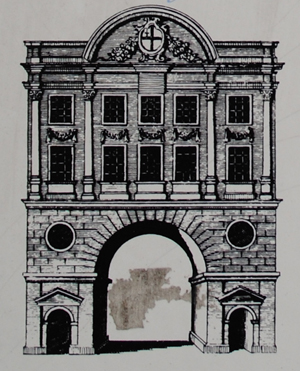
The gate known as Moorgate, meanwhile, was first rebuilt as a full sized gate with towers in 1415 on the orders of then Mayor Thomas Falconer to provide access to the fields without. It was enlarged several times in medieval years before being damaged in the Great Fire. It was replaced with a ceremonial stone gate in 1672 to provide access to the now well-drained fields before being demolished in 1761 (some of the stone was apparently later used to support the newly widened central arch of London Bridge).

The gate’s name now lives on in the street known as Moorgate (originally formally known as Moorgate Street after it was first constructed in 1846) – worth noting is that the Romantic poet John Keats was born in the street. The area around the street also is also known by the name Moorgate and is home to some of the City’s key financial institutions.

There’s a plaque near where the site of Moorgate once stood at the corner of Moorgate and London Wall.

PICTURE: Moorgate in its final, ornate form. Taken from a London Wall Walk plaque.

Lost London: Gates Special – Cripplegate

Originally the northern gate of the Roman fort constructed in about 120 AD, Cripplegate was rebuilt several times during the medieval period before finally being demolished in 1760 as part of road widening measures.

The origins of the gate’s name are shrouded by the mists of time but it has been suggested that it was named for the beggars or cripples that once begged there or that it could come from an Anglo-Saxon word crepel which means a covered walkway.

The name may even be associated with an event which took place there in 1100 when, fearful of marauding Danes, Bishop Alwyn ordered the body of Edmund the Martyr, a sainted former Anglo-Saxon king, to be tranferred from its usual home in Bury St Edmunds to St Gregory’s Church near St Paul’s in London so that it could be kept safe. It was said that when the body passed through the gate, many of the cripples there were miraculously healed.

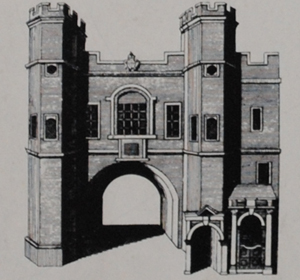
The gate (pictured here in an 18th century etching as it would have looked in 1663 in an image taken from a London Wall Walk plaque), which gave access in medieval times to what was then the village of Islington, was associated with the Brewer’s Company and was used for some time as a prison.

It was defensive works, known as a barbican, built on the northern side of the gate in the Middle Ages which are apparently responsible for the post World War II adoption of the name Barbican for that area of London which once stood outside the gate’s northern facade (the gates stood at what is now the intersection of Wood Street and St Alphage Garden).

The gate’s name now adorns the street known as Cripplegate as well as the name of the church St Giles Cripplegate, which originally stood outside the city walls. It is also the name of one of the 25 wards of the City of London. The original site of the gate is marked with a blue plaque.

Around London – ‘Cathedral of Middlesex’ to be opened in west London; Roman brothel token on display; wifi in Westminster and Kensington; and, looking at the Hajj at the British Museum…

• A medieval barn in west London, said to be the “Cathedral of Middlesex”, will open to the public in April. The Grade I listed Harmondsworth Barn was built in 1426 by Winchester College, who owned a manor farm at Harmondsworth, and was used to store grain. Nearly 60 metres long, the roof is held up by 13 massive oak trusses. In 2006, the barn was bought by an off-shore company who subsequently agreed to sell it to English Heritage following the issuing of a notice for emergency repairs. English Heritage say the barn, called the “Cathedral of Middlesex” by the late poet-laureate Sir John Betjeman, will now be “run by and for the local community”. “Harmondsworth Barn is one of the greatest medieval buildings in Britain, built by the same skilled carpenters who worked on our magnificent medieval cathedrals,” says Simon Thurley, chief executive of English Heritage. “Its rescue is at the heart of what English Heritage does – protecting this nation’s architectural treasures and helping people discover our national story through them. We will complete the repair of this masterpiece and working with local people, will open it to the public to enjoy.” For more, see www.english-heritage.org.uk. (Image: Copyright English Heritage; Photographer Boris Baggs).

The oldest Roman brothel token to have been discovered in London has gone on temporary display at the Museum of London. The token, which may be the oldest of its kind to have been found in Britain (or, indeed, even the only one of its kind ever found in Britain), was known as a spintria and depicts two reclining human figures on one side and the Roman numeral 14 on the other. It was found on the Thames foreshore near Putney Bridge by a mudlarker using a metal detector. Only the size of a 10 cent piece, its use remains something of a mystery – it may have been exchanged for sexual services or used as gaming piece. The token is on display at the museum until April. For more, see www.museumoflondon.org.uk.

Free wifi is being rolled out across Westminster, Kensington and Chelsea as part of deal between Westminster City Council, the Royal Borough of Kensington and Chelsea and network operator, O2. The network, installation of which began last month, is initially being rolled out in a limited number of areas but will eventually cover all of the boroughs and create the largest free wireless hub in Europe.

Now On: Hajj: journey to the heart of Islam. This exhibition at the British Museum is the first to focus on the pilgrimage to Mecca in Saudi Arabia – a central tenet of the Islamic faith. Organised in partnership with the King Abdulaziz Public Library in Riyadh, it’s based around three central themes: the pilgrim’s journey to Mecca with an emphasis on the major routes taken; the Hajj today and its associated rituals; and the origins and importance of the Hajj to Mecca. Objects featured in the exhibition include a seetanah which covers the door of the Ka’ba as well as gifts offered to the sanctuary and souvenirs taken back home. It’s the first of three exhibitions at the British Museum focused on spiritual journeys. Runs until 15th April. Admission charge applies. For more, see www.britishmuseum.org.

10 curiously named churches of London – 10. St Olave Hart Street

One of a few London churches to have escaped the Great Fire of 1666 (the flames are said to have come within 100 metres before the wind changed direction), St Olave Hart Street is named after the patron saint of Norway, St Olaf – a figure more known for his ability as a warrior than as a saint.

King Olaf II was King of Norway in the early 11th century and an ally of the Saxon King, Ethelred the Unready. The Norwegian king won the thanks of the English after he fought alongside Ethelred against the Danes in 1014 in what some refer to as the Battle of London Bridge.

According to some, the church was built on the site of where the battle was fought – many also believe the battle was also the inspiration for the nursery rhyme, London Bridge Is Falling Down, for it was during that battle that Olaf, who was helping Ethelred retake London, is credited with using his longships to pull down London Bridge in a effort to thwart the Danish occupiers.

The church, meanwhile, was rebuilt a couple of times in the Middle Ages, when it was said to have been known as St Olave-towards-the-Tower. The church which now stands on the site was built in 1450 with the distinctive red brick on the tower added in the early 18th century.

Having survived the Great Fire in 1666, the church was not so fortunate during the Blitz when it was struck by German bombs. It was subsequently restored with King Haakon VII of Norway attending the re-opening in the mid-1950s (there is a stone laid in front of the sanctuary which he brought from Trondheim Cathedral).

Other features inside include a recently returned 17th century bust of a prominent physician Dr Peter Turner – part of a monument which went missing after World War II, it resurfaced at an auction in 2010.

The church’s most famous parishioner was the 17th century diarist Samuel Pepys who lived and worked in the nearby Naval Office (for more on Pepys see our earlier entry here). The door through which he would have entered the church is marked with a 19th century memorial.

Pepys and his wife Elizabeth are both buried in the church (the memorial Pepys commissioned for her is still there) as is his brother John. Samuel Pepys’ life is commemorated at a service held close to the day he died – 26th May – each year.

Others associated with the church include Sir William Penn, an admiral and father of the William Penn who founded Pennsylvania in what is now the United States, and Charles Dickens, who gave it the name “Ghastly Grim” thanks to the skulls above its Seething Lane entrance.

St Olave’s is also the chapel of the The Clothworker’s Company, The Worshipful Company of Environmental Cleaners and Trinity House, a charitable organisation dedicated to the safety, welfare and training of mariners established by Royal Charter from King Henry VIII in 1514.

WHERE: Corner of Hart Street and Seething Lane in the City (nearest Tube stations are Tower Hill and Monument). WHEN: See website for detailsCOST: Free; WEBSITE: www.sanctuaryinthecity.net/St-Olaves.html

LondonLife – The Ceremony of the Dues…

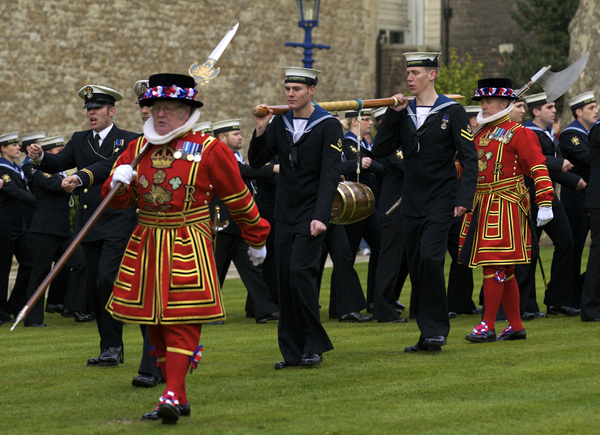
The Constable of the Tower of London, General Lord Richard Dannatt, was presented with a barrel of wine in the Ceremony of the Constable’s Dues by the commander and crew of the Royal Navy destroyer, the HMS Liverpool,  last Saturday. The annual ceremony dates back to the 14th century and relates to the right of the tower’s constable to demand tolls from vessels on the Thames on behalf of the king. Previous offerings have included  barrels of rum, oysters, mussels and cockles. The HMS Liverpool, commanded by Colin N O Williams, was berthed at West India Docks before the ceremony and the wine escorted to the Tower where, after being challenged by Yeoman Warders it was delivered to the constable at the Queen’s House. The ship is to be decommissioned in spring after 30 years of service in which it saw service in Iraq, the Caribbean and during the recent Libyan conflict. For more on the Tower of London, see www.hrp.org.uk/TowerOfLondon/

PICTURE: Courtesy of Historic Royal Palaces

Lost London: Gates Special – Bishopsgate

Another of London’s gates which had its origins in Roman times, it was built as the city exit for Ermine Street which ran all the way to York.

The gate is believed by many to have taken its name from Bishop Erkenwald, a seventh century Anglo-Saxon Bishop of London who is said to have ordered the gate’s reconstruction on the gate’s Roman foundations.

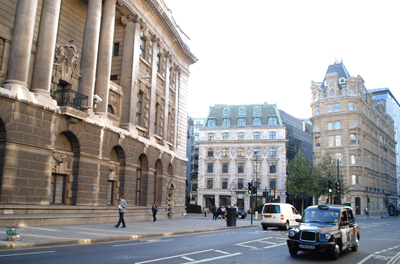
Bishopsgate – the site of which is marked by a bishop’s mitre attached to the facade of a building near the junction of Wormwood Street (pictured) – was rebuilt several times over the centuries (its first known mention was in the 12th century). This included in the 1470s when it is said to have been rebuilt by Hansa merchants who did so apparently in return for exemptions from tolls (or, according to some, other trade privileges).

The gate – which was known for having the heads of traitors displayed on spikes upon its top – took its final form in 1735 before it was finally demolished along with several other London gates in 1760 as part of road widening measures.

The name Bishopsgate is remembered in the street of the same name as well as one of the City of London wards. Among the notable people associated with Bishopsgate are William Kemp, an Elizabethan comic actor who, in a remarkable feat, is said to have performed a Morris dance starting at the gate and finishing in Norwich.