This Week in London – Celts at the British Museum; the Fallen Woman at the Foundling; and Ai Weiwei…

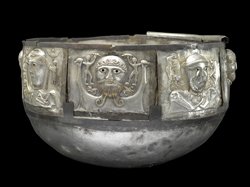
Gundestrup_Whole-ImageThe story of the Celts and their culture is being explored in a new exhibition which opens at the British Museum in Bloomsbury today. Celts: Art and Identity, being run in partnership with National Museums Scotland, is the first British exhibition on the Celts in 40 years. Highlights of the display include a hoard of four gold torcs found at Blair Drummond in Stirling in 2009, Christian artefacts including iron handbells used to call people to prayer, elaborately illustrated Gospels, carved stone crosses and, a gilded bronze processional cross which, dating from 700-800 AD and coming from Tully Lough in Ireland, will be on show for the first time in Britain. Also present will be the Gundestrup cauldron, which dates from 100 BC-1 AD and comes from Denmark (pictured), London artefacts such as the Waterloo helmet and Battersea shield, and works created more recently which reflect on an often mythical Celtic past such as George Henry and Edward Atkinson Homel’s 1890 painting The Druids: Bringing in the Mistletoe. Runs until 31st January in the Sainsbury Exhibition Gallery (Room 30). Admission charge applies. For more, see www.britishmuseum.org. PICTURE: © The National Museum of Denmark.

A new exhibition exploring the myth and reality of the ‘fallen woman’ in Victorian Britain opens at the Foundling Museum in Bloomsbury tomorrow. The Fallen Woman features works by artists including Dante Gabriel Rossetti, Richard Redgrave, George Frederic Watts and George Cruikshank, displayed alongside stereoscopes and depictions of the fallen woman in the era’s popular media. It also looks at the petitions of women applying to the Foundling Hospital, bringing to life the real ‘fallen women’ of the period through a specially-commissioned sound installation by artist and musician Steve Lewinson. The exhibition runs until 3rd January. Admission charge applies. For more, see www.foundlingmuseum.org.uk.

The London Transport Museum’s Depot in Acton hosts its autumn open days this weekend. The day includes the chance to see the original printing blocks used for the Johnston font – London Transport’s iconic typeface, expert talks on transport vehicles, a chance to see how the moquette – the seat covering on the tube – is made and film screenings from the LTM archive. From 11am to 5pm Saturday and Sunday. Admission charge applies. For more, see www.ltmuseum.co.uk.

The Worshipful Company of Woolmen will be holding their annual  sheep drive across London bridge this Sunday. The event, free to watch, kicks off at 10am and runs until 5pm. For more, see www.woolmen.com.

• On Now: Ai Weiwei. This landmark exhibition at the Royal Academy of Arts in Piccadilly celebrates the work of Honorary Royal Academician and leading Chinese artist Ai Weiwei with significant works from 1993 onwards and new, site specific installations. Among the key exhibits is Straight (2008-12), a body of work related to the Sichuan earthquake of 2008, fabricated from 90 tonnes of bent and twisted rebar which was collected by the artist and straightened by hand. Runs until 13th December.  Admission charge applies. For more, see www.royalacademy.org.uk.

Send all items for inclusion to exploringlondon@gmail.com.

LondonLife – The Quadriga at Hyde Park Corner…

The-QuadrigaKnown as ‘The Quadriga’, this bronze monument atop Wellington Arch at Hyde Park Corner depicts Nike, goddess of victory, in a four horse chariot. The work of English sculptor Adrian Jones, the quadriga was part of Decimus Burton’s original early 19th century design but it wasn’t until 1911-1912 that this colossal piece – once the largest bronze monument in Europe – was installed, replacing an equestrian statue of the Duke of Wellington which was moved to Aldershot (a smaller equestrian statue of the Duke now stands nearby). For more on the arch, see www.english-heritage.org.uk/visit/places/wellington-arch/.

What’s in a name?…Kew…

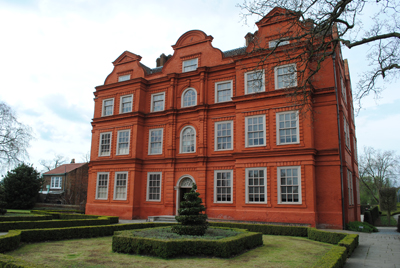
Kew-PalaceFamed as the location of the Royal Botanic Gardens, Kew is a Thames-side suburb in London’s west.

It’s the riverside location which gives the area its name – Kew is apparently a corrupted form of Cayho, a word first recorded in the early 14th century which is itself made of two words referring to a landing place (the ‘Cay’ part) and a spur of land (the ‘ho’ part). The latter may refer in this case to the large “spur” of land upon which Kew is located, created by a dramatic bend in the Thames. The former may refer to a ford which crossed the river here (explaining the name of Brentford on the other side).

While the area had long been the home of a small hamlet for the local farming and fishing community, more substantial houses began to be developed in Kew in the late 15th and early 16th centuries thanks to the demand for homes for courtiers attending the King Henry VII and his successors at nearby Richmond Palace (the royal connections of the area in fact go back much further to the early Middle Ages).

But it was during the Georgian era, when the Royal Botanic Gardens were founded and Kew Palace, formerly known as the Dutch House, became a royal residence (it is pictured above), that Kew really kicked off (and by the way, Kew Palace is not the only surviving 17th century building in the area – West Hall, once home of painter William Harriot, is also still here).

While King George II and his wife Queen Caroline used Richmond Lodge, now demolished but then located at the south end of what is now the gardens, as their summer residence, they thought Kew Palace would make a good home for their three daughters (their heir, Frederick, Prince of Wales, lived opposite his sisters at the now long-gone White House). Kew Palace, meanwhile, would later be a residence of other members of the Royal Family as well, including King George III during his bouts of madness.

Other buildings of note from the Georgian era in Kew include Queen Charlotte’s Cottage, a thatched property built between 1754 and 1771 and granted to Queen Charlotte by her husband, King George III (like the palace, it now lies within the grounds of Kew Gardens). St Anne’s Church, located on Kew Green, dates from 1714 and hosts the tombs of artists Johann Zoffany and Thomas Gainsborough.

In 1840, the gardens which surrounded the palace were opened to the public as a national botanic garden and the area further developed with the opening of the railway station in 1869, transforming what was formerly a small village into the leafy largely residential suburb which we find there today (although you can still find the village at its heart).

As well as Kew Gardens (and Kew Palace), Kew is today also the home of the National Archives, featuring government records dating back as far as 1086.

10 small, ‘secret’ and historic gardens in central London…8. Postman’s Park…

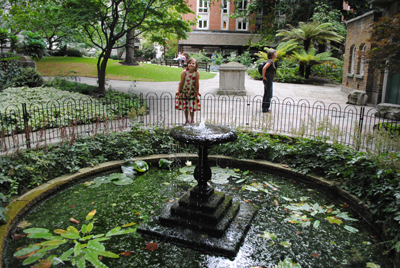
Postman's-ParkHousing one of London more unique memorials, Postman’s Park in the City’s north is located on what were once the churchyards and burial grounds of three different churches.

The park – which took its name from its popularity with postal workers who came here to escape their job at the nearby former General Post Office (read a Lost London article on the GPO here) – opened in 1880.

It was originally located on the site of the former churchyard of St Botolph’s-without-Aldersgate and was subsequently expanded to incorporate the adjacent churchyard of St Leonard, Foster Lane, and the burial ground of Christ Church, Greyfriars (also known as Christ Church, Newgate Street). Some of the headstones still stand along the park’s boundaries.

Postman's-Park3Its key feature is the G.F. Watts Memorial To Heroic Self Sacrifice (pictured, right). Victorian artist and philanthropist George Frederic Watts proposed the memorial commemorating “heroic men and women” who had given their lives to save others to mark Queen Victoria’s Jubilee in 1887 but the memorial which now stands there wasn’t built until 1900.

The memorial consists of a loggia, the inside of which is lined with glazed tablets. Each of these commemorates acts of bravery by “everyday heroes” as they attempted to rescue people from fires, runaway trains, sinking ships and drowning. There were 13 plaques at the time of his death in 1904 and his wife Mary added a further 34.

The latest of the memorials commemorating 62 individuals was added in 2009 (for more details, head to our earlier post here, part of our Curious London Memorials series; you can also find more about the memorial, including a free app, here).

The park also features a sundial and fountain amid bright flower beds and various species of trees including a large banana tree, a dove tree and Tasmanian tree ferns.

Claims to fame include its role in the 2004 film Closer, which starred Natalie Portman, Julia Roberts, Jude Law and Clive Owen (we won’t go into details, just in case you haven’t seen it!).

WHERE: Postman’s Park, between King Edward Street and St Martin’s le Grand (nearest tube stations are St Paul’s and Barbican); WHEN: The park, managed by the Corporation of London, is open 7am to 8pm or dusk (whichever is earlier); COST: Entry is free; WEBSITE: www.cityoflondon.gov.uk/things-to-do/green-spaces/city-gardens/visitor-information/Pages/Postman’s-Park.aspx.

Postman's-Park2

10 Questions – Sheila Dunsmore, a State Apartment warder at Hampton Court Palace…

HamptonCourtPalace500thBirthday-3

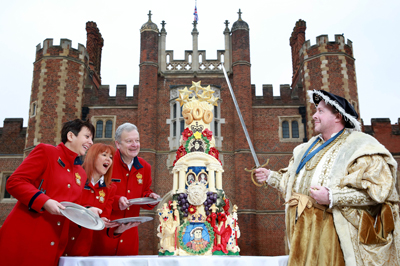
This year marks the 500th anniversary of the building of Hampton Court Palace in Greater London’s south-west. We speak to Sheila Dunsmore, a State Apartment warder at Hampton Court Palace (pictured above in centre on the left)…

1. It’s Hampton Court Palace’s 500th anniversary – who first built the palace and why? “In 1514, Thomas Wolsey came to survey the land at Hampton Court. He wanted to find a suitable place to build a sumptuous country retreat away from the dirt of London, but close enough to the capital to travel back for meetings. It was also to be a place to entertain the important company his position as Archbishop of York provided, of which none were more important than young King Henry VIII.”

2. Where are the oldest parts of the palace today? “The oldest part of the palace is the Tudor kitchens, more specifically the area were the great fire is. This was once part of Sir Giles Daubeney’s original kitchen, and dates back to the manor already on the site when it was acquired by Wolsey. Sir Giles Daubeney was Lord Chamberlain to Henry VII, and acquired an 80 year lease on the property from the Knights Hospitallers of St John of Jerusalem, the then owners. The bell in the tower above the astronomical clock is also said to have come from the Knights Hospitallers’ original manor house.”

3. Hampton Court’s 500 years of history spans a number of definable eras – from Tudor to the 21st century. Which is your favourite and why? “My favourite era is the 1660s when Charles II came back to England to take up his rightful place as king. Although visitors do not really associate Charles with the palace, he did spend time here, most famously his honeymoon!”

4. With this in mind what is your favourite part of the palace? “I love the west front façade – it just looks so imposing and mysterious. Whether you are driving or walking past it it’s guaranteed to draw you in under its spell!”

5. Do you have a favourite anecdote from the palace’s history? “I love the story of Horace Beauchamp Seymour, a dashing military hero who had fought at the Battle of Waterloo. He came to live at the palace in 1827 and, as a handsome eligible widower, he caused quite a sensation amongst the ladies, especially when he joined the Sunday services at the Chapel Royal. It was not long before a series of fainting episodes began, with the strategically placed young lady fainting into the arms of the dashing Horace, who then proceeded to carry the lady out and stay with her until she regained her composure. After a third successive Sunday of fainting’s, the epidemic was brought to a swift halt by the aunt of Mr Seymour, herself also a palace resident. The feisty old lady pinned a sign to the chapel door warning any lady feeling faint that forthcoming Sunday that Bransome the dustbin man would be carrying her out. Needless to say the fainting ceased!”

6. A complex of buildings dating back as far as 500 years obviously requires considerable upkeep. What are the greatest challenges with regard to maintaining the palace? “I think the biggest challenge would have to be generating the money to keep restoring and conserving this historic palace. To do this we have to keep making sure that people want to visit, from international tour groups to local families who might visit again and again. To do this teams right across the palace work to create exciting exhibitions, immersive events and guided tours to ensure we’re offering people a memorable experience.”

7. Are there any areas of the palace which remain unseen by the public? And any plans to open further areas up? “The palace contains over 1,000 rooms, and visitors get to discover about a quarter of these during their visit. Some years ago we held a Servants, Soldiers and Suffragettes exhibition in a suite of rooms on the top floor of Fountain Court (previously unseen). It was incredibly popular so I’d imagine that in the future we’d look for other such opportunities to share other areas of the palace with our visitors. For anyone that can’t wait that long, on one night of the year (Halloween no less), our adults-only ghost tour offers the chance to peek behind the scenes and explore some areas of the palace off the beaten track!”

8. Are there any ‘secrets’ about the palace you can reveal to us? “A palace as old and as large as Hampton Court holds its fair share of secrets…When the fire took hold in 1986 it was devastating, but in a strange twist of fate some good came from it as well. As restoration of the damaged interiors took place little secrets were revealed to us; behind wood panelling in King William’s damaged rooms hand prints were found in the plaster from the palace’s builders, and sketches were found from the architects with designs for the rooms, all worked directly onto the bare walls. Most exciting of all, however, was the object found downstairs. During work to return King William’s private dining room (which had lost its original look over the years and been used as a function room for the grace and favour residents) to its former glory, a gun was found behind some wooden panelling. The gun dated from the late 1800s, and had a regimental dinner menu was wrapped around it. This is so intriguing – what was the story behind this gun? Who did it belong to? Why did they hide the weapon?”

9. If someone has just one day to visit the palace, what’s your ideal itinerary? “This is a tricky one, and depends very much on the individual…and the weather! I would say on a sunny day start by enjoying a historic welcome with our costumed interpreters, which really helps to set the scene. If it’s a bit chilly pick up a cloak to wear – you can choose between dressing as a Tudor or Georgian courtier. Heading inside, I’d start in the Tudor State Apartments to discover the rich opulence of Henry VIII’s Hampton Court, then visit the recently opened Cumberland Art Gallery, which contains masterpieces by Rembrandt, Canaletto and Van Dyck. Next I’d take in the baroque splendour of the Queen’s State Apartments, then explore the maze, East Front Garden and Privy Garden (weather permitting!). After a spot of lunch I’d suggest visiting the Mantegna Gallery, then the Young Henry exhibition which explores the life of the young Henry VIII, before finishing the day in King William III’s apartments.”

10. Finally, Historic Royal Palaces has already commemorated the 500th anniversary in numerous ways – from a spectacular fireworks display to a jousting tournament. Are there any more events coming up? “The beginning of September saw our costumed interpreters back with their own inimitable brand of entertainment, while at the end of September we’re hosting a sleepover inside the palace! As the evenings draw in, our popular ghost tours return for the winter season. Even further ahead we’ve got a series of carol evenings and even an ice rink for our visitors to enjoy!”

WHERE: Hampton Court Palace, East Molesey, Surrey (nearest station is Hampton Court from Waterloo); WHEN: 10am to 6pm until 24th October after which it’s open to 4.30pm); COST: Adult £19.30, Concession £16, Child under 16 £9.70 (under fives free), family tickets, garden only tickets and online booking discounts available; WEBSITE:www.hrp.org.uk/HamptonCourtPalace/.
This Week in London – Palaces mark Queen Elizabeth II’s long reign; Richmond Park’s open day; celebrating a famous London redhead; and, London shops features in new work…

Dorothy-Wilding-1952A special photographic display has opened at Buckingham Palace this week to commemorate the fact that Queen Elizabeth II has this week become Britain’s longest-reigning monarch. The outdoor photographic display Long To Reign Over Us features a selection of photographs spanning the period from 1952 to today including informal family moments, official portraits and visits of the Queen to places across the UK and Commonwealth. Highlights include a black and white portrait by Dorothy Wilding from the start of the Queen’s reign in 1952, Cecil Beaton’s official Coronation Day portrait from 1953 and a 2006 image of the Queen with her Highland Ponies. The displays, which are also being shown as Windsor Castle and the Palace of Holyroodhouse in Edinburgh, can be seen by visitors to Buckingham Palace’s summer opening until 27th September. Admission charge applies. For more, see www.royalcollection.org.uk. PICTURE: Dorothy Wilding. Royal Collection Trust/© William Hustler and Georgina Hustler/National Portrait Gallery, London 

Still celebrating the Queen becoming Britain’s longest reigning monarch, and a new film installation celebrating the reigns of Queen Elizabeth II and Queen Victoria – whose reign she has now surpassed – has opened at Kensington Palace. The film installation explores key moments in the reigns of both – coronations, weddings, births as well as other key moments in their public lives –  and also examines the impact of new technologies in the reigns of both queens. For more, see www.hrp.org.uk/kensingtonpalace.

Richmond Park in London’s south-west is holding its annual open day this Sunday with a range of activities for kids including pony rides, the opportunity to see inside a bug hotel with a fibro-optic camera and the chance make pills in a restored Victorian pharmacy. The Holly Lodge Centre, normally reserved for schools and learning groups, will open its doors to the general public will be at the centre of the day, offering a range of activities for children while there will also be a guided walk led by the Friends of Richmond Park, vintage car displays, and a World War I re-enactment. The day runs from 11am to 4pm. Entrance to the Royal Park is free but parking is £5. For more, see www.royalparks.org.uk.

This Saturday is Redhead Day UK 2015 and to mark the occasion, the Guildhall Art Gallery in the City of London is inviting visitors to celebrate by taking a selfie with Dante Gabriel Rossetti’s iconic redhead La Ghirlandata. Painted by Rossetti in 1873, the artwork, said to be one of the finest pre-Raphaelite works in the world, is on permanent display at the gallery. The painting features on the cover of Jacky Colliss Harvey’s new book Red: A Natural History of the Redhead, three copies of which will be given away in a special draw at the gallery. Entry is free. For more, see www.cityoflondon.gov.uk/things-to-do/visit-the-city/attractions/guildhall-galleries/Pages/guildhall-art-gallery.aspx.

A six metre high ceramic installation created for the V&A by artist Barnaby Barford has gone on display in the museum’s Medieval & Renaissance Galleries in South Kensington. The Tower of Babel is composed of 3,000 small bone china buildings, each of which depicts a real London shop. Bamford photographed more than 6,000 shopfronts in the process of making the work, cycling more than 1,000 miles as he visited every postcode in London. The work can be seen until 1st November. Admission is free. See www.vam.ac.uk.

Send all items for inclusion to exploringlondon@gmail.com.

Special – Queen Elizabeth II becomes longest reigning monarch…

Queen-Elizabeth-II
We interrupt our regular programming this week to mark the day in which Queen Elizabeth II becomes the UK’s longest reigning monarch, passing the record reign of her great-great-grandmother, Queen Victoria.

The milestone of 63 years, seven months and two days (the length of Queen Victoria’s reign) will reportedly be passed at about 5.30pm today (the exact time is unknown as the Queen’s father, King George VI, passed away in his sleep).

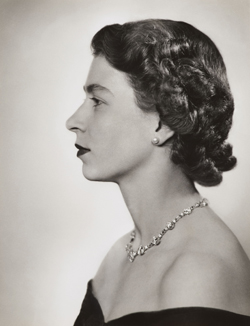
While the Queen, now 89 (pictured here in 2010), will pass the day in Scotland attending official duties, in London Prime Minister David Cameron will lead tributes in the House of Commons.

As we go to press a flotilla of vessels – including Havengore and Gloriana – will process along the River Thames between Tower Bridge, open as a sign of respect, and the Houses of Parliament. As they passed HMS Belfast, the ship will fire a four gun salute.

Today is the 23,226th day of the Queen’s reign during which she has met numerous major historical figures – from Charles de Gaulle to Nelson Mandela – and seen 12 British Prime Ministers come and go.

London Pub Signs – The Mawson Arms/The Fox and Hounds…

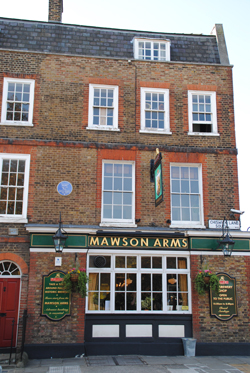
This curiously named Chiswick institution, one of few pubs in England with two names, owes its existence to the brewery located next to the terraces in Mawson Row.

Mawson-ArmsThomas Mawson founded the brewery on the site in the late 1600s/early 1700s and it eventually became what is now known as Fuller’s Griffin Brewery located a few doors down from the pub.

The Grade II*-listed building in which the pub is located dates from about 1715 when the terrace of five houses was constructed for Mawson.

The 18th century poet Alexander Pope was among residents at number 110 (between 1716-1719, when he published his translation of The Iliad and his first collected works). A function room in the pub now bears his name and there’s a blue plaque mentioning his stay on the outside.

While there had long been a pub here called the Fox and Hounds, in the late 19th century, the old pub was extended into the corner building and gained its second name, The Mawson Arms.

The pub, only a short walk away from the Thames, now serves as the starting point for a tour of the brewery. It’s traditionally been a favoured watering hole of brewery workers.

For more, see www.mawsonarmschiswick.co.uk.

This Week in London – The Waterloo Cartoon on show; see inside a former Huguenot’s home; and, Royal Parks’ harvest festivals…

A monumental Victorian-era drawing of the Battle of Waterloo has gone on display in London for the first time since 1972. The Waterloo Cartoon, more formally known as The Meeting of Wellington and Blucher after the Battle of Waterloo, measures more than 13 metres long and three metres high. A preparatory drawing for a wall painting which still exists in the House of Lords’ Royal Gallery, it took artist Daniel Maclise more than a year to complete in 1858-59 and was based on eye-witness accounts (the artist even recruited Queen Victoria and Prince Albert to use their German contacts to gather information from Prussian officers present on the day). Long considered a masterpiece, it was bought by the Royal Academy in 1870 – the year of Maclise’s death – and was on show at Burlington House until the 1920s. It has been in storage for much of last century and, newly restored following a grant from Arts Council England, has now gone on display to mark the 200th anniversary of the Battle of Waterloo. The newly conserved drawing is the focus of a new exhibition – Daniel Maclise: The Waterloo Cartoon, which opened at the Royal Academy in Piccadilly yesterday (between May and August, it was on show as part of a Waterloo exhibition at the Royal Armouries in Leeds). Runs until 3rd January. Admission charge applies. For more, see www.royalacademy.org.uk.

There’s a rare chance to see inside a former Huguenot merchant’s house dating from 1719 in Spitalfields this weekend. The property at 19 Princelet Street was the home of the Ogier family, who had come to London escaping persecution in France and worked in the silk weaving trade. It was later subdivided into lodgings and workshops with later occupants following a range of trades and professionals while a synagogue was opened in the garden in 1869. The site – which the Spitalfields Centre charity hopes to establish as a museum of immigration – is not generally open to the public but will be open this Saturday and Sunday – from 2pm to 6pm. Entry is free (but donations would be welcome) and there may be queues so its suggested you arrive early. For more, see www.19princeletstreet.org.uk.

Watch a bee keeping demonstrations, help dig up some potatoes and introduce the children to some farm animals. The Kensington Gardens’ Harvest Festival will be held this Sunday, between 11am and 4pm, and will also include a range of children’ activities, experts from the Royal Parks Guild on hand to answer your questions about food growing and complimentary hot and cold drinks available throughout the day while stocks last. It’s the first of three harvest festivals to be held in Royal Parks this month with Greenwich Park set to host its inaugural harvest festival on 13th September (11am to 4pm) and The Regent’s Park Allotment Garden to host one on 19th September (11am to 5pm). For more, see www.royalparks.org.uk.

Send all items for inclusion to exploringlondon@gmail.com.

10 small, ‘secret’ and historic gardens in central London…6. Red Cross Garden, Southwark…

Red-Cross-Garden

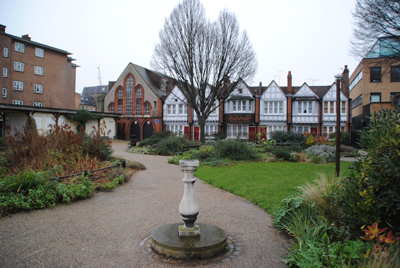
We travel south of the Thames this week to Red Cross Garden in Southwark. Located not far from Borough Market, the garden has a rich history, having first been laid out in 1887 by the social reformer, philanthropist and National Trust co-founder Octavia Hill.

Described as Hill’s “flagship project”, it was here, after being granted use of the land by the Ecclesiastical Commission, that she demonstrated the role gardens and open spaces play in improving the lives of the poor living in 19th century Southwark (in the picture you can see in the background the hall and cottages which were also part of the project – Hill had these constructed between 1888-89, the hall being for community activities and the cottages homes for the “working poor”. Both were designed by Elijah Hoole).

The garden in Redcross Way was created on the site of a derelict paper factory and a hop warehouse and originally contained meandering paths, an ornamental pond with fountain, a bandstand and a covered play area for children as well as an elevated walkway for viewing the garden – described by Hill as an “open air sitting room for the tired inhabitants of Southwark”. There were a number of colourful mosaics – one called The Sower is still in situ but another known as The Good Shepherd was apparently lost.

The original layout of garden, which were used as the venue for the annual Southwark Flower Show as well as other events, had been lost by the late 1940s and it was only in much more recent years that it was restored by the Bankside Open Spaces Trust (with funding from the Heritage Lottery Fund and Southwark Council). They were officially reopened in 2006 by Princess Anne.

The award-winning garden is now managed by BOST which leases the space from Southwark Council and relies on the work of volunteers (any donations are always welcome!). The latest addition has been the Victorian bandstand which, constructed in a style true to the original, was unveiled late last year.

WHERE: Red Cross Garden, Redcross Way, Southwark (nearest Tube stations are Borough and London Bridge); WHEN: 9am to dusk, daily; COST: Free; WEBSITE: www.bost.org.uk/open-places/red-cross-garden/.

This Week in London – Party like a Georgian; a playground with a history; and, a Dickens whodunnit…

Kensington-Palace• Join the Georgian Queen Caroline for a garden party in the grounds of Kensington Palace this weekend. The Georgian Court will be taking to the palace gardens for a summer celebration featuring music, military drills and theatre as they bring the era to life. Visitors are encouraged to immerse themselves in the experience as a courtier with the gardens decked out in a range of tents where they can try out costumes and powdered wigs as well as learn court etiquette, swordplay and dancing while the ice-house will feature Georgian ice-cream (and it’s rather odd flavours such as parmesan). Runs from tomorrow until Sunday. Admission charges apply (under 16s go free with a maximum of six children per paying adult). For more, see www.hrp.org.uk/KensingtonPalace/. PICTURE: ©Historic Royal Palaces

First created in 1923, a playground in Victoria Tower Gardens – newly named the Horseferry Playground – has been reopened after improvement works. The works, carried out under the management of Royal Parks, have seen the reintroduction of a sandpit as well as the installation of new swings and slide, dance chimes and a stare play installation to represent the River Thames. The playground, located close to the Houses of Parliament in Westminster, also features a series of timber horse sculptures, new seating and a refreshment kiosk with metal railings designed by artist Chris Campbell depicting events such as the Great Fire of London and Lord Nelson’s funeral barge and views of the River Thames. The project has also seen the Spicer Memorial, commemorating role of paper merchant and philanthropist Henry Spicer in the establishment of the playground – then just a large sandpit, restored. For more, see www.royalparks.org.uk/parks/victoria-tower-gardens.

Now On – A Dickens Whodunnit: Solving the Mystery of Edwin Drood. This temporary exhibition at the Charles Dickens Museum in Bloomsbury explores the legacy of Dickens’ final novel The Mystery of Edwin Drood, left unfinished after his death in 1870. Visitors are able to investigate crime scenes, search for murder clues and see the table on which the novel was penned as well as clips from theatrical adaptations, and a wealth of theories on ‘whodunit’. The exhibition runs until 11th November. Admission charge applies. For more, see www.dickensmuseum.com.

Send all items for inclusion to exploringlondon@gmail.com.

London Pub Signs – The Dickens Inn…

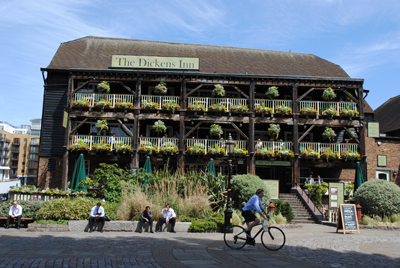
The-Dickens-InnOK, the first thing to note here is that despite the name of this pub, located in St Katharine Docks, it has nothing to do with the famous 19th century novelist Charles Dickens. Well, not directly, at least.

That said, it still has an interesting history – dating back to at least the turn of the 19th century (although there is the suggestion it may be older), it is thought to have formerly been used as a brewery building or a tea warehouse and stood on a site about 70 metres east of its current location.

A brick ‘skin’ was built over the top of the timber building in the 1820s to bring it up to modern standards. It survived the Blitz but was slated to be demolished in the 1970s when the site was to be redeveloped.

But help was at hand and in 1976 the building was saved when it was painstakingly moved to its current site. The building was reconstructed to resemble what the inn’s owners called a “three storey balconied inn of the 18th century” (although there is something doubt whether such buildings ever existed like this in the 18th century).

Ah, and to Dickens. While the writer himself is not known to have visited the building, he did know the area well and its likely he would have frequently passed by it during his lifetime (in fact, when his grandson, Cedric Charles Dickens, formally opened the inn in May, 1976, he is quoted on the inn’s website as saying that: “My Great Grandfather would have loved this inn”.)

Spread over three levels with balconies on the upper two, the inn originally featured a sawdust covered floor and candlelit dining on the balconies. Both practices have since come to an end but the building does offer some great views of the dock and nowadays contains several different facilities including a tavern, pizzeria and restaurant called The Grill. There’s also a suite of function rooms.

Among the famous the establishment claims as visitors in more recent times are the late Joan Rivers and singer Katie Melua.

For more information, see www.dickensinn.co.uk.

Treasures of London – The Isabella Plantation…

Isabella-Plantation2


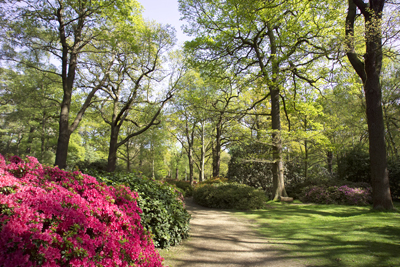
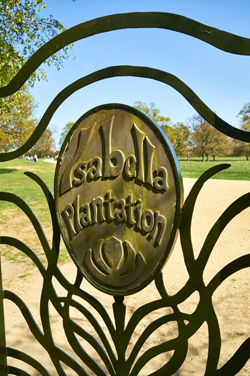
Isabella-PlantationAn area first fenced off within Richmond Park in the early 19th century, this ornamental garden remains an enchanting place to escape city life.

It was former Prime Minister Lord Sidmouth who established the plantation in the south-west corner of Richmond Park in 1831 when he was deputy ranger, enclosing the 42 acre site with fences to keep the deer out and planting oak, beech, and chestnut trees with a view to growing them for timber.

It was also he who, drawing on an older name for the area – Isabella Slade (Isabell is thought to have meant ‘dingy yellow’ in Old English and may refer to the colour of the topsoil in the plantation area while Slade meant a shallow valley) – gave it the name the Isabella Plantation.

The garden as we largely know it now was established on the site in the years immediately after World War II with clearings, ponds and waterways (these are today fed from Pen Ponds), thanks in large part to George Thomson, superintendent of the park from 1951-71, and his head gardener, Wally Miller.

Isabella Plantation was opened to the public in 1953 although improvements – including the Bog Garden which was reconstructed in 2000 – continue to be carried out.

Highlights among the flora include the National Collection of ‘Wilson 50’ Kurume azaleas (introduced by plant collector Ernest Wilson from Japan to the West in the 1920s) and large collections of rhododendrons and camellias. The garden also attracts a wide range of birds as well as other wildlife and offers the visitor something to see all year round.

There’s a number of trails you can download free-of-charge from the Royal Parks website which will help you to fully engage with the plantation.

WHERE: Isabella Plantation, Richmond Park (pedestrian access to the plantation from Peg’s Pond Gate, Broomfield Hill Gate, Bramble Gate, Deer Sanctuary Gate and High Wood Gate); WHEN: Daily (check Richmond Park opening times); COST: Free; WEBSITE: www.royalparks.org.uk/parks/richmond-park/richmond-park-attractions/isabella-plantation.

PICTURES: © Greywolf/The Royal Parks

LondonLife – Artistic eyes gaze upon us…

V&A

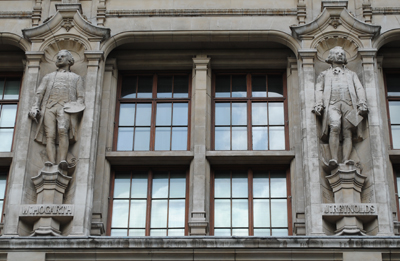
Eighteenth century artists William Hogarth and Joshua Reynolds gaze down from the facade of the V&A in South Kensington. The Victoria and Albert Museum was established in 1852 – capitalising on the success of the Great Exhibition the previous year – and moved to its current site in 1857. The foundation stone for the current building was laid by Queen Victoria herself in 1899 and it was to mark this occasion that the museum was renamed the Victoria and Albert Museum after the queen and late Prince Albert (although the queen really just wanted it to be the Albert Museum). For more on the V&A, see www.vam.ac.uk.

Treasures of London – Daniel Defoe grave memorial, Bunhill Fields…

Daniel-Defoe-memorial2
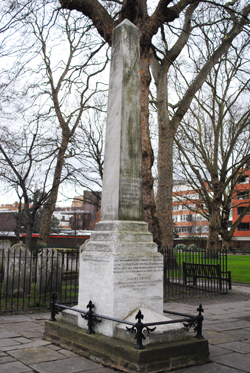
Located in Bunhill Fields Burial Ground in City Road, this memorial to Daniel Defoe, the author of numerous books including Robinson Crusoe and Moll Flanders as well as a journalist, pamphleteer and ‘provocateur’ or spy, wasn’t erected until 1870, almost 140 years after his death.

After he died in 1731 at the age of 70, Defoe was among the more than 120,000 people buried in Bunhill Fields, a Nonconformist cemetery which opened in 1665 and had closed by 1853. He was apparently buried under the name Dabow, thanks to a spelling mistake made by the gravedigger.

Daniel-Defoe-memorialWhen he died in relative obscurity (he was believed to have been hiding from his creditors at the time), his fame rose after his death – due in large part to the rising popularity of Robinson Crusoe, and by the mid-19th century, it was believed that the simple headstone over his grave didn’t do justice to him.

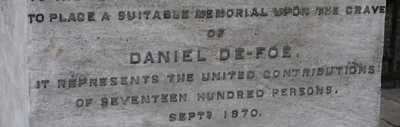
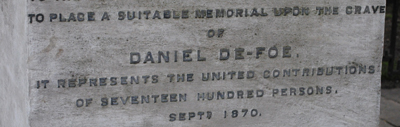
Hence an appeal was run by children’s magazine Christian World for a more suitable memorial for the writer – named as Daniel De-Foe on the memorial – and more than £150 was raised from 1,700 people, an amount which apparently exceeded expectations.

Sculptor Samuel Horner was subsequently commissioned to carve the memorial obelisk, which features projections at the base resembling a coffin lid, to the designs of CC Creeke of Bournemouth. It was unveiled on 16th September, 1870, in a ceremony attended by three of Defoe’s great grand-daughters.

There was apparently a newspaper story that the sculptor uncovered a coffin bearing Defoe’s name in preparing the site for the monument and had to get the aid of police to prevent watchers from making off with the bones from within.

The monument, which may not mark the exact location of Defoe’s grave site due to the movement of graves in the burial ground, is now Grade II*-listed (and the burial ground itself Grade I-listed). Others buried at Bunhill Fields include author John Bunyan, artist William Blake and Susanna Wesley, mother of John Wesley, founder of Methodism.

WHERE: Bunhill Fields Burial Ground, 38 City Road (nearest Tube station is Old Street); WHEN: 7.30am to 7pm or dusk; COST: Free; WEBSITE: www.cityoflondon.gov.uk/things-to-do/green-spaces/city-gardens/visitor-information/Pages/Bunhill-Fields.aspx

What’s in a name?…Drury Lane…

Famous for its associations with London’s theatreland, Drury Lane takes its name from the Drury family who once owned a mansion here.

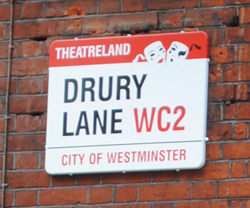
Drury-LanePreviously known as the Via de Aldwych (apparently for a stone monument the Aldwych Cross which stood at the street’s northern end), Drury Lane – which runs between High Holborn and Aldwych – was renamed after Drury House which was built at the southern end of the street.

Some accounts suggest it was Sir Robert Drury (1456-1535), an MP and lawyer, who built the property around 1500; others say it was his son, Sir William Drury, also an MP and a Privy Councillor, who did so  in around 1600 – which may mean there were two versions of the one property.

The street, meanwhile, is said to have been briefly renamed Prince’s Street during the reign of King James I (1603-1625) but, following the Restoration in 1660, the name Drury once more gained supremacy.

The origins of the street’s famous theatre (London’s oldest), the Theatre Royal Drury Lane, dates from the same year (see our earlier post here). Other theatres in the street included the Cockpit Theatre which had been designed at one stage by Inigo Jones.

The street is also famous for being the site of the worst outbreak of the plague in London – the Great Plague of 1665, burned away the following year by the Great Fire – and by the 18th century was a slum noted for its seediness, in particular for prostitution (it features in William Hogarth’s work The Harlot’s Progress).

This didn’t change until the second half of the 19th century – author Charles Dickens had been among others who had commented on the poverty he had seen there – when gentrification took hold. Among the shops opened there during this time was the first Sainsbury’s, founded at number 173 in 1869.

Alongside the Theatre Royal Drury Lane (although the main entrance is in Catherine Street), other theatres in the street today include the New London Theatre and the London Theatre.

LondonLife – A riot of summer colour…

Regent's-Park

Flowers in Regent’s Park, north London. The park, which was designed by John Nash, was opened to the public in 1835. For more on the history of the park, see our earlier post here.

London Pub Signs – Jamaica Wine House…

Located on the site of London’s first coffee house in St Michael’s Alley in the City, the Jamaica Wine House comes with plenty of yesteryear atmosphere.

Jamaica_Wine_HouseThe coffee house, which was established in 1652 at the sign of ‘Pasqua Rosee’s Head’ (named for one of the co-owners, a Turk and former manservant called Pasqua Rosee), was once frequented by the likes of diarist Samuel Pepys who apparently had a pleasurable night there on 10th December, 1660.

Standing in the midst of what became a hotspot for coffee houses in London, it was apparently damaged in the Great Fire of London of 1666. Rebuilt as the Jamaica Coffee House in the 1670s, it become known as something of a gathering place for seafarers who were involved in the West Indies trade. The current name bears testament to that past (we’ll take a more in-depth look at the history of the coffee house in an upcoming Lost London post).

While the building which housed the coffee shop is long gone, the current Grade II-listed building, located just of Cornhill, dates from 1869 and was built as a public house. Built of red brick and red stone, retains much of its Victorian character outside and in – with the latter featuring dark wood panelling on the walls and decorative ceilings and glasswork. The basement features a wine bar.

These days the establishment – which is known fondly to regulars as the ‘Jampot’ – boasts a clientele which includes City workers as well as “bell-ringers” and walking tourists (or so the website says). And then there’s the three ghosts – one of which is said to be a dog.

Now part of the Shepherd Neame chain (which purchased it in 2009). For more, see www.shepherdneame.co.uk/pubs/london/jamaica-wine-house.

PICTURE: Matthew Black/Flickr. Used under licence CC BY-SA 2.0

A Moment in London’s History – Princess Victoria’s christening…

Cupola-Room

On Sunday, Princess Charlotte, daughter of Prince William and Princess Kate, was christened at Sandringham. So we thought we’d take a quick look at another christening that took place in London almost 200 years ago, that of Princess Victoria.

The future Queen Victoria was born on 24th May, 1819 – the daughter of Edward, Duke of Kent (fourth son of King George III), and his wife, Princess Victoria Mary Louisa of Saxe-Coburg-Saalfeld.

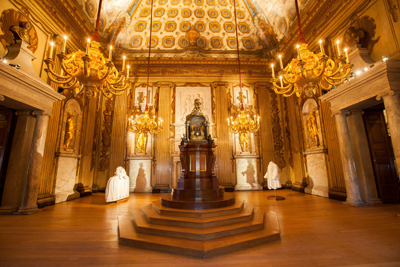
At the insistence of the Prince Regent (later King George IV), the christening was a small affair and was held a month after the birth on the afternoon of 24th June in the magnificent Cupola or Cube Room of Kensington Palace (pictured as it is now, above).

The guest list was small and included the Prince Regent, Prince Frederick, the Duke of York, and his wife Princess Frederica, Princess Augusta Sophia, Princess Mary, the Duchess of Gloucester, and her husband, Prince William, and Prince Leopold, who had recently become a widower after the death of Princess Charlotte.

The ceremony was conducted by Charles Manners-Sutton, the archbishop of Canterbury, and, thanks to the intransigence of the Prince Regent, her name was apparently only decided at the last minute.

The Prince Regent has earlier forbidden the use of such ‘royal’ names including Charlotte, Elizabeth, Georgina or Augusta and when asked by the archbishop what she would be named, he replied brusquely that she would be named Alexandrina in honour of the Russian Tsar Alexander, one of the new princess’s godparents.

Her second name was Victoria in honour of her mother, and while Victoria was often called “Drina” while a girl, she herself apparently preferred her second name to her first.

The gold font used in the ceremony formed part of the Crown Jewels and its origins go back to the time of King Charles II.

Interestingly, there were a couple of significant Victorian connections during Princess Charlotte’s christening – the font used at this christening was known as the Lily Font (like its predecessor, it is usually found with the Crown Jewels in the Tower of London).

It was commissioned by Queen Victoria and Prince Albert for the christening of their first daughter, Princess Victoria, in 1841, apparently due to Queen Victoria’s dislike for the gold font used at her own christening – it had been used by King Charles II to christen his illegitimate children.

The Lily Font has apparently been used at every royal christening since except that of Princess Eugenie who had a public baptism in Sandringham in 1990.

Princess Charlotte also wore a replica of the christening gown worn by Princess Victoria.

WHERE: The Broad Walk, Kensington Gardens, Kensington (nearest Tube stations are High Street Kensington or Queensway); WHEN: Daily 10am to 6pm (until 31st October); COST: £17.50 adult/£14.10 concession/children under 16 free (online booking discounts available, Historic Royal Palaces members free); WEBSITE: www.hrp.org.uk/KensingtonPalace.

PICTURE: HRP/newsteam

This week in London – Napoleon’s draughtsman at Dulwich; the City of London Festival; and, the photography of Captain Linnaeus Tripe…

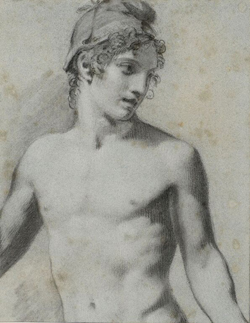
PrudhonThe drawings of “Napoleon’s draughtsman”, Pierre-Paul Prud’hon, have gone on display at the Dulwich Picture Gallery in an exhibition timed to coincide with the bicentenary of the Battle of Waterloo. The exhibition, Prud’hon: Napoleon’s Draughtsman, presents a selection of some of Prud’hon’s best works, including 12 works on paper from Gray’s Musée Baron Martin in eastern France as well as life studies such as Seated Male Nude and Standing Female Nude and a series of sketches from when Napoleon’s wife, Josephine, sat for Prud’hon 15 times in her home outside Paris. Runs until 15th November. Admission charge applies. A series of events is being run in conjunction with the exhibition. For more, see www.dulwichpicturegallery.org.uk.

The City of London Festival has kicked off this week with a three week programme including music, performance and visual art, films, tours, walks and talks. Events include the City Beerfest in Guildhall Yard, a tour of the art of the Mansion House, Bank of England open days and a walk celebrating the democratic institutions of the City marking the 800th anniversary of the Magna Carta. The festival, which includes both ticketed and free events, runs until 10th July. For more, including a full programme, see www.colf.org.

A new exhibition exploring the photographic works of Captain Linnaeus Tripe has opened at the V&A. Captain Linnaeus Tripe: Photographer of India and Burma, 1852-1860 includes more than 60 photographs of architectural sites and monuments, ancient and contemporary religious buildings, landscape vistas and geological formations. The Devon-born Tripe joined the East India Company army in 1839 and was stationed in India throughout the 1840s, learning the art of photography when back in England in the early 1850s. The photographs represent the output from two major expeditions with Tripe the first photographer to capture Burma’s remarkable architecture and landscapes and the first person to do so extensively in south India. The exhibition, part of the V&A India Festival which marks the 25th anniversary of the opening of the museum’s Nehru Gallery, is organised jointly by the National Gallery of Art, Washington, and the Metropolitan Museum of Art in New York in association with the V&A. Runs until 11th October.  Admission is free. For more, see www.vam.ac.uk/linnaeustripe.

Send all items for inclusion to exploringlondon@gmail.com.