Treasures of London – The Pearl Sword…

Pearl-Sword1

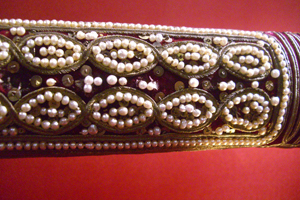
One of five City of London swords, tradition holds that the sword was given to the City Corporation by Queen Elizabeth I when the Royal Exchange opened in 1571.

It takes its name from its pearl-encrusted scabbard – there’s said to be 2,500 of them sewn onto it – and was traditionally used in celebrations. These include a ceremony which takes place when the reigning monarch comes in State to the City.

Pearl-Sword2Seen during last year’s Diamond Jubilee celebrations, the ceremony involves the Lord Mayor taking the sword from the Sword-Bearer and offering it hilt-first to the monarch to touch – a symbol of the monarch’s authority over the city. It is then borne aloft in front of the monarch by the Lord Mayor.

Interestingly, the tradition of the monarch touching the sword hilt is said to date from the reign of King Charles I when the king entered the City in 1641 and just touched the sword given to him and handed it back to the Lord Mayor. Prior to that, the sword was handed over to the sovereign for the during the visit.

The City’s other four swords include the State Sword, the Mourning Sword, the Old Bailey Sword and Mansion House Justice Room Sword.

Guided tours of Mansion House – official residence of the Lord Mayor of London and where the Pearl Sword can be seen – are conducted on Tuesdays at 2pm (although it’s closed for August for refurbishments and on selected dates after that). Head here www.cityoflondon.gov.uk/mansionhousetours details. PICTURES Courtesy City of London.

Around London – The ‘Line of Kings’ has a makeover; London captured from St Paul’s; and, cycles at the Museum of London…

Line-of-Kings

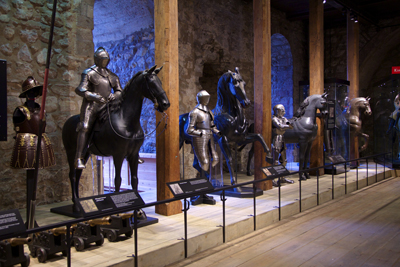
The Tower of London’s iconic exhibition, the Line of Kings, has had a makeover. Described as the “world’s longest running visitor attraction”, the Line of Kings features more than 500 objects including historic suits of armour – such as those worn by King Henry VIII, King Charles I and King James II – as well as life-sized wooden horses and individually carved king’s heads, many of which were made between 1685 and 1690. The exhibition was originally created following the Restoration in 1660 and was used as propaganda to promote the king’s rule (interestingly omitting queens and featuring only those deemed “good kings”). Rearranged and dispersed over the centuries, it’s been brought back together in the White Tower and reopened last month. Entry to the exhibition – a collaboration between Historic Royal Palaces and the Royal Armouries – is free as part of general admission to the Tower. For more, check out www.royalarmouries.org/line-of-kings. PICTURE: HRP/Newsteam

Four cameras mounted on top of St Paul’s Cathedral’s Golden Gallery have captured a 360 degree time lapse video of the capital. The video, which was shot in early July, captured 36 hours in the life of London and is the work of specialist photographer Henry Stuart who previously completed two projects from the Golden Gallery – a GigaPixel image of London and a Day Meets Night image. The latest project captured some 8,000 panoramic images. The time lapse video, which is set to Kyrie from Wolfgang Amadeus Mozart’s Missa in C major ‘Missa solemnis’ K337 being sung by the St Paul’s Cathedral Choir, can be found at http://visualise.com/videos/london-360-time-lapse-from-st-pauls-cathedral.

• On Now: London Cycles. This free exhibition at the Museum of London looks at cycling in the capital with highlights including 10 large scale portraits by Ugo Gattoni, bikes including an 1880s “boneshaker”, a penny farthing, an 1930s Enfield cycle and a ‘Boris’ bike as well as head cam footage from riders including from the annual Tweed Run bike. The free display runs until 22nd September. For more, see www.museumoflondon.org.uk.

10 (more) curious London memorials…3. William Wallace Memorial…

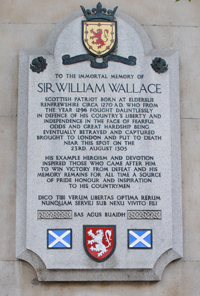
William-Wallace-memorialHe was captured in Scotland but it was actually at Smithfield in London that the Scottish leader, Sir William Wallace, was put to death on 23rd August, 1305.

Erected in 1956 by “Scots and friends at home and abroad”, a plaque located on the wall of St Bartholomew’s Hospital overlooking the former execution ground commemorates the “Scottish patriot” Wallace, saying that from the year 1296 “fought dauntlessly in defence of his country’s liberty and independence in the face of fearful odds and great hardship”. It goes on to note that he was “eventually betrayed”, captured and executed “near this spot”.

Elsewhere the memorial reads: “His example, heroism and devotion inspired those who came after him to win victory from defeat and his memory remains for all time a source of pride, honour and inspiration to his countrymen”.

Having co-led the Scottish to victory against the army of King Edward I at the Battle of Stirling Bridge in 1297, Wallace was later knighted for his efforts and subsequently served as a Guardian of the Kingdom of Scotland.

Following his defeat at English hands in the Battle of Falkirk in 1298, he escaped and continued to evade capture until he was apprehended near Glasgow in August 1305. Brought to London where he was put on trial in Westminster Hall. Summarily found guilty of treason, he was stripped naked and dragged to Smithfield and it was there that he suffered the horrible death of being hung, drawn and quartered.

And while the 1995 movie, Braveheart, had Wallace crying out “Freedom” as he died, his last words are actually not recorded. His tarred head was subsequently displayed on a pike atop London Bridge while his limbs were sent to towns including Stirling in Scotland.

Around London – Celebrating the coronation at Buckingham Palace; Royal births at the MoL; the Fourth Plinth unveiled; Menon remembered; and, manufacturing at the Design Museum…

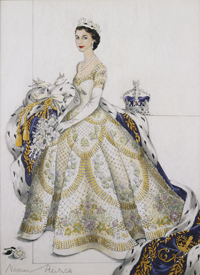
Norman-Hartnell-sketchThe Queen’s Coronation in 1953 is the subject of a special exhibition opening at Buckingham Palace as part of the palace’s summer opening. Celebrating the 60th anniversary of the coronation, the display features an array of outfits including uniforms and robes worn on the historic event on 2nd June, 1953, as well as a series of paintings recording the event, works of art and objects used on the day and film footage and sound recordings. Among the highlights of the exhibition will be sketches made by Norman Hartnell, the principal designer of the outfits worn at the coronation by the Queen, principal ladies of the immediate Royal Family and the Maids of Honour. The State Rooms of Buckingham Palace open on Saturday and remain open until 29th September. An admission charge applies. For more, see www.royalcollection.org.uk. PICTURE: Her Majesty The Queen in her Coronation Dress, 1953, Norman Hartnell. Royal Collection Trust/All Rights Reserved.

Meanwhile in this, the week of the birth of Prince George, it’s only fitting that we mention a small display at the Museum of London showcasing memorabilia relating to royal babies of years past. A Royal Arrival features baby clothes and other items worn by future monarchs. They include a embroidered skullcap worn by the future King Charles I, a tiny linen vest and mitten which once was worn by the future King George III and a dress emblazoned with the three feather insignia which belonged to the future King Edward VII, eldest son of Queen Victoria. The free display will be on show until October. For more, see www.museumoflondon.org.uk.

The new commission for Trafalgar Square’s Fourth Plinth will be unveiled today. The 4.7 metre high sculpture, Hahn/Cock, is the work of contemporary artist Katharina Fritsch. It will sit on the plinth for the next 18 months.  For more details, see www.fourthplinth.co.uk.

Indian statesman VK Krishna Menon has been commemorated by English Heritage with a blue plaque on his former residence in Highgate. A key campaigner for Indian independence, Menon lived at 30 Langdon Road from 1929 to 1931, having moved to England from Madras in 1924. In 1947, Menon was appointed India’s First High Commissioner in London and among his greatest achievements was his work in keeping the country in the British Commonwealth after independence. Having been a local councillor in St Pancras, he later returned to India and embarked upon a political career there. For more, see www.english-heritage.org.uk/discover/blueplaques/.

The-Future-Was-HereOn Now: The Future is Here. A major new exhibition examining the changes taking place in manufacturing around the world, opened this week at the Design Museum. The Future is Here looks at how everything from “cars to shoes” is manufactured, funded, distributed and bought. Among highlights is a ‘Factory’ where visitors can discover how 3D printing works and see production in process. There will also be the chance to make your own ‘action doll’ and see a sofa designed through a crowd-sourcing process which involved members of the public. Runs until 3rd November. Admission charge applies. For more, see www.designmuseum.org.

Special – 10 facts about royal births of years past…

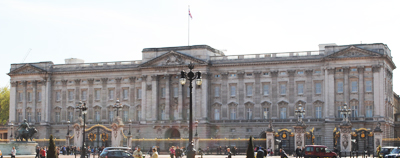
Buckingham-Palace

As we all know by now, Prince William and Kate, Duchess of Cambridge, are proud parents of a new born son with news of the new arrival provoking celebrations across Britain and, indeed, the world.

To celebrate the royal birth, here are 10 interesting facts about some previous royal births in London…

• The last time a Home Secretary attended a royal birth was in 1936 for the birth of Princess Alexandria, cousin of the Queen. The practice was officially stopped before the birth of Prince Charles in 1948.

• Such was the doubt over whether Mary of Modena, wife of King James II, was really pregnant that more than 40 eminent people were invited to witness the birth of their son Prince James in 1688 (and even then the rumours of that the stillborn baby had been swapped for another were rife).

• Queen Anne, who ruled from 1702-1714, went through 17 pregnancies but, tragically, outlived all of her children, her last surviving child – the Duke of Gloucester – dying in 1700.

• The tradition of firing a 41 gun salute on the news of the birth of a future monarch dates from the birth of the future King Edward VII. Twenty-one shots are fired in honour of the birth with an additional 21 fired because the guns are located in Green Park, a Royal Park.

• Queen Elizabeth II was born by caesarean section at 2.40am on April 21, 1926, at the home of her mother’s parents – 17 Bruton Street in Mayfair. (See our previous post on this here).

• Such was the animosity between Frederick, Prince of Wales, and his father, King George II, that when Frederick’s wife Augusta went into labour at the king’s home of Hampton Court Palace, he bundled her into a coach and had her taken to his home of St James’s Palace. With no preparations made there, his newly born daughter had to be wrapped in a tablecloth (the story is retold in detail in Lucy Worsley’s terrific book, Courtiers: The Secret History of the Georgian Court)

• Queen Victoria, who had nine children, used chloroform for pain relief during later births, despite the concept being frowned upon by some officials.

• Buckingham Palace (pictured above) has been the birthplace of numerous Royal Family members. Of course, Prince Charles was born here in 1948 as was his brother Prince Andrew (1960) and Prince Edward (1964) but so too – somewhat earlier – were 14 of King George III and Queen Charlotte’s 15 children when the property was known as Buckingham House and, later, the Queen’s House. King Edward VII was the only monarch who both was born and died in the building.

• Such was the desperation of King Henry VIII for a son, that a document announcing the birth were drawn up to that effect prior to Anne Boleyn giving birth to a daughter, the future Queen Elizabeth I. The document was still issued – the only concession being an ‘s’ added to the end of the word prince.

• The oldest English king to father a child was King Edward I – he was 66-years-old when his last child, Princess Eleanor, was born in 1306. Queen Eleanor of Aquitaine, wife of King Henry II, was the oldest queen to father a child when she gave birth to the future King John at 44-years-of-age in 1166.

10 Historic London Garden Squares…10. Charterhouse Square…

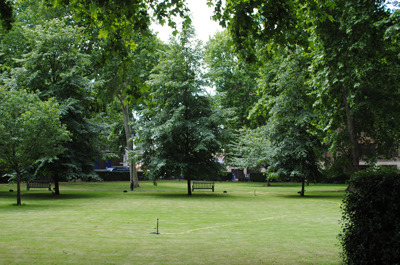
Charterhouse-Square-GardensThe final in our series on historic garden squares in London (for this year, anyway), we’re taking a look at Charterhouse Square.

The five sided square, located just to the east of Smithfield, takes its name from a Carthusian monastery which was established in 1371 on what is now its north side. Prior to this, what is now the square had from 1348 served as a location for a plaque burial pit (a number of skeletons from the plaque pit have been unearthed as part of the Crossrail project – for our earlier story on this, follow this link).

The monastery was dissolved in 1537 after the monk’s refused to recognise King Henry VIII’s Act of Supremacy (some were later executed at Tyburn) and it was subsequently transformed into a manor house with Thomas Howard, the 4th Duke of Norfolk, among its residents over the years (in fact he was imprisoned there around 1570 for allegedly plotting to marry Mary, Queen of Scots – he was later executed by Queen Elizabeth I for treason).

Under the will of Thomas Sutton, an almshouse and school was subsequently established on the site – the almshouse remains there while the school, whose students had included Methodism founder John Wesley and writer William Makepeace Thackeray, moved out to Godalming in Surrey in 1872. As well as the almshouse (which is open for guided tours, check this site for details), some of the buildings are now occupied by medical related institutions.

In the 1600s, the square was also home to numerous other large residences among them Rutland House, which had been the residence of the Venetian ambassador. It lost its aristocratic inhabitants in the ensuing centuries but remained mainly residential up until the late 19th century when it gradually became taken over by businesses and other organisations. Interesting to note is that the east side of the square is still home to the residential unit complex known as Florin Court, better known as Whitehaven Mansions, the home of Hercule Poirot in the TV series which bears his name.

The area of the garden square itself was variously referred to as the Charterhouse Churchyard, the Charterhouse Yard and Charterhouse Close over the years and has gone through numerous incarnations with efforts to improve and formalise its look dating back to at least the 16th century. It was at least partly enclosed by the late 1600s and the fences replaced several times, notably in 1742 when an Act of Parliament was passed allowing residents to fine those who entered without authorisation. The enclosing fences have since been modified several more times.

One of the major changes to the shape of the square occurred in 1860 when the Metropolitan Railway was extended between Farringdon and Moorgate. It was at this time that the road surface which surrounds the central garden, which has a Grade II heritage listing, was laid down.

Today the gardens in the centre of the square remain under the management of the Charterhouse (and hence aren’t open to the general public except on tours) but even without a tour it’s still a quiet place to walk around the outside of, evoking a strong sense of years gone past.

LondonLife – Boating on the Serpentine…

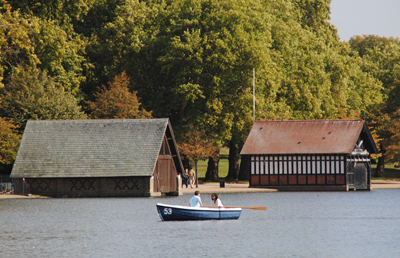
Boating-on-the-SerpentineBoating on the Serpentine in Hyde Park. The 40 acre lake was created in 1730 by the damming of the Westbourne River on the instruction of Queen Caroline, wife of King George II. It was one of the first lakes in England designed to look ‘natural’. There’s a couple of differing explanations for the name of the lake – that it was named for the body of water’s sinuous shape or that it was named for the colour of the water. For more on Hyde Park, check out www.royalparks.org.uk/parks/hyde-parkPICTURE: David Adams


Famous Londoners – William Blake…

Poet. Painter. Visionary? William Blake failed to find great success in his lifetime and died in relative obscurity but is now known internationally for his controversial and innovative works in the written word and visual arts.

Blake was born on 28th November, 1757, at 28 Broad Street in Soho, the third son of hosier James Blake and his wife Catherine (he was christened at St James’s Piccadilly). Little is known of his early life although accounts suggest he had some spiritual experiences – including a vision of a tree full of angels – as a young boy and also showed an interest in the visual arts at an early age.
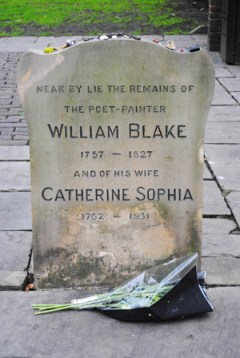
William-BlakeAbout the age of 10, he started attending Henry Par’s drawing school before, at the age of 14, becoming an apprentice to James Basire, engraver to the Royal Society and Society of Antiquaries. Among his early assignments was to make drawings of the monuments and paintings at Westminster Abbey – interestingly, Blake’s earliest extant drawings are of the opening of King Edward I’s coffin on 2nd May, 1774.

In 1779, his apprenticeship completed, Blake enrolled as a student at the Royal Academy of Arts and at the same time, made his living as a copy engraver. His clients included the radical bookseller Joseph Johnson through whom he became introduced to people like Joseph Priestley. He also began producing original works on historical themes apparently with the aim of forging a career in the painting of history.

In 1782, Blake married Catherine Sophia Boucher and they took up life together at a property near Leicester Square, later moving to Lambeth. They were to have no children.

Experimenting with new methods of engraving, in 1788, he published the first of what he was to call his “illuminated books” – All Religions are One, and There is no Natural Religion – with his first illuminated book of poetry, Songs of Innocence, coming a year later (its sequel Songs of Experience was published in 1794). In 1789, he published The Book of Thel, combining his new method of engraving with “prophetic” verse.

Later works in prose and poetry – created while Blake was still working as an engraver – continued to explore his increasingly radical views on religion and politics. They included The Marriage of Heaven and Hell published in 1790, The French Revolution in 1791, America: A Prophecy in 1793 and Visions of the Daughters of Albion the same year.

In 1800, Blake moved to Felpham, West Sussex, thanks to his friendship with one William Hayley who engaged his skills on several projects. It was while living here that Blake began work on his epic poems Milton (printed in 1810-11) and Jerusalem (completed in 1820).

Following an incident in 1803 in which Blake removed a drunk soldier from his garden, Blake was charged with high treason but acquitted after a trial at Chichester.

Having meanwhile moved back to London, in 1809 Blake made a last effort to gain the public’s attention with his work and held an exhibition of his paintings and watercolours at his family home in Broad Street (now home of his eldest brother James). But the exhibition did not elevate his profile as he may have hoped and during his last years, Blake increasingly sank into obscurity amid tightening finances and, although he continued to produce poetry, paintings and engravings, he found it hard to find work.

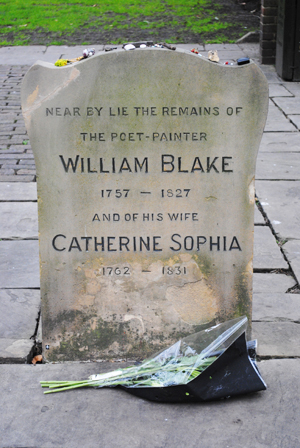
Blake died on 12th August, 1827, at his home at 3 Fountain Court on the Strand and was buried in an unmarked grave at Bunhill Fields. The stone which now stands there (pictured above) was added later.

It was during the Victorian-era that Blake’s work made its way into the hands of a larger audience than it ever had while he was alive, thanks to Blake enthusiasts like his first biographer Alexander Gilchrist and people associated with the Romantic movement.

His work continued to gain attention into the 20th century (in particular around the centenary of his death in 1927) and by mid-century had become what Robert N Essick says in Blake’s entry in the Oxford Dictionary of National Biography, “one of the cultural icons of the English-speaking world”. Interest in Blake and his works has continued both in the UK and around the world.

A new room dedicated to showing Blake’s works opened at Tate Britain in May.

10 Historic London Garden Squares…9. Queen Square…

Queen-Charlotte

This rectangular-shaped square in Bloomsbury, known for its association with the medical profession, was first laid out in the early 1700s and was named for Queen Anne.

Originally known as Devonshire Square, the space was largely laid out between 1716 and 1725 on land owned by Sir Nathaniel Curzon of Kedlestone and, as with so many of London’s squares, attracted it’s fair share of the well-to-do. Among early residents were several bishops and members of the aristocracy.

Queen-SquareOne of the most interesting early associations with Queen Square is that of King George III and his consort Queen Charlotte. The king – better known to many as ‘Mad King George’ – was treated for mental illness in a house on the square and there’s a tradition that Queen Charlotte, stored some of the food to be consumed by the king during his treatment in the base of what is now the pub known as the Queen’s Larder (see our previous entry on the pub here).

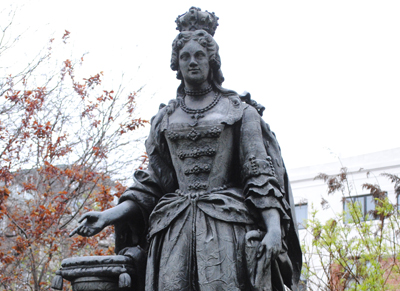
There’s a statue of a queen in the central gardens which was thought to be of Queen Charlotte. Since it was erected in 1775, there has been some confusion over the statue’s identity – it has been thought at different stages to be of Queen Anne, Queen Mary (co-ruler with King William III), and Queen Caroline (consort of King George II) – a fact which has led to some confusion as to which queen the square was named after (although general consensus now seems to be that it was indeed Queen Anne whom the square was named after).

The houses in Queen Square – which was later associated with artists and literary types – were gradually replaced by institutional buildings relating to, among other things, education and the practice of medicine and today it remains a hub for the medical establishment – the National Hospital for Neurology and Neurosurgery and the Royal London Hospital for Integrated Medicine (formerly known as the Royal London Homoeopathic Hospital) are both located on the east side of the square and there are several other medical-related buildings located around it including the former Italian Hospital (Ospedale Italiano) which was founded by Italian businessman Giovanni Battista Ortelli in 1884 for poor Italian immigrants and since about 1990 has been part of the Great Ormond Street Hospital.

SamOther prominent buildings located on the square include the Church of St George the Martyr Holborn (number 44) which, built in 1706, predates the square’s formation. The church is known as the ‘sweep’s church’ due to the practice of a parishioner who provided Christmas dinners for 100 chimney sweep apprentices each year.

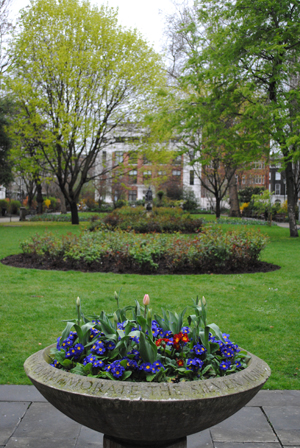
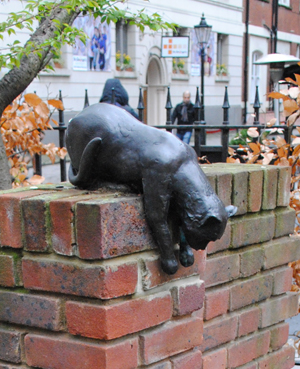
The gardens themselves are protected by an Act of Parliament passed in the 1830s and the gardens are to this day maintained by trustees appointed under that act. Aside from the statue of the queen, monuments in the gardens include a small plaque commemorating the bomb which landed in the square during a Zeppelin raid in World War I (no one was killed), benches commemorating 16 doctors from the homeopathic hospital who died in the Trident air disaster of 1972, and some lines of poetry on a flower bowl and surrounds by Philip Larkin and Ted Hughes in honor of the Queen’s Silver Jubilee of 1977. Statues include a 2001 bronze of Mother and Child and, (this one we love), a sculpture of Sam the cat, apparently a local resident (pictured)!

London Pub Signs – The White Cross…

The-White-Cross

This pub situated on the bank of the River Thames in Richmond, in London’s west, owes its name to a former monastery which once stood on the site.

A pub has been on the site since at least 1748 when it was known as the Waterman’s Arms. But the current building dates from 1838 and it was renamed the White Cross shortly after.

There’s a couple of competing theories behind its name – one is that the landlord at the time of the name changed was one Samuel Cross. The other is that it was named after the friary which once stood on the site and was dissolved, no surprises here, by King Henry VIII, in 1534. The friary had been established by Observant Franciscans, who took the white cross as their symbol, around 1500.

Apparently some remains of the friary may be incorporated into the cellars of the pub. Other features to note are the lovely open fireplaces including one oddly placed under a window (delightful on colder days), and the sign pointing to the door on the side of the pub which states that this is the entrance in times of high tide (these usually occur during spring and see access to the front entrance blocked by the rising river water).

Located off Water Lane in Richmond. For more on the pub, check out http://thewhitecrossrichmond.com.

Lost London – Monfichet’s Tower…

A relatively short-lived Norman fortification located on Ludgate Hill, this tower or ‘castle’ was probably built in the late 11th century and was one of several new fortress located in the city post 1066.

Ludgate-HillBelieved to have been built by Gilbert de Monfichet – a relative of King William the Conqueror who hailed from Rouen (and is believed to have been connected with Monfichet family of Stansted Monfichet in Essex), the tower apparently comprised a stone keep on a motte surrounded by ditches. It was located on Ludgate Hill near the city wall, to the north of Carter Lane, on what was then the western edge of the walled city.

First appearing in documents in the 1130s, it was apparently strengthened during a revolt against King Henry II in 1173-1174 but was eventually demolished in the 13th century (some accounts suggest it was King John who ordered its demolition in 1213, after Gilbert’s successor Richard was banished).

The site was given to the Dominican priory of Blackfriars in 1275 (there’s a suggestion that the tower was already in ruins by 1278 meaning it must have been at least partially demolished some time prior). Apparently some of the masonry from the tower was used in the priory’s construction.

Excavations in the 1980s revealed the remains of a ‘V’ shaped defensive ditch – interpreted as one of three defensive ditches which protected the tower – and rubbish and cess pits – interpreted as standing within what was the tower’s bailey.

10 Historic London Garden Squares…6. Grosvenor Square

Grosvenor-Square-1

The largest square in Mayfair, Grosvenor Square was laid out in the 1720s on the orders of  Sir Richard Grosvenor of Cheshire.

Sir Richard owned the Grosvenor Estate, a considerable tract of land in London’s west which includes in its northern part the land upon which the square was created (the estate is now owned by Gerald Cavendish Grosvenor, the 6th Duke of Westminster).

It’s proximity to Hyde Park and Whitehall quickly made it, like many other historic squares, a fashionable place for politicians to live – among those who lived here in the late 18th century were three prime ministers.

The oval-shaped gardens in the middle of the square – which was only opened to the public in 1948 – were once home to a statue of King George I but this was removed at some point. Originally thought to have been laid out by gardener John Alston, they took on their current form in 1948 when they were redesigned by architect BWL Gallannaugh (interestingly, Grosvenor Square is also said to have been the last part of London to exchange gas lighting for electric lighting).

There’s almost no residential buildings on the square these days but among the most prominent buildings (in fact it dominates the west end of the square) is the US Embassy. Designed by Eero Saarinen, the building was completed in 1960 with US President John F Kennedy one of the first visitors.

Grosvenor-Square-2The hulking embassy is only one of the many American connections to the square, connections which at one point led to it being known as “Little America”. Dwight Eisenhower, commander of the US armed forces in World War II, based his headquarters at number 20 in 1944, while number nine – one of the few residences to survive – was home to John Adams, first American ambassador to the Court of St James and later the country’s second president.

The American theme, which has meant the square has been the focus of demonstrations such as those protesting the Vietnam War as well as outpourings of support such as in the wake of the September 11 attacks, is also evident in the statutory in the square’s gardens with grand, full size statues of  President Franklin D. Roosevelt (a bronze by William Reid Dick unveiled by Eleanor Roosevelt on the third anniversary of the president’s death – 12th April, 1948 – it is pictured above), President Eisenhower (a bronze by Robert Dean dating from 1989), and President Ronald Reagan (unveiled on 4th July, 2011, pictured right).

On the eastern side of the garden square is the September 11 Memorial Garden opened in 2003 while on the south side is the Monument to the Eagle Squadrons, the three RAF squadrons in World War II mostly composed of American volunteers before the US entered the war. There’s also a set of memorial “Diplomatic Gates”, installed in 1984 to commemorate the bicentennial of the Treaty of Paris and honour US and UK politician who have worked in the service of peace.

Other notable buildings include number one, the Canadian High Commission (previously the US embassy); and number four, one of  square’s oldest houses. Now demolished, number 44 was the home of the Earl of Harrowby and where the British Cabinet were dining when word arrived of Wellington’s victory at Waterloo.

LondonLife – Celebrating the 60th anniversary of Queen Elizabeth II’s coronation…

Regent-Street-turns-purple-to-celebrate-The-Queen’s-Coronation-

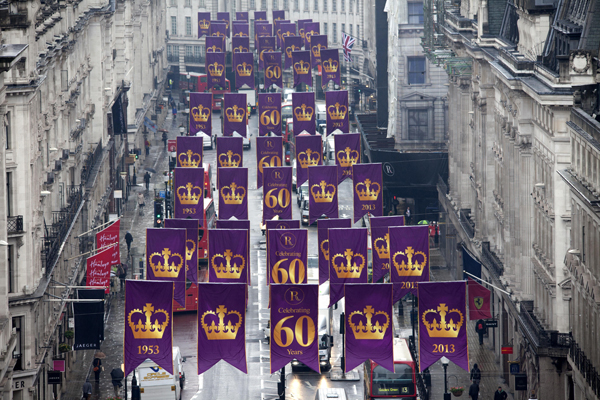
Regent Street is adorned with flags in celebration of the 60th anniversary of Queen Elizabeth II’s coronation, among the many ways in which London has been celebrating the occasion. The official anniversary was on Sunday – it was 2nd June, 1953, some 16 months after the 25-year-old Queen took the throne following the death of her father King George VI, that Queen Elizabeth II was crowned in Westminster Abbey. In celebrations yesterday, the King’s Troop Royal Horse Artillery fired a 41-gun salute in Green Park at midday followed an hour later by a 62-gun salute fired by the Honourable Artillery Company across the River Thames from the Tower of London. The Queen and other members of the royal family (along with some 2,000 guests) is attending a special service at Westminster Abbey today (for more on how the abbey is celebrating the event, see our earlier post here). More than 8,000 people attended the coronation which was watched by an estimated 27 million people across the country. PICTURE: RegentStreetOnline


Treasures of London – Coins at the Tower…

Coin2

In this special edition of Treasures of London, we’re taking a quick look at a new permanent exhibition which has opened at the Tower of London focusing on the 500 years it served as the Royal Mint.

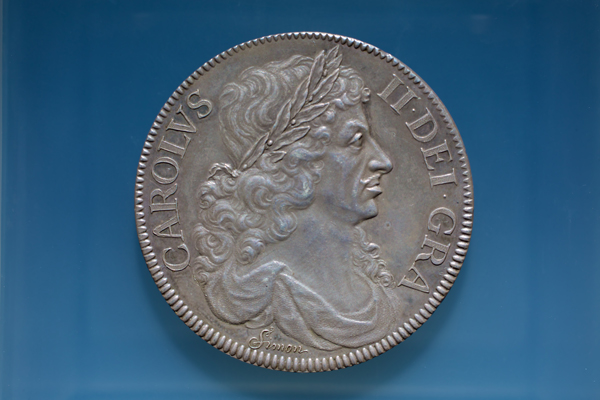
Opened in partnership with the Royal Mint Museum, the new exhibition, Coins and Kings: The Royal Mint at the Tower, features a series of rare coins and other coin-related paraphernalia, including a rare silver groat from the time of King Edward I (1279-1307), a gold “trial plate” dating from 1542 in the reign of King Henry VIII, and a Charles II petition crown dating from 1663 – pictured above, it was sent to King Charles II by engraver Thomas Simon as an example of his work (Simon never got the job and died of plague three years later).

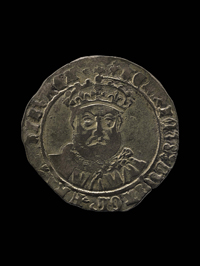
Coin1There’s also a silver ‘testoon’ from the reign of King Henry VIII (it bears a Holbein-style portrait of him) which has been debased – indeed, such was the state of coinage during his reign that the “silver” coins often contained more cheap metal, like copper, than silver so that as they wore down, the copper shone through earning the king the delightful nickname, ‘Old Coppernose’ (pictured right).

The tower was used as the country’s mint from about 1279 – when King Edward I moved the Royal Mint inside the Tower as part of his efforts to clean up England’s coinage – to 1812 – when the Royal Mint was relocated out of the Tower to a purpose-built premises on Tower Hill – and the exhibition focuses on five moments from its history.

They include a look at the efforts of Sir Isaac Newton, Warden (and later Master) of the Royal Mint, in tracking down forgers in the late 1600s (his rather zealous prosecutions of those creating forgeries, in particular one William Chaloner, is retold with aplomb in Thomas Levenson’s book Newton and the Counterfeiter), King Edward I’s harsh punishments for people who dared to tamper with his coinage, Queen Elizabeth I’s restoration of the coinage after her father, King Henry VIII’s meddling with the currency, and King Charles II’s rejection of Commonwealth money.
There’s a series of events to go with the exhibition’s opening including the change to see some of the coins up close and family activities (check out the Tower of London website – link below – for more details).

WHERE: Tower of London (nearest tube station Tower Hill); WHEN: 9am to 5.30pm, Tuesday to Saturday, 10am to 5.30pm Sunday to Monday; COST: £21.45 adults; £10.75 children under 15; £18.15 concessions; £57.20 for a family; WEBSITE: www.hrp.org.uk/toweroflondon/.  

PICTURES: Historic Royal Palaces/newsteam

Around London – Celebrating the Coronation’s 60th anniversary; Benjamin Britten; Keat’s House Festival; and, silver service in Roman Britain…

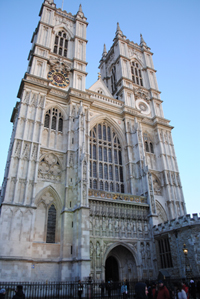
Westminster-Abbey3Sunday marks 60 years since Queen Elizabeth II’s coronation and Westminster Abbey – site of that event – is celebrating with a series of events. These include a special 60th Anniversary of the Coronation Service on Tuesday (4th June) to be attended by the Queen, Duke of Edinburgh and members of the royal family as well as a public lecture to be given by the Bishop of London Richard Chartres on Friday night (7th June – booking is essential), a concert performed by the abbey choir (13th June), and a new exhibition in the chapter house featuring archive images of the 1953 coronation ceremony and of preparations which took place at the abbey. Meanwhile the Coronation Chair, used in most coronations since the 14th century and having just undergone conservation work, is the subject of a new display in St George’s Chapel, and two new commemorative stained glass windows have been installed in King Henry VII’s Lady Chapel – the first commissioned by the abbey for more than a decade, they have been designed by artist Hughie O’Donoghue. For more on the abbey’s celebrations, see www.westminster-abbey.org.

Composer Benjamin Britten is the subject of a new exhibition opening at the British Library tomorrow. Poetry in Sound: The Music of Benjamin Britten (1913-1976) looks at the poetic and literary influences on the work of the man often described as the greatest English composer since Purcell. In particular it examines his collaboration with WH Auden and the interplay of his work with authors such as William Blake, Wilfred Owen, Alfred Lord Tennyson and William Shakespeare. As well as composition manuscripts, the exhibition features photographs, concert programmes and unpublished recordings of his music. There are a range of events accompanying the exhibition which runs until 15th September. An admission charge applies. For more, see www.bl.uk.

The Keats House 2013 Festival is underway this week with activities ranging from poetry readings to felt-making demonstrations, free family workshops and musical performances. The programme of events runs until 2nd June, all under this year’s theme of ‘Health is My Expected Heaven’: The Body and The Imagination. Poet John Keats lived at the house in Hampstead, not far from Hampstead Heath, from 1818 to 1820 and it is the setting for some of his most acclaimed poetry including Ode to a Nightingale. It was this house that he left to travel to Rome where he died of tuberculosis at the age of 25. For more on the festival programme, follow this link.

On Now: Silver Service – Fine dining in Roman Britain. This free exhibition at the British Museum recreates the experience of dining late in the Roman era and uses the Mildenhall Great Dish, Britain’s finest late Roman silver dining service, as an example of the type of large platter on which food for sharing would have been presented. The exhibition, which runs until 4th August, is free (keep an eye out for our upcoming Treasures of London on the Mildenhall Great Dish). For more information, see www.britishmuseum.org.

10 Historic London Garden Squares…4. St James’s Square…

A quiet square at the heart of the area known as St James, the square’s origins go back to the 1660s when King Charles II granted what was initially a lease (and later the freehold) over a section of St James’s Field to Henry Jermyn, a favourite of King Charles I’s queen Henrietta Maria who was created the 1st Earl of St Alban.

William-IIIThe earl began developing the residential square (the original design had houses on the south-side fronting onto Pall Mall) and, thanks to its proximity to Whitehall and St James’s Palace, quickly attracted some of the who’s who of London to live there.

Indeed it’s said that by the 1720s, seven dukes and seven earls were in residence in the square – other residents included PMs William Pitt the Elder and William Gladstone (both lived in Chatham House, at numbers 9 and 10, albeit at different times) as well as two of James II’s mistresses, Arabella Churchill and Catherine Sedley, who apparently lived at number 21 in the late 1600s.

Among the architects who designed houses around the square were Robert Adam, Sir John Soane, and, in more recent times, Edwin Lutyens.

The square – which reached its final layout, designed by John Nash, around 1854 – remained a desirable place to live even as in the 19th century, some of the houses gave way to financial institutions, private clubs, offices and even lodging houses. These days it’s dominated by business and other institutional organisations.

Organisations located in the square today include the Naval and Military Club (number four – former home of Nancy Astor), the East India Club (number 16) and the London Library (located at number 14, it was founded by Thomas Carlyle in 1841) as well as the international headquarters of BP.

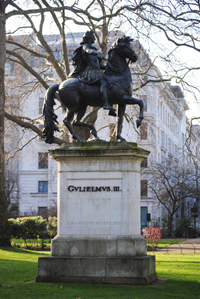
The gardens feature an equestrian statue of King William III at their centre (the work of John Bacon Sr and Jr, it was installed in 1808 and is pictured above). Other monuments include The Stag (located in the south-west corner, it is the work of Marcus Cornish and was installed in 2001) and, just outside the garden railings in the north-east corner, a memorial to WPC Yvonne Fletcher who was killed when a gun was fired from the Libyan Embassy (known as the Libyan People’s Bureau, it was located at number 5) during a demonstration on 17th April, 1984. The pavilion on the south side was designed by John Nash.

The gardens are private – managed by the St James’s Square Trust – but open to the public on weekdays from 10am to 4.30pm.

LondonLife – Celebrating 100 years of the RHS Chelsea Flower Show…

Chelsea2

Queen Mary (wife of King George V) with group at the RHS Chelsea Flower Show in 1913. The show, which was first held in the grounds of the Royal Hospital, Chelsea, in 1913, is celebrating its centenary this year. The 244 exhibitors at the inaugural event have grown to more than 500 today with 161,000 visitors now attending the show each year. Other pictures released to mark the centenary include (see below) gardeners carrying pots at the show in 1931; visitors looking at a display of cacti at the 1964 show; and, an aerial view of the show in the 1990s. The show runs from today until 25th May. For more on the RHS Chelsea Flower Show, see www.rhs.org.uk/Shows—events/RHS-Chelsea-Flower-Show/2013PICTURES: RHS Lindley Library. 

Gardeners-carrying-pots-at-the-Show.-Date-1931.-Credit,-RHS-Lindley-Library

Chelsea3

Chelsea4

Around London – Tudor and Stuart fashion; Wellington Arch treasures; Hunterian celebrates 200 years; Regent Street and the world; and, Kaffe Fassett at the FTM…

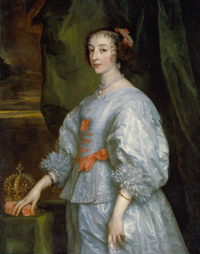
Queen-Henrietta-Maria-(Royal-Collection)A landmark exhibition looking at fashion in the Tudor and Stuart eras opens at The Queen’s Gallery, Buckingham Palace, tomorrow. In Fine Style: The Art of Tudor and Stuart Fashion features everything from a diamond ring given by King Charles I to his then 19-year-old wife Henrietta Maria, an ornate set of armour which belonged to 13-year-old Henry, Prince of Wales (the older brother of King Charles I – he died of typhoid fever at the age of 19), and a diamond-encrusted box in which Queen Mary II kept black fabric patches worn to conceal blemishes or highlight the creaminess of skin. A 58.5 carat pearl, named ‘La Peregrina’ (‘The Wanderer’) and given to Queen Mary I as an engagement gift from Philip II of Spain (and later presented to Elizabeth Taylor by Richard Burton on Valentine’s Day, 1969), is also among the objects on show along with a pendant featuring a miniature of Queen Elizabeth I. The exhibition also features more than 60 portraits from the Royal Collection showing the fashions of the time, including a portrait by Sir Peter Lely of court beauty Frances Stuart, Duchess of Richmond, who famously refused to become King Charles II’s mistress. Admission charge applies. Runs until 6th October. For more, see www.royalcollection.co.uk. PICTURE: Sir Anthony van Dyck, Queen Henrietta Maria, 1609-69. Royal Collection Trust/© 2013, Her Majesty Queen Elizabeth II.

A medieval crozier and bejewelled ring discovered in Cumbria in 2010 are on public display for the first time in a new exhibition at Wellington Arch. The artefacts, which were discovered at Furness Abbey, are featured in an English Heritage exhibition, A Monumental Act: How Britain Saved Its Heritage, which explores how the Ancient Monuments Act of 1913 helped protect Britain’s historical fabric. Other objects in display include some of the historic artefacts found in the 20 years following the act – a Roman bronze weight from Richborough Roman Fort in Kent and a 13th century sculpture of Christ found at Rievaulx Abbey in Yorkshire. Admission charge applies. The exhibition runs until 7th July. For more, see www.english-heritage.org.uk/daysout/properties/wellington-arch/.

The Hunterian Museum at the Royal College of Surgeons is celebrating its bicentenary this year and to mark the occasion, they’re holding a free exhibition focusing on the museum’s collections of human anatomy and pathology; natural history and artworks. The display will consider how the objects in the collection have informed the medical world and fallen under the gaze of visitors who have included surgeons as well as monarchs. The exhibition in the Qvist Gallery at the museum in Lincoln’s Inn Fields opens on Tuesday, 14th May, and runs until 9th November. For more, see www.rcseng.ac.uk/museums/hunterian.

The world comes to Regent Street this Sunday with the ‘InsureandGo The World on Regent Street’ festival. Representatives from countries including Argentina, Egypt, Trinidad and Tobago, Turkey and China as well as the UK will showcasing the best of each country’s culture, music and dance, art, food and fashion. Activities will include tango lessons from Argentina, professional henna drawing from Egypt, a steel band from Trinidad and Tobago, and a Chinese drumming performance and lion dancing. The street will be closed for the day. For more, see www.regentstreetonline.com.

On Now: Kaffe Fassett – A Life in Colour. This exhibition at the Fashion and Textile Museum in Bermondsey Street celebrates the work of American-born artist Kaffe Fassett and features more than 100 works including nine foot wide knitted shawls, coats and throws, patchwork quilts and a ‘feeling wall’ where visitors can touch the textiles on display. Admission charge applies. Runs until 29th June. For more, see www.ftmlondon.org.

10 Historic London Garden Squares…3. Soho Square…

Soho-Square

Originally named King’s Square in honour of King Charles II, Soho Square was laid out on what had been known as Soho Fields as a residential square with a garden at its centre in the late 1670s – part of the general demand for homes that came about after the Great Fire of London in 1666.

A fashionable place to live when built, among the early mansions was Monmouth House, a grand mansion originally built for James Scott, the Duke of Monmouth (and illegitimate son of King Charles II who lost his head after leading a rebellion against King James II) and later used by the French ambassador before it was demolished in the 1770s. Two of the square’s original homes are located at numbers 10 and 15.

A number of trees and shrubs were recorded as being planted here including cherry, peach and almond trees as well as lilacs, jessamine and honeysuckle – it’s suggested these may have been chosen by botanist Sir Joseph Banks who lived at number 32 from 1777 until his death in 1820.

King-Charles-IIThe square, which was opened to the public in 1954, is today at the heart of the West-End district of Soho, once synonymous with late night entertainment including the sex industry but also home to a growing number of film and media-related organisations (for a look at the derivation of the name Soho, see our earlier post).

Indeed, a number of media companies are based in the square itself – British Movietone, which was produced the Movietone news, was located here at number 22 for years while current inhabitants include Twentieth Century Fox (located in a building at number 31-32 where the botanically minded Linnean Society once met).

Other buildings of note in the square include the French Protestant Church, built in 1891-93 and located at numbers eight and nine and St Patrick’s Church, located at on the corner of Soho Square and Sutton Row. While a chapel was first consecrated here in 1792, the current building dates from the 1890s (reopened in 2011 after a £3.5 million restoration) and has catacombs which spread a considerable distance under the square. In a nod to less savoury aspects of the square’s past, the White House Brothel was also located here – at number 21 – in the late 18th century (the building is now known as Manor House).

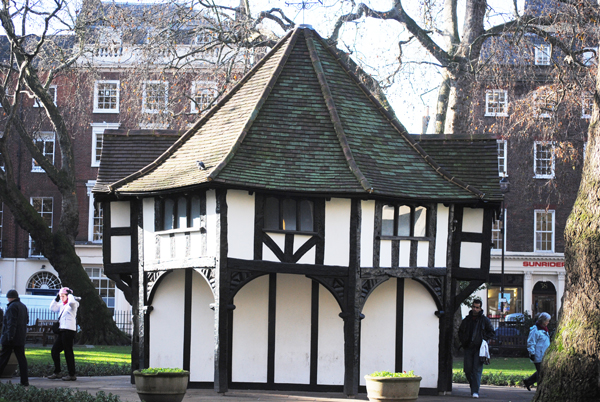
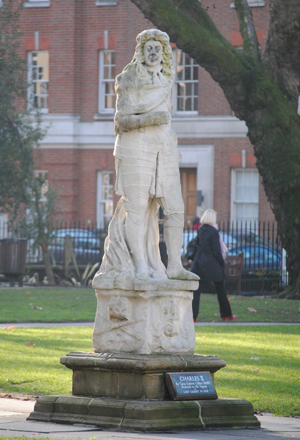
The oldest statue in the square is that of Caius Gabriel Cibber’s King Charles II which dates from 1681 (pictured right) – a reminder of the square’s past name.  Originally part of a larger monument containing a fountain, it was removed in 1875 to make way for the distinctive half-timbered Tudor-style hut (pictured above) used by gardeners which, having been rebuilt in the 1930s, currently sits at the square’s centre and only returned to the gardens in 1938. There’s also a bench in the square which commemorates the late singer Kirsty MacColl, writer of the song Soho Square.

For more on London’s squares, see Gary Powell’s Square London.

Daytripper – New Forest…

New-Forest

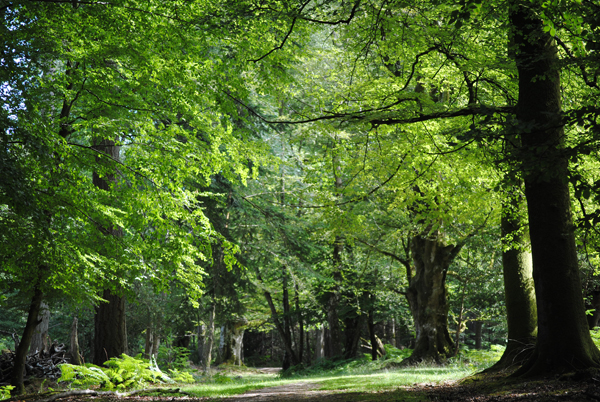
At roughly 56,000 hectares (about half of which is woodland), the New Forest National Park is the smallest national park in the UK. But it packs a lot into a small space and makes for great daytrip destination from London now that the sun (hopefully) is coming out.

The ‘Nova Foresta’, encompassing a coastal swathe of land located about 65 miles south-west of London, was first designated as a new hunting forest by William the Conqueror in 1079 – indeed, his won, King William II (William Rufus), died there in an apparent hunting accident in 110o (his death is marked by a memorial stone, just off the A31 near Stoney Cross, which tells the story although this is apparently not the site where he actually died).

Later a source of wood for the Royal Navy, the forest gained government protection with the passing of the New Forest Act in 1877. Most the of land is still owned by the Crown whose assets here have been managed by the Forestry Commission since 1923. The forest was designated a national park in 2005.

The journey from London takes about an hour and a half by train – Waterloo to the town of Brockenhurst (buses travel around the forest area including an open top tourist bus). While a car is useful if you want to visit several sites in a single day, traffic can get heavy, particularly if the sun is out.

A good place to start is the New Forest Visitor Centre, located in main town of Lyndhurst, which has plenty of information about the region (including a small museum) and on some terrific walks (included guided walks if you so desire).

New-Forest-ponyA good short walk, starting only a couple of miles out of Lyndhurst, takes in the Knightwood Oak – reputed to be more than 600 year, it’s the largest oak in the forest and boasts a girth of more than 7.5 metres – and the Reptile Centre (inhabitants include adders, the only poisonous snake in the UK) and a walk through some stunning conifers.

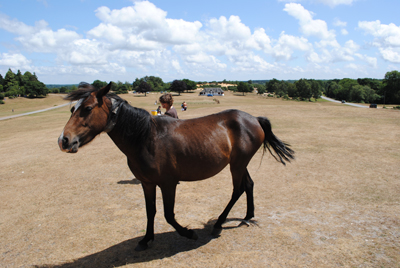
One of the highlights of New Forest are the 3,000 free-roaming wild ponies – they can get rather friendly, particularly if you’re having a picnic, and you’re advised not to feed or touch them. They can be seen all over the forest including wandering through some of the villages.

Other attractions in the New Forest include the 26 miles of coastline from where you can get terrific views of the Isle of Wight across the Solent – the coastal village of Buckler’s Hard is also worth stopping by for its maritime history, and car buffs will love the Beaulieu National Motor Museum (complete with the remains of Beaulieu Abbey and the intact Palace House, built in the Abbey gatehouse and home to the Montagu family since 1538), located on land which once housed Beaulieu Abbey (really a day in itself).

There’s also plenty of outdoor activities you can take part in – everything from walking and cycling to horseriding to kayaking.

And if you do decide to stay overnight, there’s plenty of accommodation and the option of camping (designated places only) if you so wish.

For a novel about the forest and its history, check out Edward Rutherfurd’s The Forest.