LondonLife – Winter Wonderland returns to Hyde Park…

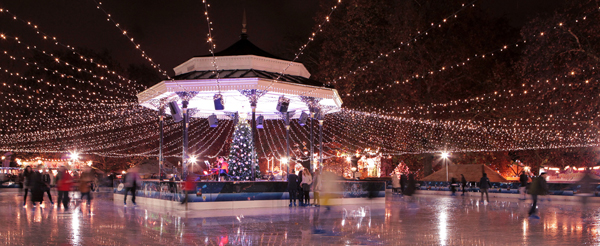
Winter-WonderlandHyde Park Winter Wonderland is back for Christmas. As well as attractions including the UK’s largest outdoor ice rink centred on a Victorian bandstand (pictured), a giant observation wheel, Bavarian village, markets and Zippo’s Circus, this year’s event features an ice and snow sculpture experience – The Magical Ice Kingdom – created from more than 200 tonnes of ice and snow and featuring more than 500 snow and sculptures. Winter Wonderland, located at the eastern end of Hyde Park, first opened in winter 2007 and has since attracted more than 10 million visitors. This year’s event is open from 10am to 10pm, every day (except Christmas Day) until 6th January. For more, head to www.hydeparkwinterwonderland.com.

LondonLife – A new crown for King Henry VIII…

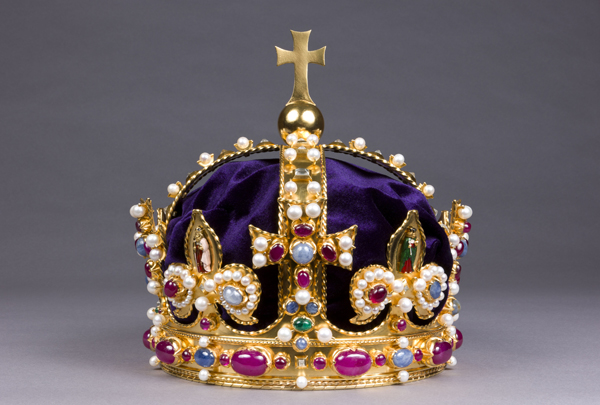
A recreation of King Henry VIII’s imperial crown, destroyed after the English Civil War, has gone on show in the Chapel Royal at Hampton Court Palace. Originally created for either King Henry VIII or his father, King Henry VII, the crown was worn at the coronations of Henry VIII’s children and possibly the king’s own as well as at Hampton Court Palace during major liturgical and court ceremonies. It was subsequently used by his successors down to King Charles I before being melted down by the Commonwealth Government in 1649 at the Tower of London. The replica crown, which is being displayed in the Royal Pew – allowing visitors access to the balcony in the chapel for the first time in seven years, is the result of detailed historical research by Dr Kent Rawlinson, curator at Hampton Court Palace, and was made by Crown Jeweller Harry Collins and his master craftsmen. Hand-crafted in silver gilt, it features 344 jewels including pearls and precious and semi-precious stones. Five enameled figures are set within five fleur-de-lis – the figures represent the Virgin and Child, St George and English kings believed to be St Edmund, St Edward the Confessor and King Henry VI (King Henry VIII had the latter three figures added to the crown to underline the political and religious authority of the Crown). For more on Hampton Court Palace, see www.hrp.org.uk/HamptonCourtPalace/PICTURE: HRP/Newsteam

LondonLife – Dick Whittington visits St Paul’s for the Lord Mayor’s Show…

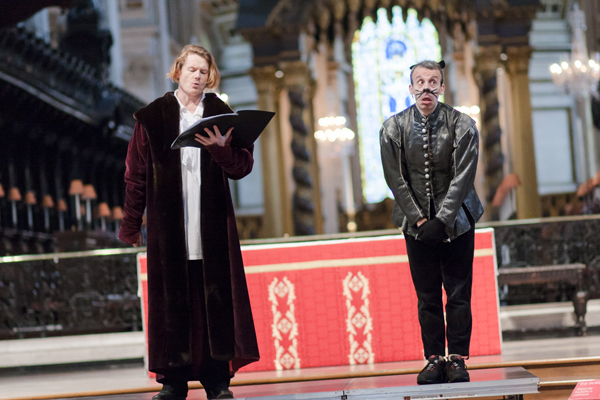
Actors Julian Rhind-Tutt (The Madness of King George, Notting Hill) and David Schneider (Horrid Henry the Movie, I’m Alan Partridge) star as thrice Lord Mayor of London, Dick Whittington, and his cat in one of a series of free performances held in St Paul’s Cathedral last Saturday as part of the festivities surrounding the annual Lord Mayor’s Show. The Lord Mayor, Roger Gifford, visited St Paul’s to receive a blessing before heading on to the Royal Courts of Justice to swear an oath of allegiance (and then, eventually returning to Mansion House where his journey had also begun). Interestingly, the Lord Mayor was unable to complete his entire journey to and from Mansion House in the State Coach this year (see our earlier post here) when what was reported as a fault with the coach’s wheels meant he had to complete the journey in an open top Land Rover. For more on events at St Paul’s Cathedral, see www.stpauls.co.uk.

PICTURE: © Graham Lacdao/The Chapter of St Paul’s Cathedral

LondonLife Special – It’s Bonfire Night!…

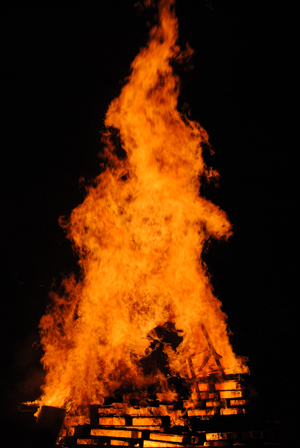
Today marks what was traditionally known as Guy Fawkes Day or, as it’s known more popularly today, Bonfire Night, when, along with people throughout the UK, Londoners celebrate the capture of would be regicide Guy Fawkes and his conspirators, who in 1605 plotted to blow up the House of Lords and with it, King James I, during the State Opening of Parliament.

We’ve previously run a couple of pieces on the conspiracy and some of the key people and places involved – check out our earlier entries here and here.

Meantime, if you’re wanting to attend a celebration in London, Time Out has a terrific guide to all the events taking place – simply head to their page here. Enjoy the night!

LondonLife – National Trust founder Octavia Hill honoured at Westminster Abbey…

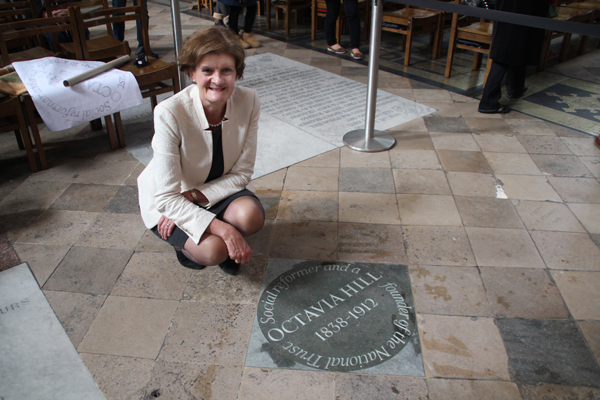
Social reformer and co-founder of the National Trust Octavia Hill (1838-1912) was honoured at a service at Westminster Abbey earlier this month when a new memorial stone to her was dedicated. Concerned about the impact of development and industrialisation, Hill, who died 100 years ago this year, founded the National Trust with Sir Robert Hunter and Canon Hardwicke Rawnsley in 1895. A Londoner, Hill was also an important figure in the housing reform movement. Among those who attended the service were Simon Jenkins, the chairman of the Trust, and the organisation’s director-general, Dame Fiona Reynolds (pictured). The memorial stone, unveiled by Jenkins in the floor of the nave of the abbey, is made of Purbeck marble and was designed and made by Rory Young. For more on the National Trust, see www.nationaltrust.org.uk. For more on Westminster Abbey, see www.westminster-abbey.org. PICTURE: National Trust Images.

LondonLife – Flying over the Thames by night…

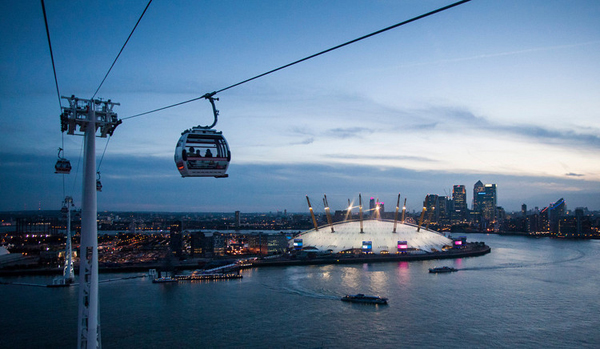
Sailing high over the River Thames between North Greenwich in the river’s southern bank and the Royal Docks on the river’s northern bank is the cable car formally known as the Emirates Air Line. Opened in late June and running every day, the cable car – the UK’s first in an urban area – is operated by Transport for London and links into the Underground and Docklands Light Rail network. Travelling at about 90 metres above the ground along a course of more than half a mile, passengers can take in the City, Docklands, Greenwich and as far eastward down the river as the Thames Barrier. This image, which shows the 02 Arena in the background, was taken just after the Closing Ceremony of the Olympic Games in August. For more, see www.emiratesairline.co.ukPICTURE: © Transport for London

LondonLife – Canary Wharf skyline…


Skyline of Canary Wharf, Docklands, east London. Taken from a ferry on the Thames. Canary Wharf is one of the city’s main financial districts and is centred around One Canada Square (pictured with the pyramidal top), formerly the tallest building in the UK (it has been surpassed by The Shard).

LondonLife – Bronze Age finds at Crossrail site…

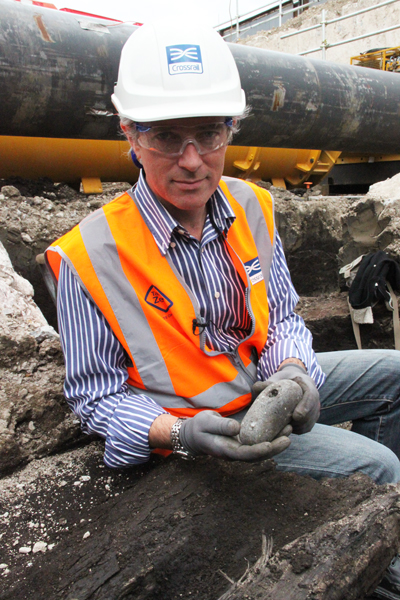
Crossrail’s lead archaeologist Jay Carver holding a hammer stone which is among the first Bronze Age finds uncovered during the £14.8 billion rail project.

The discoveries, uncovered at the Plumstead tunnel entrance site in East London (not far from Belmarsh Prison), also included two wooden stakes that may have been cut by early hunters with an axe and which  may have been used in the building of a timber path, part of a network which allowed hunters to access wetland areas about 3,500 years ago.

“Although we haven’t identified an actual track way yet, the timbers are similar to those used to make the track ways and certainly show that people were in the area exploiting the woodland,” says Mr Carver. “This is a promising find as we continue our search for evidence of a Bronze Age transport route along where London’s newest railway will run.”

Previous objects found at Crossrail project sites include human bones from the medieval period, a find of rare amber and a piece from a mammoth’s jaw bone.

The latest finds, which are now being examined by Museum of London Archaeology, were made as a month long exhibition opens at Crossrail’s Tottenham Court Road Visitor Information Centre (16-18 St Giles High Street), displaying previous objects found during the project.

Meanwhile, as part of the exhibition, Mr Carver will also host a Q&A session on Twitter (#BisontoBedlam) today between 2pm and 9pm during which he will answer questions on Crossrail’s archaeology programme and the exhibition.

Crossrail, Europe’s largest construction project, will see the construction of a new rail link running along a 73 mile route across the city.

For more on Crossrail, see www.crossrail.co.ukPICTURE: Courtesy of Crossrail.

LondonLife – A snapshot in time at the soon-to-be Design Museum…

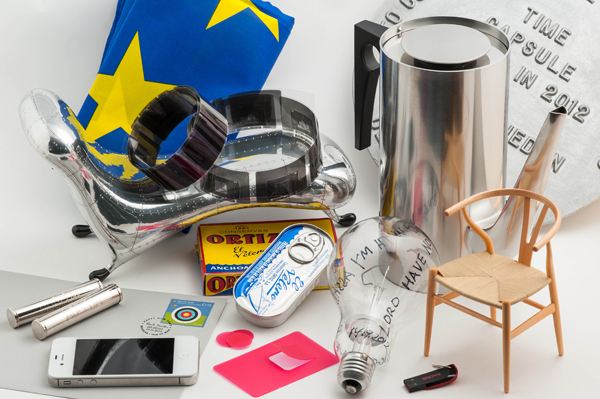
A selection of objects chosen by leading designers and architects including Sir Terence Conran, Sir Paul Smith, Zaha Hadid, and Norman Foster were buried within the foundations of the soon-to-be Design Museum in Kensington High Street earlier this month. The objects, which included everything from a miniature model of an 1949 Wish Bone Chair to an iPhone, a Cylinder Line Coffee Pot, a tin of anchovies and Tube maps, were placed within a time capsule which was buried as part of a ground-breaking ceremony for the new museum. Designed by John Pawson, the new Design Museum will be based within the converted interior of the former Commonwealth Institute Building. Expected to open in 2015, it will have three times as much space as the existing premises in Shad Thames, south east London. For more, see http://designmuseum.org.

PICTURE: Dominic French.

LondonLife – Pre-Raphaelites at the Tate…

Laus Veneris (1873-8) by Edward Burne-Jones was inspired by Algernon Swinburne’s poem Laus Veneris which relates the tale of a knight who falls in love with Venus (shown in red) but then decides to leave her. Usually found in the Laing Art Gallery in Newcastle upon Tyne, it’s among the 180 or so works on display at Tate Britain on Millbank as part of its recently opened exhibition, Pre-Raphaelites: Victorian Avant-Garde. The exhibition, the largest survey of the group in almost 30 years, locates the Pre-Raphaelites as the UK’s first modern art movement and traces the group’s development from its formation in 1848 through to their Symbolist creations of the 1890s. Other works on show, some of which have been rarely seen in the UK, include John Everett Millais’ Ophelia, William Holman Hunt’s The Lady of Shalott, and Dante Gabriel Rossetti’s Found. There are also works by Madox Brown and William Morris and as well as paintings, the display includes sculpture, photography and the applied arts. Runs until 13th January next year. Admission charges apply. For more, see www.tate.org.uk.

LondonLife – John Donne at St Paul’s Cathedral…

A new bust of priest and poet John Donne was unveiled outside St Paul’s Cathedral earlier this year. Donne was made  Dean of St Paul’s in 1621, a position he held until his death 10 years later. He was subsequently buried in Old St Paul’s Cathedral and a memorial to him – a likeness apparently based on a drawing of him in his shroud – was the only monument to survive the Great Fire of London in 1666. It’s still inside the cathedral. The new bronze bust, located in the garden to the south of the cathedral, was the work of artist Nigel Boonham and has Donne looking east towards his birth place in nearby Bread Street. The text “Hence is’t, that I am carried towards the West/This day, when my Soul’s form bends to the East” – taken from the poem Good-Friday, 1613, Riding Westward – is inscribed underneath the bust. Commissioned by the City of London, the sculpture was unveiled in June by the artist and Professor Peter McCullough, one of the cathedral’s Lay Canons. For more on St Paul’s, see www.stpauls.co.ukPICTURE: Graham Lacdao / The Chapter of St Paul’s Cathedral. 

LondonLife – A giant shot put hits Greenwich…

Another reminder of the Olympic and Paralympic Games in London can be found at the Old Royal Naval College in Greenwich. The sculpture, a three metre wide shot put embedded in the ground, is one of a series of three different Gifts from the Gods sculptures which have appeared around the city. As well as shot puts, the other sculptures – all of which look as though they’ve been dropped from a great height – depict a 10 metre high javelin and a seven metre long bow with arrows. The sculptures, which will remain in place until 10th September, are part of Wonder, a series of interactive installations put in place as part of the Mayor of London Presents program. For more, see www.molpresents.com/wonder. For more on the Old Royal Naval College, see www.ornc.orgPICTURE: Steve Bradbury/Courtesy of ORNC.

LondonLife – Gold, gold, gold…

The Olympics might be over but there are still plenty of reminders of the Games around town. Not the least of which are the gold postboxes, painted that color in celebration of London’s gold medallists (the postboxes are located in the home towns of the gold medallists where possible). Pictured is the gold postbox in Heathfield Terrace, Chiswick, west London, painted gold in honor of the victory of Pete Reed in the men’s four rowing. It’s one of a number of gold postboxes in London – others include one in with others in Carshalton Road, Sutton, for Joanna Rowsell’s gold medal win in the women’s team pursuit; one in Church Road in Wimbledon for Andy Murray’s gold medal in the men’s tennis singles, and one in Broad Street, Teddington for Mo Farah’s gold medal in the men’s 5000 metres. Royal Mail has a website where you can see the location of all the gold postboxes in London and elsewhere around the nation – www.goldpostboxes.com. Not sure how long the gold is going to last – Royal Mail has said they will repaint them red – the color they have been, with a few exceptions, since 1874 –  in “due course” but there is a push for them to remain gold as a reminder of the Games.

PICTURE: Courtesy of Royal Mail.

LondonLife – The 2012 Serpentine Gallery Pavilion…

The 12th in the Serpentine Gallery’s annual architecture series, this year’s Serpentine Gallery Pavilion in Kensington Gardens has been designed  by Herzog & de Meuron and Ai Weiwei, the design team behind for the Beijing National Stadium, star of the 2008 Olympic Games and commonly known as the “bird’s nest”. Twelve columns – each of which represents one of the 12 annual pavilions created so far (including this one) – support a floating platform roof standing 1.5 metres off the ground. The interior is clad in cork and the pavilion designed to “inspire visitors to look beneath the surface of the park as well as back in time across the ghosts of the earlier structures”. Open until 14th October. For more information, see www.serpentinegallery.orgPICTURE: Serpentine Gallery Pavilion 2012. Designed by Herzog & de Meuron and Ai Weiwei © Herzog & de Meuron and Ai Weiwei. IMAGE –  © 2012 Iwan Baan.

LondonLife – Hats…err, on to London’s statues…

One of the stranger sights in London during this week of Olympic celebration are the many statues around the city adorned with hats – including Trafalgar Square’s iconic statue of Admiral Lord Nelson which now wears a Union Jack hat featuring a replica of the Olympic flame. Designed by Sylvia Fletcher and made by London’s oldest hatters Lock & Co, makers of Nelson’s original bicorn hat, the hat is one of 20 which has been placed upon London statues. It’s all part of Hatwalk, an initiative which aims to take visitors on a tour of the city by bringing some of its most well-known statues to life. Other statues wearing hats include those of former US President Franklin D Roosevelt and former British PM Winston Churchill in Bond Street, the Duke of Wellington near Wellington Arch, and William Shakespeare in Leicester Square. Hatwalk, which features hats designed by some of the UK’s top milliners, was commissioned by the Mayor of London, in partnership with BT, Grazia magazine, the British Fashion Council and the London 2012 Festival. The hats, which appeared on the statues yesterday, will remain on the statues for only four days before they are auctioned for charity. For more on Hatwalk and a map of where the hats are, see www.molpresents.com/hatwalk


LondonLife – BBC World Service bids adieu to Bush House…

Seventy-one years of broadcasting from Bush House in Aldwych came to an end last week when the BBC World Service formally left the building. The building has been used by the BBC for foreign language broadcasting since 1941 (the service’s previous home, Broadcasting House in Portland Place having been bombed out), initially for the European Service and, since 1958, for the rest of what was then called the Overseas Service. Designed by American architect Harvey Corbett, the building at the end of Kingsway in west London was constructed in 1923 and opened in 1925 (additions were made in 1928 and 1935). Built for an Anglo-American trading company at the enormous cost of around £2 million (a price tag which led to it being declared the most expensive building in the world), it was named for American businessman, Irving T. Bush. Noted for its distinctive portico featuring two male statues depicting Anglo-American friendship, the premises has been the site of important events including General Charles De Gaulle’s wartime broadcasts to the Free French while among those who worked in the building were George Orwell, who worked for the Eastern Service during World War II. The BBC, who have returned the World Service to Broadcasting House following a major extension, have never actually owned the building – owners during its residency there have included the Church of Wales and its current Japanese owners. For more on Bush House and its BBC connections, see www.bbc.co.uk/historyofthebbc/collections/buildings/bush_house.shtml. For the final broadcast, see www.bbc.co.uk/news/entertainment-arts-18805063. PICTURE: Bush House, 1951 – Courtesy BBC.

LondonLife – Olympic flower power at Kew Gardens…

There’s less than a month to go to the Opening Ceremony of the Olympic Games so we thought it only appropriate to take a look at Kew Gardens’ floral Olympic Rings. Located next to The Orangery, the rings are 50 metres long and made of 20,000 plants including Viola ‘Light Blue’, Viola ‘Clear Yellow’, Viola ‘Black Delight’, apple mint (Mentha suaveolens) and Viola ‘Red Blotch’ plants. Able to be seen from planes on the Heathrow flight path, they were unveiled in April and will be at the gardens until September. For more information on visiting Kew Gardens, see www.kew.org. PICTURE: Courtesy Kew Gardens

LondonLife – Unveiling the Bomber Command Memorial…

A new memorial honoring the 55,573 airmen who died while serving in Bomber Command during World War II was formally dedicated by Queen Elizabeth II in Green Park last week. At the centre of a new Portland stone pavilion, designed by architect Liam O’Connor (the architect behind the Commonwealth Memorial Gates near Buckingham Palace), is a nine foot high sculpture – the work of Philip Jackson – depicting seven aircrew from a Lancaster bomber having just returned from an operation (detail of which is pictured). The roof of the pavilion, the design of which was inspired by construction techniques used in the Vickers Wellington bomber, incorporates aluminium which was recovered from a Handley Page Halifax III bomber shot down over Belgium on the night of 12th May, 1944. The eight crew were killed during the incident and three of them were found still at their stations when the aircraft was excavated from a swamp in 1997 (they were subsequently buried with full military honors alongside the other five members of the crew). Hundreds of RAF veterans and Commonwealth airmen turned out to see the £6 million publicly funded memorial officially unveiled. The event was also marked with a flyover by five RAF Tornado bombers followed by the RAF’s last Lancaster Bomber which dropped thousands of poppies over Green Park in a message of remembrance. About 125,000 men served in Bomber Command from 1939-1945. The memorial, created following a five year campaign, commemorates people of all nations who lost their lives in the bombing campaigns of that period. For more on the memorial, see www.bombercommand.com.

PICTURE: Courtesy of Mike Legend at Flickr.

LondonLife – Marking Wimbledon that was…

Wimbledon kicked off this week, so it’s only fitting that we mention the recent unveiling of a plaque commemorating the first ever Wimbledon Championships, held in 1877.

The plaque was unveiled last Monday on the former site of the All England Lawn Tennis and Croquet Club just off Worple Road in Wimbledon. As well as the first championships, it also commemorates use of the site for the 1908 Olympics tennis event.

The location of the former club, which it occupied until 1922, is now used as playing field by Wimbledon High School. The club is now based in Church Road opposite Wimbledon Park.

For more on the history of Wimbledon, see our entry from last year’s event here. For more on this year’s event, see www.wimbledon.com.

PICTURES: Top – The Championships being played at the former location in Worple Road (© Wimbledon Lawn Tennis Museum); and, at the plaque’s unveiling featuring the chairman of the All England Lawn Tennis and Croquet Club, Philip Brook, Wimbledon High School headmistress, Heather Hanbury, and the Mayor of Merton, Cr David Williams  (© AELTC/Thomas Lovelock).

LondonLife – The Cromwell Trial Plate…

This is a section of the Cromwell Trial Plate used in the Trial of the Pyx in 1649. The Trial of the Pyx, still held every year in February, dates back to the 12th century; its purpose was to ensure, in a public demonstration, that coins produced at the Royal Mint were within set parameters surrounding weight, size and metallic composition. It is named after the box in which coins were transported, known as a pyx (from the Latin pyxis for box or chest – these were historically kept in the Chamber of the Pyx at Westminster Abbey), and involves melting down samples of coins and measuring the gold and silver content against a benchmark piece of metal known as a Trial Plate. This Trial Plate, created by the Goldsmith’s Company during the first year of the Commonwealth, is among 400 treasures on show as part of Gold: Power and Allure, a landmark exhibition celebrating the story of gold and Britain being held at the Goldsmiths’ Hall in association with the World Gold Council. Runs until 28th July. Admission is free. For more, head to www.thegoldsmiths.co.uk. PICTURE: © Royal Mint.