This Week in London – Finds from below London on display; Reassessing the German Renaissance; and, Powell and Pressburger’s Blue Plaque…

Roman-skull-found-at-Liverpool-Street-ticket-hall-_102065More than 50 objects – including skulls from the Roman era – unearthed as part of the Crossrail project have gone on display to the public for the first time. Portals to the Past also features a Roman cremation pot (which still contained remains when discovered), 16th century jewellery, and flint used by Londoners some 9,000 years ago. The free exhibition runs at the Crossrail Visitor Information Centre behind Centre Point at 6-18 St Giles High Street until 15th March. To coincide with it, Crossrail archaeologists will be running a series of lectures on Wednesday evenings starting at 6pm. No booking is required but numbers are limited so it’s recommended that attendees turn up early. For more information, www.crossrail.co.uk/sustainability/archaeology/archaeology-exhibition-portals-to-the-past-february-2014.

A new exhibition celebrating the artists of the German Renaissance opened at the National Gallery yesterday. Strange Beauty: Masters of the German Renaissance features paintings, drawings and prints by the likes of Hans Holbein the Younger, Albrecht Durer and Lucas Cranach the Elder and examines how perceptions of the pieces have changed over time. Works include Holbein’s Anne of Cleves, Hans Baldung Grien’s Portrait of a Young Man with a Rosary, and Matthias Grunewald’s drawing of An Elderly Woman with Clasped Hands. There is also a reconstruction of the Liesborn altarpiece, created in 1465 and originally housed at the Benedictine Abbey of Liesborn in Germany. Runs until 11th May. Admission charge applies. For more, see www.nationalgallery.co.uk.

Film-makers Michael Powell (1905-1990) and Emeric Pressburger (1902-1988) have been commemorated with the placement of an English Heritage Blue Plaque at the site of their former workplace, a flat in Dorset House, on Gloucester Place in Marylebone. It was from Flat 120 in the apartment block that they oversaw the production of some of their greatest films including The Life and Death of Colonel Blimp (1943), A Matter of Life and Death (1946), Black Narcissus (1947) and The Red Shoes (1948) between 1942 and 1947. Film director Martin Scorsese was among those who unveiled the plaque. For more, see www.english-heritage.org.uk/discover/blue-plaques/.

Send all items of interest for inclusion to exploringlondon@gmail.com.
This Week in London – William Shakespeare’s influence; new Fourth Plinth commissions; the car and landscape; and London Stories…

First up, apologies that we were unable to launch our new Wednesday series yesterday due to some technical difficulties (stayed tuned for next week). And now, on with the news…

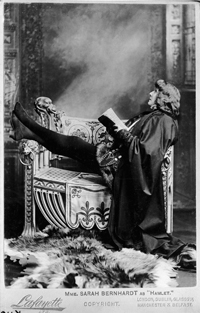
Sarah_Bernhardt_by_Lafayette_Ltd_1899_c__Victoria_and_Albert_Museum_London__William Shakespeare’s influence on successive generations of theatrical performance is the subject of a new exhibition at the V&A to mark the 450th anniversary of his birth on 23rd April. Shakespeare: Greatest Living Playwright centres on the Bard’s First Folio which, published in 1623, contains 36 plays including 18 works – Macbeth, The Tempest and Twelfth Night among them – which would be unknown without it. The display includes interviews, archive footage and photography and objects from the V&A collections as well as an audio-visual presentation by Fifty Nine Productions featuring interviews with contemporary theatre practitioners such as actors, directors and designers. Objects on display include a skull used by Sarah Bernhardt when playing Hamlet in 1899, an embroidered handkerchief used by Ellen Terry when playing Desdemona in 1881 at the Lyceum Theatre, and a pair of red boots worn by actor-manager Henry Irving in an 1887 production of Richard III. Runs in the V&A’s Theatre and Performance Galleries until 21st September. Admission is free. For more, see www.vam.ac.uk. PICTURE: Sarah Bernhardt as Hamlet, 1899, © Victoria and Albert Museum, London.

A skeletal horse and a giant hand giving a thumbs up will adorn the Fourth Plinth in Trafalgar Square during 2015-16. Hans Haacke’s Gift Horse is derived from an etching by painter George Stubbs and, while being a comment on the equestrian statue of King William IV which was intended for the plinth, also features an electronic ribbon displaying a live ticker of the London Stock Exchange on its front leg. Meanwhile David Shrigley’s Really Good is a 10 metre high hand giving a thumbs up – sending a positive message to those who see it. For more, see www.london.gov.uk/priorities/arts-culture/fourth-plinth.

The impact of the car on England’s landscape and the listed buildings of motoring history are the focus of a new exhibition in Wellington Arch. Carscapes: How the Motor Car Reshaped England features archive photographs, historic advertising, cartoons and motoring magazines as well as a 1930s traffic light, a petrol pump and other accessories and memorabilia. Wellington Arch, which is managed by English Heritage, is a fitting location for the exhibition – it was moved to its current position due to increasing traffic back in 1883. Admission charge apply. For more, see www.english-heritage.co.uk.

A new exhibition exploring some of the true and not-so-true stories inspired by and produced in London opens at the London Transport Museum in Covent Garden tomorrow. London Stories features the best entries from The Serco Prize for Illustration 2014 with more than 50 works of art on display depicting a well-known or obscure London narrative. The short-listed illustrations tackle everything from ghost buses to Buffalo Bill’s Wild West Show of 1887, a Pearly King and Queen, Lenin’s ‘Love letter to London’ and an escaped monkey jazz band. There’s also a host of musical and literary references – everything from Mary Poppins to Sweeney Todd and Oranges and Lemons. Tomorrow there will be a late opening of the exhibition complete with cash bar, DJ and story-telling for adults as well as the chance to create your own London story with illustration workshops and a photo-booth. Organised by London Transport Museum in partnership with the Association of Illustrators, it runs until 6th April. Admission charge applies. For more, see www.ltmuseum.co.uk.

Send all items of interest for inclusion to exploringlondon@gmail.com.
This Week in London – Handel and the royals; David Bailey; and, redefining German art…

• A new exhibition exploring German-born George Frideric Handel and his association with the royal family opens at the Foundling Museum in Bloomsbury tomorrow to mark the 300th anniversary of the coronation of King George I. The museum says no composer has been more closely associated with the British monarchy than Handel, whose anthem Zadok the Priest has been performed at every coronation since King George II in 1727 and whose Water Music was performed on the River Thames during the Diamond Jubilee for Queen Elizabeth II in 2012. By George! Handel’s Music for Royal Occasions features treasures from the Gerald Coke Handel Collection and loans from the British Library, the National Portrait Gallery, the British Museum and Westminster Abbey. Runs until 18th May. For more, see www.foundlingmuseum.org.uk.

A landmark exhibition of David Bailey photographs opens at the National Portrait Gallery today. Bailey’s Stardust – one of the gallery’s largest scale photographic exhibitions, it occupies most of the gallery’s ground floor – features more than 250 portraits including a new portrait of Kate Moss and previously unseen images from Bailey’s travels to the Naga Hills in India in 2012. There’s also rooms devoted to portraits of the Rolling Stones and Catherine Bailey, images from Bailey’s trip to Papua New Guinea in 1974 and from east Africa which Bailey visited in 1985 in support of Band Aid. Admission charge applies. Runs until 1st June. For more, see www.npg.org.uk.

A new exhibition at the British Museum explores how six key artists redefined the notion of art in Germany in the Sixties and Seventies. Germany divided: Baselitz and his generation features some 90 works including some 45 by George Baselitz as well as works by Markus Lupertz, Blinky Palermo, AR Penck, Sigmar Polke and Gerhard Richter. Thirty-four of the works, including 17 by Baselitz, have been donated by Count Christian Duerckheim while a loan of some 60 additional works from the Duerckheim Collection makes up the rest of the exhibition. Runs in Room 90 until 31st August. For more, see www.britishmuseum.org.

Send all items of interest for inclusion to exploringlondon@gmail.com.

This Week in London – Van Gogh’s Sunflowers reunited; Sir Leslie Constantine’s Blue Plaque; and, the ‘Anatomy of a Suit’…

• Two versions of Vincent van Gogh’s iconic Sunflowers have been reunited for the first time in 65 years in London at the National Gallery. The two paintings – one from the National Gallery and the other from the Van Gogh Museum in Amsterdam – come from a five-painting series the artist created in 1888 while staying in Arles. They were apparently painted while he was waiting for his friend Paul Gaugain to arrive and were to decorate the bedroom Gaugain would stay in as gift to him. The free display in Room 46 of the Trafalgar Square Gallery and will be shown until 27th April. Meanwhile, the gallery is celebrating the donation of another van Gogh – Head of a Peasant Woman, the first early work by the artist to enter its collection. It is one of a series of around 40 portraits of the peasants of the village of Nuenen, in The Netherlands, which were painted in late 1884/early 1885. For more, see www.nationalgallery.org.uk.

West Indian cricketer and politician Sir Learie Constantine’s former home in Earl’s Court has been commemorated with an English Heritage Blue Plaque. Constantine, who played a significant role in securing the independence of Trinidad and Tobago and as an advocate for black people, was the first person of African descent to sit in the House of Lords. He lived at the property at 101 Lexham Gardens between 1949-1954. For more, see www.english-heritage.org.uk/discover/blue-plaques/.

On Now: The Anatomy of a Suit. This free display at the Museum of London looks at  the technicalities of making a suit and the city’s influence on menswear globally. Exhibits include a double-breasted pinstripe jacket from about 1965, a morning jacket from about 1927 and a black dress suit from about 1933 – all of which was sourced by curator Timothy Long from markets including Brick Lane, Broadway and Portobello Road. Runs until June. For more, see www.museumoflondon.org.uk.

Send all items of interest for inclusion to exploringlondon@gmail.com.

LondonLife – London in a snow globe at Covent Garden…


Covent-Garden-LEGO-snow-globe

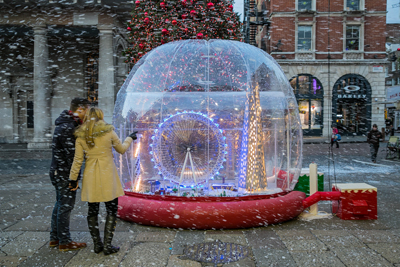
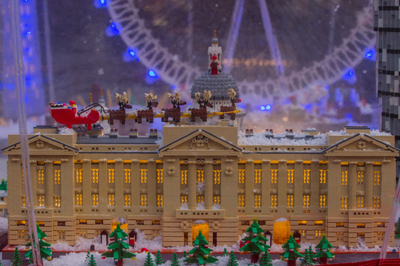
Following on from its LEGO advent calendar and Christmas tree, Covent Garden is home to a giant LEGO snow globe this Christmas. Made of 120,000 bricks, it features 14 of London’s most iconic landmarks – from Nelson’s Column, Buckingham Palace (see below) and the London Eye to The Shard, Shakespeare’s Globe and, of course, Covent Garden. The models took Duncan Titmarsh, the UK’s only certified LEGO professional, around 75 days to build. Hidden among the models are a number of LEGO Santas – count them to win prizes and press a button to make snow fall inside the globe. For more, see www.coventgardenlondonuk.com.

Covent-Garden-LEGO-snow-globe2

This Week In London – Kensington Palace celebrates Christmas; plant a tree at Epping; and, the Long Range Desert Group memorial unveiled at Westminster Abbey…

Apologies we didn’t post a new instalment in our Wednesday series yesterday – it will resume next week!

Inspired by a spectacular month of partying by King William III in December, 1699, Kensington Palace is celebrating Christmas with a month of family-friendly entertainment in the Georgian State Apartments. Historic Royal Palaces has joined with games makers Hide & Seek to create Game of Crowns, transforming Kensington into a play palace with games, mummery and the chance to proclaim yourself king or queen for a day. On the weekends, there’s also the chance to join in parlour games from 1700 onward and a Christmas Day sensory room which brings to life King William III and Queen Mary II’s Christmas morning (by which time they must have been exhausted!). The palace will also play host to its largest ever Christmas tree – 30 feet tall – and on December 16th, you can join in Carols by Candlelight. Admission charge applies. Runs until 6th January. For more, see www.hrp.org.uk/KensingtonPalace/.

Epping Forest is expanding and this weekend, you have a chance to help by planting some new saplings. The City of London Corporation, which runs the forest, is creating a new area of woodland, named Gifford Wood in honour of former Lord Mayor Roger Gifford, after purchasing 30 acres of land at Upshire last year. Members of the public are invited to join City of London staff and the Friends of Epping Forest at Upshire Village Hall, Horseshoe Hill (EN9 3SP) between 11am and 1pm on Saturday to plant 2,000 new oaks and hornbeam as well as a mix of alder, birch, beech, cherry, field maple, rowan, small lime, wild apple, wild service, holly and yew. Bring your spade. For more, phone 0208 532 1010 or email epping.forest@cityoflondon.gov.uk.

A memorial to the Long Range Desert Group was dedicated in Westminster Abbey this week.  The LRDG was formed in 1940 by Major Ralph Bagnold to act as the forward intelligence arm of the British army in North Africa. The group later shared their expertise in desert navigation with the fledgling SAS (Special Air Service) who also carried out offensives in the desert from 1941. The memorial is located in the west cloister below that of the SAS. For more, see www.westminster-abbey.org.

LondonLife – Remembering Mandela…

Mandela

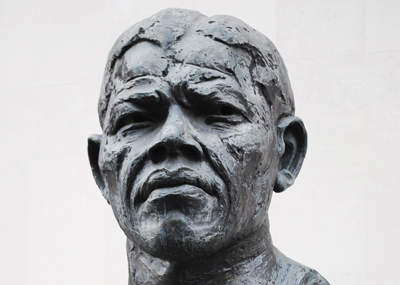
A bust of the anti-apartheid activist and global icon Nelson Mandela at the South Bank Centre has become one of several places in London where people are paying their respects to the former South African president and Noble Peace Prize winner who died last Thursday at the age of 95. The bust – below which are a quoted Mandela’s words, “The struggle is my life” – was erected in 1985 by the Greater London Council. A full-length, larger-than-life statue of Mandela, by Ian Walters, stands in Parliament Square in Whitehall – it was unveiled in 2007 by then Prime Minister Gordon Brown with Mandela himself in attendance.

This Week In London: The London that might have been; the V&A’s Christmas tree; Christmas celebrations at the Geffrye; and, World War II recollections…

A new exhibition looking at the London that might have been opened at Wellington Arch near Hyde Park Corner yesterday. Almost Lost: London’s Buildings Loved and Loathed uses digital technology to look at how several redevelopment proposals – including a 1950s conceptual scheme for a giant conservatory supporting tower blocks over Soho and a 1960s plan to redevelop Whitehall which including demolishing most of the Victorian and Edwardian buildings around Parliament Square – would have changed the face of the city. The exhibition also looks at how the latest developments in digital mapping can be used in the future and features ‘Pigeon-Sim’ which provides a bird’s-eye view of the city’s buildings with an interactive flight through a 3D photorealistic model of the city. The exhibition runs until 2nd February. Admission charge applies. For more, see www.english-heritage.org.uk/daysout/properties/wellington-arch/.

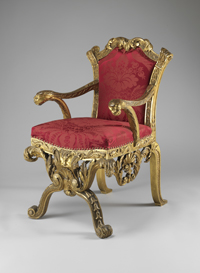
A specially commissioned Christmas tree has been unveiled at the V&A in South Kensington. The 4.75 metre high ‘Red Velvet Tree of Love’ is the work of artists Helen and Colin David and will stand in the museum’s grand entrance until 6th January. The design of the tree – which is coated in red flocking and decorated with 79 sets of hand cast antlers and 67 white, heart shaped baubles – was inspired by an 1860 HFC Rampendahl chair in the V&A’s collection which features a real antler frame and velvet upholstery. For more, see www.vam.ac.uk.

The annual Christmas Past exhibition is once again open at the Geffrye Museum in Shoreditch. Festive decorations have transformed the museum’s rooms and give an insight into how the English middle classes celebrated in times gone past. The exhibition runs until 5th January. Admission is free. Accompanying the exhibition are a series of events including an open evening celebrating an Edwardian Christmas between 5pm-8pm tonight. For more, see www.geffrye-museum.org.uk/whatson/christmas-past-2013/.

The World War II experience of Chelsea Pensioners are being commemorated in a new display in the White Space Gallery at the National Army Museum in Chelsea. The Old and the Bold is the culmination of a year long collaboration between the museum and the Royal Hospital Chelsea and features nine interviews with 14 In-Pensioners. Their accounts span iconic moments in World War II history – from D-Day to North Africa and the Falklands and are supported by items from the museum’s collection. Runs until 3rd January. Admission is free. For more, see www.nam.ac.uk.

This Week In London – Kenwood House reopens; robot safari at the Science Museum; Kew Gardens illuminates for Christmas; Vivien Leigh at the NPG; and more…

Kenwood House in north London is being reopened to the public today following a £5.95 million restoration project which has seen the library returned to what Scottish architect Robert Adam had intended it to be. The project, which saw the Hampstead property closed since March last year, has also seen the restoration of three other Robert Adam-designed rooms – the entrance hall, Great Stairs and antechamber or entrance to the library – as well as the redecoration of four rooms in 18th century style, repainting of the exterior and the repair of the home’s roof – a job aimed at protecting the rooms and its stellar

Kenwood-House-Librarycollection of artworks by the likes of Rembrandt and Vermeer. English Heritage has also endeavoured to make the property more homely, replacing ticket desks and rope barriers with an open fire, warm rugs and leather couches on which visitors can relax. The library (pictured) was built and decorated to Adam’s designs between 1767 and 1770 as part of a wider remodelling of the villa for its owner Lord Chief Justice William Murray, 1st Earl of Mansfield. Redecorated many times since, it was restored in the 1960s but this redecoration was later found to be inaccurate. The Caring for Kenwood restoration project, which has also seen restoration of the Kenwood Dairy, was funded by a £3.89 million grant from the Heritage Lottery Fund as well as support from the Wolfson Foundation and other donors. To coincide with the reopening, a new app exploring Kenwood House has been released which can be downloaded for free from the iTunes store. For more, see www.english-heritage.org.uk/daysout/properties/kenwood/. PICTURE: English Heritage/Patricia Payne.

Head out on a “robot safari” this weekend with a special free event at Science Museum in South Kensington. Robot SafariEU, part of Eurobotics week, features 13 biometric robots from across Europe including an underwater turtle robot, a shoal of luminous fish robots, a robotic cheetah cub and Pleurobot, a robotic salamander. Roboticists from across Europe will be on hand to help visitors interact with the bots. Suitable for all ages, the event kicked off on Wednesday night and runs again on the weekend. Admission is free but timed tickets are required. For more, see www.sciencemuseum.org.uk/RobotSafari.

A memorial to author, scholar and apologist CS Lewis was dedicated at Westminster Abbey last Friday – the 50th anniversary of his death. Conducting the service, the Dean of Westminster, the Very Reverend Dr John Hall, said Lewis was “one of the most significant Christian apologists of the 20th century” and the author of stories that had “inspired the imagination and faith of countless readers and film-goers”. Douglas Gresham, younger stepson of Lewis, read from the author’s book, The Last Battle, at the service. The memorial is located in Poet’s Corner in the abbey’s south transept. For more see www.westminster-abbey.org.

A Blue Plaque commemorating Al Bowlly – described as “Europe’s most popular crooner and famous radio and record star” – will be unveiled at his home in Charing Cross Road this week. Bowlly, who lived between 1899 and 1941, was the voice beyond songs like Goodnight Sweetheart and The Very Thought Of You. The English Heritage Blue Plaque will be unveiled at Charing Cross Mansions, 26 Charing Cross Road – his home during the pinnacle of his career. For more, see www.english-heritage.co.uk/discover/blue-plaques/.

Kew Gardens has opened its gates after dark for the first time with a “captivating show of lights, sound and landscape” this festive season. A mile long illuminated trail, created in partnership with entertainment promoter Raymond Gubbay, will take visitors’ through the garden’s unique tree collections, kicking off at Victoria Gate where a Christmas village (and Santa’s Woodland Grotto) is located. The gardens will be open every Thursday to Sunday until 23rd December and then be open every night from 26th December to 4th January from 4.45pm to 10pm. Admission charge applies. For more, see www.kew.org/Christmas.

VivienLeighActress Vivien Leigh is the star of a new exhibition opening on Saturday at the National Portrait Gallery. Starring Vivien Leigh: A Centenary Celebration tells her story with a focus on her Academy Award-winning role in 1939’s Gone With The Wind. The display features more than 50 portraits of Leigh by the likes of Cecil Beaton, Angus McBean and Madame Yevonde – many of which have never been exhibited in the gallery before – and a selection of memorabilia including magazine covers, vintage film stills and press books. Among the photos will be a newly acquired image of Leigh and her husband, Laurence Olivier, taken by British photojournalist Larry Burrows at a garden party in 1949 (pictured), along with two rarely seen portraits of Leigh – one taken on the set of The School for Scandal by Vivienne in 1949 and the other by Paul Tanqueray in 1942. The exhibition will be held in Room 33 and runs until 20th July. Admission is free. For more, see www.npg.org.uk. PICTURE:  Copyright – Larry Burrows Collection 2013.

This Week in London – JMW Turner and the sea; welcoming the ‘new’ Tate Britain; Hyde Park Winter Wonderland; and more…

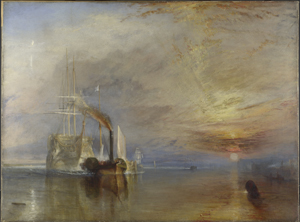
The-Fighting-Temeraire,-tugged-to-her-last-Berth-to-be-broken-up,-1838-©-The-National-Gallery,-LondonA major exhibition on painter JMW Turner’s fascination with the sea opens at the National Maritime Museum in Greenwich tomorrow. Turner and the Sea is the first “full scale” examination of the artist’s relationship with the sea and features works on loan from some of the world’s greatest art institutions. Highlights among the oils, watercolours, prints and sketches on show include The Fighting Temeraire (1839) (pictured), Snow Storm – Steam-Boat off a Harbour’s Mouth (1842), Staffa, Fingal’s Cave (1832), Whalers (1845) and Calais Pier (1803) as well as Turner’s largest painting and only royal commission, The Battle of Trafalgar (1824). The works are being exhibited alongside works by other notable British and European artists including Thomas Gainsborough, Willem van de Velde, Claude-Joseph Vernet and John Constable. Runs until 21st April. Admission charges apply. See www.rmg.co.uk for more details. PICTURE: The Fighting Temeraire, tugged to her last Berth to be broken up, 1838 by JMW Turner, 1839, oil on canvas. © The National Gallery, London.

• The ‘new’ Tate Britain was unveiled to the public this week following a £45 million upgrade and refurbishment and the house-warming party is on this weekend. The work has seen the oldest part of the Grade II* listed building in Millbank transformed thanks to architects Caruso St John and sees the main entrance reopened as well as The Whistler Restaurant, new learning studios an a new archive gallery as well as a new cafe and bar for Tate members. It’s unveiling follows the opening in May of 10 new galleries and new BP displays including the chronological presentation of the Tate’s collection of British art. The house-warming party, a free event, takes place on Saturday from 3pm to 10pm and features music, the giving out of free limited edition prints and a series of talks, film screenings, workshops and even a treasure hunt. For more, see www.tate.org.uk.

Hyde Park Winter Wonderland kicks off again tomorrow with highlights including the ice sculptures of ‘The Magical Kingdom’, the giant observation wheel, the ice rink and Santa Land. There will also be more than 200 chalets in the Angels Christmas & Yuletide Markets, the Bavarian village is back, and Zippo’s Circus will also be returning with a range of shows include Cirque Berserk for the evening crowd. Entry is free but tickets for various attractions can be bought at www.hydeparkwinterwonderland.com. Runs until 5th January.

ON NOW: The Young Durer: Drawing the Figure. This exhibition at the Courtauld Gallery looks at the figure drawing of the young Albrect Durer (1471-1528), focusing on works created in his formative years between 1490-1496. Among the exhibition’s highlights is Mein Agnes (My Agnes), A Wise Virgin, and Three Studies of Durer’s left hand. The exhibition runs until 12th January.

• FURTHER AFIELD: Only a hop, skip and jump from London lies Down House, former home of naturalist Charles Darwin, in Kent. English Heritage are this weekend marking the anniversary of publication of his controversial book On the Origin of Species by Means of Natural Selection (it was published on 24th November, 1859) with a range of specialist talks and tours at the property this weekend. For more on the weekend, see www.english-heritage.org.uk/daysout/events/origin-weekend-dh-23-nov/

This Week in London – The Hadron Collider at the Science Museum; John Richard Arthur honoured; Christmas at Carnaby; and South American gold at the British Museum…

First up, we’ve changed the name of the Thursday update of what’s happening in London to This Week in London which we think better describes what the column’s about. So, to some events we think you might be interested in…

• An exhibition that transports visitors to the heart of the Large Hadron Collider (LHC) opened at the Science Museum yesterday. In the first exhibition of its kind, Collider offers visitors the closest thing to actually being at the CERN particle physics laboratory, blending theatre, video and sound to enable visitors to explore the control room, meet virtual scientists and engineers and see inside a huge underground ‘detector’ cavern. There’s also the chance to follow the journey of particle beams as they race around the 27 kilometre long LHC tunnel (incidentally about the same length as the Circle Line) and the exhibition’s highlight is a wrap around projection which takes watchers from an enormous experiment cavern to the heart of a particle collision. On show will be artefacts from the actual LHC including a 15 metre magnet used to steer the particle beam and objects from the museum’s collection including the accelerator used by Cockcroft and Walton to split the atom in 1932. Admission charge applies. Runs until 6th March. For more, see www.sciencemuseum.org.uk.

John Richard Arthur, a former Mayor of Battersea and the first black man to hold senior public office in London, was honoured with an English Heritage Blue Plaque this week. The plaque was unveiled by Cr Angela Graham, the Mayor of Wandsworth, at his former home at 55 Brynmaer Road in Battersea – his residence during the major milestones of his political career. Elected on 10th November 1913, Archer lived at the home from about 1898 to about 1918. He has been described as a “key figure in the story of the Black contribution in Britain in the early part of the Twentieth century”. For more, see www.english-heritage.org.uk/discover/blue-plaques/.

Christmas comes to the West End this afternoon with the Carnaby Christmas Shopping Party taking place in 13 streets around the iconic fashion strip. More than 100 shops, restaurants and bars are delivering 20 per cent discounts and there’s also complimentary drinks, music, talks on fashion trends and the chance for the “best dressed” to win goodie bags. The party runs from 5pm to 9pm with the Christmas lights turned on at 6pm. Head to www.carnaby.co.uk for more.

El-Dorado• On Now: Beyond El Dorado: power and gold in ancient Colombia. This exhibition in Room 35 of the British Museum features items including ceramics and stone necklaces taken from Lake Guatavita near modern Bogota (The phrase El Dorado, “the golden one”, actually refers to a ritual which took place at the lake in which a newly elected leader of the Muisca people was covered in powdered gold before diving into the lake and washing it off to emerge as the new leader). They are just some of the more than 300 items in the display which come from the Museo del Oro Bogata – one of the best collections of pre-Hispanic gold in the world – as well as the British Museum’s own collection. Other objects include large scale gold masks, a painted Muisca textile, avian pectorals and necklaces with feline claws and one of the few San Agustin stone sculptures held outside Colombia. The exhibition, sponsored by Julius Baer, runs until 23rd March. Admission charge applies. For more, see www.britishmuseum.orgPICTURE: Anthropomorphic bat pectoral, Tairona, gold alloy, AD900-1600. Copyright Museo del Oro, Banco de la Republica, Colombia.

Around London – The Georgians at the British Library; wartime artist on show; Regent Street’s Christmas lights; Westminster’s new organ; and, celebrating success at the NPG…

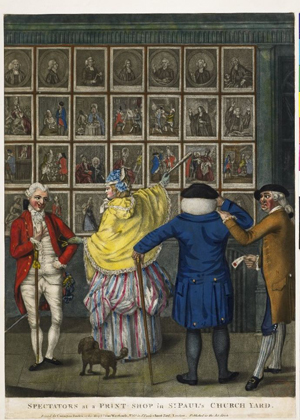
The-GeorgiansThe Georgians are under the spotlight in a new exhibition opening at the British Library tomorrow. Georgians Revealed: Life, Style and the Making of Modern Britain explores the ways in which the Georgian world influenced pop culture in Britain today, everything from fashion and theatre-going to our obsessions with celebrity scandals. The display features more than 200 artefacts from the library’s collection and includes Jeremy Bentham’s violin, Joseph van Aken’s An English Family at Tea, rare books and magazines, and illustrations and designs of landmark building’s such as Sir John Soane’s home (and now museum) in Lincoln’s Inn Fields. The exhibition, which is accompanied by a series of events (see the library website for details) comes ahead of the 300th anniversary of the accession of King George I next year. Runs until 11th March. Admission charge applies. Meanwhile, to mark the exhibition, the library has joined with Cityscapes in launching a new Georgian garden installation on the library’s piazza. Titled Georgeobelisk, the six metre high installation, will remain on the piazza for five months. A tribute to the four King Georges, it also serves as a reminder that it was also during the Georgian era that the British love of gardening was cultivated. For more, see  www.bl.uk/whatson/exhibitions/georgiansrevealed/index.html. PICTURE: Spectators at a Print shop in St Paul’s churchyard © British Museum.

Painting normally housed in “Britain’s answer to the Sistine Chapel” go on display in Somerset House today. The artworks, described as the “crowning achievement” of wartime artist Stanley Spencer, usually grace the walls of Sandham Memorial Chapel but are on display in London while the National Trust carries out restoration work at the Berkshire property. Spencer painted the works – which combine realism and visions from his imagination and were completed in 1932 – after serving as a hospital orderly during World War I.  The free display – Stanley Spencer: Heaven in a Hell of War – can be seen until 26th January. For more, see www.somersethouse.org.uk.

Regent Street’s Christmas lights – a preview of the upcoming DreamWorks film Mr Peabody and Sherman – will be turned on this Saturday night. Actor Ty Burrell, director Rob Minkoff and singer Leona Lewis will have the task of switching on the lights at about 7.15 pm while performers will include Passenger, Eliza Doolittle and former Spice Girls Emma Bunton and Melanie C. The event will be hosted by radio presenters Bunton and Jamie Theakston. The street will be traffic free all day and from 3pm to 7pm, Regent Street retailers will be showcasing fashions on a catwalk located just North of New Burlington Street. Programmes will be available from information points on the day.

A new organ was dedicated in Westminster Abbey’s Lady Chapel on Tuesday. The organ was commissioned by the Lord Mayor of London, Roger Gifford, as a gift to the Queen to mark the 60th anniversary of her coronation in 1953. The Queen agreed the organ, which had briefly resided at the Lord Mayor’s residence the Mansion House, should be installed permanently in the Lady Chapel, built by King Henry VII. The new organ was dedicated by the Earl of Wessex. For more, see www.westminster-abbey.org.

Now On: Achievement: New Photographs 2011-2013. Inspiring Britons at the peak of their professions are the subject of an exhibition running at the National Portrait Gallery. The display of recently acquired and previously un-exhibited photographs depict the likes of writer and presenter Charlie Brooker (by Chris Floyd), actress Gina McKee (Mark Harrison) and Skyfall director Sam Mendes (Anderson & Low). Admission is free. Runs until 5th January in Room 37a. For more, see www.npg.org.uk.

Around London – Reclaiming Castiglione; transport open weekend; and, Australia at the RA…

Oriental The UK’s first major exhibition on the work of the innovative but violent 17th century artist Giovanni Benedetto Castiglione opens tomorrow at the Queen’s Gallery next to Buckingham Palace. The exhibition, which features 90 drawings and prints from the Royal Collection, is aimed at re-establishing Castiglione as one of the greatest artists of the Baroque period, thanks to his being credited with creating huge drawings in oil directly on paper, producing about 60 etchings and inventing the technique of monotype. Works include his monotype prints Head of an oriental (late 1640s) and The Nativity with angels (about 1655), a translation of Titian’s Sacred and Profane Love and drawings like Circe with the companions of Odysseus transformed into animals. Castiglione’s “nomadic” career was marred by his violent temperament – he was repeatedly before the courts for assaulting people, apparently tried to throw his sister off a roof and was forced to leave Rome because, it is believed, he had committed murder. Castiglione: Lost Genius runs with Gifted: From the Royal Academy to The Queen, an exhibition of prints and drawings given to the Queen by Royal Academicians to mark her Diamond Jubilee, until 16th March. Admission charge applies. For more, see www.royalcollection.org.uk. PICTURE: Giovanni Benedetto Castiglione, The head of an oriental, late 1640s. Royal Collection Trust/©Her Majesty Queen Elizabeth II 2013.

The restored Met Locomotive 1 and the Victorian Jubilee Carriage 353 will be on show this weekend as part of the London Transport Museum’s Open Weekend at its Acton Depot. Visitors will be able to explore the depot’s vast collection of more than 400,000 objects along with a range of other activities including miniature tram and railway rides, heritage bus rides, talks and film screenings, and costumed interpreters as well as the chance to watch artist Ross Ashmore paint the locomotive and Jubilee Carriage. The weekend kicks off tomorrow. For more information and bookings, see www.ltmuseum.co.uk/whats-on/museum-depot/events.

On Now: Australia. This landmark exhibition at the Royal Academy of Arts at Burlington House in Piccadilly features more than 200 works including paintings, drawings, photography, watercolours and multimedia pieces by 146 Australian artists. Spanning the period from 1800 until today, the display includes works by Aboriginal artists such as Albert Namatjira, nineteenth century immigrants such as John Glover and Eugene von Guerard, impressionists like Arthur Streeton and Tom Roberts, early modernists like Margaret Preston and Roy de Maistre, 20th century painters including Arthur Boyd, Albert Tucker and Brett Whiteley and contemporary artists including Gordon Bennett, Fiona Hall and Shaun Gladwell. Highlights include Frederick McCubbin’s The Pioneer (1904), four paintings from Sidney Nolan’s Ned Kelly series (1946), Rover Thomas’ Cyclone Tracy (1991) and Emily Kame Kngwarreye’s Big Yam Dreaming (1995). Organised with the National Gallery of Australia, the exhibition runs until 8th December. Admission charge applies. For more, see www.royalacademy.org.uk.

LondonLife – Joey stabled at the V&A…

War-Horse

Joey, the puppet horse used in the West End play War Horse, has taken up a new home at the V&A in South Kensington. Created by the Handspring Puppet Company for the National Theatre’s adaption of Michael Morpurgo’s novel, Joey appeared in more than 1,640 shows since his debut at the New London Theatre on 28th March, 2009. He will now be housed in the V&A’s Theatre and Performance Gallery in a specially created display which shows how the puppet was operated on stage and features three mannequin puppeteers to illustrate the process. Joey was donated by Adrian Kohler and Basil Jones of South Africa’s Handspring Puppet Company who designed and created the puppets used in War Horse. War Horse, which continues its run at the New London Theatre, has been seen by more than four million people. For more, see www.vam.ac.uk. PICTURE: Joey at the V&A operated by Nicholas Hart (Head), Stuart Angell (Heart), Thomas Goodridge (Hind). © Victoria and Albert Museum, London. 


Around London – Chinese masterpieces at the V&A; Iraq war photography; and, The Age of Glamour at the Cartoon Museum…

Chen_Rong_Nine_DragonsChinese masterpieces are the focus of a new exhibition opening at the V&A in South Kensington on Saturday. Masterpieces of Chinese Painting 700-1900 will feature more than 70 works including some of the earliest surviving Chinese paintings and many shown in Europe for the first time. Organised chronologically in six successive periods, the works in the display range from intimate works by monks to a 14-metre long scroll painting. As well as examining the tensions between tradition and innovation, the exhibition will look at the variety of settings for which the paintings were created – from tombs and temples to banners, portable handscrolls and hanging scrolls – and the materials used. The exhibition runs until 19th January. Admission charge applies. Meanwhile, from 2nd November, celebrated Chinese artist Xu Bing will transform the museum’s John  Madejeski Garden into an “ethereal Arcadia” inspired by the Chinese fable Tao Hua Yuan (The Peach Spring Blossom) in an installation to coincide with the exhibition. Runs until 2nd March. For more, see www.vam.ac.uk/chinesepainting. PICTURE: Nine Dragons (detail), Chen Rong (1244), © 2013 Museum of Fine Arts, Boston

A new exhibition of photography marking the 10th anniversary of the start of the second Iraq war opens today at the Imperial War Museum. Featuring the work of photographers Mike Moore, a former Fleet Street photographer who was the first press photographer to be officially embedded with the British Army, and Lee Craker, an American photographer who specialises in documentary photography, the exhibition examines the impact of the war on the Iraqi people and the US and British troops who served there.  The exhibit is the first photography show to be exhibited as part of the IWM Contemporary programme. Runs until 5th January. Meanwhile one of Britain’s leading contemporary photographers, Donovan Wylie, explores the effects of modern day military surveillance programs in a new exhibition, at the IWM, Vision as Power. The display includes five works. Runs until 21st April. Admission to both exhibitions is free. For more, see www.iwm.org.uk.

The Age of Glamour: RS Sherriffs’ Stars of Stage & Screen. This exhibition at the Cartoon Museum in Bloomsbury features the work of Sheriffs, whose caricatures of the likes of Charlie Chaplin, Greta Garbo and Douglas Fairbanks were published in magazines including Radio Times, London Calling and The Sketch. As well as individual portraits, the works include ensemble drawings such as one featuring Laurence Olivier and Peggy Ashcroft in Romeo and Juliette. Runs until Christmas Eve. Admission charge applies. For more, check out www.cartoonmuseum.org.

LondonLife – A glimpse into London’s shameful past…

Map-of-Romney-plantationA map of the Romney plantation is among a selection of unseen documents from a West Indian sugar plantation on show as part of a new display, A Material Connection, which opened at the Museum of London Docklands in August. The documents are just some of the 1,000 letters, invoices and deeds dating from between the 1740s and 1860s which make up the Romney family plantation archive.  It is the first time the public have a chance to see documents from the archive which was purchased by the museum in 2011 using an £85,000 grant from the Heritage Lottery Fund. The display explores the role London played as a nexus between Britain and its slave colonies and in particular the relationship between a specific slave plantation and its owner. Opened on the International Day for the Remembrance of the Slave Trade and of its Abolition (23rd August), the display forms part of the London, Sugar & Slavery exhibition at the museum. For more, check out the Museum of London Docklands.

PICTURE: Museum of London Docklands.


Around London: Nelson and the Navy; Whistler at Dulwich; Eric Coates’ Blue Plaque; childrens’ books at BL…

A new permanent gallery looking at how the Royal Navy shaped individual lives and the course of British history over the 18th century opens at the National Maritime Museum in Greenwich on Monday 21st October, Trafalgar Day. Nelson, Navy, Nation charts a course from the Glorious Revolution of 1688 through to the defeat of Napoleon in 1815 and provides a setting for the museum’s many artefacts related to Vice-Admiral Lord Nelson. Among the 250 objects on display in the gallery are the uniform (with bullet hole) Nelson wore at the Battle of Trafalgar, artworks likes William Hogarth’s Captain Lord George Graham in his Cabin, a seven barreled volley gun and grim items like a surgeon’s tools including an amputation knife, bone saw and bullet forceps. There is also the last letter Nelson wrote to his daughter Horatia and mourning rings worn by close friends and family at his funeral. Entry to the new gallery is free. For more, see www.rmg.co.uk.

The first major exhibition dedicated to the American-born artist James Abbott McNeill Whistler’s time in London between 1859 and his death in 1903 opened at the Dulwich Picture Gallery this week. An American in London: Whistler and the Thames features paintings, etchings and drawings produced by the artist and more than 70 objects related to Whistler’s depiction of the Thames and Victorian London. Highlights include Nocturne: Blue and Gold – Old Battersea Bridge (1872/1873) and Brown and Silver: Old Battersea Bridge (1859-1863), the oil painting Wapping (1860-64) and the etching Rotherhithe (1860). There are also a series of portraits of Whistler and his patrons. Runs until 12th January. Admission charge applies. For more, see www.dulwichpicturegallery.org.uk.

Composer Eric Coates has been honoured with the unveiling of an English Heritage blue plaque outside his former home at Chiltern Court in Baker Street. Coates, who created “some of the best known and loved pieces of English light orchestral music”, lived in a flat at the property between 1930-39. For more, see www.english-heritage.org.uk/discover/blue-plaques/.

On Now: Picture This: Children’s Illustrated Classics. This exhibition in the Folio Society Gallery at the British Library takes a look at 10 of the most iconic children’s books of the 20th century – from Charlie and the Chocolate Factory to The Wind in the Willows, Paddington Bear, Peter Pan and Wendy, and The Iron Man as well as Just So Stories, The Hobbit, The Borrowers, The Secret Garden and The Railway Children. On display is at least four illustrated editions or artworks of each title with Quentin Blake, Michael Foreman, Peggy Fortnum and Lauren Child among the artists whose works are being shown. The exhibition also features five specially filmed interviews with four illustrators and Paddington Bear author Michael Bond. Runs until 26th January. Entry is free. For more, see www.bl.uk.

Around London – The Cheapside Hoard revealed; Queen Elizabeth I at the NPG; 3D printing at the Science Museum; and, Viennese portraits…

Cheapside-Hoard-1The ‘secrets’ of the Cheapside Hoard – the world’s finest and largest collection of 16th and 17th century jewels – are revealed in a new exhibition opening tomorrow at the Museum of London. The
Cheapside-Hoard-2Cheapside Hoard: London’s Lost Jewels
 publicly displays the hoard of Elizabethan and early Stuart jewellery and gemstones in its entirety for the first time since its discovery more than 100 years ago. The hoard, consisting of as many as 500 pieces including rings, necklaces, cameos, scent bottles and a unique Colombian emerald watch, was discovered buried in a cellar on Cheapside in the City of London in 1912. The exhibition uses new research and state-of-the-art technology to showcase the hoard as it explores the questions of who owned the hoard, when and why was it hidden, and why was it never reclaimed. New information revealed by the research shows that the hoard was buried between 1640 and 1666 (the critical clue was a previously overlooked intaglio – a gemstone engraved with the heraldic badge of William Howard, Viscount Stafford, who lived between 1612-1680). It also reveals Thomas Sympson was the “dodgy” jeweller responsible for two counterfeit rubies contained within the hoard (he apparently had a trade in selling counterfeit gems for as much as £8,000 each). Entry charge applies. Runs until 27th April. For more, see www.museumoflondon.org.uk.  PICTURED: Above: gold and pearl cage pendants from the Cheapside Hoard; and right: a bejewelled scent bottle.

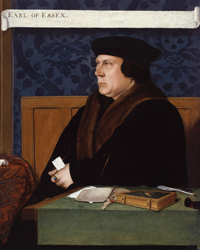
A previously unknown painting of Queen Elizabeth I is on display as part of a new exhibition, Elizabeth I and Her People, opening at the National Portrait Gallery today. The small painting, which has been attributed to miniaturist Isaac Oliver and which is a reworking of the classical story of the Judgement of Paris, was recently acquired by the gallery. It will sit among a selection of other portraits of the “Virgin Queen” in a display which endeavours to show how during her 50 year reign she portrayed the image of a strong monarch. The portraits are just some of the 100 items featured in the exhibition which also includes costumes, coins, jewellery and crafts and examines the rise of new social classes in Elizabethan society. Other portraits in the exhibition feature images of courtiers such as William Cecil and Christopher Hatton along with images of merchants, lawyers, goldsmiths, butchers, calligraphers, playwrights and artists. There is also a little known painting of three Elizabethan children and what may be the first portrait of a guinea pig. The exhibition, supported by the Weiss Gallery, runs until 5th January. Admission charge applies. For more, see www.npg.org.uk.

Printed objects including replacement body organs, aeroplane parts and a music box have gone on display at the Science Museum in South Kensington as part of a new exhibition, 3D: printing the future. The exhibition looks at the rapidly evolving field of 3D printing and its growing impact on society through stories such as the use of 3D printing by engineers to create lighter aeroplane parts and the ways in which the medical industry is researching the use of the technology to create replacement body parts. The display will also include miniature 3D printed figures created from scans of visitors who took part in workshops during the summer holidays. This free exhibition runs in the Antenna gallery for nine months. For more, see www.sciencemuseum.org.uk.

On Now: Facing the Modern: The Portrait in Vienna 1900. On at the National Gallery, the first major UK exhibition devoted to the portrait in Vienna features iconic works by Gustav Klimt, Egon Schiele, Richard Gerstl, Oskar Kokoschka and Arnold Schonberg alongside those of lesser known artists such as Bronica Koller and Isidor Kaufmann. Highlights include Klimt’s Portrait of Hermine Gallia (1904) and Portrait of a Lady in Black (about 1894), Schiele’s The Family (Self Portrait) (1918) and Nude Self Portrait by Gerstl (1908). Runs until 12th January. Admission charge applies. For more, see www.nationalgallery.org.uk.

Around London – The Bard is back; Foundling Museum displays; and, exhibitions on iconoclasm and explicit Japanese art…

The Bard is back in Leicester Square with the announcement last week that restoration work on the square’s 19th century Grade II listed statue of William Shakespeare – the only full-length statue the playwright in central London – has been completed. The 11 month restoration was carried out as part of £17 million revamp of the square which has seen the installation of a new fountain. The statue, which was the work of James Knowles, has been in the square since it was completed in its current configuration in 1874. Meanwhile, in other sculpture-related news, Sorry, Sorry Sarajevo – a life-size statue of a man holding  a dead or badly injured man in his arms has been placed in St Paul’s Cathedral where it will remain for the rest of the year. The work by Nicola Hicks dates from 1993 – when the Bosnian war was at its height – and has been placed opposite Henry Moore’s 1983 sculpture, Mother and Child: Hood as part of the cathedral’s approach to next year’s World War I centenary.

Two new displays opened at the Foundling Museum in Bloomsbury last month. Hogarth and Copyright, which runs until 5th January, looks at the role the artist William Hogarth played in the passing of the 1735 Engravers’ Copyright Act (also known as Hogarth’s Act – it was the first law to protect artist’s rights over their work) while Handel and Lucretia, presented in conjunction with The Sir Denis Mahon Charitable Trust and running until 26th January, shows Guercino’s painting Lucretia alongside two early manuscripts of Handel’s cantata La Lucretia. Entry is part of admission price. For more, see www.foundlingmuseum.org.uk.

A new exhibition tracing the history of attacks on artworks in Britain from the 16th century to today opened at Tate Britain in Millbank this week. Art under Attack: Histories of British Iconoclasm looks at why and how monuments have been damaged over the past 500 years. The display includes the remarkable pre-Reformation sculpture, the Statue of the Dead Christ (about 1500-1520), which was discovered in 1954 beneath the chapel floor at the Mercer’s Hall. Already damaged – most likely at the hands of Protestant iconoclasts – it may have been buried there to protect it. Also displayed are fragments of monuments destroyed in Ireland last century, paintings including Edward Burne-Jones’ 1898 painting Sibylla Delphica which was attacked by suffragettes in 1913-14, and Allen Jones’ 1969 work Chair – damaged in a feminist attack in 1986. Runs until 5th January. Admission charge applies. For more, see www.tate.org.uk.

A controversial exhibition of sexually explicit Japanese works of art created between 1600-1900 opened at the British Museum this week. Shunga: sex and pleasure in Japanese Art – which carries a warning of “parental guidance for visitors under 16 years – features 170 works including paintings, prints and illustrated books. Drawn from collections in the UK, Japan, Europe and the US, the exhibition of explores the phenomena of what are known as shunga (‘spring pictures’), looking at why it was produced and to whom it was circulated. Admission charge applies. Runs until 5th January. For more, see www.britishmuseum.org.

LondonLife – The new Serpentine Sackler Gallery…

Serpentine-Sackler-Gallery


Designed by Pritzker Prize winning architect Zada Hadid, the new Serpentine Sackler Gallery opened to the public in Kensington Gardens on Saturday. Located just a few minutes walk from the Serpentine Gallery on the north side of the Serpentine Bridge, the 900 square metre premises is partly located in a renovated Grade II*-listed building, The Magazine (built in 1805 as a gunpowder store and used by the military until 1963), as well as in a curvaceous modern extension to the north and west. The new gallery, which also features a ‘social space’ and restaurant, is named after Dr Mortimer and Dame Theresa Sackler, whose foundation provided the largest donation for the project – the largest single gift donated to the Serpentine Gallery in its 43-year history. The opening exhibition, Today We Reboot The Planet, features the large scale sculptural work of Argentinian artist Adrián Villar Rojas. The exhibition runs until 10th November. For more, see www.serpentinegallery.orgPICTURES: Serpentine Sackler Gallery, © 2013 Luke Hayes

Serpentine-Sackler-Galllery2