10 London ‘battlefields’ – 7. Battle of Brentford…

Syon-Park

Yes, we’re a bit out of order here given we looked at the subsequent Battle of Turnham Green last week, but today we’re taking a look at the Civil War fight known as the Battle of Brentford.

As recounted last week, having taken Banbury and Oxford in the aftermath of the Battle of Edgehill, the Royalist army marched along the Thames Valley toward London where a Parliamentarian army under the Earl of Essex waited.
Battle-of-BrentfordHaving arrived at Reading to the west of London, King Charles I, apparently unconvinced peace talks were heading in the right direction, ordered Prince Rupert to take Brentford in order to put pressure on the Parliamentarians in London.

On 12th November, 1642, up to 4,600 Royalists under the command of the prince engaged with two Parliamentarian infantry regiments at Brentford, one of the key approaches the City of London. The Parliamentarians were under the command of Denzil Hollis (who wasn’t present) and Lord Brooke – various estimates put their number at between 1,300 and 2,000 men.

Prince Rupert’s men – consisting of cavalry and dragoons – attacked at dawn under the cover of a mist. An initial venture to take a Parliamentarian outpost at the house of Royalist Sir Richard Wynne was repulsed by cannon fire but Sir Rupert ordered a Welsh foot regiment to join the fight and the outpost was quickly taken.

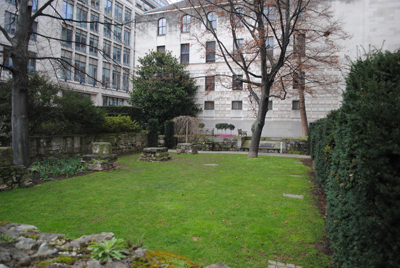
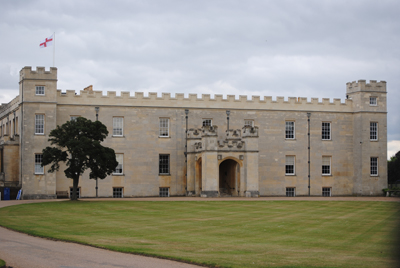
The Cavaliers then pushed forward across the bridge over the River Brent (which divided the town) and eventually drove the Parliamentarians from the town and into the surrounding fields (part of the battle was apparently fought on the grounds of Syon House – pictured at top).

Fighting continued into the late afternoon before the arrival of a Parliamentarian infantry brigade under the command of John Hampden allowed the Roundheads to withdraw.

About 170 are believed to have died in the battle (including a number who drowned fleeing the fighting). Followed by the sack of the town, the battle was a success for the Royalists who apparently captured some 15 guns and about 400 prisoners. The captured apparently included Leveller John Lilburne, a captain in Brooke’s regiment.

The Royalists and Parliamentarians met again only a few days later – this time at Turnham Green (for more on that, see last week’s post).

Incidentally, this wasn’t the first battle to be fought at Brentford. Some time over the summer of 1016, English led by Edmund Ironside clashed with the Danes under the soon-to-be-English king Canute. Edmund was victorious on the day, one of a series of battles he fought with Canute.

Meanwhile, more than 1000 years earlier, it was apparently at Brentford that the British under the King Cassivellaunus fought with Julius Caesar’s men in 54 BC on their approach to St Albans (Verulamium).

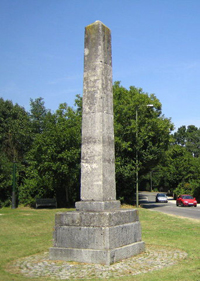
A pillar stands High Street in Brentford commemorating all three battles while there is an explanatory plaque about the battle in the grounds of Syon Park.

For more the Battles of Brentford and Turnham Green, see www.battlefieldstrust.com/brentfordandturnhamgreen.
10 London ‘battlefields’ – 6. Battle of Turnham Green…

Battle-of-Turnham-Green

Part of the English Civil War, this battle – really no more than a skirmish – between the Royalists and the Parliamentarians which prevented the Royalists from attacking London which ultimately forced the Royalists to spend winter in Oxford.

Having taken Banbury and Oxford in the aftermath of the inconclusive Battle of Edgehill, a Royalist army had marched along the Thames Valley toward London.

On the 12th November, 1642, the Royalists had defeated two Parliamentarian regiments at Brentford to the west of the City of London. Under the command of Patrick Ruthven, Earl of Forth, but with King Charles I among them, the Royalists, who numbered some 12,000 men, then camped overnight at a site believed to be at or near the village of Turnham Green, now in west London.

Meanwhile, a Parliamentarian army under command of Robert Devereux, Earl of Essexjoined up with London militia under the command of Major General Philip Skippon at Chelsea Field. Numbering some 24,000, they advanced upon Turnham Green where the Royalists awaited them.

By 8am on the 13th, the two armies had formed lines running roughly north to south across Turnham Green, Chiswick Common Field and Acton Green with the Parliamentarian line stretching from the site of what is now Turnham Green Tube station to the grounds of Chiswick House and the Royalist lines stretching from south of Chiswick Park Tube station to the Great West Road.

Both lines apparently had infantry at the centre with cavalry on the flanks. Essex, attempting to outflank the Royalists, sent troops to high ground at Action but, concerned about splitting his army, soon withdrew them.

The battle them became something of a stalemate – Essex, not seeking to do any more than block the Royalist advance, was happy to wait while the Royalists, outnumbered, short of ammunition and said to have been unwilling to put the Londoners offside, did likewise.

Eventually, late in the afternoon, the Royalists withdrew westward and Essex, who was much criticised for it afterward, gave a half-hearted pursuit. King Charles I then ordered his army back up the Thames Valley to Oxford where they ended up passing the winter.

Less than 50 men in total are said to have died in the indecisive clash which, it can be argued, helped to ensure that the Civil War would go on for another four long years.

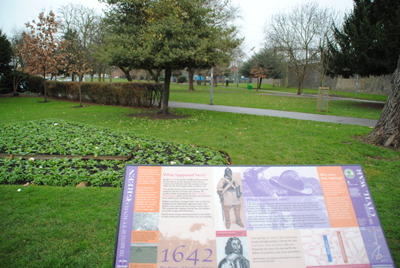
While much of the site of the skirmish has been built upon, glimpses of the open ground which once stood here can still be seen. There is an information panel about the battle opposite Turnham Green Tube station.

For more on the English Civil War, see Blair Worden’s The English Civil Wars: 1640-1660.

10 London ‘battlefields’ – 5. Battle of Barnet…

Hadley-HighstoneAn important battle during the late medieval Wars of the Roses, the Battle of Barnet was fought on 14th April, 1471, between the Yorkists, led by the deposed King Edward IV and Lancastrian forces loyal to the King Henry VI.

While we have looked briefly at the battle before as part of our A Moment in London’s History series (see here), we thought we’d take a more in-depth look.

Edward had been driven from the throne in October, 1470, after his alliance with the powerful Richard Neville, Earl of Warwick, the “Kingmaker”, fell apart. With King Henry VI restored to the throne, Edward was exiled over the Channel.

By early 1471, Edward was ready to make his push for the throne again and in March he landed in Yorkshire in England’s north along with his brother-in-law, the Duke of Burgundy.

Heading south, Edward gathered more troops as he went, briefly pausing at Coventry where the Earl of Warwick refused to offer battle before pressing on to London, arriving unopposed on 12th April. There he was reunited with his wife Elizabeth Woodville and young son Edward (later Edward V) and the hapless King Henry VI was once again  taken into Yorkist custody.

The Earl of Warwick, who had been raising troops in the Midlands, moved with a 15,000-strong force to confront him and took up a position about a mile north of the village of Barnet, just north of the City, on 13th April.

Edward – who brought 10,000 to 12,000 troops to the fight and had his brothers, the erstwhile traitor George, Duke of Clarence, and the young Richard, Duke of Gloucester, by his side – arrived that same evening and took up a position just to the south of the Lancastrians. Unaware of the close proximity of the Yorkists (it’s not known whether this was by accident of design but Edward had instructed his men not to light fires and to keep silent), the Lancastrian artillery flew over their heads.

The battle was joined in earnest the following day – Easter Sunday – at around dawn. The Lancastrians were initially successful in driving back Edward’s forces on the right flank under the command of John de Vere, the Earl of Oxford, but thick fog is said to have been responsible for sowing confusion in the Lancastrian ranks, leading to allies attacking each other and the Lancastrian army eventually fell apart amid cries of treachery.

Warwick was killed in the battle as he attempted to reach his horse. His body was allowed to be displayed at St Paul’s before being buried in the family vault.

The exact site of the battle remains something of an unknown although it is thought to be located in Monken Hadley just to the north of Barnet itself (that is the area marked on the official English Heritage Register of Historic Battlefields).

A stone monument to the battle, the Hadley Highstone, was erected in the 18th century and in the 1800s was moved to its current location at the junction of Kitts End Road with the Great North Road in Monken Hadley and was originally thought to have marked the spot on which Warwick died. The Battlefields Trust is currently developing a project to pin down the location further.

The battle was a resounding victory of King Edward IV for while some suggest the numbers killed were said to be about the same on both sides – somewhere between 1,000 and 4,000, Warwick was removed, depriving the Lancastrians of a key ally and giving the Yorkists a significant edge in the ongoing conflict which saw Edward IV back on the throne for the next 14 years.

PICTURE: Nigel Cox/Wikipedia

For more on the Wars of the Roses, see Alison’s Weir’s book Lancaster And York: The Wars of the Roses.

10 London ‘battlefields’ – 4. Jack Cade’s rebellion…

London-StoneLittle is known of Jack Cade until the former soldier from Kent led an uprising against the rule of King Henry VI during the Hundred Years War with France. And London was a key site of fighting during the uprising.
Cade, who adopted the name John Mortimer and who some claimed to have been a relative of Richard, Duke of York, was said to have been a veteran of the war who led rebels protesting against the king’s rule amid the general state of disorder affecting England at the time which saw such abuses as lands being illegally seized and a lack of confidence in courts to rule fairly. There was also some discontent over the loss of lands of Normandy.

While many of the rebels were peasants, the rebellion – which rose in late May or early June, 1450 – was also supported by nobles and churchmen who were protesting what they saw as poor governance.

Led by Cade, who also attracted the title ‘Captain of Kent’, were camped on Blackheath in what is now the city’s south-east by mid-June and there apparently presented an embassy from the king with a list of grievances.

Thomas, Lord Scales – authorised by the king to raise troops, subsequently marched out to Blackheath but Cade and his rebels retreated into the forests of Kent and managed to lure the royal troops into an ambush.

Cade and the rebels returned to Blackheath while back in London the Royal soldiers turned mutinous, angered over the defeat. They were disbanded to protect the City and the king retired to Kenilworth Castle, effectively abandoning London to the rebels (despite the offer of the Lord Mayor and aldermen to resist the rebels).

Cade then marched on London itself, reaching Southwark on 2nd July (apparently using the now vanished White Hart Inn as his HQ). He forced his way over London Bridge the next day, cutting the drawbridge ropes personally with his sword to ensure it couldn’t be raised again

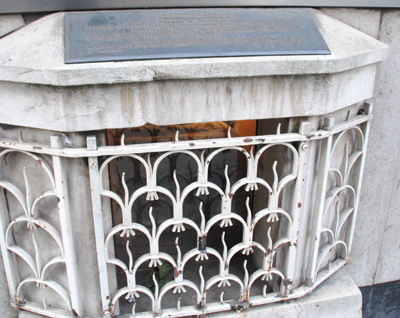
Such was the support the rebels had in London, that resistance was initially minimal. Following his entry to London, Cade struck the famous London Stone (pictured above – for more on it, see our earlier post here) with his sword, declaring “Mortimer” was now lord of the city.

While initially under tight control, Cade gradually lost control of many of his followers who turned to looting. Meanwhile, to head off an attack on the Tower of London – where Lord Scales had retreated – he handed over the hated Lord Treasurer, James Fiennes, Lord Saye, and his son-in-law William Crowmer, Under Sheriff of Kent (they had apparently been imprisoned in the Tower by the King for their own protection such as their unpopularity). Both were beheaded – Fiennes at Cheapside, Crowmer at Mile End – and their heads placed on poles on London Bridge.

The king’s supporters in the Tower had regrouped by early July and, with the rebels, while initially welcomed by many, now clearly having outstayed their welcome, they and city militias drove the rebels from the streets and had taken back the northern half of London Bridge (another bloody battle over the bridge) when William of Waynflete, Bishop of Winchester, arrived with promises of pardon for the rebels on behalf of the Lord Chancellor and Archbishop of Canterbury, John Kemp.

His forced much reduced, Cade – a pardon in his pocket under Mortimer’s name only – moved back into Kent and continued to cause trouble. He was, however, captured by the new Sheriff of Kent, Alexander Iden, on 12th July, – one version says this took place near Heathfield in Sussex at a hamlet now known as Cade Street. In any event, Cade was mortally wounded during the struggle and died en route to London.

His corpse, however, completed the journey and Cade was hanged, drawn and quartered and his head placed atop a pole on London Bridge.

While the rebel ringleaders were later captured and killed, in the most part King Henry VI honoured the pardons he had granted.

The story of Cade’s rebellion features in William Shakespeare’s play, King Henry the Sixth.

10 London ‘battlefields’ – 3. London sacked in the Peasant’s Revolt…

Tower-of-London1OK, so not really a battle although it must have felt something like that to those involved (and the ‘battlefield’ turned out to be much of the City itself), the uprising known as Peasant’s Revolt of 1381 saw two great armies march upon London – one from Kent led by Wat Tyler and another from Essex which is said to have been under the command of Jack Straw.

The armies had risen in response to a series of events which they saw as unjust and which trace their origins back to the Black Death. Killing about a third of the population when it struck some 30 years earlier, this had resulted in a growing demand for labourers to work the fields raising, as one might expect, hopes of increased wages and greater freedom of movement among the peasant class.

But to ensure the social order was maintained, authorities had not only put limits on how much farm workers could be paid but ensured long-standing but increasingly unpopular practices – such as serfs being forced to work some time for free for their landlords – were maintained. On top of this came the imposition and enforcement of a series of poll taxes to fund England’s wars with France.

The poll taxes – and the harsh way in which they were enforced – were a step too far and when a tax collector visited the village of Fobbing in Essex in May, 1381, he was shown short shrift and thrown out. The unrest soon spread and by June, the rebels, having rampaged through the countryside were marching on London.

By 12th June, the men from Essex were camped at Mile End while Tyler and his army from Kent were at Blackheath. The next day, after being denied a meeting with the king, the rebels headed into the City where sympathetic Londoners opened the gates. Once inside, they targeted the property of those they deemed responsible for their misfortune, opening prisons and destroying any legal records they could find.

Foremost among the sites attacked and looted was the Palace of Savoy (see our earlier post here), home of the King’s uncle John of Gaunt, Duke of Lancaster, and, as the power behind the throne, the man many deemed as the ultimate source of the ills besetting them (John himself had a lucky escape – he was away from the city when the palace was attacked.).

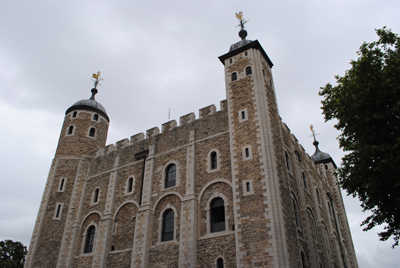
King Richard met with the leaders of the men from Essex on 14th June at their camp at Mile End and, after they pledged their allegiance, agreed to their petitions to abolish serfdom and allow them to sell their labour. But the attacks, meanwhile, were continuing in the City with a group of rebels led by Tyler storming the Tower of London (pictured above) the same day and seizing and beheading the Simon of Sudbury, the Archbishop of Canterbury and Chancellor, along with the Robert Hales, Lord High Treasurer and Prior of St John’s in Clerkenwell – both key figures in the government of the king (you can read more about Simon of Sudbury here).

The following day – 15th June – King Richard again met with the rebel leaders – this time with Wat Tyler, leader of the Kentish band, at Smithfield. It was then that things went awry for the rebels. Apparently enraged by Tyler’s insolence (already stories differ as to exactly why he did so), the Lord Mayor of London, Sir William Walworth (see our earlier post here), stabbed Tyler in the neck. King Richard managed to keep the situation under control until armed troops arrived and after the king declared a general pardon, the rebels dispersed.

Tyler, meanwhile, was taken to St Bartholomew’s Hospital but on the orders of the Lord Mayor was dragged from his bed and beheaded (his head was displayed atop a pole positioned in a field). He was among dozens of the rebels who were subsequently executed for their role in the uprising (leaders Jack Straw and another, John Ball, were among them).

10 London ‘battlefields’ – 2. ‘London Bridge is falling down’…

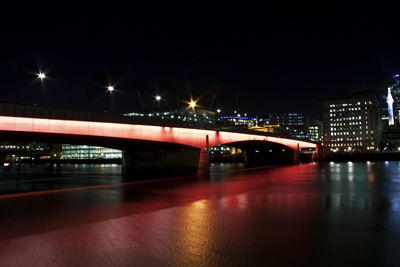
London-Bridge3We’ve touched on this story before but it’s worth a revisit as part of this series. London changed hands several times during the later half of the first millennium as the Anglo-Saxons fought Vikings for control of the city, meaning the city was the site of several battles during the period.

One of the most memorable (or so legend has it, there are some archaeologists who believe the incident never took place) was the battle in 1014 in which London Bridge – then a timber structure (today’s concrete bridge is pictured above) – was pulled down. A story attributed to the Viking skald or poet Ottarr the Black but not found in Anglo-Saxon sources, the event, if it did take place, did so against the backdrop of an ongoing conflict between the Danes and Anglo-Saxons.

Anglo-Saxon London had resisted several attempts at being taken by the Vikings – a fire was recorded in the city in 982, possibly caused by a Viking attack – and in 994, the Anglo-Saxon Chronicle reports that a fleet of 94 Danish and Norwegian ships were repelled with prejudice. Further attacks was driven back in 1009 and it wasn’t until 1013 that the city finally submitted to Danish rule after Sweyn Forkbeard had already claimed Oxford and Winchester.

But Sweyn, the father of the famous King Canute (Cnut), didn’t hold it long – he died on 3rd February the following year.

The deposed Anglo-Saxon King Æthelred II (also spent Ethelred, he was known as ‘the Unready’) – who had been forced to flee from London, which he used as his capital, to what is now Normandy thanks to Sweyn’s depredations – is said to have seized his chance and along with the forces of his ally, the Norwegian King Olaf II, he sailed up the Thames to London in a large flotilla.

The Danish had taken the city, occupying both the city proper and Southwark, and were determined to resist. According to the Viking account, they lined the timber bridge crossing the river and rained spears down on the would-be invaders. (The bridge, incidentally, had apparently been built following the attack in 993, ostensibly to block the river and prevent further incursions further upstream – there is certainly archaeological evidence that a bridge existed in about the year 1000).

Not to be beaten, Æthelred’s forces, using thatching stripped from the rooves of nearby houses to shield themselves, managed to get close enough to attach some cables to the bridge’s piers, pulling the bridge down and winning the battle, retaking the city.

There’s much speculation that the song London Bridge is Falling Down was inspired by the incident but it, like much of this story itself, remains just that – conjecture (although Ottarr’s skald does sound rather familiar).

The bridge was subsequently rebuilt and King Æthelred died only two years later, on 23rd April, 2016. The crown subsequently passed to his son Edmund Ironside but he too died after ruling for less than a year leaving Viking Canute to be crowned king.

PICTURE: http://www.freeimages.com

10 London ‘battlefields’ – 1. Queen Boudicca takes on the Romans…

boudicca

This month marks the 600th anniversary of the Battle of Agincourt and to mark the occasion, we’re looking at 10 of London’s “battlefields” (well, maybe not officially recognised battlefield sites but 10 places where fighting took place – or, as in this instance, legend says took place – at various times throughout London’s history).

First up it’s to King’s Cross, once said to have been site of a village known as ‘Battle Bridge’, so named because, according to tradition, it here in about 60AD that the rebellious hoards of Queen Boudicca (also known as Boadicea or Boudica) ran into the well-disciplined army of the Roman Governor of Britain, Gaius Suetonius Paulinus.

Paulinus had been campaigning in northern Wales when the Iceni rebellion broke out in East Anglia, apparently sparked by the Romans’ refusal to honour the will of the deceased King Prasutagus. He had left his land to the Emperor Nero and his two daughters but instead, the story goes that the Romans seized the land, flogged his wife Boudicca and raped his two daughters.

Understandably incensed at this treatment, the Iceni and members of other tribes rose in rebellion under Boudicca and laid waste to the Roman city of Camulodunum (what is now Colchester in Essex).

Boudicca then turned toward Roman Londinium, the provincial capital, and while Paulinus beat her there with a small number of troops, he quickly concluded he couldn’t defend it and ordered it evacuated. Boudicca, who is claimed to have fought from a chariot, and her army of tribesman apparently spared no-one when they arrived and burnt it to the ground. They then moved on to attack another Roman city – Verulamium (St Albans).

Paulinus, meanwhile, marshalled his forces – still apparently vastly outnumbered – and chose his battleground carefully. One legend suggests King’s Cross – then site of an ancient bridge across the River Fleet – as the battle’s location (although we should mention there are also numerous other sites which have been suggested as the location for the battle including locations in the Midlands along the Roman road of Watling Street, now the A5).

Where-ever it was, Paulinus had apparently chosen his position so that Boudicca couldn’t bring her greater numbers to bear on his flanks. Her army collapsed and, according to the Roman historian Tacitus, there was a rumour that 80,000 Britons were killed and just 400 Romans in the ensuing battle (although fair to say such numbers may be a stretch!).

The outcome was obviously devastating for Boudicca – there’s various accounts of what happened to her next with one being that she fell during the battle and another that, having survived, she committed suicide by poisoning herself. There is a legend that Boudicca was subsequently buried at a site now covered by platform nine or 10 at King’s Cross railway station. It’s also been suggested she was buried at Parliament Hill.

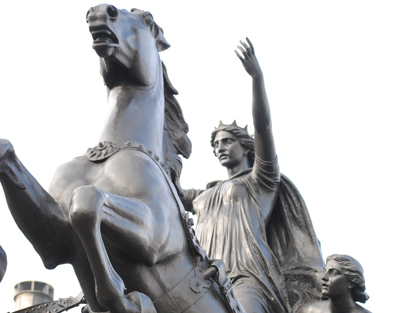
There’s a statue commemorating Boudicca and her daughters (pictured above) at the western end of Westminster Bridge. Designed by Thomas Thornycroft, it was made in 1850 but not erected on the site until 1902.

Wrapping up 10 small, ‘secret’ and historic gardens in central London…

Over the past couple of months our special Wednesday series has looked at “10 small, ‘secret’ and historic gardens in central London”. So we’re finishing the series by taking a quick look back at the 10 gardens we featured (and providing a single point where you can find any you may have missed)…

10 small, ‘secret’ and historic gardens in central London…1. Goldsmiths’ Garden…

10 small, ‘secret’ and historic gardens in central London…2. Whittington Garden…

10 small, ‘secret’ and historic gardens in central London…3. St Dunstan in the East Garden…

10 small, ‘secret’ and historic gardens in central London…4. St Mary Aldermanbury Gardens…

10 small, ‘secret’ and historic gardens in central London…5. Seething Lane Garden…

10 small, ‘secret’ and historic gardens in central London…6. Red Cross Garden, Southwark…

10 small, ‘secret’ and historic gardens in central London…7. St Swithin’s Church Garden…

10 small, ‘secret’ and historic gardens in central London…8. Postman’s Park…

10 small, ‘secret’ and historic gardens in central London…9. Garden of Rest, Marylebone…

10 small, ‘secret’ and historic gardens in central London…10. Geffrye Museum Gardens…

Do you have a favourite? Or maybe there’s a ‘small, secret and historic’ garden we didn’t mention that you love (and we may mention in a future special)?


10 small, ‘secret’ and historic gardens in central London…10. Geffrye Museum Gardens…

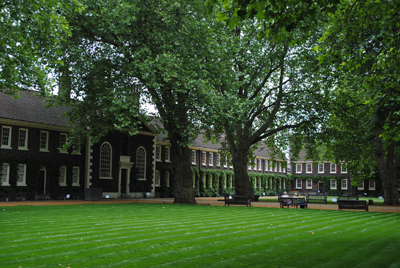
Geffrye-Garden

We’ve mentioned the Geffrye Museum gardens before but they’re well worth a more detailed mention.

There are two distinct gardens at the Geffrye – the first are the public gardens located just off Kingsland Road which were originally laid out when the almshouses in which the museum is now based were constructed while the second is the walled herb garden and series of period garden ‘rooms’ which are much more recent additions.

While origins of the former date back to when the almshouses – 14 homes of four rooms each with a central chapel – were built in 1712-14 by the Ironmonger’s Company under instructions in the will of Sir Robert Geffrye (for more on him, see our earlier Famous Londoners entry here), they weren’t opened to the public until 1912 when the London County Council took over the site (for more on the history of the almshouses, see our earlier entries here and here).

These gardens originally featured a series of lime trees and by the early 19th century, an image shows lawns surrounded by railings with some flower beds and trees. The front lawns were apparently grazed by sheep or employed for growing crops of potatoes.

By the mid-1800s, the lime trees had been replaced by London plane trees, most of which are still standing. The gardens were again laid out in 1900-01 and again after the LCC took over in 1910 when a small pool was added in front of the chapel and a bandstand and playground elsewhere in the gardens.

The grounds also include a small graveyard – that of the Ironmongers’ – and among those buried here are Geffrye and his wife, their remains brought here from the chapel of St Dionis Backchurch in Lime Street when it was demolished in 1878.

The walled herb garden and period garden ‘rooms’, meanwhile, were added in the 1990s. The herb garden opened in 1992 on a what had been a derelict site to the north of the building – it features four square beds containing more than 170 different herbs and plants.

The period garden ‘rooms’, meanwhile, were laid out in 1998 to showcase middle class town gardens from different eras. They currently include a Tudor “knot garden”, a Georgian garden, a Victorian garden and an Edwardian garden.

Each of these gardens has been carefully constructed using evidence gathered from drawings and prints, maps and garden plans along with plant lists, diaries and literature.

WHERE: Geffrye Museum, 136 Kingsland Road, Shoreditch (nearest tube station is Old Street; nearest Overground station is Hoxton); WHEN: 10am to 5pm, Tuesday to Sunday (front gardens are open all year round by period and herb gardens are only open until 1st November and reopen on 28th March; COST: Entry is free; WEBSITE: www.geffrye-museum.org.uk/explore-the-geffrye/explore-gardens/.

The-Knot-Garden

10 small, ‘secret’ and historic gardens in central London…9. Garden of Rest, Marylebone…

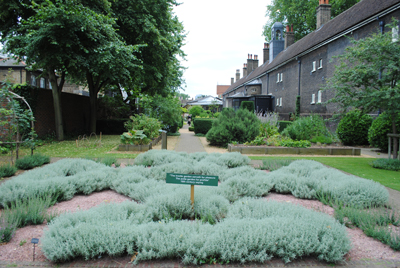
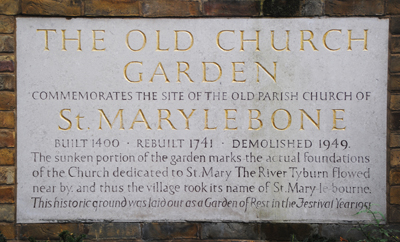
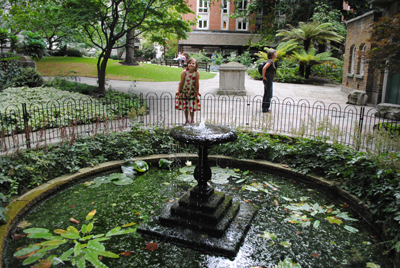
Marylebone2This pocket park is another of those located on the site of a former church – in this case the Marylebone Parish Church which now stands to the north.

The church – the third to serve the parish – was built here in 1740 but was replaced when the current parish church was built between 1813 and 1817.

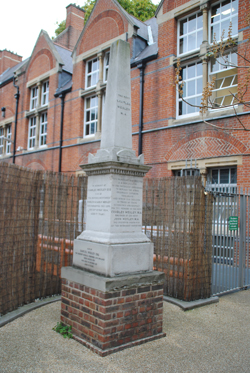
Wesley-MonumentThe former church didn’t close until 1926, however, continuing use as a parish chapel, and even then wasn’t demolished until 1949  after it was damaged by bombing during World War II.

In 1951, the St Marylebone Society created a Memorial Garden of Rest on the site (also known as the Old Church Garden). It was opened in March, 1952, by Viscount Portman.

The foundations of the former church were marked out in the sunken portion of the garden. The predominantly paved garden also contains numerous gravestones and memorials.

These include that of Methodist movement leader Charles Wesley, erected in 1858 to commemorate his burial in 1788 (pictured right). There’s also a plaque recording notable burials at the church, including the painter George Stubbs (1806), royal apothecary John Allen (1774), architect James Gibbs and bare knuckle boxer James Figg (1734). Other plaques detail some of the church’s history.

Also of note in the garden is a Judas tree (Cercis siliquastrum), named for being the variety upon which Judas hung himself or, alternately, because its fruit pods resemble bags of silver. The current tree replaces an earlier one.

WHERE: Garden of Rest Marylebone, Marylebone High Street (nearest tube stations are St Paul’s and Barbican); WHEN: 7am to dusk; COST: Entry is free; WEBSITE: www.myparks.westminster.gov.uk/parks/garden-of-rest-marylebone/.

10 small, ‘secret’ and historic gardens in central London…8. Postman’s Park…

Postman's-ParkHousing one of London more unique memorials, Postman’s Park in the City’s north is located on what were once the churchyards and burial grounds of three different churches.

The park – which took its name from its popularity with postal workers who came here to escape their job at the nearby former General Post Office (read a Lost London article on the GPO here) – opened in 1880.

It was originally located on the site of the former churchyard of St Botolph’s-without-Aldersgate and was subsequently expanded to incorporate the adjacent churchyard of St Leonard, Foster Lane, and the burial ground of Christ Church, Greyfriars (also known as Christ Church, Newgate Street). Some of the headstones still stand along the park’s boundaries.

Postman's-Park3Its key feature is the G.F. Watts Memorial To Heroic Self Sacrifice (pictured, right). Victorian artist and philanthropist George Frederic Watts proposed the memorial commemorating “heroic men and women” who had given their lives to save others to mark Queen Victoria’s Jubilee in 1887 but the memorial which now stands there wasn’t built until 1900.

The memorial consists of a loggia, the inside of which is lined with glazed tablets. Each of these commemorates acts of bravery by “everyday heroes” as they attempted to rescue people from fires, runaway trains, sinking ships and drowning. There were 13 plaques at the time of his death in 1904 and his wife Mary added a further 34.

The latest of the memorials commemorating 62 individuals was added in 2009 (for more details, head to our earlier post here, part of our Curious London Memorials series; you can also find more about the memorial, including a free app, here).

The park also features a sundial and fountain amid bright flower beds and various species of trees including a large banana tree, a dove tree and Tasmanian tree ferns.

Claims to fame include its role in the 2004 film Closer, which starred Natalie Portman, Julia Roberts, Jude Law and Clive Owen (we won’t go into details, just in case you haven’t seen it!).

WHERE: Postman’s Park, between King Edward Street and St Martin’s le Grand (nearest tube stations are St Paul’s and Barbican); WHEN: The park, managed by the Corporation of London, is open 7am to 8pm or dusk (whichever is earlier); COST: Entry is free; WEBSITE: www.cityoflondon.gov.uk/things-to-do/green-spaces/city-gardens/visitor-information/Pages/Postman’s-Park.aspx.

Postman's-Park2

10 small, ‘secret’ and historic gardens in central London…7. St Swithin’s Church Garden…

St-Swithins2Back into the City of London this week and it’s another garden located on the site of a former church.

Situated just off Cannon Street, this much overlooked tiny raised garden was created on the site of the former Church of St Swithin. The church is believed to have existed here as early as the 11th century and was replaced, thanks largely to the generosity of Lord Mayor Sir John Hind, with a larger building in the early part of the 15th century – it featured one of the first towers built specifically for the task of hanging bells inside.

St-SwithinsThe church was among those destroyed in the Great Fire of London in 1666 but, now united with the parish of St Mary Bothaw, was rebuilt to the designs of Sir Christopher Wren shortly after in 1677-88.

Later known as St Swithin, London Stone thanks to the mysterious London Stone being built into the south wall of the church in the late 18th century (for more on the stone and its current location, see our earlier post here), the church survived until World War II when it was damaged beyond repair during bombing and was later destroyed.

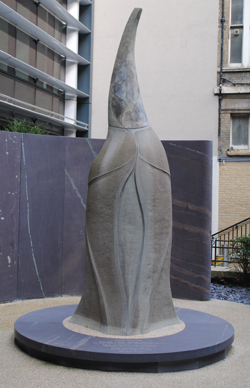
Relandscaped in 2010, the garden features a rather dramatic memorial (pictured) to the suffering of women and children in war in general and medieval figure, Catrin Glyndwr in particular. Unveiled in 2001, it was designed by Nic Stradlyn-John and sculpted by Richard Renshaw.

The daughter of the Welsh Prince Owain Glyndwr, she was captured in 1409 and brought with her children and mother to the Tower of London. Catrin and two of her children died in late 1413 and were buried in the former church.

WHERE: St Swithin’s Church Garden, Salters Hall Court off Cannon Street (nearest Tube station is Cannon Street); WHEN: daily; COST: Free; WEBSITE: www.bost.org.uk/open-places/red-cross-garden/.

10 small, ‘secret’ and historic gardens in central London…6. Red Cross Garden, Southwark…

Red-Cross-Garden

We travel south of the Thames this week to Red Cross Garden in Southwark. Located not far from Borough Market, the garden has a rich history, having first been laid out in 1887 by the social reformer, philanthropist and National Trust co-founder Octavia Hill.

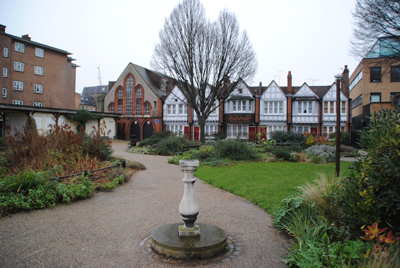
Described as Hill’s “flagship project”, it was here, after being granted use of the land by the Ecclesiastical Commission, that she demonstrated the role gardens and open spaces play in improving the lives of the poor living in 19th century Southwark (in the picture you can see in the background the hall and cottages which were also part of the project – Hill had these constructed between 1888-89, the hall being for community activities and the cottages homes for the “working poor”. Both were designed by Elijah Hoole).

The garden in Redcross Way was created on the site of a derelict paper factory and a hop warehouse and originally contained meandering paths, an ornamental pond with fountain, a bandstand and a covered play area for children as well as an elevated walkway for viewing the garden – described by Hill as an “open air sitting room for the tired inhabitants of Southwark”. There were a number of colourful mosaics – one called The Sower is still in situ but another known as The Good Shepherd was apparently lost.

The original layout of garden, which were used as the venue for the annual Southwark Flower Show as well as other events, had been lost by the late 1940s and it was only in much more recent years that it was restored by the Bankside Open Spaces Trust (with funding from the Heritage Lottery Fund and Southwark Council). They were officially reopened in 2006 by Princess Anne.

The award-winning garden is now managed by BOST which leases the space from Southwark Council and relies on the work of volunteers (any donations are always welcome!). The latest addition has been the Victorian bandstand which, constructed in a style true to the original, was unveiled late last year.

WHERE: Red Cross Garden, Redcross Way, Southwark (nearest Tube stations are Borough and London Bridge); WHEN: 9am to dusk, daily; COST: Free; WEBSITE: www.bost.org.uk/open-places/red-cross-garden/.

10 small, ‘secret’ and historic gardens in central London…5. Seething Lane Garden…

Seething-Lane-Garden

This small, simply laid out garden in the City of London is redolent with history.

It was once the site of the Navy Office, the workplace of diarist Samuel Pepys, and it was in the garden of this building that he and Sir William Penn buried their wine and parmesan cheese for safety during the Great Fire of London in 1666.

The office survived the Great Fire but was, oddly enough, destroyed by fire only a few years later in 1673 (there is a blue plaque commemorating it in the garden) and a new office, designed by Sir Christopher Wren, was built here in the early 1680s before it was demolished in 1788.

Seething-Lane-Garden2It’s due to its association with Pepys (who also lived in the street and was buried in the nearby church of St Olave Hart Street) that it boasts a bronze bust of him which was erected by the Samuel Pepys Club in 1983, designed by Karin Jonzen and funded by public subscription. It was presented to the garden by Fred Cleary who played an instrumental role in encouraging green spaces in the Square Mile in the 1970s.

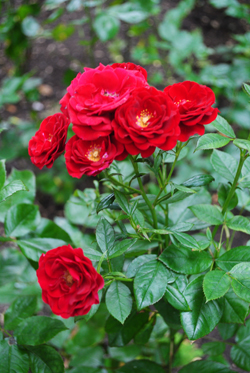
The garden, which was laid out in about 1950, is also notable for its beds of red roses, planted to commemorate the deal struck in 1381 in which the Sir Robert Knollys was belatedly granted permission for a footbridge his wife had built over Seething Lane. She had done so contrary to planning rules while he was away fighting with John of Gaunt (ostensibly so she could avoid the dust of the street when crossing from her house to her rose garden), and so when he returned, the City of London Corporation allowed the bridge (now long gone) to remain, but only in exchange for the symbolic “penalty” of one red rose a year.

The occasion is still marked each June in a ceremony overseen by the Company of Watermen and Lightermen of the River Thames in which a red rose is plucked from the garden and delivered to the Lord Mayor of London at Mansion House.

WHERE: Seething Lane Garden, Seething Lane, City of London (nearest Tube stations is Tower Hill); WHEN: Daily; COST: Free; WEBSITE: www.cityoflondon.gov.uk/things-to-do/green-spaces/city-gardens/Pages/default.aspx.

This garden reopened in 2018 after being redeveloped as part of the Trinity Square redevelopment.


10 small, ‘secret’ and historic gardens in central London…4. St Mary Aldermanbury Gardens…

St-Mary-Aldermanbury2Like St Dunstan in the East, these gardens at the corner of Love Lane and Aldermanbury are also based inside the remains of a medieval church.

The church of St Mary Aldermanbury (the name may relate to its proximity close to Guildhall, or the ‘Alderman’s Bury’ or ‘Alderman’s Hall’), mentioned as far back as the late 12th century, was destroyed in the Great Fire of London but was among those rebuilt to the designs of Sir Christopher Wren only to be destroyed again during the Blitz in 1940.

Shakespeare-MonumentThis time there was to be no rebuilding and instead, in 1966 the walls – all that remained – were moved more than 4,000 miles away to the town of Fulton, Missouri, in the US.

There they were reconstructed in the grounds of Westminster College – site of Winston Churchill’s famous “Iron Curtain” speech in 1946 – and the church restored as a memorial to the former British PM. The National Churchill Museum is located beneath.

There’s plaque mentioning this in the gardens (and featuring an image of what the church looked like after its reconstruction in Fulton) which still contains the church’s footings (these date from the 15th century when the church was apparently partially rebuilt) and give an indication of what the church’s footprint would have been along with headstones (among those whose remains were buried here was the notorious Judge Jeffreys).

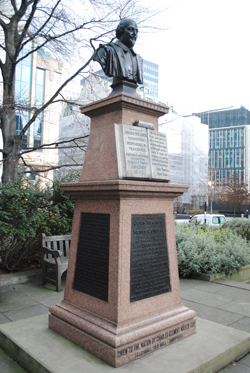
Other features include a memorial to Henry Condell and John Heminge, both involved in the publication of William Shakespeare’s first folio (you can read more about it in our earlier post here).

The garden was laid out after the church was removed. It is a designated Site of Local Importance for Nature Conservation and attracts wildlife including birds such as blackbirds, woodpigeons, house sparrows and blue tits. Plantings were added in 2011 to maximise the attraction to bird as well as bees and butterflies. On the corner outside the garden is a fountain.

WHERE: St Mary Aldermanbury Garden, Aldermanbury, City of London (nearest Tube stations are St Pauls and Monument); WHEN: 8am to 7pm daily; COST: Free; WEBSITE: www.cityoflondon.gov.uk/things-to-do/green-spaces/city-gardens/visitor-information/Pages/St-Mary-Aldermanbury.aspx.

10 small, ‘secret’ and historic gardens in central London…3. St Dunstan in the East Garden…

St-Dunstan1

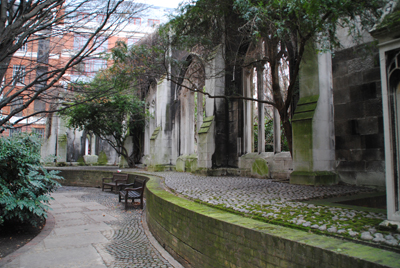
Located amid the remains of the medieval church of St Dunstan in the East, the garden was created in the late 1960s after the church was finally – and irrevocably, apparently – destroyed in the Blitz of World War II.

St-Dunstan2The church’s origins went back to around 1100 and it was subsequently extended with a new south aisle in the late 14th century and repaired in the early 17th century before being severely damaged in the Great Fire of 1666.

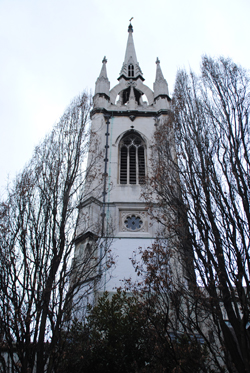
Patched up, with a new steeple and tower added to the building between 1695-1701 by Sir Christopher Wren, the building stood until the early 19th century when much of the church – with the exception of Wren’s additions – had to be rebuilt (for more on the history of the church, see our earlier Lost London post here).

The ‘new’ building was, however, badly damaged during bombing in 1941 and it was decided not to rebuild the church in the aftermath of the war.

The City of London opened a garden, sympathetic with the remains of the Grade I-listed building, on the site in 1971 (although Wren’s tower remains). They won a landscape award only a few years later.

Features in these atmospheric gardens – which seem to capture the essence of the Romantic idea of what ruins should look like – include a fountain which sits in the middle of the nave. In 2010 it was one of five public gardens in the City where award-winning  ‘insect hotels’ were installed.

Maintenance works were carried out in 2015 and new plantings put in (the picture, above, was taken before this).

WHERE: St Dunstan in the East, between Idol Lane and St Dunstan’s Hill, City of London (nearest Tube stations are Monument and Tower Hill); WHEN: 8am to 7pm or dusk (whichever is earlier); COST: Free; WEBSITE: www.cityoflondon.gov.uk/things-to-do/green-spaces/city-gardens/visitor-information/Pages/St-Dunstan-in-the-East.aspx

10 small, ‘secret’ and historic gardens in central London…1. Goldsmiths’ Garden…

Goldsmiths1

Welcome to the first in our new Wednesday series, looking at some of central London’s small historic gardens which, while not secret in the strictest sense of the word, may tend to get overlooked. Each of the gardens we’re looking at is accessible to the public and has a link to the city’s history as well as providing a peaceful oasis out of the hustle and bustle…

First up, it’s the Goldsmiths’ Garden, located on the site of the former medieval church of St John Zachary at the corner of Gresham and Noble Streets in the City.

Goldsmiths2The church, which dates back to at least the late 12th century, was destroyed in the Great Fire of London in 1666 and not rebuilt (its parish was united with that of St Anne and St Agnes) although its ruins apparently remained until the 19th century. The church’s layout can be seen in the sunken area of the current garden.

The Worshipful Company of Goldsmiths had acquired land in the area in medieval times and built their first hall here in 1339 on the site of the current hall (which lies across the road from the garden and dates from the early 19th century).

The first garden was constructed on the site of the former church in 1941 by fire watchers after the area suffered in the Blitz and it apparently won a Gardener’s Company award for “Best Garden on a Blitzed Site” in 1950.

The garden has since been altered and refurbished several times since, including in around 1960 by landscape architect Sir Peter Shepheard and in the 1990s by landscape architect Anne Jennings.

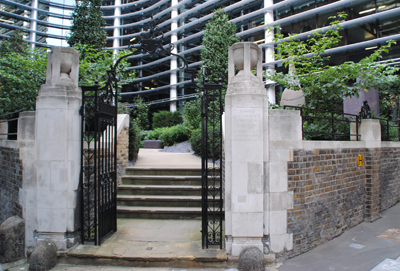
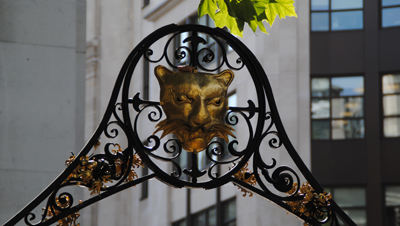
Goldsmiths3Features today include the iron entrance archway (top) which was commissioned by the Blacksmiths Company during the 1990s renovation. It features the leopard’s head hallmark of the Goldsmiths’ Company Assay Office, used to verify the purity of silver since the early 14th century.

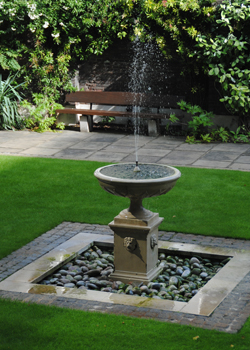
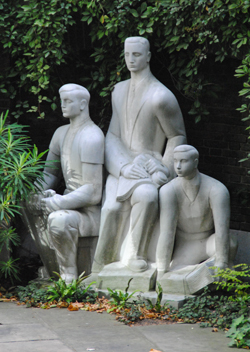
As well as the central fountain installed in the 1990s (and donated by the Constructors’ Company), the garden also features a two metre high, 2.5 tonne Portland stone monument called the Three Printers (pictured right).

The work of Wilfred Dudeney, it was commissioned by the Westminster Press Group in the late 1950s for their new headquarters in New Street Square, off Fleet Street, and depicts a newsboy, editor and printer. It was placed in a demolition yard in Watford when the group moved headquarters before taking its current position in 2009.

WHERE: Goldsmiths’ Garden, corner of Gresham and Noble Streets, City of London (nearest Tube stations are St Paul’s, Bank and Barbican); WHEN: Anytime; COST: Free; WEBSITE: www.thegoldsmiths.co.uk/goldsmiths’-hall/.

For more on London’s parks and gardens, check out Jill Billington’s London’s Parks and Gardens.

10 sites from London at the time of the Magna Carta – 10. Priory of the Order of St John of Jerusalem…

Crypt

Founded in Clerkenwell in 1144, the Priory of the Order of St John of Jerusalem served as the order’s English headquarters.

The order, also known as the Knights Hospitaller, was founded in Jerusalem in 1080 to care for the sick and poor, and soon spread across Europe with the English ‘branch’ established on 10 acres just outside the City walls apparently by a knight, Jorden de Briset.

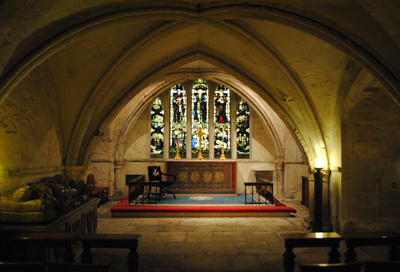
The original buildings – of which only the 12th century crypt (pictured above) survives complete with some splendid 16th century tomb effigies including that of the last prior, Sir William Weston – included a circular church, consecrated in 1185, and monastic structures including cloisters, a hospital, living quarters and a refectory or dining hall.

There are records of dignitaries staying at the priory as it grew in size and renown – among them was King John who in 1212, apparently stayed here for an entire month. There are also surviving accounts of Knights Hospitaller riding out in procession from the priory and through the City at the start of a journey to the Holy Land.

The priory and church were attacked during the Peasant’s Revolt of 1381, thanks to its connection with the hated Poll Tax (Prior Robert Hales was also the Lord High Treasurer and was beheaded during the revolt on Tower Hill).

The church was subsequently rebuilt as a rectangular-shaped building and then, in the early 16th century, enlarged when the site was significantly renovated. These renovations were still relatively new when the priory was dissolved in 1540 during the Dissolution of King Henry VIII.

The priory church, which survived the Great Fire of 1666, was later used as a parish church but was destroyed in an air raid in World War II. Subsequently rebuilt, it can be visited today along with the crypt below and the cloister garden, created in the 1950s as a memorial to St John’s Ambulance members from the London area (the original shape of the circular church is picked out in the paving here).

Perhaps the most famous building to survive is St John’s Gate which dates from the 16th century and was once the gatehouse entrance to the priory (added in the final renovations).

After the Dissolution it served various roles including as the office of the Master of Revels (where Shakespeare’s plays were licensed), the home of The Gentleman’s Magazine (Samuel Johnson was among contributors and worked on site), a coffee house (run by William Hogarth’s father) and a public house called the Old Jerusalem Tavern (yes, Charles Dickens was said to be a regular). It is now home to the recently renovated Museum of the Order of St John (you can see our earlier post on the museum here).

WHERE: Museum of the Order of St John, St John’s Gate (and nearby priory church), St John’s Lane, Clerkenwell (nearest Tube stations is Farringdon); WHEN: 10am to 5pm, Monday to Saturday (tours are held at 11am and 2.30pm on Tuesday, Friday and Saturday); COST: Free (a suggested £5 donation for guided tours); WEBSITE: www.museumstjohn.org.uk.

We’ll kick off a new Wednesday series next week…

10 sites from London at the time of the Magna Carta – 9. Old St Paul’s Cathedral…

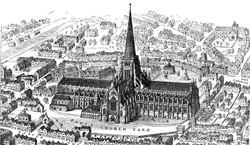
The first great stone cathedral on the site where Sir Christopher Wren’s St Paul’s now stands was a relative – and as yet incomplete – newcomer in 1215. Construction on it had started more than 120 years before in 1087 but it eventually took more than 200 years to finish.

Old-St-PaulsIt was Bishop Maurice, chaplain to William the Conqueror (he donated some Caen stone for its construction), who began the project after the previous wooden Saxon church on the site – the latest in a succession of them dating back to the 7th century – had been destroyed by fire (although it was under successor Bishop Richard de Beaumis that work began to really take shape).

The first part of the building to be completed was the quire in 1148 – its opening was delayed by another fire in 1135 caused during civil unrest following the death of King Henry I – but it wasn’t until after the Magna Carta’s advent – in 1240 – that the church was eventually consecrated by Bishop Roger Niger.

Originally designed in the Norman Romanesque-style, the architectural style changed during the building process into the Early English Gothic style.

Enlarged and renovated several times since construction began, it wasn’t fully completed until the 14th century – when it was the largest church in England and the third largest in Europe featuring the tallest steeple, built in 1221, and spire, built in 1315, ever built (that is, until 1561 when it was knocked down by lightning).

It later contained a number of important relics including the arms of Mellitus, the first bishop of London (see our earlier post on him here), St Mary Magdalene’s hair, the head of King Ethelbert and, importantly for the time, some pieces from the skull of St Thomas á Becket. Among the tombs inside the emerging church in 1215 were those of Sebba, King of the East Saxons, who had been buried in the north aisle in 695, and that of King Ethelred “The Unready”.

While the exterior was remodelled in the early 17th century – including the addition of a monumental new porch by architect Inigo Jones – the medieval building remained standing until the Great Fire of 1666.

PICTURE: Via Wikipedia

10 sites from London at the time of the Magna Carta – 8. Bermondsey Abbey…

Bermondsey Abbey, which was more than 130-years-old by the time King John put his seal to the Magna Carta in 1215, has an unusual connection to the unpopular king – it is one of a number of buildings in London which has, at various times in history, been erroneously referred to as King John’s Palace.

This suggestion – that it was a palace which was later converted into an abbey – may have arisen from a site on the former abbey grounds being known at some point in its history as King John’s Court (that name was said to commemorate the fact that King John visited the abbey).

Putting how King John’s name came to be linked with the abbey aside, we’ll take a quick look at the history of the abbey which rose to become an important ecclesiastical institution in medieval times.

While there was a monastic institution in Bermondsey as far back as the early 8th century, the priory which was here during the reign of King John was founded in 1082, possibly on the site of the earlier institution, by a Londoner named as Aylwin Child(e), apparently a wealthy Saxon merchant who was granted the land by King William the Conqueror.

In 1089, the monastery –  located about a mile back from the river between Southwark and Rotherhithe – became the Cluniac Priory of St Saviour, an order centred on the French abbey of Cluny, and was endowed by King William II (William Rufus) with the manor of Bermondsey.

It was “naturalised” – that is, became English – by the first English prior, Richard Dunton, in 1380, who paid a substantial fine for the process. It was elevated to the status of an abbey by Pope Boniface IX in 1399.

It had some important royal connections – King John’s father, King Henry II and his wife Queen Eleanor celebrated Christmas here in 1154 (their second child, the ill-fated Henry, the young King, was born here a couple of months later), and Queen Catherine (of Valois), wife of King Henry V, died here in 1437. It was also at Bermondsey Abbey that Elizabeth Woodville, the widow of King Edward IV and mother of the two “Princes in the Tower”, died in 1492 following her retirement from court.

The abbey, which grew to have an enormous income thanks to its acquisition of property in a range of counties, survived until the Dissolution when, in 1537, King Henry VIII closed its doors. It was later acquired by Sir Thomas Pope who demolished the abbey and built a mansion for himself on the site (and founded Trinity College in Oxford apparently using revenues from the property). We’ll deal more with its later history in an upcoming post.

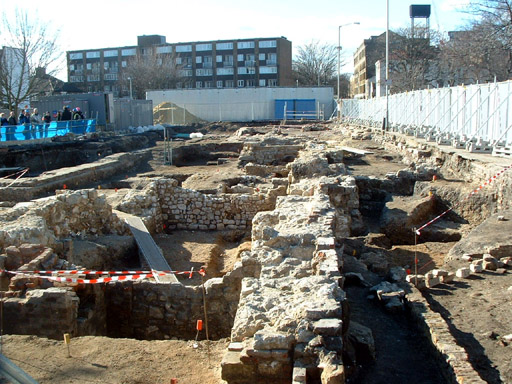
The ruins of the abbey were extensively excavated in the past few decades and some of the remaining ruins of the abbey can still be seen buildings around Bermondsey Square and a blue plaque commemorating the abbey was unveiled in 2010. Bermondsey Street runs roughly along the line of the path which once led from the abbey gates to the Thames and the abbey had a dock there still commemorated as St Saviour’s Dock. The abbey’s name is commemorated in various streets around the area.

For more on the history of the Magna Carta, see David Starkey’s Magna Carta: The True Story Behind the Charter.

PICTURE: An archaeological dig at the ruins of Bermondsey Abbey in 2006. Zefrog/Wikipedia.