This Week in London – War fashions; the “inventor” of Impressionism; looking a Gift Horse in the mouth; and, having a look at the Queen’s House…

A new exhibition exploring how fashion survived and even flourished during World War II has opened at the Imperial War Museum in Lambeth to mark the 70th anniversary of the war’s end. Fashion on the Ration brings together more than 300 exhibits including clothes and accessories like the ‘respirator carrier handbag’, photographs and films as well as official documents from the period, letters and interviews. The exhibition is divided into six parts which examine in detail everything from the uniforms worn during the period to clothes rationing (introduced in 1941) and how the end of the war impacted fashion. Runs until 31st August. Admission charge applies. For more, see www.iwm.org.uk.

The UK’s first major exhibition devoted to Paul Durand-Ruel, the man who “invented Impressionism”, has opened at the National Gallery off Trafalgar Square this week. Inventing Impressionism features around 85 works including some of Impressionism’s greatest masterpieces, a number of which have never been seen in the UK before. The majority of the works were traded by Durand-Ruel (1831-1922) who is noted for having discovered and supported Impressionist painters like Monet, Pisarro, Degas and Renoir. Durand-Ruel purchased an astonishing 12,000 pictures between 1891 and 1922, including more than 1,000 Monets, about 1,500 Renoirs, more than 400 Degas’, some 800 Pissarros and close to 200 Manets. The images on display include a series of rarely-seen portraits of the dealer and his family by Renoir which are being exhibited in the UK for the first time as well as five paintings from Manet’s ‘Poplars’ series and all three of Renoir’s famous ‘Dances’, not seen in the country together since 1985. The exhibition finishes with a reference to an exhibition Durand-Ruel organised in London in 1905. Held at the Grafton Galleries, it presented 315 paintings. Admission charge applies. Runs until 31st May. For more, see www.nationalgallery.org.uk.

Gift Horse, New York-based German artist Hans Haacke’s sculpture of a skeletal riderless horse, will be unveiled on the Fourth Plinth in Trafalgar Square today. The horse, derived from an etching by English painter George Stubbs – whose works are in the nearby National Gallery, features an electronic ribbon tied to the horse’s front leg showing a live ticker of the London Stock Exchange. The statue, described as a ‘wry comment’ on the equestrian statue of King William IV which was originally to occupy the plinth, is the 10th to occupy the plinth since the first commission – Marc Quinn’s sculpture Alison Lapper Pregnant – was unveiled in 2005.

 Contemporary artist Dryden Goodwin’s first feature-length film is on show as part of a new exhibition, Unseen: The Lives of Looking, at the Queen’s House in Greenwich. Continuing Goodwin’s investigations into portraiture, the newly commissioned film focuses on three individuals who have a “compelling” relationship to looking – eye surgeon Sir Peng Tee Khaw, planetary explorer Professor Sanjeev Gupta and human rights lawyer Rosa Curling. Alongside the screening is a series of drawings made by Goodwin after observing the three individuals as well as tools and papers related to each of their trades and a series of objects connected three leading observers related to the history of the Royal Museums Greenwich sites – John Flamsteed, first Astronomer Royal, Edward Maunder, who observed Mars from the Royal Observatory Greenwich, and the artist Willem van de Velde the Elder who made detailed drawings of naval battles in preparation for producing paintings in his studio at the Queen’s House. Runs until 26th July. Admission is free. For more, see www.rmg.co.uk.

Send all items for inclusion to exploringlondon@gmail.com.
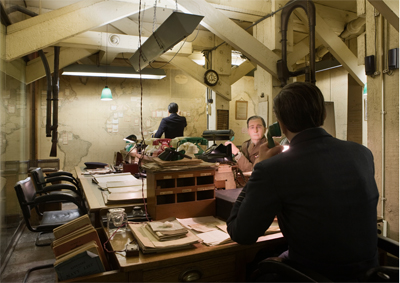
10 London sites associated with Sir Winston Churchill – 3. Churchill War Rooms…

Churchill2

Now a museum, the Churchill War Rooms is actually the underground bunker system beneath Whitehall from where Churchill directed operations during the Blitz of World War II.

Churchill1The subterranean complex includes a series of historic rooms where Churchill and his cabinet met which remain in the same state they were in when the lights were switched off at the end of the war in 1945. There’s also a substantial cutting-edge museum dedicated to exploring Churchill’s life which boasts an interactive “lifeline” containing more than 1,100 images and a similar number of documents as well as animations and films.

With the coming conflict on the horizon, the complex was constructed from 1938 to 1939 as an emergency government centre in the basement of the now Grade II* listed government building then known as the New Public Offices (and now home to HM Treasury). It became operational on 27th August, 1939, shortly before the outbreak of the war.

Key rooms include the Map Room (pictured, top, it was manned around the clock by military officers producing intelligence reports) and the War Cabinet Room where more than 100 meetings of Cabinet were held (including just one gathering of Prime Minister Neville Chamberlain’s cabinet in October, 1939).

Other facilities included a private office/bedroom for Churchill (this came with BBC broadcasting equipment which Churchill used four times and, although it had a bed, Churchill apparently rarely used it), the Transatlantic Telephone Room (pictured above, it was disguised as a toilet) from where Churchill could speak directly to the US President. There are also staff dormitories, bedrooms for officers and government ministers, and rooms for typists and telephone switchboard operators.

In October, 1940, a massive layer of concrete – up to five feet thick and known simply as ‘The Slab’ – was added to protect the rooms. Other protective devices included a torpedo net slung across the courtyard overhead to catch falling bombs and an air filtration system to prevent poisonous gases entering.

Abandoned after the war, the premises hosted some limited tours but, despite growing demand to see inside, it wasn’t until the early 1980s when PM Margaret Thatcher pushed for the rooms to be opened to the public that the Imperial War Museum eventually took over the site. The museum opened on 4th April, 1984, in a ceremony attended by the PM as well as members of Churchill’s family and former staff.

Then known as the Cabinet War Rooms, they were extended in 2003 to include rooms used by Churchill, his wife and associates, and, in 2005, following the development of the Churchill Museum, it was rebranded the Churchill Museum and Cabinet War Rooms. In 2010, the name was shortened to the Churchill War Rooms. The entrance to the premises was redesigned in 2012.

Among the objects in the museum are one of Churchill’s famous “siren suits”, an Enigma machine and the flag from his funeral.

WHERE: Churchill War Rooms, Clive Steps, King Charles Street (nearest Tube stations are Westminster and St James’s Park); WHEN: 9.30am to 6pm daily; COST: £18 adults (with donation)/£9 children aged 5-15 (with donation)/£14.40 concessions (with donation) (family tickets available); WEBSITE: www.iwm.org.uk/visits/churchill-war-rooms/

PICTURES: Churchill War Rooms/Imperial War Rooms

What’s in a name?…Lambeth…

LambethThe origins of the Thames-side district Lambeth’s name are not as obscure as it might at first seem.

First recorded in the 11th century, the second part of the name – which apparently is related to/a derivative of the word ‘hithe’ or ‘hythe’ – means a riverside landing place while the first part of the name is exactly what it seems – ‘lamb’. Hence, Lambeth was a riverside landing or shipping place for lambs and cattle.

There has apparently been a suggestion in the past that the word ‘lamb’ actually derived from an Old English word meaning muddy place, hence the meaning was ‘muddy landing place’. That theory, however, is now generally discounted.

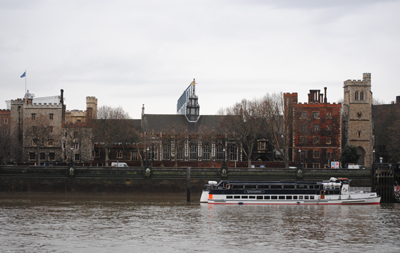
Lambeth these days is still somewhat in the shadow of the much more famous Westminster river bank opposite but among its attractions is the Imperial War Museum (located in the former Bethlem Hospital, see our earlier post here), Lambeth Palace (pictured above) – London residence of the Archbishop of Canterbury, and, of course, the promenade of Albert Embankment (sitting opposite Victoria Embankment).

The headquarters of MI6 is also located here in a 1994 building designed by Terry Farrell (among its claims to fame is its appearance in the opening scenes of the James Bond film, The World Is Not Enough).

Lambeth – the name is also that of the borough in which the district is located – was formerly home to the Vauxhall Pleasure Gardens which closed in the mid 19th century (see our earlier post here).

LondonLife – Farewell to the poppies…

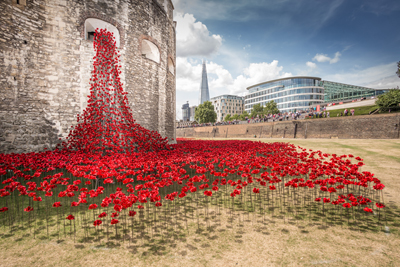
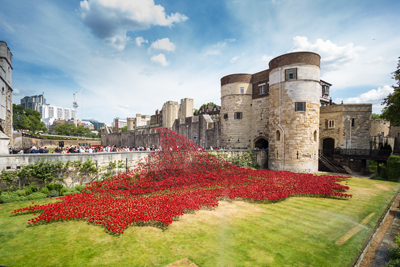
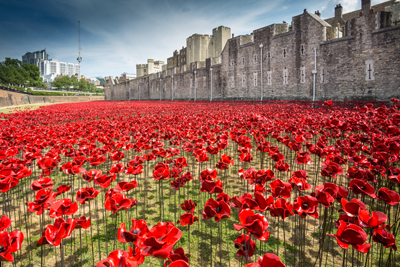
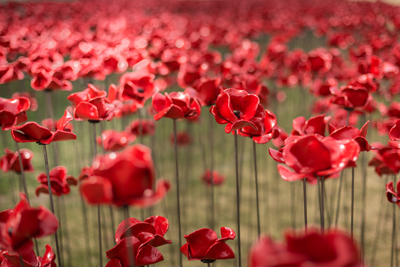
Poppies4The Tower of London is bidding farewell to the sea of poppies that has filled its dry moat while two major features of the instalment – created to mark the centenary of World War I – prepare to head off on tour. Known as Weeping Window (shown above) and Wave (shown immediately below) – the two features of the Blood Swept Lands and Seas of Red installation will both tour various locations across the UK for the next few years before going on permanent display at the Imperial War Museum in London and Manchester. So, we thought we’d take a look back at what has proved to be one of the most popular and moving memorials to appear in the capital in recent years. Created by ceramic artist Paul Cummins (with setting by stage designer Tom Piper), the project saw as many as 888,246 ceramic poppies –  representing all British and Colonial fatalities during the war – planted by volunteers in the moat. The last one was planted on Armistice Day  – 11th November – last week before the process of removal began. PICTURES: ©Richard Lea-Hair and Historic Royal Palaces. 

Poppies5

Poppies2

Poppies1

Poppies6

Treasures of London – A fragment of the Berlin Wall…

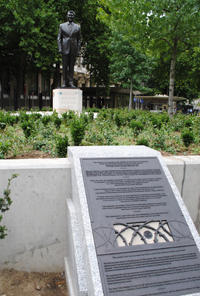
Berlin-WallThis Sunday marks 25 years since the fall of the Berlin Wall so we decided it was a fitting time to mention the fragment of the wall which accompanies the bronze statue of former US President Ronald Reagan in Grosvenor Square, Mayfair.

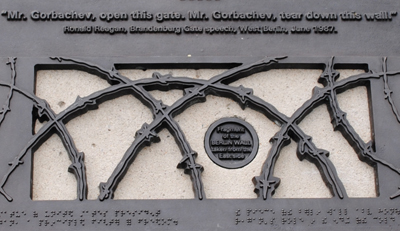
Reagan2The remnant of the wall, recorded as taken from the “east side”, can be seen through a window in a bronze plaque which commemorates the role President Reagan played in the coming down of the wall.

The plaque also features quotes from President Reagan – including the famous line from his 1987 Brandenburg Gate speech, “Mr Gorbachev, open this gate. Mr Gorbachev, tear down this wall” – and other figures including former UK PM Margaret Thatcher and Mikhail Gorbachev as well as information about the wall itself.

In a dedication to the president, it further reads: “Ronald Reagan, the 40th President of the United States of America, was a principled fighter for freedom. With a clear vision and will, he gave hope to the oppressed and shamed the oppressors. His contribution to world history in the 20th century, culminated in his determined intervention to end the Cold War. President Reagan has left a lasting legacy as a campaigner for global peace.”

The memorial was unveiled on 4th July, 2011, outside the US Embassy by the Ronald Reagan Presidential Foundation, to mark the 100th birthday of the former president. Among those present at the unveiling of the statue were then Foreign Minister William Hague and former US Secretary of State Condoleezza Rice.

There are also larger sections of the wall outside the Imperial War Museum in Lambeth and in the National Army Museum in Chelsea (closed for redevelopment until 2016).

For more on London’s monuments, check out Andrew Kershman’s aptly named London’s Monuments.

This Week in London – First World War galleries open at IWM; London’s WWI memorials the focus of new exhibition; and, London celebrates the Festival of Archaeology…

New galleries dedicated to exploring the history of World War I will open – along with the rest of the refurbished building – at the Imperial War Museum in Lambeth on Saturday. The First World War Galleries span 14 areas displaying everything from shell fragments and lucky charms carried by soldiers to weapons and uniforms, diaries and letters, photographs, art and film. Interactive displays include ‘Life at the Front’ featuring a recreated trench with a Sopwith Camel plane and Mark V tank, and ‘Feeding the Front’ featuring an interactive table of more than four metres long which looks how troops were kept fed. There are also reflective areas in which visitors are encouraged to reflect on some of the most difficult aspects of war. The museum – which features a dramatic new atrium – is also launching the largest exhibition and first major retrospective of British World War I art for almost 100 years. Truth and Memory includes works by some of the UK’s most important artists. Entry to both is free with Truth and Memory running until 8th March. For more, see www.iwm.org.uk.

London’s memorials to those who died in World War I are the focus of a new exhibition which opened at Wellington Arch near Hyde Park Corner yesterday. The English Heritage exhibition, which has a particular focus on the six memorials cared for by English Heritage but also looks at other memorials, will include designs, statuettes and photographs of the memorials including the Cenotaph in Whitehall. Also featured in We Will Remember Them: London’s Great War Memorials are official documents – including a note of condolence and medals certificates – received by the family of author and broadcaster Jeremy Paxman on the death of his great uncle Private Charles Dickson, who died at Gallipoli in 1915. Runs until 30th November. Admission charge applies. For more see www.english-heritage.org.uk/daysout/properties/wellington-arch/. Meanwhile, coinciding with the opening of the exhibition has been news that five of London’s key war memorials – including the Edith Cavell Memorial in St Martin’s Place and the Royal Artillery Memorial at Hyde Park Corner – have had their heritage listing upgraded.

In case you missed it, the 24th annual Festival of Archaeology kicked off last weekend and features a range of events across London. Highlights include the chance again to go ‘mudlarking’ on the Thames river bank below the Tower of London and have your finds assessed by archaeologists (this Saturday and Sunday from 11am to 4pm), guided 90 minute walks around Islington and Highbury this weekend with a particular focus on the 1940s, and a look behind the scenes at the London Metropolitan Archives (2pm to 5pm today). The festival continues until 27th July. Check the website for a full program of events – www.archaeologyfestival.org.uk.

Around London – Chinese masterpieces at the V&A; Iraq war photography; and, The Age of Glamour at the Cartoon Museum…

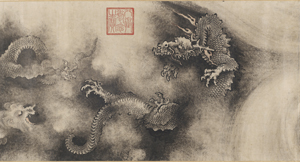
Chen_Rong_Nine_DragonsChinese masterpieces are the focus of a new exhibition opening at the V&A in South Kensington on Saturday. Masterpieces of Chinese Painting 700-1900 will feature more than 70 works including some of the earliest surviving Chinese paintings and many shown in Europe for the first time. Organised chronologically in six successive periods, the works in the display range from intimate works by monks to a 14-metre long scroll painting. As well as examining the tensions between tradition and innovation, the exhibition will look at the variety of settings for which the paintings were created – from tombs and temples to banners, portable handscrolls and hanging scrolls – and the materials used. The exhibition runs until 19th January. Admission charge applies. Meanwhile, from 2nd November, celebrated Chinese artist Xu Bing will transform the museum’s John  Madejeski Garden into an “ethereal Arcadia” inspired by the Chinese fable Tao Hua Yuan (The Peach Spring Blossom) in an installation to coincide with the exhibition. Runs until 2nd March. For more, see www.vam.ac.uk/chinesepainting. PICTURE: Nine Dragons (detail), Chen Rong (1244), © 2013 Museum of Fine Arts, Boston

A new exhibition of photography marking the 10th anniversary of the start of the second Iraq war opens today at the Imperial War Museum. Featuring the work of photographers Mike Moore, a former Fleet Street photographer who was the first press photographer to be officially embedded with the British Army, and Lee Craker, an American photographer who specialises in documentary photography, the exhibition examines the impact of the war on the Iraqi people and the US and British troops who served there.  The exhibit is the first photography show to be exhibited as part of the IWM Contemporary programme. Runs until 5th January. Meanwhile one of Britain’s leading contemporary photographers, Donovan Wylie, explores the effects of modern day military surveillance programs in a new exhibition, at the IWM, Vision as Power. The display includes five works. Runs until 21st April. Admission to both exhibitions is free. For more, see www.iwm.org.uk.

The Age of Glamour: RS Sherriffs’ Stars of Stage & Screen. This exhibition at the Cartoon Museum in Bloomsbury features the work of Sheriffs, whose caricatures of the likes of Charlie Chaplin, Greta Garbo and Douglas Fairbanks were published in magazines including Radio Times, London Calling and The Sketch. As well as individual portraits, the works include ensemble drawings such as one featuring Laurence Olivier and Peggy Ashcroft in Romeo and Juliette. Runs until Christmas Eve. Admission charge applies. For more, check out www.cartoonmuseum.org.

Around London: Heritage Open Days; Afghanistan supply lines; and Leslie Howard’s Blue Plaque…

It’s a good weekend for a day trip with heritage sites all around the fringes of greater London throwing their doors open this weekend as part of the annual Heritage Open Days event. Among places taking part in this year’s event – which will be followed by Open House London next weekend – are Cleaves Almshouses – established in 1669 and located in Kingston upon Thames, Watford’s oldest building – St Mary’s Church, Lopping Hall in Loughton (so named for the fact it was given to the townspeople in exchange for lopping rights in Epping Forest), and St George’s RAF Chapel of Remembrance at Biggin Hill Airfield in Kent. There are more than 4,500 properties taking part over the weekend, which kicks off today and runs until Sunday, across England. For more information – including full listings of all premises taking part, check out www.heritageopendays.org.uk.

A new display taking at in-depth look at the complexities of supplying soldiers in Afghanistan’s Helmand Province opened at the Imperial War Museum this week. War Story: Supplying Frontline Afghanistan follows the journey from RAF Brize Norton in the UK to Camp Bastion in Afghanistan and then to forward operating bases and patrol bases on the frontline and features photographs, interviews and time lapse footage collected by IWM staff on trips to Afghanistan undertaken last year and this year – the first time IWM teams have visited an active theatre of conflict since World War I. Runs until 27th April. For more, see www.iwm.org.uk.

A blue plaque honouring actor and film director Leslie Howard was unveiled by English Heritage at his former childhood home in Upper Norwood in south London last week. Born in the London suburb of Forest Hill, his family moved to Vienna when was only three-years-old but returned to London five years later and lived at 45 Farquhar Road in Upper Norwood for the next four years before moving to another address nearby. Howard made his West End debut in 1917 – adopting the stage name Leslie Howard in favor of his birth name Leslie Howard Steiner – subsequently appeared on stage and in films including Pygmalion (1938) and Gone with the Wind (1939). He died in 1943 when the plane he was in was shot down by enemy fire over the English Channel. For more, see www.english-heritage.org.uk/discover/blue-plaques/.

Around London – Radio Times celebrated at MoL; IWM reopens; and Lowry at the Tate…

A new exhibition marking the 90th anniversary of the iconic publication, Radio Times, opens at the Museum of London tomorrow (Friday). Cover Story: Radio Times at 90 features some of the magazines most famous covers depicting the likes of Tony Hancock, The Goon Show, Only Fools and Horses and Coronation Street, and charts the history of radio from the BBC’s first transmission to today’s multiple channels. As well as original artwork and photographs used in Radio Times, the display includes a special focus on Doctor Who with the chance for visitors to create their own Radio Times cover as they stand alongside a life-size Dalek. Other highlights include an original 1941 illuminated map used by the Luftwaffe which shows Radio Times‘ Waterlows printing plant in Park Royal alongside other targets. Radio Times was first published by the BBC in London on 29th September, 1923, and since 2011 has been owned by Immediate Media Co. The free exhibition runs until 3rd November. For more, check out www.museumoflondon.org.uk.

The Imperial War Museum has partially reopened this week. As well as the re-opening of its permanent galleries and exhibitions, the museum has launched a major new family-oriented exhibition Horrible Histories: Spies, a new art exhibition entitled Architecture of War and ‘IWM Contemporary’, a new programme showcasing significant works by leading artists in response to war and conflict. The museum will fully reopen in summer next year with the opening of new First World War Galleries. Horrible Histories: Spies, which runs until 4th January (admission charge applies), immerses visitors in the world of World War II spycraft with families able to uncover the techniques used by the most cunning spies. More on Architecture of War and IWM contemporary in upcoming posts. For more, see www.iwm.org.uk.

On Now: Lowry and the Painting of Modern Life. This exhibition at the Tate Britain represents the first to be held by a public London institution featuring  the works of LS Lowry since his death in 1976 and is the first to explore his connections with French art. Among works on display is a little known, untitled painting depicting a busy town square set against the backdrop of industrial Salford which was found on the back of the wooden panel on which Lowry painted his 1937 work The Mission Room. Others among the 90 works on display include Coming Out Of School (1927), The Pond (1950), Industrial Landscape (1955) and Hillside in Wales (1962) as well as Ancoats Hospital Outpatients Hall (1952), The Cripples (1949), Piccadilly Circus, London (1960) and Excavating Manchester (1932). Runs until 20th October. For more, see www.tate.org.uk.

10 (more) curious London memorials…2. Animals in War Memorial…

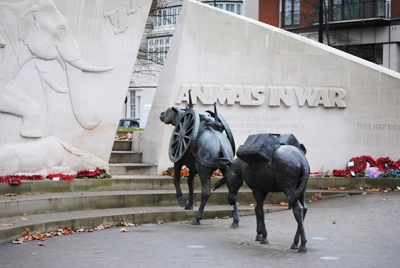
Animals-in-War

This week we take a look at another of London’s war-related memorials but unlike the vast majority, this one, as its name says, commemorates animals, not humans.

Located in the middle of Park Lane near the intersection with Upper Brook Street on the eastern side of Hyde Park, the memorial is dedicated “to all the animals that served and died alongside British and Allied Forces in wars and campaigns throughout time”. Another inscription on the memorial reads “They had no choice”.

A further dedication at the memorial pays tribute to the “millions” of animals who have died in wars. “From the pigeon to the elephant, they all played a vital role in every region of the world in the cause of human freedom,” it says. “Their contribution must never be forgotten.” It’s been said that as many as eight million horses were killed in World War I alone.

It features a couple of bronze pack mules making their way through a gap in a curved, 58 foot wide Portland stone wall – themselves carrying reliefs of various animals including an elephant, horses, camels and pigeons – while on the other side is a bronze horse and a dog, looking ahead.

The memorial is the work of Somerset-based sculptor David Backhouse and was unveiled by Princess Anne in November 2004, the 90th anniversary of the outbreak of World War I. It was apparently inspired by Jilly Cooper’s book, Animals in War, and commissioned by the Imperial War Museum. It was paid for by £2 million in public donations.

For more, check out www.animalsinwar.org.uk.

Where is it?…#50

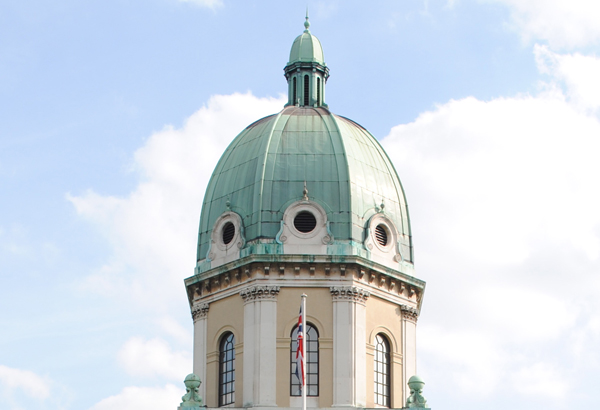
The latest in the series in which we ask you to identify where in London this picture was taken and what it’s of. If you think you can identify this picture, leave a comment below. We’ll reveal the answer early next week. Good luck!

Well done to Martine Poupaux, this is indeed the dome on top of the Imperial War Museum in Lambeth Road, London. The museum, which was formally established by an Act of Parliament in 1920, was initially based in the Crystal Palace and then from 1924 to 1935 in two galleries adjoining the former Imperial Institute, South Kensington. It reopened at its current home in 1936 at a ceremony attended by King George VI. The building was formerly the central portion of Bethlem Royal Hospital, or ‘Bedlam’, which have moved to the site in 1815 (the dome wasn’t part of the original building – it was added later). We’ll be exploring more this history in upcoming posts. For more on the Imperial War Museum, see www.iwm.org.uk/visits/iwm-london.

Around London – Naval caricatures; James Bond; a Taliban motorbike; and Sir Peter Lely at the Courtauld…

Naval caricatures of the late 18th and early 19th century go on display in a new exhibition which opens at the National Maritime Museum today. Broadsides! Caricature and the Navy 1756-1815 features a small selection of the museum’s extensive collection of caricatures – one of the largest in the world, it features works by James Gillray, George M Woodward and Thomas Rowlandson. It explores the role the caricatures played in shaping public opinion during the period which included the American War of Independence and wars against revolutionary and Napoleonic France. The exhibition features 20 prints with visitors able to see others in the museum’s collection via the website www.rmg.co.uk/collections. Admission is free. Runs until 3rd February. For more, see www.rmg.co.uk.

Celebrate the 50th anniversary of James Bond and the premiere of the latest film in the franchise, Skyfall, with a look at a rare collection of James Bond posters and other memorabilia as well as the latest Bond vehicle this weekend. The Hospital Club in Covent Garden is hosting the event, in conjunction with Blue Robin, which features about 50 vintage posters from movies such as 1973’s Live And Let Die and 1963’s From Russia With Love. There’s also the chance to have your photo taken beside the double-cab Land Rover Defender which features in the opening chase sequence of Skyfall. Also exhibited will be M’s chauffeur-driven Jaguar XJ long wheel base and the black Range Rover driven by Bill Tanner, M’s chief of staff. The free exhibition is open to the public from 11am to 7pm from tomorrow until Monday (please call reception on 020 7170 9100 before visiting). For more, see www.thehospitalclub.com.

A motorbike captured from Taliban insurgents in Afghanistan by members of the 1st Battalion The Rifles has gone on display at the Imperial War Museum in London. The Honda motorbike forms part of the interactive display, War Story: Serving in Afghanistan, in which visitors can delve into the lives of service personnel taking part in Operation Herrick through personal artefacts, photographs and video. The bike was recovered by soldiers after it was left behind by two insurgents during an encounter on 4th May last year. It is the largest item to be donated through the War Story project and is the only item of enemy equipment acquired by the project to date. The motorbike will be displayed until 18th December. For more, see www.iwm.org.uk.

Now On: Peter Lely: A Lyrical Vision. This newly opened exhibition at the Courtauld Gallery is the first to look at the group of large scale narrative paintings produced by Sir Peter during the turmoil of the Civil War in the 1640s and 1650s. Renowned as the principal painter of King Charles II and the “outstanding artistic figure of Restoration England”, Sir Peter apparently never wished to be seen principally as a portraitist and following his arrival in England in the early 1640s, initially devoted himself to paintings inspired by classical mythology, the Bible and contemporary literature. The exhibition centres on The Courtauld’s own work, The Concert, and features an important group of little known paintings from private collections. Runs until 13th January. Admission charge applies. For more, see www.courtauld.ac.uk/gallery/index.shtml.

Around London – Cecil Beaton at the IWM; a night of bicycles at the Design Museum; and, Dickens and the Foundling…

A major new exhibition featuring stunning images captured by the late renowned society and fashion photographer Cecil Beaton during World War II opens at the Imperial War Museum in Lambeth today. Cecil Beaton: Theatre of War features some of the 7,000 photographs the photographer took between 1940 and 1945 with many of them exhibited for the first time. The photographs were taken in an array of locations – from Britain and Europe to the Middle East and Africa, India, Burma, China and the US – and depict everything from “ordinary” people in civilian life through to some of the era’s most famous military leaders. The exhibition will also look at how the war affected Beaton personally including his own brushes with death including in a major air crash and suffering from the likes of dengue fever and dysentery. Admission charge applies. Runs until 1st January. For more, see www.iwm.org.uk.

• A celebration of all things bicycle will be held at the Design Museum tomorrow (Friday, 7th September) night. Bike V Design, which kicks off at 6.30pm, will feature talks exploring the design of bikes, a mini cinema and live performances including BMX stunts and circus trick cycling as well as a demonstration of saddle manufacturing. Visitors are encouraged to bring their own bikes or enjoy the selection of bespoke bicycles on display. The night is being held to coincide with Designed to Win, the museum’s current exhibition exploring the tension between sport and design. An admission charge applies. For more, see www.designmuseum.org.

• On Now: Dickens and the Foundling. In case you’ve missed it, this exhibition at the Foundling Museum in Bloombury explores the relationship between the writer and the Foundling Hospital through a series of objects selected for display by six people with an interest in Dickens including actress Gillian Anderson, Dickens’ descendent Mark Dickens, comedian Armando Iannucci, Camden councillor Tulip Siddiq, poet Lemn Sissay and journalist Jon Snow. Among the objects on show are a letter from Dickens to the editor of The Times in which he objects to public hangings, the writing desk at which Dickens wrote what we have of the unfinished The Mystery of Edwin Drood, and a manuscript page from Oliver Twist, written when Dickens lived in a house at nearby Doughty Street. The exhibition runs until the end of October. Free with museum admission. For more, see www.foundlingmuseum.org.uk.

Around London – Notting Hill Carnival; Paralympics comes to town; Albert Adams at the IWM; and, exploring the anatomy of athletes at the Hunterian…

• The Notting Hill Carnival – the largest festival of its kind in Europe – takes place in London’s west this Sunday and bank holiday Monday. More than a million people are expected top attend to see the floats, listen to the traditional steel drum bands and sample some of the food found at the hundreds of stalls along the streets of Notting Hill.  Sunday, when the costume prizes are awarded, has been designated as Children’s Day and Monday, when the main parade takes place, as Adult’s Day. The festival has been held every summer since 1966. For more, see www.thenottinghillcarnival.com.

• With the memories of the Olympics still fresh in our minds, it’s time to turn our attention to the impending Paralympics and associated events including the 24 hour Torch Relay which hits London next Wednesday, just before the Opening Ceremony. The torch enters London at Watford and and then moves south through the city, taking in many of London’s most famous landmarks as it visits all six boroughs before arriving at the Olympic Stadium. For more on the route, see www.london2012.com/paralympics/torch-relay/route/. Meanwhile, as with the Olympics, those who don’t have tickets to the Paralympics will be able to watch on a giant screen at Trafalgar Square daily between 11am and 10pm where there will also be live music and activities including the chance to try out a range of Paralympic sports. For more, see www.btlondonlive.com/trafalgar-square. Tower Bridge, meanwhile, is undergoing a makeover with the installation of the Paralympics symbol, Agistos, tomorrow following the earlier removal of the Olympic Rings. Historic projections, meanwhile, will once again appear on the Houses of Parliament. Other events taking place around the Paralympic Games include Surprises: What You Will: Pop-Up Shakespeare – which will see Shakespearean characters like Juliet, Hamlet and Puck suddenly appearing and performing at “cultural hotspots” around the city (the exact time and location of the performances will remain a surprise until the day but you can register for updates at www.molpresents.com/surprises or follow @molpresents and @London2012Fest.

• A series of artworks by South African-born Expressionist Albert Adams are on show at the Imperial War Museum this summer. The works on show include the last painting he completed before his death in 2006 – title Abu Ghraib, it was inspired by reports of abuse perpetrated at the Abu Ghraib prison in Iraq – as well as a series of etchings Adams created between 2001 and 20064 which address conflicts like that Iraq War and Darfur. Admission is free. For more, see www.iwm.org.uk.

On Now: Anatomy of an Athlete – Elite sport, surgery and medical art. This exhibition in the Qvist Gallery at the Royal College of Surgeons’ Hunterian Museum in Lincoln’s Inn Fields features new artworks by world-leading medical artists which explore the anatomy and physiology of elite athletes. The art works come in a variety of forms – watercolour, video and sculpture – and represent the human body in a selection of sports and para-sports. Admission if free. Runs until 29th September. For more, see www.rcseng.ac.uk/museums/.

Around London – Open gardens; new gates mark St Paul’s tercentenary; a new Olympics trail; and, truces at the IWM…

• If you’re not too exhausted after last weekend’s Diamond Jubilee festivities (or if you’re looking for something a little more sedate), this Saturday and Sunday London plays host to Open Garden Squares Weekend. Among the 208 gardens to be opened this weekend is the communal garden at Number 10 Downing Street, home of Prime Minister David Cameron. Laid out in 1736, the L-shaped garden at 10 Downing Street is shared by residents of both Number 10 and Number 11, including Larry, the Downing Street cat (tickets for this garden have already been allocated via a ballot process). Among the more than 200 gardens open to the public as part of the weekend are 24 new gardens and, for the first time, the event is being supported by the National Trust (along with the usual organisers, the London Parks and Gardens Trust). Downing Street aside, other gardens open to the public include the Regent’s Park Allotment Garden, the Royal College of Physicians’ Medicinal Garden, the Kensington Roof Gardens, and the gardens at HMP Wormwood Scrubs. Tickets for the gardens are cheaper if bought online in advance of the weekend and picked up on Saturday or Sunday – it’s not too late to do so, so for tickets and more information, head to www.opensquares.org.

A new pair gates designed to mark St Paul’s Cathedral’s tercentenary were opened in Richmond Park for the first time last week. The gates, which now form part of the historic vista seen from King Henry’s Mound in Richmond Park when looking toward’s St Paul’s Cathedral, were designed by 21-year-old blacksmith Joshua De Lisle and funded through a donation from the family of family of the late environmentalist and The Ecologist magazine founder Edward Goldsmith. Called ‘The Way’, the gates stand on the fence of Sidmouth Woods, and depict oak branches. Sir Christopher Wren, designer of St Paul’s, is acknowledged through the inclusion of a wren on one of the lower branches. For more on the Royal Parks, see www.royalparks.org.uk.

• Now On: Winning at the ancient Games. The British Museum is celebrating the London Olympics with a victory trail bringing together 12 “star objects” in its collection, united by the theme of winning. The ‘stops’ on the trail include a classical Greek statue of a winning charioteer on special loan from Sicily, a previously never exhibited mosaic showing Hercules, the legendary founder of the ancient Games, and the 2012 Olympic Medals. The trail is free. For more information, see www.britishmuseum.org.

Now On: Build the TruceDrawing on the idea of truce that was implemented during the ancient Olympic Games to allow athletes from Greece’s warring cities to compete, this new display at the Imperial War Museum features films, interviews and insights collected during a project investigating the concepts of truce, conflict and resolution and their relevance in the 21st  century. Highlights include excerpts of interviews with former IRA prisoner Seanna Walsh and former UDA prisoner Jackie McDonald -both now involved in peace initiatives in Northern Ireland, Courtny Edwards, who worked with a health service in displaced persons’ camps following civil war in Sierra Leone; and Professor Tony Redmond, who led aid teams in Kosovo following NATO attacks in 1999. Family activities are being run in conjunction with the exhibition on selected weekends. Entry is free. Runs until 23rd September. For more, see www.iwm.org.uk.

Around London – At home in World War II; Hogwarts comes to London; Kew Steam Bridge Museum to be upgraded; and, V&A looks at British design…

• A new exhibition in which visitors can experience life during the Second World War through the eyes of a London family opens today at the Imperial War Museum in London. A Family in Wartime explores the lives of William and Alice Allpress and their 10 children at their South London home during the war as the face events such as the Blitz and the evacuation of the city. The display includes firsthand audio accounts from members of the family, photographs and a detailed model of the family home at 69 Priory Grove. Two of the family’s sons served in the military during the war while three of the daughters joined the Women’s Voluntary Service. Artefacts on display include many everyday household items such as cookery books which gave advice on cooking with limited rations and stirrup pumps which people were encouraged to wear in case of incendiary bombs as well as newspaper clippings, propaganda posters and film footage. There will also be artworks depicting wartime living by artists including Henry Moore, Wilfred Haines and Leila Faithful. Admission is free. For more, see www.iwm.org.uk/visits/iwm-london.

Hogwarts has come to London’s north with the opening of the new Warner Bros Studio Tour in Leavesden. The tour, which was launched this week, features sets, costumes and pros from the Harry Potter series of films and reveals how special effects and animatronics were used in the movies. Highlights include the chance to visit Hogwarts Great Hall, Dumbledore’s office and Diagon Alley as well as see Harry’s Nimbus 2000, the flying Ford Anglia owned by the Weasleys and Hagrid’s motorcycle. For more information, see www.wbstudiotour.co.uk.

The Kew Bridge Steam Museum in London’s west has been awarded a £1.84 million Heritage Lottery Fund grant for a restoration project that will see new visitor facilities and more modern displays as well as new outdoor water-based actvities. Project Aquarius will also see outstanding repairs to the Grade I and Grade II listed buildings – described as the most important historic site of the water supply industry in the UK – completed. The museum, which opened 37 years ago, features four giant working Cornish steam pumping engines as part of its displays telling the story of London’s water supply and attracts some 15,000 visitors a year. For more, see www.kbsm.org.

• On Now: British Design 1948-2012: Innovation in the Modern Age. The V&A’s major spring exhibition, this is a showcase of British design from the 1948 ‘Austerity Olympics’ to present day and features more than 300 objects – from the 1959 Morris Mini Minor to a model of the recently completed Zaha Hadid-designed London Aquatics Centre. Highlighting significant moments in British design, the exhibition looks not only at 60 years worth of fashion, furniture, fine art, graphic design, photography, ceramics, architecture and industrial design but also investigates how the UK continues to nuture artistic talent and the role British design and manufacturing plays around the world. Admission charge applies. Runs until 12th August. For more see www.vam.ac.uk.

We’re taking a break over Easter – posts will resume next Tuesday. In the meantime have a great Easter!

Around London: Taking to the skies over the Thames; a new plumber in Cannon Street; and, new images of war at IWM…

The proposed cable car crossing of the Thames will be sponsored by airline Emirates in a 10-year, £36 million deal announced last Friday. To be known as the ‘Emirates Air Line’, the cable car will link the DLR station Royal Victoria with the Jubilee Line station North Greenwich and will involve the creation of two new cable car stations bearing the sponsor’s name – Emirates Greenwich Peninsula on the south bank and Emirates Royal Docks on the north. It is the first time a corporate brand will appear on the Tube map. Transport for London has said the new service could be operational by summer 2012 (although whether it will be ready for the Olympics remains uncertain). It will feature 34 cable car gondolas and ferry as many as 2,500 passengers across the river every hour with an expected two million passengers to use the service each year. The journey is expected to take five minutes and will see the gondolas travelling at a height of 160 feet above the river. The sponsorship deal was announced by the Mayor of London, Boris Johnson, along with Tim Clark, president of Emirates Airline, and Mike Brown, managing director of London Underground and Rail.

• The Duke of Gloucester unveiled a new statue, called Plumber’s Apprentice, at Cannon Street Station last week to mark the 400th anniversary of the granting of a Royal Charter to London’s Worshipful Company of Plumbers. Sculpted by Martin Jennings (he also created the statue of British poet Sir John Betjeman that now stands in St Pancras Station), the seven foot tall bronze statue is said to underline the livery company’s ongoing commitment to train young plumbers. The company, which was formed in 1365, received its charter from King James I in 1611. From 1690, following the destruction of the company’s previous hall in the Great Fire of London, it was based in a building on the site of the railway station. In 1863, it was forced to again move when the hall was compulsorily purchased to make way for the railway. Also present at the unveiling were the Lord Mayor of London, Michael Bear, and the Lady Mayoress, herself a sculptress and liverymen of the Worshipful Company of Plumbers. For more, see www.plumberscompany.org.uk.

• On now: Shaped by War: Photographs by Don McCullin. The Imperial War Museum is hosting the largest ever exhibition of the life and works of acclaimed photographer Don McCullin. The display features some 250 photographs including rarely seen before portraits of anonymous victims of war, contact sheets, objects, magazine and personal memorabilia. Conflicts covered include those of the Cold War, in places like Vietnam and Cambodia, Bangladesh and the Middle East – the latter include images from the Gulf War and the 20o3 invasion of Iraq. There is also a newly commissioned video in which McCullin talks about the exhibition. Runs until 15th April, 2012. An admission charge applies. For more, see www.iwm.org.uk.

10 small (and fascinating) museums in London…9. HMS Belfast

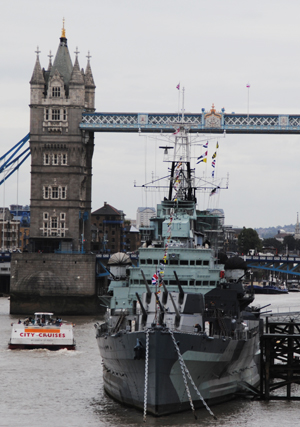
OK, so it’s not exactly small but HMS Belfast – an offshoot of the Imperial War Museum moored permanently on the Thames near Tower Bridge – does make a fascinating museum in which to spend a few hours.

Commissioned into the Royal Navy on 5th August, 1939 (just in time for the start of World War II), the HMS Belfast is a large light cruiser built, along with the HMS Edinburgh, as an improvement on the then existing ‘Southampton’ class vessels. It is now the only surviving example of the many big gun armoured warships which were built for the Royal Navy in first half of the twentieth century.

Assigned to the Home Fleet on the outbreak of war, the ship operated out of Scapa Flow in the Orkney Isles in far north Scotland and was charged with patrolling the northern waters as part of efforts to impose a maritime blockade on Germany. Striking a mine in November of that year, however, it was put of out action until two years later when it rejoined the Home Fleet and then began escorting Arctic convoys to the Soviet Union – a mission which saw it take part in the Battle of North Cape off the Norwegian coast in late 1943 (this battle saw the sinking of the German battle cruiser Scharnhorst).

The HMS Belfast later saw action on D-Day, the Allied invasion of Normandy in 6th June, 1944, when it was employed to bombard German positions onshore before, heading to Japan where, after the end of the war, it was used to evacuate survivors of prisoners-of-war and internment camps in China.

The HMS Belfast saw action in the Korean War and then spent further time in the Far East before – under threat of being disposed of and broken up – it was acquired as a museum and moored in London. The first visitors were admitted on Trafalgar Day, 1971, and, as of last year, nearly 10 million people have taken up the chance to look at the ship.

These days there’s a well-defined route through the vessel, complete with audio guide (it’s included in the admission price), which takes visitors on an informative journey describing what life was like for those who served onboard the Belfast – including everything from the Arctic messdecks where ratings slept in hammocks to the NAAFI store where they could buy supplies, sick bay, the ‘modern’ laundry room, and chapel as well as the engine room, shell rooms and magazines, and , of course, the bridge.

Many of the rooms have been set up – some using life-sized manniquins – to show how they would have looked during a typical day. Particularly worth a look is the new Gun Turret Experience: A Sailor’s Story 1943, an immersive film, light and sound show which gives a glimpse into what life was like working inside one of the six inch gun turrets.

It can take a while to get around the whole ship (and parents are asked not to take small children into the boiler room) but it’s well worth taking the time to explore properly. In addition to the features of the ship itself, there are two exhibitions – one looking at the role of the ship in peace and war, and the other, an interactive experience in what life was like on board.

WHERE: HMS Belfast is moored on the Thames between London Bridge and Tower Bridge. Entry is from the south bank of the Thames near Morgans Lane (nearest Tube stations are London Bridge, Tower Hill or Monument); WHEN: 10am-6pm (last admission 5pm) daily until 31st October, then 10am to 5pm (last admission 4pm); COST: £13.50 adults/£10.80 seniors and students/children under 16 free (price includes a voluntary donation); WEBSITE: http://hmsbelfast.iwm.org.uk.

Around London – Tens of thousands expected for weekend’s Sky Ride; IWM marks 10th anniversary of September 11; Liberty festival hits South Bank; British Library launches new 19th century app; and, a new slavery exhibition at Museum of London…

• Tens of thousands of people are expected to join London Mayor Boris Johnson for the annual Sky Ride this Sunday. The event, organised by the Mayor of London, Sky and British Cycling in partnership with Transport for London, allows people to cycle a 11.6 kilometre route through the city centre minus the usual car traffic. The circular route, which takes in Westminster Bridge, the Mall and Buckingham Palace, Trafalgar Square and Whitehall, will be vehicle-free between 9.30am and 4.30pm. Last year more than 85,000 took part. For more information, seewww.goskyride.com/london.

• The Imperial War Museum is marking the 10th anniversary of the 9/11 attacks in the US with a new photographic exhibition showing artefacts recovered after the destruction of the World Trade Center in New York. Memory Remains, which opened on 26th August and runs until 26th February, is a photographic exploration of Hangar 17 – a previously empty hanger at John F. Kennedy Airport in New York where debris and material retrieved from the 16 acre World Trade Center site were stored. It features images taken by Spanish-American artist Francesc Torres, who was commissioned by the National September 11 Memorial & Museum to capture what was happening inside the hangar and granted special access to do so. The exhibition is being accompanied by another at Imperial War Museum North in Manchester. In the Spotlight: Remembering 9/11, which runs from 10th September until September next year, features artefacts from the World Trade Center including a British flag which was laid on the altar in St Paul’s Cathedral on the first anniversary of the attacks. Admission to both exhibitions is free. For more information, see www.iwm.org.uk.

South Bank hosts the Liberty festival, an annual showcase by deaf and disabled artists, this Saturday. The festival, which will take place at two sites – the Southbank Centre and the National Theatre, will feature a mix of music, dance, street theatre, comedy, circus performances and aerial displays. Highlights include Mark Smith’s Deaf Men Dancing, performance artist Bobby Baker, Jean-Marie Akkerman’s Cirque Nova featuring four disabled aerial artists, and Kazzum, who produce theatrical work for children up to 16-years-old. The event is free. For more information, see www.london.gov.uk/liberty.

The British Library and BiblioLabs have launched a new 19th century historical collection app for iPad users. The app (which costs £1.99 a month or $US2.99 for those outside the UK and is available through Apple’s App Store) allows users to explore historical and antiquarian books including classic novels, original accounts by Victorian travellers, books on science and poetry, memoirs and military histories. Around 45,000 titles are initially available with a further 15,000 to be added by the end of the year.

On Now: Freedom from: modern slavery in the capital. A new exhibition looking at the reality of trafficking and forced labour has opened at the Museum of London and the Museum of London Docklands – the museum first cross-site exhibition. Created in partnership with Anti-Slavery International and coinciding with the launch of its Slavery-Free London campaign, the exhibition looks at the personal impact of human trafficking and slavery in 21st century London and includes personal testimonies such as that of ‘Gheeta’ who was trafficked from India and forced into work. It also features a series of large scale photographs by Chris Steele-Perkins of Magnum Photos. Runs until 20th November. Admission is free. For more information, see www.museumoflondon.org.uk.

Around London – 16 Underground stations listed; life in a gun turret at HMS Belfast; and that dress on display at Buckingham Palace

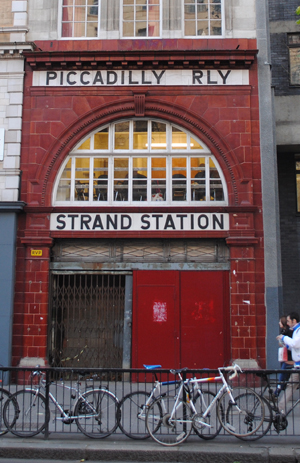
Sixteen London Underground stations were this week listed as Grade II heritage buildings. The Tube stations – several of which were designed by Leslie Green, known for his pioneering use of ‘ox-blood’ red tiles on the exterior of stations to create a consistent brand for the stations – include the now-closed Aldwych (pictured) along with Oxford Circus (originally two stations), Covent Garden and Russell Square as well as Belsize Park, Brent Cross, Caledonian Road, Chalk Farm, Chesham, Perivale, Redbridge, St John’s Wood, West Acton and Wood Green. Three other stations – Arnos Grove, Oakwood and Sudbury Town – have had their status upgraded from Grade II to Grade II*. These three were all designed by modernist architect Charles Holden for the extension of the Piccadilly Line in the 1930s. The new listings were made by Tourism and Heritage Minister John Penrose on the advice of English Heritage.

A new permanent exhibition showing would-be sailors what it is like to fight at sea opens at the HMS Belfast this weekend. Gun Turret Experience: A Sailor’s Story, 1943, is an immersive experience using lights, imagery, sound, smoke effects, movement and smell to recreate the atmosphere and conditions of a gun turret tower when a crew was at battle stations. Visitors are encouraged to follow the story of a young sailor on Boxing Day, 1943 when the German battle cruiser Scharnhorst is sighted leading to the Battle of the North Cape. The Gun Turret Experience, housed within the original triple gun turrets overlooking the quarterdeck, was developed with the help of Royal Navy veterans and eye-witness accounts from the Imperial War Museum (of which the HMS Belfast is part). Entry is included in normal admission price. For more information, see www.hmsbelfast.iwm.org.uk.

• Now On: See the dress the Duchess of Cambridge wore when she was married to Prince William in April at this year’s summer opening at Buckingham Palace. The gown, which features a nine foot long train, will be displayed along with the Halo Tiara until 3rd October in the palace ballroom (the same room used for the newly married couple’s reception). The exhibition features video footage of designer Sarah Burton, explaining how the dress was made. This year’s summer opening also features a display of the work of Carl Faberge – including his magnificent jewel-encrusted Imperial Easter Eggs as well as bejewelled boxes and miniature carvings of favorite pets of the royal family. More than half a million people are expected to visit the exhibition. For more information, see www.royalcollection.org.uk/default.asp?action=article&ID=30