This Week in London – “Our Story with Sir David Attenborough”; the Royal Academy’s 257th Summer Exhibition; and, an appeal for restoring three Underground carriages…

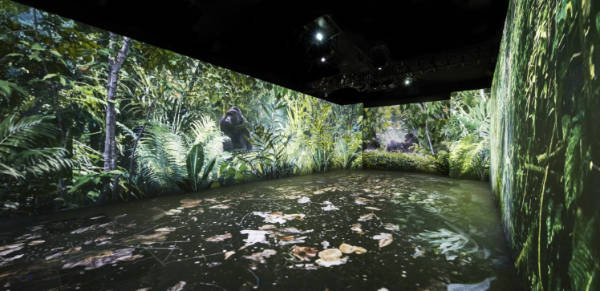
Our Story with David Attenborough. PICTURE: © Trustees of the Natural History Museum

Our Story with David Attenborough – the first ever immersive experience at the Natural History Museum – opens its doors today. Created by Open Planet Studios, the 50 minute experience in the Jerwood Gallery features animations, projections, real-world footage and full 360 degree immersion as Sir David draws on his life of exploration to tell the story of humanity and the planet on which we live. The experience is taking bookings until 18th January, 2026. Admission charge applies. For more, see www.nhm.ac.uk/visit/exhibitions/our-story-with-david-attenborough.

The Royal Academy’s 257th Summer Exhibition opened this week. Co-ordinated by internationally acclaimed architect and Royal Academician Farshid Moussavi in conjunction with the Summer Exhibition Committee, this year’s display of art and architecture explores the theme of ‘Dialogues’. Among the works on show is a six metre high installation of ostrich feathers and steel chain by British artist Alice Channer, a 4.5 metre high and seven metre wide wall made from deconstructed matchboxes by Brazilian artist Antonio Tarsis, and installation of textile carcasses by Argentine-American artist Tamara Kostianovsky. Meanwhile, the Annenberg Courtyard hosts a large scale installation by Royal Academician Ryan Gander which features five three metre diameter inflatable balls inscribed with absurd questions developed with children in a representation of the “inquisitiveness of children who ask what grown-up minds often dismiss as nonsensical or illogical”. Runs until 17th August. Admission charge applies. For more, see royalacademy.org.uk.

The London Transport Museum has launched an appeal for £30,000 to help complete the restoration of three 1930s Q stock Underground carriages. The funds will be used to re-upholster the seats of two of the Underground cars in moquette – the durable, woollen seating material used in upholstery on public transport all over the world. Q stock trains first entered service on the District line in November, 1938, and were retired from service in 1971. The restoration of the three carriages – which aims to restore them to operational condition – has mainly been carried out at the London Transport Museum Depot in Acton, west London. Donations can be made on London Transport Museum’s website: www.ltmuseum.co.uk/make-donation?campaign=qstock

Send all items for inclusion to exploringlondon@gmail.com.
This Week in London – Theatre and Performance at the V&A; blue plaque for Diana Beck; and, the Royal Academy celebrates Michael Craig-Martin…

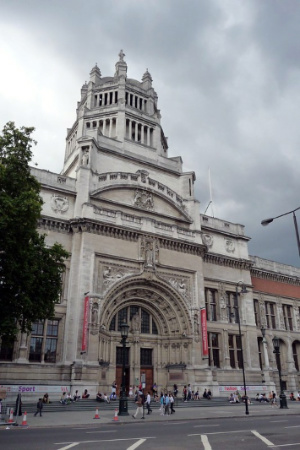
The V&A in South Kensington. PICTURE: graham chandler (licensed under CC BY-NC-ND 2.0)

The V&A in South Kensington is celebrating the 100th anniversary of its Theatre and Performance collections with Enthoven Unboxed: 100 Years of Collecting Performance, which opened last weekend. The exhibition commemorates the 1924 donation of more than 80,000 playbills, programmes, and ephemera from collector, humanitarian, and campaigner Gabrielle Enthoven. Highlights among the objects on display include John Pasch’s artwork featuring the original Rolling Stones tongue and lips, a pair of semi-quaver spectacles worn by Elton John during his 1981-2 British and world tours, a self-portrait bust by 18th century actress Sarah Siddons, a set model designed by Misty Buckley for Stormzy’s headline set at Glastonbury Festival in 2019, and, a prompt script used by Phoebe Waller-Bridge for Fleabag in the West End. The free display can be seen in the Theatre and Performance Galleries (Rooms 103-106) until 4th January. For more., see www.vam.ac.uk,

Diana Beck, the first female neurosurgeon in Britain, has been honoured with an English Heritage Blue Plaque. Unveiled earlier this month, the plaque marks the site of her former home and consulting rooms at 53 Wimpole Street in Marylebone. Beck lived at the property from 1948 to 1954, a period during which she created and ran a neurosurgical department at Middlesex Hospital. It was also during this period that Beck operated on her most famous patient – Winnie the Pooh author AA Milne, who had suffered a stroke in 1952. For more, see www.english-heritage.org.uk/visit/blue-plaques/

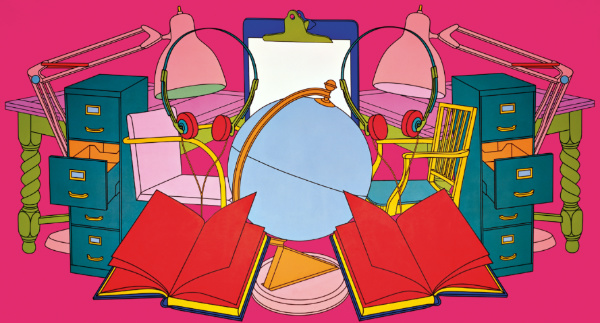
Michael Craig-Martin, ‘Common History: Conference, 1999’. Acrylic on aluminium, 274.3 x 508 cm. Gagosian, London © Michael Craig-Martin. Image courtesy of Gagosian

The largest retrospective of the work of artist (and Royal Academician) Michael Craig-Martin has opens at the Royal Academy on Saturday. The exhibition in Royal Academy’s Main Galleries features more than 120 works spanning the period from the 1960s through to today and includes sculpture, installation, painting and drawing, as well as works newly created for the display. Among the highlights are the installations On the Table (1970) and An Oak Tree (1973), the large scale wall drawing in tape, Interlocked (MoMA project 1990) and the large scale painting Eye of the Storm (2003) as well as his depictions of single objects and word paintings. The exhibition runs until 10tH December. Admission charge applies. For more, see www.royalacademy.org.uk.

Send all items to exploringlondon@gmail.com.

This Week in London – Celebrating Tower Bridge’s 130th; Dame Peggy Ashcroft and Iris Murdoch honoured; modern art in Ukraine; and, Michael Rosen’ illustrators…

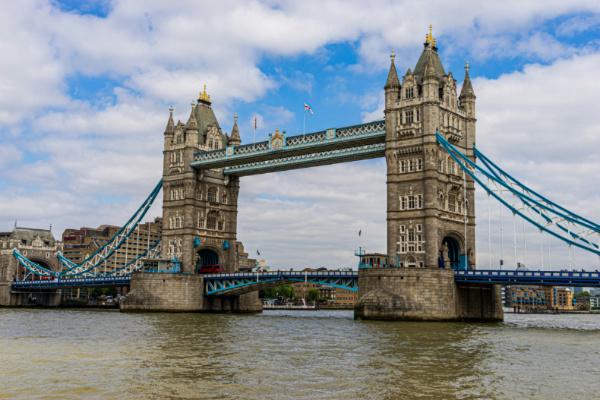
PICTURE: Sung Shin/Unsplash

Tower Bridge marks its 130th birthday this year and to mark the event, the London Metropolitan Archives are hosting a free exhibition charting its history at the City of London’s Heritage Gallery. Designed by Horace Jones, the bridge opened on 30th June, 1894, and the display reflects on the splendour of that royal event as well as examining how and why the bridge was built, the engineering involved and how the bridge played a role in defending London during World War I. The exhibition runs until 19th September at the gallery, located in the Guildhall Art Gallery. Booking tickets is recommended. For more, see https://www.cityoflondon.gov.uk/events/tower-bridge-at-the-heritage-gallery.

Actor Dame Peggy Ashcroft and Dublin-born novelist Iris Murdoch have been honoured with English Heritage Blue Plaques. A leading figure in 20th century theatre, Dame Peggy has been remembered with a plaque on her childhood home in South Croydon. It was in what was then a “leafy market town” that at the age of 13 Peggy first dreamt of performing on the stage while standing outside the local grocers on George Street and to which she returned in 1962 to open a theatre named after her. The plaque honouring Murdoch, meanwhile, has been placed on 29 Cornwall Gardens, part of a Italianate stucco-fronted mid-Victorian terrace in Kensington where she occupied a top floor flat. Murdoch lived in London for more than 25 years and during that time would spend three days a week in the flat. For more, see www.english-heritage.org.uk/visit/blue-plaques/

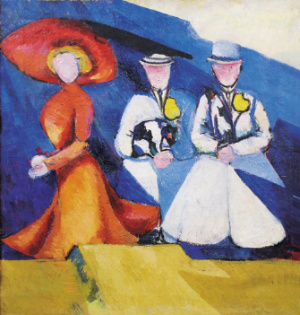
Alexandra Exter, ‘Three Female Figures’, 1909-10Oil on canvas, 63 x 60 cmNational Art Museum of Ukraine

The most comprehensive UK exhibition to date of modern art in Ukraine opens at the Royal Academy on Saturday. In the Eye of the Storm: Modernism in Ukraine, 1900–1930s, features some 65 works, many on loan from the National Art Museum of Ukraine and the Museum of Theatre, Music and Cinema of Ukraine. Artists represented in the display, which is divided into six sections, include such renowned names as Alexander Archipenko, Sonia Delaunay, Alexandra Exter and Kazymyr Malevych as well as lesser-known artists such as Mykhailo Boichuk, Oleksandr Bohomazov and Vasyl Yermilov. Runs in the The Gabrielle Jungels-Winkler Galleries until 13th October. Admission charge applies. For more, see www.royalacademy.org.uk.

The work of artists who have illustrated Michael Rosen’s many books for children are the subject of a new exhibition at the Heath Robinson Museum. Michael Rosen: The Illustrators explores Rosen’s books and the many artists who illustrated them over his 50 year career including the likes of Quentin Blake, Helen Oxenbury, Chris Riddell and Korky Paul. Among the works on show are original drawings for titles including We’re Going on a Bear HuntMichael Rosen’s Sad Book and Michael Rosen’s Book of Nonsense! Runs until 22nd September. Admission charge applies. For more, see https://www.heathrobinsonmuseum.org/.

Send all items for inclusion to exploringlondon@gmail.com.
This Week in London – Wren at Work; music moments captured in photographs; and, the RA’s 255th Summer Exhibition…

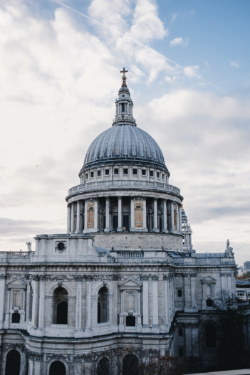
Wren’s monument – St Paul’s Cathedral. PICTURE:
Aaron Gilmore/Unsplash

A recreation of Sir Christopher Wren’s office while he was working on St Paul’s Cathedral can be seen at the Guildhall Art Gallery from today. The faux 17th century environment, created by Chelsea Construction, will allow visitors to explore the building methods and tools of the age, as well as the daily lives of 17th century diarists including Robert Hooke, John Evelyn and Margaret Cavendish, and a case study of how citizens lost and regained their properties during and after the Great Fire of 1666. A specially commissioned map by artist/cartographer Adam Dant will provide insight’s into Wren’s life and times and will be displayed alongside illustrations by architect George Saumerez-Smith and members of the Worshipful Company of Chartered Architects, a scale model of St Paul’s Dome by students at Kingston University, and stone models from master mason Pierre Bidaud. The Wren at Work exhibition is part of Wren300. Admission is free but booking are recommended. For more, see www.cityoflondon.gov.uk/events/wren-at-work-wren300-exhibition.

Photographs capturing Pete Townshend’s guitar flying through the air at Madison Square Garden and Noel Gallagher during the making of the video for Wonderwall are just two of the images on show in a new exhibition at the Barbican Music Library. Celebrating the 25th anniversary of music photography collection Rockarchive.com, In The Moment: The Art of Music Photography also features images of everyone from David Bowie to Debbie Harry, Queen, Biggie Smalls, led Zeppelin, Lady Gaga and Amy Winehouse, capturing them in recording sessions at live gigs and at photo shoots. The free exhibition, which opens on Friday, can be seen until 25th September. For more, see www.cityoflondon.gov.au/services/libraries/barbican-music-library. Meanwhile, a bust of Sir Simon Rattle is being unveiled today at the library in tribute to his five decades in classical music. Sir Simon, who has made over 100 recordings. became music director of the Barbican’s resident orchestra, the London Symphony Orchestra, in 2017 and will conclude his tenure this year.

The Royal Academy’s 255th annual Summer Exhibition opened this week under the theme of ‘Only Connect’ (inspired by a quote from the novel Howards End by EM Forster). Exhibiting artists include British sculptor Lindsey Mendick, Barbados-born painter Paul Dash, American multi-media artist Ida Applebroog, St Lucia born painter Winston Branch, Colombian sculptor Carlos Zapata and British painters Caragh Thuring and Caroline Walker, and Irish fashion designer Richard Malone, who has created a dramatic mobile installation which hangs in the Central Hall. There are also works by Royal Academicians including Frank Bowling, Michael Craig-Martin, Tracey Emin, Gillian Wearing and the late Paula Rego. Runs until 20th August. Admission charge applies. For more, see royalacademy.org.uk.

Send all items to exploringlondon@gmail.com

This Week in London – Wren letter in the Painted Hall; art from America’s South; and, ‘Finding Family’ at the Foundling Museum…

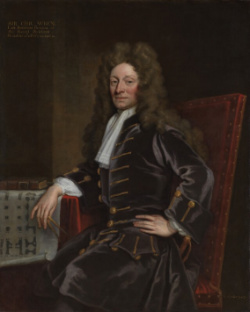
Sir Christopher Wren, by Sir Godfrey Kneller, Bt, oil on canvas, 1711 NPG 113

A letter written by Sir Christopher Wren requesting stone for the construction of the Royal Hospital for Seamen in Greenwich is on display in the Painted Hall vestibule. Wren wrote the letter requesting 2,000 tonnes of Portland stone to Thomas Gilbert, overseer of the King’s Quarries of the Isle of Portland, on 11th October, 1700. It is being displayed along with information explaining how the stone was brought from Dorset to London. The display is one of a series of events taking place at the Old Royal Naval College marking the 300th anniversary of Wren’s death on 25th February, 1723. Can be seen until January, 2024. An admission charge applies. For more, see https://ornc.org/whats-on/painted-hall-display-letter-written-by-sir-christopher-wren/. For more on events surrounding the 300th anniversary of Wren’s death, head to https://ornc.org/celebrating-wren300/.

Slavery, the cruel segregationist policies of the Jim Crow era, and the civil rights movement in the southern United States are all explored in a new exhibition at the Royal Academy. Souls Grown Deep like the Rivers: Black Artists from the American South, features around 64 works – including assemblages, sculpture, paintings, reliefs, and drawings – by 34 artists spanning the period from the mid-20th century to the present. Drawn mostly from the collection of the Souls Grown Deep Foundation in Atlanta, Georgia, many of the works are being seen in Europe for the first time. The display in the Gabrielle Jungels-Winkler Galleries also features quilts by the celebrated quiltmakers of Gee’s Bend, Alabama, and the neighbouring communities of Rehoboth and Alberta. Opening on Friday, the exhibition can be seen until 18th June. Admission charge applies. For more, see royalacademy.org.uk.

Three masterpieces from The National Gallery’s collection – by Hogarth, Gainsborough and the Le Nain Brothers – have gone on show at The Foundling Museum in Bloomsbury as part of a new exhibition exploring what family is and can be. Finding Family examines the ways in which artists have represented and responded to ideas of family with reference to the historic paintings as well as contemporary works of art. The art is accompanied by creative writing created by participants in ‘Tracing Our Tales’ – the museum’s award-winning programme for young care leavers – who have responded to the exhibition’s themes. Opens on Friday and runs until 27th August. Admission charge applies. For more, see https://foundlingmuseum.org.uk/event/finding-family/.

Send items for inclusion to exploringlondon@gmail.com.
This Week in London – Carols at Westminster Abbey; cathedrals at St Paul’s; and, ‘Making Modernism’ at the Tate…

PICTURE: Manuel Weber/Unsplash

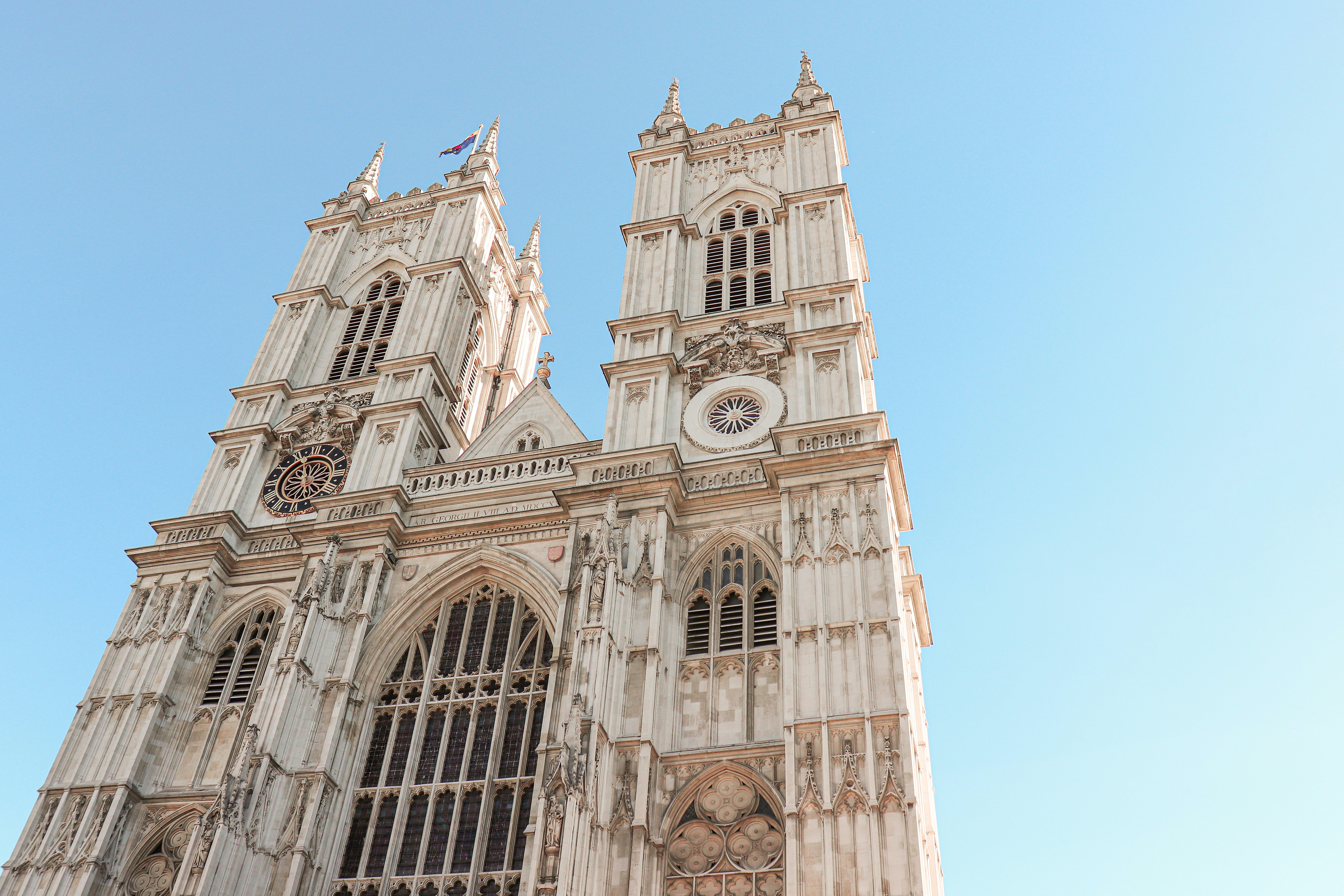
The Princess of Wales will host a Christmas carol service at Westminster Abbey today. The service, which will be attended by members of the Royal Family, will recognise the selfless efforts of individuals, families and communities across the UK as well as paying tribute to Queen Elizabeth II and the values she demonstrated at Christmas and throughout her life, including empathy, compassion and support for others. The service will be broadcast on ITV One in the UK on Christmas Eve. Meanwhile, a special Christmas episode of Westminster Abbey: Behind Closed Doors will be shown on Channel 5 next Wednesday, 21st December. For more, see My5: Westminster Abbey: Behind Closed Doors.

An exhibition show-casing the work of photographer Peter Marlow, who has photographed all 42 Church of England cathedrals, can be seen at St Paul’s Cathedral. Commissioned in 2008 by Royal Mail to photograph six cathedrals – images of which were used on commemorative stamps marking the 300th anniversary of the completion of St Paul’s Cathedral, Marlow went on to continue taking pictures of cathedrals using just natural light. The display, which is touring all 42 cathedrals, can be found in the South Nave aisle until 26th January. Included in admission charge. For more, see www.stpauls.co.uk/whats-on/exhibition-peter-marlows-english-cathedral.

On Now: Making Modernism. The first major UK exhibition devoted to women artists working in Germany in the early 20th century, this exhibition at the Royal Academy’s Gabrielle Jungels-Winkler Galleries includes 67 paintings and works on paper. The artists featured include Paula Modersohn-Becker, Käthe Kollwitz, Gabriele Münter and Marianne Werefkin, with additional works by Erma Bossi, Ottilie Reylaender and Jacoba van Heemskerck. Runs until 12th February. Admission charge applies. For more, see www.royalacademy.org.uk.

Send all items to exploringlondon@gmail.com

This Week in London – Korean pop culture at the V&A; of video games and conflict; and, William Kentridge at the RA…

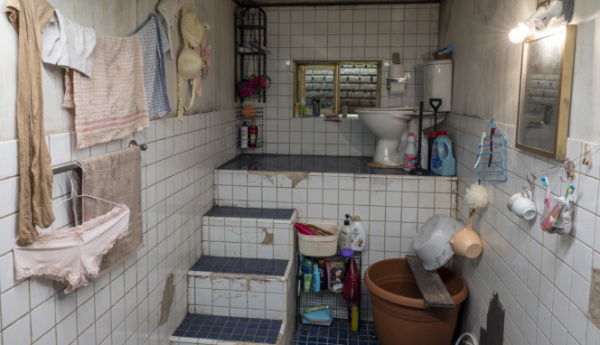
Installation image featuring re-creation of Parasite bathroom scene, at Hallyu! The Korean Wave at the V&A Ⓒ Victoria and Albert Museum, London

From K-Pop to Parasite, the popular culture of South Korea is being celebrated in a new exhibition which opened at the V&A last weekend. Hallyu! The Korean Wave features around 200 objects across four thematic sections focused on the phenomenon known as ‘hallyu’ (meaning ‘Korean Wave’) which rose to prominence in the late 1990s and rippled across Asia before reaching across the world. Highlights including outfits worn by K-Pope idols PSY, Vespa and ATEEZ, an immersive recreation of Parasite’s bathroom set and monumental artworks by the likes of Nam June Paik, Ham Kyungah and Gwon Osang. There’s also fashion designs by Tchai Kim, Miss Sohee and Minju Kim, and early examples of advertising and branding, including an original poster from the Seoul Olympics, and the first Korean branded cosmetic from the 1910s. The display can be seen until 25th June next year. Admission charge applies. For more, see www.vam.ac.uk/exhibitions/hallyu-the-korean-wave.

An exhibition which seeks to challenge perceptions about how video games interpret stories about war and conflict opens at the Imperial War Museum London on Friday. War Games: Real Conflicts | Virtual Worlds | Extreme Entertainment explores the relationship between video games and conflict through a series of 11 unique titles, including everything from Call of Duty: Modern Warfare to 2D artillery game Worms and a military training simulator, which, over the last 40 years, have reflected events from the First World War to the present. The display features immersive installations, never-before-displayed objects and perspectives from industry experts. There’s also a retro gaming zone and a programme of supporting events. Admission is free. Runs until 28th May next year. For more, see iwm.org.uk/events/war-games.

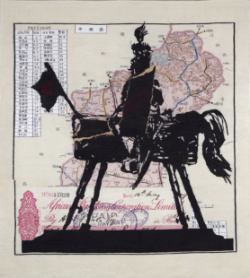
William Kentridge, ‘Colleoni’, 2021. Hand-woven mohair tapestry, 350 x 300 cm. Courtesy the artist © William Kentridge
 

The work of celebrated South African artist and Honorary Royal Academician William Kentridge has gone on show the Royal Academy. Spanning the artist’s 41 year career, William Kentridge brings together important works spanning from the 1980s through to the present day, including charcoal drawings, animated films, a mechanical theatre, sculptures, tapestries and performance pieces. Highlights include a selection of Kentridge’s early, rarely-seen drawings from the 1980s and 1990s including three triptychs displayed together for the first time and the most significant work from the period, The Conservationist’s Ball, (1985) as well as around 25 large charcoal drawings, made for the creative process of the eleven animated Drawings for Projection, and the installation Black Box / Chambre Noire, (2005), a mechanical theatre piece including puppets and projections, which interrogates the harrowing story of the massacre of the Herero people in Namibia, now considered the first genocide of the 20th century. The display in the Main Galleries can be seen until 11th December. Admission charge applies. For more, see roy.ac/kentridge.

Send all items for inclusion to exploringlondon@gmail.com

This Week in London – Charles Jennens at the Foundling Museum; Dr John Conolly’s Blue Plaque; and, Kyōsai at the Royal Academy…

The Foundling Museum. PICTURE: dvdbramhall (licensed under CC BY-NC-ND 2.0)

Charles Jennens, who is best-known as the librettist of Handel’s Messiah but was also a patron of the arts, scholar and educator, is the subject of a new exhibition opening at the Foundling Museum in Bloomsbury on Friday. Charles Jennens: Patron & Polymath features portraits, correspondence and printed documents reflecting the varied interests and achievements of this Georgian character. Jennens was a non-juror – meaning he supported the legitimacy of the deposed Catholic Stuarts – but was also a Protestant. His art collection was one of the best in Britain and his Palladian mansion, Gopsall Hall in Leicestershire, featured a music room with an organ built to Handel’s specifications. Admission charge applies. Runs until 16th October. For more, see https://foundlingmuseum.org.uk/event/charles-jennens-polymath/.

• Dr John Conolly, an early advocate of human treatments for people living with mental illness and the former Hanwell Asylum have been commemorated with an English Heritage Blue Plaque to mark Mental Health Awareness Week. The plaque has been placed on what was the left wing of the asylum and is now part of St Bernard’s Hospital. It was here that Conolly, who was appointed Resident Physician at the Middlesex County Pauper Lunatic Asylum in 1839 – then one of the biggest asylums in London, advocated a system of ‘non-restraint’ which, though initially seen as controversial, drew support from reformers and which by 1846 had been embraced as ruling orthodoxy by the then-new national Lunacy Commission. For more, see www.english-heritage.org.uk/visit/blue-plaques/.

On Now: The works of Kawanabe Kyōsai, the most popular Japanese painter of the late 19th century, are on show in the Royal Academy’s Gabrielle Jungels-Winkler Galleries. Kyōsai: The Israel Goldman Collection focuses largely on the art of sekiga or ‘spontaneous paintings’ which were produced at ‘calligraphy and painting parties’ (shogakai), often fuelled by prodigious amounts of saké. The display – the first monographic exhibition of Kyōsai’s work in the UK since 1993 – includes around 80 words, many of which have never been exhibited. Admission charge applies. Runs until 19th June. For more, see www.royalacademy.org.uk.

Send all items for inclusion to exploringlondon@gmail.com

This Week in London – Saint Agatha returns to Osterley; Lucian Freud’s self-portraits; and, the collection of Sir Stamford Raffles…

A painting of early Christian martyr Saint Agatha by 17th century Italian artist Carlo Dolci is the highlight of a new exhibition opening at Osterley House in London’s west on Monday. The painting, which has been acquired by the National Trust for the house thanks to an Art Fund grant and other donations, is at the heart of Treasures of Osterley –  Rise of a Banking Family which explores the rise to fame and fortune of the Child family. Sir Robert Child had originally purchased the picture at the start of the 18th century but it was later sold with other family heirlooms in the 1930s. The painting depicts the miraculous moment with St Peter appeared to St Agatha in a vision and healed her wounds. The exhibition can be seen until 23rd February. Admission charge applies. For more, see www.nationaltrust.org.uk/osterley-park-and-house.

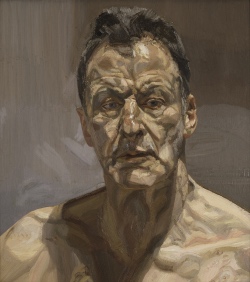
The first exhibition to focus on the “visceral and unflinching” self-portraits of artist Lucian Freud (1922-2011) has opened at the Royal Academy in Piccadilly. Lucian Freud: The Self-portraits features about 50 works that chart his artistic development from early graphic works to the fleshy, painterly style of his later work. The display is organised into six sections, starting with first major self-portrait, Man with a Feather (1943), which is juxtaposed with his late work, Self-portrait, Reflection (2000). It ends with two self-portraits he painted in 2002 and 2003. The exhibition can be seen in The Jillian and Arthur M Sackler Wing of Galleries until 26th January. Admission charge applies. For more, see www.royalacademy.org.uk. PICTURE: Reflection (Self-portrait), 1985 Oil on canvas, 55.9 x 55.3 cm Private collection, on loan to the Irish Museum of Modern Art © The Lucian Freud Archive / Bridgeman Images

• On Now: Sir Stamford Raffles: collecting in Southeast Asia 1811-1824. Controversial figure Sir Thomas Stamford Raffles spent most of his career as an official with the East India Company in South-East Asia during which he was an avid collector of objects from the region. His collection, one of the first large collections from the region, was eventually donated to the British Museum. This display at the museum showcases an important selection of 130 objects from that collection including Hindu-Buddhist antiquities, different types of theatrical puppets, masks, musical instruments and stone and metal sculpture. A collaboration with Asian Civilisations Museum in Singapore, the exhibition can be seen until 12th January in Room 91. It’s free to enter. For more, see www.britishmuseum.org.

Send all items for inclusion to exploringlondon@gmail.com

This Week in London – Exploring the Moon; celebrating London’s green spaces; and, Finnish artist Helene Schjerfbeck at the RA…

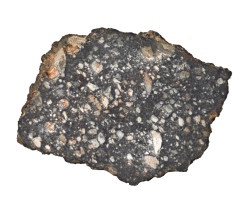
Lunar samples collected during the Apollo 11 mission and objects that travelled to the Moon with the astronauts including Edwin “Buzz” Aldrin’s “Snoopy Cap” and the famous Hasselblad camera equipment are among items on display as part of a new major exhibition which opens at the National Maritime Museum in Greenwich on Friday. Celebrating the 50th anniversary of the 1969 Moon landing, The Moon explores Earth’s relationship with the Moon over time and across civilisations. Other items among the more than 180 objects from public and private collections on show include a rare lunar meteorite from the Natural History Museum’s collection (pictured), a Mesopotamian tablet from 172 BC and a series of contemporary and historical artworks including paintings by JMW Turner and John Constable. There’s also a new version of Christian Stangl’s film Lunar in which animated photographs from Apollo missions allow visitors to experience the Moon landings through the eyes of the astronauts. The Moon can be visited until 5th January. Admission charges apply. For more, see www.rmg.co.uk/moon50. PICTURE: Lunar meteorite Found in the Sahara Desert, North West Africa, 2017 © The Trustees of the Natural History Museum, London.

London’s inaugural and free week long National Park City Festival kicks off on Saturday to celebrate the city’s green spaces, wildlife and waterways. Opening the festival – which is an initiative of the Mayor of London and National Park City Foundation as well as other partners – this weekend is a free cultural programme, run in partnership with the National Theatre, on its outdoor river stage on South Bank which features dance, theatre and music. Other highlights among the more than 300 events being held during the nine day event include the ‘National Park City Rooftops’ initiative – which sees people given free access to some of the city’s most beautiful garden rooftops and natural spaces including Crossrail Place in Canary Wharf, Barbican Conservatory and Ham Yard Hotel in Soho, the ‘National Park City Forest’ initiative which sees a unique audio installation, Living Symphonies, installed in Epping Forest, the ‘National Park City Wildlife’ – a photography competition and exhibition held in partnership with the London Wildlife Trust, and the multi-site ‘National Park City Splash’ initiative in which everybody can try their hand at activities like paddle boarding and open water swimming. The week runs to 28th July. For the complete programme of events, head to https://nationalparkcity.london.gov.uk.

The work of Finnish artist Helene Schjerfbeck (1862 – 1946) is being celebrated at the Royal Academy of Arts. Opening on Saturday, the first solo UK exhibition of Schjerfbeck’s works features some 65 portraits, landscapes and still lifes, and follows the development of the artist’s work from a naturalistic style, inspired by French Salon painters in the early 1880s, to what the RA describes as “a radically abstracted and modern approach from the turn of the 20th century onwards”. The exhibition is being shown in five sections with highlights including Two Profiles (1881) – the earliest work on display, The Convalescent (1888), My Mother (two paintings – one from 1902 and another from 1909), a series of self-portraits and later works like Måns Schjerfbeck (The Motorist) (1933) and Three Pears on a Plate (1945). Runs until 27th October in The Gabrielle Jungels-Winkler Galleries. Admission charge applies. For more, see www.royalacademy.org.uk.

Send all items for inclusion to exploring london@gmail.com.

This Week in London – Artist Louis-Léopold Boilly’s unseen works; the ‘Renaissance Nude’ at the RA; and, a day about women at the National Army Museum…

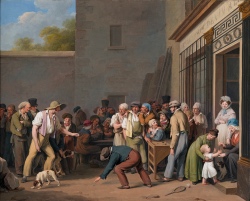
One of the first ever exhibitions devoted to the work of French Revolution-era artist Louis-Léopold Boilly (1761-1845) opens at The National Gallery on Trafalgar Square today. Boilly: Scenes of Parisian Life features at its heart 18 paintings from private British collection the Ramsay Manor Foundation which have never been displayed or published before. They include early works like Two Young Women Kissing (1790-94), urban vistas like The Poor Cat (1832), The Barrel Game (c1828), and A Carnival Scene (1832), and portraiture like Portrait of the Comtesse François de Sainte-Aldegonde (c1800-05), and Portrait of a Lawyer (early 19th century). Also on display is The Meeting of Artists in Isabey’s Studio (1798, now held in the Musée du Louvre), the painting which, depicting the greatest artists of his generation, rocketed him to fame, and the National Gallery’s own Girl at a Window (Boilly was apparently the first to use the phrase “trompe l’oeil” to describe illusionistic paintings that “deceived the eye” by creating the illusion that depicted objects exist in three dimensions and this work gives the illusion that, though it’s oil on canvas, its a print in a mount). Though born in Lille, Boilly spent six decades in Paris from 1785 onwards and was an eyewitness to events including the French Revolution of 1789, the Terror, the rise and fall of Napoleon, and the restoration of the French monarchy. The free display can be seen in Room 1 until 19th May and admission is free. For more, see www.nationalgallery.org.uk. PICTURE: Louis-Léopold Boilly, ‘The Barrel Game’ (about 1828/oil on canvas/37.8 × 46.8 cm – The Ramsbury Manor Foundation) Photo © courtesy the Trustees.

The ‘Renaissance Nude’ and how it inspired some of the world’s most renowned masterpieces is the subject of a new exhibition opening at the Royal Academy in Piccadilly on Sunday. The display features about 90 works in a variety of media from across Europe with artists including Lucas Cranach the Elder, Albrecht Dürer, Jan Gossaert, Michelangelo, Raphael and Leonardo da Vinci all represented. It will look at developments that led to the nude holding a pivotal place in art between 1400 and 1530 and is organised around five main themes: ‘The Nude and Christian Art’, ‘Humanism and the Expansion of Secular Themes’, ‘Artistic Theory and Practice’, ‘Beyond the Ideal Nude’ and ‘Personalising the Nude’. Highlights include Titian’s Venus Rising from the Sea (‘Venus Anadyomene’) (c 1520), Agnolo Bronzino’s Saint Sebastian (c1533), Dürer’s engraving Adam and Eve (1504), Cranach’s A Faun and His Family with a Slain Lion (c1526) and Gossaert’s Hercules and Deianira (1517). Can be seen in the Sackler Wing of Galleries until 2nd June. Admission charge applies. For more, see www.royalacademy.org.uk.

How women have helped shaped the British Army will be the subject of a special day featuring theatrical performances, live music and discussion at the National Army Museum in Chelsea this Saturday (2nd March). The day, which is the first of new series of Saturday events at the museum and this month is being held in recognition of Women’s History Month, will feature a theatrical performance by Dr Kate Vigurs of History’s Maid telling the story of Mother Ross who in 1693 disguised herself as a man so she could join the army and find her husband who had gone missing while at war. There’s also a panel of five women – serving soldiers, veterans and army wives – who will share their stories as well as musical performances by the Military Wives Choirs, the chance to engage with re-enactors, gallery tours and object handling opportunities all centred around women in the army. Runs from 10am to 4.30pm and is free. For more, see www.nam.ac.uk/whats-on/women-and-army.

Send all items for inclusion to exploringlondon@gmail.com.
This Week in London – Recalling Sir Joseph Bazalgette; Pierre Bonnard retrospective; and Bill Viola meets Michelangelo…

A plan of the Deptford Pumping Station signed by Sir Joseph Bazalgette is going on display at the City of London Heritage Gallery on Saturday to mark 200 years since the Victorian engineer’s birth. Other items in the new display include the Shakespeare Deed – only one of six documents to bear the signature of William Shakespeare, and one of the City of London’s earliest charters – granted by King Richard I in 1197. Admission to the gallery, located in the Guildhall Art Gallery, is free. Runs until 16th May. For more, follow this link.

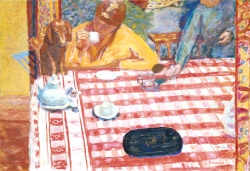
The first major retrospective of French painter Pierre Bonnard in 20 years has kicked off at the Tate Modern on South Bank. The CC Land Exhibition, Pierre Bonnard: The Colour of Memory, features about 100 of his most celebrated works from public and private collections spanning the period from 1912 to his death in 1947. Bonnard, like his friend Henri Matisse, had a profound impact on modern painting and went on to influence the likes of Mark Rothko and Patrick Heron. Works on show include Dining Room in the Country (1913), The Lane at Vernonnet (1912-14), Coffee (1915), Summer (1917), Piazza del Popolo, Rome (1922), Nude in an interior (c1935), and Studio with Mimosa (1939-46). Runs to 6th May; admission charge applies. For more, see http://www.tate.org.uk. PICTURE: Pierre Bonnard (1867–1947), Coffee (Le Café), 1915,  Oil paint on canvas (via Tate Modern)

The work of pioneering video artist Bill Viola has been brought together with drawings buy Michelangelo in a new exhibition opening at the Royal Academy on Saturday. Bill Viola/Michelangelo features 12 major video installations by Viola, an honorary Royal Academician, which span the period 1977 to 2013 as well as 15 works by Michelangelo including 14 highly finished drawings as well as the Academy’s Taddei Tondo. It proposes a “dialogue” between the two artists with Viola, who first encountered Michelangelo’s works in the 1970s in Florence, considered an heir to the long tradition of spiritual and affective art which uses emotion to connect viewers with the subject depicted. Runs until 31st March. Admission charge applies. For more, see www.royalacademy.org.uk.

Send all items for inclusion to exploringlondon@gmail.com.
This Week in London – Lorenzo Lotto portraits; Assyrian king Ashurbanipal in depth; and, Klimt/Schiele drawings…

The portraits of Italian Renaissance painter Lorenzo Lotto, known for their rich symbolism, have gone on show at The National Gallery. Highlights of Lorenzo Lotto Portraits include masterpieces as the Bishop Bernardo de‘ Rossi (1505) and the monumental altarpiece of The Alms of Saint Antoninus of Florence (1540–2) brought to the UK from Venice for the first time as well as the Assumption of the Virgin with Saints Anthony Abbot and Louis of Toulouse (1506), The Mystic Marriage of Saint Catherine of Alexandria, with Niccolò Bonghi (1523 – pictured), the Portrait of a Young Man with a Lizard (1528–30), and the Portrait of a Man with a Felt Hat (1541?). The display, which is arranged over four rooms, also includes objects relating to the portraits including a carpet, sculpture, jewellery, clothing and books. Runs until 10th February. Admission is free. For more, see www.nationalgallery.org.ukPICTURE: Lorenzo Lotto, ‘Mystic Marriage of Saint Catherine with Donor Niccolò Bonghi’, 1523, Oil on canvas, 172 x 143cm, Accademia Carrara, Bergamo, © Fondazione Accademia Carrara, Bergamo.

The first exhibition to take a detailed look at the life of Assyrian King Ashurbanipal has opened at the British Museum. I am Ashurbanipal: king of the world, king of Assyria focuses on the 7th century BC when Ashurbanipal was the most powerful person on earth, ruling a vast and diverse empire from his capital of Babylon. More than 200 objects from the museum’s collection and other collections across the world feature in the display including massive stone sculptures, carved reliefs, carved ivories and metalwork, and ornate chariot fittings and weaponry. And in a contemporary twist, the final section of the exhibition looks at the challenges faced in protecting Iraqi cultural heritage in recent times. Runs until 24th February in the Sainsbury Exhibitions Gallery. Admission charge applies. For more, see www.britishmuseum.org.

A joint exhibition of works by Austrian artists Gustav Klimt (1862-1918) and Egon Schiele (1890-1918) has opened at the Royal Academy to mark the centenary of their deaths. Klimt / Schiele: Drawings from the Albertina Museum, Vienna is the first UK exhibition to focus on the fundamental importance of drawing to both artists and traces their use of the technique from their academic training days through to their later unconventional explorations of the human figure. About 100 works on paper feature in the display including studies for allegorical paintings, portraits and self-portraits, landscapes, erotic nudes and a sketchbook as well as carefully selected examples of lithographs, photographs and original publications. Runs in The Sackler Wing of Galleries until 3rd February. Admission charge applies. For more, see www.royalacademy.org.uk.

Send all items for inclusion to exploringlondon@gmail.com.
This Week in London – Courtauld’s Impressionists visit the National Gallery; the British Library’s ‘Season of Sound’; and, Renzo Piano at the Royal Academy…

For the first time in 70 years, key Impressionist and Post-Impressionist works from the Courtauld Gallery are going on display at The National Gallery. The 26 works, which include pieces by Daumier, Manet, Renoir, Cézanne, Seurat and Bonnard, were all purchased by Samuel Courtauld in the 1920s and are being displayed alongside paintings from the National Gallery’s own collection which he helped acquire. The works are being loaned as the Courtauld Gallery closes this month for a major transformation project, dubbed Courtauld Connect. The exhibition, Courtauld Impressionists: From Manet to Cézanne, traces the development of modern French painting from the 1860s to the turn of the 20th century and reveals the vision, taste and motivation of Courtauld as he acquired the pieces. Highlights from the Courtauld Gallery’s collection include Renoir’s La Loge (Theatre Box) (1874), Cézanne’s The Card Players (about 1892–6) and Lac d’Annecy (1896 – pictured), Toulouse-Lautrec’s Jane Avril in the Entrance to the Moulin Rouge (about 1892), Manet’s A Bar at the Folies-Bergère (1882), and Seurat’s Young Woman Powdering Herself (about 1888–90). Among the works from The National Gallery’s collection being displayed alongside them are Renoir’s At the Theatre (La Première Sortie) (1876–7); as well as Seurat’s Bathers at Asnières (1884), Cézanne’s Self Portrait (about 1880–1) and Van Gogh’s A WheatKeld with Cypresses (1889) – the first paintings by the latter three artists to enter a British public collection. The display can be seen in The Wohl Galleries from next Monday until 20th January. Admission charge applies. For more, see www.nationalgallery.org.uk. PICTURE: © The Samuel Courtauld Trust, The Courtauld Gallery, London.

The British Library’s second ‘Season of Sound’ kicks off this month with a series of events celebrating the library’s vast Sound Archive. Among highlights are the pop group Saint Etienne’s only UK performance this year, a live orchestra celebration of ‘library music’ by KPM All Stars and a silent disco. The programme of events at the King’s Cross venue kicks off next Monday. Admission charges apply. For the full programme, see www.bl.uk/events/season-of-sound.

The work of internationally-renowned architect and honorary Royal Academician, Renzo Piano, goes on show at the Royal Academy in Piccadilly from Saturday. Renzo Piano: The Art of Making Buildings is the first comprehensive survey of Piano’s career to be held in London since 1989 and presents 16 of his most important projects. They include the Centre Pompidou in Paris (1971), the Jean-Marie Tjibaou Cultural Centre in Nouméa (1998), The New York Times Building in New York City (2007), The Shard in London (2012), the Jérôme Seydoux Pathé Foundation in Paris (2014) and the Whitney Museum of American Art in New York City (2015). Among events being held to mark the RA’s 250th anniversary, the display in the Gabrielle Jungles-Winkler Galleries can be seen until 20th January. Admission charge applies. For more, see www.royalacademy.org.uk.

Send all items for inclusion to exploringlondon@gmail.com.
This Week in London – Charles I’s ‘Royal Collection’ on show; John Constable; and, 18th century satire…

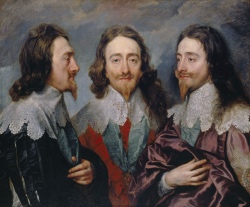
Anthony van Dyck, Charles I, 1635-6, Oil on canvas, 84.4 x 99.4 cm, RCIN 404420 Royal Collection Trust/© Her Majesty Queen Elizabeth II 2017

A landmark exhibition which reunites one of the most extraordinary art collections ever assembled opens in the main galleries of the Royal Academy of Arts in Piccadilly this Saturday. Presented in partnership with the Royal Collection Trust, Charles I: King and Collector features about 150 of the most important of the works collected by King Charles I during his reign, spanning the period from 1600 to 1649. They are among 1,500 paintings and 500 sculptures he collected  prior to his execution in 1649, after which the collection was offered for sale and dispersed across Europe. Many of the works were retrieved by King Charles II during the Restoration but others now form the core of collections at institutions such as the Musée du Louvre and the Museo Nacional del Prado. Among those on show in this exhibition, which includes more than 90 works borrowed from the Royal Collection, are several monumental portraits of the king and his family by Anthony van Dyck as well as the artist’s most celebrated portrait of the king, Charles I (‘Le Roi a la chasse’) (pictured), which returns to England for the first time since the 17th century. Other works include Peter Paul Rubens’ Minerva Protects Pax From Mars (‘Peace and War’) – this was commissioned by Charles and painted between 1629-30, Andrea Mantegna’s series, The Triumph of Caesar (c1484-92), and Titian’s Supper at Emmaus (c1530) while artists including Correggio, Tintoretto, Paolo Veronese, Albrecht Durer, Hans Holbein the Younger and Pieter Bruegel the Elder are also represented. The exhibition also shows off the celebrated Mortlake tapestries depicting Raphael’s Acts of the Apostles (c1631-40) and paintings, statuettes, miniatures and drawings once kept in the Cabinet at Whitehall Palace. Runs until 15th April. Admission charge applies. For more, see www.royalacademy.org.uk.

• John Constable’s oil sketch, Salisbury Cathedral from the Meadows, 1829–31, is one of 10 works which have gone on display at the Guildhall Art Gallery as part of its Victorian Landscapes exhibition. The painting takes centre-stage in the display in the gallery’s Temple Room; other works on show include John Brett’s Echoes of a Far-Off Storm (1890); Edward William Cooke’s Triassic Cliffs, Blue Anchor, North Somerset (1866), and Benjamin Williams Leader’s The Church at Betwys-y-Coed (1863). The paintings can be seen until early May. For more, follow this link.

Eighteenth century satire portrayed on ceramics and prints is the subject of a new free display at the British Museum. Pots with Attitude: British Satire on Ceramics, 1760-1830 features some 80 objects, some of which have not been on show for decades, including mugs and jugs (which make up the bulk of the items on show) as well as items like a cotton handkerchief printed with the “Peterloo Massacre” of 1819 and a rather grisly folding fan showing hidden profiles of executed French sovereigns (1794). Other objects show off copies of prints by satirists such as James Gillray and Charles Williams, with one of the latter’s showing a colossal Napoleon about to cross the Channel into England but prevented from doing so by a pint-sized, sword-carrying John Bull, who has sliced off his toes and is telling him, ‘Paws off, Pompey’ – the comment a reference to a lap-dog known as Pompey the Little who was the hero of a popular novel at the time. The display can be seen in Room 90a, Prints and Drawings Gallery, until 13th March. For more, see www.britishmuseum.org.

Send all items for inclusion to exploringlondon@gmail.com.
This Week in London – Celebrating India at the Science Museum; Opie and Van Dyck/Dali and Duchamp; and, first NYE tickets on sale…

The Science Museum is commemorating 70 years of India’s independence with Illuminating India, a season of exhibitions, specially commissioned artworks and events telling the stories of Indian innovators and thinkers who have often been overlooked or written out of Western versions of history. The exhibition Illuminating India: 5000 Years of Science and Innovation celebrates India’s central role in the history of science and tech by surveying its contributions to subjects ranging from space exploration to mathematics, communication and engineering while Photography 1857-2017 is the first exhibition to provide a survey of photography from its beginnings in India in the mid-19th century through to the present day and pivots around two key dates in India’s history – 1857 and 1947. Alongside the exhibitions, artist Chila Kumari Burman has been commissioned to create a special series of artworks and there is a comprehensive program of related public events, some of which are free. The Illuminating India season runs until 31st March. For the full programme of events, head to www.sciencemuseum.org.uk/indiaseason.

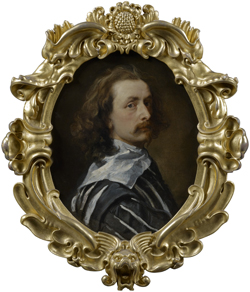
To mark the return of Sir Anthony van Dyck’s self-portrait (pictured) to the National Portrait Gallery after a three year nationwide tour, contemporary artist Julian Opie has been invited to present his works in dialogue with the painting. Julian Opie After Van Dyck features new and recent works including Faime (2016), Lucia, back 3 (2017) and Beach head, 6 (2017). The free display in the seventeenth century galleries opens tomorrow and runs until 7th January. It’s the final of three displays held in the gallery as part of the three year tour following the purchase of the Van Dyck self-portrait, painted in about 1640, in 2014. For more, see www.npg.org.uk. PICTURE: National Portrait Gallery.

The friendship and works of Salvador Dali and Marcel Duchamp are explored in a new exhibition opening at the Royal Academy tomorrow. Dali/Duchamp features more than 80 paintings, sculptures, “readymades”, photographs, drawings, films and archival material and is organised into three thematic sections – ‘Identities’, ‘The Body and the Object’ and, ‘Experimenting with Reality’. Among the highlights is Duchamp’s The King and Queen Surrounded by Swift Nudes (1912), Fountain (1917/1964), and The Bride Stripped Bare by her Bachelors, Even (The Large Glass) (1915), as well as Dali’s The First Days of Spring (1929), Lobster Telephone (1938) and Christ of Saint John of the Cross (c1951). Runs until 3rd January and then moves to The Dali Museum in St Petersburg, Florida. Admission charge applies. For more, see www.royalacademy.org.uk.

The first tranche of tickets to see this year’s New Years Eve fireworks event over the River Thames in central London were released late last week. The display will feature more than 12,000 fireworks, and involve 2,000 lighting cues and 30 tonnes of equipment on three barges (and, despite the renovation work, the New Year will still be rung in by the bongs of Big Ben!). The tickets, which are available for £10 each, provide access to a range of specific areas – some of these are already sold out. The full cost of the tickets goes towards costs associated with the ticketing system. People can book up to four tickets at www.london.gov.uk/nye.

Send all items for inclusion to exploringlondon@gmail.com.
This Week in London – Remarkable Georgian princesses; John Singer Sargent’s watercolours; and the RA’s 249th Summer Exhibition…

The lives of three German princesses whose marriages into the British royal family during the Georgian era placed them right at the heart of progressive thinking in 18th century Britain are the subject of a new exhibition which opens at Kensington Palace today. Enlightened Princesses: Caroline, Augusta, Charlotte and the Shaping of the Modern World looks at how these three women – committed patrons of the arts and sciences – “broke the mould” in terms of their contributions to society, through everything from advocating for the latest scientific and medical advances to supporting the work of charities, changing forever the role women played in the British royal family. Caroline and Charlotte became queens consort to King George I and King George III respectively while Princess Augusta was at various times Princess of Wales, Regent and Princess Dowager (as mother to King George III) and between them, they had more than 30 children. But alongside their busy family lives, they also were at the centre of glittering courts where the likes of writers Alexander Pope and Jonathan Swift, scientist Isaac Newton and composer George Frideric Handel as well as successive Prime Ministers and international statesmen were welcomed. The display features almost 200 objects owned by the princesses, such as Charlotte’s hand-embroidered needlework pocketbook, pastels painted by their children and artworks and fine ceramics commissioned by some of the greatest artists and craftsmen of their day. The exhibition, which has previously been at the Yale Center for British Art, runs until 12th November. Admission charge applies. For more, see www.hrp.org.uk/kensington-palace/.

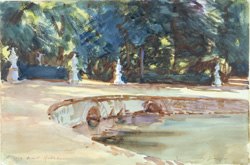
The UK’s first major exhibition featuring the watercolours of Anglo-American artist John Singer Sargent in almost 100 years has opened at the Dulwich Picture Gallery in south London. Sargent: The Watercolours features almost 80 works produced between 1900 and 1918, what was arguably his greatest period of watercolour production. Sargent mastered the art during expeditions in southern Europe and the Middle East and the show features landscapes, architecture and figurative scenes, drawing attention to the most radical aspects of his work – his use of close-up, his unusual use of perspective and the dynamic poses of his figures. The works include The Church of Santa Maria della Salute in Venice (c1904-1909), the mountain landscape Bed of a Torrent (1904), and figure study The lady with the umbrella (1911). The exhibition runs until 8th October. Admission charge applies. For more, see www.dulwichpicturegallery.org.uk. PICTURE: John Singer Sargent – Pool in the Garden of La Granja, c. 1903, Private Collection

The 249th Summer Exhibition has opened at the Royal Academy with Mark Wallinger, Yinka Shonibare and Antony Gormley among those with works on show. About 1,200 works are featured in the display with highlights including Shonibare’s Wind Sculpture VI, a new large scale work from Gilbert & George’s ‘Beard Speak’ series and, for the first time, a focus on construction coordination drawings, showing the full complexity of a building, in the Architecture Gallery. Runs until 20th August. Admission charge applies. For more, see www.royalacademy.org.uk.

Send all items for inclusion to exploringlondon@gmail.com.

This Week in London – The Waterloo Cartoon on show; see inside a former Huguenot’s home; and, Royal Parks’ harvest festivals…

A monumental Victorian-era drawing of the Battle of Waterloo has gone on display in London for the first time since 1972. The Waterloo Cartoon, more formally known as The Meeting of Wellington and Blucher after the Battle of Waterloo, measures more than 13 metres long and three metres high. A preparatory drawing for a wall painting which still exists in the House of Lords’ Royal Gallery, it took artist Daniel Maclise more than a year to complete in 1858-59 and was based on eye-witness accounts (the artist even recruited Queen Victoria and Prince Albert to use their German contacts to gather information from Prussian officers present on the day). Long considered a masterpiece, it was bought by the Royal Academy in 1870 – the year of Maclise’s death – and was on show at Burlington House until the 1920s. It has been in storage for much of last century and, newly restored following a grant from Arts Council England, has now gone on display to mark the 200th anniversary of the Battle of Waterloo. The newly conserved drawing is the focus of a new exhibition – Daniel Maclise: The Waterloo Cartoon, which opened at the Royal Academy in Piccadilly yesterday (between May and August, it was on show as part of a Waterloo exhibition at the Royal Armouries in Leeds). Runs until 3rd January. Admission charge applies. For more, see www.royalacademy.org.uk.

There’s a rare chance to see inside a former Huguenot merchant’s house dating from 1719 in Spitalfields this weekend. The property at 19 Princelet Street was the home of the Ogier family, who had come to London escaping persecution in France and worked in the silk weaving trade. It was later subdivided into lodgings and workshops with later occupants following a range of trades and professionals while a synagogue was opened in the garden in 1869. The site – which the Spitalfields Centre charity hopes to establish as a museum of immigration – is not generally open to the public but will be open this Saturday and Sunday – from 2pm to 6pm. Entry is free (but donations would be welcome) and there may be queues so its suggested you arrive early. For more, see www.19princeletstreet.org.uk.

Watch a bee keeping demonstrations, help dig up some potatoes and introduce the children to some farm animals. The Kensington Gardens’ Harvest Festival will be held this Sunday, between 11am and 4pm, and will also include a range of children’ activities, experts from the Royal Parks Guild on hand to answer your questions about food growing and complimentary hot and cold drinks available throughout the day while stocks last. It’s the first of three harvest festivals to be held in Royal Parks this month with Greenwich Park set to host its inaugural harvest festival on 13th September (11am to 4pm) and The Regent’s Park Allotment Garden to host one on 19th September (11am to 5pm). For more, see www.royalparks.org.uk.

Send all items for inclusion to exploringlondon@gmail.com.
This Week in London – Charles I’s overlooked artist; St George’s Day in Trafalgar Square; Indigenous Australia; prints from the Royal Collection on show; and, ‘What is Luxury’ at the V&A…

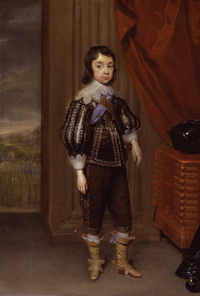
NPG_936_1374_KingCharlesIIbThe first ever display of works of overlooked 17th century artist Cornelius Johnson, court painter to Charles I, has opened at the National Portrait Gallery off Trafalgar Square. Cornelius Johnson: Charles I’s Forgotten Painter features rarely viewed portraits of the king’s children including the future Charles II, James II and Mary (later Princess of Orange-Nassau) as well as a painting of Mary’s son William – all of which have been taken from the gallery’s collection. Overshadowed by Sir Anthony van Dyck, Johnson – who emigrated to The Netherlands when the English Civil War broke out – has been largely ignored by art historians despite the breadth of his work – from group portraits, such as his largest surviving English painting, The Capel Family, to tiny miniatures – and the fact that he is thought to be the first English-born artist who took to signing date his paintings as a matter of course, something he is believed to have picked up during his training in The Netherlands. The display features eight painted portraits and six prints from the gallery’s collection as well as three paintings from the Tate. Runs until 13th September in Room 6. Admission is free. For more, see www.npg.org.uk. PICTURE: King Charles II by Cornelius Johnson , 1639. © National Portrait Gallery, London.

Trafalgar Square will be at the centre of London’s St George’s Day celebrations on Saturday with live music, celebrity chefs, a masterclass by leading tea experts and children’s games and activities. The musical lineup will feature the band from the West End musical Let It Be and the Crystal Palace Brass Band – one of the few traditional brass bands remaining in London. The free event runs between noon and 6pm on Saturday. For more, see www.london.gov.uk/stgeorges.

Indigenous Australia, the first major exhibition in the UK to present a history of Indigenous Australia through objects, opens at the British Museum today. Drawing on the museum’s collection, Indigenous Australia features objects including a shield believed to have been collected in Botany Bay on Captain Cook’s voyage of 1770, a protest placard from the Aboriginal Tent Embassy established in 1972 and contemporary paintings and specially commissioned artworks from leading indigenous artists. Many of the objects have never been on display before. Runs until 2nd August. Admission charge applies. For more, see www.britishmuseum.org.

Thirty prints from the Royal Collection will be on show at The London Original Print Fair to mark its 30th anniversary. The fair runs at the Royal Academy from today until Sunday and among the selected works from the more than 100,000 prints in the Royal Collection are the 2.3 metre long woodcut by Albrecht Durer entitled Triumphal Cart of the Emperor Maximillian (1523), Wenceslaus Hollar’s four etchings of tropical Seashells (c1650), a sequence of proofs of Samuel Reynolds’ portrait of King George III at the end of the monarch’s life, and lithographs produced by Queen Victoria and Prince Albert dating from 1842. For more on the fair, see www.londonprintfair.com. For more on the Royal Collection, see www.royalcollection.org.uk.

The question of what is meant by the concept of luxury is under examination in the V&A’s new exhibition What is Luxury? Opening at the South Kensington museum Saturday, the exhibition will feature a range of luxury objects – from the George Daniels’ Space Travellers’ Watch to a Hermés Talaris saddle, and Nora Fok’s Bubble Bath necklace. Also on show in a section of the exhibit looking at what could determine future ideas of luxury is American artist Gabriel Barcia-Colombo’s DNA Vending Machine (complete with prepackaged DNA samples) and Henrik Nieratschker’s installation The Botham Legacy which tells the fictional story of a British billionaire who sends altered bacteria into space in an attempt to find valuable metals on distant plants. Runs until 27th September. Admission charge applies. See www.vam.ac.uk/whatisluxury.

Send all items for inclusion to exploringlondon@gmail.com.
8 structures from the London that never was – 8. Primrose Hill’s Pyramid of Death…

We started this series with a pyramidal-shaped structure (see A pyramid in Trafalgar Square), so we thought it only fitting that we end with one as well. 

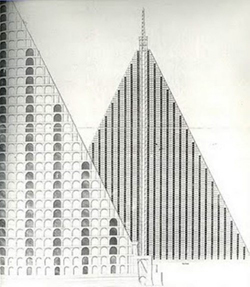
PyramidThis time, it’s not so much a monument, however, as a place to house some of London’s ever increasing population of dead.  The over-crowded graveyards of early Victorian London (and the horror stories that went with them of bodies bursting forth from their graves), led to proposals for a range of innovative solutions in the early nineteenth century.

Among them was a pyramidal-shaped necropolis for Primrose Hill. Architect Thomas Willson came up with the 94 storey-high structure – which would have stood higher than St Paul’s Cathedral – to provide storage for some five million corpses with steam-powered lifts to carry the bodies to their place of rest.

Made from brick with granite facings, the base of the vast structure would have covered 18 acres. Its design, which included quarters for staff, four entrances and a central ventilation shaft, drew upon the Victorian fascination for all things Egyptian.

“It was supposed to be compact, hygienic and ornamental,” author Catharine Arnold told the BBC. “Willson hoped people would come to admire this huge pyramid from far and wide, picnicking on Primrose Hill and enjoying this splendid monument. But it would be rather like a giant car-park of the dead.”

According to the prospectus Willson, who trained at the Royal Academy, issued for potential investors, the pyramid – which was to cost £2,500 to build – would have raised a staggering sum of more than £10 million in profit when it was full.

Still, it was not to be and the idea never left the drawing board. But Willson did go on to join the board of the General Cemetery Company.

For more on London and its dead, see Catharine Arnold’s Necropolis: London and Its Dead.