10 sites from Shakespearean London – 6. Shakespearean connections in the Elizabethan world: The George Inn and Middle Temple Hall…

Today we’re taking a look at a couple of still extant London buildings which have strong associations with playwright William Shakespeare…
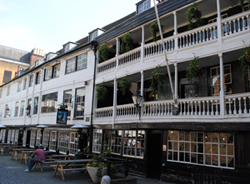
George-InnThe George Inn, Southwark. Located at 75-77 Borough High Street, the George Inn is London’s last remaining galleried inn. The current building has its origins in the late 17th century after the original inn, which can be traced back to at least the mid-1500s – was destroyed in a fire in 1676. Now owned by the National Trust, it is leased out and remains open as a public house – part of the Greene King chain. While its known for its connections with 19th century writer Charles Dickens – he was a patron of this establishment and mentions it in Little Dorrit (a fact we mentioned in our series on Dickens back in 2012), the inn (or at least the previous version of it) also has Shakespearean connections with its prime Southwark location meaning it’s quite possible Shakespeare himself may have visited. Whether that’s the case or not, it is known that the premises served at time as a theatre of sorts in his day with acting troops performing in the courtyard while audience members could stand in the courtyard and watch or pay extra for a seat in the gallery. For more on the inn, see www.gkpubs.co.uk/pubs-in-london/the-george-inn-pub/.
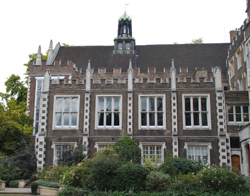
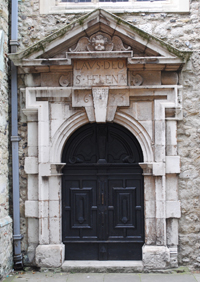
Middle-Temple-HallMiddle Temple Hall. Built between 1562 and 1573 by Edmund Plowden (memorialised with monuments in both the hall and nearby Temple Church), this magnificent Tudor hall has survived both the Great Fire of London and the Blitz and continues to serve the legal profession today. It too was used as a theatre/concert hall in Elizabethan times and later as a site for Inigo Jones’ masques but in terms of the Shakespearean connection, it is known for being where the first recorded performance of Twelfth Night took place – on the night of Candlemas (2nd February) 1602. The Lord Chamberlain’s Men performed the play and it is thought that Shakespeare himself was among the players. For more on the hall, which is only rarely opened to the public, you can visit our earlier posts here and (on ‘Drake’s Cupboard) here or the official website at www.middletemple.org.uk/home/.

For more on the George Inn, check out Pete Brown’s social history Shakespeare’s Local: Six Centuries of History Seen Through One Extraordinary Pub.


LondonLife – A walk across Blackheath…

Blackheath

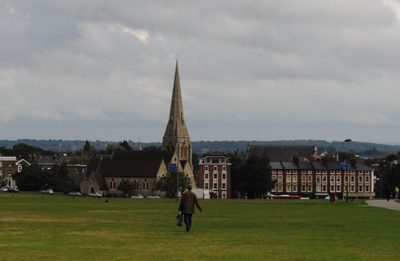
An overcast day on Blackheath, in the south-east of the city.  All Saint’s Church is located in the centre of the picture. The Grade II-listed church, the parish church of Blackheath, was built between 1857-67 to the designs of architect Benjamin Ferrey.

Famous Londoners – Philip Henslowe…

A contemporary of William Shakespeare (and hence, given our current focus on Shakespeare, the reason why we’re featuring him), Philip Henslowe was a theatre owner and impresario who, along with John Chomley, built the Rose Theatre in Bankside.

Henslowe is believed to have been born in about 1550 and was the son of Edmund Henslowe, master of the game at Ashdown Forest in Sussex. He is known to have moved to London in the 1570s and there became an apprentice to dyer Henry Woodward. Marrying Woodward’s widow Agnes, from 1577 Henslowe lived in Southwark – in the Liberty of the Clink – where, along with other business interests including bringing in timber from Sussex, he is known to have been a prominent landlord.

He and Chomley built The Rose Theatre – the first theatre in Bankside – in 1587 on land Henslowe had purchased several years earlier and from 1591 onwards, he partnered with the acting company known as the Admiral’s Men (they had parted ways with theatre owner James Burbage after a dispute about money). In fact it was the company’s leading actor, the renowned Edward Alleyn, who married Henslowe’s step-daughter Joan.

Following the arrival of the rival Globe Theatre in Bankside in the late 1590s, Henslowe decided to make a move and built the Fortune Theatre in the north-west corner of the City which subsequently became home to the Admiral’s Men. He is also believed to have had interests in several other theatres – Newington Butts, the Swan and more latterly, the Hope in Paris Garden, a versatile facility which could be used as both animal-baiting ring and theatre.

His prominence in business matters led to many rewards including serving as a Groom of the Chamber during the reign of Queen Elizabeth I and the delightfully named Gentleman Sewer of the Chamber during the reign of King James I.

He died in 1616, leaving behind a diary which spans the period 1592 to 1609 – it includes mention of performances of many of Shakespeare’s plays and although the Bard himself doesn’t get a mention, many of his contemporaries – Christopher Marlowe and Ben Jonson included – do. The diary – which had been written in an old account book and provides great detail of Henslowe’s theatre-related business – passed into the care of Dulwich College which his son-in-law had founded.

Click here to buy Henslowe’s Diary.

10 sites from Shakespearean London – 5. Other Elizabethan theatres…

Last week we had a look at two former theatres in Shoreditch which had strong associations to William Shakespeare and in previous weeks we’ve talked about both The Globe and Blackfriars Playhouse. So this week we thought we’d wrap up our look at Elizabethan theatres with a brief glance at a couple of other theatrical establishments which may have had some association with The Bard…

The Rose. Built by Philip Henslowe in 1587, the theatre is located close to where The Globe later stood in Bankside. Many companies performed here – including Lord Strange’s Men in 1592 when, according to some, Shakespeare may have been the actors in the company. The theatre’s remains are open to the public. For more on The Rose, you can see our earlier Lost London entry.

The Swan. Built by Francis Langley in the mid 1590s in the Paris Gardens area in the west of Bankside, The Swan was the most impressive of London’s theatres when first constructed due to both its size – it’s believed to have held an audience as big as 3,000 people – and the manner of its construction. It’s a matter of debate whether the Lord Chamberlain’s Men – the acting troupe Shakespeare was a part of – ever performed here while waiting for the Globe to be built. By the early 1630s, the theatre had apparently fallen into disrepair.

Newington Butts. In use from 1580, this theatre was located in Surrey (the name is now preserved in that of the street still known as Newington Butts just to the south of the Elephant & Castle roundabout). Little is known about the theatre but it’s believed the Lord Chamberlain’s Men played here in the mid 1590s and apparently gave their earliest known performances of a number of Shakespeare’s plays including Titus Andronicus and The Taming of the Shrew took place. Butts were typically used in the national sport of archery but that may not apparently be the explanation behind the name here which may instead refer to an odd-shaped area of land.

For more on Elizabethan theatre, check out Elizabethan-Jacobean Drama: The Theatre in its Time.

LondonLife – Remembering London’s bridges now and then…

Tower-Bridge

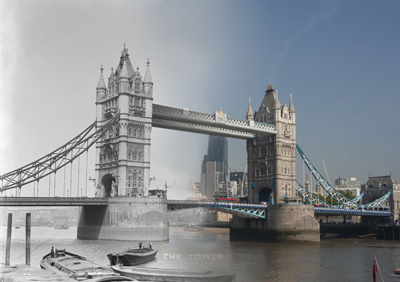
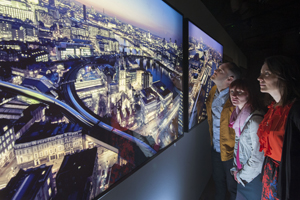
Some of 16 hybrid images showing London’s bridges old and new which have been released by the Museum of London Docklands to mark the recent opening of the museum’s new free art exhibition Bridges. The images have been created using historic photographs showcased in the exhibition which opened last Friday and runs until 2nd November. The photographs were taken by renowned late 19th and 20th century photographers, including Henry Grant, Henry Turner, Sandra Flett, Christina Broom, Roger Mayne and George Davison Reid. Above is Tower Bridge, taken by Christina Broom (c. 1903–10) from Shad Thames Jetty. For more, see www.museumoflondon.org.uk/docklands/PICTURE © Christina Broom/Museum of London.

Albert-bridge

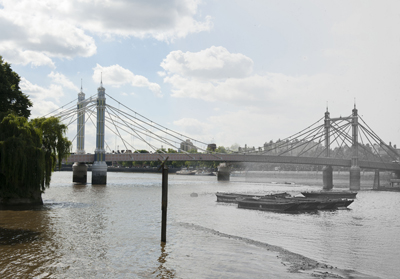
Albert Bridge (unknown photographer), Chelsea. Glass lantern slide, c. late 19th century. © Museum of London.

Vauxhall-bridge

Vauxhall Bridge from Cambridge Wharf (taken by Albert Gravely Linney), 1928. Taken from the north bank of the Thames. © Albert Gravely Linney/Museum of London

London-Bridge

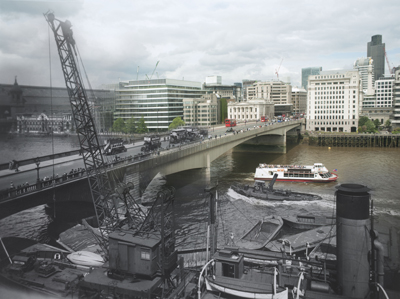
Looking north across London Bridge (taken by George Davison Reid), c. 1920s. Taken from inside on the 5th floor of No1 London Bridge. © George Davison Reid/Museum of London

Richmond-Bridge

Richmond Bridge, glass lantern slide, c. late 19th century. Taken from the south side of the river. © Museum of London.

What’s in a name?…Bayswater

The origins of the name of this inner west London location on the northern side of Hyde Park and Kensington Gardens go back to at least the 14th century when it was recorded as Bayard’s or perhaps Baynard’s watering place.

Bayard was the word for a bay-coloured horse but it is thought that instead the name here comes from a local landowner – it’s been suggested he may be the same Baynard whose name is was remembered in the long gone Norman fortification Baynard’s Castle in the City.

The name probably referred to a site where people on their way out of or headed to London stopped for a rest and some water; the water aspect may relate to springs or to the Westbourne Stream which ran through the area.

It’s now known for its culturally diverse population and high concentration of hotels. It’s also known for Georgian terraces – many of which have been converted into flats, mansion blocks and garden squares.

Notable residents have included Peter Pan author JM Barrie and former PM’s Tony Blair and Winston Churchill while landmarks include Whiteleys, a department store which first opened in the mid 19th century (and was later rebuilt after burning down).

Where is it?…#82…And the answer is…

Where-is-it-#82

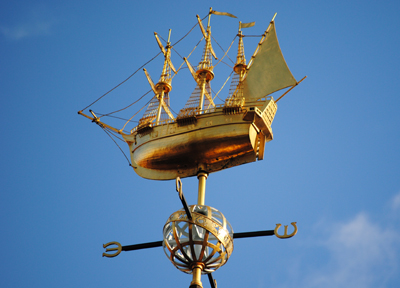
Can you identify where in London this picture was taken and what it’s of ? If you think you can, leave a comment below. We’ll reveal the answer next week. Good luck!

Sorry for the delay in providing the answer! Well done to James and Runner – while there are a number of similar weathervanes around London, this one does indeed sit atop the Liberty department store. Located above the mock Tudor store in Great Marlborough Street, the gilded weathervane is modelled on the Mayflower which took pilgrims to America in 1620. Interestingly, the nautical theme also employed during construction of the building in the 1920s – timbers from the HMS Impregnable and HMS Hindustan were used in the project, the frontage of which was the same length of the HMS Hindustan. For more, see www.liberty.co.uk.

This Week in London – Bridges in focus; cheap entry to Tower Bridge; WW1 nurse honoured; and, Dennis Hopper’s photographs…

Bridge-ExhibitionA new exhibition on London’s bridges commemorating the 120th anniversary of the opening of Tower Bridge opens at the Museum of London Docklands tomorrow. The largest art exhibition ever staged at the museum, Bridge features rarely seen contemporary and historical works, photography, films and maquettes of London’s bridges and explores the role they play in the city. Highlights include Giovanni Battista Piranesi’s 1766 etching A view of the intended bridge at Blackfriars, London, Charles Ginner’s 1913 work London Bridge, and Ewan Gibbs’ 2007 linocut London. The exhibition will also feature a rare photograph taken by William Henry Fox Talbot in 1845, Old Hungerford Bridge. The oldest photograph in the museum’s collection, it will only be on display for one month from tomorrow. The exhibition, entry to which is free, runs until 2nd November. For more, see www.museumoflondon.org.uk/docklands/. (PICTURE: © Museum of London Docklands).

Don’t forget there is a special admission entry offer of just £1.20 to the Tower Bridge Exhibition this Monday, 30th June – 120 years to the day since the Prince of Wales (later King Edward VII) opened the iconic structure. Tickets must be bought at the door. There will be some Victorian re-enactors at the bridge on the day including police, tourists and engineers and each visitor will receive a special ticket which replicates the design of the invite to the 1894 ceremony (a limited edition commemorative badge will also be available to buy). For more, see www.towerbridge.org.uk.

The Australian-born nurse responsible for the entire nursing operation on the Western Front during World War I has been commemorated with an English Heritage Blue Plaque unveiled at her former home in Chelsea. Maud McCarthy, one-time Army Matron-in-Chief, was in charge of more than 6,000 British, Imperial and American nurses in 1918. Her accolades included the Florence Nightingale Medal – the highest international distinction a nurse can receive. McCarthy lived at 47 Markham Square for almost 30 years after the war, from 1919 until shortly before her death in 1949. For more, see www.english-heritage.org.uk/discover/blue-plaques/.

An exhibition featuring more than 400 photographs taken by the late US actor, film director and artist Dennis Hopper opened at the Royal Academy of Arts off Piccadilly today. Dennis Hopper: The Lost Album is the first time the body of work – first shown in Texas in 1970 – has been displayed in the UK. The photographs document the social and cultural life of the American Sixties and cover a range of themes and subjects. They include portraits of the likes of Paul Newman, Andy Warhol and Jane Fonda, and images depicting members of counter-cultural movements as well as events such as the 1965 march civil rights march from Selma to Montgomery. Admission charge applies. Runs until 19th October. For more, see www.royalacademy.org.uk.

Send all items of interest for inclusion to exploringlondon@gmail.com.

10 sites from Shakespearean London – 4. Shakespeare’s Shoreditch theatres…

While the association between the Bard and Bankside’s Globe Theatre is well known (see our earlier post here for more), the Bard and his plays were also performed in various other theatres around London. Here we take a quick look at a couple in Shoreditch, then a more rural suburb of London known for its associations with the (somewhat seedy) entertainment industry…

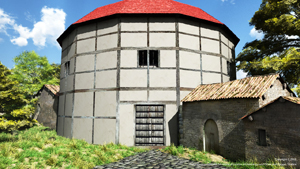
The-Theatre The Theatre, Shoreditch. Built in 1576 by James Burbage on property that had once been part of Holywell Priory, the Theatre was the home of a number of acting companies including The Lord Chamberlain’s Men of which Shakespeare was a member. The polygon-shaped theatre served as the home of the company between 1594 and 1598 when a dispute with a landlord over the lease led them to leave, temporarily settling at The Curtain Theatre, before rebuilding their theatre, now renamed The Globe, in Southwark. Between 2008 and 2010, archaeologists from Museum of London Archaeology (MOLA) carried out an investigation beneath a disused warehouse in New Inn Broadway, near the intersection of Curtain Road and Great Eastern Street, and found the remains of a 14 sided theatre about 22 metres across. Plans have been mooted to build a new theatre on the site. To find out more about The Theatre and see a terrific animated recreation by Cloak & Dagger Studios and MOLA (pictured), head to www.explorethetheatre.co.uk. PICTURE: Courtesy of MOLA (Museum of London Archaeology) and Cloak and Dagger Studios.

The Curtain Theatre, Shoreditch. The Lord Chamberlain’s Men only performed here temporarily, between 1598-1599, before relocating to Southwark. Henry V (the reference to “this wooden O” in the prologue of the play is taken to refer to this theatre) and Romeo and Juliet are believed to be among Shakespeare’s plays which premiered here. Located just a couple of hundred yards south of The Theatre and built the year after it, it also hosted Ben Jonson’s Every Man in his Humour, a play in which Shakespeare is known to have performed. The polygonal theatre’s name comes from the road on which it stood – Curtain Road, which, it has been suggested, was named after the Holywell Priory’s ‘curtain wall’. It continued as a theatre until the 1620s and was later converted into tenements. The remains of what is believed to have been the Curtain Theatre were found by MOLA archaeologists in 2012 and further excavations are expected with the hope that one day the site will be open to the public with plays performed here. There is a plaque commemorating the site at 18 Hewett Street which is only a short distance from where the excavations were carried out. For more on the Curtain Theatre, check out www.shakespearesshoreditch.com.

For more on Elizabethan theatres, see Julian Bowsher’s Shakespeare’s London Theatreland: Archaeology, History and Drama.

LondonLife – A ‘rainforest’ in Bedford Square…

Rainforest

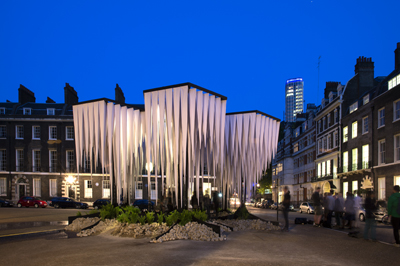
Rainforest by GUN Architects, located in Bedford Square in Bloomsbury outside the offices of the Architectural Association, has been one of the highlights of the London Festival of Architecture, now into its final week. The five metre high tree-like structures, created by the German-Chilean architectural practice, feature fabric stalactites which drip water into pools below. As well as installations like Rainforest, the festival features debates, exhibitions, film screenings, walks, cycle rides, open studios and family events which focus on the importance of architecture and design under this year’s central theme of ‘capital’. The festival runs until 30th June. For more details and a full programme of events still to run, see www.londonfestivalofarchitecture.org.

PICTURE: © Valerie Bennett

London Pub Signs – The Globe…

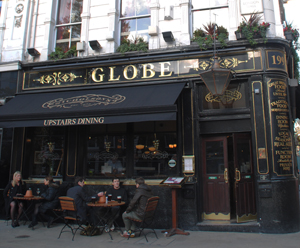
GlobeNo, this pub on Moorgate is not related to William Shakespeare. Its name actually comes from the globe which was used as the emblem of Portugal and advertised the fact that fine Portuguese wines were on sale at the premises.

According the pub’s website, there were eight pubs with the sign of the Globe in London during the reign of King Charles I (when this pub was apparently founded). By the middle of the 19th century, the number had risen to more than 30.

There are still a few other Globe pubs in London – as well as this one, others include the Globe in Marylebone Road and The Globe Bow Street (although we’re not sure whether their names were derived in the same way).

The pub, which is located at 83 Moorgate – close to where Moorgate once punctured London’s city wall and gave access to the fens known as Moorfields. In 2008, the pub merged with the neighbouring pub, the John Keats, now commemorated in the name of the bar (that pub was named for the Romantic poet John Keats, who it has been speculated was born in a pub on the site in 1795).

The pub is now part of the Nicholson’s group. For more, check out its website at www.nicholsonspubs.co.uk/theglobemoorgatelondon/.

Treasures of London – The grave of Karl Marx…

Karl-Marx3

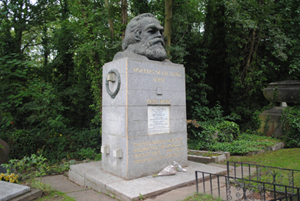
One of the highlights of any visit to Highgate Cemetery, the grave of Karl Marx is one of London’s most visited final resting places even though it didn’t attract a crowd at the time of his death.

Karl-Marx2Marx died in London on 14th March, 1883, having battled ill health for many months beforehand. He was buried at Highgate Cemetery just three days later and there were reportedly only between nine and 11 mourners at the funeral (his wife Jenny was not among them – she had died in late 1881 and is buried in the same grave). Among those who did attend was Friedrich Engels, who, in his eulogy, described Marx as “the greatest living thinker” and told of how he had “peacefully gone to sleep”.

While the original tomb was modest, the grander memorial which stands on the grave today was erected in 1954 by the Communist Party of Great Britain. It is inscribed with Marx’s words “Workers of all lands unite” and “The philosophers have only interpreted the world in various ways – the point however is to change it” and topped with a larger-than-life bust of Marx created by Laurence Bradshaw.

As well as Marx’s wife, others buried in the tomb include Marx’s grandson, Harry Longuet, who died only six days after his grandfather at the age of four, Eleanor Marx, his daughter, who died in 1898, and Helene Demuth, the Marx family housekeeper.

The monument was attacked in 1970 by vandals using a home-made bomb, reportedly causing £600 of damage which was quickly fixed. There have been a couple of further attacks on the tomb.

WHERE: Highgate East Cemetery, Swain’s Lane (nearest Tube station is Archway); WHEN: 10am to 5pm Monday to Friday/weekends and public holidays 11am to 5pm (last admission 4.30pm); COST: £4 adults/children under 18 free (tours additional); WEBSITE: www.highgatecemetery.org

This Week in London – Celebrating the Year of the Bus; the British Library looks at WWI; medieval jousting and The Duke of Wellington; and, Blue Plaque nominations resumed…

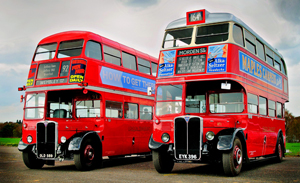
BusesAlmost 50 buses, from a horse-drawn model of the 1820s to the New Routemasters of today, will come to Regent Street on Sunday in celebration of the Year of the Bus. The ‘Regent Street Bus Cavalcade’ – which will stretch from Piccadilly Circus to Oxford Circus and will see the iconic West End street closed to traffic – will also feature a variety of free family events including Lego workshops (there will be a bus shelter and bus stop made entirely out of Lego outside Hamley’s toy shop), children’s theatre performances, a pop-up London Transport canteen and the chance to have a personal message recorded by the voice of London’s buses, Emma Hignett. There will also be an exhibition – Battle Bus – which provides information about the B-type bus (a newly restored version of which will be on display) which was used during World War I to carry soldiers to the frontline as well as ambulances and mobile pigeon lofts while jewellery company Tatty Devine will feature a special range of bus-inspired jewellery and hold jewellery-making workshops on board a London bus. The cavalcade, supported by the Regent Street Association and The Crown Estate, is part of Transport for London’s celebrations marking the Year of the Bus, organised in partnership with the London Transport Museum and the capital’s bus operators. The free event runs from 11.30am to 6pm. For more information, see www.tfl.gov.uk/yearofthebus and www.ltmuseum.co.uk.

A new exhibition of materials showing how people coped at home and on the front during World War I opens at the British Library in King’s Cross today as part of efforts to mark the war’s centenary. Enduring War: Grief, Grit and Humour features personal objects such as letters, a handkerchief bearing the lyrics of It’s A Long, Long Way to Tipperary, Christmas cards, school essays about airship raids over London sit and recruitment posters, humorous magazines and even a knitting pattern for balaclavas. Highlights include a letter in which Sir Arthur Conan Doyle expresses his concern over his son serving at the front, manuscripts by war poets such as Rupert Brooke as well as Wilfred Owen’s manuscript for Anthem for Doomed Youth, Vaughan Williams’ A Pastoral Symphony and Laurence Binyon’s For the Fallen. A specially commissioned video and ‘soundscape’, Writing Home, features personal messages contained on postcards written to and from the front. A range of events accompanies the free exhibition. Runs until 12th October. For more on the exhibition, see www.bl.uk.

Armoured knights on horseback can be seen jousting at Eltham Palace in south London this weekend. The former childhood home of King Henry VIII will host a Grand Medieval Joust which will also include displays of foot combat, the antics of a court jester, medieval music performances and a series of children’s events including a knight’s school. Runs from 10am to 5pm on both Saturday and Sunday. Admission charge applies. For more, see www.english-heritage.org.uk/events. Meanwhile, the Battle of Waterloo is being remembered at the Duke of Wellington’s home of Apsley House near Hyde Park Corner. Visitors will come face-to-face with Wellington’s troops and their wives, having the chance to take a look inside a soldier’s knapsack, see the equipment he used and the drills he performed as well as see the Battle of Waterloo recreated in vegetables. The Waterloo Festival – this year marks 200 years since Napoleon’s abdication and exile to Elba – runs from 11am to 5pm on Saturday and Sunday. Admission charge applies. For more, see www.english-heritage.org.uk/apsley/.

Nominations have reopened for English Heritage’s Blue Plaques scheme in London. In 2012 nominations were temporarily suspended while new funding for the scheme was found and thanks to one individual’s donation and the creation of a new Blue Plaques Club to support the scheme on an ongoing basis, they have now reopened. There are 880 official Blue Plaques on London’s streets – remembering everyone from Florence Nightingale to Fred Perry and Charles Darwin. For more and details on nominations, see www.english-heritage.org.uk/discover/blue-plaques/.

Send all items of interest for inclusion to exploringlondon@gmail.com.

10 sites from Shakespearean London – 3. Shakespeare’s houses…

The playwright is believed to have lived in several different locations in London and is also known to have invested in a property. Here we take a look at a couple of different locations associated with him…

St-Helen'sBishopsgate: Shakespeare is believed to have lived here in the 1590s – in 1596 tax records show he was living in the parish of St Helen’s. The twin-nave church of St Helen’s Bishopsgate (pictured), which would have been his parish church, still stands. In fact, there is a window to Shakespeare’s memory dating from the late 19th century.

•  Bankside: In the late 1590s, Shakespeare apparently moved across the Thames to Bankside where he lived at a property on lands in the Liberty of the Clink which belonged to the Bishop of Winchester. The exact address remains unknown.

Silver Street, Cripplegate: It’s known that in 1604, Shakespeare moved from Bankside back to the City – it’s been speculated outbreaks of plaque may have led him to do so. Back in the City, he rented lodgings at the house of Christopher and Mary Mountjoy in on the corner of Monkwell and Silver Streets in Cripplegate, not far from St Paul’s Cathedral. Mountjoy was a refugee, a French Huguenot, and a tire-maker (manufacturer of ladies’ ornamental headresses). The house, which apparently stood opposite the churchyard of the now removed St Olave Silver Street, was consumed in the Great Fire of London in 1666 (the church was also lost in the Great Fire). The former church site is now located on the south side of London Wall. Silver Street itself was wiped out in the Blitz and is now lost under the Barbican redevelopment but the house lives on in a representation found on a late 16th century map created by Ralph Agas.

Ireland Yard, Blackfriars: In 1613, Shakespeare purchased the former gatehouse of the Blackfriars Priory located here, close to the where the Blackfriars Theatre was located. It is believed the property was purchased as an investment – there’s no evidence he ever lived there but it was passed to his daughter Susanna after his death. Incidentally, there is some speculation that Shakespeare may have lived in Blackfriars when he first came to London – a man believed to have been a boyhood friend from Stratford, Richard Field, who was known to have lived there.

For a more in-depth look at Shakespeare’s time in Silver Street, see Charles Nicholl’s The Lodger: Shakespeare on Silver Street.

LondonLife – Shop pops up in Carnaby Street to help Asian lions…

HeidiA new pop-up shop has appeared in iconic Carnaby Street as part of a campaign aimed at helping to save endangered Asian lions, like Heidi, pictured above.

The initiative, supported by ZSL London Zoo and Carnaby, aims to help raise £5.7 million in funds for the Zoological Society of London’s Lions400 campaign through the sale of specially designed products.

There are only some 400 Asian lions left in the wild, living in the isolated Gir Forest in Western Gujarat, India, and vulnerable to threats including disease, disaster, poaching and a growing human population. 

The funds raised in the campaign will be used to build a state-of-the-art lion breeding centre and visitor experience at the zoo – where about a million people a year come into contact with the Asian lions including Heidi – as well as being used to extend conservation work in the field.

Among the items for sale in the shop at 15 Carnaby Street (pictured below) are T-shirts, bone china pieces, notebooks and badges created by fashion designer Elizabeth Emanuel and based on her lion sketch drawings as well as animal print notebooks and cards created by pop artist Rose Hill.

As well as selling products, the shop – which is only open for six weeks – is also hosting a series of free events. On Thursday, 19th June, Phd student Simon Dures will talk about African lions and their genetics at 1pm, 1,30pm, 6pm and 6.30pm. On 3rd July, Joanna Barker, the UK and Europe Conservation Programme coordinator will talking about marine mammal conservation in the Thames Estuary at similar times and, on 17th July, Nisha Owen, EDGE Conservation Biologist will talk about EDGE (Evolutionary Distinct and Globally Endangered) species.

For more, on the campaign, see www.zsl.org/support-us/lions400. For more on Carnaby Street, see www.carnaby.co.uk.

ZSL-pop-up

A Moment in London’s History – The day the Globe Theatre burnt down…

FireSince we’re talking about all things Shakespearean at the moment, we though we’d take a look again at the day on which The Globe Theatre burnt down.

The theatre was only about 14-years-old when on  29th June, 1613 – the 400th anniversary of which passed last year – a “special effects” cannon was fired during a performance of King Henry VIII (also known as All is True) – specifically as the king made his entrance on the stage. While cannons had apparently been used for years with no ill effect – that was not to be the case this time.

It is said sparks from the cannon landed on either directly on the theatre’s thatched roofing or a roof beam near the thatch and caught fire – there are also suggestions the fire was in fact caused when one of the stoppers used to block up the cannon came into contact with the thatch.

Theatre patrons apparently initially thought the smoke was simply from the cannon blast but can’t have been confused for long – the fire was said to have moved very quickly; in fact one contemporary letter writer – author, diplomat and politician Sir Henry Wotton – says the entire theatre was burnt to the ground in less than an hour.

The audience – the theatre is thought to have housed some 1,000 people seated and a further 2,000 standing – is thought to have escaped unharmed. There are no reports, at least, of any deaths as a result of the fire.

The theatre was quickly rebuilt – apparently more opulently – and reopened the following year. Traces of the burnt theatre was found during an excavation of the Globe site in 1989.

For more on The Globe, see our earlier post here.

PICTURE: Ashley Nummerdor/www.freeimages.com

This Week in London – London’s garden squares open their gates; World War I comics; and, exploring the Science Museum’s garbage…

London Open Garden Squares Weekend will see more than 200 “hidden and little known” gardens swing their gates open to the public this Saturday and Sunday. Featuring 20 more gardens than last year’s event, the gardens range from classic London square parks to rooftop gardens, community allotments and ecology centres as well as gardens attached to restaurants and historic properties. They include Highbury Square – former home of the Arsenal Football Club, Barnsbury Wood – London’s smallest nature reserve, the Cordwainers community garden in Hackney, Garden Barge Square which will see a floating garden created on the decks of barges, the garden at the PM’s home of number 10 Downing Street, and The Roof Gardens, located above the former Derry & Toms department store in Kensington. One £12 ticket gains access to all gardens (excepting those with special conditions) while National Trust members are half-price and children under 12 go free. For more and a full programme of open gardens, head to www.opensquares.org.

Comics created during World War I are the focus of a new exhibition which opened at the Cartoon Museum in Bloomsbury this week. Never Again! World War I in Cartoon and Comic Art features works by British cartoonists Alfred Leete, Bruce Bairnsfather, William Heath Robinson and Donald McGill and includes more than 300 images ranging from political and joke cartoons taken from newspapers and periodicals and children’s comics to comic cigarette cards and publications produced in the trenches by serving soldiers. There are also some more recent works such as the 1980s comic strip Charley’s War and drawings from the Horrible Histories series. The exhibition runs until 19th October. Admission charge applies. For more, see www.cartoonmuseum.org.

Explore the world of garbage in this new exhibition opening at the Science Museum in South Kensington on Monday. The Rubbish Collection aims to use 30 days worth of the Science Museum’s waste to “expose the beauty, value and volume of what we call ‘rubbish'”. Visitors are able to take part by collecting, sorting and documenting the rubbish generated by the museum which will then be photographed by artist Joshua Sofaer before going on to be processed for recycling or to generate electricity. During a second phase of the exhibition, Sofaer will bring the rubbish back into the museum at different stages of processing. The exhibition is part of the museum’s Climate Changing programme. Runs until 14th September. For more, see www.sciencemuseum.org.uk.

LondonLife – ‘Belle’ and Kenwood House…

Belle3

Part of the history of Kenwood House in north London hits the big screen this week with the premiere of the film Belle.

The film, which opens on Friday, is inspired by the story of Dido Elizabeth Belle (played by Gugu Mbatha-Raw), the illegitimate daughter of Admiral Sir John Lindsay and a slave woman named Maria, who spent her childhood years at the property in the care of her great-uncle Lord Mansfield (played by Tom Wilkinson) in the second half of the 18th century.

The idea for film was apparently sparked when Belle‘s writer Misan Sagay saw a painting of Dido which hangs at Scone Palace in Scotland (a copy of the painting, which was formerly attributed to Johann Zoffany but is now unattributed, can be seen hanging in the Housekeeper’s Room at Kenwood).

Lauren Houlistan, English Heritage senior curator, says Dido grew up at Kenwood from about the age of five (about 1766) and seemed to have been considered one of the family.

She says that while Lord Mansfield was “very fond of her”, Dido’s position was, however, “lower than that of her white, legitimate cousin, Elizabeth – Dido was given a smaller allowance and is noted as only joining visitors after dinner”. Dido is known to have managed the dairy at Kenwood in 1779 and was described as “superintendent” over the daily and poultry yard (for more on Dido’s extraordinary life, see our earlier post here).

Kenwood House was undergoing restoration when the film was being made so scenes for the film set in the house were shot at various other English Heritage properties including Chiswick House and the Ranger’s House in Greenwich.

WHERE: Kenwood House, Hampstead Lane, Hampstead (nearest Tube stations are Golders Green and Archway/nearest train stations are Gospel Oak and Hampstead Heath); WHEN: 10am to 5pm daily; COST: Free; WEBSITE: www.english-heritage.org.uk/daysout/properties/kenwood/.

PICTURE: Gugu Mbatha-Raw stars as Dido Elizabeth Belle and Sarah Gadon Lady Elizabeth Murray and  in Belle. © Twentieth Century Fox.

Famous Londoners – Christopher Marlowe…

Born the same year as Shakespeare, Christopher Marlowe was, like him, one of the foremost dramatists of the Elizabethan era.

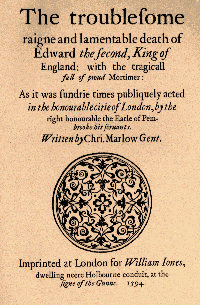
EdwardiiquartoBorn in Canterbury the son of shoemaker John Marlowe and his wife Catherine in 1564 (he was baptised on 26th February and likely to have been born a few days before), Marlowe attended the King’s School in the city and went on to study at Corpus College in Cambridge, receiving a Bachelor of Arts in 1584 and a Master of Arts in 1587. It is believed that at around this time, he was also working secretly for the government of Queen Elizabeth I, although what the nature of that work was remains unknown.

While Marlowe’s first play was Dido, Queen of Carthage, he first found theatrical success in 1587 with Tamburlaine the Great, later followed with a second part. His other four plays included The Jew of Malta, Edward the Second, The Massacre at Paris about the St Bartholomew’s Day Massacre in 1572, and Doctor Faustus.

The plays served as key works for the Admiral’s Men, the company of Edward Alleyn who performed many of the key roles in the plays, and who is strongly associated with the Rose Theatre  – indeed it was here that Tamburlaine the Great, The Jew of Malta, and Doctor Faustus premiered (you can see our earlier post on the theatre here).

Marlowe, who is known to have lived in Shoreditch, also completed other works included poetry and translations and while there is little evidence about his personal life, there is much speculation including that he was, as aforementioned, a spy as well as a carouser (he is known to have frequented taverns in London including Ye Olde Cock in Fleet Street), a homosexual and/or a heretic. It has also been suggested he was a tutor to noblewoman Arabella Stuart.

It is known that he was arrested in 1592 in Flushing in The Netherlands for counterfeiting coins and was sent back to England but no further action was taken.

His death is one of the big mysteries of his life. A warrant was issued for Marlowe’s arrest over some heretical tracts which were found in the lodgings of his colleague Thomas Kyd (who when questioned apparently implicated him) and he appeared to answer to the Privy Council on 20th May, 1593. They weren’t sitting and he was apparently instructed to appear daily until further notice. He was dead 10 days later.

The exact circumstances of his death remain a matter of speculation. It is often said he died in a drunken brawl with one early source suggesting this was over a homosexual love affair and another, more recent, theory suggesting he even faked his own death to avoid being executed for heresy (an extrapolation of this theory goes that after his fake death he continued writing plays under the name of William Shakespeare but this is generally deemed fairly far-fetched). The official account recorded at the time was that he was stabbed to death in a brawl over payment of a bill with men at a house in Deptford.

He was buried in an unmarked grave at St Nicholas’ Church in Deptford. There is a memorial window to him in Poet’s Corner in Westminster Abbey. A gift of the Marlowe Society, it was unveiled in 2002 and controversially included a question mark after the generally accepted date of his death. There is a portrait, dated 1585,  generally believed to be of Marlowe at Cambridge.

PICTURE: Title page of the earliest known edition of Edward II (1594)/Wikipedia

Lost London – The Blackfriars Playhouse…

Located on the site of the former Blackfriars Monastery which has closed during the Dissolution (see our earlier post here), the origins of the Blackfriars Playhouse or Theatre go back to the mid-1570s when children connected with the Queen’s Chapel Choir performed plays in part of the former monastery.

While those plays were performed in order to practice for those performed before Queen Elizabeth I, the organisers did also apparently use the theatre for paying audiences. This first theatre ceased operation in 1584.

In 1596, part of the priory and an adjoining building were bought by James Burbage in 1596 who created a playhouse within them. It was used by the Children of the Chapel, a group of choristers and other boys, until 1608 when the King’s Men took over – with Burbage’s son Richard and Shakespeare among those who had a share in the theatre – and used it as their winter playhouse.

The theatre – where Shakespeare himself is believed to have performed – was apparently the first commercial premises of its type to used artificial lighting and, usually for the time, featured music between acts.

The wife of King Charles I, Queen Henrietta Maria, is known to have attended the theatre later in its life in 1634 and again a couple of years later.

The theatre closed with the commencement of the English Civil War and the theatre was demolished in 1655.

The candle-lit Sam Wanamaker Playhouse, which opened in January at the Globe Theatre on Bankside, was designed based on drawings of indoor theatres of the era (there’s also a recreation of the Blackfriars Playhouse in the US which is home to the acting troupe of the American Shakespeare Center).

While nothing remains of the playhouse today, it lives on in the name Playhouse Yard.