Where is it? #73…

Where-is-it--#73

Can you identify where in London this picture was taken and what it’s of? If you think you can, leave a comment below. We’ll reveal the answer early next week. Good luck!

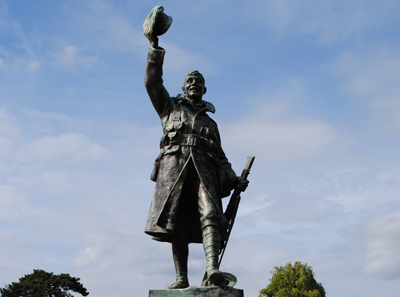
This is actually a picture of the Twickenham War Memorial, commemorating those who died in World War I and World War II. The bronze figure, the work of Mortimer Brown, sits in Twickenham’s Radnor Gardens, once the site of a house owned by the Earl of Radnor which sits on the bank of the River Thames. The memorial was recently restored following a campaign by the Friends of Radnor Gardens after one of its bronze plaques was stolen.

Special – Lord Mayor’s Show…

Lord-Mayor's-Show1

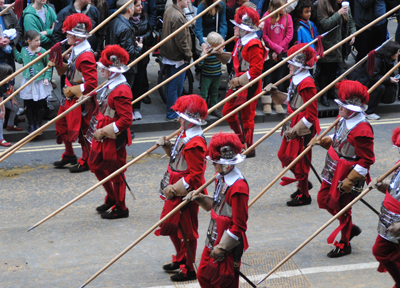
Tomorrow is the Lord Mayor’s Show and once again the great procession will make its through London’s streets so the Lord Mayor may swear their loyalty to the Crown. So, to celebrate, we thought we’d interrupt our regular programming and bring you 10 facts about the Lord Mayor’s Show…

1. The origins of the Lord Mayor’s Show go back to 1215 when King John granted the city the right to elect their mayors but only on condition that they made their way to Westminster to swear their loyalty each year. There is evidence that by the late 14th century, the journey had turned into something of a procession.

2. Lawyer Fiona Woolf is the 686th Lord Mayor, formally taking on the job when outgoing mayor Roger Gifford hands the City insignia to her in what is known as the Silent Ceremony held at Guildhall today. She is only the second woman to ever hold the post; Mary Donaldson was the first to do so in 1983.

3. The person responsible for organising the day is the Pageantmaster. The current Pageantmaster is Dominic Reid – he gets to travel in a ceremonial Landrover.

4. The day was originally held on 28th October, the Feast of St Simon and St Jude, but was moved to 9th November in 1751 when Britain adopted the Gregorian Calendar. Because this meant it call be held on any day of the week, to simplify matters in 1959 it was decided that the Show would be held on the second Saturday in November.

5. Effigies of Gog and Magog, seen guardians of the City of London, have appeared in the Lord Mayor’s Show since at least 1554, during the reign of King Henry V. For more on Gog and Magog, see our Famous Londoners post.

Lord-Mayor's-Show2

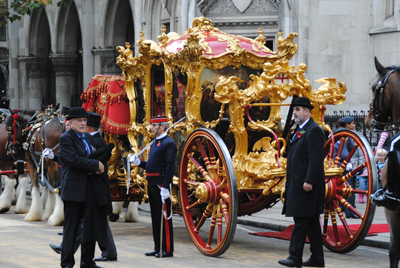
6. Since the early 15th century the Lord Mayor had travelled to Westminster via a pageant on the River Thames. This was dropped in favour of travelling on horseback. The magnificent State Coach used in tomorrow’s procession, meanwhile, was first used to convey the Lord Mayor to Westminster in 1757 (the mayors had ridden in coaches since 1712 after Sir Gilbert Heathcote fell off his horse in 1711). For more on the State Coach, see our Treasures of London article. As happened last year, before the Show starts, the Lord Mayor will once again travel upriver in the QRB Gloriana accompanied by a procession of 24 traditional Thames boats from London’s livery companies and port authorities. The flotilla will leave Vauxhall at 8.30am and travel past Tower Bridge to HMS President.

7. The modern route of the show – which takes in Cheapside, Ludgate Hill, Fleet Street going out from Mansion House to the Royal Courts of Justice and then returns back along Queen Victoria Street – was fixed in 1952 (although occasionally it has been disrupted due to things like roadworks). It apparently features 3,500 manholes, all of which have to be checked before the big day.

8. The modern Lord Mayor’s Show parade, which kicks off at 11am, is three-and-a-half miles long. This year’s procession features more than 7,000 participants.

9. Among those in the parade are representatives of the livery companies including that of the “great 12” –  the Mercers, Grocers, Drapers, Fishmongers, Goldsmiths, Merchant Taylors, Skinners, Haberdashers, Salters, Ironmongers, Vintners and Clothworkers – as well as other companies including some distinctly “new world”.

10. The fireworks display was canceled last year but is back for this year’s festivities. It kicks off at 5pm.

For more on the show – including a downloadable timetable and map – head to www.lordmayorsshow.org.
Around London – The Georgians at the British Library; wartime artist on show; Regent Street’s Christmas lights; Westminster’s new organ; and, celebrating success at the NPG…

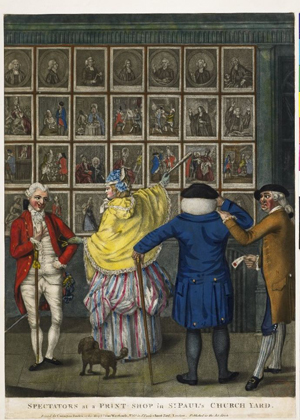
The-GeorgiansThe Georgians are under the spotlight in a new exhibition opening at the British Library tomorrow. Georgians Revealed: Life, Style and the Making of Modern Britain explores the ways in which the Georgian world influenced pop culture in Britain today, everything from fashion and theatre-going to our obsessions with celebrity scandals. The display features more than 200 artefacts from the library’s collection and includes Jeremy Bentham’s violin, Joseph van Aken’s An English Family at Tea, rare books and magazines, and illustrations and designs of landmark building’s such as Sir John Soane’s home (and now museum) in Lincoln’s Inn Fields. The exhibition, which is accompanied by a series of events (see the library website for details) comes ahead of the 300th anniversary of the accession of King George I next year. Runs until 11th March. Admission charge applies. Meanwhile, to mark the exhibition, the library has joined with Cityscapes in launching a new Georgian garden installation on the library’s piazza. Titled Georgeobelisk, the six metre high installation, will remain on the piazza for five months. A tribute to the four King Georges, it also serves as a reminder that it was also during the Georgian era that the British love of gardening was cultivated. For more, see  www.bl.uk/whatson/exhibitions/georgiansrevealed/index.html. PICTURE: Spectators at a Print shop in St Paul’s churchyard © British Museum.

Painting normally housed in “Britain’s answer to the Sistine Chapel” go on display in Somerset House today. The artworks, described as the “crowning achievement” of wartime artist Stanley Spencer, usually grace the walls of Sandham Memorial Chapel but are on display in London while the National Trust carries out restoration work at the Berkshire property. Spencer painted the works – which combine realism and visions from his imagination and were completed in 1932 – after serving as a hospital orderly during World War I.  The free display – Stanley Spencer: Heaven in a Hell of War – can be seen until 26th January. For more, see www.somersethouse.org.uk.

Regent Street’s Christmas lights – a preview of the upcoming DreamWorks film Mr Peabody and Sherman – will be turned on this Saturday night. Actor Ty Burrell, director Rob Minkoff and singer Leona Lewis will have the task of switching on the lights at about 7.15 pm while performers will include Passenger, Eliza Doolittle and former Spice Girls Emma Bunton and Melanie C. The event will be hosted by radio presenters Bunton and Jamie Theakston. The street will be traffic free all day and from 3pm to 7pm, Regent Street retailers will be showcasing fashions on a catwalk located just North of New Burlington Street. Programmes will be available from information points on the day.

A new organ was dedicated in Westminster Abbey’s Lady Chapel on Tuesday. The organ was commissioned by the Lord Mayor of London, Roger Gifford, as a gift to the Queen to mark the 60th anniversary of her coronation in 1953. The Queen agreed the organ, which had briefly resided at the Lord Mayor’s residence the Mansion House, should be installed permanently in the Lady Chapel, built by King Henry VII. The new organ was dedicated by the Earl of Wessex. For more, see www.westminster-abbey.org.

Now On: Achievement: New Photographs 2011-2013. Inspiring Britons at the peak of their professions are the subject of an exhibition running at the National Portrait Gallery. The display of recently acquired and previously un-exhibited photographs depict the likes of writer and presenter Charlie Brooker (by Chris Floyd), actress Gina McKee (Mark Harrison) and Skyfall director Sam Mendes (Anderson & Low). Admission is free. Runs until 5th January in Room 37a. For more, see www.npg.org.uk.

10 fictional character addresses in London – 3. 32 Windsor Gardens…

The address might not immediately ring a bell but it will when we tell you this was the home of London’s most famous bear, Paddington.

Paddington-BearFirst appearing in A Bear Called Paddington published on 13th October, 1958, Paddington Bear was the brainchild of Michael Bond, who was apparently inspired a couple of years earlier when he spotted a lonely teddy bear sitting on a shop shelf in a store near Paddington Station (a bear which he subsequently bought and gave to his wife as a Christmas present).

In the books, Paddington – who is typically depicted wearing a blue duffel coat, old hat and Wellington boots – was found at Paddington Railway Station by the Brown family with a note asking that he be looked after (he had been a stowaway on board a ship from Peru, put their by his Aunt Lucy who had gone to a retirement home in Lima).

Naming him Paddington after being unable to say his Peruvian name (it turns out later to be Pastuso), the family take the bear back to their large semi-detacted home at 32 Windsor Gardens, just around the corner from the station (his room ends up being located at the top of the house).

A Windsor Gardens does actually exist but it apparently has no connection with the Browns’ address which is said to have been wholly imaginary. The real Windsor Gardens is a tiny and rather unappealing cul-de-sac off Harrow Road, between Notting Hill and Maida Vale, and doesn’t even have a number 32.

Paddington, known for his love of marmalade, went on to appear in 13 books by Bond – selling more than 30 million copies around the world – and has been the subject of numerous other versions and spin-offs and even a couple of TV series. There’s also a movie in the works with a projected release date of Christmas 2014 and he’s also depicted in a statue by Marcus Cornish at Paddington Station.

For more on Paddington, see www.paddingtonbear.com.

PICTURE:  Lonpicman/Wikimedia Commons

Where’s London’s oldest…museum?

Power-House

London’s oldest museum is not the British Museum or any of the Kensington museums but is actually contained within one of the city’s iconic structures.

Located within the Tower of London, the Royal Armouries Museum takes the prize of being not only the city’s oldest museum but oldest museum in the whole of Britain.

It’s origins go back to medieval times when the tower housed the main royal arsenal and was a working armoury and, by the time of the Restoration, there was a permanent public display in the White Tower with the star attractions being the Spanish Armoury, a collection of weapons and torture instruments claimed to have been taken from the Spanish Armada of 1588, and the Line of Kings (see our earlier post on this here).

Other displays – including one focused on artillery and another on horses – were subsequently added in various buildings within the tower precincts including in the Grand Storehouse which, located to the north of the White Tower, destroyed by fire in 1841. Over the ensuing years, the displays were moved back into the White Tower.

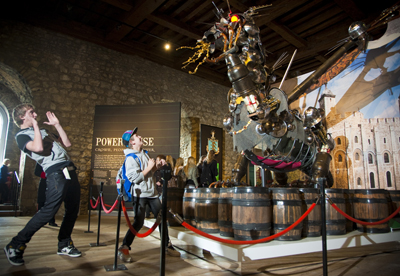
As well as the revamped Line of Kings and the Power House exhibition looking at the people, institutions and history of the Tower, the current display includes a dragon made of more than 2,600 items of weaponry, following a long-standing tradition in the museum of creating displays out of masses of weapons.

As well as continuing its presence at the Tower of London, the museum is now also housed at Fort Nelson at Portsmouth – this opened in 1995 when it became home to the museum’s artillery collection – and in Leeds, which opened in 1996. There’s also some weapons on display in Louisville, Kentucky, in the US, under a  cooperative agreement with the Frazier International History Museum.

PICTURE: ‘Keeper’, the Dragon trophy – part of the Power House display in the Royal  Armouries Museum at the Tower of London. HRP newsteam.

WHERE: Tower of London (nearest Tube station Tower Hill); WHEN: 9am to 5.30pm, Tuesday to Saturday, 10am to 5.30pm Sunday to Monday; COST: £21.45 adults; £10.75 children under 15; £18.15 concessions; £57.20 for a family; WEBSITE: www.hrp.org.uk/toweroflondon/.  

Where is it? #72…

Where-is-it--#72

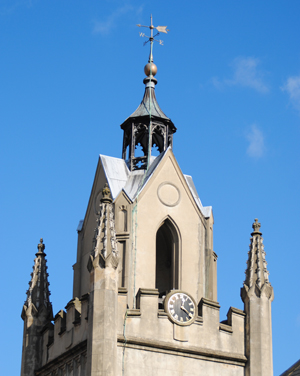
Can you identify where in London this picture was taken and what it’s of? If you think you can, leave a comment below. We’ll reveal the answer early next week. Good luck!

Well done to Jameson, this is indeed the steeple of the church of St Mary Magdalen Bermondsey, located in Bermondsey Street. The first record of the church dates from about 1290 when the church belonged to the Prior and Convent of Bermondsey, although a church did apparently exist some time prior. The current building largely dates from around 1690.

Around London – Reclaiming Castiglione; transport open weekend; and, Australia at the RA…

Oriental The UK’s first major exhibition on the work of the innovative but violent 17th century artist Giovanni Benedetto Castiglione opens tomorrow at the Queen’s Gallery next to Buckingham Palace. The exhibition, which features 90 drawings and prints from the Royal Collection, is aimed at re-establishing Castiglione as one of the greatest artists of the Baroque period, thanks to his being credited with creating huge drawings in oil directly on paper, producing about 60 etchings and inventing the technique of monotype. Works include his monotype prints Head of an oriental (late 1640s) and The Nativity with angels (about 1655), a translation of Titian’s Sacred and Profane Love and drawings like Circe with the companions of Odysseus transformed into animals. Castiglione’s “nomadic” career was marred by his violent temperament – he was repeatedly before the courts for assaulting people, apparently tried to throw his sister off a roof and was forced to leave Rome because, it is believed, he had committed murder. Castiglione: Lost Genius runs with Gifted: From the Royal Academy to The Queen, an exhibition of prints and drawings given to the Queen by Royal Academicians to mark her Diamond Jubilee, until 16th March. Admission charge applies. For more, see www.royalcollection.org.uk. PICTURE: Giovanni Benedetto Castiglione, The head of an oriental, late 1640s. Royal Collection Trust/©Her Majesty Queen Elizabeth II 2013.

The restored Met Locomotive 1 and the Victorian Jubilee Carriage 353 will be on show this weekend as part of the London Transport Museum’s Open Weekend at its Acton Depot. Visitors will be able to explore the depot’s vast collection of more than 400,000 objects along with a range of other activities including miniature tram and railway rides, heritage bus rides, talks and film screenings, and costumed interpreters as well as the chance to watch artist Ross Ashmore paint the locomotive and Jubilee Carriage. The weekend kicks off tomorrow. For more information and bookings, see www.ltmuseum.co.uk/whats-on/museum-depot/events.

On Now: Australia. This landmark exhibition at the Royal Academy of Arts at Burlington House in Piccadilly features more than 200 works including paintings, drawings, photography, watercolours and multimedia pieces by 146 Australian artists. Spanning the period from 1800 until today, the display includes works by Aboriginal artists such as Albert Namatjira, nineteenth century immigrants such as John Glover and Eugene von Guerard, impressionists like Arthur Streeton and Tom Roberts, early modernists like Margaret Preston and Roy de Maistre, 20th century painters including Arthur Boyd, Albert Tucker and Brett Whiteley and contemporary artists including Gordon Bennett, Fiona Hall and Shaun Gladwell. Highlights include Frederick McCubbin’s The Pioneer (1904), four paintings from Sidney Nolan’s Ned Kelly series (1946), Rover Thomas’ Cyclone Tracy (1991) and Emily Kame Kngwarreye’s Big Yam Dreaming (1995). Organised with the National Gallery of Australia, the exhibition runs until 8th December. Admission charge applies. For more, see www.royalacademy.org.uk.

10 fictional character addresses in London – 2. ‘Whitehaven Mansions’…

Florin-Court

Since we’re talking about the homes of detectives, we’ll continue on that trend with a look at the home of Agatha Christie’s creation Hercule Poirot as it appears in the TV series of the same name (now in its 13th and final season).

The Belgian-born detective, who featured in some 33 novels and 65 short stories, rose to the rank of the police chief of the city Brussels before the outbreak of World War I forced him to leave his home for England. There he met up with his friend Captain Arthur Hastings – they had apparently previously met – and undertakes some government work before eventually embarking upon his new career as a private detective.

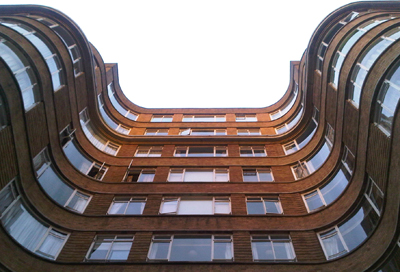
He subsequently moves into an art deco flat which becomes his workplace and home at 56B Whitehavens Mansions (he apparently chose the building based on its symmetry).  In the TV show, the art deco block chosen to represent this building is the Grade II-listed Florin Court, located on the eastern side of Charterhouse Square in Smithfield.

Actually built in 1936 – well after Poirot apparently moved in – the nine floor building has a curvaceous facade and boasts some 120 flats along with a basement swimming pool and rooftop garden. Interestingly, last July there was a fire in a first floor flat causing the entire building to be evacuated.

Poirot apparently lived in a couple of different apartments in the building and was also known at times to reside in The Savoy Hotel and The Park Lane Hotel.

PICTURE: Goodwillgames/Wikimedia Commons

LondonLife – Joey stabled at the V&A…

War-Horse

Joey, the puppet horse used in the West End play War Horse, has taken up a new home at the V&A in South Kensington. Created by the Handspring Puppet Company for the National Theatre’s adaption of Michael Morpurgo’s novel, Joey appeared in more than 1,640 shows since his debut at the New London Theatre on 28th March, 2009. He will now be housed in the V&A’s Theatre and Performance Gallery in a specially created display which shows how the puppet was operated on stage and features three mannequin puppeteers to illustrate the process. Joey was donated by Adrian Kohler and Basil Jones of South Africa’s Handspring Puppet Company who designed and created the puppets used in War Horse. War Horse, which continues its run at the New London Theatre, has been seen by more than four million people. For more, see www.vam.ac.uk. PICTURE: Joey at the V&A operated by Nicholas Hart (Head), Stuart Angell (Heart), Thomas Goodridge (Hind). © Victoria and Albert Museum, London. 


Famous Londoners – Sir Arthur Conan Doyle…

Given our current Wednesday series, we thought it only fitting that we take a quick look at the life of Scottish-born Sir Arthur Conan Doyle, a physician and author most famous for his creation of fictional detective Sherlock Holmes.

Born in Edinburgh on 12 May, 1859, to a wealthy Irish-Catholic family, Doyle was educated at a Jesuit preparatory school in England before  undertaking a medical degree at the University of Edinburgh. It was there where he met his mentor, Dr Joseph Bell, a figure who at least partly inspired the creation of Holmes, and it was also during his time here that he first began writing – his first short story was The Mystery of Sasassa Valley. Having taken a voyage to the Arctic Circle in the post of ship’s surgeon and worked in Birmingham as a doctor’s assistant, he was awarded a medical degree in 1881 (he became MD in 1885).

His first job after graduation was aboard another ship – this time sailing to Africa – and after the voyage he settled back in England, briefly in Plymouth and then in Portsmouth where he opened his first medical practice. For the next few years, he continued  practising as a doctor while writing and in 1885 married his first wife Louisa Hawkins.

In 1886, he started writing A Study in Scarlet. Introducing Sherlock Holmes and Dr John Watson to the world,  it was eventually published in Beeton’s Christmas Annual in 1888. Doyle went on to write some 60 stories about Holmes over the ensuing years but also wrote other books including historical novels, fantasy and science-fiction stories (The Lost World), romances (The White Company), plays (including one about Sherlock Holmes), poetry and written works which reflected his interest in Spiritualism – an interest which had started while he was at university.

In 1890, having studied opthalmology in Vienna, he established a practice at 2 Upper Wimpole Street, Marylebone, London (the location lies only a short distance from his creation’s famous address at 221b Baker Street) and, with his family, took up residence in Montague Place and later at 12 Tennison Road in South Norwood (marked by a Blue Plaque). But with no patients, he spent his time writing, deciding to kill Holmes off in 1893 but subsequently bringing him back to life after a public outcry. He toured the US in 1894 (other countries he visited during his life included Australia) and later served as a surgeon in the Boer War (1899-1902), for which he was knighted in 1902.

Following the death of his first wife form tuberculosis in 1906 (with whom he had two children), Doyle married Jean Elizabeth Leckie in 1907. Moving to Windlesham in Sussex (it was here Doyle would live for the rest of his life while keeping a flat in London), they had three further children. Meanwhile his interest in Spiritualism continued to grow, particularly following the death of his son, Kingsley, in World War I.

His final 12 stories about Sherlock Holmes were published in 1928 in a compilation called The Casebook of Sherlock Holmes. The following year, despite poor health, he embarked on a Spirtualism tour on the continent but had to break it off and return home to Crowborough, East Sussex, in England. There he died on 7th July, 1930, leaving behind a literary legacy which has continued on unchecked. His grave can be found in Minstead Churchyard in New Forest.

For more on Sherlock Holmes, see our earlier posts Famous Londoners – Sherlock Holmes and 10 fictional character addresses in London – 1. 221b Baker Street….

Where is it? #71…And the answer is…

Where-is-it--#71

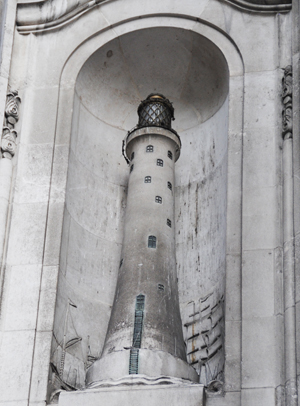
Can you identify where in London this picture was taken and what it’s of? If you think you can, leave a comment below. We’ll reveal the answer early next week. Good luck!

Well done to Jameson, this lighthouse sculpture does indeed adorn a building at 42 Moorgate. It has been suggested that the lighthouse, which apparently did once work, was the symbol of The Ocean Accident and Guarantee Corporation Ltd, the original occupant of the building. As Jameson points out, if you do want to know more, there is a terrific article on the sculpture here.

Lost London – The Pillories…

Once a visible sign of London’s legal system, the city had several pillories which were used to degrade and humiliate those offenders put within them.

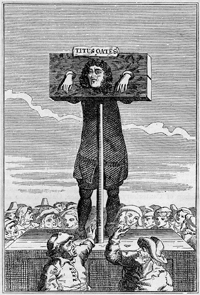
Titus-OatesOriginating in medieval times, the pillories were wooden contraptions in which a standing person’s head and hands were held in place and exposed to the ridicule of the crowd (not to mention their rotten foodstuffs and other less savoury things). They were a similar form of punishment to the stocks and were designed to humiliate those put within them.

They were used to punish a broad range of offenders including everyone from con-men and forgers to traders who didn’t play fair with their customers, people publishing unlicensed literature, and homosexuals.

Some people were pilloried repeatedly and additional punishments could be handed out to some put in the pillory – such as the nailing of the offender’s ears to the structure. There was cases of enraged mobs injuring the person locked in the pillory so badly that they died and the journey to the pillory – a formal parade of the malefactor before the people – was another chance for people to shout abuse and throw things at the offender.

As well as in Charing Cross where the pillory was located just to the south of Trafalgar Square, pillories were found at locations in Cheapside, Cornhill and Old Bailey in the City as well as Old Palace Yard and Tyburn in Westminster.

Among the most famous occupants of London’s pillories was the writer Daniel Defoe. The author of Robinson Crusoe and Moll Flanders, he was placed here on 31st July,1703, due to his publication of pamphlets criticising the church. It didn’t prove the harshest of punishments, however – Defoe was greeted with flowers, not stones, by a crowd rather sympathetic to his cause.

Others to suffer the punishment of the pillory included Titus Oates, who fabricated a plot to kill King Charles II, and puritan William Prynne, who lost both his ears when pilloried for libelling Queen Henrietta Maria  (although they were apparently sewed back on before he lost them again for a subsequent offence).

The punishment was formally abolished in 1837 – the last time it was used was in 1830.

PICTURE: Wikipedia. Image is from Robert Chambers’ Book of Days, 1st edition.

Around London – Chinese masterpieces at the V&A; Iraq war photography; and, The Age of Glamour at the Cartoon Museum…

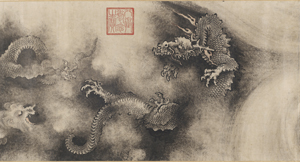
Chen_Rong_Nine_DragonsChinese masterpieces are the focus of a new exhibition opening at the V&A in South Kensington on Saturday. Masterpieces of Chinese Painting 700-1900 will feature more than 70 works including some of the earliest surviving Chinese paintings and many shown in Europe for the first time. Organised chronologically in six successive periods, the works in the display range from intimate works by monks to a 14-metre long scroll painting. As well as examining the tensions between tradition and innovation, the exhibition will look at the variety of settings for which the paintings were created – from tombs and temples to banners, portable handscrolls and hanging scrolls – and the materials used. The exhibition runs until 19th January. Admission charge applies. Meanwhile, from 2nd November, celebrated Chinese artist Xu Bing will transform the museum’s John  Madejeski Garden into an “ethereal Arcadia” inspired by the Chinese fable Tao Hua Yuan (The Peach Spring Blossom) in an installation to coincide with the exhibition. Runs until 2nd March. For more, see www.vam.ac.uk/chinesepainting. PICTURE: Nine Dragons (detail), Chen Rong (1244), © 2013 Museum of Fine Arts, Boston

A new exhibition of photography marking the 10th anniversary of the start of the second Iraq war opens today at the Imperial War Museum. Featuring the work of photographers Mike Moore, a former Fleet Street photographer who was the first press photographer to be officially embedded with the British Army, and Lee Craker, an American photographer who specialises in documentary photography, the exhibition examines the impact of the war on the Iraqi people and the US and British troops who served there.  The exhibit is the first photography show to be exhibited as part of the IWM Contemporary programme. Runs until 5th January. Meanwhile one of Britain’s leading contemporary photographers, Donovan Wylie, explores the effects of modern day military surveillance programs in a new exhibition, at the IWM, Vision as Power. The display includes five works. Runs until 21st April. Admission to both exhibitions is free. For more, see www.iwm.org.uk.

The Age of Glamour: RS Sherriffs’ Stars of Stage & Screen. This exhibition at the Cartoon Museum in Bloomsbury features the work of Sheriffs, whose caricatures of the likes of Charlie Chaplin, Greta Garbo and Douglas Fairbanks were published in magazines including Radio Times, London Calling and The Sketch. As well as individual portraits, the works include ensemble drawings such as one featuring Laurence Olivier and Peggy Ashcroft in Romeo and Juliette. Runs until Christmas Eve. Admission charge applies. For more, check out www.cartoonmuseum.org.

10 fictional character addresses in London – 1. 221b Baker Street…

221b-Baker-Street

Today we kick off our new Wednesday series with a look at some of the most famous addresses in London where fictional characters once lived. Most, if not all, of the addresses we’ll look at are not fictional in themselves – they do actually exist – but the characters said to have lived there owe their lives solely to the imaginations of their creators and the readers and audiences who have loved and admired them.

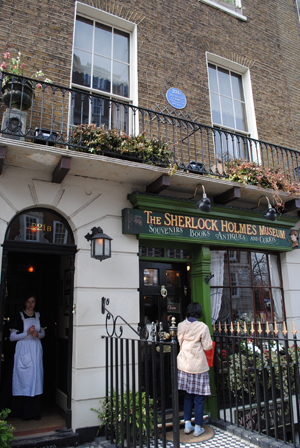
To kick it off, we take a quick look at what is certainly the most visited address of a fictional character in London – 221b Baker Street, the home of Sherlock Holmes and his associate Dr John Watson.

The-Sherlock-Holmes-MuseumWe’ve looked mentioned this Baker Street address in a couple of earlier posts – including a look at the origins of the naming of Baker Street and a piece on Sherlock Holmes himself.

So, to somewhat recap, the writer Sir Arthur Conan Doyle has Holmes and Watson living at this address from 1881 (it becomes their address in the first book featuring them – A Study in Scarlet, published in 1887) to 1904 when Holmes retired (Watson was not a continual presence here, moving in and out a couple of times).

What’s interesting is that the address now belongs to the Sherlock Holmes Museum, although in terms of the other numbers in the street, this is actually located between numbers 237 and 241 (in a street which was, prior to the 1930s, known as Upper Baker Street).

What is now number 221 is a 1930s art deco building formerly known as Abbey House (but this would have been 41 Upper Baker Street in 1887). It was the headquarters of Abbey National which had a long-running dispute with the museum over the right receive mail at the address 221b (since the closure of Abbey House in the early Noughties, the museum has received the mail).

It should be noted that there are also numerous other theories over the ‘real’ location of 221b Baker Street – in particular one which suggests the real address is opposite the former location of Camden House in Baker Street, thanks to a reference in The Empty House.

The museum, which is located in a house built in 1815, is set up as it was in Holmes’ day and contains his first floor study, filled with artefacts relating to the many cases he solved – including his famous pipe as well as his deerstalker hat, magnifying glass, violin, and the wicker chair which was used in Sidney Paget’s famous illustrations.

Other rooms include Dr Watson’s small second floor bedroom and the housekeeper Mrs Hudson’s room.

Worth noting is that there is also reconstruction of Holmes’ study at The Sherlock Holmes pub, located at 10-11 Northumberland Street in Westminster. This had been created for the Festival of Britain in 1951 by the Marylebone Borough Library and Abbey National and was located at Abbey House. For on this, check out the Westminister Libraries & Archives site.

WHERE: The Sherlock Holmes Museum, 221b Baker Street (nearest Tube station is Baker Street);  WHEN: 9.30am to 6pm daily; COST: £8 adults; £5 children (under 16); WEBSITE: www.sherlock-holmes.co.uk.

LondonLife – A glimpse into London’s shameful past…

Map-of-Romney-plantationA map of the Romney plantation is among a selection of unseen documents from a West Indian sugar plantation on show as part of a new display, A Material Connection, which opened at the Museum of London Docklands in August. The documents are just some of the 1,000 letters, invoices and deeds dating from between the 1740s and 1860s which make up the Romney family plantation archive.  It is the first time the public have a chance to see documents from the archive which was purchased by the museum in 2011 using an £85,000 grant from the Heritage Lottery Fund. The display explores the role London played as a nexus between Britain and its slave colonies and in particular the relationship between a specific slave plantation and its owner. Opened on the International Day for the Remembrance of the Slave Trade and of its Abolition (23rd August), the display forms part of the London, Sugar & Slavery exhibition at the museum. For more, check out the Museum of London Docklands.

PICTURE: Museum of London Docklands.


What’s in a name?…Gracechurch Street…

This central London thoroughfare runs through the heart of the City of London and has been a main thoroughfare since Roman times.

Gracechurch-StreetStretching from Eastcheap (near the Monument) to Leadenhall Street, the street runs over the site of what was Roman London’s forum and basilica (see our earlier post on the Roman buildings here).

The name, meanwhile, comes from the former medieval church of St Benet Gracechurch which was once located on the corner of Gracechurch and Fenchurch Streets.

The church, which was destroyed in the Great Fire of 1666 but rebuilt by Sir Christopher Wren before finally being demolished in 1876, was named for St Benedict (St Benet is a short form) while Gracechurch – which was used after the Great Fire – was a corruption of Grasschurch, a reference to it being located near a hay market (in fact, the church was also known as St Benet Grass). The street was also known as Gracious Street.

Landmarks along Gracechurch Street including the Leadenhall Market (see our earlier post here) and a 30s-inspired modern building of note which stands at number 20.

PICTURE: Looking down Gracechurch Street toward the Monument.

For more on London’s Wren churches, see John Christopher’s Wren’s City of London Churches.

Where is it? #70…

Where-is-it--#70

Can you identify where in London this picture was taken and what it’s of? If you think you can, leave a comment below. We’ll reveal the answer early next week. Good luck!

OK, so for those who were wondering, this statue, an 1836 marble by John Gibson, depicts William Huskisson, a Tory politician and financier who was present at the fall of the Bastille in Paris on 14th July, 1789, but became best known for being the world’s first railway casualty after he was run over by George Stephenson’s locomotive engine, Rocket, when he failed to see the oncoming train while trying to speak to the Duke of Wellington. The statue is located in the Thames-side park, Pimlico Gardens.

Treasures of London – The lions of Trafalgar Square…

Lion

Dwarfed by the towering form of Nelson’s Column in the southern part of Trafalgar Square, the four lions at the base of the column’s plinth – known to some as Landseer’s Lions – are now a favourite of tourists and Londoners alike. But it wasn’t always so.

While the column was erected in 1843 and the fountains in 1845, it wasn’t until 1867 that the lions – designed by Sir Edwin Landseer – appeared in the square. The reasons for the delay were apparently several including arguments over the artistic vision of the sculptures and funding and Landseer’s own ill-health.

Indeed, Landseer, best known as a painter of animal subjects, wasn’t the first choice as sculptor but was only commissioned after the models of the first sculptor – Thomas Milnes –  was rejected (there’s a terrific painting by John Ballantyne of Landseer working on the lions in the National Portrait Gallery).

As a result when the lions were eventually unveiled, they were held to general ridicule when they finally arrived, costing thousands of pounds more than what had been budgeted for them.

While the lions were initially going to be made of granite, Landseer’s 20 foot long lions were cast by Baron Marochetti in bronze at his Kensington studio. The form of the lions was apparently modelled on a dead lion which, according to Ed Glinert in The London Compendium, were brought to his studio in St John’s Wood by cab from the London Zoo, although all four lions have distinct faces.

Legend has it that the Grade I-listed lions will come to life if Big Ben chimes 13 times.

There has been concern in recent years about the damage people are doing to the lions in climbing on them with one report recommending that the public be banned from climbing on them.

For more, see our previous posts on Nelson’s Column and Trafalgar Square.

For more on London’s monuments, check out Peter Matthews’ London’s Statues and Monuments (Shire Library).

Around London: Nelson and the Navy; Whistler at Dulwich; Eric Coates’ Blue Plaque; childrens’ books at BL…

A new permanent gallery looking at how the Royal Navy shaped individual lives and the course of British history over the 18th century opens at the National Maritime Museum in Greenwich on Monday 21st October, Trafalgar Day. Nelson, Navy, Nation charts a course from the Glorious Revolution of 1688 through to the defeat of Napoleon in 1815 and provides a setting for the museum’s many artefacts related to Vice-Admiral Lord Nelson. Among the 250 objects on display in the gallery are the uniform (with bullet hole) Nelson wore at the Battle of Trafalgar, artworks likes William Hogarth’s Captain Lord George Graham in his Cabin, a seven barreled volley gun and grim items like a surgeon’s tools including an amputation knife, bone saw and bullet forceps. There is also the last letter Nelson wrote to his daughter Horatia and mourning rings worn by close friends and family at his funeral. Entry to the new gallery is free. For more, see www.rmg.co.uk.

The first major exhibition dedicated to the American-born artist James Abbott McNeill Whistler’s time in London between 1859 and his death in 1903 opened at the Dulwich Picture Gallery this week. An American in London: Whistler and the Thames features paintings, etchings and drawings produced by the artist and more than 70 objects related to Whistler’s depiction of the Thames and Victorian London. Highlights include Nocturne: Blue and Gold – Old Battersea Bridge (1872/1873) and Brown and Silver: Old Battersea Bridge (1859-1863), the oil painting Wapping (1860-64) and the etching Rotherhithe (1860). There are also a series of portraits of Whistler and his patrons. Runs until 12th January. Admission charge applies. For more, see www.dulwichpicturegallery.org.uk.

Composer Eric Coates has been honoured with the unveiling of an English Heritage blue plaque outside his former home at Chiltern Court in Baker Street. Coates, who created “some of the best known and loved pieces of English light orchestral music”, lived in a flat at the property between 1930-39. For more, see www.english-heritage.org.uk/discover/blue-plaques/.

On Now: Picture This: Children’s Illustrated Classics. This exhibition in the Folio Society Gallery at the British Library takes a look at 10 of the most iconic children’s books of the 20th century – from Charlie and the Chocolate Factory to The Wind in the Willows, Paddington Bear, Peter Pan and Wendy, and The Iron Man as well as Just So Stories, The Hobbit, The Borrowers, The Secret Garden and The Railway Children. On display is at least four illustrated editions or artworks of each title with Quentin Blake, Michael Foreman, Peggy Fortnum and Lauren Child among the artists whose works are being shown. The exhibition also features five specially filmed interviews with four illustrators and Paddington Bear author Michael Bond. Runs until 26th January. Entry is free. For more, see www.bl.uk.

LondonLife – The Monument from St Paul’s…

Monument1

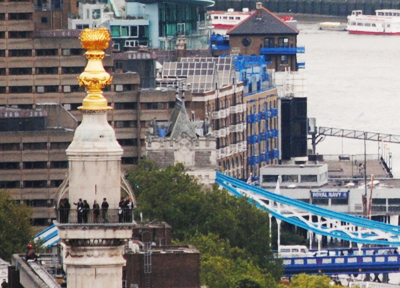
View of the top of the Monument from the top of St Paul’s Cathedral. For more on the history of The Monument, see our earlier post here.