We reintroduce an old favourite this month with our first ‘Where’s London’s oldest’ in a few years. And to kick it off, we’re looking at one of London’s oldest public clocks.
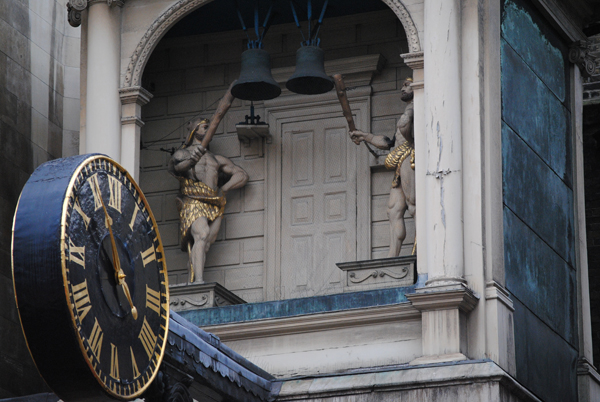
Hanging off the facade of the church of St Dunstan-in-the-West in Fleet Street is a clock which is believed to have been the first public clock to be erected in London which bears a minute hand.
The work of clockmaker Thomas Harris, the clock was first installed on the medieval church in 1671 – it has been suggested it was commissioned to celebrate the church’s survival during the Great Fire of London and was installed to replace an earlier clock which had been scorched in the fire. Its design was apparently inspired by a clock which had once been on Old St Paul’s Cathedral and was destroyed in the fire.
Like the clock it replaced, this clock sat in brackets and projected out into Fleet Street which meant it was able to be seen from a fair distance away (and being double-sided meant the black dials could be seen from both the east and the west). Like the Roman numerals that decorate it, the two hands, including the famous minute hand, are gold.
To the rear and above the clock dials are located the bells and striking mechanism. The bells are struck on the hours and the quarters by ‘automata’ – Herculean figures, perhaps representing Gog and Magog (although to most they were traditionally simply known as the ‘Giants of St Dunstan’s’), who do so using clubs and turn their heads.
Such was the attention these figures attracted that when the clock was first installed the area became notorious for pick-pockets who apparently went to work on unsuspecting passersby who had stopped to watch the giants at work.
This church was demolished in the early 1800s to allow the widening of Fleet Street and when it was rebuilt in 1830, the clock was absent. Having decided it couldn’t be accommodated in the new design, it had been auctioned off with the art collector, Francis Seymour-Conway, the 3rd Marquess of Hertford, the successful bidder.
He had it installed on his Decimus Burton-designed villa in Regent’s Park and there it remained until 1935 when Lord Rothermere, who had bought the villa in 1930, returned it to the church to mark the Silver Jubilee of King George V.
There are numerous literary references to the clock including in Charles Dickens’ David Copperfield, Thomas Hughes’ Tom Brown’s Schooldays, Oliver Goldsmith’s Vicar of Wakefield and a William Cowper poem.



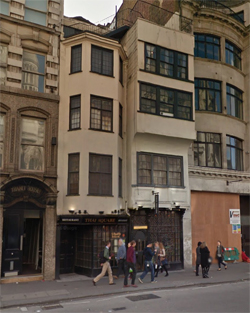

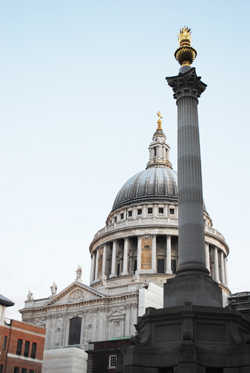

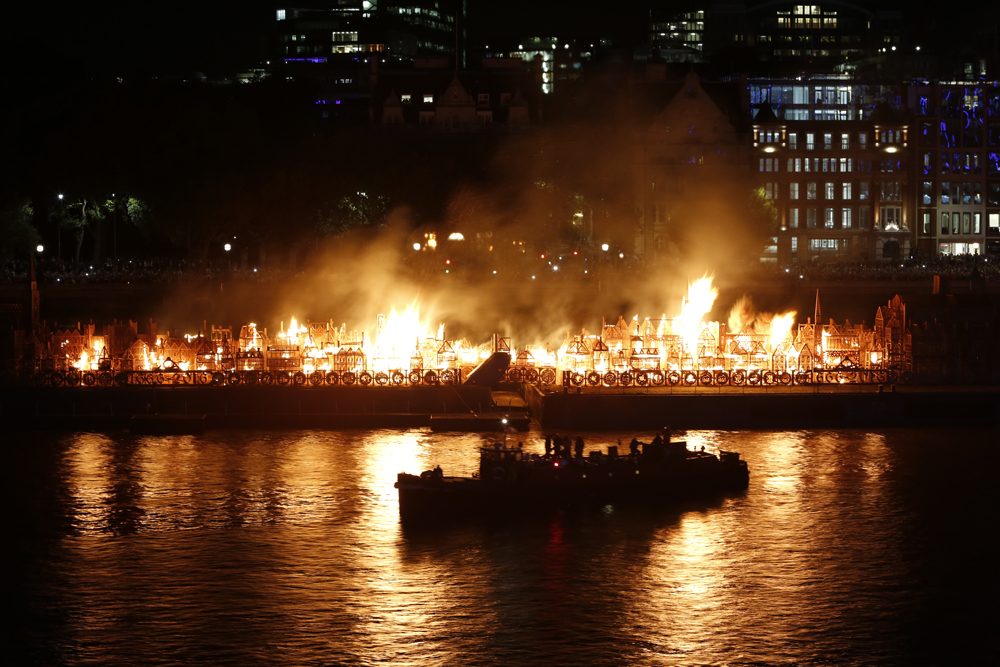
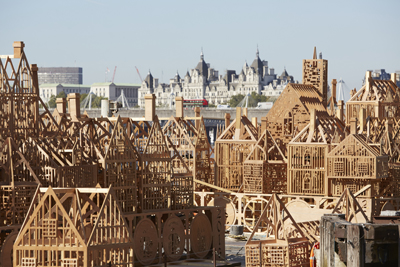

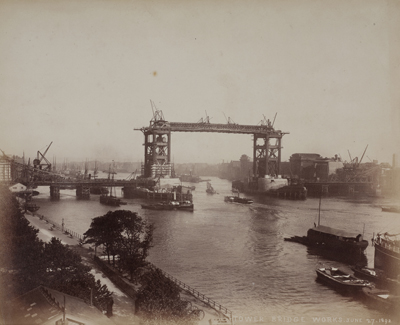
 Albury Street in Deptford, 1911. The image, taken by the London County Council, is just one of thousands which form part of a new free, online resource, Collage – The London Picture Archive. The world’s largest collection of images of London, the archive contains more than 250,000 images of London spanning the period from 1450 to the present day. It includes more than 8,000 historical photographs of life on the capital’s streets as well as major events – everything from the Great Fire of London in 1666 to the construction of Tower Bridge in the late 19th century. The photographs, maps, prints, paintings and films in the collection are all drawn from the collections of the City of London Corporation’s Guildhall Art Gallery and the London Metropolitan Archives in Clerkenwell. Other images shown here include (above right) ‘Street Life in London’, 1877 (taken by Adolphe Smith and John Thomson, this image was an early use of photography); (below) ‘Construction of the Metropolitan Railway (the first tube line)’, 1862 (taken at King’s Cross Station); and (far below), ‘The Construction of Tower Bridge’, 1891-1892 (taken from Tower Embankment). Collage – The London Picture Archive is free to access and available at

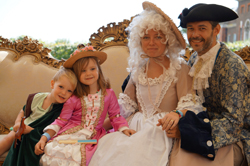 • Join Queen Caroline, wife of King George II, for a garden party in the grounds of Kensington Palace this weekend. The celebrations include music, military drills and live performances in a bid to bring the era of the Georgians to life. Visitors can listen to court gossip, learn how to play popular music and devise ways to amuse the queen as they pop in and out of a range of tents set up in the gardens, each of which contains a different activity, from uncovering dress secrets to designing a mini-garden fit for a king or queen. There’s even the chance to sample some Georgian ice-cream in the ice-house. The days will be held from today until 21st August. Admission charges apply. For more, see