What’s in a name?…Knightsbridge

Now famed for its shopping and proximity to museums, the former village of Knightsbridge takes its name from a bridge which once spanned the Westbourne River (a river now located underground which flows from Hampstead down through Sloane Square to enter the Thames at Chelsea) and linked the village of Kensington with London.
While the origins of the bridge’s name remain shrouded in mystery (the bridge itself reportedly stood at what is today Albert Gate), the anecdotal stories which might explain it include a tale that two knights once fought here and another which attributes the name to the fact that the area was thought so unsafe that to come without a knight was considered foolhardy. Indeed the name Knightsbridge was once synonymous with highwayman and robbers waiting to plunder passersby.

While the name is apparently not mentioned in the Doomsday Book, by the 13th century it is listed as a manor belonging to the monks at Westminster Abbey (this was apparently a gift from King Edward I – in fact some accounts have the area also recorded as King’s Bridge, Kyngesbrigg). One of the key events which the area apparently hosted was the meeting of Empress Matilda with representatives of London’s citizens in 1141 during her ongoing fight for supremacy with King Stephen.

The area remained relatively rural – and as a village in its own right – until the late 18th century when the area finally became joined to the ever-expanding metropolis.

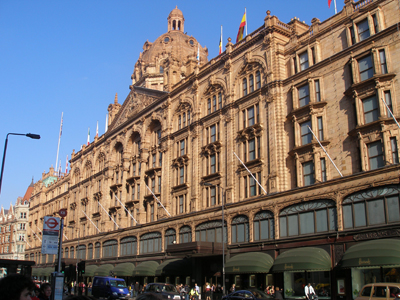
These days Knightsbridge is little more than a road and a strip of highly developed land to the south (Westminster City Council’s Knightsbridge conservation area, which contains more than 275 listed buildings, runs as far east as Queen’s Gate) but it does boast some very high end shopping – think Harrods (pictured), founded in 1824 and opened on the current site almost 30 years later, and Harvey Nichols, founded in 1813.

There’s also some very grand late Victorian residential real estate (much of which is owned by the the Duke of Westminster and Earl Cadogan), which, along with new developments, have made Knightsbridge one of the highest price property markets in London (and indeed, the world).

The eastern end of Knightsbridge – Westminster Council include Royal Albert Hall in its Knightsbridge Conservation Zone – runs into the museum district of South Kensington, home to some of London’s best museums, including the Victoria & Albert Museum and the National History Museum.

PICTURE: Wikipedia
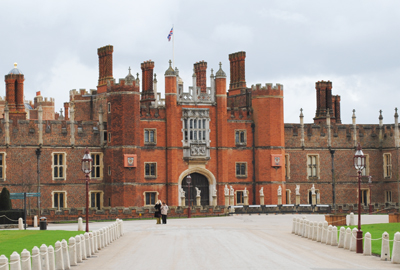
King James I’s London – 9. Hampton Court Palace

It’s fitting given the important role Hampton Court Palace played in the creation of the King James Bible that we include it in this series. But Hampton Court Palace is also notable for some other events during King James I’s reign. First, however, we turn to the Hampton Court Conference…

It was in 1604 that King James I meet at Hampton Court with representatives of the Church of England, including one party led by Archbishop John Whitgift (representing the church hierarchy) and another party led by John Rainolds (representing the Puritans), to discuss complaints made by the Puritans concerning a range of matters. While a new Bible wasn’t initially on the agenda, the three days of discussions did eventually lead to King James I commissioning the creation of a new Bible which eventually became known as the King James Version.

King James I was already familiar with Hampton Court Palace – it was in the palace that he had celebrated his first Christmas as king the previous year. Notably, it was during this Christmas and New Year period that Shakespeare’s acting company, the King’s Men, performed in the palace’s Great Hall for the king and his court.

At that stage, the palace hadn’t been dramatically updated since Tudor times – in fact, it wasn’t until after the accession of King William III and Queen Mary II following the “Glorious Revolution” in 1689 that the Tudor palace was given a major overhaul.

King James I continued to visit Hampton Court during the remainder of his reign and his visits, which were generally proceeded by a program of repairs, were noted for the lavish entertainment that took place when they occurred.

It was also at Hampton Court Palace that James’ wife, Queen Anne, died of dropsy in 1619. And where his son King Charles I, who had commissioned some improvements to the palace, was imprisoned for a period during the Civil War. But more of that another time…

WHERE: Hampton Court Palace, East Molesey, Surrey (nearest station is Hampton Court from Waterloo); WHEN: 10am to 6pm everyday (winter hours 10am to 4.30pm from 31st October to 26th March); COST: Adult £15.40, Concession £12.65, Child under 16 £7.70 (under fives free), family tickets, garden only tickets and online booking discounts available; WEBSITE:www.hrp.org.uk/HamptonCourtPalace/

Lost London – Blackfriars Priory

The London area of Blackfriars – centred on Blackfriars Railway Station – takes its name from the former Dominican friary (known as the “black friars” thanks to their dark robes) which stood on the site.

The Dominicans first came to England in the 1220s and soon took up residence in Holborn. But the limitations of that site led them to move to a new location between Ludgate and the River Thames in the latter part of the 13th century. There, they constructed a substantial priory.

The priory subsequently played an important part in London’s civic and religious life – Parliament and the Privy Council is known to have met here and in 1529, a hearing was held here with regard to the divorce of King Henry VIII and Catherine of Aragon.

It was also a place of burial for the wealthy and influential – among those buried there was the beloved wife of Edward I, Eleanor of Castille (at least her heart was – her body was buried at Westminster Abbey).

The priory was dissolved in 1538 during the Dissolution. The Blackfriars Playhouse was built on the site during Elizabethan times and the Apothecaries Company also took up residence there. Those of the original buildings that survived were destroyed in the Great Fire of 1666. In more recent times, the area became the site of Blackfriars Railway Station.

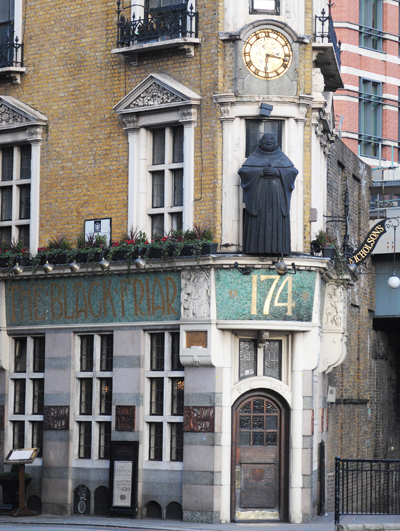
A reminder of the area’s origins can be found on the facade of The Black Friar pub (1875) which sits opposite Blackfriars Bridge at the western end of Queen Victoria Street (pictured). There you can see a statue of a black friar, the work of Henry Poole which dates from around the beginning of the 20th century. There is also a plaque commemorating the friary in nearby Carter Lane.

Around London – The Tower hosts Royal Beasts; take a ride on a 1938 tube train; Lambeth Palace Library celebrates the King James Bible; and, see model cathedrals at Sir John Soane’s house…

• The history of the Royal Menagerie is the focus of a new exhibition on now at the Tower of London. Royal Beasts explores the history of the Tower menagerie which, founded during the reign of King John in the early 1200s, remained there for more than 600 years. Among the animals were lions (the first record of which dates from 1210), a grizzly bear (a gift from the Hudson Bay Company to King George III), elephants, tigers, ostriches and kangaroos. Highlights of the exhibition include modern animal sculptures by artist Kendra Haste and interactive sensory displays. The recently restored north wall walk and the never before opened Brick Tower will host some of the displays, including sights, sounds and smells of some of the animals. See www.hrp.org.uk/TowerofLondon.

A 1938 tube train will run along the western end of the Piccadilly Line this Sunday (that’s Father’s Day in case you’ve forgotten) as part of the London Transport Museum’s Heritage Vehicles on the Move 2011 programme. Leaving Northfields, the train will travel to High Street Kensington via Earl’s Court (crossing from the Piccadilly to the District Line in a move not normally experienced by the general public) before heading back down the District Line to Acton Town where it will change back onto the Piccadilly Line. The train will then undertake the “fishhook move”, visiting Heathrow Terminal 4 before going to Terminals 1,2,3 and 5. The entire journey is expected to last about two hours. Tickets, which can be purchased at the museum ticket desk or by calling 020 7565 7298, will need to be collected at Northfields Station. For more, see www.ltmuseum.co.uk/whats-on/events/vehicles-on-the-move.

• Lambeth Palace Library is celebrating the 400th anniversary of the King James Bible with a new exhibition. The exhibits include a 1611 edition of the Bible as well as Medieval Bible translations, landmark editions of the Bible which drew on the textual scholarship of the Renaissance and Reformation and early printed vernacular versions. Runs until 29th July. Admission is by pre-booking only. For information on buying tickets and more, see www.lambethpalacelibrary.org/content/2011exhibition.

On Now: Time is running out to see Sir Herbert Oakley’s collection of 27 models of European and English cathedrals at the Sir John Soane Museum. The models were made in the 1850s by William Gorringe, who was a modelmaker by appointment to Queen Victoria. Runs until 25th June. For more, see www.soane.org/exhibitions/

King James I’s London – 8. The New World

It was during the reign of King James I that the first permanent English settlement was made in what was then called the New World (and is now better known as the United States of America).

Named Jamestown (after the King) and located on Jamestown Island, it was the capital of the new Virginia Colony and was founded by the London Company.

The ‘discovery’ and settlement of the New World impacted London itself in various ways – here we look at a couple of related sites in London…

First up is Blackwall in East London, from where three small merchant ships of the Virginia Company of London sailed in 1606 under orders from King James I to bring back gold from the New World. The site is now marked by the First Settlers Monument, first unveiled in 1928 and then restored in 1999.

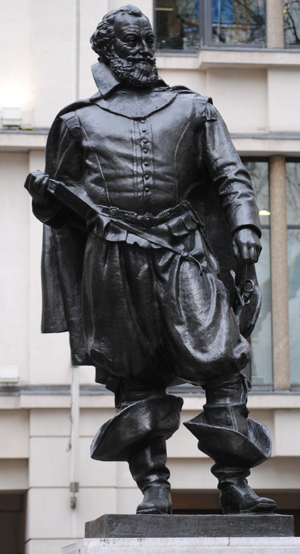
Among those who was on board the ships is Captain John Smith (he of Pocahontas fame) – a statue of him can be found in Bow Churchyard in the City (pictured right, it’s a replica of an original in Richmond, Virginia). Captain Smith was buried in St Sepulchre-without-Newgate, where there is a window commemorating him.

Next we turn to the former, now non-existent, property of John Tradescant and his son, also John Tradescant. Gardeners to the rich and famous and avid collectors of all sorts of artefacts, they are noted for having founded “The Ark” – a house in Lambeth, in they showed off a collection of curiosities that they had gathered on his trips (both were were widely travelled).

These included objects presented to by American colonists including John the Elder’s friend Captain John Smith and those collected by personally by John the Younger (he made several trips to the New World). Among them was the mantle of Powhattan, the father of Pocahontas.

The pair’s name lives on in Tradescant Road in Lambeth (it marks one side of the Tradescant estate). They are both buried at St Mary-at-Lambeth which now houses the Garden Museum.

LondonLife – Trooping the Colour…

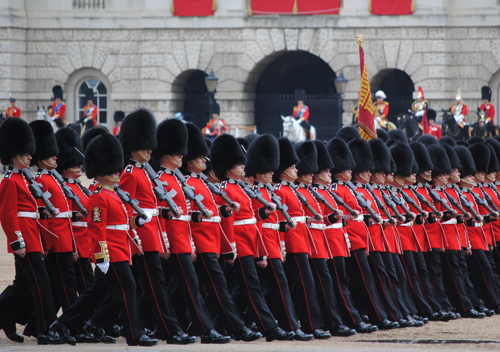
A ceremony first believed to have been performed during the reign of King Charles II, since 1748 the parade has been used to mark the Official Birthday of the Sovereign.

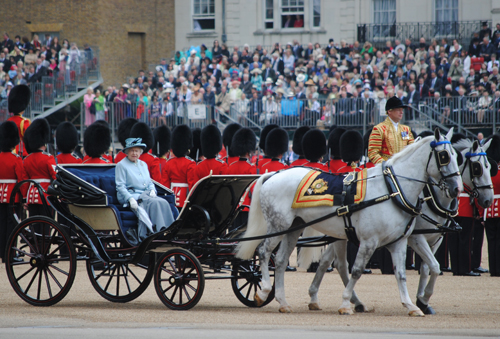
 Queen Elizabeth II inspects the Guards in her phaeton.

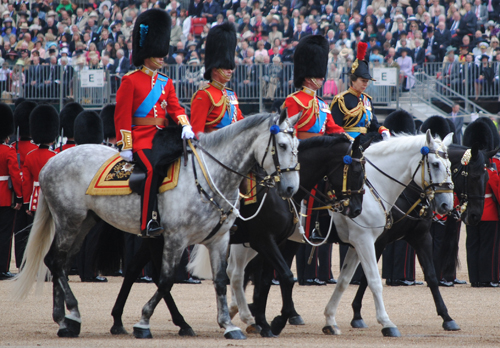
Prince William, Prince Charles, the Duke of Kent and Princess Anne riding Queen’s Escort behind the Queen.

The parade includes six Guards groups. This year it was the turn of the Scots Guards, raised in 1642 at the behest of King Charles I, to parade their colours.

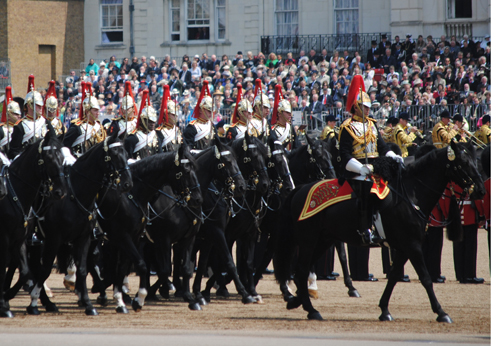
Part of the Household Mounted Cavalry, the Blues and Royals.

At 1pm, back at Buckingham Palace following the firing of a 41 gun salute, the Queen and the Royal Family watch Royal Air Force aircraft performing a fly past overhead.

The RAF’s Red Arrows aerobatic display team perform a colorful flypast over Buckingham Palace.
All images and text are © David S. Adams

King James I’s London – 7. The Gunpowder Plot

One of the most significant events during the early year of King James I’s reign was the discovery of the Gunpowder Plot.

The plot, which involved a group of Catholic conspirators including Robert Catesby and  Guido ‘Guy’ Fawkes (you can read more about Fawkes in our earlier entry on Bonfire Night), centred on a plan to blow up the House of Lords in Westminster Palace during the State Opening of Parliament in November 1605, thus killing the king (who had aggrieved Catholics in a public denunciation at the Hampton Court Conference in 1604; it should also be noted that he was already aware of several other failed Catholic plots to kill him) and, presumably, many MPs and Lords.

It is believed they intended replacing James with his daughter, Princess Elizabeth, whom they hoped could be made more amendable to Catholic worship.

But such a plot was hard to keep mum and an anonymous tip-off to Lord Monteagle, a Catholic, not to attend the event, led authorities to eventually uncover the plot in a basement storeroom below the House of Lords where, at around midnight on 4th November, they found Fawkes guarding the 36 barrels of gunpowder.

Fawkes was sentenced to be hung, drawn and quartered – a sentence never fully carried out after he leapt off the scaffold and broke his neck – and the other plotters, who had fled from London soon after the discovery, were either killed during subsequent arrest attempts, imprisoned or executed.

So happy was King James I – that he had Act of Parliament passed which made the 5th November a day of thanksgiving – it remained in force until 1859. Celebrations of the plot’s foiling continue every year on Bonfire Night.

But what were some of the significant places in the event? The cellar where Fawkes was arrested no longer exists – it was destroyed during a fire in 1834.

The conspirators who had been arrested were subsequently taken to the Tower of London where King James I authorised the torture of at least Fawkes and perhaps others among the conspirators. Fawkes capitulated quickly and signed two confessions (which are now in The National Archives). Another of the conspirators, Francis Tresham, died of natural causes while in the Tower.

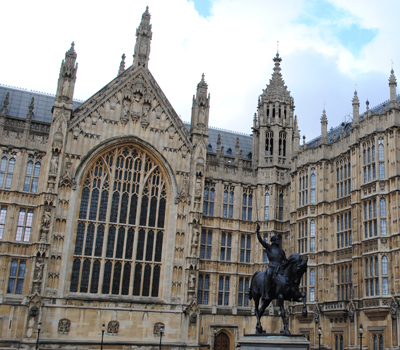
The eight surviving conspirators went on trial at Westminster Hall – still part of the Houses of Parliament complex today; the end of the hall is visible in the above picture – in late January 1606 and were all condemned to death for treason.

Four of them were executed on 30th January in St Paul’s Churchyard outside St Paul’s Cathedral while the remaining four including Fawkes were executed the next day outside Westminster Hall in Old Palace Yard. The heads of Catesby and Thomas Percy, both of whom had been killed during a shoot-out in Staffordshire, were set up outside the Houses of Parliament.

Arrests – and in some cases executions – of others believed to be associated with the plot continued in the following months.

Another place of note in the story of the Gunpowder Plot is Syon Park in the city’s west, now the London home of the Duke of Northumberland. The aforementioned Thomas Percy was a cousin of the then Earl of Northumberland, Henry Percy, and apparently dined with the Catholic earl at the house on the night of 4th November, before the plot was uncovered.

That association subsequently led to the earl’s arrest and he was confined to the Tower for the next 15 years on the order of the king.

LondonLife – Beating Retreat…

This week Horse Guards in London hosts the annual ceremony of Beating Retreat with massed bands playing and marching in formation. But where does the tradition come from?

The origins of the ceremony date back several hundred years to at least the 16th century when the beating of drums signalled the end of a day’s fighting, the closure of camp gates and the lowering of flags. Among the English kings credited with having ordered troops to “beat retreat” are old enemies King James II and King William III.

The ceremony was standard practice by the early 1700s with flutes or fifes added to the drum beating before, following the Napoleonic Wars, these were both replaced with bugles, to help ensure the sound reached greater distances.

The ceremony has been held annually at Horse Guards Parade since 1966 and this year involves the Massed Bands and Corps of Drums of the army’s Household Division along with The King’s Troop Royal Horse Artillery as well as The United States Army Europe Band and Chorus.

The event is a prelude to the Trooping the Colour on Saturday when more than 1,300 troops will parade in honor of the Queen’s Official Birthday.

Beating Retreat will be held at Horse Guards Parade on 8th and 9th of June (Wednesday and Thursday night), from 9pm. For more information and tickets, see www.guardsbeatingretreat.com

What’s in a name?…King’s Cross

The location now known as King’s Cross, north-west of the City, takes its name from a monument adorned with an 11 foot high statue of King George IV which once stood on a site now occupied by King’s Cross Railway Station.

The area had been previously known as Broadford Bridge or Battlebridge – the latter a name many associated with the apparently erroneous belief that it was here, at a bridge which once crossed the River Fleet, the Iceni Queen Boudicca (also known as Boadicea) ill-fatedly confronted the Roman Army under the command of Gaius Suetonius Paulinus.

From the 1830’s (King George IV ruled from 1820 to 1830), however, the area took on the name of King’s Cross thanks to the erection of what Walter Thornbury described in his 1878 text, Old and New London, as a “ridiculus octagonal structure crowned by an absurd statue of George IV”.

The structure, said to be 60 feet high, was erected at the intersection of Gray’s Inn Road, Pentonville Road and what we now know as Euston Road, and during its relatively short lifespan, was employed at different times as a police station and as a pub (complete, apparently, with a camera obscura in the upper level).

It was completely removed by 1845 (King’s Cross Railway Station officially opened in 1852).

The area of King’s Cross has been settled back as far as Roman times – St Pancras Old Church is one of the oldest sites of Christian worship in England although the current church is Victorian – but it wasn’t until the 1700s and 1800s that it was transformed in to an urban area with the arrival of canals – including The Regent’s Canal – and the railways.

Traditionally one of London’s poorest areas, it survived World War II bombings but subsequently suffered as the railways declined in the post-war period. By the 1980s, it had become notorious as a red light district.

It has since gone through – and is still going through – a gradual gentrification process, however, with the 67 acre development King’s Cross Central among the projects currently under construction.

Key attractions of the area include The British Library, The London Canal Museum, arts centre King’s Place, and the recently refurbished St Pancras Renaissance London Hotel.

It’s also now home to St Pancras International – London’s Eurostar terminus (having been moved here from Waterloo) – as well as King’s Cross Railway Station which is believed by many, despite the lack of any evidence, to be the burial site of Queen Boadicea (it’s said she still lies beneath platform 9 or 10) and which is the home of the fictitious platform 9 and 3/4 from which Harry Potter catches the train to Hogwarts.

Where’s London’s oldest…outdoor statue?

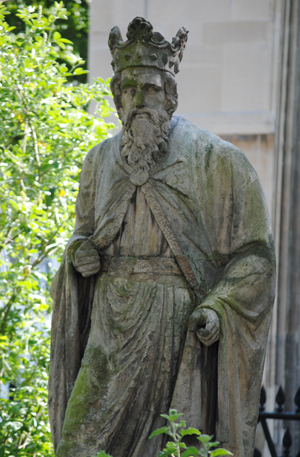
It’s generally believed that London’s oldest outdoor statue is that of King Alfred the Great which stands in Trinity Church Square in Southwark but there are a few others worth mentioning for their age.

But first, to the statue of Alfred the Great. Located now in Trinity Church Square, it is thought to have been made in the late 14th century (although it’s also suggested it could be much younger) in honor of the man who ruled Wessex in the 9th century and is often credited as being the first “king of the English”.

The statue (right) was apparently located at the Palace of Westminster before it was brought to its present location in 1823 at about the time the square was being laid out.

Others among London’s oldest statues is that of King Charles I sitting astride his horse and looking from Whitehall from its position on the southern side of Trafalgar Square.

Credited as being London’s “oldest equestrian bronze”, this statue is the work of French sculptor Hubert Le Sueur and was cast in 1633 (during King Charles I’s rule) at the behest of Richard Weston, one of the king’s favorites, who that year became the 1st Earl of Portland.

It was removed during the Civil War but later reacquired by the Portland family and, following the Restoration, was reinstalled on its current site – once that of the Charing Cross (see our previous entry for more details) – in 1675 by King Charles II.

Another of London’s oldest statues is that of Queen Elizabeth I which stands on the facade of the church St Dunstan-in-the-West in Fleet Street. This statue, which has been attributed to William Kerwin although other names have also been suggested, dates from 1586 (created during her reign) and decorated the west side of Ludgate until its demolition in 1760, after which it was apparently put into storage until being brought to the church in the 19th century.

Standing nearby in the vestry porch as statues of the legendary pre-Roman British king, Lud, and his sons, Androgeus and Tenvantius, which were also removed from Ludgate and probably date from the same period (about 1586).

Lost London – The ‘Tyburn Tree’

For six centuries, the gallows at Tyburn, in the city’s west, was one of London’s sites of public execution. Today, little remains to remind visitors of the infamous past of the area, which lies close to Marble Arch, but for a plaque set in the middle of a road.

From 1196 to 1783, it’s suggested that thousands of people (some have estimated as many as 60,000) were hanged at various gallows erected at Tyburn, known by numerous names over the centuries including ‘The Elms’, the ‘The Deadly Never Green Tree’, and most infamously the ‘Tyburn Tree’.

Hangings were apparently initially carried out using the branches of a tree on the bank of the Tyburn River but the first gallows date from 1220. In Elizabeth times these were upgraded to a larger gallows known as the ‘Triple Tree’ which enabled many more people to be hanged simulteously – as many as 24 at once in 1649.

The gallows was removed in 1759 because it was blocking the road and a mobile gallows used until hangings were moved into Newgate Prison (see our earlier entry on Newgate).

Executions were a public spectacle and it’s estimated that at times the crowds at Tyburn swelled to more than 50,000 people, all eager to witness someone “dancing the Tyburn jig”.

Among those to be hanged at Tyburn were William Fitz Osbern (a champion of London’s poor who was hanged in 1196), Roger Mortimer, 1st Earl of March (hanged in 1330 after being accused of assuming royal power), Perkin Warbeck (pretender to the throne of King Henry VII who was hanged in 1499), and Elizabeth Barton, the ‘Holy Maid of Kent’ (hanged for treason after prophesying King Henry VIII would die within six months of marrying Anne Boleyn).

Others included key figures in the so-called Pilgrimage of Grace (an uprising in England’s north in 1536 which followed King Henry VIII’s break with Rome) and many other Catholics including Oliver Plunkett, the Archbishop of Armagh and Primate of all Ireland (1681).

In an unusual move, the body of already deceased Oliver Cromwell, along with that of John Bradshaw and Henry Ireton, was exumed from his grave and and hanged there to mark the first anniversary of the Restoration.

What is believed to have been the site of the Tyburn Tree is today marked by a plaque set in a traffic island at the corner of Edgware Road and Bayswater Road (nearest tube station is Marble Arch).

There is a Shrine of the Martyrs dedicated to the more than 105 Roman Catholics who were hung at Tyburn for their faith at the Tyburn Convent in Hyde Park Place (for visiting details, see www.tyburnconvent.org.uk).

Note: This article originally referred to the Shrine of the Martyrs commemorating more than 350 Catholic martyrs who died during the Reformation as all being executed at Tyburn but it is believed some 105 were – the greater figure refers to those martyred across England and Wales during the Reformation.

Around London – Captain Kidd at Docklands; London’s Olympic Torch Relay path; St Giles’ seedy past; speech therapist Lionel Logue honored; and, The Seven Seas at Selfridges…

The true story of Captain Kidd and an exploration of London’s links with piracy is the focus of a new major exhibition at the Museum of London Docklands. Pirates: The Captain Kidd Story features original artefacts dating from 300 years ago when London was a site of pirate executions and tells the story of the infamous Captain Kidd’s life until his execution at Wapping’s Execution Dock. Among the artefacts is the original costume worn by actor Johnny Depp as he played Captain Jack Sparrow in the film Pirates of the Caribbean. The exhibition, which opens tomorrow and runs until 30th October, is being held in conjunction with a series of pirate related events including an adults-only pirate night on 27th May where you have the chance to sample some genuine “pirate drink” and take part in pirate speech lessons. Admission charges apply. For more information, visit the Museum of London Docklands website www.museumoflondon.org.uk/Docklands/Whats-on/Exhibitions-Displays/Pirates.htm.

The path of London’s Olympic Torch Relay has been announced and will finish with a week long jaunt through London. The torch will arrive in Waltham Forest on 21st July next year and then pass through Bexley, Wandsworth, Ealing, Haringey and Westminster before its arrival at the Olympic Stadium on 27th July. To find out how to nominate someone to carry the torch or for more information on the relay, visit www.london2012.com/olympic-torch-relay.

• On Now: London’s Underworld Unearthed: the Secret Life of the Rookery. The seedy side of the St Giles Rookery, a once infamous quarter of the capital, is laid bare in this new exhibition at the Coningsby Gallery. Back in 1751, the area was known as “a pit of degradation, poverty and crime” known for its free-flowing gin. Artist Jane Palm-Gold has displayed 18th and 19th century artifacts found during the Museum of London Archaeology’s recent excavation of old St Giles (conducted prior to the construction of the recent Central St Giles development which now covers the site) alongside her paintings, building what has been described as a “multi-layered psycho-geography that both mesmerises and disturbs”. Runs until 3rd June at the Coninsby Gallery at 30 Tottenham Street (nearest tube station is Goodge Street). Admission is free. For more information, see www.coningsbygallery.com

Australian speech therapist Lionel Logue – known for having helped cure King George VI of his stammer, the story of which is told in the recent Oscar-winning film, The King’s Speech – has been honored with a green plaque by Westminster Council. The plaque was expected to be unveiled today at 146 Harley Street, where Logue, who is known to have used fees from wealthier client to subsidise free treatments for those who could not afford them, lived from 1926 until 1952. The plaque is one of 94 which Westminster Council has placed to mark buildings of particular significance for their association with people who have made lasting contributions to society.

• On Now: The Seven Seas at Selfridges in Oxford Street. Conceptual artist Beth Derbyshire’s seven minute video installation features seven films of seven different seas around the globe. On show as part of Project Ocean – an initiative by Selfridges and 20 environmental and conservation groups aimed at celebrating the ocean’s beauty and highlighting the issue of overfishing. Runs until 8th June. For more information, see www.selfridges.com.

King James I’s London – 6. The Queen’s House, Greenwich

Long an admired landmark of Greenwich, the origins of the Queen’s House go back to the reign of King James I.

It was the Queen, Anne of Denmark, who commissioned the building of The Queen’s House in 1616 and gave it the name by which it is still known. Sadly, however, she died before it was completed.

King James I was said to have been a frequent visitor to the Tudor Palace of Greenwich (the building had earlier been known as the Palace of Placentia and was the birthplace of King Henry VIII in 1491).

King James  is traditionally said to have awarded the Manor of Greenwich to Queen Anne as an apology after he had publicly sworn at her when she had accidentally shot one of his favorite hunting dogs.

In 1616, Queen Anne decided to build a new property on the site as both a private retreat and a place where she could entertain and it was to the rising star Inigo Jones that she turned to for the design (in recognition of his growing status, he was appointed Surveyor of the King’s Works the following year).

The house was Jones’ most important job to date and the design he came up – based on a H with the two sides joined by a bridge over the Greenwich to Woolwich road – with is said to be the first Classical building in England.

Among the original features which survive to this day are the striking black and white geometrically patterned marble floor of the Great Hall (the room having been designed as a perfect cube), the painted ceiling of the Queen’s Presence Chamber and the iron balustrade the Tulip Stairs – said to be the first “geometric self-supporting spiral stair in Britain”.

Queen Anne became ill in 1618 and died the following year without seeing the end result of her commission. The work subsequently was shelved and only restarted (and completed in 1638) after King Charles I gave it to his wife, Queen Henrietta Maria.

She only had possession for a short time before Parliamentary forces seized it during the Civil War. After the Restoration, the Queen’s House was returned briefly to her by her son King Charles II (it was at this time that the original H-shape of the house was altered to a square) before part of it as later used as studio for painters and then as grace and favor apartments.

With the Old Royal Naval College now occupying the surrounding site, in 1805, King George III gave the property to the Royal Naval Asylum – a charity caring for the orphan children of seamen – and it later became part of the Royal Hospital School.

The National Maritime Museum took possession in 1934 and the building now houses the National Martime Museum’s collection of fine art. As an interesting aside, there have been several reported sightings of ghosts in the house, the latest as recently as 2002.

WHERE: The Queen’s House, National Maritime Museum, Greenwich (nearest DLR station is Cutty Sark); WHEN: 10am to 5pm daily (check website for closures); COST: Free; WEBSITE: www.nmm.ac.uk/places/queens-house

What’s in a name?…Charing Cross

The West End location of Charing Cross is named after the large stone cross that once stood at the top of Whitehall on what is now the southern side of Trafalgar Square – a site currently occupied by a statue of King Charles I.

The cross – an embellished Victorian-era replica of which can be found standing outside Charing Cross Station in the Strand – was one of a series of 12 erected by King Edward I in 1291-94 to commemorate his wife Eleanor of Castile.

They marked the sites where her funeral cortege rested overnight as it made its way from near Lincoln where she died south to Westminster Abbey where she was to be buried (for more on the cross and the Victorian replica, see our previous post here).

The final of these ‘Eleanor Crosses’ – which were originally made from wood before being replaced with stone ones –  was erected on a site which stood in the medieval village of Charing, located between the City of London and Westminster. The cross was pulled down in the 1640s by order of Parliament. Since 1675, the statue of King Charles I (pictured, with Trafalgar Square, once the site of the royal mews, in the background) has occupied the site.

The word Charing is an Anglo-Saxon or “Old English” term and is believed to relate to the nearby bend in the River Thames.

Between the mid-1700s until the mid-20th century, the former site of the Charing Cross was the point from which all distances from London were measured. There was also a famous pillory located here.

Around London – See museums after hours; the White Tower is white again; and, foundation stone for Bomber Command is laid…

• The annual Museums at Night event returns to London (and Britain) this weekend with hundreds of museums and galleries across the country opening their doors for special after hours events. Among those places in London taking part is the Churchill War Rooms, which is hosting a 1940s evening on Friday night, the London Canal Museum which is hosting”candle-lit tours, atmospheric lighting, and exhibits of art and film in dark places”, and the Petrie Museum of Egyptian Archaeology which is hosting a double hill of Hammer films and a “Gothic Egypt” trail. Other institutions taking part include the Sir John Soane Museum, the National Gallery, the Bank of England Museum, and Orleans House Gallery in Twickenham.  For more information about what’s on see www.museumsatnight.org.uk

King William the Conqueror celebrated at the Tower of London this week following the completion of a £2 million, three year project to clean the White Tower. First built shortly after the Norman Conquest of 1066, the tower had become blackened by pollution but has now been restored to its original color. For more information on visiting the Tower, see www.hrp.org.uk/toweroflondon/.

A foundation stone has reportedly been laid for a Bomber Command Memorial in Green Park. The memorial, which is due to be completed for the Queen’s Jubilee celebrations in 2012, will be constructed of Portland stone and will feature a nine foot tall statue of a bomber command aircrew. Bomber Command lost more than 55,000 airmen during World War II. The foundation stone was laid by the Duke of Gloucester. Supporters of the monument’s construction have included former Bee Gee Robin Gibb, Sir Michael Beetham, Marshal of the RAF, and  The Daily Telegraph newspaper which is running an appeal to help raise funds for the memorial.

King James I’s London – 5. Holland House

A Jacobean mansion located in Kensington’s Holland Park, Holland House was first built in 1605 for Sir Walter Cope, Chancellor of the Exchequer for King James I. 

Sir Walter apparently entertained the king and his wife, Queen Anne of Denmark, at the property – then named Cope Castle – on numerous occasions at the property and reportedly hosted the king the night after his son, Henry Frederick, the Prince of Wales, died in 1612.

Its name came with a later owner – the ill-fated Henry Rich, Cope’s son-in-law, who was made the 1st Earl of Holland in 1624 and was later executed for his role in supporting the Royalist cause during the Civil War during which the house was occupied by parliamentary troops.

The home was later used by various family members – among luminaries associated with the property are the essayist Joseph Addison who died there in 1719 as well as, in later years, the likes of Lord Byron, Benjamin Disraeli, Charles Dickens and Sir Walter Scott, all of whom visited the property during the property’s golden age in the 19th century when it was an important social gathering place.

The house was largely destroyed in a bombing raid in September 1940 and passed into ownership of the local authority. A youth hostel is now housed inside the restored east wing of the building while other buildings are used for a restaurant and function centre – all set within the 22 hectare (55 acre) Holland Park. Some of the ruins provide a backdrop for open-air theatre performances and concerts in summer.

WHERE: Holland Park (nearest tube stations are Holland Park, Kensington High Street and Notting Hill); WHEN: 7.30am to 30 minutes before dusk (check signs by entrance); COST: Park entrance is free (house is not open to the public); WEBSITE: www.rbkc.gov.uk/leisureandlibraries/parksandgardens/yourlocalpark/hollandpark.aspx

Where’s London’s oldest…bookshop?

Hatchards on Piccadilly (right next to Fortnum & Mason) is generally accepted as being London’s oldest surviving bookshop.

It was founded in 1797 by John Hatchard in Piccadilly (there seems some dispute over whether it still stands on exactly the same site).

The shop currently holds three royal warrants for the supply of books to the Royal Household.

Among high profile past customers have been Queen Charlotte (wife of King George III), former PMs Benjamin Disraeli and  Arthur Wellesley, the Duke of Wellington, and literary figures such as Rudyard Kipling, Oscar Wilde and Lord Byron.

It remains popular with lovers of literature and is noted for hosting book-signings by prominent authors with many signed book on the shelves.

For more, see www.hatchards.co.uk.

King James I’s London – 4. Charterhouse

The Charterhouse School was founded in 1611 – the seventh year of King James I’s reign – on the site of a former Carthusian monastery in Smithfield.

It owes its creation to Thomas Sutton (1532-1611) who bought the site – which then contained a Tudor mansion – from Thomas Howard, Earl of Suffolk, in 1611, the year of Sutton’s death.

A Yorkshireman, Sutton (who is buried in the chapel in Charterhouse) is said to have been the “wealthiest commoner in England” at the time, having made a fortune after discovering coal. He used his resources to endow a school and an almshouse on the site.

Among the school’s alumni were John Wesley, founder of the Methodist Church, and novelist William Makepeace Thackeray.

The school – which is this year celebrating its 400th anniversary – moved to Godalming in Surrey in 1872 and the site was subequently occupied by the Merchant Taylor’s School while the almhouse continued to operate on the western part of the land (it still does today under the name Sutton’s Hospital in Charterhouse).

The school later became the medical college of the nearby St Bartholomew’s Hospital and is now occupied by Barts and The London School of Medicine and Dentistry.

For more on the Charterhouse, see www.thecharterhouse.org (tours run on Wednesday afternoons at 2.15pm from April until August and cost £10 per person). For more on the Charterhouse School, see www.charterhouse.org.uk.

Famous Londoners – Henry Fitz-Ailwyn

In the first of a series in Famous Londoners looking at past mayors of London, we profile the first person recorded as having that title, Henry Fitz-Ailwyn (also known as Henry Fitz-Ailwin). While his name might not be familiar to us today, it’s clear than in the 12th century, he was a personage to be reckoned with.

Believed to have been born in the 1130s or 40s, Fitz-Ailwyn is said to have been the son of a wealthy Londoner. Apparently involved in the cloth trade, possibly as a draper, he owned property in several counties and in what was Candlewick Street in London (now named Cannon Street).

Records show he was a London alderman in 1168 and later served as mayor, thanks apparently to the support of King Richard I (the dates are uncertain – some claim he took up the post in 1194 but the City of London Corporation records his tenure as 1189 to 1211).

Among his claims to fame are that he issued London’s first building regulations (concerning the need to build in stone) after a fire in 1212 destroyed parts of the city (although he apparently had no powers to enforce them).

Fitz-Ailwyn died the same year and is noted by the Museum of London as “the only mayor ever to serve in office for a full life term”.

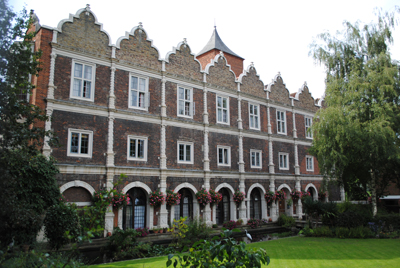
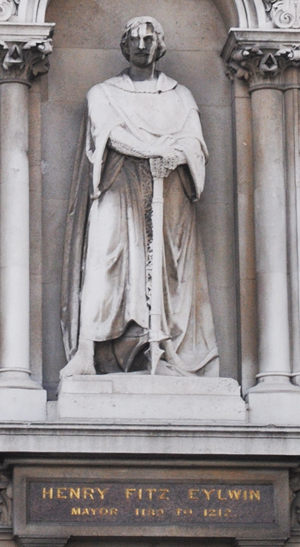
His name is commemorated in a window at the Guildhall and by a statue which stands on the exterior of one of the step buildings at Holborn Viaduct (pictured).

The Royal Wedding – Eight curious facts about Royal Weddings past and present…

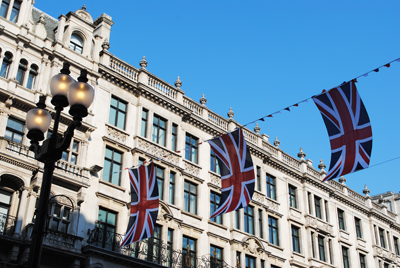
PICTURE: Bunting in Regent Street ahead of the Royal Wedding tomorrow.

Ahead of the wedding of Prince William and Kate Middleton tomorrow, here’s a look at some of the more curious and interesting facts related to London’s Royal Wedding past…

The first public Royal Wedding in modern times was that of Prince Albert, Duke of York (later King George VI), and Lady Elizabeth Bowes-Lyon (later Queen Elizabeth, the Queen Mother) which took place on 26th April, 1923. Instead of being held at a royal chapel as was more usual, they were married at Westminster Abbey in a public display which was apparently staged to lift the national spirit in the aftermath of World War I.

Lady Diana Spencer (later Diana, Princess of Wales) memorably said Prince Charles’ name in the wrong order during their wedding ceremony at St Paul’s Cathedral on 29th July, 1981. Lady Diana accidentally called him Philip Charles Arthur George instead of the correct Charles Philip Arthur George.

• Queen Victoria’s extravagant wedding cake was the first to feature a model of the bride and groom on its summit (with a figure of Britannia looming over them). The two tier cake measured nine foot across and weighed 300 lbs.

While white wedding dresses had been worn for some time, it was apparently after Queen Victoria wore a white dress at her 1840 wedding that the idea spread to the masses. (Interestingly, the first documented princess to wear a white wedding dress is said to have been Philippa of England, the daughter of King Henry IV, in 1406).

The first televised Royal Wedding was that of Princess Margaret, younger sister of Queen Elizabeth II, to Antony Armstrong-Jones (Lord Snowdon) on 6th May, 1960. It attracted some 300 million viewers worldwide.

The tradition of a royal bride leaving her bouquet on the Tomb of the Unknown Warrior in Westminster Abbey was started by Queen Elizabeth, the Queen Mother. She apparently did so in tribute to her brother Fergus who had died during World War I. Princess Mary, daughter of King George V, made a similar gesture at her wedding in 1922 – she left her bouquet at the Cenotaph in Whitehall after her wedding.

One of the most scandalous Royal Weddings was that of George, Prince of Wales (later King George IV) to Princess Caroline of Brunswick on 8th April, 1795 at the Chapel Royal in St James’s Palace. Described as being “far from a love match” on the Historic Royal Palaces’ website, Prince George was said to have been drunk during the wedding and at one stage apparently even attempted to escape from the ceremony.

If the rain stays away, the newly married prince and his bride will be returning to Buckingham Palace in the 1902 State Landau. The open-topped carriage was constructed for King Edward VII’s coronation and apparently made roomy to accommodation him. The carriage was used by Prince Charles and Lady Diana when they left St Paul’s Cathedral after their 1981 wedding. If the weather it poor, it’s expected that the 1881 Glass Coach, bought for the coronation of King George V in 1911, will be used instead.

For more fascinating facts on Royal Weddings, see the BBC website (www.bbc.co.uk/history/royal_weddings), or Historic Royal Palaces’ blog, The ‘other’ royal weddings (http://blog.hrp.org.uk). For more on the current Royal Wedding, see the official website (www.officialroyalwedding2011.org).