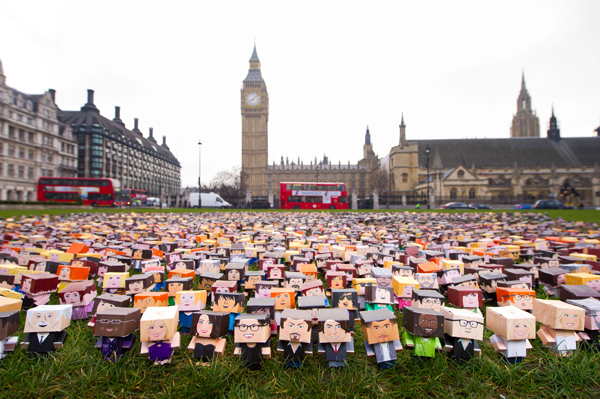
 Jonathan Ross, Eddie Izzard, Amanda Holden, Tulisa and Gok Wan were among the thousands of people represented by paper protestors in Parliament Square, outside the Houses of Parliament, on Monday. The Fairtrade-backed protest marked the second week of ‘Fairtrade Fortnight’ and was aimed at sending a message to Prime Minister David Cameron to “do more to protect smallholder farmers from trade injustice”. More than 8,000 people have signed the online petition so far, creating a personalised “mini marcher” via Fairtrade’s partnership with Foldable.me. The final petition will be delivered to the PM on World Fair Trade Day in May ahead of the June meeting of the G8. For more on the Fairtrade Foundation, see www.fairtrade.org.uk.
News
Around London – Aliens at the Royal Observatory; celebrating spring at the British Library; Blue Plaques for Heal and Mendelssohn; and, Barocci at the National Gallery…
• It’s alien season at the Royal Observatory in Greenwich and to kick off a series of special events around all things extra-terrestrial, a new exhibition looking the history with things not of this earth opens tomorrow. Alien Revolution, which looks at man’s obsession with intelligent alien life – a trend which began in the century following Copernicus’ discovery that the earth was a planet and the sun a star, will be held in the observatory’s Astronomy Centre until August. Runs until 8th September. Admission is free. Other events include shorts courses looking at science fiction and astronomy, family events and special planetarium shows such as We Are Aliens which runs in April. For more on the events, see www.rmg.co.uk.
• The British Library’s Spring Festival kicks off tomorrow with five days of film, design and fashion including the unveiling of a new artwork by fashion illustrator and artist Julie Verhoeven. Verhoeven – who has worked for fashion houses Louis Vuitton, Versace and Mulberry – will be joined by Dylan Jones, editor-in-chief of GQ, to talk about what inspires them while others among fashion’s leading names will be contributing postcards in a one night only pop-up exhibition – Late at the Library: Fashion Flashback – which will also feature talks involving Jones and illustrator Tanya Ling. The event also features a spring market held in the library’s piazza at which designers will be selling wares inspired by the library’s collection. Other events include the showing of a series of short films. For more about the Spring Festival events, head to www.bl.uk/whatson/exhibitions/spring-festival-2013/index.html.
• Furniture designer Sir Ambrose Heal was honoured with the unveiling of an English Heritage Blue Plaque at his former home in Pinner yesterday – the date marking 120 years since he joined the family firm, Heal’s. The house – at Fives Court, Moss Lane in Pinner – was Sir Ambrose’s home from 1901-1917 during the period when he began exerting his influence over the business, having won a silver medal at the 1900 Paris Exhibition for a bedroom suite. Heal was knighted in 1933 and appointed a royal designer for industry in 1939. Meanwhile, a Blue Plaque for 19th century composer Felix Mendelssohn was unveiled at 4 Hobart Place earlier this month, commemorating the house he stayed in at the height of his career during his numerous visits to London. The house was the home of the Hanoverian embassy secretary, Karl Klingemann, at the time. For more on Blue Plaques, see www.english-heritage.org.uk.
• On Now: Barocci – Brilliance and Grace. This landmark exhibition at the National Gallery is the first major monographic exhibition dedicated to the art of 16th and 17th century Italian artist Frederico Barocci – pioneer of the Baroque style. Highlights include his spectacular altarpiece, The Entombment of Christ, from the coastal town of Senigallia, the Last Supper – painted for Urbino Cathedral, as well as two altar pieces from Rome – Visitation from the Chiesa Nuova and Institution of the Eucharist from Santa Maria sopra Minerva. Also included are portraits, smaller devotional paintings, Aeneas’ Flight From Troy – his only secular narrative, and more than 65 preparatory drawings, pastel studies and oil sketches. Runs until 19th May. Admission charge applies. For more, see www.nationalgallery.org.
Around London – Prehistoric life on show at Wellington Arch; Your favourite Michael Caine movie; Lichtenstein at the Tate; and, looking at Classical Greece through 19th century eyes…
Apologies for missing our series on Great Victorian Projects yesterday. It will resume next week. In the meantime…
• Fourteen rare Victorian paintings of life in prehistoric times have gone on display at Wellington Arch near Hyde Park Corner. The watercolors – which were commissioned by MP and archaeologist Sir John Lubbock in 1869 and have never before been displayed in public together – form the centrepiece of a new English Heritage exhibition, The General, The Scientist & The Banker: The Birth of Archaeology and the Battle for the Past. The “ground-breaking” works were painted by animal illustrator Ernst Griset and were ‘informed’ by then-recent archaeological finds including stone tools and fossils. The exhibition, which also includes rare artefacts, drawings and manuscripts tells the story of archaeological pioneers who fought to bring about recognition and legal protection for Britain’s ancient monuments and looks in detail at the achievements of three men – scientist Charles Darwin, archaeologist General Pitt-Rivers and banker Sir John Lubbock. The exhibition is the first of five being held in the arch’s Quadriga Gallery to mark the centenary of the 1913 Ancient Monuments Act. Runs until 21st April. Admission charge applies. For more, see www.english-heritage.org.uk/daysout/properties/wellington-arch/.
• Get Carter or The Ipcress File? Alfie or Educating Rita? The Museum of London is asking fans to vote for their favourite Michael Caine movie ahead of the opening of their new free exhibition on the actor next month. Voting for Caine on Screen can be found by following this link and closes at 5pm on 14th March after which the top four films will be revealed. A full list of Sir Michael’s movies – and there’s more than 100 – is available on the voting form. More on the exhibition to come.
• On Now: Lichtenstein: A Retrospective. This exhibition on level two of the Tate Modern on South Bank is the first major retrospective on the Pop artist Roy Lichtenstein (1923-1997) for 20 years and brings together more than 125 of his most definitive paintings and sculptures as it reassesses his work and legacy. Key works include Look Mickey (1961), Whaam! (1963) and Drowning Girl (1963). Co-organised by The Art Institute of Chicago and Tate Modern, it runs until 27th May. Admission charge applies. For more, see www.tate.org.uk.
• On Now: In search of Classical Greece: Travel drawings of Edward Dodwell and Simone Pomardi, 1805-1806. This free exhibition at the British Museum looks at Greece through the eyes of classical late eighteenth and early nineteenth century scholar Edward Dodwell and his Italian artist Simone Pomardi and features works produced during their travels in 1805-06. Lent by the Packard Humanities Institute, the works have never been seen in public before. See them in Room 90. Runs until 28th April. For more, see www.britishmuseum.org.
Around London – Celebrating the art of the Underground and art on the web; Picasso at the Courtauld; and, Frederic Church at the National…
• A new exhibition celebrating the art of the Underground opens at the London Transport Museum in Covent Garden tomorrow. Poster Art 150 – London Underground’s Greatest Designs showcases 150 posters with examples taken from each decade over the past 100 years. Artists include the likes of Edward McKnight Kauffer, Paul Nash and Man Ray. The posters were selected from the museum’s archive of more than 3,300 by a panel of experts. Visitors to the exhibition will be able to vote on their favorite poster as well as online with the most popular poster to be revealed at the end of the exhibition. The last major exhibition of Underground posters – the first commission of which was in 1908 – was held in 1963 to celebrate the system’s centenary. The exhibition is based around six themes – ‘Finding your way’, ‘Brightest London’, ‘Capital culture’, ‘Away from it all’, ‘Keeps London going’ and, ‘Love your city’. Runs until 27th October. Admission fee applies. For more on the exhibition and surrounding events, see www.ltmuseum.co.uk.
 • The external facade of the National Gallery in Trafalgar Square was decorated with artworks last Friday night (pictured right) in celebration of the completion of Your Paintings – a website which hosts the UK’s entire national collection of oil paintings (more than 210,000!). The projections – which were happening in 28 UK cities simultaneously – featured two National Gallery paintings – Van Gogh’s Sunflowers and Gainsborough’s Mr and Mrs Andrews. To see the website, head to www.bbc.co.uk/arts/yourpaintings/. PICTURE: © The National Gallery, London.
• On Now: Becoming Picasso: Paris 1901. This exhibition at The Courtauld Gallery in Somerset House on The Strand tells the story of Pablo Picasso’s break-through year as an artist – 1901 – when the then 19-year-old launched his career in Paris at a summer exhibition. The display follows Picasso from his debut and into the start of his Blue period. Works exhibited are among the first to bear his famous signature. Runs until 26th May. There is an admission charge. For more, see www.courtauld.ac.uk/gallery/index.shtml.
• On Now: Through American Eyes: Frederic Church and the Landscape Oil Sketch. This free exhibition of 30 works at the National Gallery focuses on the work of Frederic Church (1826-1900), a member of the Hudson River School of artists and considered by many to be the greatest of the American landscape oil sketch artists. Works on display include those made at exotic locations such as Ed Deir, Petra, painted in Jordan in 1868, and Distant View of the Sangay Volcano, Ecuador, painted in 1857, as well as the paintings created closer to home, such as Hudson, New York at Sunset, painted in 1867. The exhibition is held in Room 1. Runs until 28th April. For more see www.nationalgallery.org.uk.
Around London – Chinese New Year; Orchids at Kew; Lucian Freud’s donation to the National Gallery; and, Man Ray at the NPG…
• Chinese New Year celebrations will go off with a bang in Chinatown in the West End this Saturday. The festivities, which are the largest outside Asia, will include a lion dance, fireworks, and a variety of performers – all gathered to herald the start of the Year of the Snake. The celebrations will kick off with a parade which will leave Trafalgar Square at 10am and end at Rupert Street in Chinatown at 11am. At 12pm, dignitaries will gather in Trafalgar Square for the Dotting of the Eye ceremony which will bring the dragons and lions to life and performances will the take place until 5.30pm. At 5.55pm a fireworks display will mark the end of the day’s celebrations. For more, see www.chinatownlondon.org/page/chinese-new-year-2013/378.
• Like orchids? Want to escape the gloom of winter? Kew Gardens are celebrating the exotic plant with a dazzling display in the Princess of Wales Conservatory. Thousands of orchids will be on show as part of ‘Orchids at Kew’ and the plants will be used to recreate the giant waterlily flower, Victoria amazonica, which can normally be seen in the conservatory in the summer months. There are special behind the scenes tours, food and an adult education course for the truly interested. Charges apply. Opening on Saturday, 9th February, the display can be seen until 3rd March. For more, see www.kew.org.
• The late artist Lucian Freud has donated a treasured portrait – Jean-Baptiste Camille Corot’s L’Italienne ou La Femme à la Manche Jaune (The Italian Woman, or Woman with Yellow Sleeve) – to the nation in gratitude for the welcome his family received when they arrived as refugees from Berlin. The Corot has been allocated to the National Gallery by the Arts Council England and was done under the Acceptance in Lieu scheme, which allows people to transfer works of art into public ownership instead of paying inheritance tax. The painting – which was last seen in a show at the Louvre, Paris, in 1962, and was previously owned by Hollywood Golden Age star Edward G. Robinson – is on display on Room 41 of the gallery. For more, see www.nationalgallery.org.uk.
• On Now: Man Ray Portraits. The first museum exhibition to focus on the photographic portraiture of the 20th century artist Man Ray, this display at the National Portrait Gallery features more than 150 vintage prints taken between 1916 and 1968. Subjects include everyone from Catherine Deneuve and Ava Gardner to Salvador Dali and Aldous Huxley. The majority of works have never been exhibited in the UK before. Runs until 27th May. Admission charge applies. For more, see www.npg.org.uk.
Like to tell others about your upcoming event in London? If you’ve got an event coming up, please send any press releases or details to exploringlondon@gmail.com.
Around London – Borough Market’s new map app; Richard Dimbleby blue plaqued; Manet at the RA; and, Light Show at the Hayward…
• Borough Market, which claims to be London’s oldest food and drink market (see our earlier entry on the market here), has introduced a new app which provides smartphone users with an interactive map of the market so they can get information on the go. The app loads automatically when people enter the market website on their phones. Further features of the mobile site are yet to be unveiled. For more information, see www.boroughmarket.org.uk.
• Broadcaster Richard Dimbleby (1913-65) has been honored with an English Heritage blue plaque at his former home in Cedar Court, Sheen Lane, East Sheen in London’s south west. Once the nation’s most famous broadcaster, Dimbleby, father of David Dimbleby, lived at the flat between 1937-39 – a time when he delivered some of his earliest radio reports including one on Prime Minister Neville Chamberlain’s return from Munich. Dimbleby’s career on radio and television spanned some 30 years and saw him reporting on some of the great events of his time. He was the BBC’s first war correspondent and was the first reporter to describe the horrors of Belsen concentration camp as well as being among the first reporters to enter Berlin where he reported from the ruins of Hitler’s bunker. Dimbleby was also commentator on television specials such as the Coronation of Queen Elizabeth II in 1953 and Winston Churchill’s funeral in 1965. For more, see www.english-heritage.org.uk/about/news/?topic=Blue%20Plaques.
• On Now: Manet – Portraying Life. This display at the Royal Academy of Arts in Piccadilly’s Burlington House is the first major exhibition to showcase Edouard Manet’s portraiture in the UK. It examines the relationship between his portraits and his scenes of modern life and includes more than 50 paintings, gathered from public and private collections in Europe, Asia and the US, spanning his career from the mid 1800s to his death in 1883. The exhibition is arranged thematically with different sections looking at Manet’s family, his artist, literary and theatrical friends as well as his models. Highlights include The Luncheon (1868), Mme Manet in the Conservatory (1879), Berthe Morisot with a Bouquet of Violets (1872), Street Singer (1862), The Railway (1873) and Music in the Tuileries Gardens (1862). Admission charge applies. Runs until 14th April. For more, see www.royalacademy.org.uk.
• On Now: Light Show. This installation at the Hayward Gallery in South Bank “explores the experiential and phenomenal aspects of light” and brings together sculptures and installations that use light to sculpt and shape space in different ways. The artworks date from the 1960s to the present day and are the work of 22 different artists. Admission charge applies. Runs until 28th April. For more, see www.haywardlightshow.co.uk.
Around London – Of foundling tokens; a French field marshal’s grave marker; behind the scenes at Royal Albert Hall; Tom Daley’s swimming trunks; and, crime fiction at the British Library…
• A new exhibition opens at the Foundling Museum tomorrow (25th January) which tells the often heart-breaking stories behind the tokens left by mothers with their babies at the Foundling Hospital between 1741-1760. While hundreds of tokens were removed from the hospital’s admission files in the 1860s, Fate, Hope & Charity reunites the tokens – which range from coins and jewellery to playing cards, poems and even a nut – with the foundlings to whom they were given. A moving exhibition. Museum admission charge applies. For more, see www.foundlingmuseum.org.uk.
• The Duc and Duchesse de La Rochefoucauld-Doudeauville were among those who attended the dedication of a ledger stone marking the grave of their kinsman, Field Marshal Francois de La Rochefoucauld, the Marquis de Montendre, at Westminster Abbey last week. Born in 1672, de La Rochefoucauld served in the British Army during the reign of King William III and Queen Mary II after fleeing France as a Huguenot refugee (he had also succeeded his brother as marquis). He was promoted to field marshal in 1739 but died later that year and was buried in the abbey. The floor stone which was replaced by the new ledger stone will be sent to France for inscription and installation at Montendre. For more on the abbey, see www.westminster-abbey.org.
• One we should have mentioned with our piece on Royal Albert Hall last week. The Royal Albert Hall is running behind the scenes tours of the venue every Monday until 11th February as well as Tuesday 29th January (so you’ll have to be quick!). The tour – which runs as an extension of the front of house tour – takes in the loading bay located under the hall and one of the many dressing rooms (currently in use by Cirque de Soleil who are in residency with their new show KOOZA. The 90 minute Behind the Scenes tours cost £16. Booking in advance is strongly recommended. For more, see www.royalalberthall.com.
• A pair of swimming trunks worn by diver Tom Daley during the 2012 Olympic Games has been donated to the Museum of London. The trunks join an ever increasing collection of Olympics and Paralympics-related outfits in the museum with others including a leotard worn by bronze-medal winning gymnast Beth Tweddle. A display featuring the Olympic kit is being planned for spring. Meanwhile, still aty the museum and an exhibition featuring a series of photographs exploring the city’s major arterial roadways opens on Saturday. The free exhibition, Highways: Photographs by John Davies, features six specially commissioned photographs taken by Davies in 2001-02 – just prior to the introduction of the Congestion Charge in 2003. Routes featured include the Elephant and Castle roundabout, the Hammersmith Flyover, Marble Arch and Hyde Park, St Pancras Station Midland Grand Hotel and the A501, the junction of Poultry and Queen Victoria Street and the Blackwall Tunnel entrance. Runs until 16th June. For more, see www.museumoflondon.org.
• On Now: Murder in the Library: An A-Z of Crime Fiction. This exhibition at the British Library looks at the history of crime fiction and features never-before-seen manuscripts, printed books, rare audio recordings, artworks and artefacts. Highlights include Arthur Conan Doyle’s manuscript of the Sherlock Holmes story, The Adventure of the Retired Colourman (1926); the first appearance in print of Miss Marple (in Royal Magazine in 1929); John Gielgud’s annotated script for the film Murder on the Orient Express, crime novels from unlikely authors including Pele and burlesque performer Gypsy Rose Lee and the 1933 book, the Jigsaw Puzzle Murders in which readers had to complete a jigsaw puzzle to solve the crime. A series of events will be taking place alongside the exhibition. Entry to the library’s Folio Society Gallery is free. Runs until 12th May. For more see www.bl.uk.
Around London – Duchess of Cambridge at the NPG; Imperial War Museum closed for now; and, Frozen London…
• The controversial first official painted portrait of Kate Middleton, the Duchess of Cambridge, has gone on display at the National Portrait Gallery. Unveiled on 11th January, the portrait by Paul Emsley has already sparked considerable criticism. Emsley, the 2007 winner of the gallery’s BP Portrait Award competition, was chosen by the gallery’s director Sandy Nairne to paint the portrait which took three-and-a-half months to paint. It is now on permanent display in the gallery as part of Contemporary Collections in the Lerner Galleries in Room 36, on the ground floor. Admission is free. For more (including a film on the making of the portrait), see www.npg.org.uk.
• The Imperial War Museum has closed its doors until July this year as the museum undergoes an extensive refurbishment. In July, the museum will launch a new exhibition – Horrible Histories®: Spies, and also reopen of The Lord Ashcroft Gallery: Extraordinary Heroes, The Holocaust Exhibition, Secret War, A Family in Wartime and the Explore History Centre. The redevelopment, meanwhile, will continue until summer 2014 when the brand new First World War Galleries will be opened, marking the 100-year anniversary of the start of the First World War. For more, see www.iwm.org.uk/visits/iwm-london.
• On Now: Frozen London. This exhibition at the London Metropolitan Archives looks at the impact of some of the most severe winters the city has ever experienced which occurred between 1683 and 1895. A highlight is a look at the Frost Fairs which took place on the River Thames during that time. Runs until April 25th. Admission is free. For more, follow this link. Correction: Opened 21st January-25th April.
LondonLife – Celebrating London Underground’s 150th…
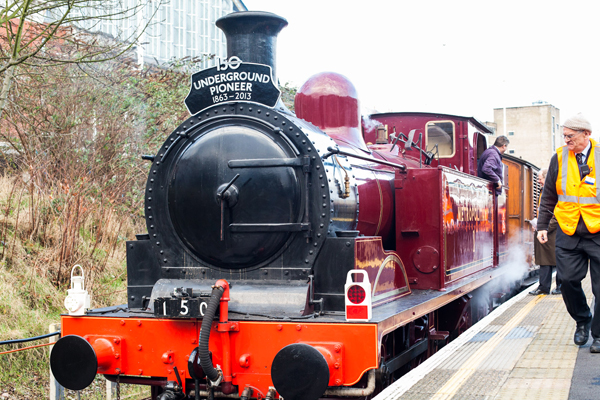
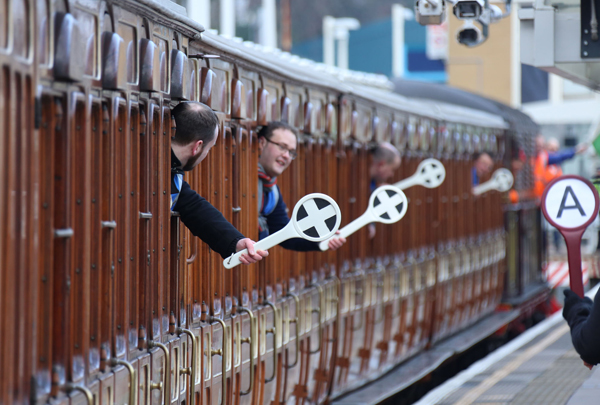
Metropolitan Locomotive No 1 recreated the first London Underground journey, which took place on 9th January, 1863, on the Metropolitan Line between Paddington and Farringdon, as part of the network’s 150th anniversary celebrations last Sunday. The newly restored locomotive was the last to be built at Neasden in 1898 by the Metropolitan Railway. It was pulling the Metropolitan Railway Jubilee Carriage No 353, the oldest operational underground carriage in existence. Ex Metropolitan Railway electric Locomotive No.12 Sarah Siddons also formed part of the train. The train will also be running this coming Sunday (20th January) and on special occasions throughout this year and is just one of a series of events planned by the London Transport Museum to mark the anniversary of what is the world’s oldest underground railway. They include an upcoming exhibition of London Underground’s poster art (more on that to come). For more, see www.ltmuseum.co.uk. PICTURES: © Transport for London from the London Transport Museum collection.
Exploring London’s 10 most popular posts for 2012 – 4 and 3…
4. Around London – Olympic Rings unveiled on Tower Bridge; London from above; Blake on Primrose; V&A illustrations; and, Munch at the Tate Modern. More on an Olympic theme.
3. LondonLife – Florence Nightingale remembered. A piece mentioning the annual service at Westminster Abbey commemorating the life of the ‘Lady with the Lamp’. Part of our LondonLife series.
Exploring London’s 10 most popular posts for 2012 – 6 and 5…
Both of the next two are from our Thursday updates – Around London…
6. Around London: Olympic Torch Relay hits London; mascots pop-up all over the city; and Shakespeare at the British Museum – not a surprising mention, given the Olympic theme;
5. Around London – Butler’s Retreat reopens in Epping Forest; Designs of the Year; and, Lucian Freud’s last work. The reason for this update’s inclusion remains a bit of a mystery – but it was a big year for the late Lucian Freud.
LondonLife – Forget the halls, they’re decking the city…part two…
There’s still a weekend to go before Christmas and if, having finished all Christmas shopping, you’re still in the mood for seeing some light displays, here’s some more places to look for some amazing (and in some cases historic), Christmas decorations (for the first part of this overview, head here)…
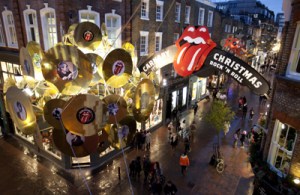 • Last week we mentioned some of the key sites to look for light displays in the West End this Christmas. Some of the other places to look include: the iconic shopping strip of Carnaby Street (decorations there this year are inspired by the 50th anniversary of the Rolling Stones – pictured) as well as South Molton Street, off Oxford Street (which again features some beautiful illuminated archways), and streets throughout St James (the St James Christmas lights were this year switched on by opera star Katherine Jenkins who earlier led a carol service at St James’s Church) and Mayfair.
• Around Bow Lane and Watling Street in the City of London. Daubed with more than 10,000 lights, these narrow streets provide a wonderful sense of London past.
• Marylebone. The lights here are well worth venturing out for. Turned on this year by Strictly Come Dancing‘s Claudia Winkleman.
• Historic West End arcades. Still a place for fashionable shopping and tasteful Christmas decor, these include the Burlington Arcade, Royal Arcade, Princes Arcade and the Piccadilly Arcade.
• And, of course, throughout London many shops have Christmas window displays. They include that of Fortnum & Mason in Piccadilly which this year have a Dick Whittington theme (see our earlier post here); Harvey Nichols in Knightsbridge which have gone with an oriental theme; Harrods in Brompton Road which have a Disney Princess theme; and Liberty in Great Marlborough Street which have gone with a theme inspired by the age of steam trains.
Of course, our list is by no means been comprehensive and is only confined to London’s heart – please share any other sensational Christmas decorations you’ve come across elsewhere in the city…
Around London – Christmas at the Tower and Kew Gardens; Old Flo on display; African Diaspora on show at MoL Docklands; and, Mariko Mori at the Royal Academy…
 • The Tower of London is going Victorian this Christmas with visitors able to experience some of what the Yuletide celebrations in the foreboding, much storied buildings were like in the mid-to-late 1800s. Visitors will be shown how many of the Christmas customs we now participate in each year – like writing cards, pulling crackers and the setting up of family Christmas trees – owe their origins to the Victorian era. The Yeoman Warders will be receiving a Victorian makeover and writer of the age – Charles Dickens – will be reciting some of his works before joining in a “raucous” lunch party with some of his fellow writers, artists and benefactors. It’s even rumoured that Queen Victoria and Prince Albert themselves may make an appearance (take that as a given). Bah! Humbug! A Very Merry Victorian Christmas runs from 27th until 31st December. The festivities will all be included in the usual admission price. For more, see www.hrp.org.uk. PICTURE: Nick Wilkinson/NewsTeam.
• Kew Gardens are celebrating Christmas with a host of events including a “Twelve trees of Christmas” family trail. The trail, a map of which can be picked up as you enter, includes facts about trees along the route. Volunteer guides are also leading free tours of seasonal highlights and the Kew Christmas tree can be seen at Victoria Gate. Other festive treats at Kew include the chance to see Father Christmas in his grotto (until Sunday only) and a vintage carousel on the Kew Palace Lawn. Many of the Christmas-related events end on 6th January. See www.kew.org for more.
• A display focusing on the history of Henry Moore’s sculpture, Draped Seated Woman (better known as Old Flo), has opened at the Museum of London Docklands. Henry Moore and the East End provides a glimpse into 1950s East London and looks at why public art was considered important at the time. It features some of the maquettes (scale models) Moore used in creating the piece. The exhibition was opened following a decision by the Mayor of Tower Hamlets, Lutfur Rahman, to sell Old Flo (now at the Yorkshire Sculpture Park) rather than display the artwork in a public space. The move is being contested by the Museum of London Docklands who have offered to put the work on public display. An online exhibition can be seen at www.museumoflondon.org.uk/oldflo and a ‘pop-up exhibition’ on Old Flo will be launched in January. The museum is also encouraging people to tweet their views about the selling of the sculpture under the hashtag #saveoldflo.
• On Now: Take Another Look. Still at the Museum of London Docklands, this exhibition focuses on the visual representation of people from the African Diaspora who were living and working in Britain in the late 18th and early 19th century. The display of 17 exhibits in the London, Sugar and Slavery gallery features prints by artists including Thomas Rowlandson and George Cruikshank as well as newspaper cuttings, mostly dating from 1780-1833, which show black Britons in perhaps what were unexpected roles – soldiers, musicians and sportsmen – during what was the period in which the abolition of slavery occurred. There are a series of events planned around the exhibition which runs until 4th August. Entry is free. For more see www.museumoflondon.org.uk/Docklands/.
• On Now: Mariko Mori: Rebirth. The first major museum exhibition of the New York-based Japanese artist Mariko Mori in London since 1998 has opened at the Royal Academy of Arts in Piccadilly. The exhibition features some of the artist’s most acclaimed works from the last 11 years, many of which have never before been seen in the UK, as well as works created just for the exhibition. Highlights include Tom Na H-iu, a five metre high glass monolith lit by hundreds of LED lights and connected back to the Institute for Cosmic Ray Research at the University of Tokyo; Transcircle, described as a “modern day Stonehenge”; and, Flatstone, an installation of “22 ceramic stones assembled to recreate an ancient shrine”. Runs until 17th February. Admission charge applies. For more, see www.royalacademy.org.uk.
Around London – A West End institution reopens; Barnet’s Foundling Hospital under the spotlight; English landscape masters at the RA…
• A West End institution which has hosted a who’s who of Londoners – including the likes of Oscar Wilde, Arthur Conan Doyle, Rudyard Kipling and Winston Churchill as well as, more recently, David Bowie, Mick Jagger and Princess Diana – has reopened its doors to the public after a four year redevelopment. Originally opened in 1865 by French wine merchant Daniel Nicholas Thévenon and his wife Celestine, Café Royal at 68 Regent Street – overlooking Piccadilly Circus – has been relaunched as five star hotel featuring more than 150 rooms, six historic suites and a variety of dining venues – including the spectacular Grill Room – as well as a private members club, meeting rooms and wellbeing centre. The redevelopment of this storied building, which centres on the original premises – retaining John Nash’s Grade I-listed facade, has seen the restoration of grand public rooms, originally dating from the 1860s and 1920s, as well as an expansion into neighbouring buildings – all under the watchful eye of David Chipperfield Architects and Donald Insall Associates. For more, see www.hotelcaferoyal.com.
• One of six small hospitals set up by the Bloomsbury-based Foundling Hospital, the Barnet branch operated in Monken Hadley in west London from 1762-1768. It’s now the subject of one of two new exhibitions which opened at the Barnet Museum at the beginning of the month. The Barnet Foundling Hospital, Monken Hadley, 1762-1768, features a range of objects relating to some of the children placed in the hospital including identifying coin tokens left by mothers, and letters written by manager Prudence West. The exhibition initially runs until 14th January – after which objects will be replaced with prints – and then until 28th February. The second exhibition, Foundling Voices, is on tour from the Foundling Museum and features oral histories of some of the last people to be cared for by the Foundling Hospital in Berkhamsted which closed in 1954. This runs until 13th January. Admission to both is free. For more, see www.barnetmuseum.co.uk.
• On Now: Constable, Gainsborough, Turner and the Making of Landscape. This exhibition, recently opened in the John Madejski Fine Rooms and Weston Rooms at the Royal Academy of Arts, features works of art by three “towering figures” of English landscape painting – John Constable, Thomas Gainsborough and JMW Turner. The 120 works on display includes paintings, prints, books and archival material. Highlights include Gainsborough’s Romantic Landscape (c 1783), Constable’s The Leaping Horse (1825) and Boat Passing a Lock (1826), and Turner’s Dolbadern Castle (1800). There are also works by their 18th century contemporaries and artifacts including letters written by Gainsborough, Turner’s watercolour box, and Constable’s palette. Admission charge applies. Runs until 17th February. For more, see www.royalacademy.org.au.
Around London: Charles Dickens Museum reopens; ‘The History Man’s’ blue plaque; and, a Dandy exhibition at the Cartoon Museum…
• The only surviving London house lived in by author Charles Dickens – now occupied by the Charles Dickens Museum – reopens on Monday after a £3.1 million restoration and refurbishment. The redevelopment of the Georgian, Grade I listed townhouse at 48 Doughty Street in Bloomsbury – a project named Great Expectations – has seen the museum expand into a neighbouring property at 49 Doughty Street which now houses a visitor and learning centre and cafe. Inside the house itself, the rooms have been returned to their appearance during Victorian times and on display will be some of Dickens’ personal items which haven’t been seen before. They include a set of photographic prints from 1865 which depict a train crash in Staplehurst, Kent, in which Dickens was involved. The museum, which is where Dickens wrote Oliver Twist, Nicholas Nickleby and finished The Pickwick Papers while living here between 1837-1839, was first opened in 1925. This year marks the bicentenary of Dickens’ birth (he was born on 7th February, 1812, in Portsmouth). For more on the museum and upcoming events there (including Christmas performances of A Christmas Carol and a series of special Dickensian Christmas walks), see www.dickensmuseum.com. For more on Dickens, see our earlier special – 10 London sites to celebrate Charles Dickens.
• Historian and broadcaster AJP Taylor, known as ‘The History Man’, has been honoured by English Heritage with a blue plaque placed on his former home at 13 St Mark’s Crescent in Primrose Hill. Taylor lived at the mid-nineteenth century semi-detached villa between 1955 and 1978 during the height of his fame. First appearing on television as early as 1942, Taylor was a regular on television discussion programmes between the 1950s and 1980s, and is described as one of the first ‘media dons’. He also wrote weekly columns in the press and books including the controversial The Origins of the Second World War. Married three times, he had six children and died of Parkinson’s disease in 1990. For more, see www.english-heritage.org.uk/about/news/?topic=Blue%20Plaques.
• On Now: A Dandy 75th Birthday Exhibition. This exhibition at the Cartoon Museum in Bloomsbury focuses on The Dandy, Britain’s longest running comic (officially recognised by the Guinness Book of Records), and follows its development from its birth with the release of the first issue on 4th December, 1937 (which, incidentally, was so popular it sold 481,895) through to this year’s issues including the final print issue released on 4th December this year (after which The Dandy goes digital). Runs until 24th December. Admission charge applies. For more see www.cartoonmuseum.org.
Around London – Christmas at the Geffrye; a Kensington Palace advent calendar; new furniture gallery at the V&A; and, last chance to see Bronze…
• Christmas is looming and at the Geffrye Museum in Hoxton that means the museum’s many period rooms have been transformed for the Christmas festivities. The rooms span 400 years of history, from 1600 until today, and show how the middle class have lived over that time. The Christmas display will also provide insights into such Christmas traditions as kissing under the mistletoe, hanging up stockings, sending Christmas cards and decorating trees. The Christmas theme carries through to the restaurant and gift shop. Entry to the exhibition is free. Runs until 6th January. For an online gallery showing some of the rooms, click here. For more on the museum, see www.geffrye-museum.org.uk.
• Meanwhile Kensington Palace is to be transformed into giant advent calendar in the lead-up to Christmas with a daily ‘reveal’ inspired by Princess Victoria’s Christmas diary entries and letters. The halls of the palace will be decorated with 24 specially designed mirrored baubles, Christmas music will be played throughout and a sparkling 25 foot high Christmas tree will be placed in the gardens. As part of the Christmas festivities, an evening of carol singing will be held on 5th December in the King’s Gallery with carols sung by the Hampton Court Palace Royal Chapel Choir. Other events include a Midwinter Masquerade Ball on 13th December and an Eerie Evening Tour on 20th December. For more, see www.hrp.org.uk/KensingtonPalace/.
• A new permanent furniture gallery opens at the V&A this Saturday. The Dr Susan Weber Gallery – the first at the museum dedicated to furniture – will display more than 200 pieces of British and European furniture, spanning a period stretching from the Middle Ages through to present day, as well as examples of American and Asian furniture. Each piece is examined in detail with information provided about the materials and techniques used in creating it. Among the designers represented will be Thomas Chippendale, Grinling Gibbons, Robert Adam, Ron Arad and Tom Dixon. Highlights include a 20th century Frank Lloyd Wright-designed dining chair, a gilded cassone made for the Duke of Urbino in about 1509, and a scagliola decorated table which was formerly at Warwick Castle and dates from 1675. Twenty-five ‘key’ pieces have been selected for a central chronological display including a storage unit by Charles and Ray Eames dating from 1949-50, a Gothic revival cradle dating from 1861 and designed by Richard Norman Shaw and one of the museum’s newest acquisitions, the 2011 ‘Branca’ chair, designed by Industrial Facility. The display includes the use of touch screen interfaces, films and audio recordings. Entry is free. For more, see www.vam.ac.uk.
• On Now: Bronze. Last chance to see this exhibition at the Royal Academy of Arts which closes on 9th December. The exhibition brings together more than 150 of the finest bronzes in the world, spanning 5000 years of history, with many of the pieces on display never seen before in the UK. Among the earliest works are the 14th century BC bronze and gold Chariot of the Sun from Denmark, ancient Chinese ritual vessels including an elephant-shaped vessel dating from the Shang Dynasty (1100-1050 BC) and an Etruscan masterpiece – Chimera of Arezzo, dating from about 400 BC. Other highlights include a Roman cavalry helmet found in Cumbria in 2010 and the Portrait of King Seuthes III, dating from the early Hellenistic period, and found in Bulgaria in 2004 as well as a series of Renaissance bronzes and more recent works like Rodin’s The Age of Bronze (c 1876). Admission charge applies. For more, see www.royalacademy.org.uk.
Around London – Regicides’ rogues gallery; seeing London in extreme detail; Marilyn at the NPG; and, the Middle East at the V&A…
• A “rogues gallery of regicides” – six key parliamentarians who signed the death warrant of King Charles I – has been placed online this week by the National Army Museum to mark Parliament Week. The online gallery presents portraits and “potted histories” of the six men who include Oliver Cromwell (later Lord Protector of the Commonwealth, he died before the Restoration), Henry Ireton, John Hutchinson, John Hewson, John Okey and Thomas Harrison (the latter two were captured after the Restoration and rather brutally executed). In September, the museum placed 643 oil paintings from its collection online at the Your Paintings website – a collaboration between the BBC and the Public Catalogue Foundation. The paintings, which span 400 years of military history, can be viewed here: www.nam.ac.uk/your-paintings.
• While we’re looking at things online, photographer Henry Stuart earlier this month placed a GigaPixel image of London as seen from the top of St Paul’s Cathedral’s Dome – more than 100 metres above street level – as the sun sets over the city. Gigapixel means extreme detail so you can zoom in to pick out the details of individual buildings in greater clarity that the human eye can see from such a distance. Landmarks visible include the Olympic Stadium, Buckingham Palace, Westminster Abbey and Wembley Stadium. The picture can be seen here. The image can be compared to a similar image taken at sunset earlier this year (you can see this one here). He’s also taken a GigaPixel image of the St Paul’s interior (see it here). To find out more about Stuart’s work, head to www.sphericalimages.com.
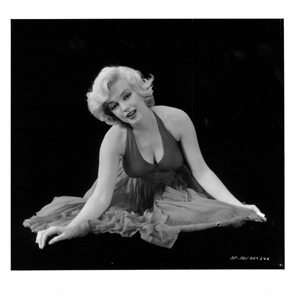 • On Now: Marilyn Monroe: A British Love Affair. This display at the National Portrait Gallery – coinciding with the 50th anniversary of Marilyn’s death – puts a spotlight on her links with the UK and features a range of photographic portraits as well as rare magazine covers, vintage prints, lobby cards and film stills. Monroe, then newly married to playwright Arthur Miller, spent four months in the UK in 1956 during which time she was making the film The Prince and the Showgirl opposite Laurence Olivier. Other events recorded include her meeting with the Queen and a private sitting with the film’s cinematographer Jack Cardiff. Among other images on display are Antony Beauchamp’s 1951 images of Marilyn in a yellow bikini and photographs taken by Cecil Beaton in New York’s Ambassador Hotel in 1956. There is also a selection of magazine covers ranging from a 1947 cover of Picture Post featuring then Norma Jeane Baker to the cover of Town magazine published three months after her death and featuring an image from her last official photo shoot. Runs until 24th March. Admission is free. For more, see www.npg.org.uk. PICTURE: Marilyn Monroe, artwork for The Prince and The Showgirl poster/Courtesy The John Kobal Foundation.
• On Now. Light from the Middle East: New Photography. Described as the “first major museum exhibition of contemporary photography from and about the Middle East”, this exhibition at the V&A features more than 90 works which show creative responses to events which have shaped the region over the past 20 years – including the recent revolution in Egypt. The display is structured around three themes – Recording, Reframing and Resisting – and as many as 30 artists from 13 countries are represented in the display including Abbas (Iran), Youssef Nabil (Egypt) and Walid Raad (Lebanon). Runs until 7th April. Admission is free. For more, see www.vam.ac.uk.
LondonLife – Dick Whittington visits St Paul’s for the Lord Mayor’s Show…
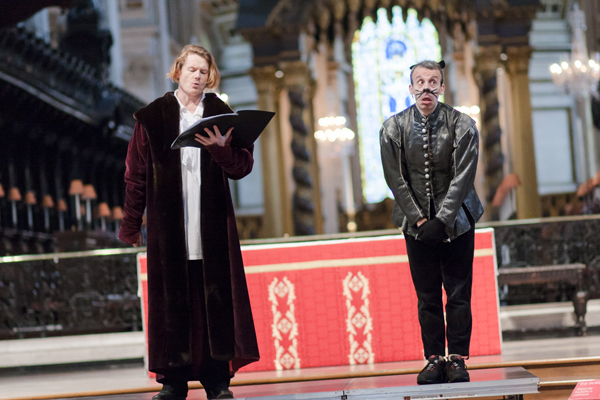 Actors Julian Rhind-Tutt (The Madness of King George, Notting Hill) and David Schneider (Horrid Henry the Movie, I’m Alan Partridge) star as thrice Lord Mayor of London, Dick Whittington, and his cat in one of a series of free performances held in St Paul’s Cathedral last Saturday as part of the festivities surrounding the annual Lord Mayor’s Show. The Lord Mayor, Roger Gifford, visited St Paul’s to receive a blessing before heading on to the Royal Courts of Justice to swear an oath of allegiance (and then, eventually returning to Mansion House where his journey had also begun). Interestingly, the Lord Mayor was unable to complete his entire journey to and from Mansion House in the State Coach this year (see our earlier post here) when what was reported as a fault with the coach’s wheels meant he had to complete the journey in an open top Land Rover. For more on events at St Paul’s Cathedral, see www.stpauls.co.uk.
PICTURE: © Graham Lacdao/The Chapter of St Paul’s Cathedral
Around London – Lord Mayor’s Show; Remembrance Sunday; Ansel Adams at the NMM; and, Mughal India at the British Library…
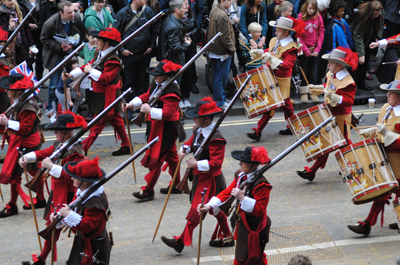 • The 2012 Lord Mayor’s Show is just about upon us and while you may not have a grandstand seat, there’s still plenty of places you can stand and watch the parade of more than 6,500 people pass by. Saturday’s parade – which celebrates the election of the 685th Lord Mayor of London, Alderman Roger Gifford – leaves Mansion House at 11am and travels via Poultry and Cheapside to St Paul’s Cathedral where it pauses for the Lord Mayor and his officials to receive a blessing – before continuing on via Ludgate Hill and Fleet Street to the Royal Courts of Justice, arriving there at about 12.30pm. There the Lord Mayor gives his oath of loyalty to the Crown (while in the surrounding streets the participants and 125 horses are fed and watered) before the parade reassembles and sets off from Embankment at 1pm, heading back to Mansion House via Queen Victoria Street – the Lord Mayor arrives sometime between 2pm and 2.30pm. (The website has a terrific one page map of the route you can download and print). There’s no fireworks display after the parade – although there’s a host of other activities taking place in the City of London – but if you’re up and about early enough, you may want to watch the Lord Mayor as he boards the barge QRB Gloriana at the Westminster Boating Base in Vauxhall at 8.30am and, escorted by a flotilla, makes his way up the Thames to HMS President, just below St Katharine Docks, arriving at about 9.35am after Tower Bridge opens in salute. For more, head to www.lordmayorsshow.org.
• The annual Remembrance Sunday service – commemorating the contribution of British and Commonwealth servicemen and women in the two World Wars and later conflicts – will take place at the Cenotaph on Whitehall at 11am this Sunday. While no tickets are required to watch the event, the Department of Culture, Media and Sport, who organise the service, advise arriving early if you wish to secure a good viewing space (and leave time for security checks at the entrance to either end of Whitehall). Whitehall opens at 8am. For more details, see www.culture.gov.uk/what_we_do/honours/3333.aspx.
• A new exhibition of the work of US photographic pioneer Ansel Adams opens at the National Maritime Museum in Greenwich tomorrow (Friday). Ansel Adams: Photography from the Mountains to the Sea, which comes from the Peabody Essex Museum in Salem, Massachusetts, will feature more than 100 original prints, many of which have never been exhibited before in the UK. It is said to be the first exhibition to focus on his “lifelong fascination” with water and the display features some of Adams’ finest images based on this subject including what are some of the most famous photographs of the 20th century. Highlights include the first photograph Adams’ ever image – taken at age 14 – which features a pool located at the Panama Pacific Exhibition at the 1915 World’s Fair, the three American Trust murals produced in the 1950s on an “unprecedented scale”, Adam’s favorite work – Golden Gate before the Bridge – which hung above his desk, and iconic images such as Clearing Winter Storm, Yosemite and Stream, Sea, Clouds, Rodeo Lagoon, Marin Country, California. There is an admission charge. Runs until 28th April. For more details on the exhibition, see www.rmg.co.uk.
• Also opening tomorrow (Friday) is the British Library’s major autumn exhibition – Mughal India: Art, Culture and Empire. The exhibition focuses on the Mughal dynasty – which once ruled over much of the Indian sub-continent – and is the first to document the period spanning the 16th to 19th centuries. Featuring more than 200 manuscripts and paintings, most of which come from the library’s own collection, highlights include Akbar ordering the slaughter to cease in 1578 – a work attributed to the artist Miskina in 1595, Abu’l Hasan’s early 17th century painting Squirrels in a plane tree, the historically important illustration Prince Aurangzeb reports to the Emperor Shah Jahan in durbar, and a portrait of Prince Dara Shikoh, favorite son and heir-apparent of 17th century Emperor Shah Jahan. Runs until 2nd April. Admission charge applies. For more on the exhibition and accompanying events, see www.bl.uk.
Around London – Henry Stuart at the NPG; the Lord Mayor’s Show; prehistoric Japanese pots; and, photography at the National Gallery…
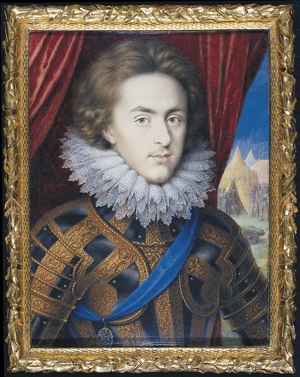 • The first ever exhibition focusing on Henry Stuart, older brother of King Charles I, has opened at the National Portrait Gallery. The Lost Prince: The Life and Death of Henry Stuart features more than 80 exhibits including paintings, miniatures, manuscripts, books and armour gathered from museums and personal collections around the UK and abroad – with some of the objects being displayed in public for the first time. Opened on 18th October – the 400th anniversary of the Prince’s death, among the paintings displayed in the exhibition are works by Holbein, Nicholas Hilliard and Isaac Oliver as well as Robert Peake as well as masque designs by Inigo Jones and poetry by Ben Jonson. Henry, Prince of Wales, was the eldest son of King James I and Queen Anne of Denmark, and died at the age of 18 of typhoid fever. As well as looking at his short life, the exhibition covers the extraordinary reaction to his premature death (and the end of hope that King Henry IX would sit next upon the throne). The exhibition runs until 13th January. An admission fee applies. For more, see www.npg.org.uk. PICTURE: Henry, Prince of Wales by Isaac Oliver, c. 1610-12; Copyright: The Royal Collection Photo: Supplied by Royal Collection Trust / © HM Queen Elizabeth II 2012
• The Lord Mayor’s Show – the largest unrehearsed procession in the world – will be held on 10th November. This year’s procession – celebrating the election of the 685th Lord Mayor of London, Alderman Roger Gifford – will feature more than 6,500 people winding their way through the City of London in a three-and-a-half mile-long display including 22 marching bands, 125 horses, 18 vintage cars, 21 carriages, an original American stagecoach, a Sherman tank, a steamroller and a Japanese Taiko drum band. While there will be no fireworks after this year’s parade, following the success of last year’s trial there will be an early morning flotilla with the Lord Mayor conveyed in the barge QRB Gloriana from Vauxhall up the Thames to HMS President, just below St Katharine Docks, from where he will make his way to the Mansion House to join the procession as it heads first to St Paul’s and then on to the Royal Courts of Justice before returning (via a different route). There are no grand stand seats left but plenty of places you can watch it for free (for a chance to win free Grandstand tickets, head to the Lord Mayor’s Show Facebook page and ‘like’ it). We’ll be talking about this more next week, but in the meantime, for maps and details of a new smart phone app, head to www.lordmayorsshow.org.
• Two prehistoric Japanese pots have gone on display at the British Museum. Loaned from the Nagaoka Municipal Science Museum, the pots date from the Middle Jomon period (3,500-2,500 BCE) and consist of a ‘flame’ and a ‘crown’ pot which were excavated in Nagaoka city. The pots form part of the Asahi Shimbun Displays in room 3 and will be there until 20th January. Meanwhile, continuing the Asian theme, an exhibition of more than 100 contemporary carved Chinese seals by artist Li Lanqing is on display in room 33 until 15th January. Admission to both is free. For more, see www.britishmuseum.org.
• On Now: Seduced by Art: Photography Past and Present. The National Gallery’s first major exhibition of photography, the display looks at the relationship between historical paintings and photography, both its early days in the mid-19th century and the work of contemporary photographers – in particular how photographers have used the traditions of fine art to “explore and justify” their own works. Almost 90 photographs are displayed alongside a select group of paintings for the show. Admission is free. Runs until 20th January in the Sainsbury Wing. For more, see www.nationalgallery.org.uk.
 Exploring London