Around London – Dickens and the foundlings; astronomy photographs at the Royal Observatory; Royal Parks allotments; and, Asian drinking vessels at the British Museum…

• A new exhibition exploring the relationship between author Charles Dickens, the Foundling Hospital and its secretary and former foundling, John Brownlow, opened at the Foundling Museum today. Received, a Blank Child: Dickens, Brownlow and the Foundling Hospital looks at how Dickens supported the institution in various ways including helping a young mother petition for a place for her child and publicising the work of the hospital through his writing – in particular the 1853 article Received, A Blank Child (the phrase comes from the wording used on the hospital’s entry forms). Among the items on display are never before displayed letters from Dickens relating to the hospital. The exhibition, which runs until 16th December, is free with the museum admission. And if you haven’t yet had a chance to see it, there’s still time to catch Dickens and the Foundling, in which six contributors including actor Gillian Anderson and journalist Jon Snow, have chosen objects to be displayed. This ends on 28th October. For more, see www.foundlingmuseum.org.uk.

Images from the Astronomy Photographer of the Year competition have gone on display at the Royal Observatory in Greenwich (which runs the competition in conjunction with Sky at Night Magazine). Among the winning images were The Whirlpool Galaxy taken by Martin Pugh of the UK/Australia, Star Icefall by Masahiro Miyasaka of Japan, and Venus-Jupiter Close Conjunction, by Laurent Laveder of France. The exhibition is free of charge and runs until February next year. For more (including an online gallery), see www.rmg.co.uk/visit/exhibitions/astronomy-photographer-of-the-year/2012-winners/.

It’s Harvest Festival time at London’s Royal Parks and this Sunday, between 11am and 4pm, people are invited to attend the Kensington Gardens’ allotment to see the fruits of the gardeners’ labour including the “big dig” of the potato crop as well as seasonal vegetables. There’s also the chance for families to see the allotment chickens being fed and children’s activities run by Ginger Cat. This week’s event follows one last weekend at Regent’s Park. For more, see www.royalparks.org.uk.

• On Now: Ritual and revelry: the art of drinking in Asia. This new free exhibition in room 91 of the British Museum features a display of objects which have been used in the consumption of liquids in various Asian contexts and the manner in which their use is intertwined with ritual, religious and otherwise. Among the vessels on display is a Tibetan skull-cap known as a kapala which is made from a human skull and used in religious rituals as well as a silver tea set from western India which features handles shaped like bamboo stems and a lacquered wooden sake bottle which was used as an altar piece. Runs until 6th January. For more, see www.britishmuseum.org.

Around London – Open House London; 16th century tankard at MoL Docklands; and, Spanish artists shine at the British Museum…

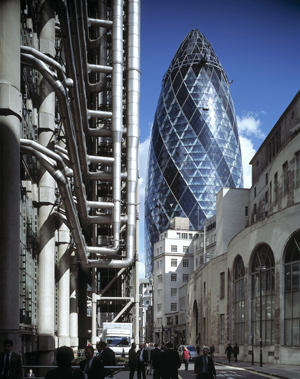
It’s Open House London weekend and that means your chance to enter scores of buildings not normally open to the public. More than 750 buildings are taking part in this, the 20th year the weekend has been held and there’s also an extensive program of free talks, walks and specialist tours. Among the buildings open this year are the iconic Gherkin building in the City (formally known as 30 St Mary Axe, pictured), Heron Tower in Bishopsgate, numerous livery company halls including that of the Apothecaries, Fishmongers and Carpenters, government buildings including Marlborough House, Westminster Hall, and the Foreign Office and numerous historic residences from the Mansion House, home of the Lord Mayor of London to Osterley Park House in west London. Among the events on offer is a moonlit hike through London tomorrow night to raise money for Maggie’s Cancer Caring Centres and rides on the new Emirates Airline cable car as well as boat tours to the Thames Barriers. If you didn’t order a guide, you can see the program online at the Open House London website – www.londonopenhouse.org. PICTURE: (c) Grant Smith/VIEW Pictures

A 16th century wooden tankard, found by a mudlark on the Thames foreshore near Ratcliff in London’s east, has briefly gone on display at the Museum of London Docklands. The large vessel, capable of holding three pints, has the initials RH inscribed on the base. It’s unknown for what purpose it was used, perhaps serving as a decanter rather than for individual use and may have been used on a ship. The vessel will be on display at the museum only until 27th September. For more, see www.museumoflondon.org.uk.

On Now: Renaissance to Goya: Prints and drawings from Spain. Opening at the British Museum today is this new exhibition featuring important prints and drawings by Spanish and other European artists working in Spain and spanning a period from the mid 16th century through to the 19th century. While all the works are drawn from the museum’s collection, many have never been on display before. The artists represented include Diego Velazquez, Alonso Cano, Bartolome Murillo, Francisco Zubaran and Jusepe de Ribera as well as Francisco de Goya. Held in room 90. Admission is free. Runs until 6th January. For more, see www.britishmuseum.org.

Around London – London’s listed; Open House beckons; Blue Plaque for opthalmologist; and, Motya Charioteer at the British Museum…

• It includes everything from the iconic Lloyd’s Building in the City to the former Strand Union Workhouse in Fitzrovia which may have inspired scenes in Charles Dickens’ Oliver Twist and the red phone boxes which sit outside the British Museum in Bloomsbury. English Heritage this week released it’s London List 2011 which documents the more than 100 sites in London which have been awarded listed status by the organisation last year. They include 19 Underground stations (among them that of Oxford Circus, St James’s Park and Aldwych), four war memorials (including the grand Central Park War Memorial in East Ham) and two schools as well as various cemetery monuments (including at Highgate and Brompton Cemeteries, and Bunhill Fields Burial Ground) and parks (the status of Green Park was upgraded to Grade II*), religious and commercial premises, public libraries and homes. To download a copy, visit www.english-heritage.org.uk/publications/london-list-2011/.

It’s just one week to go until the Open House London weekend when more than 750 buildings of all sorts open their doors to you. We’ll be talking more about some of the special places open this year in next week’s update – this is, after all, one of our favorite London events of the year, and while, if you haven’t already entered, you’ve missed on the balloted openings, there’s still plenty of places where you can simply turn up on the day (and entry to all is free). If you haven’t already bought one, you can buy the Guide online – just follow the links from www.openhouselondon.org.uk. It can also be picked up free at some participating London libraries.

• Dame Ida Mann, Oxford’s first female professor and a pioneering ophthalmologist, has been honored with an English Heritage Blue Plaque at her childhood home in West Hampstead. The plaque, which was unveiled by an Australian opthalmologist who worked with Mann, Donald F. Ezekial, last week, has been placed on a house at 13 Minster Road where Mann lived from 1902-1934. Mann was born in West Hampstead and lived there for 41 years before eventually emigrating to Australia. For more on blue plaques, see www.english-heritage.org.uk.

• On Now: Motya Charioteer at the British Museum. Best be quick for this one, the charioteer, on loan from the Museo Giuseppe Whitaker on Motya, is only around until 19th September (that’s next Wednesday). The stunning statue, displayed near the sculptures from the Parthenon, dates from about 460-450 BC and is generally credited as one of the finest examples of Greek marble sculpture to have survived down the ages. It is believed to depict the winner of a chariot race and is likely to have been commissioned to commemorate a victory by a participant from one of Sicily’s Greek cities. It was found in Sicily in 1979. Admission is free. For more, see www.britishmuseum.org.

Treasures of London – The Rosetta Stone…

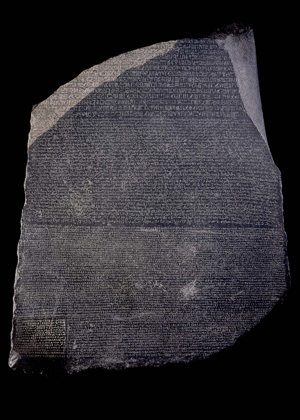
Now housed in the British Museum, the Rosetta Stone, discovered in Egypt in 1799, provided the key to understanding hieroglyphics.

Created in 196 BC, the stone, which measures 112.3 by 75.7 centimetres, has inscribed upon it a priestly decree passed in support of the 13-year-old pharoah, Ptolemy V, and was issued on the first anniversary of his coronation.

Its discovery was a breakthrough in understanding hieroglyphics, which had fallen out of use around the 4th century, due to the fact that the decree was written upon it in three languages – hieroglyphic as well as the everyday Egyptian language of demotic and, importantly, Greek.

Scholars studying the stone were able to use the Greek to decipher the other two languages. Among them were  Jean-François Champollion who announced the translation had been completed in Paris in 1822.

The stone was unearthed near the town of el-Rashid or ‘Rosetta’ by French soldiers in 1799 as they were digging out the foundations of an extension to a fort and following Napoleon’s defeat became the property of the British along with other antiquities under the 1801 Treaty of Alexandria. It has been on display since at the British Museum since 1802 (only briefly removed toward the end of the First World War when it was stored in a subterranean postal railway underneath Holborn).

The stone, said to be the most visited item in the British Museum, underwent a significant restoration and conservation process in 1999 which involved removing grease left by people touching the stone and materials used to create copies of it following its rediscovery – including printers ink from 1799.

WHERE: Room 4, Egyptian Sculpture, British Museum, Great Russell Street (nearest Tube stations are Russell Square, Tottenham Court Road, Goodge Street and Holborn); WHEN: 10am to 5.30pm daily; COST: Free; WEBSITE: www.britishmuseum.org.

PICTURE: The Rosetta Stone © The Trustees of the British Museum

Around London – Open gardens; new gates mark St Paul’s tercentenary; a new Olympics trail; and, truces at the IWM…

• If you’re not too exhausted after last weekend’s Diamond Jubilee festivities (or if you’re looking for something a little more sedate), this Saturday and Sunday London plays host to Open Garden Squares Weekend. Among the 208 gardens to be opened this weekend is the communal garden at Number 10 Downing Street, home of Prime Minister David Cameron. Laid out in 1736, the L-shaped garden at 10 Downing Street is shared by residents of both Number 10 and Number 11, including Larry, the Downing Street cat (tickets for this garden have already been allocated via a ballot process). Among the more than 200 gardens open to the public as part of the weekend are 24 new gardens and, for the first time, the event is being supported by the National Trust (along with the usual organisers, the London Parks and Gardens Trust). Downing Street aside, other gardens open to the public include the Regent’s Park Allotment Garden, the Royal College of Physicians’ Medicinal Garden, the Kensington Roof Gardens, and the gardens at HMP Wormwood Scrubs. Tickets for the gardens are cheaper if bought online in advance of the weekend and picked up on Saturday or Sunday – it’s not too late to do so, so for tickets and more information, head to www.opensquares.org.

A new pair gates designed to mark St Paul’s Cathedral’s tercentenary were opened in Richmond Park for the first time last week. The gates, which now form part of the historic vista seen from King Henry’s Mound in Richmond Park when looking toward’s St Paul’s Cathedral, were designed by 21-year-old blacksmith Joshua De Lisle and funded through a donation from the family of family of the late environmentalist and The Ecologist magazine founder Edward Goldsmith. Called ‘The Way’, the gates stand on the fence of Sidmouth Woods, and depict oak branches. Sir Christopher Wren, designer of St Paul’s, is acknowledged through the inclusion of a wren on one of the lower branches. For more on the Royal Parks, see www.royalparks.org.uk.

• Now On: Winning at the ancient Games. The British Museum is celebrating the London Olympics with a victory trail bringing together 12 “star objects” in its collection, united by the theme of winning. The ‘stops’ on the trail include a classical Greek statue of a winning charioteer on special loan from Sicily, a previously never exhibited mosaic showing Hercules, the legendary founder of the ancient Games, and the 2012 Olympic Medals. The trail is free. For more information, see www.britishmuseum.org.

Now On: Build the TruceDrawing on the idea of truce that was implemented during the ancient Olympic Games to allow athletes from Greece’s warring cities to compete, this new display at the Imperial War Museum features films, interviews and insights collected during a project investigating the concepts of truce, conflict and resolution and their relevance in the 21st  century. Highlights include excerpts of interviews with former IRA prisoner Seanna Walsh and former UDA prisoner Jackie McDonald -both now involved in peace initiatives in Northern Ireland, Courtny Edwards, who worked with a health service in displaced persons’ camps following civil war in Sierra Leone; and Professor Tony Redmond, who led aid teams in Kosovo following NATO attacks in 1999. Family activities are being run in conjunction with the exhibition on selected weekends. Entry is free. Runs until 23rd September. For more, see www.iwm.org.uk.

Around London – Leicester Square reopens; RA and MOL exhibitions mark Diamond Jubilee; ‘Jed’ retires; and, the history of horses at the British Museums…

• Leicester Square officially reopened last night following a £15.3 million transformation which has seen every paving stone replaced, new plants, and 40 new water jets placed around the Grade II listed fountain and statue of William Shakespeare. The 17 month makeover also included new lighting, new seating and a refurb of the underground toilets. The square – which owes its name to Robert Sidney, the 2nd Earl of Leicester, who purchased this land in 1630 and, after building himself a mansion, kept aside part of the land for public use – now welcomes as many as 250,000 tourists a day and is known as one of the world’s premiere sites for the release of new films.

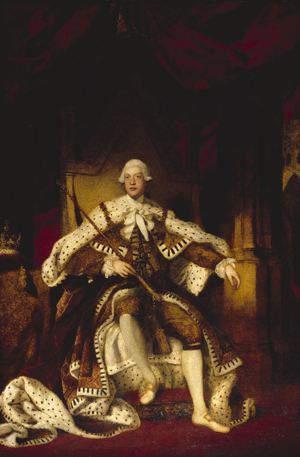
• The Royal Academy of Arts is marking the Queen’s Diamond Jubilee with a new exhibition opening tomorrow which features a selection of paintings by Royal Academicians elected during the early part of the Queen’s reign. The Queen’s Artists will include works by Jean Cooke, Frederick Gore and Ruskin Spear and will be displayed in the Reynolds and Council Rooms. Meanwhile The Saloon will house a collection of sculptures, paintings and drawings prepared by Royal Academicians for British coins and royal seals on loan from the Royal Mint Museum. The collection includes portraits of the Queen by Edward Bawden and Sir Charles Wheeler which have never before been shown in public, and Sir Anthony Caro’s new coin design of the London 2012 Olympic Games. Over in the Tennant Gallery, The King’s Artist’s George III’s Academy, will look at the king’s role in the foundation of the academy in 1768 and his influence in selecting the first artists. Highlights include portraits of King George III (pictured) and Queen Charlotte painted by the academy’s first president, Sir Joshua Reynolds. Admission charge applies. For more, see www.royalacademy.org.uk. PICTURE: Copyright Royal Academy of Arts, London/John Hammond.

• A new exhibition focusing on Londoners and their treasured souvenirs commemorating Queen Elizabeth II opens tomorrow at the Museum of London. At Home with the Queen features 12 photographic portraits of Londoners at home with their mementos as well as a selection of royal commemorative objects from the museum’s collection. The latter include trinkets produced for Queen Victoria’s Diamond Jubilee in 1897, official Coronation Day street decorations, Silver Jubilee paper tableware and souvenirs relating to the current Diamond Jubilee. Runs until 28th October. Admission is free. For more (including a series of events running on conjunction with the exhibition), see www.museumoflondon.org.uk.

The Royal Parks’ Shire horse, Jed, retired last week after a decade of service working in Richmond Park. The Queen presented a commemorative retirement rosette to Jed who was born in 1993 and joined the Royal Parks from Bass Brewery in Burton upon Trent almost 10 years ago. Horses have been used in Richmond Park since it was enclosed by King Charles I in 1637. The horses took a break in 1954 but the Shires were reintroduced in 1993 as a way to sustainably manage the parkland. For more on Richmond Park, see www.royalparks.org.uk/parks/richmond-park.

On Now: The horse: from Arabia to Royal Ascot. This major free exhibition at the British Museum is part of the august institution’s Diamond Jubilee celebrations and traces the history of the horse from domestication around 3,500 BC through to present day, with a particular focus on Britain’s equestrian tradition, from the introduction of the Arabian breed in the 18th century to events like Royal Ascot. Highlights include one of the earliest known depictions of horse and rider – a terracotta mould found in Mesopotamia dating from around 2000 to 1800 BC, a cylinder seal of Darius dating from 522 to 486 BC depicting the king hunting lions in a chariot, a 14th century Furusiyya manuscript, an Arabian manual of horsemanship, and the 19th century Abbas Pasha manuscript, the primary source of information about the lineage of purebred Arabian horses acquired by Abbas Pasha (mid-nineteenth century viceroy of Egypt). The exhibition is being held in Room 35. Runs until 30th September. For more, see www.britishmuseum.org.

Around London – Museums at Night; Ballgowns at the V&A; Edward Lear plaqued; and, the Queen’s portrait at the NPG…

• It’s Museums at Night weekend which means its your chance to see some of London’s best museums after hours. Culture24’s annual event, which runs from 18th to 20th May, features more than 5o late openings and special events in London – from after dark visits to Aspley House, the former home of the Duke of Wellington, to the chance to hear about the history of ‘Bedlam’, one of the world’s oldest psychiatric facilities, at the Bethlem Archives & Museum and Bethlem Gallery, and a “Cinderella shoe” workshop at the Design Museum. As well as organisations like the British Museum and National Gallery, among the lesser known museums taking part are the Cuming Museum in Southwark, the British Dental Association Museum, and the Ragged School Museum in Mile End. For all the details, follow this link

Saturday sees the opening of a new V&A exhibition featuring more than 60 ballgowns dating from 1950 to the present day – the first exhibition to be held in the newly renovated Fashion Galleries. Among those gowns on display as part of Ballgowns: British Glamour Since 1950 will be royal ballgowns including a Norman Hartnell gown designed for Elizabeth, the Queen Mother, Catherine Walker’s ‘Elvis Dress’ worn by Princess Diana (pictured), and gowns worn by today’s young royals. There will also be gowns worn by celebrities including Sandra Bullock, Liz Hurley and Bianca Jagger and works by the likes of Alexander McQueen, Jenny Packham and a metallic leather dress designed by Gareth Hugh specifically for the exhibition. Runs from 19th May to 6th January. Admission charge applies. See www.vam.ac.uk for more. PICTURE: Victoria and Albert Museum, London

The man credited with popularising the modern-day limerick, Edward Lear, has been honored with a green plaque at his former house in Westminster. The Westminster Council plaque was unveiled on Saturday – what would have been his 200th birthday – at 15 Stratford Place where he lived from 1853 until 1869. Lear, who was born in Holloway and raised in Grays Inn Road, was famous for his work The Owl and the Pussycat, and as well as for his writings, was also noted as an artist and illustrator. Councillor Robert Davis reportedly had a go himself at a limerick in honour of the artisy: “There once was man named Lear, who lived in a spot close to here. This plaque unveiled today, is a fitting way, to pay tribute on his two hundreth year”.

• On Now: The Queen: Art and Image. Having been on tour across Britian, this exhibition features some of the most remarkable images ever created of the Queen opened at the National Portrait Gallery this week. Containing works by Cecil Beaton and Annie Leibovitz, Pietro Annigoni and Andy Warhol, the exhibition is the most wide-ranging exhibition of images in different media ever devoted to a single royal sitter. Highlights include full-length 1954-55 painting by Annigoni (pictured, right, it’s displayed with his 1969 portrait), Lucian Freud’s 2000-01 portrait and Thomas Struth’s recent large-scale photograph of both the Queen and the Duke of Edinburgh as well as a never previously loaned 1967 portrait by Gerhard Richter and a specially commissioned holographic portrait. Runs until 21st October. Admission charge applies. For more, see www.npg.org.uk. PICTURE: Queen Elizabeth II, Queen Regent by Pietro Annigoni, 1954-5. The Fishmongers’ Company

Around London – Tate acquires photographic collection; new additions to Army museum; Picasso at the British Museum; and, Zoffany at the Royal Academy…

• A major collection of photographs of London, including works by Henri Cartier-Bresson, Robert Frank and Irving Penn, has been promised to the Tate Gallery. The collection, which will more than double the Tate’s photographic holdings, was assembled by Eric and Louise Franck over a 20 year period. It comprises around 1,400 photographs taken by 120 photographers between the 1880s and 2000s and is a record of the lives of people living in London. Highlights include Henri Cartier-Bresson’s work, Waiting in Trafalgar Square for the Coronation Parade of King George VI (1937), Bruce Davidson’s Girl with Kitten (1962), Elliot Erwitt’s Bus Stop, London (1962), Robert Frank’s London (Child Running from Hearse) (1951) and Irving Penn’s Charwomen, London (1950). More than two-thirds of the collection is being donated to the Tate Gallery, carrying an estimated value of more than £1 million, while the remaining works will be purchased. A selection from the collection will be exhibited in Another London, opening at the Tate Britain on 27th July. For more, see www.tate.org.uk.

• An Afghan schoolbook which uses bullets and Kalashnikovs as counting tools, Operational Service Medals and charm bracelets have been added to the National Army Museum’s Conflicts of Interest gallery. The gallery explores over 40 conflicts in which the British Army has been involved including that in Afghanistan. The illustrated childrens’ textbook dates from the time of the Soviet War in Afghanistan in the 1980s and was found by Captain Daniel Hinxman in 2007. Other artefacts added to the gallery include an Operational Service Medal for Afghanistan awarded to Sapper Dewi Allen for service in 2009-10, a memorial writsband produced by the family of Corporal David Barnsdale after he was killed in an IED attack in 2010 and a ‘lucky charm’ bracelet made by an Afghan for Lance Corporal Jose Cravalho De Matos. For more, see www.nam.ac.uk.

• On Now: Picasso Prints: The Vollard Suite. The British Museum is hosting this exhibition featuring Pablo Picasso’s most celebrated series of etchings, The Vollard Suite – the first time a complete set of the etchings has been shown in a British public institution. The suite consists of 100 etchings produced between 1930 and 1937, at a time when Picasso was involved in an affair with his nurse and muse Marie-Therese Walter. The predominant them of the suite is that of the sculptors studio – the artist was at this stage making sculpture at his new home outside Paris. The etchings, which have no titles and were not assigned an order, will be displayed alongside examples of the type of classical sculpture and objects which inspired the artist as well as Rembrandt etchings, Goya prints and Ingres drawings which also influenced Picasso’s works. The exhibition is being held in Room 90 and runs until 2nd September. Entry is free. For more, see www.britishmuseum.org.

• On Now: Johan Zoffany RA: Society Observed. This exhibition at the Royal Academy of Arts re-evalutes the life and career of the Frankfurt-born artist Zoffany, who moved to London in 1760 where he created portraits and subject pictures which attracted the patronage of the likes of actor David Garrick and courtiers of King George III. The exhibition, arranged into eight sections, features more than 60 oil paintings and a selection of drawings and prints taken from British and international collections, both public and private, with many of the items never before exhibited. Runs until 10th June. Admission charge applies. For more, see www.royalacademy.org.uk.

Around London – Cutty Sark reopens; Genghis Khan at Marble Arch; New theatre for the West End; and, Shakespeare’s cash…

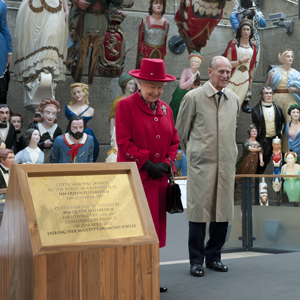
• The Cutty Sark, the world’s last surviving 19th century tea clipper, reopens to the public today following a £50 million, six year conservation project. The project to restore the Greenwich-docked ship has involved raising it more than three metres so visitors can walk underneath and see for themselves the sleek lines which helped the vessel set a then record-breaking speed of 17.5 knots or 20mph in sailing from Sydney to London. As well as raising the ship three metres, the project has involved encasing the ship’s hull in a glass casing to protect it from the weather – this area also contains the museum’s extensive collection of more than 80 ships’ figureheads, never been seen in its entirety on the site. The ship’s weather deck and rigging, meanwhile, have been restored to their original specification and new, interactive exhibitions on the vessel’s history have been installed below deck. Originally launched in 1869 in Dumbarton, Scotland, Cutty Sark visited most major ports around the world, carrying cargoes including tea, gunpowder, whiskey and buffalo horns and made its name as the fastest ship of the era when carrying wool between Australia and England. The ship became a training vessel in the 1920s and in 1954 took up her current position in the dry dock at Greenwich before opening to the public. In November 2006, the ship’s rig was dismantled in preparation for a restoration project – this received a setback on 21st May, 2007, when a fire broke out aboard the ship and almost destroyed it. The ship – which was officially reopened by Queen Elizabeth II and the Duke of Edinburgh (pictured) yesterday – is now under the operational management of the umbrella body, Royal Museums Greenwich. For more (including the online purchasing of tickets), see www.rmg.co.uk/cuttysark or www.cuttysark.org.uk. PICTURE: National Maritime Museum, London.

• A large statue of Genghis Khan has invaded Marble Arch. The 16 foot (five metre) tall sculpture of the Mongolian warlord, created by artist Dashi Namdakov, was erected by Westminster City Council as part of its ongoing City of Sculpture festival which is running in the lead-up to the Olympics. The statue has sparked some controversy – Labour councillors at Westminster have reportedly suggested Dambusters hero Guy Gibson would be a more suitable subject for a statue than the warlord Khan. The Russian artist, who has an exhibition opening at the Halcyon Gallery in Mayfair next month, told the Evening Standard he simply wanted to honor Khan on the 850th anniversary of his birth.

• Development of a new West End theatre, the first to be built in the area in 30 years, has been given the green light. The new 350 seat theatre will be part of a development project located between Charing Cross Road and Oxford Street which will also feature office and retail spaces. The site was occupied by a pickle factory in the 19th and 20th centuries and from 1927 was the home of the Astoria cinema, remodelled as a live venue in the 1980s. Live music was last presented there in 2009 when the site was compulsorily acquired for the Crossrail project.

• On Now: Crowns and Ducats: Shakespeare’s money and medals. This exhibition at the British Museum explores the role of money in Shakespeare’s world and looks at how coins – a frequently recurring motif in Shakespeare’s work – and medals were issued to mark major events. Objects in the display include Nich0las Hilliard’s ‘Dangers Averted’ medal of Elizabeth I and William Roper’s print of the Queen, the first to be signed and dated by a British artist, as well as a money box such as might have been used at the Globe and a hoard of coins, including a Venetian ducat, deposited in Essex around the time of Shakespeare’s birth. Almost every coin mentioned in Shakespeare’s plays will be on show – from ‘crack’d drachmas’ to ‘gilt twopences’. Runs until 28th October in room 69a. Entry is free. For more, see www.britishmuseum.org.

Around London – Your Roman influences; celebrating the City; and, of Journeys and kinship…

• The Museum of London is calling on Londoners to submit images showing “Roman influences in London today” as part of its forthcoming Our Londinium 2012 exhibition, a revamping of the museum’s Roman gallery. In what is the largest update made to the museum’s Roman gallery since it opened in 1994, the  reworked gallery looks at parallels between Roman London and the city today and features important Roman artifacts such as a bust of the Emperor Hadrian found on the Thames foreshore (part of the British Museum’s collection, this will be displayed for six months before being replaced by a replica) alongside modern objects such as the V for Vendetta masks worn by protestors in the Occupy movement. The exhibition is being co-curated by young people from Junction, the Museum of London’s youth panel, and they’re calling on people to submit their images showing how the city’s Roman past still resonates even today (see example pictured). For details on how to submit images via email of Flickr, head to www.museumoflondon.org.uk/ol2012map.

Secrets will be revealed, we’re promised, as part of the City of London’s Celebrate the City: four days in the Square Mile event to be held from 21st to 24th June. Events held in the City our the four days, many of which will be free, include a musical extravaganza to launch the event in Guildhall Yard as well as exhibitions, walks and talks, a chance to explore buildings like Livery Company Halls, the Bank of England and the Mansion House, family entertainment at the Cheapside Fayre and music and activities at sites across the Square Mile including the Barbican Centre, Museum of London and churches. We’ll have more to come on this. For now, head to www.visitthecity.co.uk/culture2012 for more information.

• Architectural historian and former director of the Sir John Soane Museum, Sir John Summerson, has been honored with an English Heritage blue plaque at his former home  London’s north-west. Sir John (1904-1992) lived at the property at 1 Eton Villas in Chalk Farm for more than 40 years. He was the director of the Sir John Soane Museum from 1945 to 1984. For more, see www.english-heritage.org.uk/discover/blue-plaques/.

• Architecture students are being invited to submit designs for a new stone seating area on the City thoroughfare of Cheapside. The winning student will work with trainee masons from the Cathedral Works Organisation and The Mason’s Company with the new seating area unveiled in October. For an application pack and full brief, see For an application pack and full brief, please contact Melanie Charalambous, Department of the Built Environment, City of London Corporation, PO Box 270, Guildhall, London, EC2P 2EJ or call 020 7332 3155 or email stonebench@cityoflondon.gov.uk.

• Now On: Journeys and kinship. This display at the Museum of London Docklands showcases the creative output of a community collaboration project which involved a group of young Londoners working with visual artist Jean Joseph, Caribbean Calypso musician Alexander D Great and Yvonne Wilson from training organisation Equi-Vision. The centrepiece of the exhibition – which explores themes highlighted in the museum’s permanent gallery, London, Sugar and Slavery, on the city’s involvement in the trans-Atlantic slave trade  – is an artwork by Joseph entitled Sales Over Centuries, 2010, which features plaster face casts of 42 people from the African diaspora who were born in or currently live in London. In response to it, the young Londoners have created their own works including face casts, music, film and photography. Runs until 4th November. Entry is free. For more, see www.museumoflondon.org.uk/Docklands/.

Treasures of London – The Battersea Shield…

Found in the River Thames near Battersea, the Battersea Shield dates from the Iron Age and is believed to have been created for ceremonial or display purposes (which could be read as showing off), rather than for use in warfare.

Made of a thin layer of highly polished bronze featuring 27 studs into which were placed pieces of red enamel (opaque red glass), the bronze sheets would have originally been placed over a wooden shield. It was clearly designed with spectacle in mind and would have been quickly destroyed in any serious battle. The circular patterns housing the red enamel are designed in what is called the ‘La Tène style’, named for an Iron Age site in Switzerland.

The Celtic shield, which the British Museum dates between 350 to 50 BC, is believed to have been deliberately thrown or placed in the Thames, perhaps as a votive offering, and lay there undisturbed until 1857 when it was dredged up off the river bed near Battersea Bridge during bridge construction.

For a more detailed look at the Battersea Shield, see I.M. Stead’s The Battersea Shield. Unfortunately we were unable to secure permission to run an image of the shield so to see an image of the shield, click here.

WHERE: Room 50, British Museum, Great Russell Street (nearest Tube Stations are Russell Square, Tottenham Court Road, Holborn and Goodge Street). WHEN: 10am to 5.30pm daily (Fridays until 8.30pm)COST: Free; WEBSITE: www.britishmuseum.org.

Around London – ‘Cathedral of Middlesex’ to be opened in west London; Roman brothel token on display; wifi in Westminster and Kensington; and, looking at the Hajj at the British Museum…

• A medieval barn in west London, said to be the “Cathedral of Middlesex”, will open to the public in April. The Grade I listed Harmondsworth Barn was built in 1426 by Winchester College, who owned a manor farm at Harmondsworth, and was used to store grain. Nearly 60 metres long, the roof is held up by 13 massive oak trusses. In 2006, the barn was bought by an off-shore company who subsequently agreed to sell it to English Heritage following the issuing of a notice for emergency repairs. English Heritage say the barn, called the “Cathedral of Middlesex” by the late poet-laureate Sir John Betjeman, will now be “run by and for the local community”. “Harmondsworth Barn is one of the greatest medieval buildings in Britain, built by the same skilled carpenters who worked on our magnificent medieval cathedrals,” says Simon Thurley, chief executive of English Heritage. “Its rescue is at the heart of what English Heritage does – protecting this nation’s architectural treasures and helping people discover our national story through them. We will complete the repair of this masterpiece and working with local people, will open it to the public to enjoy.” For more, see www.english-heritage.org.uk. (Image: Copyright English Heritage; Photographer Boris Baggs).

The oldest Roman brothel token to have been discovered in London has gone on temporary display at the Museum of London. The token, which may be the oldest of its kind to have been found in Britain (or, indeed, even the only one of its kind ever found in Britain), was known as a spintria and depicts two reclining human figures on one side and the Roman numeral 14 on the other. It was found on the Thames foreshore near Putney Bridge by a mudlarker using a metal detector. Only the size of a 10 cent piece, its use remains something of a mystery – it may have been exchanged for sexual services or used as gaming piece. The token is on display at the museum until April. For more, see www.museumoflondon.org.uk.

Free wifi is being rolled out across Westminster, Kensington and Chelsea as part of deal between Westminster City Council, the Royal Borough of Kensington and Chelsea and network operator, O2. The network, installation of which began last month, is initially being rolled out in a limited number of areas but will eventually cover all of the boroughs and create the largest free wireless hub in Europe.

Now On: Hajj: journey to the heart of Islam. This exhibition at the British Museum is the first to focus on the pilgrimage to Mecca in Saudi Arabia – a central tenet of the Islamic faith. Organised in partnership with the King Abdulaziz Public Library in Riyadh, it’s based around three central themes: the pilgrim’s journey to Mecca with an emphasis on the major routes taken; the Hajj today and its associated rituals; and the origins and importance of the Hajj to Mecca. Objects featured in the exhibition include a seetanah which covers the door of the Ka’ba as well as gifts offered to the sanctuary and souvenirs taken back home. It’s the first of three exhibitions at the British Museum focused on spiritual journeys. Runs until 15th April. Admission charge applies. For more, see www.britishmuseum.org.

Around London – Lloyd’s gets Grade I; 700,000 historic items online in NT database; and, introducing the Silverdale Hoard…

London’s iconic Lloyd’s Building (also known as the ‘inside out’ building thanks to a design in which utility pipes, lifts and stairways are exposed on the outside) has been listed as a Grade I building, becoming the youngest building to be granted such status. John Penrose, Minister for Tourism and Heritage, made the decision following advice from English Heritage. Roger Bowdler, English Heritage’s designation director, said he was “delighted” at the decision. “Its listing at the highest grade is fitting recognition of the sheer splendour of Richard Rogers’s heroic design. Its dramatic scale and visual dazzle, housing a hyper-efficient commercial complex, is universally recognised as one of the key buildings of the modern epoch.” The futuristic-looking building is one of very few post war buildings to be protected with a Grade I listing. Construction of the tower started in 1981 and was largely completed by May 1984. It was occupied two years later. As well as its futuristic exterior, the building also features a nod to the past with the Adam Room, which dates from the 1760s and was moved here intact from which was moved from Bowood House in Wiltshire. The building is also home to the Lutine Bell, which comes from a French frigate captured by the British in 1793, and was rung to herald important announcements (today these are generally only ceremonial). The history of Lloyd’s goes back to 1688 when it’s believed the first Lloyd’s Coffee House opened in Tower Street.

• More than 700,000 objects in the care of the National Trust can be accessed virtually via a new online database. The database, accessed via www.nationaltrustcollections.org.uk contains details of more than 700,000 objects – everything from artworks by Gainsborough to a laudanum bottle containing remnants of poison and the cotton underwear of a grocer – currently housed at more than 200 properties as well as in storage or on loan to other organisations. Highlights include a costume made from beetle wings for the actress Ellen Terry, an early anti-aging ‘machine’, a furnished Victorian dolls house from Uppark House in West Sussex, and a Bible reputed to have been used at the execution of King Charles I from Chastleton House in Gloucestershire. The database has been in development for 15 years and the work to develop it will continue.

A 1,100-year-old collection of Viking Age objects including silver arm-rings and brooch fragments and coins from the Silverdale Hoard – found in Silverdale, Lancashire, in September – has gone on display in room 2 of the British Museum until early in the New Year. Among the 200 objects in the hoard is a type of coin not seen before and bears the inscription Airdeconut which appears to be an early attempt to represent the name Harthacnut. Lancaster City Museum has reportedly expressed an interest in acquiring the hoard. For more, see www.britishmuseum.org.

Around London – Illuminating manuscripts at the BL; Capability Brown and Richard Burton blue plaqued; and, Grayson Perry at the British Museum…

Opened to the public last week, Royal Manuscripts: The Genius of Illumination – a landmark exhibition at the British Library – features a “treasure trove” of illuminated manuscripts collected by the kings and queens of England between the 9th and 16th century. Highlights include 16 illuminated manuscripts of King Edward IV, what the library calls the first “coherent collection” of royal books; the Psalter of King Henry VIII, A History of England by Matthew Paris, a 13th century monk, scholar and advisor to King Henry III; Thomas Hoccleve’s Regement of Princes – a early 15th century instruction book on how to be an effective ruler; a 14th century Genealogical Chronicle of the English Kings; and, The Shrewsbury Book, created in Rouen in 1445 and presented to Margaret of Anjou on her marriage to King Henry VI by the renowned military commander John Talbot, 1st Earl of Shrewsbury. An impressive series of public events featuring well known writers and historians – including Eamon Duffy, Michael Wood, and Andrew Marr –  is taking place alongside the exhibition. Runs until 13th March. An admission charge applies. For more, see www.bl.uk.

PICTURE: The Coronation of Henry III, Images of English Kings, from Edward the Confessor to Edward I, England, c. 1280-1300, Cotton Vitellius, A. xiii, f. 6 © British Library Board

• Leading 18th century landscape gardener Lancelot ‘Capability’ Brown has been honored with a blue plaque at his former home in Hampton Court Palace. Brown, who designed more than 120 landscapes during his lifetime, lived at Wilderness House after King George III appointed him Chief Gardener at the palace – he lived there from 1764 until his death in 1783. Brown’s legacy can still be seen at country houses around England – including at Petworth House in West Sussex, Alnwick Castle in Northumberland, Chatsworth House in Derbyshire and Blenheim Palace in Oxfordshire. He had earned the name ‘Capability’ by the 1760s – apparently he often spoke of a property’s capabilities when speaking of it. English Heritage unveiled the plaque last week. For more, see www.english-heritage.org.uk.

A second blue plaque worth mentioning this week is that marking the former home of actor Richard Burton. Michael Sheen – currently playing Hamlet at the Young Vic – was among those who last week attended the unveiling on the plaque at the home Burton and his wife actress Sybil Williams lived in from 1949 to 1956, the period during which he rose to international fame. While living at the house 6 Lyndhurst Road in Hampstead, Burton was a member of the Old Vic theatre company – performing, to the acclaim of critics, roles including that of Hamlet, Othello, Coriolanus and Henry V – and in 1952 made his Hollywood debut with My Cousin Rachel. Other films he appeared in during the period include The Robe (1953), The Desert Rats (1953), and Alexander the Great (1956). Following the close of the Old Vic season in 1956, Burton moved to Switzerland and went on to even greater public fame following his role in the 1963 film Cleopatra alongside his then lover (and later wife) Elizabeth Taylor. For more, see www.english-heritage.org.uk.

• On Now: Grayson Perry – The Tomb of the Unknown Craftsman. This exhibition at the British Museum explores a range of themes connected with the ideas of craftsmanship and sacred journeys and includes 190 objects from the museum’s collection selected by the artist along with a works by Grayson himself, many of which will be on public view for the first time. They include everything from Polynesian fetishes to Buddhist votive offerings, a prehistoric hand axe to 20th century badges and a re-engraved coin from 1882 featuring a bust of Queen Victoria with a beard and boating hat. At the heart of the exhibition sits Grayson’s own work, The Tomb of the Unknown Craftsman, a richly decorated cast-iron “coffin-ship”. Runs until 19th February. An admission charge applies. For more, visit www.britishmuseum.org.

LondonLife – A last chance to experience Australia at the British Museum…

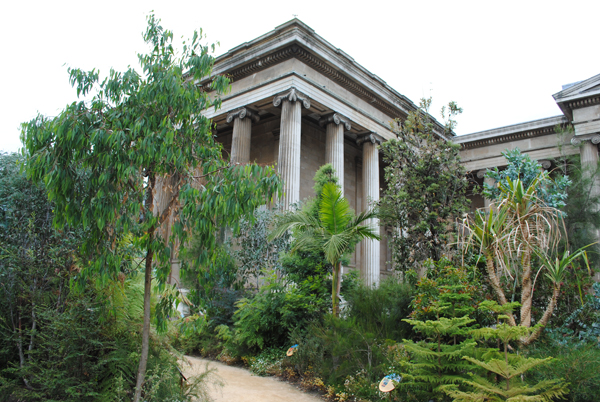
An Australian landscape constructed in the forecourt of the British Museum as part of the museum’s Australian Season. The landscape takes the intrepid on a journey across the vast Australian continent through the arid red desert of the red centre to the granite outcrops of the country’s west coast. The plants include iconic Australian flora such as the kangaroo paw, wattle, coast banksia, gums and ferns as well as a Wollemi pine. The landscape is the fourth created in the museum’s forecourt under a partnership with the Royal Botanic Gardens, Kew. But time is running out to see it – the garden will disappear on 16th October. Other events held at the museum as part of Australian Season have included an exhibition of Australian artworks and handcrafted baskets. Admission to the garden is free. For more, visit www.britishmuseum.org.

Around London – Design Festival in full swing; museum acquires rare merchant figure; Olympic medals on display; and, remembering Polish, Czech and Slovak airmen…

• The London Design Festival is in full swing in London this week with more than 250 events taking place across the city over its 10 days. Launched last Saturday, the festival runs until Sunday and there’s still plenty of time to get involved. Among the highlights is a series of events, workshops and talks being held at the Victoria & Albert Museum (where you can also see 12 specially commissioned installations, one of which sees the museum’s grand entrance transformed with a sculptural form), a series of shows focusing on design in six London “design districts” – Brompton, Pimlico Road, Covent Garden, Fitzrovia, Clerkenwell and Shoreditch, and a broad program of ‘partner’ and ‘international’ events – everything from a festival featuring African-Caribbean design through to an exhibition of experimental chairs by the Danish Cabinetmaker’s Association. To find out more, simply head to www.londondesignfestival.com.

The Museum of London has announced the purchase of a rare 18th century clay figure of London druggist and tea merchant Thomas Todd. The figure, which was acquired with the help of the Art Fund and MLA/V&A Purchase Grant Fund,  is one of only two known portrait works attributed to the Chinese artists Chitqua on show in Britain. The figure, which is made from unfired clay held together by bamboo and brightly painted, was acquired from Todd’s great, great, great, great grand nephew, Thomas Todd, and will appear shortly in the Expanding City Gallery in the Galleries of Modern London. Based in Fleet Street, Pat Hardy, the museum’s curator of paintings, prints and drawings, says Todd “epitomised the kind of business acumen which ensured the growth of Britain’s industrial, mercantile and commercial empire in the eighteenth century”. For more, see www.museumoflondon.org.uk

The British Museum has opened an exhibition giving the public their first chance to see next year’s Olympic and Paralympic Games medals. Medals have been awarded at the Olympic Games since the first modern games were held in 1896. The latest Olympic medals were designed by jeweller David Watkins, for many years Professor of Goldsmithing, Silversmithing, Metalwork and Jewellery at London’s Royal College of Art, while the latest Paralympic Medals were designed by jeweller Lin Cheung, a senior lecturer for Jewellery Design at London’s Central Saint Martins College of Art and Design. The exhibition tells how, using minerals mined in the US and Mongolia (Rio Tinto is sponsoring the exhibition), the medals were produced at the Royal Mint in Llantrisant, South Wales. Mine to medals: the London 2012 Olympic and Paralympic Games medals runs until 9th September next year. Admission is free. For more, see www.britishmuseum.org.

• On Now: Brothers in Arms – Airmen of Poland and Czechoslovakia in the Battle of Britain & Beyond. The Royal Air Force Museum in Colindale, north London, is hosting an exhibition looking at the contribution of Polish, Czech and Slovak airmen in the Battle of Britain and their life afterwards. Curated in association with the Polish Institute of National Remembrance, the exhibition features drawings, archival film footage and sculpture as well as uniforms, diaries and combat reports. Opened by Poland’s Foreign Affairs Minister Radoslaw Sirkorski (who later attended the annual banquet held in honor of the Veterans of the Battle of Britain), it runs until 4th March, 2012. Entry is free. For more, visit  www.rafmuseum.org.uk.

Famous Londoners – Sir Hans Sloane

An Ulster-Scots born physician, scientist and avid collector, Sir Hans Sloane served as doctor to no less than three British monarchs during the 17th and 18th centuries and during his life amassed a vast collection of natural specimens and curiosities which after his death were used to form the core of the British Museum’s collection.
Born on 16th April, 1660, at Killyleagh in County Down, Ireland, Sir Hans was the son of Alexander Sloane, a “receiver-general of taxes” who originally hailed from Scotland.

Even as a young man, he developed a keen interest in the natural sciences. Having suffered from some ill-health which, at the age of 16 is said to have kept him confined to a room for a year, in 1679, at the age of 19, he moved to London where he studied chemistry at the Apothecaries Hall and botany at the Chelsea Physic Garden – a period during which he befriended the botanist John Ray and chemist Robert Boyle.

Four years later, he travelled through France where he received his Doctorate of Physics. On his subsequent return to London in 1685, he was made a Fellow of the Royal Society and in 1687 a Fellow of the Royal College of Physicians.

Given the chance to travel to Jamaica as physician to the new Governor, Christopher, the 2nd Duke of Albemarle, he only spent 15 months there (the Governor died soon after arrival). But it was an important period during which not only did he document and collect a vast amount of flora and fauna (bringing some 800 specimens back to London), he also came up with the idea of drinking chocolate with milk after witnessing locals drinking the dark chocolate with water but finding the mix made him “nauseous” (back in England, his concoction was first sold as a medicine and was later manufactured as a drink by Cadburys).

Having returned to London in 1689, he published the information he had gathered in Jamaica, and in 1693 he become secretary to the Royal Society.

In 1695 he married a Jamaican sugar planter’s widow, Elizabeth Langley Rose (with whom he had several children but of whom only two daughters, Sarah and Elizabeth, survived) and, thanks in part to an ongoing association with the duke’s widow, was able to set up a fashionable medical practice at 3 Bloomsbury Place on the northern end of Bloomsbury Square.

The house, not far from where the British Museum now stands, become something of an attraction in its own right, filled with objects and specimens he had collected on his travels as well as those – in some cases complete collections – given to him by others including friends and patients (in fact, he had to purchase the property next door, number four, to find room for them all – this property is now marked with a Blue Plaque).

The composer Handel is said to have been among those who visited the property and there is a delightful tale that says Sir Hans was outraged when Handel placed a buttered scone on one of his rare books.

With his services as a physician highly prized, in 1696, he was appointed physician to Queen Anne, the first of the three monarchs he would serve. In 1712-13, with his collection still growing, he purchased the Manor of Chelsea to help house it (four acres of which were leased to the Chelsea Physic Garden, which had been founded in 1673 with the idea of providing a training ground for apprentice apothecaries, in perpetuity).

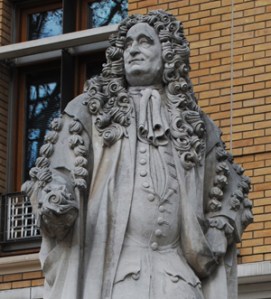
He subsequently moved his collection out to this property and his connection with Chelsea is still celebrated in place names such as name Sloane Square (not to mention Sloane Street, Sloane Gardens, Hans Street, Hans Crescent, Hans Road and Hans Place). There is also a statue of the bewigged man in Duke of York Square (pictured), not far from Sloane Square – this is a 2007 copy of 1737 original by John Rysbrack, another (older) copy of which can be found in the Chelsea Physic Garden.

Following Queen Anne’s death in 1714, in 1716 Sir Hans was appointed physician to her successor, King George I (he was also created a baronet the same year, becoming the first medical practitioner to receive a hereditary title).

Three years later, in 1719, he become president of the Royal College of Physicians, an office he held for 16 years, and in 1727, he was appointed physician to King George II. The same year he succeeded Isaac Newton as president of the Royal Society, an office which he held until 1741.

In 1742, Sir Hans retired to his property in Chelsea.

By the time of his death on 11th January, 1753 at the ripe old age of 93, Sir Hans had collected more than 71,000 objects including books, manuscripts, drawings, coins and medals and plant specimens which he bequeathed to King George II in exchange for a payment of £20,000 to his executors.

Parliament agreed, following a lottery to raise the money, his collection went on to form the basis of the British Museum, first opened to the public in 1759 in Bloomsbury. It was also to form the basis of the museum’s later offshoot, the Natural History Museum at South Kensington.

Sir Hans was buried at Chelsea Old Church with his wife Elizabeth who died in 1724.
Around London – Apsley House history goes online; Australian landscapes at the British Museum; Dame Judy Dench awarded Freedom of the City of London; and, Out of this World on at British Library

A detailed history of Apsley House, the former home of Arthur Wellesley, 1st Duke of Wellington, has gone live online as part of a pilot project aimed at “deepening the public’s understanding of English history”. The property, known as Number 1, London, is one of 12 initially being profiled in depth in a pilot project on the new English Heritage online resource, Portico. Others include Down House, the former home of Charles Darwin, located in Kent, as well as Beeston Castle, Brough Castle, Byland Abbey, Carlisle Castle, Dunstanburgh Castle, Easby Abbey, Kenilworth Castle, Lullingstone Roman Villa, Rievaulx Abbey and Wroxeter Roman City near Shrewsbury. Brief historical details are also provided for an additional 220 lesser known free sites including Dunster Yarn Market in Somerset. For more see www.english-heritage.org.uk/professional/archives-and-collections/portico/.

The West Lawn of the British Museum Forecourt has been turned into an image of the Australian continent as part of a five year partnership programme between the museum and the Royal Botanic Gardens, Kew. The landscape moves from the vegetation of the eastern Australia’s coast through to the red centre and onto a rocky Western Australian outcrop. It showcases some of the continent’s unique and highly threatened flora. The  construction of the landscape, which follows one showcasing that of South Africa last year, is part of the museum’s ‘Australian season’. Runs until October. Admission is free. See www.britishmuseum.org.

• Dame Judy Dench was awarded the Freedom of the City of London for services to acting at a ceremony at the Guildhall last week. The winner of an Academy Award, nine BAFTAs and three Laurence Olivier Awards, Dame Judy is an icon of stage and screen. She is reportedly looking forward to driving her sheep over London Bridge and occasionally wearing a sword in public – both privileges of those awarded the Freedom of the City of London. The Freedom of the City’s origins are believed to date back to 1237 and enabled recipients to carry out their trade. Today people are nominated for or apply for the Freedom for the link with the City or are awarded it for a significant contribution to London life. Many of the traditional privileges – such as driving your sheep over London Bridge or being hanged with a silken rope – no longer exist.

Now On: Out of this World: Science Fiction but not as you know it. The British Library’s first exhibition which explores science fiction through literature, film, illustrations and sound. Guest curated by Andy Sawyer, director of science fiction studies MA at the University of Liverpool, the exhibition traces the evolution of the genre from Lucian of Samosata’s True History, written in the 2nd century AD, through to the recent writings of Cory Doctorow and China Mieville. Highlights include a 1516 edition of Sir Thomas More’s Utopia, a 1647 edition of Lucian’s True History, and a 1906 edition of HG Wells text, The War of the Worlds. Runs until 25th September. For more see, www.bl.uk/sciencefiction.

Around London – Burial place of Bunyan, Defoe and Blake gets Grade I listing; Kew Gardens joins Streetview; and, Afghan treasures on show…

The London burial place of writers John Bunyan and Daniel Defoe and artist and poet William Blake has been recognised as one of the city’s most significant historic landscapes with a Grade I listing on the national Register of Parks and Gardens. The news, which was announced last month, also sees 75 tombs located within Bunhill Fields Cemetery individually listed. Bunhill, located between City Road and Bunhill Row, is one of 106 registered cemeteries in London (and now one of only seven Grade I listed cemeteries). It was established in 1660 and, thanks to its not being associated with Anglican place of worship, is viewed as the “pre-eminent graveyard for Nonconformists in England” . About 123,000 burials took place in its four acres before it was closed in 1869. The oldest monument is that of theologian Theophilus Gale, who died in 1678. As well as the tombs of Buynan, Defoe and Blake, others listed on the register include that of Dame Mary Page, who died in 1728 and whose tomb inscription talks of her stoicism in the face of 240 gallons of water being taken out of her prior to her death, and Joseph Denison, a banker who died in 1806 and was one of England’s wealthiest commoners at the time. The listing was made by the Department of Culture, Media and Sport following advice from English Heritage. For more on Bunhill Fields, follow this link

Kew Gardens has joined Google Streetview, meaning it’s now possible to navigate your way around the gardens from the comfort of your own home. More than 26 kilometres of paths and the interiors of some of the garden’s glasshouses – including the Palm House and the Temperate House – can now be seen on Streetview which offers 360 degree views. Professor Stephen Hopper, director at Kew, says the new technology is “bound to encourage people to visit us and experience Kew for themselves”. Follow this link to see the gardens on Streetview.

• On Now: Afghanistan’s heritage is on display in a newly opened exhibition at the British Museum. Afghanistan: Crossroads of the Ancient World showcases more than 200 objects from the National Museum of Afghanistan as well as some items from the British Museum and includes sculptures, ivory inlays once attached to furniture, Roman glassware and Egyptian stone tableware, and inlaid gold ornaments once worn by the area’s “nomadic elite”. The objects were found between 1937 and 1978 and were preserved thanks to officials who kept them out of harm’s way during the Soviet and Taliban eras. The museum announced this week that they would be joined by carved ivory fragments that were stolen from Afghanistan’s national museum in the early 1990s and only recently presented to the British Museum by a benefactor with the idea that they will eventually be returned to Kabul. The exhibition runs until 3rd July. There is an admission charge. For more information, see www.britishmuseum.org.

Treasures of London – The Cheapside Hoard

It’s been described as the greatest find of Jacobean and Elizabethan jewellery ever made – an extraordinary cache of some 500 gemstones, jewellery and other related items found buried under the floor during the demolition of a building at 30-32 Cheapside on 18th June, 1912.

Now known as the Cheapside Hoard, it dates from the 16th and 17th centuries and includes neck chains, pendants, hat ornaments, cameos and rings – among the items is a gold watch set into a hinged case made from a Columbian emerald, a tiny bejewelled gold scent bottle, and an onyx cameo of Queen Elizabeth I.

Other items include unfinished ornaments and unmounted gemstones which have origins spanning the world – from Asia and Middle East to South America. While these give support to the idea that the hoard is part of a goldsmith’s reserve stock, mystery still surrounds why it was buried in the building (although Cheapside was known for its goldsmiths during the era which the hoard dates from).

The majority of the hoard is held at the Museum of London where some of the items are on display. Other items are at the British Museum and one, an enamelled gold chain, is at the Victoria & Albert Museum. The Museum of London is planning major exhibition of the hoard starting in late 2013. Stay tuned for more information.

WHERE: Museum of London, 150 London Wall (nearest tube station is Barbican, St Paul’s or Moorgate); WHEN: 10am to 6pm, Monday to Sunday; COST: Free; WEBSITE: www.museumoflondon.org.uk

PICTURE: Museum of London