This Week in London – Biggest ever Magna Carta exhibition; 200 years since Waterloo at the NPG; and, Alexander McQueen at the V&A…

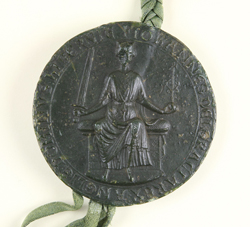
great-seal-king-john-eton-college-british-library-magna-carta-law-liberty-legacyThe largest ever exhibition related to the Magna Carta opens at the British Library in King’s Cross tomorrow to mark the 800th anniversary of the document’s sealing. Magna Carta: Law, Liberty, Legacy features two original Magna Carta manuscripts from 1215 as well as 1215 document, the Articles of the Barons (known as ‘draft’ of the Magna Carta), the Petition of Right (1628), the English Bill of Rights (1689), and the Universal Declaration of Human Rights (1948). It will also display two of the most celebrated documents in American history – the Delaware copy of the Bill of Rights and Thomas Jefferson’s handwritten copy of the Declaration of Independence (both on loan from the US National Archives) –  along with UK cabinet papers from 1941 in which it was proposed an original Magna Carta manuscript from 1215 be given to the US in return for their support in World War II and artefacts including King John’s teeth, thumb bone and fragments of clothing taken from his tomb in 1797 as well as his will. The exhibition tells the story of the Magna Carta from its creation in 1215 through to its later use by people fighting for various rights and freedoms and its continuing impact on the world today. There’s also a series of interviews with politicians, historians and public figures including Burmese activist Aung San Suu Kyi, former US President Bill Clinton and William Hague. Runs until 1st September. Admission charge applies. For more – and a digitised gallery of artifacts – visit www.bl.uk/magna-carta-exhibition. PICTURE: Great Seal of King John, 1203 © Eton College Archives on display in Magna Carta: Law, Liberty, Legacy.

The first gallery exhibition devoted to the Duke of Wellington opens at the National Portrait Gallery off Trafalgar Square today. Marking the 200th anniversary year of the Battle of Waterloo, Wellington: Triumphs, Politics, and Passions explores Wellington’s political and military career as well as his personal life. Highlights include Goya’s 1812 portrait of Wellington following his entry into Madrid (later modified to recognise further battle honours and awards), and Thomas Lawrence’s famous portrait painted in 1815, the same year as the Battle of Waterloo (the painting, which normally hangs in Apsley House, was used as the basis of the design of the £5 British note from 1971 to 1991). The exhibition of 59 portraits and other works also includes rarely seen works loaned by Wellington’s family include a John Hoppner portrait of the duke as a young soldier and a daguerreotype portrait taken by Antoine Claudet for Wellington’s 75th birthday in 1844. Runs until 7th June. Admission is free. For more, see www.npg.org.uk or for more on the 200th anniversary of the Battle of Waterloo, see www.waterloo200.org.

An exhibition celebrating the works of the late fashion designer Alexander McQueen opens at the V&A in South Kensington on Saturday. Alexander McQueen: Savage Beauty presents his works in 10 sections which focus on everything from McQueen’s roots in London, his “skilful subversion of traditional tailoring practices”, his fascination with the animal world and his longstanding interest in Eastern cultures. At the centre of the exhibition is The Cabinet of Curiosities, a display showcasing more than 100 garments and accessories and shown with film footage from his many catwalk presentations. The exhibition runs until 2nd August. Admission charge applies but you’ll have to be quick – the exhibition has already set the record for the most ever advance sales for an exhibition at the museum. For more, see www.vam.ac.uk/savagebeauty.

Send all items for inclusion to exploringlondon@gmail.com.
 

This Week in London – John Singer Sargent (and friends); Chinese New Year in Soho; and, ‘Cravings’ at the Science Museum…

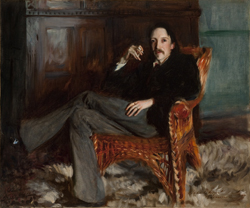
NPG_920_1362_RobertLouisSteA major exhibition of the works of John Singer Sargent has opened at the National Portrait Gallery off Trafalgar Square this week. Sargent: Portraits of Artists and Friends – which has been organised in conjunction with the Metropolitan Museum of Art in New York – brings together a collection of the artist’s intimate and informal portraits of his friends including Robert Louis Stevenson, Claude Monet and Auguste Rodin. Sargent (1856-1925), born the son of an American doctor in Florence, studied in Italy and France before scandal led him to move to England where he established himself as the country’s leading portrait painter. He made several visits to the US during his career, painting portraits as well as decorative paintings for public buildings including the Boston Public Library and Museum of Fine Arts. The exhibition runs until 25th May. Admission charge applies. For more, see www.npg.org.uk. PICTURE: Courtesy of the Taft Museum of Art, Cincinnati, Ohio

It’s Chinese New Year and the celebrations kick off in London’s Chinatown in Soho this Sunday. The day starts with a parade at 10am which runs from Duncannon Street to Shaftesbury Avenue featuring floats and Chinese lion and dragon teams. It will be followed by a free programme of events in Trafalgar Square which, starting at noon, include music, dance, acrobatics and martial arts. Other events are taking place at a range of locations across the West End. For more information, check out www.london.gov.uk/get-involved/events/chinese-new-year-2015.

Ever wondered how your appetite is shaped by food? A new free exhibition at the Science Museum in South Kensington, Cravings: Can Your Food Control You? explores how the brain, ‘gut brain’ and bacteria influence our diets. Along with personal stories and objects as well as the use of science and tech to present the display, those who attend the exhibition will also be able to take part in a ground-breaking neurogastronomy experiment to explore how our senses influence appetite (the experiment is also available online – follow the link below). There’s also a digital quiz where you can consider the ethical challenges that cravings, appetite control and food regulations pose. Runs until January next year. For more, see www.sciencemuseum.org.uk/cravings.

The history of the Foundling Hospital’s Boy’s Band is the subject of a display at the Foundling Museum in Bloomsbury. Foundlings at War: Military Bands is part of a series of exhibits supported by the Heritage Lottery Fund exploring the hospital’s links with the military. The Boy’s Band was established in 1847 and boys who joined increasingly went on to serve in the military. Runs until 10th May. For more, see www.foundlingmuseum.org.uk.

Send all items for inclusion to exploringlondon@gmail.com.
This Week in London – Paddington comes to town; it’s Christmas decorations time; Guards Memorial upgraded; and Grayson Perry…

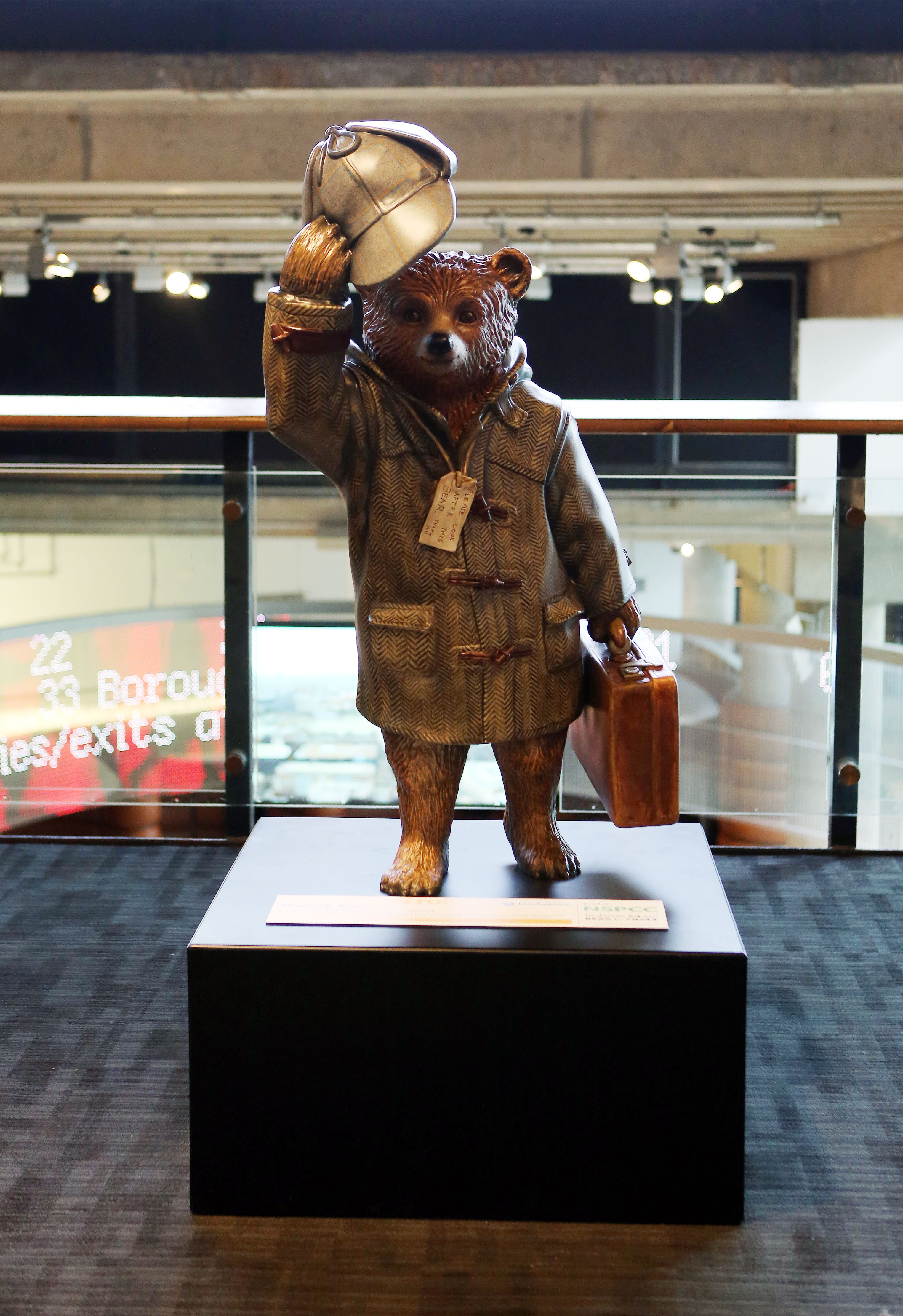
The Paddington Trail, London, 2014Paddington comes to the Museum of London in a new exhibition opening tomorrow to coincide with the bear’s big-screen debut. A Bear called Paddington charts the story of the character from his genesis on Christmas Eve, 1956, when creator Michael Bond bought his wife a small toy bear and named him after the railway station near where they loved across the next almost 60 years to today. Objects on display include: a first edition A Bear Called Paddington – dating from 1958, it belonged to Bond’s daughter Karen Jankel; an original illustration of Paddington by Paddy Fortnum; the typewriter Bond used to write Paddington at Work and Paddington Goes To Town; the original Paddington puppet from the 1970s TV animations; and, props from the upcoming film Paddington (released on 28th November). The free exhibition runs until 4th January. See www.museumoflondon.org.uk for more. The museum, meanwhile, is also playing host to a new life-sized statue of the famous bear designed by Benedict Cumberbatch (and known as Sherlock Bear for obvious reasons given Cumberbatch’s penchant for playing a certain detective – pictured). It forms just one stop on the Paddington Trail which, as the work of VisitLondon.com, NSPCC and film-makers StudioCanal, links 50 sites – each with their own statue of the bear – across the capital. Designed by everyone from Mayor Boris Johnson to football star David Beckham and actors Sandra Bullock and Hugh Bonneville, the bears can be found around town until 30th December. For more on the trail, including a map of locations, check out www.visitlondon.com/paddington/.

While the Oxford Street lights are already switched on (as are those in Covent Garden), Carnaby Street’s Christmas decorations are to be officially launched at 6.30pm tonight. The launch coincides with a shopping party (including 20 per cent discount), live music, free drinks, good bags and “trend masterclasses” with Grazia Magazine’s editor-at-large Angela Buttolph. Oh, and the decorations consist of eight red and white oversized sets of headphones and sunglasses. Meanwhile the Regent Street lights get turned on this Sunday with an event featuring a star-studded cast including Take That’s Mark Owen, Gary Barlow and Howard Donald (who are switching on the lights but not playing). While there’s entertainment along the street from noon, the music kicks off at 4pm and the lights, designed around the theme of the film Night at the Museum: Secret of the Tomb, get switched-on at 5pm and will be followed by a fireworks display. For more, see www.regentstreetonline.com.

The Guards Memorial in Horseguards Parade, Westminister, has been upgrade to a Grade 1-listed structure on the advice of English Heritage. Unveiled in 1926 by the Duke of Connaught, Senior Colonel of the Guards, and General George Higginson, a Crimean veteran, the memorial commemorates the 14,000 Guardsmen who died in the First World War. Designed by architect Harold Chalton Bradshaw and sculpted by Gilbert Ledward, it features five bronze soldiers, each representing a typical soldier from each of the divisions – Grenadiers, Coldstreams, Scots, Welsh and Irish Guards.

On Now: Grayson Perry: Who Are You? This exhibition at the National Portrait Gallery near Trafalgar Square features a series of new works created by Perry during the making of his Channel 4 TV series of the same name. Interspersed with 19th and 20th century collections of the gallery, the portraits – which include a tapestry, sculptures and pots – are of families, groups and individuals and include everyone from a young Muslim convert and Celebrity Big Brother contestant Rylan Clark. Runs until 15th March. Entry is free. For more, see www.npg.org.uk.

Send all items for inclusion to exploringlondon@gmail.com.
This Week in London – Sherlock Holmes at the MoL; Rembrandt’s latter years; and, William Morris’ legacy..

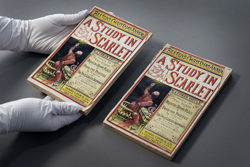
Sherlock-15Sherlock Holmes and his relationship to London, the city in which he lived, is the focus of a new exhibition which opens at the Museum of London from Friday. Sherlock Holmes: The Man Who Never Lived and Will Never Die, the first major temporary exhibition on Sir Arthur Conan Doyle’s famous character to be held in London in more than 60 years, will look at his literary origins and his relationship with late 19th century London, through to his portrayal in popular culture including through stage and screen performances starring everyone from Peter Cushing to Jeremy Brett and Robert Downey, Jr. Highlights of the exhibition include Conan Doyle’s notebook containing the first ever lines of a Sherlock Holmes story and notes in which he experimented with names for his to leading characters (later Holmes and Dr John Watson), a rare oil on canvas painting of Conan Doyle painted by Sidney Paget in 1897 which has never before been on public display in London, the original manuscript of 1903’s The Adventure of the Empty House, the Belstaff coat and the Derek Rose camel dressing gown worn by Benedict Cumberbatch from the BBC series and original pages from Edgar Allan Poe’s 1841 hand-written manuscript of The Murders in the Rue Morgue (Poe was an important influence on Conan Doyle’s writings). The exhibition will also include paintings, drawings, illustrations and photographs of Victorian London along with a vast collection of objects from the period. Runs until 27th April. Admission charge applies. For more, see www.museumoflondon.org.uk/sherlock. PICTURE: Two editions of A Study in Scarlet in which Conan Doyle introduced Holmes and Watson, Beeton’s Christmas Annual 1887.

The first ever in-depth exploration of Rembrandt’s final years of painting opened at the National Gallery off Trafalgar Square yesterday. Rembrandt: The Late Works features about 40 paintings, 20 drawings and 30 prints with key works including moving The ‘Jewish Bride’ (from Rijksmuseum in Amsterdam), An Old Woman Reading (The Buccleuch Collection in Scotland), Bathsheba with King David’s Letter (Musee du Louvre in Paris) and Lucretia (National Gallery of Art in Washington, DC) as well as the last minute loan of The Conspiracy of the Batavians under Claudius Civilis (from the Royal Academy of Fine Arts in Sweden). The exhibition provides new insights into some of the artist’s most famous works including The Sampling Officials of the Amsterdam Drapers (aka The Syndics), and brings together a number of self-portraits usually seen in different galleries. The exhibition runs in the Sainsbury Wing until 18th January. Admission charge applies. For more, see www.nationalgallery.org.uk.

The first exhibition devoted to Pre-Raphelite William Morris and his influence on 20th century life opens at the National Portrait Gallery off Trafalgar Square today. Anarchy & Beauty: William Morris and His Legacy, 1860-1960 explores the ‘art for the people’ movement which Morris and the artists of the Pre-Raphelite Brotherhood initiated, reveals the work of Arts and Crafts practitioners inspired by Morris, and shows how Morris’ “radical ideals” influenced the Garden City movement and post-war designers like Terence Conran. Highlights include Morris’ handwritten Socialist Diary, his gold-tooled hardbound copy of Karl Marx’s Le Capital and Burne-Jones’ handpainted Prioresses Tale wardrobe. Admission charge applies. The exhibition runs until 11th January. For more, see www.npg.org.uk.

Send all items to inclusion to exploringlondon@gmail.com.
This Week in London – Dr Livingstone’s beetles; the Great River Race; Snowdon at the NPG; and Foundlings at War…

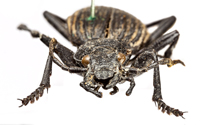
BeetleFrom Dr Livingstone, I presume? A recently unearthed collection of beetles gathered together by Dr David Livingstone during his Zambezi expedition of 1858-64 will go on display in its original box at the Natural History Museum in South Kensington on Friday night. The specimens were found among the museum’s 10 million beetles by beetle curator Max Barclay who stumbled on an unusual box received from a private collector. The collector was later found out to be amateur entomologist Edward Young Western (1837-1924) who apparently bought the specimens from a member of Livingstone’s expedition. The 20 beetles found inside the box are believed to the only surviving specimens known to have been collected by Livingstone. The specimens will be on show as part of Science Uncovered, a free annual after hours event – part of European Researcher’s Night – which will take place at the museum between 3pm and 10.30pm Friday night. Other highlights of the night include the chance to extract DNA from strawberries and bananas, create your own earthquake and chat live with NASA about chasing asteroids. For more, see www.nhm.ac.uk/scienceuncovered. PICTURE: Giant Predatory Ground Beetle, Termophilum alternatum © The Trustees of the Natural History Museum, London.

Totally Thames – the month long celebration of the great river – is going out with a bang this weekend with more than 300 crews expected to take part in the Great River Race. Running from Millwall to Ham in Surrey, the 21.6 mile long event attracts entries from across the globe. The first boats leave Millwall at 12.40pm. Head to the riverbank between Richmond and Ham at approximately 3.40pm to see the winners cross the line to a cannon broadside. For more on the Great River Race, see www.greatriverrace.co.uk. Other events on as part of Totally Thames this weekend include historic riverside walks – one focused on Brunel and another on London’s ports before the Great Fire of 1666 as well as exhibitions including Richmond’s River at Orleans Gallery House in Twickenham and your last chance to see Florentijn Hofman’s HippopoThames. For more on Totally Thames, see www.totallythames.org.

Some of Snowdon’s most iconic images will be on show as part of a new exhibition opening at the National Portrait Gallery near Trafalgar Square on Friday. Snowdon: A Life in View will feature studio portraits spanning a period from the 1950s to the 1990s alongside images from Private View, Snowdon’s 1965 examination of the British art world, created in collaboration with art critic John Russell and then director of Whitechapel Gallery, Bryan Robertson. More than 40 black-and-white portraits are included in the display including some works acquired by the gallery last year. To be held in Room 37 and 37a of the ground floor Lerner Contemporary Galleries until 21st June. Admission is free. For more, see www.npg.org.uk.

On Now: Foundlings at War: World War I. This display at the Foundling Museum in Bloomsbury reveals for the first time the stories of foundlings who fought as well as those of the mothers forced to leave their children at the hospital as a result of bereavement or abandonment of those serving abroad. A free digital ibook, The Foundlings at War: World War I, containing expanded background information was published to coincide with the opening of the display earlier this month and can be downloaded from iTunes. The exhibition is part of a major research project, Foundlings at War, supported by the Heritage Lottery Fund and is the first of several displays examining the institution’s historic links with the military. For more, see www.foundlingmuseum.co.uk.

Send all items for inclusion to exploringlondon@gmail.com.
This Week in London – The Magna Carta at the new City of London Heritage Gallery; Tudor monarchs at the NPG; Mapping London; and objects with story at Pitzhanger…

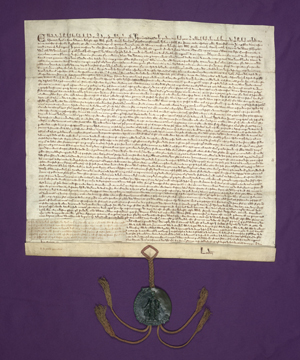
Magna-Carta-1297_Copright-London-Metropolitan-Archives---CopyThe 13th century’s finest surviving copy of the Magna Carta is taking centre stage at the new City of London Heritage Gallery which opens to the public this Friday. The 1297 document, which bears a superimposed memo reading ‘make it happen’, is being featured as part of the Corporation’s efforts to mark next year’s 800th anniversary of the signing of the landmark document. Other items on display in the new permanent, purpose-built exhibition space at the Guildhall Art Gallery include the medieval Cartae Antiquae, a volume containing transcripts of charters and statues covering laws enacted between 1327 and 1425 – a period which includes the reign of King Richard III, a poster for a World War I recruitment meeting held at the Guildhall in 1914, and a series of paintings depicting the 25 City Aldermen who were in office in the mid-1400s. The gallery, admission to which is free, will in future feature a rotating selection of rare documents from the City of London Corporation’s archives including the purchase deed William Shakespeare signed on buying a home in Blackfriars in 1613. For more, including opening times, see www.cityoflondon.gov.uk/heritagegallery. For more on events to mark the 800th anniversary of the signing of the Magna Carta next year, see www.magnacarta800th.com. PICTURE: Copyright London Metropolitan Archives.

Rare depictions of Tudor monarchs will be seen at the National Portrait Gallery in the most complete presentation of their portraiture to date. The Real Tudors: Kings and Queens Rediscovered features the gallery’s oldest portrait – that of King Henry VII – displayed alongside a Book of Hours inscribed by the king to his daughter, six portraits of King Henry VIII along with his rosary (on loan from Chatsworth), portraits of King Edward VI and a page from his diary in which he relates his father’s death, five portraits of Queen Mary I along with her prayer book (on loan from Westminster Cathedral) and several portraits of Queen Elizabeth I displayed alongside her locket ring (on loan from Chequers, the country residence of the PM). There will also be a discussion surrounding the search for a “real” portrait of the ‘nine days queen’, Lady Jane Grey, alongside a portrait of her that dates from the Elizabethan period. With many of the portraits newly examined as part of the gallery’s ‘Making Art in Tudor Britain’ project, visitors to the gallery will also be able to access a specially created app which allowing them to access the new research while looking at the portraits. The display, which will form the core of a larger exhibition in Paris next year, can be seen until 1st March. Admission to the gallery, off Trafalgar Square, is free. For more, see www.npg.org.uk.

An exhibition of rare maps from London, dating from between 1572 and last year, at gallery@oxo on South Bank, is closing on Sunday. Part of the Totally Thames festival, the Mapping London exhibition shows how the landscape along the River Thames as it passes through the capital has changed over the years. It features the first available map of London, which dates from 1572, as well as a 2013 map of underground London, monumental wall maps, and even a map of London that doubles as fan. The free exhibition at Oxo Tower Wharf is being curated by Daniel Crouch, one of the world’s leading map dealers. For more, see www.totallythames.org/events/info/mapping-london.

• A Crafts Council touring exhibition showcasing the work of 12 contemporary artisans and design studios – each of which uses objects as a means of storytelling – has opened at Pitzhanger Manor House and Gallery in Ealing – its first stop – this week. Crafting Narrative: Storytelling through objects and making explores the potential of objects to reflect on history, culture, society and technology through a combination of new and commissioned works, film text and photography. Works include Hilda Hellström’s The Materiality of a Natural Disaster which consists of food vessels made of soil from a field belonging to the last resident inside the Japanese Daiichi nuclear plant exclusion zone, Onkar Kular and Noam Toran’s archive of objects belonging to the fictional Lövy-Singh clan – an East London family of mixed Jewish and Sikh descent, and Hefin Jones’ The Welsh Space Campaign which features objects such as astronaut boots in the form of traditional Welsh clogs in an attempt to show how Wales has the capacity to explore space. The free exhibition is at the manor until 19th October. For more, see www.pitzhanger.org.uk.

Send all items for inclusion to exploringlondon@gmail.com.
This Week in London – WWI at the Tower of London; remembering the Olympics; and, Roald Dahl’s portrait….

A new display commemorating the 100th anniversary of the outbreak of World War I has opened at the Tower of London, coinciding with the sea of ceramic poppies which has been ‘planted’ in its moat (see our earlier post on the poppies here). The exhibition, housed in the Flint Tower, features photographs and film from 1914 showing how the Tower was used for in the recruitment, deployment and training of the military and as a place for execution. Photographs from today have been combined with those from 1914 to create moving composite images. The display can be seen with general admission entry. For more, see www.hrp.org.uk/TowerOfLondon/.

A copper element which represented Team GB and was one of 204 – one for each country – used in the Olympic cauldron during the 2012 Games is on display at the Museum of London. It and Paralympic GB’s element will be on alternate display in a new gallery, Designing a Moment: The London 2012 Cauldron, which follows the cauldron’s journey its design and manufacture to its unveiling, ceremonial role, and legacy. The gallery features two seven metre long sections of the cauldron, which was designed by Heatherwick Studio and which featured one element for each country represented at the Games and then for the Paralympics. Until 27th August, it will also feature the Team GB’s element which will then be returned to the British Olympic Association/British Olympic Foundation and replaced with the Paralympics GB copper element, on loan from the British Paralympic Association, which will remain on show until 23rd October, after which it will be replaced by an unassigned Paralympic copper element. Admission is free. For more, see www.museumoflondon.org.uk.

A portrait of author Roald Dahl as a young RAF pilot during World War II has gone on show at the National Portrait Gallery near Trafalgar Square. Painted by Matthew Smith, the work is featured in Colour, Light, Texture: Portraits by Matthew Smith & Frank Dobson, a new display which brings together Smith’s paintings with Dobson’s sculptures. The portrait was painted in 1944 when Dahl was in his late twenties. Found in Room 33, the display can be seen until April 6th. Admission is free. For more, see www.npg.org.uk.

Send all items for inclusion to exploringlondon@gmail.com.
This Week in London – St Paul’s marks WWI centenary; Eid at Trafalgar Square; Suffragettes at the NPG; and, early Egypt gallery reopens at the British Museum…

An altar frontal created by more than 100 soldiers wounded in World War I will go on display at St Paul’s Cathedral this weekend. Made by 138 soldiers from the UK, Australia, Canada and South Africa, the restored altar frontal was created for the national service of thanksgiving at the end of the war and it forms the centerpiece of the cathedral’s commemoration of its centenary. The altar frontal will be used for the first time during a special service of Eucharist at 6pm this Sunday which will be attended by relatives of the men who made it. It will then be on display until 11th November, 2018, in the cathedral’s north transept. For more see www.stpauls.co.uk/WW1.

Trafalgar Square will host the annual Eid Festival this Saturday. It will feature stage entertainment including a catwalk show, arts and crafts, exhibitions, calligraphy, henna and face painting as well as a global food festival – including Turkish, Egyptian, Indonesian, Lebanese and Moroccan food – and a Malaysian food market. The free festival runs from noon to 6pm. For more, see www.london.gov.uk/eid.

A newly acquired portrait of suffragette Christabel Pankhurst has gone on display in the National Portrait Gallery for the first time in 80 years. The portrait, by Ethel Wright, was first shown at an exhibition staged in Kensington in 1909. It is part of a new display, Suffragettes: Deeds not Words, which also features photographs and archive material. It marks 100 years since the campaigners’ “final and most violent” protests which included an attack on paintings in the National Portrait Gallery. The display is on show in Room 31 of the gallery until 10th May next year. For more, see www.npg.org.uk.

The British Museum has reopened a gallery space dedicated to early Egypt as part of its refurbishment of the Ancient Egyptian galleries. The new Early Egypt gallery focuses on the development of Egypt between 8,500 BC and 3,100 BC – the beginning of the Pyramid Age – and features a redisplay of objects from the museum’s collection as well as materials only acquired recently; these include objects taken from a site in northern Sudan which were donated in 2002. Highlights of the new gallery include a series of female figurines which are among the oldest known Egyptian sculptures in human form, the Gebelein Man – the best preserved example of mummification dating to around  3,500 BC, and the Hunter’s Palette and the Battlefield Palette – two temple objects on which Egyptian rulers recorded their victories. The gallery is in Room 64. Admission is free. For more, see www.britishmuseum.org.

Send all items for inclusion to exploringlondon@gmail.com.
This Week in London – Virginia Woolf celebrated at NPG; the City of London Festival; and, a new gallery at the V&A…

The life of literary icon Virginia Woolf is being celebrated in a new exhibition which opens at the National Portrait Gallery today. Virginia Woolf: Art, Life and Vision explores her life as novelist, intellectual, campaigner and public figure and features more than 100 works including portraits of Woolf by Bloomsbury Group contemporaries like her sister Vanessa Bell, Duncan Grant and Roger Fry as well as photographs by Beresford, Ray Man and Beck and McGregor who photographed the intellectual for Vogue. The display also includes works depicting her friends, family and literary peers and archival materials such as extracts from her personal diaries, books printed by Hogarth Press which she founded with husband Leonard Woolf and letters including one written to her sister shortly before her suicide in 1941. Runs until 26th October. Admission charge applies. For more, see www.npg.org.uk.

The 52nd City of London Festival enters its final week today with numerous music, dance, spoken word and theatre events – many of them free – still on offer across the City. Events this week include a concert focusing on the history of the instrument known as the recorder and that of the office of Recorder of London (as St Sepulchre with Newgate tonight; tickets required), a showcase of musical talent from the Guildhall School of Music & Drama (at St Stephen Walbrook at 1.05pm next Tuesday; free), and, the Cart Marking Ceremony, in which vehicles process into Guildhall Yard where they are marked with a red hot iron by the Master Carmen and Lord Mayor (next Wednesday at 10.30am, free). For the full program of events, see www.colf.org. This year’s festival also features the placement of “street guitars” at 12 locations across the Square Mile where you can turn up and have a strum – for locations, see www.colf.org/streetguitars.

A new gallery of items you might find in your own home has opened at the V&A. Gallery 74 now features items collected as a result of the museum’s “rapid response collecting” approach which sees them acquiring new objects relating to contemporary events and movements in architecture and design. Among the objects on display are a soft toy from IKEA, a pair of jeans from Primark (acquired soon after the Rana Plaza factory building in Dhaka, Bangladesh, in which 1129 workers were killed – the factory made clothes for a number of western brands including Primark), and the world’s first 3D printed gun, the Liberator, which was designed by Texas law student Cody Wilson. Entry is free. For more, see www.vam.ac.uk.

Send all items of interest for inclusion to exploringlondon@gmail.com.

Treasures of London – ‘Naval Officers of World War I’…

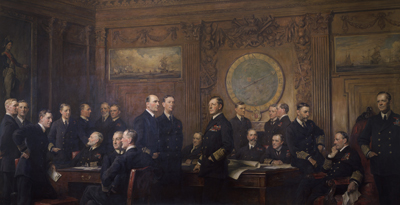
NPG_818_1271_NavalOfficersoHidden away in storage for decades, this sizeable portrait of 22 senior navy figures of World War I has recently gone on public display at the National Portrait Gallery as part of the institution’s commemoration of the centenary of the outbreak of the Great War. The work of Sir Arthur Stockdale Cope, Naval Officers of World War I was painted in 1921 and had been in storage due to its “delicate condition”. Using £20,000 raised through a public appeal last year, the painting and its frame have recently gone five months of restoration work which has seen it restored to health. The painting was one of three commissioned by financier and public servant Sir Abraham Bailey in the aftermath of the war – both of the other two paintings, Sir James Guthrie’s Statesmen of World War I and John Singer Sargent’s General Officers of World War I are continuously on display in Room 30. Among those depicted in Cope’s work are Admirals Jellicoe and Beatty and Rear-Admiral Hood. The work, which measures more than five metres across, can be seen in Room 32 of the National Portrait Gallery, just off Trafalgar Square. Admission is free. For more, see www.npg.org.uk. PICTURE: © National Portrait Gallery, London

This Week in London – Woolly mammoths star at the NHM; the Ceremony of the Constable’s Dues; mummies at the British Museum; and, Rupert Potter’s photographs…

The most complete woolly mammoth ever found is the star attraction at a new exhibition opening at the Natural History Museum tomorrow. Lyuba – a one month old mammoth – was found by a reindeer herder in Siberia in 2007 and was named after the reindeer herder’s wife. Thought to be 42,000-years-old, the young mammoth was thought to be healthy when it died and still has remnants of its mother’s milk in its stomach. It is the first time the mammoth – normally housed at the Shemanovsky Museum-Exhibition Complex in Salekhard, Russia, is being shown in Western Europe. Mammoths: Ice Age Giants will also feature life-sized models and skeletons of mammoths. Runs until 7th September. Admission charge applies. For more, see www.nhm.ac.uk.

The German naval ship FGS Niedersachsen will take part in the Ceremony of the Constable’s Dues at the Tower of London tomorrow, having saluted the Tower with a gun salute yesterday – the first time a gun salute has taken place in honour of the ceremony in 40 years. The ceremony dates back to the 24th century and while past offerings have included barrels of rum, oysters, cockles and mussels, this year the Tower’s constable, General the Lord Dannatt, will be presented with a barrel of wine. The ceremony will see the ship’s Commander Kurt Leonards led his crew to the Tower’s West Gate where they will be challenged by the axe wielding Yeoman Gaoler before marching on to Tower Green to “present the dues” or deliver the wine, to the Constable. The ceremony takes place at noon. For more on the Tower, see www.hrp.org.uk/TowerOfLondon/.

A new exhibition about ancient lives in Egypt and Sudan has kicks off at the British Museum today. Ancient lives, new discoveries will reveal new research about one of the museum’s most popular collections – that of ancient Egyptian and Sudanese mummies – and uses state-of-the-art technology to take you inside the mummy cases and bring you face-to-face with eight people who lived in the Nile Valley thousands of years ago. The selected mummies come from a period spanning 4,000 years, from the Predynastic period to the Christian era, and come from sites in both Egypt and Sudan. They include an adult male from Thebes mummified about 600 BC and a female singer called Tamut who lived in Thebes around 900 BC. The museum received its first mummy in 1756 and hasn’t unwrapped any of them relying on increasingly advanced technologies to see inside. The exhibition runs until 30th November. Admission charge applies. For more, see www.britishmuseum.org.

On Now – The World of Rupert Potter: Photographs of Beatrix, Millais and Friends. The amateur photography of Rupert Potter, father of children’s author Beatrix Potter, is on show in his exhibition at the National Portrait Gallery. The display features selected works from the gallery’s extensive collection of his works including two new acquisitions which show Beatrix Potter on holidays both before and after her publishing success. Other photos depict the sitters and paintings of artist Sir John Everett Millais, who was a friend of Rupert Potter’s. The free exhibition runs until 16th November in Room 28. For more, see www.npg.org.uk.

Send all items of interest for inclusion to exploringlondon@gmail.com.

This Week in London – Copying Hans Holbein; the Needlemakers’ 350th; and, 16th century woodcuts…

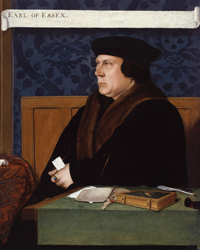
ThomasCromwellA new display exploring the demand for copies and remakes of portraits originally created by Tudor court painter Hans Holbein the Younger has opened at the National Portrait Gallery. Hans Holbein Re-made features a selection of copies of Holbein’s works from the gallery’s collection including portraits of William Warham, John Fisher, Sir Thomas More and Sir Richard Southwell, all of which have undergone new technical analysis as part of the gallery’s Making Art in Tudor Britain project. The research reveals new details about how and when the paintings were made and the techniques used. The display also includes a portrait of Thomas Cromwell, Earl of Essex – thought to be one of the first miniatures Holbein painted alongside a digital screen which enables this work of Holbein’s to be compared with that of another artist working in his studio. In Room 3. Runs until 31st August. Admission is free. For more, see www.npg.org.uk. PICTURE: Thomas Cromwell, Earl of Essex, after Hans Holbein the Younger, early 17th century (1533-1534). © National Portrait Gallery, London.

This year marks the 350th anniversary of King Charles II’s granting of a Royal Charter to The Worshipful Company of Needlemakers and to commemorate the occasion, the Guildhall Library is hosting an exhibition of some of the company’s treasures and history. Among the displays are tools used in 19th and 20th centuries, 18th century silverware, and the Company Arms (gifted to it in 1995) as well as examples of their craft from both early and recent periods. The exhibition closes on 29th March, so you’ll have to be quick. Admission is free. For more, see www.cityoflondon.gov.uk/things-to-do/visiting-the-city/archives-and-city-history/guildhall-library/exhibitions/Pages/The-Worshipful-Company-of-Needlemakers.aspx

A new display of revolutionary sixteenth century woodcuts opens at the Royal Academy of Arts on Saturday. Renaissance  Impressions: Chiaroscuro woodcuts from the Collections of Georg Baselitz and the Albertina, Vienna, looks at the development of the printing technique of the chiaroscuro woodcut and presents more than 100 rare prints by artists from Germany, Italy and The Netherlands which have come from the collection of the Albertina Museum in Vienna and the personal collection of Honorary Royal Academician Georg Baselitz. The new technique – the first known example of which is widely believed to have been created by Hans Burgkmair the Elder with his 1508 depiction of Emperor Maximilian on Horseback – involved supplementing the key ‘black line block’ with one or several ‘tone blocks’ with chiaroscuro woodcuts the first colour woodcuts to make dramatic use of light and shadow to suggest form, volume and depth. Runs until 8th June in the Sackler Wing of Galleries. Admission charge applies. For more, see www.royalacademy.org.uk.

Vikings at the British Museum; World War I portraits; and, Ruin Lust…

RoskildeThe Vikings come to the British Museum from today with the first major exhibition in more than 30 years. Vikings: life and legend, the first exhibition to be held in the new Sainsbury Exhibition Gallery, was developed with the National Museum of Denmark and the Staatliche Museen zu Berlin (National Museums in Berlin) and looks at the Viking period from the late 8th century to the early 11th century. Featuring many new archaeological discoveries and objects never seen before in the UK alongside items from the British Museum’s own collection, the exhibition is centred on the surviving timbers of a 37 metre long Viking warship excavated from the banks of the Roskilde fjord in Denmark (pictured). Other items include skeletons recently excavated from a mass grave of executed Vikings in Dorset, the Vale of York Hoard (discovered in 2007) and a stunning hoard of silver from Gnezdovo in Russia. A unique live broadcast event presented by historian Michael Wood taking cinema audiences around the exhibition will be shown in cinemas across the nation on 24th April. Admission charge applies. Runs until 22nd June. For more, see www.britishmuseum.org/whats_on/exhibitions/vikings.aspx. PICTURE: Copyright of the National Museum of Denmark. 

The commemorations of the World War I centenary have commenced at the National Portrait Gallery with The Great War in Portraits. The first of a four year programme of events and displays at the gallery, the exhibition features iconic portraits of figures such as Winston Churchill, Kaiser Wilhelm, Siegfried Sassoon and Wilfred Owen as well as major art works by the likes of Lovis Corinth, Max Beckmann, and Kirchner, whose painting Selbstbildnis als Soldat (Self-portrait as a Soldier) is featured, and Harold Gillies’ photographs of facially injured soldiers from the Royal College of Surgeons. Among the highlights are Jacob Epstein’s The Rock Drill, a contrasting pair of British and German films about the Battle of the Somme, and a press photograph of Gavrilo Princip, the student who sparked the flames of war when he assassinated Archduke Franz Ferdinand. Elsewhere among the 80 works on display are portraits of war heroes such as VC winners are contrasted with those of soldiers disfigured by war, POWs and those shot for cowardice. Admission is free. Runs until 15th June. For more, see www.npg.org.uk/whatson/firstworldwarcentenary/exhibition.php.

Our fascination with ruins is the subject of a new exhibition which opened this week at Tate Britain. Including more than 100 works from the likes of JMW Turner, John Constable, John Martin, Eduardo Paolozzi, Rachel Whiteread and Tacita Dean, Ruin Lust examines the craze for ruins that overtook creative types in the eighteenth century and the subsequent revisiting – and at times mocking – of this fascination by later figures. Works on show include Turner’s Tintern Abbey: The Crossing and Chancel, Looking towards the East Window 1794, Constable’s Sketch for ‘Hadleigh Castle’ c 1828-9, Graham Sutherland’s Devastation series 1940-1 – showing the aftermath of the Blitz, Jon Savage’s images of London in the late 1970s, and Whitehead’s Demolished – B: Clapton Park Estate 1996, showing the demolition of Hackney tower blocks. Runs until 18th May. Admission charge applies. For more, see www.tate.org.uk/whats-on/tate-britain/exhibition/ruin-lust.

This Week in London – Handel and the royals; David Bailey; and, redefining German art…

• A new exhibition exploring German-born George Frideric Handel and his association with the royal family opens at the Foundling Museum in Bloomsbury tomorrow to mark the 300th anniversary of the coronation of King George I. The museum says no composer has been more closely associated with the British monarchy than Handel, whose anthem Zadok the Priest has been performed at every coronation since King George II in 1727 and whose Water Music was performed on the River Thames during the Diamond Jubilee for Queen Elizabeth II in 2012. By George! Handel’s Music for Royal Occasions features treasures from the Gerald Coke Handel Collection and loans from the British Library, the National Portrait Gallery, the British Museum and Westminster Abbey. Runs until 18th May. For more, see www.foundlingmuseum.org.uk.

A landmark exhibition of David Bailey photographs opens at the National Portrait Gallery today. Bailey’s Stardust – one of the gallery’s largest scale photographic exhibitions, it occupies most of the gallery’s ground floor – features more than 250 portraits including a new portrait of Kate Moss and previously unseen images from Bailey’s travels to the Naga Hills in India in 2012. There’s also rooms devoted to portraits of the Rolling Stones and Catherine Bailey, images from Bailey’s trip to Papua New Guinea in 1974 and from east Africa which Bailey visited in 1985 in support of Band Aid. Admission charge applies. Runs until 1st June. For more, see www.npg.org.uk.

A new exhibition at the British Museum explores how six key artists redefined the notion of art in Germany in the Sixties and Seventies. Germany divided: Baselitz and his generation features some 90 works including some 45 by George Baselitz as well as works by Markus Lupertz, Blinky Palermo, AR Penck, Sigmar Polke and Gerhard Richter. Thirty-four of the works, including 17 by Baselitz, have been donated by Count Christian Duerckheim while a loan of some 60 additional works from the Duerckheim Collection makes up the rest of the exhibition. Runs in Room 90 until 31st August. For more, see www.britishmuseum.org.

Send all items of interest for inclusion to exploringlondon@gmail.com.
This Week In London – Kenwood House reopens; robot safari at the Science Museum; Kew Gardens illuminates for Christmas; Vivien Leigh at the NPG; and more…

Kenwood House in north London is being reopened to the public today following a £5.95 million restoration project which has seen the library returned to what Scottish architect Robert Adam had intended it to be. The project, which saw the Hampstead property closed since March last year, has also seen the restoration of three other Robert Adam-designed rooms – the entrance hall, Great Stairs and antechamber or entrance to the library – as well as the redecoration of four rooms in 18th century style, repainting of the exterior and the repair of the home’s roof – a job aimed at protecting the rooms and its stellar

Kenwood-House-Librarycollection of artworks by the likes of Rembrandt and Vermeer. English Heritage has also endeavoured to make the property more homely, replacing ticket desks and rope barriers with an open fire, warm rugs and leather couches on which visitors can relax. The library (pictured) was built and decorated to Adam’s designs between 1767 and 1770 as part of a wider remodelling of the villa for its owner Lord Chief Justice William Murray, 1st Earl of Mansfield. Redecorated many times since, it was restored in the 1960s but this redecoration was later found to be inaccurate. The Caring for Kenwood restoration project, which has also seen restoration of the Kenwood Dairy, was funded by a £3.89 million grant from the Heritage Lottery Fund as well as support from the Wolfson Foundation and other donors. To coincide with the reopening, a new app exploring Kenwood House has been released which can be downloaded for free from the iTunes store. For more, see www.english-heritage.org.uk/daysout/properties/kenwood/. PICTURE: English Heritage/Patricia Payne.

Head out on a “robot safari” this weekend with a special free event at Science Museum in South Kensington. Robot SafariEU, part of Eurobotics week, features 13 biometric robots from across Europe including an underwater turtle robot, a shoal of luminous fish robots, a robotic cheetah cub and Pleurobot, a robotic salamander. Roboticists from across Europe will be on hand to help visitors interact with the bots. Suitable for all ages, the event kicked off on Wednesday night and runs again on the weekend. Admission is free but timed tickets are required. For more, see www.sciencemuseum.org.uk/RobotSafari.

A memorial to author, scholar and apologist CS Lewis was dedicated at Westminster Abbey last Friday – the 50th anniversary of his death. Conducting the service, the Dean of Westminster, the Very Reverend Dr John Hall, said Lewis was “one of the most significant Christian apologists of the 20th century” and the author of stories that had “inspired the imagination and faith of countless readers and film-goers”. Douglas Gresham, younger stepson of Lewis, read from the author’s book, The Last Battle, at the service. The memorial is located in Poet’s Corner in the abbey’s south transept. For more see www.westminster-abbey.org.

A Blue Plaque commemorating Al Bowlly – described as “Europe’s most popular crooner and famous radio and record star” – will be unveiled at his home in Charing Cross Road this week. Bowlly, who lived between 1899 and 1941, was the voice beyond songs like Goodnight Sweetheart and The Very Thought Of You. The English Heritage Blue Plaque will be unveiled at Charing Cross Mansions, 26 Charing Cross Road – his home during the pinnacle of his career. For more, see www.english-heritage.co.uk/discover/blue-plaques/.

Kew Gardens has opened its gates after dark for the first time with a “captivating show of lights, sound and landscape” this festive season. A mile long illuminated trail, created in partnership with entertainment promoter Raymond Gubbay, will take visitors’ through the garden’s unique tree collections, kicking off at Victoria Gate where a Christmas village (and Santa’s Woodland Grotto) is located. The gardens will be open every Thursday to Sunday until 23rd December and then be open every night from 26th December to 4th January from 4.45pm to 10pm. Admission charge applies. For more, see www.kew.org/Christmas.

VivienLeighActress Vivien Leigh is the star of a new exhibition opening on Saturday at the National Portrait Gallery. Starring Vivien Leigh: A Centenary Celebration tells her story with a focus on her Academy Award-winning role in 1939’s Gone With The Wind. The display features more than 50 portraits of Leigh by the likes of Cecil Beaton, Angus McBean and Madame Yevonde – many of which have never been exhibited in the gallery before – and a selection of memorabilia including magazine covers, vintage film stills and press books. Among the photos will be a newly acquired image of Leigh and her husband, Laurence Olivier, taken by British photojournalist Larry Burrows at a garden party in 1949 (pictured), along with two rarely seen portraits of Leigh – one taken on the set of The School for Scandal by Vivienne in 1949 and the other by Paul Tanqueray in 1942. The exhibition will be held in Room 33 and runs until 20th July. Admission is free. For more, see www.npg.org.uk. PICTURE:  Copyright – Larry Burrows Collection 2013.

Around London – The Georgians at the British Library; wartime artist on show; Regent Street’s Christmas lights; Westminster’s new organ; and, celebrating success at the NPG…

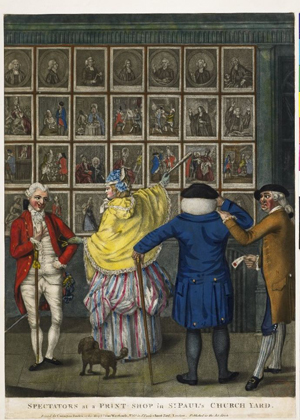
The-GeorgiansThe Georgians are under the spotlight in a new exhibition opening at the British Library tomorrow. Georgians Revealed: Life, Style and the Making of Modern Britain explores the ways in which the Georgian world influenced pop culture in Britain today, everything from fashion and theatre-going to our obsessions with celebrity scandals. The display features more than 200 artefacts from the library’s collection and includes Jeremy Bentham’s violin, Joseph van Aken’s An English Family at Tea, rare books and magazines, and illustrations and designs of landmark building’s such as Sir John Soane’s home (and now museum) in Lincoln’s Inn Fields. The exhibition, which is accompanied by a series of events (see the library website for details) comes ahead of the 300th anniversary of the accession of King George I next year. Runs until 11th March. Admission charge applies. Meanwhile, to mark the exhibition, the library has joined with Cityscapes in launching a new Georgian garden installation on the library’s piazza. Titled Georgeobelisk, the six metre high installation, will remain on the piazza for five months. A tribute to the four King Georges, it also serves as a reminder that it was also during the Georgian era that the British love of gardening was cultivated. For more, see  www.bl.uk/whatson/exhibitions/georgiansrevealed/index.html. PICTURE: Spectators at a Print shop in St Paul’s churchyard © British Museum.

Painting normally housed in “Britain’s answer to the Sistine Chapel” go on display in Somerset House today. The artworks, described as the “crowning achievement” of wartime artist Stanley Spencer, usually grace the walls of Sandham Memorial Chapel but are on display in London while the National Trust carries out restoration work at the Berkshire property. Spencer painted the works – which combine realism and visions from his imagination and were completed in 1932 – after serving as a hospital orderly during World War I.  The free display – Stanley Spencer: Heaven in a Hell of War – can be seen until 26th January. For more, see www.somersethouse.org.uk.

Regent Street’s Christmas lights – a preview of the upcoming DreamWorks film Mr Peabody and Sherman – will be turned on this Saturday night. Actor Ty Burrell, director Rob Minkoff and singer Leona Lewis will have the task of switching on the lights at about 7.15 pm while performers will include Passenger, Eliza Doolittle and former Spice Girls Emma Bunton and Melanie C. The event will be hosted by radio presenters Bunton and Jamie Theakston. The street will be traffic free all day and from 3pm to 7pm, Regent Street retailers will be showcasing fashions on a catwalk located just North of New Burlington Street. Programmes will be available from information points on the day.

A new organ was dedicated in Westminster Abbey’s Lady Chapel on Tuesday. The organ was commissioned by the Lord Mayor of London, Roger Gifford, as a gift to the Queen to mark the 60th anniversary of her coronation in 1953. The Queen agreed the organ, which had briefly resided at the Lord Mayor’s residence the Mansion House, should be installed permanently in the Lady Chapel, built by King Henry VII. The new organ was dedicated by the Earl of Wessex. For more, see www.westminster-abbey.org.

Now On: Achievement: New Photographs 2011-2013. Inspiring Britons at the peak of their professions are the subject of an exhibition running at the National Portrait Gallery. The display of recently acquired and previously un-exhibited photographs depict the likes of writer and presenter Charlie Brooker (by Chris Floyd), actress Gina McKee (Mark Harrison) and Skyfall director Sam Mendes (Anderson & Low). Admission is free. Runs until 5th January in Room 37a. For more, see www.npg.org.uk.

Around London – The Cheapside Hoard revealed; Queen Elizabeth I at the NPG; 3D printing at the Science Museum; and, Viennese portraits…

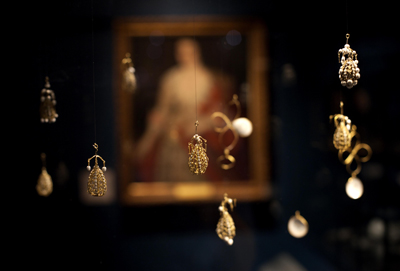
Cheapside-Hoard-1The ‘secrets’ of the Cheapside Hoard – the world’s finest and largest collection of 16th and 17th century jewels – are revealed in a new exhibition opening tomorrow at the Museum of London. The
Cheapside-Hoard-2Cheapside Hoard: London’s Lost Jewels
 publicly displays the hoard of Elizabethan and early Stuart jewellery and gemstones in its entirety for the first time since its discovery more than 100 years ago. The hoard, consisting of as many as 500 pieces including rings, necklaces, cameos, scent bottles and a unique Colombian emerald watch, was discovered buried in a cellar on Cheapside in the City of London in 1912. The exhibition uses new research and state-of-the-art technology to showcase the hoard as it explores the questions of who owned the hoard, when and why was it hidden, and why was it never reclaimed. New information revealed by the research shows that the hoard was buried between 1640 and 1666 (the critical clue was a previously overlooked intaglio – a gemstone engraved with the heraldic badge of William Howard, Viscount Stafford, who lived between 1612-1680). It also reveals Thomas Sympson was the “dodgy” jeweller responsible for two counterfeit rubies contained within the hoard (he apparently had a trade in selling counterfeit gems for as much as £8,000 each). Entry charge applies. Runs until 27th April. For more, see www.museumoflondon.org.uk.  PICTURED: Above: gold and pearl cage pendants from the Cheapside Hoard; and right: a bejewelled scent bottle.

A previously unknown painting of Queen Elizabeth I is on display as part of a new exhibition, Elizabeth I and Her People, opening at the National Portrait Gallery today. The small painting, which has been attributed to miniaturist Isaac Oliver and which is a reworking of the classical story of the Judgement of Paris, was recently acquired by the gallery. It will sit among a selection of other portraits of the “Virgin Queen” in a display which endeavours to show how during her 50 year reign she portrayed the image of a strong monarch. The portraits are just some of the 100 items featured in the exhibition which also includes costumes, coins, jewellery and crafts and examines the rise of new social classes in Elizabethan society. Other portraits in the exhibition feature images of courtiers such as William Cecil and Christopher Hatton along with images of merchants, lawyers, goldsmiths, butchers, calligraphers, playwrights and artists. There is also a little known painting of three Elizabethan children and what may be the first portrait of a guinea pig. The exhibition, supported by the Weiss Gallery, runs until 5th January. Admission charge applies. For more, see www.npg.org.uk.

Printed objects including replacement body organs, aeroplane parts and a music box have gone on display at the Science Museum in South Kensington as part of a new exhibition, 3D: printing the future. The exhibition looks at the rapidly evolving field of 3D printing and its growing impact on society through stories such as the use of 3D printing by engineers to create lighter aeroplane parts and the ways in which the medical industry is researching the use of the technology to create replacement body parts. The display will also include miniature 3D printed figures created from scans of visitors who took part in workshops during the summer holidays. This free exhibition runs in the Antenna gallery for nine months. For more, see www.sciencemuseum.org.uk.

On Now: Facing the Modern: The Portrait in Vienna 1900. On at the National Gallery, the first major UK exhibition devoted to the portrait in Vienna features iconic works by Gustav Klimt, Egon Schiele, Richard Gerstl, Oskar Kokoschka and Arnold Schonberg alongside those of lesser known artists such as Bronica Koller and Isidor Kaufmann. Highlights include Klimt’s Portrait of Hermine Gallia (1904) and Portrait of a Lady in Black (about 1894), Schiele’s The Family (Self Portrait) (1918) and Nude Self Portrait by Gerstl (1908). Runs until 12th January. Admission charge applies. For more, see www.nationalgallery.org.uk.

Around London: Historic pearls at the V&A; ‘Big Brother’ house opening; aircraft pioneers honoured; and Jonathan Yeo at the NPG…

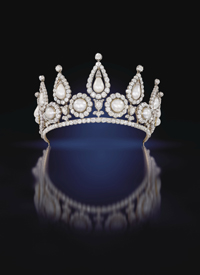
The_Rosebery_Tiara_QMA_Collection._Photo_c_SothebysA pearl-drop earring worn by King Charles I at his execution in 1649, pearl tiaras worn by European nobles and a pearl necklace given to Marilyn Monroe by Joe DiMaggio in 1954 are among the items on display as part of a new exhibition which opened at the V&A last Saturday. The V&A and Qatar Museums Authority exhibition traces the history of pearls from the early Roman Empire to now and features more than 200 pieces of jewellery and works of art. Other items on display include ‘Queen Mary II’ pearls dating from 1662-1664, a miniature portrait of Queen Charlotte wearing pearl jewellery and a set of buttons, finely enamelled and framed with pearls, worn by George III in 1780. There’s also the Dagmar necklace given to Princess Alexandra when she married the future King Edward VII in 1863. The exhibition is part of the Qatar UK 2013 Year of Culture. Admission charge applies. Runs until 19th January. For more, see www.vam.ac.uk. PICTURE: Lady Rosebery’s pearl and diamond tiara (1878) © Christie’s Images.

The Big Brother house – located in Elstree Studios in north London – opens to the public tomorrow and on Saturday as part of a partnership between Initial – an Endemol Company, Channel 5 and the National Trust. Some two million people tuned in to watch the final night of the show this summer leading one TV critic to describe the property as “the most important house in Britain”. The opening is being preceded by an Opening Gala featuring housemates past and present as well as celebrities – but that’s an invitation only event. Sadly, tickets for the opening are already sold out – for returns and your last chance of getting in, follow this link.

The UK’s first aircraft manufacturers – Horace, Eustace and Oswald Short – have been commemorated with an English Heritage blue plaque placed on their former workshop in Battersea. Unveiled this week by Jenny Body – the first female president of the Royal Aeronautical Society, the plaque can be found at the railway arches near Queen’s Circus where the brothers, who lived nearby in the Prince of Wales Mansions, worked on ballooning and first made the transition to aircraft construction. Among their firsts was the construction of the first British powered aircraft to complete a circular mile of flight and the creation of Britain’s first ever purpose-built aircraft factory (it was located on the Isle of Sheppey in Kent). For more, see www.english-heritage.org.uk/discover/blue-plaques/.

On Now: Jonathan Yeo Portraits. New and previously unseen works including a six foot high portrait of controversial artist Damien Hirst and a portrait of Kevin Spacey as King Richard III feature in this exhibition running at the National Portrait Gallery. Other subjects featured in the painted works include media mogul Rupert Murdoch, model Erin O’Connor, artist Grayson Perry and actor Sierra Miller. Runs until 5th January. Admission is free. For more, see www.npg.org.uk.

Around London – Open House London; Yinka Shonibare at Greenwich; Bankside transformed; and Michael Peto at the NPG…

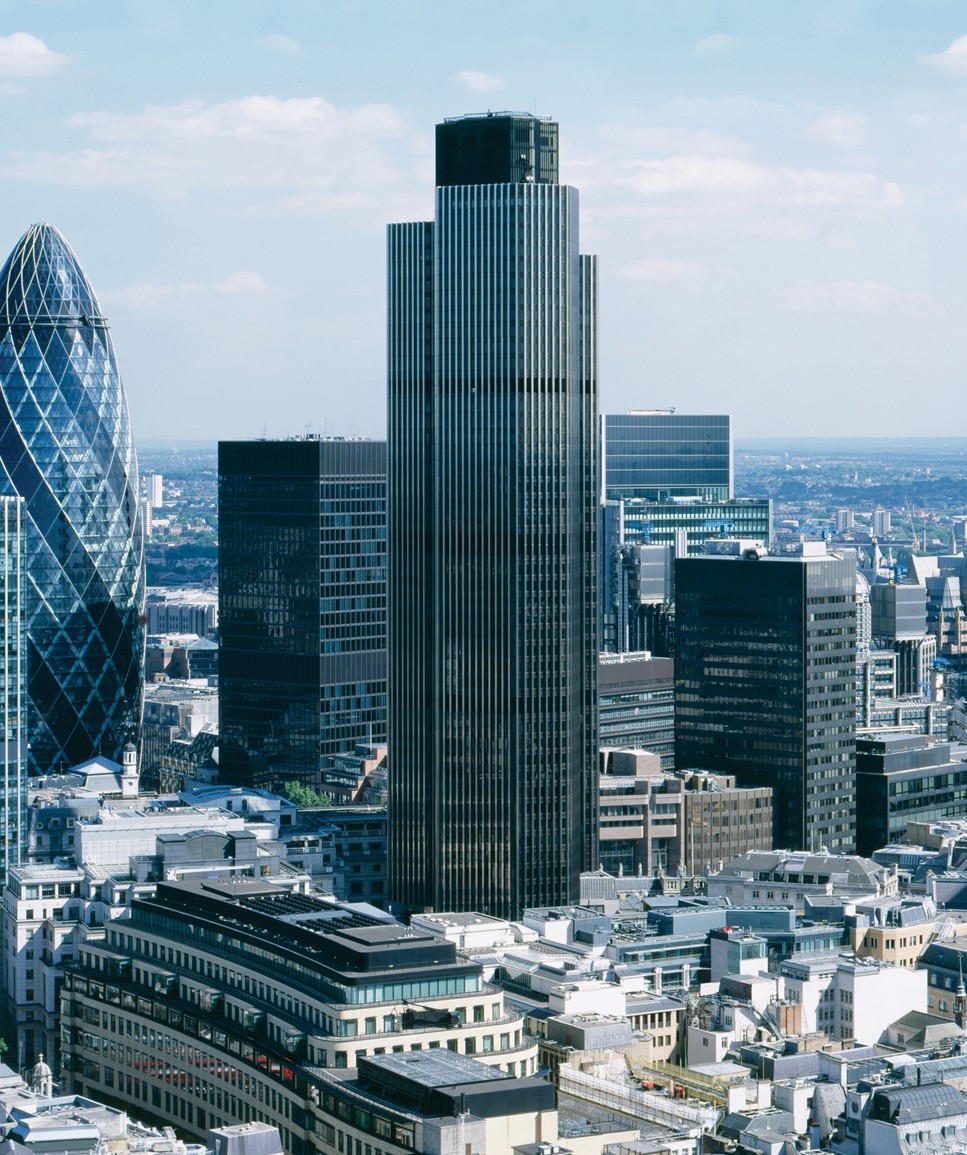
Tower 42_external It’s finally here. Open House London kicks off on Friday and with more than 800 buildings opening their doors, the only difficulty you’ll have this weekend will be choosing what you end up doing! This year’s theme is ‘celebrating architecture, people and place’ and among the highlights will be the opening of landmark structures like Battersea Power Station, Tower 42 (pictured), and the Gherkin (30 St Mary Axe) as well as 100 private homes, architects’ homes and “ground-breaking” housing developments and everything from the Shri Swaminarayan Temple in Brent to Horse Guards in Whitehall (certain buildings, like 10 Downing Street and The View from the Shard, are only open to people who won tickets in an earlier ballot). This year’s festivities also include a moonlit “culture crawl” through London on Friday night. If you haven’t ordered a hardcopy programme, you can check the listings online at www.openhouselondon.org. There’s also an Open House iPhone app available from the appstore.

A series of works by Yinka Shonibare – including some never before seen in the UK – went on display at Greenwich yesterday, thanks to Royal Museums Greenwich. The works, which explore notions of “Britishness, trade and empire, commemoration and national identity”, can be found inside and around buildings including the Queen’s House, National Maritime Museum and Royal Observatory and include Fake Death Pictures – a series of five vision of the death of naval hero Vice-Admiral Lord Nelson, Wind Sculpture – a gravity-defying object located on the Queen’s House lawn, Cheeky Little Astronomer – a specially commissioned sculpture located in the Flamsteed House at the Royal Observatory, and Nelson’s Ship in a Bottle – last seen on Trafalgar Square’s Fourth Plinth. Yinka Shonibare MBE at Greenwich, which is supported by a range of talks, debates and tours, runs until 23rd February. For more, see www.rmg.co.uk.

Bankside will be transformed this weekend as artists will be transforming disused hoardings and derelict buildings with original artworks as part of the Merge Festival. The work’s include Candy Chang’s Before I Die, Alex Chinnick’s Miner on the Moon, and Marcus Lyall and Mark Logue’s House of Pain. Until 20th October. For more on the festival celebrating Bankside, see www.mergefestival.co.uk.

On Now: Michael Peto Photographs: Mandela to McCartney. This new exhibition at the National Portrait Gallery just off Trafalgar Square features a previously unexhibited photo of Elizabeth Taylor and Richard Burton, taken at the beginning of their love affair. It’s one of 10 portraits taken by the late Hungarian-born photographer Michael Peto in London during the 1950s and 1960s – others feature Samuel Beckett, Jennie Lee, Paul McCartney and Ian McKellen. Admission is free. For more, see www.npg.org.uk.

Around London – 1863 FA Minute Book at BL; marking International Slave Remembrance Day at the NMM; Kenwood House concerts; and Dylan at the NPG…

FA-Cup-Minute-BookThe 1863 FA Minute Book forms the centrepiece of a new display at the British Library marking the 150th anniversary of The Football Association. Handwritten by Ebenezer Cobb Morley, the minute book contained the 13 original rules of football and is valued at £2.5 million. It is being displayed along with other football related artefacts – such as a Guide for Referees from the 1930s – in the Sir John Ritblat Treasures Gallery alongside the Magna Carta, Shakespeare’s First Folio and Captain Scott’s diary and is the first time the library has had a football-themed display. The Football Association was formed on 26th October, 1863, at the Freemason’s Tavern in London with the meeting documented in the minute book which also records the establishment of The FA Cup and the first international football match. Football Rules, entry to which is free, runs at the British Library in King’s Cross until 17th December. For more, see www.bl.uk. For more on the FA’s 150th anniversary, check out www.thefa.com.

As mentioned last week, Hidden London kicks off today and runs over this August bank holiday weekend. The second year it’s been held, the initiative is your chance to see some of the country’s finest museum collections and archives.  To see what’s on, head to www.hiddentreasures.org.uk/?page_id=118.

The National Maritime Museum tomorrow marks International Slavery Remembrance Day tomorrow with a series of free family-oriented events. The programme, which takes place at the museum and around Greenwich, involves music, workshops, talks and walking tours and will culminate in a commemorative ceremony by the River Thames. The day falls on the date of the first successful slave uprising in the western hemisphere which took place in Haiti on 23rd August, 1791, and led to the island’s independence. For more, see www.rmg.co.uk/national-maritime-museum/.

English Heritage’s season of concerts at Kenwood House beside Hampstead Heath kicks off this weekend. Live by the Lake features artists including Suede and Keane, an outdoor live screening of Singin’ in the Rain featuring the Royal Philharmonic Concert Orchestra, Opera Alfresco and An Evening of Gershwin. Events run until 1st September. For more, see www.english-heritage.org.uk/daysout/properties/kenwood-house/.

Pastel portraits by Bob Dylan go on show at the National Portrait Gallery in the West End from Saturday. Bob Dylan: Face Value features 12 new works by singer/songwriter and the portraits represent characters, some of which are real and some fictitious. Dylan, who has 110 million record sales to his name, has been sketching and drawing since childhood but only starting exhibiting his portraits six years ago. The exhibition, in Room 40, is free and runs until 5th January. For more, check www.npg.org.uk.