Where is it? #20

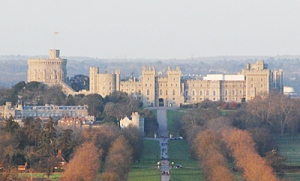
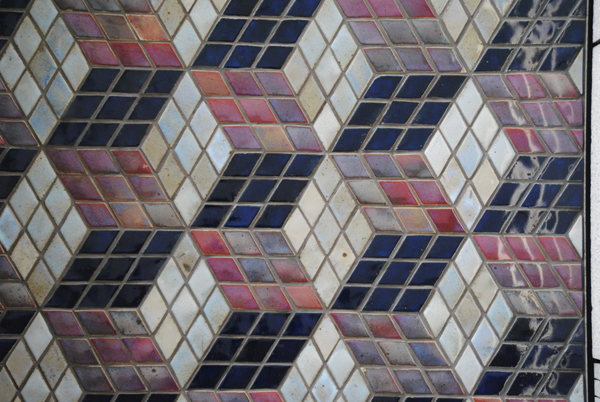
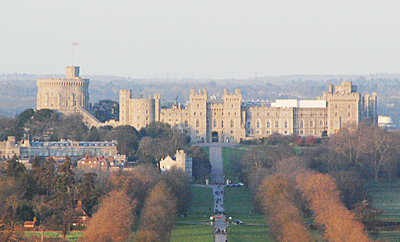
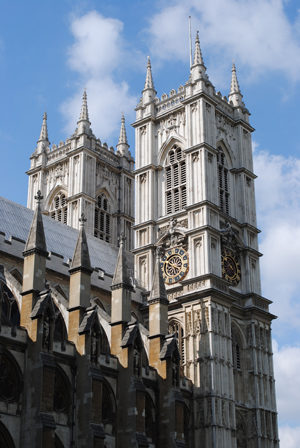
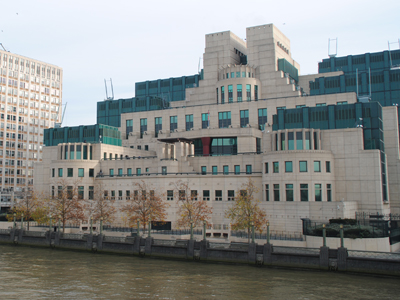
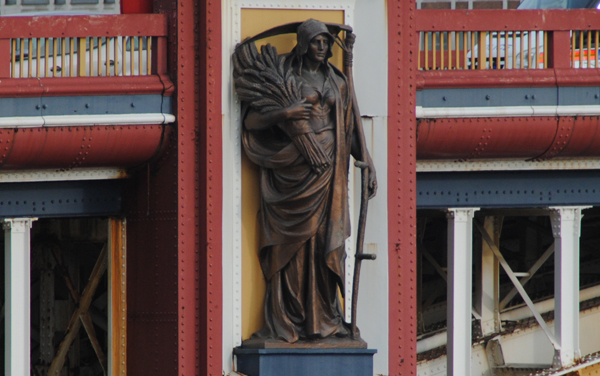
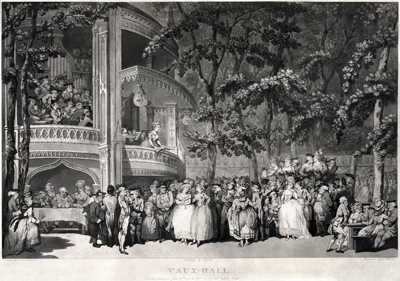
The latest in the series in which we ask you to identify where in London this picture was taken and what it’s of. If you think you can identify this picture, leave a comment below. We’ll reveal the answer early next week. Good luck!

Yes, as was guessed, this is indeed Little Ben, a miniature clock tower which usually stands on a traffic island at the junction of Vauxhall Bridge Road and Victoria Street, close to Victoria Underground Station (it has been temporarily removed while upgrade works are being carried out at Victoria Station).

The 30 foot/nine metre high cast iron tower, designed as a smaller version of the Houses of Parliament Clock Tower, affectionately referred to as Big Ben, which lies at the other end of Victoria Street, was the work of Croydon-based clockmakers Gillett & Johnson in 1892.

The clocktower was removed in 1964 when roadworks were being carried out but, following a restoration, was put back close to its original location in 1981 by  Westminster City Council with the financial aid of French oil company Elf Aquitaine UK who intended its return as “a gesture of Franco-British friendship” as well as, so it’s been reported, to mark the wedding of Prince Charles and Lady Diana.

There is a rhyming couplet inscribed on tower, ‘Little Ben’s Apology for Summer Time’: My hands you may retard or may advance, my heart beats true for England as for France. This  refers to the fact the clock is permanently set one hour ahead of Greenwich Mean Time.

Interestingly, there is apparently a fullsize replica of Little Ben erected in Victoria, capital of the Seychelles – it was built to mark Queen Victoria’s Golden Jubilee in 1897.

Treasures of London – The Battersea Shield…

Found in the River Thames near Battersea, the Battersea Shield dates from the Iron Age and is believed to have been created for ceremonial or display purposes (which could be read as showing off), rather than for use in warfare.

Made of a thin layer of highly polished bronze featuring 27 studs into which were placed pieces of red enamel (opaque red glass), the bronze sheets would have originally been placed over a wooden shield. It was clearly designed with spectacle in mind and would have been quickly destroyed in any serious battle. The circular patterns housing the red enamel are designed in what is called the ‘La Tène style’, named for an Iron Age site in Switzerland.

The Celtic shield, which the British Museum dates between 350 to 50 BC, is believed to have been deliberately thrown or placed in the Thames, perhaps as a votive offering, and lay there undisturbed until 1857 when it was dredged up off the river bed near Battersea Bridge during bridge construction.

For a more detailed look at the Battersea Shield, see I.M. Stead’s The Battersea Shield. Unfortunately we were unable to secure permission to run an image of the shield so to see an image of the shield, click here.

WHERE: Room 50, British Museum, Great Russell Street (nearest Tube Stations are Russell Square, Tottenham Court Road, Holborn and Goodge Street). WHEN: 10am to 5.30pm daily (Fridays until 8.30pm)COST: Free; WEBSITE: www.britishmuseum.org.

Around London – John Carter at Ham House; John Hegley, Keats’ poet-in-residence; blue plaque writers; and, mapping the Blitz…

Ham House near Richmond in London’s south west is making a star appearance in the new Disney movie, John Carter. The 17th century mansion, located on the Thames, is doubling as a New York mansion on the Hudson River and the cast and crew spent six weeks filming there in January last year. The film is an adaptation of Edgar Rice Burroughs’ 1912 sci-fi comic-book John Carter of Mars, about a civil war veteran who is magically transported to a turbulent new life on the red planet. For more on Ham House, see www.nationaltrust.org.uk/ham-house/. PICTURE: ©2011 Disney.

• North London born poet John Hegley has been appointed poet-in-residence at Keats House in Hampstead for this summer. Hegley, whose poetry collections include Glad to Wear Glasses, The Sound of Paint Drying and My Dog is a Carrot, will host workshops and readings during his residency which takes place from 1st May to 31st October. He will also host the launch and closing event of the Keats House Festival, held at the house between 1st and 10th June, and present a series of meetings, entitled Sunday Tea with John (Keats), on the last Sunday of each month. These will include music and a 20 minute lecture about a particular aspect of Keats’ life. For more, see www.keatshouse.cityoflondon.gov.uk.

• Writers Jean Rhys and Elizabeth Bowen have been commemorated with English Heritage blue plaques. Caribbean-born Rhys (1890-1979) lived at Paultons House, Paultons Square, in Chelsea in the 1930s and it was while here that she developed her career as a novelist and penned Good Morning, Midnight (1939), now considered one of her finest works. Meanwhile the Anglo-Irish novelist Elizabeth Bowen (1899-1973) lived at 2 Clarence Terrace, Regents Park, for 17 years and during her time there wrote her two most celebrated works, The Death of the Heart (1938) and The Heat of the Day (1949). Last month blue plaques were unveiled commemorating the home of singer Elisabeth Welch (1904-2003) – described by her biographer as “Britain’s first black star” – at Ovington Court in Kensington and that of florist to royalty Constance Spry (1886 – 1960) on the site of her Mayfair shop at 64 South Audley Street. For more, see www.english-heritage.org.uk/discover/blue-plaques/.

Now on: Mapping the London Blitz. This exhibition at the London Metropolitan Archives in Clerkenwell centres on a series of bomb damage maps made during the dark days of World War II. Created by the London County Council, the 110 large maps used a color code to indicate the extent of damage in individual buildings and covered 117 square miles. Now in its last days – exhibition closes on 29th March. For more, see www.cityoflondon.gov.uk/lma.

10 London sites to celebrate Charles Dickens – 5. Seven pubs associated with Dickens (including one he never visited)…

There hardly seems to be a pub in London which doesn’t claim some connection with the Victorian author but we thought we’d confine ourselves to five pubs with more well-established credentials…

• Ye Olde Cheshire Cheese. This pub is a Fleet Street institution with parts of the current building dating back to 1667 when it was rebuilt following the Great Fire. Dickens was among numerous literary figures who frequented the premises – the pub is perhaps most famously associated with the lexicographer Dr Samuel Johnson (although there is apparently no recorded evidence he ever attended here); other literary figures who came here include Mark Twain and Sir Arthur Conan Doyle – and, according to a plaque in Wine Court, worked out of the pub for a period while producing his journal All The Year Round.

• The One Tun, Saffron Hill. Said to have been established as an ale house on its present site in 1759, the pub was rebuilt in the mid-Victorian era  and was apparently patronised by Dickens between 1833 and 1838. It’s also apparently the inspiration for the pub called The Three Cripples in Oliver Twist (The Three Cripples was actually a lodging house next door to the One Tun and didn’t sell ale). For more, see www.onetun.com

• The George Inn, Southwark. Dating from the 17th century, the George Inn in Borough High Street is the last galleried coaching inn left standing in London and is now cared for by the National Trust (and leased for use by a private company). Dickens is known to have come here when it was running as a coffee house and he mentions it in the book, Little Dorrit. For more, see     www.nationaltrust.org.uk/george-inn/.

• George & Vulture, Castle Court (near Lombard Street). Established in the 18th century on the site of an older inn, this well-hidden pub was not only frequented by Dickens but is mentioned in The Pickwick Papers more than 20 times.

• The Grapes, Limehouse. Formerly known as The Bunch of Grapes, there has been a pub on the site for almost more than 430 years. Dickens was known to be a patron here (his godfather lived in Limehouse) and mentioned the pub – renamed The Six Jolly Fellowship Porters – appears in his novel Our Mutual Friend. For more, see www.thegrapes.co.uk.

• Ye Olde Mitre, Ely Place. This pub dates from the mid 1500s by Bishop Goodrich of Ely to house his retainers and later rented out to Sir Christopher Hatton (it still houses the remains of a cherry tree which Sir Christopher is said to have danced around during a May Day celebration with none other than the future Queen Elizabeth I). Dickens (and the ubiquitous Dr Johnson) are both said to have drunk here.

• And lastly, The Dickens Inn in St Katharine Docks. It’s worth noting up front that Charles Dickens had nothing to do with this pub – dating back to at least 1800, it was once a warehouse and is thought to have been used to either house tea or play a role in a local brewing operation – but it was his great grandson, Cedric Charles Dickens, who formally opened the pub in 1976, apparently declaring, “My great grandfather would have loved this inn”. For more, see www.dickensinn.co.uk.

This list is by no means comprehensive – we’d love to hear from you if you know of any other pubs Dickens frequented…

LondonLife – Rocking the Fourth Plinth

A 4.1 metre high golden bronze sculpture of a boy on a rocking horse has been unveiled as the latest occupant of Trafalgar Square’s Fourth Plinth. A somewhat playful take on the intended use the plinth (it was originally designed to support a bronze equestrian statue of King William IV by Sir Charles Barry but this was never installed), artistic duo Michael Elmgreen and Ingar Dragset’s work is officially known as Powerless Structures, Fig. 101. The 3.1 ton sculpture, in which “a child has been elevated to the status of historical hero, though there is not yet a history to commemorate – only a future to hope for”, replaces Yinka Shonibare’s Nelson’s Ship in a Bottle which was removed in January. For more on the Fourth Plinth programme, see www.facebook.com/fourthplinthlondon or www.fourthplinth.co.uk.

PICTURE: © James O. Jenkins

Where’s London’s oldest…shop?

We’re celebrating the bicentenary of the birth of Charles Dickens this year so it’s only fitting that we look at a building which has been, rightly or wrongly, associated with one of his books.

Located at 13-14 Portsmouth Street in Westminster, The Old Curiosity Shop now operates as a shop selling handmade fashions and footwear but the building apparently dates back 1567, making it a strong contender for the title of London’s oldest shop.

The name – The Old Curiosity Shop – was apparently applied to the building some years after Dickens first published his story, The Old Curiosity Shop, in the weekly serial, Master Humphrey’s Clock, in 1840 and 1841. The belief subsequently arose that it was this building the author had in mind when writing the book which tells the tale of Little Nell and her grandfather, a shopkeeper, and their interactions with the evil moneylender Daniel Quilp.

The claim is disputed by some, author Ed Glinert among them. In his book Literary London: A Street by Street Exploration of the Capital’s Literary Heritage he says the model for Dickens’ building was located at either 24 Fetter Lane or 10 Orange Street near Leicester Square and notes that at the end of the novel, Dickens said the building had long since been pulled down.

The Grade II* listed building, which survived the Great Fire of 1666 and the Blitz of World War II, is said to have been made from wood taken from old ships. Apparently at one stage it was a dairy which belonged to an estate awarded by King Charles II to one of his mistresses.

For more, see www.curiosityuk.com.

Where is it? #19

The latest in the series in which we ask you to identify where in London this picture was taken and what it’s of. If you think you can identify this picture, leave a comment below. We’ll reveal the answer early next week. Good luck!

Thanks to those who had a shot at where this was located. It is located at Elephant and Castle, on the busy roundabout where New Kent Road meets St George’s Road, and contains a transformer for the London Underground’s Northern Line which passes underneath.

But more than that, the stainless steel boxlike structure pictured is actually one of London’s more obscure memorials – it commemorates Michael Faraday, the eminent Victorian scientist noted in particular for his contributions to the fields of electromagnetism and electrochemistry.

Erected in 1960-61 not far from where Faraday was born (in the delightfully named Newington Butts), it was designed by the Brutalist architect Rodney Gordon and apparently was originally to feature glass panels so the interior workings of the transformer could be seen but unfortunately this was altered due to the threat posed by vandals.

The monument, which features 728 steel panels, was given Grade II listed building status in 1996, the same year a new lighting scheme was added following a competition by children’s TV show Blue Peter. Plans to move the monument to a new site next to the Faraday Museum in Mayfair have been mooted.

Lost London: Gates Special – Moorgate

Originally a postern (small or secondary) gate built by the Romans, Moorgate came into its own as a larger gate in the 15th century and survived for more than 300 years before it was demolished in 1761.

The name comes from the area in which it stands – Moorfields, one of the last open pieces of space within the City of London – stood just to the north of the gate. It was originally a sparsely populated marshy expanse – so much so that when the gate was first built, the area around it was often flooded and some local residents used boats as a means of transport – but was later drained. Many people were evacuated here during the Great Fire of London in 1666 and some apparently then settled in the area which later also gained a reputation as a hiding place for highwaymen like Jack Sheppard – we’ll take a closer look at Moorfields in a later post.

The gate known as Moorgate, meanwhile, was first rebuilt as a full sized gate with towers in 1415 on the orders of then Mayor Thomas Falconer to provide access to the fields without. It was enlarged several times in medieval years before being damaged in the Great Fire. It was replaced with a ceremonial stone gate in 1672 to provide access to the now well-drained fields before being demolished in 1761 (some of the stone was apparently later used to support the newly widened central arch of London Bridge).

The gate’s name now lives on in the street known as Moorgate (originally formally known as Moorgate Street after it was first constructed in 1846) – worth noting is that the Romantic poet John Keats was born in the street. The area around the street also is also known by the name Moorgate and is home to some of the City’s key financial institutions.

There’s a plaque near where the site of Moorgate once stood at the corner of Moorgate and London Wall.

PICTURE: Moorgate in its final, ornate form. Taken from a London Wall Walk plaque.

Queen unveils final Jubilee Greenway plaque; a Barbican weekend; and, the Transit of Venus at Greenwich…

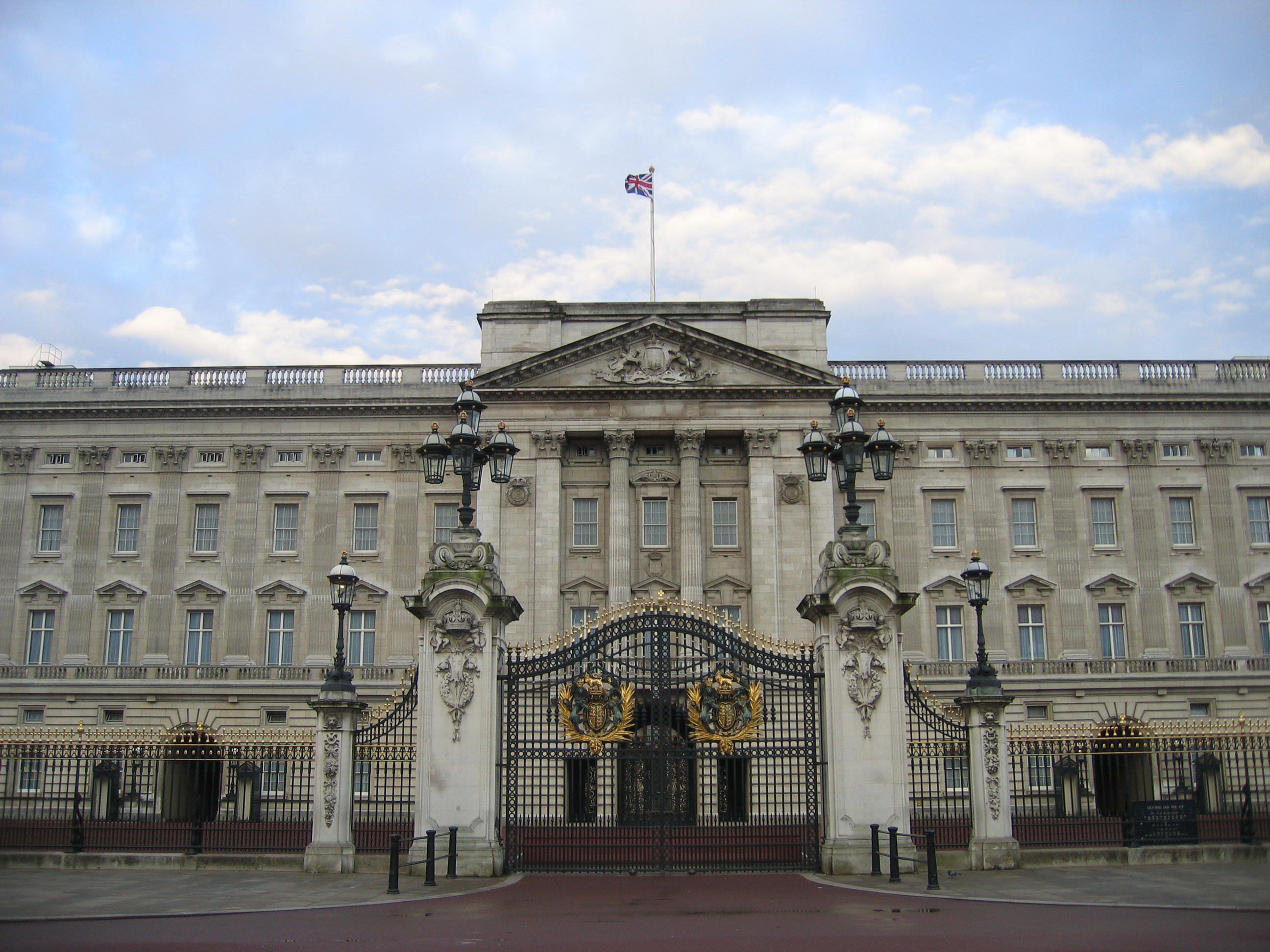
Queen Elizabeth II this week unveiled the final plaque marking the end of the 37 mile/60 kilometre Jubilee Greenway in front of Buckingham Palace. The circular Greenway – marked by 542 glass plaques – has been created to celebrate the Queen’s Diamond Jubilee. It can be walked or cycled and takes in key sites around London, including Kensington Palace, Regent’s Park, the Thames Barrier and Olympic sites including Greenwich Park (equestrian events), the O2 Arena (hosting gymnastics, trampoline and basketball events) as well as the main stadium at Olympic Park. The Greenway is divided into 10 sections and you can download either the entire walk or brochures for one of the sections only here.

This weekend sees the Barbican Centre play host to the event known as ‘Barbican Weekender’ – two days of free art, dance, music, theatre and film at the Barbican Foyers. Part of London 2012 Festival, the event’s ‘Freestage’ programme features Roxxxan,Dizralie and the Small Gods, young drummers from East London and performance poetry by the Barbican Young Poets. There’s also street dance classes with Boy Blue Entertainment, the chance to make an Opera in a Day with the Hip Hop Shakespeare Company, a Digital Graffiti wall, street food stalls, the Wah Nails Pop-Up boutique and free running by Streets United. For more, see www.barbican.org.uk/weekender.

• On Now – Measuring the Universefrom the Transit of Venus to the edge of the cosmos. Marking the 2012 transit of Venus, this exhibition at the Greenwich Observatory follows the story of man’s ongoing quest to understand the vastness of space, looking at the people and technologies involved in seeing farther than ever before – from the Astronomer Royal, Edmond Halley, to Captain James Cook and Edwin Hubble and through to the possibilities offered by the Cosmic Microwave Background Explorer. It’s accompanied by a series of talks, observing events – including this month’s Daytime Sky Watch sessions – and a planetarium show. Runs until 2nd September. Admission is free. For more information, see www.rmg.co.uk.

10 London sites to celebrate Charles Dickens – 4. Dickens at home…

We’ve already mentioned Charles Dicken’s Doughty Street house (now the Charles Dickens Museum) and his many childhood homes, but where else in London did Dickens reside during his adult life?

Following his marriage to Catherine Hogarth on 2nd April, 1836, at St Luke’s Church in Chelsea, Dickens and his new bride settled into chambers the writer had taken the now non-existent Furnival’s Inn (the author had been living there prior to his marriage), the site of which  is now occupied by the Holborn Bars Building).

In January the following year the couple had their first child – Charles Culliford Boz Dickens – and shortly afterwards made the move to the property at 48 Doughty Street. As we mentioned, the house was where two of his children were born and where Catherine’s 17-year-old sister Mary died (her death is believed to be the inspiration for that of the character Little Nell in the novel The Old Curiosity Shop) as well as being where Dickens wrote some of his most famous novels, including Oliver TwistNicholas Nickleby, and The Pickwick Papers.

In 1839, however, the family upsized into a much grander property at 1 Devonshire Terrace in Marylebone near Regent’s Park. This property at what is now 15-17 Marylebone Road was demolished in the late Fifties but there is a sculptural frieze on the wall marking where the property once stood.

Among the works Dickens wrote while living here were The Old Curiosity Shop, A Christmas Carol, Martin Chuzzlewit and David Copperfield. Six of Dickens’ children were born while he lived in this property. During this time, Dickens also made his first visit to North America and also travelled with his family in Europe for considerable periods.

In November 1851, Dickens moved the family again – this time to Tavistock House, located Tavistock Square in Bloomsbury. The property was demolished in 1901 and the site is now occupied by the headquarters of the British Medical Association (there’s a blue plaque commemorating Dickens’ time here).

Among the works Dickens wrote while living here were Bleak House, Hard Times, Little Dorrit and A Tale of Two Cities. The last of Dickens’ 10 children were born here – Edward Bulwer Lytton Dickens, later an Australian MP – and it was while living here, that in 1858 he separated from his wife Catherine. Dickens also put on amateur theatricals in the property.

Dickens’ time at Tavistock house ended around 1860 when Gad’s Hill in Kent became the main family home.

PICTURE: A section of the sculptural frieze depicting Dickens and some of his characters on the building that now stands at what was 1 Devonshire Terrace now in Marylebone Road. PICTURE: grahamc99 

What’s in a name?…Shoreditch

The origins of the name Shoreditch – now a slowly gentrifying area to the north of the City of London within the Borough of Hackney – are lost to time but there are a few interesting theories around.

While the name probably comes to us as a derivation of Soersditch or Sewer Ditch – perhaps in reference to a drain that was once here – a more tragic version has it named after Jane Shore.

A mistress of King Edward IV in the mid to late fifteenth century, she, so the story goes, was buried in a ditch in the area after dying in a state of penury following a dramatic fall from favour during the subsequent reign of King Richard III (the king apparently had Jane arrested and made her perform a public penance for being a harlot).

There was an important priory here – the Augustinian Priory of Holywell – in medieval times and by Elizabethan times, some substantial houses. In 1576, James Burbage built England’s first theatre – known as The Theatre – on its site located near Curtain Road. Some of William Shakespeare’s plays were performed here and at the nearby rival, the Curtain Theatre, before a dispute with the landlord in the late 16th century saw the theatre relocated to Southwark in the dead of night (although the foundations must have remained – these were excavated a few years ago). Both Shakespeare and follow playwright Christopher Marlowe had associations with the area.

The area, which centred on St Leonard’s Church (while the current building dates from around 1740, there is believed to have been a church here  – at the intersection of Shoreditch High Street and Hackney Road – since Saxon times), become known for its textiles in the 17th century and later for its furniture industries.

It was still known as one of London’s premier entertainment districts in the late 19th and early 20th centuries with well known music halls and theatres but by then was also just as well known for its poverty.

Shoreditch suffered heavily during the Blitz and while the area continues to suffer from urban decay there is now some new life being breathed into it with the arrival of projects as the Boxpark Shoreditch which, made from shipping containers, is billed as “the world’s first pop-up mall”. There’s also an annual festival, the Shoreditch Festival, held in summer along Regent’s Canal.

PICTURE: View down Shoreditch High Street to the City – © David Adams.

Where is it? #18

The latest in the series in which we ask you to identify where in London this picture was taken and what it’s of. If you think you can identify this picture, leave a comment below. We’ll reveal the answer early next week. Good luck!

Congratulations to Janet Holmes who correctly stated this is the weathervane on top of the cupola Whitechapel Gallery, located in Whitechapel High Street. The weathervane was created by Canadian artist Rodney Graham for the opening of the extended gallery in 2009 when the gallery was expanded to include the former Passmore Edwards Library next door (a weathervane had been planned to top the library’s cupola when it was built in the late 19th century but was never installed). Graham’s weathervane depicts the Renaissance scholar Erasmus sitting backwards on a horse reading a book, In Praise of Folly (there’s a story that this is how Erasmus wrote the book). For more on the gallery, see www.whitechapelgallery.org. Or check out Rodney Graham’s art book, British Weathervanes.

Around London – Family festival to celebrate Diamond Jubilee; British Library publishes world’s first detective novel; and, Closing Ceremony Celebration Concert tickets on sale Friday…

Sainsbury’s and Royal Parks have unveiled plans for a two day festival in Hyde Park – billed as the largest family festival London has ever seen – celebrating the Queen’s Diamond Jubilee over the June holiday weekend. The Jubilee Family Festival will feature live music and entertainment with one of the key highlights of each day being the finale – a 70 minute Disney concert specially created to celebrate the Jubilee. Other activities will include appearances by celebrity performers and dancer and children’s TV characters as well as equestrian events and motorcycle displays. There will also be a range of “Commonwealth-inspired” acts, food and drink supplied by Sainsbury’s and giant screens showing Jubilee-related events taking place elsewhere. There will be capacity for 50,000 ticket holders on each of the two days – Saturday, 2nd June, and Sunday, 3rd June. The event will run from 10.30am to 7pm on each day. Tickets – priced at £20 an adult/£12.50 for under 16s (children under three free) or £52 for a family of two adults and two children – go on sale at 9am tomorrow (Friday 24 February) from Ticketmaster – www.ticketmaster.co.uk or call 0844 847 1661 (+44 161 385 3211 from outside the UK) – or Seetickets –  www.seetickets.com  or call 0844 858 6760 (+44 1142 249 784 from outside the UK). In addition, from 28th March, Sainsbury’s customers who spend £60 in store will be able to enter a daily ballot for free family tickets. For more information on the festival, see www.sainsburys.co.uk/jubilee.

• The British Library has republished what many believe was the first detective novel ever published. The Notting Hill Mystery by Charles Felix was originally serialised between 1862 and 1863 in the magazine Once a Week (pictured right – image courtesy of the British Library). It was also published as a single volume in 1863, meaning it predates both Wilkie Collins’ The Moonstone (1868) and Emile Gaboriau’s first Monsieur Lecoq novel, L’Affaire Lerouge, but has not been available commercially since. The story is presented in the form of diary entries, family letters, chemical analysis reports, and interviews with witnesses as well as a crime scene map and follows an insurance investigator, Ralph Henderson, as he builds a case against the sinister Baron ‘R___’ whom he suspects of murdering his wife for life insurance. Available from the British Library bookshop – www.bl.uk/shop.

• Tickets for the BT London Live Closing Ceremony Celebration Concert go on sale tomorrow. The open air event will feature headline act Blur and will be held in Hyde Park on Sunday, 12th August, the day of the Olympic Games Closing Ceremony. Other artists performing at the concert will include The Specials and New Order, and giant screens in the park will show highlights of the Closing Ceremony. Another concert will be held in Hyde Park on Friday July 27, coinciding with the Games’ Opening Ceremony (headline acts and ticket prices will be announced shortly – BT customers will have 48 hour priority access for tickets for both concerts via www.bt.com/londonlive. Tickets for the August concert, priced at £55 (plus booking fee) go on sale at 9am on Friday via www.btlondonlive.com.

10 London sites to celebrate Charles Dickens – 3. Recalling a journalistic career…

We kick off this week’s special – which looks at some of the London premises in which Dickens spent his working life – where we left off last week. Charles Dickens, now 15, had once again been forced to leave school and seek employment – this time as a solicitor’s clerk. From 1827 to 1828, the future author worked at two firms before, having taught himself shorthand, he launched his career as a journalist.

Dickens started his life in his new profession as a freelance law reporter working out of Doctor’s Commons where civil cases were heard (the site of which is marked with a blue plaque on the north side of Queen Victoria Street). Around 1830, he began to work for the newspaper, Mirror of Parliament, which was owned by his uncle and then, in 1832 he was employed at the True Sun newspaper.

His first published literary works started appearing in Monthly Magazine in December the following year (his first printed story was initially entitled A Dinner at Poplar Walk) and eight months later, in August 1834, he took on a new job as a reporter at the influential Whig paper, the Morning Chronicle. His writing was subsequently also published in the Evening Chronicle.

Among the magazine’s Dickens edited were Bentley’s Miscellany – this was the vehicle in which Oliver Twist was first published – and Household WordsHard Times was first published in this – as well as All the Year RoundA Tale of Two Cities and Great Expectations were both first serialised in this magazine which was located at 26 Wellington Street not far from Covent Garden. The building is now the home to the Charles Dickens Coffee House (pictured).

Next week we’ll be taking a look at some of places in London where Dickens lived…

LondonLife – Hunting for giant eggs…

This is one of the more than 200 giant eggs which have been hidden around London as part of The Fabergé Big Egg Hunt.

Launched this week, the hunt aims to raise £2 million for children’s charity Action for Children and the Asian elephant conservation charity Elephant Family as well as to set a couple of new Guinness World Records, including one for the most participants in an Easter egg hunt.

Each of the eggs have been specially designed by leading artists, architects, jewellers and designers including Mulberry, Sir Ridley Scott, Bruce Oldfield, Zaha Hadid, and Zandra Rhodes.

Those participating in the hunt have the chance to win the £100,000 Diamond Jubilee Egg which has been crafted from 500 grams of rose gold and features 60 gemstones – one for each year of the Queen’s reign.

Simply locate the unique SMS keyword located on each egg and text it to 80001 to enter (you’ll be entered in the prize draw each time you SMS through a different egg keywords – it costs £3 to enter the hunt plus 25p for each egg collected plus usual phone costs).

There will also be the chance to bid online and at auction for the hand-crafted eggs along with an exclusively designed, stunning 127ct emerald, a gold egg pendant ‘Le Collier Plume d’Or’ created by Fabergé, and a chocolate egg designed by William Curley.

It is hoped the auction of the latter will set another new Guinness World Record, this time for the world’s most expensive non-jewelled chocolate egg sold at auction – both world record attempts are part of World Record London, which involves attempting more than 20 Guinness World Records.

Members of the public are also invited to take part in The Fabergé Big Egg Hunt Photo Competition, held in conjunction with the World Photography Organisation, with the best photographs to go on display at Somerset House within the prestigious Sony World Photography Awards Exhibition from the 27th April to 20th May.

For more information, see www.thebigegghunt.co.ukPICTURE: Charlie Clift.

Where is it? #17

The latest in the series in which we ask you to identify where in London this picture was taken and what it’s of. If you think you can identify this picture, leave a comment below. We’ll reveal the answer early next week. Good luck!

This is an image of the metre wide zodiacal clock on Bracken House on Friday Street. The clock was designed by Frank Dobson and Philip Bentham and, alongside the classical influences on its face, curiously features the image of Winston Churchill’s face at its centre. Churchill was apparently a friend of Bernard Bracken, the former chairman of the Financial Times, after whom the building, which dates from the 1950s, was named. The Financial Times newspaper was published here until the 1989 when it moved to Number One Southwark Bridge. Meanwhile, Bracken House, which was one of the first post-war buildings in the city to be listed, was redeveloped in the early Nineties but retained its original facade.

Around London – Chiswick House’s Camellia Festival; Picasso at the Tate; and, Mondrian at the Courtauld…

The second annual Camellia Festival kicks off in  gardens surrounding the neo-Palladian property, Chiswick House,  in west London this weekend. The month long festival, run by the Chiswick House & Gardens Trust, was kicked off in 2011 with the aim of showcasing Chiswick’s world renowned Camellia Collection, believed to be the largest in the Western world. Following the success of last year’s festival following a £12.1 million garden restoration project, the flowers will once again be on display in the Conservatory (designed by Samuel Ware in 1813). Complementing the display of camellias will be a showcase of early spring flowers planted in the newly restored Italian Garden (originally created for the 6th Duke of Devonshire in 1814, it was, at the time, at the forefront of horticultural fashion). The Camellia Collection, meanwhile, includes rare and historically significant plants featuring pink, red, white and striped blooms, many of which are descended from the original planting in 1828. Among them is the Middlemist’s Red which was originally brought to Britain from China in 1804 by John Middlemist, a nurseryman from Shepherds Bush. It is one of only two in the world known to exist (the other is in Waitangi in New Zealand). The festival runs from the 18th February to the 18th March.  Admission charge applies. For more information, see www.chgt.org.uk. PICTURE:  The Middlemist’s Red Camellia at Chiswick House © Clare Kendall.

• On Now: Picasso and Modern British Art. This exhibition at Tate Britain explores the influence of Spanish artist Pablo Picasso on British art and the role this played in the acceptance of modern art in Britain as well as celebrating the connections Picasso made with Britain following his first London visit in 1919. It features more than 150 works including 60 by Picasso, among them Weeping Woman and The Three Dancers, as well as works by the likes of Duncan Grant, Wyndham Lewis, Ben Nicholson, Henry Moore, Francis Bacon, Graham Sutherland and David Hockney. Runs until 15th July. Admission charge applies. For more information, see www.tate.org.uk

On Now: Mondrian || Nicholson in Parallel. This show at the Courtauld Gallery tells the story of the extraordinary relationship between celebrated 20th century painter Piet Mondrian and Ben Nicholson, one of the UK’s greatest modern artists. The exhibition will follow the parallel artistic paths taken by the two artists in the 1930s and their subsequent creative relationship. Each of the works selected for the exhibition have a particular historical significance and the presentation also includes archival material such as photographs and letters. Admission charge applies. For more information, see www.courtauld.ac.uk.

10 London sites to celebrate Charles Dickens – 2. A London childhood…

Born the second child of a naval clerk then stationed in Portsmouth, Charles Dickens had what one would imagine was a fairly typical childhood for the son of a naval clerk, his family following his father John Dickens from one place to another – Sheerness, Chatham and briefly, in 1815, in London – as he took up different posts.

But in 1822, amid increasing financial difficulties, John Dickens was recalled to London and he and the family moved into a house at 16 Bayham Street in Camden Town in the city’s north, Charles joining them after completing schooling in Chatham (the house at number 16 Bayham Street is now commemorated by a plaque – it was demolished in 1910).

The family subsequently moved to another, recently built, premises at 4 Gower Street North (later renumbered 147 Gower Street) but soon after this, on 20th February, 1824, John Dickens was arrested over debt and taken to Marshalsea Prison where he subsequently resided with his family with the exception of Charles (the prison, in use since the 14th century, was closed in 1842 and finally mostly demolished in the 1870s – a single wall of the second prison on the site is all that remains).

Twelve-year-old Charles, meanwhile, was put to work in the Warren’s Blacking Factory (pictured) near Hungerford Stairs, which stood just off the Strand (it’s said to have stood roughly where Charing Cross Railway Station now stands). While doing so, he roomed firstly at a house in Little College Street, Camden Town, and then in rooms at Lant Street in Borough (which was much closer to the prison).

John Dickens was out of prison in May but Charles continued working at the factory for almost another year until his father’s fortunes improved and Charles, now living with the family once again – at 29 Johnson Street and then, after being evicted, at The Polygon in Somers Town (an area in St Pancras) – returned to school, becoming enrolled at the Wellington House Classical and Commercial Academy in Hampstead Road.

In 1827, his father’s finances once more having taken a turn for the worse, he began work as a solicitor’s clerk (but more of that later)…

PICTURE: A nineteenth century etching of Dickens at Warren’s Blacking Factory – Source: Wikipedia.

LondonLife – Celebrate Valentine’s Day with Victoria and Albert

The countdown to the March re-opening of Kensington Palace and accompanying launch of the major new exhibition, Victoria Revealed, has begun and to celebrate Historic Royal Palaces is releasing a new animated film about the “era defining” romance between Queen Victoria and Prince Albert. Released in five short daily episodes starting today, the film, Victoria 4 Albert, portrays the story of the couple from their same day births to their wedding ceremony and draws on excerpts from Queen Victoria’s personal diaries and Albert’s letters. The film, which also includes key moments from Victoria’s life at Kensington Palace, have been created and directed by acclaimed filmmaker and animator Chiara Ambrosio and features a voiceover by Julia Rayner (of The Pianist, Extras). The palace reopens on 26th March following a £12 million refurbishment project. In the meantime, head here to see the first of the clips…

What’s in a name?…Tooting

The name of the south London suburb of Tooting has nothing to do with the railways or trains. In fact, its origins go back to Saxon times.

The area was recorded under the name of Totinge in 675 and in the Domesday Book compiled in the years after the Norman Conquest of 1066. By the late 11th century, the Abbey of St Mary Bec in Normandy was recorded as holding the manors of Tooting Bec and Upper Tooting.

The name apparently derives from the Saxon name Tota and the word ‘ing’, which literally translates as ‘the people who lived at’ – hence the name in its original form means something like “the place where Tota’s people lived” with Tota being a local Anglo-Saxon chieftain.

It’s also been suggested – perhaps less likely given the absence of hills in the area – that the name could be derived from the words ‘to tout’, meaning ‘to look out’, and relate to a watchtower that stood here on the road to London, the word then literally meaning something like “the people of the look-out”. (Interestingly, there was a major Roman road here – running from London to Chichester, Tooting High Street is now built upon it).

The suburb of Tooting largely owes its development to more recent times – it grew rapidly during the Victorian era and then again in the Twenties and Thirties.

PICTURE:  © Roger Whiteway (www.istockphoto.com)