 Credited as “the man who invented Christmas”, Victorian author Charles Dickens’ featured Christmas celebrations in many of his works – but none more so than in his famous story, A Christmas Carol.
Published 172 years ago this December, the five part morality tale centres on the miserly Londoner Ebenezer Scrooge who, following several ghostly visitations by the likes of the Ghosts of Christmas Past, Present and Yet to Come, becomes a changed man and recaptures the essence of what Christmas is all about.
The book – whose characters (said to have been partly based on people he knew in real life) also include the abused clerk Bob Cratchit and his ever positive youngest son, Tiny Tim – is based in London.
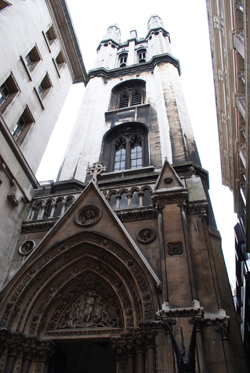
Among key locations mentioned in the book is Scrooge’s counting house, said to have been located in a courtyard off Cornhill (it’s been suggested this is Newman’s Court, thanks to a reference to a church tower, believed to be St Michael’s Cornhill – pictured), the home of Scrooge (it has been speculated this was located in Lime Street), and the home in Camden Town where the Cratchits celebrate their Christmas (perhaps based on one of Dickens’ childhood homes in Bayham Street). City of London institutions like the home of the Lord Mayor, Mansion House, and the Royal Exchange are also mentioned.
The book, which apparently only took Dickens six weeks to write while he was living at 1 Devonshire Terrace in Marylebone, was first published on 19th December, 1843, by London-based firm Chapman & Hall. Based at 186 Strand, they published many of Dickens’ works – everything from The Old Curiosity Shop to Martin Chuzzlewit – along with those of authors such as William Makepeace Thackeray and Elizabeth Barrett Browning.
A Christmas Carol‘s first print run of 6,000 sold out any Christmas Eve that same year and sales continued to be strong into the following year. Despite its warm reception by critics and popularity among the public, the book’s profits were somewhat disappointing for Dickens who had hoped to pay off his debts (he also lost out when he took on some pirates who printed their own version two months after its publication; having hauled them to court Dickens was apparently left to pay costs when they declared bankruptcy).
Dickens would later give some public readings of the book, most notably as a benefit for the Great Ormond Street Hospital for Sick Children (his last public reading of the book took place at St James’s Hall in London on 15th March, 1870, just three months before his death).
The book, which has apparently never been out of print, went on to become something of a Christmas classic and has been adapted into various films, theatre productions, radio plays and TV shows (one of our favourites is The Muppet Christmas Carol, dating from 1992).
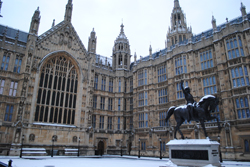

 A detailed picture of the inhabitants of Roman London, known as Londinium, has been created for the first time, the Museum of London announced this week. Detailed analysis of the DNA of four skeletons has revealed a culturally diverse population. The examined skeletons include that of a Roman woman (pictured left), likely to have been born in Britain with northern European ancestry, found buried with high status grave goods at Harper Road, Southwark, in 1979, and another of a man, whose DNA revealed connections to Eastern Europe and the Near East, who was found at London Wall in 1989 with injuries to his skull which suggest he may have been killed in the nearby amphitheatre before his head was dumped in a pit. The other two skeletons examined were found to be that of a blue-eyed teenaged girl found at Lant Street, Southwark, in 2003, believed to have been born in north Africa, whose ancestors lived in south-eastern Europe and west Eurasia, and that of an older man found at Mansell Street who was born in London and whose ancestry had links to Europe and north Africa. The examination – the first multi-disciplinary study of the inhabitants of a Roman city anywhere in the empire – also revealed that all four suffered from gum disease. Caroline McDonald, senior curator at the museum, said that while it has always been understood Roman London was a culturally diverse place, science was now “giving us certainty”. “People born in Londinium lived alongside people from across the Roman Empire exchanging ideas and cultures, much like the London we know today.” The four skeletons will form the basis of a new free display, Written in Bone, opening at the Museum of London on Friday. PICTURE: © Museum of London
 .
.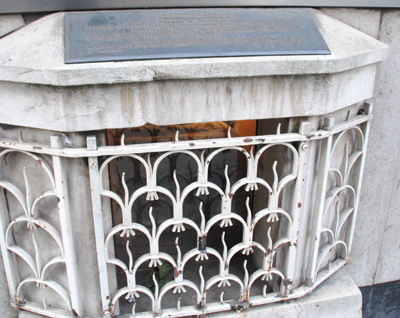 Little is known of Jack Cade until the former soldier from Kent led an uprising against the rule of King Henry VI during the Hundred Years War with France. And London was a key site of fighting during the uprising.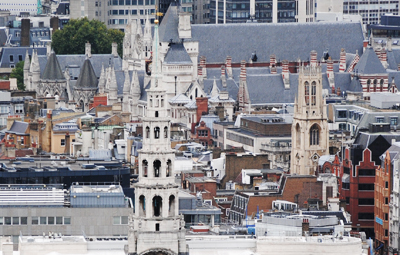

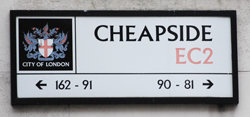
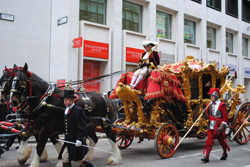 • The Lord Mayor’s Show will mark its 800th anniversary on Saturday as the newly elected Jeffrey Mountevans – the 688th Lord Mayor of the City of London – makes his way through the City to Westminster to swear loyalty to the Crown. The procession of 7,000 people, some 180 horses and 140 vehicles will set off on its way along a three-and-a-half mile route at 11am, starting at Mansion House and traveling down Cheapside to pause at St Paul’s Cathedral (which is open for free all day) before heading on via Ludgate Hill and Fleet Street to the Royal Courts of Justice before returning the City via Queen Victoria Street from 1.10pm. In a special nod to the 800th anniversary, the famous bells of St Mary-le-Bow will ring out a special 800-change at noon. The day will conclude with fireworks over the River Thames kicking off at 5.15pm (for the best view head down to the riverside between Waterloo and Blackfriars Bridges, either on Victoria Embankment or on the South Bank). The show’s origins go back to 1215 when, in exchange for a Royal Charter granting the City of London the right to elect its own mayor, King John insisted the newly elected mayor travelled to Westminster each year to swear loyalty to the Crown. For more (including a map to print out), see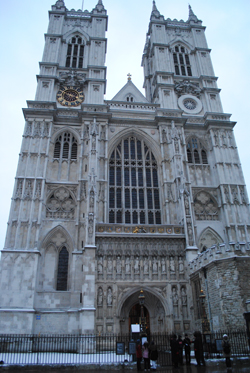




 Exploring London