What’s in a name?…Houndsditch…

This City of London thoroughfare runs between St Botolph and Outwich Streets and its name – first recorded in the 13th century – apparently relates to its location on the outer side of the wall, dating from the Roman era, which once encircled the city.

HoundsditchOn the outer side of the wall lay a ditch which, although filled and redug several times in its history, was eventually filled permanently in the 16th century (and became the street you can now walk upon).

Dogs were associated with this ditch – the skeletons of some dogs were found here in 1989 during an archaeological dig at the wall, possibly dating back to Roman times – although there’s a couple of theories on exactly how.

According to one version, the ditch, before it was finally filled, had become the repository of all sorts of rubbish but was particularly known as a site to deposit the corpses of dogs. An alternate theory, meantime, suggests that kennels which housed dogs used in hunting were once located here.

The name ‘houndsditch’ was apparently used for many sections of the ditch which lay outside the city wall before it came to be associated with this particular stretch of ditch.

The street (and the area in which it sits, also known as Houndsditch) has apparently been associated with several different trades over its history including bell founding, gunmaking and cannon founding and, later for the rag trade. In the 20th century, it was the site of department store, The Houndsditch Warehouse.

It was in Houndsditch that Dr Thomas Barnardo found 11 boys sleeping huddled together on the roof of the old rag market – a fact which helped push him to found the first of the Barnardo’s homes for the destitute in Stepney.

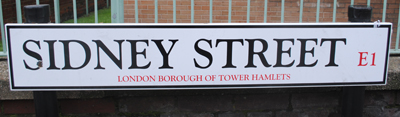
Famously, of course, it was also the scene of an attempted robbery and shoot-out in 1910 which led to the infamous Siege of Sidney Street (see our earlier post here).

For more on the Houndsditch murders, see Donald Rumbelow’s The Houndsditch Murders and the Siege of Sidney Street.

LondonLife – Blooming beauty at Chelsea…

Chelsea4

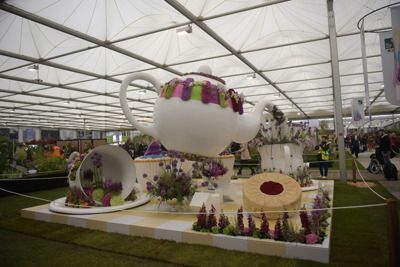
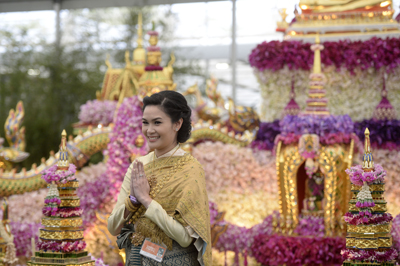
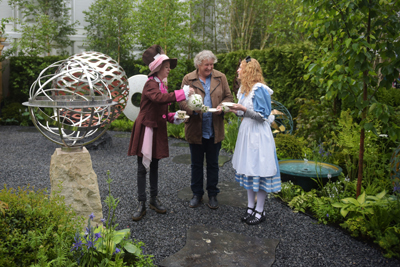
The RHS Chelsea Flower Show opened in London’s west this week so we thought we’d take a look at some of the treasures on show. The show, which is in its 102nd year, has been held in the grounds of the Royal Hospital Chelsea since 1913 (except during the two World Wars) and while its claim to be Britain’s largest flower show has been lost to the RHS Hampton Court Palace Flower Show, it remains the nation’s most prestigious. The five day show runs until Saturday. From the top – Chelsea pensioners look at ‘Peter Beales Roses’ in the Great Pavilion; the Inter-flora display in the Great Pavilion; a model poses in front of the Thailand, Land of Buddhism display; and, award-winning garden sculptor David Harber hosts the Mad Hatter’s tea party. For more on the show, visit www.rhs.org.uk/shows-events/rhs-chelsea-flower-show PICTURES: RHS/Hannah McKay and RHS.


Chelsea3

Chelsea2

Chelsea1

This Week in London – Marking VE Day’s 70th; Rut Blees Luxemburg at the Museum of London; and India’s Sidi community on show at the NPG…

Three days of events kick off in London tomorrow to mark the 70th anniversary of Victory in Europe (VE) Day. Events will include a Service of Remembrance at the Cenotaph in Whitehall at 3pm tomorrow (Friday) coinciding with two minutes national silence while Trafalgar Square – scene of VE Day celebrations in 1945 – will host a photographic exhibition of images taken on the day 70 years ago (the same images will be on show at City Hall from tomorrow until 5th June) and, at 9.32pm, a beacon will be lit at the Tower of London as part of a nation wide beacon-lighting event. On Saturday at 11am, bells will ring out across the city to mark the celebration and at night, a star-studded 1940s-themed concert will be held on Horse Guards Parade (broadcast on BBC One). Meanwhile, on Sunday, following a service in Westminster Abbey, a parade of current and veteran military personnel will head around Parliament Square and down Whitehall, past the balcony of HM Treasury where former PM Sir Winston Churchill made his historic appearance before crowds on the day, to Horse Guards. A flypast of current and historic RAF aircraft will coincide with the parade and from 1pm the Band of the Grenadier Guards will be playing music from the 1940s in Trafalgar Square. Meanwhile, starting tomorrow, special V-shaped lights will be used to illuminate Trafalgar Square, St Paul’s Cathedral and the Houses of Parliament as a tribute. For more information, see www.gov.uk/government/topical-events/ve-day-70th-anniversary.

The works of leading London-based photographer Rut Blees Luxemburg are on show in at new exhibition at the Museum of London in the City. London Dust will feature three major newly acquired works by Luxemburg including Aplomb – St Paul’s, 2013, Walkie-Talkie Melted My Golden Calf, 2013, and the film London/Winterreise, 2013. Blees Luxemburg’s images – others of which are also featured in the exhibition – contrast idealised architectural computer-generated visions of London that clad hoardings at City-building sites with the gritty, unpolished reality surrounding these. In particular they focus on a proposed 64 floor skyscraper, The Pinnacle, which rose only seven stories before lack of funding brought the work to a halt. The free exhibition runs until 10th January next year. For more, see www.museumoflondon.org.uk.

The Talk: The Cutting Edge – Weapons at the Battle of Waterloo. Paul Wilcox, director of the Arms and Armour Research Institute at the University of Huddersfield, will talk about about the weapons used at Waterloo with a chance to get ‘hands-on’ with some period weapons as part of a series of events at Aspley House, the former home of the Iron Duke at Hyde Park Corner, to mark the bicentenary of the Battle of Waterloo. To be held on Monday, 11th May, from 2.30pm to 4pm. Admission charge applies and booking is essential – see www.english-heritage.org.uk/apsley for more.

On Now: On Belonging: Photographs of Indians of African Descent. A selection of ground-breaking photographs depicting the Sidi community – an African minority living in India – is on show at the National Portrait Gallery off Trafalgar Square. The works, taken between 2005 and 2011, are those of acclaimed contemporary Indian photographer Ketaki Sheth and the exhibition is his first solo display in the UK. They provide an insight into the lives of the Sidi, and include images of a young woman named Munira awaiting her arranged wedding, young boys playing street games, and the exorcism of spirits from a woman as a young girl watches. Admission is free. Runs in Room 33 until 31st August. For more, see www.npg.org.uk.

Send all items for inclusion to exploringlondon@gmail.com.

LondonLife – Royal gun salute in Hyde Park marks birth of Princess Charlotte Elizabeth Diana…

Gun-salute

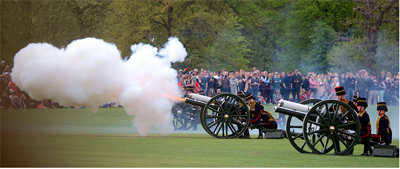
Guns fired a royal salute in Hyde Park on Monday to mark the birth of the Duke and Duchess of Cambridge’s new daughter (and Prince George’s new sister), named Princess Charlotte Elizabeth Diana (or more formally, Her Royal Highness Princess Charlotte of Cambridge). Seventy-one horses pulling six World War I-era 13-pounder field guns from the King’s Troop Royal Horse Artillery rode out in procession with the Royal Artillery Band from Wellington Barracks, past Buckingham Palace, up Constitution Hill to Wellington Arch, and into Hyde Park to fire the salute. The 41 gun salute was fired at the same time as a 62 gun salute at the Tower of London. By custom, gun salutes are fired for the birth of every prince or princess, regardless of where they sit in the order of succession. A basic salute is 21 rounds with an additional 20 rounds fired because Hyde Park is a Royal Park while at the Tower of London an extra 20 rounds are fired because it is a royal palace along with a further 21 because of its City of London location. The princess, fourth in line to the throne, was born at 8:34am on Saturday at St Mary’s Hospital in Paddington, and weighed 8lbs, 3oz (3.7kg). PICTURE: © Courtesy of Ian Wylie Photo.

This Week in London – Duke of Wellington on show; wartime City bank recreated in Warwickshire; and early photographs at the Tate…

ArthurWellesleyThe Duke of Wellington’s political and military career as well as his personal life is being explored in an exhibition running at the National Portrait Gallery off Trafalgar Square until August. Wellington: Triumphs, Politics and Passions features 59 portraits and other works including a rarely seen portrait of the Iron Duke painted by Sir Thomas Lawrence and commissioned by Sarah, Countess of Jersey, a year after Wellington had become Prime Minister. The portrait (pictured) remains unfinished – the state it was in when Lawrence died in 1830 – and, held in a private collection, hasn’t been shown in public for any significant period until now. The exhibition also includes a John Hoppner portrait of the duke as a young soldier, a daguerreotype taken by Antoine Claudet on Wellington’s 75th birthday in 1844 and drawings by Lawrence of Wellington’s wife, Kitty. The exhibition – which is part of the commemorations marking 200 years since the Battle of Waterloo, runs until 7th June. Admission is free. For more see www.npg.org.uk. PICTURE: Arthur Wellesley, 1st Duke of Wellington by Sir Thomas Lawrence (1829), © On loan to National Portrait Gallery by kind permission of Mr. & Mrs. Timothy Clode.

Upton House is Warwickshire has turned the clock back to 1939 with a display dedicated to the time when the Bearstead family moved their City-based bank, M Samuel & Co, to their historic family mansion to escape the Blitz in London. Twenty-two bank staff took over the house, sleeping in shared dormitories and taking meals of rook pie in the home’s Long Gallery while secretaries typed surrounded by works of art. The National Trust has returned 12 rooms to their wartime look based on research conducted by 80 of the volunteers at the house. They’re filled with thousands of objects, from ration-book toothpaste to wartime toilet rolls, to recreate a wartime experience at the home. Outside an Anderson Shelter stands in the garden where heritage vegetables are being grown in an allotment. Visitors will also find out how 40 of the most precious works in the home were sent to a special storage facility in a Welsh slate mine to protect them. Admission charge applies. For more, see www.nationaltrust.org.uk/upton-house/

On Now – Salt and Silver: Early Photography 1840-1860. This exhibition at Tate Britain in Millbank is the first major exhibition in Britain dedicated to salt prints, the earliest form of paper photography, and features 90 images including some of the best and rarest early photographs. The salt print technique was invented in Britain in the 1840s and 1850s and spread across the world, hence as well as portraits, still lifes and scenes from ‘modern life’, the images on show include from William Fox Talbot’s images of a Paris street to Nelson’s Column under construction, Linnaeus Tripe’s views of Puthu Mundapam in India and Auguste Salzmann’s studies of statues in Greece. Runs in the Linbury Galleries until 7th June. Admission charge applies. For more, see www.tate.org.uk.

Send all items for inclusion to exploringlondon@gmail.com.

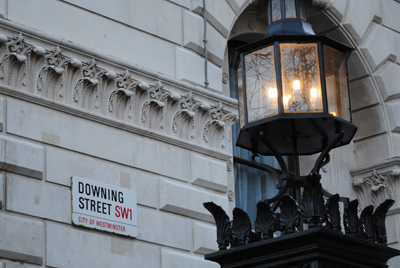
What’s in a name?…Downing Street…

Downing-Street

One of the most famous streets (and photographed) in London (though sadly not open to the public), Downing Street in Whitehall is these days most well-known for being the location, at Number 10, of the official residence of the British Prime Minister.

But Downing Street’s history dates back to a time before the first British PM moved in (this was Sir Robert Walpole in the 1735 and even after that, it didn’t become a regular thing for Prime Ministers to live here until the Twentieth century). And its name bears testimony to its creator, Sir George Downing, a soldier and diplomat described as “a miserly and at times brutal” man who served first under both Oliver Cromwell and, following the Restoration, King Charles II (and was, coincidentally, one of the first graduates of Harvard University).

In the 1650s, Sir George took over the Crown’s interest in land here, just east of St James’s Park, and intended to build a row of townhouses upon it. His ambitions were delayed, however, due to an existing lease with the descendants of Elizabethan courtier Sir Thomas Knyvet who had once lived in a large home on the site of what is now Number 10 Downing Street.

By the 1680s, however, the lease had expired and between 1682-84, Downing was able to construct a cul-de-sac, closed at the St James’s Park end, featuring either 15 or 20 two storey terraced townhouses with stables and coach-houses, designed by no less than Sir Christopher Wren.

While the homes were apparently of shoddy craftsmanship and stood upon poor foundations (Churchill famously wrote that Number 10 was “shaky and lightly built by the profiteering contractor whose name they bear”), the street apparently attracted some notable residents from the start.

These included the Countess of Yarmouth, who briefly lived at Number 10 in the late 1680s, Lord Lansdowne and the Earl of Grantham, and even, briefly, apparently the diarist James Boswell in the mid 1700s. Downing himself isn’t thought to have ever lived here – he retired to Cambridge a few months after the houses were completed.

The houses between Number 10 and Whitehall – on the north side of the street – were taken over by the government and eventually demolished in the 1820s to allow for the construction of offices for the Privy Council, Board of Trade and Treasury while the houses on the south side remained until they were demolished in the early 1860s to make way for the Foreign, India, Colonial and Home Offices.

The numbers in the street have changed since Downing’s houses were first built. Of the original homes in the street only Number 10 (home of the PM) and Number 11 (home of the Chancellor of the Exchequer) survive.

Access to the street has been restricted since the 1980s with the current black steel gates put in place in 1989.

An underground tunnel apparently runs under the street connecting number 10 with Buckingham Palace and the underground bunker, Q-Whitehall, built in the 1950s in the event of nuclear war.

Treasures of London – Australian War Memorial…

Australian-War-Memorial

Tomorrow is the 25th April – commemorated every year as Anzac Day in Australia in memory of that country’s soldiers who lost their lives. This year marks 100 years since Australian troops first landed at Gallipoli during World War I. 

While attention will be focused on Anzac Cove in modern Turkey and the Australian war memorials on what was the Western Front in western Europe, in London there will be several events including a wreath laying ceremony at The Cenotaph in Whitehall, a commemoration and thanksgiving service in Westminster Abbey and a dawn service held at the Australian War Memorial in Hyde Park Corner.

This last memorial, dedicated to the more than 100,000 Australians who died in both world wars, was unveiled on Armistice Day, 2003, in the presence of Queen Elizabeth II, then-Australian PM John Howard and then British PM Tony Blair.

It records the 23,844 names of town where Australians who served in World War I and II were born.

Superimposed over the top are 47 of the major battles they fought. Principal architect Peter Tonkin said the somewhat curvaceous design of the memorial, made of grey-green granite slabs, “reflects the sweep of Australian landscape, the breadth and generosity of our people, the openness that we believe should characterise our culture”.

For more on the wall – including the ability to search for town names – see www.awmlondon.gov.au.

This Week in London – Charles I’s overlooked artist; St George’s Day in Trafalgar Square; Indigenous Australia; prints from the Royal Collection on show; and, ‘What is Luxury’ at the V&A…

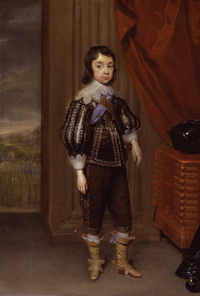
NPG_936_1374_KingCharlesIIbThe first ever display of works of overlooked 17th century artist Cornelius Johnson, court painter to Charles I, has opened at the National Portrait Gallery off Trafalgar Square. Cornelius Johnson: Charles I’s Forgotten Painter features rarely viewed portraits of the king’s children including the future Charles II, James II and Mary (later Princess of Orange-Nassau) as well as a painting of Mary’s son William – all of which have been taken from the gallery’s collection. Overshadowed by Sir Anthony van Dyck, Johnson – who emigrated to The Netherlands when the English Civil War broke out – has been largely ignored by art historians despite the breadth of his work – from group portraits, such as his largest surviving English painting, The Capel Family, to tiny miniatures – and the fact that he is thought to be the first English-born artist who took to signing date his paintings as a matter of course, something he is believed to have picked up during his training in The Netherlands. The display features eight painted portraits and six prints from the gallery’s collection as well as three paintings from the Tate. Runs until 13th September in Room 6. Admission is free. For more, see www.npg.org.uk. PICTURE: King Charles II by Cornelius Johnson , 1639. © National Portrait Gallery, London.

Trafalgar Square will be at the centre of London’s St George’s Day celebrations on Saturday with live music, celebrity chefs, a masterclass by leading tea experts and children’s games and activities. The musical lineup will feature the band from the West End musical Let It Be and the Crystal Palace Brass Band – one of the few traditional brass bands remaining in London. The free event runs between noon and 6pm on Saturday. For more, see www.london.gov.uk/stgeorges.

Indigenous Australia, the first major exhibition in the UK to present a history of Indigenous Australia through objects, opens at the British Museum today. Drawing on the museum’s collection, Indigenous Australia features objects including a shield believed to have been collected in Botany Bay on Captain Cook’s voyage of 1770, a protest placard from the Aboriginal Tent Embassy established in 1972 and contemporary paintings and specially commissioned artworks from leading indigenous artists. Many of the objects have never been on display before. Runs until 2nd August. Admission charge applies. For more, see www.britishmuseum.org.

Thirty prints from the Royal Collection will be on show at The London Original Print Fair to mark its 30th anniversary. The fair runs at the Royal Academy from today until Sunday and among the selected works from the more than 100,000 prints in the Royal Collection are the 2.3 metre long woodcut by Albrecht Durer entitled Triumphal Cart of the Emperor Maximillian (1523), Wenceslaus Hollar’s four etchings of tropical Seashells (c1650), a sequence of proofs of Samuel Reynolds’ portrait of King George III at the end of the monarch’s life, and lithographs produced by Queen Victoria and Prince Albert dating from 1842. For more on the fair, see www.londonprintfair.com. For more on the Royal Collection, see www.royalcollection.org.uk.

The question of what is meant by the concept of luxury is under examination in the V&A’s new exhibition What is Luxury? Opening at the South Kensington museum Saturday, the exhibition will feature a range of luxury objects – from the George Daniels’ Space Travellers’ Watch to a Hermés Talaris saddle, and Nora Fok’s Bubble Bath necklace. Also on show in a section of the exhibit looking at what could determine future ideas of luxury is American artist Gabriel Barcia-Colombo’s DNA Vending Machine (complete with prepackaged DNA samples) and Henrik Nieratschker’s installation The Botham Legacy which tells the fictional story of a British billionaire who sends altered bacteria into space in an attempt to find valuable metals on distant plants. Runs until 27th September. Admission charge applies. See www.vam.ac.uk/whatisluxury.

Send all items for inclusion to exploringlondon@gmail.com.

10 London sites associated with Sir Winston Churchill – 10. Odd Churchill memorials…

We finish our series on Winston Churchill, we take a look at a couple of the more odd memorials to him in London.

St-Mary-Aldermanbury

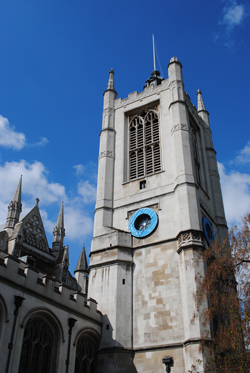
First up, it’s the remains of the church of St Mary Aldermanbury in the City. Among the scores of churches destroyed in the Great Fire of London, it was rebuilt to the designs of Sir Christopher Wren but was again gutted by fire during the Blitz of 1940, leaving only the walls standing. In 1966, the town of Fulton, Missouri, in the US had the remains of the building transported to their town where they were reconstructed in the grounds of Westminster College. It was there that he had made his famous “Iron Curtain” speech in 1946 and the citizens had the church restored as a  memorial to him (beneath the reconstructed church now lies National Churchill Museum). The scant remains of the church in London (pictured above), meanwhile, is now a green oasis in the midst of the city. There’s a memorial plaque at the site which were added by the US college. (The grounds, incidentally are also home to a monument to John Heminge and Henry Condell, two actors and friends of Shakespeare – you can read more on that in an earlier post here).

Bracken-House-clockThe second odd Churchill memorial we’re looking at is a clock face located on the facade of Bracken House – a building which sits opposite St Paul’s in the City. The astronomical clock, the work of Philip Bentham, features shows the time, date and astronomical symbol as well as a sunburst at its centre – look closely and you’ll see a familiar face at the centre. The building, which dates from the 1950s, is apparently named after Brendan Bracken, onetime chairman of the Financial Times which was published in the building until the 1980s. The Churchill connection comes in thanks to the fact that Bracken was a close personal friend of Churchill and served as his Minister of Information from 1941 to 1945.

And that brings to an end our series on Churchill. Next week we kick off a new Wednesday series.

Treasures of London – The Australian State Coach…

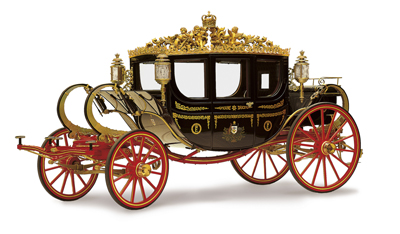
Australian-State-Coach
Among the treasures on show at this year’s summer opening of Buckingham Palace, the Australian State Coach was a gift to Queen Elizabeth II by Australia on 8th May, 1988, to mark the Australian Bicentennial.

The coach – the first to be built for the Royal Family since the Coronation of King Edward VII in 1902 – was built by Australian WJ “Jim” Frecklington who also designed the Diamond Jubilee State Coach.

The coach, which is usually kept in the Royal Mews where it can be viewed by the public, has been used at the State Opening of Parliament and other occasions involving foreign royal families and visiting heads of state. It was also used to carry Prince Charles, the Duchess of Cornwall and Michael and Carole Middleton back to Buckingham Palace after the wedding of Prince William and Catherine Middleton.

It was last used to carry the Duke of Edinburgh and Señora Rivera, wife of the president of Mexico, on a State Visit in March this year.

The summer opening of the palace runs from 25th July to 27th September. The coach will be on display in the Grand Entrance portico.

WHERE: Summer Opening of Buckingham Palace (nearest Tube stations are Victoria, Green Park and Hyde Park Corner); WHEN: 25th July to 31st August – 9.30am to 7.30pm daily (last admission 5.15pm)/1st to 27th September – 9.30am to 6.30pm (last admission 4.15pm); COST: £35.60 adults/£20 under 17 and disabled/£32.50 concessions/£91.20 family (2 adults and three under 17s); WEBSITE: www.royalcollection.org.uk/visit/the-state-rooms-buckingham-palace/plan-your-visit.

PICTURE: Royal Collection Trust © Her Majesty Queen Elizabeth II, 2015 

This Week in London – The Boat Race; Designs of the Year; Heckling Hitler; and Victorian-era homelessness…

The 161st Boat Race is on this weekend and will once more see Oxford and Cambridge rowing crews battling it out in their annual contest on the Thames. The day’s schedule of festivities kicks off at noon at Bishop’s Park near the race’s starting point just west of Putney Bridge and at Furnivall Gardens near Hammersmith Bridge but the main highlights don’t take place until late in the afternoon – the Newton Women’s Boat Race at 4.50pm and the main event, the BNY Mellon Boat Race, at 5.50pm. The race runs along the Thames from Putney Bridge through to Chiswick Bridge with plenty of vantage points along the way. The tally currently sits at 78 to Oxford and 81 to Cambridge. For more information, including where to watch, head to http://theboatraces.org/.

• Prospective “Designs of the Year” are on display at the Design Museum in Shad Thames ahead of the announcement of awards in May and June. With the awards – handed out in six categories – now in their eighth year, the 76 designs on display include Google’s self-driving car, the Frank Gehry-designed Foundation Louis Vuitton in Paris and Asif Kahn’s experimental architectural installation Megafaces which debuted at the Sochi Olympics as well as Norwegian banknotes, a billboard that cleans pollutants from the air and a book printed without ink. Runs until 23rd August. Admission charge applies. For more, see www.designmuseum.org/exhibitions/designs-of-the-year-2015.

On Now: Heckling Hitler: World War II in Cartoon and Comic Art. Showing at the Cartoon Museum in Bloomsbury, this exhibition explores how World War II unfolded through the eyes of British cartoonists. It features more than 120 original drawings and printed ephemera and while the focus is largely on those contained newspapers and magazines, the exhibition does include some sample materials from books, aerial leaflets, artwork from The Dandy and The Beano, postcards and overseas propaganda publications as well as some unpublished cartoons drawn in prisoner-of-war camps and by civilians at home (the latter on scrap paper from the Ministry of Food), and even a rare pin cushion featuring Hitler and Mussolini. Among the artists whose works are featured are ‘Fougasse’ (creator of Ministry of Information posters reminding the public that ‘Careless Talk Costs Lives’), William Heath Robinson and Joe Lee. The exhibition runs until 12th July. Admission charge applies. For more, see www.cartoonmuseum.org/exhibitions/current-exhibitions/heckling-hitler.

On Now: Homes of the Homeless: Seeking Shelter in Victorian London. This exhibition at the Geffrye Museum in Shoreditch explores the places inhabited by London’s poor during the 19th and 20th centuries and brings them to life through paintings, photographs and objects as well as the retelling of personal stories and reports. Starting in the 1840s, the exhibition charts the problems faced by London’s poor and examines the dirty and cramped conditions of lodging houses, workhouses and refuges where they took shelter along with, for those even less fortunate, the streets where they slept rough before moving on to some of the housing solutions designed specifically to help the poor. Runs until 12th July. Admission charge applies. Running alongside the exhibition is a free display, Home and Hope – a collaborative exhibition with the New Horizon Youth Centre which explores the experience of young homeless people in London today. For more, see www.geffrye-museum.org.uk/whatson/exhibitions-and-displays/homes-of-the-homeless/.

Send all items for inclusion to exploringlondon@gmail.com

10 London sites associated with Sir Winston Churchill – 9. Memorialising Churchill…

There are numerous memorials to Sir Winston Churchill around London and today we’ll look at a handful of them (while next week we’ll take a look at a couple of the most unusual memorials). We’ve already looked at the most famous statue of him in Parliament Square (in an earlier post here), but here’s some more…

Allies1 AlliesMayfair. These almost life-size bronze statues, located at the juncture of Old and New Bond Streets, depict Churchill and US President Franklin D Roosevelt in an informal pose, sitting and talking together on a bench. The sculpture was a gift from the Bond Street Association to the City of Westminster and was unveiled by Princess Margaret on 2nd May, 1995 commemorating 50 years since the end of World War II. It is the work of US sculptor Lawrence Holofcener. There’s a space between the two World War II leaders where the passerby can sit and have their picture taken between them.

• Member’s Lobby, House of Commons. We’ve already mentioned this bronze statue (see our previous post here), erected in 1969, which stands just outside Churchill Arch opposite one of another former PM, David Lloyd George.  It is the work of Croatian-born sculptor Oscar Nemon who also created numerous other busts of the former PM now located both in the UK (one of which is mentioned below) and around the world.

Great Hall, Guildhall. Commissioned by the Corporation of the City of London and unveiled in 1955, this bronze statue shows Churchill, wearing a suit and bow tie, seated in an armchair and looking ahead. Another work of Nemon’s, it was commissioned as a tribute to “the greatest statesman of his age and the nation’s leader in the Great War of 1939-1945”.

Outside former Conservative Club, Wanstead. A very thick-necked bust of Churchill, erected in 1968, sits outside the 18th century mansion in Wanstead High Street, north-east London, which was once the Conservative Club and is now occupied by a restaurant. The bigger than life-sized bust is the work of Italian artist Luigi Fironi and stands on a plinth once part of old Waterloo Bridge. Churchill was the Conservative member for this area between 1924-1964 and based at the club from 1930 to 1940.

 • Woodford Green. Another tribute from his former constituents, this full length bronze statue in north-east London is the work of Scottish artist David McFall and was unveiled in 1959 in the presence of Churchill himself and Field Marshal Viscount Montgomery. Churchill was the MP for Woodford between 1945 and 1964.

This Week in London – Party time at Hampton Court; new rooms unveiled at Eltham; Richard III at the Science Museum, and Kew’s Easter egg hunt…

Wishing all of our readers a very happy Easter! 

Hampton-Court

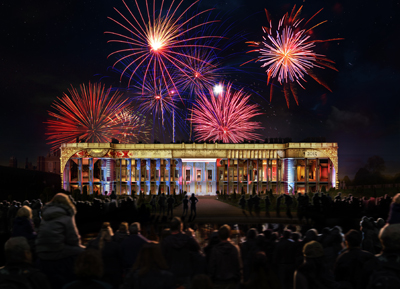
It’s party time at Hampton Court Palace this weekend as the palace celebrates its 500th anniversary with festivities including a spectacular (and historic) light show. Friday, Saturday and Sunday nights the palace will be open for an evening of festivities including the chance to taste-test pork cooked in the Tudor kitchens, enjoy a drink at a pop-up bar in the Cartoon Gallery, listen to live performances of period music in the state apartments and watch a 25 minute sound and light show in the Privy Garden taking viewers on a journey through the palace’s much storied past culminating in a fireworks finale. The nights run from 6.30pm to 9.15pm. Admission charge applies. For more, see www.hrp.org.uk/HamptonCourtPalace/. PICTURE: HRP/Newsteam

A luxury wartime bunker, a map room dating from the 1930s and a walk-in wardrobe complete with vintage fashion are among five new rooms at Eltham Palace in south London which are opening to the public for the first time this Easter. The rooms also include a basement billiards room and adjoining bedrooms, one of which features one of the first showers ever installed in a residential house in the UK. They have been restored as part of English Heritage’s major £1.7 million makeover of the property – the childhood home of King Henry VIII which was converted into a stunning Art Deco gem in the 1930s. Visitors will be invited to join one of Stephen and Virginia Courtauld’s legendary cocktail party’s of the 1930s while children can take part in an interactive tour exploring the story of the animals that lived at the palace including Mah-Jongg, the Courtauld’s pet lemur (who had his own heated bedroom!). Admission charge applies. For more, see www.english-heritage.org.uk/eltham. Meanwhile, anyone wishing to donate to support the renovation of the map-room can do so at www.english-heritage.org.uk/donate-eltham.

• A new exhibition showcasing the latest scientific displays concerning the life and death of King Richard III has opened at the Science Museum. King Richard III: Life, Death and DNA, which opened last Wednesday – the day before the king’s remains were reinterred at Leicester Cathedral, features an analysis of Richard III’s genome, a 3D printed skeleton (only one of three in existence) and a prototype coffin. It explores how CT scans were used to prove the king’s fatal injuries at the Battle of Bosworth in 1485 were caused by a sword, dagger and halberd (a reproduction of the latter is on display). The exhibition will run until 25th June. Entry is free. For more, see www.sciencemuseum.org.uk/RichardIII.

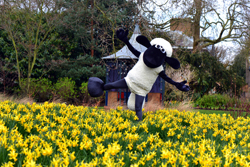
Shaun-the-Sheep• Join Shaun the Sheep and friends for Kew Garden’s annual Easter Egg hunt this Sunday. The hunt will take place from 9.30am to noon (or when the eggs run out!) with participants needing to find three sheep and collect a token/chocolate dropping from each before finding the Easter bunny and claiming eggs supplied by Divine chocolate. Shaun, meanwhile, who hit the big screen for the first time this year, will be found in the Madcap Meadow until 12th April. Admission charge applies. For the full range of events taking place at the gardens this Easter season, check out www.kew.orgPICTURE: RBG Kew.

London’s Boroughs are turning 50 and to celebrate London councils – working with the London Film Archive – have released a short film telling the story of the past half century. Follow this link to see it. Councils across the city, meanwhile, are holding events throughout the year to mark the occasion – check with your local council for details; some, like Barking and Dagenham, and Camden have dedicated pages.

The first chief of the Secret Intelligence Service, Sir Mansfield Cumming, has been commemorated with an English Heritage blue plaque at his former home in Westminster. Known as ‘C’ thanks to his habit of initialling papers (a tradition which has been carried on by every chief since), Cumming was chief of the Foreign Section of the Secret Service Bureau from 1909 until his death in 1923. Flats 53 and 54 at 2 Whitehall Court – now part of Grade II*-listed The Royal Horseguards Hotel – served as Cumming’s home and office at various times between 1911 and 1922. The plaque was unveiled by current Secret Intelligence Service chief, Alex Younger. Meanwhile, Amelia Edwards, pioneering Egyptologist, writer, and co-founder of the Egypt Exploration Fund, has also been honoured with a blue plaque on her former home in Islington. Edwards lived at 19, Wharton Street in Clerkenwell between 1831 and 1892. For more, see www.english-heritage.org.uk/visit/blue-plaques/.

Send all items for inclusion to exploringlondon@gmail.com.

10 London sites associated with Sir Winston Churchill – 8. Sidney Street, Stepney…

Sidney-Street

Sir Winston Churchill will be forever associated with this now rather nondescript East London street, thanks to a series of events that occurred when he was Home Secretary.

Known as the Siege of Sidney Street or the Battle of Stepney, the event was sparked when, on 16th December, 1910, a gang of Russian and Latvian exiles attempted to break into a jewellers in Houndsditch by tunnelling from an adjacent property in Exchange Buildings.

Tipped off by a neighbour, the police arrived and in the series of events that followed, a number of officers were shot and three – Sergeant Charles Tucker, PC Walter Choate and Sergeant Robert Bentley – were killed (Sergeant Tucker died at the scene and the latter two later that day in hospital). The event became known as the Houndsditch Murders.

The gang members largely escaped – although one gang member, George Gardstein, was later found dead of wounds he had received during the gunfight – and an intensive manhunt commenced for the gang.

Some two weeks later, on 2nd January, 1911, police were informed that several members of the gang, including the alleged mastermind known as Peter the Painter (who may not have even existed or who may have been a Polish decorator Peter Piaktow), were hiding at a property at 100 Sidney Street.

Expecting fierce resistance, several hundred police officers moved in to surround the property the next day and, at dawn – after encountering heavy fire from the building, the siege began.

When the then 36-year-old Churchill received word of the siege (apparently while taking a bath), he made his way to the site, already attracting crowds of onlookers, to observe and apparently offer advice.

At the scene he authorised the use of the military – including a detachment of Scots Guards from the Tower of London and 13 pounder artillery pieces. These, drawn by the Royal Horse Artillery, had just arrived when a fire began to consume the building (it may have been sparked by a bullet hitting a gas pipe). The fire brigade attended but Churchill apparently refused them entry until the shooting stopped.

The gang members inside the building never attempted to escape the building and the remains of two of them – Latvians Fritz Svaars and William Sokolow – were subsequently found in its ruins.

Along with the thee policemen killed at the attempted burglary, a firefighter – Charles Pearson – was also killed, struck by falling debris. There is a memorial plaque to him at the former site of 100 Sidney Street.

Seven supposed members of the gang were eventually captured by police but all either had the charges dropped, were acquitted or had their convictions quashed.

Churchill’s role at the six hour siege was the matter of some controversy and former PM (and then Opposition Leader) Arthur Balfour was among those who accused him of acting improperly and risking lives.

There’s a famous photo of Churchill – who was recorded by one of his biographers saying the event had been “such fun” – peering around a corner at the scene (there’s a story that a bullet tore through his top hat, almost killing him, during the siege) while the event was also one of the first news stories to be captured on film (by Pathe News).

10 London sites associated with Sir Winston Churchill – 7. St Margaret’s Church…

Nestled next to Westminster Abbey opposite the Houses of Parliament, St Margaret’s has long been known as the “parish church of the House of Commons” (although we should point out it’s not officially a parish church). As a result, it probably doesn’t come as a surprise that it has a couple of significant links to former PM Winston Churchill.

St-Margarets-ChurchAmong the most momentous personal occasions was when Churchill married Clementine Hozier in the church on 12th September, 1908, after a short courtship. A headline in the Daily Mirror called it ‘The Wedding of the Year’.

After the fighting of World War II ended in 1945, on VE Day Churchill, in a move reflecting that taken by then PM David Lloyd George after World War I, led the members of the House of Commons in procession from the Houses of Parliament into the church for a thanksgiving service.

In 1947, the church was the scene of another Churchill wedding, this time that of Sir Winston’s daughter, Mary who was wedded to Captain Christopher Soames of the Coldstream Guards on 11th February. 

WHERE: St Margaret’s Church, Westminster (nearest Tube stations are St James’s Park and Westminster); WHEN: 9.30am to 3.30pm weekdays/9.30am to 1.30pm Saturday/2pm to 4.30pm Sunday; COST: Free; WEBSITE: www.westminster-abbey.org/st-margarets-church.


LondonLife – #MuseumWeek…

Dr-Johnsons-HouseIt’s #MuseumWeek on Twitter and museums all over London are among the more than 2,000 institutions worldwide already tweeting away. Among those, large and small, taking part in London are the @hornimanmuseum, @ExploreWellcome, @JewishMuseumLDN, @BFHouse@HRP_Palaces, @NMMGreenwichand @drjohnsonshouse (pictured). Each day of the week they’ll be tweeting on a different theme until Sunday (today’s is #souvenirsMW). For the full stream, head to @MuseumWeek.

This Week in London – Garden art from the Royal Collection; A Royal Welcome at Buckingham Palace; photographic history; and, Joshua Reynolds reconsidered…

GardensKing Henry VIII’s well-thumbed gardening manual, a late 15th century copy of the Ruralia Commoda, and a 16th century portrait of Jacopo Cennini, factor and estate manager to the House of Medici – believed to be the earliest surviving portrait of a gardener – are among more than 150 objects on display at a new exhibition celebrating the art of gardens. Opening at The Queen’s Gallery in Buckingham Palace tomorrow, Painting Paradise: The Art of the Gardens features some of the earliest surviving records of gardens and plants in the Royal Collection including Jan Brueghel the Elder’s Adam and Eve in the Garden of Eden (1615), The Family of Henry VIII (c. 1545) featuring King Henry VIII’s Great Garden at Whitehall Palace – the first real garden recorded in British art, and A View of Hampton Court by Leonard Knyff (c. 1702-14) – described as the “greatest surviving Baroque painting of an English garden”. There are also works by Frenchman Jean-Baptiste Martin, Swiss artist Johan Jacob Schalch and Sir Edwin Landseer. The exhibition runs until 11th October. Admission charge applies. For more, see www.royalcollection.org.uk. PICTURE: Illustration from Henry VIII’s copy of the gardening manual, c. 1490-95. Royal Collection Trust/© Her Majesty Queen Elizabeth II 2015. 

Buckingham Palace, meanwhile, has announced its summer opening under the theme of A Royal Welcome. From 25th July to 27th September, displays in the State Rooms will recreate the settings for some of the many occasions in which the palace welcomes guests – from State Visits and garden parties to investitures and private audiences. The displays will show the behind-the-scenes preparations that go into a state visit and show the ballroom set up for a State Banquet. There will also be a display featuring the knighting stool and a knighting sword and, for the first time ever, visitors will enter the State Rooms through the Grand Entrance, used by those who come to the palace at the invitation of the Queen, including heads of state and prime ministers. The Australian State Coach, most recently used to carry the Duke of Edinburgh and the wife of the Mexican President, Señora Rivera, in March this year, will be displayed in the Grand Entrance portico. Admission charge applies. For more, see www.royalcollection.org.uk.

About 100 of the “most stunning photographs ever created” go on show in the Science Museum’s Media Space in South Kensington from tomorrow. Revelations explores the role of early scientific photography in inspiring later art photographers and will feature rare shots from the National Photography Collection including an original negative of X-Ray, 19th century photographs capturing electrical charge and William Henry Fox Talbot’s experiments with photomicrography. Displayed alongside are images by some of the 20th century’s pre-eminent art photographers such as Trevor Paglen, Idris Khan and Clare Strand. Runs until 13th September. Admission charge applies. For more, see www.sciencemuseum.org.uk/revelations.

On Now: Joshua Reynolds: Experiments in Paint. This exhibition at the Wallace Collection in Marylebone provides a new perspective on the portraits of Reynolds, one of the greatest artists of his day. Works on show including Nelly O’Brien, Mrs Abington as Miss Prue and Self Portrait Shading the Eyes as well as lesser known pictures and a rare history painting. The exhibition reveals discoveries made recently during a four year research project into the works of Reynolds now in the care of the collection. Runs until 7th June. Admission is free. For more, see www.wallacecollection.org.

Send items for inclusion to exploringlondon@gmail.com.

10 London sites associated with Sir Winston Churchill – 6. Claridge’s…

Churchill’s association with this landmark Mayfair hotel was a long one – not only did he convene key meetings here during World War II, the hotel also served as his residence.

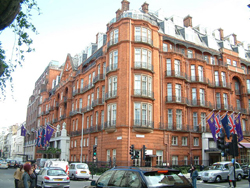
ClaridgesEntertaining the upper crust since the mid 1800s, Claridge’s was the scene of many meetings during World War II, including all night meetings convened by Churchill with US military intelligence personnel which would only end when Churchill’s barber appeared at 6am.

The Brook Street hotel became something of a haven for deposed heads of state both in the lead-up to and during World War II – King Peter II and his family had moved in after he was exiled in 1941 and it was at the orders of Sir Winston that in 1945 Suite 212 was declared Yugoslavian territory so Crown Prince Alexander II could be born on “home soil” (there’s a story that a clod of earth from Yugoslavia was  placed under the bed during the birth).

Alongside the king of Yugoslavia, other heads of state to have stayed here during this period include the kings of Greece and Norway.

The scene of many a Churchill dinner, Churchill and Lady Clementine made Claridge’s – specifically the sixth floor penthouse suite – their home for a period after his election defeat in 1945 (Churchill apparently wasn’t that keen on the idea of living so high up!).

For more on the history of Claridge’s, check out the hotel’s website here: www.claridges.co.uk.

PICTURE:  © Copyright Tim Westcott and licensed for reuse under this Creative Commons Licence

Lost London – The Great Wheel at Earl’s Court…

Built for the Empire of India Exhibition at Earls Court, this 308 foot (94 metre) high wheel opened to the public on 17th July, 1895.

Measuring 270 foot (82 metres) in diameter, the wheel – which had 40 cars each apparently carrying up to 40 passengers – had a design based on that of the famous original Ferris wheel which had been built for the Chicago Exhibition of 1893.

Weighing 1,100 tons (including its eight column supports), it had taken a year to build with much of the work carried out at Maudslay, Son and Field in Greenwich before assembly on the site at the Earls Court Exhibition Ground (located on surplus railway lands).

The wheel, which took around 20 minutes to make a full rotation and was powered by two 50 horse power steam engines, remained in service for just more than a decade (there was at least one report of it getting stuck and stranding passengers for several hours).

Having carried more than 2.5 million passengers over its life, it closed in 1906 after last being used at the Imperial Austrian Exhibition. It was demolished just a year later.

This Week in London – Biggest ever Magna Carta exhibition; 200 years since Waterloo at the NPG; and, Alexander McQueen at the V&A…

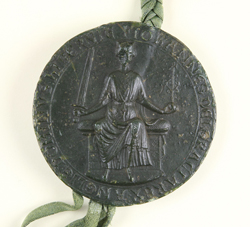
great-seal-king-john-eton-college-british-library-magna-carta-law-liberty-legacyThe largest ever exhibition related to the Magna Carta opens at the British Library in King’s Cross tomorrow to mark the 800th anniversary of the document’s sealing. Magna Carta: Law, Liberty, Legacy features two original Magna Carta manuscripts from 1215 as well as 1215 document, the Articles of the Barons (known as ‘draft’ of the Magna Carta), the Petition of Right (1628), the English Bill of Rights (1689), and the Universal Declaration of Human Rights (1948). It will also display two of the most celebrated documents in American history – the Delaware copy of the Bill of Rights and Thomas Jefferson’s handwritten copy of the Declaration of Independence (both on loan from the US National Archives) –  along with UK cabinet papers from 1941 in which it was proposed an original Magna Carta manuscript from 1215 be given to the US in return for their support in World War II and artefacts including King John’s teeth, thumb bone and fragments of clothing taken from his tomb in 1797 as well as his will. The exhibition tells the story of the Magna Carta from its creation in 1215 through to its later use by people fighting for various rights and freedoms and its continuing impact on the world today. There’s also a series of interviews with politicians, historians and public figures including Burmese activist Aung San Suu Kyi, former US President Bill Clinton and William Hague. Runs until 1st September. Admission charge applies. For more – and a digitised gallery of artifacts – visit www.bl.uk/magna-carta-exhibition. PICTURE: Great Seal of King John, 1203 © Eton College Archives on display in Magna Carta: Law, Liberty, Legacy.

The first gallery exhibition devoted to the Duke of Wellington opens at the National Portrait Gallery off Trafalgar Square today. Marking the 200th anniversary year of the Battle of Waterloo, Wellington: Triumphs, Politics, and Passions explores Wellington’s political and military career as well as his personal life. Highlights include Goya’s 1812 portrait of Wellington following his entry into Madrid (later modified to recognise further battle honours and awards), and Thomas Lawrence’s famous portrait painted in 1815, the same year as the Battle of Waterloo (the painting, which normally hangs in Apsley House, was used as the basis of the design of the £5 British note from 1971 to 1991). The exhibition of 59 portraits and other works also includes rarely seen works loaned by Wellington’s family include a John Hoppner portrait of the duke as a young soldier and a daguerreotype portrait taken by Antoine Claudet for Wellington’s 75th birthday in 1844. Runs until 7th June. Admission is free. For more, see www.npg.org.uk or for more on the 200th anniversary of the Battle of Waterloo, see www.waterloo200.org.

An exhibition celebrating the works of the late fashion designer Alexander McQueen opens at the V&A in South Kensington on Saturday. Alexander McQueen: Savage Beauty presents his works in 10 sections which focus on everything from McQueen’s roots in London, his “skilful subversion of traditional tailoring practices”, his fascination with the animal world and his longstanding interest in Eastern cultures. At the centre of the exhibition is The Cabinet of Curiosities, a display showcasing more than 100 garments and accessories and shown with film footage from his many catwalk presentations. The exhibition runs until 2nd August. Admission charge applies but you’ll have to be quick – the exhibition has already set the record for the most ever advance sales for an exhibition at the museum. For more, see www.vam.ac.uk/savagebeauty.

Send all items for inclusion to exploringlondon@gmail.com.