10 Historic London Garden Squares…6. Grosvenor Square

Grosvenor-Square-1

The largest square in Mayfair, Grosvenor Square was laid out in the 1720s on the orders of  Sir Richard Grosvenor of Cheshire.

Sir Richard owned the Grosvenor Estate, a considerable tract of land in London’s west which includes in its northern part the land upon which the square was created (the estate is now owned by Gerald Cavendish Grosvenor, the 6th Duke of Westminster).

It’s proximity to Hyde Park and Whitehall quickly made it, like many other historic squares, a fashionable place for politicians to live – among those who lived here in the late 18th century were three prime ministers.

The oval-shaped gardens in the middle of the square – which was only opened to the public in 1948 – were once home to a statue of King George I but this was removed at some point. Originally thought to have been laid out by gardener John Alston, they took on their current form in 1948 when they were redesigned by architect BWL Gallannaugh (interestingly, Grosvenor Square is also said to have been the last part of London to exchange gas lighting for electric lighting).

There’s almost no residential buildings on the square these days but among the most prominent buildings (in fact it dominates the west end of the square) is the US Embassy. Designed by Eero Saarinen, the building was completed in 1960 with US President John F Kennedy one of the first visitors.

Grosvenor-Square-2The hulking embassy is only one of the many American connections to the square, connections which at one point led to it being known as “Little America”. Dwight Eisenhower, commander of the US armed forces in World War II, based his headquarters at number 20 in 1944, while number nine – one of the few residences to survive – was home to John Adams, first American ambassador to the Court of St James and later the country’s second president.

The American theme, which has meant the square has been the focus of demonstrations such as those protesting the Vietnam War as well as outpourings of support such as in the wake of the September 11 attacks, is also evident in the statutory in the square’s gardens with grand, full size statues of  President Franklin D. Roosevelt (a bronze by William Reid Dick unveiled by Eleanor Roosevelt on the third anniversary of the president’s death – 12th April, 1948 – it is pictured above), President Eisenhower (a bronze by Robert Dean dating from 1989), and President Ronald Reagan (unveiled on 4th July, 2011, pictured right).

On the eastern side of the garden square is the September 11 Memorial Garden opened in 2003 while on the south side is the Monument to the Eagle Squadrons, the three RAF squadrons in World War II mostly composed of American volunteers before the US entered the war. There’s also a set of memorial “Diplomatic Gates”, installed in 1984 to commemorate the bicentennial of the Treaty of Paris and honour US and UK politician who have worked in the service of peace.

Other notable buildings include number one, the Canadian High Commission (previously the US embassy); and number four, one of  square’s oldest houses. Now demolished, number 44 was the home of the Earl of Harrowby and where the British Cabinet were dining when word arrived of Wellington’s victory at Waterloo.
Treasures of London: The Americus Backers grand piano…

Americus-Backers-piano

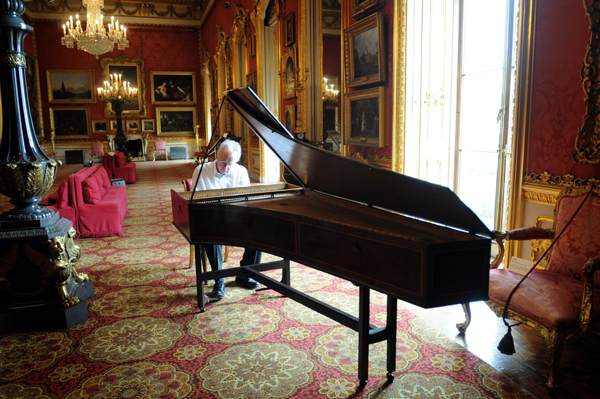
The oldest surviving English grand piano, built in London in 1772 by Americus Backers, has gone on display at Apsley House in London, home of the 1st Duke of Wellington, Arthur Wellesley.

Known to have been played by the Iron Duke’s wife Kitty (nee Pakenham), it has been suggested (although remains unconfirmed) that the piano belonged to the Iron Duke’s father, Lord Mornington, who was politician and a composer.

The piano, which has been loaned to English Heritage by Lord and Lady Douro and is expected to remain at the house for the foreseeable future, is the earliest example of a piano with loud and soft pedals and is illustrative of the impact Backers, described by some as “the father of the English grand pianoforte style”, had on the development of piano design.

While much of the detail of Backers’ life  remains obscured, he was apprenticed to a piano builder in Saxony before coming to England in the 1750s and taking up residence in Jermyn Street in 1763 where he apparently lived until his death in 1778. He is known to have built both pianofortes and harpsicords.

The piano, the only known pianoforte by Backers still existing, was previously on loan to the Russell Collection in Edinburgh.

In celebration of the return of the piano to Apsley House, the residence is hosting a special concert this Tuesday (21st May), between 7pm-9pm – the first time the piano will have been heard for at least 5o years (albeit for a short period only with most of the concert performed on a 1781 Ganer. ‘The Duke of Wellington’s Music of the French Wars’ will be held in the Waterloo Gallery. Tickets are £45 each and limited seats are available. Call English Heritage Customer Services on 0870 333 1183 for bookings or see www.english-heritage.org.uk. PICTURE:  Professor David Owen Norris, who has researched and devised the programme has been devised the programme for the evening, playing the piano.He will be joined by the soprano Amanda Pitt. Image courtesy of English Heritage.

Special – Five famous London funerals…

With former PM Margaret Thatcher’s funeral held in London today, we take a look at five prominent funerals in the city’s past…

Queen Eleanor of Castile: King Edward I was lavish in his funeral for Queen Eleanor (perhaps in an effort to restore her reputation given suggestions she had been unpopular among the common people although it may well have simply been because of the king’s level of grief) and when she died at Harby, a village near Lincoln, on 28th November, 1290, he ordered her body to be transported from Lincoln Cathedral to Westminster Abbey where the funeral was held, with a series of elaborate memorial crosses to be built close to where-ever her body rested for the night. Twelve of these were built including at Westcheap in the City of London and Charing (hence Charing Cross, see our earlier post here), the latter thanks to her body “resting” overnight at the Dominican Friary at Blackfriars. Her funeral took place on 17th December, 1290, with her body placed in a grave near the high altar until her marble tomb was ready. The tomb (one of three built for the queen – the others were located at Lincoln – for her viscera – and Blackfriars – for her heart) still survives in the abbey.

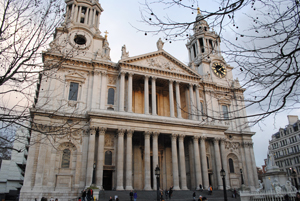
St-Paul's-CathedralVice Admiral Lord Nelson: Heroic in life and perhaps seen as even more so after his death, Nelson’s demise at the Battle of Trafalgar was a national tragedy. His body, preserved in brandy, was taken off the HMS Victory and transported to Greenwich where he lay in state for three days in the Painted Hall. Thousands visited before the body was again moved, taken in a barge upriver to the Admiralty where it lay for a night before the state funeral on 9th January, 1806, more than two months after his death. An escort said to comprise 10,000 soldiers, more than 100 sea captains and 32 admirals accompanied the body through the streets of the city along with seamen from the Victory to St Paul’s Cathedral (pictured)  where he was interred in a marble sarcophagus originally made for Cardinal Wolsey located directly beneath the dome. The tomb can still be seen in the crypt of St Paul’s.

Arthur Wellesley, the Duke of Wellington: Given the last heraldic state funeral ever held in Britain, the Iron Duke’s funeral was held on 18th November, 1852, following his death on 14th September. His body, which had been brought to London from Walmer where it had laid in state by rail, lay in state a second time at Chelsea Hospital. On the morning of the funeral, the cortege set out from Horse Guards, travelling via Constitution Hill to St Paul’s. The body was conveyed in the same funeral car used to convey Nelson’s and accompanied by a guard of honour which included soldiers from every regiment in the army. Masses – reportedly more than a million-and-a-half people – lined the streets to watch funeral procession pass through the city before a service was held in St Paul’s Cathedral under the great dome and he was interred in a monumental sarcophagus alongside that Vice Admiral Lord Nelson. Like Nelson’s, it can still be seen there today.

Sir Winston Churchill: Widely regarded as one of the great wartime leaders of the 20th century, the former British Prime Minister died in his London home on 24th January, 1965, having suffered a stroke nine days earlier. His funeral (plans for which had apparently been code-named ‘Hope-Not’), was the largest state funeral in the world at the time of his death with representatives of 112 nations attending and watched on television by 25 million people in Britain alone. His body lay in state for three days (during which more than 320,000 people came to pay their respects) before on 30th January, it was taken from Westminster Hall and through the streets of London to a funeral service at St Paul’s Cathedral. After the service, a 19 gun salute was fired and the RAF staged a flyby of 16 fighter planes as the body was taken to Tower Hill and then by barge to Waterloo Station. From there it was taken by a special funeral train (named Winston Churchill) to Bladon near Churchill’s home at Blenheim Palace.

Diana, Princess of Wales: Having died in a car crash in Paris on 31st August, 1997, her body was flown back to London and taken to St James’s Palace where it remained for five days before being transported to her former home of Kensington Palace. More than a million people crowded London’s streets on 6th September, 1997, to watch the funeral procession as it made its way from the palace to Westminster Abbey. Among those present at the funeral (which was not a state funeral) were members of the royal family as well as then Prime Minister Tony Blair, former PMs including Margaret Thatcher and foreign dignitaries and celebrities, the latter including Elton John who sang a rewritten version of Candle in the Wind. After the service, Diana’s body was taken to her family’s estate of Althorp in Northamptonshire where the “People’s Princess” was laid to rest.

Our new series will be launched next week due to this week’s events…

Treasures of London – Siborne’s Large Model…

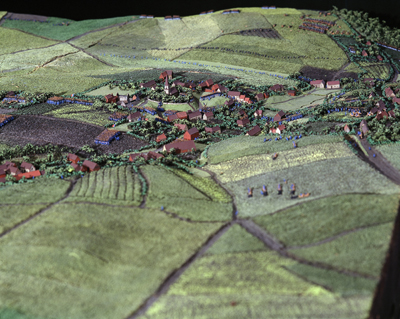
An amazing feat of model-making, Siborne’s Large Model is a painstakingly detailed model reconstruction of the Battle of Waterloo on display at the National Army Museum. Controversial even to this day, the story behind the model’s creation is an incredible tale of one man’s perseverance.

Siborne's-modelA career soldier, Captain William Siborne was commissioned in 1830 by Lord Rowland Hill, then Commander-in-Chief of the British Army, to construct a model of the Battle of Waterloo, fought between British and allied forces under the command of the Duke of Wellington and Prussian field marshal Gebhard von Blücher and French forces under the command of the Emperor Napoleon on 18th June, 1815.

Siborne, who hadn’t been present at the battle but had previously been involved in the construction of a model of the Battle of Borodino, extensively researched it before beginning work including spending eight months surveying the entire field where the battle took place and corresponding with hundreds of those who had fought there.

The model wasn’t completed until 1838, partly due to the fact that Siborne still had military duties to perform and also due to the fact that he ran out of funds and, when the authorities refused to pay up, ended up financing the project out of his own pocket (and then spent much time trying to recover the funds).

In his fascinating book, Wellington’s Smallest Victory: The Duke, the Model Maker and the Secret of Waterloo (well worth a read if you’re interested in learning more about the history of this amazing model), Peter Hofschroer writes in detail about the acrimonious relationship the Duke of Wellington developed with Siborne, thanks to a clash over the model’s depiction of the battle which shows the crisis point in the battle at 7pm – when the French Imperial Guard attacked Wellington’s centre – and has the Prussians helping to win the day.
The model was placed on public display in October 1838 at the Egyptian Hall in Piccadilly after which it went on tour around the UK. He went on to write up his research in a book on the battle, published in 1844, and it was while preparing this – in 1841 – that he announced he had changed his mind and would revise the model, eventually removing figures representing some 40,000 Prussians from the model and thus reducing the role they played at the decisive moment of the battle – a move which could only be seen as a win for Wellington.

It’s also worth mentioning that Siborne created a second, larger scale model of just part of the battlefield, exhibited in 1844 in London and later in Berlin (it’s now on display at the Royal Armouries Museum in Leeds). Siborne’s subsequent efforts to sell either model didn’t bear fruit before he died, said to have been a “broken man”, on 13th January, 1849.

After his death the large model was subsequently purchased by the United Service Museum and can now be found at the National Army Museum in Chelsea.

WHERE: National Army Museum, Royal Hospital Road, Chelsea (nearest Tube station is Sloane Square); WHEN: 10am to 5.30pm daily; COST: Free; WEBSITE: www.nam.ac.uk.

Where’s London’s oldest…Thames tunnel?

While the Greenwich foot tunnel may these days be more well-known due to the fact it is still open to pedestrians, London’s oldest under-Thames tunnel (also credited as the oldest underwater tunnel in the world) actually runs between Rotherhithe on the river’s southern bank and Wapping on the northern.

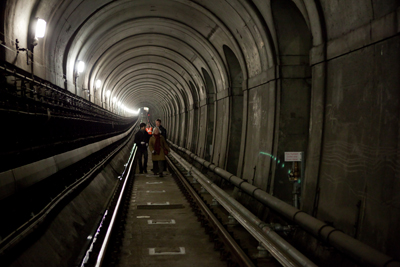
Thames_Tunnel-in-2010First opened in 1843, the Thames Tunnel (pictured left during a brief reopening to pedestrians in 2010) was the first major project of star Victorian engineer (and delightfully named) Isambard Kingdom Brunel (who, at the age of just 19 started work on the job with his father, a French engineer named Marc Isambard Brunel) and was known for a time as the eighth Wonder of the World.

It was constructed after demand grew for a way to transport goods across the crowded Port of London to the east of London Bridge. Given the height of the masts of larger ships, a bridge was deemed impracticable with the ramps required to take wheeled transport to the necessary height far too long (although this problem was overcome at the end of the 1800s by the use of new bascule technology in the construction of Tower Bridge).

Following several failed attempts to dig a tunnel under the Thames, Marc Brunel was given permission to build the new tunnel in the mid 1820s. The project relied on the use of a ‘tunnelling shield’, a then state-of-the-art technological solution to under river tunnelling which had only a few years earlier been patented by Marc Brunel and Thomas Cochrane, and Brunel initially thought the project would only take three years (it ended up taking as many as 18).

Construction by the newly formed Thames Tunnel Company, which had the support of none other than the Duke of Wellington, commenced in early 1825 at the Rotherhithe end. The shield enabled miners to dig out the tunnel while bricklayers came along behind them. While it significantly reduced the risk of a collapse (although several floods still did occur, taking the lives of six men – a fact which didn’t apparently much deter the sightseers who paid for the privilege of seeing the shield in operation), working conditions remained terrible with the men constantly showered with water from the river which was at that time the city’s main sewer. How many died indirectly as a result of working on the project is unknown.

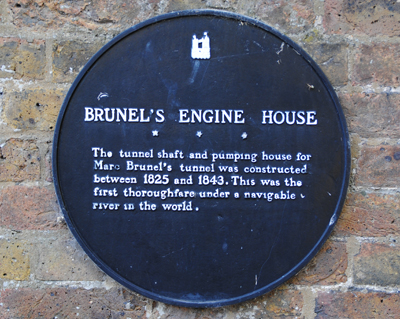
Brunel-plaqueIndeed, such was the stress of the project that Marc Brunel, later knighted for his efforts in building the tunnel, himself suffered a stroke during its construction. Isambard Brunel, who took over as the project’s engineer when the resident engineer fell ill in 1826, himself came close to being killed when he had to flee the flooding tunnel.

After much delay (including seven years in which the unfinished tunnel was left untouched) and several more disasters, the tunnel was finally completed in November, 1841.

After being fitted out with lighting, spiral staircases and roads in the following years, it was finally opened to pedestrians only on 25th March, 1843. While it was originally envisaged that the primary purpose of the tunnel would be to transport goods under the river, this never occurred.

Still, it did capture the public’s attention and as many as 50,000 people walked through the tunnel on the opening day (among the initial visitors to the tunnel was Queen Victoria herself). Within 10 weeks of its opening, a million people (a figure equal to what was then half the population of London) had reportedly passed through it.

Despite the number of people initially using it, however, the tunnel was still not a financial success and over the ensuing years became noted as a gathering place for unsavoury types. In 1865 it was purchased by the East London Railway Company which subsequently incorporated the tunnel into its railway network with both the Wapping and Rotherhithe entrance shafts converted into stations. It later become part of the London Underground network – the  – and since 2010 has been part of the London Overground.

Both stations are still in use and you can get a good sense of what the tunnel was like by riding the overground between Rotherhithe and Wapping. The Brunel Museum in Rotherhithe – actually housed within a building originally used to house machinery for draining the tunnel – see plaque above – is also a great place to find out more about the project and Brunel. Visit www.brunel-museum.org.uk for details.

PICTURES: Top – Lars Plougmann (Wikipedia)/Other – David Adams

For more on the life of Brunel, see Steven Brindle’s Brunel: The Man Who Built the World.

London Pub Signs – The Lord Raglan…

Originally known as The Bush,  The Lord Raglan pub just to the north of St Paul’s was renamed in the mid 1800s to commemorate one of the heroes of the Battle of Waterloo – the 1st Baron Raglan (1788-1855).

Named the 1st Baron Raglan in 1852, the man previously known as Lord FitzRoy Somerset had lost his right arm at the Battle of Waterloo, fought between the Duke of Wellington and Napoleon on 18th June, 1815, in modern-day Belgium.

His name was subsequently adopted to to describe the ‘Raglan Sleeve’, a type of sleeve which extends as a single piece to the collar and a style which Lord Raglan was said to have favored after his arm was amputated.

Lord Raglan died in 1855 while Commander-in-Chief at the Crimean War. There is a blue plaque commemorating his role in this war on his former house in Stanhope Gate in Mayfair.

The site of the Lord Raglan tavern, 61 St Martin’s Le Grand, is said to be one of the oldest tavern sites in the city, originally dating from about 1779, and while the current building dates from 1855, the cellars are said to be much older and are said to incorporate parts of what was the Roman wall.

For more on the Lord Raglan, see the Taylor Walker website at www.taylor-walker.co.uk/pub/lord-raglan-st-pauls/c1779/.

Where is it?…#43

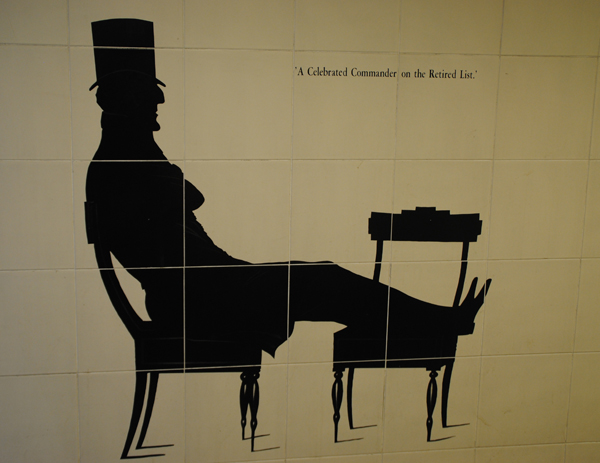
The latest in the series in which we ask you to identify where in London this picture was taken and what it’s of. If you think you can identify this picture, leave a comment below. We’ll reveal the answer early next week. Good luck!

This image is one of many found in a subterranean tunnel surrounding Hyde Park Corner Underground Station and depicts, of course, the 1st Duke of Wellington, Arthur Wellesley, enjoying his latter years. The ‘Iron Duke’ has strong connections to Hyde Park Corner – his former home, Apsley House, No 1. London, is located there as is the Wellington Arch, the Decimus Burton memorial to him. For more on the Duke, see our earlier post here and for more on Wellington Arch, see our earlier ‘Where is it?’ post here.

LondonLife – Hats…err, on to London’s statues…

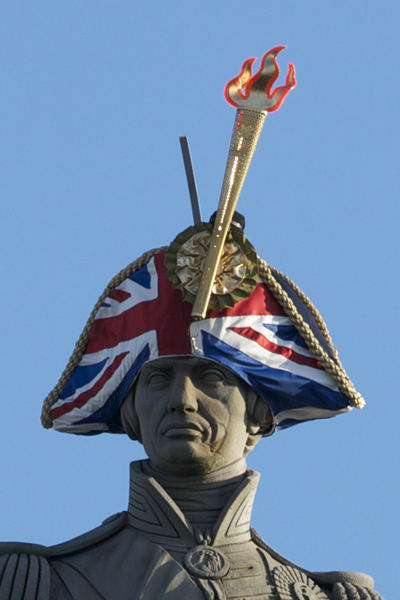
One of the stranger sights in London during this week of Olympic celebration are the many statues around the city adorned with hats – including Trafalgar Square’s iconic statue of Admiral Lord Nelson which now wears a Union Jack hat featuring a replica of the Olympic flame. Designed by Sylvia Fletcher and made by London’s oldest hatters Lock & Co, makers of Nelson’s original bicorn hat, the hat is one of 20 which has been placed upon London statues. It’s all part of Hatwalk, an initiative which aims to take visitors on a tour of the city by bringing some of its most well-known statues to life. Other statues wearing hats include those of former US President Franklin D Roosevelt and former British PM Winston Churchill in Bond Street, the Duke of Wellington near Wellington Arch, and William Shakespeare in Leicester Square. Hatwalk, which features hats designed by some of the UK’s top milliners, was commissioned by the Mayor of London, in partnership with BT, Grazia magazine, the British Fashion Council and the London 2012 Festival. The hats, which appeared on the statues yesterday, will remain on the statues for only four days before they are auctioned for charity. For more on Hatwalk and a map of where the hats are, see www.molpresents.com/hatwalk


Around London – Museums at Night; Ballgowns at the V&A; Edward Lear plaqued; and, the Queen’s portrait at the NPG…

• It’s Museums at Night weekend which means its your chance to see some of London’s best museums after hours. Culture24’s annual event, which runs from 18th to 20th May, features more than 5o late openings and special events in London – from after dark visits to Aspley House, the former home of the Duke of Wellington, to the chance to hear about the history of ‘Bedlam’, one of the world’s oldest psychiatric facilities, at the Bethlem Archives & Museum and Bethlem Gallery, and a “Cinderella shoe” workshop at the Design Museum. As well as organisations like the British Museum and National Gallery, among the lesser known museums taking part are the Cuming Museum in Southwark, the British Dental Association Museum, and the Ragged School Museum in Mile End. For all the details, follow this link

Saturday sees the opening of a new V&A exhibition featuring more than 60 ballgowns dating from 1950 to the present day – the first exhibition to be held in the newly renovated Fashion Galleries. Among those gowns on display as part of Ballgowns: British Glamour Since 1950 will be royal ballgowns including a Norman Hartnell gown designed for Elizabeth, the Queen Mother, Catherine Walker’s ‘Elvis Dress’ worn by Princess Diana (pictured), and gowns worn by today’s young royals. There will also be gowns worn by celebrities including Sandra Bullock, Liz Hurley and Bianca Jagger and works by the likes of Alexander McQueen, Jenny Packham and a metallic leather dress designed by Gareth Hugh specifically for the exhibition. Runs from 19th May to 6th January. Admission charge applies. See www.vam.ac.uk for more. PICTURE: Victoria and Albert Museum, London

The man credited with popularising the modern-day limerick, Edward Lear, has been honored with a green plaque at his former house in Westminster. The Westminster Council plaque was unveiled on Saturday – what would have been his 200th birthday – at 15 Stratford Place where he lived from 1853 until 1869. Lear, who was born in Holloway and raised in Grays Inn Road, was famous for his work The Owl and the Pussycat, and as well as for his writings, was also noted as an artist and illustrator. Councillor Robert Davis reportedly had a go himself at a limerick in honour of the artisy: “There once was man named Lear, who lived in a spot close to here. This plaque unveiled today, is a fitting way, to pay tribute on his two hundreth year”.

• On Now: The Queen: Art and Image. Having been on tour across Britian, this exhibition features some of the most remarkable images ever created of the Queen opened at the National Portrait Gallery this week. Containing works by Cecil Beaton and Annie Leibovitz, Pietro Annigoni and Andy Warhol, the exhibition is the most wide-ranging exhibition of images in different media ever devoted to a single royal sitter. Highlights include full-length 1954-55 painting by Annigoni (pictured, right, it’s displayed with his 1969 portrait), Lucian Freud’s 2000-01 portrait and Thomas Struth’s recent large-scale photograph of both the Queen and the Duke of Edinburgh as well as a never previously loaned 1967 portrait by Gerhard Richter and a specially commissioned holographic portrait. Runs until 21st October. Admission charge applies. For more, see www.npg.org.uk. PICTURE: Queen Elizabeth II, Queen Regent by Pietro Annigoni, 1954-5. The Fishmongers’ Company

Where is it? #2…

This is the second of our series in which we ask you to identify where in London this picture was taken and what it’s of. If you reckon you know the answer, leave a comment below. We’ll reveal the answer on Monday.

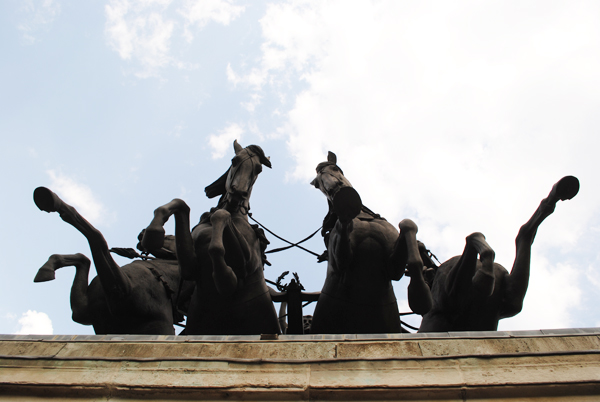
Obviously, this one was too easy – yes, it is the top of Wellington Arch at Hyde Park Corner. The Decimus Burton-designed arch, which dates from 1826-30 and was initially known as the Green Park Arch, was built to commemorate Britain’s victory over Napoleon.

In 1846, it was adorned with a controversial giant statue of the Duke of Wellington on horseback but in 1883, when the arch had to be moved from its initial position parallel to the Hyde Park Screen to where it now stands to accommodate increased road traffic, the statue was removed to Aldershot (where it still stands) and not replaced.

In 1912, thanks to the support of King Edward VII (initially as Prince of Wales), the space was occupied with Adrian Jones’ sculpture of four horses pulling a chariot (known as a quadriga) driven by a boy with a winged figure representing peace standing behind him. It remains to this day.

Congrats to Hazel Edmunds who was the first to guess it on Exploring London and Sarah Goldsworthy, who was the first on Facebook. Honorable mention to Mike Paterson who also guessed it.

We’ve decided to make this a weekly feature – have a look for the next challenge on Friday afternoon!

LondonLife – St Paul’s celebrates 300 years since its completion…

Queen Elizabeth II attends the tercentenary service at St Paul’s. PICTURE: Graham
Lacdao/St Paul’s Cathedral

A service was held at St Paul’s today in celebration of the 300 year anniversary of the cathedral’s completion.

The tercentenary service also marks the end of a massive 15 year, £40 million repair and cleaning project, meaning the cathedral is now clear of scaffolding for the first time in 15 years.

Designed by the indomitable Sir Christopher Wren, work on St Paul’s Cathedral began in 1677 and was formally completed in 1710 (although it had been holding services since 1697). (For more on the history of St Paul’s, see our earlier post, part of our series on Wren’s London, here).

Said to have the largest dome after St Peter’s in Vatican City, St Paul’s has been at the centre of London’s (and the United Kingdom’s) religious and political life for centuries, hosting state funerals (Lord Nelson, the Duke of Wellington and Winston Churchill’s were all held here) as well as the royal wedding of Prince Charles and Lady Diana and many celebration services.

Sights include the crypt – containing the tombs of both Nelson and Wellington – and the Whispering Gallery (see our earlier post on the Whispering Gallery here) as well as the exterior viewing galleries.

To celebrate the cathedral’s liberation from scaffolding, St Paul’s is holding a 300th Anniversary Photography Competition in which photographers are invited to submit their best exterior shots of the building. The 10 winning images will then be displayed in the cathedral crypt. The competition runs until 16th July.

To enter, upload pictures to St Paul’s 300th anniversary competition group at Flickr – www.flickr.com/groups/stpaulslondon/. For more information, see www.stpauls.co.uk/photocomp.

Around London – Apsley House history goes online; Australian landscapes at the British Museum; Dame Judy Dench awarded Freedom of the City of London; and, Out of this World on at British Library

A detailed history of Apsley House, the former home of Arthur Wellesley, 1st Duke of Wellington, has gone live online as part of a pilot project aimed at “deepening the public’s understanding of English history”. The property, known as Number 1, London, is one of 12 initially being profiled in depth in a pilot project on the new English Heritage online resource, Portico. Others include Down House, the former home of Charles Darwin, located in Kent, as well as Beeston Castle, Brough Castle, Byland Abbey, Carlisle Castle, Dunstanburgh Castle, Easby Abbey, Kenilworth Castle, Lullingstone Roman Villa, Rievaulx Abbey and Wroxeter Roman City near Shrewsbury. Brief historical details are also provided for an additional 220 lesser known free sites including Dunster Yarn Market in Somerset. For more see www.english-heritage.org.uk/professional/archives-and-collections/portico/.

The West Lawn of the British Museum Forecourt has been turned into an image of the Australian continent as part of a five year partnership programme between the museum and the Royal Botanic Gardens, Kew. The landscape moves from the vegetation of the eastern Australia’s coast through to the red centre and onto a rocky Western Australian outcrop. It showcases some of the continent’s unique and highly threatened flora. The  construction of the landscape, which follows one showcasing that of South Africa last year, is part of the museum’s ‘Australian season’. Runs until October. Admission is free. See www.britishmuseum.org.

• Dame Judy Dench was awarded the Freedom of the City of London for services to acting at a ceremony at the Guildhall last week. The winner of an Academy Award, nine BAFTAs and three Laurence Olivier Awards, Dame Judy is an icon of stage and screen. She is reportedly looking forward to driving her sheep over London Bridge and occasionally wearing a sword in public – both privileges of those awarded the Freedom of the City of London. The Freedom of the City’s origins are believed to date back to 1237 and enabled recipients to carry out their trade. Today people are nominated for or apply for the Freedom for the link with the City or are awarded it for a significant contribution to London life. Many of the traditional privileges – such as driving your sheep over London Bridge or being hanged with a silken rope – no longer exist.

Now On: Out of this World: Science Fiction but not as you know it. The British Library’s first exhibition which explores science fiction through literature, film, illustrations and sound. Guest curated by Andy Sawyer, director of science fiction studies MA at the University of Liverpool, the exhibition traces the evolution of the genre from Lucian of Samosata’s True History, written in the 2nd century AD, through to the recent writings of Cory Doctorow and China Mieville. Highlights include a 1516 edition of Sir Thomas More’s Utopia, a 1647 edition of Lucian’s True History, and a 1906 edition of HG Wells text, The War of the Worlds. Runs until 25th September. For more see, www.bl.uk/sciencefiction.

Treasures of London – The Portuguese Centrepiece, Apsley House

Having just been cleaned as part of a renovation of the State Dining Room at Apsley House (pictured) – the former London residence of Arthur Wellesley, the Duke of Wellington, the silver-gilt Portuguese Centrepiece  was presented as part of a complete service to the duke in 1816.

The gift of the Portuguese Regency Council, it was created in honor of the duke’s role in leading the armies of Spain, Britain and Portugal to victory over Napoleon’s forces in the Peninsular War of 1808-14.

The service, which consists of more than 1,000 pieces, was designed by Portuguese court artist Domingos Antonio de Sequeira who took three years to complete it with much of the work carried out in Sequeira’s house and neighbouring workshops. Subsequently damaged in the sea crossing to England, repairs had to be made before it was formally presented to the duke late in 1816.

The eight metre long centrepiece commemorates all the battles of the Peninsular War in which the allies were victorious. It was acquired for the nation in 1948 and is now permanently displayed on the duke’s original mahogany dining table, designed especially to support its weight.

WHERE: Apsley House, 149 Piccadilly, Hyde Park (nearest tube station is Hyde Park Corner); WHEN: 11am to 5pm Wednesday to Sunday (until 31st October); COST: £6.30 an adult/£5.70 concessions/£3.80 a child (English Heritage members free); WEBSITE: www.english-heritage.org.uk/daysout/properties/apsley-house/

Where’s London’s oldest…bookshop?

Hatchards on Piccadilly (right next to Fortnum & Mason) is generally accepted as being London’s oldest surviving bookshop.

It was founded in 1797 by John Hatchard in Piccadilly (there seems some dispute over whether it still stands on exactly the same site).

The shop currently holds three royal warrants for the supply of books to the Royal Household.

Among high profile past customers have been Queen Charlotte (wife of King George III), former PMs Benjamin Disraeli and  Arthur Wellesley, the Duke of Wellington, and literary figures such as Rudyard Kipling, Oscar Wilde and Lord Byron.

It remains popular with lovers of literature and is noted for hosting book-signings by prominent authors with many signed book on the shelves.

For more, see www.hatchards.co.uk.

Around London – Apsley House’s State Dining Room reopens; St Pancras Renaissance Hotel restored; Sir Basil Spence honored; and, your chance to lift Tower Bridge…

The State Dining Room at Apsley House, the Duke of Wellington’s former London residence, reopened to the public last weekend after a make-over. The revitalisation works included repairing and cleaning the ceiling and chandelier as well as the Portuguese silver centre piece, which was presented to Wellington by the Portuguese Council of Regency to commemorate his victories over Napoleon in the Peninsular War. The house, which bears the landmark address of Number One London, was given to the nation in 1947 by the 7th Duke of Wellington, whose family continues to occupy private rooms in the premises. See www.english-heritage.org.uk/daysout/properties/apsley-house/.

Seventy-six years after it last hosted a guest, the former Midland Grand Hotel at London’s St Pancras station reopened its doors quietly earlier this month following a 10 year, £150 million restoration project. The Grade I-listed Victorian Gothic building, designed by Sir George Gilbert Scott (he also designed the Albert Memorial), originally opened in 1873. It closed in 1935 but was saved from demolition in the 1960s after a campaign led by poet laureate Sir John Betjeman. Among the highlights of the recent project is the restoration of the Sir George Gilbert Scott suite to look like it did in the Victorian era. The hotel, rebranded the St Pancras Renaissance Hotel,  will be officially opened on 5th May, exactly 138 years after it first opened. See www.marriott.com/hotels/travel/lonpr-st-pancras-renaissance-london-hotel/.

Architect Sir Basil Spence (1907-1976) has been honored with an English Heritage blue plaque outside his former home and office in Islington. The architect, best known for his redesign of Coventry Cathedral after it was bombed by the Luftwaffe during World War II, lived and worked at 1 Canonbury Place from 1956 until the mid-1960s. He and his family then moved next door while he continued to use the property as his offices (it remained in use as architectural offices long after his death). Other commissions for which Sir Basil is known include Kensington and Chelsea Town Hall, the controversial Knightsbridge Barracks and the Swiss Cottage Library. Internationally, his works included the unusual ‘beehive’ extension to the Parliament Building in Wellington, New Zealand.

• Now On: Your chance to lift the two 1,100 tonne bascules at Tower Bridge. The City of London Corporation this week launched their annual competition to find a “guest bridge driver”. Enter by going to Tower Bridge’s website (www.towerbridge.co.uk) and answering a question about the bridge or the Square Mile. The winner will be drawn next month and as well as using the controls to lift and lower the bridge, will receive a commemorative certificate in the control cabin, a tour of the Tower Bridge Exhibition and the chance to visit the underground bascule chamber and fifth-level turrets, neither of which are normally open to the public. They’ll also be presented with a bottle of champagne.

Famous Londoners – Sir Robert Peel

Credited as the creator of the Metropolitan Police Force, Sir Robert Peel was a two-time Prime Minister who oversaw landmark social reforms in arenas ranging from the workplace and prisons to trade.

Born on 5th February, 1788, into a wealthy Lancashire family (his father, also Robert Peel, was a cotton mill owner), Sir Robert was educated at Harrow and Oxford before entering parliament as part of the Duke of Wellington’s Tory government in 1809.

He married in 1820 and he and his wife Julia Floyd, the youngest daughter of General Sir John Floyd, had five sons and two daughters.

Having served in roles including under-secretary for wars and colonies and chief secretary for Ireland during his early political life, Sir Robert was appointed Home Secretary in 1822. It was during his subsequent time in the office that he introduced many reforms related to prisons and law and order – including reducing the number of crimes punishable by death by about 100 – and at the same time ordered the foundation of the Metropolitan Police Force (the terms ‘Bobby’ and ‘Peeler’ are both references to his name).

Having later spent time on the Opposition benches, he became Prime Minister in 1834 after Earl Grey’s Whig Government was dismissed by King William IV. It was during this time that he issued the famous Tamworth Manifesto, seen as a defining moment in the creation of the Conservative Party. But frustrated at the minority government, he resigned a year later.

It wasn’t until 1841 that Sir Robert returned to government, again becoming Prime Minister. Subsequent years saw him overseeing the introduction of laws forbidding the employment of women and children underground, limiting working hours for women and children in factories, and, after a long fight, repealing the trade-restricting Corn Laws – a party-splitting act which was apparently a bid to free up more food for the Irish population then in the midst of a devastating famine.

Sir Robert resigned from politics in 1846 and died four years later on 2nd July, 1850, after he was injured falling from a horse in Constitution Hill, London. He was buried at his home, Drayton Manor, near Tamworth in Staffordshire.

The city’s most famous statue of Sir Robert stands in Parliament Square, outside the Palace of Westminster.


Famous Londoners – Arthur Wellesley, the Duke of Wellington

Best known for his defeat of Napeleon at the Battle of Waterloo, Arthur Wellesley, the Duke of Wellington, was not a native Londoner. But his involvement in the military and politics meant he went on to have a significant impact on the city.

Wellesley (whose surname was actually Wesley until his family changed it in 1798) was born in Ireland in early May, 1769, and, following his schooling – including time spent at Eton and in France, he entered the British Army as an ensign in 1787, subsequently serving as an aide-de-camp to two Lords Lieutenant of Ireland. While in Ireland, he was also elected an MP in the Irish Parliament.

His military career took him to the Netherlands and then India, where he was later appointed Governor of Seringapatam and Mysore.

Returning to Europe, Wellesley took a leave of absence from the army and, having been knighted, again entered politics becoming the Tory MP for Rye in 1806, then MP for Newport on the Isle of Wight before being appointed Chief Secretary for Ireland.

He left these tasks to fight in the Napoleonic Wars – most notably in the Peninsular War where he led the allied armies to victory at the 1813 Battle of Vitoria (and was subsequently promoted to the rank of field marshal).

Following Napoleon’s exile, Wellington was created the Duke of Wellington. He served briefly as ambassador to France before Napoleon’s return in 1815. It was for his subsequent role at the Battle of Waterloo, in which Napoleon was finally and totally defeated, that Wellington is mostly remembered now.

Entering politics after his return to England in 1819, he was named Commander-in-Chief of the British Army in 1827 and was twice elected Prime Minister, from 1828-30 and again in 1834, before his death in 1852 after which he received a state funeral.

It’s not hard to find reference to the duke in today’s London and countless pubs testify to his one-time popularity.

He purchased his most famous residence, Apsley House (which attracted the nickname of Number 1 London, thanks to it being the first house one encountered in London after passing through the toll gate) in 1817. Indeed, it was the installation of iron shutters at this property – a measure taken to prevent a mob demanding electoral reform from destroying it – that led to him being given the nickname, the “Iron Duke”.

These days Apsley House is managed by English Heritage and contains the Duke’s collection of artworks and furnishings.

Opposite Apsley House, close to Hyde Park Corner, stands an equestrian statue of Wellington and behind it Wellington Arch, which dates from between 1826-30, and originally stood parallel to the Hyde Park Screen. In 1846, a vast statue of the Duke was mounted on top of the arch but this was replaced with a sculpture of Peace in her Quadriga when the arch was relocated to its present site in 1882 due to a need to widen the road. There are great views from the top.

At Hyde Park Corner, close to Park Lane, stands another memorial to Wellington, this time a massive statue of the Greek hero Achilles. It was put there in 1822 (and incidentally sparked considerable controversy – it was London’s first nude public sculpture in centuries and despite the careful placing of a fig leaf, didn’t please everybody).

Wellington was buried in St Paul’s Cathedral and his huge block-like tomb in the crypt is given a level of prominence only equaled by that of Admiral Nelson.

The National Portrait Gallery this week launches an exhibition, Thomas Lawrence: Regency Power and Brilliance, which features the Duke’s favorite painting of himself (not the one above). The painting, by Sir Thomas Lawrence, hasn’t been on public exhibition for 60 years. From 21st October.

PICTURES: Image of the Duke of Wellington is by Sir Thomas Lawrence (1814). Source: Wikipedia.