Famous Londoners – Christopher Marlowe…

Born the same year as Shakespeare, Christopher Marlowe was, like him, one of the foremost dramatists of the Elizabethan era.

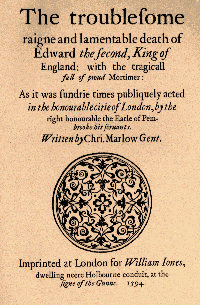
EdwardiiquartoBorn in Canterbury the son of shoemaker John Marlowe and his wife Catherine in 1564 (he was baptised on 26th February and likely to have been born a few days before), Marlowe attended the King’s School in the city and went on to study at Corpus College in Cambridge, receiving a Bachelor of Arts in 1584 and a Master of Arts in 1587. It is believed that at around this time, he was also working secretly for the government of Queen Elizabeth I, although what the nature of that work was remains unknown.

While Marlowe’s first play was Dido, Queen of Carthage, he first found theatrical success in 1587 with Tamburlaine the Great, later followed with a second part. His other four plays included The Jew of Malta, Edward the Second, The Massacre at Paris about the St Bartholomew’s Day Massacre in 1572, and Doctor Faustus.

The plays served as key works for the Admiral’s Men, the company of Edward Alleyn who performed many of the key roles in the plays, and who is strongly associated with the Rose Theatre  – indeed it was here that Tamburlaine the Great, The Jew of Malta, and Doctor Faustus premiered (you can see our earlier post on the theatre here).

Marlowe, who is known to have lived in Shoreditch, also completed other works included poetry and translations and while there is little evidence about his personal life, there is much speculation including that he was, as aforementioned, a spy as well as a carouser (he is known to have frequented taverns in London including Ye Olde Cock in Fleet Street), a homosexual and/or a heretic. It has also been suggested he was a tutor to noblewoman Arabella Stuart.

It is known that he was arrested in 1592 in Flushing in The Netherlands for counterfeiting coins and was sent back to England but no further action was taken.

His death is one of the big mysteries of his life. A warrant was issued for Marlowe’s arrest over some heretical tracts which were found in the lodgings of his colleague Thomas Kyd (who when questioned apparently implicated him) and he appeared to answer to the Privy Council on 20th May, 1593. They weren’t sitting and he was apparently instructed to appear daily until further notice. He was dead 10 days later.

The exact circumstances of his death remain a matter of speculation. It is often said he died in a drunken brawl with one early source suggesting this was over a homosexual love affair and another, more recent, theory suggesting he even faked his own death to avoid being executed for heresy (an extrapolation of this theory goes that after his fake death he continued writing plays under the name of William Shakespeare but this is generally deemed fairly far-fetched). The official account recorded at the time was that he was stabbed to death in a brawl over payment of a bill with men at a house in Deptford.

He was buried in an unmarked grave at St Nicholas’ Church in Deptford. There is a memorial window to him in Poet’s Corner in Westminster Abbey. A gift of the Marlowe Society, it was unveiled in 2002 and controversially included a question mark after the generally accepted date of his death. There is a portrait, dated 1585,  generally believed to be of Marlowe at Cambridge.

PICTURE: Title page of the earliest known edition of Edward II (1594)/Wikipedia

Lost London – The Steelyard…

The Thames-side property known as the Steelyard – the phrase comes from the Dutch-German word Stahlhof and relates either to a steel beam used for weighing goods or a courtyard where the goods were sold – was the main trading base of the Hanseatic League in London from the 13th century onward.

Located near where Walbrook flows out of the Thames on the north bank (the site is now at least partly covered by Cannon Street Station), the walled compound – which at some point housed as many as 400 people – was in some senses a mini city within a city complete with a hall, warehouses, a weighing house and counting houses as well as residences and a chapel.

While the community – which represented an alliance of towns and cities in northern Europe – was mentioned as far back as the late 1200s, it wasn’t until 1303 that King Edward I formerly confirmed the tax and customs concessions of the merchants (at some point, in return for privileges they were given, the group was charged with keeping up the maintenance of Bishopsgate).

The power of the trading post had grown substantially by the 15th century and the concessions the group had been granted meant there was inevitably considerable friction with English merchants. There was also some official friction and one example of it was when the Steelyard was closed temporarily in the 15th century when the Hanse cities were at war with England.

In 1598 Queen Elizabeth I took away the Steelyard’s trading privileges (after which the compound was apparently looted). It was subsequently allowed to reopen by King James I but never regained the prominence it had previously had.

Much of the compound was destroyed in the Great Fire of London but nonetheless, the Steelyard was rebuilt and continued to provide links between German cities and the English until the mid 1800s when the land was sold off and, in 1866, Cannon Street Station built on the site.

A couple of surviving objects from the Steelyard include a series of at least eight portraits of Hanse merchants painted by Hans Holbein the Younger and a stone model of the Hanseatic Arms which were placed over the gate into the compound can be seen at the Museum of London.

10 significant sites from Georgian London – 5. Horse Guards…

Horse-Guards1

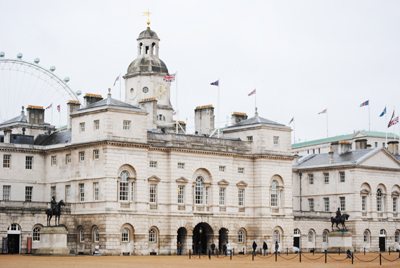
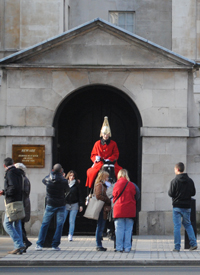
Known around the world for the stoic mounted troopers which stand guard here, this rather fanciful building straddling a site between Whitehall and St James’s Park was built in the early 1750s on land which had previously served as a tiltyard for King Henry VIII.

In the 1660s King Charles II had a barracks built here for the guards manning the entrance to what was then the Palace of Whitehall, but in 1749 it was demolished and the present building constructed.

William Kent had apparently drawn up designs but it was architect John Vardy who oversaw construction of the neo-Palladian building after Kent’s death in 1748. The windows on the St James’s Park side of the building are said to have been based on a drawing by Lord Burlington (he of Chiswick House fame – see our earlier post here).

While the site previously marked the entrance to the Palace of Whitehall, it is now considered the formal entrance to St James’s Palace (although the palace is located some distance away) and, as a result, only the monarch can drive through the central archway without displaying a pass.

Horse-GuardsUntil 1904, the Grade I-listed building housed the office of the Commander-in-Chief of the Forces but the title was then abolished and replaced with Chief of the General Staff, who relocated to the War Office Building. Horse Guards subsequently became the home of the army commands of London District and the Household Division, a role it still fulfils.

As well as being the site of the daily Changing of the Queen’s Life Guard (this free event takes place at 11am every day; 10am on Sundays), Horse Guards is also now home to the Household Cavalry Museum.

Among treasures in the museum are two silver kettledrums presented to the regiment in 1831 by King William IV, a cork leg used by the first Marquess of Anglesey after his real leg was amputated following the Battle of Waterloo (and subsequently became a tourist attraction in its own right) and silverware by Faberge. Visitors to the museum can also see into the working stables via a glazed petition.

The parade ground behind the building is the site of the annual Trooping the Colour ceremony which officially celebrates the Sovereign’s birthday. Although the ceremony has only been held since 1748, it’s interesting to note that some of the birthday celebrations of Queen Elizabeth I were held in the same place.

WHERE: The Household Cavalry Museum, Horse Guards, Whitehall (nearest Tube stations are Westminster, Embankment, St James’s Park and Charing Cross); WHEN: Open 10am to 5pm (November to March)/10am to 6pm (April to October); COST: £6 adults/£4 children (aged 5-16) and concessions/£15 family ticket; WEBSITE: www.householdcavalrymuseum.co.uk.

Around London – The Cheapside Hoard revealed; Queen Elizabeth I at the NPG; 3D printing at the Science Museum; and, Viennese portraits…

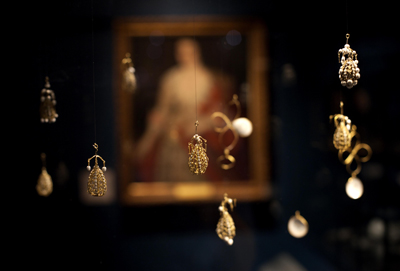
Cheapside-Hoard-1The ‘secrets’ of the Cheapside Hoard – the world’s finest and largest collection of 16th and 17th century jewels – are revealed in a new exhibition opening tomorrow at the Museum of London. The
Cheapside-Hoard-2Cheapside Hoard: London’s Lost Jewels
 publicly displays the hoard of Elizabethan and early Stuart jewellery and gemstones in its entirety for the first time since its discovery more than 100 years ago. The hoard, consisting of as many as 500 pieces including rings, necklaces, cameos, scent bottles and a unique Colombian emerald watch, was discovered buried in a cellar on Cheapside in the City of London in 1912. The exhibition uses new research and state-of-the-art technology to showcase the hoard as it explores the questions of who owned the hoard, when and why was it hidden, and why was it never reclaimed. New information revealed by the research shows that the hoard was buried between 1640 and 1666 (the critical clue was a previously overlooked intaglio – a gemstone engraved with the heraldic badge of William Howard, Viscount Stafford, who lived between 1612-1680). It also reveals Thomas Sympson was the “dodgy” jeweller responsible for two counterfeit rubies contained within the hoard (he apparently had a trade in selling counterfeit gems for as much as £8,000 each). Entry charge applies. Runs until 27th April. For more, see www.museumoflondon.org.uk.  PICTURED: Above: gold and pearl cage pendants from the Cheapside Hoard; and right: a bejewelled scent bottle.

A previously unknown painting of Queen Elizabeth I is on display as part of a new exhibition, Elizabeth I and Her People, opening at the National Portrait Gallery today. The small painting, which has been attributed to miniaturist Isaac Oliver and which is a reworking of the classical story of the Judgement of Paris, was recently acquired by the gallery. It will sit among a selection of other portraits of the “Virgin Queen” in a display which endeavours to show how during her 50 year reign she portrayed the image of a strong monarch. The portraits are just some of the 100 items featured in the exhibition which also includes costumes, coins, jewellery and crafts and examines the rise of new social classes in Elizabethan society. Other portraits in the exhibition feature images of courtiers such as William Cecil and Christopher Hatton along with images of merchants, lawyers, goldsmiths, butchers, calligraphers, playwrights and artists. There is also a little known painting of three Elizabethan children and what may be the first portrait of a guinea pig. The exhibition, supported by the Weiss Gallery, runs until 5th January. Admission charge applies. For more, see www.npg.org.uk.

Printed objects including replacement body organs, aeroplane parts and a music box have gone on display at the Science Museum in South Kensington as part of a new exhibition, 3D: printing the future. The exhibition looks at the rapidly evolving field of 3D printing and its growing impact on society through stories such as the use of 3D printing by engineers to create lighter aeroplane parts and the ways in which the medical industry is researching the use of the technology to create replacement body parts. The display will also include miniature 3D printed figures created from scans of visitors who took part in workshops during the summer holidays. This free exhibition runs in the Antenna gallery for nine months. For more, see www.sciencemuseum.org.uk.

On Now: Facing the Modern: The Portrait in Vienna 1900. On at the National Gallery, the first major UK exhibition devoted to the portrait in Vienna features iconic works by Gustav Klimt, Egon Schiele, Richard Gerstl, Oskar Kokoschka and Arnold Schonberg alongside those of lesser known artists such as Bronica Koller and Isidor Kaufmann. Highlights include Klimt’s Portrait of Hermine Gallia (1904) and Portrait of a Lady in Black (about 1894), Schiele’s The Family (Self Portrait) (1918) and Nude Self Portrait by Gerstl (1908). Runs until 12th January. Admission charge applies. For more, see www.nationalgallery.org.uk.

Treasures of London – The Pearl Sword…

Pearl-Sword1

One of five City of London swords, tradition holds that the sword was given to the City Corporation by Queen Elizabeth I when the Royal Exchange opened in 1571.

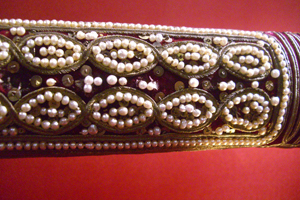
It takes its name from its pearl-encrusted scabbard – there’s said to be 2,500 of them sewn onto it – and was traditionally used in celebrations. These include a ceremony which takes place when the reigning monarch comes in State to the City.

Pearl-Sword2Seen during last year’s Diamond Jubilee celebrations, the ceremony involves the Lord Mayor taking the sword from the Sword-Bearer and offering it hilt-first to the monarch to touch – a symbol of the monarch’s authority over the city. It is then borne aloft in front of the monarch by the Lord Mayor.

Interestingly, the tradition of the monarch touching the sword hilt is said to date from the reign of King Charles I when the king entered the City in 1641 and just touched the sword given to him and handed it back to the Lord Mayor. Prior to that, the sword was handed over to the sovereign for the during the visit.

The City’s other four swords include the State Sword, the Mourning Sword, the Old Bailey Sword and Mansion House Justice Room Sword.

Guided tours of Mansion House – official residence of the Lord Mayor of London and where the Pearl Sword can be seen – are conducted on Tuesdays at 2pm (although it’s closed for August for refurbishments and on selected dates after that). Head here www.cityoflondon.gov.uk/mansionhousetours details. PICTURES Courtesy City of London.

10 Historic London Garden Squares…10. Charterhouse Square…

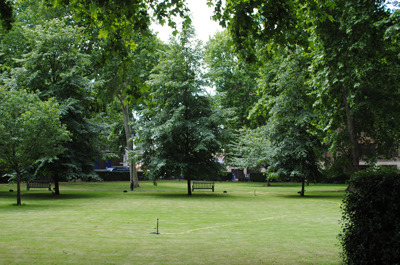
Charterhouse-Square-GardensThe final in our series on historic garden squares in London (for this year, anyway), we’re taking a look at Charterhouse Square.

The five sided square, located just to the east of Smithfield, takes its name from a Carthusian monastery which was established in 1371 on what is now its north side. Prior to this, what is now the square had from 1348 served as a location for a plaque burial pit (a number of skeletons from the plaque pit have been unearthed as part of the Crossrail project – for our earlier story on this, follow this link).

The monastery was dissolved in 1537 after the monk’s refused to recognise King Henry VIII’s Act of Supremacy (some were later executed at Tyburn) and it was subsequently transformed into a manor house with Thomas Howard, the 4th Duke of Norfolk, among its residents over the years (in fact he was imprisoned there around 1570 for allegedly plotting to marry Mary, Queen of Scots – he was later executed by Queen Elizabeth I for treason).

Under the will of Thomas Sutton, an almshouse and school was subsequently established on the site – the almshouse remains there while the school, whose students had included Methodism founder John Wesley and writer William Makepeace Thackeray, moved out to Godalming in Surrey in 1872. As well as the almshouse (which is open for guided tours, check this site for details), some of the buildings are now occupied by medical related institutions.

In the 1600s, the square was also home to numerous other large residences among them Rutland House, which had been the residence of the Venetian ambassador. It lost its aristocratic inhabitants in the ensuing centuries but remained mainly residential up until the late 19th century when it gradually became taken over by businesses and other organisations. Interesting to note is that the east side of the square is still home to the residential unit complex known as Florin Court, better known as Whitehaven Mansions, the home of Hercule Poirot in the TV series which bears his name.

The area of the garden square itself was variously referred to as the Charterhouse Churchyard, the Charterhouse Yard and Charterhouse Close over the years and has gone through numerous incarnations with efforts to improve and formalise its look dating back to at least the 16th century. It was at least partly enclosed by the late 1600s and the fences replaced several times, notably in 1742 when an Act of Parliament was passed allowing residents to fine those who entered without authorisation. The enclosing fences have since been modified several more times.

One of the major changes to the shape of the square occurred in 1860 when the Metropolitan Railway was extended between Farringdon and Moorgate. It was at this time that the road surface which surrounds the central garden, which has a Grade II heritage listing, was laid down.

Today the gardens in the centre of the square remain under the management of the Charterhouse (and hence aren’t open to the general public except on tours) but even without a tour it’s still a quiet place to walk around the outside of, evoking a strong sense of years gone past.

Treasures of London – Coins at the Tower…

Coin2

In this special edition of Treasures of London, we’re taking a quick look at a new permanent exhibition which has opened at the Tower of London focusing on the 500 years it served as the Royal Mint.

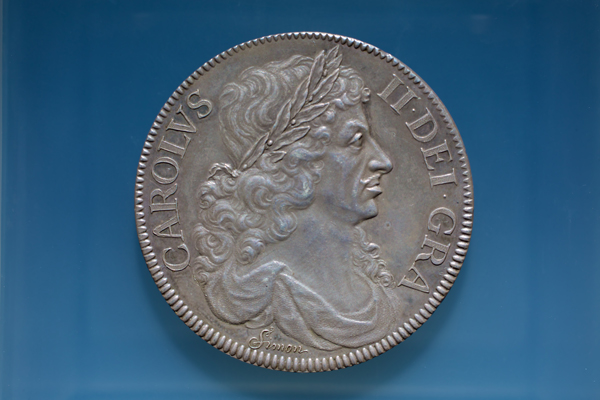
Opened in partnership with the Royal Mint Museum, the new exhibition, Coins and Kings: The Royal Mint at the Tower, features a series of rare coins and other coin-related paraphernalia, including a rare silver groat from the time of King Edward I (1279-1307), a gold “trial plate” dating from 1542 in the reign of King Henry VIII, and a Charles II petition crown dating from 1663 – pictured above, it was sent to King Charles II by engraver Thomas Simon as an example of his work (Simon never got the job and died of plague three years later).

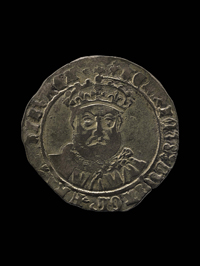
Coin1There’s also a silver ‘testoon’ from the reign of King Henry VIII (it bears a Holbein-style portrait of him) which has been debased – indeed, such was the state of coinage during his reign that the “silver” coins often contained more cheap metal, like copper, than silver so that as they wore down, the copper shone through earning the king the delightful nickname, ‘Old Coppernose’ (pictured right).

The tower was used as the country’s mint from about 1279 – when King Edward I moved the Royal Mint inside the Tower as part of his efforts to clean up England’s coinage – to 1812 – when the Royal Mint was relocated out of the Tower to a purpose-built premises on Tower Hill – and the exhibition focuses on five moments from its history.

They include a look at the efforts of Sir Isaac Newton, Warden (and later Master) of the Royal Mint, in tracking down forgers in the late 1600s (his rather zealous prosecutions of those creating forgeries, in particular one William Chaloner, is retold with aplomb in Thomas Levenson’s book Newton and the Counterfeiter), King Edward I’s harsh punishments for people who dared to tamper with his coinage, Queen Elizabeth I’s restoration of the coinage after her father, King Henry VIII’s meddling with the currency, and King Charles II’s rejection of Commonwealth money.

There’s a series of events to go with the exhibition’s opening including the change to see some of the coins up close and family activities (check out the Tower of London website – link below – for more details).

WHERE: Tower of London (nearest tube station Tower Hill); WHEN: 9am to 5.30pm, Tuesday to Saturday, 10am to 5.30pm Sunday to Monday; COST: £21.45 adults; £10.75 children under 15; £18.15 concessions; £57.20 for a family; WEBSITE: www.hrp.org.uk/toweroflondon/.  

PICTURES: Historic Royal Palaces/newsteam

London Pub Signs – East India Arms…

East-India-ArmsBuilt in 1829 on a site which has apparently hosted a pub since 1630, this red brick pub in Fenchurch Street in the City is named for the East India Company.

Created by a charter signed by Queen Elizabeth I which gave it a monopoly on all English trade east of the Cape of Good Hope, the East India Company was incorporated in 1600.

It dominated British trade in Asia, in particular in India which it ruled over from 1757 until its final demise in the aftermath of the Indian Mutiny in 1857 after which the British Government took direct control of India.

The company headquarters was located in East India House in nearby Leadenhall Street (the rather grand building was demolished in 1861 and the site is now occupied by the architecturally adventurous Lloyd’s Building).

The small, one-roomed pub, at 67 Fenchurch Street, is now part of the Shepherd Neame chain. For more see www.shepherdneame.co.uk/pubs/london/east-india-arms.

Around London – Tudor and Stuart fashion; Wellington Arch treasures; Hunterian celebrates 200 years; Regent Street and the world; and, Kaffe Fassett at the FTM…

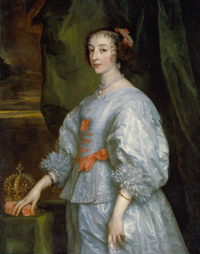
Queen-Henrietta-Maria-(Royal-Collection)A landmark exhibition looking at fashion in the Tudor and Stuart eras opens at The Queen’s Gallery, Buckingham Palace, tomorrow. In Fine Style: The Art of Tudor and Stuart Fashion features everything from a diamond ring given by King Charles I to his then 19-year-old wife Henrietta Maria, an ornate set of armour which belonged to 13-year-old Henry, Prince of Wales (the older brother of King Charles I – he died of typhoid fever at the age of 19), and a diamond-encrusted box in which Queen Mary II kept black fabric patches worn to conceal blemishes or highlight the creaminess of skin. A 58.5 carat pearl, named ‘La Peregrina’ (‘The Wanderer’) and given to Queen Mary I as an engagement gift from Philip II of Spain (and later presented to Elizabeth Taylor by Richard Burton on Valentine’s Day, 1969), is also among the objects on show along with a pendant featuring a miniature of Queen Elizabeth I. The exhibition also features more than 60 portraits from the Royal Collection showing the fashions of the time, including a portrait by Sir Peter Lely of court beauty Frances Stuart, Duchess of Richmond, who famously refused to become King Charles II’s mistress. Admission charge applies. Runs until 6th October. For more, see www.royalcollection.co.uk. PICTURE: Sir Anthony van Dyck, Queen Henrietta Maria, 1609-69. Royal Collection Trust/© 2013, Her Majesty Queen Elizabeth II.

A medieval crozier and bejewelled ring discovered in Cumbria in 2010 are on public display for the first time in a new exhibition at Wellington Arch. The artefacts, which were discovered at Furness Abbey, are featured in an English Heritage exhibition, A Monumental Act: How Britain Saved Its Heritage, which explores how the Ancient Monuments Act of 1913 helped protect Britain’s historical fabric. Other objects in display include some of the historic artefacts found in the 20 years following the act – a Roman bronze weight from Richborough Roman Fort in Kent and a 13th century sculpture of Christ found at Rievaulx Abbey in Yorkshire. Admission charge applies. The exhibition runs until 7th July. For more, see www.english-heritage.org.uk/daysout/properties/wellington-arch/.

The Hunterian Museum at the Royal College of Surgeons is celebrating its bicentenary this year and to mark the occasion, they’re holding a free exhibition focusing on the museum’s collections of human anatomy and pathology; natural history and artworks. The display will consider how the objects in the collection have informed the medical world and fallen under the gaze of visitors who have included surgeons as well as monarchs. The exhibition in the Qvist Gallery at the museum in Lincoln’s Inn Fields opens on Tuesday, 14th May, and runs until 9th November. For more, see www.rcseng.ac.uk/museums/hunterian.

The world comes to Regent Street this Sunday with the ‘InsureandGo The World on Regent Street’ festival. Representatives from countries including Argentina, Egypt, Trinidad and Tobago, Turkey and China as well as the UK will showcasing the best of each country’s culture, music and dance, art, food and fashion. Activities will include tango lessons from Argentina, professional henna drawing from Egypt, a steel band from Trinidad and Tobago, and a Chinese drumming performance and lion dancing. The street will be closed for the day. For more, see www.regentstreetonline.com.

On Now: Kaffe Fassett – A Life in Colour. This exhibition at the Fashion and Textile Museum in Bermondsey Street celebrates the work of American-born artist Kaffe Fassett and features more than 100 works including nine foot wide knitted shawls, coats and throws, patchwork quilts and a ‘feeling wall’ where visitors can touch the textiles on display. Admission charge applies. Runs until 29th June. For more, see www.ftmlondon.org.

Treasures of London – The Barbor Jewel…

While the style of the setting means this pendant is said to date from the early 17th century, a family tradition holds that it was made for a Protestant William Barbor, variously described as a London tradesman or grocer.

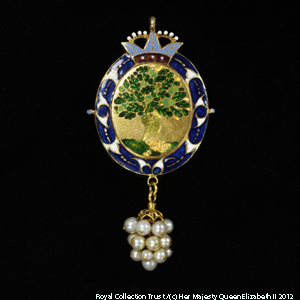
The-Barbor-JewelThe story, said to have been first recorded in the early 18th century, goes that the jewel was made to commemorate Barbor’s escape from being burnt at the stake (thanks to his Protestantism) due to the accession of Queen Elizabeth I in 1558 following the death of her half-sister, Queen Mary I (‘Bloody Queen Mary’).

Barbor had been regarded as a heretic during Queen Mary’s reign and is said to have condemned to death for his faith but the death of the queen meant he no longer faced a sentence of death.

Even so, Barbor died in 1586, and while the onyx cameo of Queen Elizabeth I in the centre of the jewel dates from about 1575-85, the “pea-pod-style” setting of the jewel – which features rubies and diamonds and a cluster of pearls – has been dated to between 1615-25, during the reign of King James I, which places its creation well after Barbor’s demise.

The enameled jewel features an oak tree on the reverse side (pictured).

The Barbor Jewel is currently on display in the exhibition, Treasures of the Royal Courts: Tudors, Stuarts and the Russian Tsars, at the V&A which runs until 14th July. Admission charge applies. For more, see www.vam.ac.uk.

PICTURE: Courtesy of Victoria and Albert Museum, London 

Where’s London’s Oldest…wine bar?

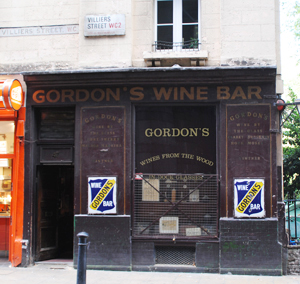
The honour of being London’s oldest winebar goes to Gordon’s Wine Bar at 47 Villiers Street in the West End (just up from Embankment Tube Station or down from Charing Cross Station, whichever you prefer).

Gordon's-Wine-BarThe venerable establishment – still a favoured place to stop for a drink for many Londoners – opened its doors in the 1890s and still conveys a powerful sense of old world charm with the decor pretty much unchanged (there’s been no fancy makeover here) and the wine still served from wooden casks behind the bar.

The site on which the bar is located was once occupied by York House (home to, among others during its centuries of life, Robert Devereaux – 2nd Earl of Essex and favourite of Queen Elizabeth I and Sir Francis Bacon – Lord Chancellor during the reign of King James I) and then, later on, by a large house lived in by diarist Samuel Pepys in the late 1600s before, thanks to its position close to the river, a building was built upon it in the 1790s which served as a warehouse.

The usefulness of the warehouse came to an end when Victoria Embankment was built and the river pushed back and the building was subsequently used for accommodation. Writer Rudyard Kipling was among tenants who lived here (from 1889-1891 during which wrote The Light that Failed – in fact, the building was renamed after him, Kipling House, in 1950.

It was Angus Gordon, a “free vintner” meaning he didn’t have to apply for a licence thanks to the largesse of King Edward III in 1364, who established the premises in the vaults here in the 1890s (interestingly the current owners are also Gordons, but not related). Among the other uses of the building, of which Gordon’s only occupies a part, was apparently as a brothel in the 1920s.

For more on Gordon’s head to www.gordonswinebar.com.

Around London – Royal Court treasures at V&A; Sir Michael Caine celebrated; a tunic with a past; and, George Catlin’s American Indian portraits…

Water_potA new exhibition opens at the V&A in South Kensington this Saturday which charts the development of cultural trade and diplomacy between Britain and Russia from the founding of the Muscovy Company in 1555 until the end of King Charles II’s reign in 1685. Treasures of the Royal Courts: Tudors, Stuarts and the Russian Tsars reveals the “majesty and pageantry” of the royal courts of both countries – from that of King Henry VIII to King Charles II in Britain and from that of Ivan the Terrible (Ivan IV) to the early Romanovs in Russia. The display features more than 150 objects including heraldry and processional armour,  furnishings, clothing, jewellery and portraiture including paintings and miniatures painted by court artists. Highlights include a rarely viewed portrait of Queen Elizabeth I, the Barbor Jewel – a pendant set with an onyx cameo of the queen; a hand-colored map of ‘Muscovy’ dating from 1570, and literature including Shakespeare’s First Folio as well as a showcase of British and French silver given to the Tsars by British merchants and kept in the Kremlin. The 20 pieces include the Dolphin Basin, made by Christiaen van Vianen – said to be a favoured silversmith of King Charles I and II – in 1635. The exhibition marks the 400th anniversary of the Romanov dynasty. Admission charge applies. Runs from Saturday, 9th March, until 14th July. For more, see www.vam.ac.uk. PICTURE: Water pot (1604-05), Historic collectino of the Armoury, © The Moscow Kremlin Museums.

The life and work of Sir Michael Caine – who turns 80 this month – is the focus of a new free exhibition at the Museum of London. Michael Caine, which opens tomorrow, features photographs including some never exhibited before as well as iconic portraits by the likes of David Bailey and Terry O’Neill as well as a selection of audio and film clips from movies such as Alfie, The Italian Job, Get Carter, Hannah and Her Sisters and Educating Rita. The exhibition follows Sir Michael’s life from “Cockney rebel, through to Hollywood legend and inspirational Londoner” and looks at how the city influenced his life and career. Runs until 14th July. To coincide with the exhibition, the Museum of London Docklands is running Caine on Screen, a selection of free films which can been voted for by the public (see our earlier post here). The schedule of films will be announced after 14th March. For voting details and more information, see www.museumoflondon.org.uk.

A bullet-pierced military tunic worn during the Indian Mutiny in the mid 19th century has been donated to the National Army Museum in Chelsea. The tunic, worn by Lieutenant Campbell Clark, of the 2nd Bengal European Fusiliers, at Cawnpore in 1857. The lieutenant was ambushed by rebels Indian infantry and shot at point-blank range. Despite being grievously wounded (the musket ball had passed through his stomach and remained in the wound), he survived the injury and the military hospital he was taken to and went on to have a long career, rising to the rank of colonel. He died in 1896 in Sussex. The tunic was donated to the museum by Clark’s great-great-nephew, John Gordon Clark. For more, see www.nam.ac.uk.

On Now: George Catlin: American Indian Portraits. Opening today, this exhibition at the National Portrait Gallery is the first major exhibition of the American artist’s works to be held in Europe since the 1840s and has been designed to demonstrate to the viewer how Catlin constructed a particular view of Native Americans in the minds of his audiences. Catlin made five trips into the western United States in the 1830s before the Native American peoples had been subsumed into the United States and, inspired by those trips, went on to create an Indian Gallery which featured 500 portraits, pictures and indigenous artefacts. He subsequently toured with the gallery in both the US and Europe. The exhibition is organised in collaboration with the Smithsonian American Art Museum in Washington. Runs until 23rd June. Admission charge applies. For more, see www.npg.org.uk.

Lost London – Frost fairs…

 As London undergoes the big chill with much of the rest of the country, we thought we’d take a quick look at the frost fairs which were once held on top of the frozen River Thames.

While records reveal the Thames froze over as far back as the city’s Roman era, the first recorded ‘frost fair’ dates from the mid-16th century (Queen Elizabeth I is said to have attended one in 1564) while the last was held in 1814.

Frost_Fair_of_1683While the lower temperatures played a role in allowing the ice to get thick enough to hold frost fairs on top (the period between the 14th and 19th centuries is known as the ‘Little Ice Age’ in northern Europe), so too did the fact that the Thames was broader and shallower than it is now, not to mention the narrow arches of Old London Bridge (it was demolished in 1831 – for more on this, see our earlier entry) which slowed the waters of the Thames.

The fairs were set up in a range of locations along the river. Descriptions of them talk of a range of activities being carried out on the river’s frozen surface – yes, the use of sleds and skates but also things like bear-baiting, coach, horse racing, dancing and puppet plays as well as the setting up of booths or stalls from which traders sold food, souvenirs, and, importantly, drink.

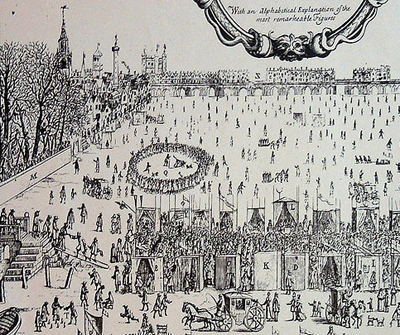
One of the longest of the fairs – recorded by diarist John Evelyn – was held over the winter of 1683-84 and located between Temple and Southwark. It featured streets of stalls with different traders grouped in different areas. King Charles II himself was a visitor.

During the last and biggest frost fair, held on the river near Blackfriars Bridge, a street known as ‘City Road’ ran down the middle of the Thames and donkeys gave people rides.

There is a frieze depicting a ‘frost fair’ underneath the southern end of Southwark Bridge.

PICTURE: Detail of an image of the Frost Fair of 1684 with London Bridge in the background. Source: Wikipedia.

London Pub Signs – Ye Olde Mitre Tavern…

This small pub, found down a laneway – Ely Court – off Ely Place in Holborn, is considered by many one of London’s hardest to find. The name – which describes a bishop’s headwear – comes from the fact that the building was built by Bishop Goodrich of Ely, who lived in nearby Ely House, for his retainers.

The original premises dated from 1546 but the current building on the site reportedly dates from about 1773 (about the date on which the bishop’s residence nearby was demolished). Interestingly, the pub was actually part of Cambridge – the city of Ely, and the Bishopric, being based there – which meant that the licensees once had to go to Cambridge for renewal.

In 1576, part of the property, along with a substantial part of the bishop’s estate, was leased to Sir Christopher Hatton, favorite of Queen Elizabeth I (and the man after whom nearby Hatton Garden is named – more on that another time), on order of the Queen herself.

Indeed the bar still houses the remains of a cherry tree behind glass. The tree is said to have marked the  border between Sir Christopher’s land and the Bishop’s land. Sir Christopher, incidentally, is said to have danced around it during a May Day celebration the Queen though this tale may simply by apocryphal.

Both Charles Dickens and Dr Johnson are said to have been customers here. The pub, which features dark  panelling on the walls, still evokes a sense of the past with its olde world furnishings and fittings (and absence of more modern fittings like blaring TVs). Great place to pass a few hours in on a chilly day!

For more on the pub, see http://yeoldemitreholburn.co.uk.

Celebrating the Diamond Jubilee with 10 royal London locations – 9. Royal chapels…

Palaces aside, the Queen also owns a series of chapels – the Chapels Royal – in London which, although not as grand as Westminster Abbey, have each played an important role in the history of the monarchy. 

The term Chapel Royal originally referred to a group of priests and singers dedicated to serving the Sovereign’s personal spiritual needs and as such would follow the monarch around the country. It was in Stuart times that they became more settled establishments with the two main Chapels Royal – the Chapel Royal and the Queen’s Chapel – located in St James’s Palace.

• The Chapel Royal, St James’s Palace. Constructed by King Henry VIII, the chapel was decorated by Hans Holbein the Younger in honor of the king’s (short) marriage to Anne of Cleves. Queen Mary I’s heart is said to be buried beneath the choir stalls and it was here that Queen Elizabeth I apparently prayed waiting for news of the progress of the Spanish Armada. King Charles I took the Sacrament of Holy Communion here before his execution in 1649 and the chapel was where Queen Victoria married Prince Albert (her marriage certificate still hangs on the wall). In more recent times, the coffin of Diana, Princess of Wales, was placed before the altar so family and friends could pay their respects before her 1997 funeral. Among the composers and organists associated with the chapel are Thomas Tallis, William Byrd, Henry Purcell and George Frideric Handel. The chapel is not open to the public except for services.

• The Queen’s Chapel, St James’ Palace (pictured right). Now located outside the palace walls, this chapel was built by King James I for the Catholic Henrietta Maria, the bride of his son, then Prince Charles (later King Charles I). Designed by Inigo Jones, Grinling Gibbons and Sir Christopher Wren were also involved in its creation. The chapel was used by Henrietta Maria until the Civil War and later became the home of the Danish Church in London. The chapel is not open to the public except for services.For more on this chapel or the Chapel Royal at St James’s Palace, follow this link.

• The Queen’s Chapel of the Savoy. Built in the Middle Ages to serve the now long gone Savoy Palace, London home of Count Peter of Savoy (uncle to King Henry III’s wife, Eleanor of Provence, the original building was destroyed in the Peasant’s Revolt of 1381. The current building, located in Savoy Hill, off the Strand, was built on the orders of King Henry VII in the late 15th and early 16th century to serve the hospital he founded on the site of the palace. The chapel since served many other congregations – including a German Lutheran congregation – but remains royal property via the Duchy of Lancaster, which is held in trust for the Sovereign and used to provide an income for the British monarch. It is officially the Chapel of the Royal Victorian Order. For more, see www.duchyoflancaster.co.uk/duties-of-the-duchy/the-queens-chapel-of-the-savoy/.

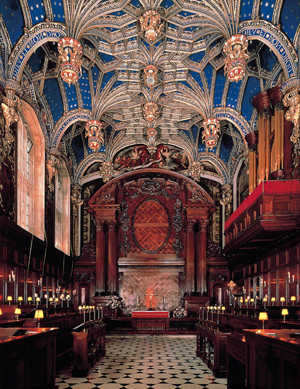
• Chapel Royal, Hampton Court Palace (pictured right). There has been a chapel here since the Knights Hospitallers occupied the site in the 13th century but it was Cardinal Wolsey who built the chapel to its present dimensions after acquiring the property in 1518. The current building, however, dates from the later ownership of King Henry VIII – Wolsey surrendered the property to him when he fell from favour – and further works in the eighteenth and nineteenth centuries. Many subsequent monarchs have worshipped here. The chapel, with its stunning ceiling, is open to the public when visiting Hampton Court Palace. For more, see www.chapelroyal.org. PICTURE: Historic Royal Palaces/newsteam.co.uk

• The Chapel Royal of St Peter ad Vincula, Tower of London. Originally a parish church, this was incorporated into the walls of the Tower in the reign of King Henry III. It was subsequently rebuilt at least twice – in the reign of King Edward I and King Henry VIII – and is home to the graves of important personages executed at the Tower including Henry VIII’s one-time wives, Anne Boleyn and Catherine Howard as well as Jane Grey, the nine day queen, and Sir Thomas More and Bishop John Fisher. The chapel can be accessed during a Yeoman Warder’s tour of the Tower of London. For more, including details of an appeal for its restoration, see www.hrp.org.uk/TowerOfLondon/stories/thechapelproject.

• Chapel Royal of St John the Evangelist, Tower of London. Located within the White Tower, this beautiful chapel – arguably the oldest church in London – dates back to the construction of the tower by King William the Conqueror the late 11th century and remains one of the best preserved examples of Anglo-Norman architecture in England. King Henry III added stained glass windows but for much of its later history the chapel was used for records storage. Tradition records that King Henry VII’s wife, Elizabeth of York, was laid in state here following her death in childbirth and that it was here Queen Mary was betrothed by proxy to Philip of Spain. This can be visited as part of a visit to the Tower of London. For more, see www.hrp.org.uk/TowerOfLondon/Sightsandstories/Prisoners/Towers/ChapelofStJohns

For more on churches in London, check out Stephen Millar’s London’s City Churches
and Stephen Humphrey’s London’s Churches and Cathedrals: A Guide to London’s Most Historic Churches and Cathedrals, Leigh Hatt’s London’s 100 Best Churches: An Illustrated Guide or the Pevsner Architectural Guide London: City Churches.

Where is it? #31…

The latest in the series in which we ask you to identify where in London this picture was taken and, importantly in this case, what it’s of. If you think you can identify this picture, leave a comment below. We’ll reveal the answer early next week. Good luck!

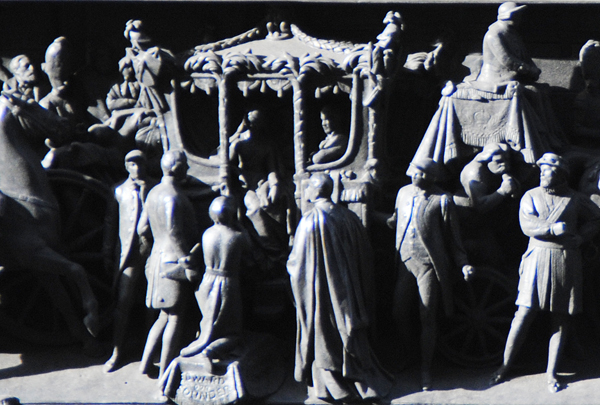
Well done to Jameson Tucker, this is indeed a relief on the Temple Bar Memorial, which stands where the Strand turns into Fleet Street. It depicts Queen Victoria on a royal progress to the Guildhall in 1837, a few months after her accession, when she was met at this spot by the Lord Mayor and Aldermen and presented with the sword of state and keys to the city.

According to a tradition said to date back to 1215, the Temple Bar is the only place where the monarch may enter London after first seeking permission from the Lord Mayor and being presented with the City’s Pearl Sword (one of five City swords, this is said to have been first given to the City by Queen Elizabeth I).

The monument itself was designed by Sir Horace Jones and erected in 1880 to mark the location where the Temple Bar – the ceremonial entrance to the City of London – originally stood (the last incarnation of the Temple Bar, designed by Sir Christopher Wren, is now located near in Paternoster Square near St Paul’s – see our earlier post for more on Wren’s Temple Bar).

On top of the granite and bronze monument stands a rearing griffin (actually it’s supposed to be a dragon), one of the city’s official boundary markers, sculpted by Charles Birch while on either side are bronze statues, by Sir Joseph Edgar Boehm, of Queen Victoria and Edward, Prince of Wales (later King Edward VII), who in 1872 were the last of the Royal family to pass through the Temple Bar gateway before its demolition in 1878 (they were on their way to St Paul’s to attend a thanksgiving service following the prince’s recovery from typhoid).

This is depicted in a relief on the north side of the monument by Charles Kelsey. Charles Mabey’s relief showing the Queen’s progress is located on the south side of the monument; he also designed one on the east side which shows a curtain being drawn over the old Temple Bar.

Daytripper – Windsor Castle…

Given we’re marking the Queen’s Diamond Jubilee with a look at sites of significance to her story located in London, it’s perhaps only fitting that we take a look at the nearest royal residence outside the city.
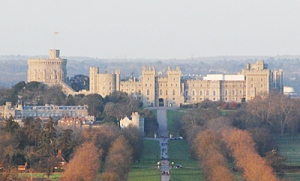
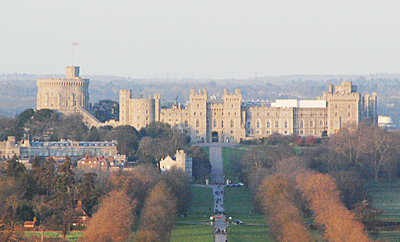
Windsor, located as close as half an hour by train from London’s Paddington station (or around 50 minutes to an hour from Waterloo), boasts plenty to see including the historic town centre, nearby Eton, great river and country walks and, of course, Legoland. But today our attention will remain on Windsor Castle, the oldest and largest inhabited castle in the world.

There has been a fortress on this site since shortly after the Norman invasion when in about 1080 King William the Conqueror ordered it constructed on a ridge above the river bank as part of a series of defensive fortifications around London. The earth and timber Norman castle was gradually added to over the years – King Henry I (reigned 1100-1135), the first king to live here, added domestic quarters while King Henry II (reigned 1154-1189) built substantial royal apartments transforming the castle into a palace and began replacing the outer timber walls with stone fortifications as well as rebuilding the Norman Keep as the Round Tower (parts of which still date from this period). King Henry III (reigned 1216-1272) built upon and expanded his work.

But it was in the reign of King Edward III (1307-1327) that the castle was expanded enormously. This included the reconstruction of the lower ward including the rebuilding of the chapel, naming it St George’s (although the current chapel dates from the reign of King Edward IV – 1461-1470), and the reconstruction of the upper ward complete with apartments for him and his wife, Queen Phillipa, arranged around courtyards (although some of the work wasn’t completed until the reign of his successor, King Richard II – 1377-1399). It was also during King Edward III’s reign that the castle became the base for the Order of the Garter (which he created in 1348), a role it still fulfills.

Other works were ordered by successive Tudor monarchs including King Henry VIII, Queen Elizabeth I, and Queen Mary I. Parliamentary forces seized the castle during the Civil War (Oliver Cromwell did use it as his headquarters for a time) and Royalists were imprisoned here (King Charles I was in fact buried in a vault beneath St George’s Chapel after his execution having been previously imprisoned here).

The next major additions came in the reign of King Charles II (1660-1685) when the Upper Ward and State Apartments were reconstructed in baroque splendor, the latter complete with splendid murals ceiling paintings by Italian artist Antonio Verro (the murals were later destroyed but some of the ceiling paintings survive).

From the time of King William III (1689-1702), monarchs began spending more time at Hampton Court Palace but the focus returned to Windsor with King George III. He ordered a range of improvements and updates including modernising Frogmore House in the Home Park for his wife Queen Caroline (the property was subsequently used by various royals but no-one currently lives there), but many of these were stopped prematurely due to his illness. His son, King George IV, picked up where his father left off.

In the reign of Queen Victoria, Windsor became the royal family’s principal residence and was visited by heads of state including King Louis Philippe in 1844 and Emperor Napoleon III in 1855. The Queen’s husband, Prince Albert, died here on 14th December, 1861.

King Edward VII (1901-1910) and King George V (1910-1936) both had a hand in redecorating the palace and the Queen’s father, King George VI (1936-1952), was living in the Royal Lodge in Windsor Great Park when he succeeded to the throne.

In more recent times, the castle was the home to the Queen, then Princess Elizabeth and her sister Princess Margaret, for much of World War II. The castle suffered its greatest setback in recent times in 1992 when a serious fire broke out in the Queen’s Private Chapel which destroyed several rooms including the ceiling of St George’s Hall which dated from the reign of King George IV. Restoration works took five years to complete.

Today the Queen spends many private weekends at the castle while the court is officially in residence here for a month over the Easter period and during Ascot Week in June – it’s at this time that the Garter Day celebrations take place with the installation of new knights.

The Queen also hosts State Visits here with banquets held in St George’s Hall as well as what are known as a ‘sleep and dine’ in which high profile figures are invited to dinner with the Queen before being shown a special display of items from the Royal Library and then spending the night. The Royal Standard flies from the Round Tower when the Queen is in residence.

As well as touring the State Apartments, the Gallery, Queen Mary’s Dolls’ House (completed in the 1920s for Queen Mary, wife of King George V), and St George’s Chapel, visitors to the castle can experience the Changing of the Guard at 11am every day but Sundays between May and early August (and every second day after that).

WHERE: Windsor (a short walk from either Windsor Central Station or Windsor & Eton Riverside Station); WHEN: 9.45am to 5.15pm until 27th July (times vary after this date – check the website); COST: £17 an adult/£10.20 a child (under 17s – under fives free)/£15.50 concession/£44.75 family (price includes an audio tour); WEBSITE: www.royalcollection.org.uk/visit/windsorcastle.

Around London – ‘Wild London’; National Trust photography contest; JK Rowling gets Freedom; and, Royal Devotion at Lambeth…

• Celebrate the Diamond Jubilee next Tuesday in Richmond Park as it hosts ‘Wild London’, the borough’s “first festival aimed at celebrating London’s woodlands, parks and gardens”. The event, which is being put on by Richmond Council and Royal Parks, will mark the Queen’s first visit to the borough in 23 years. It will showcase the conservational, recreational and inspirational role that parks and gardens play in London and will include hands-on exhibits, demonstrations, displays and performances. The event will be the first in a series celebrating the Diamond Jubilee held in Royal Parks. For more information, see www.richmond.gov.uk/home/leisure_and_culture/diamond_jubilee.htm

• The National Trust has launched a new photography competition aimed at celebrating green spaces and the life of the Trust founder Octavia Hill. The competition, called Your Space, is running in conjunction with National Trust Magazine and is open for entries until August. The competition was launched by internationally acclaimed photographers – Mary McCartney, Joe Cornish, Arnhel de Serra and Charlie Waite – with a new collection of pictures at National Trust places. One of the three Trust founder, Octavia Hill was a leading environmental campaigner in the Victorian Age and campaigned to save places in and around London like Parliament Hill. Entries in the competition, which aims to capture images of everyday green spaces, could include pictures from the local park or countryside. For details on how to enter, follow this link

• The author of the Harry Potter books, JK Rowling, received the Freedom of the City of London this week. The books have sold an estimated 450 million copies worldwide and have been made into films. The Freedom ceremony took place at Mansion House, the official residence of the Lord Mayor of London. Speaking before the ceremony on Tuesday, Rowling was quoted as saying that both her parents were Londoners. “They met on a train departing from King’s Cross Station in 1964, and while neither of them ever lived in London again, both their daughters headed straight for the capital the moment that they were independent.  To me, London is packed with personal memories, but it has never lost the aura of excitement and mystery that it had during trips to see family as a child. I am prouder than I can say to be given the Freedom of the City, which, on top of all the known benefits (and few people realize this), entitles me to a free pint in The Leaky Cauldron and a ten Galleon voucher to spend in Diagon Alley.” For more, see www.cityoflondon.gov.uk.

• On Now: Royal Devotion. This exhibition in the Great Hall of Lambeth Palace is being held to mark both the Diamond Jubilee of Queen Elizabeth II and the 350th anniversary of the revised Book of Common Prayer. The display charts the relationship between Crown and Church and its embodiment in the history of the Book of Common Prayer, one of the most important books in the English language. As well as the 1662 revision of the Book of Common Prayer, highlights include a 1549 printing of the Book of Common Prayer, medieval illuminated manuscripts, including the Book of Hours of King Richard III, Queen Elizabeth I’s personal prayer book and a copy of the book of private devotions compiled for Queen Elizabeth II in preparation for her coronation, the Book of Common Prayer used at the wedding of Queen Victoria, and King Charles I’s own handwritten revision of State Prayers. Admission fee applies. Runs until 14th July. For more, see www.lambethpalacelibrary.org/

Around London – Cutty Sark reopens; Genghis Khan at Marble Arch; New theatre for the West End; and, Shakespeare’s cash…

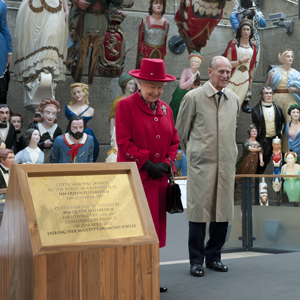
• The Cutty Sark, the world’s last surviving 19th century tea clipper, reopens to the public today following a £50 million, six year conservation project. The project to restore the Greenwich-docked ship has involved raising it more than three metres so visitors can walk underneath and see for themselves the sleek lines which helped the vessel set a then record-breaking speed of 17.5 knots or 20mph in sailing from Sydney to London. As well as raising the ship three metres, the project has involved encasing the ship’s hull in a glass casing to protect it from the weather – this area also contains the museum’s extensive collection of more than 80 ships’ figureheads, never been seen in its entirety on the site. The ship’s weather deck and rigging, meanwhile, have been restored to their original specification and new, interactive exhibitions on the vessel’s history have been installed below deck. Originally launched in 1869 in Dumbarton, Scotland, Cutty Sark visited most major ports around the world, carrying cargoes including tea, gunpowder, whiskey and buffalo horns and made its name as the fastest ship of the era when carrying wool between Australia and England. The ship became a training vessel in the 1920s and in 1954 took up her current position in the dry dock at Greenwich before opening to the public. In November 2006, the ship’s rig was dismantled in preparation for a restoration project – this received a setback on 21st May, 2007, when a fire broke out aboard the ship and almost destroyed it. The ship – which was officially reopened by Queen Elizabeth II and the Duke of Edinburgh (pictured) yesterday – is now under the operational management of the umbrella body, Royal Museums Greenwich. For more (including the online purchasing of tickets), see www.rmg.co.uk/cuttysark or www.cuttysark.org.uk. PICTURE: National Maritime Museum, London.

• A large statue of Genghis Khan has invaded Marble Arch. The 16 foot (five metre) tall sculpture of the Mongolian warlord, created by artist Dashi Namdakov, was erected by Westminster City Council as part of its ongoing City of Sculpture festival which is running in the lead-up to the Olympics. The statue has sparked some controversy – Labour councillors at Westminster have reportedly suggested Dambusters hero Guy Gibson would be a more suitable subject for a statue than the warlord Khan. The Russian artist, who has an exhibition opening at the Halcyon Gallery in Mayfair next month, told the Evening Standard he simply wanted to honor Khan on the 850th anniversary of his birth.

• Development of a new West End theatre, the first to be built in the area in 30 years, has been given the green light. The new 350 seat theatre will be part of a development project located between Charing Cross Road and Oxford Street which will also feature office and retail spaces. The site was occupied by a pickle factory in the 19th and 20th centuries and from 1927 was the home of the Astoria cinema, remodelled as a live venue in the 1980s. Live music was last presented there in 2009 when the site was compulsorily acquired for the Crossrail project.

• On Now: Crowns and Ducats: Shakespeare’s money and medals. This exhibition at the British Museum explores the role of money in Shakespeare’s world and looks at how coins – a frequently recurring motif in Shakespeare’s work – and medals were issued to mark major events. Objects in the display include Nich0las Hilliard’s ‘Dangers Averted’ medal of Elizabeth I and William Roper’s print of the Queen, the first to be signed and dated by a British artist, as well as a money box such as might have been used at the Globe and a hoard of coins, including a Venetian ducat, deposited in Essex around the time of Shakespeare’s birth. Almost every coin mentioned in Shakespeare’s plays will be on show – from ‘crack’d drachmas’ to ‘gilt twopences’. Runs until 28th October in room 69a. Entry is free. For more, see www.britishmuseum.org.

Treasures of London – The Banqueting House…

While we’ve looked at some of the history of the Banqueting House during last year’s special on King James I’s London, we thought we’d take a more in-depth look as part of our Treasures of London series…

A perfect double cube with a sumptuous painted ceiling, this early 17th century building is the only remaining complete structure from the Palace of Whitehall which was destroyed by fire in 1698.

The building replaced an earlier banqueting hall built on the orders of Queen Elizabeth I and another, shorter-lived hall, built by King James I, which was destroyed by fire in 1619.

Following its destruction, King James had Inigo Jones design a new hall to provide, as the previous hall had, a location for state occasions, plays and masques – something of a cross between an organised dance, an amateur theatrical performance and just a chance to dress up.

Jones, who partnered with Ben Jonson to produce masques, designed the hall – which has a length double the width – with these performances specifically in mind. The first one – Jones and Jonson’s Masque of Augurs – was performed on Twelfth Night, 1622, even before the building was completed (the last masque was performed here, incidentally, in 1635, after which, thanks they were moved to a purpose built structure nearby, ostensibly to save the newly installed paintings from being damaged by the smoke of torches – see below).

The incredible paintings on the ceilings, which celebrate the reign of King James I and will be the subject of their own Treasures of London article at a later date, were installed by March 1636. Produced by Flemish artist Sir Peter Paul Rubens, they had been commissioned by King Charles I, King James’ son, in commemoration of his father. Ironically, it was outside the building where the monarchy was so celebrated that King Charles I was beheaded in 1649 (this is marked in a ceremony held at the Banqueting House on 30th January each year).

Following the king’s execution, Whitehall Palace wasn’t used for several years until Lord Protector Oliver Cromwell took up residence there in 1654, using the Banqueting House as a hall if audience. It stood empty after Cromwell’s death in 1658 until the Restoration in 1660 when King Charles II again used it as a grand ceremonial hall for receiving foreign embassies and conducting court ceremonies (these including the ancient custom of what is known as ‘Touching for the King’s Evil’ to cure those afflicted with the disease of scrofula as well as the washing of the feet of the poor by the sovereign on Maundy Thursday.)

King James II was the last king to live at Whitehall Palace and during his reign, from 1685-88, it was used as a royal storehouse. But it was revived for formal use following his reign – it was here that King William III and Queen Mary II were officially offered the crown on 13th February, 1689.

During their reign, the court’s focus shifted to Kensington but the Banqueting House was used for Queen Mary to lay in state after her death in 1694.

Following the destruction of the remainder of Whitehall Palace in 1698 – the origins of this fire are apparently owed to a maid who had put some linen by a charcoal fire to dry – the Banqueting Hall was used briefly as a Chapel Royal and, following a renovation in the late 1700s, it was used for concerts and, from 1808, as a place of worship for the Horse Guards.

Further renovation works followed and in 1837, it was re-opened as a Chapel Royal and used as such until 1890 when this practice was formally discontinued. In 1893, Queen Victoria gave the Royal United Services Institute the use of the building as a museum – among the things displayed there were the skeleton of Napoleon’s horse, Marengo. In 1962, the exhibits were dispersed and the Banqueting House today is used for a range of royal, corporate and social events.

There is an undercroft underneath, designed as a place where King James I could enjoy drinking with his friends. It was later used for storage.

WHERE: Corner of Whitehall and Horse Guards Avenue (nearest Tube stations are Westminster and Embankment); WHEN: Monday to Saturday 10am to 5pm; COST: £5 adults/£4 concessions/children under 16 free (Historic Royal Palaces members free); WEBSITE: www.hrp.org.uk/BanquetingHouse/.

PICTURE: Courtesy of Historic Royal Palaces/newsteam.co.uk