Around London – The ‘Line of Kings’ has a makeover; London captured from St Paul’s; and, cycles at the Museum of London…

Line-of-Kings

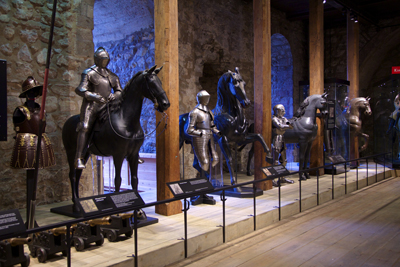
The Tower of London’s iconic exhibition, the Line of Kings, has had a makeover. Described as the “world’s longest running visitor attraction”, the Line of Kings features more than 500 objects including historic suits of armour – such as those worn by King Henry VIII, King Charles I and King James II – as well as life-sized wooden horses and individually carved king’s heads, many of which were made between 1685 and 1690. The exhibition was originally created following the Restoration in 1660 and was used as propaganda to promote the king’s rule (interestingly omitting queens and featuring only those deemed “good kings”). Rearranged and dispersed over the centuries, it’s been brought back together in the White Tower and reopened last month. Entry to the exhibition – a collaboration between Historic Royal Palaces and the Royal Armouries – is free as part of general admission to the Tower. For more, check out www.royalarmouries.org/line-of-kings. PICTURE: HRP/Newsteam

Four cameras mounted on top of St Paul’s Cathedral’s Golden Gallery have captured a 360 degree time lapse video of the capital. The video, which was shot in early July, captured 36 hours in the life of London and is the work of specialist photographer Henry Stuart who previously completed two projects from the Golden Gallery – a GigaPixel image of London and a Day Meets Night image. The latest project captured some 8,000 panoramic images. The time lapse video, which is set to Kyrie from Wolfgang Amadeus Mozart’s Missa in C major ‘Missa solemnis’ K337 being sung by the St Paul’s Cathedral Choir, can be found at http://visualise.com/videos/london-360-time-lapse-from-st-pauls-cathedral.

• On Now: London Cycles. This free exhibition at the Museum of London looks at cycling in the capital with highlights including 10 large scale portraits by Ugo Gattoni, bikes including an 1880s “boneshaker”, a penny farthing, an 1930s Enfield cycle and a ‘Boris’ bike as well as head cam footage from riders including from the annual Tweed Run bike. The free display runs until 22nd September. For more, see www.museumoflondon.org.uk.
10 (more) curious London memorials…4. ‘People of London’ Memorial…

People-of-London

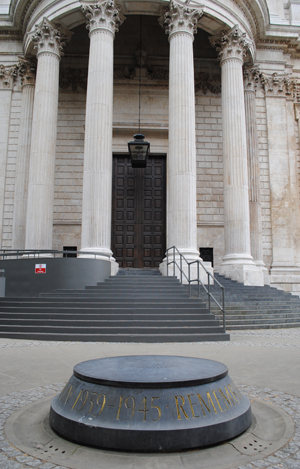
Amid all the grand war-related memorials of London, this rather humble memorial sitting outside the north transept of St Paul’s Cathedral in St Paul’s Churchyard can easily be overlooked. 

Known as the Memorial to the Londoners killed in World War II Bombardments or simply as the ‘People of London’ memorial as it’s called on the sculptor’s website, it commemorates the 30,000 Londoners who were killed during the Blitz  (not to be confused with the National Firefighters’ Memorial, known informally to many as the Blitz Memorial, which sits opposite the cathedral’s south transept and commemorates firefighters who died during the Blitz).

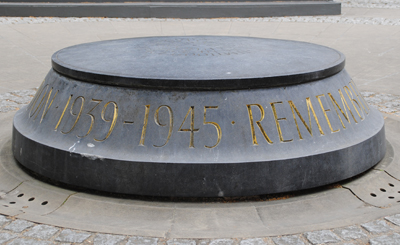
People-of-London---smallThe round memorial was carved from a three tonne block of Irish limestone and is set into paving (it was initially very shiny).

The gilded inscription which runs around the outside reads “Remember before God the people of London 1939-1945” while on top, written in a spiral, is an inscription written by Sir Edward Marsh – “In war resolution, in defeat defiance, in victory magnanimity, in peace goodwill”, the text of which was used by Sir Winston Churchill in the frontispiece to his history, The Second World War.

Unveiled by the Queen Mother on 11th May, 1999, the memorial is the work of Richard Kindersley, whose other memorials include the Commonwealth Memorial on Constitution Hill.

Kindersley writes on his website, that the “position of the memorial adjacent to St Paul’s is most appropriate, as most people will remember the dramatic photograph of the Cathedral dome of the taken during a devastating attack in 1941.”

It was paid for by public funds raised following an appeal in the Evening Standard newspaper, launched in connection with the 50th anniversary of VE Day.

LondonLife – New life for the Blue Plaques scheme…

Alexander-Pope

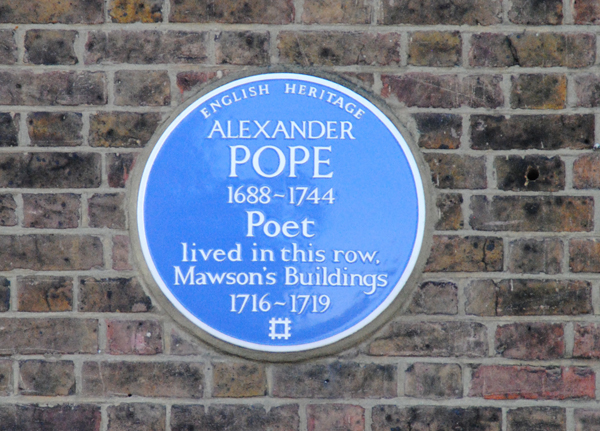
The humble Blue Plaque is set for a new lease on life following an announcement this week. The London Evening Standard has announced it will help breathe new life into English Heritage’s Blue Plaque’s scheme this week with the scheme – which was suspended in January due to funding cuts – set to relaunch next year in association with the newspaper. As many as 20 new plaques have already been funded through a £80,000 donation from property developer David Pearl, says the paper, and the public are being urged to help financially support the programme at www.english-heritage.org.uk/donate. The Standard also noted that from next year its readers will be able to vote for candidates for future plaques. Each Blue Plaque costs about £4,000 to create and install. Pictured is a Blue Plaque commemorating poet Alexander Pope’s residence in a Chiswick property between 1716-1719.  The property is now the Mawson Arms public house.

Where is it?…#66…And the answer is…

Where-is-it--#66

Can you identify where in London this picture was taken and what it’s of? If you think you can, leave a comment below. We’ll reveal the answer early next week. Good luck!

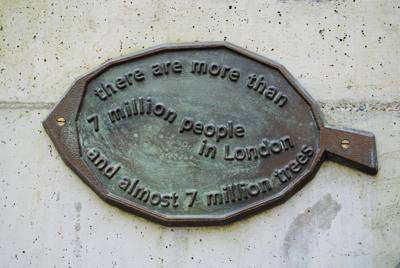
The leaf shape was probably a bit of a giveaway but well done to Val – this is indeed located in Kew Gardens. It’s on the wall of the Rhizotron, located under the Xstrata Treetop Walkway, which takes people underground to see the relationships between tree roots, oil and organisms such as nematodes, beetles, woodlice and bacteria. For more on Kew, see www.kew.org.

Around London – Radio Times celebrated at MoL; IWM reopens; and Lowry at the Tate…

A new exhibition marking the 90th anniversary of the iconic publication, Radio Times, opens at the Museum of London tomorrow (Friday). Cover Story: Radio Times at 90 features some of the magazines most famous covers depicting the likes of Tony Hancock, The Goon Show, Only Fools and Horses and Coronation Street, and charts the history of radio from the BBC’s first transmission to today’s multiple channels. As well as original artwork and photographs used in Radio Times, the display includes a special focus on Doctor Who with the chance for visitors to create their own Radio Times cover as they stand alongside a life-size Dalek. Other highlights include an original 1941 illuminated map used by the Luftwaffe which shows Radio Times‘ Waterlows printing plant in Park Royal alongside other targets. Radio Times was first published by the BBC in London on 29th September, 1923, and since 2011 has been owned by Immediate Media Co. The free exhibition runs until 3rd November. For more, check out www.museumoflondon.org.uk.

The Imperial War Museum has partially reopened this week. As well as the re-opening of its permanent galleries and exhibitions, the museum has launched a major new family-oriented exhibition Horrible Histories: Spies, a new art exhibition entitled Architecture of War and ‘IWM Contemporary’, a new programme showcasing significant works by leading artists in response to war and conflict. The museum will fully reopen in summer next year with the opening of new First World War Galleries. Horrible Histories: Spies, which runs until 4th January (admission charge applies), immerses visitors in the world of World War II spycraft with families able to uncover the techniques used by the most cunning spies. More on Architecture of War and IWM contemporary in upcoming posts. For more, see www.iwm.org.uk.

On Now: Lowry and the Painting of Modern Life. This exhibition at the Tate Britain represents the first to be held by a public London institution featuring  the works of LS Lowry since his death in 1976 and is the first to explore his connections with French art. Among works on display is a little known, untitled painting depicting a busy town square set against the backdrop of industrial Salford which was found on the back of the wooden panel on which Lowry painted his 1937 work The Mission Room. Others among the 90 works on display include Coming Out Of School (1927), The Pond (1950), Industrial Landscape (1955) and Hillside in Wales (1962) as well as Ancoats Hospital Outpatients Hall (1952), The Cripples (1949), Piccadilly Circus, London (1960) and Excavating Manchester (1932). Runs until 20th October. For more, see www.tate.org.uk.

10 (more) curious London memorials…3. William Wallace Memorial…

William-Wallace-memorialHe was captured in Scotland but it was actually at Smithfield in London that the Scottish leader, Sir William Wallace, was put to death on 23rd August, 1305.

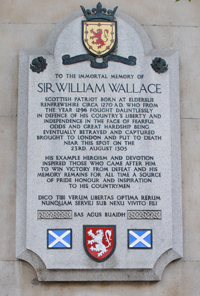
Erected in 1956 by “Scots and friends at home and abroad”, a plaque located on the wall of St Bartholomew’s Hospital overlooking the former execution ground commemorates the “Scottish patriot” Wallace, saying that from the year 1296 “fought dauntlessly in defence of his country’s liberty and independence in the face of fearful odds and great hardship”. It goes on to note that he was “eventually betrayed”, captured and executed “near this spot”.

Elsewhere the memorial reads: “His example, heroism and devotion inspired those who came after him to win victory from defeat and his memory remains for all time a source of pride, honour and inspiration to his countrymen”.

Having co-led the Scottish to victory against the army of King Edward I at the Battle of Stirling Bridge in 1297, Wallace was later knighted for his efforts and subsequently served as a Guardian of the Kingdom of Scotland.

Following his defeat at English hands in the Battle of Falkirk in 1298, he escaped and continued to evade capture until he was apprehended near Glasgow in August 1305. Brought to London where he was put on trial in Westminster Hall. Summarily found guilty of treason, he was stripped naked and dragged to Smithfield and it was there that he suffered the horrible death of being hung, drawn and quartered.

And while the 1995 movie, Braveheart, had Wallace crying out “Freedom” as he died, his last words are actually not recorded. His tarred head was subsequently displayed on a pike atop London Bridge while his limbs were sent to towns including Stirling in Scotland.

LondonLife – A new season for the Fourth Plinth…

Hahn_Gautier1

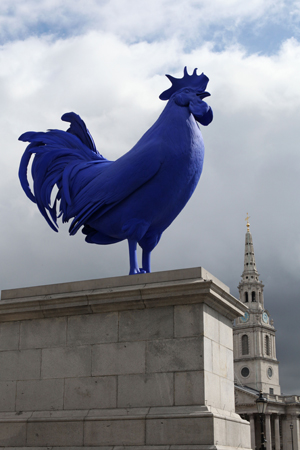
The latest commission for Fourth Plinth was unveiled in Trafalgar Square last Thursday. Katharina Fritsch’s Hahn / Cock, 2013, depicts a 4.72 metre high sculpture of a domestic farmyard cockerel completely coloured in vivid ultramarine blue. Fritsch, one of Germany’s leading contemporary artists, has works featured in the permanent collections of prominent galleries around the world including New York’s Museum of Modern Art. Originally designed by Sir Charles Barry to hold an equestrian statue (which was never completed), the fourth plinth has been most recently occupied by a series of works specially commissioned for the spot under the Mayor of London’s Fourth Plinth Programme. Recent commissions include Yinka Shonibare’s Nelson’s Ship in a Bottle and Antony Gormley’s One and Other. For more details, check out www.london.gov.uk/priorities/arts-culture/fourth-plinthPICTURE: Gautier Deblonde.

What’s in a name?…Old Bailey…

Running from Ludgate Hill to Newgate Street in the western part of the City, there are a couple of explanations behind the thoroughfare known as the Old Bailey.

Old-BaileyOne suggests that the name is derived from Latin word ballium which referred to a wall built for defence and which, in this instance, referred to the old Roman wall which surrounded the City.

Another, according to Antony Badsey-Ellis’ book What’s in a Street Name?, is that the name could be a corrupt form of ‘Bail Hill’ – a place where a bailiff held court.

For centuries the street’s name has also been used for that of a court based there. Now formally known as the Central Criminal Court, the first court – or sessions house – was built here in 1539 on part of the site now occupied by the court.

Built next to the Old Bailey court house – and pre-dating it was Newgate Prison – but when this was demolished in 1902, the Old Bailey (which itself had been rebuilt in the 1670s having been destroyed in the Great Fire of London and then subsequently remodelled) was again rebuilt and, opening in 1907, now covers the site.

For an archive of the court’s proceedings, check out www.oldbaileyonline.orgFor more on the history of The Old Bailey, check out Theresa Murphy’s The Old Bailey: Eight Hundred Years of Crime, Cruelty and Corruption.

Treasures of London – Shakespeare’s Blackfriars deed…

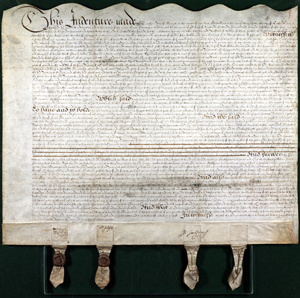
Shakespeare's-DeedIn 1613, the playwright William Shakespeare – now widely regarded as the greatest writer of the English language – purchased a property in Blackfriars.

The only real estate he was to buy in London, the purchase of the gatehouse – which may have stood on the junction of St Andrew’s Hill and Ireland Yard – was apparently made as an investment (Shakespeare never lived there).

The deed which recorded the sale (dated 10th March, 1613) – only one of six documents in the entire world which bears Shakespeare’s authenticated signature – is in the care of the London Metropolitan Archives.

According to the deed, he bought the property from Henry Walker, a minstrel, paying £140 for the property (he mortgaged £60 of it the next day – the document for this is located in the British Library).

Other parties mentioned on the document are William Johnson, a London-based vintner and possibly landlord of the Mermaid tavern in Cheapside, and two ‘gentlemen’ John Jackson and John Heminges, an actor, manager and editor of Shakespeare’s first folio.

They were appointed as trustees in Shakespeare’s interest and handled the sale of the property after Shakespeare’s death in 1616. The copy of the deed held by the LMA was that of Henry Walker (Shakespeare’s copy is in the Folger Shakespeare Library in Washington).

The deed is currently on display as part of an exhibition surrounding the 400th anniversary of its signing. ‘Shakespeare and London’, a free exhibition, also features other documents from the period as well as maps, prints and models and runs at the LMA (40 Northampton Road) until 26th September. Due to the age and importance of the deed, the deed itself will only be displayed at specific times – check the LMA website for details.

Around London – Celebrating the coronation at Buckingham Palace; Royal births at the MoL; the Fourth Plinth unveiled; Menon remembered; and, manufacturing at the Design Museum…

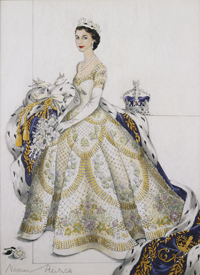
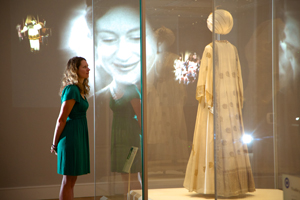
Norman-Hartnell-sketchThe Queen’s Coronation in 1953 is the subject of a special exhibition opening at Buckingham Palace as part of the palace’s summer opening. Celebrating the 60th anniversary of the coronation, the display features an array of outfits including uniforms and robes worn on the historic event on 2nd June, 1953, as well as a series of paintings recording the event, works of art and objects used on the day and film footage and sound recordings. Among the highlights of the exhibition will be sketches made by Norman Hartnell, the principal designer of the outfits worn at the coronation by the Queen, principal ladies of the immediate Royal Family and the Maids of Honour. The State Rooms of Buckingham Palace open on Saturday and remain open until 29th September. An admission charge applies. For more, see www.royalcollection.org.uk. PICTURE: Her Majesty The Queen in her Coronation Dress, 1953, Norman Hartnell. Royal Collection Trust/All Rights Reserved.

Meanwhile in this, the week of the birth of Prince George, it’s only fitting that we mention a small display at the Museum of London showcasing memorabilia relating to royal babies of years past. A Royal Arrival features baby clothes and other items worn by future monarchs. They include a embroidered skullcap worn by the future King Charles I, a tiny linen vest and mitten which once was worn by the future King George III and a dress emblazoned with the three feather insignia which belonged to the future King Edward VII, eldest son of Queen Victoria. The free display will be on show until October. For more, see www.museumoflondon.org.uk.
The new commission for Trafalgar Square’s Fourth Plinth will be unveiled today. The 4.7 metre high sculpture, Hahn/Cock, is the work of contemporary artist Katharina Fritsch. It will sit on the plinth for the next 18 months.  For more details, see www.fourthplinth.co.uk.

Indian statesman VK Krishna Menon has been commemorated by English Heritage with a blue plaque on his former residence in Highgate. A key campaigner for Indian independence, Menon lived at 30 Langdon Road from 1929 to 1931, having moved to England from Madras in 1924. In 1947, Menon was appointed India’s First High Commissioner in London and among his greatest achievements was his work in keeping the country in the British Commonwealth after independence. Having been a local councillor in St Pancras, he later returned to India and embarked upon a political career there. For more, see www.english-heritage.org.uk/discover/blueplaques/.

The-Future-Was-HereOn Now: The Future is Here. A major new exhibition examining the changes taking place in manufacturing around the world, opened this week at the Design Museum. The Future is Here looks at how everything from “cars to shoes” is manufactured, funded, distributed and bought. Among highlights is a ‘Factory’ where visitors can discover how 3D printing works and see production in process. There will also be the chance to make your own ‘action doll’ and see a sofa designed through a crowd-sourcing process which involved members of the public. Runs until 3rd November. Admission charge applies. For more, see www.designmuseum.org.

10 (more) curious London memorials…2. Animals in War Memorial…

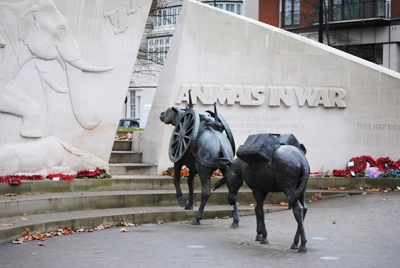
Animals-in-War

This week we take a look at another of London’s war-related memorials but unlike the vast majority, this one, as its name says, commemorates animals, not humans.

Located in the middle of Park Lane near the intersection with Upper Brook Street on the eastern side of Hyde Park, the memorial is dedicated “to all the animals that served and died alongside British and Allied Forces in wars and campaigns throughout time”. Another inscription on the memorial reads “They had no choice”.

A further dedication at the memorial pays tribute to the “millions” of animals who have died in wars. “From the pigeon to the elephant, they all played a vital role in every region of the world in the cause of human freedom,” it says. “Their contribution must never be forgotten.” It’s been said that as many as eight million horses were killed in World War I alone.

It features a couple of bronze pack mules making their way through a gap in a curved, 58 foot wide Portland stone wall – themselves carrying reliefs of various animals including an elephant, horses, camels and pigeons – while on the other side is a bronze horse and a dog, looking ahead.

The memorial is the work of Somerset-based sculptor David Backhouse and was unveiled by Princess Anne in November 2004, the 90th anniversary of the outbreak of World War I. It was apparently inspired by Jilly Cooper’s book, Animals in War, and commissioned by the Imperial War Museum. It was paid for by £2 million in public donations.

For more, check out www.animalsinwar.org.uk.

Special – 10 facts about royal births of years past…

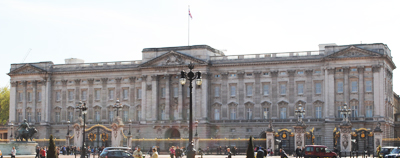
Buckingham-Palace

As we all know by now, Prince William and Kate, Duchess of Cambridge, are proud parents of a new born son with news of the new arrival provoking celebrations across Britain and, indeed, the world.

To celebrate the royal birth, here are 10 interesting facts about some previous royal births in London…

• The last time a Home Secretary attended a royal birth was in 1936 for the birth of Princess Alexandria, cousin of the Queen. The practice was officially stopped before the birth of Prince Charles in 1948.

• Such was the doubt over whether Mary of Modena, wife of King James II, was really pregnant that more than 40 eminent people were invited to witness the birth of their son Prince James in 1688 (and even then the rumours of that the stillborn baby had been swapped for another were rife).

• Queen Anne, who ruled from 1702-1714, went through 17 pregnancies but, tragically, outlived all of her children, her last surviving child – the Duke of Gloucester – dying in 1700.

• The tradition of firing a 41 gun salute on the news of the birth of a future monarch dates from the birth of the future King Edward VII. Twenty-one shots are fired in honour of the birth with an additional 21 fired because the guns are located in Green Park, a Royal Park.

• Queen Elizabeth II was born by caesarean section at 2.40am on April 21, 1926, at the home of her mother’s parents – 17 Bruton Street in Mayfair. (See our previous post on this here).

• Such was the animosity between Frederick, Prince of Wales, and his father, King George II, that when Frederick’s wife Augusta went into labour at the king’s home of Hampton Court Palace, he bundled her into a coach and had her taken to his home of St James’s Palace. With no preparations made there, his newly born daughter had to be wrapped in a tablecloth (the story is retold in detail in Lucy Worsley’s terrific book, Courtiers: The Secret History of the Georgian Court)

• Queen Victoria, who had nine children, used chloroform for pain relief during later births, despite the concept being frowned upon by some officials.

• Buckingham Palace (pictured above) has been the birthplace of numerous Royal Family members. Of course, Prince Charles was born here in 1948 as was his brother Prince Andrew (1960) and Prince Edward (1964) but so too – somewhat earlier – were 14 of King George III and Queen Charlotte’s 15 children when the property was known as Buckingham House and, later, the Queen’s House. King Edward VII was the only monarch who both was born and died in the building.

• Such was the desperation of King Henry VIII for a son, that a document announcing the birth were drawn up to that effect prior to Anne Boleyn giving birth to a daughter, the future Queen Elizabeth I. The document was still issued – the only concession being an ‘s’ added to the end of the word prince.

• The oldest English king to father a child was King Edward I – he was 66-years-old when his last child, Princess Eleanor, was born in 1306. Queen Eleanor of Aquitaine, wife of King Henry II, was the oldest queen to father a child when she gave birth to the future King John at 44-years-of-age in 1166.

London Pub Signs – The Tipperary…

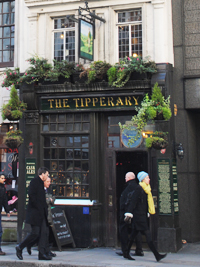
Built on land which once formed part of ‘White Friars’ (Carmelite) monastery, this Fleet Street institution is the latest incarnation in a string of pubs which have occupied the site since at least the early 17th century.

The-TipperaryA pub was built on the site in about 1605. Made of stone rather than wood (the stones apparently plundered from the monastery), the property – which stands over the top of what’s left of the River Fleet – survived the Great Fire of London in 1666.

While there seem to be a few competing versions of the pub’s history, it was apparently first named the Bolt-in-Tun (the sign of which showed a barrel pierced by a crossbow quarrel or bolt) and became a popular coaching inn (an alley opposite still bears the name Bolt Court). It was apparently later renamed The Boar’s Head.

The pub – located at 66 Fleet Street – was at some stage – the sign outside says in 1700, others suggest it was in the late 1800s – it was bought by Dublin-based brewery SG Mooney & Son (the Mooney name is still on the doorstep). It was after this purchase that it was transformed into what is claims was the first Irish pub outside of Ireland and, perhaps more importantly, the first pub outside Ireland to serve Guinness (first bottled and later draught).

The pub’s name was changed to the Tipperary after World War I when, as one story goes, returning Irish soldiers made it a favourite of theirs and christened it in honour of the song It’s A Long Way To Tipperary.

Bought by Greene King in the 1960s, the pub underwent a restoration which took it back to the style it would have been during Mooney’s days.

The pub apparently once featured a clock by renowned Fleet Street clockmaker Thomas Tompion, known as the “father of English clockmaking”. A replica now sits in the pub thanks to the original being stolen.

Special – London unearthed…

ForeshoreThis month the Festival of Archaeology is being celebrated all across the UK, including in London where about 30 different events are being held. This year they include the chance to visit the remains of the Elizabethan Rose Theatre in Bankside and see for yourself preparations for an excavation to start next year, the opportunity to walk through the London offices of the Egypt Exploration Society, a series of hands-on archaeology-related activities at Eltham Palace in south London, behind the scenes tours of the Museum of London, and the chance (next weekend – 27th/28th July) to go mud-larking along the foreshore of the River Thames outside the Tower of London and then present your findings to archaeologists for identification (pictured above from a previous year). Get in there and have some fun! For more details of events, check out www.archaeologyfestival.org.uk.

Around London: Masques of the Stuart Court; saving London’s heritage; IEDs at the NAM; and, Eighties fashion at the V&A…

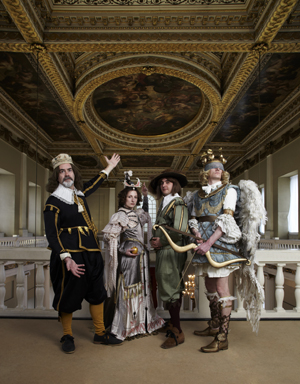
Stuart-masque-at-Banqueting-HouseThe sights and sounds of the elaborate masques of the early Stuart Court – described as a cross between a ball, an amateur theatrical, and a fancy dress party – are being recreated at the Banqueting House in Whitehall. Historic Royal Palaces have joined with JB3 Creative to create an “immersive theatrical experience” for visitors to the building – one of the last surviving parts of the Palace of Whitehall – with the chance to try on costumes, learn a masque dance and witness performance rehearsals for Tempe Restored, last performed in the building in 1632. Inigo Jones will be ‘present’ as masque designer to talk about his vision for the performance. Weekends will also see musicians performing period music and on 27th July there will be a one-off evening event at the Banqueting House based on Tempe Restored. Admission charge applies. Performing for the King opens tomorrow and runs until 1st September. For more, see www.hrp.org.uk/BanquetingHouse/. PICTURE: HPR/newsteam.

A new exhibition looking at how some of London’s great Georgian and Victorian buildings were lost to bombs and developers before, after and during World War II – and how people such as poet John Betjeman campaigned to save them – opened in the Quadriga Gallery at Wellington Arch near Hyde Park Corner yesterday. Pride and Prejudice: The Battle for Betjeman’s Britain features surviving fragments and rare photographs of some of the “worst heritage losses” of the mid-20th century. They include Robert Adam’s Adelphi Terrace (1768-72) near the Strand, the Pantheon entertainment rooms (1772) on Oxford Street, and Euston Arch (1837). The English Heritage exhibition runs until 15th September. Admission charge applies. For more, see www.english-heritage.org.uk/daysout/properties/wellington-arch/.

IEDs (Improvised Explosive Devices) will be ‘uncovered’ in a new exhibition opening tomorrow at the National Army Museum. Unseen Enemy will tell the stories of the men and women in Afghanistan who search for, make safe and deal with the impact of the IEDs through personal interviews, images and mementoes. The exhibition has been developed with “unprecedented access” from the British Army, Royal Air Force and Royal Navy and will include a range of equipment used in detecting and disarming the devices, such as bombsuits and robots as well as medical equipment used to help those injured in explosions. The exhibition is free. For more, see www.nam.ac.uk.

On Now: Club to Catwalk – London Fashion in the 1980s. This exhibition at the V&A explores the “creative explosion” of London fashion during the decade and features more than 85 outfits by designers including John Galliano, Vivienne Westwood and Katherine Hamnett as well as accessories by designers such as Stephen Jones and Patrick Cox. While the ground floor gallery focuses on young fashion designers who found themselves on the world stage, the upper floor focuses on club wear, grouping garments worn by ‘tribes’ such as Fetish, Goth, High Camp and the New Romantics and featuring clothes such as those worn by the likes of Boy George, Adam Ant and Leigh Bowery. The exhibition also includes a display of magazines of the time. Entry charge applies. Runs until 16th February, 2014. For more, see www.vam.ac.uk. Meanwhile, tomorrow (Friday) night the V&A will celebrate the 25th anniversary of designer Jenny Packham with a series of four free catwalk shows in its Raphael Gallery. Booking is essential. Head to the V&A website for details.

10 (more) curious London memorials…1. Kindertransport memorial

KindertransportWay back in 2011 we ran a series looking at some of London’s most curious memorials. We’ve decided to revisit that theme in our new special series.

To kick it off, we’re taking a look at a group memorial found just outside Liverpool Street Station and dedicated to the thousands of Jewish children who arrived in the UK as refugees over nine months in 1938 and 1939, having fled the Nazis in Europe after the anti-Semitic attacks of the Kristallnacht.

Called Kindertransport – The Arrival, the group of bronze statues representing children with their luggage having just stepped off a train at the station were unveiled in 2006 in Hope Square. A short stretch of railway tracks lays behind them.

The memorial is the work of Frank Meisler – himself a child who travelled on a Kindertransport train from Danzig – and bears an inscription: “Children of the Kindertransport. In gratitude to the people of Britain for saving the lives of 10,000 unaccompanied mainly Jewish children who fled from Nazi persecution in 1938 and 1939. ‘Whosoever rescues a single soul is credited as though they had saved the whole world.’ Talmud.”  It is dedicated by the Association of Jewish Refugees and the Central British Fund for Jewish World Relief.

Around the statue group are a series of blocks upon which is inscribed the names of the cities from which the children fled. They include the cities of Cologne, Hanover, Stuttgart, Frankfurt, Munich, Danzig, Breslau, Prague, Hamburg, Leipzig, Berlin and Vienna along with others.

The statue is one of four, all created by Meisler, which have been erected along the route the children took to reach safety. Others can be found at the main railway station Gdansk in Poland, Friedrichstraße railway station in Berlin, and another in Rotterdam, The Netherlands.

Hope Square also contains another plaque which dedicates the square to the children of the Kinderstransport “who found hope and safety in Britain through the gateway of Liverpool Street Station”.

In late June, an event was held in the St James’s Palace to mark the 75th anniversary of the Kindertransport.

LondonLife – A look into London’s wartime past…

StreetMuseum

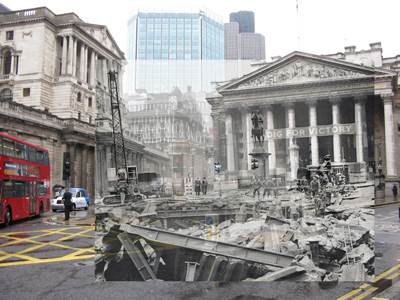
Images from the Museum of London’s Streetmuseum app give a glimpse into London’s past – in this case, its wartime history. The image above, taken by Police Constable Arthur Cross, official photographer of the City of London Police, and his assistant PC Fred Tibbs, shows bomb damage at Bank Underground Station, following a direct hit on 10th January, 1941. An estimated 111 people who had been sheltering in the Tube died, some of them thrown into the path of an incoming train. The crater that was left outside the Royal Exchange was so large the Royal Engineers had to build a bridge across it. For details on how to download the app, head to www.museumoflondon.org.uk/Resources/app/you-are-here-app/home.htmlPICTURE: © Museum of London/By Kind Permission of The Commissioner of the City of London Police.

Where’s London’s oldest…Tube station?

In this, the year of the 150th anniversary of the creation of what we now know as the London Underground, it’s only fitting that we take a look at the city’s oldest Tube station – Baker Street.

Opened on 10th January, 1863, by the Metropolitan Railway, the Grade II* listed property was designed by John Fowler, the company’s engineer in chief. While some stations on the initial railway – which stretched from Paddington to Farringdon – had platforms located in open cuttings, Baker Street was one of only three initial stations (the other two were at what was then named Gower Street (now Euston Square) and Great Portland Street) which was genuinely located underground, with subterranean platforms covered by brick barrel-vaults and lit by gaslights as well as natural light brought from the surface by “lunettes”.

The station was subsequently extended and further developed and, thanks to the company’s desire to make Baker Street its headquarters and “flagship” station, it underwent a major overhaul in 1911-13 with Charles Walter Clark, another Metropolitan Railway employee, designing a new grand booking hall and concourse featuring a lost property office, “ladies’ room” and a WH Smith bookstall.

Features inside include a cast-iron screen – complete with clock –  installed at the entrance to the lower concourse in 1925 to help control passenger flow during the British Empire Exhibition at Wembley, a marble memorial to Metropolitan Railway employees who died in World War I, and, in a nod to the proximity of his fictitious Baker Street residence, large and small Sherlock Holmes silhouettes on tiles located at various places inside (there’s a statue of him outside the station).

For more on the 150th anniversary, see www.tfl.gov.uk/tube150.

Lost London – Wyld’s Great Globe…

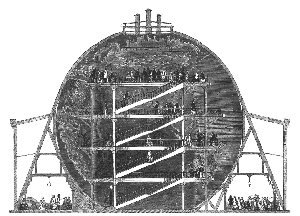
This former fixture of Leicester Square featured a giant globe containing in its innards a detailed physical relief map of the earth’s surface.

The-Great-GlobeThe globe was the brainchild of James Wyld (the Younger), a Charing Cross cartographer and map publisher as well as an MP and Geographer to Queen Victoria, who originally planned on exhibiting it at the Great Exhibition of 1851.

At more than 60 feet high, its proposed dimensions, however, meant it would be too big to be housed inside the Crystal Palace being erected in Hyde Park (besides which, Wyld did want to use the globe to promote his map business, something which was frowned upon by the exhibition’s organisers).

So he turned to Leicester Square and, after a rather complicated series of negotiations with the owners of the gardens, was granted permission locate the globe there for 10 years. An exhibition hall large enough to house the globe – and the globe itself – was hastily constructed in time for the Great Exhibition (and the increased visitor numbers it would draw). It opened on 2nd June, 1851, one month after the Great Exhibition.

Inside the gas-lit interior of the globe – entered through four loggias – were a series of galleries and stairways which people could climb to explore the concave surface of the earth depicted – complete with plaster-of-Paris mountain ranges and other topographical details, all created to scale – on the inner side of the great orb.

Initially a great success (visitor numbers are believed to have topped a million in its first year), its appeal faded after a few years amid increasing competition from other attractions such as Panopticon of Science and Art (more of that in an upcoming post) and Wyld was obliged to introduce other entertainments to keep the public satisfied. Wyld himself was among those who gave public lectures at the site.

When the lease expired in 1862, the exhibition hall and the globe were both demolished and the globe sold off for scrap. Wyld, meanwhile, apparently didn’t keep his promise to return the gardens to a satisfactory state but after much wrangling over their fate, they were eventually donated to the City of London.

 PICTURE: The Great Globe in cross-section from the Illustrated London News, 7th June, 1851 (via Wikipedia).

Around London: Royal fashion at Kensington; Music in Hyde Park; celebrating African literature at the British Library…

Fashion-RulesA new exhibition looking at the fashions of three royals over four decades last century opens at Kensington Palace today. Fashion Rules features five rooms of dress displays with a focus on the fashions of Queen Elizabeth II in the 1950s, Princess Margaret in the 1960s and 1970s and Diana, Princess of Wales, in the 1980s. Twenty-one dresses are included in the display which explores how the royal women negotiated how to dress fashionably while observing the “rules” of the Royal Wardrobe and includes film footage and photography. The dresses include five of the Queen’s evening dresses – one of which is a gown fashioned for the Queen by Norman Hartnell in the colours of the flag of Pakistan, a full-length kaftan and matching turban of ivory sari silk worn by Princess Margaret while on the island of Mustique (on display for the first time), and, two Eighties dresses worn by Diana which have never before been displayed in the UK. Admission is included in entry price. For more, see www.hrp.org.uk/KensingtonPalace/. PICTURE: HRP/Newsteam.

The Rolling Stones are back in Hyde Park this weekend as part of a summer of music in the Royal Park. The concert will take place almost 44 years to the day since the Stones first played the park and comes in the wake of their ’50 and Counting’ shows last year. Their first performance in the park – on 5th July, 1969 – saw the live debut of guitarist Mick Taylor and was a tribute to founding member Brian Jones who has died only two days before. For the full programme of Barclaycard presents British Summer Time Hyde Park, head to www.bst-hydepark.com.

Ngugi2010-2Daniel-Anderson-UnivCommThe British Library is partnering with the Royal African Society to host the UK’s largest festival of African literature – Africa Writes – this weekend. Kicking off on Friday, the three day festival features Ngugi wa Thiong’o, described as “Africa’s greatest living novelist” (pictured), and his son, rising star Mukoma Ngugi, in a conversation chaired by Ellah Allfrey, deputy editor of Granta Magazine. Other programme highlights include a poetry evening, ‘Diaspora Writes Back’; a tribute to Chinua Achebe, the “father of contemporary African literature”; and the writers short-listed for The Caine Prize – the most prestigious prize for African short fiction. For more, see www.africawrites.org. PICTURE: Ngugi wa Thiong’o © Daniel Anderson.