Lost London – Euston Arch…

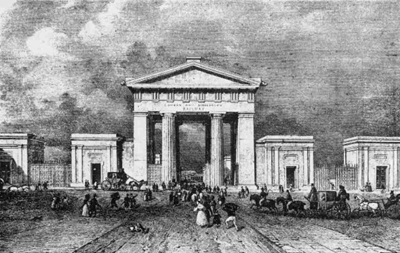
The original entrance to Euston Station, Euston Arch was not so much an arch as a colonnaded monumental gateway, formally known as a propylaeum, which resembled the entrance to a Greek temple.

Euston-ArchBuilt in 1837 (pictured here in 1851), it was designed by architect Philip Hardwick and inspired by the ancient architecture he had encountered on a trip to Europe – in particular the grand entrance to the Acropolis in Athens.

Commissioned by the London and Birmingham Railway as the grand entrance to the company’s new station then facing on to Euston Square (the site is now covered by the station structure), it was designed to complement the existing structure which had been built at the other end of the line in Curzon Street Station in Birmingham.

The building, which rose to a height of 21.5 metres and was built from Yorkshire-sourced sandstone, featured four columns behind which stood large iron gates. Rather controversial even when built, it led to an apparently unexciting courtyard lined with offices. There were lodges to either side.

While there had been a couple of proposals to relocate the arch – particularly after notice was given in 1960 that it would be demolished so the station could be rebuilt – none of the proposals came to fruition, and despite some intense last minute lobbying to preserve the arch by conservationists (among those lobbying were poet Sir John Betjeman and architectural scholar Sir Nikolaus Pevsner), demolition – viewed by some as an “architectural crime” – started in December 1961.

While sections of the arch was subsequently used as fill in the Prescott Channel in East London (numerous sections have since been recovered from the water), the main gates were saved and given to the National Railway Museum in York.

There has been talk of rebuilding the arch particularly since the formation of the Euston Arch Trust in 1994 (the patron of which is Michael Palin) with the aim of reusing some of the lost stonework. While rebuilding hasn’t yet eventuated, the proposed redevelopment of Euston Station in more recent years has given the project new impetus.

PICTURE: Wikipedia.

Where is it?…#58

Where-is-it--#58

Can you identify where in London this picture was taken? If you think you can, leave a comment below. We’ll reveal the answer early next week. Good luck!

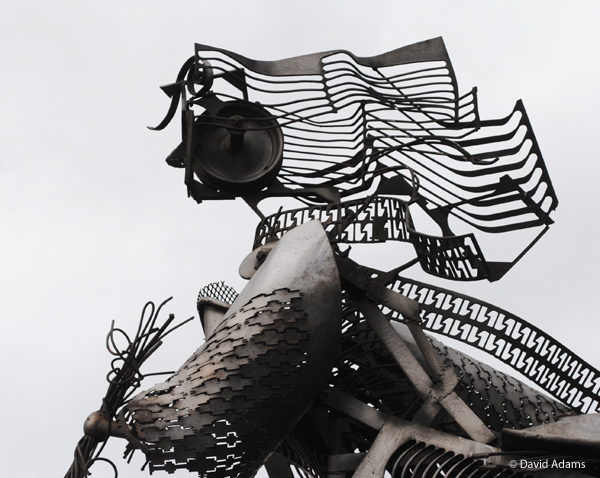
A bit of a harder one this week (so we thought we’d leave a bit longer before giving you the answer!). This is a sculptural figure – aptly named Figurehead for Docklands – which stands at the north-east corner of Poplar Dock in East London. Designed in 1997 by Anna Bisset, it’s made of cast iron and welded steel and was inspired by the idea of ship’s figureheads. Initially put on show at Tidal Basin, Royal Victoria Dock, over the summer of 1995 as part of an outdoor exhibition organised by the University of East London and the London Docklands Development Corporation, it was subsequently purchased by the LLDC and put on permanent display in its current location. For more of Anna Bisset’s work, visit www.annabisset.co.uk.

We’ll post our next Where is it? over the weekend…

London Pub Signs – The Gun…

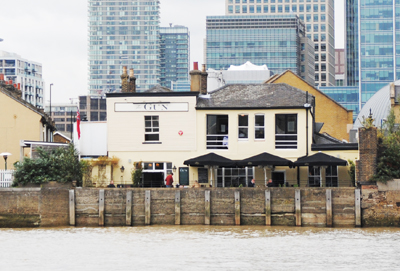
This Docklands pub – the site of which has hosted a public house for more than 250 years – is located in an area where iron foundries were once employed to produce cannons for the Royal Navy’s many ships of the line.

The-GunBut according to the pub’s website (and a plaque outside the building), the name comes from something much more specific – the cannon which was fired at celebrations surrounding the opening of the West India Import Docks in 1802.

And that’s not only historical link this Grade II-listed pub (seen here from the Thames) has with the navy. Heroic naval figure Vice Admiral Horatio Lord Nelson, who lived just up the road and was a frequent visitor to the docks, was apparently a regular at the pub where he was secretly meet with his mistress Lady Emma Hamilton (the room they met in is now called The River Room).

There’s also a history of smugglers operating out of the pub and a still present spyhole is said to have been used to watch for revenue officers.

In 2001 much of the interior of the pub was destroyed in a fire. It remained closed for three years before brothers Tom and Ed Martin bought the building and undertook a painstaking restoration in consultation with English Heritage, reopening the building’s doors in 2004.

As well as its historical associations, The Gun now boasts a couple of bars and dining rooms and  riverside terrace. During summer, the pub also opens a second terrace area under a Portuguese barbeque theme – A Grelha at the Gun.

For more on The Gun (located at 27 Coldharbour in the Docklands), see www.thegundocklands.com.

Where’s London’s oldest…Thames tunnel?

While the Greenwich foot tunnel may these days be more well-known due to the fact it is still open to pedestrians, London’s oldest under-Thames tunnel (also credited as the oldest underwater tunnel in the world) actually runs between Rotherhithe on the river’s southern bank and Wapping on the northern.
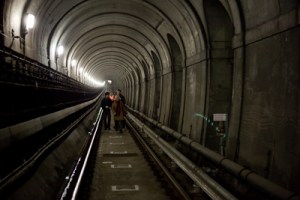
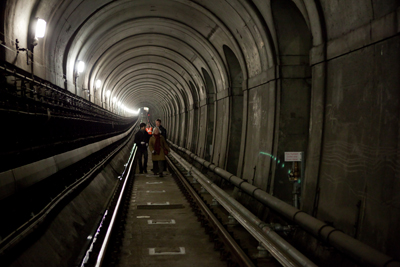
Thames_Tunnel-in-2010First opened in 1843, the Thames Tunnel (pictured left during a brief reopening to pedestrians in 2010) was the first major project of star Victorian engineer (and delightfully named) Isambard Kingdom Brunel (who, at the age of just 19 started work on the job with his father, a French engineer named Marc Isambard Brunel) and was known for a time as the eighth Wonder of the World.

It was constructed after demand grew for a way to transport goods across the crowded Port of London to the east of London Bridge. Given the height of the masts of larger ships, a bridge was deemed impracticable with the ramps required to take wheeled transport to the necessary height far too long (although this problem was overcome at the end of the 1800s by the use of new bascule technology in the construction of Tower Bridge).

Following several failed attempts to dig a tunnel under the Thames, Marc Brunel was given permission to build the new tunnel in the mid 1820s. The project relied on the use of a ‘tunnelling shield’, a then state-of-the-art technological solution to under river tunnelling which had only a few years earlier been patented by Marc Brunel and Thomas Cochrane, and Brunel initially thought the project would only take three years (it ended up taking as many as 18).

Construction by the newly formed Thames Tunnel Company, which had the support of none other than the Duke of Wellington, commenced in early 1825 at the Rotherhithe end. The shield enabled miners to dig out the tunnel while bricklayers came along behind them. While it significantly reduced the risk of a collapse (although several floods still did occur, taking the lives of six men – a fact which didn’t apparently much deter the sightseers who paid for the privilege of seeing the shield in operation), working conditions remained terrible with the men constantly showered with water from the river which was at that time the city’s main sewer. How many died indirectly as a result of working on the project is unknown.
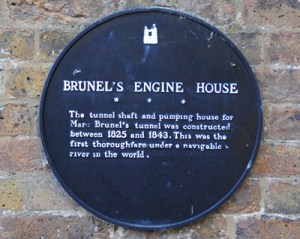
Brunel-plaqueIndeed, such was the stress of the project that Marc Brunel, later knighted for his efforts in building the tunnel, himself suffered a stroke during its construction. Isambard Brunel, who took over as the project’s engineer when the resident engineer fell ill in 1826, himself came close to being killed when he had to flee the flooding tunnel.

After much delay (including seven years in which the unfinished tunnel was left untouched) and several more disasters, the tunnel was finally completed in November, 1841.

After being fitted out with lighting, spiral staircases and roads in the following years, it was finally opened to pedestrians only on 25th March, 1843. While it was originally envisaged that the primary purpose of the tunnel would be to transport goods under the river, this never occurred.

Still, it did capture the public’s attention and as many as 50,000 people walked through the tunnel on the opening day (among the initial visitors to the tunnel was Queen Victoria herself). Within 10 weeks of its opening, a million people (a figure equal to what was then half the population of London) had reportedly passed through it.

Despite the number of people initially using it, however, the tunnel was still not a financial success and over the ensuing years became noted as a gathering place for unsavoury types. In 1865 it was purchased by the East London Railway Company which subsequently incorporated the tunnel into its railway network with both the Wapping and Rotherhithe entrance shafts converted into stations. It later become part of the London Underground network – the  – and since 2010 has been part of the London Overground.

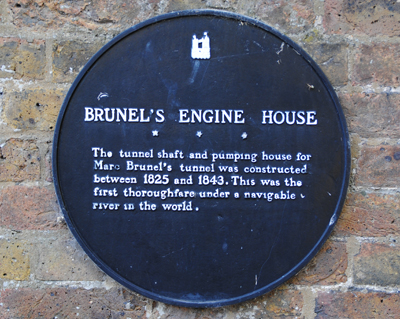
Both stations are still in use and you can get a good sense of what the tunnel was like by riding the overground between Rotherhithe and Wapping. The Brunel Museum in Rotherhithe – actually housed within a building originally used to house machinery for draining the tunnel – see plaque above – is also a great place to find out more about the project and Brunel. Visit www.brunel-museum.org.uk for details.

PICTURES: Top – Lars Plougmann (Wikipedia)/Other – David Adams

For more on the life of Brunel, see Steven Brindle’s Brunel: The Man Who Built the World.
Around London – Christmas at the Tower and Kew Gardens; Old Flo on display; African Diaspora on show at MoL Docklands; and, Mariko Mori at the Royal Academy…

Victorian-Christmas The Tower of London is going Victorian this Christmas with visitors able to experience some of what the Yuletide celebrations in the foreboding, much storied buildings were like in the mid-to-late 1800s. Visitors will be shown how many of the Christmas customs we now participate in each year – like writing cards, pulling crackers and the setting up of family Christmas trees – owe their origins to the Victorian era. The Yeoman Warders will be receiving a Victorian makeover and writer of the age – Charles Dickens – will be reciting some of his works before joining in a “raucous” lunch party with some of his fellow writers, artists and benefactors. It’s even rumoured that Queen Victoria and Prince Albert themselves may make an appearance (take that as a given). Bah! Humbug! A Very Merry Victorian Christmas runs from 27th until 31st December. The festivities will all be included in the usual admission price. For more, see www.hrp.org.uk. PICTURE: Nick Wilkinson/NewsTeam.

Kew Gardens are celebrating Christmas with a host of events including a “Twelve trees of Christmas” family trail. The trail, a map of which can be picked up as you enter, includes facts about trees along the route. Volunteer guides are also leading free tours of seasonal highlights and the Kew Christmas tree can be seen at Victoria Gate. Other festive treats at Kew include the chance to see Father Christmas in his grotto (until Sunday only) and a vintage carousel on the Kew Palace Lawn. Many of the Christmas-related events end on 6th January. See www.kew.org for more.

A display focusing on the history of Henry Moore’s sculpture, Draped Seated Woman (better known as Old Flo), has opened at the Museum of London Docklands. Henry Moore and the East End provides a glimpse into 1950s East London and looks at why public art was considered important at the time. It features some of the maquettes (scale models) Moore used in creating the piece. The exhibition was opened following a decision by the Mayor of Tower Hamlets, Lutfur Rahman, to sell Old Flo (now at the Yorkshire Sculpture Park) rather than display the artwork in a public space. The move is being contested by the Museum of London Docklands who have offered to put the work on public display. An online exhibition can be seen at www.museumoflondon.org.uk/oldflo and a ‘pop-up exhibition’ on Old Flo will be launched in January. The museum is also encouraging people to tweet their views about the selling of the sculpture under the hashtag #saveoldflo.

On Now: Take Another Look. Still at the Museum of London Docklands, this exhibition focuses on the visual representation of people from the African Diaspora who were living and working in Britain in the late 18th and early 19th century. The display of 17 exhibits in the London, Sugar and Slavery gallery features prints by artists including Thomas Rowlandson and George Cruikshank as well as newspaper cuttings, mostly dating from 1780-1833, which show black Britons in perhaps what were unexpected roles – soldiers, musicians and sportsmen – during what was the period in which the abolition of slavery occurred. There are a series of events planned around the exhibition which runs until 4th August. Entry is free. For more see www.museumoflondon.org.uk/Docklands/.

On Now: Mariko Mori: Rebirth. The first major museum exhibition of the New York-based Japanese artist Mariko Mori in London since 1998 has opened at the Royal Academy of Arts in Piccadilly. The exhibition features some of the artist’s most acclaimed works from the last 11 years, many of which have never before been seen in the UK, as well as works created just for the exhibition. Highlights include Tom Na H-iu, a five metre high glass monolith lit by hundreds of LED lights and connected back to the Institute for Cosmic Ray Research at the University of Tokyo; Transcircle, described as a “modern day Stonehenge”; and, Flatstone, an installation of “22 ceramic stones assembled to recreate an ancient shrine”. Runs until 17th February. Admission charge applies. For more, see www.royalacademy.org.uk.

10 Historic London Markets – 9. Petticoat Lane Market…

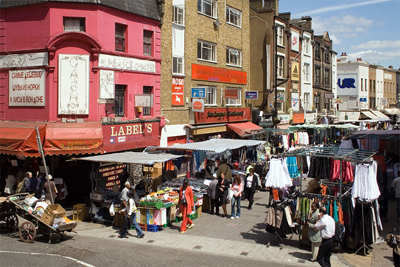
One of the more well-known street markets of London, there has been a market operating in Petticoat Lane (later known as Middlesex Street) in East London since the 17th century.

The market – which lies in relatively close proximity to the Columbia Road Flower Market and Old Spitalfields Market as well as Brick Lane – started to emerge in the early 1600s as a place where clothes were traded and received a boost with the arrival of Huguenot silk weavers who settled in the area later that century having fled religious persecution in the continent (it’s believed the lane was named after the silk petticoats which were sold here).

During the 1800s the area become renowned as the centre of the clothes manufacturing trade and the market was the place to buy the clothes. Around 1830, the name of the street was changed from Petticoat Lane to Middlesex Street after some sensibilities were offended that the street was named after unmentionables.

In the late 19th and early 20th centuries, the market became dominated by Jewish traders who had arrived in London, like the Huguenots before them, fleeing persecution in Europe. They added new life to the market and maintained the coster traditions.

Like many other street markets in London, the market didn’t get formal approval until quite late in life – only in 1936 was it was protected by an Act of Parliament.

These days the market – one of 1o managed by the London Borough of Tower Hamlets in whose jurisdiction the majority of the market lies – occupies the lanes and streets centring on Middlesex Street including Cobb Street, Goulston Street and Wentworth Street (which has long had a street market in its own right). It is open weekdays as well as Sunday when there are more than 1,000 stalls selling everything from clothes to CDs, books and artwork.

WHERE: Middlesex Street (nearest Tube stations are Aldgate, Aldgate East and Liverpool Street); WHEN: 10am to 4pm, Monday to Friday and 9am to 3pm Sunday; COST: Free.

PICTURE: Andrew Dunn, www.andrewdunnphoto.com (via Wikipedia).

10 Historic London Markets – 8. Columbia Road Flower Market…

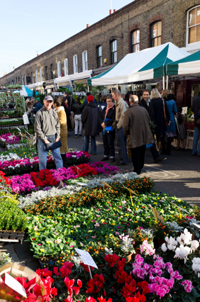
Originally founded in the early 1800s, the Columbia Road market in East London has since evolved into a specialist flower market on Sundays.

First emerging as a general street market in the early 1800s, the market was formalised in the mid 1800s when banking heiress Angela Burdett-Coutts financed the construction of the now demolished – and somewhat architecturally fanciful – Columbia Market. This opened in 1869 at the northern end of the road but didn’t prove a great success. Despite efforts to save it – including apparently relaunching it as a fish market – it closed in 1885.

The market building – which is said to have resembled the sort of market hall that might be found in rural areas – was later used as a warehouse but after suffering bomb damage in World War II were demolished.

The market, meanwhile, reappeared on the street and as the area’s Jewish population grew, moved to a Sunday, a decision which allowed traders from Covent Garden and Spitalfields to trade their leftover goods from the previous day.

The introduction of new regulations – including those introduced in the 1960s requiring traders to attend regularly – saw the market gradually transform itself into the colorful market selling cut flowers, plants and bulbs you can find there today. Popular with film makers and photographers thanks to the colourful backdrop it provides, the surrounding streets also feature a range of interesting independent shops and cafes.

WHERE: Columbia Road, Bethnal Green (nearest Tube stations are Shoreditch, Liverpool Street, Aldgate East and Bethnal Green); WHEN: 8am to 2pm Sunday; COST: Free; WEBSITE(S): www.columbiaroad.info/www.columbia-flower-market.freewebspace.com/index.html.

PICTURE: Dynasoar/www.istockphoto.com

10 Historic London Markets – 6. Old (and New) Spitalfields Market…

There has been a market on the site now known as Old Spitalfields Market, located on the eastern outskirts of the City of London next to what was the Priory and Hospital of St Mary Spital, since the thirteenth century.

But it was centuries later when, following the tumult of the Civil War, in 1682, John Balch was formally granted a Royal Charter by King Charles II to hold a “flesh, fowl and roots” market on Thursdays and Saturdays in or on the rectangle of land known as Spital Square. A ‘market-house’ was built on the site around this time for administrators with traders selling their wares from stalls.

The success of the market drew people to the area – in particular, Huguenots fleeing France who brought with them new skills in silk-weaving, and later Irish fleeing the Potato Famine and Jews escaping the harsh political climate in Eastern Europe – and the market gained a name for itself as a place to buy fresh produce.

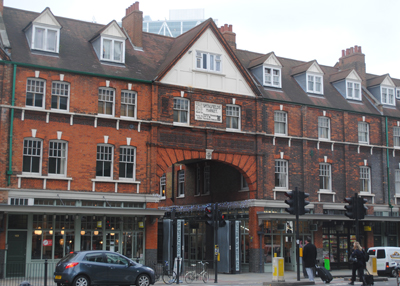
By late in the 19th century, the market had fallen into decline. So, in 1876, a former market porter by the name of Robert Horner decided it needed an upgrade and, buying the lease, had the central market square roofed with glass and new market buildings, known as the Horner Buildings (pictured above), constructed around the northern, eastern and southern sides of the site. Having cost £80,000, it was completed in 1893.

In 1920, the City of London took over control of the market and later than decade expanded the original buildings. Having continued to grow over the ensuing years and with traffic congestion continuing to increase in the surrounding streets, it was decided to move the fresh produce aspect of the market to a new location at Leyton to the north-east.

The new market, known as New Spitalfields Market, covers more than 31 acres and boasts more than 100 traders.

Meanwhile, Old Spitalfields Market, the western end of which was redeveloped in the late 20th century, continues to operate on the original market site – now known as Horner Square, with stalls selling everything from contemporary and vintage fashion to music, gems and jewellery, bric-a-brac and antiques as well as various themed market days – check the website for more details.

Old Spitalfields Market
WHERE: Horner Square, Spitalfields (nearest Tube stations are Shoreditch High Street and Liverpool Street); WHEN: Markets are held every day – times vary so check website for details; COST: Free; WEBSITE: www.oldspitalfieldsmarket.com.
.
New Spitalfields Market
WHERE: 23 Sherrin Road, Leyton (nearest Tube station is Leyton); WHEN: Trading hours midnight to around 9am, Monday to Saturday; COST: Free; WEBSITE: www.cityoflondon.gov.uk/business/wholesale-food-markets/new-spitalfields/Pages/default.aspx.

LondonLife – Canary Wharf skyline…


Skyline of Canary Wharf, Docklands, east London. Taken from a ferry on the Thames. Canary Wharf is one of the city’s main financial districts and is centred around One Canada Square (pictured with the pyramidal top), formerly the tallest building in the UK (it has been surpassed by The Shard).

LondonLife – Bronze Age finds at Crossrail site…

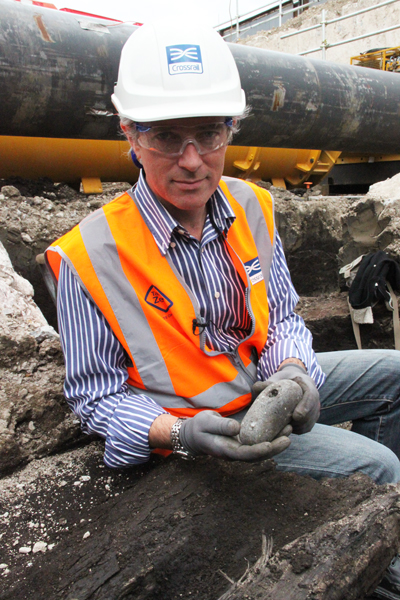
Crossrail’s lead archaeologist Jay Carver holding a hammer stone which is among the first Bronze Age finds uncovered during the £14.8 billion rail project.

The discoveries, uncovered at the Plumstead tunnel entrance site in East London (not far from Belmarsh Prison), also included two wooden stakes that may have been cut by early hunters with an axe and which  may have been used in the building of a timber path, part of a network which allowed hunters to access wetland areas about 3,500 years ago.

“Although we haven’t identified an actual track way yet, the timbers are similar to those used to make the track ways and certainly show that people were in the area exploiting the woodland,” says Mr Carver. “This is a promising find as we continue our search for evidence of a Bronze Age transport route along where London’s newest railway will run.”

Previous objects found at Crossrail project sites include human bones from the medieval period, a find of rare amber and a piece from a mammoth’s jaw bone.

The latest finds, which are now being examined by Museum of London Archaeology, were made as a month long exhibition opens at Crossrail’s Tottenham Court Road Visitor Information Centre (16-18 St Giles High Street), displaying previous objects found during the project.

Meanwhile, as part of the exhibition, Mr Carver will also host a Q&A session on Twitter (#BisontoBedlam) today between 2pm and 9pm during which he will answer questions on Crossrail’s archaeology programme and the exhibition.

Crossrail, Europe’s largest construction project, will see the construction of a new rail link running along a 73 mile route across the city.

For more on Crossrail, see www.crossrail.co.ukPICTURE: Courtesy of Crossrail.

LondonLife – A snapshot in time at the soon-to-be Design Museum…

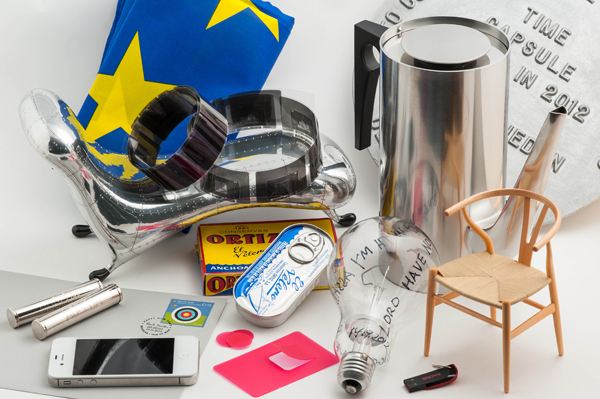
A selection of objects chosen by leading designers and architects including Sir Terence Conran, Sir Paul Smith, Zaha Hadid, and Norman Foster were buried within the foundations of the soon-to-be Design Museum in Kensington High Street earlier this month. The objects, which included everything from a miniature model of an 1949 Wish Bone Chair to an iPhone, a Cylinder Line Coffee Pot, a tin of anchovies and Tube maps, were placed within a time capsule which was buried as part of a ground-breaking ceremony for the new museum. Designed by John Pawson, the new Design Museum will be based within the converted interior of the former Commonwealth Institute Building. Expected to open in 2015, it will have three times as much space as the existing premises in Shad Thames, south east London. For more, see http://designmuseum.org.

PICTURE: Dominic French.

Where is it?…#44

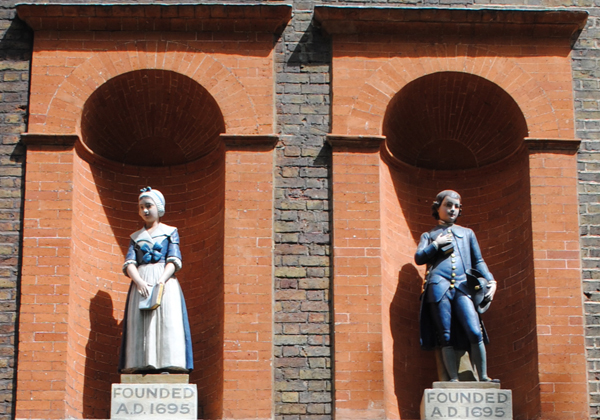
The latest in the series in which we ask you to identify where in London this picture was taken and what it’s of. If you think you can identify this picture, leave a comment below. We’ll reveal the answer early next week. Good luck!

Well done to Janet and Mike – these are indeed statues on the front of the former St John’s Old School in Wapping, east London. Located in Scandrett Street near the former parish church, the school was founded in 1695 although the current building dates from the mid-1700s. The costumes worn by the students are typical of the “blue coats” worn at charity schools (blue was apparently the cheapest dye) which were created for orphan children so they could be cared for and trained in the skills they would need to work in domestic service. Boys and girls were segregated and you can see the separate entrances for them on this building’s facade. The ‘model students’, some of the best on display in London, are made of Coade stone. The building is now used for residential accommodation.

Around London – Open House London; 16th century tankard at MoL Docklands; and, Spanish artists shine at the British Museum…

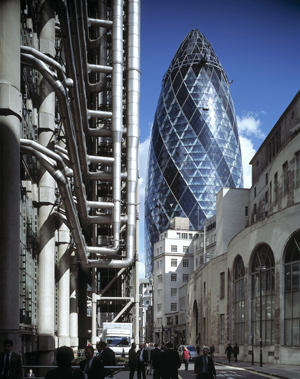
It’s Open House London weekend and that means your chance to enter scores of buildings not normally open to the public. More than 750 buildings are taking part in this, the 20th year the weekend has been held and there’s also an extensive program of free talks, walks and specialist tours. Among the buildings open this year are the iconic Gherkin building in the City (formally known as 30 St Mary Axe, pictured), Heron Tower in Bishopsgate, numerous livery company halls including that of the Apothecaries, Fishmongers and Carpenters, government buildings including Marlborough House, Westminster Hall, and the Foreign Office and numerous historic residences from the Mansion House, home of the Lord Mayor of London to Osterley Park House in west London. Among the events on offer is a moonlit hike through London tomorrow night to raise money for Maggie’s Cancer Caring Centres and rides on the new Emirates Airline cable car as well as boat tours to the Thames Barriers. If you didn’t order a guide, you can see the program online at the Open House London website – www.londonopenhouse.org. PICTURE: (c) Grant Smith/VIEW Pictures

A 16th century wooden tankard, found by a mudlark on the Thames foreshore near Ratcliff in London’s east, has briefly gone on display at the Museum of London Docklands. The large vessel, capable of holding three pints, has the initials RH inscribed on the base. It’s unknown for what purpose it was used, perhaps serving as a decanter rather than for individual use and may have been used on a ship. The vessel will be on display at the museum only until 27th September. For more, see www.museumoflondon.org.uk.

On Now: Renaissance to Goya: Prints and drawings from Spain. Opening at the British Museum today is this new exhibition featuring important prints and drawings by Spanish and other European artists working in Spain and spanning a period from the mid 16th century through to the 19th century. While all the works are drawn from the museum’s collection, many have never been on display before. The artists represented include Diego Velazquez, Alonso Cano, Bartolome Murillo, Francisco Zubaran and Jusepe de Ribera as well as Francisco de Goya. Held in room 90. Admission is free. Runs until 6th January. For more, see www.britishmuseum.org.

Around London – London’s listed; Open House beckons; Blue Plaque for opthalmologist; and, Motya Charioteer at the British Museum…

• It includes everything from the iconic Lloyd’s Building in the City to the former Strand Union Workhouse in Fitzrovia which may have inspired scenes in Charles Dickens’ Oliver Twist and the red phone boxes which sit outside the British Museum in Bloomsbury. English Heritage this week released it’s London List 2011 which documents the more than 100 sites in London which have been awarded listed status by the organisation last year. They include 19 Underground stations (among them that of Oxford Circus, St James’s Park and Aldwych), four war memorials (including the grand Central Park War Memorial in East Ham) and two schools as well as various cemetery monuments (including at Highgate and Brompton Cemeteries, and Bunhill Fields Burial Ground) and parks (the status of Green Park was upgraded to Grade II*), religious and commercial premises, public libraries and homes. To download a copy, visit www.english-heritage.org.uk/publications/london-list-2011/.

It’s just one week to go until the Open House London weekend when more than 750 buildings of all sorts open their doors to you. We’ll be talking more about some of the special places open this year in next week’s update – this is, after all, one of our favorite London events of the year, and while, if you haven’t already entered, you’ve missed on the balloted openings, there’s still plenty of places where you can simply turn up on the day (and entry to all is free). If you haven’t already bought one, you can buy the Guide online – just follow the links from www.openhouselondon.org.uk. It can also be picked up free at some participating London libraries.

• Dame Ida Mann, Oxford’s first female professor and a pioneering ophthalmologist, has been honored with an English Heritage Blue Plaque at her childhood home in West Hampstead. The plaque, which was unveiled by an Australian opthalmologist who worked with Mann, Donald F. Ezekial, last week, has been placed on a house at 13 Minster Road where Mann lived from 1902-1934. Mann was born in West Hampstead and lived there for 41 years before eventually emigrating to Australia. For more on blue plaques, see www.english-heritage.org.uk.

• On Now: Motya Charioteer at the British Museum. Best be quick for this one, the charioteer, on loan from the Museo Giuseppe Whitaker on Motya, is only around until 19th September (that’s next Wednesday). The stunning statue, displayed near the sculptures from the Parthenon, dates from about 460-450 BC and is generally credited as one of the finest examples of Greek marble sculpture to have survived down the ages. It is believed to depict the winner of a chariot race and is likely to have been commissioned to commemorate a victory by a participant from one of Sicily’s Greek cities. It was found in Sicily in 1979. Admission is free. For more, see www.britishmuseum.org.

10 Historic Sporting Events in London – 8. The first London Marathon…

Now one of the world’s largest long distance running events, the first London Marathon was held on 29th March, 1981, and saw some 6,255 people lead across the finish line by American Dick Beardsley and Norwegian Inge Simonsen, who finished in a dead heat. The first woman to finish was the UK’s Joyce Smith.

The idea of holding such an event in London arose after John Disley and the late Chris Brasher (a former Olympian), both members of Richmond’s Raneleigh Harriers running club, decided to enter the New York Marathon in 1979. Returning to London exhilarated by their experience, they began investigating the possibly of holding such an event here and, meeting with a positive response from authorities, pushed ahead with it.

About 20,000 people applied to enter the first London Marathon but only 7,747 people were accepted to run. The course, which is still roughly the same, starts at various locations in Blackheath and passes through Charlton, Woolwich and Greenwich before crossing the Thames at Tower Bridge, looping around through the East End and Docklands before following the river into Westminster.

While the first race finished at Constitution Hill, between Green Park and Buckingham Palace, the race now finishes in The Mall (although for many years in between it finished on Westminster Bridge).

Such was the success of the first event – which was covered by the BBC – that the following year more than 90,000 people applied to run in the race from all around the world. Slightly more than 18,000 were accepted to run.

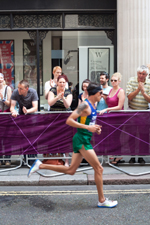
At the end of this year’s event – held on 22nd April (a runner from which is pictured) – more than 882,000 people have now completed the race. Now formally known as the Virgin London Marathon, a record high of 37,227 completed the run this year.

This year’s men’s race was won by Kenyan Wilson Kipsang who completed the race in  2:04:44 – the second fastest time over the London course – while the women’s was also won by a Kenyan – Mary Keitany – who, in taking back-to-back titles, completed the course in 2:18:37.

Since its inception, one of the key aspects of the race has been its fund-raising for a variety of charitable causes. Key among these is The London Marathon Charitable Trust which, established at the race’s outset, helps fund community sports facilities and develop recreational projects around the city.

For more on the Virgin London Marathon, see www.virginlondonmarathon.com.

PICTURE: © photocritical/istockphoto.com

Around London – Bells…and more bells; Olympic memorabilia; free wifi in the West End; The Arch returns to Kensington Gardens; and, Impressionists at the RA…

• It’s all about the Olympics in London this week and many of the events – like the Opening Ceremony and Torch Relay (see last week’s post) – are well covered elsewhere, but we thought we’d mention a couple of things in relation to the Games: 

The first is the ‘All the Bells’ project which will see bells across London being rung at 8:12am on Friday to “ring in” the first day of the Olympic and Paralympic Games. Work No. 1197: All the bells in a country rung as quickly and as loudly as possible for three minutes, commissioned as part of the London 2012 Festival, is the brainchild of Turner Prize-winning artist and musician Martin Creed and will involve thousands of bells across the nation. Speaking of bells, the City of London has announced that some of the City’s churches will be ringing continuously during the three Olympic marathon events – the men’s, women’s, and Paralympic events. As many as 57 of the country’s most experienced bell ringers, co-ordinated by the Ancient Society of College Youths (a ringing society created in London in 1637) will be working for three to four hours continuously at churches including St Paul’s Cathedral, St Mary le Bow, St Lawrence Jewry, St Magnus the Martyr, St Vedast and St Katharine Cree. During the women’s marathon, an all-female band will be attempting a peal at St Paul’s, the first all-woman attempt on the bells. (Apologies, this article had originally had the time for the bell ringing at 8.12pm – it is in the morning, not the evening!)

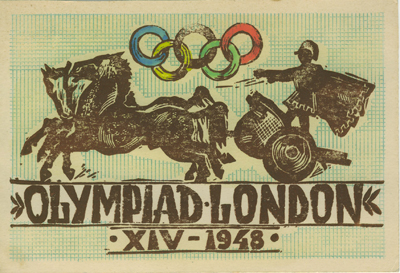
A new exhibition exploring London’s Olympic history has opened at the British Library. Olympex 2012: Collecting the Olympic Games features a range of memorabilia including a swimming costume and the finishing tape broken by – later disqualified – marathon runner Dorando Pietri  from the 1908 London Games (see our earlier post for more on him) as well as posters and artworks, stamps, letters and postcards. The exhibition also features audio interviews with Olympians including William (Bill) Roberts, a relay runner in the 1936 Berlin Olympics, and Dorothy Tyler, a medal-winning high jumper who competed in the 1936 and 1948 Olympics. Presented by the British Library and International Olympic Committee, the exhibition runs until 9th September at the library in St Pancras. Entry is free. For more, see www.bl.uk. PICTURE: Rare 1948 postcard by an unknown artist (c) Private collection/IOC

• A new free wifi network has been launched in London’s West End. Westminster City Council and telco O2 launched the network this week. It will initially cover Oxford and Regent Streets, Trafalgar Square, Leicester Square, Piccadilly Circus and Parliament Square with further areas in Westminster and Covent Garden the next to be included in the network. A once-only registration process is required to join.

• Henry Moore’s famous sculpture, The Arch, has been returned to its original home in Kensington Gardens. The six metre high work was presented to the nation by Moore in 1980 and was positioned on the north bank of the Long Water until 1996 when the structure became unstable and was placed in storage. In late 2010, the Royal Parks began a project with The Henry Moore Foundation to see if the work could be returned to the gardens. Work began to restore the piece – which consists of seven stones weighing 37 tonnes – to its original location earlier this year. For more on Kensington Gardens, see www.royalparks.org.uk/parks/kensington-gardens.

• On Now: From Paris: A Taste for Impressionism. This Royal Academy of Arts exhibition at Burlington House features 70 works from the Sterling and Francine Clark Art Institute in Williamstown, Massachusetts, and includes works by Manet, Monet, Pissarro, Degas, Sisley, Morisot and Renoir as well as those of post-Impressionist artists Corot, Théodore Rousseau and J-F. Millet, and ‘academic’ paintings by Gérôme, Alma-Tadema and Bouguereau. Runs until 23rd September. Admission charge applies. See www.royalacademy.org.uk for more.

Around London: Olympic Torch Relay hits London; mascots pop-up all over the city; and Shakespeare at the British Museum…

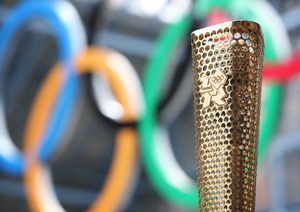
• The Olympic Torch Relay arrives in London tomorrow night before working its way around all of the city’s 33 boroughs and reaching the Olympic Stadium for the Opening Ceremony next Friday.  The torch will arrive in the city by helicopter from Guildford tomorrow night and then be abseiled into the Tower of London where it will spend the night ensconced with the Olympic medals. The relay will travel 200 miles over the next week, carried by more than 980 torchbearers. The route is as follows:

  • Saturday, 21st July – Greenwich via Newham, Tower Hamlets and Hackney to Waltham Forest (highlights include a visit to the Cutty Sark);
  • Sunday, 22nd July – Redbridge via Barking & Dagenham and Havering to Bexley (highlights include a ride on the London Eye and a crossing of the Thames);
  • Monday, 23rd July – Lewisham via Bromley, Croydon, Sutton and Merton to Wandsworth (highlights include a visit to a live filming of Eastenders);
  • Tuesday, 24th July – Kingston via Richmond, Hounslow, Hillingdon and Denham to Ealing (highlights include a visit to Kew Gardens);
  • Wednesday, 25th July – Harrow via Brent, Barnet and Enfield to Haringey (highlights include a visit to Wembley Arena);
  • Thursday, 26th July – Camden via Islington, the City of London, Southwark, Lambeth, Wandsworth, Kensington & Chelsea and Hammersmith & Fulham  to Westminster (the many landmarks to be visited include St Paul’s Cathedral, Shakespeare’s Globe, Trafalgar Square, Buckingham Palace and Hyde Park);
  • Friday, 27th July – From Hampton Court Palace (where it will be taken into the maze) on board Gloriana via the Thames to Olympic Park for the Opening Ceremony.

The 70 day torch relay, which kicked off on 19th May, will have travelled a total distance of about 8,000 miles and have involved 8,000 torchbearers by the time it reaches its end. LOCOG and Transport for London have advised people to see the relay at a location closest to their home given the expected crowds. For more detailed route information, see www.london2012.com/torch-relay/route/. PICTURE: LOCOG

Still talking all things Olympics and London’s largest ever ‘pop up’ shop – where you can buy Olympic merchandise – was officially opened by multiple gold medalist Sir Steve Redgrave in Hyde Park last week. The shop, located on Rotten Row, will be the site of special athlete visits during the Games and visitors can have their photo taken with the Olympic Torch.

• Meanwhile, life-sized versions of the Olympic mascot Wenlock and Paralympic mascot Mandeville are popping up at some of London’s key tourist locations. The 83 two metre tall sculptures capture various elements of life in London with incarnations including a Beefeater, a giant red phone box and a replica of Big Ben. The figures can be found on the routes of Stroll, six new discovery trails designed to help both tourists and Londoners get more out of the city. A QR code on the bottom of each of the sculptures directs smartphone users to further information about the discovery trails. The discovery trails are part of the Mayor of London Presents, a city-wide programme featuring free events, shows and activities. For more on what’s happening in your area, see www.molpresents.com. Some of these events are also being run as part of the Festival of London 2012. For more on this, see http://festival.london2012.com.

• On Now: Shakespeare: staging the world. Part of the World Shakespeare Festival taking place in London, this exhibition at the British Museum looks at the then emerging role of London as a “world city” as interpreted through Shakespeare’s plays and examines the role the playhouse performed in this. The museum has collaborated with the Royal Shakespeare Company to produce the exhibition which features more than 190 objects including paintings, jewels and rare manuscripts. These include the Ides of March coin, a Roman gold aureus commemorating the assassination of Julius Caesar (Julius Caesar), the Lyte Jewel, presented to Thomas Lyte in 1610 in thanks for his work in tracing King James I’s lineage back through Banquo (Macbeth), and a 1610 bird’s-eye view of Venice (Othello and The Merchant of Venice). Runs until 25th November. Admission charge applies. For more, see www.britishmuseum.org.

Where’s London’s oldest…manufacturing company?

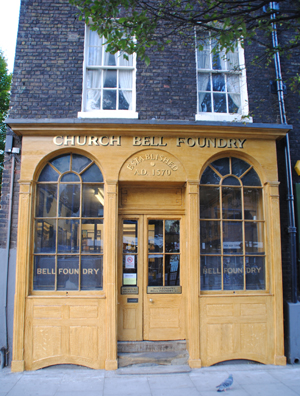
London’s oldest manufacturing company is the same as Britain’s oldest and is, according to the Guinness Book of Records, the Whitechapel Bell Foundry.

The company was established in 1570 (although founders have been discovered operating in the area as far back as 1420) and, according to its website, still concentrates solely on the manufacture of bells and their fittings with large church bells accounting for 80 per cent of the company’s business. The remainder of the business is involved in manufacturing handbells and other smaller bells.

The foundry’s current buildings, apparently originally used as a coaching inn named The Artichoke, date from 1670 and are presumed to have replaced structures consumed in the Great Fire of London. The foundry had earlier been located in smaller premises on the other side of Whitechapel Road.

The foundry has typically operated under the name of the master founder and owner but since 1968 has apparently operated under its current name.

The most famous bells cast at the foundry include the Liberty Bell (1752) – the symbol of American independence which cracked when first rung and was recast in Philadelphia, the Great Bell of Montreal Cathedral, ‘Great Tom’ of Lincoln Cathedral, and, of course, Big Ben (1858) – at 13,760 kilograms, the largest bell ever cast at the foundry.

Westminster Abbey and St Paul’s Cathedral also feature bells cast at the foundry and replacement bells for St Mary-le-Bow and St Clement Danes made here following their destruction in World War II and bells from the foundry have been sent as far afield as Australia and India.

Among the most recent bells to be cast at the foundry are the Royal Jubilee Bells, used in the Thames Diamond Jubilee Pageant and now housed at St James Garlickhythe in the City of London (each of the bells, which bear the Royal Arms, is named after a member of the Royal Family – Elizabeth being the largest with others named Philip, Charles, Anne, Andrew, Edward, William and Henry.)

There is a small exhibition on bell-making in the foundry shop looking at the history of the foundry and bell-making in general, and one-and-a-half-hour tours of the foundry run Saturdays (booking well in advance is usually required). Additional tours are being held every day during the Olympics.

WHERE: 32/34 Whitechapel Road; WHEN: Tours are usually held on Saturdays when no work is being undertaken – see website for dates – but special tours are being held daily from 10am to 5pm, 28th July to 12th August, 2012; COST: The exhibition/museum is free but tours are usually £12 a head for over 14s (Olympic period tours are £10 a head/£25 a family – children under 14 not admitted without adult supervision) – see website for more details on purchasing tickets; WEBSITE: www.whitechapelbellfoundry.co.uk.

Around London – Leading ladies of the 18th century at NPG; “at risk” in London; and, Antarctic images at the Queen’s Gallery…

• A new exhibition featuring some of London’s leading ladies of the eighteenth century opens at the National Portrait Gallery today. The First Actresses: Nell Gwyn to Sarah Siddons is the first exhibition devoted to eighteenth century actresses and features 53 portraits depicting the likes of Gwyn and Siddons as well as Lavinia Fenton, Mary Robinson and Dorothy Jordan. Highlights of the exhibition include a little known version of Joshua Reynolds’ portrait of Sarah Siddons as the “tragic muse”, William Hogarth’s The Beggar’s Opera and Thomas Gainsborough’s portraits of Giovanna Bacelli and Elizabeth Linley. The exhibition reveals the key role these women played in the celebrity culture found in London (and elsewhere) during the period. As a counterpoint, an accompanying exhibition displays photographs and paintings of some of today’s actresses. Runs until 8th January (an admission charge applies). For more information on the exhibition or the programme of accompanying events, see www.npg.org.uk.

Cemetery in Hackney and Kensal Green, a park in Hounslow and a Piccadilly property formerly used as the Naval and Military Club are among the “priority sites” listed on English Heritage’s annual Heritage At Risk Register. Released earlier this week, the register’s 10 London”risk priority sites” include London’s first metropolitan cemetery – Kensal Green (All Souls) – which dates from 1833, Gunnersbury Park in West London – featuring a large country home known as Gunnersbury Park House, it was built in 1801-28 and later remodelled, and a mansion at 94 Piccadilly – built in 1756-60 for Lord Egremont, it was later used at the Military and Naval Club and is now for sale. Others on the list include Abney Park Cemetery in Hackney – laid out in 1840, it is described as London’s most important Nonconformist cemetery, a medieval manor farm barn in Harmondsworth in London’s outer west, Tide Mill in Newham, East London, and the entire Whitechapel High Street and Stepney Green conservation areas. For more information, see www.english-heritage.org.uk/caring/heritage-at-risk/.

On Now: The Heart of the Great Alone: Scott, Shackleton and Antarctic Photography. Opening at the Queen’s Gallery, Buckingham Palace, tomorrow, the exhibition marks the centenary of Captain Robert Scott’s ill-fated expedition to the South Pole and features a collection of photographs presented to King George V by the official photographers on Scott’s expedition of 1910-13 and Ernest Shackleton’s expedition of 1914-16 as well as unique artifacts including the flag given to Scott by Queen Alexandra (the widow of King Edward VII) which was taken to the Pole. Highlights include Herbert Ponting’s images The ramparts of Mount Erebus and The freezing of the sea and Frank Hurley’s stunning images of Shackleton’s ship Endurance as it was crushed by ice. Runs until 15th April, 2012 (admission charge applied). For more, see www.royalcollection.org.uk.

Famous Londoners – Captain Thomas Coram

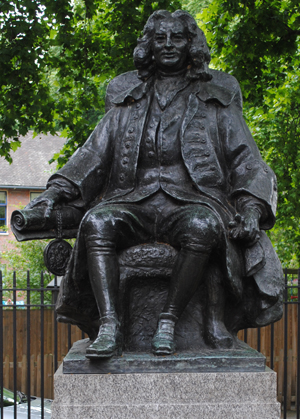
A ship-builder and New World colonist of some renown, Thomas Coram is primarily remembered now as the founder of London’s Foundling Hospital.

While details of Coram’s early life are sketchy, it is known that he was born in Dorset, possibly in Lyme Regis, in 1668 and was believed to be the son of a merchant seaman, John Coram.

Coram’s mother apparently died while he was still young and he went to sea at the age of just 11. Following his father’s remarriage, however, the family moved to Hackney in East London and it was after that move that Coram was apprenticed to a shipwright working beside the Thames.

In 1694, having previously worked for the Government auditing troop and supply ships, a group of merchants asked Coram to establish a new shipyard in Boston, Massachusetts. He did so and spent the next 10 years building ships in Boston and Taunton. But, a staunch Anglican living among Puritans, he apparently make some enemies while doing so (this led to lawsuits and even apparently an attempt on his life). It was during this time that he also married a Bostonian, Eunice Wait.

Following his return to England in 1704, Coram found further success as a merchant and was soon commanding merchant ships during the War of the Spanish Succession (it is believed it was during this time that he acquired the title of captain). Throughout the following years he continued to conduct business in the New World colonies – particularly Massachusetts and Maine – as well as in London.

It was after he had moved to Rotherhithe in 1719 that Coram’s eyes were opened to the plight of abandoned children – he would apparently see them when travelling into London – and, his heart obviously moved, he began to advocate for the creation of a foundling hospital similar to those he had seen on the continent during his travels.

While his efforts initially came to nothing, Coram eventually received the backing of Queen Caroline, wife of King George II – an important step for the plain-speaking seaman. Having presented numerous petitions to the king, His Majesty finally signed the Foundling Hospital Charter on 14th August, 1739. The first meeting of the governors – which included notables such as artist William Hogarth and prominent physician Dr Richard Mead – was held at Somerset House that November.

A temporary hospital opened it’s doors at Hatton Garden on 25th March, 1741, and the first foundlings were baptised Thomas and Eunice Coram. But it was only four and a half years later – in October, 1745 – that a purpose-built hospital opened its doors in an area known as Bloomsbury Fields. As well as Hogarth (who painted Coram in 1740 – the picture can still be seen in the Foundling Hospital today), the hospital also attracted the support of composer George Frideric Handel.

Coram’s role in the governance of the hospital effectively came to an end in 1741-1742 (he is said to have made some indiscreet comments about some of his fellow governors) but – despite being still engaged in numerous business activities – he continued to visit the hospital regularly and, as well as being Godfather to more than 20 of the foundlings, the story goes that he found the time to sit in an arcade at the hospital and pass out pieces of gingerbread to the children.

Captain Thomas Coram died on 29th March, 1751, in lodgings on Spur Street near Leicester Square (his wife Eunice had died earlier, in July 1740, and the couple had no children). He was buried in the Foundling Hospital chapel.

One of the best places to visit to find out more about Captain Coram and his life is the Foundling Museum, housed in part of the former hospital. For our previous story on the hospital, follow this link. A statue of Coram (pictured above) stands outside in Brunswick Square.