Treasures of London: The Americus Backers grand piano…

Americus-Backers-piano

The oldest surviving English grand piano, built in London in 1772 by Americus Backers, has gone on display at Apsley House in London, home of the 1st Duke of Wellington, Arthur Wellesley.

Known to have been played by the Iron Duke’s wife Kitty (nee Pakenham), it has been suggested (although remains unconfirmed) that the piano belonged to the Iron Duke’s father, Lord Mornington, who was politician and a composer.

The piano, which has been loaned to English Heritage by Lord and Lady Douro and is expected to remain at the house for the foreseeable future, is the earliest example of a piano with loud and soft pedals and is illustrative of the impact Backers, described by some as “the father of the English grand pianoforte style”, had on the development of piano design.

While much of the detail of Backers’ life  remains obscured, he was apprenticed to a piano builder in Saxony before coming to England in the 1750s and taking up residence in Jermyn Street in 1763 where he apparently lived until his death in 1778. He is known to have built both pianofortes and harpsicords.

The piano, the only known pianoforte by Backers still existing, was previously on loan to the Russell Collection in Edinburgh.

In celebration of the return of the piano to Apsley House, the residence is hosting a special concert this Tuesday (21st May), between 7pm-9pm – the first time the piano will have been heard for at least 5o years (albeit for a short period only with most of the concert performed on a 1781 Ganer. ‘The Duke of Wellington’s Music of the French Wars’ will be held in the Waterloo Gallery. Tickets are £45 each and limited seats are available. Call English Heritage Customer Services on 0870 333 1183 for bookings or see www.english-heritage.org.uk. PICTURE:  Professor David Owen Norris, who has researched and devised the programme has been devised the programme for the evening, playing the piano.He will be joined by the soprano Amanda Pitt. Image courtesy of English Heritage.

Around London – Museums at night; Propaganda at the BL; MoL Docklands celebrates 10 years; and, Steadman at the Cartoon Museum…

Expect people to be out and about around London at all hours this weekend with the kick-off tonight of Museums At Night, Culture24’s annual festival of after hours visits. This year’s packed program features everything from ‘Arts on Ice’ – a look at the Victorian ice trade – at the London Canal Museum to art nights at the Government Art Collection building, nocturnal tours of Greenwich’s Old Royal Naval College, and, for the first time, the chance for adults to sleep over at Hampton Court Palace and kids at Kensington Palace. Other London organisations taking part include the Handel House Museum, the Kew Bridge Steam Museum, Benjamin Franklin House, the National Gallery and Somerset House (and that’s just a few off the list!). For more information on the night – including a full program of events – check out the Culture24 Museums at Night website.

Propaganda-v9-cmyk Government spin comes under the spotlight in a major new exhibition which opens tomorrow at the British Library in King’s Cross. Propaganda: Power and Persuasion examines how state have used propaganda in the 20th and 21st centuries and features more than 200 exhibits including Nazi propaganda and everyday objects such as banknotes and badges. Admission charge applies. There’s a series of events running to coincide with the exhibition which runs until 17th September. For more, see www.bl.uk/whatson/exhibitions/propaganda/index.html.

It’s 10 years since the Museum of London Docklands opened in a converted Georgian warehouse on West India Quay and to celebrate they’re holding an exhibition celebrating the Thames estuary. Titled (appropriately enough), Estuary, the exhibition features the work of 12 artists in a variety of mediums – from film and photography to painting. Entry is free. The exhibition, which opens tomorrow, runs until 27 October. The museum is also holding a special day of family activities to celebrate its creation this Saturday. For more, see www.museumoflondon.org.uk/Docklands/.

On Now: STEADman@77. This exhibition at The Cartoon Museum in Bloomsbury looks at the work of graphic artist Ralph Steadman (who is celebrating his 77th birthday) and features more than 100 original works published in magazines ranging from Private Eye to Rolling Stone, Punch and the New Statesmen as well as his illustrated books (these include Sigmund Freud, Alice in Wonderland Through the Looking-Glass, I, Leonardo, The Bid I Am, and Animal Farm). Runs until 8th September. Admission charge applies. For more, see www.cartoonmuseum.org.

LondonLife – Paternoster Square from St Paul’s…

Paternoster-Square

Looking down on Paternoster Square from St Paul’s Cathedral. The 23.3 metre tall pillar at the centre of the square is the  Paternoster Square Column. Designed by architects Whitfield Partners (responsible for the square’s redevelopment in the early 2000s) and topped by a gilded copper urn with flames coming out of the top, it serves as a ventilation shaft for a carpark underneath. The redevelopment of the square – home to the London Stock Exchange since 2004 – followed an earlier redevelopment in the 1960s (needed after aerial bombing destroyed the area in World War II, the second time the area had been destroyed – the first was when the Great Fire of London swept through in 1666). The square takes it name from Paternoster Row which once ran through it. For more, see www.paternostersquare.info.

PICTURE: David Adams

London Pub Signs – East India Arms…

East-India-ArmsBuilt in 1829 on a site which has apparently hosted a pub since 1630, this red brick pub in Fenchurch Street in the City is named for the East India Company.

Created by a charter signed by Queen Elizabeth I which gave it a monopoly on all English trade east of the Cape of Good Hope, the East India Company was incorporated in 1600.

It dominated British trade in Asia, in particular in India which it ruled over from 1757 until its final demise in the aftermath of the Indian Mutiny in 1857 after which the British Government took direct control of India.

The company headquarters was located in East India House in nearby Leadenhall Street (the rather grand building was demolished in 1861 and the site is now occupied by the architecturally adventurous Lloyd’s Building).

The small, one-roomed pub, at 67 Fenchurch Street, is now part of the Shepherd Neame chain. For more see www.shepherdneame.co.uk/pubs/london/east-india-arms.

Around London – Tudor and Stuart fashion; Wellington Arch treasures; Hunterian celebrates 200 years; Regent Street and the world; and, Kaffe Fassett at the FTM…

Queen-Henrietta-Maria-(Royal-Collection)A landmark exhibition looking at fashion in the Tudor and Stuart eras opens at The Queen’s Gallery, Buckingham Palace, tomorrow. In Fine Style: The Art of Tudor and Stuart Fashion features everything from a diamond ring given by King Charles I to his then 19-year-old wife Henrietta Maria, an ornate set of armour which belonged to 13-year-old Henry, Prince of Wales (the older brother of King Charles I – he died of typhoid fever at the age of 19), and a diamond-encrusted box in which Queen Mary II kept black fabric patches worn to conceal blemishes or highlight the creaminess of skin. A 58.5 carat pearl, named ‘La Peregrina’ (‘The Wanderer’) and given to Queen Mary I as an engagement gift from Philip II of Spain (and later presented to Elizabeth Taylor by Richard Burton on Valentine’s Day, 1969), is also among the objects on show along with a pendant featuring a miniature of Queen Elizabeth I. The exhibition also features more than 60 portraits from the Royal Collection showing the fashions of the time, including a portrait by Sir Peter Lely of court beauty Frances Stuart, Duchess of Richmond, who famously refused to become King Charles II’s mistress. Admission charge applies. Runs until 6th October. For more, see www.royalcollection.co.uk. PICTURE: Sir Anthony van Dyck, Queen Henrietta Maria, 1609-69. Royal Collection Trust/© 2013, Her Majesty Queen Elizabeth II.

A medieval crozier and bejewelled ring discovered in Cumbria in 2010 are on public display for the first time in a new exhibition at Wellington Arch. The artefacts, which were discovered at Furness Abbey, are featured in an English Heritage exhibition, A Monumental Act: How Britain Saved Its Heritage, which explores how the Ancient Monuments Act of 1913 helped protect Britain’s historical fabric. Other objects in display include some of the historic artefacts found in the 20 years following the act – a Roman bronze weight from Richborough Roman Fort in Kent and a 13th century sculpture of Christ found at Rievaulx Abbey in Yorkshire. Admission charge applies. The exhibition runs until 7th July. For more, see www.english-heritage.org.uk/daysout/properties/wellington-arch/.

The Hunterian Museum at the Royal College of Surgeons is celebrating its bicentenary this year and to mark the occasion, they’re holding a free exhibition focusing on the museum’s collections of human anatomy and pathology; natural history and artworks. The display will consider how the objects in the collection have informed the medical world and fallen under the gaze of visitors who have included surgeons as well as monarchs. The exhibition in the Qvist Gallery at the museum in Lincoln’s Inn Fields opens on Tuesday, 14th May, and runs until 9th November. For more, see www.rcseng.ac.uk/museums/hunterian.

The world comes to Regent Street this Sunday with the ‘InsureandGo The World on Regent Street’ festival. Representatives from countries including Argentina, Egypt, Trinidad and Tobago, Turkey and China as well as the UK will showcasing the best of each country’s culture, music and dance, art, food and fashion. Activities will include tango lessons from Argentina, professional henna drawing from Egypt, a steel band from Trinidad and Tobago, and a Chinese drumming performance and lion dancing. The street will be closed for the day. For more, see www.regentstreetonline.com.

On Now: Kaffe Fassett – A Life in Colour. This exhibition at the Fashion and Textile Museum in Bermondsey Street celebrates the work of American-born artist Kaffe Fassett and features more than 100 works including nine foot wide knitted shawls, coats and throws, patchwork quilts and a ‘feeling wall’ where visitors can touch the textiles on display. Admission charge applies. Runs until 29th June. For more, see www.ftmlondon.org.

10 Historic London Garden Squares…3. Soho Square…

Soho-Square

Originally named King’s Square in honour of King Charles II, Soho Square was laid out on what had been known as Soho Fields as a residential square with a garden at its centre in the late 1670s – part of the general demand for homes that came about after the Great Fire of London in 1666.

A fashionable place to live when built, among the early mansions was Monmouth House, a grand mansion originally built for James Scott, the Duke of Monmouth (and illegitimate son of King Charles II who lost his head after leading a rebellion against King James II) and later used by the French ambassador before it was demolished in the 1770s. Two of the square’s original homes are located at numbers 10 and 15.

A number of trees and shrubs were recorded as being planted here including cherry, peach and almond trees as well as lilacs, jessamine and honeysuckle – it’s suggested these may have been chosen by botanist Sir Joseph Banks who lived at number 32 from 1777 until his death in 1820.

King-Charles-IIThe square, which was opened to the public in 1954, is today at the heart of the West-End district of Soho, once synonymous with late night entertainment including the sex industry but also home to a growing number of film and media-related organisations (for a look at the derivation of the name Soho, see our earlier post).

Indeed, a number of media companies are based in the square itself – British Movietone, which was produced the Movietone news, was located here at number 22 for years while current inhabitants include Twentieth Century Fox (located in a building at number 31-32 where the botanically minded Linnean Society once met).

Other buildings of note in the square include the French Protestant Church, built in 1891-93 and located at numbers eight and nine and St Patrick’s Church, located at on the corner of Soho Square and Sutton Row. While a chapel was first consecrated here in 1792, the current building dates from the 1890s (reopened in 2011 after a £3.5 million restoration) and has catacombs which spread a considerable distance under the square. In a nod to less savoury aspects of the square’s past, the White House Brothel was also located here – at number 21 – in the late 18th century (the building is now known as Manor House).

The oldest statue in the square is that of Caius Gabriel Cibber’s King Charles II which dates from 1681 (pictured right) – a reminder of the square’s past name.  Originally part of a larger monument containing a fountain, it was removed in 1875 to make way for the distinctive half-timbered Tudor-style hut (pictured above) used by gardeners which, having been rebuilt in the 1930s, currently sits at the square’s centre and only returned to the gardens in 1938. There’s also a bench in the square which commemorates the late singer Kirsty MacColl, writer of the song Soho Square.

For more on London’s squares, see Gary Powell’s Square London.

LondonLife: Clouds at St Pancras…

TerraceWires

Lucy and Jorge Orta’s sculpture Cloud: Meteoros is the first sculpture to be unveiled for the ‘Terrace Wires’ project at St Pancras International. The sculpture, which hangs on wires from the station’s roof, features two clouds hovering over the station floor on which figures can be seen looking down. Says artist Lucy Orta: “Our sculpture is symbol the space in between: that of the daily routines of the millions of passengers and visitors to the station and the freedom of our imagination, daydreams – looking up to the sky.” The sculpture will remain in place for the rest of the year. For more on art at St Pancras, see http://stpancras.com/art/ and www.terracewires.comPICTURE: Sam Lane/HS1 Ltd.


Where’s London’s oldest…higher education institution?

While higher education may something we generally associate with more recent historical eras, London’s oldest higher educational institution in fact was founded in the dying years of the 16th century.

Thomas-GreshamGresham College was founded in 1597 by Sir Thomas Gresham (pictured, right) – son of Lord Mayor Sir Richard Gresham and the man behind the construction of the Royal Exchange (see our earlier post on Sir Thomas Gresham here) – according to instructions in his will (Sir Thomas died in 1579).

Under the terms of the will, part of his estate was left to the City of London Corporation and the Mercer’s Company and it is these who founded the organisation according to his request and still operate via the Joint Grand Gresham Committee.

According to the will’s terms, the corporation were to appoint professors in divinity, astronomy, geometry and music while the Mercer’s Company were given the responsibility of appointing professors in law, physic and rhetoric (a chair in commerce was added in 1985). There are also currently a number of visiting professorships.

The college – which was founded to provide free public lectures on subjects of scientific interest – is  governed by a council with the Lord Mayor of London as its president.

Sir Thomas’ mansion in Bishopsgate (now the site of what was formerly known as the NatWest Tower) was the college’s first home. Professors, whose salaries were met by rental income from the Royal Exchange, continued giving lectures there until 1768.

Various locations around the city were later used for the college before the opening of a new college building in Gresham Street in 1842. It moved again in 1991 and is now based at Barnard’s Inn Hall in Holborn.

Among the professors who have held chairs at the college are architects Sir Christopher Wren (astronomy) and Robert Hooke (geometry) as well as Richard Chartres, current Bishop of London (divinity).

The college, which doesn’t enrol students as such and doesn’t award degrees, continues to provide more than 100 free public lectures every year and is also involved in running seminars and conferences and other initiatives.

For a detailed history of Gresham College, check out Richard Chartres’ and David Vermont’s book on the college’s history – www.gresham.ac.uk/greshamftp/historygreshm_bk2.pdf. For more on the college and its programme of events, see www.gresham.ac.uk. Lectures are available online.

Around London – Chiswick House furnishings; Miniature German Bibles; free buses to Isabella Plantation; and, marking the 50th anniversary of the Profumo Affair…

A collection of furniture originally belonging to the 5th Duke of Devonshire and his wife, Georgiana, the Duchess of Devonshire, has been returned to the Palladian masterpiece, Chiswick House, in west London. The furniture – which includes four French fauteuils (open arm chairs) by the leading Parisian chair maker Jean-Baptiste Tilliard, four neo-classical chairs with caned backs and seats and a ladies’ roll-top writing desk – was purchased by English Heritage at an auction in 2010 with the assistance of Art Fund. It had been removed from the house to the family estate in the late 1800s. Extensive conservation work on the furnishings was carried out thanks to the support of The Art Fund, Chiswick House Friends and The Pilgrim Trust prior to their being restored to the house. They are now displayed in the bedchamber while a mahogany pole-screen – designed in about 1730 by William Kent, protégé and collaborator of the house’s first owner and architect, Richard Boyle, 3rd Earl of Burlington – has also been acquired and will be displayed in Lord Burlington’s Blue Velvet Room. Admission charge applies. For more information, see  www.english-heritage.org.uk/daysout/properties/chiswick-house/ or www.chgt.org.uk.

German miniature picture Bibles are the subject of a new exhibition at The Courtauld Gallery. The third display in the gallery’s Illuminating Objects programme, the display centres on Bibles created by two sisters who belonged to a family of printmakers, Johanna Christina (Or Christiana) and Maria Magdalena Kusel, in Augsburg in the late 17th century. While many of the 17th century ‘thumb’ Bibles were created for children, the Kusel sisters most likely made theirs for private devotion. It is believed this is the first time the two Bibles have gone on public display. Visitors to the Courtauld website are also able to turn the Bible’s pages. Runs until 22nd July. For more, see www.courtauld.ac.uk/gallery/exhibitions/2013/illuminating/bible.

Royal Parks are offering free travel to the newly improved Isabella Plantation – a 40 acre ornamental woodland garden in Richmond Park – this Sunday. The minibus service, which will travel from the traffic lights on Ham Common to the plantation, will be running between 10am and 4pm. The plantation, which features azaleas, rhododendrons, camellias, magnolias, daffodils and bluebells, has recently been the subject of a £1.5 million improvement project funded by the Heritage Lottery Fund and BIG Lottery Fund. Improvements have included enhancements to ponds and streams and upgrades to the existing path network. For more, see www.royalparks.org.uk/parks/richmond-park.

A display commemorating the 50th anniversary of the Profumo Affair has opened at the National Portrait Gallery. Scandal ’63: The Fiftieth Anniversary of the Profumo Affair looks in depth at the scandal in which Secretary of State for War John Profumo was found to have had a brief affair with nightclub hostess and model Christine Keeler who happened to also romantically involved with Yevgeny Ivanov, a senior Russian naval attache (rather controversial during the Cold War). The display features a vintage print of one of Lewis Morley’s seated nude portraits of Keeler as well as press images of other key protagonists in the matter including her friends Mandy Rice-Davies and Paula Hamilton-Marshall. Also featured is on-set photographs of Keeler taken to publicise The Keeler Affair, a film which was banned in Britain (and later remade in 1989), images of a now lost work of pop art by Pauline Boty featuring four of the key players (it was titled Scandal ’63), and a pastel of Keeler by Stephen Ward (pictured). Admission is free. Runs until 15th September. For more, see www.npg.org.uk.

10 Historic London Garden Squares…2. Parliament Square

Located in one of the most prominent sites in London, Parliament Square is these days perhaps best known as a protest site for those wanting to attract Parliament’s eye. And while, unlike say, Trafalgar Square, many visitors to London may not know its name, its proximity to the Houses of Parliament, Whitehall, Westminster Bridge and Westminster Abbey means it’s rarely off anyone’s tourist agenda.

David-Lloyd-GeorgeThe history of the square goes back to 1868 when architect Sir Charles Barry (responsible for the design of the Houses of Parliament) designed a square to improve traffic flow in the area (and demolished many buildings – apparently the area was a slum – in the process).

The roads around the square featured London’s first traffic signals (it used semaphore arms rather than lights and was installed at the meeting of Great George and Bridge Streets) and in addition the square was originally the location for the Buxton Memorial Fountain which moved to its present position in Victoria Tower Gardens in 1940 (see our earlier post on the fountain here). In 1950, the entire square was redesigned by architect George Grey Wornum.

The square is home to a plethora of statues including former PMs Sir Winston Churchill, a relatively recent statue of David Lloyd George (pictured), Sir Robert Peel (also the founder of the Metropolitan Police Force – see our earlier post here), Benjamin Disraeli, the Earl of Derby and Lord Palmerston as well as South African PM Jan Christian Smuts and, (if you count the space in front of Middlesex Guildhall), US President Abraham Lincoln (a replica of a statue in Lincoln Park, Chicago) and former Foreign Secretary and PM George Canning. Among the last statues added was a nine foot high bronze figure of Nelson Mandela which was placed in the square in 2007 after an unsuccessful push to have it located in Trafalgar Square.

Among the most high profile of protests to have been held there is that of the late peace campaigner Brian Haw who camped on the square for 10 years until 2010. Among the most recent protests this year has been a colourful demonstration by beekeepers, calling for a ban on pesticides.

For more on London’s statues, see Peter Matthews’ London’s Statues and Monuments.

Around London – Workhouse life; funds needed for Salter statues; and Saloua Raouda Choucair at the Tate…

Life as an inmate inside a Victorian workhouse is explored in an exhibition at the Florence Nightingale Museum in Lambeth Palace Road. The exhibition, Workhouse – Segregated Lives, examines the design of the workhouses as well as the inmate’s diet, work and health while living there. Rare artefacts, firsthand accounts, pictorial representations and publications will all help to bring to life the “world of the workhouse” in this display which opened in February and runs until 5th July. There’s a program of events accompanying the exhibition including lectures by historians looking at subjects like the food served in the workhouse and how to find your workhouse ancestors. Admission charges apply. For more, see www.florence-nightingale.co.uk.

The Salter Statues campaign is appealing for funds for a new statue of former Bermondsey resident Dr Albert Salter after a famous statue of the doctor, known for his work with the area’s poor in the early part of the 20th century, was stolen from its location on Bermondsey Wall in 2011. A fundraising campaign has so far raised more than £16,000 with Southwark Council matching all donations made but £100,000 is needed. As well as a replacement statue of Dr Salter, the funds will also be used to buy a new statue of his wife, Ada, who was the first female Labour councillor in London. The new statues have been designed by artist Diane Gorvin, sculptor of the original group of statues which were erected in 1991 and, as well as the seated statue of Dr Salter, also included the couple’s daughter Joyce – who died aged eight of scarlet fever – and her cat (the statues of Joyce and her cat were removed after the theft and are being held in safekeeping). Donations can be made via www.salterstatues.co.uk.

The community of a residential complex at the former Arsenal football stadium in North London – Highbury Stadium Square – comes under examination in a new exhibition running at the Geffrye Museum in Hoxton. Photographer Simone Novotny, who is a resident of the complex herself, looks at the lives and stories of residents in 30 of the 700 new homes in a series of intimate portraits. Runs until 26th August. Admission charge applies. See www.geffrye-museum.org.uk for more.

On Now: Saloua Raouda Choucair. This exhibition at the Tate Modern on South Bank is the first major museum exhibition of the works of Lebanese artist Saloua Raouda Choucair and consists of more than 120 works – many of which have never been seen before – including paintings, sculptures and other objects. The Beirut-born artist, now aged 97-years-old, is credited as being a pioneer of abstract art in the Middle East and her works reflect her diverse interests in science, maths, Islamic art and poetry. Works in display include sculptures in wood, metal, stone and fibreglass (1950s-1980s) as well as early paintings including Self-Portrait (1943) and Paris-Beirut (1948). Runs until 20th October. Admission charge applies. For more, see www.tate.org.uk.

10 Historic London Garden Squares…1. Leicester Square…

In the first of a new Wednesday series looking at historic London garden squares, we take a look at what next to Trafalgar Square, is the most famous square in the entire city – Leicester Square.

Located in the heart of the West End, Leicester Square’s history finds its origins back in the 17th history when Robert Sidney, the 2nd Earl of Leicester acquired property on the site where the square now stands. Then known as St Martin’s Field and located within the parish of St Martin’s, Sidney purchased four acres in 1630 and constructed Leicester House on land now located at the square’s northern end.

Leicester-SquareThe earl raised the ire of locals, however, when – having subsequently fenced off the land to prevent people from wandering on to his property – he enclosed what had previously been common land.

The people appealed to King Charles I who appointed three members of the Privy Council to look at the issue. Their decision? That the earl keep a section of his land open for the use of the parishioners of St Martin’s.

First known as Leicester Field, it was this land which later became known as Leicester Square. Fine homes were built around the square (its proximity to the Royal Court and centre of government made it a desirable place to live for the well-to-do and those seeking influence) with the centre enclosed with rails (it’s pictured here in 1750).

The square’s reputation also had a royal boost when, in 1717/1718, Leicester House became home to Prince George (later King George II) and his wife Princess Caroline along with their court after the prince fell out with his father King George I and was banished from St James’ Palace (this story is recounted in marvellous detail in Lucy Worsley’s terrific book, Courtiers: The Secret History of the Georgian Court).

The prince remained at the house for 10 years and was proclaimed King George II after his father’s death at its gate. Interestingly, King George II’s eldest son, Prince Frederick, also lived here for a time after he too fell out with his father (King George II). Apparently their relationship was even worse than the previous generation’s had been.

Despite its royal attractions, even at this stage the square apparently had it’s darker side with some less than savoury characters attending the hotels and livery stables that were built there. But things were to get worse as the wealthy moved out – a situation not helped when Leicester House was demolished in the 1790s.

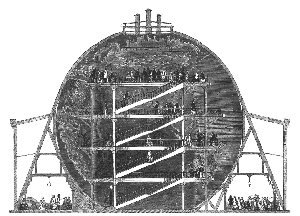
Leicester Square became known as an entertainment venue in the 19th century (among attractions was the short-lived Royal Panopticon of Science and Art which showcased the best in science and art and Wyld’s Great Globe which contained a gigantic model of the earth) and received a new injection of life when theatres and music halls moved in, bringing the crowds back with them.

Shakespeare-StatueMeanwhile, the status of the square – and whether it could be built upon – remained a matter of debate well into the 19th century. That ended in 1874 when businessman Albert Grant bought the freehold of the land, had the garden created upon it and then donated it to the Metropolitan Board of Works as a gift to the city.

Responsibility for the management of the square now rests with the City of Westminster. The square area – which is now known for hosting film premieres as well as the tourists who inevitably gather there – was pedestrianised in the 1980s and has just undergone a redevelopment and modernisation which was unveiled last year.

Meanwhile, work to restore the 19th century Shakespeare statue and fountain in the square’s centre is about to be completed (pictured). The square also contains a statue of actor Charlie Chaplin in the square as well as busts of scientist Sir Isaac Newton, painter and first president of the royal Academy Sir Joshua Reynolds, 18th century pioneer surgeon John Hunter, and painter William Hogarth.

The tradition of the entertainment continues in the modern era through the cinemas which now stand in the square and regularly host film premieres (an interesting, if oft-repeated, film-related anecdote connected to the square is that it was in a phone booth located at the square that during the 1960s a young actor Maurice Micklewhite saw a poster for The Caine Mutiny and decided to change his name to Michael Caine).

PICTURES (top) Wikipedia and (below) City of Westminster.

LondonLife – Celebrating St George’s Day…

Feast-of-St-George

Magic tricks at the ‘Feast of St George’ in Trafalgar Square on Saturday. Wandering performers were just part of the celebrations in the square held there on Saturday in honour of St George’s Day (the actual St George’s Day is today, 23rd April). Other activities also included a farmer’s market, food tastings and live cooking demonstrations with a specially decorated banqueting table, music, traditional games and children’s activities including a quest with prizes awarded by a five metre high interactive dragon. Put on by the Mayor of London, the Feast of St George is inspired by St George’s Day’s 13th century origins as a national day of feasting. PICTURE: James O Jenkins/Greater London Authority.

What is a name?…Spitalfields…

This curiously named area in London’s east – located outside the medieval walls – is named for a priory and hospital founded here in the late 12th century.

The Priory and Hospital of Blessed Mary without Bishopsgate (more commonly known as St Mary Spital), was founded by London citizen Walter Brunus and his wife Roisia (both later said to have been buried before the chapel’s high altar), possibly along with other Londoners, in 1197 (although the priory was apparently “refounded” in 1235 when the church was moved).

An Augustinian institution, it also housed what became one of the largest hospitals in England – as well as caring for pilgrims, widows and the infirm poor, it is said to have provided care for pregnant women and the young children of those who died in childbirth – and the site of a large cemetery.

The hospital survived until the reign of King Henry VIII (although apparently barely with the church said to have been in some disrepair by this time) when it fell prey to Thomas Cromwell and his agents in the Dissolution. It was closed in 1539.

The church and most of the buildings were subsequently demolished with part of the area subsequently used as an artillery ground under the jurisdiction of the Tower of London (the area of the inner priory, meanwhile, reverted to the Crown and retained its status outside the jurisdiction of local authorities, known as the Liberty of Norton Folgate).

But the name remained in use for the suburb which had started to appear around the priory and on its former lands (Spitalfields) and in the seventeenth century a market was established here which ensured its longevity. For more on Old (and New) Spitalfields Market and the area’s later history, see our previous post here.

Major excavations were carried out at the priory cemetery between 1991 and 2007 when more than 10,500 skeletons were unearthed. More than 5,000 of these were analysed providing archaeologists with considerable insight into medieval burials. The remains of a charnel house, dating from about 1320, which was once part of the cemetery still exist in Bishop’s Square.

For more, check out Christopher Thomas’ Life and Death in London’s East End: 2000 Years at Spitalfields.

Where is it?…#61…

Where-is-it--#61Can you identify where in London this picture was taken and what it’s of? If you think you can, leave a comment below. We’ll reveal the answer early next week. Good luck!

Well done to Sue and Helen – this is, of course, Marble Hill House, located in south-west London on the banks of the River Thames between Richmond and Twickenham (this picture is taken from the opposite side of the Thames). Built for Henrietta Howard, mistress of King George II when he was Prince of Wales, for the lady in her “retirement” from court, the Palladian villa is set among 66 acres of parkland. We’ll look at the house in more detail in a later post.

WHERE: Marble Hill House, Richmond Road, Twickenham (nearest Tube station is Richmond (1 mile) or train station, St Margarets (0.5 mile)); WHEN: 10am-2pm Saturday, 10am to 5pm Sunday (cafe and park are open daily); COST: £5.70 adults/£5.10 concessions/£3.40 child (5-15 years); WEBSITE: www.english-heritage.org.uk/daysout/properties/marble-hill-house/.

Lost London – Mrs Salmon’s Waxworks…

Before Madame Tussaud arrived in London, there was Mrs Salmon and her famous waxworks, one of several such establishments in London.

Prince-Henry's-RoomsFirst sited at the Sign of the Golden Ball in St Martin’s Le Grand – where it filled six rooms – in 1711, the display was relocated to the north side of Fleet Street where it remained until 1795 when it moved across the road to number 17 Fleet Street, now housing Prince Henry’s Room (pictured, room takes its name from Prince Henry, eldest son of the king, who died at the age of 18 and was apparently the inspiration for an inn which previously occupied the building called The Prince’s Arms).

The waxworks were apparently originally run by Mr Salmon – there are references to him being a “famous waxwork man” – but his wife, Mrs Salmon, continued it alone after his death in 1718 until her own death, variously said to have been in 1760 or as late as 1812. At some point after his death, Mrs Salmon is said to have remarried, to a Mr Steers.

Described in a handbill published soon after its initial move to Fleet Street, the exhibitions were said to include a scene of King Charles I upon the scaffold, another of the ill-fated Queen Boudicea, and more exotic tableaux including one showing Canaannite ladies offering their children in sacrifice to the god Moloch, another of a Turkish seraglio, and another of Margaret, Countess of Heningbergh with the 365 children she is said to have given birth to (all at once!). There was also a mechanised figure of the “famous English prophetess” Old Mother Shipton, who is said to have given a boot to visitors as they left.

While some accounts say the waxworks – which, according to the City of London website remained at the site until 1816 – were taken over by a Chancery Lane surgeon named Clarke after Mrs Salmon’s death (and by his wife after his death), it is also suggested that at some point they moved to Water Lane in east London where they were ruined by thieves.

Whatever its fate, it’s generally accepted that the famous waxworks were visited by the likes of James Boswell and artist William Hogarth. They were also mentioned by author Charles Dickens in David Copperfield. 

For more of London’s past, see Philip Davies’ Lost London 1870-1945.

Around London – Architects on show; Queen’s Orchard at Greenwich; first women dentist honoured; and Patrick Heron and TS Eliot at the NPG…

Regent Street is showcasing a number of architectural installations created by architects in an initiative being conducted in conjunction with the Royal Institute of British Architects (RIBA). Now in its fourth year, the Regent Street Windows project can be seen free in store windows including those of Topshop, Espirit, Jack Spade, Ferrari Store and Moss Bros until 6th May. Participating architects include Carl Turner Architects, naganJohnson architects, Gensler, Mamou-Mani, and AY Architects. Free 45 minute to one hour walking tours of the completed installations will be conducted by RIBA representatives at lunch time today, midday on Sunday and at 5.30pm next Wednesday. Prior booking is essential – email antonia.faust@riba.org for details.

The Queen’s Orchard has reopened in Greenwich Park having been restored with the addition of heritage fruit trees, new gates, pathways and ponds. The orchard dates back to the 17th century  – its name has been found on a records dating back to 1693 and now features on a new metal decorative gate which, as well as a well cover, was designed by local artist Heather Burrell along with local school students and the Friends of Greenwich Park. The heritage fruit trees, which have a provenance dating back to the 1500s, include apple, pear, cherry, plum, peach, apricot, nectarine, quince, and medlar trees. For more, see www.royalparks.org.uk.

The first woman to qualify as a dentist in Britain has been honoured by English Heritage with a blue plaque at her former home in Islington. Lilian Lindsay (1871-1960) lived at the house at 3 Hungerford Road, Lower Holloway, from 1872 until 1892 when she decided to become a dentist. Refused entry to the National Dental Hospital in London, she trained at the Edinburgh Dental Hospital and School (where she also met her husband Robert) before setting up a practice in Upper Holloway. Following her marriage, Lindsay relocated to Edinburgh where she and her husband ran a dental practice, only returning to London after their retirement in the 1920s. Both were actively involved in the British Dental Association. For more, see www.english-heritage.org.uk.

A 13-year-old photographer, Gideon Knight, is holding his first exhibition, ‘Wild About Photography’, at The Temple, Wanstead Park in Epping Forest. Self-taught, Knight has drawn on his passion for bird-watching in capturing a series of images of birds and other wildlife in a range of natural environments – from the forests of Essex to the countryside of southern Ireland. The exhibition is free. Open on weekends and bank holidays until the end of June, between noon and 5pm. You can follow Gideon at  http://earlywormbirder.blogspot.co.uk.

On Now: Patrick Heron: Studies for a Portrait of TS Eliot. On display for the first time at the National Portrait Gallery, the 10 paintings and drawings were completed in preparation for a 1949 modernist painting of the poet. They include two oil studies which have never before been seen in public. Heron secured permission to paint Eliot in January 1947 with the first sitting held two months later. Runs until 22nd September. For more, see www.npg.org.uk.

Special – Five famous London funerals…

With former PM Margaret Thatcher’s funeral held in London today, we take a look at five prominent funerals in the city’s past…

Queen Eleanor of Castile: King Edward I was lavish in his funeral for Queen Eleanor (perhaps in an effort to restore her reputation given suggestions she had been unpopular among the common people although it may well have simply been because of the king’s level of grief) and when she died at Harby, a village near Lincoln, on 28th November, 1290, he ordered her body to be transported from Lincoln Cathedral to Westminster Abbey where the funeral was held, with a series of elaborate memorial crosses to be built close to where-ever her body rested for the night. Twelve of these were built including at Westcheap in the City of London and Charing (hence Charing Cross, see our earlier post here), the latter thanks to her body “resting” overnight at the Dominican Friary at Blackfriars. Her funeral took place on 17th December, 1290, with her body placed in a grave near the high altar until her marble tomb was ready. The tomb (one of three built for the queen – the others were located at Lincoln – for her viscera – and Blackfriars – for her heart) still survives in the abbey.

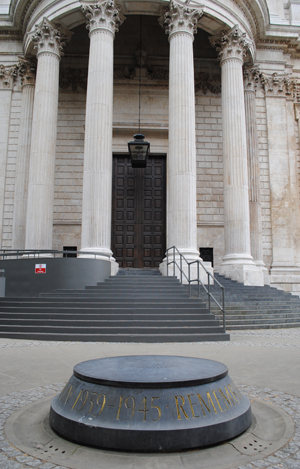
St-Paul's-CathedralVice Admiral Lord Nelson: Heroic in life and perhaps seen as even more so after his death, Nelson’s demise at the Battle of Trafalgar was a national tragedy. His body, preserved in brandy, was taken off the HMS Victory and transported to Greenwich where he lay in state for three days in the Painted Hall. Thousands visited before the body was again moved, taken in a barge upriver to the Admiralty where it lay for a night before the state funeral on 9th January, 1806, more than two months after his death. An escort said to comprise 10,000 soldiers, more than 100 sea captains and 32 admirals accompanied the body through the streets of the city along with seamen from the Victory to St Paul’s Cathedral (pictured)  where he was interred in a marble sarcophagus originally made for Cardinal Wolsey located directly beneath the dome. The tomb can still be seen in the crypt of St Paul’s.

Arthur Wellesley, the Duke of Wellington: Given the last heraldic state funeral ever held in Britain, the Iron Duke’s funeral was held on 18th November, 1852, following his death on 14th September. His body, which had been brought to London from Walmer where it had laid in state by rail, lay in state a second time at Chelsea Hospital. On the morning of the funeral, the cortege set out from Horse Guards, travelling via Constitution Hill to St Paul’s. The body was conveyed in the same funeral car used to convey Nelson’s and accompanied by a guard of honour which included soldiers from every regiment in the army. Masses – reportedly more than a million-and-a-half people – lined the streets to watch funeral procession pass through the city before a service was held in St Paul’s Cathedral under the great dome and he was interred in a monumental sarcophagus alongside that Vice Admiral Lord Nelson. Like Nelson’s, it can still be seen there today.

Sir Winston Churchill: Widely regarded as one of the great wartime leaders of the 20th century, the former British Prime Minister died in his London home on 24th January, 1965, having suffered a stroke nine days earlier. His funeral (plans for which had apparently been code-named ‘Hope-Not’), was the largest state funeral in the world at the time of his death with representatives of 112 nations attending and watched on television by 25 million people in Britain alone. His body lay in state for three days (during which more than 320,000 people came to pay their respects) before on 30th January, it was taken from Westminster Hall and through the streets of London to a funeral service at St Paul’s Cathedral. After the service, a 19 gun salute was fired and the RAF staged a flyby of 16 fighter planes as the body was taken to Tower Hill and then by barge to Waterloo Station. From there it was taken by a special funeral train (named Winston Churchill) to Bladon near Churchill’s home at Blenheim Palace.

Diana, Princess of Wales: Having died in a car crash in Paris on 31st August, 1997, her body was flown back to London and taken to St James’s Palace where it remained for five days before being transported to her former home of Kensington Palace. More than a million people crowded London’s streets on 6th September, 1997, to watch the funeral procession as it made its way from the palace to Westminster Abbey. Among those present at the funeral (which was not a state funeral) were members of the royal family as well as then Prime Minister Tony Blair, former PMs including Margaret Thatcher and foreign dignitaries and celebrities, the latter including Elton John who sang a rewritten version of Candle in the Wind. After the service, Diana’s body was taken to her family’s estate of Althorp in Northamptonshire where the “People’s Princess” was laid to rest.

Our new series will be launched next week due to this week’s events…

LondonLife – The Tweed Run London…

Tweed-RunThe Tweed Run London celebrated its fifth anniversary last Saturday with more than 500 taking part in the rather unusual annual event in which participants combine their passion for British fashion with their love for cycling. Among those taking part (entry was via a lottery system) on bikes of all shapes and sizes were people from as far afield as The Netherlands, Korea, Russia, Australia, Japan and even Afghanistan. The two hour ride took in Marylebone High Street, Savile Row, Regent Street, Piccadilly Circus and the Houses of Parliament before finishing at Trafalgar Square. The ride has been copied by other cities around the world including, Tokyo, Toronto and St Petersburg. For more on the Tweed Run, see www.tweedrun.comPICTURE: Selim Korycki, Tweed Run LLP.

London Pub Signs – The Trafalgar Tavern…

This Greenwich institution, housed in a Grade II-listed building in Park Row, has been noted for its whitebait dinners since it first opened its doors in 1837 (among those said to enjoy them was the author Charles Dickens – indeed the premises features in Our Mutual Friend). 

Trafalgar-TavernThe tavern, which takes its name from the famous 1805 battle of the Napoleonic War which cost Vice-Admiral Lord Horatio Nelson his life, was built by Joseph Kay, a founding member of the Royal Institute of British Architects and the man responsible for the layout of Greenwich town centre.

Built on the site of an earlier tavern named the Old George Inn, the new late Regency pub featured at its heart the Lord Nelson Room which still looks out over the Thames and the, albeit much lessened, shipping that travels upon it. It was a favoured location for gatherings of liberal politicians.

In 1915, the pub transformed into the Royal Alfred Aged Merchant Seamen’s Institute – a role which it continued to fulfil until the 1960s when it reverted to being the Trafalgar Tavern.

For more on the tavern, see www.trafalgartavern.co.uk.