This Week in London – London illuminated; commemorating Shakespeare’s death; and, of bees and pollination…

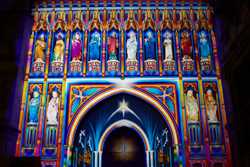
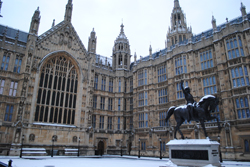
Westminster-Abbey-west-front The biggest ever light festival to hit London opens tonight. Lumber London, produced by Artichoke with the support of the Mayor of London and visitlondon.com, will see a host of international artists transform a series of iconic buildings and locations in four areas across the city – Piccadilly, Regent Street and St James’s, Trafalgar Square and Westminster, Mayfair and King’s Cross. The 30 installations include French collective TILT’s Garden of Light featuring giant illuminated plants in Leicester Square, Patrice Warrener’s The Light of the Spirit which envelopes the west front of Westminster Abbey in colour and light, Deepa Mann-Kler’s Neon Dogs – a collection of 12 neon dogs inspired by the balloon dogs seen at children’s parties, this sits near Trafalgar Square, and, Pipette, a colourful installation by Miriam Gleeman (of The Cross Kings) and Tom Sloan (of Tom Sloan Design) which sits in the pedestrian subway, the King’s Cross Tunnel. Other highlights include Julian Opie’s work Shaida Walking, 2015 which will be permanently located in Broadwick Street, Soho, and Janet Echelon’s enormous net sculpture 1.8 London which is strung between buildings at Oxford Circus. The festival runs from 6.30pm to 10.30pm over the next four nights. You can download a free map on the installations or use the free London Official City Guide app to locate them. For more information – including the full programme – see www.visitlondon.com/lumiere.

A property deed signed by playwright William Shakespeare and one of the most complete first folios of his works have gone on show in the London Heritage Gallery at the Guildhall Art Gallery. Alongside the two documents which dates from 1613 and 1623, the Shakespeare and London exhibition marks the 400th anniversary of Shakespeare’s death – to be commemorated on 23rd April this year – will also display other documents related to the story of London’s playhouses. The property deed – which relates to a property in Blackfriars – is only one of six surviving documents to bear the playwrights authenticated signature while the first folio is one of five of the most complete copies in existence and is apparently usually only brought out for consultation by Shakespearean scholars and actors. The exhibition runs until 31st March. Admission is free. For more on it and other events being run to commemorate the Bard’s death, see www.cityoflondon.gov.uk/shakespeare400. For more on other events this year, check out www.shakespeare400.org.

• See your art featured in an upcoming exhibition on the importance of bees and pollination by attending a drop-in workshop at Victoria Tower Gardens next to the Houses of Parliament next week. The workshop, which will be held from 10am to 2pm on 20th January, will see participants create their own 3D flowers based on famous paintings by Vincent Van Gogh and Jan Van Huysum currently in The National Gallery’s collection – all as part of a focus looking at what plants bees are attracted to. The art created in the workshop will be seen in an exhibition A Right Royal Buzz which is the result of a collaboration between The Royal Parks, The National Gallery and Mall Galleries and will be seen across all three venues (Victoria Tower Gardens representing the Royal Parks) from 17th t0 20th February. For more, head to this link.

Send all items for inclusion to exploringlondon@gmail.com.

10 London ‘battlefields’ – 10. The Battle of London…

The final in our series looking at London ‘battlefields’, this week we take a look at the so-called Battle of London, the air war fought over London during World War II which, along with the bombing of other British cities, is best known by the phrase The Blitz (it forms part of the greater Battle of Britain).

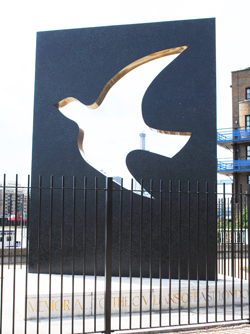
Blitz-memorialTaking place from the afternoon of 7th September, 1940, until May, 1941, the Blitz saw London sustain repeated attacks from the German Luftwaffe, most notably between 7th September and mid November when the city was bombed on every night bar one.

The night of 7th September, the first night of the Blitz (a short form of ‘Blitzkrieg’ – German for ‘lightning war’), was among the worst – with more than 450 killed and 1,300 injured as wave after wave of bombers attacked the city. Another 412 were killed the following night.

One of the most notorious raids took place on 29th December when  incendiary bombs dropped on the City of London starting what has been called the Second Great Fire of London. Around a third of the city was destroyed, including more than 30 guild halls and 19 churches, 16 which had been rebuilt by Sir Christopher Wren in the aftermath of the Great Fire of London in 1666.

The city was only attacked sporadically in the early months of 1941 but the night of the last major raid of the Blitz – that of 10th May, a night subsequently known as The Longest Night – saw the highest casualties of any night with almost 1,500 people reportedly killed.

The Blitz killed almost 30,000 civilian in London, and destroyed more than a million homes with the worst hit districts poorer areas like the East End.

The battle wasn’t one-sided – the RAF fought the Luftwaffe in the skies and did have some wins – on 15th September (a day known as Battle of Britain Day), for example, they shot down some 60 aircraft attacking London for the loss of less than 30 British fighters.

It was this victory which led the Germans to reduce the number of daylight attacks in favour of night-time raids which, until the launch of the RAF’s night-time fighters in 1941, meant they met little effective resistance. This included that of ground defences – throughout December, 1940, it’s said that anti-aircraft fire only brought down 10 enemy planes.

Yet, the Blitz did not lead to a German victory. For the Nazi regime, the purpose of the constant bombing of London (and other cities) was aimed at sapping the morale of its residents to the extent that they would eventually be forced to beg for peace. But the plan failed and Londoners, digging deep, proved their mettle in the face of fear.

Hundreds of thousands of people were involved in  Civil Defence working in a range of jobs – everything from air raid shelter wardens to rescue and demolition teams – and worked alongside firefighters whose numbers were supplemented by an auxiliary service. Naturally all suffered a high level of casualties.

As the weeks passed, the carnage mounted in terms of the loss of and damage to life, destruction of property and psychological toll. And yet the Londoners – sheltering Underground, most famously in the tunnels of the Tube – survived and, as had been the case after the first Great Fire of London, the ruined city was eventually rebuilt.

There are numerous Blitz-related memorials in London, many related to specific bombings. But among the most prominent are the National Firefighters Memorial, located opposite St Paul’s Cathedral, which pays tribute to the firefighters who lost their lives in the war (as well as in peacetime), and a riverside memorial in Wapping honouring civilians of East London killed in the Blitz.

A Moment in London’s History – Westminster Abbey is consecrated – and a king dies…

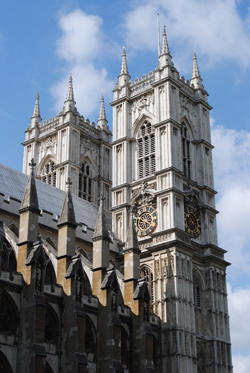
AbbeyIt was 950 years ago as of 28th December – Holy Innocents Day – that Westminster Abbey was consecrated following its construction on the orders of King Edward the Confessor.

The minster – popularly named ‘west’ minster to distinguish it from St Paul’s Cathedral (the ‘east’ minster) – was rebuilt when King Edward refounded the abbey between 1042-52, ostensibly to provide himself with a royal church in which he could be buried.

An abbey had apparently originally been founded on the site in the 7th century during the time of Bishop Mellitus, first Bishop of London (see our earlier post here).

The abbey church isn’t believed to have been completed when it was consecrated – this it’s suggested didn’t take place until 1090, well after the Norman Conquest. Unfortunately Edward was too ill to attend the consecration – he died on the 5th January and was buried a week later in the church (his wife Edith followed nine years later).

King Harold Godwinson – King Harold II – was apparently crowned in the church the day after Edward’s death but the first recorded coronation is that of King William the Conqueror on Christmas Day, 1066.

Very little survives of Edward’s church – most of what was see now is the Gothic masterpiece constructed in the mid 13th century by King Henry III with later additions such as King Henry VII’s Lady Chapel.

Top posts of 2015 – The ‘lost’ chapel of St Thomas; and, inside King Henry V’s chantry chapel…

2016 is fast approaching and to celebrate, we’re looking back at the 10 most popular posts we published in 2015. Today, we present our most popular and second most popular articles posted this year…

London-Bridge-chapel2. Our second most popular article, posted in August, was another in our Lost London series and this time looked at a long-lost feature of Old London Bridge – Lost London – Chapel of St Thomas á Becket.

1. And we are finally there – the most popular of our posts published this year was run in conjunction with the 600th anniversary of the Battle of Agincourt. Part of our LondonLife series, it took a look inside King Henry V’s rarely opened chantry chapel in Westminster Abbey – LondonLife – A rare glimpse inside King Henry V’s chantry chapel.

10 London ‘battlefields’ – 8. The Gordon Riots…

Well, not so much a battle as a widespread civil insurrection, the Gordon Riots, often described as the worst riots London has ever seen, resulted in considerable property destruction and numerous deaths.

Houses-of-Parliament10The riots, which took place against a backdrop of high taxation, widespread poverty, and unjust laws, had its origin in the passing of the Catholic Relief Act of 1778 which intended to reduce entrenched discrimination against Roman Catholics in Britain and redress some of anti-Catholic laws which had been introduced 80 years earlier, partly in an attempt to get more Catholics to join the British Army to fight against the United States of America in what’s now known as the War of Independence.

While it initially passed without any real hostility, an attempt to extend the Act’s provisions to Scotland in 1779 provoked such a serious response there that the action was withdrawn. Following the Scottish success in having the provisions withdrawn, the Protestant Association of London was founded with the aim of spear-heading opposition to the act’s provisions. Lord George Gordon was elected president of the newly formed Protestant Association of London in November of that year.

Following failed attempts to have King George III repeal the Act (Lord Gordon had several audiences with the King but failed to convince him of his case and was eventually banned from His Majesty’s presence), on 2nd June, 1780, Gordon and the members of the association marched on the Houses of Parliament (pictured above although the current buildings date from much later than these events) to deliver a petition demanding the Act be repealed.

They crowd, estimated to have been as big as 60,000 strong although a figure in the mid-40,000s is generally accepted, attempted unsuccessfully to force their way into the House of Commons before Lord Gordon, wearing a blue cockade (the symbol of the Protestant Association in his hat) was granted access to deliver the document.

Outside, meanwhile, things went from bad to worse and the crowd erupted into rioting, attacking members of the House of Lords, including bishops, as they attempted to enter and damaging carriages (including that of Lord Chief Justice William Murray, 1st Earl of Mansfield). Soldiers were eventually summoned to quell the riot which they did without violence. Inside, the members of the House of Commons voted down the petition by an overwhelming majority.

That night violence flared up again with the Roman Catholic Sardinian Embassy Chapel in Lincoln’s Inn Fields set alight while the chapel of the Bavarian Embassy in Golden Square, Soho, was destroyed and random violence carried out in streets known to be the residence of wealthy Catholics.

The next day, a crowd gathered in Moorfields – known to be home to many poor Irish Catholic immigrants – and that night attacked many homes.

The violence spread over the following days and among the buildings attacked was Newgate Prison (which was set on fire), the Fleet Prison, and the Clink in Southwark – hundreds of prisoners escaped – as well as Catholic churches, more embassy chapels, homes of known Catholics and politicians who had been associated with the passing of the act (including that of Lord Mansfield and Sir George Savile, who had proposed the Catholic Relief Act) and the Bank of England (the attack on the bank led to the long-standing tradition of soldiers guarding the bank).

Without a standing police force to tackle the mobs, on 7th June the army was called out with orders to fire on groups of four or larger who refused to disperse. In the next few days, well over 200 people (possibly more than 300) were shot dead and hundreds more wounded. Hundreds of the rioters were arrested and, of those, about 25 eventually executed. Gordon himself was arrested and charged with high treason but found not guilty.

LondonLife – City of spires…

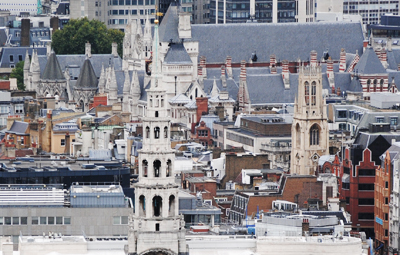
City-of-Spires

View looking west from St Paul’s Cathedral down Fleet Street.

LondonLife – 600 years on, Westminster Abbey commemorates the Battle of Agincourt…

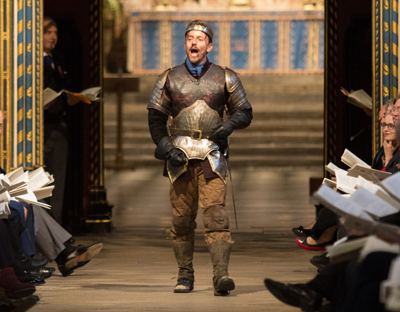
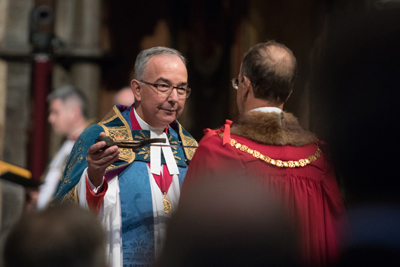
Sam-MarksHundreds gathered at Westminster Abbey last Thursday for a service to commemorate the 600th anniversary of the Battle of Agincourt – 600 years to the day when word of the battle’s victory arrived in London. During the service, the sword of King Henry V – who was buried in the abbey and whose chantry chapel is located above his tomb (see our earlier post here) – was carried through the abbey and presented to the Dean of Westminster, the Very Reverend Dr John Hall, at the High Altar (pictured below). “A hundred years ago, as our countrymen fought alongside the French, the old enmities had been put away,” Rev Dr Hall told those at the service who included the Duke of Kent and Princess Michael of Kent. “In the dark days before the Second World War, the story of Agincourt encouraged men and women alike to strive their utmost for freedom from tyranny. Today we give hearty thanks for our freedoms, and we pray for an end to tyranny wherever it is found, and for enduring peace and prosperity.” Royal Shakespeare Company actor Sam Marks read the St Crispin’s Day speech from the Bard’s Henry the Fifth (pictured above) while veteran of the stage and screen, Robert Hardy, read the prologue from Act IV of the same play. For more on abbey, visit www.westminster-abbey.org.  PICTURES: Ian Stratton/Westminster Abbey.

The-Dean-of-Westminster,-the-Very-Reverend-Dr-John-Hall-receives-the-sword-of-Henry-V

LondonLife – A rare glimpse inside King Henry V’s chantry chapel…

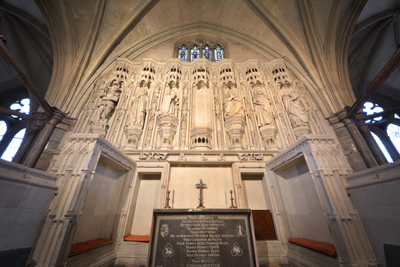
Henry-V-chantry-chapelA fortunate few last weekend had the chance to have a look inside King Henry V’s elaborately carved chantry chapel in Westminster Abbey as part of commemorations marking the 600th anniversary of the Battle of Agincourt. 

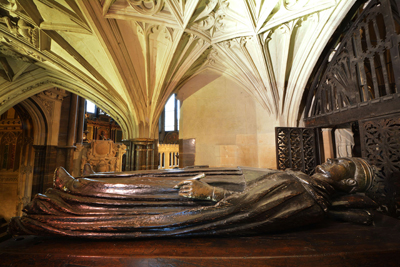
The chapel, which is located on a sort of mezzanine level above the king’s tomb at the east end of the Shrine of Edward the Confessor, is one of the smallest of the abbey’s chapels. It was constructed on the orders of the king – who died Vincennes in August, 1422, and was buried in the abbey on 7th November that year – so prayers could be said in perpetuity for his soul.

The tomb was completed in 1431 and the chantry chapel was built above between 1437 and 1450. The latter is entered via narrow stairways of worn steps hidden inside a pair of stone turrets which flank the tomb.

For centuries the Henry V’s funeral ‘achievements’ – the king’s saddle, helm and shield – were displayed on a wooden beam above the chantry chapel but these were restored and moved to the abbey museum in 1972.

Henry V’s wife, Catherine de Valois, who survived her husband by 15 years was eventually – in the Victorian age – buried under the chantry chapel altar (originally buried in the old Lady Chapel, King Henry VII had her removed and placed in an open coffin in the open air next to the tomb of King Henry V, when building his new chapel – among visitors to her mummified body was diarist Samuel Pepys who even kissed her. In 1778 she was buried in a vault before being relocated to her current position in 1878).

An inscription on the altar in the chantry chapel reads: “Under this slab (once the altar of this chapel) for long cast down and broken up by fire, rest at last, after various vicissitudes, finally deposited here by command of Queen Victoria, the bones of Catherine de Valois, daughter of Charles VI, King of France, wife of Henry V, mother of Henry VI, grandmother of Henry VII, born 1400, crowned 1421, died 1438”.

The chantry chapel is still occasionally used for services but, measuring just seven by three metres, is not usually open to the public because of size and access issues.

Westminster Abbey will hold a special service of commemoration on 29th October in partnership with charity Agincourt600. The day before, 28th October, it will host a one day conference for Henry V enthusiasts entitled ‘Beyond Agincourt: The Funerary Achievements of Henry V’. For more, see www.westminster-abbey.org/events/agincourt.

Above – King Henry V’s chantry chapel; Below – King Henry V’s tomb which sits below the chantry chapel. PICTURE: Jim Dyson/Dean & Chapter of Westminster

Henry-V-tomb

This Week in London – World’s oldest clock and watch collection moves to the Science Museum; commemorating Agincourt; and, black experiences in war at the Imperial War Museum…

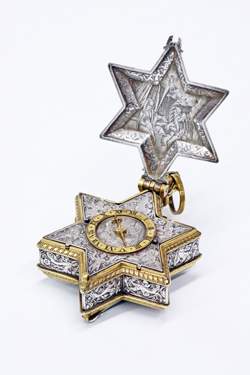
Star-clockThe world’s oldest clock and watch collection can be seen at its new home at the Science Museum in South Kensington from tomorrow. The Clockmaker’s Museum, which was established in 1814 and has previously been housed at City of London Corporation’s Guildhall, has taken up permanent residence in the Science Museum. Assembled by the Worshipful Company of Clockmakers – founded in 1631 – the collection features some 600 watches, 80 clocks and 25 marine timekeepers spanning the period from the 15th century to today. Highlights among the collection include: a year duration long case clock made by Daniel Quare of London (c. 1647-1724); a star-form watch (pictured) by David Ramsay, first master of the Clockmaker’s Company; the 5th marine timekeeper completed in 1770 by John Harrison (winner in 1714 of the Longitude Prize); a timekeeper used by Captain George Vancouver on his 18th century voyage around the Canadian island that bears his name; a watch used to carry accurate time from Greenwich Observatory around London; and, a wristwatch worn by Sir Edmund Hillary when he summited Mount Everest in 1953. The collection complements that already held by the Science Museum in its ‘Measuring Time’ gallery – this includes the third oldest clock in the world (dating from 1392, it’s on loan from Well’s Cathedral) and a 1,500-year-old Byzantine sundial-calendar, the second oldest geared mechanism known to have survived. Entry is free. For more, see www.sciencemuseum.org.uk/clocks. PICTURE: The Worshipful Company of Clockmakers.

Westminster Abbey is kicking off its commemorations of the 600th anniversary of the Battle of Agincourt by opening Henry V’s chantry chapel in Westminster Abbey to a selected few on Saturday night, the eve of the battle’s anniversary. The chapel, which is above the king’s tomb at the east end of the abbey, will be seen by the winners of a public ballot which opened in September. It has never before been officially opened for public tours. The chapel is one of the smallest of the abbey’s chapels. It is occasionally used for services but, measuring just seven by three metres, is not usually open to the public because of size and access issues. Meanwhile the abbey will hold a special service of commemoration on 29th October in partnership with charity Agincourt600 and on 28th October, will host a one day conference for Henry V enthusiasts entitled Beyond Agincourt: The Funerary Achievements of Henry V. For more, see www.westminster-abbey.org/events/agincourt.

• The role the black community played at home and on the fighting front during conflicts from World War I onward is the focus of a programme of free events and tours as Imperial War Museums marks Black History Month during October. IWM London in Lambeth will host a special screening of two documentary films – Burma Boy and Eddie Noble: A Charmed Life – telling the stories of African and Caribbean mean who served in World War II on 25th October. IWM London will also feature a series of interactive talks from historians revealing what it was like for black servicemen during both world wars from this Saturday until Sunday, 1st November. For more, see www.iwm.org.uk.

Send all items for inclusion to exploringlondon@gmail.com.

What’s in a name?…Borough

Famed for its market, the area around the southern end of London Bridge is generally simply known as Borough. But that’s just an abbreviation – Borough is actually a contracted version of Borough of Southwark.

Borough-StationThe origins of the word borough come from the Old English burh, a word which originally simply referred to a ‘fortified place’ and, in this case, referred to the settlement which, since Roman times, had grown up outside the city walls around the southern approaches to London Bridge.

It later came to mean a town with its own locally-based government and, according to Cyril M Harris in What’s In A Name?, Southwark was, in the later Middle Ages, the only London borough outside the City Wall which had its own MP.

The fact that the borough was outside City jurisdiction meant it become a popular place for inns, theatres and other forms of entertainment including the infamous Southwark Fair.

Although ‘Borough’ can still be used as an alternative word for the entire Borough of Southwark, these days when people refer to ‘The Borough’, they’re often referring to just a small district of the much larger borough.

While it’s hard to get a fix on exactly where the boundaries of this district are, at the heart of this area is Borough High Street and landmarks particularly associated with it include the Borough Market (see our earlier post here) as well as Southwark Cathedral and the galleried George Inn as well as the Church of St George The Martyr (and, of course, its own Tube station, which opened in 1890).

Wrapping up 10 small, ‘secret’ and historic gardens in central London…

Over the past couple of months our special Wednesday series has looked at “10 small, ‘secret’ and historic gardens in central London”. So we’re finishing the series by taking a quick look back at the 10 gardens we featured (and providing a single point where you can find any you may have missed)…

10 small, ‘secret’ and historic gardens in central London…1. Goldsmiths’ Garden…

10 small, ‘secret’ and historic gardens in central London…2. Whittington Garden…

10 small, ‘secret’ and historic gardens in central London…3. St Dunstan in the East Garden…

10 small, ‘secret’ and historic gardens in central London…4. St Mary Aldermanbury Gardens…

10 small, ‘secret’ and historic gardens in central London…5. Seething Lane Garden…

10 small, ‘secret’ and historic gardens in central London…6. Red Cross Garden, Southwark…

10 small, ‘secret’ and historic gardens in central London…7. St Swithin’s Church Garden…

10 small, ‘secret’ and historic gardens in central London…8. Postman’s Park…

10 small, ‘secret’ and historic gardens in central London…9. Garden of Rest, Marylebone…

10 small, ‘secret’ and historic gardens in central London…10. Geffrye Museum Gardens…

Do you have a favourite? Or maybe there’s a ‘small, secret and historic’ garden we didn’t mention that you love (and we may mention in a future special)?


Lost London – Church of St Alban, Wood Street…

This church, which survived until it was largely destroyed by bombing in World War II, isn’t completely lost – its tower still survives in the middle of Wood Street in the City.

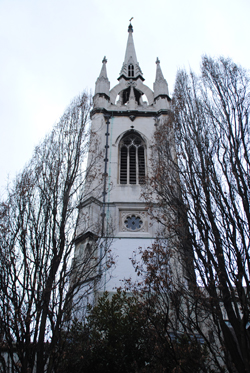
St-Alban's-Wood-StreetThe church, one of a number dedicated to St Alban (Britain’s first Christian martyr) in London throughout its history, was medieval in origin although it has been argued its foundation dates back to the 8th century Saxon King Offa of Mercia who is believed to have had a palace here with the chapel on this site (Offa is also credited as the founder of St Alban’s Abbey).

The church had fallen into disrepair by the early 17th century and was demolished and rebuilt in 1630s. It proved unfortunate timing for only 32 years later it was completely destroyed again, this time in the Great Fire of London.

Following the Great Fire, the church, now combined with the parish of St Olave, Silver Street, was among those rebuilt to the designs of Sir Christopher Wren and completed in the mid-1680s.

It was restored in the late 1850s under the eye of Victorian architect Sir George Gilbert Scott and the four pinnacles on the tower, which stood on the north side of the church, were replaced later that century.

It survived until World War II when the building was burnt out and partly destroyed on a single night during the Blitz in December, 1940. The remains, with the exception of Wren’s Perpendicular-style tower, were later demolished in the 1950s (by which time the church had been united with the parish of  St Vedast, Foster Lane).

The Grade II*-listed tower was converted into a rather unusual private dwelling in the 1980s.

10 small, ‘secret’ and historic gardens in central London…8. Postman’s Park…

Postman's-ParkHousing one of London more unique memorials, Postman’s Park in the City’s north is located on what were once the churchyards and burial grounds of three different churches.

The park – which took its name from its popularity with postal workers who came here to escape their job at the nearby former General Post Office (read a Lost London article on the GPO here) – opened in 1880.

It was originally located on the site of the former churchyard of St Botolph’s-without-Aldersgate and was subsequently expanded to incorporate the adjacent churchyard of St Leonard, Foster Lane, and the burial ground of Christ Church, Greyfriars (also known as Christ Church, Newgate Street). Some of the headstones still stand along the park’s boundaries.

Postman's-Park3Its key feature is the G.F. Watts Memorial To Heroic Self Sacrifice (pictured, right). Victorian artist and philanthropist George Frederic Watts proposed the memorial commemorating “heroic men and women” who had given their lives to save others to mark Queen Victoria’s Jubilee in 1887 but the memorial which now stands there wasn’t built until 1900.

The memorial consists of a loggia, the inside of which is lined with glazed tablets. Each of these commemorates acts of bravery by “everyday heroes” as they attempted to rescue people from fires, runaway trains, sinking ships and drowning. There were 13 plaques at the time of his death in 1904 and his wife Mary added a further 34.

The latest of the memorials commemorating 62 individuals was added in 2009 (for more details, head to our earlier post here, part of our Curious London Memorials series; you can also find more about the memorial, including a free app, here).

The park also features a sundial and fountain amid bright flower beds and various species of trees including a large banana tree, a dove tree and Tasmanian tree ferns.

Claims to fame include its role in the 2004 film Closer, which starred Natalie Portman, Julia Roberts, Jude Law and Clive Owen (we won’t go into details, just in case you haven’t seen it!).

WHERE: Postman’s Park, between King Edward Street and St Martin’s le Grand (nearest tube stations are St Paul’s and Barbican); WHEN: The park, managed by the Corporation of London, is open 7am to 8pm or dusk (whichever is earlier); COST: Entry is free; WEBSITE: www.cityoflondon.gov.uk/things-to-do/green-spaces/city-gardens/visitor-information/Pages/Postman’s-Park.aspx.

Postman's-Park2

Treasures of London – The Cordwainer…

The-CordwainerThis bronze sculpture, located in Watling Street in the City of London, commemorates Ward of Cordwainer which in medieval times was home to London’s shoe-making industry.

The term ‘cordwainer’ relates to a shoemaker who makes shoes from new leather and is derived from the fact that shoe-makers used leather – “cordovan” – from the then Moorish town of Cordoba in Spain (in London this trade was controlled by the Worshipful Company of Cordwainers).

The statue, the work of Alma Boyes, was erected in 2002 in celebration of the centenary of the Ward of Cordwainer Club and was a joint initiative of the club and the City Corporation. Initially erected in Bow Churchyard, it was relocated to its present location alongside St Mary Aldermary Church, close to the Queen Victoria Street end of Watling Street, a couple of years later.

Famous Londoners – Judge Jeffreys…

The-Town-of-Ramsgate2

Best known as the “Hanging Judge” thanks to his role in the so-called Bloody Assizes of 1685, George Jeffreys climbed the heights of England’s legal profession before his ignominious downfall.

Born on 15th May, 1645, at the family home of Acton Hall in Wrexham, North Wales, Jeffreys was the sixth son in a prominent local family. In his early 20s, having been educated in Shrewsbury, Cambridge and London, he embarked on a legal career in the latter location and was admitted to the bar in 1668.
Town-of-RamsgateIn 1671, he was made a Common Serjeant of London, and despite having his eye on the  more senior role of Recorder of London, was passed over. But his star had certainly risen and, despite his Protestant faith, he was a few years later appointed to the position of solicitor general to James, brother of King Charles II and the Catholic Duke of York (later King James II), in 1677.

The same year he was knighted and became Recorder of London, a position he had long sought, the following year. Following revelations of the so-called the Popish Plot in 1678 – said to have been a Catholic plot aimed the overthrow of the government, Jeffreys – who was fast gaining a reputation for rudeness and the bullying of defendants – served as a prosecutor or judge in many of the trials and those implicated by what turned out to be the fabricated evidence of Titus Oates (Jeffreys later secured the conviction of Oates for perjury resulting in his flogging and imprisonment).

Having successfully fought against the Exclusion Bill aimed at preventing James from inheriting the throne, in 1681 King Charles II created him a baronet. In 1683 he was made Lord Chief Justice and a member of the Privy Council. Among cases he presided over was that of Algernon Sidney, implicated in the Rye House Plot to assassinate the king and his brother (he had earlier led the prosecution against Lord William Russell over the same plot). Both were executed.

It was following the accession of King James II in February, 1685, that Jeffreys earned the evil reputation that was to ensure his infamy. Following the failed attempt by James Scott, 1st Duke of Monmouth and illegitimate son of the late King Charles II, to overthrow King James II, Jeffreys was sent to conduct the trials of the captured rebels in West Country towns including Taunton, Wells and Dorchester – the ‘Bloody Assizes’.

Of the almost 1,400 people found guilty of treason in the trials, it’s estimated that between 150 and 200 people were executed and hundreds more sent into slavery in the colonies. Jeffreys’, meanwhile, was busy profiting financially by extorting money from the accused.

By now known for his corruption and brutality, that same year he was elevated to the peerage as Baron Jeffreys of Wem and named Lord Chancellor as well as president of the ecclesiastical commission charged with implementing James’ unpopular pro-Catholic religious policies.

His fall was to come only a couple of years later during Glorious Revolution which saw King James II overthrown by his niece, Mary, and her husband William of Orange (who become the joint monarchs Queen Mary II and King William III).

Offered the throne by a coalition of influential figures who feared the creation of a Catholic dynasty following the birth of King James II’s son, James Francis Edward Stuart, William and Mary arrived in England with a large invasion force. King James II’s rule collapsed and he eventually fled the country.

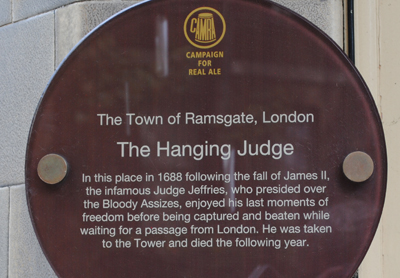
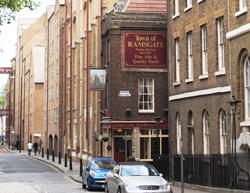
Remaining in London after the king had fled, Lord Jeffreys only attempted to flee as William’s forced approached the city. He made it as far as Wapping where, despite being disguised as a sailor, he was recognised in a pub, now The Town of Ramsgate (pictured above).

Placed in custody in the Tower of London, he died there of kidney problems on 18th April, 1689, and was buried in the Chapel Royal of Saint Peter ad Vincula (before, in 1692, his body was moved to the Church of St Mary Aldermanbury). All traces of his tomb were destroyed when the church was bombed during the Blitz (for more on the church, see our earlier post here).
Lost London – Chapel of St Thomas á Becket…

Known informally as the Chapel on the Bridge, the Chapel of St Thomas á Becket was located in the middle of London Bridge and, as the name suggests, was dedicated to the ill-fated archbishop of Canterbury.

London-Bridge-chapelFounded in 1205, the stone chapel was among the first buildings constructed on the bridge by priest-architect Peter de Colechurch in 1176, who was actually buried beneath the chapel (for more on him and the construction of the bridge, see our earlier posts here and here).

Facing downstream and located on a wider than normal pier – the 11th pier from the Southwark end of the bridge and the ninth from the City end – the original chapel was built in the early English Gothic style and consisted of an upper chapel with a groined roof and columns and vaulted lower chapel or undercroft. Standing some 40 foot high, it would have towered over the shops and residences on the bridge. There is some suggestion it was damaged by fire in 1212 and may have had to have been extensively repaired.

It’s name ensured its popularity – Becket was martyred in Canterbury Cathedral in 1170, apparently on the orders of King Henry II, and, canonised just three years later, had quickly become the focus of a popular religious cult in his home town of London. The chapel also became renowned as a wayside stop for pilgrims to receive the saint’s blessing before making their way to Canterbury where his shrine was located.

But it wasn’t just pilgrims who had an attachment – the chapel was apparently popular among watermen who, when the tide allowed them, were known to tie up their craft on the chapel pier and ascend to the undercroft through a lower entrance.

The chapel – which apparently had two priests at the beginning as well as a number of clerks although the number of priests is known to have climbed as high as five in the 14th century – was nominally under the control of the priest of the church of St Magnus-the-Martyr, located at the City end of the bridge. The reality seems to have been however, that the priests and other “Brothers of the Bridge” enjoyed considerable freedom in their roles, including, after 1483, obtaining the right keep alms taken during services provided he made a generous contribution to the parish finances. Like most who worked on the bridge, the priests and “clerks of the chapel” would likely have lived on it.

Relics housed in the chapel apparently included fragments of the True Cross and a number of chantries were built inside the chapel in the 14th century – it’s believed this may have led to some overcrowding and been one of the reasons for a major rebuilding of the chapel – this time in the Perpendicular Gothic style – between 1384 and 1397.

The chapel survived until the Dissolution when, in 1548, the priest was ordered to close it up and it was desecrated and later converted into a dwelling (later still, parts of it were used as a warehouse). It was demolished over succeeding years – by the late 18th century just the lower chapel remained –  with the final remnants removed in the early 1800s.

Some bones in a small casket were disinterred in from the chapel undercroft during this process in the early 19th century. Although these were rumoured to be those of de Colechurch, analysis found them to be part of a human arm bone, a cow bone and goose bones. (Other accounts suggest most of Peter’s bones were tossed into the Thames and that a small number were even sold at auction).

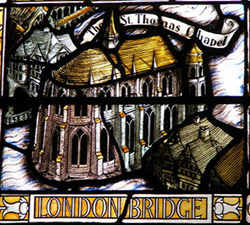
There’s a stained glass window commemorating the bridge in St Magnus-the-Martyr Church today (pictured above).

10 small, ‘secret’ and historic gardens in central London…5. Seething Lane Garden…

Seething-Lane-Garden

This small, simply laid out garden in the City of London is redolent with history.

It was once the site of the Navy Office, the workplace of diarist Samuel Pepys, and it was in the garden of this building that he and Sir William Penn buried their wine and parmesan cheese for safety during the Great Fire of London in 1666.

The office survived the Great Fire but was, oddly enough, destroyed by fire only a few years later in 1673 (there is a blue plaque commemorating it in the garden) and a new office, designed by Sir Christopher Wren, was built here in the early 1680s before it was demolished in 1788.

Seething-Lane-Garden2It’s due to its association with Pepys (who also lived in the street and was buried in the nearby church of St Olave Hart Street) that it boasts a bronze bust of him which was erected by the Samuel Pepys Club in 1983, designed by Karin Jonzen and funded by public subscription. It was presented to the garden by Fred Cleary who played an instrumental role in encouraging green spaces in the Square Mile in the 1970s.

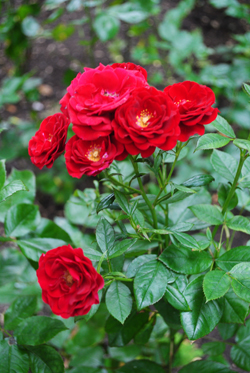
The garden, which was laid out in about 1950, is also notable for its beds of red roses, planted to commemorate the deal struck in 1381 in which the Sir Robert Knollys was belatedly granted permission for a footbridge his wife had built over Seething Lane. She had done so contrary to planning rules while he was away fighting with John of Gaunt (ostensibly so she could avoid the dust of the street when crossing from her house to her rose garden), and so when he returned, the City of London Corporation allowed the bridge (now long gone) to remain, but only in exchange for the symbolic “penalty” of one red rose a year.

The occasion is still marked each June in a ceremony overseen by the Company of Watermen and Lightermen of the River Thames in which a red rose is plucked from the garden and delivered to the Lord Mayor of London at Mansion House.

WHERE: Seething Lane Garden, Seething Lane, City of London (nearest Tube stations is Tower Hill); WHEN: Daily; COST: Free; WEBSITE: www.cityoflondon.gov.uk/things-to-do/green-spaces/city-gardens/Pages/default.aspx.

This garden reopened in 2018 after being redeveloped as part of the Trinity Square redevelopment.


10 small, ‘secret’ and historic gardens in central London…4. St Mary Aldermanbury Gardens…

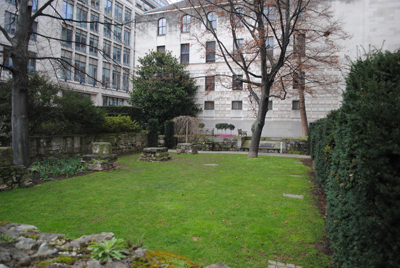
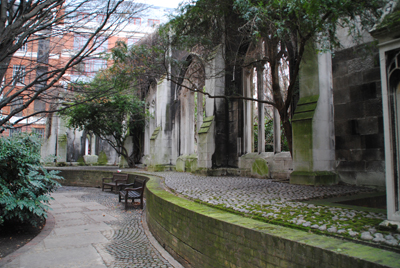
St-Mary-Aldermanbury2Like St Dunstan in the East, these gardens at the corner of Love Lane and Aldermanbury are also based inside the remains of a medieval church.

The church of St Mary Aldermanbury (the name may relate to its proximity close to Guildhall, or the ‘Alderman’s Bury’ or ‘Alderman’s Hall’), mentioned as far back as the late 12th century, was destroyed in the Great Fire of London but was among those rebuilt to the designs of Sir Christopher Wren only to be destroyed again during the Blitz in 1940.

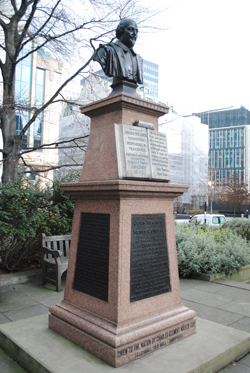
Shakespeare-MonumentThis time there was to be no rebuilding and instead, in 1966 the walls – all that remained – were moved more than 4,000 miles away to the town of Fulton, Missouri, in the US.

There they were reconstructed in the grounds of Westminster College – site of Winston Churchill’s famous “Iron Curtain” speech in 1946 – and the church restored as a memorial to the former British PM. The National Churchill Museum is located beneath.

There’s plaque mentioning this in the gardens (and featuring an image of what the church looked like after its reconstruction in Fulton) which still contains the church’s footings (these date from the 15th century when the church was apparently partially rebuilt) and give an indication of what the church’s footprint would have been along with headstones (among those whose remains were buried here was the notorious Judge Jeffreys).

Other features include a memorial to Henry Condell and John Heminge, both involved in the publication of William Shakespeare’s first folio (you can read more about it in our earlier post here).

The garden was laid out after the church was removed. It is a designated Site of Local Importance for Nature Conservation and attracts wildlife including birds such as blackbirds, woodpigeons, house sparrows and blue tits. Plantings were added in 2011 to maximise the attraction to bird as well as bees and butterflies. On the corner outside the garden is a fountain.

WHERE: St Mary Aldermanbury Garden, Aldermanbury, City of London (nearest Tube stations are St Pauls and Monument); WHEN: 8am to 7pm daily; COST: Free; WEBSITE: www.cityoflondon.gov.uk/things-to-do/green-spaces/city-gardens/visitor-information/Pages/St-Mary-Aldermanbury.aspx.

10 small, ‘secret’ and historic gardens in central London…3. St Dunstan in the East Garden…

St-Dunstan1

Located amid the remains of the medieval church of St Dunstan in the East, the garden was created in the late 1960s after the church was finally – and irrevocably, apparently – destroyed in the Blitz of World War II.

St-Dunstan2The church’s origins went back to around 1100 and it was subsequently extended with a new south aisle in the late 14th century and repaired in the early 17th century before being severely damaged in the Great Fire of 1666.

Patched up, with a new steeple and tower added to the building between 1695-1701 by Sir Christopher Wren, the building stood until the early 19th century when much of the church – with the exception of Wren’s additions – had to be rebuilt (for more on the history of the church, see our earlier Lost London post here).

The ‘new’ building was, however, badly damaged during bombing in 1941 and it was decided not to rebuild the church in the aftermath of the war.

The City of London opened a garden, sympathetic with the remains of the Grade I-listed building, on the site in 1971 (although Wren’s tower remains). They won a landscape award only a few years later.

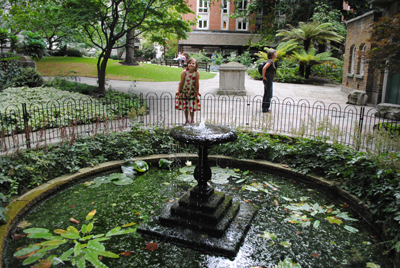
Features in these atmospheric gardens – which seem to capture the essence of the Romantic idea of what ruins should look like – include a fountain which sits in the middle of the nave. In 2010 it was one of five public gardens in the City where award-winning  ‘insect hotels’ were installed.

Maintenance works were carried out in 2015 and new plantings put in (the picture, above, was taken before this).

WHERE: St Dunstan in the East, between Idol Lane and St Dunstan’s Hill, City of London (nearest Tube stations are Monument and Tower Hill); WHEN: 8am to 7pm or dusk (whichever is earlier); COST: Free; WEBSITE: www.cityoflondon.gov.uk/things-to-do/green-spaces/city-gardens/visitor-information/Pages/St-Dunstan-in-the-East.aspx

LondonLife – London’s celebration of sculpture…

(i)-Damien-Hirst,-Charity.-Sculpture-in-the-City-2015Damien Hirst’s seven foot tall statue Charity (2002-2003) stands in the shadow of the Gherkin as a highlight of this year’s Sculpture in the City event. Kicking off last month, the exhibition – the fifth of its kind – features 14 works by a series of internationally renowned artists. Other sculptures (pictured below) include Adam Chodzko’s 2010 work Ghost (on show at Leadenhall Market), Laura Ford’s 2012 work Day of Judgement – Cats 1 & 2 (150 Leadenhall Street), Sigalit Laudau’s 2011 work ‘O my friends, there are no friends’ (St Helen’s Square), and Kris Martin’s 2012 work Bells II (on the corner of Bishopsgate and Wormwood Street). The works can be seen until May next year. For more (including a map of locations), see www.cityoflondon.gov.uk/sculptureinthecity. PICTURES: Nick Turpin.

Adam-Chodzko's-'Ghost',-Leadenhall-Market.-Sculpture-in-the-City-2015,-Photograph-by-Nick-Turpin

(i)-Laura-Ford's-'Days-of-Judgement---Cats-1-&-2'.-Sculpture-in-the-City-2015,-Photograph-by-Nick-Turpin

(iii)-Sigalit-Landau.-O-my-friends,-there-are-no-friends.-Sculpture-in-the-City-2015.

Kris-Martin--Bells-II_landscape