Lost London – The Hindoostanee Coffee House…

Hindoostane_Coffee_House_(7599806070)Described as the first dedicated Indian restaurant in Britain, the Hindoostanee (also spelt Hindoostane) Coffee House was established by Dean Mahomet (later Sheikh or ‘Sake’ Dean Mahomet), an Indian who served with the East India Company Army before coming to Britain.

Accompanying East India Company man Godfrey Baker to Ireland, he lived initially with the Baker family before meeting and marrying a young woman while learning English and subsequently establishing his own household in Cork.

In 1794, he published a book, The Travels of Dean Mahomet, which, written as a series of letters to an imaginary friend, described his own life and Indian customs. It is credited as the first book to be written and published in English by an Indian.

Around 1807, he and his wife and son moved to London where he initially found employment with Sir Basil Cochrane at a “vapour spa” Sir Basil had established in Portman Square. While Mahomet introduced Indian innovations such as “shampooing” to the spa, he was given little credit for his work, however, and so decided to break out on his own.

In 1810, he set-up the coffee house at 34 George Street, Portman Square, just behind Sir Basil’s house.

The establishment was aimed at Anglo-Indians who had spent time in India and offered them Indian-style foods – such as curries and spiced dishes – along with other reminders of the sub-Continent such as a room set up for the use of the hookah with “real Chilm tobacco”  – all in an Indian-style setting.

Sadly, the establishment was only rather short-lived and, despite taking on a partner, Mahomet was forced to declare bankruptcy in 1812. But he did go on to establish a very successful Indian-style baths in Brighton, Mahomet’s Baths (and later even opened a second branch in St James’s London which would be managed by his son).

A plaque was erected by the City of Westminster close to the site of the former coffee house in 2005.

PICTURE: Simon Harriyott from Uckfield, England [CC BY 2.0 (http://creativecommons.org/licenses/by/2.0)%5D, via Wikimedia Commons.

Lost London – The King’s Mews at Charing Cross…

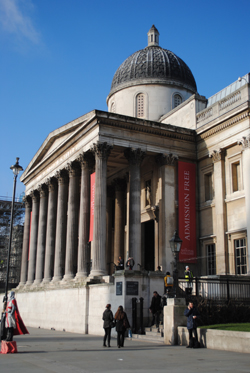
National-Gallery2The Royal Mews – a stables and carriage house – is these days located at Buckingham Palace but prior to being moved there, the Royal Mews, previously usually referred to as the King’s and Queen’s Mews depending who was on the throne, was located on the site where the National Gallery (pictured) and Trafalgar Square now stand.

The name ‘mews’ actually refers to the fact that, from at least the reign of King Richard II in the late 14th century (although official records suggest there may have been a mews on the site as far back as the reign of King Edward I), the royal hawks were initially housed on the site – then in the village of Charing Cross – (the word ‘mew’ refers to the moulting of the birds and originally referred to when they were confined here for that purpose but later come to simply mean the place were the birds were caged).

The title of Keeper of the King’s Mews became a sought-after honour during the 15th century (although largely honorary with the actual work done by deputies) but among those who held the honour were Richard Neville, Earl of Warwick, known, during the Wars of the Roses as the ‘Kingmaker’.

In 1534, the King’s Mews was destroyed by fire and when it was rebuilt a few years later, it took the form of a stable but kept the original name of mews (although it has been suggested the change of use took place before the fire).

During the Civil War, the Mews were apparently used as a prison by the Parliamentarians for captured Royalists and during the Commonwealth, soldiers were apparently quartered here. Diarist Samuel Pepys also apparently visited several times.

In 1732 the building was again rebuilt, but this time it was to the grand designs of William Kent – images show a grand building with turrets and a great open square before it. In the 1760s, King George III had some of his horses and carriages moved to facilities on the grounds of Buckingham Palace (he had purchased this from the Duke of Buckingham for his wife’s use) but the bulk remained on the Charing Cross site.

In the early 19th century they were opened to the public but in the 1820s, King George IV – making Buckingham Palace his main residence – had the entire stables moved (the Royal Mews which now stand at Buckingham Palace were designed by John Nash and completed in 1825).

The old mews were subsequently demolished and Trafalgar Square – another Nash design – built on the site between 1827 and 1835 while the National Gallery opened in 1838.

Lost London – Holywell Street…

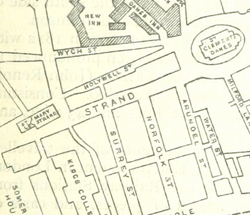
Holywell Street, which ran parallel to the Strand in the West End, was – as we pointed out in a story earlier this week – named for a ‘holy well’ which is still located in the basement of Australia House.

Holywell-StreetOnce a favoured location for secondhand clothes dealers (it was then known to many as ‘Rag Street’), the street became known as something of a hot-house for those selling books containing radical and dissenting opinions in the late 18th century and early 19th century and it was during this time that it also started to attract a less reputable trade – that of the pornography industry.

So much so that by the 1820s, the narrow street – also then known as Bookseller’s Row – had effectively become the centre of the pornographic industry in London (one estimate puts at 57 the number of purveyors of indecency in the street by 1834). William Dugdale, who died in ignominy in prison, was the most infamous purveyor of such goods to work in the street.

The combination of its proximity to the church of St Clement Danes – which sits at the eastern end of what was the street (St Mary le Strand stands at what was the western end) – and the indecent trade which went on in it led to it being nicknamed the “Backside of St Clements”.

The street and is disreputable trade were removed during the building of what is now Aldwych – a crescent at the southern end of Kingsway – in 1901.

PICTURE: Holywell Street shown in 1888 book, The District Railway Guie to London, with coloured maps, plans etc./via British Library Flickr

Top posts of 2015 – The ‘lost’ chapel of St Thomas; and, inside King Henry V’s chantry chapel…

2016 is fast approaching and to celebrate, we’re looking back at the 10 most popular posts we published in 2015. Today, we present our most popular and second most popular articles posted this year…

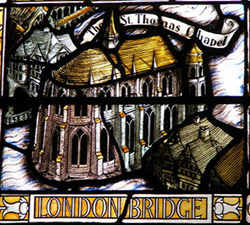
London-Bridge-chapel2. Our second most popular article, posted in August, was another in our Lost London series and this time looked at a long-lost feature of Old London Bridge – Lost London – Chapel of St Thomas á Becket.

1. And we are finally there – the most popular of our posts published this year was run in conjunction with the 600th anniversary of the Battle of Agincourt. Part of our LondonLife series, it took a look inside King Henry V’s rarely opened chantry chapel in Westminster Abbey – LondonLife – A rare glimpse inside King Henry V’s chantry chapel.

Top posts of 2015 – The site of Queen Boudicca’s defeat?; and, just what was The Great Conduit?…

2016 is fast approaching and to celebrate, we’re looking back at the 10 most popular posts we published in 2015. Today, we look at numbers four and three…

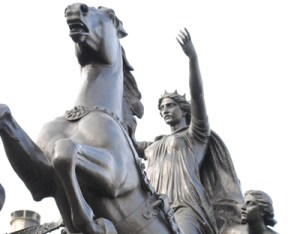
boudicca4. Number four is another in our current series on London battlefields – this time looking at the site where Queen Boudicca is believed to have been defeated by the Romans – 10 London ‘battlefields’ – 1. Queen Boudicca takes on the Romans

3. Our second top 10 entrant from the Lost London series, this post, published back in September, looked at the history of the Great Conduit – Lost London – The Great Conduit

The countdown finishes tomorrow with a look at the most and second most popular articles were posted in 2015…

Top posts of 2015 – A lost ‘castle’; Jack Cade and London; and, a garden in Seething Lane…

2016 is fast approaching and to celebrate, we’re looking back at the 10 most popular posts we published in 2015. Today, we look at numbers seven, six and five…

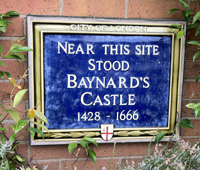
Baynard's-Castle7. At number seven is a post we published in February as part of our ongoing Lost London series. In it we looked at the later history of the fortification known as Baynard’s Castle – Lost London – Baynard’s Castle (part 2)

6. Another in our series on London’s ‘battlefields’ – this one, published in November looks at the role the city played in Jack Cade’s rebellion during King Henry VI’s reign – 10 London ‘battlefields’ – 4. Jack Cade’s rebellion

5. Our fifth most popular post of 2015 was another in our series on gardens – 10 small, ‘secret’ and historic gardens in central London…5. Seething Lane Garden

We’ll look at numbers four and three tomorrow…

Lost London – The Great Conduit…

CheapsideLocated at the junction of Cheapside and Poultry, the Great Conduit, also known as the Cheapside Standard, was a famous medieval public fountain.

The Great Conduit (the word conduit refers to column fountains fitted with ‘cocks’ or taps for dispensing the water) gave access to water piped using gravity four kilometres from the Tyburn into the City largely via lead pipes.

It was constructed by the City Corporation from the mid-13th century after King Henry III approved the project in 1237. It was rectangular-shaped timber building with an elevated lead tank inside from which the water was drawn.

It took the name ‘Great’ after further conduits were built further west in Cheapside in the 1390s. There were at least 15 conduits or standards scattered about the City by the time of the Great Fire in 1666.

It was rebuilt several times over its life, notably in the reign of King Henry VI, but after being severely damaged in the fire was deemed irreparable and orders were given for it to be taken down in 1669 (many houses by then had alternate water supplies, notably from the New River project). From the 1360s, management of the conduit was the responsibility of four wardens, maintaining the pipes and charging professional water carriers and tradesmen who required water by allowing free

The Cheapside Conduit was a notable landmark – some executions and other punishments were carried out here, speeches were made from here and the conduit building itself was used as a place for posting information. And to celebrate special occasions it was made to flow with wine – this took place in 1432 when King Henry VI marched through London after being crowned King of France, at the coronation of Queen Margaret in 1445 and at the wedding procession of King Henry VIII’s queen Anne Boleyn in 1533.

The substructure of the Great Conduit was rediscovered at the end of the 19th century and again in the 1990s. A plaque marking the location of the Great Conduit at the eastern end of Cheapside was unveiled in late 1994 by Thames Water and the Worshipful Company of Water Conservators. There’s also a memorial set into the pavement over the substructure.

Lost London – Chapel of St Thomas á Becket…

Known informally as the Chapel on the Bridge, the Chapel of St Thomas á Becket was located in the middle of London Bridge and, as the name suggests, was dedicated to the ill-fated archbishop of Canterbury.

London-Bridge-chapelFounded in 1205, the stone chapel was among the first buildings constructed on the bridge by priest-architect Peter de Colechurch in 1176, who was actually buried beneath the chapel (for more on him and the construction of the bridge, see our earlier posts here and here).

Facing downstream and located on a wider than normal pier – the 11th pier from the Southwark end of the bridge and the ninth from the City end – the original chapel was built in the early English Gothic style and consisted of an upper chapel with a groined roof and columns and vaulted lower chapel or undercroft. Standing some 40 foot high, it would have towered over the shops and residences on the bridge. There is some suggestion it was damaged by fire in 1212 and may have had to have been extensively repaired.

It’s name ensured its popularity – Becket was martyred in Canterbury Cathedral in 1170, apparently on the orders of King Henry II, and, canonised just three years later, had quickly become the focus of a popular religious cult in his home town of London. The chapel also became renowned as a wayside stop for pilgrims to receive the saint’s blessing before making their way to Canterbury where his shrine was located.

But it wasn’t just pilgrims who had an attachment – the chapel was apparently popular among watermen who, when the tide allowed them, were known to tie up their craft on the chapel pier and ascend to the undercroft through a lower entrance.

The chapel – which apparently had two priests at the beginning as well as a number of clerks although the number of priests is known to have climbed as high as five in the 14th century – was nominally under the control of the priest of the church of St Magnus-the-Martyr, located at the City end of the bridge. The reality seems to have been however, that the priests and other “Brothers of the Bridge” enjoyed considerable freedom in their roles, including, after 1483, obtaining the right keep alms taken during services provided he made a generous contribution to the parish finances. Like most who worked on the bridge, the priests and “clerks of the chapel” would likely have lived on it.

Relics housed in the chapel apparently included fragments of the True Cross and a number of chantries were built inside the chapel in the 14th century – it’s believed this may have led to some overcrowding and been one of the reasons for a major rebuilding of the chapel – this time in the Perpendicular Gothic style – between 1384 and 1397.

The chapel survived until the Dissolution when, in 1548, the priest was ordered to close it up and it was desecrated and later converted into a dwelling (later still, parts of it were used as a warehouse). It was demolished over succeeding years – by the late 18th century just the lower chapel remained –  with the final remnants removed in the early 1800s.

Some bones in a small casket were disinterred in from the chapel undercroft during this process in the early 19th century. Although these were rumoured to be those of de Colechurch, analysis found them to be part of a human arm bone, a cow bone and goose bones. (Other accounts suggest most of Peter’s bones were tossed into the Thames and that a small number were even sold at auction).

There’s a stained glass window commemorating the bridge in St Magnus-the-Martyr Church today (pictured above).

10 small, ‘secret’ and historic gardens in central London…5. Seething Lane Garden…

Seething-Lane-Garden

This small, simply laid out garden in the City of London is redolent with history.

It was once the site of the Navy Office, the workplace of diarist Samuel Pepys, and it was in the garden of this building that he and Sir William Penn buried their wine and parmesan cheese for safety during the Great Fire of London in 1666.

The office survived the Great Fire but was, oddly enough, destroyed by fire only a few years later in 1673 (there is a blue plaque commemorating it in the garden) and a new office, designed by Sir Christopher Wren, was built here in the early 1680s before it was demolished in 1788.

Seething-Lane-Garden2It’s due to its association with Pepys (who also lived in the street and was buried in the nearby church of St Olave Hart Street) that it boasts a bronze bust of him which was erected by the Samuel Pepys Club in 1983, designed by Karin Jonzen and funded by public subscription. It was presented to the garden by Fred Cleary who played an instrumental role in encouraging green spaces in the Square Mile in the 1970s.

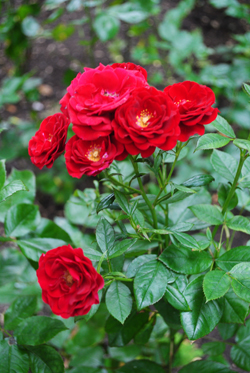
The garden, which was laid out in about 1950, is also notable for its beds of red roses, planted to commemorate the deal struck in 1381 in which the Sir Robert Knollys was belatedly granted permission for a footbridge his wife had built over Seething Lane. She had done so contrary to planning rules while he was away fighting with John of Gaunt (ostensibly so she could avoid the dust of the street when crossing from her house to her rose garden), and so when he returned, the City of London Corporation allowed the bridge (now long gone) to remain, but only in exchange for the symbolic “penalty” of one red rose a year.

The occasion is still marked each June in a ceremony overseen by the Company of Watermen and Lightermen of the River Thames in which a red rose is plucked from the garden and delivered to the Lord Mayor of London at Mansion House.

WHERE: Seething Lane Garden, Seething Lane, City of London (nearest Tube stations is Tower Hill); WHEN: Daily; COST: Free; WEBSITE: www.cityoflondon.gov.uk/things-to-do/green-spaces/city-gardens/Pages/default.aspx.

This garden reopened in 2018 after being redeveloped as part of the Trinity Square redevelopment.


Lost London – Inigo Jones’ Grand Portico on Old St Paul’s Cathedral…

Inigo-Jones-portico

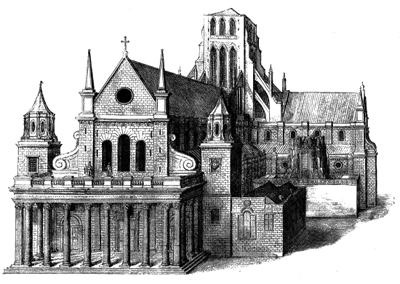
A short-lived addition to Old St Paul’s Cathedral before it burned down in the Great Fire of 1666, the classical-style portico was designed by Inigo Jones as part of makeover King James I ordered him to give the cathedral in the first half of the 17th century.

St Paul’s, which was completed in the early 14th century in the Early English Gothic style (see our post here for more on its earlier history), had fallen into a state of disrepair by the 1620s, thanks in part to a fire caused by lightning which had brought the spire – 489 feet (149 metres) high when built – crashing down through the nave roof in 1561.

The spire wasn’t rebuilt and repair works undertaken to the cathedral roof were apparently shoddy, meaning that by the early 1600s, things were in a parlous state.

Jones started work in the 1620s, cleaning and repairing the massive structure and adding a layer of limestone masonry over the exterior to give the building a more classical look inspired by the temples of ancient Rome he had seen in that city and in Naples and the work of Italian Renaissance architect Andrea Palladio.

This was complemented by the grand portico he added to the west front in the 1630s (and which was paid for by King James’ son, King Charles I). Featuring 10 columns across its breadth and four deep (these, it has been suggested, stood about 45 feet tall), it was topped by a frieze of lions’ heads and foliage with plans for a series of statues which some say were to be saints and others kings to be placed along the top (in the end only statues of King Charles I and King James I were ever placed there). The facade also featured turrets at either side.

Work on the repairs came to a halt in 1642 thanks to the Civil War, during which Parliamentarian forces famously used the cathedral’s great nave for stables.

Following the Restoration in 1660, with Jones now dead (he died in 1652), Sir Christopher Wren was invited by King Charles II to restore the grand old building but Sir Christopher proposed it be demolished instead, a decision which lead to an outcry among London’s citizens.

Wren then changed his plans to instead restore the existing build but replace the spire with a dome. His scaffolding was in place around the cathedral when the Great Fire broke out in 1666 and badly damaged the building (although the portico apparently remained standing until 1687-88 when Sir Christopher had it demolished to make way for his new western front).

Interestingly, it is said Wren used blocks from the portico to create the foundations for the building which now stands on the site.

PICTURE: Wenceslaus Hollar’s rendering of Inigo Jones’ West Portico/Wikipedia

For more on the history of St Paul’s Cathedral see Ann Saunders’ St Paul’s Cathedral: 1,400 Years at the Heart of London.

10 sites from London at the time of the Magna Carta – 8. Bermondsey Abbey…

Bermondsey Abbey, which was more than 130-years-old by the time King John put his seal to the Magna Carta in 1215, has an unusual connection to the unpopular king – it is one of a number of buildings in London which has, at various times in history, been erroneously referred to as King John’s Palace.

This suggestion – that it was a palace which was later converted into an abbey – may have arisen from a site on the former abbey grounds being known at some point in its history as King John’s Court (that name was said to commemorate the fact that King John visited the abbey).

Putting how King John’s name came to be linked with the abbey aside, we’ll take a quick look at the history of the abbey which rose to become an important ecclesiastical institution in medieval times.

While there was a monastic institution in Bermondsey as far back as the early 8th century, the priory which was here during the reign of King John was founded in 1082, possibly on the site of the earlier institution, by a Londoner named as Aylwin Child(e), apparently a wealthy Saxon merchant who was granted the land by King William the Conqueror.

In 1089, the monastery –  located about a mile back from the river between Southwark and Rotherhithe – became the Cluniac Priory of St Saviour, an order centred on the French abbey of Cluny, and was endowed by King William II (William Rufus) with the manor of Bermondsey.

It was “naturalised” – that is, became English – by the first English prior, Richard Dunton, in 1380, who paid a substantial fine for the process. It was elevated to the status of an abbey by Pope Boniface IX in 1399.

It had some important royal connections – King John’s father, King Henry II and his wife Queen Eleanor celebrated Christmas here in 1154 (their second child, the ill-fated Henry, the young King, was born here a couple of months later), and Queen Catherine (of Valois), wife of King Henry V, died here in 1437. It was also at Bermondsey Abbey that Elizabeth Woodville, the widow of King Edward IV and mother of the two “Princes in the Tower”, died in 1492 following her retirement from court.

The abbey, which grew to have an enormous income thanks to its acquisition of property in a range of counties, survived until the Dissolution when, in 1537, King Henry VIII closed its doors. It was later acquired by Sir Thomas Pope who demolished the abbey and built a mansion for himself on the site (and founded Trinity College in Oxford apparently using revenues from the property). We’ll deal more with its later history in an upcoming post.

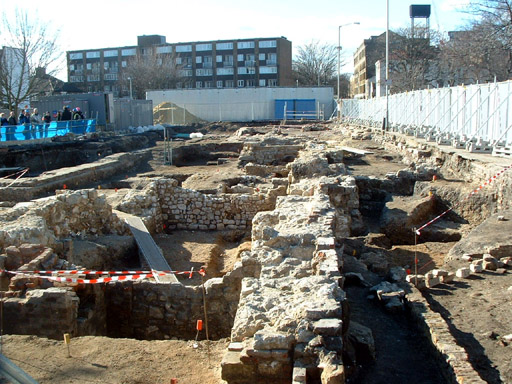
The ruins of the abbey were extensively excavated in the past few decades and some of the remaining ruins of the abbey can still be seen buildings around Bermondsey Square and a blue plaque commemorating the abbey was unveiled in 2010. Bermondsey Street runs roughly along the line of the path which once led from the abbey gates to the Thames and the abbey had a dock there still commemorated as St Saviour’s Dock. The abbey’s name is commemorated in various streets around the area.

For more on the history of the Magna Carta, see David Starkey’s Magna Carta: The True Story Behind the Charter.

PICTURE: An archaeological dig at the ruins of Bermondsey Abbey in 2006. Zefrog/Wikipedia.

Lost London – St Martin Outwich…

This former City church – now part of the parish of St Helen’s Bishopsgate – once stood on the corner of Threadneedle Street and Bishopsgate (the site is marked by a blue plaque).

St-Martin-OutwichA medieval church which was apparently rebuilt in the 14th century in the Gothic style, it was dedicated to St Martin while there is some discrepancy over the use of the name Outwich – some sources say it comes from a corruption of the name of the family who paid for its reconstruction – the Oteswich family – while others say the family in fact took their name from the church and that ‘outwich’ simply means the outer side of the wich (one of a number of Saxon words for a town).

It survived the Great Fire of 1666 but gradually fell into disrepair and in 1765 was badly damaged in another fire which destroyed some 50 houses.

In 1796, Parliament passed an act allowing the parish to raise money for its building – the donations included some from the powerful City livery companies – and after a couple of years of construction, it was consecrated in November, 1798.

Designed by Samuel P Cockerell, the church was unusual in that it featured an oval interior. Medieval stained glass from the original church was placed in a window over the altar while some of the monuments that had been present in the old church – including one commemorating John Oteswich and his wife – were transferred to the new. The dead buried at St Martin Outwich, meanwhile, were reburied in the City of London churchyard (where a memorial to them can now be seen).

A painting from 1838 shows a curved interior with high semi-circular windows, some intricate medieval monuments and closed in box pews.

Thanks to a falling population and pressure to widen the streets, the church was eventually demolished in 1874 and the parish amalgamated with St Helen’s. As had previously happened, a number of monuments – including the Oteswich memorial – which were in the old church were moved to St Helen’s before its demolition.

Proceeds from the sale of the church grounds were used to fund the construction of Holy Trinity Church in Dalston. Built in the late 1870s to the designs of Ewan Christian, it is perhaps best known as the Clown’s Church and is where the clown service is usually held each year.

PICTURE: sleepymyf

Lost London – East India House…

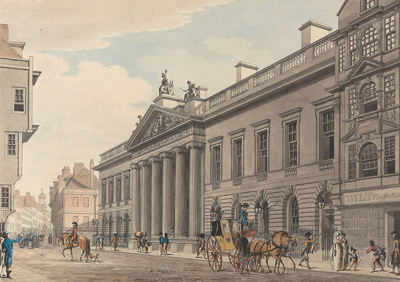
East-India-HouseThe headquarters of the East India Company, the ‘New’ East India House, was built in the 1720s at the corner of Leadenhall and Lime Streets on the site of what had been a late Elizabethan mansion known as Craven House.

The company, which was founded in 1600, was housed in several different properties (including Crosby Hall – now located at Chelsea) until it moved into Craven House in 1648 – built by a former Lord Mayor, Sir Robert Lee, and named after one of its later occupants Sir William Craven. In 1661 an ornamental wooden structure featuring paintings of some of the Company’s ships and a wooden sculpture of a seaman, was added to the facade of the building.

By the 1720s, the mansion was crumbling and so construction began on a new building on the site designed by Theodore Jacobsen (the Company was relocated to a temporary premises in Fenchurch Street while it was built).

The three storey building on Leadenhall Street was designed with five bays and beyond the facade featured grand meeting rooms including the Directors’ Court Room, offices for the directors as well as a hall, courtyard, garden and warehouses. Famous art works inside included the fresco The East Offering its Riches to Britannia by then little known Greek artist Spiradone RomaThe East Offering its Riches to Britannia which once adorned the ceiling of the Revenue Committee Room (it’s now in the collection of the British Library).

The building was renovated and extended significantly in the 1790s creating what was essentially a grand new neo-classical building. Among the new additions – although it seems a matter of some debate the building was apparently designed by Henry Holland with the work was overseen by the Company’s surveyor Richard Jupp until his death in 1799 – were a museum and library. A new pediment topped by Brittania dominated the facade.

When the East India Company was wound up in 1858 after the Indian Mutiny its assets were transferred to the government and the building briefly became home to the India Office (which subsequently moved to a new purpose-built building which still stands in Whitehall).

In 1861, the building was sold for redevelopment and subsequently demolished. Many of its fittings, art collection and furnishings were transferred elsewhere including the British Library, V&A and the Foreign and Commonwealth Office in Whitehall where many of the fittings of the Directors’ Court Room – including a great marble chimneypiece – were reused.

The location of the property is now covered by the landmark Lloyd’s building with little to indicate such a grand premises had once stood here.

PICTURE: The extended East India House in about 1800, by Thomas Malton the Younger (1748-1804)/via Wikipedia.

For more on the history of the East India Company, see John Keay’s The Honourable Company: A History of the English East India Company.

10 sites from London at the time of the Magna Carta – 3. The Temple…

Templars

Not much remains today of the original early medieval home of the Templar Knights which once existed just west of the City of London. While the area still carries the name (as seen in the Underground station, Temple), most the buildings now on the site came from later eras. But there are some original elements.

First though, a bit of history. The Templar precinct which become known as the Temple area of London was the second site in the city given to the military order, known more completely as the Knights of the Temple of Solomon (thanks to their Jerusalem HQ being located near the remains of the Temple of Solomon).
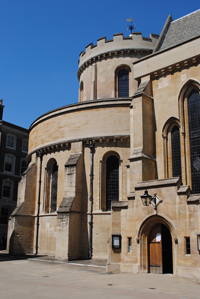
Temple-churchThe first was in Holborn, located between the northern end of Chancery Lane and Staple Inn, and was known as the ‘Old Temple’ after which, in the latter years of the 12th century, the Templars moved their headquarters to the new site – ‘New Temple’ or Novum Templum – on unoccupied land on the bank of the River Thames. 

This new precinct included consecrated and unconsecrated areas. The consecrated part was a monastery and was located around what is now Church Court with the monastic refectory built on the site of what is now Inner Temple Hall – the medieval buttery is the only part of the original building which survives.

The lay or unconsecrated part of the precinct lay east of Middle Temple Lane, where a second hall was built on the site of what is now the Middle Temple Hall (you’ll find more on that here) which was used to house the lay followers of the order.

The original buildings also included the still existing Templar Church (pictured, along with a monument depicting the Templars outside the church), which was consecrated in 1185 during the reign of King Henry II by Heraclius, the Patriarch of Jerusalem, on a visit to London. Like all other Templar churches, its circular design was based on the design of the Church of the Holy Sepulchre in Jerusalem (the chancel was added later and consecrated in the presence of King Henry III in 1240 – for more on the Temple Church, you can see our earlier post here.

The New Temple become an important site in London (and the kingdom as a whole – the Masters of the Temple were the heads of the order in England) and was used by many of the nobility as a treasury to store valuables (and to lend money). It also had close connections with the monarchy and was, as we saw earlier this week, a power base for King John and from where he issued what is known as the King John Charter in 1215. He also used it for a time as a repository for the Crown jewels.

In an indication of the Temple’s prominence in state affairs, some of the great and powerful were buried here during this period including William Marshal, 1st Earl of Pembroke, who died in 1219, and his sons William and Gilbert (for more on those buried in the Temple, see our earlier post here). There were also apparently plans to bury King Henry III and his Queen here – this apparently spurred on the building of the chancel on the church – but they were eventually buried in Westminster Abbey instead.

Numerous relics were also apparently housed here during the Templar times including a phial believed to contain Christ’s blood and pieces of the true Cross.

The Templar era came to an end in 1312 when the order was dissolved on the authority of Pope Clement V amid some heinous allegations of blasphemy and sexual immorality which had the support of King Philip IV of France. While the pope awarded their property to the rival order, the Knights of the Hospital of St John of Jerusalem (also known as the Hospitallers), King Edward II had other ideas and ignored their claims with regard to the London property and instead, claimed it for the Crown (a dispute which went on for some years).

It later became associated particularly with lawyers, although lawyers would have certainly been at work in the New Temple given its role as banker to the wealthy (but more on its later associations with lawyers in later post).

For more on the history of the Templars, see Malcolm Barber’s The New Knighthood: A History of the Order of the Temple.
Lost London – Blackwell Hall…

A trade hall for the wool and cloth trade, Blackwell Hall, also known as Bakewell Hall, once stood on the east side of Guildhall Yard in Basinghall Street.

The buttressed stone building – whose previous owners included Thomas Bakewell (from where apparently it gets its name) – is understood to have been purchased by the City of London Corporation during the reign of King Richard II and subsequently established as a cloth market.

‘Factors’ were introduced to act as agents and handle the sale of goods on behalf of the clothiers but shifts in trade – in particular the expansion of northern mills which led to them handling their sales directly –  saw the importance of the London-based factors wane.

The structure was rebuilt a couple of times over its lifespan – there are records of a rebuilding in 1588 and again after the Great Fire of 1666 – before it was finally demolished in 1820 to make way for the Bankrupcy Court.

Remains of the foundations were discovered during excavations in Guildhall Yard in 1988.

LondonLife – An ancient guardian sits watch…

Guardian

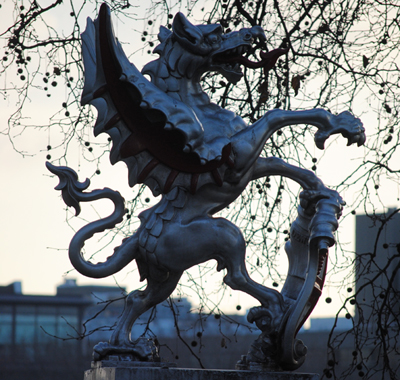
Marking the boundary of the City of London on Victoria Embankment is this large statue of a dragon holding a shield bearing the City’s coat-of-arms. One of a pair, these two statues were originally mounted above the entrance to the Coal Exchange in Lower Thames Street and were moved here in 1963 following the building’s demolition. They’re just two of numerous dragons which guard the City’s outer edges.

Lost London – The Great Wheel at Earl’s Court…

Built for the Empire of India Exhibition at Earls Court, this 308 foot (94 metre) high wheel opened to the public on 17th July, 1895.

Measuring 270 foot (82 metres) in diameter, the wheel – which had 40 cars each apparently carrying up to 40 passengers – had a design based on that of the famous original Ferris wheel which had been built for the Chicago Exhibition of 1893.

Weighing 1,100 tons (including its eight column supports), it had taken a year to build with much of the work carried out at Maudslay, Son and Field in Greenwich before assembly on the site at the Earls Court Exhibition Ground (located on surplus railway lands).

The wheel, which took around 20 minutes to make a full rotation and was powered by two 50 horse power steam engines, remained in service for just more than a decade (there was at least one report of it getting stuck and stranding passengers for several hours).

Having carried more than 2.5 million passengers over its life, it closed in 1906 after last being used at the Imperial Austrian Exhibition. It was demolished just a year later.

Lost London – Baynard’s Castle (part 2)…

Having previously looked at the Norman fortification (razed by King John in 1213 – see our earlier post here), this time we’re taking a look at the later (medieval) fortification known as Baynard’s Castle.

Baynard's-CastleIn the 1300s, a mansion was constructed about 100 metres east of where the castle had originally stood on a riverfront site which had been reclaimed from the Thames. This was apparently destroyed by fire before being rebuilt in the 1420s and it became the seat of the House of York during the Wars of the Roses. King Edward IV was proclaimed king here in 1461 and King Richard III was offered the crown here in 1483 (a moment famously captured by William Shakespeare).

King Henry VII transformed the fortified mansion into a royal palace at the start of the 16th century – adding a series of towers – and his son, King Henry VIII, gave it to the ill-fated Catherine of Aragon when they married. The Queen subsequently took up residence (Anne Boleyn and Anne of Cleves also resided here when queen – the latter was the last member of the royal family to use it as a permanent home).

After King Henry VIII’s death, the palace passed into the hands of the Earl of Pembroke (brother-in-law of Queen Catherine Parr, Henry’s surviving Queen) who substantially extended it, adding ranges around a second courtyard. In 1553, both Lady Jane Grey and Queen Mary I were proclaimed queen here. Queen Elizabeth I was another royal visitor to the palace, entertained with a fireworks display when she did.

It was left untouched during the Civil War (the Pembrokes were Parliamentarians) but following the Restoration, it was occupied by the Royalist Earl of Shrewsbury (among his visitors was King Charles II). It wasn’t to be for long however – the palace was largely destroyed in the Great Fire of 1666, although remnants of the building, including one or two of the towers, continued to be used for various purposes until the site was finally cleared in the 1800s to make way for warehouses.

The site in Queen Victoria Street in Blackfriars (the area is named for the monastery built on the site of the Norman castle) is now occupied by the Brutalist building named Baynard House. The castle is also commemorated in Castle Baynard Street and Castle Baynard Ward.

It was discovered in archaeological excavations in the 197os that the castle’s waterfront wall had been built on top of the Roman riverside city wall.

PICTURE: © Copyright Andrew Abbott

Lost London – The London Colosseum…

Designed by architect Decimus Burton (he of the Kew Palm House fame), the London Colosseum was a vast, 16-sided domed structure erected in the 1820s to the east of Regent’s Park to house a panoramic view of the city.

ColosseumSaid to be the largest ever painting created at the time, Thomas Hornor – a land surveyor – oversaw the creation of the work which was based on drawings he had made from the top of St Paul’s Cathedral (he had apparently sat in a special, temporary hut or “crow’s nest” positioned where the cross and ball would normally sit – but it was in the process of being replaced). Several artists – led by the renowned ET Parris – were involved in creating the work which took four years to make before it was completed in 1829.

The building – located where Cambridge Gate now stands – had been modelled on the Pantheon in Rome (not the Colosseum as the name would suggest) and was constructed from brick rendered with cement to imitate the appearance of stone. It featured a portico with Doric columns at the front and had inside an “ascending room” or lift to take people to see the panorama.

It’s opening was apparently delayed after Horner and his chief backer, MP Rowland Stevenson, took off to the US after running up rather large debts, leaving the property in the hands of trustees.

The Colosseum changed hands several times over the years and its purpose evolved. At one stage it was reinvented as a museum of sculpture displaying some 180 works while other attractions added to the great rotunda and its surrounding gardens over the years included a “Gothic aviary”, a Swiss chalet from which a visitor could look at a real waterfall and a stalactite cavern as well as a theatre and various other panoramas depicting everywhere from Paris to Lisbon.

Among visitors to the attraction were Queen Victoria and Prince Albert.

The Colosseum was put up for auction in 1855 but failed to attract a bid of the size required and, having passed through several hands (with some of the owners at one stage flirting with the idea of turning it into a grand hotel), it was eventually was demolished in the 1870s.

PICTURE: Via Wikipedia.

Lost London – Alsatia…

A Thames-side slum area located between Temple and Whitefriars Street (and south of Fleet Street), an area previously occupied by the Whitefriars Monastery, Alsatia was known as something of a lawless district where residents resisted any intervention by City officials.

The district came into existence following the dissolution of the monastery by King Henry VIII (he apparently gave the buildings and land to his physician Dr William Butts) and the area, despite some initial efforts to build substantial houses there, eventually degenerated into an overcrowded slum (apparently even when the priory was still existent, some of the surrounding areas had been somewhat disreputable).

The right of sanctuary apparently existed in the area which meant that debtors and criminals who entered gained immunity from arrest while they remained here.

Authorities were certainly loathe to enter the district given the strength which residents showed in resisting any attempts to grab hold of wanted persons and the maze-like narrow thoroughfares of the area and it became mockingly referred to as Alsatia in a reference to Alsace, a much disputed region on the French-German border which was historically outside normal legal jurisdiction.

Among those who took refuge here was Daniel Defoe – he is said to escaped here in 1692 after he was wanted by authorities for writing seditious material.

There were several attempts to clean up the slum but these had little effect (although the Great Fire of London did burn through here in 1666) and in 1608, King James I confirmed the area’s liberties in a formal charter. The rights remained in place until 1697 when they were abolished by an Act of Parliament (along with those of other liberties), although the area maintained its disreputable character for some time after.

Alsatia was mentioned in several books including in Thomas Shadwell’s 1688 play The Square of Alsatia and Sir Walter Scott’s 1822 novel, The Fortunes of Nigel, and the term continued to be used to refer to run-down neighbourhoods until late in the 19th century.