Famous Londoners – Madame Tussaud…

Famed around the world for her London-based wax museum (and the chain of waxworks which now bears her name), French-born Madame Tussaud is a towering figure of the early 19th century.

Born Anna Maria Grosholtz in Strasbourg on 1st December, 1761, Marie Tussaud’s association with waxworks came early when, her father Joseph having apparently died from wounds sustained in the Seven Years War just before her birth, she accompanied her mother Anna Maria Walder to Berne in Switzerland where her mother took up a position as a housekeeper for a physician and anatomical wax sculptor and portraitist Dr Philippe Curtius.
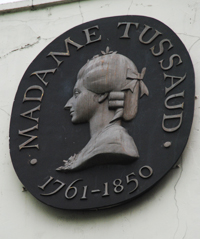
Madame-TussaudIn 1765, Dr Curtius moved to pre-Revolutionary Paris where he was soon to open a couple of establishments – at the Palais-Royal and the Boulevard du Temple (later consolidated at the latter site) – displaying his works in wax. Marie, whom Dr Curtius brought to Paris with her mother in 1768, started working with him on wax models and in 1777, at the age of just 16, produced her first wax figure, that of philosopher Voltaire. Other early works of Madame Tussaud’s depicted Rousseau and Benjamin Franklin.

The story goes that such was the renown of Tussaud and her “uncle” Dr Curtius, that their social circle came to include members of the Royal Family. Tussaud is widely believed to have been an art tutor to King Louis XVI’s sister Elizabeth and may have even taken up residence at Versailles.

Tussaud recounts that she was arrested during the French Revolution – the story goes that she was imprisoned and eventually released thanks to the intervention of family friend and revolutionary Jean-Marie Collot d’Herbois but whether this is true remains a matter of debate.

Tussaud claims she was then forced make death masks of those who ended their life on the scaffold including Louis XVI, Marie Antoinette, Marat and Robespierre. When Curtius died in 1794, she inherited his wax works and the following year married an engineer Francois Tussaud with whom she had two sons, Joseph and Francois (later known as Francis).

In 1802, Madame Tussaud accepted an invitation to go to London to exhibit her work at the Lyceum Theatre but thanks to the outbreak of the Napoleonic Wars, she and her four-year-old son Joseph were unable to return to France. Separated from her husband, she subsequently spent the next three decades travelling with her exhibition – which included relics from the Revolution and, like those of Curtius, was being constantly updated to reflect current affairs – around Britain and Ireland.

Her son Francois joined her in 1822 and Tussaud continued travelling until 1835 when she first established a permanent exhibition in Baker Street, London. Known as the Baker Street Bazaar, it apparently contained more than 400 wax figures. In 1846, Punch Magazine is credited with having invented the term ‘Chamber of Horrors’ for the room where the relics of the French Revolution were displayed.

Tussaud wrote her memoirs in 1838, and, in 1842, completed a wax model of herself. She died in her sleep on 16th April, 1850, in London. Her son Francois became chief artist for the exhibition after her retirement – he was succeeded by his son and then grandson. The exhibition moved to its current site in Marylebone Road in 1884.

Now owned by the Merlin Entertainments Group, Madame Tussauds has branches in cities in some 10 countries as well as its London base. Many of her original models still exist and are on display in the London museum along with the exhibition’s oldest attraction – known as ‘Sleeping Beauty’, it dates from 1863 – a breathing likeness of Louis XV’s sleeping mistress Madame du Barry.

For more on Madame Tussauds today, see www.madametussauds.com.

For more on the life of Madame Tussaud, see Kate Berridge’s book, Waxing Mythical: The Life and Legend of Madame Tussaud.

This Week in London – St Paul’s marks WWI centenary; Eid at Trafalgar Square; Suffragettes at the NPG; and, early Egypt gallery reopens at the British Museum…

An altar frontal created by more than 100 soldiers wounded in World War I will go on display at St Paul’s Cathedral this weekend. Made by 138 soldiers from the UK, Australia, Canada and South Africa, the restored altar frontal was created for the national service of thanksgiving at the end of the war and it forms the centerpiece of the cathedral’s commemoration of its centenary. The altar frontal will be used for the first time during a special service of Eucharist at 6pm this Sunday which will be attended by relatives of the men who made it. It will then be on display until 11th November, 2018, in the cathedral’s north transept. For more see www.stpauls.co.uk/WW1.

Trafalgar Square will host the annual Eid Festival this Saturday. It will feature stage entertainment including a catwalk show, arts and crafts, exhibitions, calligraphy, henna and face painting as well as a global food festival – including Turkish, Egyptian, Indonesian, Lebanese and Moroccan food – and a Malaysian food market. The free festival runs from noon to 6pm. For more, see www.london.gov.uk/eid.

A newly acquired portrait of suffragette Christabel Pankhurst has gone on display in the National Portrait Gallery for the first time in 80 years. The portrait, by Ethel Wright, was first shown at an exhibition staged in Kensington in 1909. It is part of a new display, Suffragettes: Deeds not Words, which also features photographs and archive material. It marks 100 years since the campaigners’ “final and most violent” protests which included an attack on paintings in the National Portrait Gallery. The display is on show in Room 31 of the gallery until 10th May next year. For more, see www.npg.org.uk.

The British Museum has reopened a gallery space dedicated to early Egypt as part of its refurbishment of the Ancient Egyptian galleries. The new Early Egypt gallery focuses on the development of Egypt between 8,500 BC and 3,100 BC – the beginning of the Pyramid Age – and features a redisplay of objects from the museum’s collection as well as materials only acquired recently; these include objects taken from a site in northern Sudan which were donated in 2002. Highlights of the new gallery include a series of female figurines which are among the oldest known Egyptian sculptures in human form, the Gebelein Man – the best preserved example of mummification dating to around  3,500 BC, and the Hunter’s Palette and the Battlefield Palette – two temple objects on which Egyptian rulers recorded their victories. The gallery is in Room 64. Admission is free. For more, see www.britishmuseum.org.

Send all items for inclusion to exploringlondon@gmail.com.

LondonLife – Hampton Court Palace’s royal ‘edible’ gardens…

Gardens1

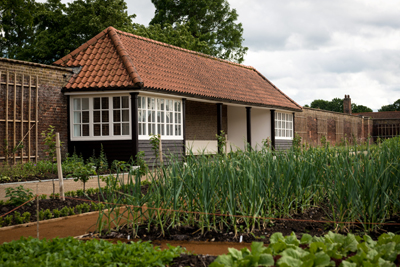
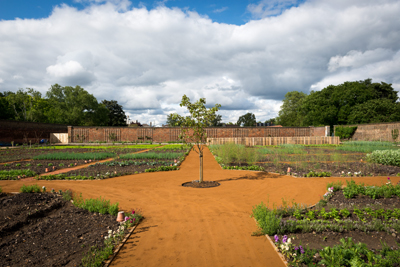
Historic Royal Palaces has reopened Hampton Court Palace’s royal kitchen garden, having recreated it according to a plan dating from 1736. The  six acre garden – constructed on the site of King Henry VIII’s tiltyard on the orders of Queen Anne in 1702 – was used to supply the table of monarchs from the early 1700s through to the 1840s. The recreated version showcases rare and heritage varieties of fruit and vegetables including Italian celery, borrage, skirret and swelling parsnips as well as apricots, nectarine and peaches while on site displays showcase some of the techniques used by the royal gardeners. The gardens are open to the public free-of-charge and it’s hoped that as they mature, vegetable growing classes will be held there. The gardens have been opened as part of celebrations marking the 300th anniversary of the Hanoverian accession. For more on Hampton Court Palace, see www.hrp.org.uk/HamptonCourtPalace/. PICTURES: Courtesy Historic Royal Palaces.

Gardens2

Gardens3

This Week in London – ‘Disobedient objects’ at the V&A; war at the Westminster Abbey; and, ‘Stranger Than Fiction’ at the Science Museum…

The role of objects as tools of social change will be explored at a new exhibition opening at the V&A on Saturday. Disobedient Objects will feature everything from Chilean folk art textiles that document political violence and a graffiti-writing robot to defaced currency, giant inflatable cobblestones thrown during demonstrations in Barcelona and a video game about the making of mobile phones. Spanning the period from the 1970s to today, it aims to illustrate how political activism has driven creativity with most of the objects on display made by amateurs. Many of the exhibits have been loaned from activist groups around the world. The free exhibition runs at the South Kensington museum until 1st February. For more, see www.vam.ac.uk/disobedientobjects.

A new exhibition of three large scale works in oil by artist Hughie O’Donoghue has opened in the Westminster Abbey Chapter House. The three works featured in The Measure of All Things exhibition are a reflection on both world wars and influenced by his father’s service in the British Army, his own visits to battlefields and a photo album he found in France depicting a young woman’s holidays in the north of that country in 1903-04. The exhibition, part of the abbey’s efforts to mark the centenary of the start of World War I, is open until 30th November. Admittance with general abbey admission. For more, see www.westminster-abbey.org.

Reality and fiction come together in a new photographic exhibition which opened at the Science Museum in South Kensington this week. Stranger Than Fiction is the first major UK exhibition by Catalan artist Joan Fontcuberta and is a collaboration between the Science Museum and the National Media Museum in Bradford. The second show to be held in the Science Museum’s Media Space gallery, it features some of Fontcuberta’s best known works including photography, film, dioramas and scientific reports presented through six independent narratives which combine the real and imagined. Runs until 9th November after which it will move to the National Media Museum in Bradford. For more, see www.sciencemuseum.org.uk.

Send all items for inclusion to exploringlondon@gmail.com.

London Pub Signs – The Hung, Drawn and Quartered…

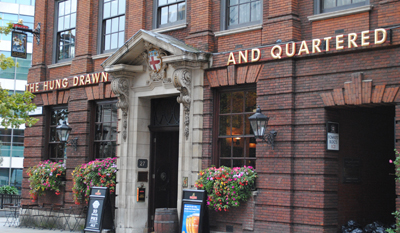
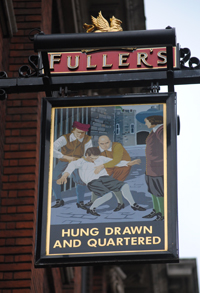
Hung-longThe rather grisly name of this pub (and there’s some debate over whether hanged or hung is grammatically correct) relates to its location close by the former public execution ground of Tower Hill.

While for many Tower Green inside the Tower of London is synonymous with beheadings, only seven people, including Anne Boleyn, were ever actually executed there. Far more people were executed outside the Tower’s walls at nearby Tower Hill, just to the north.

HungSome of the names of those executed here are recorded on a memorial at the site – everyone from Simon Sudbury, the Archbishop of Canterbury who was beheaded here by an angry mob in 1381, through to Sir Thomas More in 1535 (gracious King Henry VIII commuted his sentence from being hung, drawn and quartered to mere beheading), and Simon Fraser, the 11th Lord Lovat, a Jacobite arrested after the Battle of Culloden and the last man to be executed here when his head was lopped off in 1747.

While, as you can see above, many of those executed at Tower Hill were beheaded (and most were of the nobility), there were some executions there which did involve the guilty party being hung, drawn and quartered – a punishment reserved for those being convicted of high treason and also enforced at other sites in London including at Tyburn and Smithfield. Among them was William Collingbourne in 1484 for supporting the cause of Henry Tudor against that of King Richard III.

A plaque on the external wall of the nearby pub quotes a passage from the famous diarist Samuel Pepys after he witnessed an execution in Charing Cross on 13th October, 1660: “I went to see Major General Harrison. Hung drawn and quartered. He was looking as cheerful as any man could in that condition”.

Thomas Harrison fought with Parliament during the Civil War and was among those who signed the death warrant of King Charles I. Found guilty of regicide after the Restoration, he was hung, drawn and quartered (though as Pepys tells us, not here).

The pub, located at 26-27 Great Tower Street, is part of the Fuller’s chain. For more, see www.hung-drawn-and-quartered.co.uk.

Lost London – Baynard’s Castle (part 1)…

Baynard’s Castle actually refers to two buildings – a Norman fortification demolished in the early 13th century and a later medieval palace located to the east of the original structure. This week we’re looking at the first of those buildings – the Norman fortification.

Castle-BaynardThe first Baynard’s Castle was built in the late 11th century by Ralph Baynard (Baignard) and is believed to have replaced an earlier fortification at the site at the junction of the Thames and the Fleet rivers (the river now emerges into the Thames under Blackfriars Bridge).

Baynard (his name may be the origin of the name for Bayswater – Baynard’s Watering place – see our earlier post here), was the sheriff of Essex and a supporter of William the Conqueror.

The castle – which is said to have featured walls and parapets and which is generally said to have been on the waterfront (although some have said it was located inland) – remained in Baynard’s family until the reign of King Henry I when in 1111, his grandson William Baynard apparently forfeited his lands for supporting Henry’s eldest brother and would-be king, Robert Curthose.

It was later passed to the King’s steward Robert Fitz Richard, son of the Earl of Clare, and is known to have been inherited by his grandson, Robert Fitzwalter.

Fitzwalter, however, was a key opponent of King John and as early as 1212 he was in hot water for his part in a conspiracy against the king, although he stated it was because the king tried to seduce his daughter, Matilda the Fair. Either way, he escaped trial by heading to France and John seized the opportunity to raze the castle which he did on 14th January, 1213.

Fitzwalter was later forgiven under an amnesty and went on to play a leading role among the baronial opposition to Kong John – he was among 25 barons charged with enforcing the promises of the Magna Carta of 1215.

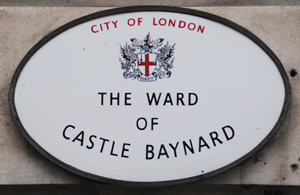
The name Baynard’s Castle is remembered in the London ward of Castle Baynard (pictured) which covers the area in which it once stood.

This Week in London – First World War galleries open at IWM; London’s WWI memorials the focus of new exhibition; and, London celebrates the Festival of Archaeology…

New galleries dedicated to exploring the history of World War I will open – along with the rest of the refurbished building – at the Imperial War Museum in Lambeth on Saturday. The First World War Galleries span 14 areas displaying everything from shell fragments and lucky charms carried by soldiers to weapons and uniforms, diaries and letters, photographs, art and film. Interactive displays include ‘Life at the Front’ featuring a recreated trench with a Sopwith Camel plane and Mark V tank, and ‘Feeding the Front’ featuring an interactive table of more than four metres long which looks how troops were kept fed. There are also reflective areas in which visitors are encouraged to reflect on some of the most difficult aspects of war. The museum – which features a dramatic new atrium – is also launching the largest exhibition and first major retrospective of British World War I art for almost 100 years. Truth and Memory includes works by some of the UK’s most important artists. Entry to both is free with Truth and Memory running until 8th March. For more, see www.iwm.org.uk.

London’s memorials to those who died in World War I are the focus of a new exhibition which opened at Wellington Arch near Hyde Park Corner yesterday. The English Heritage exhibition, which has a particular focus on the six memorials cared for by English Heritage but also looks at other memorials, will include designs, statuettes and photographs of the memorials including the Cenotaph in Whitehall. Also featured in We Will Remember Them: London’s Great War Memorials are official documents – including a note of condolence and medals certificates – received by the family of author and broadcaster Jeremy Paxman on the death of his great uncle Private Charles Dickson, who died at Gallipoli in 1915. Runs until 30th November. Admission charge applies. For more see www.english-heritage.org.uk/daysout/properties/wellington-arch/. Meanwhile, coinciding with the opening of the exhibition has been news that five of London’s key war memorials – including the Edith Cavell Memorial in St Martin’s Place and the Royal Artillery Memorial at Hyde Park Corner – have had their heritage listing upgraded.

In case you missed it, the 24th annual Festival of Archaeology kicked off last weekend and features a range of events across London. Highlights include the chance again to go ‘mudlarking’ on the Thames river bank below the Tower of London and have your finds assessed by archaeologists (this Saturday and Sunday from 11am to 4pm), guided 90 minute walks around Islington and Highbury this weekend with a particular focus on the 1940s, and a look behind the scenes at the London Metropolitan Archives (2pm to 5pm today). The festival continues until 27th July. Check the website for a full program of events – www.archaeologyfestival.org.uk.

10 sites from Shakespearean London – 7. Shakespearean connections in the Elizabethan world – St John’s Gate and Staple Inn…

Following on from our post last week, we take a look at a couple more of London’s buildings that had some sort of association with William Shakespeare…

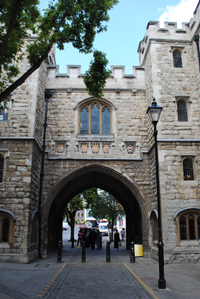
St-John's-Gate St John’s Gate, Clerkenwell (pictured): This former gatehouse into Clerkenwell Priory was at the time of Shakespeare home to the Master of the Revels and where the playwright would have had to have brought his plays for official government approval. Thirty of the Bard’s plays were licensed here and the Master of Revels during all but the final few years of Shakespeare’s career was Edmund Tilney (or Tylney), who served in the post under both Queen Elizabeth I and King James I. The gatehouse was later used as a coffee house and pub among other things and is associated with everyone from artist William Hogarth (his father Richard ran the coffee house), Dr Samuel Johnson and Charles Dickens. These days, the gatehouse is part of the Museum of the Order of St John (for more on that, see our earlier post here).

Staple Inn, Holborn: OK, there’s no direct link at all between Shakespeare and this building on High Holborn but it was built during his lifetime – in 1585 – and as such is one of very few surviving examples of buildings of his era. Its name comes from the fact the site where it stands was originally a covered market where wool was weighed and taxed (the word ‘staple’ apparently relates to the duty on wool introduced in 1275). It later became an Inn of Chancery – a medieval school for lawyers which fed students through to the Inns of Court (in this case mostly Gray’s Inn), and it was members of the Society of Staple Inn who built the new building here in the 1580s. The building – which still boasts a grand hall – survived the Great Fire of London in 1666 and, albeit with considerable damage, the Blitz. Since the late 1800s, it has been home to what’s now known as the Institute and Faculty of Actuaries. The building, which was restored in the 1990s, is a great example of an Elizabethan-era structure and gives some sense of what Shakespeare’s London was like.

This Week in London – Virginia Woolf celebrated at NPG; the City of London Festival; and, a new gallery at the V&A…

The life of literary icon Virginia Woolf is being celebrated in a new exhibition which opens at the National Portrait Gallery today. Virginia Woolf: Art, Life and Vision explores her life as novelist, intellectual, campaigner and public figure and features more than 100 works including portraits of Woolf by Bloomsbury Group contemporaries like her sister Vanessa Bell, Duncan Grant and Roger Fry as well as photographs by Beresford, Ray Man and Beck and McGregor who photographed the intellectual for Vogue. The display also includes works depicting her friends, family and literary peers and archival materials such as extracts from her personal diaries, books printed by Hogarth Press which she founded with husband Leonard Woolf and letters including one written to her sister shortly before her suicide in 1941. Runs until 26th October. Admission charge applies. For more, see www.npg.org.uk.

The 52nd City of London Festival enters its final week today with numerous music, dance, spoken word and theatre events – many of them free – still on offer across the City. Events this week include a concert focusing on the history of the instrument known as the recorder and that of the office of Recorder of London (as St Sepulchre with Newgate tonight; tickets required), a showcase of musical talent from the Guildhall School of Music & Drama (at St Stephen Walbrook at 1.05pm next Tuesday; free), and, the Cart Marking Ceremony, in which vehicles process into Guildhall Yard where they are marked with a red hot iron by the Master Carmen and Lord Mayor (next Wednesday at 10.30am, free). For the full program of events, see www.colf.org. This year’s festival also features the placement of “street guitars” at 12 locations across the Square Mile where you can turn up and have a strum – for locations, see www.colf.org/streetguitars.

A new gallery of items you might find in your own home has opened at the V&A. Gallery 74 now features items collected as a result of the museum’s “rapid response collecting” approach which sees them acquiring new objects relating to contemporary events and movements in architecture and design. Among the objects on display are a soft toy from IKEA, a pair of jeans from Primark (acquired soon after the Rana Plaza factory building in Dhaka, Bangladesh, in which 1129 workers were killed – the factory made clothes for a number of western brands including Primark), and the world’s first 3D printed gun, the Liberator, which was designed by Texas law student Cody Wilson. Entry is free. For more, see www.vam.ac.uk.

Send all items of interest for inclusion to exploringlondon@gmail.com.

What’s in a name?…Bayswater

The origins of the name of this inner west London location on the northern side of Hyde Park and Kensington Gardens go back to at least the 14th century when it was recorded as Bayard’s or perhaps Baynard’s watering place.

Bayard was the word for a bay-coloured horse but it is thought that instead the name here comes from a local landowner – it’s been suggested he may be the same Baynard whose name is was remembered in the long gone Norman fortification Baynard’s Castle in the City.

The name probably referred to a site where people on their way out of or headed to London stopped for a rest and some water; the water aspect may relate to springs or to the Westbourne Stream which ran through the area.

It’s now known for its culturally diverse population and high concentration of hotels. It’s also known for Georgian terraces – many of which have been converted into flats, mansion blocks and garden squares.

Notable residents have included Peter Pan author JM Barrie and former PM’s Tony Blair and Winston Churchill while landmarks include Whiteleys, a department store which first opened in the mid 19th century (and was later rebuilt after burning down).

This Week in London – Bridges in focus; cheap entry to Tower Bridge; WW1 nurse honoured; and, Dennis Hopper’s photographs…

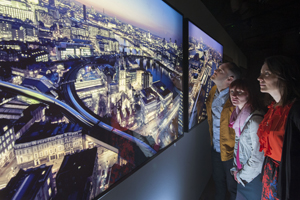
Bridge-ExhibitionA new exhibition on London’s bridges commemorating the 120th anniversary of the opening of Tower Bridge opens at the Museum of London Docklands tomorrow. The largest art exhibition ever staged at the museum, Bridge features rarely seen contemporary and historical works, photography, films and maquettes of London’s bridges and explores the role they play in the city. Highlights include Giovanni Battista Piranesi’s 1766 etching A view of the intended bridge at Blackfriars, London, Charles Ginner’s 1913 work London Bridge, and Ewan Gibbs’ 2007 linocut London. The exhibition will also feature a rare photograph taken by William Henry Fox Talbot in 1845, Old Hungerford Bridge. The oldest photograph in the museum’s collection, it will only be on display for one month from tomorrow. The exhibition, entry to which is free, runs until 2nd November. For more, see www.museumoflondon.org.uk/docklands/. (PICTURE: © Museum of London Docklands).

Don’t forget there is a special admission entry offer of just £1.20 to the Tower Bridge Exhibition this Monday, 30th June – 120 years to the day since the Prince of Wales (later King Edward VII) opened the iconic structure. Tickets must be bought at the door. There will be some Victorian re-enactors at the bridge on the day including police, tourists and engineers and each visitor will receive a special ticket which replicates the design of the invite to the 1894 ceremony (a limited edition commemorative badge will also be available to buy). For more, see www.towerbridge.org.uk.

The Australian-born nurse responsible for the entire nursing operation on the Western Front during World War I has been commemorated with an English Heritage Blue Plaque unveiled at her former home in Chelsea. Maud McCarthy, one-time Army Matron-in-Chief, was in charge of more than 6,000 British, Imperial and American nurses in 1918. Her accolades included the Florence Nightingale Medal – the highest international distinction a nurse can receive. McCarthy lived at 47 Markham Square for almost 30 years after the war, from 1919 until shortly before her death in 1949. For more, see www.english-heritage.org.uk/discover/blue-plaques/.

An exhibition featuring more than 400 photographs taken by the late US actor, film director and artist Dennis Hopper opened at the Royal Academy of Arts off Piccadilly today. Dennis Hopper: The Lost Album is the first time the body of work – first shown in Texas in 1970 – has been displayed in the UK. The photographs document the social and cultural life of the American Sixties and cover a range of themes and subjects. They include portraits of the likes of Paul Newman, Andy Warhol and Jane Fonda, and images depicting members of counter-cultural movements as well as events such as the 1965 march civil rights march from Selma to Montgomery. Admission charge applies. Runs until 19th October. For more, see www.royalacademy.org.uk.

Send all items of interest for inclusion to exploringlondon@gmail.com.

LondonLife – A ‘rainforest’ in Bedford Square…

Rainforest

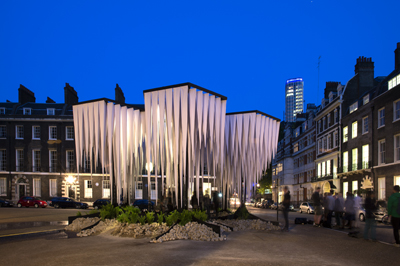
Rainforest by GUN Architects, located in Bedford Square in Bloomsbury outside the offices of the Architectural Association, has been one of the highlights of the London Festival of Architecture, now into its final week. The five metre high tree-like structures, created by the German-Chilean architectural practice, feature fabric stalactites which drip water into pools below. As well as installations like Rainforest, the festival features debates, exhibitions, film screenings, walks, cycle rides, open studios and family events which focus on the importance of architecture and design under this year’s central theme of ‘capital’. The festival runs until 30th June. For more details and a full programme of events still to run, see www.londonfestivalofarchitecture.org.

PICTURE: © Valerie Bennett

This Week in London – Celebrating the Year of the Bus; the British Library looks at WWI; medieval jousting and The Duke of Wellington; and, Blue Plaque nominations resumed…

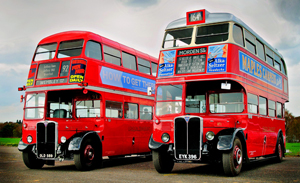
BusesAlmost 50 buses, from a horse-drawn model of the 1820s to the New Routemasters of today, will come to Regent Street on Sunday in celebration of the Year of the Bus. The ‘Regent Street Bus Cavalcade’ – which will stretch from Piccadilly Circus to Oxford Circus and will see the iconic West End street closed to traffic – will also feature a variety of free family events including Lego workshops (there will be a bus shelter and bus stop made entirely out of Lego outside Hamley’s toy shop), children’s theatre performances, a pop-up London Transport canteen and the chance to have a personal message recorded by the voice of London’s buses, Emma Hignett. There will also be an exhibition – Battle Bus – which provides information about the B-type bus (a newly restored version of which will be on display) which was used during World War I to carry soldiers to the frontline as well as ambulances and mobile pigeon lofts while jewellery company Tatty Devine will feature a special range of bus-inspired jewellery and hold jewellery-making workshops on board a London bus. The cavalcade, supported by the Regent Street Association and The Crown Estate, is part of Transport for London’s celebrations marking the Year of the Bus, organised in partnership with the London Transport Museum and the capital’s bus operators. The free event runs from 11.30am to 6pm. For more information, see www.tfl.gov.uk/yearofthebus and www.ltmuseum.co.uk.

A new exhibition of materials showing how people coped at home and on the front during World War I opens at the British Library in King’s Cross today as part of efforts to mark the war’s centenary. Enduring War: Grief, Grit and Humour features personal objects such as letters, a handkerchief bearing the lyrics of It’s A Long, Long Way to Tipperary, Christmas cards, school essays about airship raids over London sit and recruitment posters, humorous magazines and even a knitting pattern for balaclavas. Highlights include a letter in which Sir Arthur Conan Doyle expresses his concern over his son serving at the front, manuscripts by war poets such as Rupert Brooke as well as Wilfred Owen’s manuscript for Anthem for Doomed Youth, Vaughan Williams’ A Pastoral Symphony and Laurence Binyon’s For the Fallen. A specially commissioned video and ‘soundscape’, Writing Home, features personal messages contained on postcards written to and from the front. A range of events accompanies the free exhibition. Runs until 12th October. For more on the exhibition, see www.bl.uk.

Armoured knights on horseback can be seen jousting at Eltham Palace in south London this weekend. The former childhood home of King Henry VIII will host a Grand Medieval Joust which will also include displays of foot combat, the antics of a court jester, medieval music performances and a series of children’s events including a knight’s school. Runs from 10am to 5pm on both Saturday and Sunday. Admission charge applies. For more, see www.english-heritage.org.uk/events. Meanwhile, the Battle of Waterloo is being remembered at the Duke of Wellington’s home of Apsley House near Hyde Park Corner. Visitors will come face-to-face with Wellington’s troops and their wives, having the chance to take a look inside a soldier’s knapsack, see the equipment he used and the drills he performed as well as see the Battle of Waterloo recreated in vegetables. The Waterloo Festival – this year marks 200 years since Napoleon’s abdication and exile to Elba – runs from 11am to 5pm on Saturday and Sunday. Admission charge applies. For more, see www.english-heritage.org.uk/apsley/.

Nominations have reopened for English Heritage’s Blue Plaques scheme in London. In 2012 nominations were temporarily suspended while new funding for the scheme was found and thanks to one individual’s donation and the creation of a new Blue Plaques Club to support the scheme on an ongoing basis, they have now reopened. There are 880 official Blue Plaques on London’s streets – remembering everyone from Florence Nightingale to Fred Perry and Charles Darwin. For more and details on nominations, see www.english-heritage.org.uk/discover/blue-plaques/.

Send all items of interest for inclusion to exploringlondon@gmail.com.

10 sites from Shakespearean London – 3. Shakespeare’s houses…

The playwright is believed to have lived in several different locations in London and is also known to have invested in a property. Here we take a look at a couple of different locations associated with him…

St-Helen'sBishopsgate: Shakespeare is believed to have lived here in the 1590s – in 1596 tax records show he was living in the parish of St Helen’s. The twin-nave church of St Helen’s Bishopsgate (pictured), which would have been his parish church, still stands. In fact, there is a window to Shakespeare’s memory dating from the late 19th century.

•  Bankside: In the late 1590s, Shakespeare apparently moved across the Thames to Bankside where he lived at a property on lands in the Liberty of the Clink which belonged to the Bishop of Winchester. The exact address remains unknown.

Silver Street, Cripplegate: It’s known that in 1604, Shakespeare moved from Bankside back to the City – it’s been speculated outbreaks of plaque may have led him to do so. Back in the City, he rented lodgings at the house of Christopher and Mary Mountjoy in on the corner of Monkwell and Silver Streets in Cripplegate, not far from St Paul’s Cathedral. Mountjoy was a refugee, a French Huguenot, and a tire-maker (manufacturer of ladies’ ornamental headresses). The house, which apparently stood opposite the churchyard of the now removed St Olave Silver Street, was consumed in the Great Fire of London in 1666 (the church was also lost in the Great Fire). The former church site is now located on the south side of London Wall. Silver Street itself was wiped out in the Blitz and is now lost under the Barbican redevelopment but the house lives on in a representation found on a late 16th century map created by Ralph Agas.

Ireland Yard, Blackfriars: In 1613, Shakespeare purchased the former gatehouse of the Blackfriars Priory located here, close to the where the Blackfriars Theatre was located. It is believed the property was purchased as an investment – there’s no evidence he ever lived there but it was passed to his daughter Susanna after his death. Incidentally, there is some speculation that Shakespeare may have lived in Blackfriars when he first came to London – a man believed to have been a boyhood friend from Stratford, Richard Field, who was known to have lived there.

For a more in-depth look at Shakespeare’s time in Silver Street, see Charles Nicholl’s The Lodger: Shakespeare on Silver Street.

This Week in London – London’s garden squares open their gates; World War I comics; and, exploring the Science Museum’s garbage…

London Open Garden Squares Weekend will see more than 200 “hidden and little known” gardens swing their gates open to the public this Saturday and Sunday. Featuring 20 more gardens than last year’s event, the gardens range from classic London square parks to rooftop gardens, community allotments and ecology centres as well as gardens attached to restaurants and historic properties. They include Highbury Square – former home of the Arsenal Football Club, Barnsbury Wood – London’s smallest nature reserve, the Cordwainers community garden in Hackney, Garden Barge Square which will see a floating garden created on the decks of barges, the garden at the PM’s home of number 10 Downing Street, and The Roof Gardens, located above the former Derry & Toms department store in Kensington. One £12 ticket gains access to all gardens (excepting those with special conditions) while National Trust members are half-price and children under 12 go free. For more and a full programme of open gardens, head to www.opensquares.org.

Comics created during World War I are the focus of a new exhibition which opened at the Cartoon Museum in Bloomsbury this week. Never Again! World War I in Cartoon and Comic Art features works by British cartoonists Alfred Leete, Bruce Bairnsfather, William Heath Robinson and Donald McGill and includes more than 300 images ranging from political and joke cartoons taken from newspapers and periodicals and children’s comics to comic cigarette cards and publications produced in the trenches by serving soldiers. There are also some more recent works such as the 1980s comic strip Charley’s War and drawings from the Horrible Histories series. The exhibition runs until 19th October. Admission charge applies. For more, see www.cartoonmuseum.org.

Explore the world of garbage in this new exhibition opening at the Science Museum in South Kensington on Monday. The Rubbish Collection aims to use 30 days worth of the Science Museum’s waste to “expose the beauty, value and volume of what we call ‘rubbish'”. Visitors are able to take part by collecting, sorting and documenting the rubbish generated by the museum which will then be photographed by artist Joshua Sofaer before going on to be processed for recycling or to generate electricity. During a second phase of the exhibition, Sofaer will bring the rubbish back into the museum at different stages of processing. The exhibition is part of the museum’s Climate Changing programme. Runs until 14th September. For more, see www.sciencemuseum.org.uk.

Lost London – The Blackfriars Playhouse…

Located on the site of the former Blackfriars Monastery which has closed during the Dissolution (see our earlier post here), the origins of the Blackfriars Playhouse or Theatre go back to the mid-1570s when children connected with the Queen’s Chapel Choir performed plays in part of the former monastery.

While those plays were performed in order to practice for those performed before Queen Elizabeth I, the organisers did also apparently use the theatre for paying audiences. This first theatre ceased operation in 1584.

In 1596, part of the priory and an adjoining building were bought by James Burbage in 1596 who created a playhouse within them. It was used by the Children of the Chapel, a group of choristers and other boys, until 1608 when the King’s Men took over – with Burbage’s son Richard and Shakespeare among those who had a share in the theatre – and used it as their winter playhouse.

The theatre – where Shakespeare himself is believed to have performed – was apparently the first commercial premises of its type to used artificial lighting and, usually for the time, featured music between acts.

The wife of King Charles I, Queen Henrietta Maria, is known to have attended the theatre later in its life in 1634 and again a couple of years later.

The theatre closed with the commencement of the English Civil War and the theatre was demolished in 1655.

The candle-lit Sam Wanamaker Playhouse, which opened in January at the Globe Theatre on Bankside, was designed based on drawings of indoor theatres of the era (there’s also a recreation of the Blackfriars Playhouse in the US which is home to the acting troupe of the American Shakespeare Center).

While nothing remains of the playhouse today, it lives on in the name Playhouse Yard.

This Week in London – London’s architectural festival; Tower Bridge celebrates its 120th with gifts; and, unseen Nicholsons at Dulwich – plus late addition: this year’s Keats Festival…

The month long London Festival of Architecture kicked off this week with the first of more than 200 activities taking place right across the capital. Now in its 10th year, the festival features talks, exhibitions, film screenings, cycle rides, open studios and the chance to explore the city with experts at hand. Headline events include a gathering of international architects at Balfron Tower where they will come up with new ideas for the surrounding area of Poplar as they explore the influence of emigre architecture on London, a talk by Will Self on architecture, and an exploration of ‘The Death and Life of Great London High Streets’ with experts guided people around newly completed projects. Other highlights include the House of Muses, an architectural installation at the Museum of London, the rare chance to see a late 16th century model of country house Tyringham Hall in Buckinghamshire which was commissioned by Sir John Soane (and will be on display at the Sir John Soane Museum), and the art installation, The Pungent Subway which will see a 55-year-old subway in Elephant and Castle transformed by sweet-smelling herbs and flowers as well as GUN Architects Rainforest in Bedford Square. For a full programme of events, many of which are free, check out details on the website, www.londonfestivalofarchitecture.org.

London icon Tower Bridge celebrates its 120th anniversary this year and to mark the event, the Tower Bridge and its events partner Seasoned Events are giving away free tickets to special sunset event. To take place on its high-level walkway on 30th June, the night, which runs from 7pm to 9.30pm, will feature Victorian-themed entertainment in commemoration of the age in which the great structure was constructed. For your chance to win tickets, look out for special competition posts by Tower Bridge on Facebook (www.facebook.com/towerbridge) and Twitter (@TowerBridge) from 9th June and share them on social media by 19th June. As many as 120 lucky winners will be selected at random and notified by 5pm on 20th June. Each ticket includes entry for two and a drink token (and obviously you must be in London and available to attend on 30th June). Good luck! For those who don’t win, there is a consolation prize – entry to the Tower Bridge Exhibition is being dropped to just £1.20 (120 pence) on 30th June when buying tickets at the door. The exhibition will that day also be playing host to a range of ‘Victorian visitors’ – from policeman and tourists to engineers. For more, see www.towerbridge.org.uk.

• Featuring previously unexhibited or rarely seen works by important 20th century painters Ben and Winifred Nicholson, a new exhibition opened at the Dulwich Picture Gallery in south London yesterday. Art and Life: Ben Nicholson, Winifred Nicholson, Christopher Wood, Alfred Wallis, William Staite Murray, 1920-1931 features more than 80 words with 16 being displayed for the first time including Ben Nicholson’s 1926-27 (still life) and Winifred Nicholson’s Flowers in a Glass Jar. The display is a rare opportunity to see works by the Nicholson’s different views of the same landscapes, seascapes, still-lives and portraits and has the works grouped by locations where they painted including London, Lugarno in Switzerland, Cumberland and Cornwall. Alongside works by the Nicholsons, the display also features the art of their fellow artists and friends including Christopher Wood, the self-taught marine painter Alfred Wallis, and potter William Staite Murray, and the exhibition is curated by the Nicholson’s grandson, art historian Jovan Nicholson. Runs until 21st September. Admission charge applies. For more see www.dulwichpicturegallery.org.uk.

Late addition: The annual Keats Festival kicks off at Keats House in Hampstead on Saturday, 7th June, with highlights including guided tours of the house, plenty of poetry readings and workshops, musical performances, a screen-writing workshop and a family day on 15th June. Other events at the Keats Grove house where the poet lived between 1818 and 1820 include an afternoon tea “in the company of Keats” and an offsite event held at UCL’s Bloomsbury campus next Friday – One Day in the City: A Celebration of London and Literature – which will feature performance poetry, a seminar on Keats and a contemporary retelling of The Canterbury Tales. Many events are free but many require pre-booking. For more information, check out www.cityoflondon.gov.uk/things-to-do/attractions-around-london/keats-house/Pages/Keats-Festival.aspx.

Send all items of interest for inclusion to exploringlondon@gmail.com.

Treasures of London – ‘Naval Officers of World War I’…

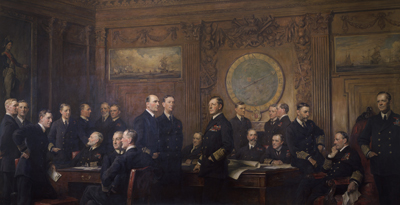
NPG_818_1271_NavalOfficersoHidden away in storage for decades, this sizeable portrait of 22 senior navy figures of World War I has recently gone on public display at the National Portrait Gallery as part of the institution’s commemoration of the centenary of the outbreak of the Great War. The work of Sir Arthur Stockdale Cope, Naval Officers of World War I was painted in 1921 and had been in storage due to its “delicate condition”. Using £20,000 raised through a public appeal last year, the painting and its frame have recently gone five months of restoration work which has seen it restored to health. The painting was one of three commissioned by financier and public servant Sir Abraham Bailey in the aftermath of the war – both of the other two paintings, Sir James Guthrie’s Statesmen of World War I and John Singer Sargent’s General Officers of World War I are continuously on display in Room 30. Among those depicted in Cope’s work are Admirals Jellicoe and Beatty and Rear-Admiral Hood. The work, which measures more than five metres across, can be seen in Room 32 of the National Portrait Gallery, just off Trafalgar Square. Admission is free. For more, see www.npg.org.uk. PICTURE: © National Portrait Gallery, London

This Week in London – Norman Shaw’s drawings on display; Tower Bridge art; and, German medals from World War I…

Drawings by the renowned Victorian-era British architect Norman Shaw (1831-1912) are the subject of a new display at the Royal Academy of Arts. Shaw’s building works included New Scotland Yard on Embankment and renovations and additions to the likes of Burlington House, home of the RA. The display Dream, Draw, Work will explore the materials, draughtsmanship and design practices of Shaw and his staff and many of the works in the display bear the marks of extensive handling. As well as the drawings, photographs of Shaw’s London buildings will be displayed in the Royal Academy’s Architecture Space. Opens in the Tennant Gallery tomorrow and runs until October 26. Entry is free. For more, see www.royalacademy.org.uk.

An exhibition of artworks depicting Tower Bridge over its 120 year history opens at the Guildhall Art Gallery on Saturday. Tower Bridge: A Celebration of 120 Years includes paintings from the gallery’s permanent collection, contemporary interpretations and archive material. For more, follow this link.

On Now: The other side of the medal: how Germany saw the First World War. This free display in Room 69a of the British Museum focuses on medals made by artists who lived and worked in Germany from 1914-1919. While smaller struck ‘medalets’ were mass produced, the larger cast medals – such as those featured in this display – were produced in smaller numbers and mostly cast in iron because bronze was required for shell casings. While some of the medals, unusually modernist in style, were used to influence opinion against Germany’s enemies, others provided what the museum describes as a “more universal criticism about the futility of war and waste of human life”. Among the motifs used was that of Death who can be seen killing soldiers and attacking ships or giant Zeppelin airships. The medals were not officially produced or sanctioned and attracted their fair share of controversy (one depicts the passenger ship Lusitania, sunk by a German U-boat in 1915, as laden with armaments). The display can be seen until 23rd November. For more, see www.britishmuseum.org.

Send all items of interest for inclusion to exploringlondon@gmail.com.


Lost London – The Steelyard…

The Thames-side property known as the Steelyard – the phrase comes from the Dutch-German word Stahlhof and relates either to a steel beam used for weighing goods or a courtyard where the goods were sold – was the main trading base of the Hanseatic League in London from the 13th century onward.

Located near where Walbrook flows out of the Thames on the north bank (the site is now at least partly covered by Cannon Street Station), the walled compound – which at some point housed as many as 400 people – was in some senses a mini city within a city complete with a hall, warehouses, a weighing house and counting houses as well as residences and a chapel.

While the community – which represented an alliance of towns and cities in northern Europe – was mentioned as far back as the late 1200s, it wasn’t until 1303 that King Edward I formerly confirmed the tax and customs concessions of the merchants (at some point, in return for privileges they were given, the group was charged with keeping up the maintenance of Bishopsgate).

The power of the trading post had grown substantially by the 15th century and the concessions the group had been granted meant there was inevitably considerable friction with English merchants. There was also some official friction and one example of it was when the Steelyard was closed temporarily in the 15th century when the Hanse cities were at war with England.

In 1598 Queen Elizabeth I took away the Steelyard’s trading privileges (after which the compound was apparently looted). It was subsequently allowed to reopen by King James I but never regained the prominence it had previously had.

Much of the compound was destroyed in the Great Fire of London but nonetheless, the Steelyard was rebuilt and continued to provide links between German cities and the English until the mid 1800s when the land was sold off and, in 1866, Cannon Street Station built on the site.

A couple of surviving objects from the Steelyard include a series of at least eight portraits of Hanse merchants painted by Hans Holbein the Younger and a stone model of the Hanseatic Arms which were placed over the gate into the compound can be seen at the Museum of London.