A Moment in London’s History – Londoners granted the right to elect their mayor…

It was on 9th May, 2015, 800 years ago this year that, in the lead-up to the creation of the Magna Carta in June, King John issued a charter granting the City of London the right to freely elect its own mayor.

The charter, which was issued at the Temple – King John’s power base to the west of the City (for more on it, see our earlier post here), was a fairly blatant bid to keep the support of the city.
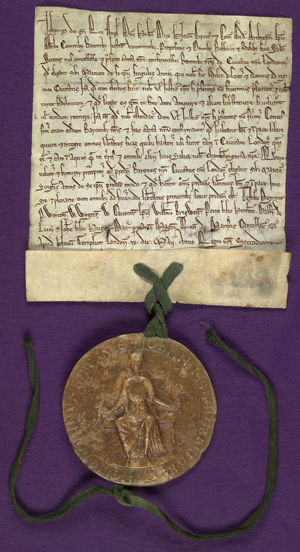
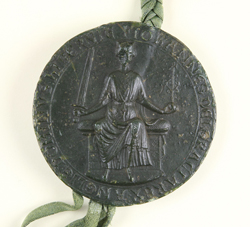
King-John-CharterKnown simply as the King John Charter, it stated that the barons of the city, “may choose to themselves every year a mayor, who to us may be faithful, discreet, and fit for government of the city, so as, when he shall be chosen, to be presented unto us, or our justice if we shall not be present”.

In return, the mayor was required to be presented to the monarch to take an oath of loyalty each year – a practice commemorated in the Lord Mayor’s Show each November.

The charter, which has a particularly good impression of the king’s seal, is currently on display in the City of London’s newly opened Heritage Gallery, located at the Guildhall Art Gallery.

The event was one of a series leading up to the signing of the Magna Carta in June. Only 10 days after King John issued the charter to the City of London, rebel barons, who have previously taken Bedford, marched on the city to demand their rights and arrived their before the Earl of Salisbury (whom John had ordered to occupy the city).

Aldgate was apparently opened to them by some supporters within the city and the forces of the rebel barons went on to attack the home of royalists as well as those of Jews along with a Jewish burial ground in Barbican – the latter because Jewish moneylenders had lent money to the king.

They later besieged the Tower of London and while they couldn’t take the fortress, their seizure of the city was enough to help force the king to open negotiations late in the month, asking the Archbishop of Canterbury, Stephen Langdon, on 27th May  to arrange truce (which, while it was apparently not observed terribly well, did help pave the path to the Magna Carta).

The exhibition at the Heritage Gallery runs until 4th June. For more information, see www.cityoflondon.gov.uk/things-to-do/visiting-the-city/attractions-museums-and-galleries/guildhall-art-gallery-and-roman-amphitheatre/Pages/Heritage-Gallery.aspx.

PICTURE: City of London: London Metropolitan Archives
10 sites from London at the time of the Magna Carta – 2. St Bartholomew the Great…

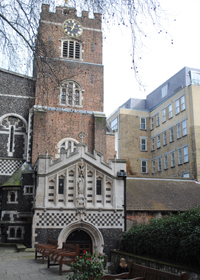
St Bartholomew the Great in Smithfield – the oldest parish church in London (see our earlier piece here) – is worth a revisit thanks to the fact that it would have been standing (at least partially) when the seal of King John was first affixed to the Magna Carta .

St-BartholomewsOnly half the size it once was, this church was founded in 1123 AD as the priory church for a community of Augustinian Canons and owes its origins to Rahere, a favored courtier of King Henry I who renounced his way of life and made a pilgrimage to Rome, returning to found both the church and nearby hospital for the poor.

Only the eastern part of the church was built by the time of the death of Rahere – the first prior – in 1145 and the building continued for some years afterward. While the interior walls now look somewhat plain, they would have been highly decorated when the building was originally constructed. At the time of the Magna Carta, the church would have only been partly completed.

The tomb of Rahere still lies within the church, on the left hand side of the altar – although the canopy over it dates from the 15th century. There were some healing miracles recorded at the tomb.

The church’s current configuration came about when the priory was dissolved in 1539 and the nave of the church was pulled down, leaving what’s there now – the quire, altar and lady chapel.

The brick tower at the church’s west end dates from the 1620s while the gateway through which you enter the church grounds features a restored 13th century arch topped by a late Tudor building.

The church was briefly used by some Dominican friars but since the reign of Queen Elizabeth I has fulfilled the role of parish church. A concerted restoration effort began in the mid-19th century by Sir Aston Webb (architect of the Victoria & Albert Museum), leaving the Lady Chapel with a very different feel to the Norman choir. The building is now Grade I-listed.

WHERE: Off Little Britain, West Smithfield (nearest tube station is Barbican); WHEN: 8.30am to 5pm Monday to Friday, 10.30am to 4pm Saturday, 8.30am to 8pm Sunday (except for services) ; COST: £4 an adult/£3.50 concession/£10 a family; WEBSITE: www.greatstbarts.com

LondonLife – The Queen’s House set to be given a makeover ahead of 400th anniversary…

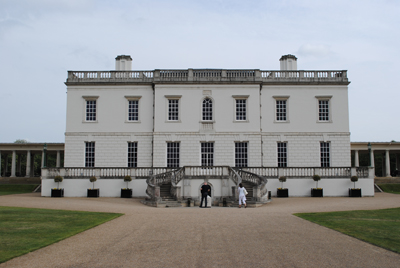
The-Queen's-HouseGreenwich icon, the Queen’s House, is set to close on 27th July this year to allow for refurbishment and upgrade ahead of the 400th anniversary of its commissioning and design in 2016. The landmark will be closed until 4th July, 2016, after which those visiting the house will be able to see Orazio Gentileschi’s Biblically-themed painting, Joseph and Potiphar’s Wife, displayed in the building for the first time since 1650. Part of the Royal Collection, the painting was one of a series commissioned for the building by King Charles I and his wife Queen Henrietta Maria. The Queen’s House was designed by Inigo Jones in 1616 for King James I’s wife, Anne of Denmark, and, acknowledged as a masterpiece of 17th century architecture, was the first classically-designed building in country. The makeover will see galleries refurbished, the introduction of new displays and the restoration of components including the ceiling in the King’s Presence Chamber (the Queen’s Presence Chamber was restored in 2013). For more, see www.rmg.co.uk.

What’s in a name?…Downing Street…

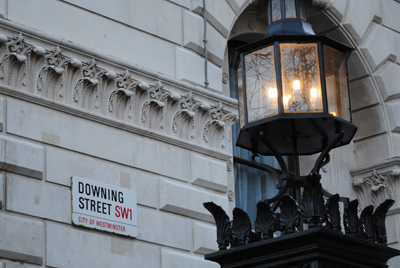
Downing-Street

One of the most famous streets (and photographed) in London (though sadly not open to the public), Downing Street in Whitehall is these days most well-known for being the location, at Number 10, of the official residence of the British Prime Minister.

But Downing Street’s history dates back to a time before the first British PM moved in (this was Sir Robert Walpole in the 1735 and even after that, it didn’t become a regular thing for Prime Ministers to live here until the Twentieth century). And its name bears testimony to its creator, Sir George Downing, a soldier and diplomat described as “a miserly and at times brutal” man who served first under both Oliver Cromwell and, following the Restoration, King Charles II (and was, coincidentally, one of the first graduates of Harvard University).

In the 1650s, Sir George took over the Crown’s interest in land here, just east of St James’s Park, and intended to build a row of townhouses upon it. His ambitions were delayed, however, due to an existing lease with the descendants of Elizabethan courtier Sir Thomas Knyvet who had once lived in a large home on the site of what is now Number 10 Downing Street.

By the 1680s, however, the lease had expired and between 1682-84, Downing was able to construct a cul-de-sac, closed at the St James’s Park end, featuring either 15 or 20 two storey terraced townhouses with stables and coach-houses, designed by no less than Sir Christopher Wren.

While the homes were apparently of shoddy craftsmanship and stood upon poor foundations (Churchill famously wrote that Number 10 was “shaky and lightly built by the profiteering contractor whose name they bear”), the street apparently attracted some notable residents from the start.

These included the Countess of Yarmouth, who briefly lived at Number 10 in the late 1680s, Lord Lansdowne and the Earl of Grantham, and even, briefly, apparently the diarist James Boswell in the mid 1700s. Downing himself isn’t thought to have ever lived here – he retired to Cambridge a few months after the houses were completed.

The houses between Number 10 and Whitehall – on the north side of the street – were taken over by the government and eventually demolished in the 1820s to allow for the construction of offices for the Privy Council, Board of Trade and Treasury while the houses on the south side remained until they were demolished in the early 1860s to make way for the Foreign, India, Colonial and Home Offices.

The numbers in the street have changed since Downing’s houses were first built. Of the original homes in the street only Number 10 (home of the PM) and Number 11 (home of the Chancellor of the Exchequer) survive.

Access to the street has been restricted since the 1980s with the current black steel gates put in place in 1989.

An underground tunnel apparently runs under the street connecting number 10 with Buckingham Palace and the underground bunker, Q-Whitehall, built in the 1950s in the event of nuclear war.

This Week in London – Charles I’s overlooked artist; St George’s Day in Trafalgar Square; Indigenous Australia; prints from the Royal Collection on show; and, ‘What is Luxury’ at the V&A…

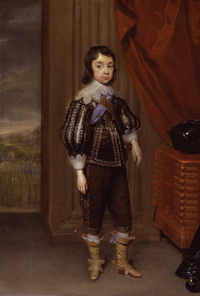
NPG_936_1374_KingCharlesIIb• The first ever display of works of overlooked 17th century artist Cornelius Johnson, court painter to Charles I, has opened at the National Portrait Gallery off Trafalgar Square. Cornelius Johnson: Charles I’s Forgotten Painter features rarely viewed portraits of the king’s children including the future Charles II, James II and Mary (later Princess of Orange-Nassau) as well as a painting of Mary’s son William – all of which have been taken from the gallery’s collection. Overshadowed by Sir Anthony van Dyck, Johnson – who emigrated to The Netherlands when the English Civil War broke out – has been largely ignored by art historians despite the breadth of his work – from group portraits, such as his largest surviving English painting, The Capel Family, to tiny miniatures – and the fact that he is thought to be the first English-born artist who took to signing date his paintings as a matter of course, something he is believed to have picked up during his training in The Netherlands. The display features eight painted portraits and six prints from the gallery’s collection as well as three paintings from the Tate. Runs until 13th September in Room 6. Admission is free. For more, see www.npg.org.uk. PICTURE: King Charles II by Cornelius Johnson , 1639. © National Portrait Gallery, London.

• Trafalgar Square will be at the centre of London’s St George’s Day celebrations on Saturday with live music, celebrity chefs, a masterclass by leading tea experts and children’s games and activities. The musical lineup will feature the band from the West End musical Let It Be and the Crystal Palace Brass Band – one of the few traditional brass bands remaining in London. The free event runs between noon and 6pm on Saturday. For more, see www.london.gov.uk/stgeorges.

• Indigenous Australia, the first major exhibition in the UK to present a history of Indigenous Australia through objects, opens at the British Museum today. Drawing on the museum’s collection, Indigenous Australia features objects including a shield believed to have been collected in Botany Bay on Captain Cook’s voyage of 1770, a protest placard from the Aboriginal Tent Embassy established in 1972 and contemporary paintings and specially commissioned artworks from leading indigenous artists. Many of the objects have never been on display before. Runs until 2nd August. Admission charge applies. For more, see www.britishmuseum.org.

• Thirty prints from the Royal Collection will be on show at The London Original Print Fair to mark its 30th anniversary. The fair runs at the Royal Academy from today until Sunday and among the selected works from the more than 100,000 prints in the Royal Collection are the 2.3 metre long woodcut by Albrecht Durer entitled Triumphal Cart of the Emperor Maximillian (1523), Wenceslaus Hollar’s four etchings of tropical Seashells (c1650), a sequence of proofs of Samuel Reynolds’ portrait of King George III at the end of the monarch’s life, and lithographs produced by Queen Victoria and Prince Albert dating from 1842. For more on the fair, see www.londonprintfair.com. For more on the Royal Collection, see www.royalcollection.org.uk.

• The question of what is meant by the concept of luxury is under examination in the V&A’s new exhibition What is Luxury? Opening at the South Kensington museum Saturday, the exhibition will feature a range of luxury objects – from the George Daniels’ Space Travellers’ Watch to a Hermés Talaris saddle, and Nora Fok’s Bubble Bath necklace. Also on show in a section of the exhibit looking at what could determine future ideas of luxury is American artist Gabriel Barcia-Colombo’s DNA Vending Machine (complete with prepackaged DNA samples) and Henrik Nieratschker’s installation The Botham Legacy which tells the fictional story of a British billionaire who sends altered bacteria into space in an attempt to find valuable metals on distant plants. Runs until 27th September. Admission charge applies. See www.vam.ac.uk/whatisluxury.

Send all items for inclusion to exploringlondon@gmail.com.

10 sites from London at the time of the Magna Carta – 1. The Tower…

This week we’re starting a new series in honour of the 800th anniversary of the signing of the Magna Carta in which we look back at the London of 1215. First up we take a look at the Tower of London which was a smaller version of the complex of buildings which today exists on the site.

By 1215, the Tower of London – the fortress first constructed on the orders of William the Conqueror – had already existed for more than 100 years, nestled into a corner of the city’s walls which had existed since Roman times.

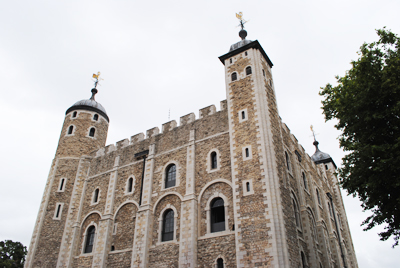
Then, as now, the White Tower – initially itself known as the Tower of London, it was later dubbed the White Tower thanks to the whitewash used to cover the Kentish limestone to protect it from the weather (and for its visual impact) – stood at the heart of the complex. Unlike today’s building, it lacked the large windows which date from the early 18th century, and while the towers were believed to be capped with cones, the present cupolas date from the reign of King Henry VIII.

White-Tower

While it had long been surrounded by a palisade and ditch, in 1189, King Richard I’s chancellor William Longchamp, the Bishop of Ely, had begun to extend the castle’s defences while the king was on crusade (in fact, the first siege of the Tower took place in 1191 when the then Prince John did so in opposition to Longchamp’s  regime – it only lasted three days before Longchamp surrendered).

This extension, which was completed by King John following his accession to the throne in 1199, saw the size of the bailey around the White Tower doubled and a new curtain wall and towers – including the Bell Tower – built around its outer perimeter with a ditch below (the ruins of the Wardrobe Tower, just to the east of the White Tower show where the original Roman-era wall ran).

But it wasn’t until the reign of King John’s son, King Henry III, that the royal palace which now stands on the river side of the White Tower was constructed. Until that point – and at the time of the signing of the Magna Carta – the royal apartments remained within the White Tower itself, located on the upper floor.

Like those of the garrison commander known as the constable (located on the entrance level), the king’s apartments would have consisted of a hall and a large chamber, which may have been divided into smaller chambers with wooden partitions as well as a chapel (on the upper level this was the still existing Chapel of St John the Evangelist, although it would have then been more more richly decorated). Unlike the lower levels, the king’s level was of double height with a gallery (this level now has its own full floor).

The royal apartments had a variety of uses – as well as a residence and refuge for the king, they were also at times a place to keep high profile prisoners such as the Bishop of Durham, Ranulf Flambard, who was imprisoned on the orders of King Henry I (and who escaped from an upper window on a rope which had been smuggled in to him and fled to Normandy).

It is also worth noting that while King John apparently kept exotic animals at the Tower, it is his son, King Henry III who is usually credited with founding the Royal Menagerie there.

And it was his son, King Edward I, who expanded the Tower to its current size of  about 18 acres by rebuilding the western section of the inner ward and adding the outer ward.

WHERE: Tower of London (nearest Tube station Tower Hill); WHEN: 9am to 5.30pm, Tuesday to Saturday, 10am to 5.30pm Sunday to Monday; COST: £24.50 adults; £11 children under 15; £18.70 concessions; £60.70 for a family (discounts for online purchases/memberships); WEBSITE: www.hrp.org.uk/toweroflondon/.  

LondonLife – Georgian princesses show their skills…

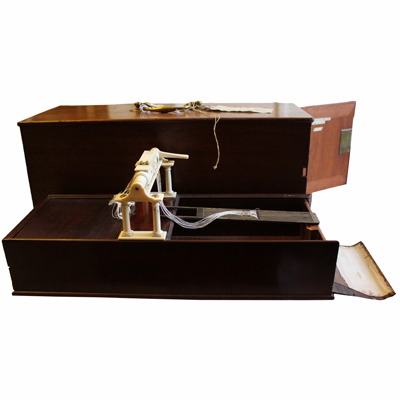
Fringe-LoomThe fringe loom of Queen Charlotte – wife of King George III – is among the objects on display at Kew Palace this year. Historic Royal Palaces is exploring some of the untold stories of the king’s daughters who once called the palace, which was originally built in 1631 for a Flemish merchant before it was acquired by King George II, home. Under examination are the pastimes of the royal women – from drawing and painting to weaving, paper cutting and even the decoration of a ‘Baby House’ created by the princesses as a showcase of their talents. Along with Kew Palace – located inside Kew Gardens in London’s west, also opened is the nearby rustic retreat built in 1770 known as Queen Charlotte’s cottage. Inside is the “Print Room”, hung with more than 150 satirical engravings, and the “Picnic Room”, decorated paintings of trailing nasturtiums and convolvulus – the work of Princess Elizabeth, an acclaimed artist. For more, see www.hrp.org.uk/KewPalace/.
PICTURE: Historic Royal Palaces

A Moment in London’s History – Colonel Blood’s attempt to steal the Crown Jewels…

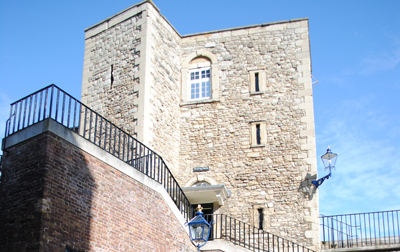
Martin-Tower

London has been making headlines around the world recently thanks, in part, to the estimated £200 million  heist which took place in Hatton Garden last week. So we thought it was a good time to take a look back to one of London’s most famous robberies (or attempts at least)…

The attempt dates back to 1671 when a self-styled colonel, Irish adventurer Thomas Blood, made an attempt to steal the Crown Jewels from the Tower of London.

The Irishman – whose history included fighting on both sides in the English Civil War, first with the Royalists and then with the Parliamentarians when he saw the tide was turning – visited the Tower of London several times in the lead-up to the attempt as he, disguised as a parson, cultivated a relationship with Talbot Edwards, an elderly keeper of the jewels, and his family.

On the night of 9th May, he and a group of accomplices, including his son, attended a dinner put on by the Edwards at the Tower. While waiting for the meal, Blood asked to see the jewels which were housed behind a grille in the basement of the Martin Tower (pictured above) above which the Edwards had an apartment.

Edwards complied and once in the Jewel House, Blood and his accomplices attacked him, knocking him to the floor with a mallet and then stabbing him before binding and gagging him.

They then turned their attention to the jewels – Blood used a mallet to flatten St Edwards Crown so he could hide it beneath his coat while his brother-in-law Hunt filed the Sovereign’s Sceptre with Cross in two to fit it in his bag and a third man, Robert Perot, stuffed the Sovereign’s Orb down his trousers.

Things didn’t go smoothly after that and the alarm was raised before the gang could make their getaway. It has been suggested it was Edwards who raised the alarm – that despite efforts to shut him up he managed to remove his gag and raise the alarm  – but other versions say it was his son, returning from service in Flanders, who raised the alarm on seeing the gang.

In any event, the gang fled, evading efforts of the warders to stop them, before Blood, Hunt and Perot were captured on the Tower of London wharf. The crown, globe and orb were all recovered, albeit damaged.

Blood refused to speak after his capture and was eventually taken before King Charles II for interrogation. But he was evidently so impressed with his captive that he not only pardoned Blood but also rewarded him with land in Ireland.

Blood did later end up briefly in prison after a dispute with the Duke of Buckingham and died soon after his release in August, 1680, but in the intervening years he had become something of a celebrity around London including the Royal Court.

Security around the Crown Jewels, meanwhile, was upgraded somewhat in the wake of the attempt. While others have tried to steal them, none have ever been successful.

WHERE: Tower of London (nearest Tube station is Tower Hill); WHEN: 9am to 5.30pm Tuesday to Saturday, 10am to 5.30pm Saturday and Monday (last admission 5pm); COST: £24.50 an adult/£11 a child (5-15 years)/£18.70 concession/£60.70 a family of four (discount applies to online bookings); WEBSITE: www.hrp.org.uk/TowerOfLondon/.

Treasures of London – The Australian State Coach…

Australian-State-Coach
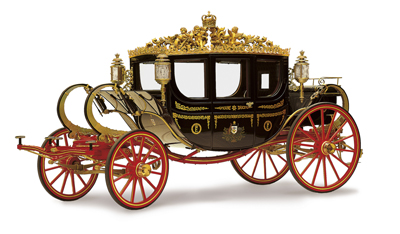
Among the treasures on show at this year’s summer opening of Buckingham Palace, the Australian State Coach was a gift to Queen Elizabeth II by Australia on 8th May, 1988, to mark the Australian Bicentennial.

The coach – the first to be built for the Royal Family since the Coronation of King Edward VII in 1902 – was built by Australian WJ “Jim” Frecklington who also designed the Diamond Jubilee State Coach.

The coach, which is usually kept in the Royal Mews where it can be viewed by the public, has been used at the State Opening of Parliament and other occasions involving foreign royal families and visiting heads of state. It was also used to carry Prince Charles, the Duchess of Cornwall and Michael and Carole Middleton back to Buckingham Palace after the wedding of Prince William and Catherine Middleton.

It was last used to carry the Duke of Edinburgh and Señora Rivera, wife of the president of Mexico, on a State Visit in March this year.

The summer opening of the palace runs from 25th July to 27th September. The coach will be on display in the Grand Entrance portico.

WHERE: Summer Opening of Buckingham Palace (nearest Tube stations are Victoria, Green Park and Hyde Park Corner); WHEN: 25th July to 31st August – 9.30am to 7.30pm daily (last admission 5.15pm)/1st to 27th September – 9.30am to 6.30pm (last admission 4.15pm); COST: £35.60 adults/£20 under 17 and disabled/£32.50 concessions/£91.20 family (2 adults and three under 17s); WEBSITE: www.royalcollection.org.uk/visit/the-state-rooms-buckingham-palace/plan-your-visit.

PICTURE: Royal Collection Trust © Her Majesty Queen Elizabeth II, 2015 

This Week in London – Party time at Hampton Court; new rooms unveiled at Eltham; Richard III at the Science Museum, and Kew’s Easter egg hunt…

Wishing all of our readers a very happy Easter! 

Hampton-Court

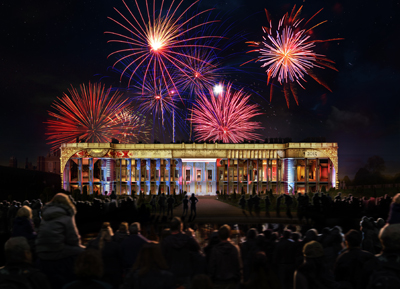
• It’s party time at Hampton Court Palace this weekend as the palace celebrates its 500th anniversary with festivities including a spectacular (and historic) light show. Friday, Saturday and Sunday nights the palace will be open for an evening of festivities including the chance to taste-test pork cooked in the Tudor kitchens, enjoy a drink at a pop-up bar in the Cartoon Gallery, listen to live performances of period music in the state apartments and watch a 25 minute sound and light show in the Privy Garden taking viewers on a journey through the palace’s much storied past culminating in a fireworks finale. The nights run from 6.30pm to 9.15pm. Admission charge applies. For more, see www.hrp.org.uk/HamptonCourtPalace/. PICTURE: HRP/Newsteam

• A luxury wartime bunker, a map room dating from the 1930s and a walk-in wardrobe complete with vintage fashion are among five new rooms at Eltham Palace in south London which are opening to the public for the first time this Easter. The rooms also include a basement billiards room and adjoining bedrooms, one of which features one of the first showers ever installed in a residential house in the UK. They have been restored as part of English Heritage’s major £1.7 million makeover of the property – the childhood home of King Henry VIII which was converted into a stunning Art Deco gem in the 1930s. Visitors will be invited to join one of Stephen and Virginia Courtauld’s legendary cocktail party’s of the 1930s while children can take part in an interactive tour exploring the story of the animals that lived at the palace including Mah-Jongg, the Courtauld’s pet lemur (who had his own heated bedroom!). Admission charge applies. For more, see www.english-heritage.org.uk/eltham. Meanwhile, anyone wishing to donate to support the renovation of the map-room can do so at www.english-heritage.org.uk/donate-eltham.

• A new exhibition showcasing the latest scientific displays concerning the life and death of King Richard III has opened at the Science Museum. King Richard III: Life, Death and DNA, which opened last Wednesday – the day before the king’s remains were reinterred at Leicester Cathedral, features an analysis of Richard III’s genome, a 3D printed skeleton (only one of three in existence) and a prototype coffin. It explores how CT scans were used to prove the king’s fatal injuries at the Battle of Bosworth in 1485 were caused by a sword, dagger and halberd (a reproduction of the latter is on display). The exhibition will run until 25th June. Entry is free. For more, see www.sciencemuseum.org.uk/RichardIII.

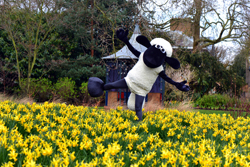
Shaun-the-Sheep• Join Shaun the Sheep and friends for Kew Garden’s annual Easter Egg hunt this Sunday. The hunt will take place from 9.30am to noon (or when the eggs run out!) with participants needing to find three sheep and collect a token/chocolate dropping from each before finding the Easter bunny and claiming eggs supplied by Divine chocolate. Shaun, meanwhile, who hit the big screen for the first time this year, will be found in the Madcap Meadow until 12th April. Admission charge applies. For the full range of events taking place at the gardens this Easter season, check out www.kew.org. PICTURE: RBG Kew.

• London’s Boroughs are turning 50 and to celebrate London councils – working with the London Film Archive – have released a short film telling the story of the past half century. Follow this link to see it. Councils across the city, meanwhile, are holding events throughout the year to mark the occasion – check with your local council for details; some, like Barking and Dagenham, and Camden have dedicated pages.

• The first chief of the Secret Intelligence Service, Sir Mansfield Cumming, has been commemorated with an English Heritage blue plaque at his former home in Westminster. Known as ‘C’ thanks to his habit of initialling papers (a tradition which has been carried on by every chief since), Cumming was chief of the Foreign Section of the Secret Service Bureau from 1909 until his death in 1923. Flats 53 and 54 at 2 Whitehall Court – now part of Grade II*-listed The Royal Horseguards Hotel – served as Cumming’s home and office at various times between 1911 and 1922. The plaque was unveiled by current Secret Intelligence Service chief, Alex Younger. Meanwhile, Amelia Edwards, pioneering Egyptologist, writer, and co-founder of the Egypt Exploration Fund, has also been honoured with a blue plaque on her former home in Islington. Edwards lived at 19, Wharton Street in Clerkenwell between 1831 and 1892. For more, see www.english-heritage.org.uk/visit/blue-plaques/.

Send all items for inclusion to exploringlondon@gmail.com.

What’s in a name?…Farringdon

Farringdon is a name that crops up quite a bit in London. As well as Farringdon Road, Farringdon Street and Farringdon Lane, there’s a Tube/overground train station which also bear the name along with two of the 25 wards of the City of London.

These latter are named Farringdon Within and Farringdon Without – a distinction which relates to their placement within and without the City’s walls and dates to the late 14th century.

While the name Farringdon, which can be found elsewhere in England, apparently meant ‘ferny hill’ in Old English, its origins in London apparently relate to two medieval London goldsmiths, William de Faringdon (also spelt de Farindon and various other ways) and his son Nicholas.

Both William and Sir Nicholas were aldermen and Lord Mayors of London in the late 13th and early 14th centuries.

Sir Nicholas was apparently well favoured by King Edward II – he was several times appointed mayor, a job the king apparently said he could hold for “as long as it pleased him”. He was buried at St Peter-le-Chepe, destroyed in the Great Fire of London.

Interestingly, another well-known alderman of this ward was the radical MP John Wilkes, who was elected while in Newgate Prison.

Farringdon Street, which becomes Farringdon Road, runs along the course of the former Fleet River and dates from the 1730s when the river was arched over.

Lost London – Blackwell Hall…

A trade hall for the wool and cloth trade, Blackwell Hall, also known as Bakewell Hall, once stood on the east side of Guildhall Yard in Basinghall Street.

The buttressed stone building – whose previous owners included Thomas Bakewell (from where apparently it gets its name) – is understood to have been purchased by the City of London Corporation during the reign of King Richard II and subsequently established as a cloth market.

‘Factors’ were introduced to act as agents and handle the sale of goods on behalf of the clothiers but shifts in trade – in particular the expansion of northern mills which led to them handling their sales directly –  saw the importance of the London-based factors wane.

The structure was rebuilt a couple of times over its lifespan – there are records of a rebuilding in 1588 and again after the Great Fire of 1666 – before it was finally demolished in 1820 to make way for the Bankrupcy Court.

Remains of the foundations were discovered during excavations in Guildhall Yard in 1988.

This Week in London – Garden art from the Royal Collection; A Royal Welcome at Buckingham Palace; photographic history; and, Joshua Reynolds reconsidered…

Gardens• King Henry VIII’s well-thumbed gardening manual, a late 15th century copy of the Ruralia Commoda, and a 16th century portrait of Jacopo Cennini, factor and estate manager to the House of Medici – believed to be the earliest surviving portrait of a gardener – are among more than 150 objects on display at a new exhibition celebrating the art of gardens. Opening at The Queen’s Gallery in Buckingham Palace tomorrow, Painting Paradise: The Art of the Gardens features some of the earliest surviving records of gardens and plants in the Royal Collection including Jan Brueghel the Elder’s Adam and Eve in the Garden of Eden (1615), The Family of Henry VIII (c. 1545) featuring King Henry VIII’s Great Garden at Whitehall Palace – the first real garden recorded in British art, and A View of Hampton Court by Leonard Knyff (c. 1702-14) – described as the “greatest surviving Baroque painting of an English garden”. There are also works by Frenchman Jean-Baptiste Martin, Swiss artist Johan Jacob Schalch and Sir Edwin Landseer. The exhibition runs until 11th October. Admission charge applies. For more, see www.royalcollection.org.uk. PICTURE: Illustration from Henry VIII’s copy of the gardening manual, c. 1490-95. Royal Collection Trust/© Her Majesty Queen Elizabeth II 2015. 

• Buckingham Palace, meanwhile, has announced its summer opening under the theme of A Royal Welcome. From 25th July to 27th September, displays in the State Rooms will recreate the settings for some of the many occasions in which the palace welcomes guests – from State Visits and garden parties to investitures and private audiences. The displays will show the behind-the-scenes preparations that go into a state visit and show the ballroom set up for a State Banquet. There will also be a display featuring the knighting stool and a knighting sword and, for the first time ever, visitors will enter the State Rooms through the Grand Entrance, used by those who come to the palace at the invitation of the Queen, including heads of state and prime ministers. The Australian State Coach, most recently used to carry the Duke of Edinburgh and the wife of the Mexican President, Señora Rivera, in March this year, will be displayed in the Grand Entrance portico. Admission charge applies. For more, see www.royalcollection.org.uk.

• About 100 of the “most stunning photographs ever created” go on show in the Science Museum’s Media Space in South Kensington from tomorrow. Revelations explores the role of early scientific photography in inspiring later art photographers and will feature rare shots from the National Photography Collection including an original negative of X-Ray, 19th century photographs capturing electrical charge and William Henry Fox Talbot’s experiments with photomicrography. Displayed alongside are images by some of the 20th century’s pre-eminent art photographers such as Trevor Paglen, Idris Khan and Clare Strand. Runs until 13th September. Admission charge applies. For more, see www.sciencemuseum.org.uk/revelations.

• On Now: Joshua Reynolds: Experiments in Paint. This exhibition at the Wallace Collection in Marylebone provides a new perspective on the portraits of Reynolds, one of the greatest artists of his day. Works on show including Nelly O’Brien, Mrs Abington as Miss Prue and Self Portrait Shading the Eyes as well as lesser known pictures and a rare history painting. The exhibition reveals discoveries made recently during a four year research project into the works of Reynolds now in the care of the collection. Runs until 7th June. Admission is free. For more, see www.wallacecollection.org.

Send items for inclusion to exploringlondon@gmail.com.

This Week in London – Biggest ever Magna Carta exhibition; 200 years since Waterloo at the NPG; and, Alexander McQueen at the V&A…

great-seal-king-john-eton-college-british-library-magna-carta-law-liberty-legacy• The largest ever exhibition related to the Magna Carta opens at the British Library in King’s Cross tomorrow to mark the 800th anniversary of the document’s sealing. Magna Carta: Law, Liberty, Legacy features two original Magna Carta manuscripts from 1215 as well as 1215 document, the Articles of the Barons (known as ‘draft’ of the Magna Carta), the Petition of Right (1628), the English Bill of Rights (1689), and the Universal Declaration of Human Rights (1948). It will also display two of the most celebrated documents in American history – the Delaware copy of the Bill of Rights and Thomas Jefferson’s handwritten copy of the Declaration of Independence (both on loan from the US National Archives) –  along with UK cabinet papers from 1941 in which it was proposed an original Magna Carta manuscript from 1215 be given to the US in return for their support in World War II and artefacts including King John’s teeth, thumb bone and fragments of clothing taken from his tomb in 1797 as well as his will. The exhibition tells the story of the Magna Carta from its creation in 1215 through to its later use by people fighting for various rights and freedoms and its continuing impact on the world today. There’s also a series of interviews with politicians, historians and public figures including Burmese activist Aung San Suu Kyi, former US President Bill Clinton and William Hague. Runs until 1st September. Admission charge applies. For more – and a digitised gallery of artifacts – visit www.bl.uk/magna-carta-exhibition. PICTURE: Great Seal of King John, 1203 © Eton College Archives on display in Magna Carta: Law, Liberty, Legacy.

• The first gallery exhibition devoted to the Duke of Wellington opens at the National Portrait Gallery off Trafalgar Square today. Marking the 200th anniversary year of the Battle of Waterloo, Wellington: Triumphs, Politics, and Passions explores Wellington’s political and military career as well as his personal life. Highlights include Goya’s 1812 portrait of Wellington following his entry into Madrid (later modified to recognise further battle honours and awards), and Thomas Lawrence’s famous portrait painted in 1815, the same year as the Battle of Waterloo (the painting, which normally hangs in Apsley House, was used as the basis of the design of the £5 British note from 1971 to 1991). The exhibition of 59 portraits and other works also includes rarely seen works loaned by Wellington’s family include a John Hoppner portrait of the duke as a young soldier and a daguerreotype portrait taken by Antoine Claudet for Wellington’s 75th birthday in 1844. Runs until 7th June. Admission is free. For more, see www.npg.org.uk or for more on the 200th anniversary of the Battle of Waterloo, see www.waterloo200.org.

• An exhibition celebrating the works of the late fashion designer Alexander McQueen opens at the V&A in South Kensington on Saturday. Alexander McQueen: Savage Beauty presents his works in 10 sections which focus on everything from McQueen’s roots in London, his “skilful subversion of traditional tailoring practices”, his fascination with the animal world and his longstanding interest in Eastern cultures. At the centre of the exhibition is The Cabinet of Curiosities, a display showcasing more than 100 garments and accessories and shown with film footage from his many catwalk presentations. The exhibition runs until 2nd August. Admission charge applies but you’ll have to be quick – the exhibition has already set the record for the most ever advance sales for an exhibition at the museum. For more, see www.vam.ac.uk/savagebeauty.

Send all items for inclusion to exploringlondon@gmail.com.


This Week in London – War fashions; the “inventor” of Impressionism; looking a Gift Horse in the mouth; and, having a look at the Queen’s House…

• A new exhibition exploring how fashion survived and even flourished during World War II has opened at the Imperial War Museum in Lambeth to mark the 70th anniversary of the war’s end. Fashion on the Ration brings together more than 300 exhibits including clothes and accessories like the ‘respirator carrier handbag’, photographs and films as well as official documents from the period, letters and interviews. The exhibition is divided into six parts which examine in detail everything from the uniforms worn during the period to clothes rationing (introduced in 1941) and how the end of the war impacted fashion. Runs until 31st August. Admission charge applies. For more, see www.iwm.org.uk.

• The UK’s first major exhibition devoted to Paul Durand-Ruel, the man who “invented Impressionism”, has opened at the National Gallery off Trafalgar Square this week. Inventing Impressionism features around 85 works including some of Impressionism’s greatest masterpieces, a number of which have never been seen in the UK before. The majority of the works were traded by Durand-Ruel (1831-1922) who is noted for having discovered and supported Impressionist painters like Monet, Pisarro, Degas and Renoir. Durand-Ruel purchased an astonishing 12,000 pictures between 1891 and 1922, including more than 1,000 Monets, about 1,500 Renoirs, more than 400 Degas’, some 800 Pissarros and close to 200 Manets. The images on display include a series of rarely-seen portraits of the dealer and his family by Renoir which are being exhibited in the UK for the first time as well as five paintings from Manet’s ‘Poplars’ series and all three of Renoir’s famous ‘Dances’, not seen in the country together since 1985. The exhibition finishes with a reference to an exhibition Durand-Ruel organised in London in 1905. Held at the Grafton Galleries, it presented 315 paintings. Admission charge applies. Runs until 31st May. For more, see www.nationalgallery.org.uk.

• Gift Horse, New York-based German artist Hans Haacke’s sculpture of a skeletal riderless horse, will be unveiled on the Fourth Plinth in Trafalgar Square today. The horse, derived from an etching by English painter George Stubbs – whose works are in the nearby National Gallery, features an electronic ribbon tied to the horse’s front leg showing a live ticker of the London Stock Exchange. The statue, described as a ‘wry comment’ on the equestrian statue of King William IV which was originally to occupy the plinth, is the 10th to occupy the plinth since the first commission – Marc Quinn’s sculpture Alison Lapper Pregnant – was unveiled in 2005.

•  Contemporary artist Dryden Goodwin’s first feature-length film is on show as part of a new exhibition, Unseen: The Lives of Looking, at the Queen’s House in Greenwich. Continuing Goodwin’s investigations into portraiture, the newly commissioned film focuses on three individuals who have a “compelling” relationship to looking – eye surgeon Sir Peng Tee Khaw, planetary explorer Professor Sanjeev Gupta and human rights lawyer Rosa Curling. Alongside the screening is a series of drawings made by Goodwin after observing the three individuals as well as tools and papers related to each of their trades and a series of objects connected three leading observers related to the history of the Royal Museums Greenwich sites – John Flamsteed, first Astronomer Royal, Edward Maunder, who observed Mars from the Royal Observatory Greenwich, and the artist Willem van de Velde the Elder who made detailed drawings of naval battles in preparation for producing paintings in his studio at the Queen’s House. Runs until 26th July. Admission is free. For more, see www.rmg.co.uk.

Send all items for inclusion to exploringlondon@gmail.com.

10 London sites associated with Sir Winston Churchill – 4. 10 Downing Street…

10-Downing-Street

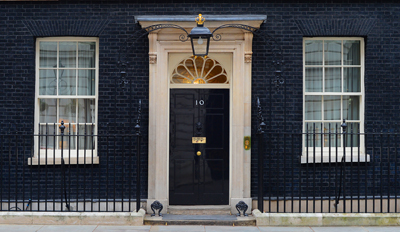
Sir Winston Churchill lived a number of residences in London but, of course, the most famous in its own right is the traditional home of British PMs, 10 Downing Street.

Located in a short street just off Whitehall (now closed to the public), the property has been home to Prime Ministers since Sir Robert Walpole, officially First Lord of the Treasury but effectively the first PM, took up residence in 1735.

Churchill moved in following his election to the office of Prime Minister in 1940 and he and his wife Clementine took up residence in a second floor flat. It was in this property where, cigar in hand, he is famously known to have dictated speeches and letters to his secretary while propped up in bed.

The building suffered some bomb damage during the Blitz – on 14th October, 1940, a bomb fell on nearby Treasury Green and damaged the home’s kitchen and state rooms. Three civil servants doing Home Guard duty were killed but the kitchen staff were saved thanks to Churchill who, dining in the Garden Rooms when the bombing raid began, ordered them to leave their duties and get into a bomb shelter.

The Garden Rooms – which included a bedroom, meeting area and the small dining room – were subsequently reinforced with steel and heavy metal shutters although these apparently would have made little difference had there been a direct hit.

Cabinet moved out of Number 10 into the underground bunker complex now referred to as the Churchill War Rooms (see last week’s post) in October, 1939, and, after several near misses, the Churchills – Sir Winston apparently very begrudgingly – moved into the Number 10 Annex above the war rooms in 1940 (although Churchill continued to visit Number 1o for working and dining).

Much of the furniture and valuables were removed from Number 10 and only the Garden Rooms, Cabinet Room and Private Secretaries’ office remained in use (along with a reinforced bomb shelter built underneath – King George VI is known to have sheltered here when he was dining with Churchill when a raid began).

At the end of the war the Churchills quickly moved back into Number 10 and it was from the Cabinet Room that he made his Victory in Europe (VE) Day broadcast on 8th May, 1945.

He vacated the premises after his election defeat later in 1945 but returned when re-elected PM in 1951 and left after he resigned in 1955 having held a dinner party attended by Queen Elizabeth II and Prince Philip the night before.

A couple of interesting facts about Churchill’s time at number 10: Churchill had many pets who usually had free rein in the house – even at 10 Downing Street his poodle Rufus was known to have wandered into a meeting in the Cabinet Room (before he was ejected) – while in 1958, Georgina Landemare, the cook during his time at number 10, famously published a book, Recipes from No. 10, which featured an introduction by Churchill’s wife, Clementine.

There are apparently two portraits of Churchill among those of other PMs which grace the wall of the Grand Staircase.

For more on the history of 10 Downing Street, see www.gov.uk/government/history/10-downing-street

PICTURE: Sergeant Tom Robinson RLC/Crown Copyright 


This Week in London – Rarely seen Goya at the Courtauld; Wolsey Angels saved; and, A Victorian Obsession…

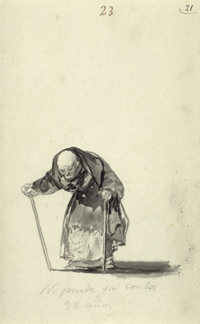
He-can-no-longer-at-the• A “ground-breaking” exhibition of works of 18th and 19th century Spanish painter and printmaker Francisco Goya opens to the Courtauld Gallery at Somerset House today. Goya: The Witches and Old Women Album brings together the previously widely scattered pages of one of the artist’s most celebrated private albums in the first exhibition to ever recompile one of them. The album – which features themes of witchcraft, dreams and nightmares and has been reconstructed into its original sequence – is thought to have been made between 1819-23, a period during which Goya completed the murals known as the Black Paintings. Runs until 25th May. Admission charges applies. For more, see www.courtauld.ac.uk/goya. PICTURE: © The Courtauld Gallery (He can no longer at the age of 98, c. 1819-23, J. Paul Getty Museum).

• The ‘Wolsey Angels’ have been “saved for the nation” after a campaign to acquire them by the V&A. The museum has reported that more than £87,000 was raised in a national public appeal – around £33,000 of which was raised via donations and through the purchase of badges at the South Kensington premises – which, along with grants including a £2 million National Heritage Memorial Fund grant and a £500,000 Art Fund grant, will be used to acquire the four bronze angels which were originally designed for the tomb of Cardinal Thomas Wolsey, chief advisor to King Henry VIII. The four bronze angels, which have been in display at the V&A, will now undergo conservation treatment before going back on display. For more on the history of the angels, see our earlier post here. For more information on the V&A, see www.vam.ac.uk.

• Closing Soon – A Victorian Obsession: The Pérez Simón collection at Leighton House Museum. This exhibition at the former Holland Park of Lord Leighton presents more than 50 rarely exhibited paintings by leading Victorian artists including Albert Moore, Dante Gabriel Rossetti, Edward Burne-Jones, John Everett Millais, John William Waterhouse, Edward Pointer, John Strudwick and John William Godward as well as six pictures by Leighton himself and the highlight, Lawrence Alma-Tadema’s The Roses of Heliogabalus. Runs until 29th March. Admission charge applies. See www.rbkc.gov.uk/subsites/museums/leightonhousemuseum/avictorianobsession.aspx for more.

Lost London – Baynard’s Castle (part 2)…

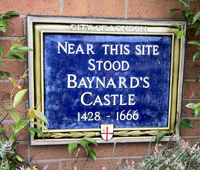
Having previously looked at the Norman fortification (razed by King John in 1213 – see our earlier post here), this time we’re taking a look at the later (medieval) fortification known as Baynard’s Castle.

Baynard's-CastleIn the 1300s, a mansion was constructed about 100 metres east of where the castle had originally stood on a riverfront site which had been reclaimed from the Thames. This was apparently destroyed by fire before being rebuilt in the 1420s and it became the seat of the House of York during the Wars of the Roses. King Edward IV was proclaimed king here in 1461 and King Richard III was offered the crown here in 1483 (a moment famously captured by William Shakespeare).

King Henry VII transformed the fortified mansion into a royal palace at the start of the 16th century – adding a series of towers – and his son, King Henry VIII, gave it to the ill-fated Catherine of Aragon when they married. The Queen subsequently took up residence (Anne Boleyn and Anne of Cleves also resided here when queen – the latter was the last member of the royal family to use it as a permanent home).

After King Henry VIII’s death, the palace passed into the hands of the Earl of Pembroke (brother-in-law of Queen Catherine Parr, Henry’s surviving Queen) who substantially extended it, adding ranges around a second courtyard. In 1553, both Lady Jane Grey and Queen Mary I were proclaimed queen here. Queen Elizabeth I was another royal visitor to the palace, entertained with a fireworks display when she did.

It was left untouched during the Civil War (the Pembrokes were Parliamentarians) but following the Restoration, it was occupied by the Royalist Earl of Shrewsbury (among his visitors was King Charles II). It wasn’t to be for long however – the palace was largely destroyed in the Great Fire of 1666, although remnants of the building, including one or two of the towers, continued to be used for various purposes until the site was finally cleared in the 1800s to make way for warehouses.

The site in Queen Victoria Street in Blackfriars (the area is named for the monastery built on the site of the Norman castle) is now occupied by the Brutalist building named Baynard House. The castle is also commemorated in Castle Baynard Street and Castle Baynard Ward.

It was discovered in archaeological excavations in the 197os that the castle’s waterfront wall had been built on top of the Roman riverside city wall.

PICTURE: © Copyright Andrew Abbott

This Week in London – The Clowns’ Service has a new venue; Sir Jacob Epstein at the Foundling Museum; Mark Boxer’s caricatures at the Cartoon Museum…

• The 69th annual Clowns’ Service will be held this Sunday – but the venue has changed. An annual tradition since 1946, the service is held in memory of Regency performer (and man hailed as the “inventor” of the modern clown), Joseph Grimaldi (1778-1837). It has been held at Holy Trinity Church in Dalston since 1959 after the previous building where it was held – St James’ Chapel in Pentonville Road; site of Grimaldi’s grave – was gutted in a fire (permission was given for clowns to attend in costume in 1967) but this year, due to repairs at Holy Trinity, the service is being held at sister church All Saints, Livermore Road, in Haggerston (E8 4EZ) (www.trinitysaintsunited.com). Kicks off at 3pm but you’ll have to be early to find a space. About 60 clowns usually attend and a clown show for children follows.

• Bronze sculptures and drawings of babies and children by Sir Jacob Epstein (1880-1959) form the basis of a new exhibition opening tomorrow at the Foundling Museum in Bloomsbury. Sir Jacob Epstein: Babies and Bloomsbury features portraits of Epstein’s own children and grandchildren and those of friends and contemporaries. The artist lived in Bloomsbury himself between 1914 and 1927 during which time he had five children from a series of extramarital affairs (interesting his long-suffering wife Margaret, herself unable to have children, brought up the youngest and oldest of these and put up with his affairs until her death in 1947 – although she is believed to have shot his long-term lover Kathleen Garman, later his wife and Lady Epstein, in the shoulder with a pearl-handled pistol. Also opening at the Foundling Museum tomorrow is a display of four rarely-exhibited portraits of Georg Frideric Handel and contemporaries Corelli, Geminiani and Daniel Purcell which are on-loan from the Royal Society of Musicians and which once hung in the royal box of King George III. Both exhibitions run until 10th May. Admission charges apply. For more, see www.foundlingmuseum.org.uk.

• On Now: The Caricatures and Cartoons of Mark Boxer. This exhibition at the Cartoon Museum in Bloomsbury features more than 100 of Boxer’s caricatures and cartoons from The Times, The Guardian, The Daily Telegraph, The New Statesman, The London Review of Books and The Observer. Among the more than 80 caricatures on display – works for which he is particularly noted – are those of Prince Charles and Queen Elizabeth II, Antonia Fraser, Seamus Heaney, Tony Benn, Clive James, Barry Humphries and David Frost. Runs until 22nd March. Admission charge applies. For more, see www.cartoonmuseum.org.

Send all items for inclusion to exploringlondon@gmail.com.

This Week in London – Hampton Court Palace turns 500; celebrating the influence of Rubens; and, remembering the liberation of Auschwitz…

Hampton-Court-Palace• Hampton Court Palace turns 500 this year and the palace is conducting a programme of events in celebration of the landmark anniversary. Sadly, the first in a series of events – a night in which Historic Royal Palace’s chief curator Lucy Worsley, inspired by the recent BBC Two programme Britain’s Tudor Treasure: A Night at Hampton Court, will explore one of the greatest nights in Hampton Court’s history, the christening of King Henry VIII’s longed for son, Edward (later King Edward VI) – is already sold out but there are a range of further events planned (we’ll try and keep you informed as they come up through the year). In the meantime, HRP have announced that a rare 16th century hat which is rumoured to have once belonged to King Henry VIII is to return to the palace later this year after undergoing restoration. The story goes that the hat, which will become the oldest item of dress in the palace’s collection by almost a century, was caught by Nicholas Bristowe, the king’s Clerk of the Wardrobe, when Henry threw it in the air on hearing of the French surrender of Boulogne in 1544. Treasured by the Bristowe’s descendants, it has now been acquired by HRP and is expected to go on show in a future exhibition. We’ll be looking at the hat in more detail in a future post. For more on the palace, see www.hrp.org.uk/HamptonCourtPalace/. PICTURE: HRP/Newsteam

• The first major exhibition in the UK to examine the influence of Peter Paul Rubens on the history of art opens at the Royal Academy of Arts on Piccadilly on Saturday. Rubens and His Legacy: Van Dyck to Cezanne brings together more than 160 works by Rubens and artists who were inspired by him both during his lifetime and later including everyone from Van Dyck, Watteau, Turner and Delacroix to Manet, Cezanne, Renoir, Klimt and Picasso. The exhibition is organised around six themes: poetry, elegance, power, lust, compassion and violence. Runs until 10th April in the Main Galleries. For more, see www.royalacademy.co.uk.

• The 70th anniversary of the liberation of Auschwitz will be marked at Westminster Abbey with a special service at 6.30pm on 1st February. At least 1.1 million prisoners died at the camp, located in south-west Poland, around 90 per cent of them Jewish. It was liberated on 27th January, 1945 by the Red Army. Tickets are free but need to be booked. Follow this link to book. Meanwhile, the Imperial War Museum London in Lambeth has invited people to mark Holocaust Memorial Day – 27th January – with a visit to the free Holocaust Exhibition which has a 13 metre long model depicting the arrival of a deportation train from Hungary at the Auschwitz-Birkenau camp in 1944, accompanied by testimonies from 18 survivors. Recommended for children aged 14 and above. For more, see www.iwm.org.uk/visits/iwm-london.