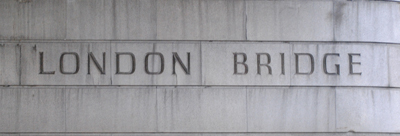
10 sites from London at the time of the Magna Carta – 7. Old London Bridge…

London-Bridge2

The current London Bridge, which spans the River Thames linking Southwark to the City, is just the latest in several incarnations of a bridge which originally dates back to Roman times.

This week, we’re focusing on first stone bridge to be built on the site. Constructed over a period of some 33 years, it was only completed in 1209 during the reign of King John, some six years before the signing of the Magna Carta.

Construction on the bridge began in 1176, only 13 years after the construction of an earlier wooden bridge on the site (the latest of numerous wooden bridges built on the site, it had apparently built of elm under the direction of Peter de Colechurch, chaplain of St Mary Colechurch, a now long-gone church in Cheapside).

It was the priest-architect de Colechurch who was also responsible for building the new bridge of stone, apparently on the orders of King Henry II. While many of the wealthy, including Richard of Dover, the Archbishop of Canterbury, gave funds for the construction of the bridge, a tax was also levied on wool, undressed sheepskins and leather to provide the necessary monies – the latter led to the phrase that London Bridge was “built upon woolpacks”. King John, meanwhile, had decreed in 1201 that the rents from several homes on the bridge would be used to repair it into perpetuity.

The bridge, which featured 20 arches – a new one built every 18 months or so, was apparently constructed on wooden piles driven into the river bed at low water with the piers of Kentish ragstone set on top. It was dangerous work and it’s been estimated that as many as 200 men may have died during its construction.

The bridge was almost completely lined with buildings on both sides of the narrow central street. These included a chapel dedicated to St Thomas á Becket – a stopping point for pilgrims heading to the saint’s shrine in Canterbury, as well as shops and residences (although, apart from the chapel, we know little about the original buildings). There was also a drawbridge toward the southern end and the Great Stone Gate guarding the entrance from Southwark.

Peter de Colechurch died in 1205, before the bridge was completed. He was buried in the undercroft of the chapel on the bridge.

Three men subsequently took on the task of completing the bridge – William de Almaine, Benedict Botewrite and Serle le Mercer who would go on to be a three time Lord Mayor of London. All three were later bridge wardens, the City officials charged with the daily running of the bridge itself.

One of key events on the bridge in the years immediately after its completion was the arrival of Louis, the Dauphin of France, in May, 1216. Louis had been invited to depose John by the rebellious barons after the agreement sealed at Runnymede fell apart and in 1216, he and his men marched over London Bridge on their way to St Paul’s Cathedral. (We’ll deal with this in more detail in a later post).

What became known as ‘Old London Bridge’, which stood in line with Fish Street Hill, survived the Great Fire of 1666, albeit badly damaged, but was eventually replaced with a new bridge, known, unsurprisingly as ‘New London Bridge’, which opened in 1831. Designed by John Rennie, this bridge was later replaced by one which opened in 1971 (Rennie’s bridge was sold off and now stands in Lake Havasu City, Arizona).

For a detailed history of Old London Bridge, check out Old London Bridge: The Story of the Longest Inhabited Bridge in Europe.

10 sites from London at the time of the Magna Carta – 6. St Helen’s Bishopsgate…

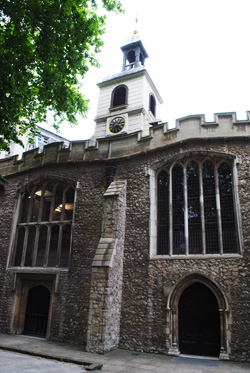
St-Helen-Bishopsgate2

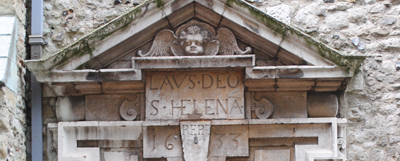
This church in the shadow of 30 St Mary Axe (aka The Gherkin) is all that remains of a Benedictine nunnery that was founded here during the reign of King John in 1210.

St-Helen's-BishopsgateEstablished by one “William, son of William the goldsmith” after he was granted the right by the Dean and Chapter of St Paul’s Cathedral, the priory was built to the north of a previously existing church with a new church for the nuns to use built right alongside the existing structure (thus accounting for the rarely seen side-by-side naves of the current building).

While the new church was built longer than the existing church, the latter was then lengthened to give them both the same length. A line of arches and a screen separated the nun’s choir and the parish church.

The church which stands today has been much altered over the centuries and what we now see there largely dates from the 14th and 15th centuries (although the bell turret which sits over the west front is an 18th century addition).

One of the priory’s claims to fame in medieval times was that it apparently was once home to a piece of the True Cross, presented by King Edward I in 1285.

The nunnery was dissolved in 1538 during the Great Dissolution of King Henry VIII and the buildings, excepting the church, sold off to the Leathersellers’ Company (all were eventually demolished by the 18th century). The screen separating the nun’s choir and the parish church, meanwhile, was removed, leaving the main body of the church as it can be seen today.

The now Grade I-listed church, which was William Shakespeare’s parish church when he lived in the area in the 1590s, survived both the Great Fire of London and the Blitz but was severely damaged by two IRA bombs in the early 1990s leading to some major – and controversial – works under the direction of architect Quinlan Terry.

Inside the church today is a somewhat spectacular collection of pre-Great Fire monuments including the 1579 tomb of Sir Thomas Gresham, founder of the Royal Exchange, the 1636 tomb of judge, MP and Chancellor of the Exchequer, Sir Julius Caesar Adelmare, and the 1476 tomb of merchant, diplomat, City of London alderman and MP, Sir John Crosby.

It was also once the site of the grave of 17th century scientist Sir Robert Hooke but these were apparently removed from the church crypt in the 19th century when repairs to the floor of the nave were being made and placed in an unmarked common grave. Their location apparently remains unknown.

WHERE: St Helen’s Bishopsgate, Great St Helens (nearest Tube stations are Aldgate, Bank and Liverpool Street); WHEN: 9.30am to 12.30pm weekdays daily (also usually open Monday, Wednesday and Friday afternoons but visitors are advised to telephone first); COST: Free; WEBSITE: www.st-helens.org.uk.

10 sites from London at the time of the Magna Carta – 5. Lambeth Palace…

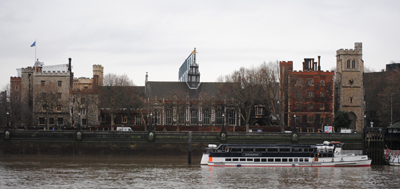
Lambeth-palaceThe London residence of the Archbishop of Canterbury, Lambeth Palace was first acquired by the archbishopric in around the year 1200 with Archbishop Stephen Langdon – an important figure in the whole Magna Carta saga – believed to be the first to have lived there.

Lambeth-Palace2The complex built in the early 13th century included a chapel, a great hall, a ‘great chamber’ where the archbishop would receive guests, and private apartments for Archbishop Langdon, who was appointed to the archbishopric in 1207 and remained in the post until his death in 1228 (his appointment was a major point of contention between King John and Pope Innocent III and a key factor in the dispute which led to the creation of the Magna Carta).

Not much remains of the original palace but the sections that do include the originally free-standing Langdon’s Chapel (although now much altered and connected to the rest of the complex) and the crypt beneath it (described as one of the best preserved medieval stone vaults in London it is now a chapel but was originally used for the storage of wine and beer).

They are both believed to have been completed in about 1220 with the other buildings now present added later over the centuries.

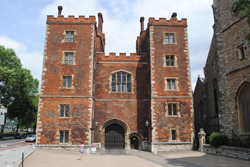
These include the formidable red brick gatehouse that fronts the complex today – known as Morton’s Tower, it is named after Archbishop Cardinal John Morton and dates from 1490 – while the Guard Room, which has its origins in the archbishop’s ‘great chamber’, dates from the 14th century and the infamous Lollard’s Tower – used as a prison in the 17th century – from the 15th century.

The Great Hall – now used as a library, first established in 1610 – was rebuilt in the mid 17th century although it is believed to stand on the site of that first used by Langdon (we’ll deal more with the later history of Lambeth Palace in a later post).

WHERE: Lambeth Palace, corner of Lambeth Palace Road and Lambeth Road (nearest tube stations are Westminster, Waterloo, Vauxhall, and Lambeth North); WHEN: Guided tours (90 minutes) only – check website for details; COST: £12 a person plus £2.95 booking fee (under 17s are free); WEBSITE: www.archbishopofcanterbury.org/pages/about-lambeth-palace.html.

10 sites from London at the time of the Magna Carta – 4. Thorney Island…

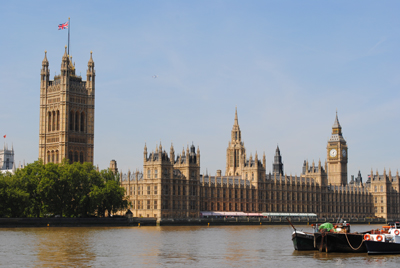
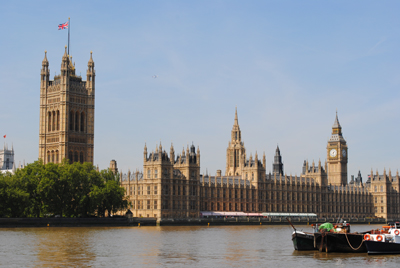
Houses-of-Parliament2 Both Westminster Abbey and the Palace of Westminster (these days better known as the Houses of Parliament – pictured) pre-date 1215 but unlike today in 1215 the upon which they stood was known as Thorney Island.

Formed by two branches of the Tyburn River as they ran down to the River Thames, Thorney Island (a small, marshy island apparently named for the thorny plants which once grew there) filled the space between them and the Thames (and remained so until the Tyburn’s branches were covered over).

One branch entered the Thames in what is now Whitehall, just to the north of where Westminster Bridge; another apparently to the south of the abbey, along the route of what is now Great College Street. (Yet another branch apparently entered the river near Vauxhall Bridge).

The abbey’s origins go back to Saxon times when what was initially a small church – apparently named after St Peter – was built on the site. By 960AD it had become a Benedictine monastery and, lying west of what was then the Saxon city in Lundenwic, it become known as the “west minster” (St Paul’s, in the city, was known as “east minster”) and a royal church.

The origins of the Palace of Westminster don’t go back quite as far but it was the Dane King Canute, who ruled from 1016 to 1035, who was the first king to build a palace here. It apparently burnt down but was subsequently rebuilt by King Edward the Confessor as part of a grand new palace-abbey complex.

For it was King Edward, of course, who also built the first grand version of Westminster Abbey, a project he started soon after his accession in 1042. It was consecrated in 1065, a year before his death and he was buried there the following year (his bones still lie inside the shrine which was created during the reign of King Henry III when he was undertaking a major rebuild of the minster).

Old Palace Yard dates from Edward’s rebuild – it connected his palace with his new abbey – while New Palace Yard, which lies at the north end of Westminster Hall, was named ‘new’ when it was constructed with the hall by King William II (William Rufus) in the late 11th century.

Westminster gained an important boost in becoming the pre-eminent seat of government in the kingdom when King Henry II established a secondary treasury here (the main treasury had traditionally been in Winchester, the old capital in Saxon times) and established the law courts in Westminster Hall.

King John, meanwhile, followed his father in helping to establish London as the centre of government and moved the Exchequer here. He also followed the tradition, by then well-established, by being crowned in Westminster Abbey in 1199 and it was also in the abbey that he married his second wife, Isabella, daughter of Count of Angouleme, the following year. 

10 sites from London at the time of the Magna Carta – 3. The Temple…

Templars

Not much remains today of the original early medieval home of the Templar Knights which once existed just west of the City of London. While the area still carries the name (as seen in the Underground station, Temple), most the buildings now on the site came from later eras. But there are some original elements.

First though, a bit of history. The Templar precinct which become known as the Temple area of London was the second site in the city given to the military order, known more completely as the Knights of the Temple of Solomon (thanks to their Jerusalem HQ being located near the remains of the Temple of Solomon).

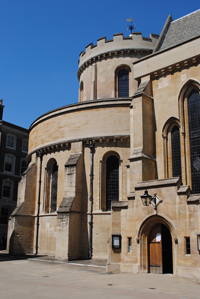
Temple-churchThe first was in Holborn, located between the northern end of Chancery Lane and Staple Inn, and was known as the ‘Old Temple’ after which, in the latter years of the 12th century, the Templars moved their headquarters to the new site – ‘New Temple’ or Novum Templum – on unoccupied land on the bank of the River Thames. 
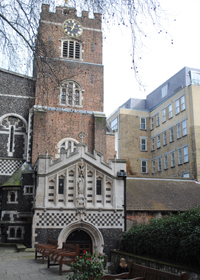
This new precinct included consecrated and unconsecrated areas. The consecrated part was a monastery and was located around what is now Church Court with the monastic refectory built on the site of what is now Inner Temple Hall – the medieval buttery is the only part of the original building which survives.

The lay or unconsecrated part of the precinct lay east of Middle Temple Lane, where a second hall was built on the site of what is now the Middle Temple Hall (you’ll find more on that here) which was used to house the lay followers of the order.

The original buildings also included the still existing Templar Church (pictured, along with a monument depicting the Templars outside the church), which was consecrated in 1185 during the reign of King Henry II by Heraclius, the Patriarch of Jerusalem, on a visit to London. Like all other Templar churches, its circular design was based on the design of the Church of the Holy Sepulchre in Jerusalem (the chancel was added later and consecrated in the presence of King Henry III in 1240 – for more on the Temple Church, you can see our earlier post here.

The New Temple become an important site in London (and the kingdom as a whole – the Masters of the Temple were the heads of the order in England) and was used by many of the nobility as a treasury to store valuables (and to lend money). It also had close connections with the monarchy and was, as we saw earlier this week, a power base for King John and from where he issued what is known as the King John Charter in 1215. He also used it for a time as a repository for the Crown jewels.

In an indication of the Temple’s prominence in state affairs, some of the great and powerful were buried here during this period including William Marshal, 1st Earl of Pembroke, who died in 1219, and his sons William and Gilbert (for more on those buried in the Temple, see our earlier post here). There were also apparently plans to bury King Henry III and his Queen here – this apparently spurred on the building of the chancel on the church – but they were eventually buried in Westminster Abbey instead.

Numerous relics were also apparently housed here during the Templar times including a phial believed to contain Christ’s blood and pieces of the true Cross.

The Templar era came to an end in 1312 when the order was dissolved on the authority of Pope Clement V amid some heinous allegations of blasphemy and sexual immorality which had the support of King Philip IV of France. While the pope awarded their property to the rival order, the Knights of the Hospital of St John of Jerusalem (also known as the Hospitallers), King Edward II had other ideas and ignored their claims with regard to the London property and instead, claimed it for the Crown (a dispute which went on for some years).

It later became associated particularly with lawyers, although lawyers would have certainly been at work in the New Temple given its role as banker to the wealthy (but more on its later associations with lawyers in later post).

For more on the history of the Templars, see Malcolm Barber’s The New Knighthood: A History of the Order of the Temple.

10 sites from London at the time of the Magna Carta – 2. St Bartholomew the Great…

St Bartholomew the Great in Smithfield – the oldest parish church in London (see our earlier piece here) – is worth a revisit thanks to the fact that it would have been standing (at least partially) when the seal of King John was first affixed to the Magna Carta .

St-BartholomewsOnly half the size it once was, this church was founded in 1123 AD as the priory church for a community of Augustinian Canons and owes its origins to Rahere, a favored courtier of King Henry I who renounced his way of life and made a pilgrimage to Rome, returning to found both the church and nearby hospital for the poor.

Only the eastern part of the church was built by the time of the death of Rahere – the first prior – in 1145 and the building continued for some years afterward. While the interior walls now look somewhat plain, they would have been highly decorated when the building was originally constructed. At the time of the Magna Carta, the church would have only been partly completed.

The tomb of Rahere still lies within the church, on the left hand side of the altar – although the canopy over it dates from the 15th century. There were some healing miracles recorded at the tomb.

The church’s current configuration came about when the priory was dissolved in 1539 and the nave of the church was pulled down, leaving what’s there now – the quire, altar and lady chapel.

The brick tower at the church’s west end dates from the 1620s while the gateway through which you enter the church grounds features a restored 13th century arch topped by a late Tudor building.

The church was briefly used by some Dominican friars but since the reign of Queen Elizabeth I has fulfilled the role of parish church. A concerted restoration effort began in the mid-19th century by Sir Aston Webb (architect of the Victoria & Albert Museum), leaving the Lady Chapel with a very different feel to the Norman choir. The building is now Grade I-listed.

WHERE: Off Little Britain, West Smithfield (nearest tube station is Barbican); WHEN: 8.30am to 5pm Monday to Friday, 10.30am to 4pm Saturday, 8.30am to 8pm Sunday (except for services) ; COST: £4 an adult/£3.50 concession/£10 a family; WEBSITE: www.greatstbarts.com

10 sites from London at the time of the Magna Carta – 1. The Tower…

This week we’re starting a new series in honour of the 800th anniversary of the signing of the Magna Carta in which we look back at the London of 1215. First up we take a look at the Tower of London which was a smaller version of the complex of buildings which today exists on the site.

By 1215, the Tower of London – the fortress first constructed on the orders of William the Conqueror – had already existed for more than 100 years, nestled into a corner of the city’s walls which had existed since Roman times.

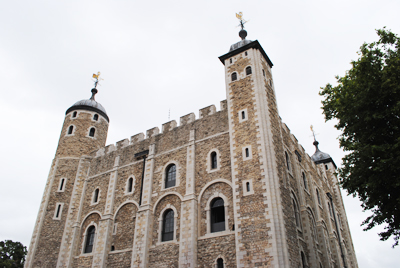
Then, as now, the White Tower – initially itself known as the Tower of London, it was later dubbed the White Tower thanks to the whitewash used to cover the Kentish limestone to protect it from the weather (and for its visual impact) – stood at the heart of the complex. Unlike today’s building, it lacked the large windows which date from the early 18th century, and while the towers were believed to be capped with cones, the present cupolas date from the reign of King Henry VIII.

White-Tower

While it had long been surrounded by a palisade and ditch, in 1189, King Richard I’s chancellor William Longchamp, the Bishop of Ely, had begun to extend the castle’s defences while the king was on crusade (in fact, the first siege of the Tower took place in 1191 when the then Prince John did so in opposition to Longchamp’s  regime – it only lasted three days before Longchamp surrendered).

This extension, which was completed by King John following his accession to the throne in 1199, saw the size of the bailey around the White Tower doubled and a new curtain wall and towers – including the Bell Tower – built around its outer perimeter with a ditch below (the ruins of the Wardrobe Tower, just to the east of the White Tower show where the original Roman-era wall ran).

But it wasn’t until the reign of King John’s son, King Henry III, that the royal palace which now stands on the river side of the White Tower was constructed. Until that point – and at the time of the signing of the Magna Carta – the royal apartments remained within the White Tower itself, located on the upper floor.

Like those of the garrison commander known as the constable (located on the entrance level), the king’s apartments would have consisted of a hall and a large chamber, which may have been divided into smaller chambers with wooden partitions as well as a chapel (on the upper level this was the still existing Chapel of St John the Evangelist, although it would have then been more more richly decorated). Unlike the lower levels, the king’s level was of double height with a gallery (this level now has its own full floor).

The royal apartments had a variety of uses – as well as a residence and refuge for the king, they were also at times a place to keep high profile prisoners such as the Bishop of Durham, Ranulf Flambard, who was imprisoned on the orders of King Henry I (and who escaped from an upper window on a rope which had been smuggled in to him and fled to Normandy).

It is also worth noting that while King John apparently kept exotic animals at the Tower, it is his son, King Henry III who is usually credited with founding the Royal Menagerie there.

And it was his son, King Edward I, who expanded the Tower to its current size of  about 18 acres by rebuilding the western section of the inner ward and adding the outer ward.

WHERE: Tower of London (nearest Tube station Tower Hill); WHEN: 9am to 5.30pm, Tuesday to Saturday, 10am to 5.30pm Sunday to Monday; COST: £24.50 adults; £11 children under 15; £18.70 concessions; £60.70 for a family (discounts for online purchases/memberships); WEBSITE: www.hrp.org.uk/toweroflondon/.  

10 London sites associated with Sir Winston Churchill – 10. Odd Churchill memorials…

We finish our series on Winston Churchill, we take a look at a couple of the more odd memorials to him in London.

St-Mary-Aldermanbury

First up, it’s the remains of the church of St Mary Aldermanbury in the City. Among the scores of churches destroyed in the Great Fire of London, it was rebuilt to the designs of Sir Christopher Wren but was again gutted by fire during the Blitz of 1940, leaving only the walls standing. In 1966, the town of Fulton, Missouri, in the US had the remains of the building transported to their town where they were reconstructed in the grounds of Westminster College. It was there that he had made his famous “Iron Curtain” speech in 1946 and the citizens had the church restored as a  memorial to him (beneath the reconstructed church now lies National Churchill Museum). The scant remains of the church in London (pictured above), meanwhile, is now a green oasis in the midst of the city. There’s a memorial plaque at the site which were added by the US college. (The grounds, incidentally are also home to a monument to John Heminge and Henry Condell, two actors and friends of Shakespeare – you can read more on that in an earlier post here).

Bracken-House-clockThe second odd Churchill memorial we’re looking at is a clock face located on the facade of Bracken House – a building which sits opposite St Paul’s in the City. The astronomical clock, the work of Philip Bentham, features shows the time, date and astronomical symbol as well as a sunburst at its centre – look closely and you’ll see a familiar face at the centre. The building, which dates from the 1950s, is apparently named after Brendan Bracken, onetime chairman of the Financial Times which was published in the building until the 1980s. The Churchill connection comes in thanks to the fact that Bracken was a close personal friend of Churchill and served as his Minister of Information from 1941 to 1945.

And that brings to an end our series on Churchill. Next week we kick off a new Wednesday series.

10 London sites associated with Sir Winston Churchill – 9. Memorialising Churchill…

There are numerous memorials to Sir Winston Churchill around London and today we’ll look at a handful of them (while next week we’ll take a look at a couple of the most unusual memorials). We’ve already looked at the most famous statue of him in Parliament Square (in an earlier post here), but here’s some more…

Allies1 AlliesMayfair. These almost life-size bronze statues, located at the juncture of Old and New Bond Streets, depict Churchill and US President Franklin D Roosevelt in an informal pose, sitting and talking together on a bench. The sculpture was a gift from the Bond Street Association to the City of Westminster and was unveiled by Princess Margaret on 2nd May, 1995 commemorating 50 years since the end of World War II. It is the work of US sculptor Lawrence Holofcener. There’s a space between the two World War II leaders where the passerby can sit and have their picture taken between them.

• Member’s Lobby, House of Commons. We’ve already mentioned this bronze statue (see our previous post here), erected in 1969, which stands just outside Churchill Arch opposite one of another former PM, David Lloyd George.  It is the work of Croatian-born sculptor Oscar Nemon who also created numerous other busts of the former PM now located both in the UK (one of which is mentioned below) and around the world.

Great Hall, Guildhall. Commissioned by the Corporation of the City of London and unveiled in 1955, this bronze statue shows Churchill, wearing a suit and bow tie, seated in an armchair and looking ahead. Another work of Nemon’s, it was commissioned as a tribute to “the greatest statesman of his age and the nation’s leader in the Great War of 1939-1945”.

Outside former Conservative Club, Wanstead. A very thick-necked bust of Churchill, erected in 1968, sits outside the 18th century mansion in Wanstead High Street, north-east London, which was once the Conservative Club and is now occupied by a restaurant. The bigger than life-sized bust is the work of Italian artist Luigi Fironi and stands on a plinth once part of old Waterloo Bridge. Churchill was the Conservative member for this area between 1924-1964 and based at the club from 1930 to 1940.

 • Woodford Green. Another tribute from his former constituents, this full length bronze statue in north-east London is the work of Scottish artist David McFall and was unveiled in 1959 in the presence of Churchill himself and Field Marshal Viscount Montgomery. Churchill was the MP for Woodford between 1945 and 1964.

10 London sites associated with Sir Winston Churchill – 8. Sidney Street, Stepney…

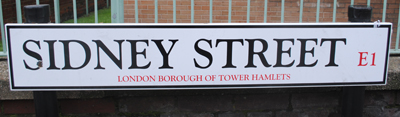
Sidney-Street

Sir Winston Churchill will be forever associated with this now rather nondescript East London street, thanks to a series of events that occurred when he was Home Secretary.

Known as the Siege of Sidney Street or the Battle of Stepney, the event was sparked when, on 16th December, 1910, a gang of Russian and Latvian exiles attempted to break into a jewellers in Houndsditch by tunnelling from an adjacent property in Exchange Buildings.

Tipped off by a neighbour, the police arrived and in the series of events that followed, a number of officers were shot and three – Sergeant Charles Tucker, PC Walter Choate and Sergeant Robert Bentley – were killed (Sergeant Tucker died at the scene and the latter two later that day in hospital). The event became known as the Houndsditch Murders.

The gang members largely escaped – although one gang member, George Gardstein, was later found dead of wounds he had received during the gunfight – and an intensive manhunt commenced for the gang.

Some two weeks later, on 2nd January, 1911, police were informed that several members of the gang, including the alleged mastermind known as Peter the Painter (who may not have even existed or who may have been a Polish decorator Peter Piaktow), were hiding at a property at 100 Sidney Street.

Expecting fierce resistance, several hundred police officers moved in to surround the property the next day and, at dawn – after encountering heavy fire from the building, the siege began.

When the then 36-year-old Churchill received word of the siege (apparently while taking a bath), he made his way to the site, already attracting crowds of onlookers, to observe and apparently offer advice.

At the scene he authorised the use of the military – including a detachment of Scots Guards from the Tower of London and 13 pounder artillery pieces. These, drawn by the Royal Horse Artillery, had just arrived when a fire began to consume the building (it may have been sparked by a bullet hitting a gas pipe). The fire brigade attended but Churchill apparently refused them entry until the shooting stopped.

The gang members inside the building never attempted to escape the building and the remains of two of them – Latvians Fritz Svaars and William Sokolow – were subsequently found in its ruins.

Along with the thee policemen killed at the attempted burglary, a firefighter – Charles Pearson – was also killed, struck by falling debris. There is a memorial plaque to him at the former site of 100 Sidney Street.

Seven supposed members of the gang were eventually captured by police but all either had the charges dropped, were acquitted or had their convictions quashed.

Churchill’s role at the six hour siege was the matter of some controversy and former PM (and then Opposition Leader) Arthur Balfour was among those who accused him of acting improperly and risking lives.

There’s a famous photo of Churchill – who was recorded by one of his biographers saying the event had been “such fun” – peering around a corner at the scene (there’s a story that a bullet tore through his top hat, almost killing him, during the siege) while the event was also one of the first news stories to be captured on film (by Pathe News).

10 London sites associated with Sir Winston Churchill – 7. St Margaret’s Church…

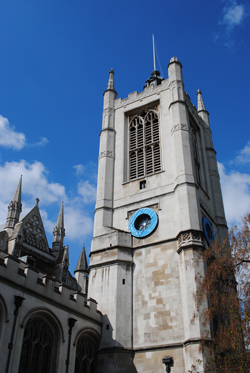
Nestled next to Westminster Abbey opposite the Houses of Parliament, St Margaret’s has long been known as the “parish church of the House of Commons” (although we should point out it’s not officially a parish church). As a result, it probably doesn’t come as a surprise that it has a couple of significant links to former PM Winston Churchill.

St-Margarets-ChurchAmong the most momentous personal occasions was when Churchill married Clementine Hozier in the church on 12th September, 1908, after a short courtship. A headline in the Daily Mirror called it ‘The Wedding of the Year’.

After the fighting of World War II ended in 1945, on VE Day Churchill, in a move reflecting that taken by then PM David Lloyd George after World War I, led the members of the House of Commons in procession from the Houses of Parliament into the church for a thanksgiving service.

In 1947, the church was the scene of another Churchill wedding, this time that of Sir Winston’s daughter, Mary who was wedded to Captain Christopher Soames of the Coldstream Guards on 11th February. 

WHERE: St Margaret’s Church, Westminster (nearest Tube stations are St James’s Park and Westminster); WHEN: 9.30am to 3.30pm weekdays/9.30am to 1.30pm Saturday/2pm to 4.30pm Sunday; COST: Free; WEBSITE: www.westminster-abbey.org/st-margarets-church.


10 London sites associated with Sir Winston Churchill – 6. Claridge’s…

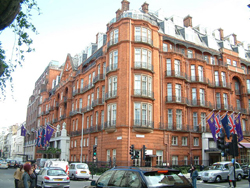
Churchill’s association with this landmark Mayfair hotel was a long one – not only did he convene key meetings here during World War II, the hotel also served as his residence.

ClaridgesEntertaining the upper crust since the mid 1800s, Claridge’s was the scene of many meetings during World War II, including all night meetings convened by Churchill with US military intelligence personnel which would only end when Churchill’s barber appeared at 6am.

The Brook Street hotel became something of a haven for deposed heads of state both in the lead-up to and during World War II – King Peter II and his family had moved in after he was exiled in 1941 and it was at the orders of Sir Winston that in 1945 Suite 212 was declared Yugoslavian territory so Crown Prince Alexander II could be born on “home soil” (there’s a story that a clod of earth from Yugoslavia was  placed under the bed during the birth).

Alongside the king of Yugoslavia, other heads of state to have stayed here during this period include the kings of Greece and Norway.

The scene of many a Churchill dinner, Churchill and Lady Clementine made Claridge’s – specifically the sixth floor penthouse suite – their home for a period after his election defeat in 1945 (Churchill apparently wasn’t that keen on the idea of living so high up!).

For more on the history of Claridge’s, check out the hotel’s website here: www.claridges.co.uk.

PICTURE:  © Copyright Tim Westcott and licensed for reuse under this Creative Commons Licence

10 London sites associated with Sir Winston Churchill – 5. London residences…

Throughout his life – as a child, bachelor, husband and family man, Sir Winston lived in many properties in London (although, of course, a couple of the most famous properties associated with him – his birthplace, Blenheim Palace, and the much-loved family home, Chartwell in Kent – are located outside the city). But, those and 10 Downing Street aside, here are just some of the many places he lived in within London…

29 St James’s Place, St James: Having been born at Blenheim Palace in Oxfordshire and then having spent time in Dublin, at the age of five (1880) he came to live here with his family. He remained here until 1882 when he was sent off to school in Ascot (he later attended schools in Sussex and, most famously, Harrow School). The family, meanwhile, moved to a townshouse at 2 Connaught Place which backed on to Hyde Park.

33 Eccleston Square, Pimlico: The Churchills moved here in 1909 and it was here that their first two children Diana and Randolph were born in 1909 and in 1911. The family remained here until 1913. A blue plaque marks the property.

• Admiralty House, Whitehall: The Churchills first moved into Admiralty House – part of the Admiralty complex on Whitehall – in 1913 (from the aforementioned Eccleston Square) after Churchill was made First Lord of the Admiralty. They remained here until 1915 – years he would go onto to describe as the happiest in his life – before he resigned but returned in 1939 when he was once again appointed to the position.

• 2 Sussex Square, Bayswater: In 1920, the Churchills bought this property just north of Hyde Park which they kept until 1924 when they moved into 11 Downing Street (see below). The property is marked with a blue plaque.

• 11 Downing Street, Whitehall: The Churchills lived at 11 Downing Street when Sir Winston was Chancellor of the Exchequer, from 1925 to 1929. The property, located in Downing Street, is not accessible to the public.

11 Morpeth Mansions, Morpeth Terrace, Westminster:  The Churchill family lived at this Westminster address between 1930 and 1939 (prior to him becoming Prime Minister). The property is marked by a brown plaque.

28 Hyde Park Gate, Kensington: Churchill died in this Grade II-listed, mid 19th century property on the morning of 24th January, 1965. The couple moved in after the end of World War II and, while it’s not clear whether they fully vacated the residence when he was prime minister between 1951-55, it remained their property until his death 10 years later. The property next door, number 27, provided accommodation for his staff. The property is marked with a blue plaque.

10 London sites associated with Sir Winston Churchill – 4. 10 Downing Street…

10-Downing-Street

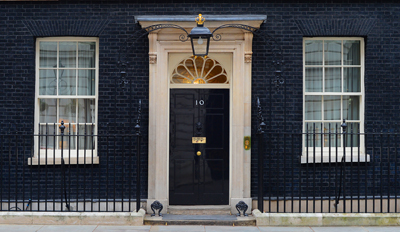
Sir Winston Churchill lived a number of residences in London but, of course, the most famous in its own right is the traditional home of British PMs, 10 Downing Street.

Located in a short street just off Whitehall (now closed to the public), the property has been home to Prime Ministers since Sir Robert Walpole, officially First Lord of the Treasury but effectively the first PM, took up residence in 1735.

Churchill moved in following his election to the office of Prime Minister in 1940 and he and his wife Clementine took up residence in a second floor flat. It was in this property where, cigar in hand, he is famously known to have dictated speeches and letters to his secretary while propped up in bed.

The building suffered some bomb damage during the Blitz – on 14th October, 1940, a bomb fell on nearby Treasury Green and damaged the home’s kitchen and state rooms. Three civil servants doing Home Guard duty were killed but the kitchen staff were saved thanks to Churchill who, dining in the Garden Rooms when the bombing raid began, ordered them to leave their duties and get into a bomb shelter.

The Garden Rooms – which included a bedroom, meeting area and the small dining room – were subsequently reinforced with steel and heavy metal shutters although these apparently would have made little difference had there been a direct hit.

Cabinet moved out of Number 10 into the underground bunker complex now referred to as the Churchill War Rooms (see last week’s post) in October, 1939, and, after several near misses, the Churchills – Sir Winston apparently very begrudgingly – moved into the Number 10 Annex above the war rooms in 1940 (although Churchill continued to visit Number 1o for working and dining).

Much of the furniture and valuables were removed from Number 10 and only the Garden Rooms, Cabinet Room and Private Secretaries’ office remained in use (along with a reinforced bomb shelter built underneath – King George VI is known to have sheltered here when he was dining with Churchill when a raid began).

At the end of the war the Churchills quickly moved back into Number 10 and it was from the Cabinet Room that he made his Victory in Europe (VE) Day broadcast on 8th May, 1945.

He vacated the premises after his election defeat later in 1945 but returned when re-elected PM in 1951 and left after he resigned in 1955 having held a dinner party attended by Queen Elizabeth II and Prince Philip the night before.

A couple of interesting facts about Churchill’s time at number 10: Churchill had many pets who usually had free rein in the house – even at 10 Downing Street his poodle Rufus was known to have wandered into a meeting in the Cabinet Room (before he was ejected) – while in 1958, Georgina Landemare, the cook during his time at number 10, famously published a book, Recipes from No. 10, which featured an introduction by Churchill’s wife, Clementine.

There are apparently two portraits of Churchill among those of other PMs which grace the wall of the Grand Staircase.

For more on the history of 10 Downing Street, see www.gov.uk/government/history/10-downing-street

PICTURE: Sergeant Tom Robinson RLC/Crown Copyright 


10 London sites associated with Sir Winston Churchill – 3. Churchill War Rooms…

Churchill2

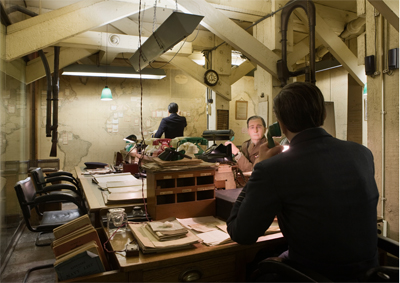
Now a museum, the Churchill War Rooms is actually the underground bunker system beneath Whitehall from where Churchill directed operations during the Blitz of World War II.

Churchill1The subterranean complex includes a series of historic rooms where Churchill and his cabinet met which remain in the same state they were in when the lights were switched off at the end of the war in 1945. There’s also a substantial cutting-edge museum dedicated to exploring Churchill’s life which boasts an interactive “lifeline” containing more than 1,100 images and a similar number of documents as well as animations and films.

With the coming conflict on the horizon, the complex was constructed from 1938 to 1939 as an emergency government centre in the basement of the now Grade II* listed government building then known as the New Public Offices (and now home to HM Treasury). It became operational on 27th August, 1939, shortly before the outbreak of the war.

Key rooms include the Map Room (pictured, top, it was manned around the clock by military officers producing intelligence reports) and the War Cabinet Room where more than 100 meetings of Cabinet were held (including just one gathering of Prime Minister Neville Chamberlain’s cabinet in October, 1939).

Other facilities included a private office/bedroom for Churchill (this came with BBC broadcasting equipment which Churchill used four times and, although it had a bed, Churchill apparently rarely used it), the Transatlantic Telephone Room (pictured above, it was disguised as a toilet) from where Churchill could speak directly to the US President. There are also staff dormitories, bedrooms for officers and government ministers, and rooms for typists and telephone switchboard operators.

In October, 1940, a massive layer of concrete – up to five feet thick and known simply as ‘The Slab’ – was added to protect the rooms. Other protective devices included a torpedo net slung across the courtyard overhead to catch falling bombs and an air filtration system to prevent poisonous gases entering.

Abandoned after the war, the premises hosted some limited tours but, despite growing demand to see inside, it wasn’t until the early 1980s when PM Margaret Thatcher pushed for the rooms to be opened to the public that the Imperial War Museum eventually took over the site. The museum opened on 4th April, 1984, in a ceremony attended by the PM as well as members of Churchill’s family and former staff.

Then known as the Cabinet War Rooms, they were extended in 2003 to include rooms used by Churchill, his wife and associates, and, in 2005, following the development of the Churchill Museum, it was rebranded the Churchill Museum and Cabinet War Rooms. In 2010, the name was shortened to the Churchill War Rooms. The entrance to the premises was redesigned in 2012.

Among the objects in the museum are one of Churchill’s famous “siren suits”, an Enigma machine and the flag from his funeral.

WHERE: Churchill War Rooms, Clive Steps, King Charles Street (nearest Tube stations are Westminster and St James’s Park); WHEN: 9.30am to 6pm daily; COST: £18 adults (with donation)/£9 children aged 5-15 (with donation)/£14.40 concessions (with donation) (family tickets available); WEBSITE: www.iwm.org.uk/visits/churchill-war-rooms/

PICTURES: Churchill War Rooms/Imperial War Rooms

10 London sites associated with Sir Winston Churchill – 2. Houses of Parliament…

Houses-of-Parliament

Of course, no look at London sites associated with Sir Winston Churchill would be complete without a mention of the Palace of Westminster, better known as the Houses of Parliament.

Churchill made his maiden speech in the House of Commons on 18th February, 1901, having won the seat of Oldham for the Conservative Party the year before (he switched to the Liberal Party in 1904 and eventually rejoined the Conservatives in 1924).

Over his long career in politics (he was an MP for 62 years), he served in a variety of roles including the President of the Board of Trade, Home Secretary, First Lord of the Admiralty, Minister of Munitions, Chancellor of the Exchequer, and twice, Prime Minster.

Some of the most famous speeches Churchill gave in the House of Commons were during World War II – they include the ‘blood, toil, tears and sweat’ speech given on 13th May, 1940 – the first after he had been made Neville Chamberlain’s replacement as PM, the ‘we shall fight them on the beaches’ speech given on 4th June, 1940, and the ‘this was their finest hour’ speech of 18th June, 1940, in which he gave the ‘Battle of Britain’ its name and, as the name suggests, first recorded the phrase “their finest hour” (the speech ended with it).

Churchill’s last speech to Parliament was given on 1st March, 1955, in which he spoke about the British development of a hydrogen bomb.

There’s several places within the Houses of Parliament which now bear Churchill’s name. Among them are the Churchill Room (named as such in 1991 when ownership of the room passed from the Lords to the Commons, it features two of his paintings and a bronze bust of the PM).

They also include the Churchill Arch – this leads from the Members’ Lobby into the Commons Chamber and is flanked by a 1969 statue of Churchill ( and one of fellow former PM, David Lloyd George (one foot on each of the statues has been burnished thanks to the practice of MPs to touch them as they enter the Commons Chamber).

It took on its current name after it was rebuilt following damage from bombs during World War II – at Churchill’s suggestion damaged stone was reused in its construction as a memorial to the “ordeal” Westminster had endured during the war. The statue of Churchill, incidentally, was the focus of recent commemorations on the 50th anniversary of his death.

Churchill’s stamp can also be seen on the Commons Chamber itself – it was he who recommended that when the chamber was rebuilt after World War II that it retain its rectangular shape rather than be redesigned in a semi-circle.

Churchill’s body lay in state in Westminster Hall prior to his funeral service in January, 1965 (for more on that, see our previous post here.

For more on Churchill’s Parliamentary career, check out the UK Parliament’s Living History page here: www.parliament.uk/about/living-heritage/transformingsociety/private-lives/yourcountry/collections/churchillexhibition/.

10 London sites associated with Sir Winston Churchill – 1. St Paul’s Cathedral…

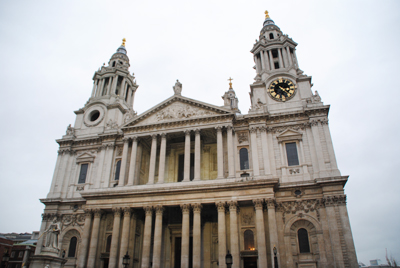
St-Paul'sThe world recently paused to mark the 50th anniversary of the death of former British PM, Sir Winston Churchill (see our earlier post here), so we’re launching a new series looking at 10 sites associated with Churchill in London.

Given the recent anniversary, we’re starting at a site close to the end of his story, at St Paul’s Cathedral, where his state funeral was held on 30th January, 1965.

Code-named ‘Operation Hope Not’, the funeral had been thoroughly planned in the years leading up to the former PM’s death and took place just six days after he passed. Having lain in state in Westminster Hall for three days (during which time it’s estimated 320,000 filed past his flag draped body), his coffin, carried on a gun carriage pulled by 120 members of the Royal Navy, was escorted by more than 2,300 personnel from the military as it made its way through city streets lined with thousands of people to St Paul’s for the service.

During the service, the catafalque containing Churchill’s body stood on a raised platform beneath the central dome surrounded by six candlesticks. Among the official pallbearers – who marched before it down the aisle – were another former PM, Clement Attlee, along with military figures like Field Marshal Lord Slim and Admiral of the Fleet Lord Mountbatten of Burma.

A plethora of world leaders representing 112 nations attended the funeral service including six sovereigns, six presidents and 16 prime ministers. Among them – in an unprecedented move for a state funeral – was Queen Elizabeth II (sovereigns do not normally attend non-family funerals) along with Prince Philip and Prince Charles.

It’s estimated that as some 350 million people around the globe tuned in to watch the funeral on TV.

After the service, Churchill’s body was taken to Tower Pier (near the Tower of London) where, to the sound of a 19-gun salute fired by the Royal Artillery, he was loaded on the MV Havengore. Sixteen RAF Lightning aircraft then did a flypast as he was transported upriver to Festival Pier with dockers dipping their cranes in salute as the boat passed (this journey was recreated last week using the original barge in commemoration of the 50th anniversary of his death).

On its arrival at Festival Pier, the body was then taken to Waterloo Station from where it went via train in a specially prepared carriage (the refurbished funeral train has been brought back together at the National Railway Museum at York) to be buried in St Martin’s churchyard in Bladon, Oxfordshire – a site not far from his birthplace at Blenheim Palace.

A bronze memorial plaque commemorating where Churchill’s catafalque stood in St Paul’s is set before the Quire steps while in 2004, the Winston Churchill Memorial Screen was unveiled in the crypt where it stands in line with the final resting places of both Admiral Lord Nelson and the Duke of Wellington.

For more on the state funeral, St Paul’s has a great page of detail which you can find here, including downloadable copies of the Order of Service and other documents. 

8 structures from the London that never was – 8. Primrose Hill’s Pyramid of Death…

We started this series with a pyramidal-shaped structure (see A pyramid in Trafalgar Square), so we thought it only fitting that we end with one as well. 

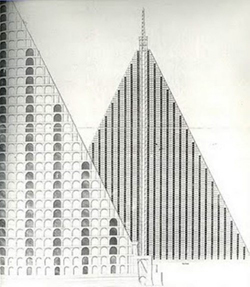
PyramidThis time, it’s not so much a monument, however, as a place to house some of London’s ever increasing population of dead.  The over-crowded graveyards of early Victorian London (and the horror stories that went with them of bodies bursting forth from their graves), led to proposals for a range of innovative solutions in the early nineteenth century.

Among them was a pyramidal-shaped necropolis for Primrose Hill. Architect Thomas Willson came up with the 94 storey-high structure – which would have stood higher than St Paul’s Cathedral – to provide storage for some five million corpses with steam-powered lifts to carry the bodies to their place of rest.

Made from brick with granite facings, the base of the vast structure would have covered 18 acres. Its design, which included quarters for staff, four entrances and a central ventilation shaft, drew upon the Victorian fascination for all things Egyptian.

“It was supposed to be compact, hygienic and ornamental,” author Catharine Arnold told the BBC. “Willson hoped people would come to admire this huge pyramid from far and wide, picnicking on Primrose Hill and enjoying this splendid monument. But it would be rather like a giant car-park of the dead.”

According to the prospectus Willson, who trained at the Royal Academy, issued for potential investors, the pyramid – which was to cost £2,500 to build – would have raised a staggering sum of more than £10 million in profit when it was full.

Still, it was not to be and the idea never left the drawing board. But Willson did go on to join the board of the General Cemetery Company.

For more on London and its dead, see Catharine Arnold’s Necropolis: London and Its Dead.

8 structures from the London that never was – 7. Selfridges’ Tower…

Selfridges’ flagship Oxford Street store has been an institution for more than a century.

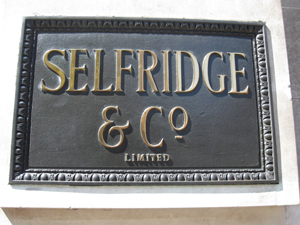
Selfridges_nameboardCredited as being the second biggest store in the UK, the now Grade II-listed neo-Classical premises was opened in 1909. It was designed by US architect Daniel Burnham and features five above ground stories, three basement levels and a roof terrace (a western extension, designed by Sir John Burnet, was added between 1924-29).

Less known is that there was at one stage a proposal to build a massive 450 foot high tower on top of the building. Selfridges’ founder, Harry Gordon Selfridge, backed the plan for the tower – drawn up in 1918 – and apparently spent years lobbying for permission to build it before, eventually successful in those efforts, he commissioned architect Philip Armstrong Tilden and Burnet to draw up plans (you can see some of the designs on the Royal Institute of British Architects’ website here and here and a picture of a plaster model here).

Selfridge apparently didn’t like any of the plans, however, and eventually dropped the idea, his attention instead coming to focus on building the “largest castle in the world” in Dorset (another plan which didn’t go ahead).

The tower was among a number of proposed London buildings that were never built which featured in a gingerbread display in Selfridges’ famous windows in 2013.

PICTURE: Anuradha Dullewe Wijeyeratne

8 structures from the London that never was – 6. Imperial Monumental Halls and Tower…

This massive Gothic revival structure would have dramatically changed the skyline of Westminster but, perhaps thankfully, never got further than the drawing board.

Westminster-Abbey-eastThe proposal was mooted in the early 1900s apparently amid concerns that, thanks to the number of monuments and memorials being placed within its walls, Westminster Abbey was becoming overcrowded. It was also apparently proposed as a memorial to Prince Albert.

The designs were the work of John Pollard Seddon – architect for the Church of England’s City of London Diocese – and another architect Edward Beckitt Lamb. They consisted of a 167 metre (548 foot) high tower and adjoining vast reception hall and numerous other galleries which sat at a right angle to the eastern end of the abbey minster (pictured).

Given the Clock Tower containing Big Ben is only 97.5 metres (320 feet high), the structure would have completely dominated its surrounds.

The project was exhibited at the Royal Academy in 1904 but, requiring an enormous and impractical budge (not to mention its dominating aesthetics), was never pursued any further.