LondonLife – Wellington Arch reopens…

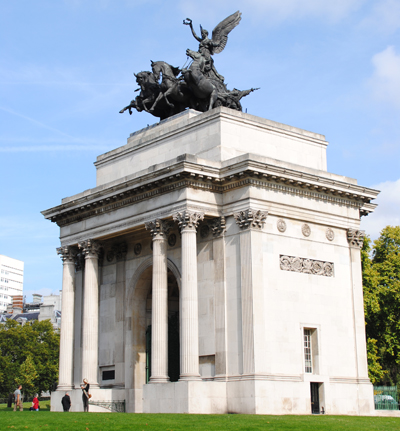
A newly refurbished Wellington Arch reopened last week with a new exhibition dedicated to Stonehenge. Stonehenge: Monumental Journey, which runs until 24th June in the arch’s Quadriga Gallery, show how visitors to the monument have interacted with it over time and look at how it new works will see it reconnected with the landscape around it. Other exhibitions in the Quadriga Gallery later this year include Blackpool: The Wonderland of the World, The Ladies of Kenwood, and Egypt in England. The refurbished arch also now contains a bookshop dedicated to English Heritage publications. For more on the history of Wellington Arch, see our previous entry here.

WHERE: Aspley Way, Hyde Park Corner (nearest Tube station is Hyde Park Corner); WHEN: 10am to 5pm, Wednesday to Sunday (until 28th March, 2013); COST: £4 an adult/£2.40 a child/£3.60 concession/£21.30 family (English Heritage members free); WEBSITE: www.english-heritage.org.uk/daysout/properties/wellington-arch/

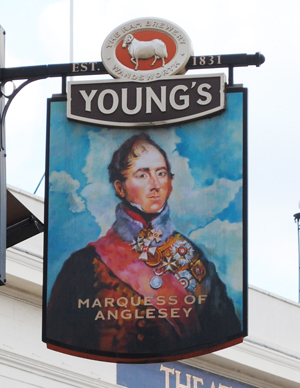
London Pub Signs – The Marquess of Anglesey

While it’s said there’s been a public house on this site since 1682, the name of the current premises on the corner of Bow and Russell Streets in Covent Garden came much later.

Originally two premises which have now merged together, the pub takes its name from Henry Paget, an 18th and 19th military man who was most famous for his role as cavalry commander at the Battle of Waterloo.

Paget, whose leg had to be amputated after the battle after he was struck by a cannon ball in the closing stages, was created Marquess of Anglesey just two weeks later in thanks for his service. He subsequently served in government roles after the battle, including as Lord High Steward of England and, (for the second time) as Lord Lieutenant of Ireland.

His private life was as colourful as his career – he had eight children by his first wife, Lady Caroline Villiers, before eloping with the Duke of Wellington’s sister in law, Lady Charlotte Cadogan, with whom he had a further 10 children.

For more on the pub, take a look at its website at www.themarquess.co.uk.

For a great book on London’s pubs, take a look at London’s Best Pubs: A Guide to London’s Most Interesting & Unusual Pubs.

Where is it? #28…

The latest in the series in which we ask you to identify where in London this picture was taken and what it’s of. If you think you can identify this picture, leave a comment below. We’ll reveal the answer early next week. Good luck!

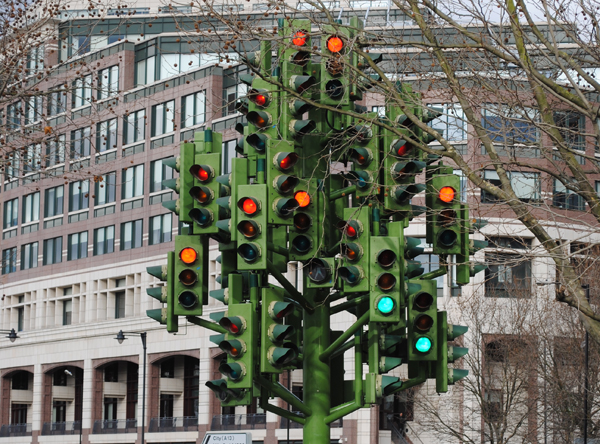
Well done to all those who guessed this was at or near Canary Wharf (although, as with our previous Where is it? on Little Ben, there is a slight trick to this one, because it’s no longer there). This is indeed Pierre Vivant’s sculpture, Traffic Light Tree, which was formerly located on the Heron Quay roundabout at the junction of Heron Quays, Marsh Wall and Westferry Road just outside the Canary Wharf development on the Isle of Dogs. The eight metre tall structure contains 75 lights and was installed in 1998 in place of a London plane tree which was apparently ill from pollution. In 2005, the roundabout was voted the best-looking in the UK in a poll by Saga Motor Insurance. That, however, didn’t save the structure from being removed late last year due to the remodelling of the roundabout. Tower Hamlets Council, who own the sculpture, called for suggestions for new locations following its removal and reportedly received about 200 replies. As far as Exploring London is aware, it currently remains in storage and no new site has yet been revealed (although the council has reportedly said it will remain somewhere on the Isle of Dogs). We’re checking with Tower Hamlets for further information…

Treasures of London – Diana Memorial Fountain

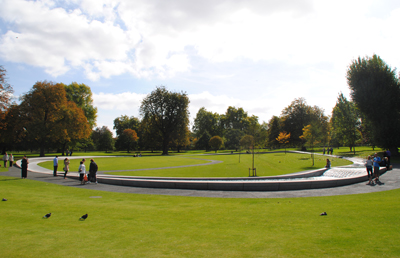
Located in Hyde Park (not far from the Lido), this memorial to Diana, Princess of Wales, is designed as a ring of water – rather like a stream bed – with two cascades tumbling down to meet in a pool at the bottom.

The fountain, which was opened by Queen Elizabeth II in July, 2004, also features three bridges which lead into the heart of the fountain – a symbol, apparently, of Diana’s openness to people.

Designed by US architect Kathryn Gustafson, the fountain – which cost £3.6 million – is made of 545 pieces of Cornish granite, each of which was shaped using laser cutting technology before being pieced together using traditional skills.

Gustafson’s design was selected after more than 10,000 plans were submitted to the Princess Diana Memorial Fountain Committee in 2002. The architect has been reported as saying she wanted the design to reflect Diana’s inclusive “personality”.

The fountain was briefly closed to the public shortly after opening in 2004 because of safety concerns but reopened with new guidelines soon after.

The fountain is located on the route for the the Diana, Princess of Wales, Memorial Walk, which takes on four of the royal parks – Kensington Gardens, Hyde Park, Green Park and St James’s Park.

Diana, whose divorce from Prince Charles had only been finalised the previous year, died in a car crash in Paris in August, 1997, along with Dodi Al Fayed.

WHERE: Hyde Park (nearest Tube stations are Knightsbridge and Hyde Park Corner); WHEN: 10am to 8pm until end of August (check website for times after that); COST: Free; WEBSITE: http://www.royalparks.org.uk/parks/hyde-park/diana-memorial-fountain

Around London – ‘Wild London’; National Trust photography contest; JK Rowling gets Freedom; and, Royal Devotion at Lambeth…

• Celebrate the Diamond Jubilee next Tuesday in Richmond Park as it hosts ‘Wild London’, the borough’s “first festival aimed at celebrating London’s woodlands, parks and gardens”. The event, which is being put on by Richmond Council and Royal Parks, will mark the Queen’s first visit to the borough in 23 years. It will showcase the conservational, recreational and inspirational role that parks and gardens play in London and will include hands-on exhibits, demonstrations, displays and performances. The event will be the first in a series celebrating the Diamond Jubilee held in Royal Parks. For more information, see www.richmond.gov.uk/home/leisure_and_culture/diamond_jubilee.htm

• The National Trust has launched a new photography competition aimed at celebrating green spaces and the life of the Trust founder Octavia Hill. The competition, called Your Space, is running in conjunction with National Trust Magazine and is open for entries until August. The competition was launched by internationally acclaimed photographers – Mary McCartney, Joe Cornish, Arnhel de Serra and Charlie Waite – with a new collection of pictures at National Trust places. One of the three Trust founder, Octavia Hill was a leading environmental campaigner in the Victorian Age and campaigned to save places in and around London like Parliament Hill. Entries in the competition, which aims to capture images of everyday green spaces, could include pictures from the local park or countryside. For details on how to enter, follow this link

• The author of the Harry Potter books, JK Rowling, received the Freedom of the City of London this week. The books have sold an estimated 450 million copies worldwide and have been made into films. The Freedom ceremony took place at Mansion House, the official residence of the Lord Mayor of London. Speaking before the ceremony on Tuesday, Rowling was quoted as saying that both her parents were Londoners. “They met on a train departing from King’s Cross Station in 1964, and while neither of them ever lived in London again, both their daughters headed straight for the capital the moment that they were independent.  To me, London is packed with personal memories, but it has never lost the aura of excitement and mystery that it had during trips to see family as a child. I am prouder than I can say to be given the Freedom of the City, which, on top of all the known benefits (and few people realize this), entitles me to a free pint in The Leaky Cauldron and a ten Galleon voucher to spend in Diagon Alley.” For more, see www.cityoflondon.gov.uk.

• On Now: Royal Devotion. This exhibition in the Great Hall of Lambeth Palace is being held to mark both the Diamond Jubilee of Queen Elizabeth II and the 350th anniversary of the revised Book of Common Prayer. The display charts the relationship between Crown and Church and its embodiment in the history of the Book of Common Prayer, one of the most important books in the English language. As well as the 1662 revision of the Book of Common Prayer, highlights include a 1549 printing of the Book of Common Prayer, medieval illuminated manuscripts, including the Book of Hours of King Richard III, Queen Elizabeth I’s personal prayer book and a copy of the book of private devotions compiled for Queen Elizabeth II in preparation for her coronation, the Book of Common Prayer used at the wedding of Queen Victoria, and King Charles I’s own handwritten revision of State Prayers. Admission fee applies. Runs until 14th July. For more, see www.lambethpalacelibrary.org/

Celebrating the Diamond Jubilee with 10 royal London locations – 4. Westminster Abbey…

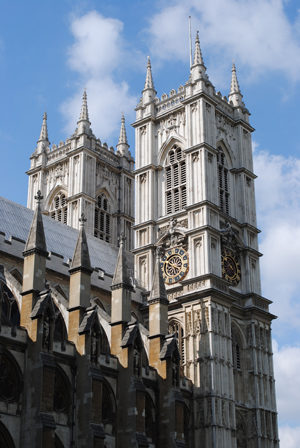
Westminster Abbey has played a key role in the life of Queen Elizabeth II – it was here on 20th November, 1947, that she was married to Prince Philip (then Lieutenant Philip Mountbatten) and it was here on 2nd June, 1953, that she was crowned Queen Elizabeth II.

First to the wedding. Princess Elizabeth was only the 10th royal to be married in the Abbey (her predecessors included her parents who married here on 26th April, 1923). The ceremony started at 11.30am and the princess, who wore a white dress designed by Norman Hartnell, entered to a specially composed fanfare accompanied by eight bridesmaids and two pages.

Due to post war austerity measures, only about 2,000 people attended the wedding (we’ve previously mentioned that the princess had to save coupons for her wedding dress like any other bride). On the day, the grave of the Unknown Warrior was the only stone that was not covered by the special carpet and the day after the wedding, the now married Princess Elizabeth followed a royal tradition started by her mother, Queen Elizabeth, which involved sending her wedding bouquet back to the Abbey to be laid on the grave.

It was about five-and-a-half years after her wedding that the princess returned to the Abbey to be crowned a queen.

Then Princess Elizabeth was in Kenya (on her way to Australia) when news reached her on 6th February that year of the death of her father, King George VI. After Prince Philip broke the news to her, the new queen chose Elizabeth as her “regnal name”, and the couple returned to England.

Queen Elizabeth II’s grandmother, Queen Mary, died on 24th March, but it was decided to proceed with the coronation anyway (Queen Mary had apparently asked that the coronation not be delayed by her death).

The coronation, the 38th to be conducted in the Abbey, was the first to be televised (with the exception of the anointing and communion) and was “instrumental” in helping to popularise it in the UK and elsewhere.

The building was closed for five months so preparations could be made for the more than 8,000 wedding guests. The Queen’s coronation dress, meanwhile, was made by Norman Hartnell (as had been her wedding dress) and was made of white satin embroidered with emblems of the United Kingdom and the Commonwealth.

Having arrived from Buckingham Palace in the Gold State Coach, the Queen entered the Abbey at 11.20am and, having been invested with the Regalia while seated in the Coronation Chair, was crowned with St Edward’s Crown at 12.34pm. She left the Abbey at 2.53pm and rode through the streets of London back to the palace.

Of course, the Queen has since attended many other events at the Abbey – including thanksgiving services for their golden and silver wedding anniversaries and last year’s Royal Wedding – since her coronation which we don’t have space to talk about here. But it is worth noting before signing off that the Abbey continues to have a special relationship to her – it is a “Royal Peculiar” meaning it is exempt from any ecclesiastical jurisdiction but that of the Sovereign.

WHERE: Westminster Abbey, Westminster (nearest Tube station is Westminster or St James’s Park); WHEN: Open to tourists everyday except Sunday  (times vary so check the website); COST: £16 an adult/£13 concessions/£6 schoolchildren (11-18 years), free for children aged under 11/£38 for a family (two adults, two children); WEBSITE: www.westminster-abbey.org

LondonLife – Florence Nightingale remembered…

The life of Florence Nightingale, ‘The Lady with the Lamp’, depicted here on the Crimean War Memorial at Waterloo Place, is to be commemorated at the annual service in Westminster Abbey tomorrow. The Florence Nightingale commemoration service is held “to celebrate nursing and midwifery and all staff, both qualified and unqualified working in these services”. During the service a lamp, carried this year by Claire Gibbs, will be taken from the Abbey’s Florence Nightingale Chapel (formerly known as the Nurses’ chapel but rededicated in May 2010 – the centenary of Nightingale’s death) and escorted by a procession of nurses – this year it’s students from Liverpool John Moores University – to Reverend Professor Vernon White who will place it upon the High Altar. The address will be given by the former Archbishop of Canterbury, Lord Carey. Nightingale (1820-1910) rose to fame for her pioneering nursing work during the Crimean War and established the first secular nursing school in the world at St Thomas’ Hospital in London. The upcoming International Nurses Day is celebrated each year on her birthday – 12th May. Tickets for this year’s commemoration service are already allocated – to apply for tickets to next year’s, keep an eye on www.florence-nightingale-foundation.org.uk for details.

Where’s London’s oldest…Thames foreshore structure?

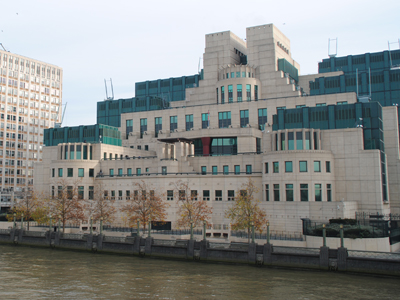
The oldest structure on the Thames foreshore is only a relatively recent discovery. It was in the spring of 2010 that archaeologists found six timber piles driven into the foreshore just in front of the spy agency MI6’s building in Vauxhall (pictured below with the river covering the site). 

The piles – no specific function for which has yet been identified – were up to 0.3 metres in diameter and were found to be more than 6,000 years old.

That date puts them in the Mesolithic period when the level of the river was lower – meaning the structure was probably built on dry land – and the landscape considerably different to what it is today. Radiocarbon dating suggests the trees for the structure were felled between 4790 BC and 4490 BC.

The site, which is at the confluence of the Thames and now largely underground River Effra, was initially kept secret while surveying was carried out. Nearby were found stone tools dating from a similar era to the piles – they included a tranchet adze for woodworking – and pottery fragments from the slightly later Neolithic era.

The discovery near the low tide line was made by archaeologists from the Thames Discovery Programme and the site then surveyed with the assistance of English Heritage and the Museum of London as well as the geomatics teams from Museum of London Archaeology.

The site is 600 metres downstream from a Bronze Age timber jetty (about 1,500 BC) found in the 1990s.

Where is it? #27…

The latest in the series in which we ask you to identify where in London this picture was taken and what it’s of. If you think you can identify this picture, leave a comment below. We’ll reveal the answer early next week. Good luck!

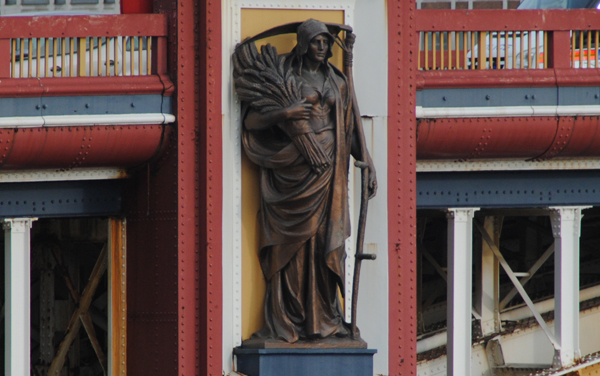
Well done to Janet Holmes – this is indeed a detail from Vauxhall Bridge. The picture shows Agriculture, one of many statues which adorn the bridge above the piers (this work is on the upstream side).

The statue is the work of Frederick W Pomeroy – Alfred Drury was also commissioned to create female bronze sculptures. It was installed in 1907, a year after the current bridge, a Grade II* listed steel and granite structure, was opened for traffic. Other sculptures by Pomeroy on the upstream side include ArchitectureEngineering and Pottery while the downstream side is adorned with works by Drury – ScienceFine ArtsLocal Government and Education.

The 1906 bridge replaced an earlier bridge built between 1809-16, which was originally named Regent Bridge and later renamed Vauxhall Bridge. It was the first iron bridge over the Thames as well as the first to carry trams and was built on the site of an earlier ferry crossing.

Lost London – Vauxhall Pleasure Gardens

First laid out in the mid 17th century, Vauxhall Pleasure Gardens, on the east bank of the Thames just south of Lambeth, rose in fame to become one of London’s leading public entertainment venues.

The gardens, initially known as New Spring Gardens, are believed to have opened around the time of the Restoration of 1660 on a site which had been formerly an estate owned by vintners John and Jane Vaux (Jane was apparently widowed).
Initially apparently no more than an ale-house with a garden attached, the gardens grew to span several acres and featured a central hub and long avenues for strolling. Admission was initially free with money made from food and drink sold there. Among the earliest recorded visitors to the gardens was John Evelyn in 1661, describing it as a “pretty contrived plantation” and diarist Samuel Pepys, who wrote of a visit he made on 29th May, 1662 (he is known to have returned numerous times).

From 1729, the gardens came under ownership and management of John Tyers, entrepreneur, property developer and patron of the arts, and it was he who, until his death in 1767, oversaw the transformation of the area into an arts hotspot which included sculpture (in particular a fine statue of the composer Handel), music, painting and architecture. Thanks partly due to the patronage of Frederick, Prince of Wales, the gardens become the fashionable place to be seen.

The variety of entertainment on offer at the gardens – the name of which was only officially changed to Vauxhall Gardens in 1785 – grew substantially over the years: from concerts and fireworks displays to performances by tight rope walkers and lion tamers and even re-enactments of famous battles. The gardens became renowned as site for balloon ascents and, for its architecture – the number of buildings there grew over the years to include a rococo ‘Turkish tent’, Chinese pavilion, and, another rococo building, the Rotunda (where concerts could be held in wet weather). There was also a cascade and private ‘supper boxes’ for those who could afford them; those who couldn’t could dine at tables set under the trees.

From the outset, Vauxhall was known as a place where the sexes could mix freely and, therefore, for romantic assignations – in fact, one area of the gardens became known as the ‘Dark Walk’ for the fact it was, unlike other areas of the gardens, never illuminated by lamps and it was in this area, frequented by prostitutes, that many of the more illicit liaisons took place.
By the late 1700s and early 1800s, the gardens, one of a number of pleasure gardens in London, had reached the height of their popularity with reportedly more than 60,000 people said to have  attending a fancy dress party held one night in the late 1700s.

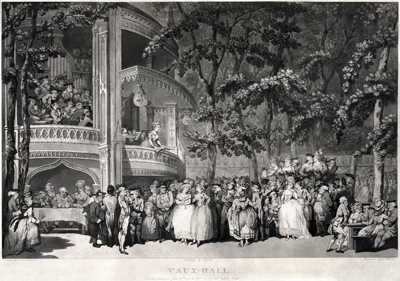
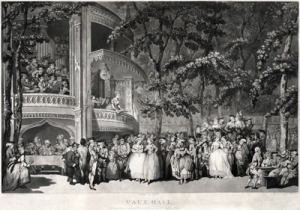
Those who attended events in the gardens included royalty as well as the likes of Samuel Johnson and James Boswell (see Thomas Rowlandson’s image above, Vauxhall Gardens, showing the likes of Johnson and Boswell, along with Georgina, Duchess of Devonshire, and the future King George IV, at the gardens in about 1779) as well as, much later, Charles Dickens (by the time Dickens visited, however, the heyday of the gardens was already well over).

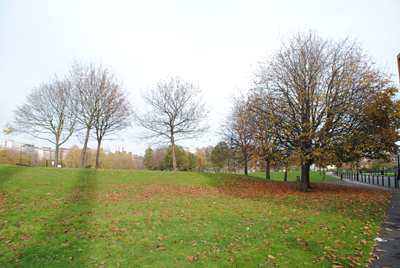
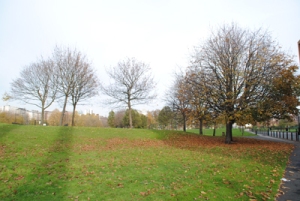
The gardens closed in 1859 due apparently to declining popularity and were eventually replaced with housing. After being badly bombed in World War II, however, the site once again returned to being a garden, known as Spring Gardens. The gardens (pictured) still occupy the site not far from Vauxhall tube station – part of them is used by the Vauxhall City Farm as paddocks for horses and livestock and they also contain a multi-use games court.

For an authoritative and comprehensive work on the Vauxhall Gardens, try David Coke and Dr Alan Borg’s Vauxhall Gardens: A History. There’s also much more information on David Coke’s website here. There’s also a detailed history here.

David Coke is curating an exhibition at The Foundling Museum, The Triumph of Pleasure, which looks at the way in which the gardens and the establishment of the Foundling Hospital in 1739 “changed the face of British art forever”. Runs from 11th May to 9th September. For more, see www.foundlingmuseum.org.uk.

PICTURES: Wikipedia and David Adams
Around London – Tate acquires photographic collection; new additions to Army museum; Picasso at the British Museum; and, Zoffany at the Royal Academy…

• A major collection of photographs of London, including works by Henri Cartier-Bresson, Robert Frank and Irving Penn, has been promised to the Tate Gallery. The collection, which will more than double the Tate’s photographic holdings, was assembled by Eric and Louise Franck over a 20 year period. It comprises around 1,400 photographs taken by 120 photographers between the 1880s and 2000s and is a record of the lives of people living in London. Highlights include Henri Cartier-Bresson’s work, Waiting in Trafalgar Square for the Coronation Parade of King George VI (1937), Bruce Davidson’s Girl with Kitten (1962), Elliot Erwitt’s Bus Stop, London (1962), Robert Frank’s London (Child Running from Hearse) (1951) and Irving Penn’s Charwomen, London (1950). More than two-thirds of the collection is being donated to the Tate Gallery, carrying an estimated value of more than £1 million, while the remaining works will be purchased. A selection from the collection will be exhibited in Another London, opening at the Tate Britain on 27th July. For more, see www.tate.org.uk.

• An Afghan schoolbook which uses bullets and Kalashnikovs as counting tools, Operational Service Medals and charm bracelets have been added to the National Army Museum’s Conflicts of Interest gallery. The gallery explores over 40 conflicts in which the British Army has been involved including that in Afghanistan. The illustrated childrens’ textbook dates from the time of the Soviet War in Afghanistan in the 1980s and was found by Captain Daniel Hinxman in 2007. Other artefacts added to the gallery include an Operational Service Medal for Afghanistan awarded to Sapper Dewi Allen for service in 2009-10, a memorial writsband produced by the family of Corporal David Barnsdale after he was killed in an IED attack in 2010 and a ‘lucky charm’ bracelet made by an Afghan for Lance Corporal Jose Cravalho De Matos. For more, see www.nam.ac.uk.

• On Now: Picasso Prints: The Vollard Suite. The British Museum is hosting this exhibition featuring Pablo Picasso’s most celebrated series of etchings, The Vollard Suite – the first time a complete set of the etchings has been shown in a British public institution. The suite consists of 100 etchings produced between 1930 and 1937, at a time when Picasso was involved in an affair with his nurse and muse Marie-Therese Walter. The predominant them of the suite is that of the sculptors studio – the artist was at this stage making sculpture at his new home outside Paris. The etchings, which have no titles and were not assigned an order, will be displayed alongside examples of the type of classical sculpture and objects which inspired the artist as well as Rembrandt etchings, Goya prints and Ingres drawings which also influenced Picasso’s works. The exhibition is being held in Room 90 and runs until 2nd September. Entry is free. For more, see www.britishmuseum.org.

• On Now: Johan Zoffany RA: Society Observed. This exhibition at the Royal Academy of Arts re-evalutes the life and career of the Frankfurt-born artist Zoffany, who moved to London in 1760 where he created portraits and subject pictures which attracted the patronage of the likes of actor David Garrick and courtiers of King George III. The exhibition, arranged into eight sections, features more than 60 oil paintings and a selection of drawings and prints taken from British and international collections, both public and private, with many of the items never before exhibited. Runs until 10th June. Admission charge applies. For more, see www.royalacademy.org.uk.

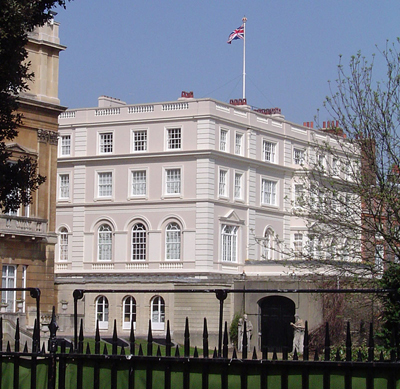
Celebrating the Diamond Jubilee with 10 royal London locations – 3. Married life at Clarence House…

Princess Elizabeth and Prince Philip were married at Westminster Abbey, a highly significant property in the Queen’s story which we’ll be looking at in more depth shortly, on 20th November, 1947 (and, as did other brides in post-war Britain, the princess had to collect coupons for her wedding dress).

Following their honeymoon at Broadland – the home of Lord Mountbatten in Hampshire and at Birkhall, Balmoral, in Scotland, in 1949, they and their baby son, Charles, moved into Clarence House, their home for the next three years.

The house, which still featured Victorian decor, was refurbished although post-war austerity ensured the decor and furnishings – many of which were wedding presents – remained simple. The house still contains a Georgian dining table and 20 ladder-back chairs which were the gift of the Royal Warrant Holders Association and a mahogany sideboard and four side tables which were a present from Queen Mary, the Queen’s grandmother.

Princess Anne, second child of the Queen and Prince Philip, was born in the house in 1950.

Clarence House was originally built between 1825 and 1827 to the designs of John Nash (he also designed Buckingham Palace) and was designed as the home of George III’s third son, Prince William Henry, Duke of Clarence and his wife Adelaide, and incorporated some of the Tudor buildings of St James’ Palace.

Indeed, Prince William Henry liked the house so much that on succeeding to the throne as King William IV in 1830, he decided not to move to Buckingham Palace and instead remained at Clarence House.

Later occupants have included Queen Victoria’s mother, the Duchess of Kent, and two of her sons, Prince Alfred, Duke of Edinburgh, and Prince Arthur, Duke of Connaught as well as Queen Elizabeth, the Queen Mother, who moved in after the property was vacated by Queen Elizabeth II and remained living at the house until her death in 2002.

Today Clarence House is the official London residence of Prince Charles, Prince of Wales, and his wife Camilla, the Duchess of Cornwall, as well as Prince Harry.

Clarence House is usually open for tours during summer but will not be opening this summer due to the Paralympic and Olympic Games blocking the entrance from The Mall. For details on the 2013 opening, see www.royalcollection.org.uk/visit/clarencehouse.

PICTURE: ChrisO, Wikipedia

LondonLife – The ‘Royal River’ celebrated at the National Maritime Museum

Canaletto’s image of Greenwich Hospital from the north bank of the Thames (1750-52) is among almost 400 paintings, manuscripts and objects selected to be part of the National Maritime Museum’s new exhibition, Royal River: Power, Pageantry & The Thames.

Curated by historian David Starkey, the exhibition, part of the Diamond Jubilee celebrations, focuses on the use of the river across five centuries covering events including Anne Boleyn’s coronation procession and Admiral Lord Nelson’s stately funeral through to the evolving Lord Mayor’s pageant and the ‘Great Stink’ of the mid-1800s.

Highlights include the oldest known copy of Handel’s Water Music, the sixteenth century Pearl Sword (which the monarch must touch on entering the City of London), a stuffed swan, treasures from the City’s livery companies, and another Canaletto work – this time his famous view of the river filled with boats getting ready for the Lord Mayor’s Day, seen as an inspiration for this year’s Diamond Jubilee Pageant and on show in the UK for the first time since its completion.

As well as celebrating the Diamond Jubilee, the exhibition also marks the 75th anniversary of the opening of the National Maritime Museum by King George VI on 27th April, 1937. The king’s speech from that day and his Admiral of the Fleet uniform also feature in the exhibition.

WHERE: National Maritime Museum Greenwich (nearest DLR station is Cutty Sark); WHEN: Daily 10am to 5pm (opening times may vary during the Paralympic and Olympic Games) until 9th September; COST: £11 adult/£9 concession/family ticket £24.50; WEBSITE: www.rmg.co.uk.

PICTURE: © National Maritime Museum, London

Where is it? #26…

The latest in the series in which we ask you to identify where in London this picture was taken and what it’s of. If you think you can identify this picture, leave a comment below. We’ll reveal the answer early next week. Good luck!

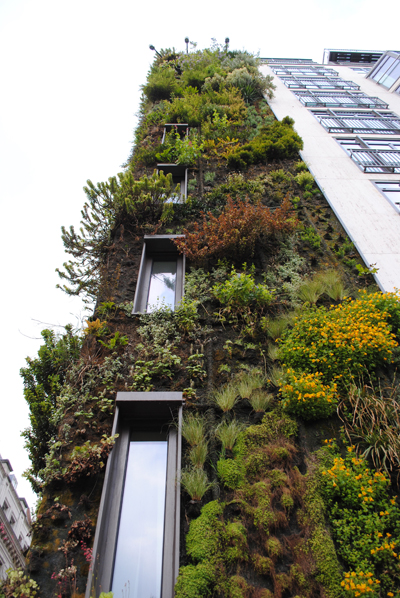
Well done to Jameson Tucker and Carol Stanley – it is indeed part of the facade of the Athenaeum Hotel on Piccadilly. This vertical garden – said to be the tallest in the UK when it was launched in May, 2009 – was created by French “architectural botanist” Patrick Blanc. It climbs 10 stories high and features more than 260 plant types covering some 260 square metres. The Athenaeum is located at 116 Piccadilly in Mayfair.


Treasures of London – Marble Arch…

Originally installed as a grand entrance to Buckingham Palace, John Nash’s arch was moved to its current location, what is now effectively a traffic island not far from Speaker’s Corner in nearby Hyde Park, in 1851.

The story goes that this took place after it was discovered that the arch was too narrow for the widest of the new-fangled coaches but there are some doubts over this, particularly as the gold state coach passed under it during Queen Elizabeth II’s coronation in 1952. Another story says that it was moved after extensions to Buckingham Palace left insufficient space for it.

Work on the arch had started at Buckingham Palace in the mid 1820s and it was completed by 1833. It was originally moved to replace Cumberland Gate as the new entrance to Hyde Park and to complement Decimus Burton’s arch at Hyde Park Corner. Successive roadworks in the 20th century, however, left it in its current position.

Clad in Carrara marble, the design of the arch was inspired by Rome’s Arch of Constantine and the Arc do Carrousel in Paris. The sculptural ornamentation, which includes works by Sir Richard Westmacott and Edward Hodges Baily, however, was apparently never completed and an equestrian statue of King George IV, originally destined for the top of the arch, instead now stands in Trafalgar Square. The bronze gates – which bear the lion of England, cypher of King George IV and image of St George and the Dragon – were designed by Samuel Parker.

Only senior members of the Royal family and the King’s Troop Royal Horse Artillery are permitted to pass under the central arch of the monumental structure.

The arch stands close to where the Tyburn Tree once stood (for more on this, see our earlier post). It contains three small rooms which, up until the 1950s housed what has been described as “one of the smallest police stations in the world”.

There was some talk in 2005 that the arch would be moved to Speaker’s Corner but this obviously hasn’t eventuated.

Around London – Cutty Sark reopens; Genghis Khan at Marble Arch; New theatre for the West End; and, Shakespeare’s cash…

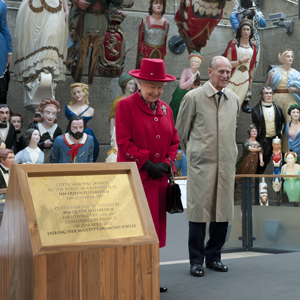
• The Cutty Sark, the world’s last surviving 19th century tea clipper, reopens to the public today following a £50 million, six year conservation project. The project to restore the Greenwich-docked ship has involved raising it more than three metres so visitors can walk underneath and see for themselves the sleek lines which helped the vessel set a then record-breaking speed of 17.5 knots or 20mph in sailing from Sydney to London. As well as raising the ship three metres, the project has involved encasing the ship’s hull in a glass casing to protect it from the weather – this area also contains the museum’s extensive collection of more than 80 ships’ figureheads, never been seen in its entirety on the site. The ship’s weather deck and rigging, meanwhile, have been restored to their original specification and new, interactive exhibitions on the vessel’s history have been installed below deck. Originally launched in 1869 in Dumbarton, Scotland, Cutty Sark visited most major ports around the world, carrying cargoes including tea, gunpowder, whiskey and buffalo horns and made its name as the fastest ship of the era when carrying wool between Australia and England. The ship became a training vessel in the 1920s and in 1954 took up her current position in the dry dock at Greenwich before opening to the public. In November 2006, the ship’s rig was dismantled in preparation for a restoration project – this received a setback on 21st May, 2007, when a fire broke out aboard the ship and almost destroyed it. The ship – which was officially reopened by Queen Elizabeth II and the Duke of Edinburgh (pictured) yesterday – is now under the operational management of the umbrella body, Royal Museums Greenwich. For more (including the online purchasing of tickets), see www.rmg.co.uk/cuttysark or www.cuttysark.org.uk. PICTURE: National Maritime Museum, London.

• A large statue of Genghis Khan has invaded Marble Arch. The 16 foot (five metre) tall sculpture of the Mongolian warlord, created by artist Dashi Namdakov, was erected by Westminster City Council as part of its ongoing City of Sculpture festival which is running in the lead-up to the Olympics. The statue has sparked some controversy – Labour councillors at Westminster have reportedly suggested Dambusters hero Guy Gibson would be a more suitable subject for a statue than the warlord Khan. The Russian artist, who has an exhibition opening at the Halcyon Gallery in Mayfair next month, told the Evening Standard he simply wanted to honor Khan on the 850th anniversary of his birth.

• Development of a new West End theatre, the first to be built in the area in 30 years, has been given the green light. The new 350 seat theatre will be part of a development project located between Charing Cross Road and Oxford Street which will also feature office and retail spaces. The site was occupied by a pickle factory in the 19th and 20th centuries and from 1927 was the home of the Astoria cinema, remodelled as a live venue in the 1980s. Live music was last presented there in 2009 when the site was compulsorily acquired for the Crossrail project.

• On Now: Crowns and Ducats: Shakespeare’s money and medals. This exhibition at the British Museum explores the role of money in Shakespeare’s world and looks at how coins – a frequently recurring motif in Shakespeare’s work – and medals were issued to mark major events. Objects in the display include Nich0las Hilliard’s ‘Dangers Averted’ medal of Elizabeth I and William Roper’s print of the Queen, the first to be signed and dated by a British artist, as well as a money box such as might have been used at the Globe and a hoard of coins, including a Venetian ducat, deposited in Essex around the time of Shakespeare’s birth. Almost every coin mentioned in Shakespeare’s plays will be on show – from ‘crack’d drachmas’ to ‘gilt twopences’. Runs until 28th October in room 69a. Entry is free. For more, see www.britishmuseum.org.

Celebrating the Diamond Jubilee with 10 royal London locations – 2. The Queen’s childhood homes

Having spent the first few months of her life at 17 Bruton Street, the future Queen Elizabeth II moved into her parents’ new property at 145 Piccadilly.

The property, located close to Hyde Park Corner, was previously the townhouse of the Marquesses of Northampton (interestingly, it was while living here that her father the Duke of York first started visiting the Harley Street-based Australian speech therapist Lionel Logue, as depicted in The King’s Speech). The 25 bedroom house was later destroyed by a bomb during the war, long after the Yorks had moved out.

As well as the house at 145 Piccadilly, the young Princess Elizabeth (and from 1930 her younger sister and only sibling Princess Margaret) also lived at White Lodge in the centre of Richmond Park in the city’s south-west. The Lodge, a Georgian property built as a hunting lodge for King George II, now houses part of the Royal Ballet School.

She also considerable time outside the city, staying in places including Scotland with her grandparents at either Balmoral Castle (owned by the Royal Family) or at Glamis Castle (owned by the parents of her mother, the Earl and Countess of Strathmore) as well as, from the age of six, at Royal Lodge in Windsor Great Park, the country home of the Yorks. The princess apparently had her own small house, known as Y Bwthyn Bach (the Little Cottage), in the grounds  – a gift from the people of Wales in 1932.

Following the death of King George V and subsequent abdication of King Edward VIII in 1936, new King George VI and his family moved from 145 Piccadilly to Buckingham Palace. Following the outbreak of World War II in 1939, the princesses lived in Balmoral, Scotland, and Sandringham but spent most of the war at Windsor Castle.

Princess Elizabeth, meanwhile, had met Prince Philip of Greece during the 1930s and in 1947, he asked for permission to marry her.

LondonLife – Flight

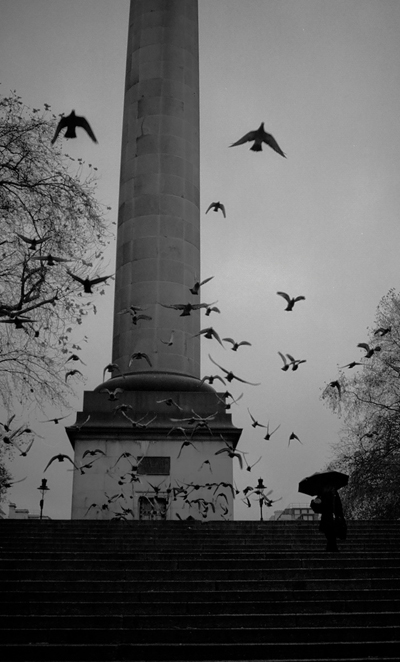
Says the photographer, Aaron Reiff-Zall: “It’s the Duke of York column, there are some steps down from Waterloo Place to The Mall. I live in London, so have done a lot of street photography here. As well as being very interested in its history and culture much like yourselves. I stood out in the rain for maybe an hour-and-a-half to craft that shot, I thought the column would make a nice back-drop, and there are always lots of birds milling about at the top. So I knew if I waited, the right person will come along and disturb them to produce the shot I wanted. After a few false alarms, and times when the birds didn’t go the way I wanted, I saw this lady with the umbrella happen by, framed the shot, hoping it would be right, and at the right moment when the birds took to flight, they luckily flew towards me as I wanted, I captured a burst of maybe five frames of film. Developed that and voila!” For more of Aaron Reiff-Zall’s work, see www.flickr.com/photos/aaronrz/.

Taken an interesting photograph of somewhere in London? We’re always looking for interesting images of the city so if you’ve got one you reckon captures a snippet of life in London, please contact us at exploringlondon@gmail.com or via our new Flickr group at www.flickr.com/groups/exploringlondon/

What’s in a name?…Earls Court

A residential district in inner west London, the origins of the name Earls Court apparently go back almost to the time of the Norman Conquest when the area was granted to the de Vere family as part of the Manor of Kensington. 

The de Veres, who held a court at the manor, were named the Earls of Oxford in 1141 and hence, according to Cyril M. Harris, author of What’s in a Name?: Origins of Station Names on the London Underground, came about the name Earl’s Court. The courthouse, which was demolished in the late 1800s, apparently stood on a site by Old Manor Lane now occupied by gardens.
Originally fertile farmland, Earl’s Court’s development took place in the mid to late 1800s after the arrival of the railway line (the station was built in 1869). The area officially became part of London in 1889 when the London County Council was formed and the city’s boundaries extended.

The area became famous for the Earls Court Exhibition Grounds – established by John Robinson Whitley in 1887 –  which featured rides and an arena which hosted Buffalo Bill’s Wild West Show. A giant wheel was added 10 years later.

After the Second World War, the area attracted large numbers of Polish immigrants leading to Earl’s Court Road being named ‘The Danzig Corridor’. The arrival of large numbers of Australian and New Zealander travellers in the late Sixties saw it earning a new nickname – this time ‘Kangaroo Valley’. The area is now undergoing gentrifcation.

Notable buildings include the art deco Earl’s Court Exhibition Centre, former home of the Royal Tournament and site of the volleyball competition during this year’s Olympic Games, while notable residents have included the Egyptian archaeologist Howard Carter, film director Alfred Hitchcock, and Queen frontman Freddie Mercury.

Where is it? #25

The latest in the series in which we ask you to identify where in London this picture was taken and what it’s of. If you think you can identify this picture, leave a comment below. We’ll reveal the answer early next week. Good luck!

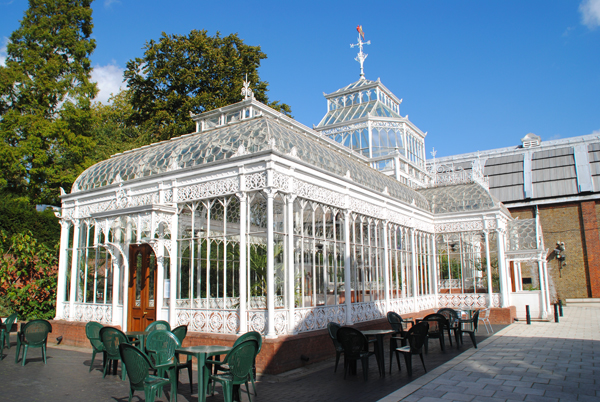
Well done to Charlotte, Sean and Jameson – this is, of course, a picture of the Horniman Conservatory located at the rear of the Horniman Museum located in Forest Hill in London’s south-east.

While the eclectic museum has its own fascinating story (see our earlier post here), so too does the conservatory. It was built in 1894 at the family home of the museum’s founder – wealthy merchant, philanthropist and MP Frederick John Horniman – located at Coombe Cliff in Croydon.

The Grade II listed cast iron and glass building was relocated to its current site by English Heritage in the late 1980s. It can now be hired out for private functions including weddings.

Interestingly, the gardens surrounding the Horniman are currently undergoing a £2.3 million revamp and will be fully reopened later this year. We’ll have more on that at a later date…