• The National Army Museum opens today following a massive three year, almost £24 million redevelopment. Designed by architects BDP and exhibition design agency Event (with £11.5 million in funding from The National Lottery), the main site of the museum at Chelsea features five new permanent galleries and a temporary exhibition space. Laid out over four floors, the new galleries feature more than 2,500 objects arranged under the themes of ‘Soldier’, ‘Army’, ‘Battle’, ‘Society’ and ‘Insight’. Among the objects on display are Crimean Tom, a cat found during the Crimean War and brought back as a pet (‘Soldier’), a portrait of Khudadad Khan VC, the first Indian soldier to win the Victoria Cross (‘Army’), the famous ‘Siborne Model’ of the Battle of Waterloo (‘Battle’), the flak jacket, helmet, identity discs and press pass of journalist Kate Adie (‘Society’), and a cup from the 1745 Jacobite Rebellion (‘Insight’). The new 500 square metre temporary exhibition space, meanwhile, is initially hosting the exhibition War Paint: Brushes with Conflict which features more than 130 paintings and objects explores the complex relationship between war and the men and women who map, record, celebrate and document it. Other features at the museum include a new cafe, shop and play area for children known as Play Base. Entry to the museum is free. For more, see www.nam.ac.uk.
• Butterflies return to the Natural History Museum this week with the immersive exhibition, Sensational Butterflies. The experience, now in its ninth year, takes visitors on a trail through a tropical habitat as they encounter each aspect of the life-cycle of the butterfly with highlights including watching them hatch from delicate chrysalises and seeing them feed and engage with each other. The Butterfly House team will be on hand to answer questions and give advice and tips. Admission charge applies. Runs from Friday until 17th September. For more, see www.nhm.ac.uk/sensational-butterflies.
• A new exhibition exploring the personal stories of those who fought in World War I as well as those back home opens at the Guildhall Art Gallery tomorrow. Echoes Across The Century, conceived and delivered by the Livery Schools Link in partnership with the gallery, takes visitors on a “multi-sensory journey” exploring craftsmanship, memory and separation. It features Jan Churchill’s installation, Degrees of Separation, and the work of 240 students who were guided and inspired by Jane as they explored the impact of the war and imagined what life was like for those 100 years ago. Admission is free. Runs until 16th July. For more follow this link.
Send all items for inclusion to exploringlondon@gmail.com
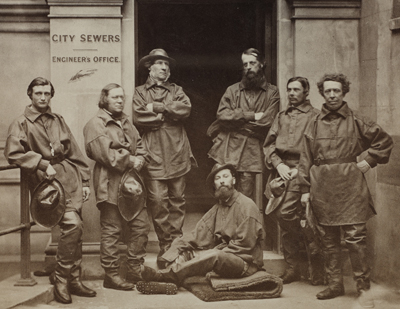
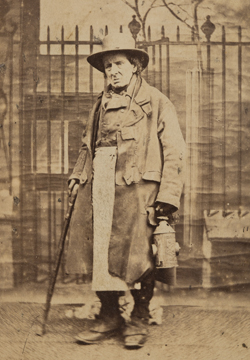


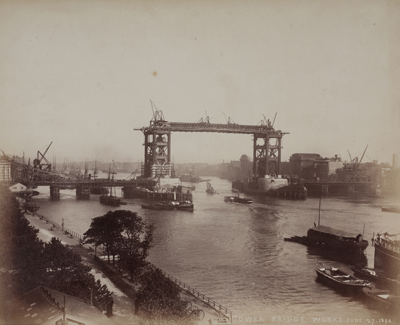
 Albury Street in Deptford, 1911. The image, taken by the London County Council, is just one of thousands which form part of a new free, online resource, Collage – The London Picture Archive. The world’s largest collection of images of London, the archive contains more than 250,000 images of London spanning the period from 1450 to the present day. It includes more than 8,000 historical photographs of life on the capital’s streets as well as major events – everything from the Great Fire of London in 1666 to the construction of Tower Bridge in the late 19th century. The photographs, maps, prints, paintings and films in the collection are all drawn from the collections of the City of London Corporation’s Guildhall Art Gallery and the London Metropolitan Archives in Clerkenwell. Other images shown here include (above right) ‘Street Life in London’, 1877 (taken by Adolphe Smith and John Thomson, this image was an early use of photography); (below) ‘Construction of the Metropolitan Railway (the first tube line)’, 1862 (taken at King’s Cross Station); and (far below), ‘The Construction of Tower Bridge’, 1891-1892 (taken from Tower Embankment). Collage – The London Picture Archive is free to access and available at

 Exploring London