This Week in London – Dunkirk Little Ships at Royal Docks a highlight of ‘Museums at Night’; the Magna Carta in stitches; and Peter Kennard’s works on show…

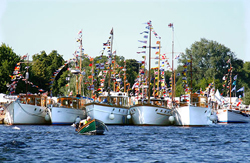
Dunkirk-Little-Ships-More than 20 Dunkirk Little Ships will gather at London’s Royal Docks this weekend ahead of their Return to Dunkirk journey marking the 75th anniversary of the Dunkirk evacuations. The event, which is part of the UK’s annual festival of late openings Museums at Night, will see the ships parade around Royal Victoria Dock on Saturday night with the Silver Queen offering twilight trips and the chance to step on board some of the other ships (the Little Ships will continue with their own festival on Sunday commencing with a church service by the quayside at 11am). Other events being offered in London as part of Museums at Night include ‘Dickens After Dark’ in which the Charles Dickens Museum will open its doors to visitors for night of Victorian entertainment on Friday night and a night of music featuring the Royal College of Music at Fulham Palace (also on Friday night). Among the other London properties taking part are the Handel House Museum, Benjamin Franklin House, the Wellcome Collection, Museum of the Order of St John, and the National Archives in Kew. For a full list of events, check out http://museumsatnight.org.uk

Meanwhile, Dulwich Picture Gallery in south London is holding its first weekend culture festival, MayFest: Men of Mystery, as part of Museums at Night. On Friday and Saturday nights, there will be tours of the gallery’s new exhibition featuring the work of artist Eric Ravilious followed by outdoor cinema screenings of Alfred Hitchcock’s Rear Window and The 39 Steps as well as free swing dance lessons, street foods and a pop-up vintage shop which will help people get the vintage look. Visitors are being encouraged to dress up in styles of the 1930s and 1940s with a prizes awarded to those with the “best vintage style”. The gallery will also be inviting visitors to take part in a mass installation drop-in workshop held in the gallery’s grounds over the weekend and Saturday morning will see special events for children. For more, see www.dulwichpicturegallery.org.uk/whats-on/.

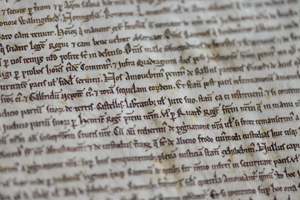
A major new work by acclaimed artist Cornelia Parker goes on display in the entrance hall of the British Library in King’s Cross tomorrow to mark the 800th anniversary of the Magna Carta. The almost 13 metre long Magna Carta (An Embroidery) replicates the entire Wikipedia entry on the Magna Carta as it was on the 799th anniversary of the document and was created by many people ranging from prisoners and lawyers to artists and barons. It accompanies the library’s exhibition Magna Carta: Law, Liberty, Legacy. Entry to see the artwork is free. For more, see www.bl.uk/cornelia-parker.

The works of Peter Kennard, described as “Britain’s most important political artist”, are on display in a new exhibition which opens at the Imperial War Museum in London today. Peter Kennard: Unofficial War Artist is the first major retrospective exhibition of his work and features more than 200 artworks and other items drawn from his 50 year career including an art installation, Boardroom, created especially for the display. Works on show include his iconic transposition of Constable’s painting Haywain which he showed carrying cruise missiles about to be deployed in Greenham Common, the Decoration paintings created in 2004 in response to the Iraq War of 2003, his seminal STOP paintings which reference events of the late 1960s such as the ‘Prague Spring’ and anti-Vietnam war protests and his 1997 installation Reading Room. The free exhibition runs at the Lambeth institution until 30th May next year. For more, see www.iwm.org.uk/london.

Send all items for inclusion to exploringlondon@gmail.com.

This Week in London – Biggest ever Magna Carta exhibition; 200 years since Waterloo at the NPG; and, Alexander McQueen at the V&A…

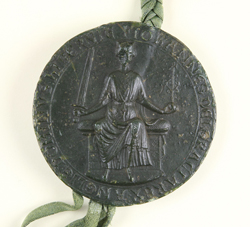
great-seal-king-john-eton-college-british-library-magna-carta-law-liberty-legacyThe largest ever exhibition related to the Magna Carta opens at the British Library in King’s Cross tomorrow to mark the 800th anniversary of the document’s sealing. Magna Carta: Law, Liberty, Legacy features two original Magna Carta manuscripts from 1215 as well as 1215 document, the Articles of the Barons (known as ‘draft’ of the Magna Carta), the Petition of Right (1628), the English Bill of Rights (1689), and the Universal Declaration of Human Rights (1948). It will also display two of the most celebrated documents in American history – the Delaware copy of the Bill of Rights and Thomas Jefferson’s handwritten copy of the Declaration of Independence (both on loan from the US National Archives) –  along with UK cabinet papers from 1941 in which it was proposed an original Magna Carta manuscript from 1215 be given to the US in return for their support in World War II and artefacts including King John’s teeth, thumb bone and fragments of clothing taken from his tomb in 1797 as well as his will. The exhibition tells the story of the Magna Carta from its creation in 1215 through to its later use by people fighting for various rights and freedoms and its continuing impact on the world today. There’s also a series of interviews with politicians, historians and public figures including Burmese activist Aung San Suu Kyi, former US President Bill Clinton and William Hague. Runs until 1st September. Admission charge applies. For more – and a digitised gallery of artifacts – visit www.bl.uk/magna-carta-exhibition. PICTURE: Great Seal of King John, 1203 © Eton College Archives on display in Magna Carta: Law, Liberty, Legacy.

The first gallery exhibition devoted to the Duke of Wellington opens at the National Portrait Gallery off Trafalgar Square today. Marking the 200th anniversary year of the Battle of Waterloo, Wellington: Triumphs, Politics, and Passions explores Wellington’s political and military career as well as his personal life. Highlights include Goya’s 1812 portrait of Wellington following his entry into Madrid (later modified to recognise further battle honours and awards), and Thomas Lawrence’s famous portrait painted in 1815, the same year as the Battle of Waterloo (the painting, which normally hangs in Apsley House, was used as the basis of the design of the £5 British note from 1971 to 1991). The exhibition of 59 portraits and other works also includes rarely seen works loaned by Wellington’s family include a John Hoppner portrait of the duke as a young soldier and a daguerreotype portrait taken by Antoine Claudet for Wellington’s 75th birthday in 1844. Runs until 7th June. Admission is free. For more, see www.npg.org.uk or for more on the 200th anniversary of the Battle of Waterloo, see www.waterloo200.org.

An exhibition celebrating the works of the late fashion designer Alexander McQueen opens at the V&A in South Kensington on Saturday. Alexander McQueen: Savage Beauty presents his works in 10 sections which focus on everything from McQueen’s roots in London, his “skilful subversion of traditional tailoring practices”, his fascination with the animal world and his longstanding interest in Eastern cultures. At the centre of the exhibition is The Cabinet of Curiosities, a display showcasing more than 100 garments and accessories and shown with film footage from his many catwalk presentations. The exhibition runs until 2nd August. Admission charge applies but you’ll have to be quick – the exhibition has already set the record for the most ever advance sales for an exhibition at the museum. For more, see www.vam.ac.uk/savagebeauty.

Send all items for inclusion to exploringlondon@gmail.com.


This Week in London – New gallery at Hampton Court; Northwest Passage explorers remembered; and, celebrating Churchill’s birthday…

A new gallery opens today in the restored Cumberland Suite at Hampton Court Palace. The Gothic Revival suite of rooms, designed by William Kent for William Augustus, Duke of Cumberland and the youngest son of King George II, were the last major royal commission ever undertaken at the palace. They will now house a selection of the Royal Collection’s finest paintings including masterpieces by Holbein, Van Dyck, Rembrandt, Caravaggio, Bassano and Gainsborough. The restoration followed two years of research aimed at returning the rooms to a state which as closely as possible represents Kent’s original decorative scheme. One of the rooms – the duke’s large light closet – is being opened to the public for the first time in 25 years and will house 12 of Canaletto’s smaller Grand Canal views of Venice. Admission charge applies. For more, see www.hrp.org.uk/HamptonCourtPalace/.

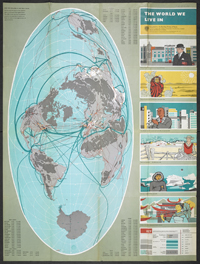
Map• The exploration of the Northwest Passage is the subject of a new exhibition which has opened at the British Library in King’s Cross. Lines in the Ice: Seeking the Northwest Passage looks back over 400 years with exhibits including King Charles II’s personal atlas, 19th century woodcut illustrations and wooden maps made by Inuit communities, and artefacts related to three of the most eminent explorer to seek out the Northwest Passage – Martin Frobisher, Sir John Franklin and Roald Amundsen, the first man to reach the South Pole. The exhibition has opened just weeks after the discovery of the HMS Erebus, one of Sir John Franklin’s lost ships. There’s a full programme of events to accompany the exhibition. Runs until 29th March. Admission is free. For more, see www.bl.uk. PICTURE: The world we live in, c. 1958, on display in Lines in the Ice. Courtesy of British Library.

Celebrate Winston Churchill’s birthday at a special after-hours event in the Churchill War Rooms in Whitehall next week. Advance booking is required to buy tickets for the event which will include a silent disco, drink tasting workshops and the chance to strike your best Churchill pose in a special photo booth. The event runs on the evening of 27th November. To book, head to www.iwm.org.uk/events/churchill-war-rooms/lates-at-churchill-war-rooms-churchill-s-birthday.

 Send all items for inclusion to exploringlondon@gmail.com.

This Week in London – Rare chance to see four Magna Cartas together; Covent Garden films; Raymond Chandler’s childhood home recalled; and Rembrandt at Kenwood…

Magna-Carta• The only four surviving copies of the original Magna Carta from 1215 will go on display together for the first time ever  at the British Library in King’s Cross next February – and you have a chance to be among the 1,215 people to see them. In an event to mark the 800th year of the creation of the document, the library – which holds two copies of the document – along with Lincoln Cathedral and Salisbury Cathedral – each of which holds one copy – are holding a ballot with winners able to attend an event in which they’ll have the unique opportunity to see the documents side-by-side as well as be treated to a special introduction on its history and legacy by historian and TV presenter Dan Jones. The ballot to see the documents is open until 31st October with winners drawn at random. It’s free to enter – head to www.bl.uk/magna-carta to do so. The four documents will subsequently feature separately in displays at each of the three institutions. One not to miss! PICTURE: Salisbury Cathedral’s Magna Carta/Ash Mills.

The Silent Swoon Free Film Festival kicks off in St Martin’s Courtyard, Covent Garden, next week. The courtyard will be transformed into an open air movie theatre showing a different movie each night – The Talented Mr Ripley on 14th October, Crazy, Stupid, Love on 15th October and Rebel without a Cause on 16th October. Most of the free tickets will be allocated through an online draw but a small number will be allocated each night on a first come, first serve basis. For those with tickets, a range of freebies will be available on the night (including popcorn!). For more information, head to www.stmartinscourtyard.co.uk/silent-swoon-cinema-festival.

Crime writer and film noir pioneer Raymond Chandler has been remembered with the placement of an English Heritage blue plaque outside his childhood home in Upper Norwood, south east London. Chandler, who received global acclaim for his Philip Marlowe novels and his work on movies like The Blue Dahlia, lived at the home from 1901 after emigrating from the US with his mother, aunt and grandmother at the age of 12. He remained at the double-fronted red brick villa until 1908 – the same year he published his first poem, The Unknown Love. In his early Twenties, Chandler worked as a freelance reporter for London newspapers but, disillusioned with writing, returned to the US in 1912. He spent the next decade working for an oil company before the loss of his job in 1932 pushed him to restart writing. He first novel was published in 1939, and he went on to write further books and movie screenplays to ongoing renown. For more on the blue plaques scheme, see www.english-heritage.org.uk/discover/blue-plaques/.

Two early works of Rembrandt have gone on display at Kenwood House this month. Anna and the Blind Tobit and Jeremiah Lamenting the Destruction of Jerusalem, both of which date from around 1630, will be seen in the Hampstead landmark until May next year. The two paintings replace Rembrandt’s Portrait of the artist which usually hangs in Kenwood and is on show at the National Gallery and Rijksmuseum in Amsterdam (from where the two paintings now at Kenwood have come). For more, see www.english-heritage.org.uk/kenwood. An exhibition of Rembrandt’s works opens at the National Gallery next week – more details then!

Send all items for inclusion to exploringlondon@gmail.com.

This Week in London – Gothic literature at the British Library; founder of War Graves Commission honoured; and, New Year’s Eve tickets on sale…

Gothic The UK’s largest exhibition of Gothic literature opens at the British Library in Kings Cross on Saturday (4th October), marking the 250th anniversary of the publication of the breakthrough book, Horace Walpole’s The Castle of Otranto. Terror and Wonder: The Gothic Imagination will feature manuscripts and rare and personal editions of Gothic classics like Bram Stoker’s Dracula, Mary Shelley’s Frankenstein, Robert Louis Stevenson’s Strange Case of Dr Jekyll and Mr Hyde and Charles Dickens’ Oliver Twist as well as the work of contemporary writers like Angela Carter and Mervyn Peake. There will also be Gothic-inspired artworks by the likes of Henry Fuseli and William Blake and modern art, photography, costumes and movies by the likes of Chapman Brothers and Stanley Kubrick. A range of literary, film and music events will accompany the exhibition which runs until 20th January. Admission charge applies. For more, see www.bl.uk/whatson/exhibitions/gothic/. PICTURE: Percival Delivering Belisane from the Enchantment of Urma, Henry Fuselli. © Tate.

The founder of the Imperial (now Commonwealth) War Graves Commission, Sir Fabian Ware (1869-1949), has been honoured with an English Heritage blue plaque at his former home in Marylebone. Sir Fabian lived at the early 19th century Grade II-listed terraced house at 14 Wyndham Place between 1911 and 1919. It was during this period that he served with the British Red Cross in France and first began recording the graves of soldiers killed in battle. In 1917, the Imperial War Graves Commission was formed with the task of reburying the war dead in permanent cemeteries in France. Knighted in 1920, Sir Fabian was to be director of graves registration and enquiries at the War Office during World War II and it was at this time that he extended the war graves scheme to civilians killed in the conflict. The commission changed its name to the Commonwealth War Graves Commission in 1960. Today it cares for cemeteries and memorials at 23,000 locations in 153 countries. For more, see www.english-heritage.org.uk/discover/blue-plaques/.

New Year’s Eve in London will be a ticketed event for the first time this year with 100,000 tickets being made available to the public with each costing a £10 administration fee – the entire sum of which will apparently be used to pay for the ticketing system. Making the announcement last month, the Mayor of London, Boris Johnson’s, office, said the growth in numbers of those who have gathered to watch the fireworks on the Thames – from around 100,000 in 2003 to an estimated 500,000 last year – has put an enormous strain on transport and safety infrastructure and meant people have had to turn up earlier and earlier to get a good view, facing hours waiting in cold and cramped conditions, or risk being among the “hundreds of thousands” unable to get a good view or even see the display at all. Booking tickets – people may secure up to four – will guarantee “good views of the celebrations and a better visitor experience”. To book tickets, head to www.london.gov.uk/nye.

Send all items for inclusion to exploringlondon@gmail.com.

This Week in London – Celebrating the Year of the Bus; the British Library looks at WWI; medieval jousting and The Duke of Wellington; and, Blue Plaque nominations resumed…

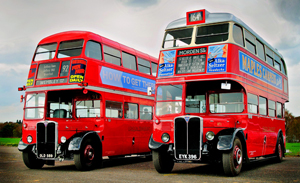
BusesAlmost 50 buses, from a horse-drawn model of the 1820s to the New Routemasters of today, will come to Regent Street on Sunday in celebration of the Year of the Bus. The ‘Regent Street Bus Cavalcade’ – which will stretch from Piccadilly Circus to Oxford Circus and will see the iconic West End street closed to traffic – will also feature a variety of free family events including Lego workshops (there will be a bus shelter and bus stop made entirely out of Lego outside Hamley’s toy shop), children’s theatre performances, a pop-up London Transport canteen and the chance to have a personal message recorded by the voice of London’s buses, Emma Hignett. There will also be an exhibition – Battle Bus – which provides information about the B-type bus (a newly restored version of which will be on display) which was used during World War I to carry soldiers to the frontline as well as ambulances and mobile pigeon lofts while jewellery company Tatty Devine will feature a special range of bus-inspired jewellery and hold jewellery-making workshops on board a London bus. The cavalcade, supported by the Regent Street Association and The Crown Estate, is part of Transport for London’s celebrations marking the Year of the Bus, organised in partnership with the London Transport Museum and the capital’s bus operators. The free event runs from 11.30am to 6pm. For more information, see www.tfl.gov.uk/yearofthebus and www.ltmuseum.co.uk.

A new exhibition of materials showing how people coped at home and on the front during World War I opens at the British Library in King’s Cross today as part of efforts to mark the war’s centenary. Enduring War: Grief, Grit and Humour features personal objects such as letters, a handkerchief bearing the lyrics of It’s A Long, Long Way to Tipperary, Christmas cards, school essays about airship raids over London sit and recruitment posters, humorous magazines and even a knitting pattern for balaclavas. Highlights include a letter in which Sir Arthur Conan Doyle expresses his concern over his son serving at the front, manuscripts by war poets such as Rupert Brooke as well as Wilfred Owen’s manuscript for Anthem for Doomed Youth, Vaughan Williams’ A Pastoral Symphony and Laurence Binyon’s For the Fallen. A specially commissioned video and ‘soundscape’, Writing Home, features personal messages contained on postcards written to and from the front. A range of events accompanies the free exhibition. Runs until 12th October. For more on the exhibition, see www.bl.uk.

Armoured knights on horseback can be seen jousting at Eltham Palace in south London this weekend. The former childhood home of King Henry VIII will host a Grand Medieval Joust which will also include displays of foot combat, the antics of a court jester, medieval music performances and a series of children’s events including a knight’s school. Runs from 10am to 5pm on both Saturday and Sunday. Admission charge applies. For more, see www.english-heritage.org.uk/events. Meanwhile, the Battle of Waterloo is being remembered at the Duke of Wellington’s home of Apsley House near Hyde Park Corner. Visitors will come face-to-face with Wellington’s troops and their wives, having the chance to take a look inside a soldier’s knapsack, see the equipment he used and the drills he performed as well as see the Battle of Waterloo recreated in vegetables. The Waterloo Festival – this year marks 200 years since Napoleon’s abdication and exile to Elba – runs from 11am to 5pm on Saturday and Sunday. Admission charge applies. For more, see www.english-heritage.org.uk/apsley/.

Nominations have reopened for English Heritage’s Blue Plaques scheme in London. In 2012 nominations were temporarily suspended while new funding for the scheme was found and thanks to one individual’s donation and the creation of a new Blue Plaques Club to support the scheme on an ongoing basis, they have now reopened. There are 880 official Blue Plaques on London’s streets – remembering everyone from Florence Nightingale to Fred Perry and Charles Darwin. For more and details on nominations, see www.english-heritage.org.uk/discover/blue-plaques/.

Send all items of interest for inclusion to exploringlondon@gmail.com.

This Week in London – UK’s largest ever exhibition on comics; wedding dresses at the V&A; ‘La Dolce Vita’ at the Estorick; and, architecture and the Italian renaissance…

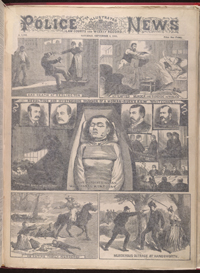
Jack-the-Ripper,-Illustrated-Police-News,-1888-(c)-British-Library-BoardThe UK’s largest ever exhibition on comics opens at the British Library tomorrow. Comics Unmasked: Art and Anarchy in the UK examines the history of the comic book in the UK – from 19th century illustrated reports of Jack the Ripper to 1970s titles like 2000AD and Action and more recent works – and examines how they have been used to explore confronting subjects like violence, sexuality and drugs. Among the highlights is a specially commissioned work by Tank Girl and Gorillaz co-creator Jamie Hewlett and works by the likes of Neil Gaiman (Sandman), Alan Moore (Watchmen, V for Vendetta), Grant Morrison (Batman: Arkham Asylum) and Posy Simmonds (Tamara Drewe). Admission charge applies (and due to the graphic nature of some exhibits, the Library has issued a parental guidance warning for under 16s). Runs until 19th August. For more, see www.bl.uk/whatson/exhibitions/comics-unmasked/index.html. PICTURE: Jack the Ripper’s victims, Illustrated Police News, 1888 © British Library Board.

The history of the white wedding dress goes under scrutiny at the V&A with its Wedding Dresses 1775-2014 exhibition opening on Saturday. The display includes more than 80 extravagant outfits from the museum’s collection – they include the Anna Valentine embroidered silk coat worn by The Duchess of Cornwall for the blessing of her marriage to The Prince of Wales in 2005, a purple Vivienne Westwood dress chosen by Dita von Teese for her wedding in 2005 and Dior outfits worn by Gwen Stefani and Gavin Rossdale on their wedding day in 2000. Some of the earliest examples in the chronological display including a silk satin court dress from 1775 and a ‘polonaise’ style brocade gown with straw bergere hat dating from 1780 lent by Chertsey Museum. The exhibition will also explore the growth of the wedding industry and the increasing media focus on wedding fashions. Admission charge applies. Runs until 15th March. For more, see www.vam.ac.uk.

The golden era of Italian film during the 1950s and 1960s and the birth of celebrity culture – did you know the term paparazzi was coined in the 1960 Federico Fellini film La Dolce Vita? – are the subject of a new exhibition which opened at The Estorick Collection this week. The Years of La Dolce Vita features 80 photographs from the period depicting Italian movie stars and the Hollywood “royalty” like John Wayne, Charlton Heston, Lauren Bacall and Liz Taylor who were working in Italy at the time. Juxtaposed against Marcello Geppetti’s images of this “real-life dolce vita” are behind-the-scenes shots from the set of La Dolce Vita taken by cameraman Arturo Zavattini. Runs until 29th June. Admission charge applies. For more, see www.estorickcollection.com.

The first British exhibition to explore the role of architecture in the Italian Renaissance opened at the National Gallery this week. Building the Picture: Architecture in Italian Renaissance Painting looks at the works of Italian masters such as Duccio, Botticelli and Crivelli with highlights including Sebastiano del Piombo’s The Judgment of Solomon – on display in London for the first time in 30 years – and Andrea del Verrochio’s The Ruskin Madonna. Five short films also form part of the display. Entry to the exhibition in the Sunley Room is free. Runs until September 21. For more information, see www.nationalgallery.org.uk.

Send all items of interest for inclusion to exploringlondon@gmail.com.

This Week in London – Sutton Hoo rediscovered; The Sixties at Tower Bridge; and, the British Library celebrates spring…

• Celebrating 75 years since its discovery this year, the Anglo-Saxon treasure of Sutton Hoo has a new home from this week with the reopening of the renovated gallery housing early medieval artefacts at the British Museum. Excavated at a site in Suffolk in 1939, the Sutton Hoo ship burial is described as the richest intact burial to survive from Europe. It featured a 27 metre long ship and objects including an iconic helmet and is thought to be linked to the death of an Anglo-Saxon king in the early 600s. The treasure now forms the centrepiece of the gallery – Room 41 – which was last renovated in 1985. Other objects in the gallery – which covers Europe during the period from 300 to 1100 – include the Kells Crozier, the Lycurgus Cup, and the Fuller Brooch as well as new objects never shown before such as late Roman mosaics, a copper alloy necklace from the Baltic Sea region and a gilded mount found in a lump of material taken from a Viking woman’s grave. Admission to the gallery – the refurbishment of which was made possible through a donation from Sir Paul and Lady Jill Ruddock – is free. For more, see www.britishmuseum.org.

Twiggy The Sixties are the focus of a new photographic exhibition at Tower Bridge which opens tomorrow. The Sixties features more than 60 iconic images of everyone from actors like Peter Sellers and Elizabeth Taylor to Prime Minister Harold Wilson, fashion icons like Twiggy (pictured), racing car driver Jackie Stewart and activists like the Aldermaston marchers. A rare photograph of comic pair Dudley Moore and Peter Cook – taken as a publicity still for the film The Wrong Box – is a highlight. The images can be seen on the bridge’s West Walkway – located 42 metres above the River Thames – and admission is included in the entry fee to Tower Bridge. Runs until 31st December. For more, see www.towerbridge.org.uk. PICTURE: © Getty Images 

The British Library’s annual celebration of fashion, film and design kicks off today. Now in its third year, the Spring Festival, which runs over the weekend, will give people the chance to see selected material from the newly acquired archive of screenwriter, novelist and playwright Hanif Kureishi (he will also be present, speaking with writer Rachel Holmes about his career). Other events celebrate fashion and film in the Jazz Age, the British newspaper archive and the resources the library has for film-makers. For full details, see www.bl.uk/whatson/exhibitions/spring-festival-2014/events/index.html.

Send all items of interest for inclusion to exploringlondon@gmail.com.


This Week in London – Data visualisation at the BL; Kenneth Williams honoured; and, celebrating ‘frost fairs’…

NASA's-Perpetual-Ocean-cropAn examination of the historical use of visual data has opened at the British Library. Beautiful Science, which is running in The Folio Society Gallery, features the work of scientists and statisticians down the ages and focuses on the key themes of public health, weather and evolution. Among items on display are Robert Fludd’s Great Chain of Being (1617), Florence Nightingale’s seminal ‘rose diagram’ (1858) which illustrated that more Crimean War deaths were being caused by poor hospital conditions that battlefield wounds, and a contemporary moving infographic from NASA showing ocean currents (pictured). A programme of events is running with the exhibition which closes on 26th May. Entry is free. For more, see www.bl.uk/beautiful-science. PICTURE: NASA’s Perpetual Ocean © NASA/Goddard Space Flight Center

Comic Kenneth Williams (1926-1988) has been honoured with an English Heritage Blue Plaque at the London apartment he lived in during the hey day of the ‘Carry On’ series of films during the 1960s. Williams lived in flat 62 on the top floor of Farley Court, located between Madame Tussauds and Baker Street station, between 1963 and 1970 during which he starred in such films as Carry on Cleo and Carry on up the Khyber and also appeared in radio comedy programmes such as Round the Horne and Just a Minute. For more, see www.english-heritage.org.uk/discover/blue-plaques/.

Two exhibitions celebrating London’s Frost Fairs are underway at the Museum of London and its Docklands sister. Frozen Thames: Frost Fair 1814 at the Museum of London in the City and Frozen Thames: Frost Fair 1684 at the Museum of London Docklands both feature objects, paintings, keepsakes, engravings and etchings from the museum’s collection. Highlights at the Museum of London exhibition include the only surviving piece of gingerbread from the 1814 fair, the last fair of its kind, as well as etchings by satirical artist George Cruikshank and a print by George Thompson while among the items on display at the Docklands museum are two paintings by a Dutch artist Abraham Hondius (c. 1625-91). Both exhibitions are free and both run until 30th March. For more, see www.museumoflondon.org.uk.

Around London – The Georgians at the British Library; wartime artist on show; Regent Street’s Christmas lights; Westminster’s new organ; and, celebrating success at the NPG…

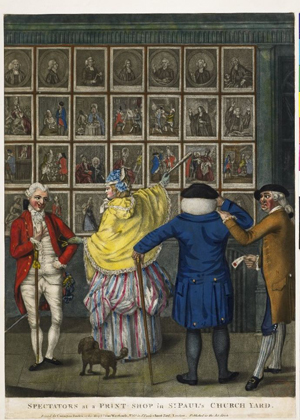
The-GeorgiansThe Georgians are under the spotlight in a new exhibition opening at the British Library tomorrow. Georgians Revealed: Life, Style and the Making of Modern Britain explores the ways in which the Georgian world influenced pop culture in Britain today, everything from fashion and theatre-going to our obsessions with celebrity scandals. The display features more than 200 artefacts from the library’s collection and includes Jeremy Bentham’s violin, Joseph van Aken’s An English Family at Tea, rare books and magazines, and illustrations and designs of landmark building’s such as Sir John Soane’s home (and now museum) in Lincoln’s Inn Fields. The exhibition, which is accompanied by a series of events (see the library website for details) comes ahead of the 300th anniversary of the accession of King George I next year. Runs until 11th March. Admission charge applies. Meanwhile, to mark the exhibition, the library has joined with Cityscapes in launching a new Georgian garden installation on the library’s piazza. Titled Georgeobelisk, the six metre high installation, will remain on the piazza for five months. A tribute to the four King Georges, it also serves as a reminder that it was also during the Georgian era that the British love of gardening was cultivated. For more, see  www.bl.uk/whatson/exhibitions/georgiansrevealed/index.html. PICTURE: Spectators at a Print shop in St Paul’s churchyard © British Museum.

Painting normally housed in “Britain’s answer to the Sistine Chapel” go on display in Somerset House today. The artworks, described as the “crowning achievement” of wartime artist Stanley Spencer, usually grace the walls of Sandham Memorial Chapel but are on display in London while the National Trust carries out restoration work at the Berkshire property. Spencer painted the works – which combine realism and visions from his imagination and were completed in 1932 – after serving as a hospital orderly during World War I.  The free display – Stanley Spencer: Heaven in a Hell of War – can be seen until 26th January. For more, see www.somersethouse.org.uk.

Regent Street’s Christmas lights – a preview of the upcoming DreamWorks film Mr Peabody and Sherman – will be turned on this Saturday night. Actor Ty Burrell, director Rob Minkoff and singer Leona Lewis will have the task of switching on the lights at about 7.15 pm while performers will include Passenger, Eliza Doolittle and former Spice Girls Emma Bunton and Melanie C. The event will be hosted by radio presenters Bunton and Jamie Theakston. The street will be traffic free all day and from 3pm to 7pm, Regent Street retailers will be showcasing fashions on a catwalk located just North of New Burlington Street. Programmes will be available from information points on the day.

A new organ was dedicated in Westminster Abbey’s Lady Chapel on Tuesday. The organ was commissioned by the Lord Mayor of London, Roger Gifford, as a gift to the Queen to mark the 60th anniversary of her coronation in 1953. The Queen agreed the organ, which had briefly resided at the Lord Mayor’s residence the Mansion House, should be installed permanently in the Lady Chapel, built by King Henry VII. The new organ was dedicated by the Earl of Wessex. For more, see www.westminster-abbey.org.

Now On: Achievement: New Photographs 2011-2013. Inspiring Britons at the peak of their professions are the subject of an exhibition running at the National Portrait Gallery. The display of recently acquired and previously un-exhibited photographs depict the likes of writer and presenter Charlie Brooker (by Chris Floyd), actress Gina McKee (Mark Harrison) and Skyfall director Sam Mendes (Anderson & Low). Admission is free. Runs until 5th January in Room 37a. For more, see www.npg.org.uk.

Around London – 1863 FA Minute Book at BL; marking International Slave Remembrance Day at the NMM; Kenwood House concerts; and Dylan at the NPG…

FA-Cup-Minute-BookThe 1863 FA Minute Book forms the centrepiece of a new display at the British Library marking the 150th anniversary of The Football Association. Handwritten by Ebenezer Cobb Morley, the minute book contained the 13 original rules of football and is valued at £2.5 million. It is being displayed along with other football related artefacts – such as a Guide for Referees from the 1930s – in the Sir John Ritblat Treasures Gallery alongside the Magna Carta, Shakespeare’s First Folio and Captain Scott’s diary and is the first time the library has had a football-themed display. The Football Association was formed on 26th October, 1863, at the Freemason’s Tavern in London with the meeting documented in the minute book which also records the establishment of The FA Cup and the first international football match. Football Rules, entry to which is free, runs at the British Library in King’s Cross until 17th December. For more, see www.bl.uk. For more on the FA’s 150th anniversary, check out www.thefa.com.

As mentioned last week, Hidden London kicks off today and runs over this August bank holiday weekend. The second year it’s been held, the initiative is your chance to see some of the country’s finest museum collections and archives.  To see what’s on, head to www.hiddentreasures.org.uk/?page_id=118.

The National Maritime Museum tomorrow marks International Slavery Remembrance Day tomorrow with a series of free family-oriented events. The programme, which takes place at the museum and around Greenwich, involves music, workshops, talks and walking tours and will culminate in a commemorative ceremony by the River Thames. The day falls on the date of the first successful slave uprising in the western hemisphere which took place in Haiti on 23rd August, 1791, and led to the island’s independence. For more, see www.rmg.co.uk/national-maritime-museum/.

English Heritage’s season of concerts at Kenwood House beside Hampstead Heath kicks off this weekend. Live by the Lake features artists including Suede and Keane, an outdoor live screening of Singin’ in the Rain featuring the Royal Philharmonic Concert Orchestra, Opera Alfresco and An Evening of Gershwin. Events run until 1st September. For more, see www.english-heritage.org.uk/daysout/properties/kenwood-house/.

Pastel portraits by Bob Dylan go on show at the National Portrait Gallery in the West End from Saturday. Bob Dylan: Face Value features 12 new works by singer/songwriter and the portraits represent characters, some of which are real and some fictitious. Dylan, who has 110 million record sales to his name, has been sketching and drawing since childhood but only starting exhibiting his portraits six years ago. The exhibition, in Room 40, is free and runs until 5th January. For more, check www.npg.org.uk.

10 (more) curious London memorials…6. 7 July Memorial…

77-Memorial

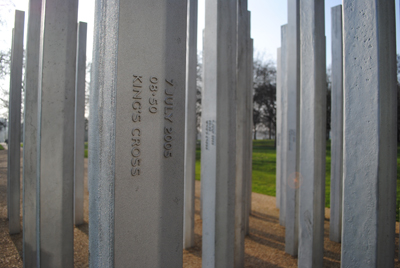
It’s not immediately obvious what this series of upright stainless steel pillars standing on the eastern edge of Hyde Park has been placed there for.

But look a little closer and you’ll see inscribed upon a date which any long-term Londoner immediately recognises – 7th July, 2005: the day when a series of bombs claimed 52 lives on three trains and a bus at various locations around central London.

The memorial, designed by architects Carmody Groarke and engineering team Arup working in consultation with victims’ representatives, Royal Parks and the Department for Culture, Media & Sport, consists of 52 pillars – one for each victim of the bombings.

The 3.5 metre high, 850 kilogram pillars are clustered together in four groups representing the four locations of the bomb attacks – Tavistock Square, Edgware Road, King’s Cross and Aldgate. They are marked with the times, dates and locations of the bombings and there’s also a 1.4 tonne stainless steel plaque upon which are written the names of the victims located nearby.

The RIBA award-winning memorial, which is located just to the north of the colossal statue Achilles and Hyde Park Corner, was unveiled by Prince Charles and Lady Camilla on the fourth anniversary of the attack in 2009.

For more, see the Royal Parks website www.royalparks.org.uk/parks/hyde-park/hyde-park-attractions/7-july-memorial.

LondonLife – LEGO celebrates the Tube’s 150th…

Lego-Tube-map

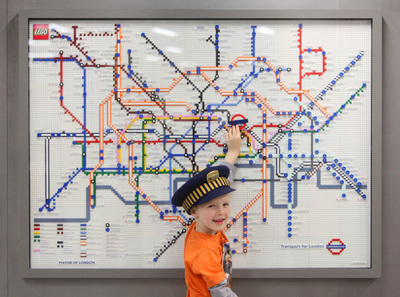
Six-year-old James Apps gets a close-up look at a map of the Tube as it will look in 2020, one of five LEGO Tube maps currently on display in London. The maps depict the evolution of the Tube network from 1927 through what it will look like in 2020, including Crossrail, and the proposed Northern Line extension and proposed Croxley Rail Link. The maps – each of which contains more than 1,000 bricks and took professional LEGO builder Duncan Titmarsh four days to build – can be found in the ticket halls of the following stations – South Kensington (1927), Piccadilly Circus (1933), Green Park (1968), Stratford (2013) and King’s Cross (2020). Visit the Transport for London website for more on the Underground’s 150th anniversary here (the website includes downloadable instructions for building your own Underground roundel out of LEGO bricks). PICTURE: Transport for London.

Around London – Celebrating the Coronation’s 60th anniversary; Benjamin Britten; Keat’s House Festival; and, silver service in Roman Britain…

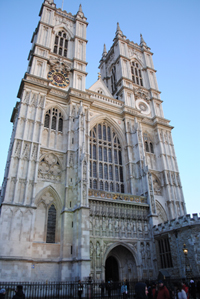
Westminster-Abbey3Sunday marks 60 years since Queen Elizabeth II’s coronation and Westminster Abbey – site of that event – is celebrating with a series of events. These include a special 60th Anniversary of the Coronation Service on Tuesday (4th June) to be attended by the Queen, Duke of Edinburgh and members of the royal family as well as a public lecture to be given by the Bishop of London Richard Chartres on Friday night (7th June – booking is essential), a concert performed by the abbey choir (13th June), and a new exhibition in the chapter house featuring archive images of the 1953 coronation ceremony and of preparations which took place at the abbey. Meanwhile the Coronation Chair, used in most coronations since the 14th century and having just undergone conservation work, is the subject of a new display in St George’s Chapel, and two new commemorative stained glass windows have been installed in King Henry VII’s Lady Chapel – the first commissioned by the abbey for more than a decade, they have been designed by artist Hughie O’Donoghue. For more on the abbey’s celebrations, see www.westminster-abbey.org.

Composer Benjamin Britten is the subject of a new exhibition opening at the British Library tomorrow. Poetry in Sound: The Music of Benjamin Britten (1913-1976) looks at the poetic and literary influences on the work of the man often described as the greatest English composer since Purcell. In particular it examines his collaboration with WH Auden and the interplay of his work with authors such as William Blake, Wilfred Owen, Alfred Lord Tennyson and William Shakespeare. As well as composition manuscripts, the exhibition features photographs, concert programmes and unpublished recordings of his music. There are a range of events accompanying the exhibition which runs until 15th September. An admission charge applies. For more, see www.bl.uk.

The Keats House 2013 Festival is underway this week with activities ranging from poetry readings to felt-making demonstrations, free family workshops and musical performances. The programme of events runs until 2nd June, all under this year’s theme of ‘Health is My Expected Heaven’: The Body and The Imagination. Poet John Keats lived at the house in Hampstead, not far from Hampstead Heath, from 1818 to 1820 and it is the setting for some of his most acclaimed poetry including Ode to a Nightingale. It was this house that he left to travel to Rome where he died of tuberculosis at the age of 25. For more on the festival programme, follow this link.

On Now: Silver Service – Fine dining in Roman Britain. This free exhibition at the British Museum recreates the experience of dining late in the Roman era and uses the Mildenhall Great Dish, Britain’s finest late Roman silver dining service, as an example of the type of large platter on which food for sharing would have been presented. The exhibition, which runs until 4th August, is free (keep an eye out for our upcoming Treasures of London on the Mildenhall Great Dish). For more information, see www.britishmuseum.org.

Around London – Museums at night; Propaganda at the BL; MoL Docklands celebrates 10 years; and, Steadman at the Cartoon Museum…

Expect people to be out and about around London at all hours this weekend with the kick-off tonight of Museums At Night, Culture24’s annual festival of after hours visits. This year’s packed program features everything from ‘Arts on Ice’ – a look at the Victorian ice trade – at the London Canal Museum to art nights at the Government Art Collection building, nocturnal tours of Greenwich’s Old Royal Naval College, and, for the first time, the chance for adults to sleep over at Hampton Court Palace and kids at Kensington Palace. Other London organisations taking part include the Handel House Museum, the Kew Bridge Steam Museum, Benjamin Franklin House, the National Gallery and Somerset House (and that’s just a few off the list!). For more information on the night – including a full program of events – check out the Culture24 Museums at Night website.

Propaganda-v9-cmyk Government spin comes under the spotlight in a major new exhibition which opens tomorrow at the British Library in King’s Cross. Propaganda: Power and Persuasion examines how state have used propaganda in the 20th and 21st centuries and features more than 200 exhibits including Nazi propaganda and everyday objects such as banknotes and badges. Admission charge applies. There’s a series of events running to coincide with the exhibition which runs until 17th September. For more, see www.bl.uk/whatson/exhibitions/propaganda/index.html.

It’s 10 years since the Museum of London Docklands opened in a converted Georgian warehouse on West India Quay and to celebrate they’re holding an exhibition celebrating the Thames estuary. Titled (appropriately enough), Estuary, the exhibition features the work of 12 artists in a variety of mediums – from film and photography to painting. Entry is free. The exhibition, which opens tomorrow, runs until 27 October. The museum is also holding a special day of family activities to celebrate its creation this Saturday. For more, see www.museumoflondon.org.uk/Docklands/.

On Now: STEADman@77. This exhibition at The Cartoon Museum in Bloomsbury looks at the work of graphic artist Ralph Steadman (who is celebrating his 77th birthday) and features more than 100 original works published in magazines ranging from Private Eye to Rolling Stone, Punch and the New Statesmen as well as his illustrated books (these include Sigmund Freud, Alice in Wonderland Through the Looking-Glass, I, Leonardo, The Bid I Am, and Animal Farm). Runs until 8th September. Admission charge applies. For more, see www.cartoonmuseum.org.

10 of London’s greatest Victorian projects – 8. London’s railways…

London’s railway network stands out as one of the greatest achievements of the Victorian age for it was during the 19th century that much of the railway infrastructure still in use today was first established.

St-PancrasThe first railway line in London opened in February 1836 (six years after the UK’s first line opened) and ran between Spa Road in Bermondsey and Deptford on the south bank of the River Thames. The line was extended to London Bridge in December that same year and again to Greenwich, from cross-Channel steamers left – in April the following year.

That same year – 1837 – the station at Euston opened as the final stop for trains from Birmingham (an earlier terminus as Chalk Farm was deemed too far out). It was followed by Paddington in 1838, Fenchurch Street – the first permanent terminus in the City – in 1841, Waterloo in 1848 and King’s Cross in 1850.

Having seen a boom period during the 1840s, development of new lines took a back seat in the 1850s but resumed apace the following decade with the opening of Victoria Station, connecting the city to Brighton and Dover. Stations followed at Charing Cross, Ludgate Hill and Cannon Street and alongside the grand terminus’ around the outskirts of London where trains arriving from distant destinations arrived, numerous smaller railways began to be built, such as the West End of London and Crystal Palace Railway and the Victoria Station and Pimlico Railway, which took passengers on only short journeys across the city (these smaller railway companies all disappeared by 1923 when the 1921 Railways Act resulted in the creation of what are known as the “Big Four” British railway companies).

And, of course, the London Underground, has its first journey in 1863 but we’ll look at that in more detail next week.

Interesting to note that there were three classes of rail travel and while first and second class passengers had seats, this wasn’t always the case in third class where, writes Michael Paterson in Inside Dickens’ London, passengers, such as those on the Greenwich line, were initially forced to stand in open topped carriages known by some as ‘standipedes’.

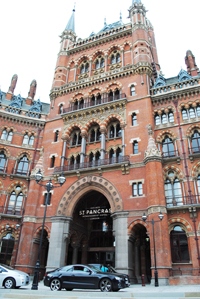
Naturally, with the building of the railways came some spectacular stations – among the most spectacular is the late Victorian building which stood at the front of St Pancras Railway Station and housed the Midland Grand Hotel (pictured above). An exemplar of the Gothic Victorian style, it was designed by Sir George Gilbert Scott and, following a massive recent refurbishment, is now home to the five star Renaissance London Hotel and apartments.

We can, of course, only touch on the history of the railways in such a brief article – but we will be looking in more detail at some more specific elements of the system in later posts.

Around London – Aliens at the Royal Observatory; celebrating spring at the British Library; Blue Plaques for Heal and Mendelssohn; and, Barocci at the National Gallery…

It’s alien season at the Royal Observatory in Greenwich and to kick off a series of special events around all things extra-terrestrial, a new exhibition looking the history with things not of this earth opens tomorrow. Alien Revolution, which looks at man’s obsession with intelligent alien life – a trend which began in the century following Copernicus’ discovery that the earth was a planet and the sun a star, will be held in the observatory’s Astronomy Centre until August. Runs until 8th September. Admission is free. Other events include shorts courses looking at science fiction and astronomy, family events and special planetarium shows such as We Are Aliens which runs in April. For more on the events, see www.rmg.co.uk.

The British Library’s Spring Festival kicks off tomorrow with five days of film, design and fashion including the unveiling of a new artwork by fashion illustrator and artist Julie Verhoeven. Verhoeven – who has worked for fashion houses Louis Vuitton, Versace and Mulberry – will be joined by Dylan Jones, editor-in-chief of GQ, to talk about what inspires them while others among fashion’s leading names will be contributing postcards in a one night only pop-up exhibition – Late at the Library: Fashion Flashback – which will also feature talks involving Jones and illustrator Tanya Ling. The event also features a spring market held in the library’s piazza at which designers will be selling wares inspired by the library’s collection. Other events include the showing of a series of short films.  For more about the Spring Festival events, head to www.bl.uk/whatson/exhibitions/spring-festival-2013/index.html.

Furniture designer Sir Ambrose Heal was honoured with the unveiling of an English Heritage Blue Plaque at his former home in Pinner yesterday – the date marking 120 years since he joined the family firm, Heal’s. The house – at Fives Court, Moss Lane in Pinner – was Sir Ambrose’s home from 1901-1917 during the period when he began exerting his influence over the business, having won a silver medal at the 1900 Paris Exhibition for a bedroom suite. Heal was knighted in 1933 and appointed a royal designer for industry in 1939. Meanwhile, a Blue Plaque for 19th century composer Felix Mendelssohn was unveiled at 4 Hobart Place earlier this month, commemorating the house he stayed in at the height of his career during his numerous visits to London. The house was the home of the Hanoverian embassy secretary, Karl Klingemann, at the time. For more on Blue Plaques, see www.english-heritage.org.uk.

On Now: Barocci – Brilliance and Grace. This landmark exhibition at the National Gallery is the first major monographic exhibition dedicated to the art of 16th and 17th century Italian artist Frederico Barocci – pioneer of the Baroque style. Highlights include his spectacular altarpiece, The Entombment of Christ, from the coastal town of Senigallia, the Last Supper – painted for Urbino Cathedral, as well as two altar pieces from Rome – Visitation from the Chiesa Nuova and Institution of the Eucharist from Santa Maria sopra Minerva. Also included are portraits, smaller devotional paintings, Aeneas’ Flight From Troy – his only secular narrative, and more than 65 preparatory drawings, pastel studies and oil sketches. Runs until 19th May. Admission charge applies. For more, see www.nationalgallery.org.

10 Questions – Simon Murphy, curator at the London Transport Museum…

Simon Murphy is a curator at the London Transport Museum in Covent Garden – the museum is currently celebrating the 150th birthday of the Underground with a series of events including a landmark exhibition on the art of the Tube (Poster Art 150 – London Underground’s Greatest Designs)…
Underground-2How significant was the construction of the London Underground in world terms? And how does it stack up 150 years later? “The Metropolitan Railway was a true world class pioneer, but like all pioneers it made mistakes that subsequent operators learned from. Similarly the first tube railways tested the ground for others to follow. But these pioneering lines are still part of today’s world class Tube network, and some of the original stations, like King’s Cross, are still amongst the busiest, so they must have been on the right track.”

I understand the initial stretch of line ran between Farringdon and Paddington. How quickly were other sections opened? “The Metropolitan Railway’s first extension was authorised by Parliament in 1861, two years before the original line even opened. The railway made a profit in its first year, so financial backing was relatively easy to find, and the extension east to Moorgate opened in 1865, with a westward extension to South Kensington following in 1868. The Met’s main competitor, the Metropolitan District Railway, opened its first section from South Ken to Westminster in 1868. The plan was for the two companies to work together to create an Inner Circle service, but their respective directors fell out and the Circle was not completed until 1884.”

How many miles of line is the Underground composed of today? “The first underground started with less than four miles of track and seven stations; today’s system has 250 miles of track, serving 270 stations.”

When were steam trains on the Underground replaced? “Steam trains worked in central London until 1905, but were still used on the furthest reaches of the Met until 1961.”

When did the Underground take on the name ‘Tube’? “The Central London Railway opened with a flat fare of 2d in 1900, and was promoted as the Twopenny Tube – the name caught on, although the Underground has only been referring to itself officially as the Tube since the 1990s.”

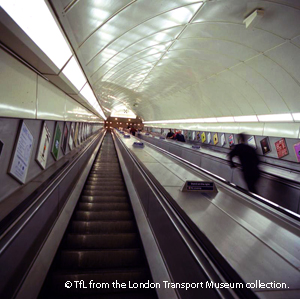
Underground1It’s fairly widely known that Underground stations and tunnels were used as air raid shelters during World War II. Do you know of any other different uses they have been put to? “The station at South Kentish Town on the Northern Line closed in 1924, but the surface building, still looking very much like a station is now occupied by a branch of Cash Converters. During the war unfinished tunnels on the Central line were occupied by a secret factory run by Plessey Components. Also during the war, paintings from the Tate Gallery were stored in  a disused part of Piccadilly Circus station for safe keeping.”

Stylish design has always been an important part of the Underground’s appeal. What’s your favourite era stylistically when it comes to the Underground and why? “Most people admire the golden age of the 1920s and 30s when the Underground’s corporate identity and personality reached its peak with Charles Holden’s architecture, the roundel, Harry Beck’s diagrammatic map and the amazing posters issued in that era, but personally I find the earlier period from 1908 to 1920 more interesting. You can trace the roots of each element of today’s brand being developed at this time, under Frank Pick’s critical eye, starting with the early solid-disc station name roundels, the joint promotion of the individual tube railways under the UndergrounD brand and the introduction of Edward Johnston’s typeface. You can see the company gaining confidence and momentum, especially in relation to the increasingly sophisticated posters and promotion that Pick commissioned.”

Can you tell us a bit about how the London Transport Museum is marking the 150th anniversary? “
We started the year by bringing steam back to the Circle line, after restoring an original Metropolitan Railway carriage and overhauling an original Met steam locomotive, and have just opened our fabulous overview of the 150 best Underground posters at the museum in Covent Garden, which runs until October. We are opening our Depot store, near Acton Town station in April for a steam weekend, and have a range of lectures and evening events at Covent Garden linking to the history of the Underground and its poster art heritage. There’s also our comprehensive new history of the Tube published last year and a wide range of new products and souvenirs in our amazing shop.”
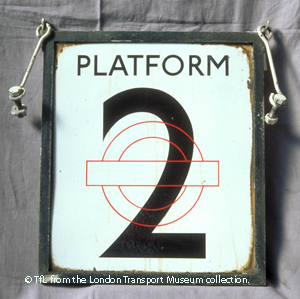
Underground3What are some of your favourite Underground-related objects on display at the museum? “The Design for Travel gallery on the ground floor is the literal and metaphorical heart of the Museum for me. Packed with close to 300 objects including signs, posters, models, leaflets and other documents, it’s hard to single out individual items, but I love the simplicity of the small ‘Platform 2’ hanging sign (pictured right) – it’s a real example of the design consistency and attention to detail that I associate with the Underground.”

And lastly, can you tell us a couple of little-known facts about the Underground? History is more than a chronological list of facts, and what one person finds fascinating sends another to sleep, so it’s quite a challenge to choose something that is little known, but genuinely interesting, but I’ll try: I grew up near Brent Cross station so I might be biased, but I reckon that if there was a top trumps for Underground lines, the Northern line would win. It has the longest escalators (at Euston), the deepest lift shaft (at Hampstead), the highest point ve sea level (on a viaduct near Mill Hill East), the longest tunnels (between East Finchley and Morden – 17 miles) and has had more names than any other line – it only became the Northern line in 1937.”

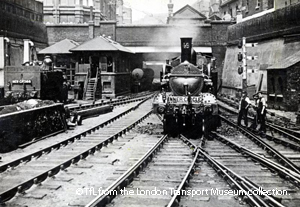
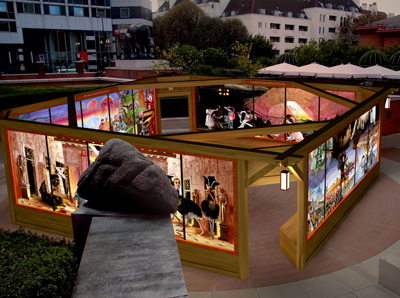
IMAGES: Top: Steam engine at Aldgate (1902); Middle: Platform 2 sign, 1930s design; and Bottom, Angel Underground Station (1990s). © TfL from the London Transport Museum collection. 

Poster Art 150 – London Underground’s Greatest Designs runs at the London Transport Museum until October. Admission charge applies. For more (including the many events around the exhibition), see www.ltmuseum.co.uk/whats-on/events/events-calendar#posterart150.
Around London – Of foundling tokens; a French field marshal’s grave marker; behind the scenes at Royal Albert Hall; Tom Daley’s swimming trunks; and, crime fiction at the British Library…

A new exhibition opens at the Foundling Museum tomorrow (25th January) which tells the often heart-breaking stories behind the tokens left by mothers with their babies at the Foundling Hospital between 1741-1760. While hundreds of tokens were removed from the hospital’s admission files in the 1860s, Fate, Hope & Charity reunites the tokens – which range from coins and jewellery to playing cards, poems and even a nut – with the foundlings to whom they were given. A moving exhibition. Museum admission charge applies. For more, see www.foundlingmuseum.org.uk.

The Duc and Duchesse de La Rochefoucauld-Doudeauville were among those who attended the dedication of a ledger stone marking the grave of their kinsman, Field Marshal Francois de La Rochefoucauld, the Marquis de Montendre, at Westminster Abbey last week. Born in 1672, de La Rochefoucauld served in the British Army during the reign of King William III and Queen Mary II after fleeing France as a Huguenot refugee (he had also succeeded his brother as marquis). He was promoted to field marshal in 1739 but died later that year and was buried in the abbey. The floor stone which was replaced by the new ledger stone will be sent to France for inscription and installation at Montendre. For more on the abbey, see www.westminster-abbey.org.

• One we should have mentioned with our piece on Royal Albert Hall last week. The Royal Albert Hall is running behind the scenes tours of the venue every Monday until 11th February as well as Tuesday 29th January (so you’ll have to be quick!). The tour – which runs as an extension of the front of house tour – takes in the loading bay located under the hall and one of the many dressing rooms (currently in use by Cirque de Soleil who are in residency with their new show KOOZA. The 90 minute Behind the Scenes tours cost £16. Booking in advance is strongly recommended. For more, see www.royalalberthall.com.

A pair of swimming trunks worn by diver Tom Daley during the 2012 Olympic Games has been donated to the Museum of London. The trunks join an ever increasing collection of Olympics and Paralympics-related outfits in the museum with others including a leotard worn by bronze-medal winning gymnast Beth Tweddle. A display featuring the Olympic kit is being planned for spring. Meanwhile, still aty the museum and an exhibition featuring a series of photographs exploring the city’s major arterial roadways opens on Saturday. The free exhibition, Highways: Photographs by John Davies, features six specially commissioned photographs taken by Davies in 2001-02 – just prior to the introduction of the Congestion Charge in 2003. Routes featured include the Elephant and Castle roundabout, the Hammersmith Flyover, Marble Arch and Hyde Park, St Pancras Station Midland Grand Hotel and the A501, the junction of Poultry and Queen Victoria Street and the Blackwall Tunnel entrance. Runs until 16th June. For more, see www.museumoflondon.org.

• On Now: Murder in the Library: An A-Z of Crime Fiction. This exhibition at the British Library looks at the history of crime fiction and features never-before-seen manuscripts, printed books, rare audio recordings, artworks and artefacts. Highlights include Arthur Conan Doyle’s manuscript of the Sherlock Holmes story, The Adventure of the Retired Colourman (1926); the first appearance in print of Miss Marple (in Royal Magazine in 1929); John Gielgud’s annotated script for the film Murder on the Orient Express, crime novels from unlikely authors including Pele and burlesque performer Gypsy Rose Lee and the 1933 book, the Jigsaw Puzzle Murders in which readers had to complete a jigsaw puzzle to solve the crime. A series of events will be taking place alongside the exhibition. Entry to the library’s Folio Society Gallery is free. Runs until 12th May. For more see www.bl.uk.

Where is it? #22

The latest in the series in which we ask you to identify where in London this picture was taken and what it’s of. If you think you can identify this picture, leave a comment below. We’ll reveal the answer early next week. Good luck!

Congrats to Parktown – this image of people on the Tube is part of a 12 metre long frieze which runs around the base of Paul Day‘s monumental statue, The Meeting Place, which stands on the upper concourse in St Pancras International Station.

The five ton statue above – which itself stands under the station’s clock – features a 30 foot (nine metre) tall bronze couple embracing and was installed before the station’s reopening in 2007.

The frieze – the images of which depict scenes from the history of the Tube and railways –  was added in 2008. There was initially some controversy over some of the images in the frieze panels and one which depicted a grim reaper driving a train was replaced.