Daytripper – Rochester Castle…

Rochester-Castle

We’ve visited Rochester before but given it’s the 800th anniversary of the Magna Carta we thought it would be good to take a more in-depth look at Rochester Castle and the events that took place there after the sealing of the “Great Charter”.

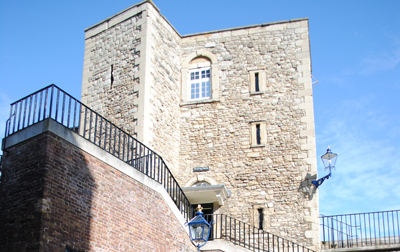
Rochester Castle was first built in the aftermath of the Battle of Hastings as a Norman stronghold to control the Medway and the Roman road – Watling Street – which crossed it at that point. There was a Roman-era town on the site and it’s likely the first castle – surrounded by a deep ditch and featuring walls of earth topped with timber – was  built within the town’s walls – possibly on the site of the existing castle.
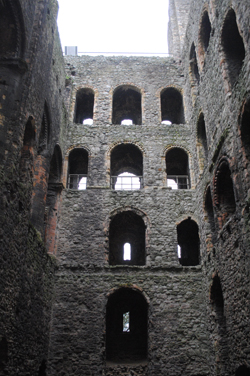
Rochester-Castle2Work on a stone castle was started in the late 1080s by Gundulf, the Bishop of Rochester (he also built the first Tower of London), and the castle precincts outer walls still largely follow the line of his original curtain walls. The keep was built by William de Corbeil, Archbishop of Canterbury, who was granted the castle by King Henry I in 1127. It remained in the custody of the archbishops until the events of 1215.

Following the sealing of the Magna Carta in May, relations between King John and the barons soured again into outright civil war with the castle declared for the rebels. In October and November, 1215, it was held for some seven weeks by a force of knights – accounts suggest between 95 and 140 – against the forces of King John. These eventually breached the south curtain wall and after the forces of the knights – who were led by William de Albini and Reginald de Cornhill – retreated to the keep, the king ordered his sappers to work.

The miners were successful in undermining the south-west tower which collapsed along with a large section of the keep (the fat of 40 pigs were apparently used to make sure the fire in the mine was hot enough). The defenders nonetheless kept fighting, retreating further into the remains of the keep, until they were eventually forced to surrender when faced with starvation. King John’s fury at their resistance was said to be great but while some of the defenders lost their hands and feet when they were apparently lopped off on his orders after surrendering, he was convinced to spare the holdouts from being hanged on the spot and merely had them imprisoned.

The tower was later rebuilt by King John’s long ruling son, King Henry III, and you can see its distinct round shape (in contrast with the earlier, square towers) when looking at the keep today. (Incidentally, King John’s siege was the castle’s second major siege – the first had taken place in 1088 when the forces of King William II (Rufus) had besieged the castle which was then held by the rebellious Odo, Bishop of Bayeaux, who was involved in an attempt to put William the Conqueror’s eldest son, Robert, Duke of Normandy, on the throne in place of William (who was the second son). Odo was forced to come to terms and exiled as a result of the siege).
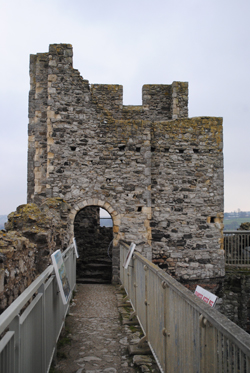
Rochester-Castle3In the hands of the Crown after King John’s siege, the castle was again the site of a siege in 1264 – this time unsuccessful when rebels under the command of Simon de Montfort failed to take it from those of King Henry III (although the garrison was later forced to surrender following events elsewhere).

It was rebuilt and repaired a number of times, including during the reigns of King Edward III and that of King Richard II (during whose reign it was also ransacked in the Peasant’s Revolt of 1381). Other kings to visit it over the years included King Henry VII and King Henry VIII.

Already much deteriorated and neglected, in 1610, King James I gave the castle to Sir Anthony Weldon whose family sold off some of the timber and stone to local builders. It survived the Civil War without incident and was used as a public pleasure garden from the 1870s onward before, in 1884, it was sold to the City of Rochester. In 1965 responsibility for its care was given to the Ministry of Public Building and Works. Current managers, English Heritage, took over the site in 1984.

The castle remains an imposing site in Rochester and the outer walls of the keep remain intact even if it’s no more than a shell. Worth the climb to the top simply to take advantage of the spectacular views of the town and cathedral below!

WHERE: Rochester Castle, Rochester, Kent – nearest train station is Rochester (half a mile); WHEN: 10am to 6pm daily (until 30th September); COST:£6.20 adults/£3.90 children (aged 5-15) and concessions (free for English Heritage members); WEBSITE: www.english-heritage.org.uk/visit/places/rochester-castle.
10 sites from London at the time of the Magna Carta – 8. Bermondsey Abbey…

Bermondsey Abbey, which was more than 130-years-old by the time King John put his seal to the Magna Carta in 1215, has an unusual connection to the unpopular king – it is one of a number of buildings in London which has, at various times in history, been erroneously referred to as King John’s Palace.

This suggestion – that it was a palace which was later converted into an abbey – may have arisen from a site on the former abbey grounds being known at some point in its history as King John’s Court (that name was said to commemorate the fact that King John visited the abbey).

Putting how King John’s name came to be linked with the abbey aside, we’ll take a quick look at the history of the abbey which rose to become an important ecclesiastical institution in medieval times.

While there was a monastic institution in Bermondsey as far back as the early 8th century, the priory which was here during the reign of King John was founded in 1082, possibly on the site of the earlier institution, by a Londoner named as Aylwin Child(e), apparently a wealthy Saxon merchant who was granted the land by King William the Conqueror.

In 1089, the monastery –  located about a mile back from the river between Southwark and Rotherhithe – became the Cluniac Priory of St Saviour, an order centred on the French abbey of Cluny, and was endowed by King William II (William Rufus) with the manor of Bermondsey.

It was “naturalised” – that is, became English – by the first English prior, Richard Dunton, in 1380, who paid a substantial fine for the process. It was elevated to the status of an abbey by Pope Boniface IX in 1399.

It had some important royal connections – King John’s father, King Henry II and his wife Queen Eleanor celebrated Christmas here in 1154 (their second child, the ill-fated Henry, the young King, was born here a couple of months later), and Queen Catherine (of Valois), wife of King Henry V, died here in 1437. It was also at Bermondsey Abbey that Elizabeth Woodville, the widow of King Edward IV and mother of the two “Princes in the Tower”, died in 1492 following her retirement from court.

The abbey, which grew to have an enormous income thanks to its acquisition of property in a range of counties, survived until the Dissolution when, in 1537, King Henry VIII closed its doors. It was later acquired by Sir Thomas Pope who demolished the abbey and built a mansion for himself on the site (and founded Trinity College in Oxford apparently using revenues from the property). We’ll deal more with its later history in an upcoming post.

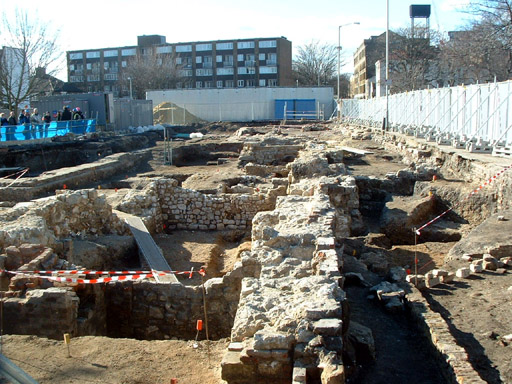
The ruins of the abbey were extensively excavated in the past few decades and some of the remaining ruins of the abbey can still be seen buildings around Bermondsey Square and a blue plaque commemorating the abbey was unveiled in 2010. Bermondsey Street runs roughly along the line of the path which once led from the abbey gates to the Thames and the abbey had a dock there still commemorated as St Saviour’s Dock. The abbey’s name is commemorated in various streets around the area.

For more on the history of the Magna Carta, see David Starkey’s Magna Carta: The True Story Behind the Charter.

PICTURE: An archaeological dig at the ruins of Bermondsey Abbey in 2006. Zefrog/Wikipedia.

10 sites from London at the time of the Magna Carta – 7. Old London Bridge…

London-Bridge2

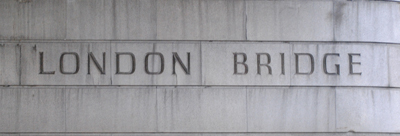
The current London Bridge, which spans the River Thames linking Southwark to the City, is just the latest in several incarnations of a bridge which originally dates back to Roman times.

This week, we’re focusing on first stone bridge to be built on the site. Constructed over a period of some 33 years, it was only completed in 1209 during the reign of King John, some six years before the signing of the Magna Carta.

Construction on the bridge began in 1176, only 13 years after the construction of an earlier wooden bridge on the site (the latest of numerous wooden bridges built on the site, it had apparently built of elm under the direction of Peter de Colechurch, chaplain of St Mary Colechurch, a now long-gone church in Cheapside).

It was the priest-architect de Colechurch who was also responsible for building the new bridge of stone, apparently on the orders of King Henry II. While many of the wealthy, including Richard of Dover, the Archbishop of Canterbury, gave funds for the construction of the bridge, a tax was also levied on wool, undressed sheepskins and leather to provide the necessary monies – the latter led to the phrase that London Bridge was “built upon woolpacks”. King John, meanwhile, had decreed in 1201 that the rents from several homes on the bridge would be used to repair it into perpetuity.

The bridge, which featured 20 arches – a new one built every 18 months or so, was apparently constructed on wooden piles driven into the river bed at low water with the piers of Kentish ragstone set on top. It was dangerous work and it’s been estimated that as many as 200 men may have died during its construction.

The bridge was almost completely lined with buildings on both sides of the narrow central street. These included a chapel dedicated to St Thomas á Becket – a stopping point for pilgrims heading to the saint’s shrine in Canterbury, as well as shops and residences (although, apart from the chapel, we know little about the original buildings). There was also a drawbridge toward the southern end and the Great Stone Gate guarding the entrance from Southwark.

Peter de Colechurch died in 1205, before the bridge was completed. He was buried in the undercroft of the chapel on the bridge.

Three men subsequently took on the task of completing the bridge – William de Almaine, Benedict Botewrite and Serle le Mercer who would go on to be a three time Lord Mayor of London. All three were later bridge wardens, the City officials charged with the daily running of the bridge itself.

One of key events on the bridge in the years immediately after its completion was the arrival of Louis, the Dauphin of France, in May, 1216. Louis had been invited to depose John by the rebellious barons after the agreement sealed at Runnymede fell apart and in 1216, he and his men marched over London Bridge on their way to St Paul’s Cathedral. (We’ll deal with this in more detail in a later post).

What became known as ‘Old London Bridge’, which stood in line with Fish Street Hill, survived the Great Fire of 1666, albeit badly damaged, but was eventually replaced with a new bridge, known, unsurprisingly as ‘New London Bridge’, which opened in 1831. Designed by John Rennie, this bridge was later replaced by one which opened in 1971 (Rennie’s bridge was sold off and now stands in Lake Havasu City, Arizona).

For a detailed history of Old London Bridge, check out Old London Bridge: The Story of the Longest Inhabited Bridge in Europe.

This Week in London – The Waddesdon Bequest has a new home; history painted at the Tate; and, early release NYE tickets…

Holy-Thorn-ReliquaryThe Waddesdon Bequest, a collection of medieval and Renaissance treasures left to the British Museum by Baron Ferdinand de Rothschild in 1898, has a new home. Redisplayed in a new gallery which opened at the museum last week, the collection features the Christian relic known as Holy Thorn Reliquary (pictured) – a concocotion of gold, enamel and gems set around a thorn supposedly taken from Christ’s Crown of Thorns, the Lyte Jewel – a diamond-studded locket made in London in 1610-11 to hold a miniature of King James I and presented by the king to Thomas Lyte as thanks for a genealogy he created representing the king as a descendant of the Trojan Brutus, and the Cellini Bell – cast from silver in Nuremberg around 1600 and later displayed by Horace Walpole at his west London villa in Strawberry Hill. The bequest collection, which must always be displayed in a room of its own under its original terms, was first displayed at Baron Ferdinand’s country home of Waddesdon Manor in Buckinghamshire (now a National Trust property) and moved to the museum after his death. The redisplay reconnects the collection with its past at the manor and the history of the museum – the room where it is now displayed, Room 2a, was the museum’s original Reading Room and part of a neo-classical suite of rooms designed by Robert Smirke in 1820. It has been given the “most ambitious digital treatment” of any permanent gallery in the institution. Admission is free. For more, see www.britishmuseum.org.

The “enduring significance and emotional power” of British history painting is under examination in a new exhibition which opened at Tate Britain on Millbank last week. Fighting History features everything from the large scale works of 18th century painters John Singleton Copley and Benjamin West through to 20th century and contemporary works by Richard Hamilton and Jeremy Deller and looks at how they reacted, captured and interpreted key historical events. Works on show include Singleton Copley’s 1778 work The Collapse of the Earl of Chatham in the House of Lords, 7 July, William Frederick Yeames’ 1877 work Amy Robsart, John Minton’s 1952 work The Death of Nelson and Deller’s 2001 work The Battle of Orgreave, a re-enactment of 1984 protest in South Yorkshire. The exhibition also compares traditional and contemporary renderings of events from scripture, literature and the classical world and features a room dedicated to interpretations of the great Biblical flood of Noah. Runs until 13th September. Admission charges apply. For more, see www.tate.org.uk.

A limited number of early release tickets to London’s New Year’s Eve celebrations will go on sale from noon tomorrow (Friday, 19th June). The tickets, the bulk of which will be released in September, cost £10 a person with the proceeds being used to cover costs including printing and infrastructure. As was the case last year, people without tickets will not be able to access the event. To get hold of tickets, head to www.london.gov.uk/nye.

Send all items for inclusion to exploringlondon@gmail.com.

10 sites from London at the time of the Magna Carta – 6. St Helen’s Bishopsgate…

St-Helen-Bishopsgate2

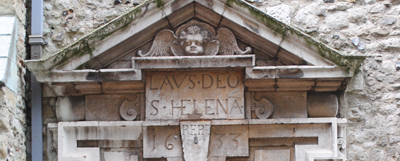
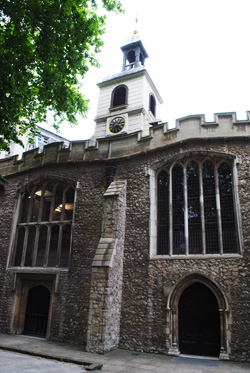
This church in the shadow of 30 St Mary Axe (aka The Gherkin) is all that remains of a Benedictine nunnery that was founded here during the reign of King John in 1210.

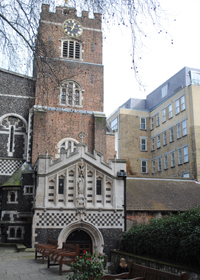
St-Helen's-BishopsgateEstablished by one “William, son of William the goldsmith” after he was granted the right by the Dean and Chapter of St Paul’s Cathedral, the priory was built to the north of a previously existing church with a new church for the nuns to use built right alongside the existing structure (thus accounting for the rarely seen side-by-side naves of the current building).

While the new church was built longer than the existing church, the latter was then lengthened to give them both the same length. A line of arches and a screen separated the nun’s choir and the parish church.

The church which stands today has been much altered over the centuries and what we now see there largely dates from the 14th and 15th centuries (although the bell turret which sits over the west front is an 18th century addition).

One of the priory’s claims to fame in medieval times was that it apparently was once home to a piece of the True Cross, presented by King Edward I in 1285.

The nunnery was dissolved in 1538 during the Great Dissolution of King Henry VIII and the buildings, excepting the church, sold off to the Leathersellers’ Company (all were eventually demolished by the 18th century). The screen separating the nun’s choir and the parish church, meanwhile, was removed, leaving the main body of the church as it can be seen today.

The now Grade I-listed church, which was William Shakespeare’s parish church when he lived in the area in the 1590s, survived both the Great Fire of London and the Blitz but was severely damaged by two IRA bombs in the early 1990s leading to some major – and controversial – works under the direction of architect Quinlan Terry.

Inside the church today is a somewhat spectacular collection of pre-Great Fire monuments including the 1579 tomb of Sir Thomas Gresham, founder of the Royal Exchange, the 1636 tomb of judge, MP and Chancellor of the Exchequer, Sir Julius Caesar Adelmare, and the 1476 tomb of merchant, diplomat, City of London alderman and MP, Sir John Crosby.

It was also once the site of the grave of 17th century scientist Sir Robert Hooke but these were apparently removed from the church crypt in the 19th century when repairs to the floor of the nave were being made and placed in an unmarked common grave. Their location apparently remains unknown.

WHERE: St Helen’s Bishopsgate, Great St Helens (nearest Tube stations are Aldgate, Bank and Liverpool Street); WHEN: 9.30am to 12.30pm weekdays daily (also usually open Monday, Wednesday and Friday afternoons but visitors are advised to telephone first); COST: Free; WEBSITE: www.st-helens.org.uk.

Celebrating the Magna Carta’s 800th anniversary!…

Magna-Carta4

We interrupt our regular programming today to mark a truly historic milestone – 800 years since King John set his seal to the Magna Carta (Great Charter) in a field at Runnymede to the west of London.

So, where can you see a copy in London?

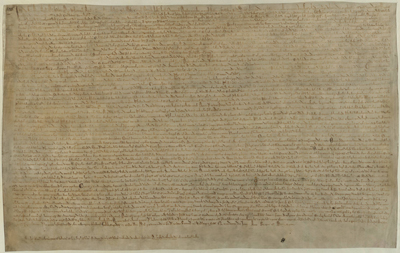
The British Library actually holds two of the four surviving documents from 1215 (one is pictured above) – the other two are held by Lincoln and Salisbury Cathedrals.

One of the copies in the British Library was damaged in an 18th century fire; the other was found in a tailor’s shop in London in the 17th century – made of sheepskin, it was apparently about to be taken apart to line collars.

The library’s current Magna Carta exhibition, Magna Carta: Law, Liberty, Legacy, features the two documents (along with Jefferson’s handwritten copy of the Declaration of Independence and one of the original copies of the US Bill of Rights). For more about the exhibition, see www.bl.uk/events/magna-carta–law-liberty-legacy (runs until 1st September – for more see our earlier post here).

Meanwhile, the City of London Corporation also possesses a copy of the Magna Carta – although a later one that that issued in 1215.

Issued by King Edward I in 1297, this was the one which saw the document’s clauses, somewhat changed from 1215, written into the statutes for the first time.

Stored at the Guildhall Art Gallery, it is too delicate to be on permanent display but is currently on display in the City of London  Heritage Gallery until 1st October (for more follow this link).

You can read more about the Magna Carta and its London connections in our Wednesday series, 10 sites from London at the time of the Magna Carta.

PICTURE: British Library.

Treasures of London – The Great Pagoda, Kew Gardens…

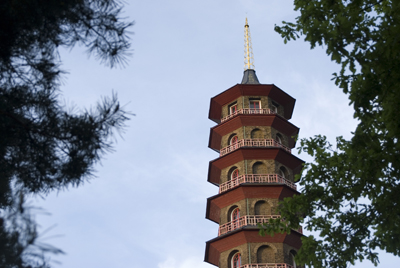
pagoda

News this week that Historic Royal Palaces and the Royal Botanic Gardens are embarking on a two year project to restore eighty decorative dragons to the Kew Pagoda has led us to take a look at the history of the exotic tower set amid the trees.

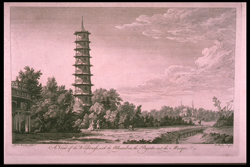
pagoda15Designed by architect Sir William Chambers (one of his drawings is depicted here), the pagoda was built in 1762 during the eighteenth century craze for Chinoiserie and was probably commissioned by Princess Augusta as part of the ongoing works she undertook in the gardens after the death of her husband Prince Frederick, eldest son of King George II and Queen Caroline.

Standing 163 feet (or almost 50 metres) high, the 10 storey pagoda was originally decorated with eighty golden dragons. It was designed to be the high point of a world tour through the gardens which also took in Roman ruins and Arabic mosques.

While the pagoda remains, the dragons were only on the structure for some 22 years before being removed in 1784 during roof repairs. Thanks to rumours they were made of solid gold, it was suggested they were sold off to pay the debts of the Prince Regent (the future King George IV), but experts say the wooden figures had simply rotted and so had to be removed.

Following their removal, the dragons subsequently disappeared and despite several attempts to find them – including one by Decimus Burton, architect of the famous Palm House (for more on that, see our earlier post), in 1843 – they have never been found.

Historic Royal Palaces and the Royal Botanic Gardens have now decided to replace them with new ones, drawing on contemporary accounts and drawings and using a team of specialist craftsmen to create them.

The restored pagoda – complete with new dragons – will be open to the public in 2017.

It is one of several ornamental buildings still located in the gardens. Others include a Japanese gateway and a Japanese wooden house called a minka.

WHERE: The Great Pagoda, Kew Gardens (nearest Tube station is Kew Gardens); WHEN: 10am daily (closing times vary – see websites for details); COST: £16.50 adults/£13 concessions/children £3.50 (discounts apply for online bookings); WEBSITE: www.kew.org.

PICTURES: RBG Kew

10 sites from London at the time of the Magna Carta – 5. Lambeth Palace…

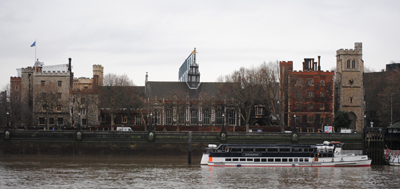
Lambeth-palaceThe London residence of the Archbishop of Canterbury, Lambeth Palace was first acquired by the archbishopric in around the year 1200 with Archbishop Stephen Langdon – an important figure in the whole Magna Carta saga – believed to be the first to have lived there.

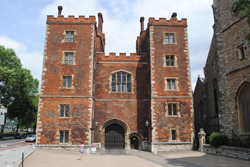
Lambeth-Palace2The complex built in the early 13th century included a chapel, a great hall, a ‘great chamber’ where the archbishop would receive guests, and private apartments for Archbishop Langdon, who was appointed to the archbishopric in 1207 and remained in the post until his death in 1228 (his appointment was a major point of contention between King John and Pope Innocent III and a key factor in the dispute which led to the creation of the Magna Carta).

Not much remains of the original palace but the sections that do include the originally free-standing Langdon’s Chapel (although now much altered and connected to the rest of the complex) and the crypt beneath it (described as one of the best preserved medieval stone vaults in London it is now a chapel but was originally used for the storage of wine and beer).

They are both believed to have been completed in about 1220 with the other buildings now present added later over the centuries.

These include the formidable red brick gatehouse that fronts the complex today – known as Morton’s Tower, it is named after Archbishop Cardinal John Morton and dates from 1490 – while the Guard Room, which has its origins in the archbishop’s ‘great chamber’, dates from the 14th century and the infamous Lollard’s Tower – used as a prison in the 17th century – from the 15th century.

The Great Hall – now used as a library, first established in 1610 – was rebuilt in the mid 17th century although it is believed to stand on the site of that first used by Langdon (we’ll deal more with the later history of Lambeth Palace in a later post).

WHERE: Lambeth Palace, corner of Lambeth Palace Road and Lambeth Road (nearest tube stations are Westminster, Waterloo, Vauxhall, and Lambeth North); WHEN: Guided tours (90 minutes) only – check website for details; COST: £12 a person plus £2.95 booking fee (under 17s are free); WEBSITE: www.archbishopofcanterbury.org/pages/about-lambeth-palace.html.

10 sites from London at the time of the Magna Carta – 4. Thorney Island…

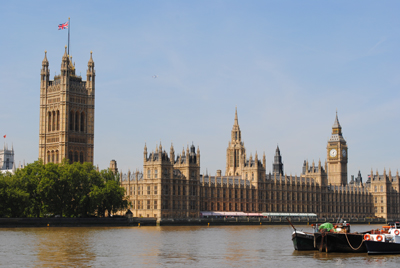
Houses-of-Parliament2 Both Westminster Abbey and the Palace of Westminster (these days better known as the Houses of Parliament – pictured) pre-date 1215 but unlike today in 1215 the upon which they stood was known as Thorney Island.

Formed by two branches of the Tyburn River as they ran down to the River Thames, Thorney Island (a small, marshy island apparently named for the thorny plants which once grew there) filled the space between them and the Thames (and remained so until the Tyburn’s branches were covered over).

One branch entered the Thames in what is now Whitehall, just to the north of where Westminster Bridge; another apparently to the south of the abbey, along the route of what is now Great College Street. (Yet another branch apparently entered the river near Vauxhall Bridge).

The abbey’s origins go back to Saxon times when what was initially a small church – apparently named after St Peter – was built on the site. By 960AD it had become a Benedictine monastery and, lying west of what was then the Saxon city in Lundenwic, it become known as the “west minster” (St Paul’s, in the city, was known as “east minster”) and a royal church.

The origins of the Palace of Westminster don’t go back quite as far but it was the Dane King Canute, who ruled from 1016 to 1035, who was the first king to build a palace here. It apparently burnt down but was subsequently rebuilt by King Edward the Confessor as part of a grand new palace-abbey complex.

For it was King Edward, of course, who also built the first grand version of Westminster Abbey, a project he started soon after his accession in 1042. It was consecrated in 1065, a year before his death and he was buried there the following year (his bones still lie inside the shrine which was created during the reign of King Henry III when he was undertaking a major rebuild of the minster).

Old Palace Yard dates from Edward’s rebuild – it connected his palace with his new abbey – while New Palace Yard, which lies at the north end of Westminster Hall, was named ‘new’ when it was constructed with the hall by King William II (William Rufus) in the late 11th century.

Westminster gained an important boost in becoming the pre-eminent seat of government in the kingdom when King Henry II established a secondary treasury here (the main treasury had traditionally been in Winchester, the old capital in Saxon times) and established the law courts in Westminster Hall.

King John, meanwhile, followed his father in helping to establish London as the centre of government and moved the Exchequer here. He also followed the tradition, by then well-established, by being crowned in Westminster Abbey in 1199 and it was also in the abbey that he married his second wife, Isabella, daughter of Count of Angouleme, the following year. 

10 sites from London at the time of the Magna Carta – 3. The Temple…

Templars

Not much remains today of the original early medieval home of the Templar Knights which once existed just west of the City of London. While the area still carries the name (as seen in the Underground station, Temple), most the buildings now on the site came from later eras. But there are some original elements.

First though, a bit of history. The Templar precinct which become known as the Temple area of London was the second site in the city given to the military order, known more completely as the Knights of the Temple of Solomon (thanks to their Jerusalem HQ being located near the remains of the Temple of Solomon).

Temple-churchThe first was in Holborn, located between the northern end of Chancery Lane and Staple Inn, and was known as the ‘Old Temple’ after which, in the latter years of the 12th century, the Templars moved their headquarters to the new site – ‘New Temple’ or Novum Templum – on unoccupied land on the bank of the River Thames. 
This new precinct included consecrated and unconsecrated areas. The consecrated part was a monastery and was located around what is now Church Court with the monastic refectory built on the site of what is now Inner Temple Hall – the medieval buttery is the only part of the original building which survives.

The lay or unconsecrated part of the precinct lay east of Middle Temple Lane, where a second hall was built on the site of what is now the Middle Temple Hall (you’ll find more on that here) which was used to house the lay followers of the order.

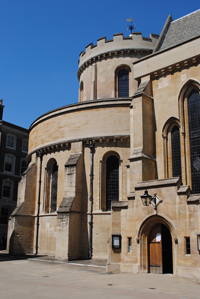
The original buildings also included the still existing Templar Church (pictured, along with a monument depicting the Templars outside the church), which was consecrated in 1185 during the reign of King Henry II by Heraclius, the Patriarch of Jerusalem, on a visit to London. Like all other Templar churches, its circular design was based on the design of the Church of the Holy Sepulchre in Jerusalem (the chancel was added later and consecrated in the presence of King Henry III in 1240 – for more on the Temple Church, you can see our earlier post here.

The New Temple become an important site in London (and the kingdom as a whole – the Masters of the Temple were the heads of the order in England) and was used by many of the nobility as a treasury to store valuables (and to lend money). It also had close connections with the monarchy and was, as we saw earlier this week, a power base for King John and from where he issued what is known as the King John Charter in 1215. He also used it for a time as a repository for the Crown jewels.

In an indication of the Temple’s prominence in state affairs, some of the great and powerful were buried here during this period including William Marshal, 1st Earl of Pembroke, who died in 1219, and his sons William and Gilbert (for more on those buried in the Temple, see our earlier post here). There were also apparently plans to bury King Henry III and his Queen here – this apparently spurred on the building of the chancel on the church – but they were eventually buried in Westminster Abbey instead.

Numerous relics were also apparently housed here during the Templar times including a phial believed to contain Christ’s blood and pieces of the true Cross.

The Templar era came to an end in 1312 when the order was dissolved on the authority of Pope Clement V amid some heinous allegations of blasphemy and sexual immorality which had the support of King Philip IV of France. While the pope awarded their property to the rival order, the Knights of the Hospital of St John of Jerusalem (also known as the Hospitallers), King Edward II had other ideas and ignored their claims with regard to the London property and instead, claimed it for the Crown (a dispute which went on for some years).

It later became associated particularly with lawyers, although lawyers would have certainly been at work in the New Temple given its role as banker to the wealthy (but more on its later associations with lawyers in later post).

For more on the history of the Templars, see Malcolm Barber’s The New Knighthood: A History of the Order of the Temple.

A Moment in London’s History – Londoners granted the right to elect their mayor…

It was on 9th May, 2015, 800 years ago this year that, in the lead-up to the creation of the Magna Carta in June, King John issued a charter granting the City of London the right to freely elect its own mayor.

The charter, which was issued at the Temple – King John’s power base to the west of the City (for more on it, see our earlier post here), was a fairly blatant bid to keep the support of the city.

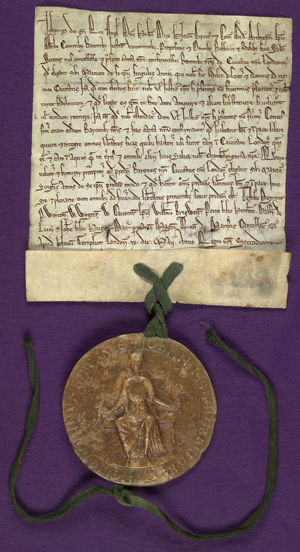
King-John-CharterKnown simply as the King John Charter, it stated that the barons of the city, “may choose to themselves every year a mayor, who to us may be faithful, discreet, and fit for government of the city, so as, when he shall be chosen, to be presented unto us, or our justice if we shall not be present”.

In return, the mayor was required to be presented to the monarch to take an oath of loyalty each year – a practice commemorated in the Lord Mayor’s Show each November.

The charter, which has a particularly good impression of the king’s seal, is currently on display in the City of London’s newly opened Heritage Gallery, located at the Guildhall Art Gallery.

The event was one of a series leading up to the signing of the Magna Carta in June. Only 10 days after King John issued the charter to the City of London, rebel barons, who have previously taken Bedford, marched on the city to demand their rights and arrived their before the Earl of Salisbury (whom John had ordered to occupy the city).

Aldgate was apparently opened to them by some supporters within the city and the forces of the rebel barons went on to attack the home of royalists as well as those of Jews along with a Jewish burial ground in Barbican – the latter because Jewish moneylenders had lent money to the king.

They later besieged the Tower of London and while they couldn’t take the fortress, their seizure of the city was enough to help force the king to open negotiations late in the month, asking the Archbishop of Canterbury, Stephen Langdon, on 27th May  to arrange truce (which, while it was apparently not observed terribly well, did help pave the path to the Magna Carta).

The exhibition at the Heritage Gallery runs until 4th June. For more information, see www.cityoflondon.gov.uk/things-to-do/visiting-the-city/attractions-museums-and-galleries/guildhall-art-gallery-and-roman-amphitheatre/Pages/Heritage-Gallery.aspx.

PICTURE: City of London: London Metropolitan Archives

10 sites from London at the time of the Magna Carta – 2. St Bartholomew the Great…

St Bartholomew the Great in Smithfield – the oldest parish church in London (see our earlier piece here) – is worth a revisit thanks to the fact that it would have been standing (at least partially) when the seal of King John was first affixed to the Magna Carta .

St-BartholomewsOnly half the size it once was, this church was founded in 1123 AD as the priory church for a community of Augustinian Canons and owes its origins to Rahere, a favored courtier of King Henry I who renounced his way of life and made a pilgrimage to Rome, returning to found both the church and nearby hospital for the poor.

Only the eastern part of the church was built by the time of the death of Rahere – the first prior – in 1145 and the building continued for some years afterward. While the interior walls now look somewhat plain, they would have been highly decorated when the building was originally constructed. At the time of the Magna Carta, the church would have only been partly completed.

The tomb of Rahere still lies within the church, on the left hand side of the altar – although the canopy over it dates from the 15th century. There were some healing miracles recorded at the tomb.

The church’s current configuration came about when the priory was dissolved in 1539 and the nave of the church was pulled down, leaving what’s there now – the quire, altar and lady chapel.

The brick tower at the church’s west end dates from the 1620s while the gateway through which you enter the church grounds features a restored 13th century arch topped by a late Tudor building.

The church was briefly used by some Dominican friars but since the reign of Queen Elizabeth I has fulfilled the role of parish church. A concerted restoration effort began in the mid-19th century by Sir Aston Webb (architect of the Victoria & Albert Museum), leaving the Lady Chapel with a very different feel to the Norman choir. The building is now Grade I-listed.

WHERE: Off Little Britain, West Smithfield (nearest tube station is Barbican); WHEN: 8.30am to 5pm Monday to Friday, 10.30am to 4pm Saturday, 8.30am to 8pm Sunday (except for services) ; COST: £4 an adult/£3.50 concession/£10 a family; WEBSITE: www.greatstbarts.com

LondonLife – The Queen’s House set to be given a makeover ahead of 400th anniversary…

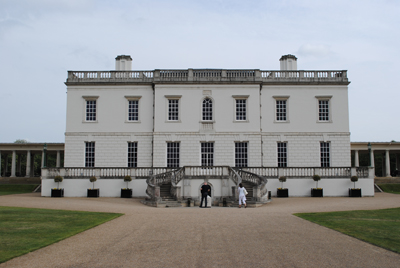
The-Queen's-HouseGreenwich icon, the Queen’s House, is set to close on 27th July this year to allow for refurbishment and upgrade ahead of the 400th anniversary of its commissioning and design in 2016. The landmark will be closed until 4th July, 2016, after which those visiting the house will be able to see Orazio Gentileschi’s Biblically-themed painting, Joseph and Potiphar’s Wife, displayed in the building for the first time since 1650. Part of the Royal Collection, the painting was one of a series commissioned for the building by King Charles I and his wife Queen Henrietta Maria. The Queen’s House was designed by Inigo Jones in 1616 for King James I’s wife, Anne of Denmark, and, acknowledged as a masterpiece of 17th century architecture, was the first classically-designed building in country. The makeover will see galleries refurbished, the introduction of new displays and the restoration of components including the ceiling in the King’s Presence Chamber (the Queen’s Presence Chamber was restored in 2013). For more, see www.rmg.co.uk.

What’s in a name?…Downing Street…

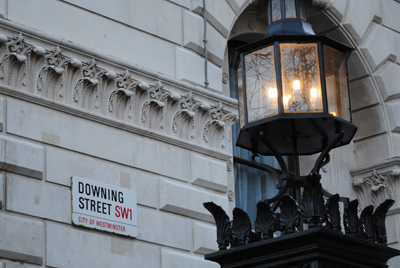
Downing-Street

One of the most famous streets (and photographed) in London (though sadly not open to the public), Downing Street in Whitehall is these days most well-known for being the location, at Number 10, of the official residence of the British Prime Minister.

But Downing Street’s history dates back to a time before the first British PM moved in (this was Sir Robert Walpole in the 1735 and even after that, it didn’t become a regular thing for Prime Ministers to live here until the Twentieth century). And its name bears testimony to its creator, Sir George Downing, a soldier and diplomat described as “a miserly and at times brutal” man who served first under both Oliver Cromwell and, following the Restoration, King Charles II (and was, coincidentally, one of the first graduates of Harvard University).

In the 1650s, Sir George took over the Crown’s interest in land here, just east of St James’s Park, and intended to build a row of townhouses upon it. His ambitions were delayed, however, due to an existing lease with the descendants of Elizabethan courtier Sir Thomas Knyvet who had once lived in a large home on the site of what is now Number 10 Downing Street.

By the 1680s, however, the lease had expired and between 1682-84, Downing was able to construct a cul-de-sac, closed at the St James’s Park end, featuring either 15 or 20 two storey terraced townhouses with stables and coach-houses, designed by no less than Sir Christopher Wren.

While the homes were apparently of shoddy craftsmanship and stood upon poor foundations (Churchill famously wrote that Number 10 was “shaky and lightly built by the profiteering contractor whose name they bear”), the street apparently attracted some notable residents from the start.

These included the Countess of Yarmouth, who briefly lived at Number 10 in the late 1680s, Lord Lansdowne and the Earl of Grantham, and even, briefly, apparently the diarist James Boswell in the mid 1700s. Downing himself isn’t thought to have ever lived here – he retired to Cambridge a few months after the houses were completed.

The houses between Number 10 and Whitehall – on the north side of the street – were taken over by the government and eventually demolished in the 1820s to allow for the construction of offices for the Privy Council, Board of Trade and Treasury while the houses on the south side remained until they were demolished in the early 1860s to make way for the Foreign, India, Colonial and Home Offices.

The numbers in the street have changed since Downing’s houses were first built. Of the original homes in the street only Number 10 (home of the PM) and Number 11 (home of the Chancellor of the Exchequer) survive.

Access to the street has been restricted since the 1980s with the current black steel gates put in place in 1989.

An underground tunnel apparently runs under the street connecting number 10 with Buckingham Palace and the underground bunker, Q-Whitehall, built in the 1950s in the event of nuclear war.

This Week in London – Charles I’s overlooked artist; St George’s Day in Trafalgar Square; Indigenous Australia; prints from the Royal Collection on show; and, ‘What is Luxury’ at the V&A…

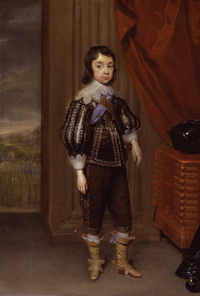
NPG_936_1374_KingCharlesIIbThe first ever display of works of overlooked 17th century artist Cornelius Johnson, court painter to Charles I, has opened at the National Portrait Gallery off Trafalgar Square. Cornelius Johnson: Charles I’s Forgotten Painter features rarely viewed portraits of the king’s children including the future Charles II, James II and Mary (later Princess of Orange-Nassau) as well as a painting of Mary’s son William – all of which have been taken from the gallery’s collection. Overshadowed by Sir Anthony van Dyck, Johnson – who emigrated to The Netherlands when the English Civil War broke out – has been largely ignored by art historians despite the breadth of his work – from group portraits, such as his largest surviving English painting, The Capel Family, to tiny miniatures – and the fact that he is thought to be the first English-born artist who took to signing date his paintings as a matter of course, something he is believed to have picked up during his training in The Netherlands. The display features eight painted portraits and six prints from the gallery’s collection as well as three paintings from the Tate. Runs until 13th September in Room 6. Admission is free. For more, see www.npg.org.uk. PICTURE: King Charles II by Cornelius Johnson , 1639. © National Portrait Gallery, London.

Trafalgar Square will be at the centre of London’s St George’s Day celebrations on Saturday with live music, celebrity chefs, a masterclass by leading tea experts and children’s games and activities. The musical lineup will feature the band from the West End musical Let It Be and the Crystal Palace Brass Band – one of the few traditional brass bands remaining in London. The free event runs between noon and 6pm on Saturday. For more, see www.london.gov.uk/stgeorges.

Indigenous Australia, the first major exhibition in the UK to present a history of Indigenous Australia through objects, opens at the British Museum today. Drawing on the museum’s collection, Indigenous Australia features objects including a shield believed to have been collected in Botany Bay on Captain Cook’s voyage of 1770, a protest placard from the Aboriginal Tent Embassy established in 1972 and contemporary paintings and specially commissioned artworks from leading indigenous artists. Many of the objects have never been on display before. Runs until 2nd August. Admission charge applies. For more, see www.britishmuseum.org.

Thirty prints from the Royal Collection will be on show at The London Original Print Fair to mark its 30th anniversary. The fair runs at the Royal Academy from today until Sunday and among the selected works from the more than 100,000 prints in the Royal Collection are the 2.3 metre long woodcut by Albrecht Durer entitled Triumphal Cart of the Emperor Maximillian (1523), Wenceslaus Hollar’s four etchings of tropical Seashells (c1650), a sequence of proofs of Samuel Reynolds’ portrait of King George III at the end of the monarch’s life, and lithographs produced by Queen Victoria and Prince Albert dating from 1842. For more on the fair, see www.londonprintfair.com. For more on the Royal Collection, see www.royalcollection.org.uk.

The question of what is meant by the concept of luxury is under examination in the V&A’s new exhibition What is Luxury? Opening at the South Kensington museum Saturday, the exhibition will feature a range of luxury objects – from the George Daniels’ Space Travellers’ Watch to a Hermés Talaris saddle, and Nora Fok’s Bubble Bath necklace. Also on show in a section of the exhibit looking at what could determine future ideas of luxury is American artist Gabriel Barcia-Colombo’s DNA Vending Machine (complete with prepackaged DNA samples) and Henrik Nieratschker’s installation The Botham Legacy which tells the fictional story of a British billionaire who sends altered bacteria into space in an attempt to find valuable metals on distant plants. Runs until 27th September. Admission charge applies. See www.vam.ac.uk/whatisluxury.

Send all items for inclusion to exploringlondon@gmail.com.

10 sites from London at the time of the Magna Carta – 1. The Tower…

This week we’re starting a new series in honour of the 800th anniversary of the signing of the Magna Carta in which we look back at the London of 1215. First up we take a look at the Tower of London which was a smaller version of the complex of buildings which today exists on the site.

By 1215, the Tower of London – the fortress first constructed on the orders of William the Conqueror – had already existed for more than 100 years, nestled into a corner of the city’s walls which had existed since Roman times.

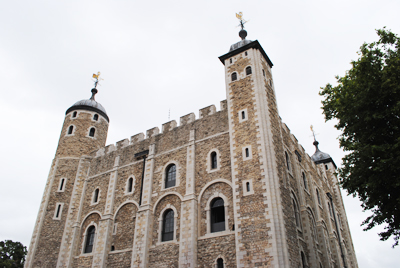
Then, as now, the White Tower – initially itself known as the Tower of London, it was later dubbed the White Tower thanks to the whitewash used to cover the Kentish limestone to protect it from the weather (and for its visual impact) – stood at the heart of the complex. Unlike today’s building, it lacked the large windows which date from the early 18th century, and while the towers were believed to be capped with cones, the present cupolas date from the reign of King Henry VIII.

White-Tower

While it had long been surrounded by a palisade and ditch, in 1189, King Richard I’s chancellor William Longchamp, the Bishop of Ely, had begun to extend the castle’s defences while the king was on crusade (in fact, the first siege of the Tower took place in 1191 when the then Prince John did so in opposition to Longchamp’s  regime – it only lasted three days before Longchamp surrendered).

This extension, which was completed by King John following his accession to the throne in 1199, saw the size of the bailey around the White Tower doubled and a new curtain wall and towers – including the Bell Tower – built around its outer perimeter with a ditch below (the ruins of the Wardrobe Tower, just to the east of the White Tower show where the original Roman-era wall ran).

But it wasn’t until the reign of King John’s son, King Henry III, that the royal palace which now stands on the river side of the White Tower was constructed. Until that point – and at the time of the signing of the Magna Carta – the royal apartments remained within the White Tower itself, located on the upper floor.

Like those of the garrison commander known as the constable (located on the entrance level), the king’s apartments would have consisted of a hall and a large chamber, which may have been divided into smaller chambers with wooden partitions as well as a chapel (on the upper level this was the still existing Chapel of St John the Evangelist, although it would have then been more more richly decorated). Unlike the lower levels, the king’s level was of double height with a gallery (this level now has its own full floor).

The royal apartments had a variety of uses – as well as a residence and refuge for the king, they were also at times a place to keep high profile prisoners such as the Bishop of Durham, Ranulf Flambard, who was imprisoned on the orders of King Henry I (and who escaped from an upper window on a rope which had been smuggled in to him and fled to Normandy).

It is also worth noting that while King John apparently kept exotic animals at the Tower, it is his son, King Henry III who is usually credited with founding the Royal Menagerie there.

And it was his son, King Edward I, who expanded the Tower to its current size of  about 18 acres by rebuilding the western section of the inner ward and adding the outer ward.

WHERE: Tower of London (nearest Tube station Tower Hill); WHEN: 9am to 5.30pm, Tuesday to Saturday, 10am to 5.30pm Sunday to Monday; COST: £24.50 adults; £11 children under 15; £18.70 concessions; £60.70 for a family (discounts for online purchases/memberships); WEBSITE: www.hrp.org.uk/toweroflondon/.  

LondonLife – Georgian princesses show their skills…

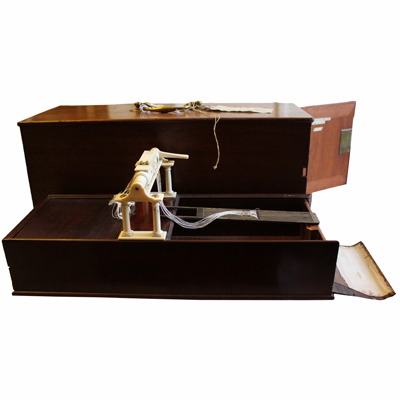
Fringe-LoomThe fringe loom of Queen Charlotte – wife of King George III – is among the objects on display at Kew Palace this year. Historic Royal Palaces is exploring some of the untold stories of the king’s daughters who once called the palace, which was originally built in 1631 for a Flemish merchant before it was acquired by King George II, home. Under examination are the pastimes of the royal women – from drawing and painting to weaving, paper cutting and even the decoration of a ‘Baby House’ created by the princesses as a showcase of their talents. Along with Kew Palace – located inside Kew Gardens in London’s west, also opened is the nearby rustic retreat built in 1770 known as Queen Charlotte’s cottage. Inside is the “Print Room”, hung with more than 150 satirical engravings, and the “Picnic Room”, decorated paintings of trailing nasturtiums and convolvulus – the work of Princess Elizabeth, an acclaimed artist. For more, see www.hrp.org.uk/KewPalace/.
PICTURE: Historic Royal Palaces

A Moment in London’s History – Colonel Blood’s attempt to steal the Crown Jewels…

Martin-Tower

London has been making headlines around the world recently thanks, in part, to the estimated £200 million  heist which took place in Hatton Garden last week. So we thought it was a good time to take a look back to one of London’s most famous robberies (or attempts at least)…

The attempt dates back to 1671 when a self-styled colonel, Irish adventurer Thomas Blood, made an attempt to steal the Crown Jewels from the Tower of London.

The Irishman – whose history included fighting on both sides in the English Civil War, first with the Royalists and then with the Parliamentarians when he saw the tide was turning – visited the Tower of London several times in the lead-up to the attempt as he, disguised as a parson, cultivated a relationship with Talbot Edwards, an elderly keeper of the jewels, and his family.

On the night of 9th May, he and a group of accomplices, including his son, attended a dinner put on by the Edwards at the Tower. While waiting for the meal, Blood asked to see the jewels which were housed behind a grille in the basement of the Martin Tower (pictured above) above which the Edwards had an apartment.

Edwards complied and once in the Jewel House, Blood and his accomplices attacked him, knocking him to the floor with a mallet and then stabbing him before binding and gagging him.

They then turned their attention to the jewels – Blood used a mallet to flatten St Edwards Crown so he could hide it beneath his coat while his brother-in-law Hunt filed the Sovereign’s Sceptre with Cross in two to fit it in his bag and a third man, Robert Perot, stuffed the Sovereign’s Orb down his trousers.

Things didn’t go smoothly after that and the alarm was raised before the gang could make their getaway. It has been suggested it was Edwards who raised the alarm – that despite efforts to shut him up he managed to remove his gag and raise the alarm  – but other versions say it was his son, returning from service in Flanders, who raised the alarm on seeing the gang.

In any event, the gang fled, evading efforts of the warders to stop them, before Blood, Hunt and Perot were captured on the Tower of London wharf. The crown, globe and orb were all recovered, albeit damaged.

Blood refused to speak after his capture and was eventually taken before King Charles II for interrogation. But he was evidently so impressed with his captive that he not only pardoned Blood but also rewarded him with land in Ireland.

Blood did later end up briefly in prison after a dispute with the Duke of Buckingham and died soon after his release in August, 1680, but in the intervening years he had become something of a celebrity around London including the Royal Court.

Security around the Crown Jewels, meanwhile, was upgraded somewhat in the wake of the attempt. While others have tried to steal them, none have ever been successful.

WHERE: Tower of London (nearest Tube station is Tower Hill); WHEN: 9am to 5.30pm Tuesday to Saturday, 10am to 5.30pm Saturday and Monday (last admission 5pm); COST: £24.50 an adult/£11 a child (5-15 years)/£18.70 concession/£60.70 a family of four (discount applies to online bookings); WEBSITE: www.hrp.org.uk/TowerOfLondon/.

Treasures of London – The Australian State Coach…

Australian-State-Coach
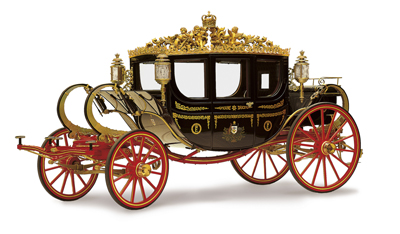
Among the treasures on show at this year’s summer opening of Buckingham Palace, the Australian State Coach was a gift to Queen Elizabeth II by Australia on 8th May, 1988, to mark the Australian Bicentennial.

The coach – the first to be built for the Royal Family since the Coronation of King Edward VII in 1902 – was built by Australian WJ “Jim” Frecklington who also designed the Diamond Jubilee State Coach.

The coach, which is usually kept in the Royal Mews where it can be viewed by the public, has been used at the State Opening of Parliament and other occasions involving foreign royal families and visiting heads of state. It was also used to carry Prince Charles, the Duchess of Cornwall and Michael and Carole Middleton back to Buckingham Palace after the wedding of Prince William and Catherine Middleton.

It was last used to carry the Duke of Edinburgh and Señora Rivera, wife of the president of Mexico, on a State Visit in March this year.

The summer opening of the palace runs from 25th July to 27th September. The coach will be on display in the Grand Entrance portico.

WHERE: Summer Opening of Buckingham Palace (nearest Tube stations are Victoria, Green Park and Hyde Park Corner); WHEN: 25th July to 31st August – 9.30am to 7.30pm daily (last admission 5.15pm)/1st to 27th September – 9.30am to 6.30pm (last admission 4.15pm); COST: £35.60 adults/£20 under 17 and disabled/£32.50 concessions/£91.20 family (2 adults and three under 17s); WEBSITE: www.royalcollection.org.uk/visit/the-state-rooms-buckingham-palace/plan-your-visit.

PICTURE: Royal Collection Trust © Her Majesty Queen Elizabeth II, 2015 

This Week in London – Party time at Hampton Court; new rooms unveiled at Eltham; Richard III at the Science Museum, and Kew’s Easter egg hunt…

Wishing all of our readers a very happy Easter! 

Hampton-Court

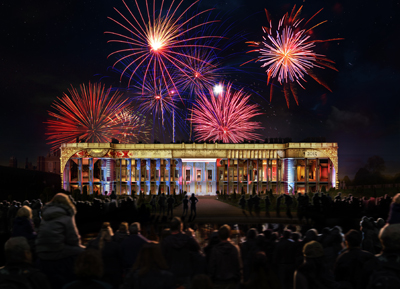
It’s party time at Hampton Court Palace this weekend as the palace celebrates its 500th anniversary with festivities including a spectacular (and historic) light show. Friday, Saturday and Sunday nights the palace will be open for an evening of festivities including the chance to taste-test pork cooked in the Tudor kitchens, enjoy a drink at a pop-up bar in the Cartoon Gallery, listen to live performances of period music in the state apartments and watch a 25 minute sound and light show in the Privy Garden taking viewers on a journey through the palace’s much storied past culminating in a fireworks finale. The nights run from 6.30pm to 9.15pm. Admission charge applies. For more, see www.hrp.org.uk/HamptonCourtPalace/. PICTURE: HRP/Newsteam

A luxury wartime bunker, a map room dating from the 1930s and a walk-in wardrobe complete with vintage fashion are among five new rooms at Eltham Palace in south London which are opening to the public for the first time this Easter. The rooms also include a basement billiards room and adjoining bedrooms, one of which features one of the first showers ever installed in a residential house in the UK. They have been restored as part of English Heritage’s major £1.7 million makeover of the property – the childhood home of King Henry VIII which was converted into a stunning Art Deco gem in the 1930s. Visitors will be invited to join one of Stephen and Virginia Courtauld’s legendary cocktail party’s of the 1930s while children can take part in an interactive tour exploring the story of the animals that lived at the palace including Mah-Jongg, the Courtauld’s pet lemur (who had his own heated bedroom!). Admission charge applies. For more, see www.english-heritage.org.uk/eltham. Meanwhile, anyone wishing to donate to support the renovation of the map-room can do so at www.english-heritage.org.uk/donate-eltham.

• A new exhibition showcasing the latest scientific displays concerning the life and death of King Richard III has opened at the Science Museum. King Richard III: Life, Death and DNA, which opened last Wednesday – the day before the king’s remains were reinterred at Leicester Cathedral, features an analysis of Richard III’s genome, a 3D printed skeleton (only one of three in existence) and a prototype coffin. It explores how CT scans were used to prove the king’s fatal injuries at the Battle of Bosworth in 1485 were caused by a sword, dagger and halberd (a reproduction of the latter is on display). The exhibition will run until 25th June. Entry is free. For more, see www.sciencemuseum.org.uk/RichardIII.

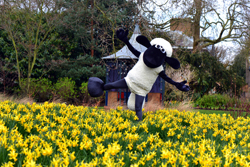
Shaun-the-Sheep• Join Shaun the Sheep and friends for Kew Garden’s annual Easter Egg hunt this Sunday. The hunt will take place from 9.30am to noon (or when the eggs run out!) with participants needing to find three sheep and collect a token/chocolate dropping from each before finding the Easter bunny and claiming eggs supplied by Divine chocolate. Shaun, meanwhile, who hit the big screen for the first time this year, will be found in the Madcap Meadow until 12th April. Admission charge applies. For the full range of events taking place at the gardens this Easter season, check out www.kew.orgPICTURE: RBG Kew.

London’s Boroughs are turning 50 and to celebrate London councils – working with the London Film Archive – have released a short film telling the story of the past half century. Follow this link to see it. Councils across the city, meanwhile, are holding events throughout the year to mark the occasion – check with your local council for details; some, like Barking and Dagenham, and Camden have dedicated pages.

The first chief of the Secret Intelligence Service, Sir Mansfield Cumming, has been commemorated with an English Heritage blue plaque at his former home in Westminster. Known as ‘C’ thanks to his habit of initialling papers (a tradition which has been carried on by every chief since), Cumming was chief of the Foreign Section of the Secret Service Bureau from 1909 until his death in 1923. Flats 53 and 54 at 2 Whitehall Court – now part of Grade II*-listed The Royal Horseguards Hotel – served as Cumming’s home and office at various times between 1911 and 1922. The plaque was unveiled by current Secret Intelligence Service chief, Alex Younger. Meanwhile, Amelia Edwards, pioneering Egyptologist, writer, and co-founder of the Egypt Exploration Fund, has also been honoured with a blue plaque on her former home in Islington. Edwards lived at 19, Wharton Street in Clerkenwell between 1831 and 1892. For more, see www.english-heritage.org.uk/visit/blue-plaques/.

Send all items for inclusion to exploringlondon@gmail.com.